Woolton Pie
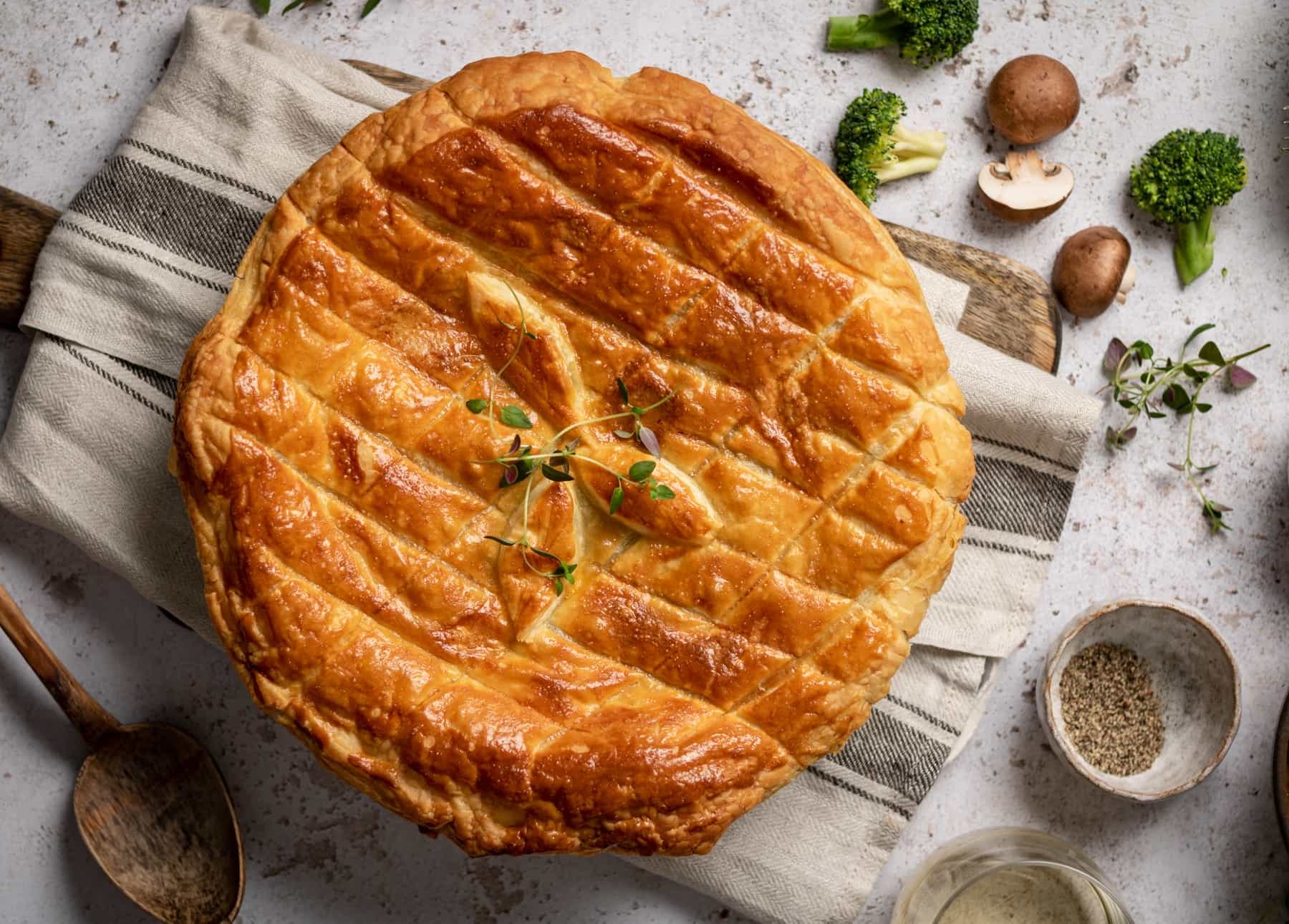
Ever wondered what comfort food looked like during World War II rationing? Meet Woolton Pie – a hearty vegetable masterpiece that turned wartime necessity into culinary genius. This isn’t just any vegetable pie; it’s a slice of history reimagined for modern taste buds with layers of caramelized onions, potatoes, spinach, and cheese all wrapped in a rustic potato pastry.
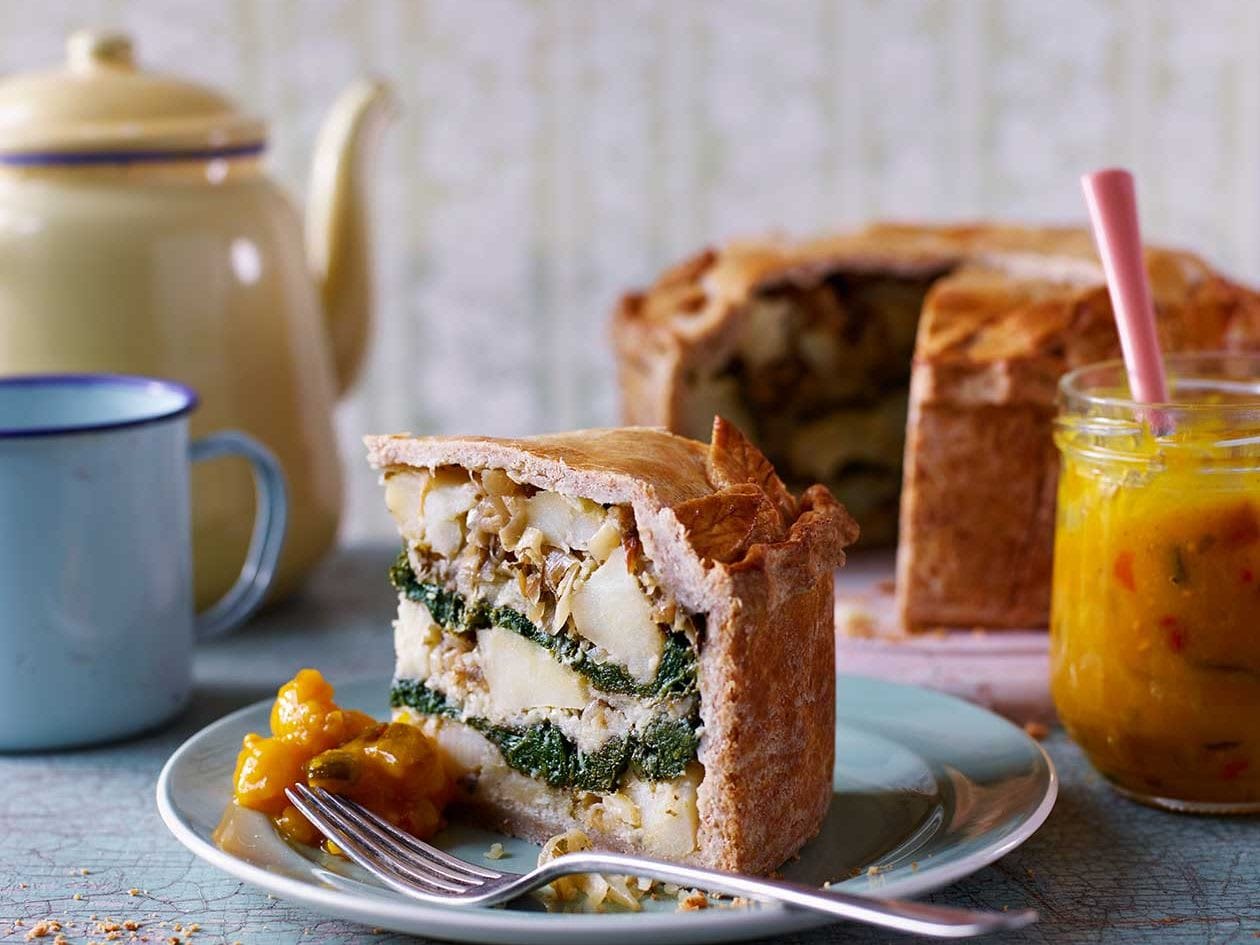
What makes this pie special is its incredible depth of flavor despite its humble ingredients. The slow-caramelized onions create a natural sweetness, while the potato pastry offers a uniquely tender yet sturdy crust you won’t find in ordinary pies. Perfect for feeding a crowd or meal prepping for the week, this showstopper proves that sometimes the most memorable dishes come from the simplest ingredients.
Ingredients
For the potato pastry:
- 325g floury potatoes (such as Maris Piper)
- 200g wholemeal flour
- 200g plain flour, plus extra for dusting
- 1 tsp fine sea salt
- 75g cold butter, diced, plus extra for greasing
- 75g chilled lard or white vegetable fat, diced (use vegetarian if required)
- 1 egg, separated
For the filling:
- 1½ tbsp olive oil
- 30g unsalted butter
- 4 large onions, sliced
- 800g floury potatoes (such as Maris Piper)
- 3 garlic cloves, finely sliced
- 2 × 260g packs young spinach
- Freshly grated nutmeg
- 2 tbsp finely chopped parsley
- ½ × 20g pack sage, leaves chopped
- 60g dried breadcrumbs or rolled oats
- 150g extra-mature cheddar, grated (use gluten-free if required)
Steps
Get ahead: Prepare to the end of step 7 a day ahead and chill. Cook for 5-10 minutes longer from chilled. The cooked pie keeps for up to 2 days in the fridge.
- For the pastry, peel and roughly chop the potatoes and place in a saucepan of cold salted water. Bring to the boil and cook for 15-20 minutes until tender. Test with a knife – it should slide in easily with no resistance. Drain, run under cold water to cool then drain again. Place on a plate lined with kitchen paper and chill. This cooling step is crucial – hot potatoes will melt your fats and ruin the pastry texture.
- Once the potatoes are completely cold, put both flours and salt into a large mixing bowl. Add the diced cold butter and lard, then rub between your fingertips until the mixture resembles fine breadcrumbs. The colder your hands, the better – run them under cold water first if your kitchen is warm.
- Mash the chilled potatoes until smooth and measure out 225g to add to the pastry mixture (reserve any leftover for the filling). Add the egg white to the flour mixture along with the mashed potato. Gently bring the dough together until it forms large clumps. The dough will look quite dry initially – resist adding water! Let it rest for 5 minutes to allow the flours to absorb moisture, then bring into a ball. Knead briefly just until smooth (overworking will make it tough). Shape one-third of the pastry into a disc, wrap in plastic wrap or parchment, and chill.
- Thoroughly grease and flour a 20cm springform or loose-based deep cake tin (at least 6cm deep). On a well-floured surface, roll out the remaining pastry to a 35cm round. The dough may be slightly crumbly – patch any cracks by pressing together with your fingers. Use this to line the base and sides of the tin, leaving a small overhang. Trim any excessive excess but keep that overhang for now – it helps prevent shrinkage. Chill in the fridge for at least 30 minutes.
- In a large, deep frying pan, heat 1 tablespoon of oil and the butter over medium-low heat (325°F/160°C if using an electric stove). Add the sliced onions with a pinch of salt and cook gently for about 1 hour until deeply caramelized, stirring every 5-7 minutes. They should be golden brown and jammy, not burnt. If they’re browning too quickly, lower the heat. Leave to cool completely.
- Meanwhile, peel and dice the filling potatoes into 2cm cubes. Add to a saucepan of cold salted water, bring to the boil and cook for 8-9 minutes until just tender – test by piercing with a knife; they should offer slight resistance as they’ll cook further in the oven. Drain immediately, refresh under cold water to stop cooking, and drain again. Spread out on a clean tea towel and leave to dry thoroughly – excess moisture will make your pie soggy.
- In the same saucepan, gently fry the garlic in ½ tablespoon of olive oil for 1-2 minutes until fragrant but not browned. Add the spinach (you may need to work in batches), cover, and leave to wilt for 2-3 minutes. Season with salt, pepper, and a generous grating of nutmeg (¼ teaspoon). Cool completely, then squeeze out as much moisture as possible using your hands or a clean kitchen towel. Chop roughly if the leaves are large. Season the cooled potatoes with ½ teaspoon salt and ¼ teaspoon pepper, then combine with the caramelized onions, chopped herbs, and any leftover mashed potato from the pastry.
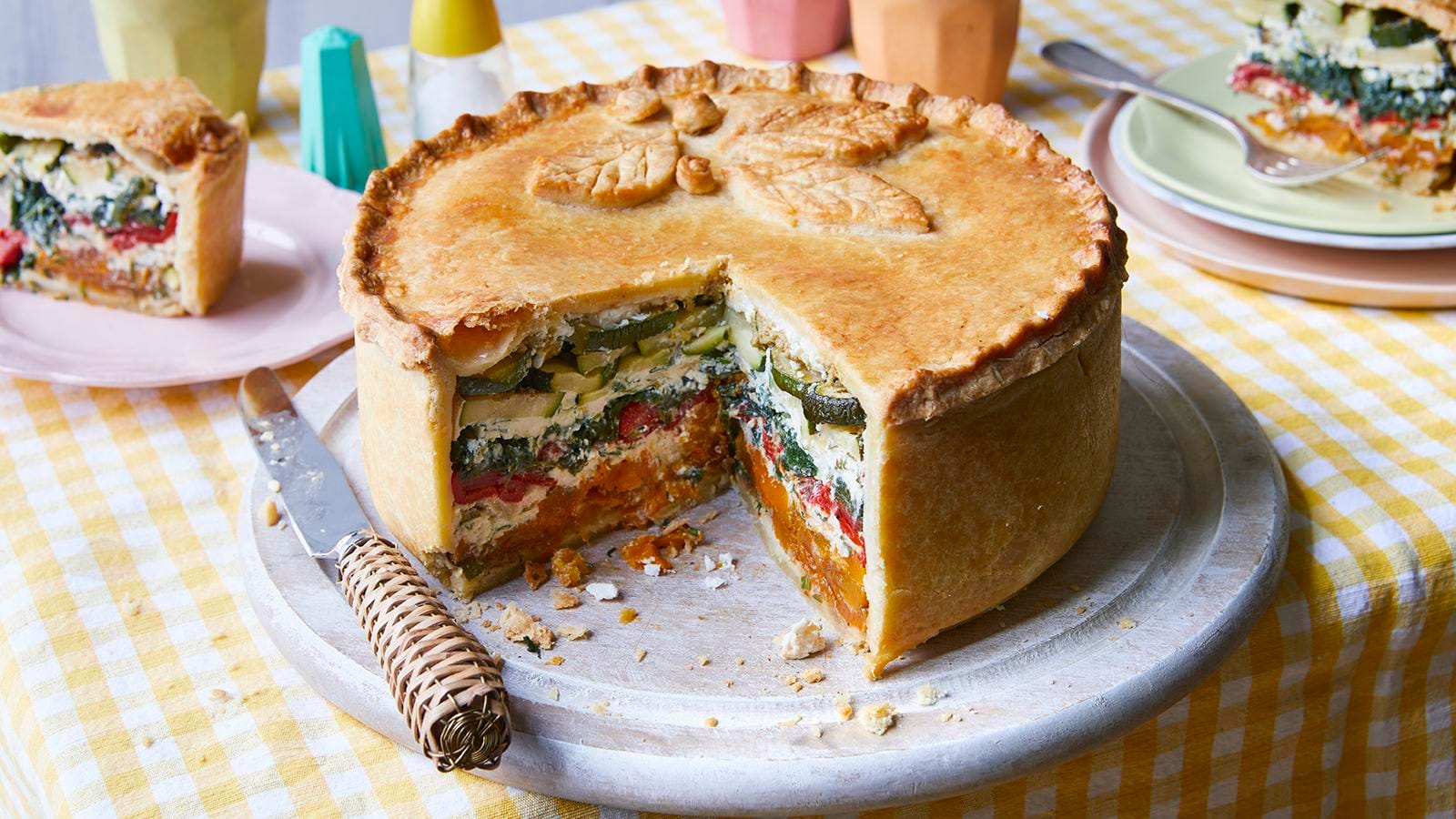
- Place a baking tray in the oven and preheat to 200°C/180°C fan/gas 6 (400°F). Remove the pastry disc and lined tin from the fridge. Begin layering your filling: scatter a third of the dried breadcrumbs (or oats) over the base of the pastry-lined tin, then add a third of the potato-onion mixture, a quarter of the cheese, half the spinach, another quarter of the cheese, and another third of the breadcrumbs. Repeat these layers, then finish with the remaining potatoes. Press down gently to compact the filling without crushing it.
- Roll the reserved pastry disc into a circle slightly larger than the diameter of the tin (22-23cm). Brush a little cold water around the overhanging edges of pastry and carefully place the disc on top of the pie, pressing down firmly to seal. Trim away any excess, then crimp all the way around by pinching between your thumb and forefinger. Brush the top of the pie with the beaten egg yolk and make a criss-cross pattern in the pastry lid with a sharp knife to allow steam to escape. Use any leftover pastry to create decorative leaves or shapes, if desired, and glaze these with egg yolk too.
- Carefully slide the pie onto the hot baking tray in the oven (the preheated tray helps cook the bottom crust) and bake for 1 hour. After 40 minutes, when the top is golden brown, cover with foil for the final 20 minutes to prevent over-browning. The pie is done when the crust is evenly browned and firm to the touch. Leave to cool completely in the tin (at least 1 hour) then chill in the fridge until ready to serve. This resting period is essential for the filling to set properly. Remove from the tin, slice with a sharp knife, and serve with piccalilli or a tangy chutney.

Smart Swaps
- Use vegetable shortening instead of lard for a vegetarian version (1:1 ratio)
- Swap sweet potatoes for regular potatoes in the filling for extra nutrients and a touch of sweetness
- Try leeks instead of onions for a more delicate flavor profile
- Replace cheddar with Gruyère or Comté for a nuttier taste
Make It Diabetes-Friendly
- Use cauliflower for half the potatoes in the filling to reduce carbs by approximately 15g per serving
- Opt for a wholegrain spelt flour crust instead of the potato pastry to lower the glycemic impact
- Increase the proportion of spinach while decreasing potatoes for more fiber and fewer carbs
- Serve smaller portions (1/12 of pie rather than 1/10) alongside a large green salad to reduce the glycemic load of the meal
Pro Tips
- The key to perfect potato pastry is keeping everything cold – chill your bowl, butter, and even your hands before mixing
- For the flakiest crust, don’t overwork the dough – stop mixing as soon as it comes together
- Squeeze every last bit of moisture from the spinach – wet spinach equals soggy pie
- Let the pie cool completely before slicing for clean, picture-perfect portions