When “No Kids” Meant 224 Square Feet — And Freedom
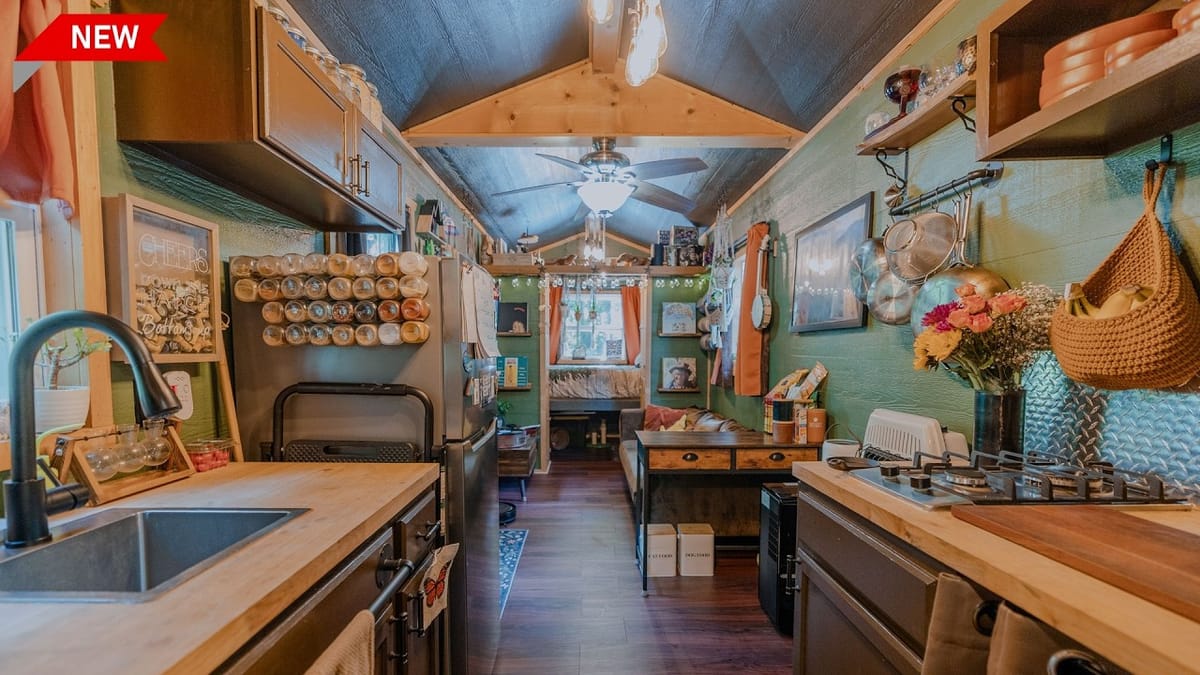
They traded extra rooms for breathing room. The big decision came first, then the tiny one: sell the four-bedroom and move into a home designed around what—and who—actually lives there.
Why They Left a 4‑Bedroom Behind
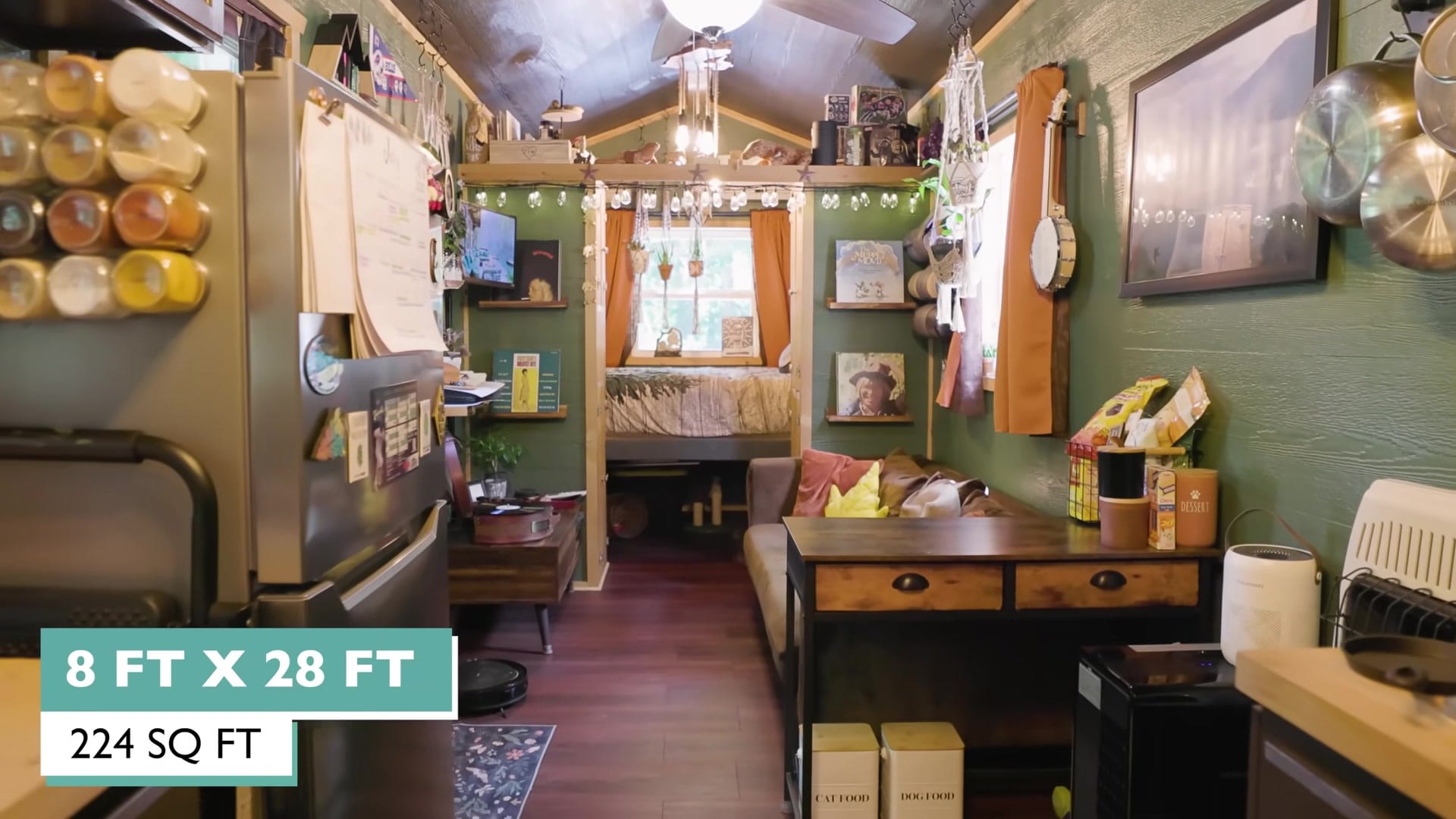
The decision not to have kids turned four bedrooms into empty square footage. They traded big-house maintenance for a simpler rhythm. Fern is a tiny house at 8 by 28 feet, about 224 square feet.
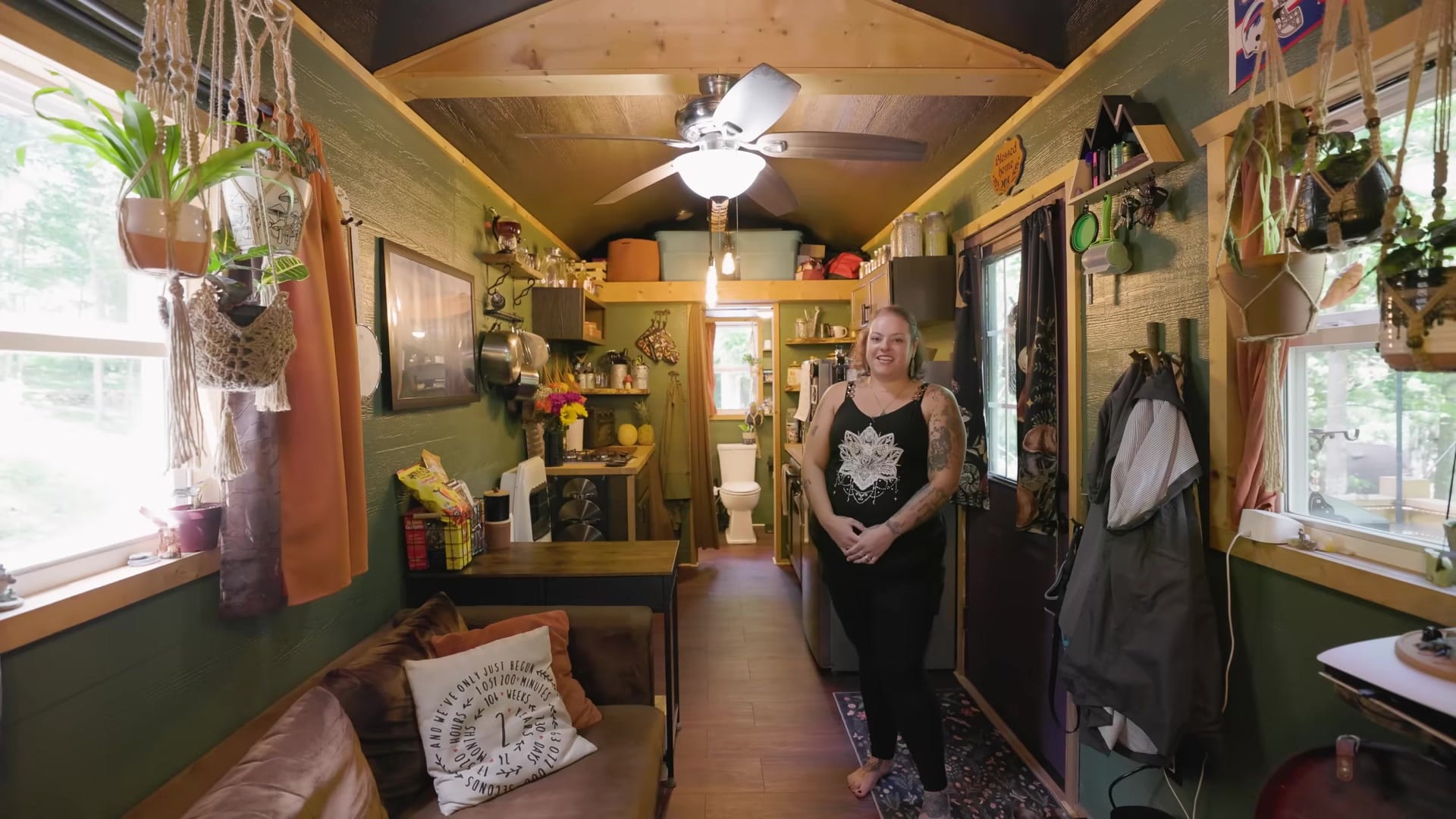
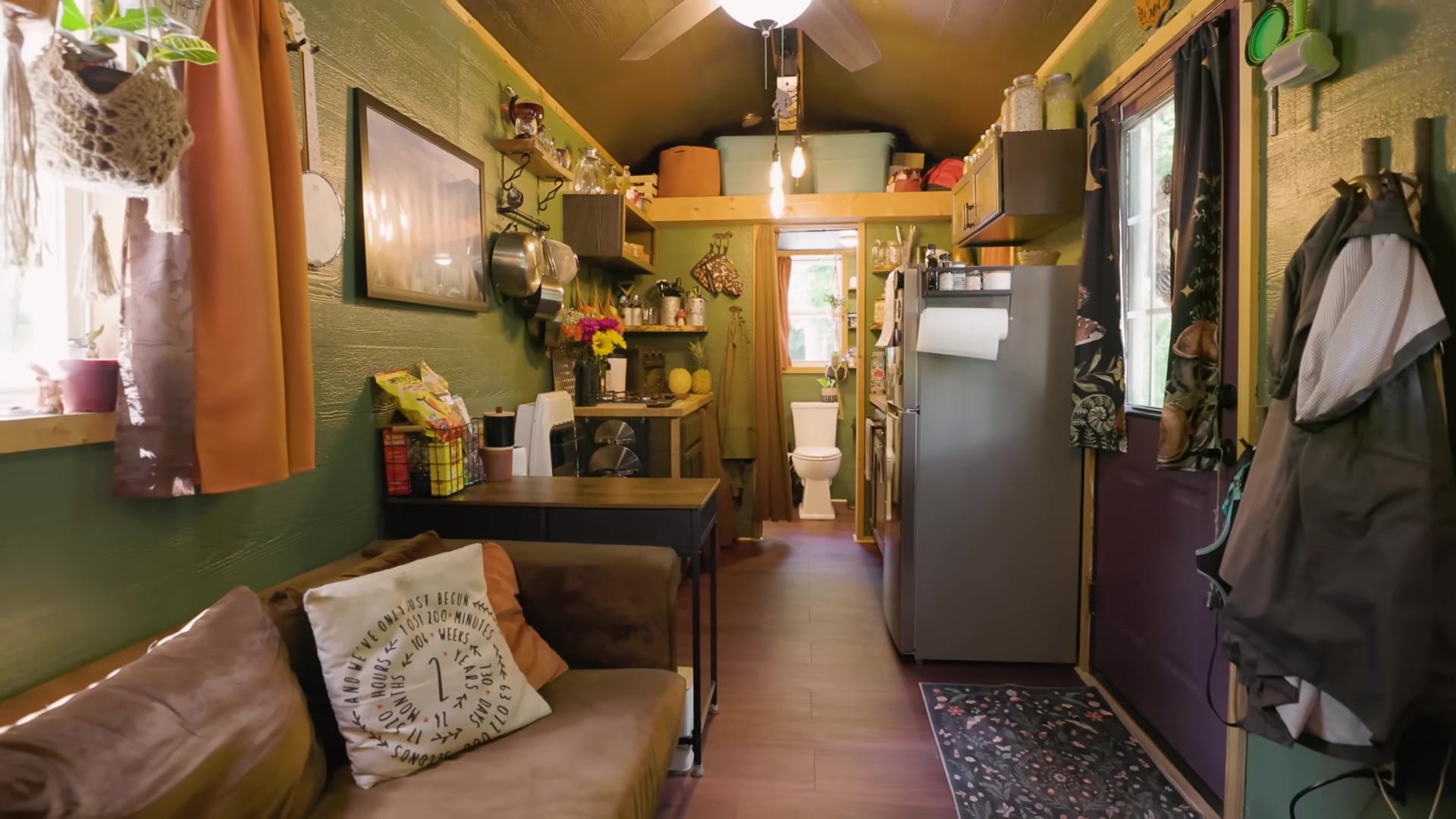
Step in and the bathroom anchors one end, followed by the split kitchen. The living area sits next, and the bed tucks into the far end with storage underneath for their cat. That end-to-end layout becomes the throughline of daily life here.
The shift started with a question: do they need rooms they barely entered? The answer pushed them toward less stuff and more intention.
They remember the moment four bedrooms felt like “a ton of wasted space” . They recognized a simpler life made more sense than maintaining square footage they didn’t need. The large house proved “too much,” which sparked the search that led to North Carolina.
To test the idea, they booked a weekend in a tiny rental and mapped where storage could live. Comfort followed quickly once they saw how everything had a spot. After that stay, confidence clicked—“Yeah, I could definitely do this”.
They put the Buffalo house on the market and prepared to downsize.
Kitchen — split layout, tiny appliances, big thinking
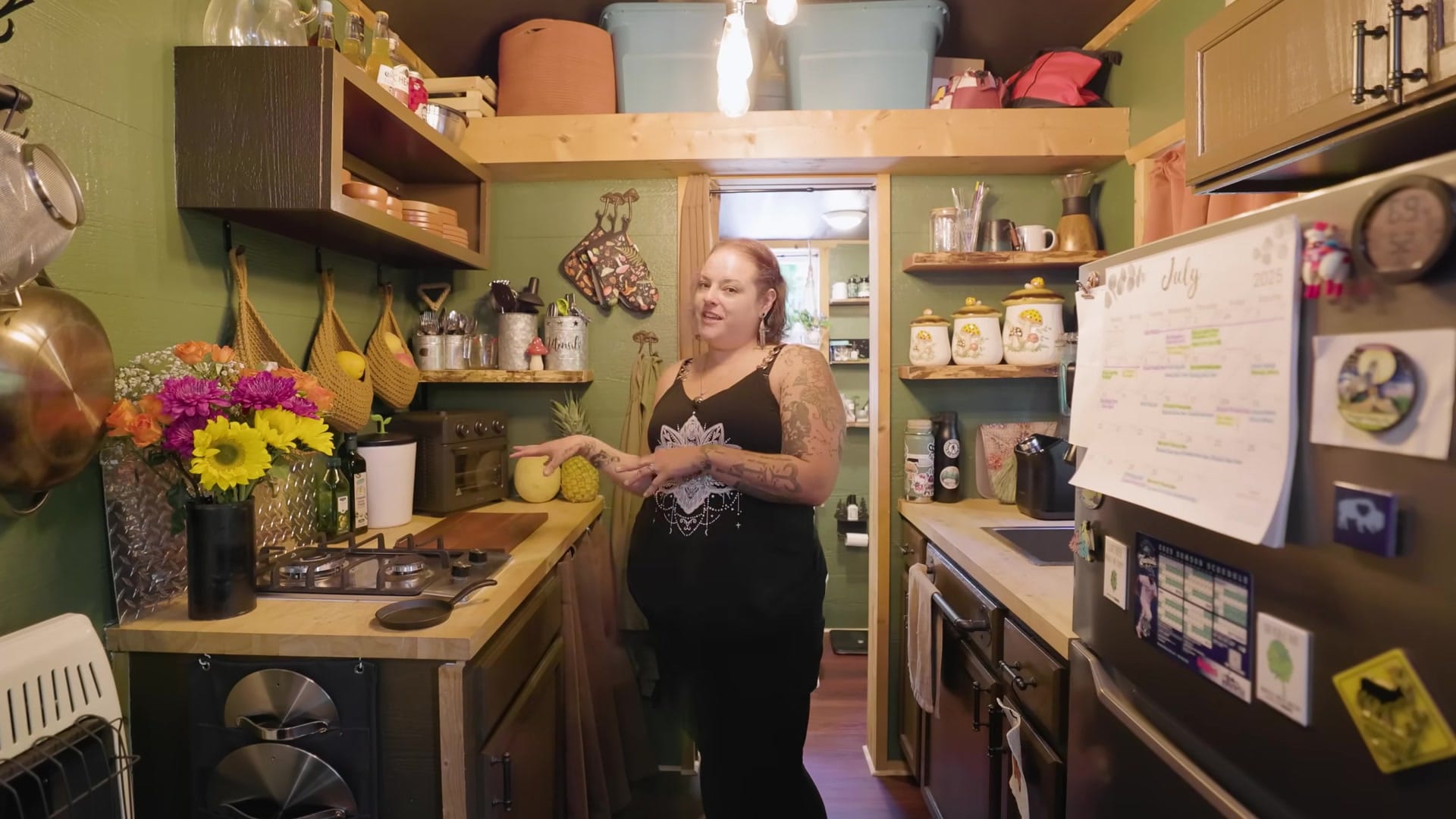
The kitchen splits down the middle: cooking on one side, cleaning on the other. Two people can move without bumping, each taking a station. The arrangement means one cooks while the other preps or washes, even in tight quarters.
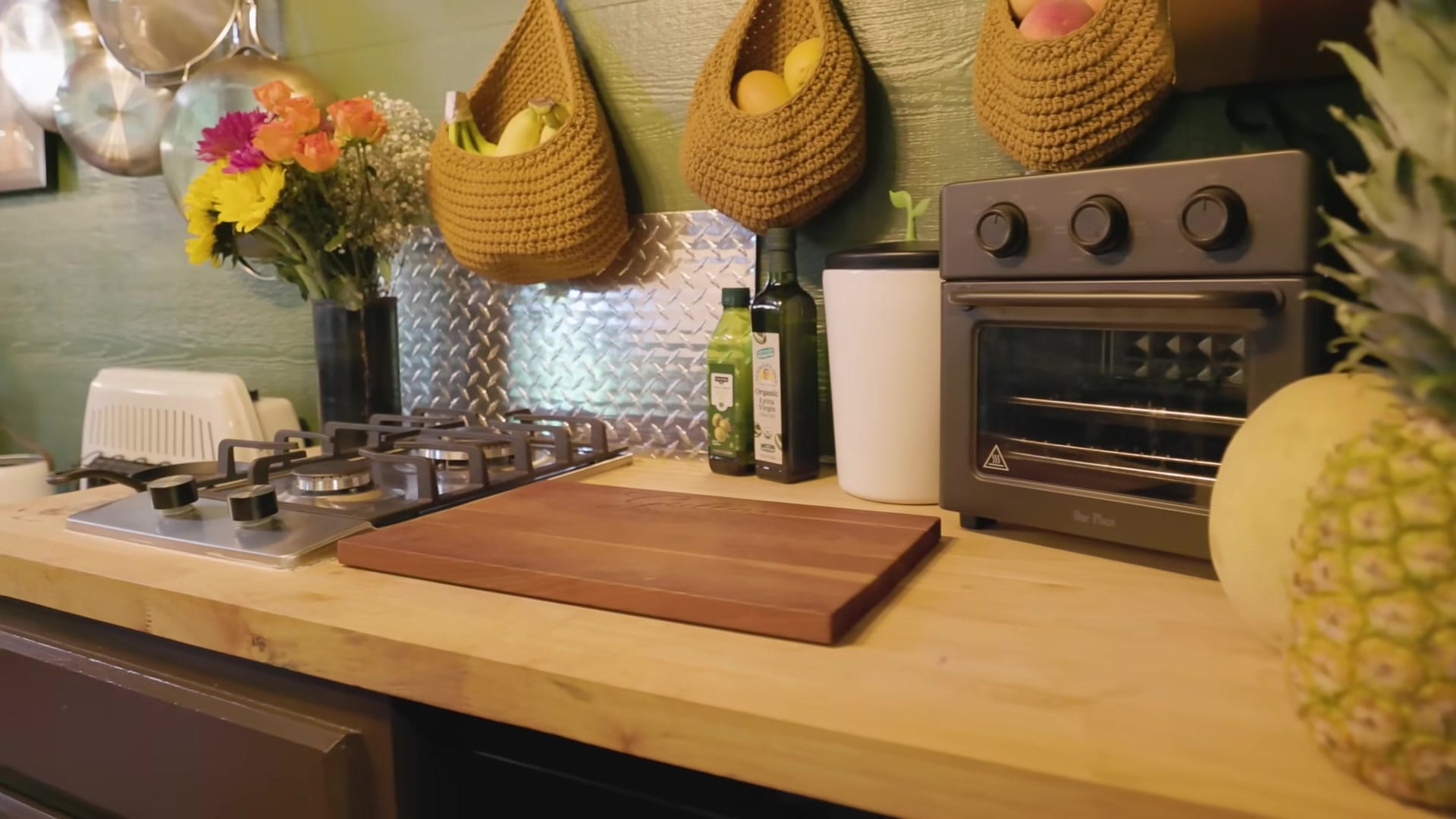
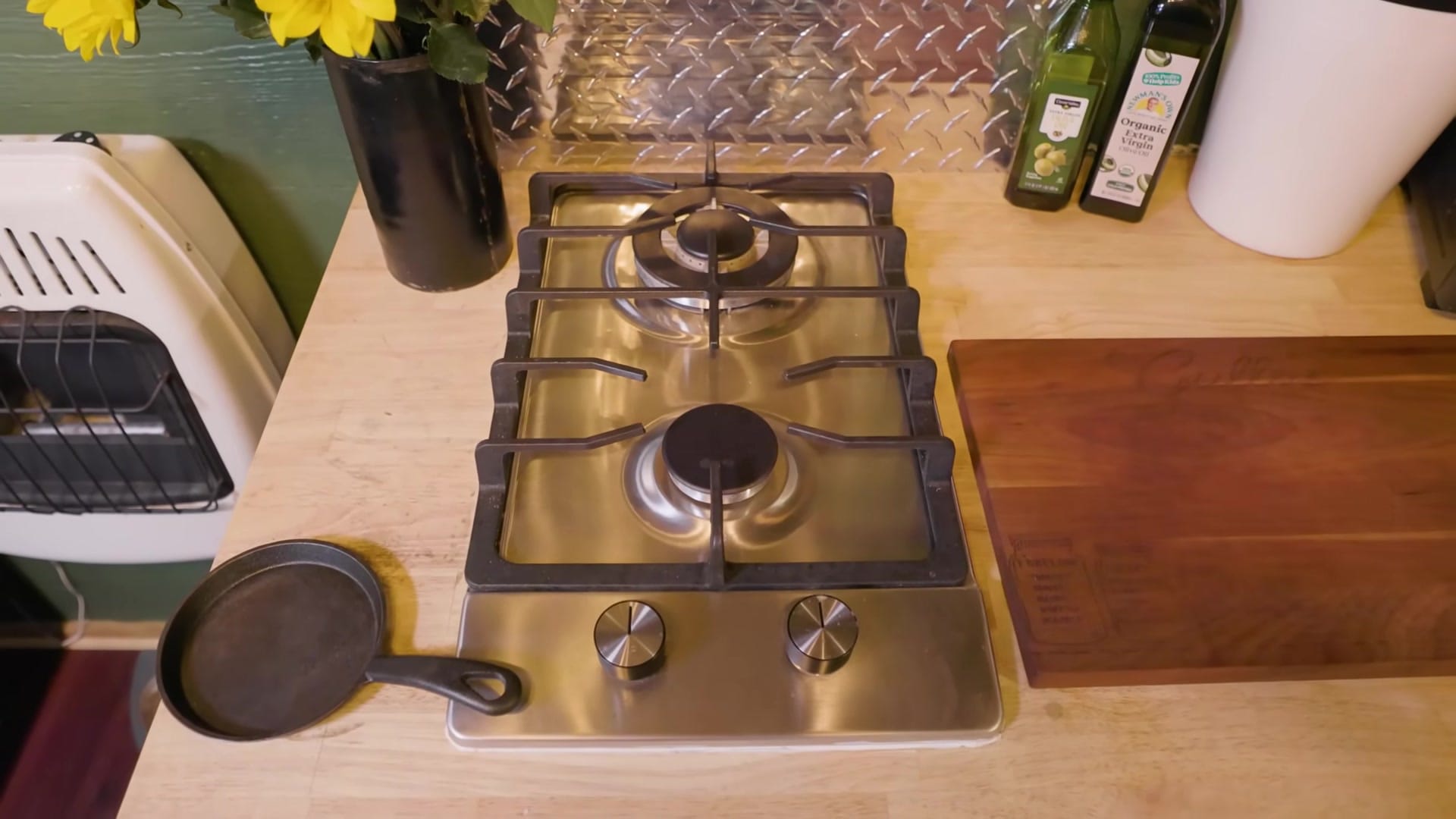
On the cooking run, a two-burner stove shares space with a hard‑working toaster oven. That oven picks up the jobs of baking, frying, and reheating since a microwave didn’t make the cut. Skipping the microwave saved precious inches and still keeps dinner easy.
A cabinet left open-face becomes display and storage at once. Pots hang inside and their lids clip neatly to the cabinet’s side.
When storage shrinks, walls take over—hooks hold the cookware and the lids stay visible.

The butcher-block counter looks warm and needs care, with water spots a lesson learned. A resand and a fresh seal are on the to‑do list to keep that surface happy.
The tall cabinet beside it once housed a washer/dryer combo, but the community’s laundry freed it up. Now it’s the home base for small appliances and extras they don’t use daily. Even the trash and recycling scale down to small bins behind a curtain, tucked under the counter.
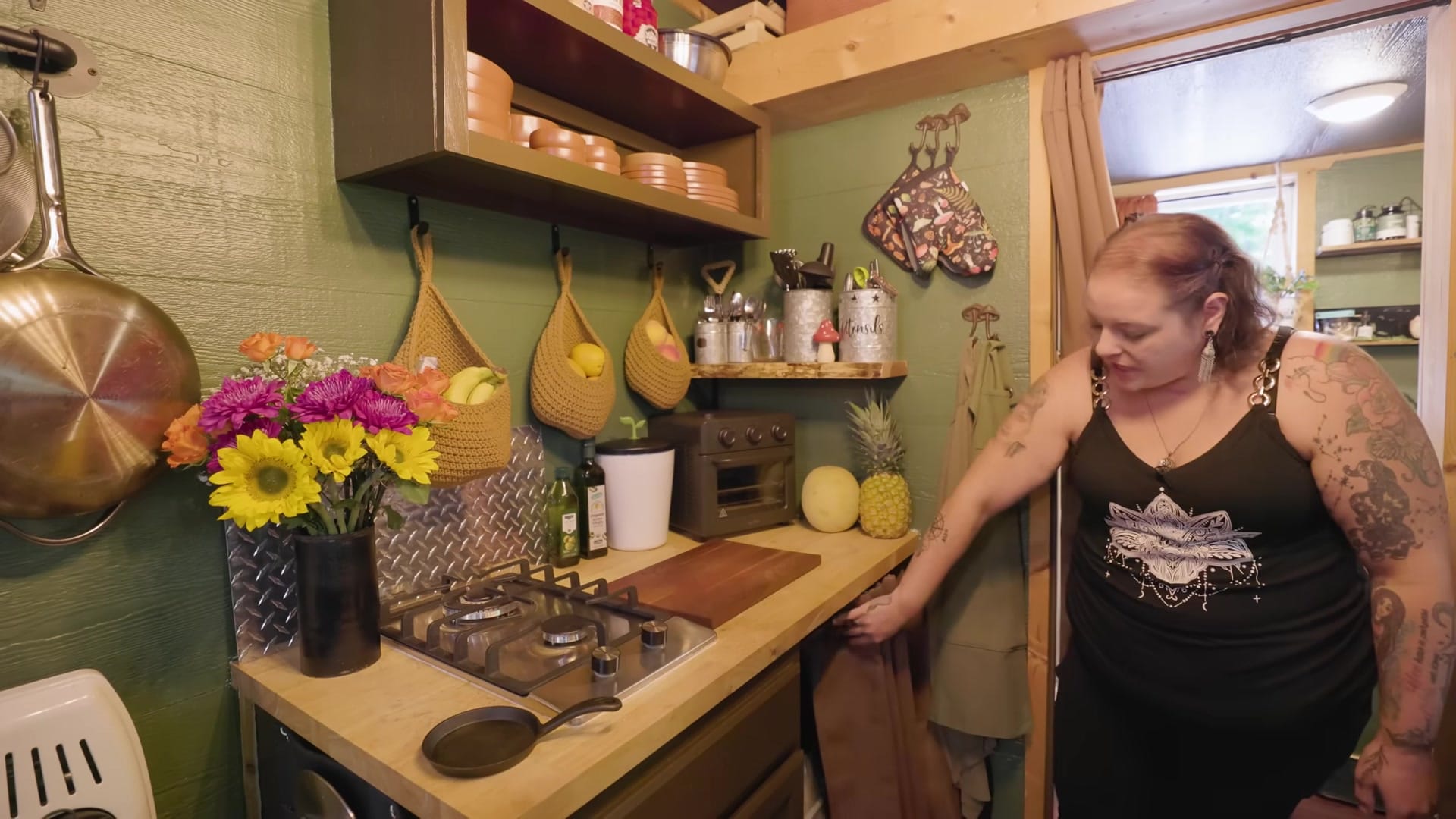
Most days, she’s here chopping and cooking, leaning on a workflow that keeps the space calm.
Living Room & Gear — heating, air, and wall storage
Step past the kitchen and heat lives on the wall. The propane unit stays off in warm seasons, then roars to life when fall snaps. It warms the whole home fast, a reliable backup to the main system.
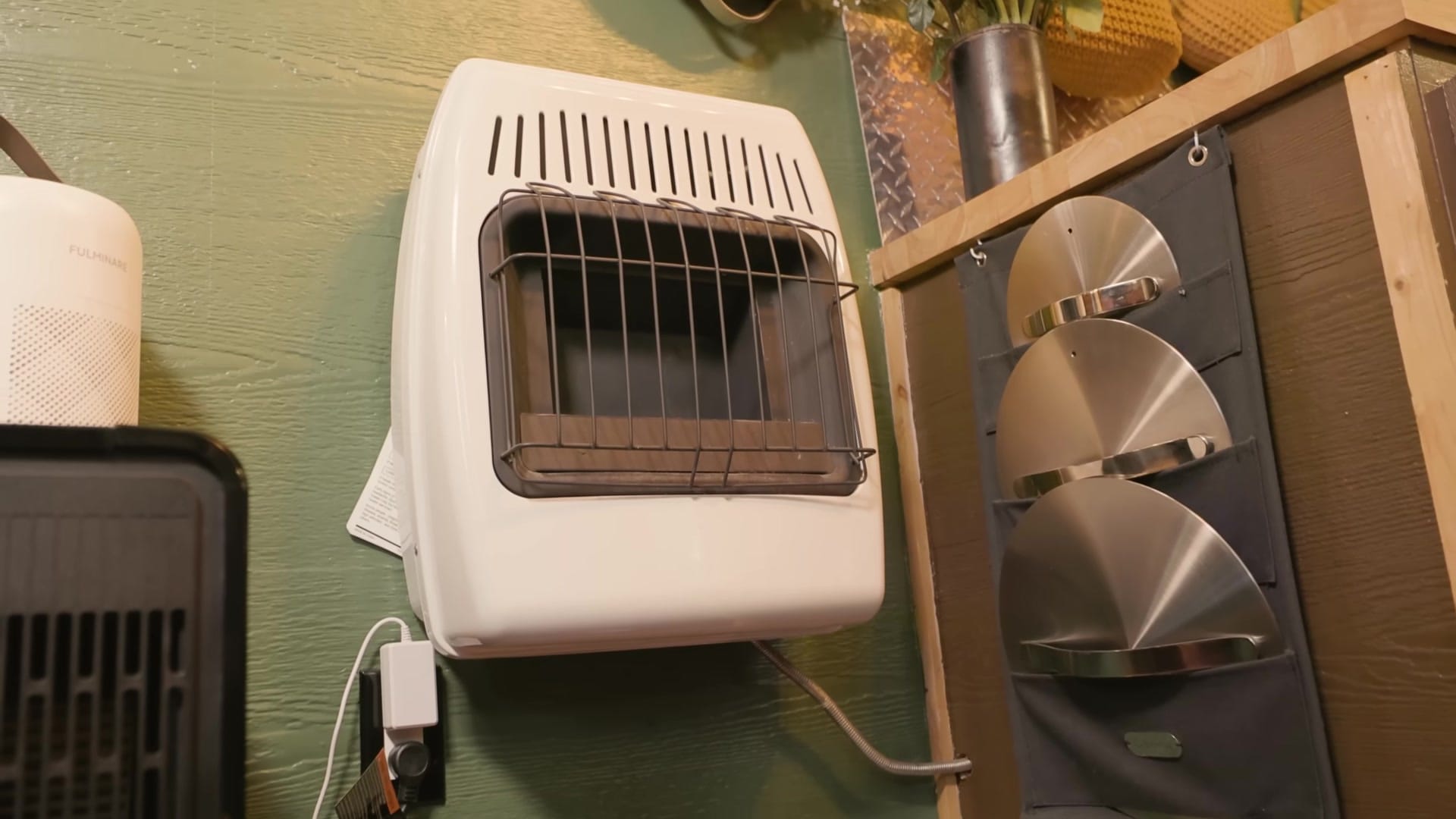
Moisture is the tiny enemy, so a full‑size dehumidifier hums daily. It’s one of the biggest items in the house and absolutely earns its floor space. An air purifier tags in too, because small rooms trap air as quickly as they trap clutter.
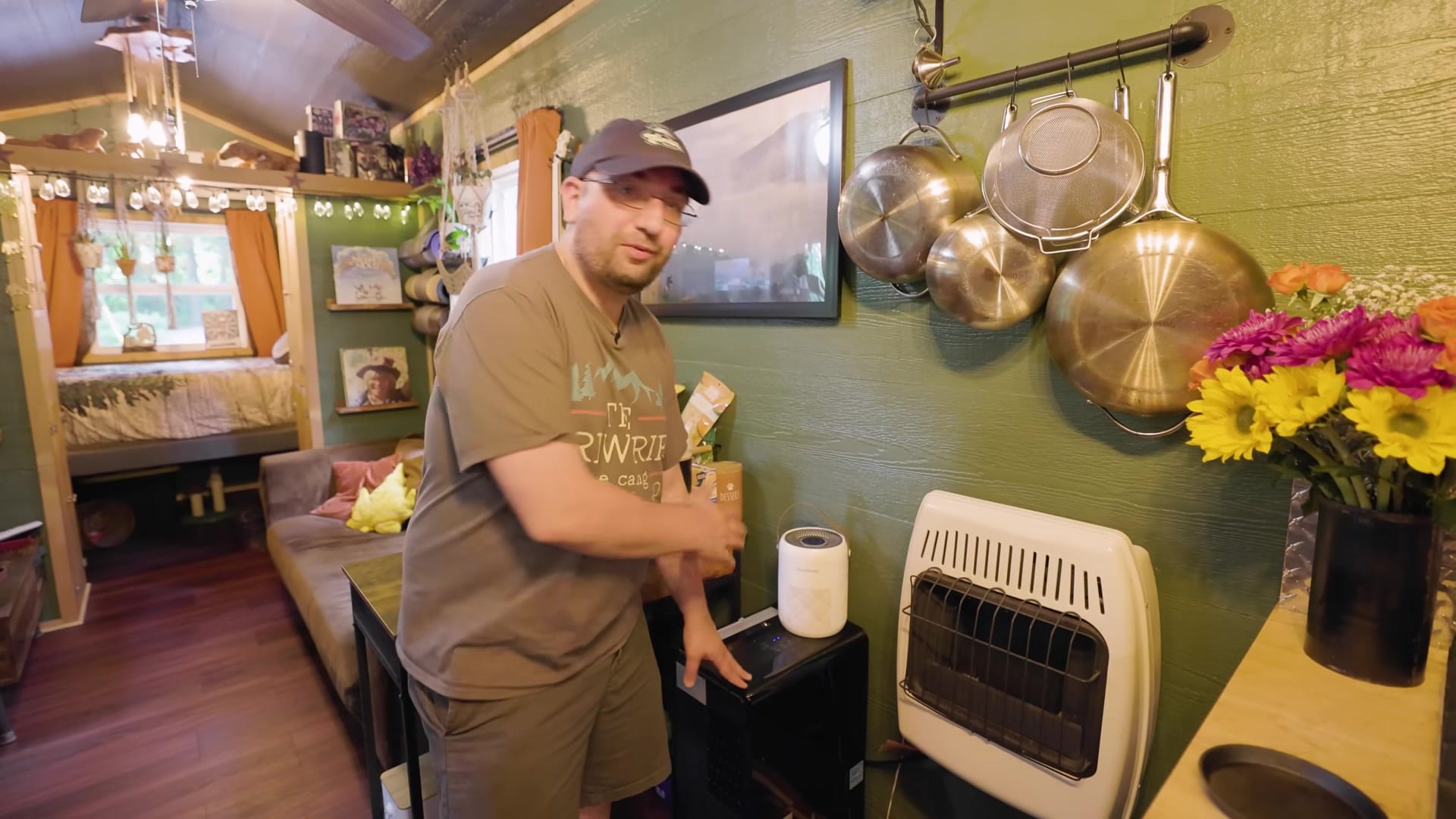
A small table once doubled as a desk, though the couch now wins for work. The pull‑out coffee table folds into a laptop station when needed.
A photo taken just around the corner welcomes you in—an elk staring into the Smoky Mountains, mist curling in the ridges.

The living room itself feels familiar: read, watch, unwind. The couch isn’t huge, but it fits two humans and two animals without a fuss.
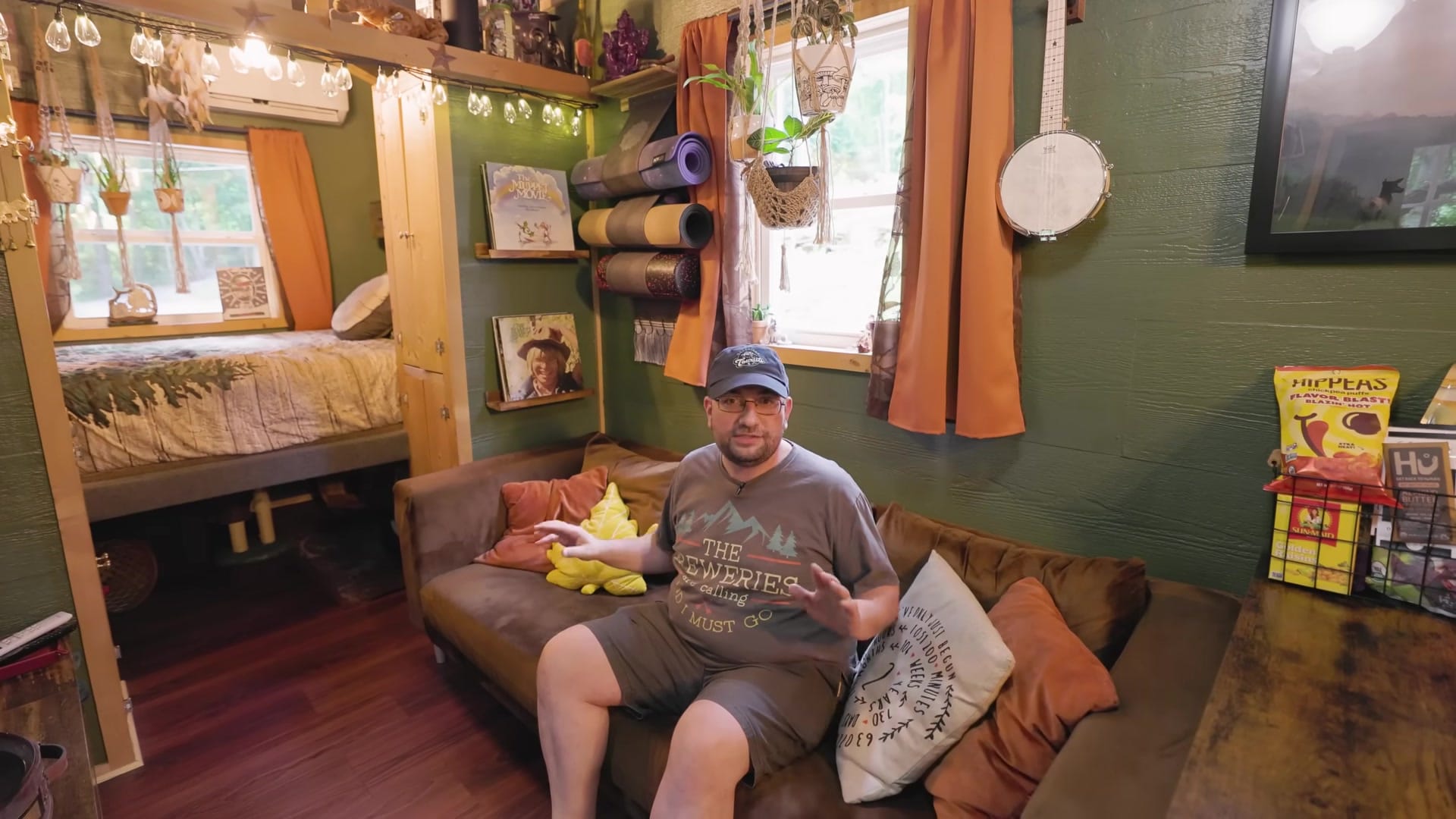
With floor space precious, plants climb from ceiling hooks instead of tucking into corners. Even the yoga mats stow on a custom wall slot that pops in and out like a tidy secret.
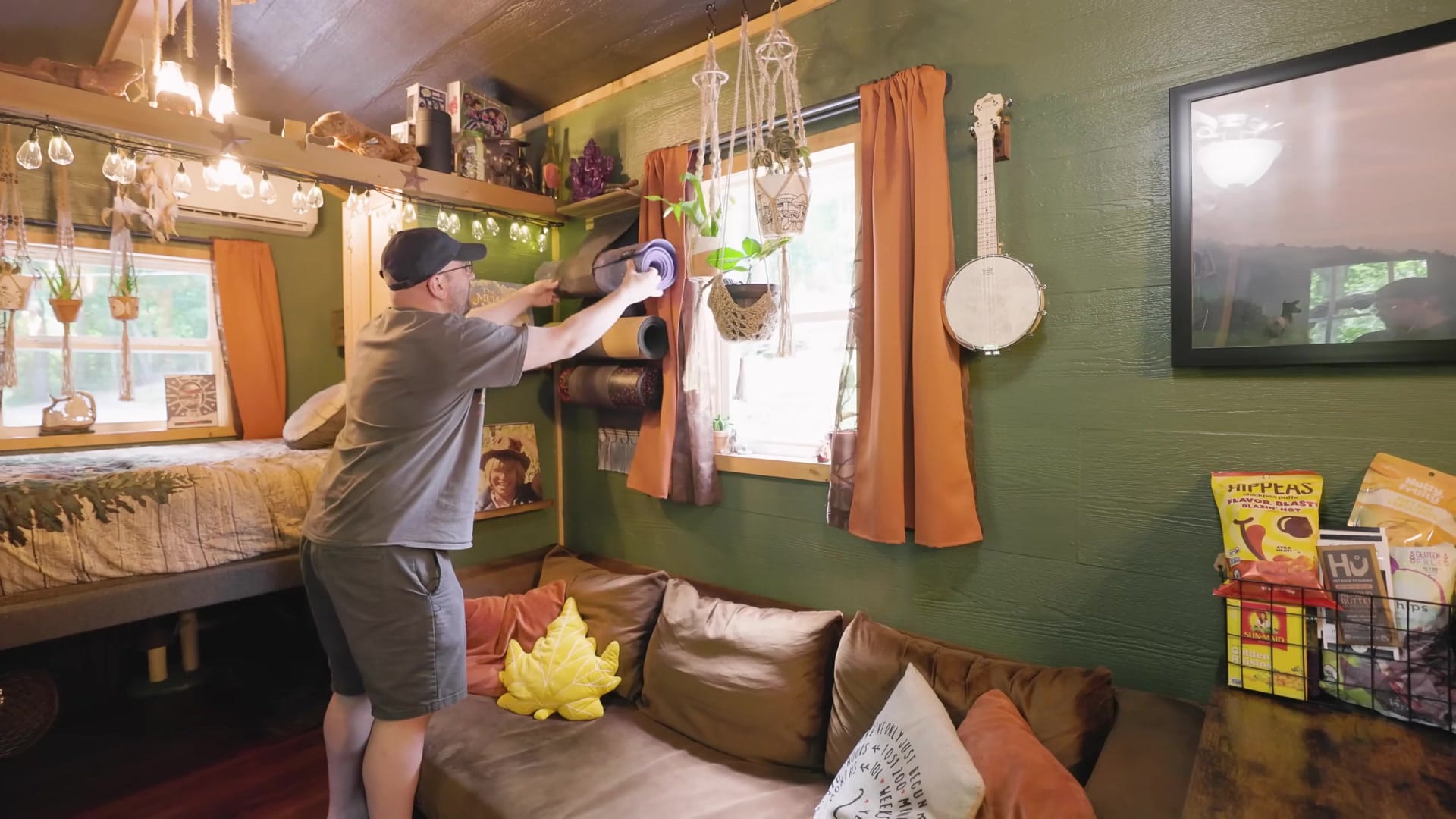
Wall real estate does heavy lifting elsewhere too, from vinyl records on display to shelves that hold the game console. It all keeps the room open, organized, and surprisingly airy.
Bedroom & Built‑in Storage — platform bed and closets
The bedroom stays compact by design, cozy and close to the walls. They kept a queen, trading a little elbow room for shared sleep with a dog and a cat. Going smaller would’ve meant elbows and tails in faces; the queen just fits.
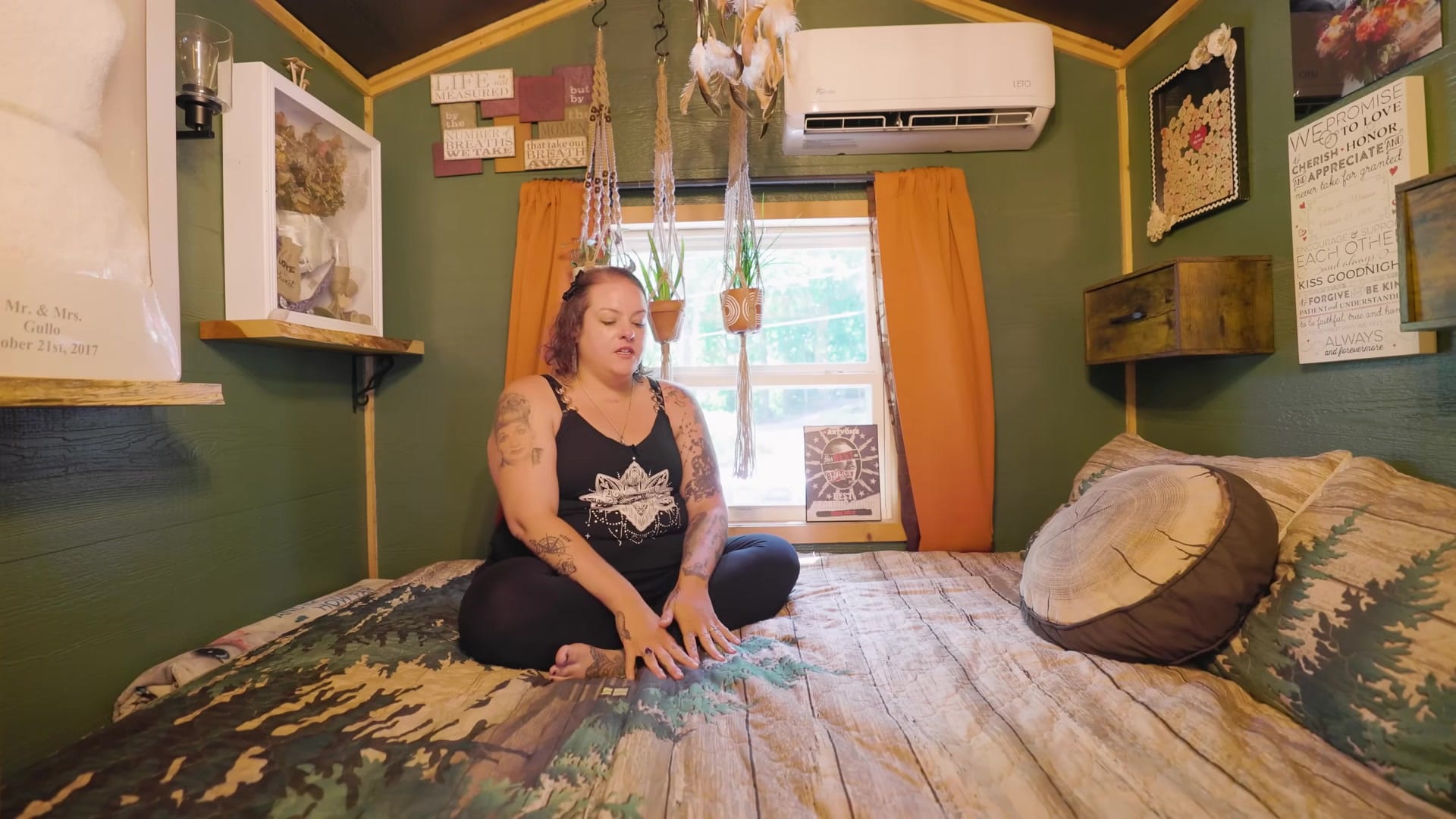
Mattresses pushed to walls block airflow, and tiny houses notice that fast. A coconut coir layer under the bed lifts and breathes to fight moisture. It’s the workaround when a traditional box spring won’t fit this platform.
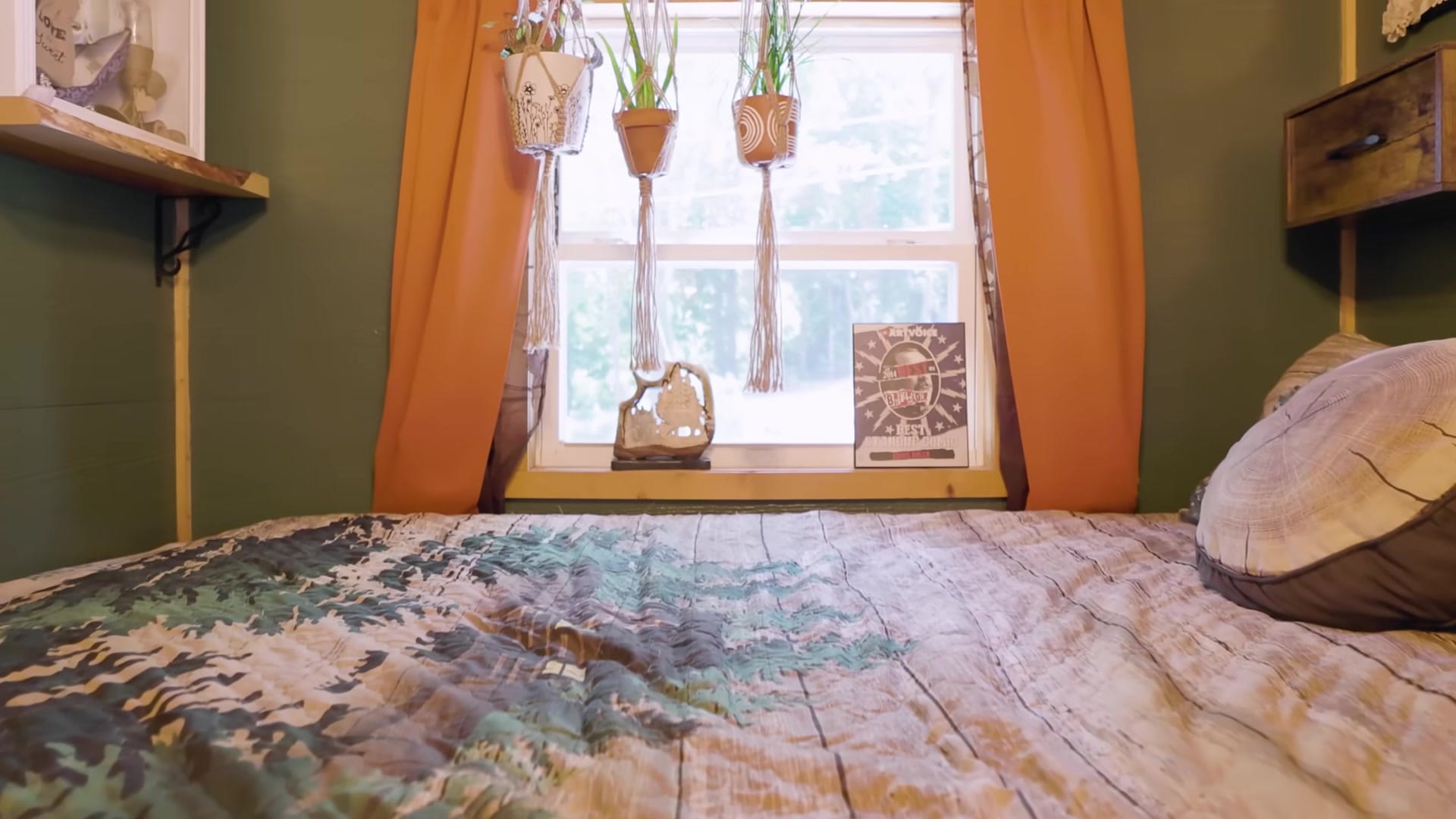
Making the bed means climbing on top, not circling it like in a big room. In return, the platform keeps ladders out of the morning routine.
The no‑ladder choice is a daily gift, especially on sleepy nights.
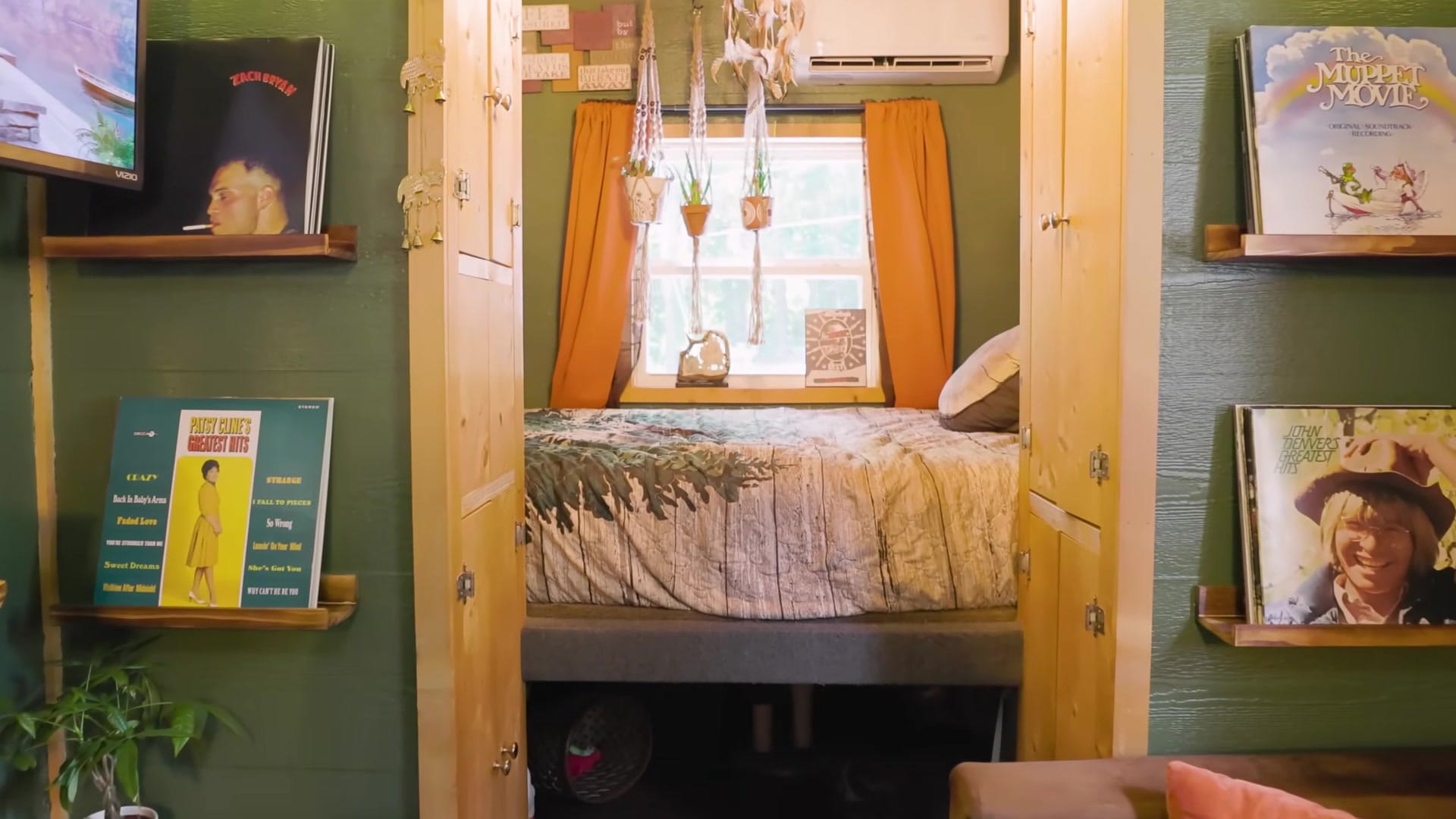
More floating shelves act as nightstands for electronics, books, and wedding mementos. A mini‑split above the corner cools hard in summer and has a dry setting that helps manage moisture.
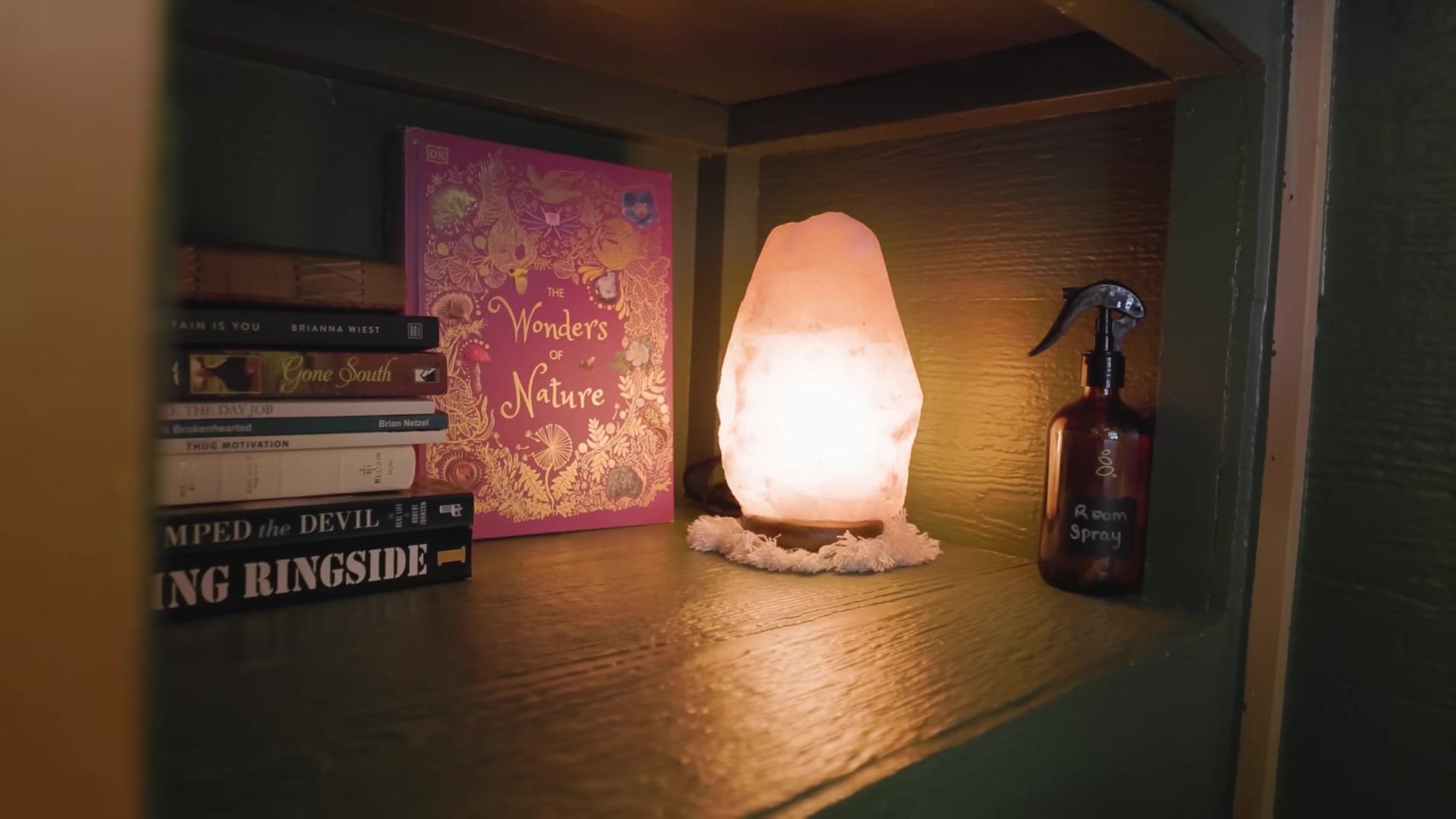
Color changed the feel, too—white walls went deep green for a cabin‑cozy glow. At night, a salt lamp and string lights turn the nook into a warm pocket of calm. Built‑ins extend the bedroom with hanging space, drawers made of bins, and room for totes underfoot.
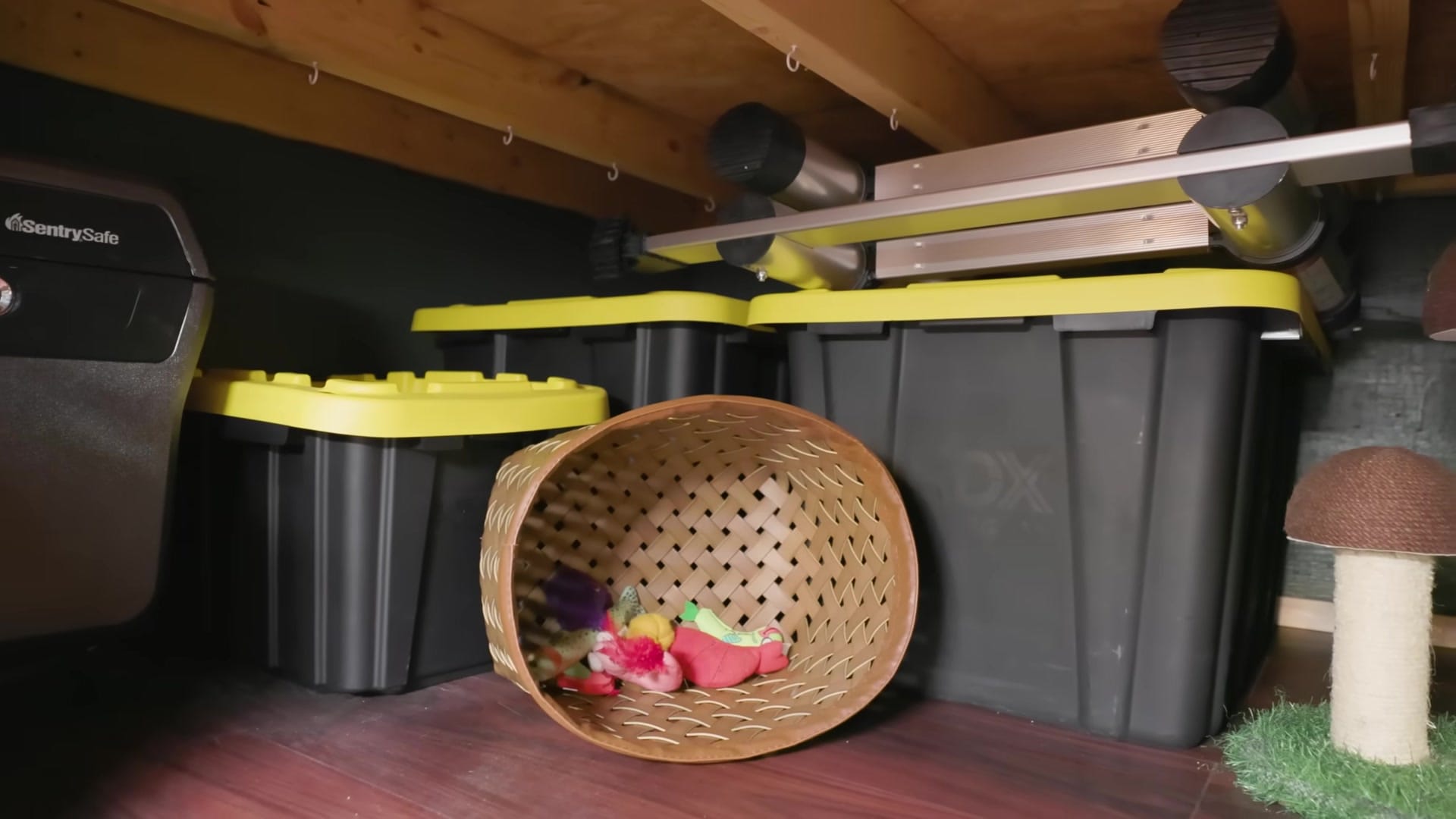
Even the cat gets a dedicated wing beneath the closets, which might be the most pampered storage of all.
Bathroom — a ‘normal’ shower and sustainable fixtures
The bathroom answers the worry most people have about going tiny. Storage climbs the walls, not the floor, so toothbrushes and daily gear sit where hands reach. Hooks and shelves line the sides to keep essentials accessible without bulky cabinets.
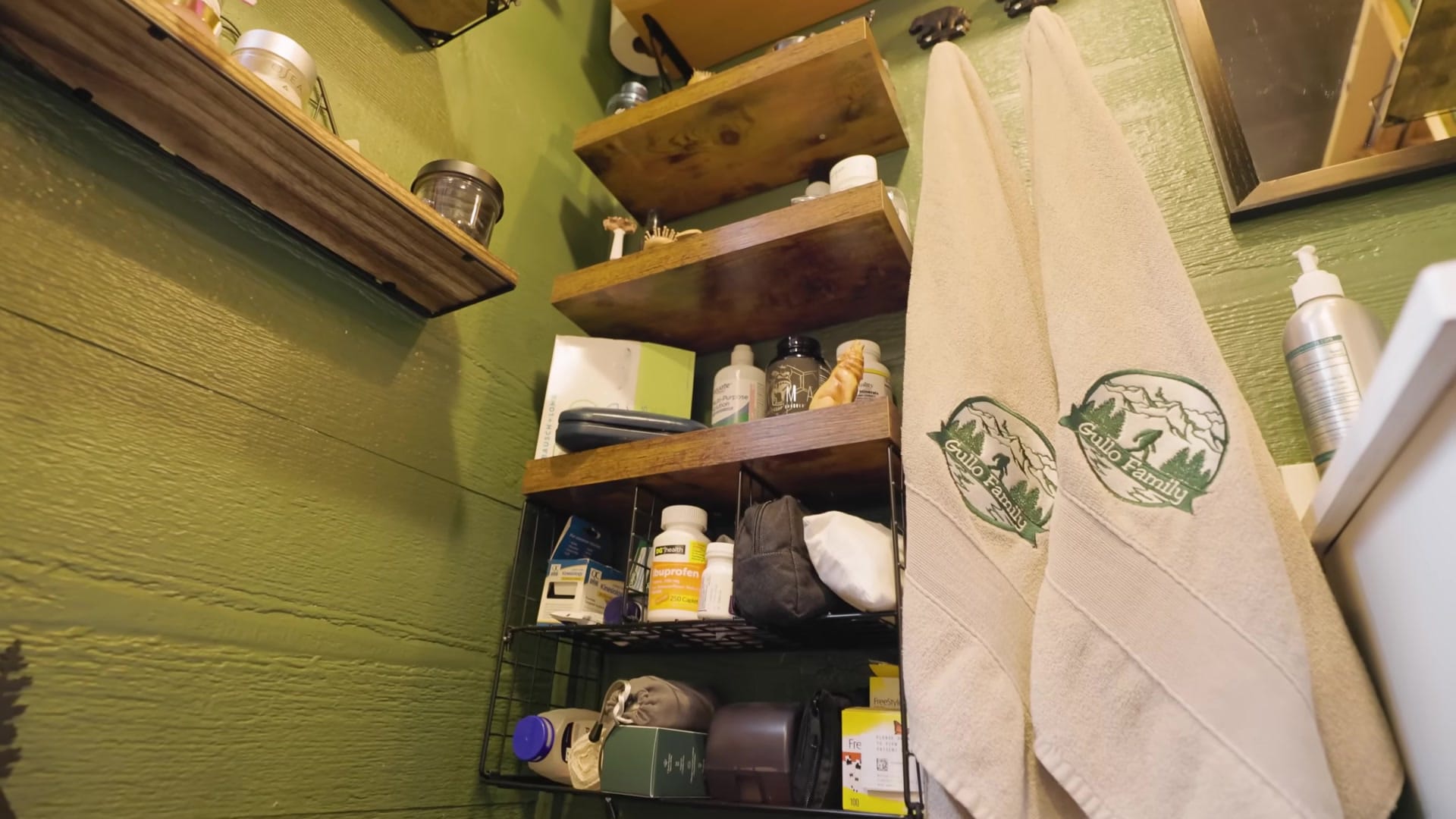
The sink isn’t giant, but it’s not a toy either, and it gets the job done. A future swap to a wood‑style vanity is on the wish list, but function already lives here. The vanity still hides a hair dryer and cleaning supplies, using space most people overlook.
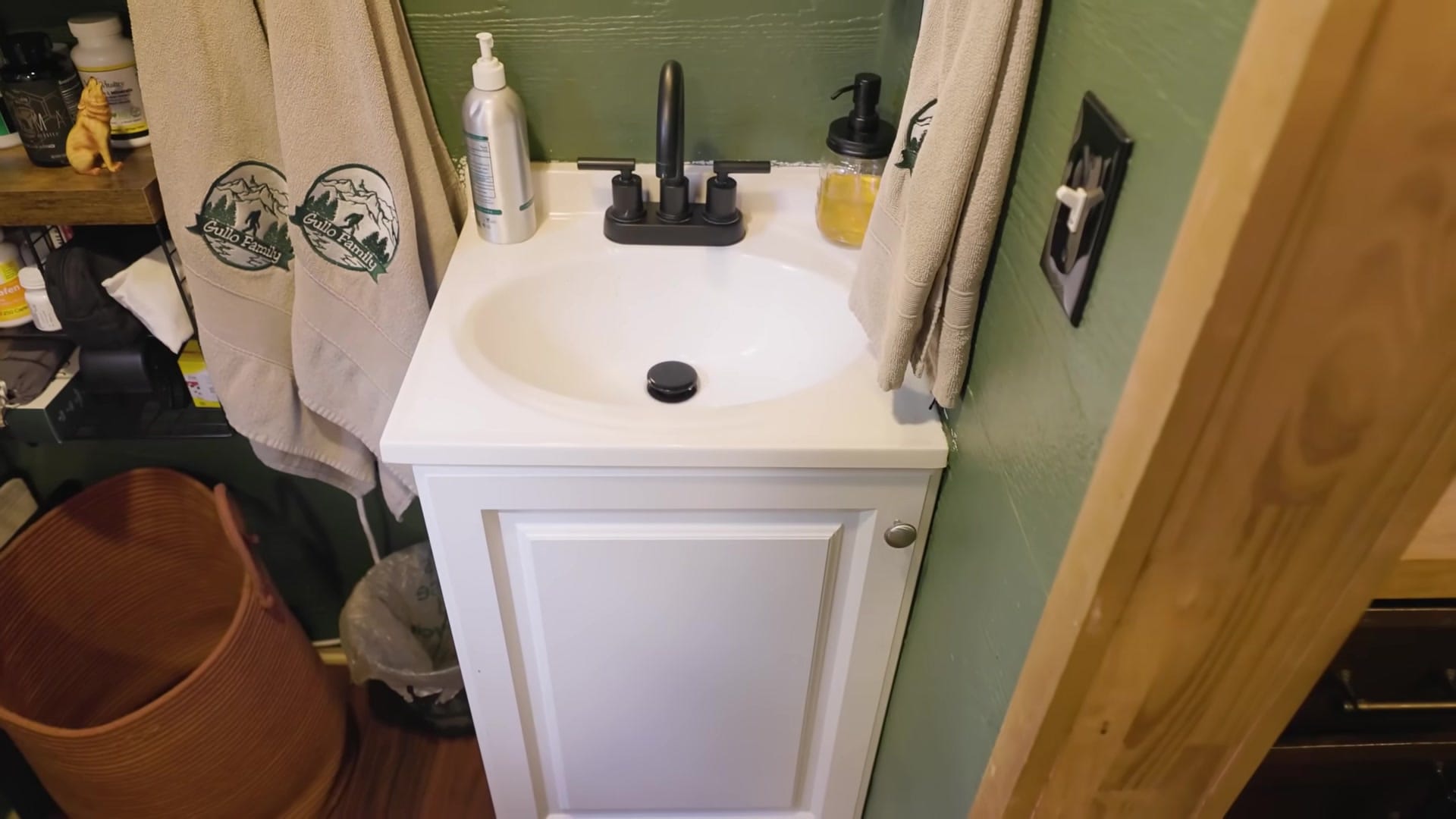
It proves that the small room can still carry a lot. Everything earns its keep without feeling crammed.
A composting toilet came with the house, but they replaced it with a standard low‑flush model that suits their routine.
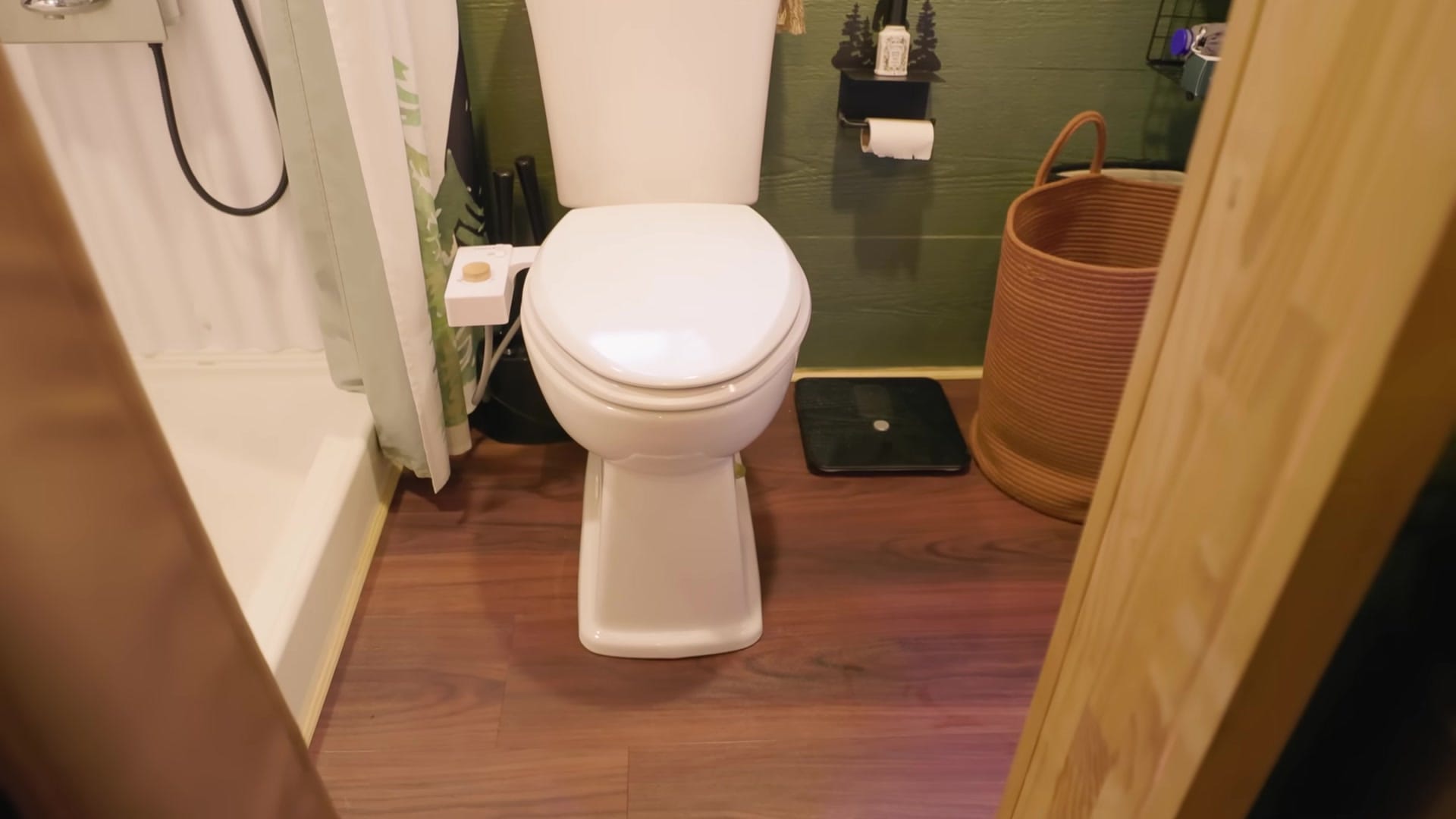
The shower surprises most visitors—spacious, with room to turn and a detachable low‑flow head. It feels as big as past apartments, sometimes bigger, without stealing square footage.

Hot water arrives on demand thanks to a tankless unit outside that fires the second the tap turns. Water pressure holds steady so temperature is the only decision to make.
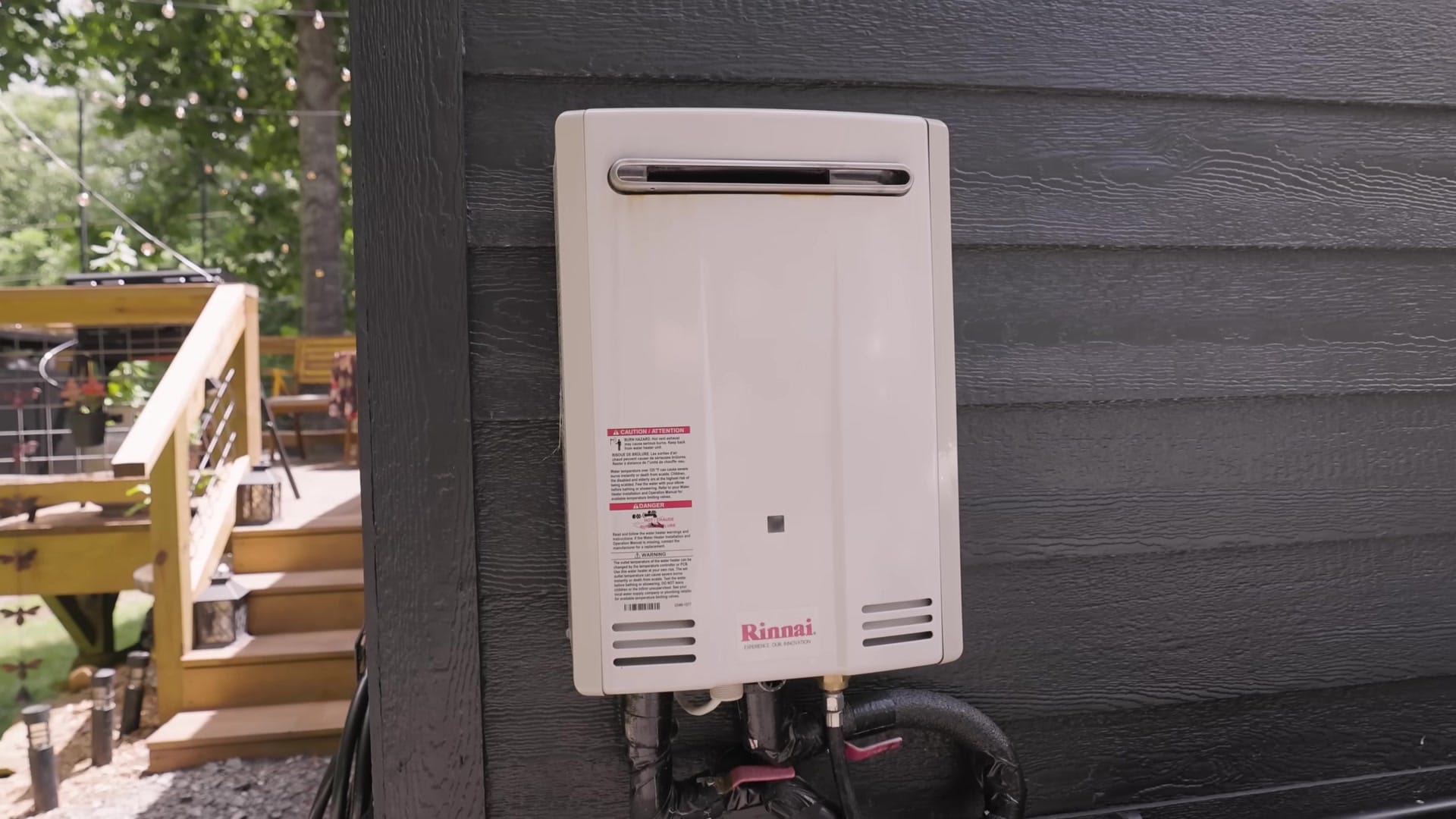
The net effect: familiar comfort, just smarter. Nothing about this bathroom screams compromise.
Costs, upgrades, outdoor life, and the tiny‑house community
Downsizing wasn’t just about space; it reset the budget and the to‑do list. They bought their tiny home for $34,000 and immediately swapped a few key systems to fit their lives.
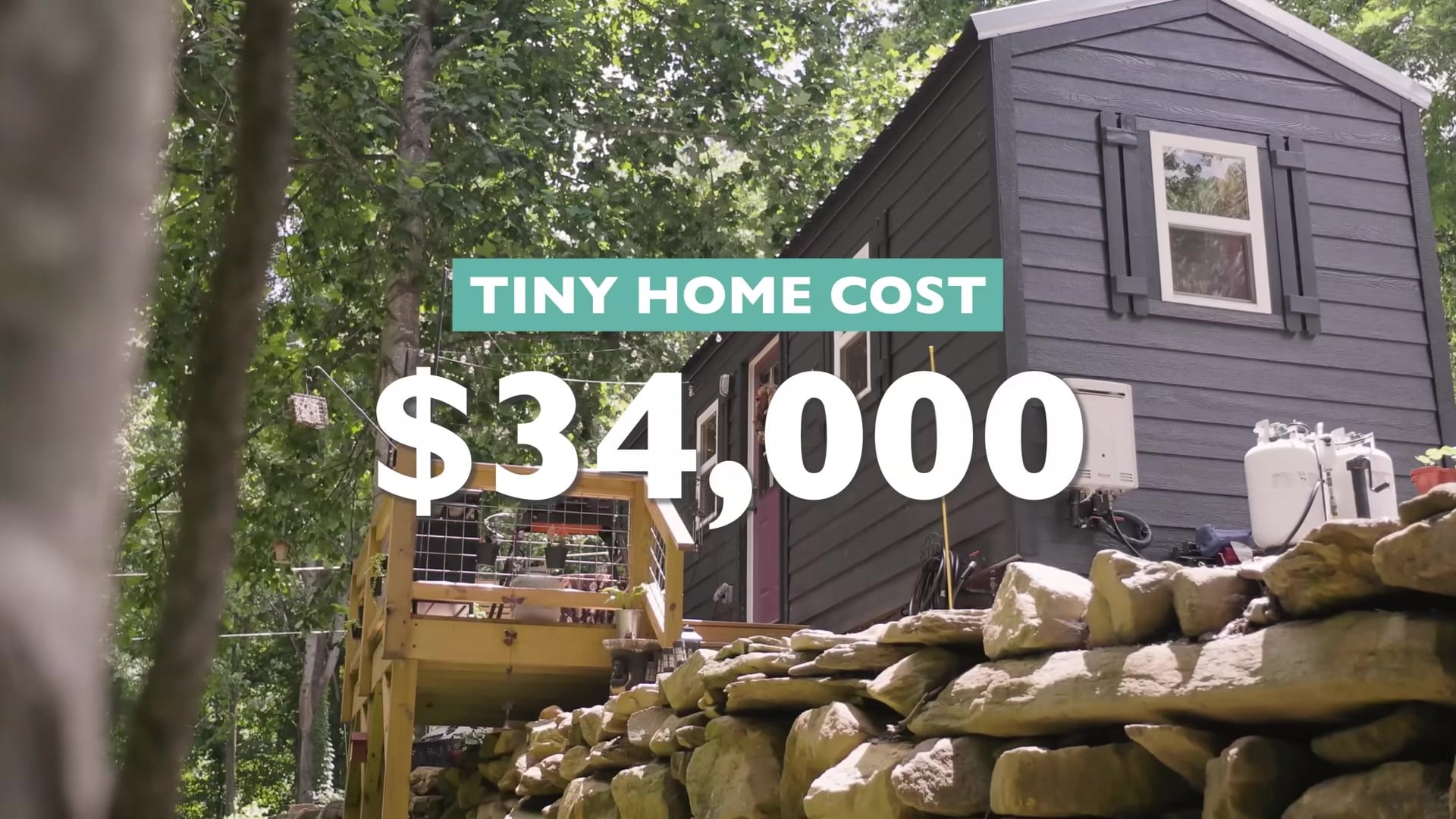
Newer pieces joined the mix: fridge, standard toilet, tankless hot water, a mini‑split, and a propane setup that made seasons easy. Factor in furniture after a big purge and the total landed around $60,000, upgrades included.

Back in Buffalo, the house payment sat near $650 before utilities and taxes. After the add‑ons, the monthly outlay ran to roughly eleven hundred. Here, predictability wins—fewer line items, fewer surprises. The difference shows up as time and breathing room.
In the tiny house community, the monthly total averages about six to seven hundred dollars, with rent and basics rolled in.
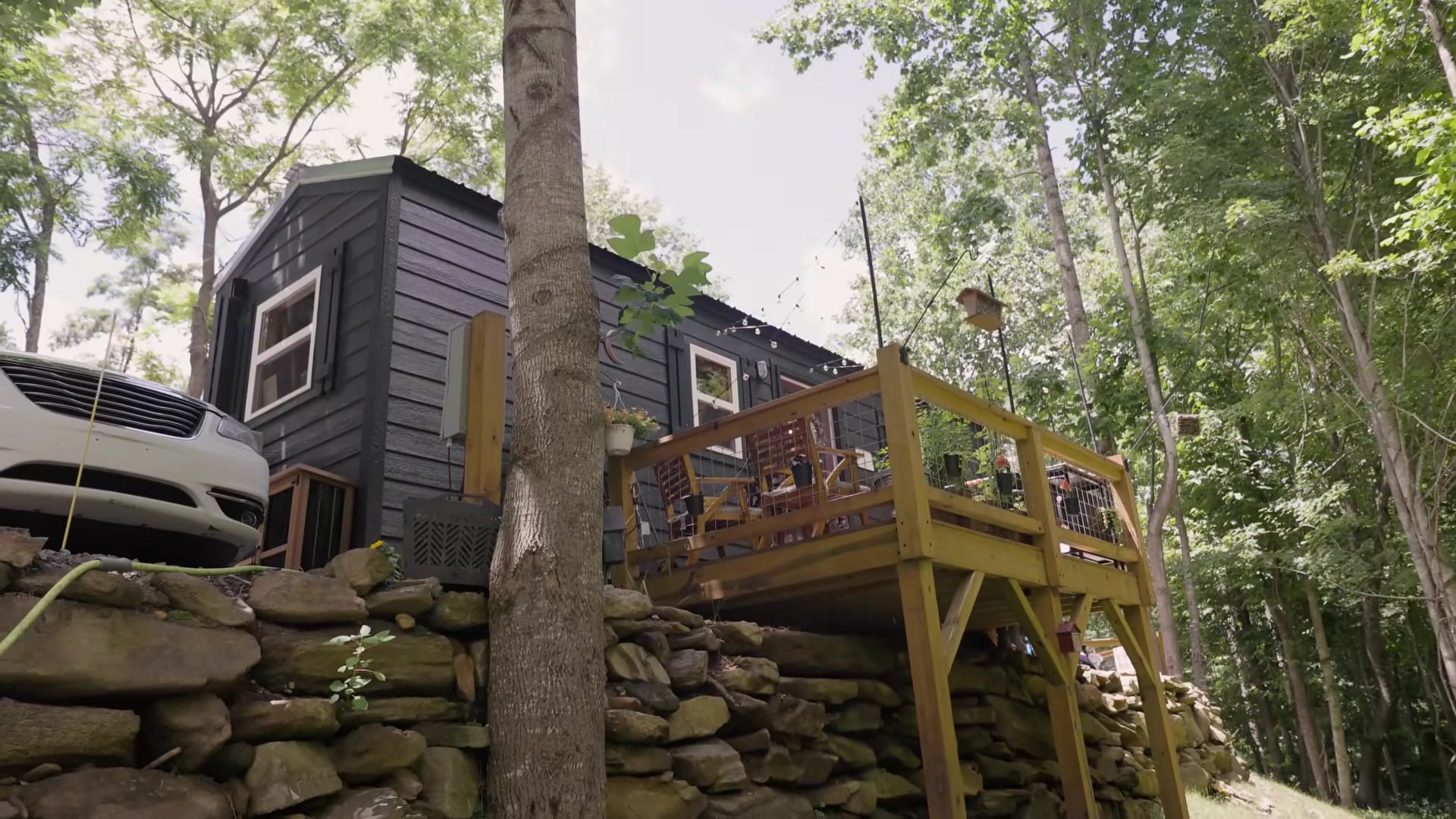
Savings snowballed: cars, student loans, and credit cards were paid down using the margin they created. Outside, life expands—the patio turns into a second kitchen with a black stone and a prep cart ready for chopping.

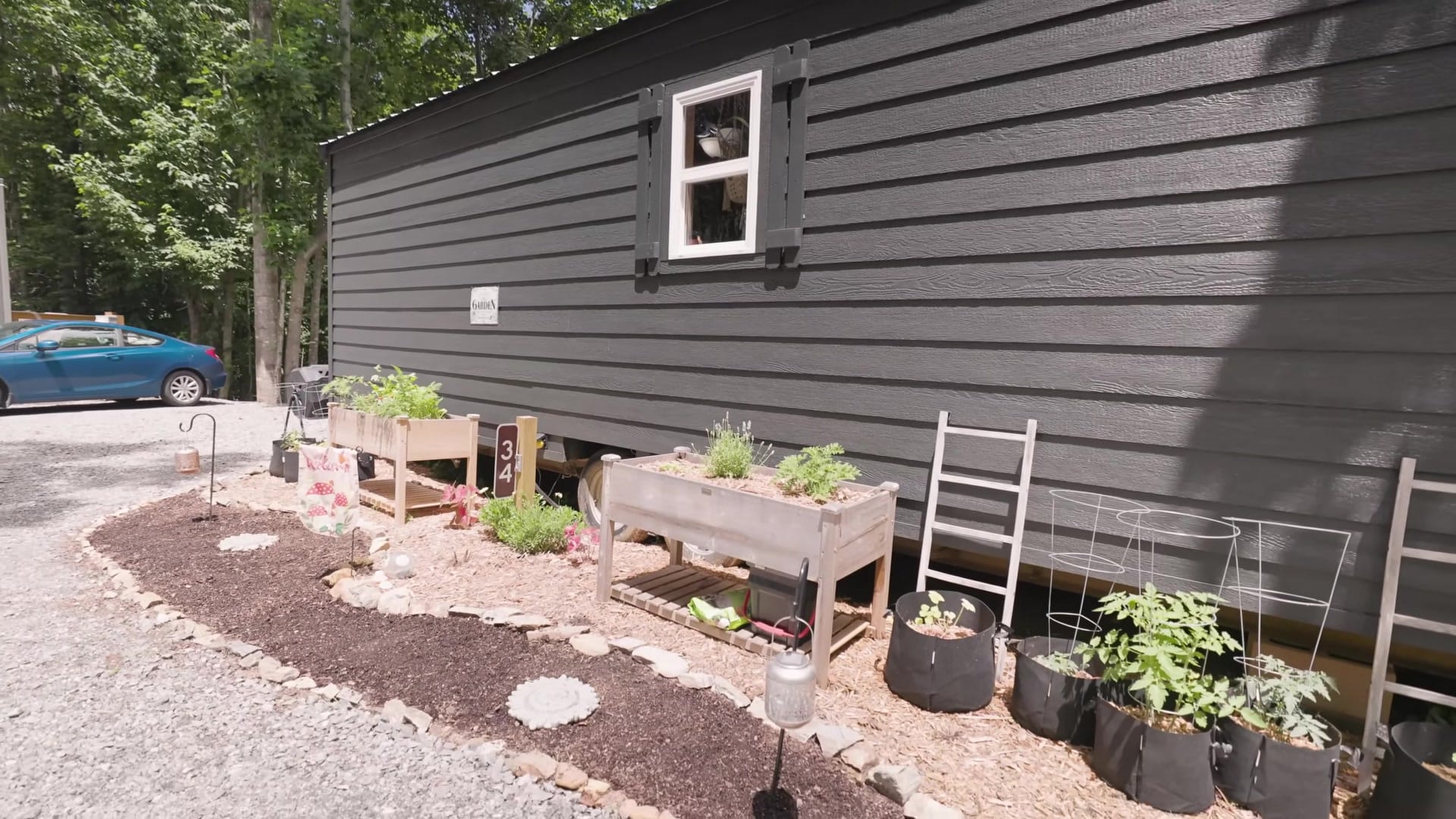
They eat dinners and sip coffee outdoors, using the fresh air as part of the floor plan. A container garden fills in the gaps, with plans for bee‑ and bird‑friendly flowers next. The community piece surprised them most; ten houses close together make neighbors into a support system.

Shared days spent tubing or exploring new restaurants now feel like part of the design.