What Happens When You Trade 4,000 ft² for 300 of Stone
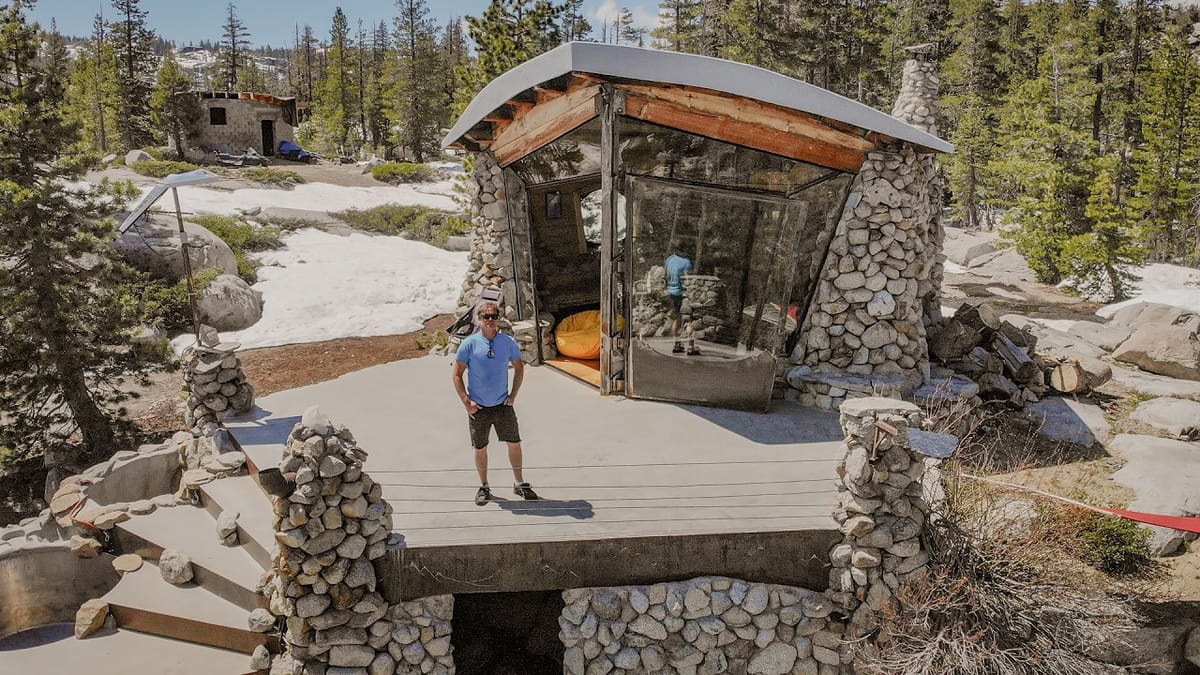
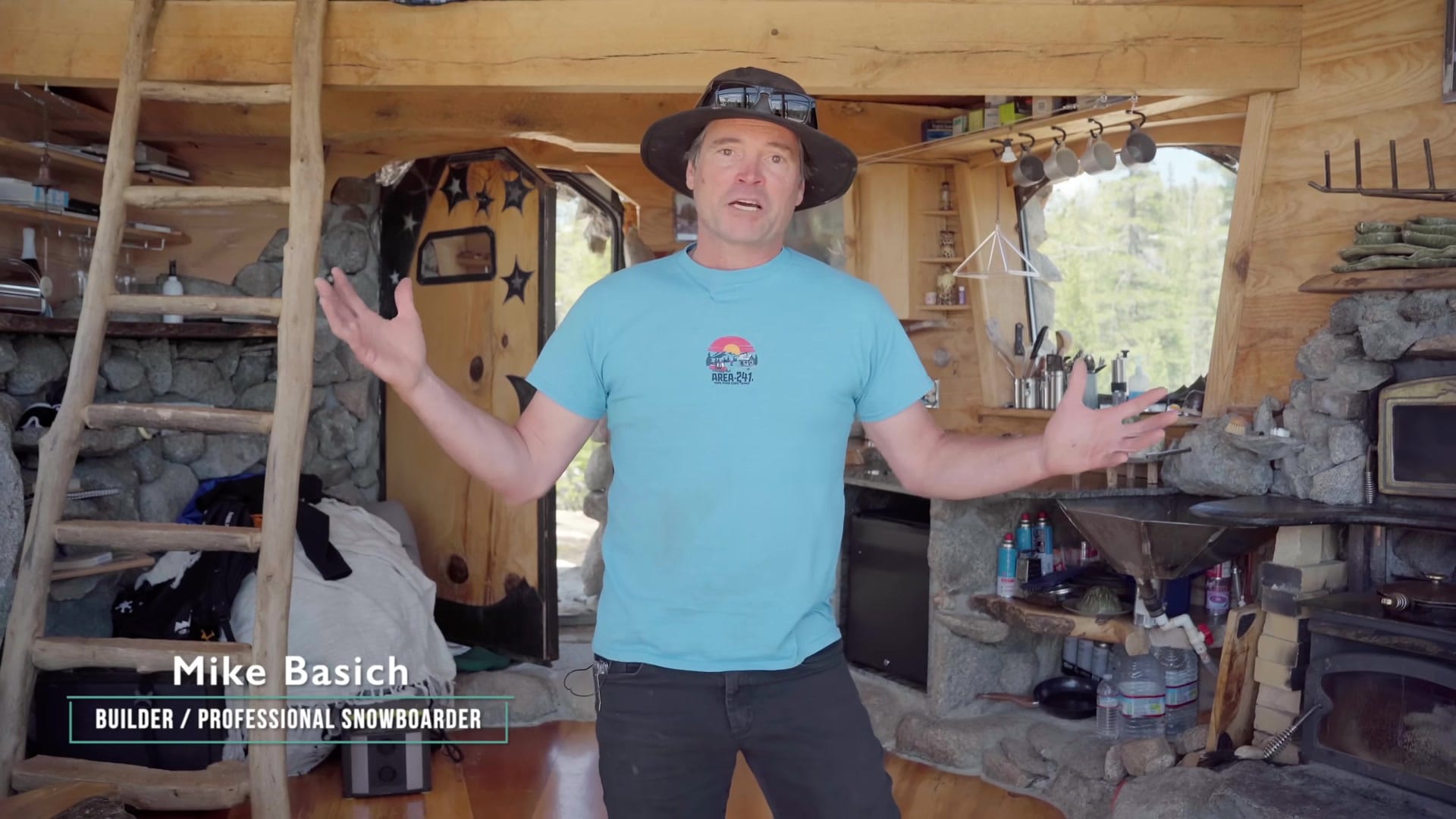
Some homes are built with blueprints and budgets. This one was built with patience, instinct, and a deep love for snow. The result is a hand‑made stone tiny house that feels both ancient and alive—warm where it needs to be, cool where it counts, and always in conversation with the mountain around it.
Why He Walked Away from a 4,000 ft² Life
Mike chose a different pace. He left the big house lifestyle that demanded cleaning, commuting, and constant payments, and he drove until the road disappeared. Then he kept going on instinct—toward the kind of life that trades square footage for time, and noise for quiet.
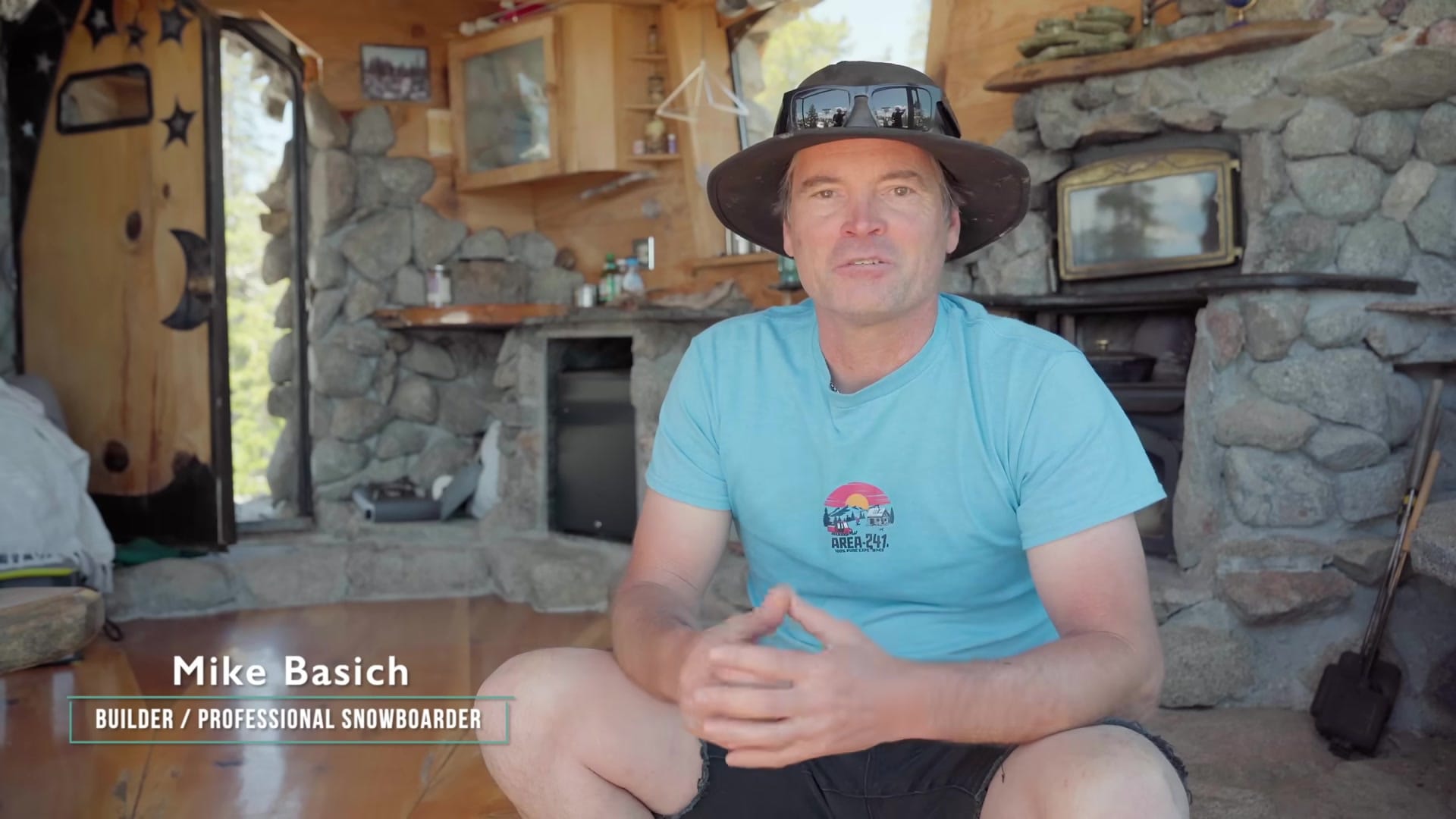
Twenty years ago, he decided to go off‑grid on 40 acres, 35 minutes from Lake Tahoe.
There was no power and not even a road to where the house now sits.
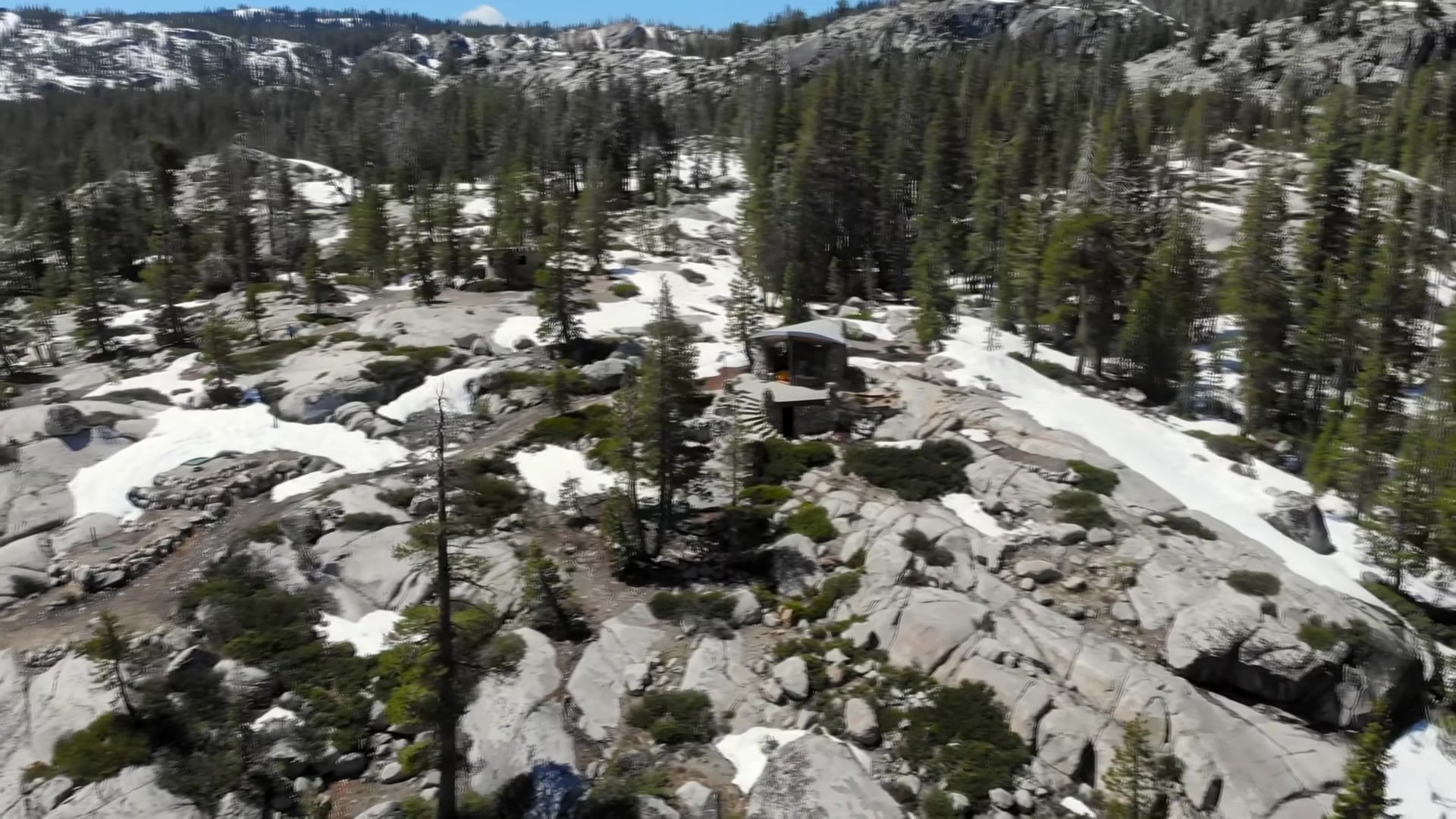
He welcomes you to a tiny house built out of rock, by hand, on land that felt right from the start.
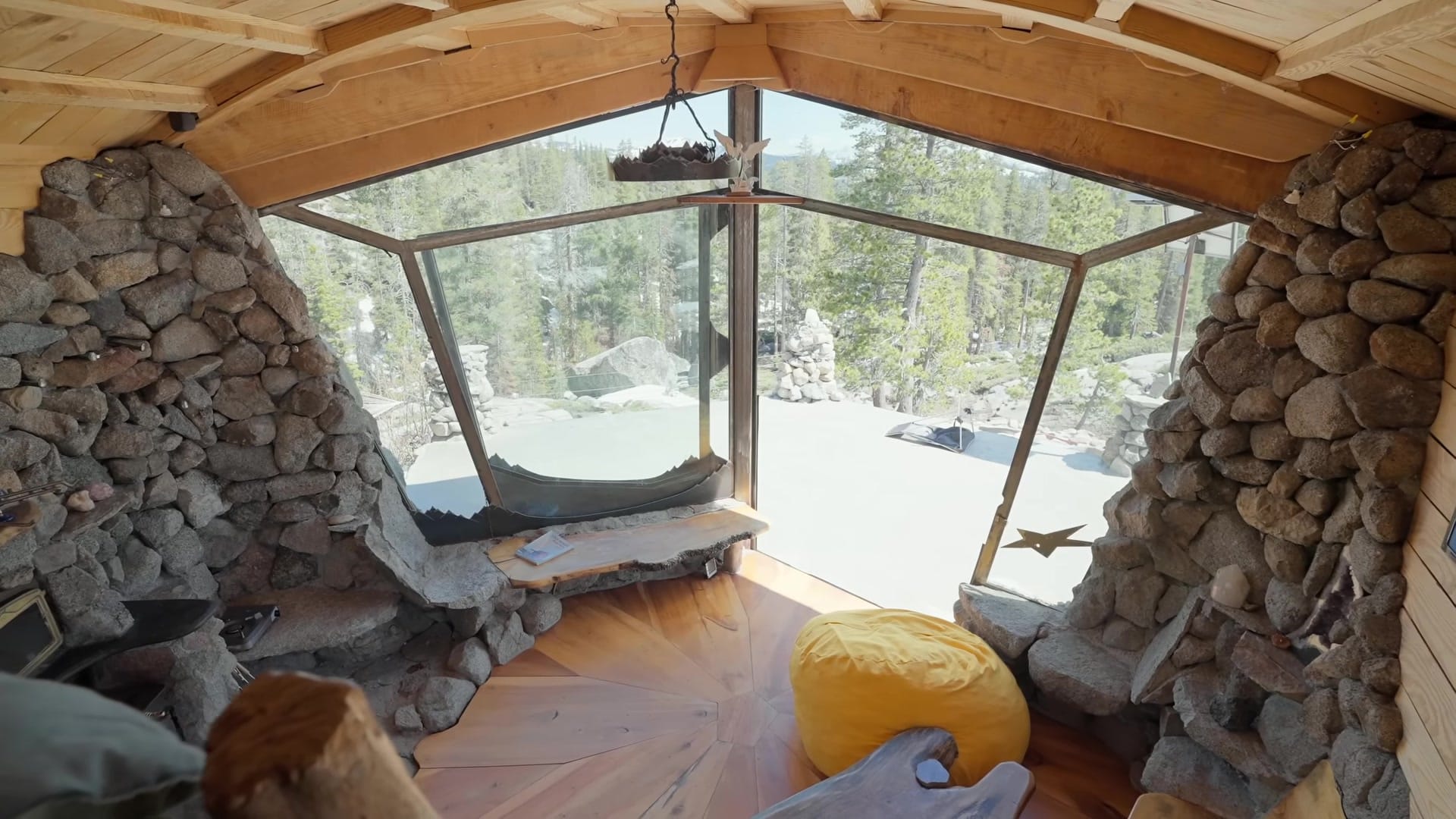
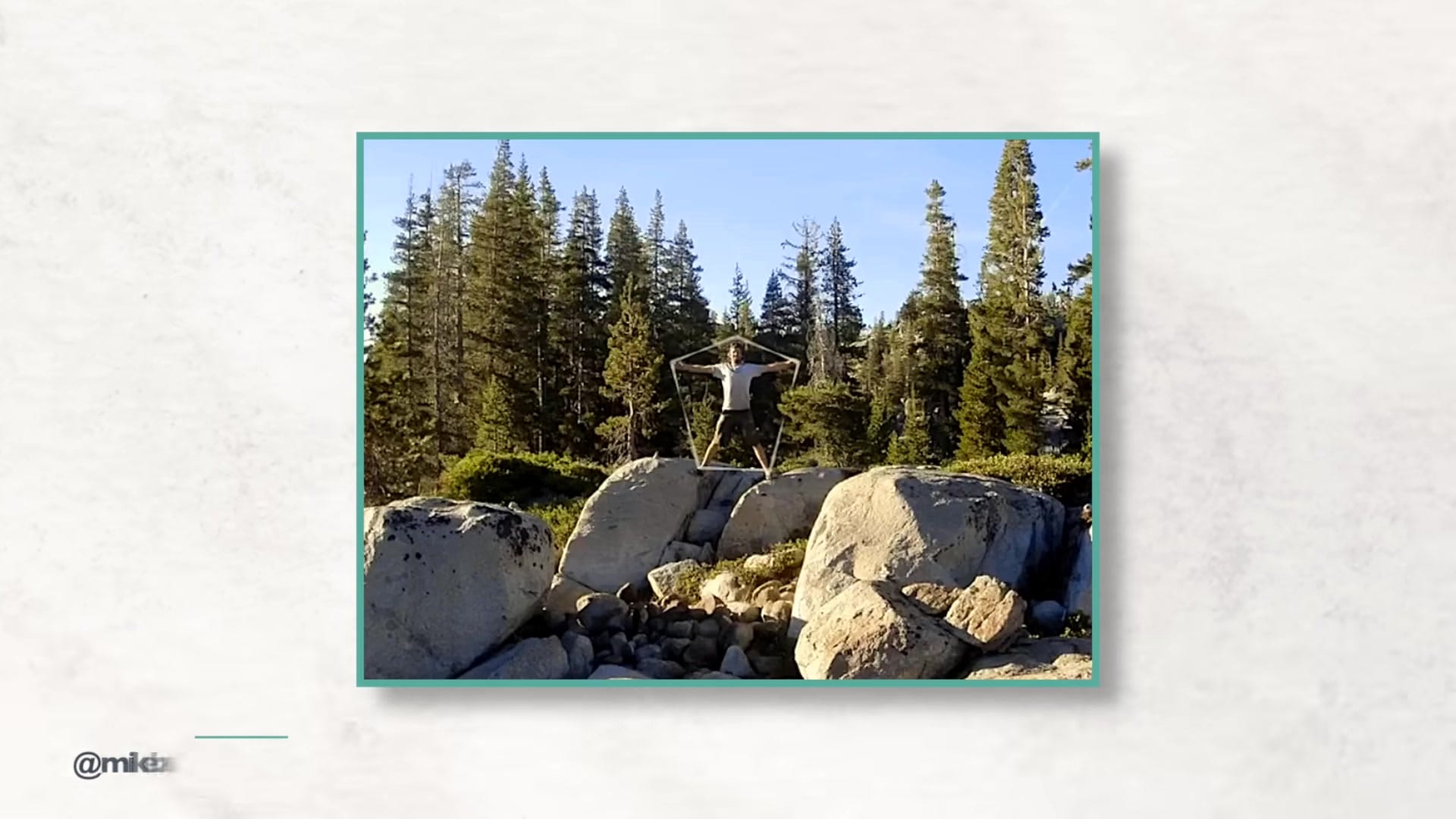
He shaped the home as a pentagon, guided by the golden ratio and the way a body naturally measures space.
He bought the land for $225,000—a price lowered by winter access he saw as a feature, not a flaw.
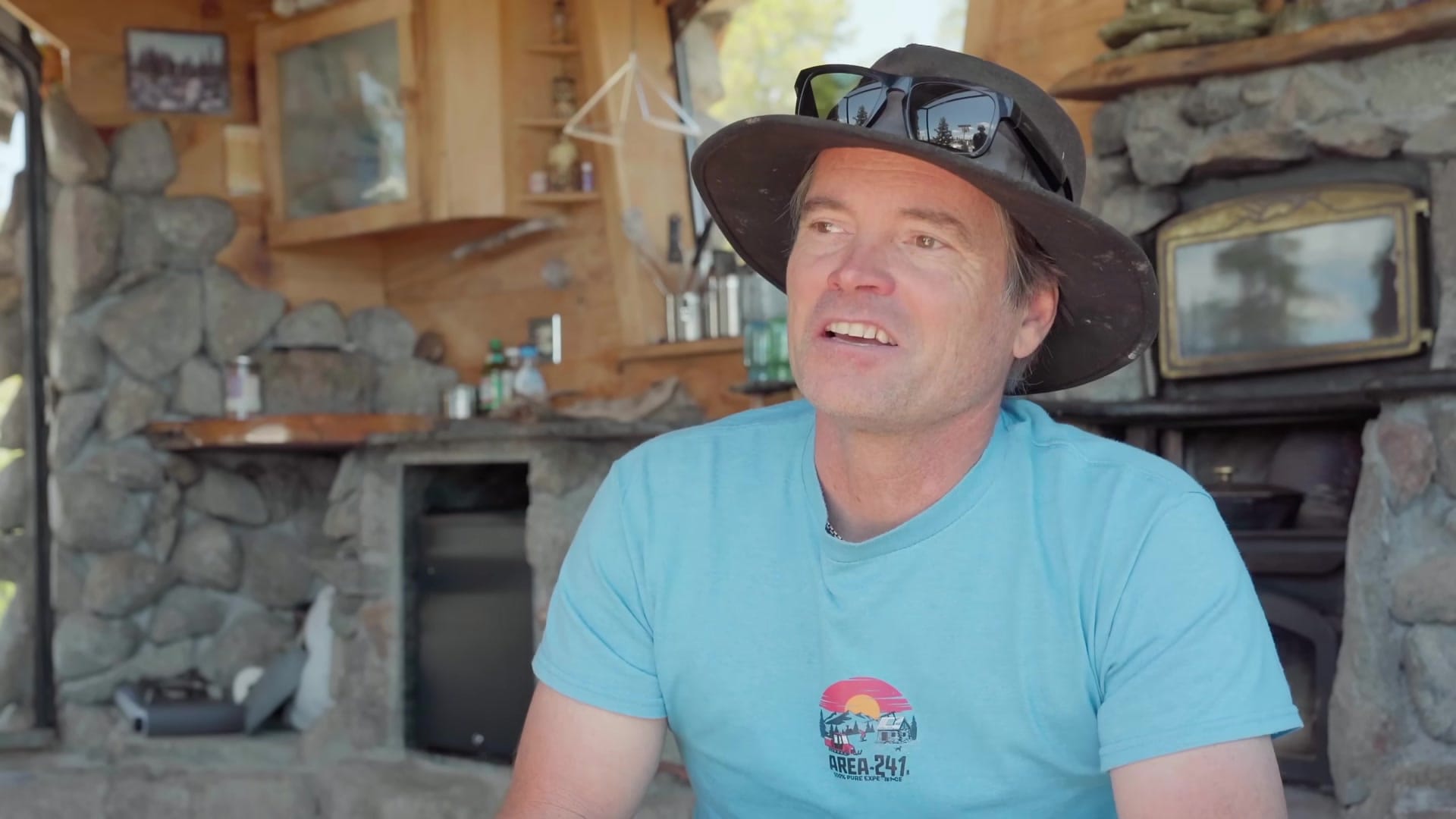
The Kitchen — Marble, Rock Shelves and a Soapstone Oven
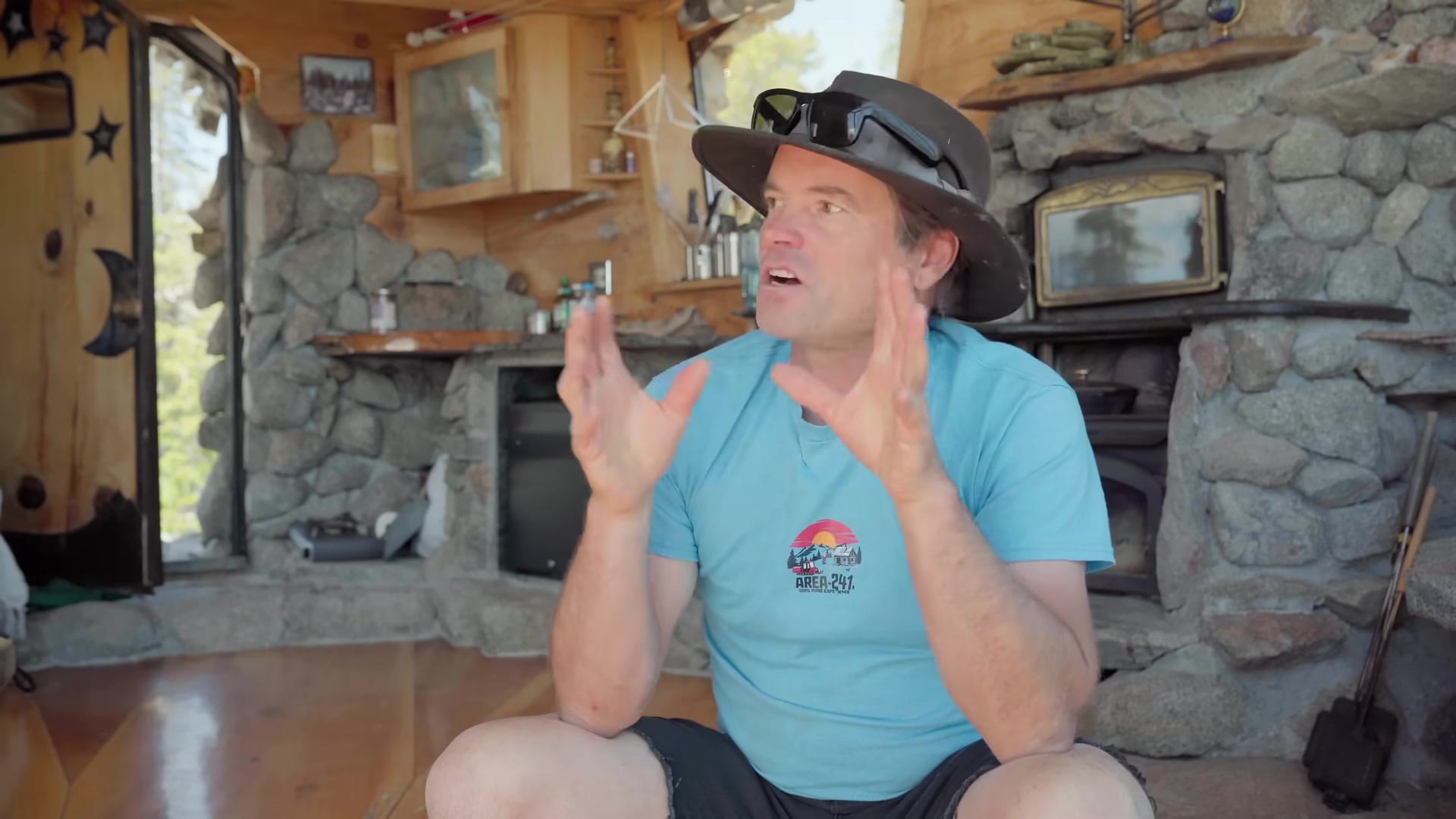
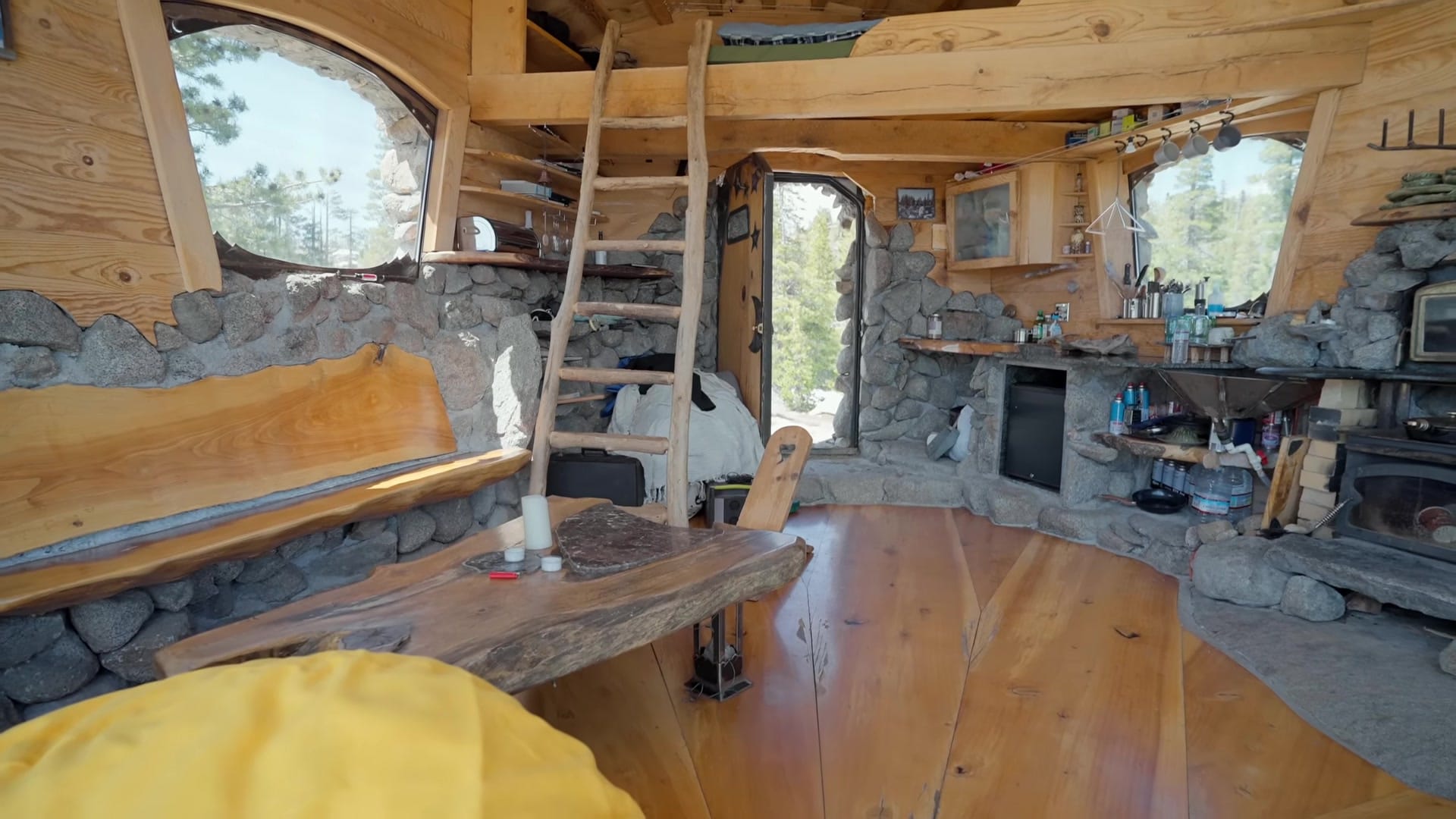
Step inside and the kitchen appears first, by design. It’s where the day begins—drop your gloves, make something warm, watch the light move across the stone. Simple tools, smart materials, and nothing unnecessary.
A hand‑milled wood counter greets you at the door.
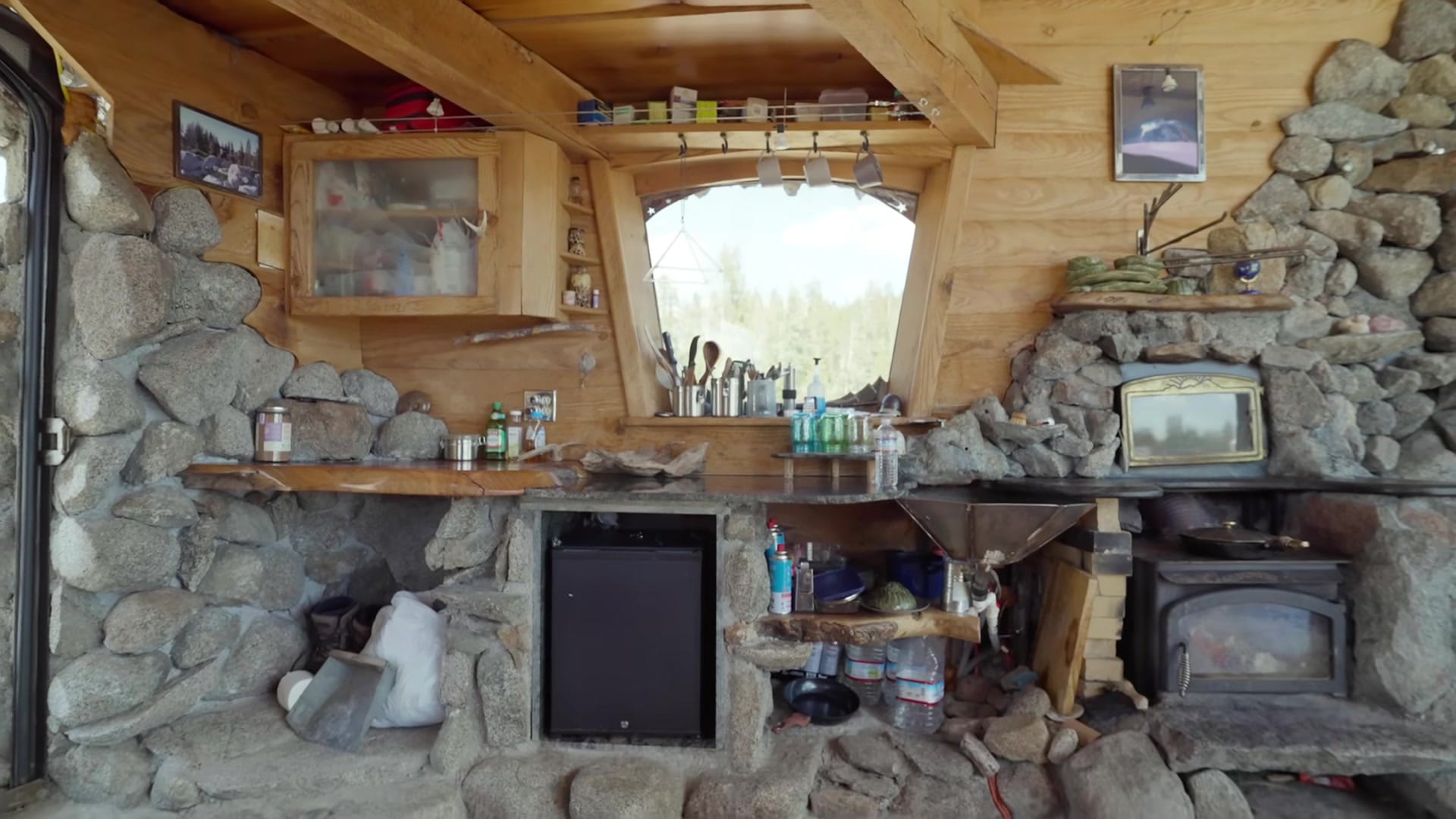
The main work surface is marble salvaged from an old job site; it holds a steady, food‑friendly temperature.
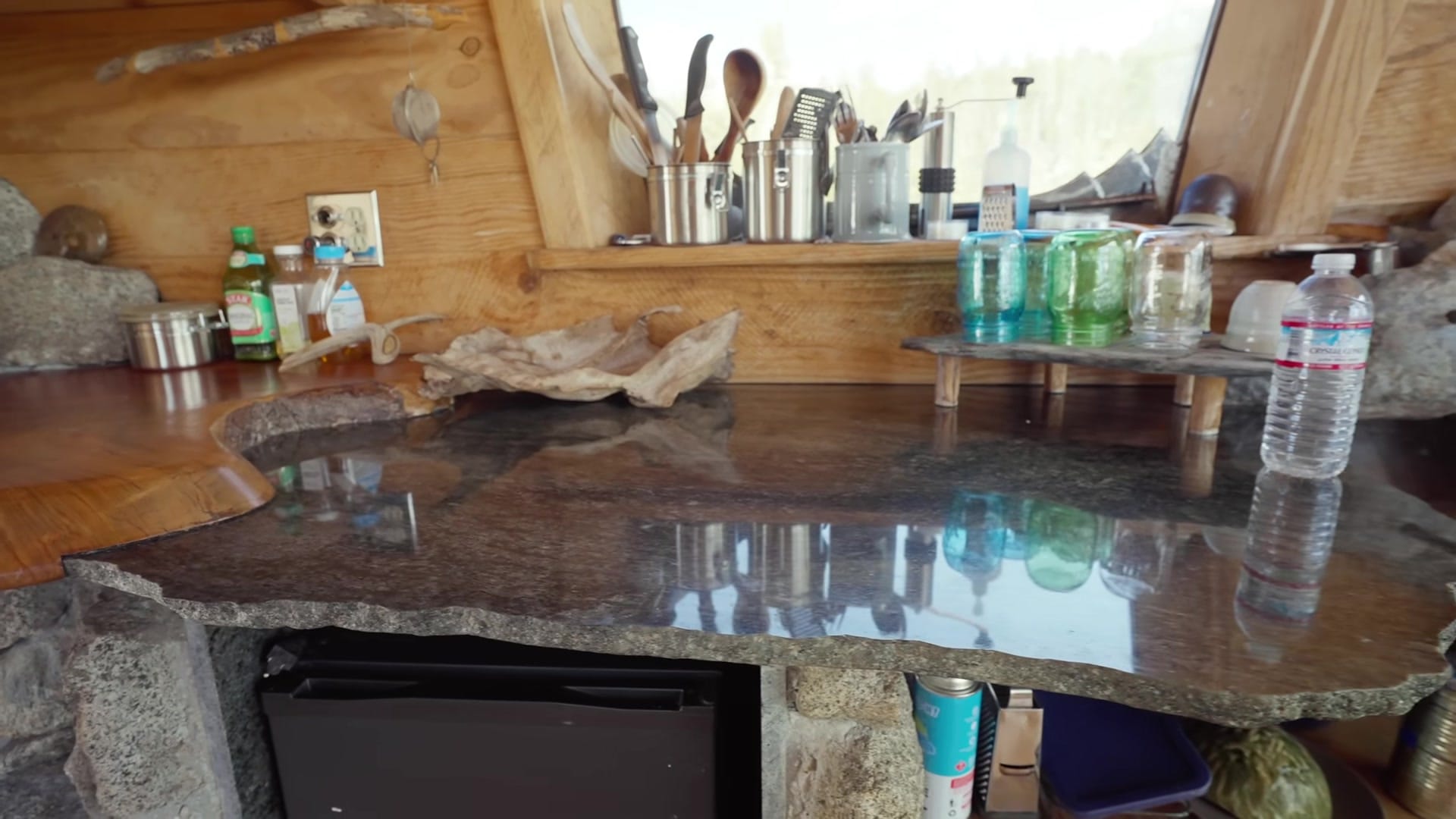
A nearby window opens to become an ice chest in winter—no humming appliance, just the right cold when the snow arrives.
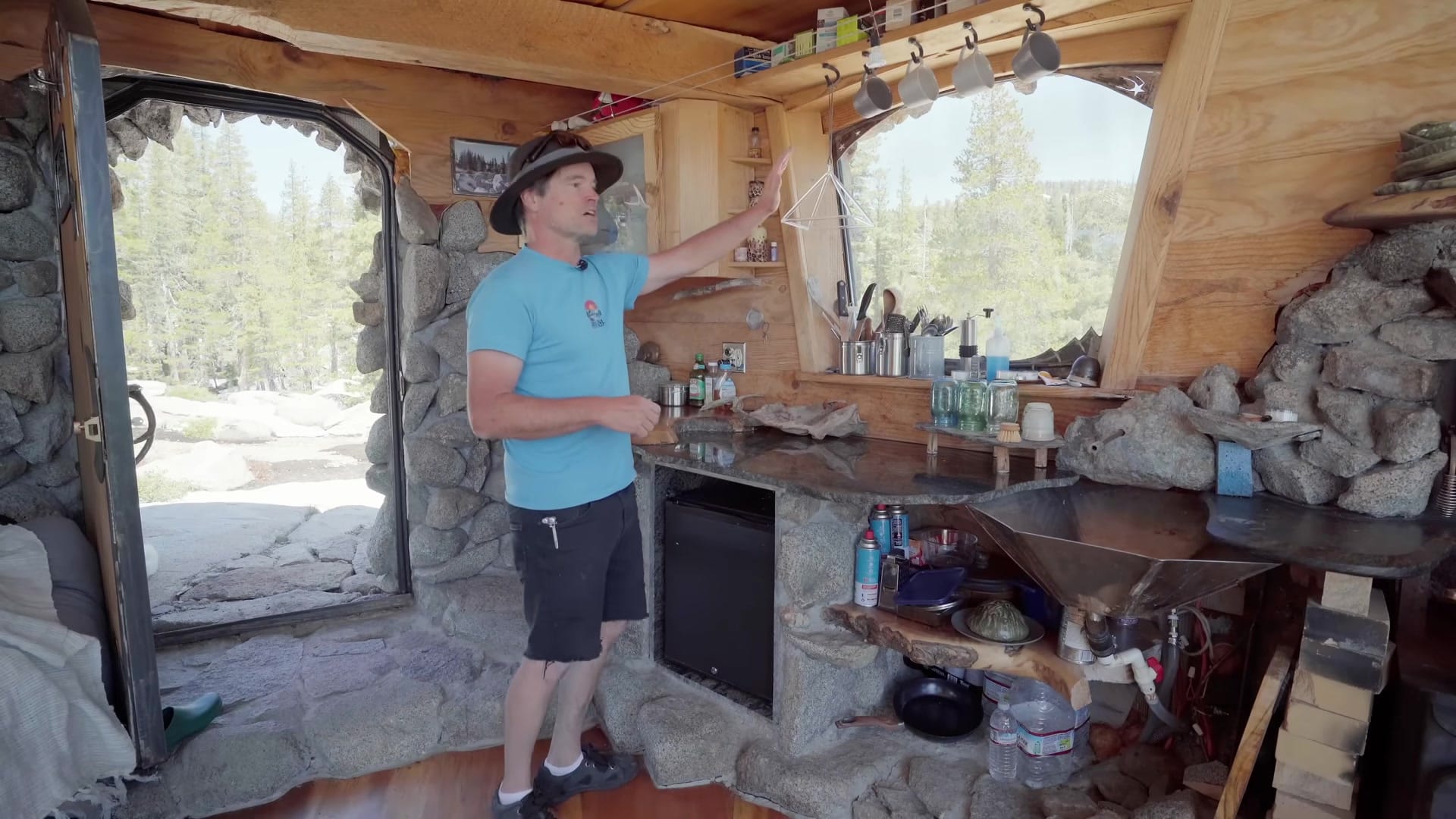
In summer, a $100 fridge that runs on a cigarette socket steps in when needed.
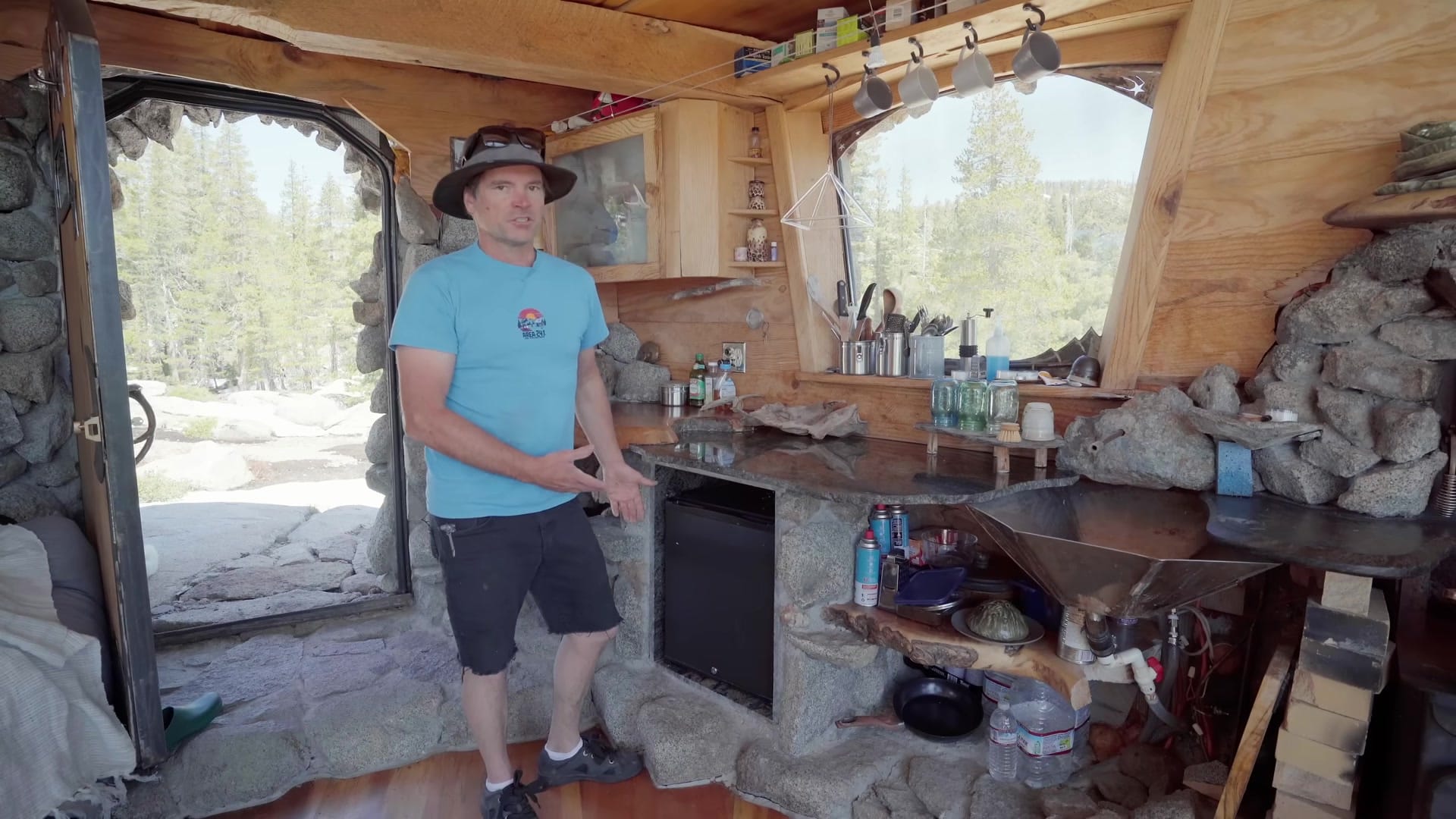
The space runs on 12‑volt sockets with an inverter only when necessary, because skipping toasters and hair dryers keeps the system simple.
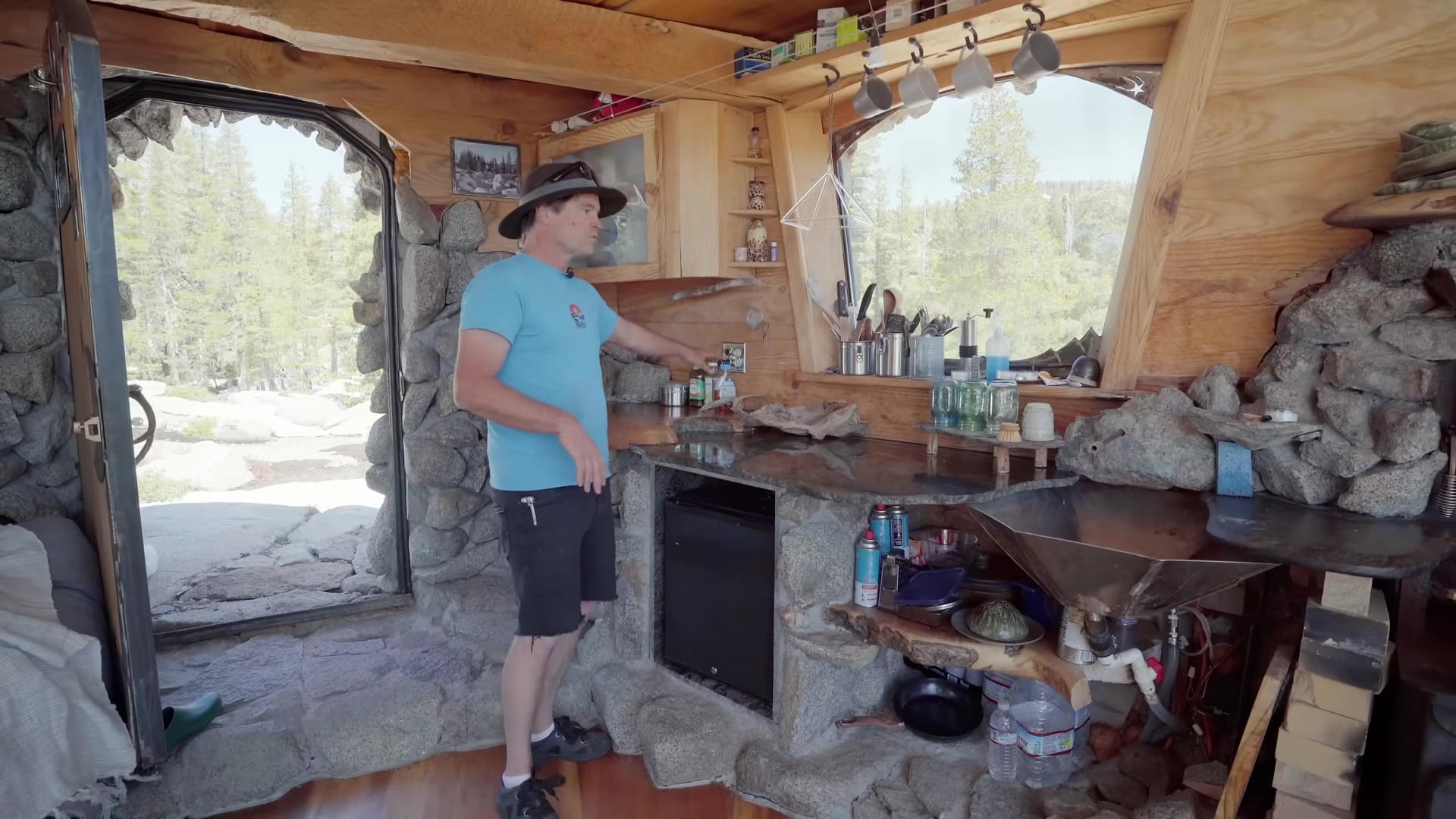
He welded a stainless steel sink as a first‑time project and tied it to a 12‑volt RV pump on a switch for precise control.
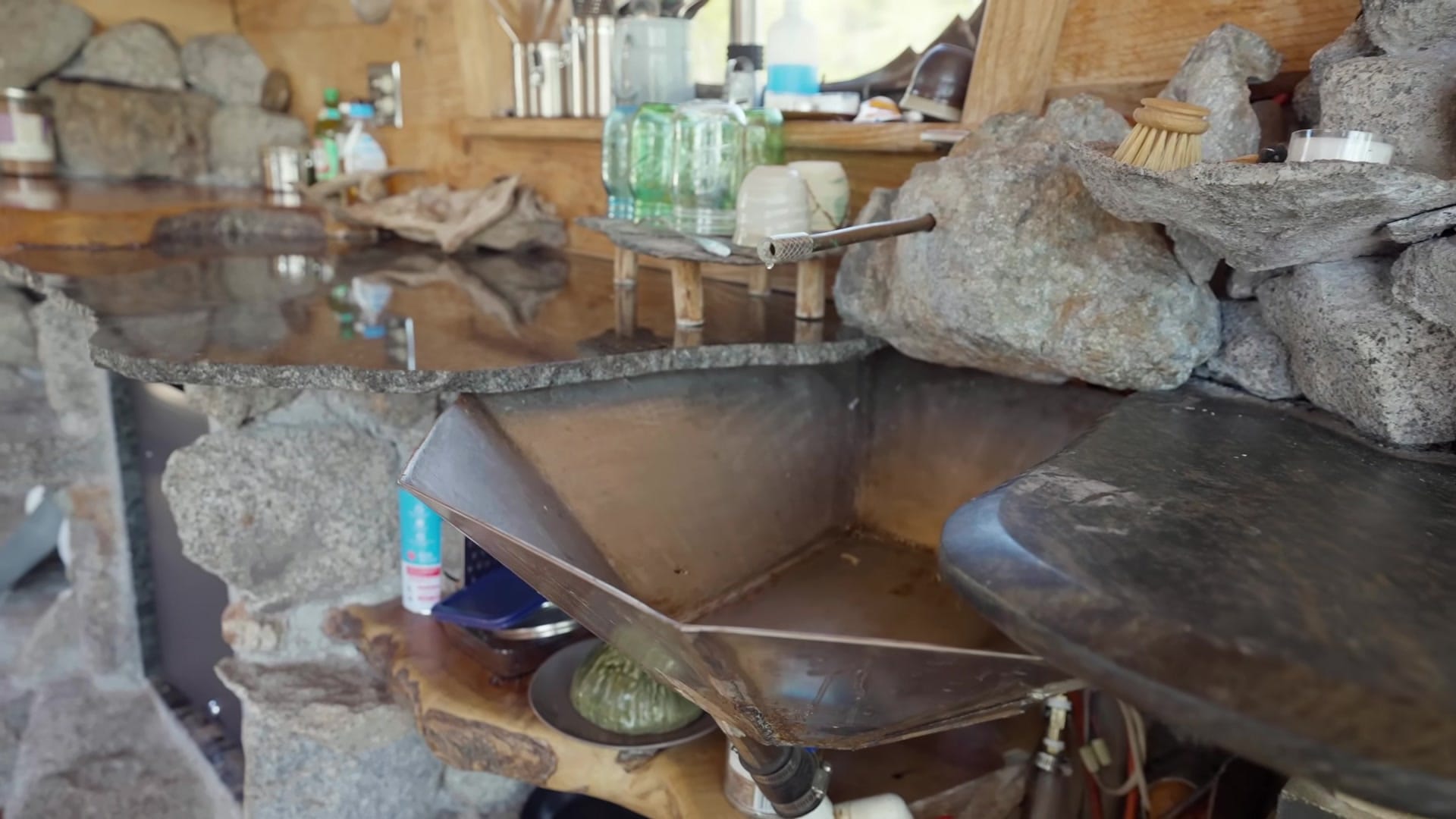
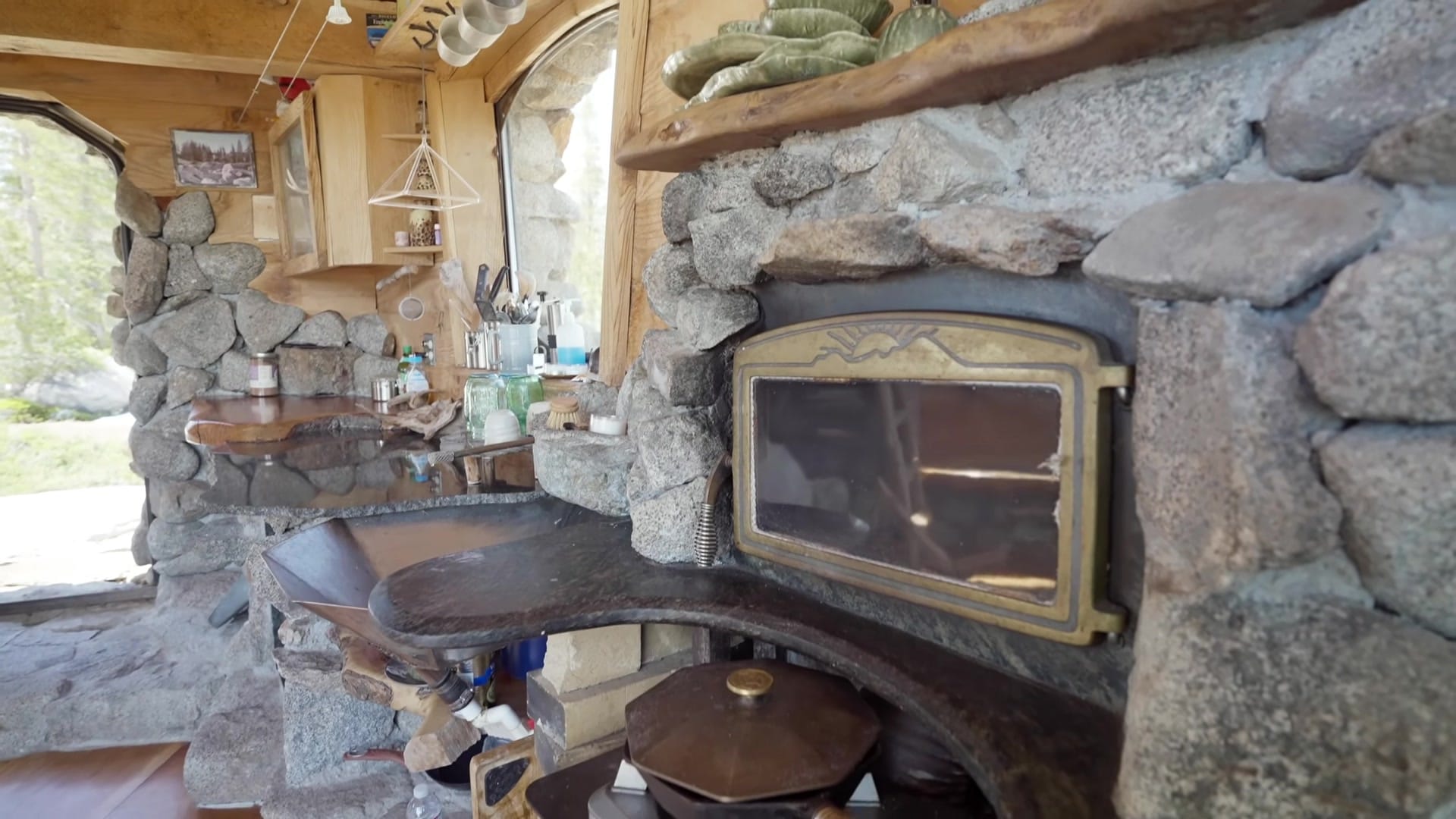
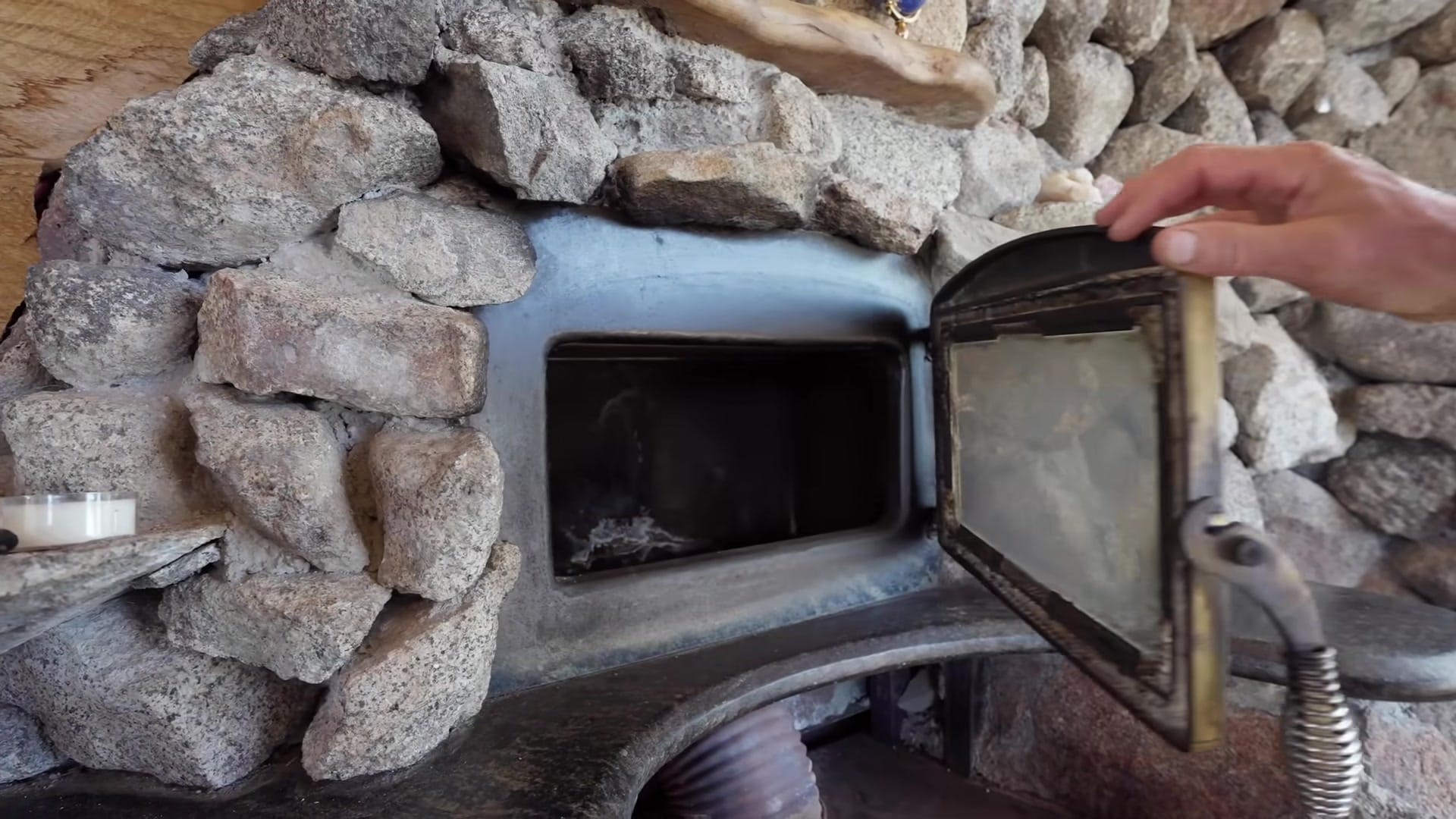
When the fire’s going, smoke passes through a soapstone box beneath the hearth, creating an oven that reaches about 400 degrees for pizzas and cookies.
Living Room & Rockwork — How the House Breathes Heat
The living room isn’t large. It doesn’t need to be. A built‑in bench, a low table, and light pouring across the floor—everything tucked into stone so the room feels open, not crowded. It’s a social space where someone can cook while others thaw out and watch the weather shift.
The fireplace is the heart—bought for this place and built into the plan from the start.
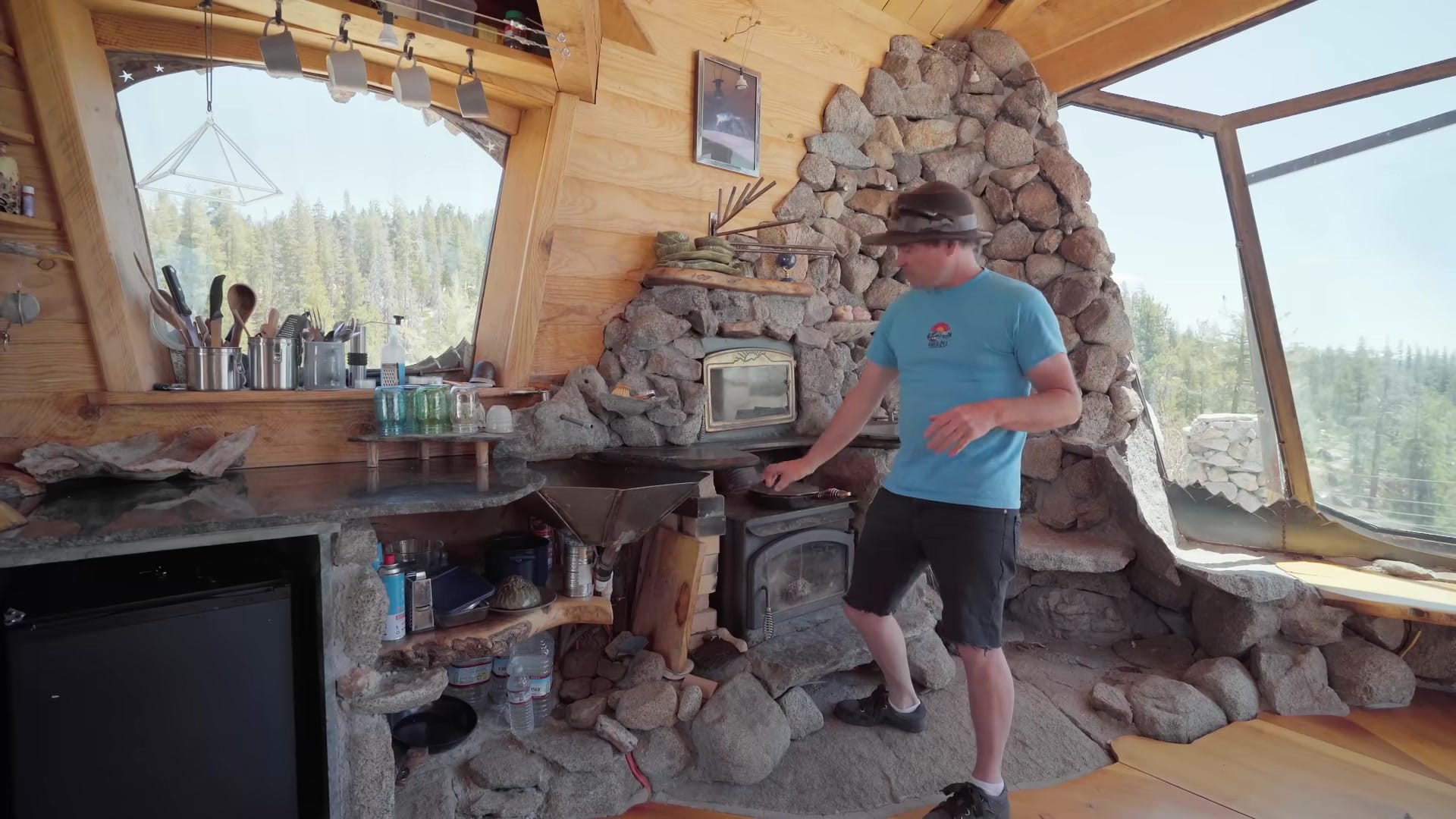
The smoke runs beneath the floor and around a soapstone oven, turning heat into both warmth and cooking power.
It heats the home well and doubles as a drying rack zone for snow gear.
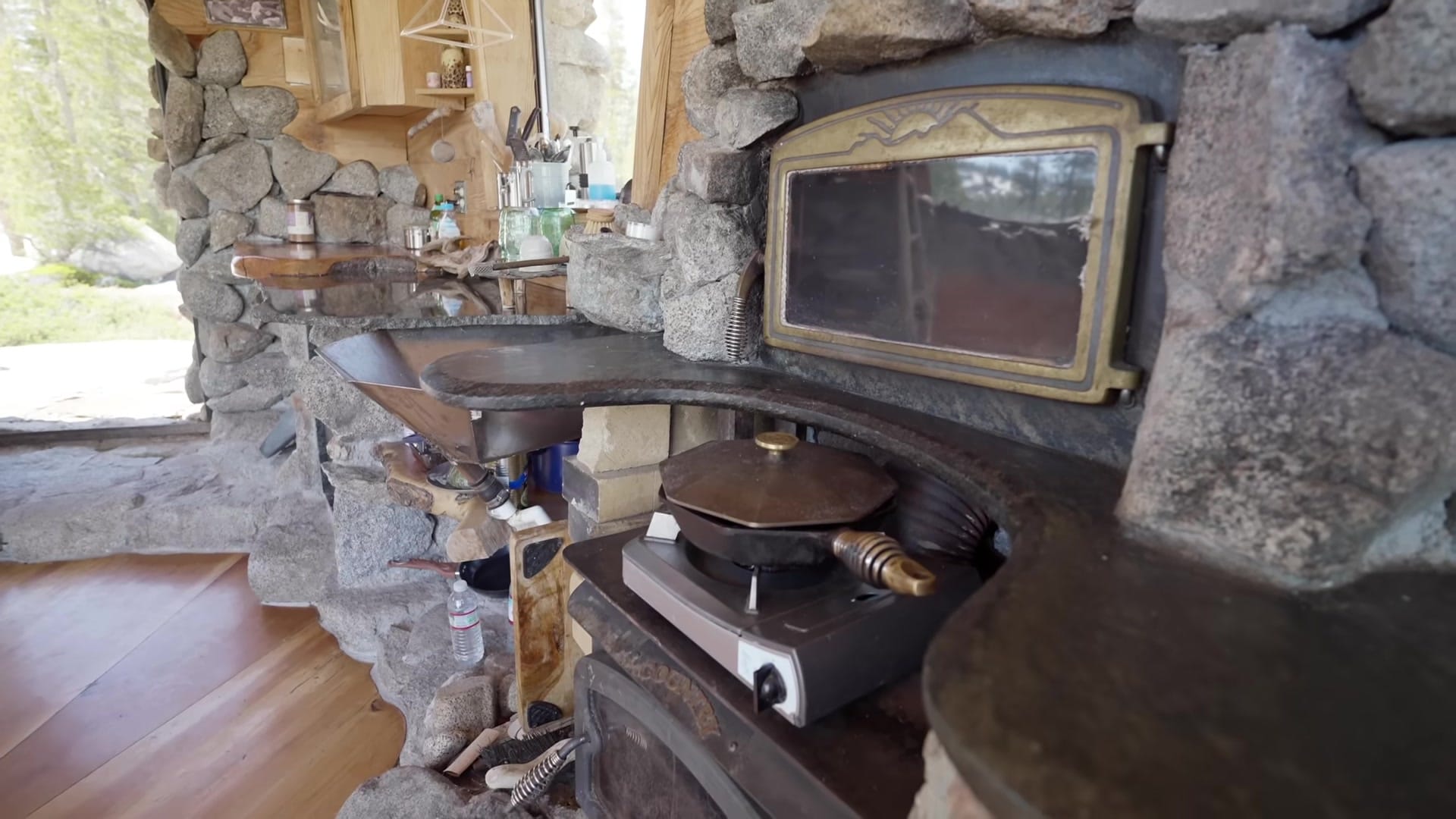
After a day outside, there’s nothing more soothing than sitting by wood fire.
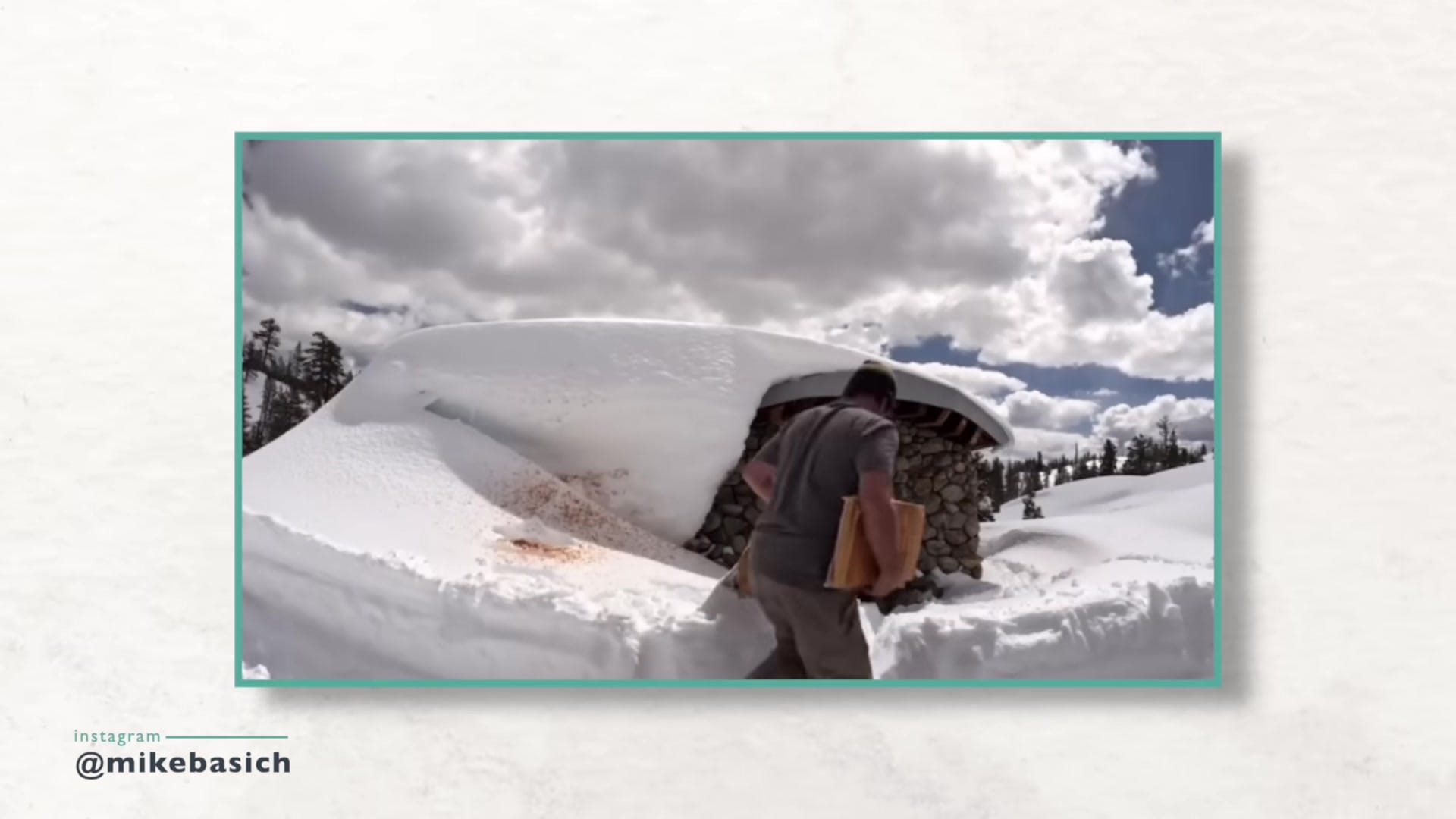
The fuel comes from standing dead beetle‑kill wood around the property, hauled in over snow when needed.
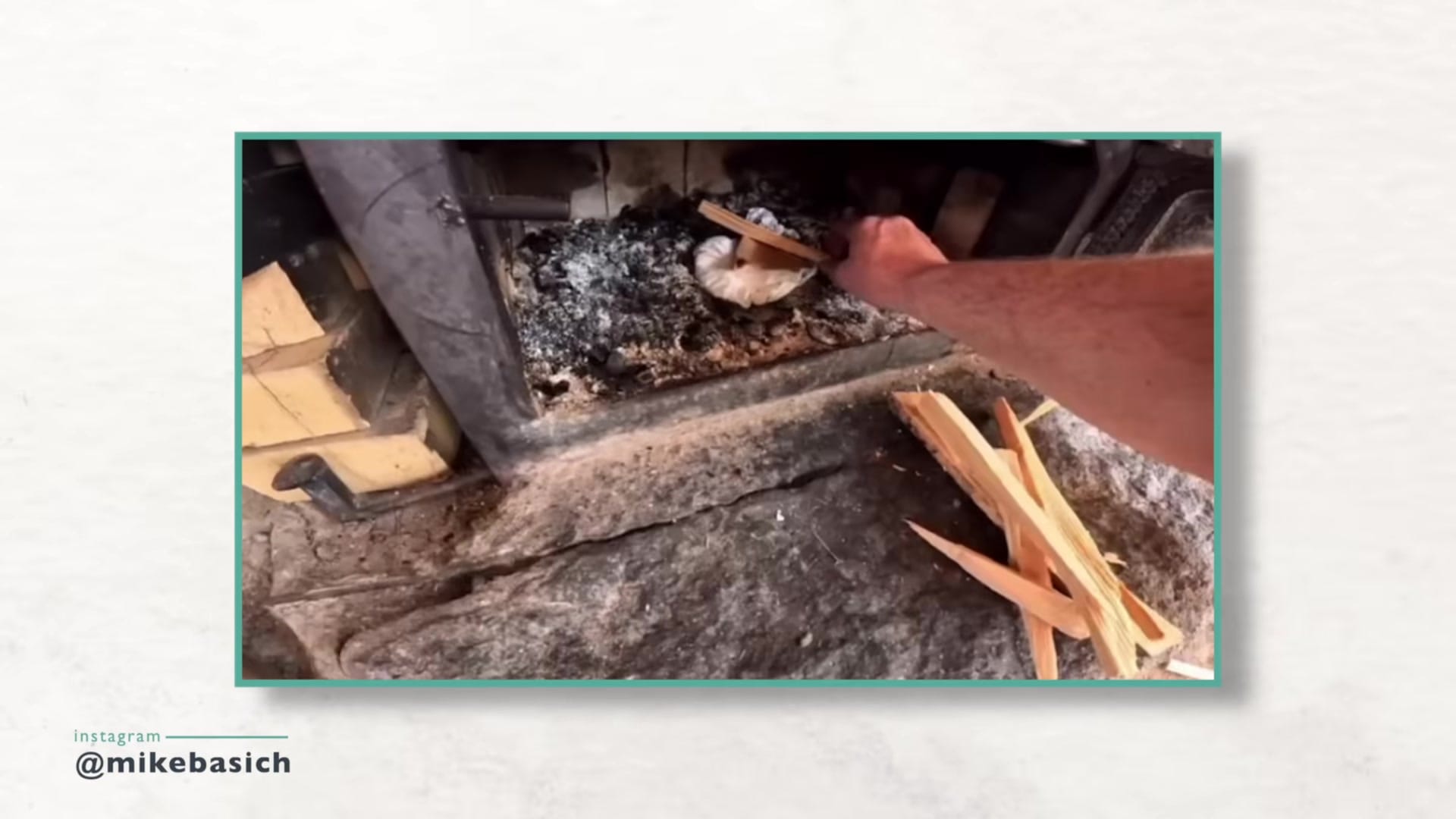
Loft, Shower and Simple Sleeping Systems
There’s a shower you sit down for. It’s not a showpiece; it’s a daily ritual. And the loft? Low‑slung and quiet, with just what’s needed within arm’s reach.
The shower is a sit‑down design inspired by time in Japan.
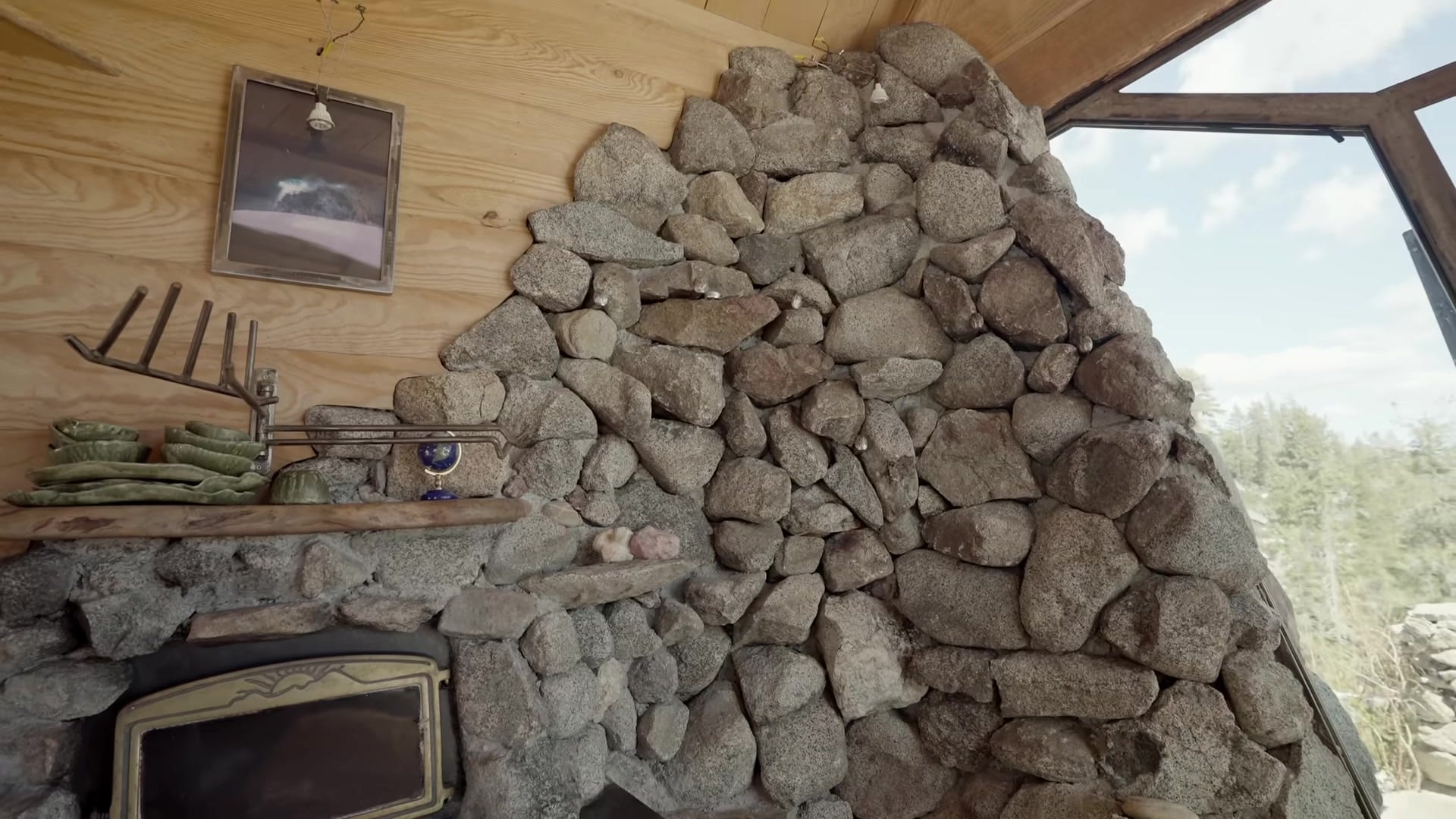
Water drains through the floor and out, keeping the space clean and simple.
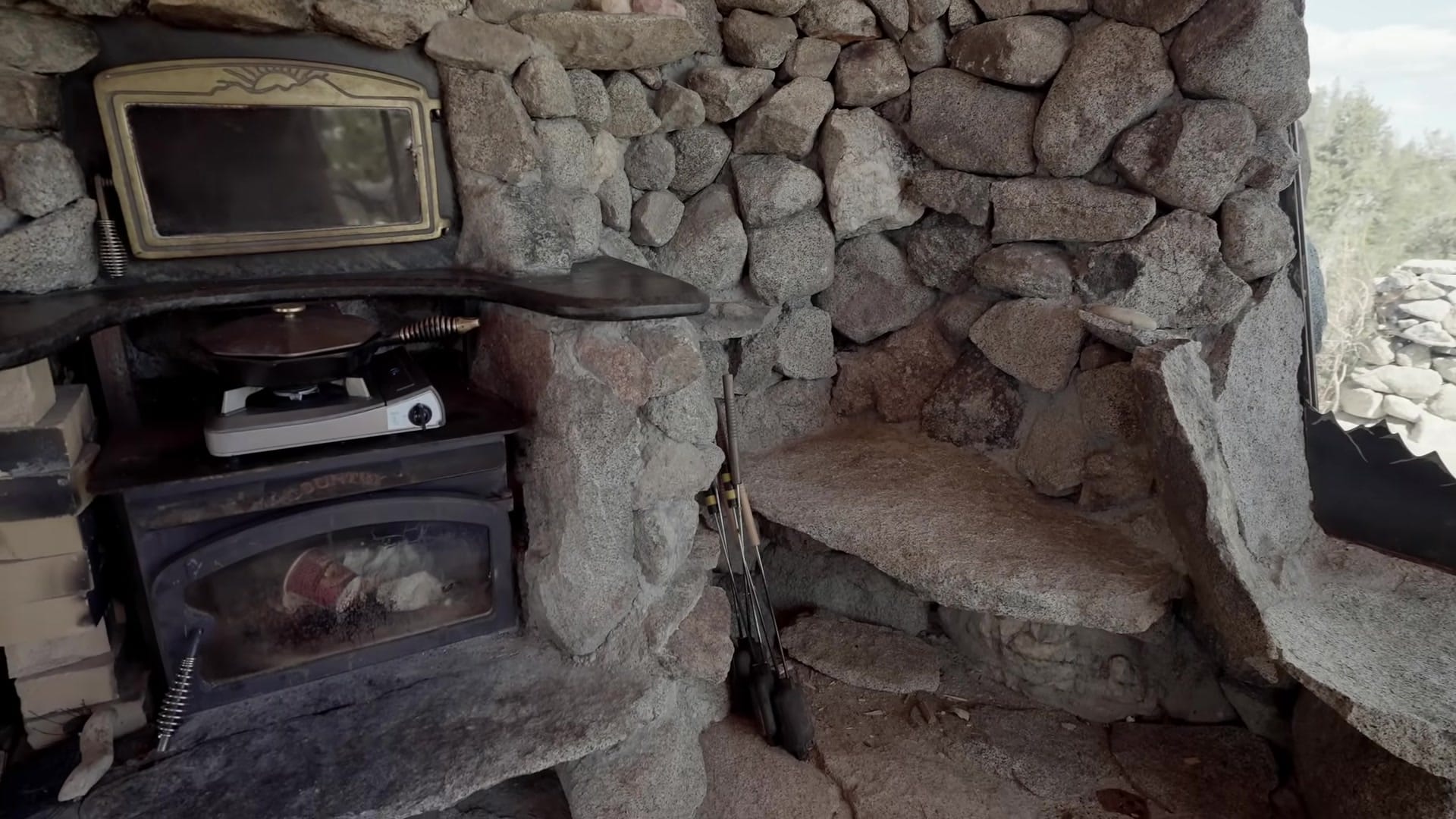
Hot water comes from a pot beside you—bucket it over your shoulders and let the warm rock hold the heat.
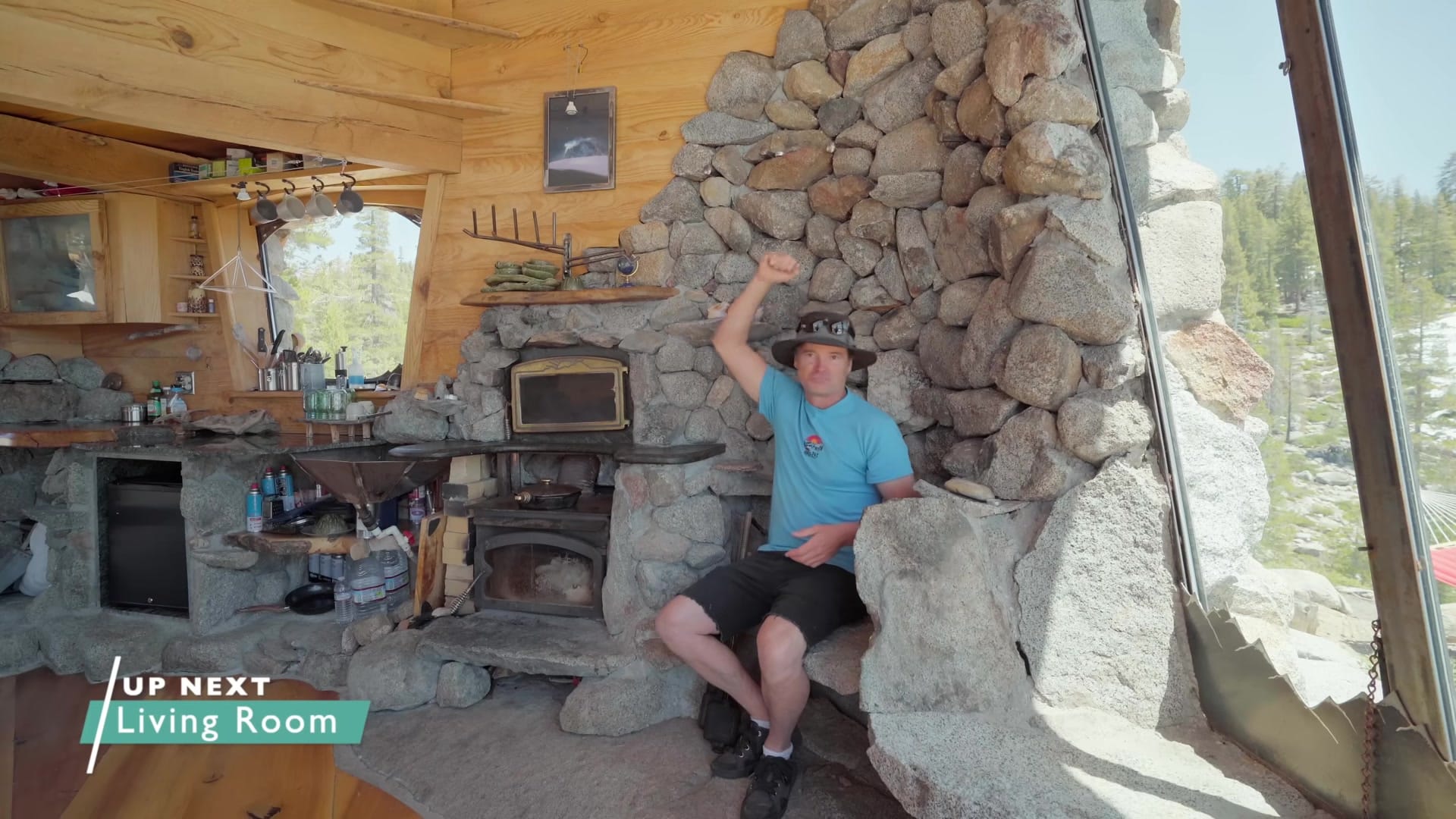
Those same rocks grow cozy as the fire gets going nearby.
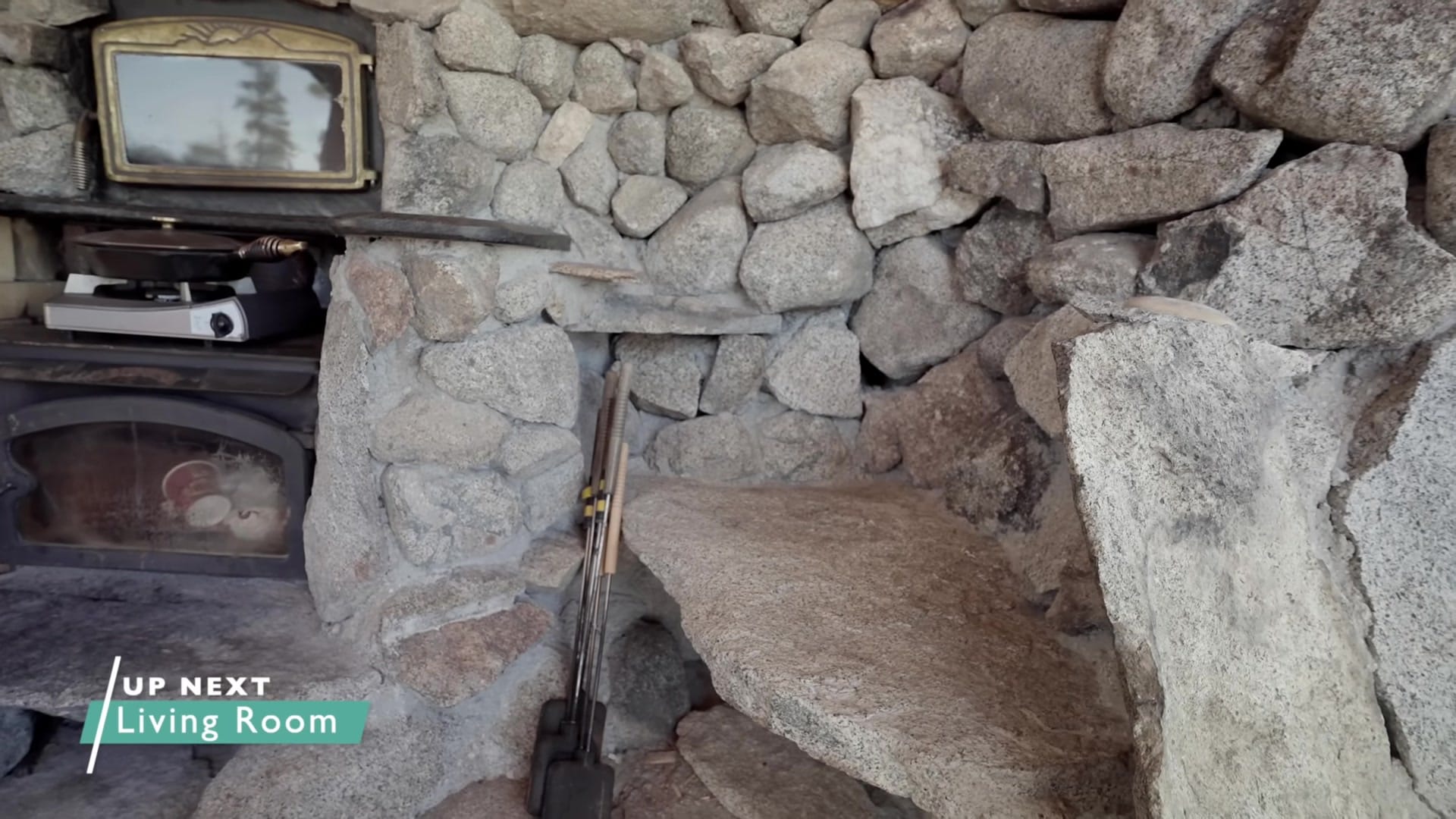
It’s intimate, especially with guests, but it works—and it feels good.
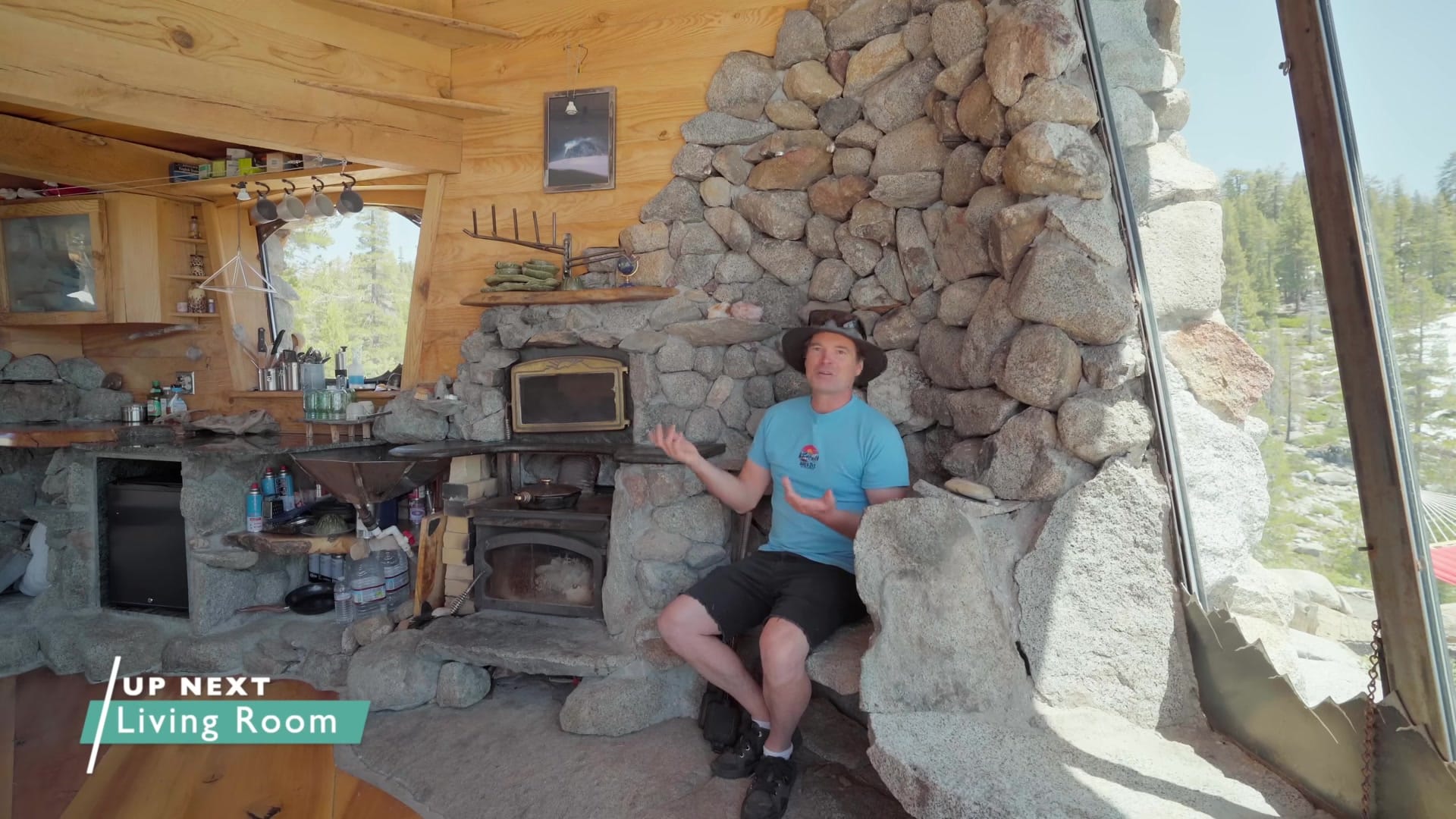
Up in the loft, a small window opens at arm’s reach to regulate temperature quickly when the fire climbs and the night shifts.
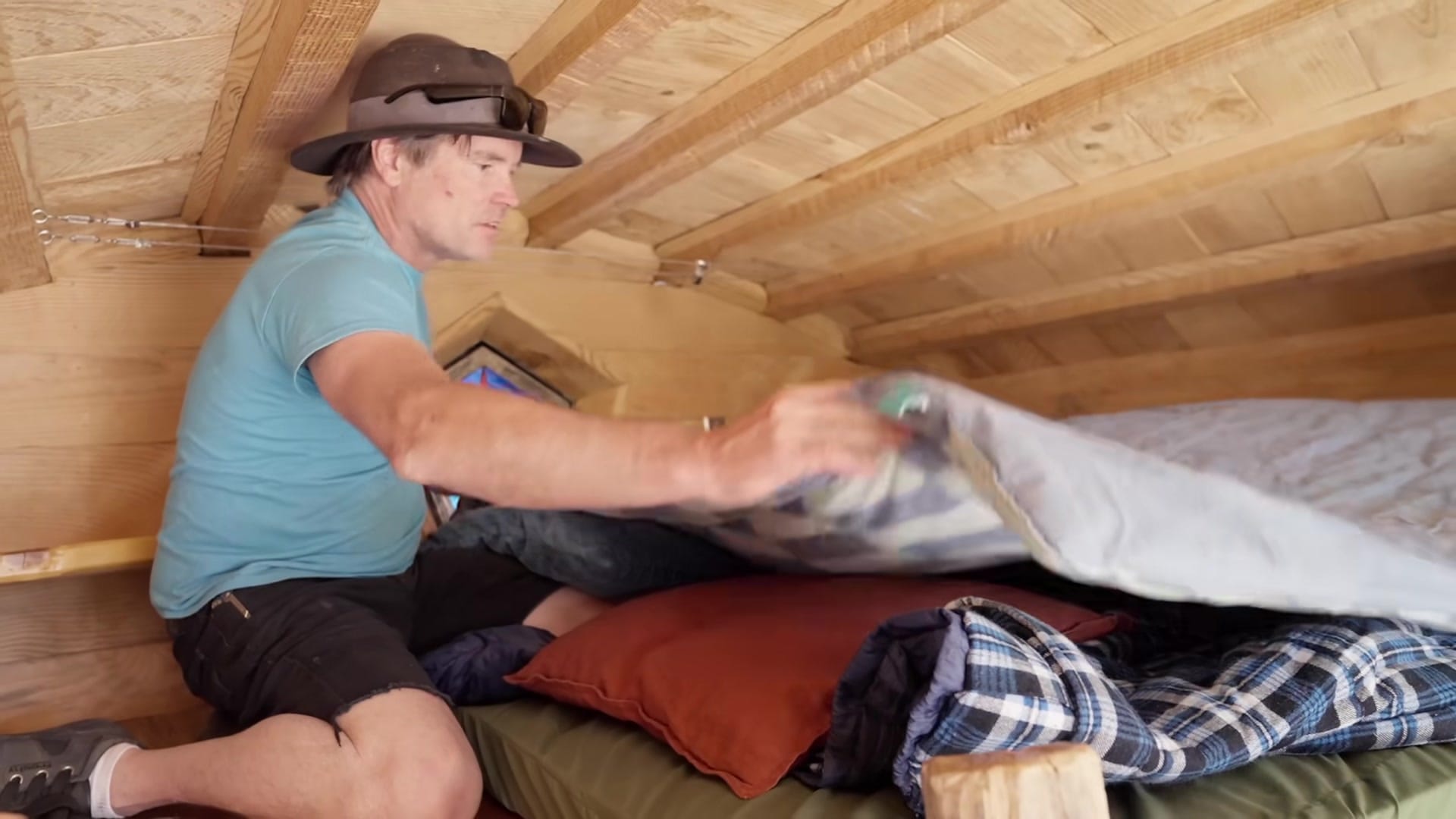
Lights and a charge plug are equally close. It’s a place to sleep, not linger—and that’s the point.
Deck, Hot Tub, Glass Doors and Outside Living
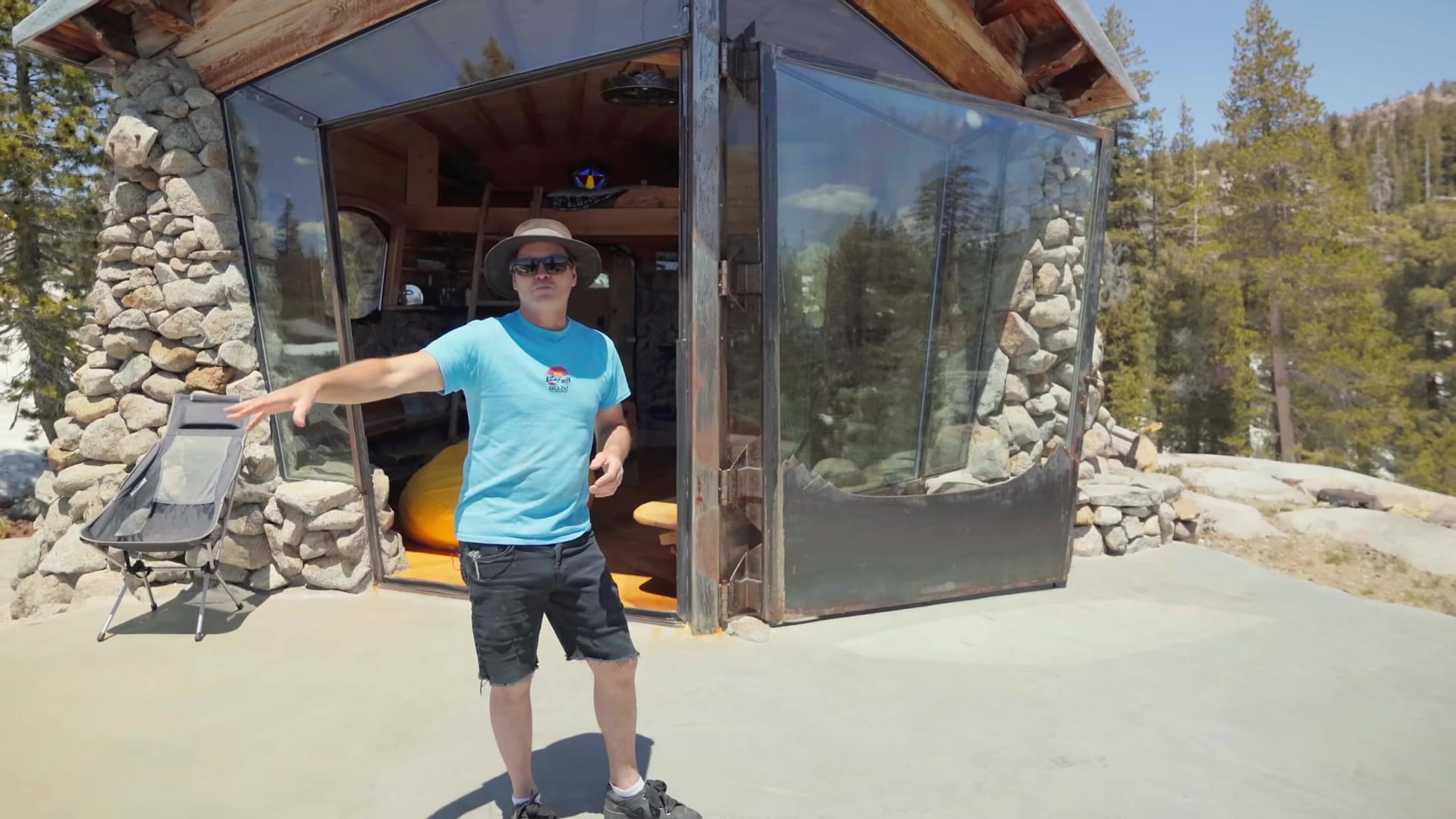
Outside is half the house. South‑facing glass pulls in sun and the view, and the big door swings the inside open until the whole place feels like a platform in the trees. Summer nights move onto the deck. Winter mornings steam above the snow.
The entire front faces south for warmth and for the view.
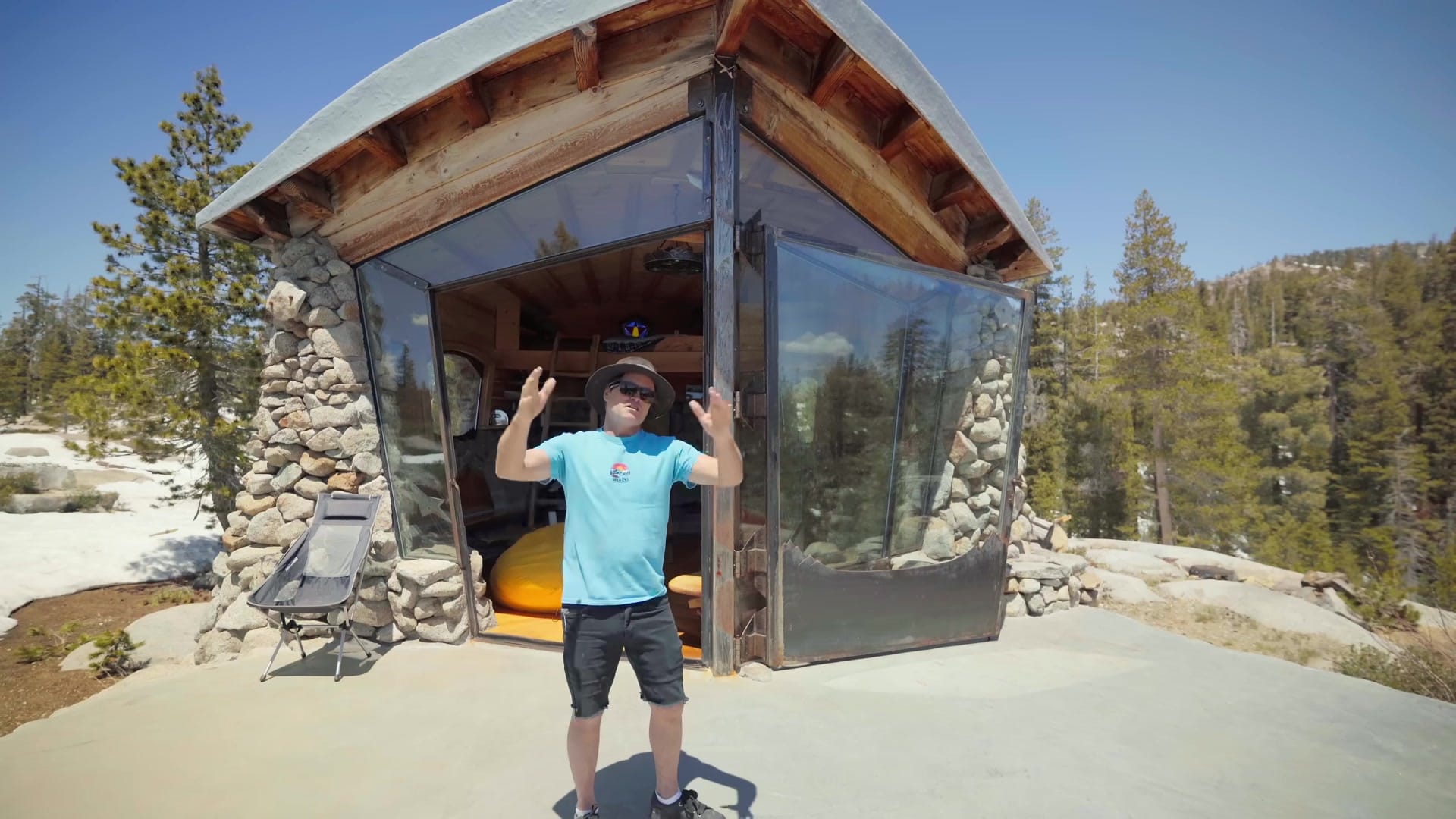
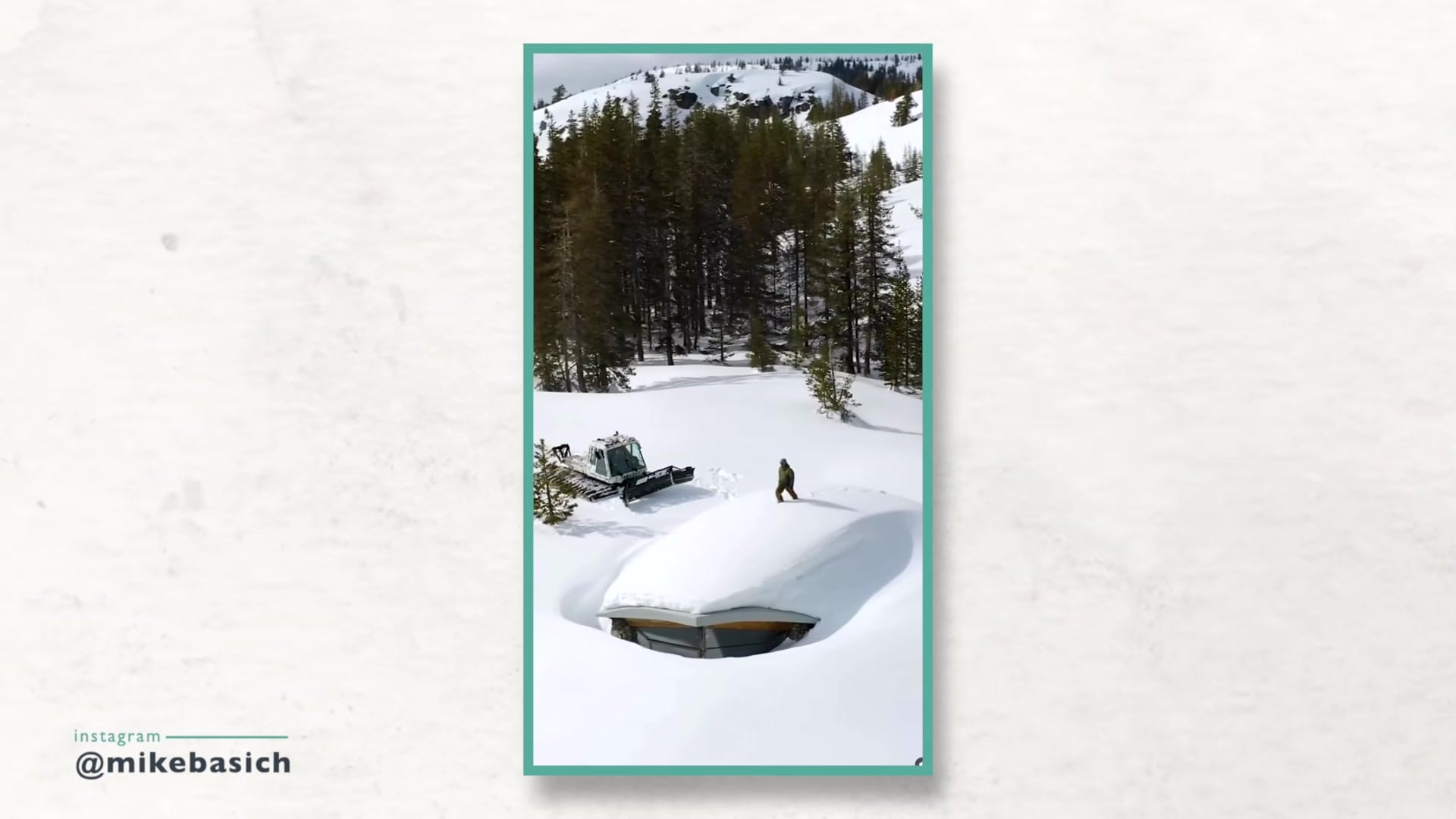
The roof curves so wind sheds snow instead of holding it.
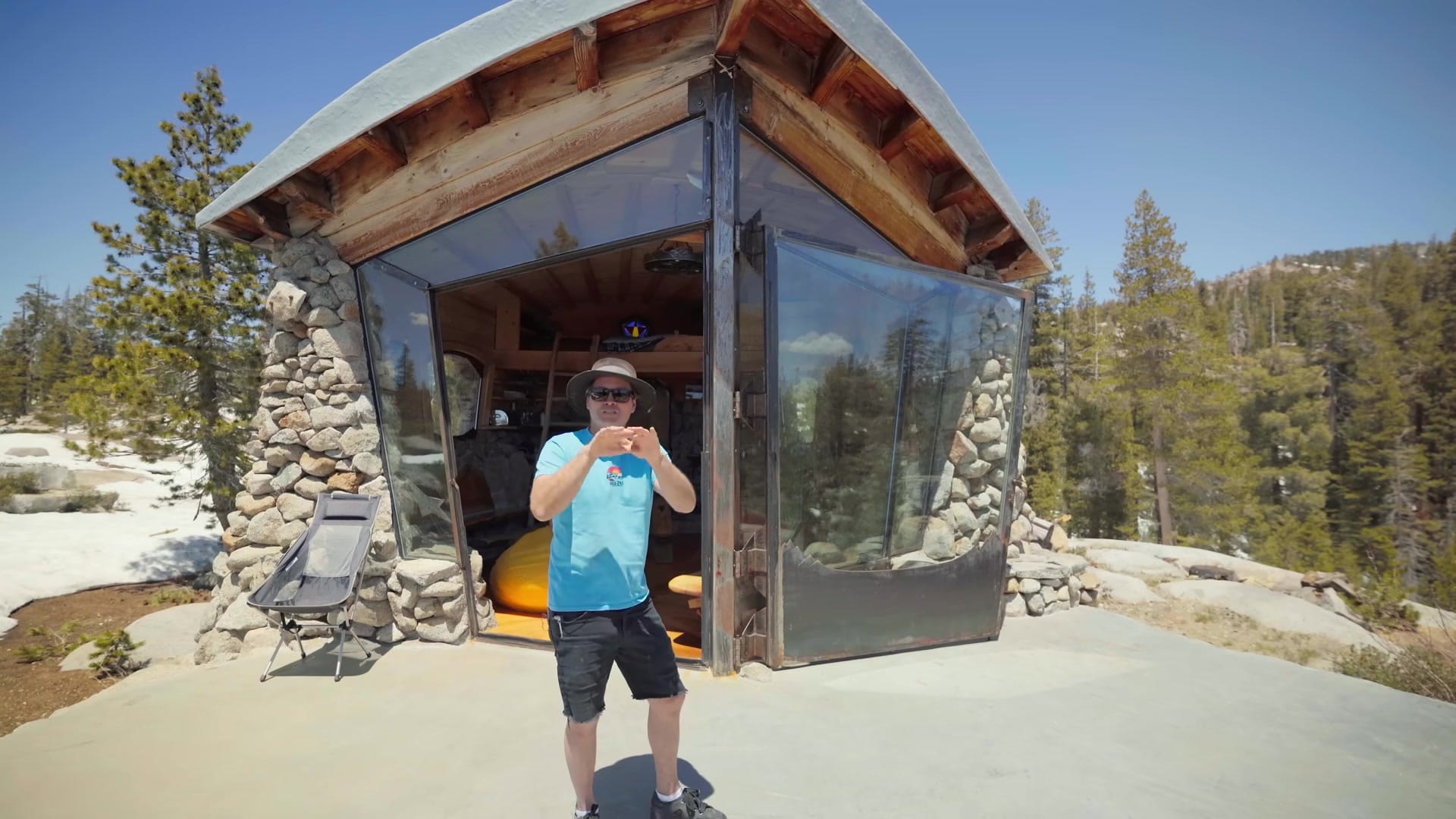
Up here, snow load can reach 500 pounds per square foot, and every detail respects that weight.
The deck stands about eight feet off the ground, with an unexpected space underneath for gear and snow management.
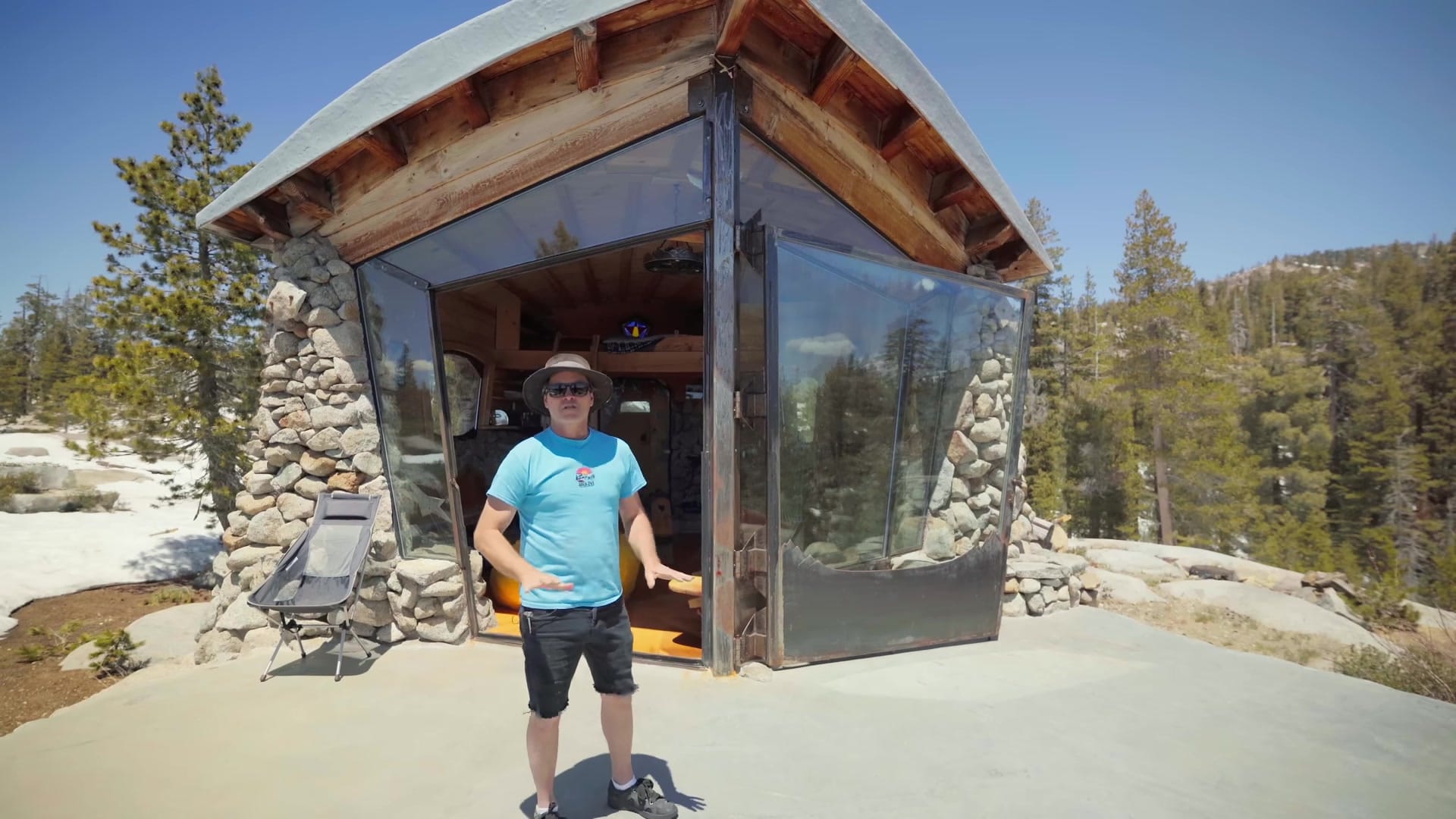
Stairs wrap down to a yard with a hot tub and a cold plunge that turn storm days into something you run toward.
Costs, Power, Water and the Practical Lessons
The numbers are simple, on purpose. Less utility, more awareness. You feel what you use, and you use less because of it.
There are property taxes, of course, but the monthly utilities run low by design.
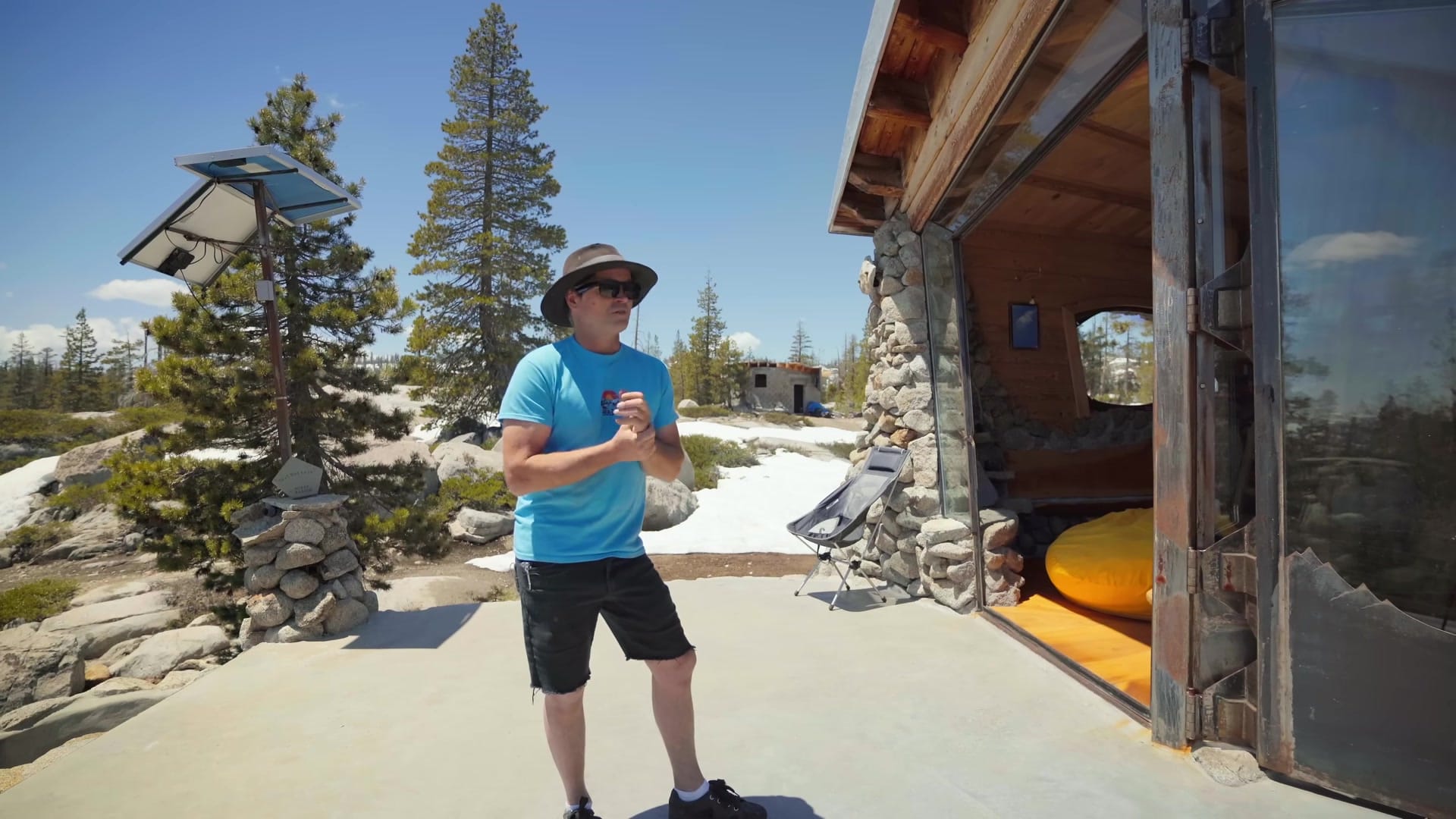
There’s no electrical bill; solar and batteries handle the basics.
A 2,000‑watt generator pumps water into storage when needed.
The home is wired entirely for 12 volts to avoid conversion losses.
The solar and battery setup runs what he needs for about $500 total.
He learned by doing, and by listening—to the place, to materials, to instinct. Get familiar with how things move and change in your hands, and the work gets easier and more exciting.