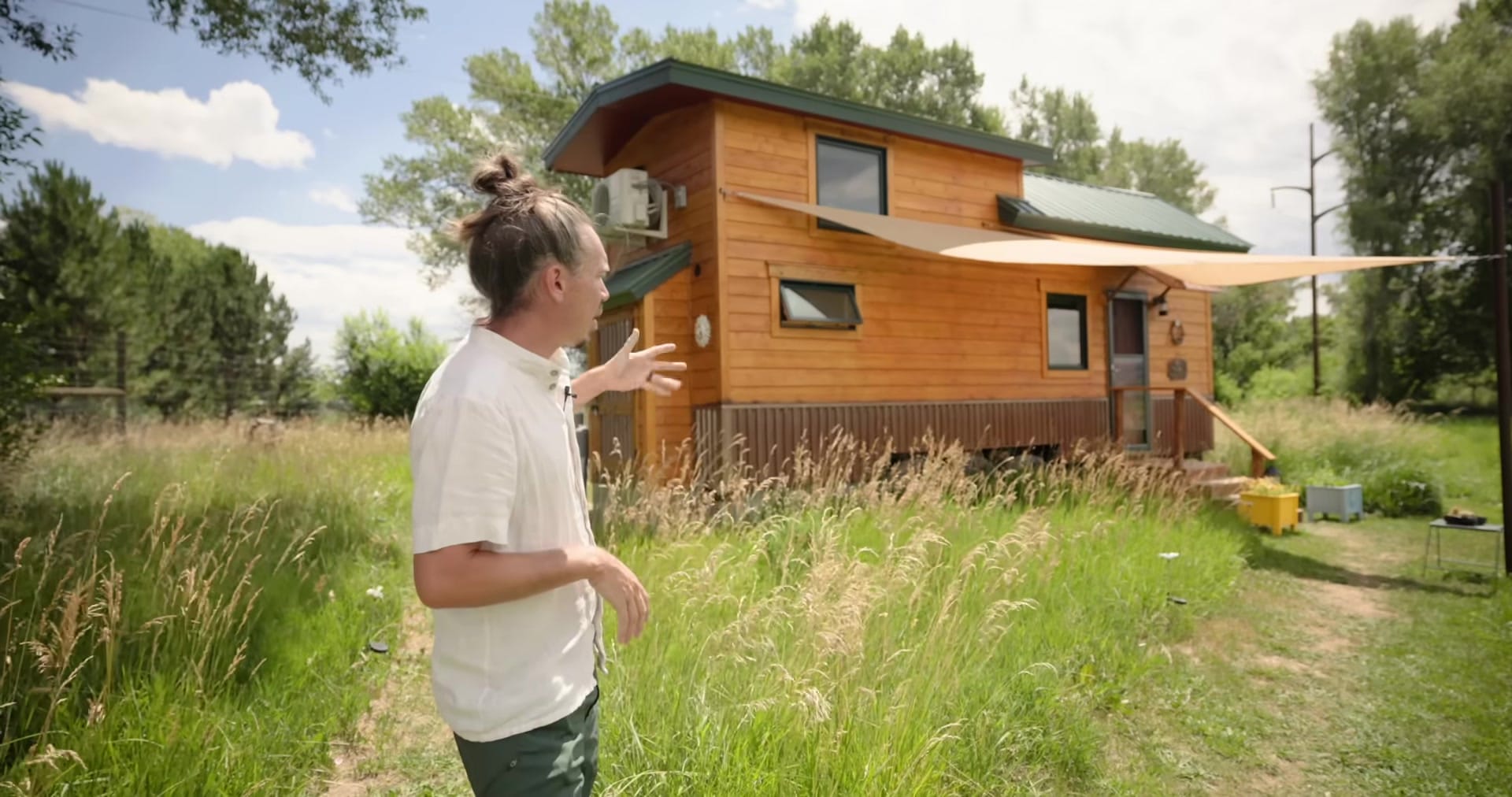
What Happens When You Fit a Full Home in 28 Feet
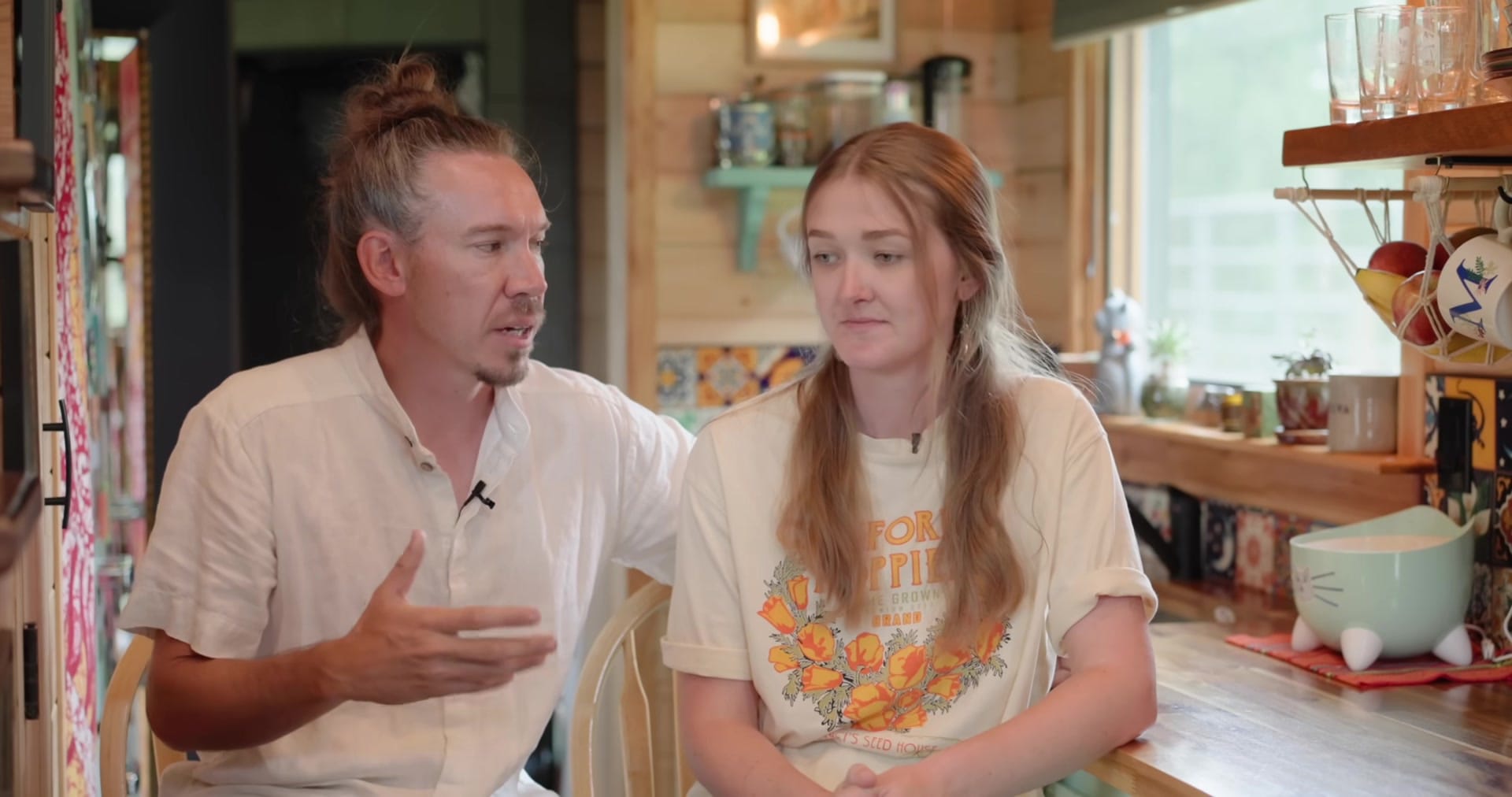
They didn’t want to stay stuck in apartments forever, and when COVID layoffs hit, they took the leap into a DIY tiny house build. Three years, a lot of problem-solving, and a ton of confidence later, this 28-by-8-foot home feels like a full-size house—because every inch works hard.
Welcome & Layout Overview
Step inside and you land in a bright dining-and-kitchen run, with the bathroom set at the very back for a clean flow.
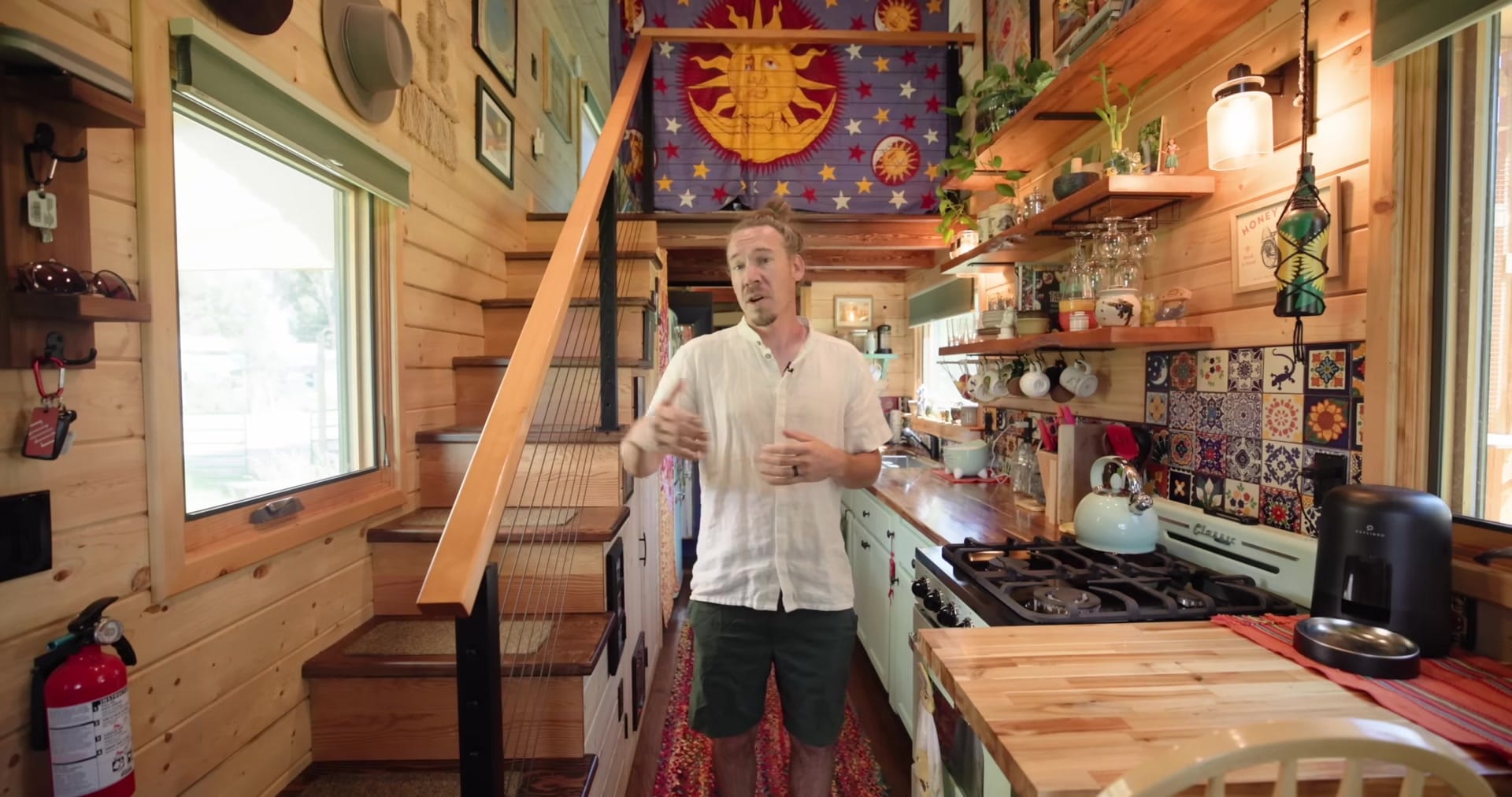
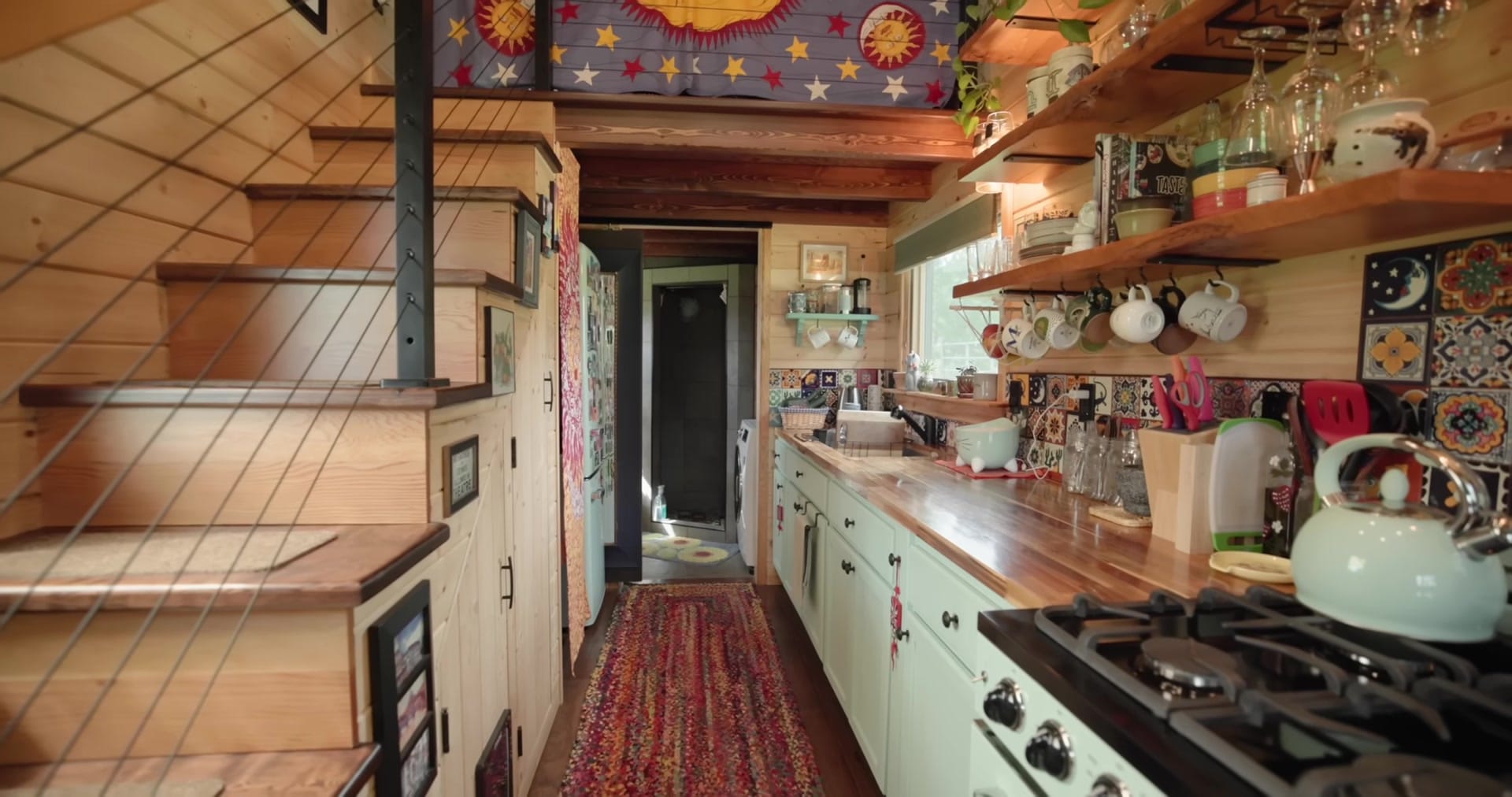
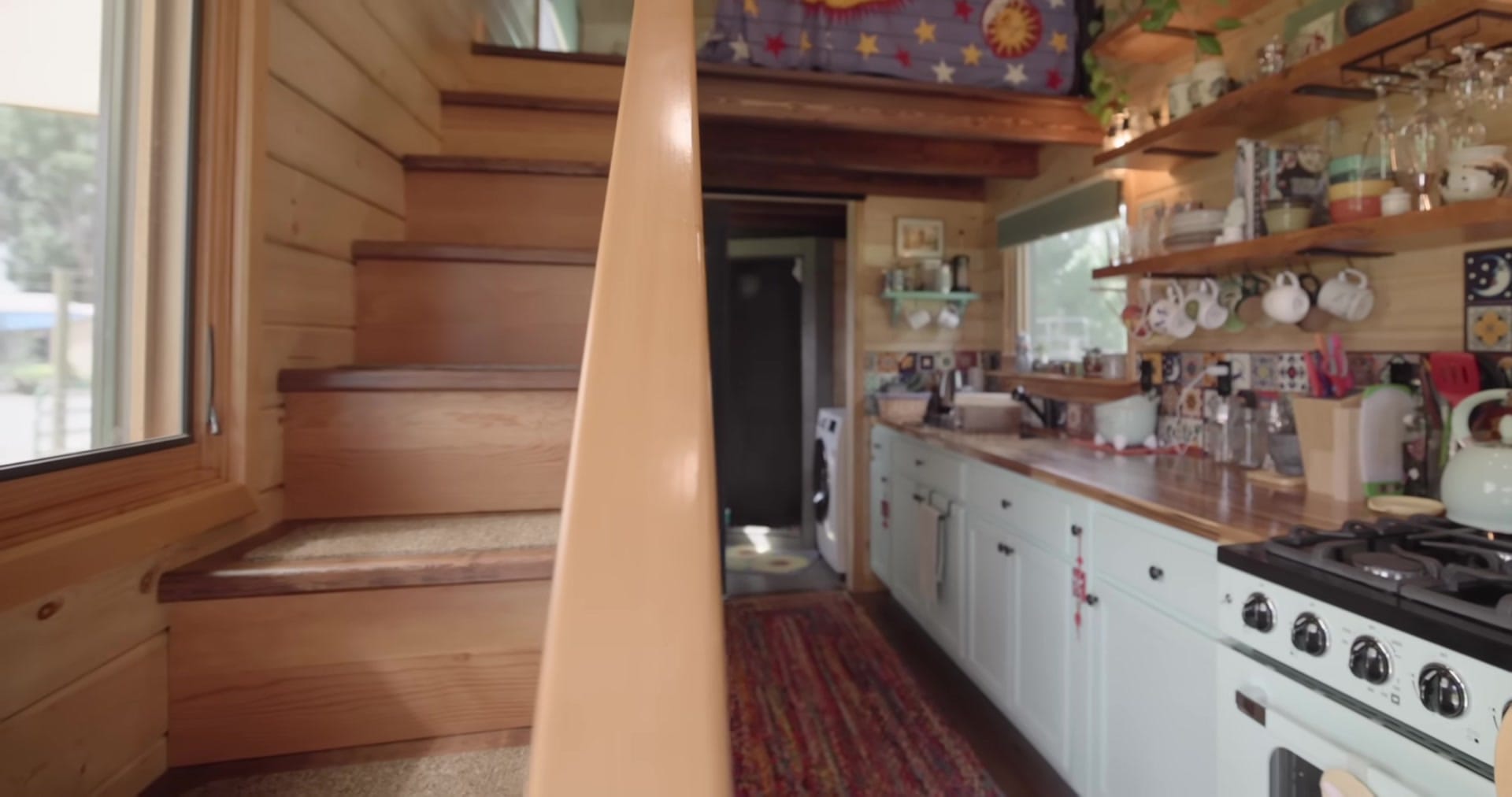
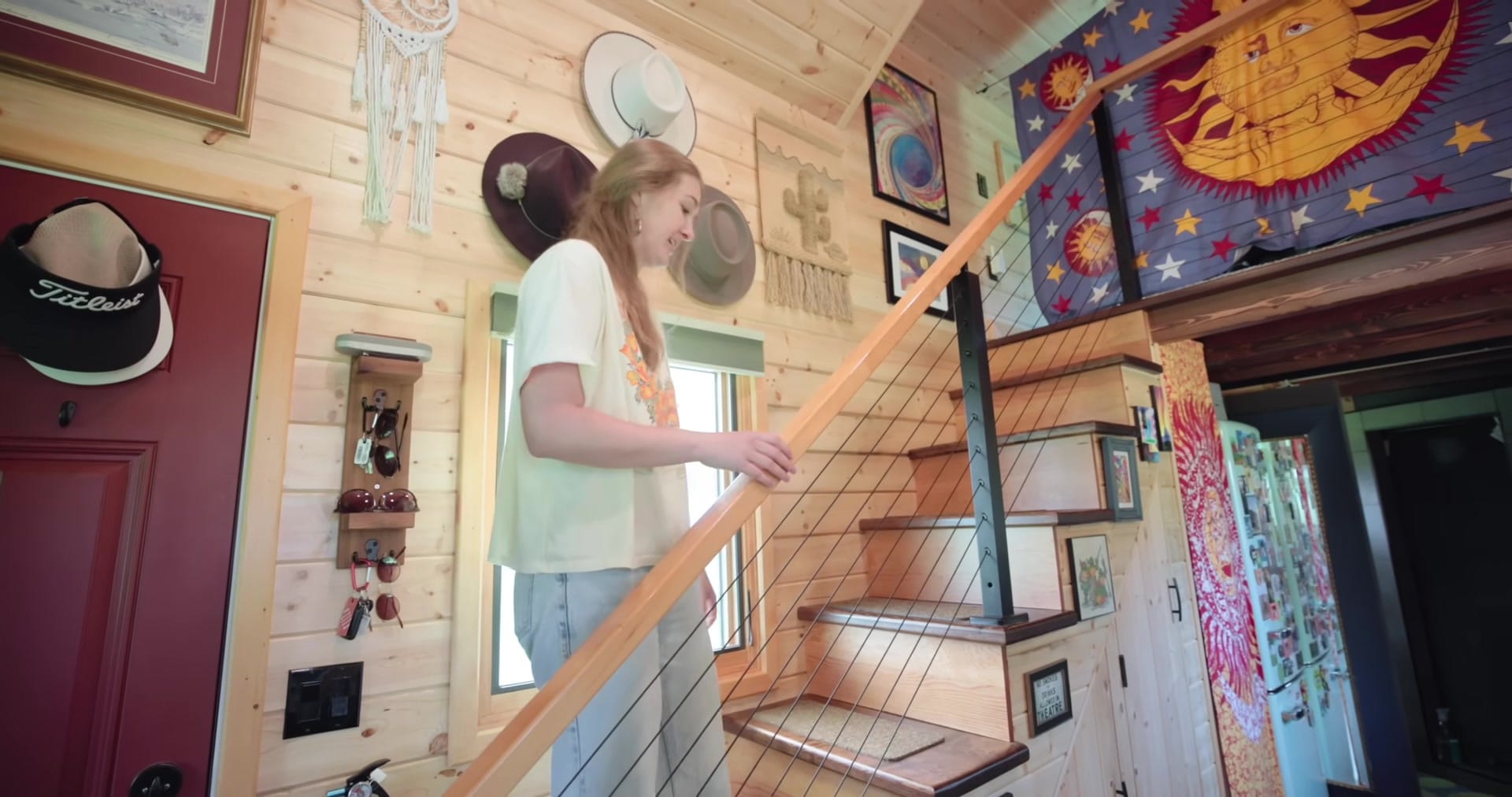
A set of stairs leads up to the bedroom loft on one side,
while the living room sits behind the entry so it feels like its own room.
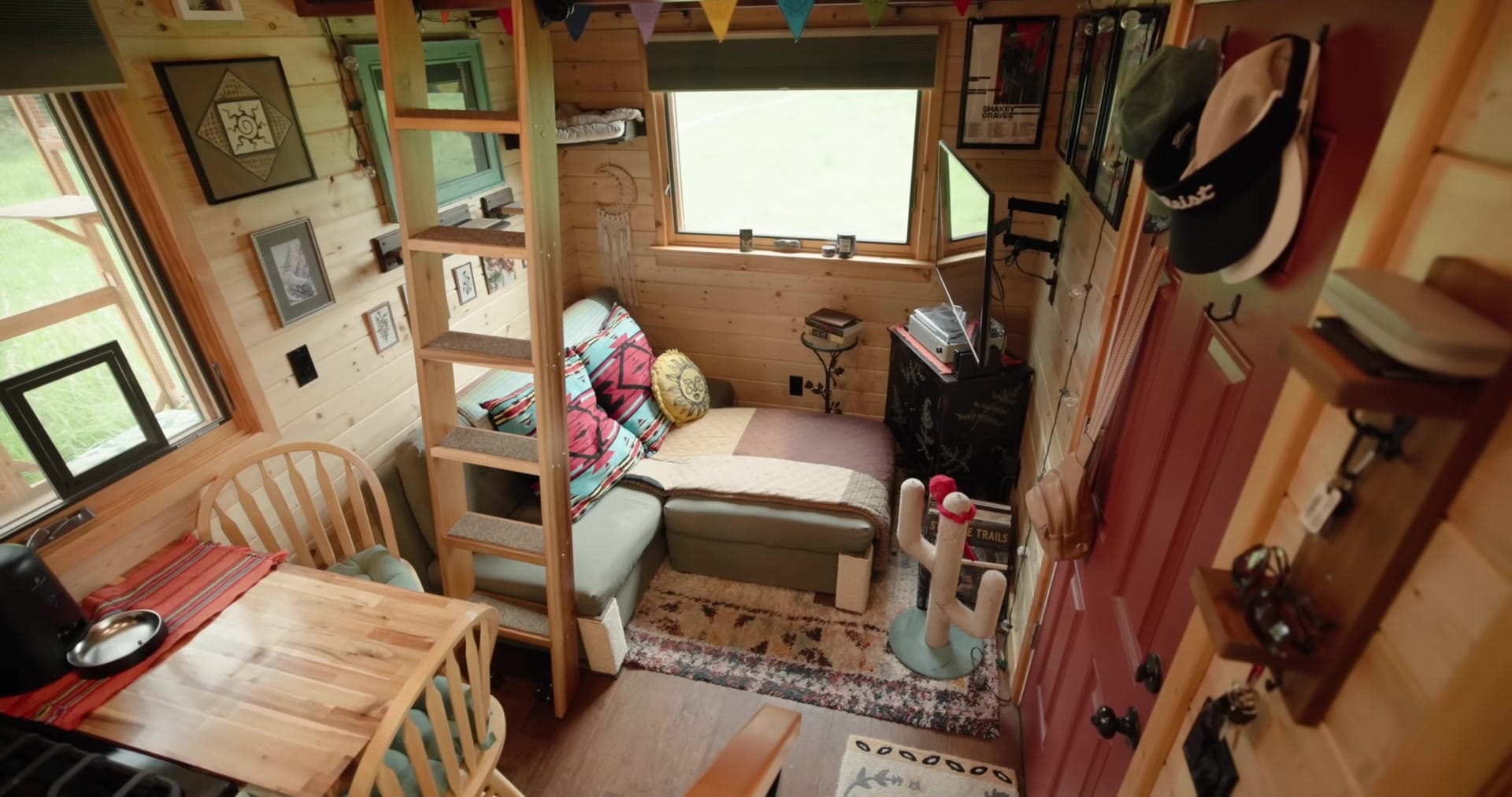
A storage loft hovers overhead for extra function without crowding the floor .
From the outside, the footprint is 8 feet wide by 28 feet long, topping out at about 14.5 feet high.
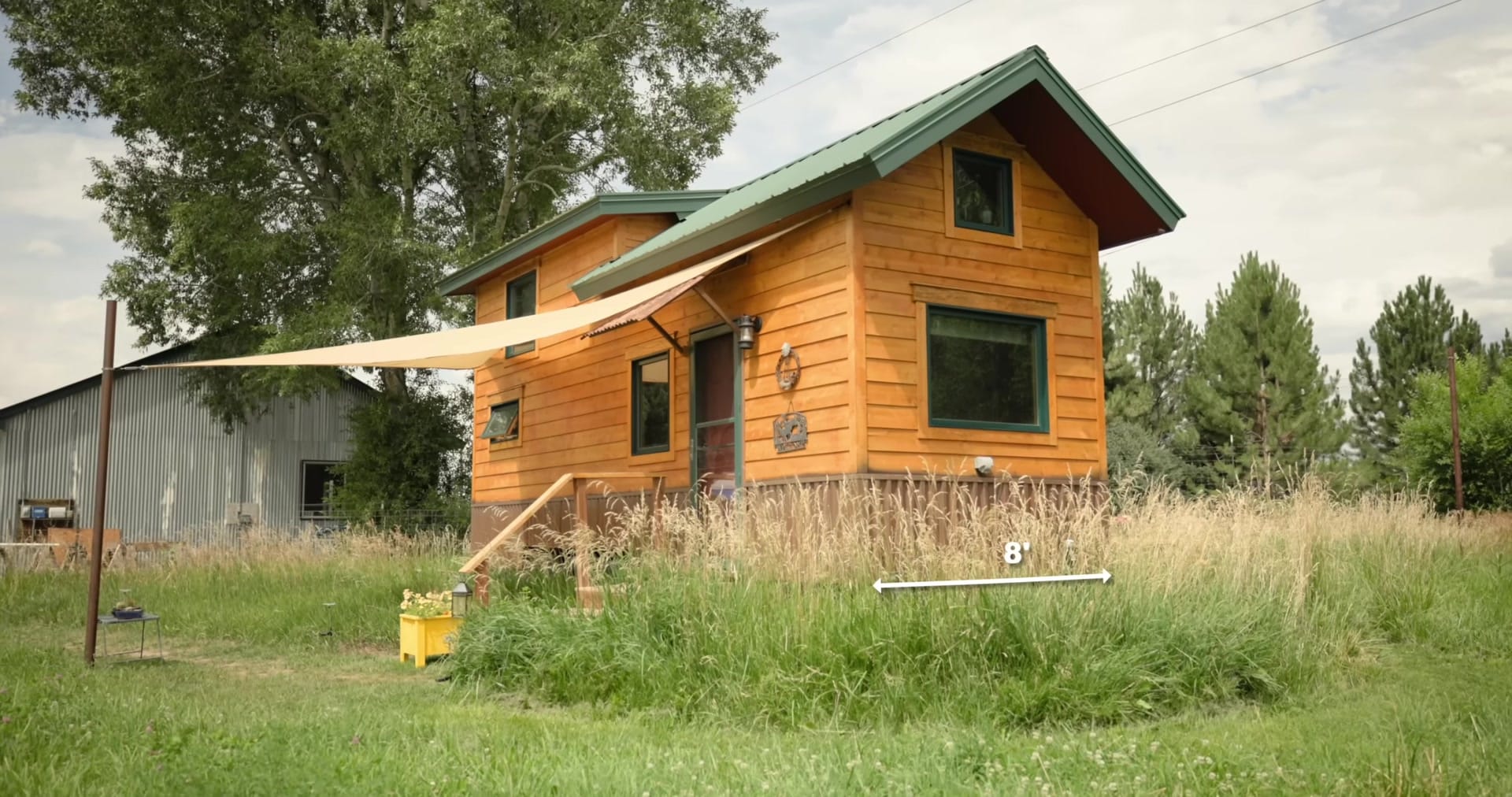
Inside, it’s roughly 7.5 by 26 feet with a 12.5-foot ceiling—tall enough to breathe, compact enough to keep everything close.
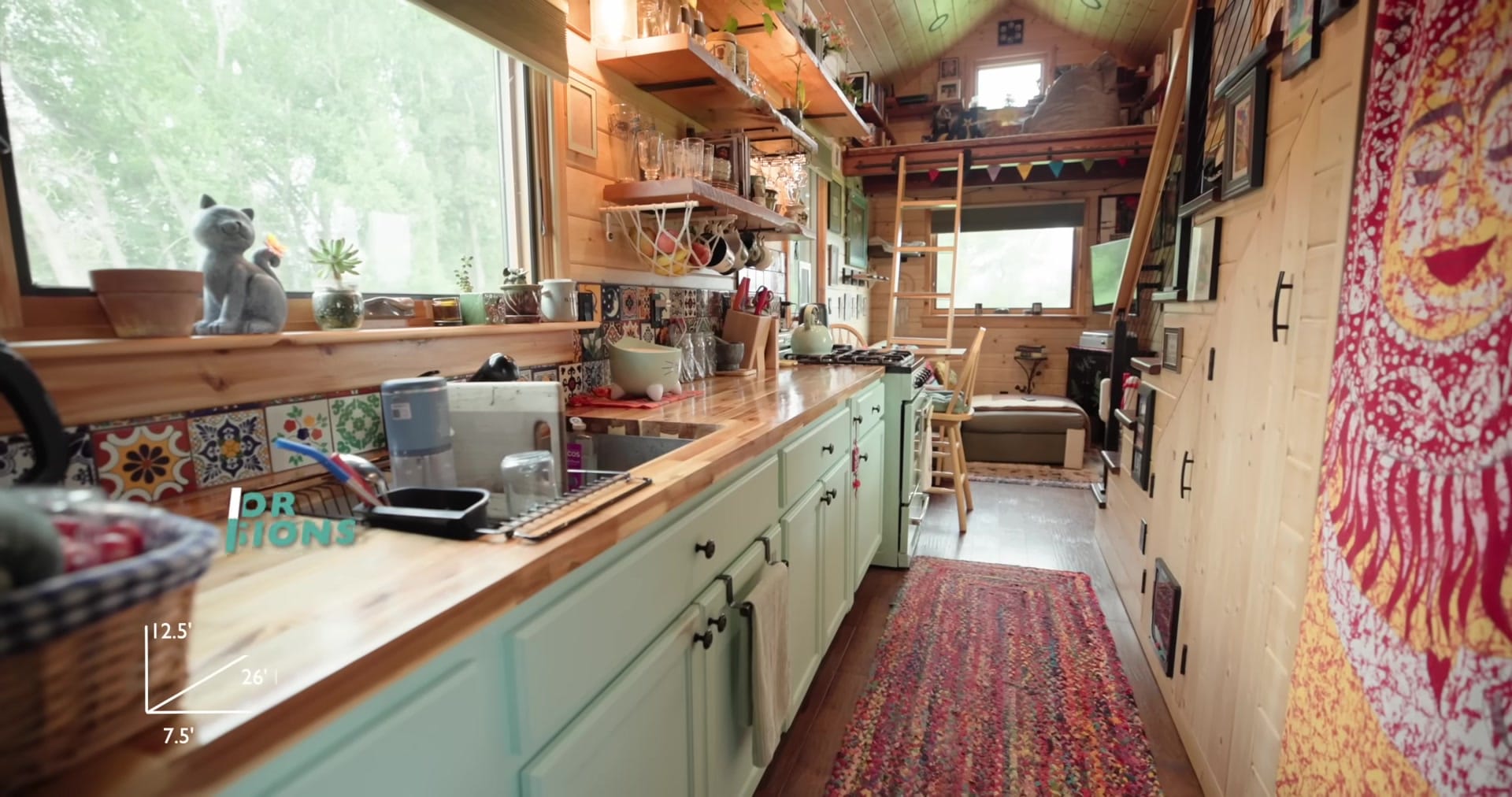
Kitchen — Big Choices for a Small Space
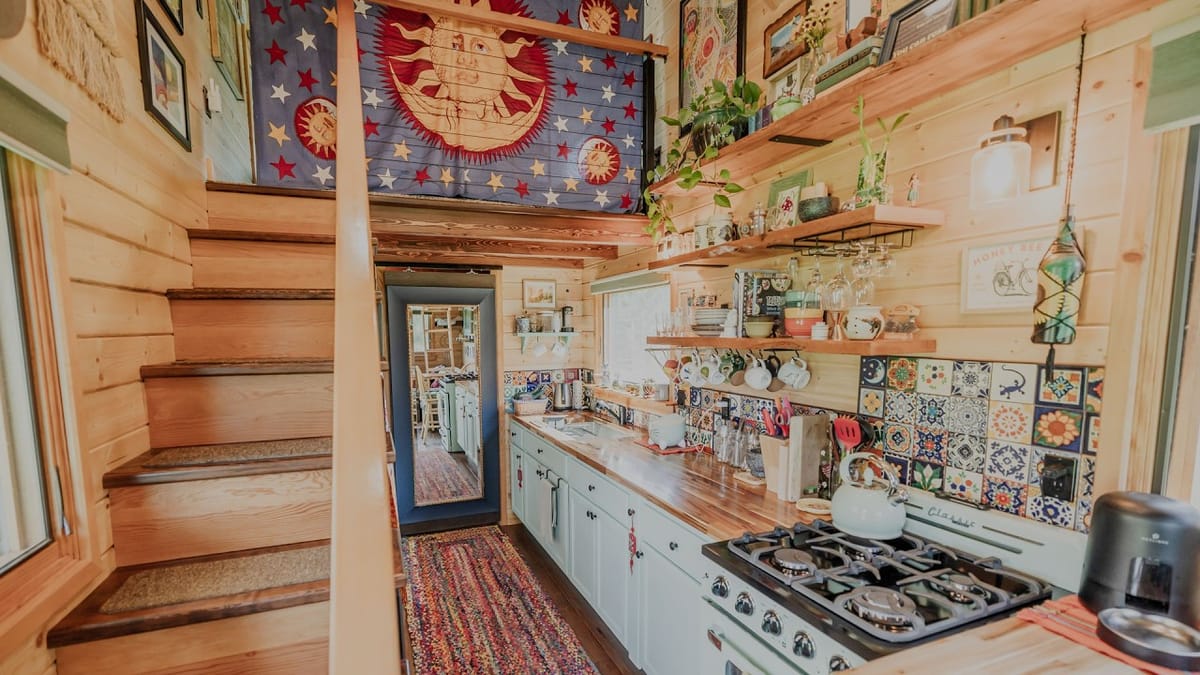
The kitchen runs the long length of one wall—on purpose—so the living room could stay open for a big couch and TV zone, and the bath could anchor the back.
Windows line the workspace to keep the sightlines wide and the space feeling bigger than it is.
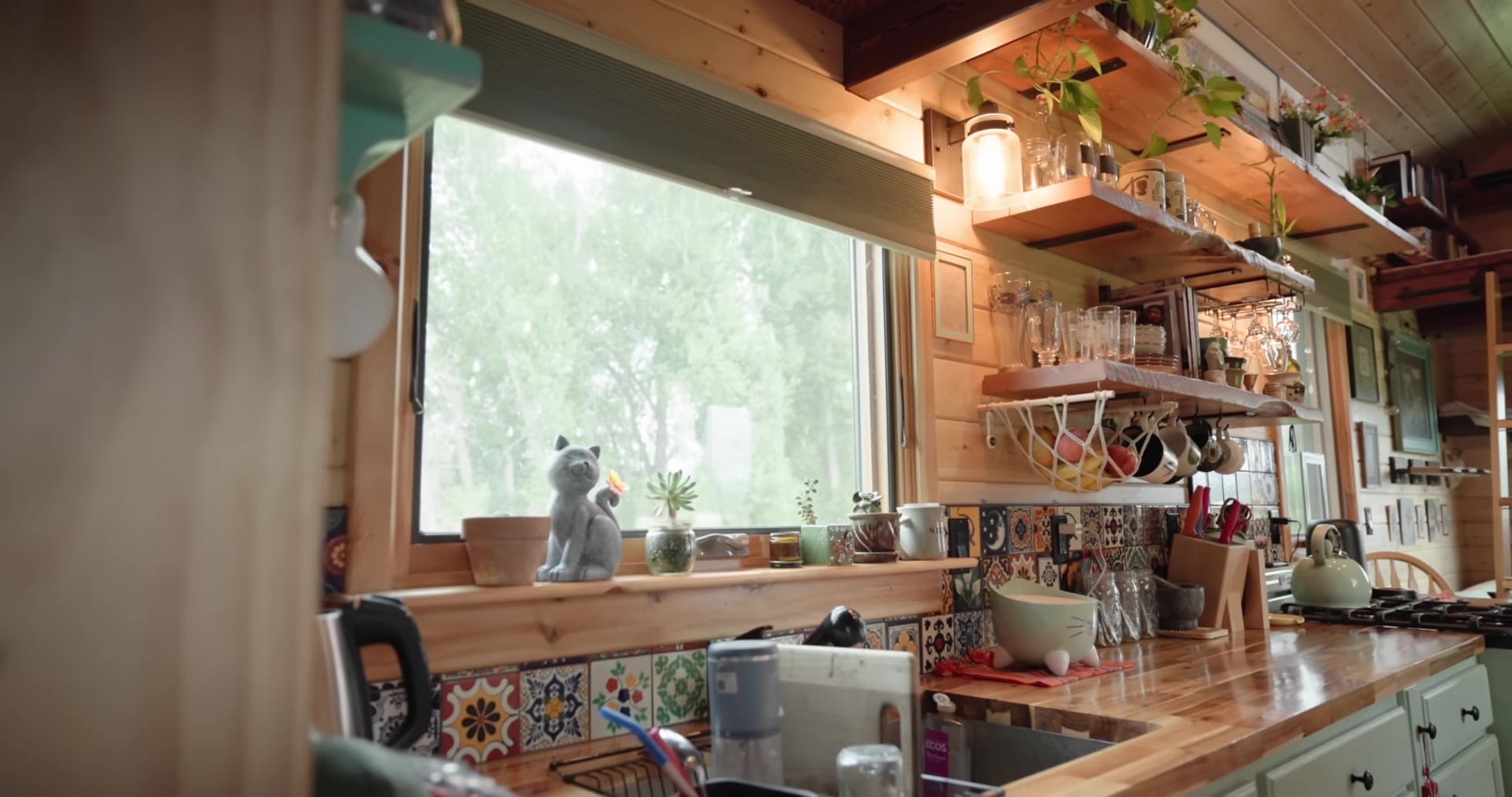
Custom window ledges add spots for knickknacks, plants, and candles without stealing cabinet space .
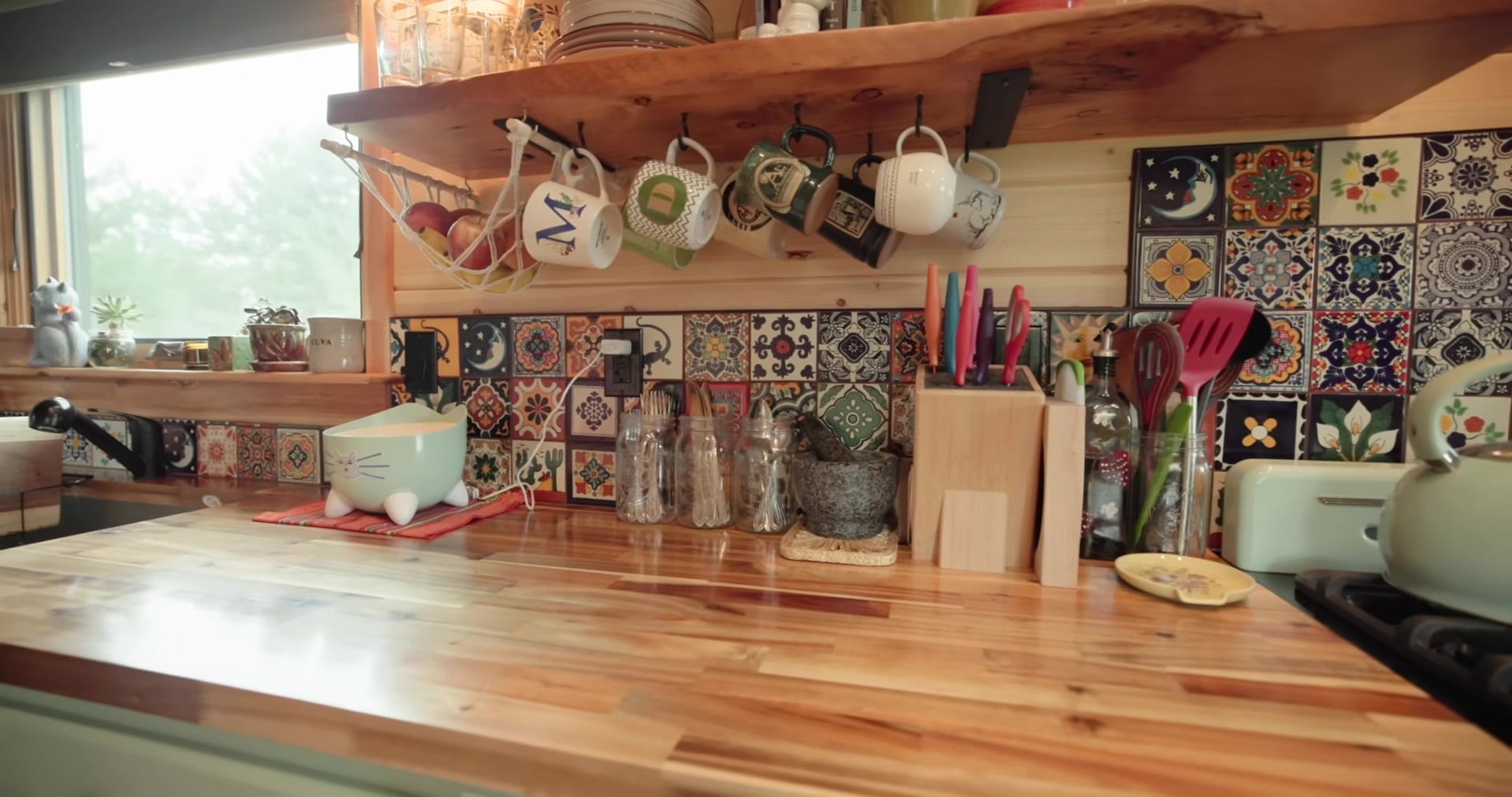
Butcher block countertops were the day-one vision and set the warm tone.
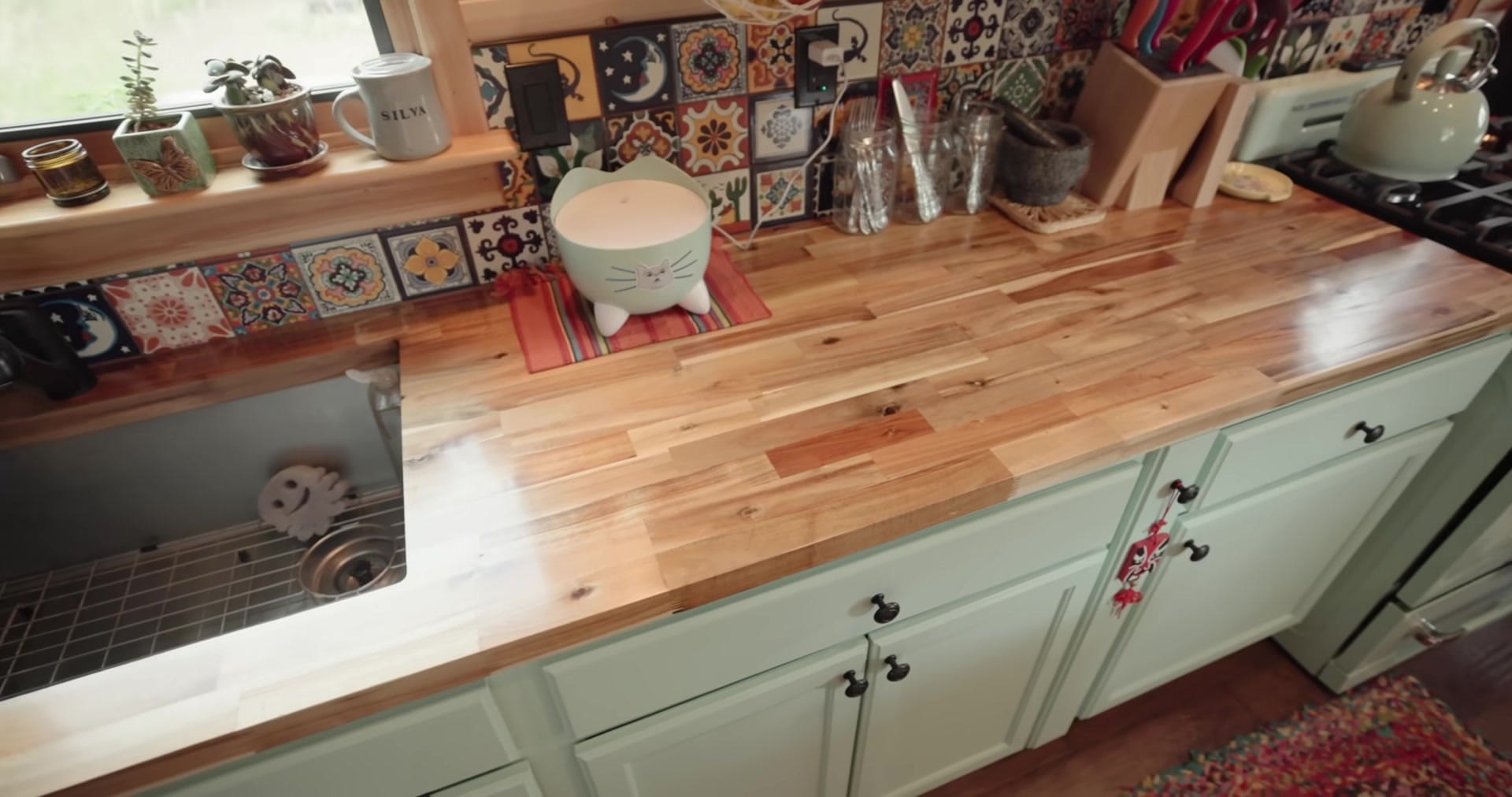
To break up all that wood, they ran a band of Spanish tile—bold, colorful, and a nice visual reset.
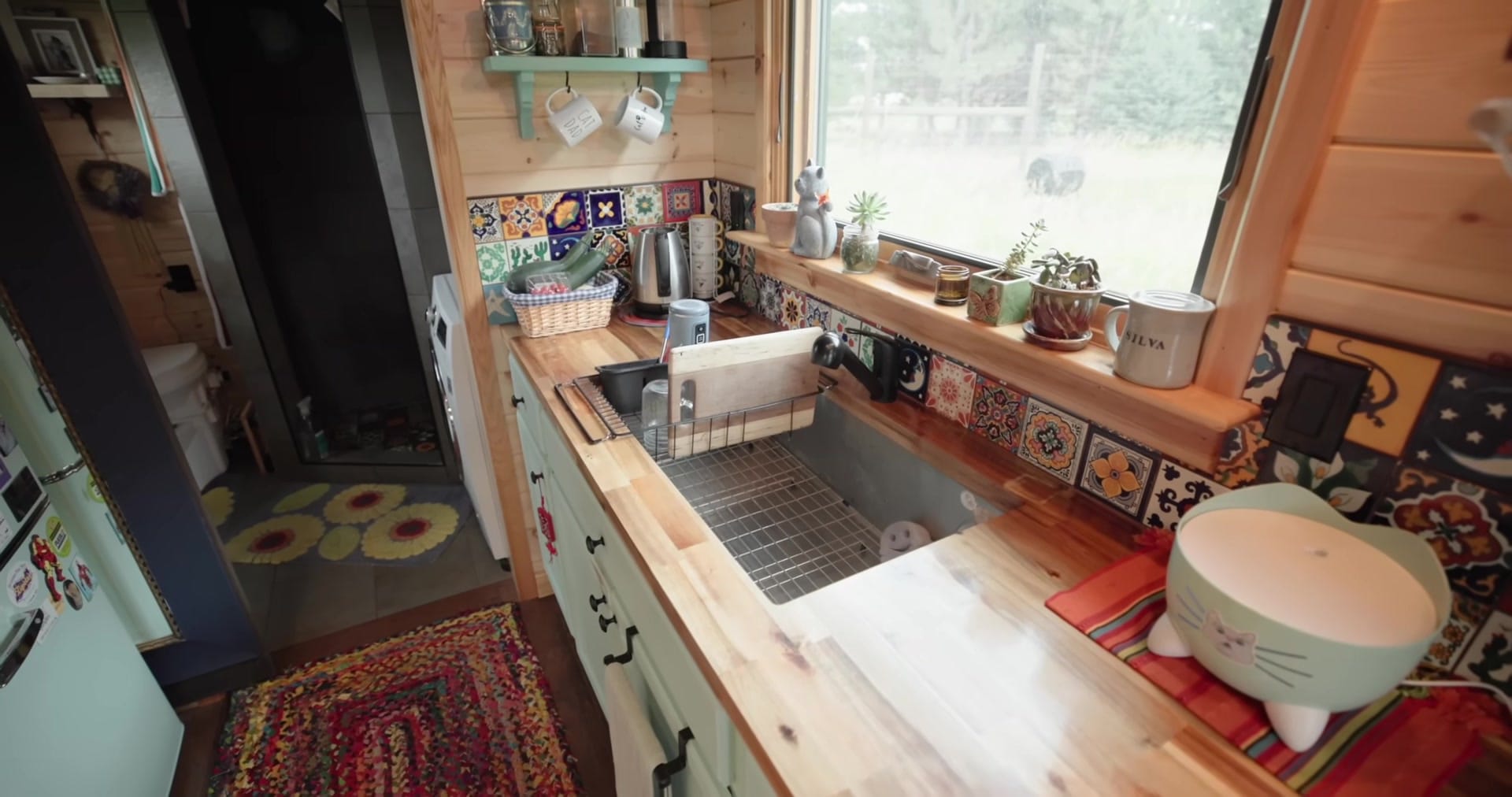
A large sink stands in for a dishwasher so there’s room to pile, wash, and dry right in place.
Living Room & Reading Loft — Movie Nights to Writing Nooks
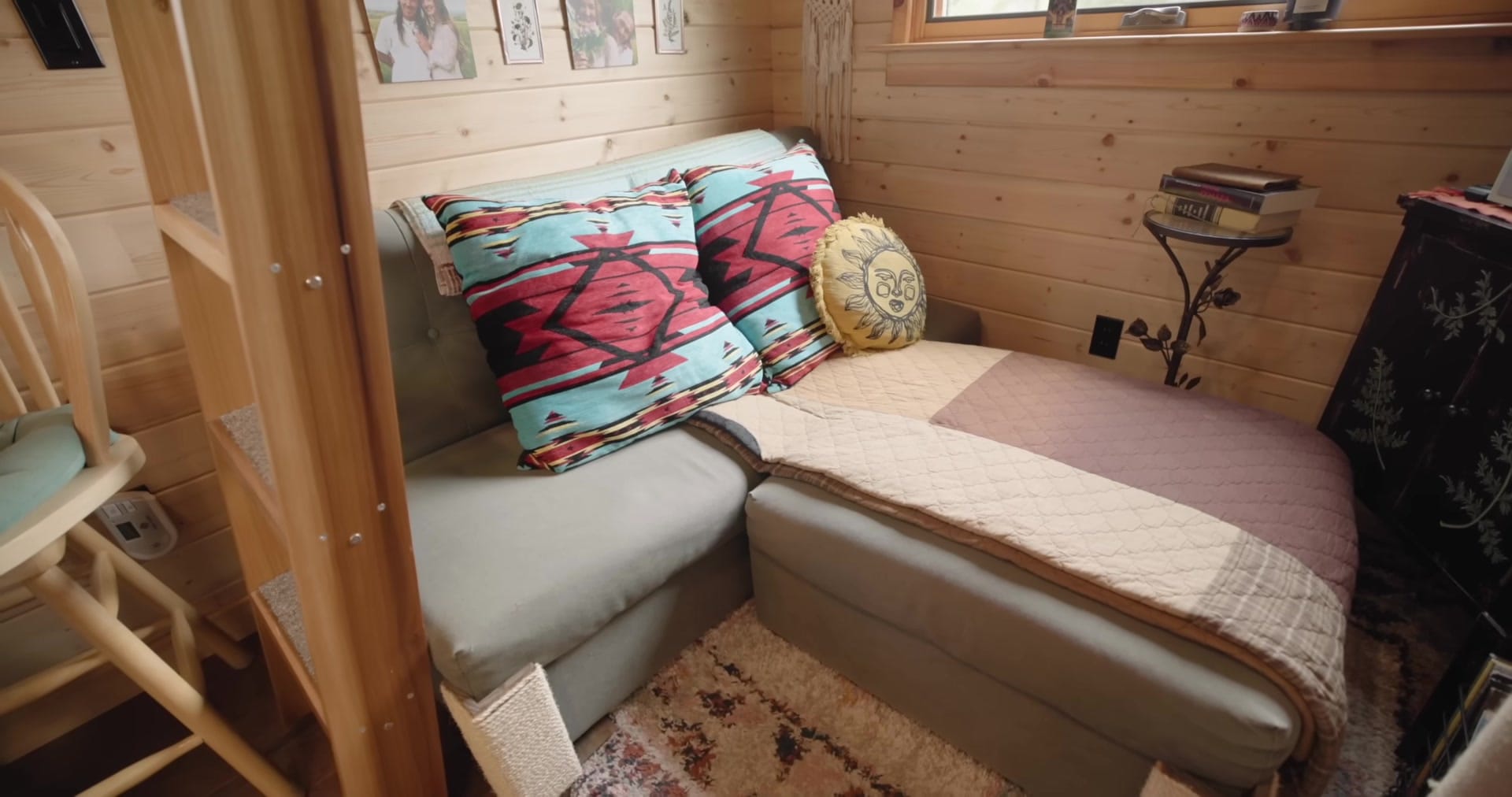
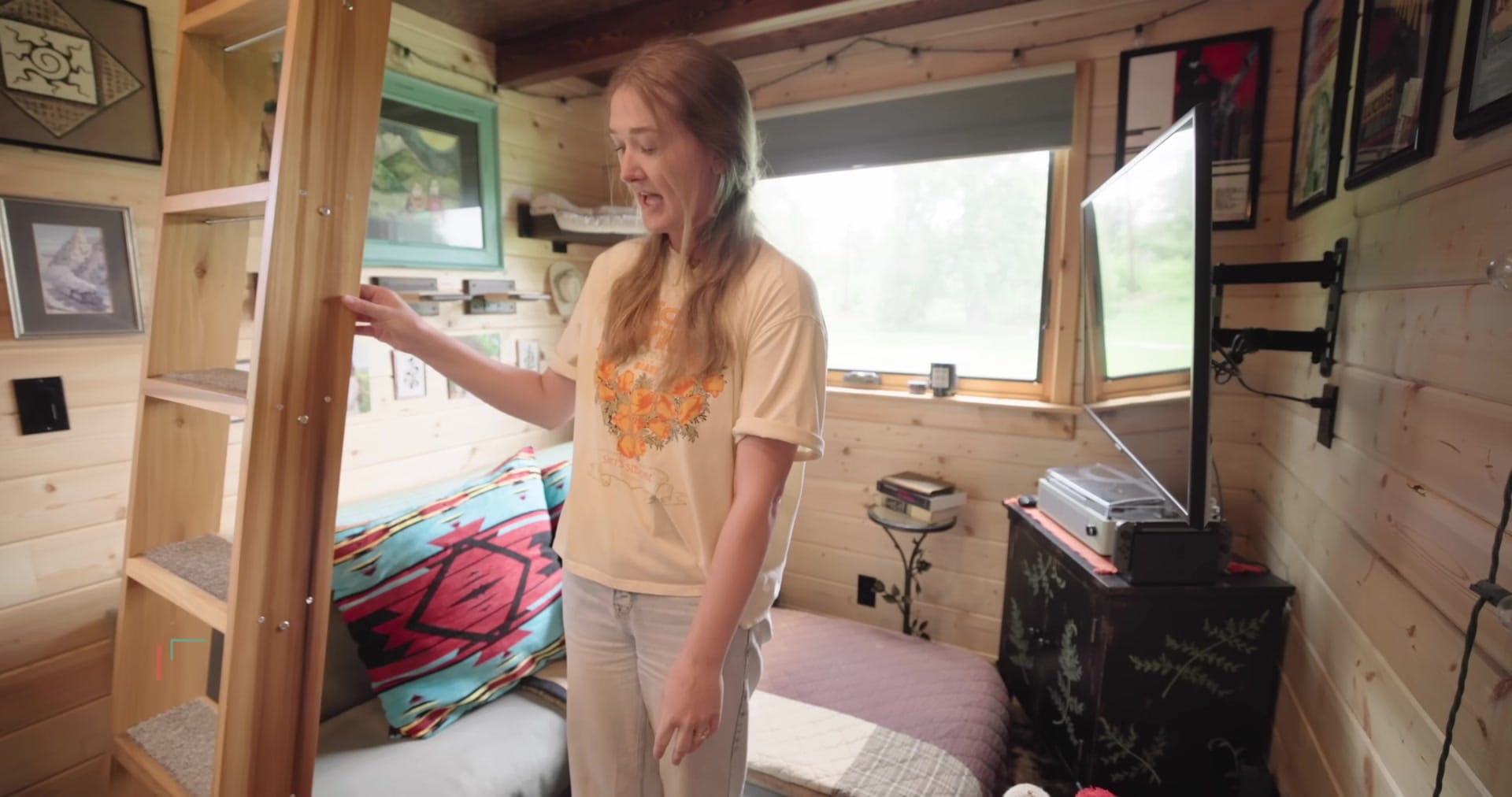
They’re big movie people, so this corner had to deliver: a Pottery Barn sectional with storage under every cushion means blankets and overflow gear disappear in seconds.
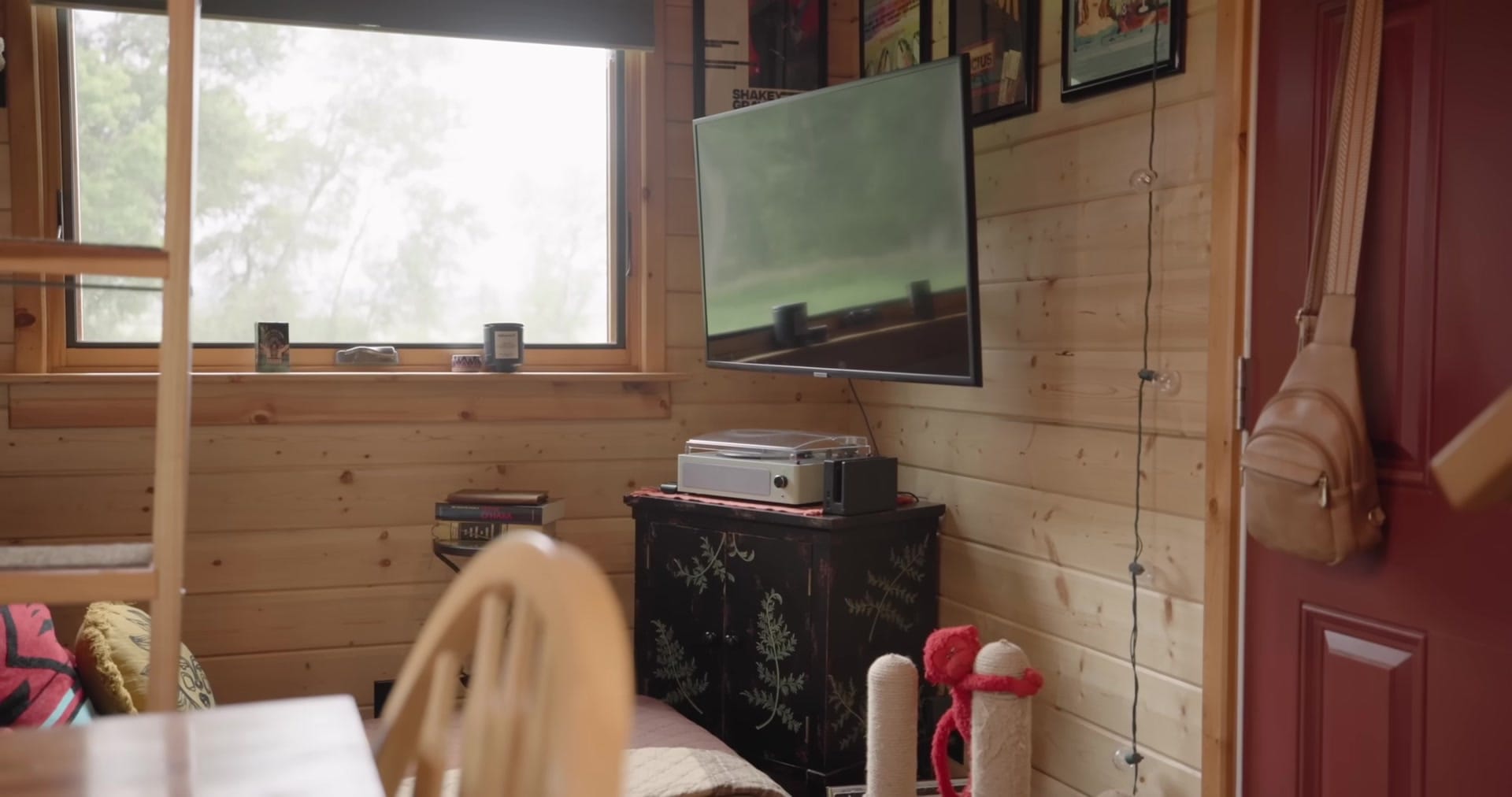
The TV mounts on an adjustable arm, tucking flat or swinging out when it’s showtime.
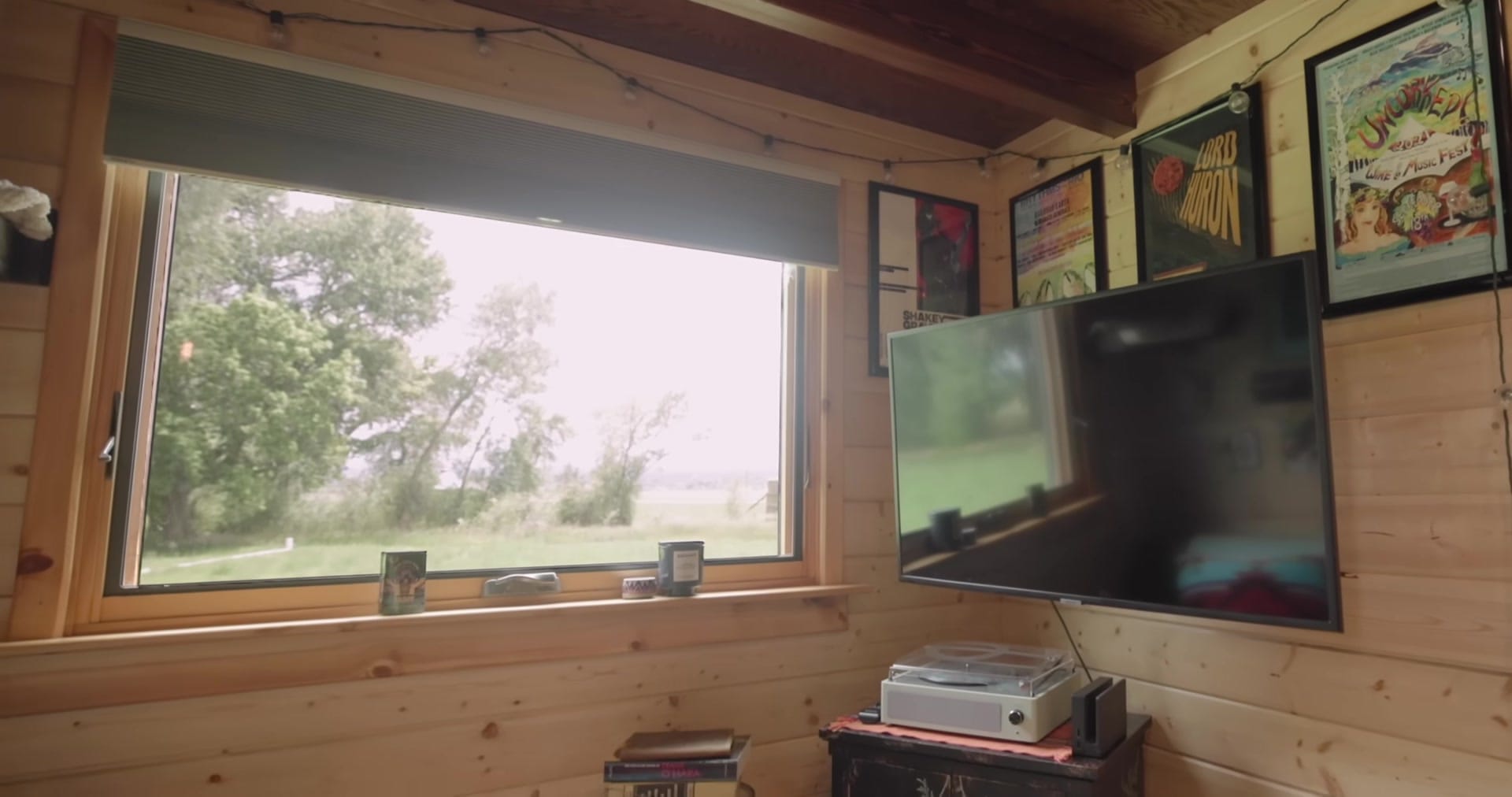
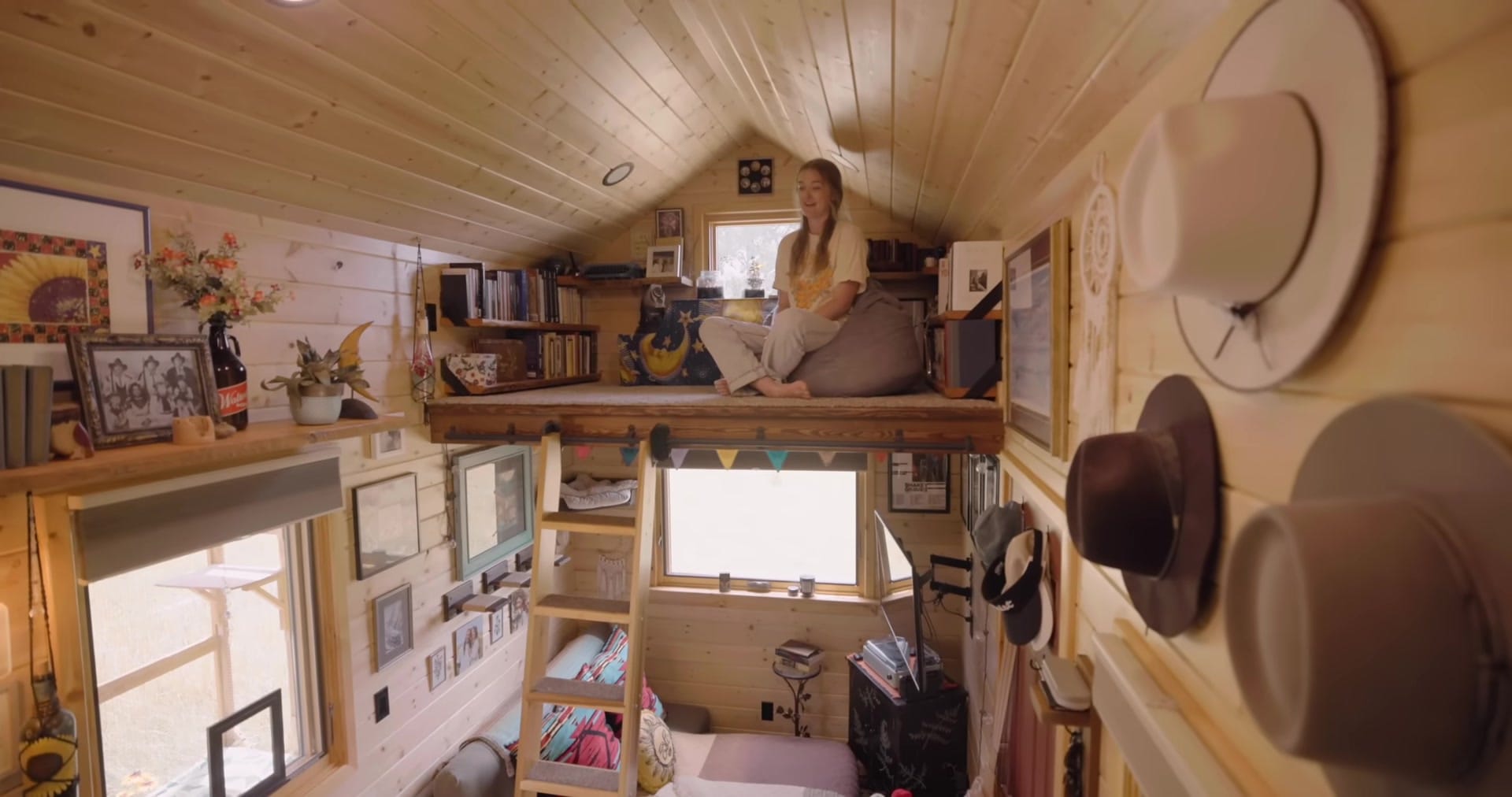
The living room window? It’s the biggest one in the house, framing sunsets like a live painting.
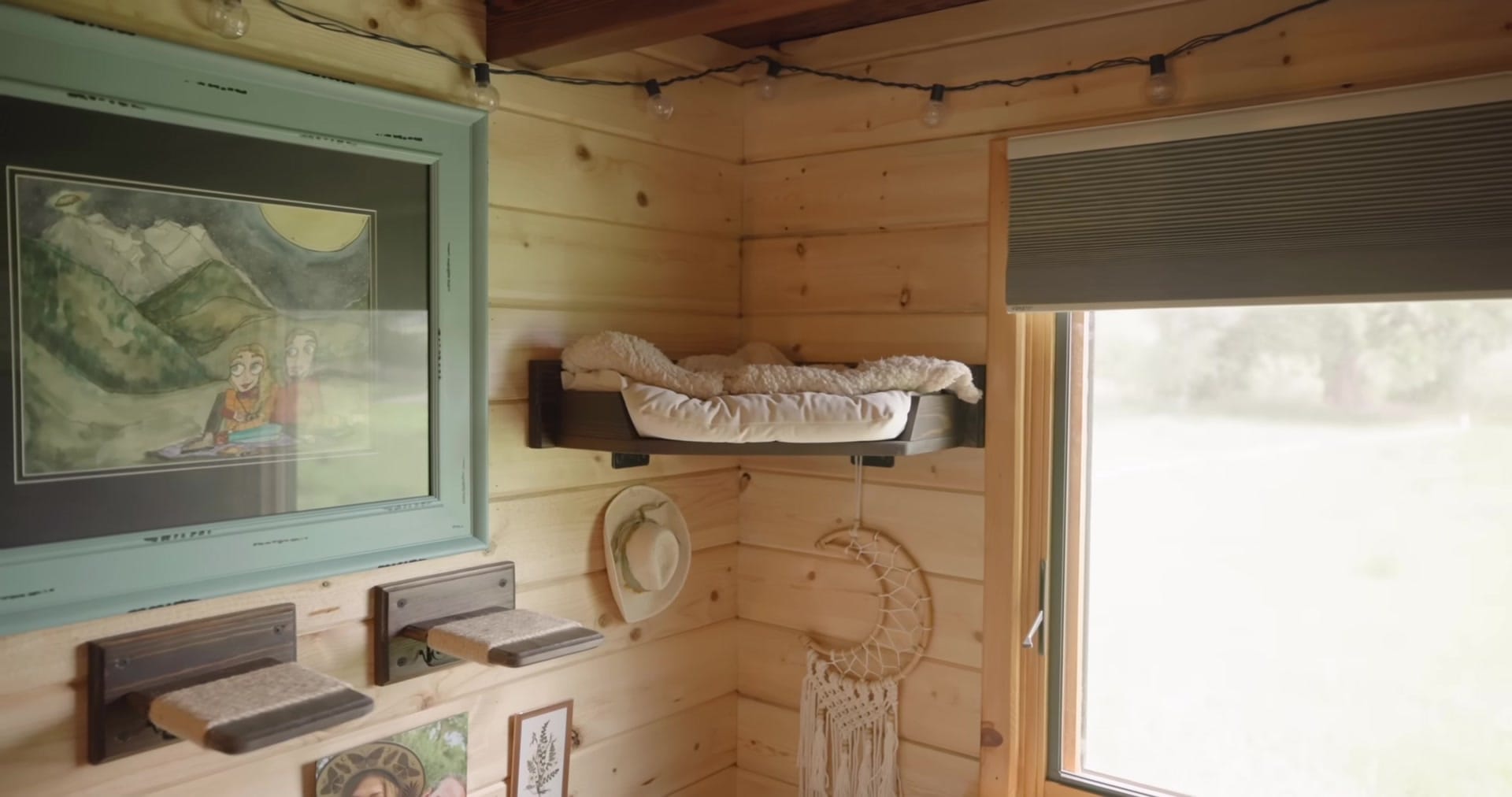
Their cat even has a built-in bed in the corner with little landings to climb—everyone gets a spot.
A rolling ladder slides out of the way so this area never feels hemmed in.
Up above, what started as “extra storage” morphed into a reading loft—a poet’s nook lined with books and a quiet place to write.
Bedroom Loft, Stairs & Built‑In Storage
The stair rail was a must after inspections—it’s a cable guard rail that keeps things safe without closing the space in.
That airy cable look stays visually light and open down the whole run.
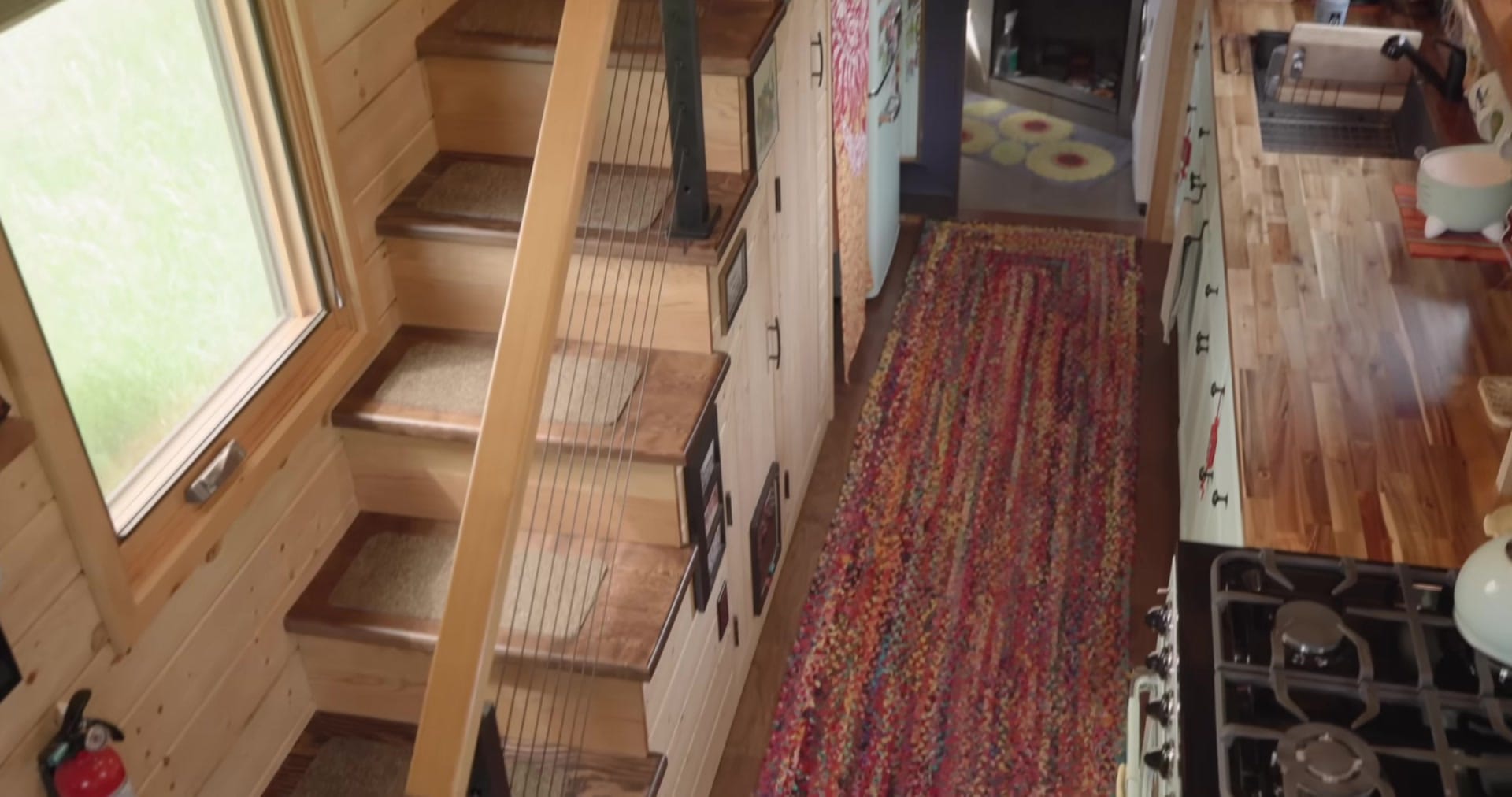
Carpet treads on each step add grip so late-night trips feel sure-footed.
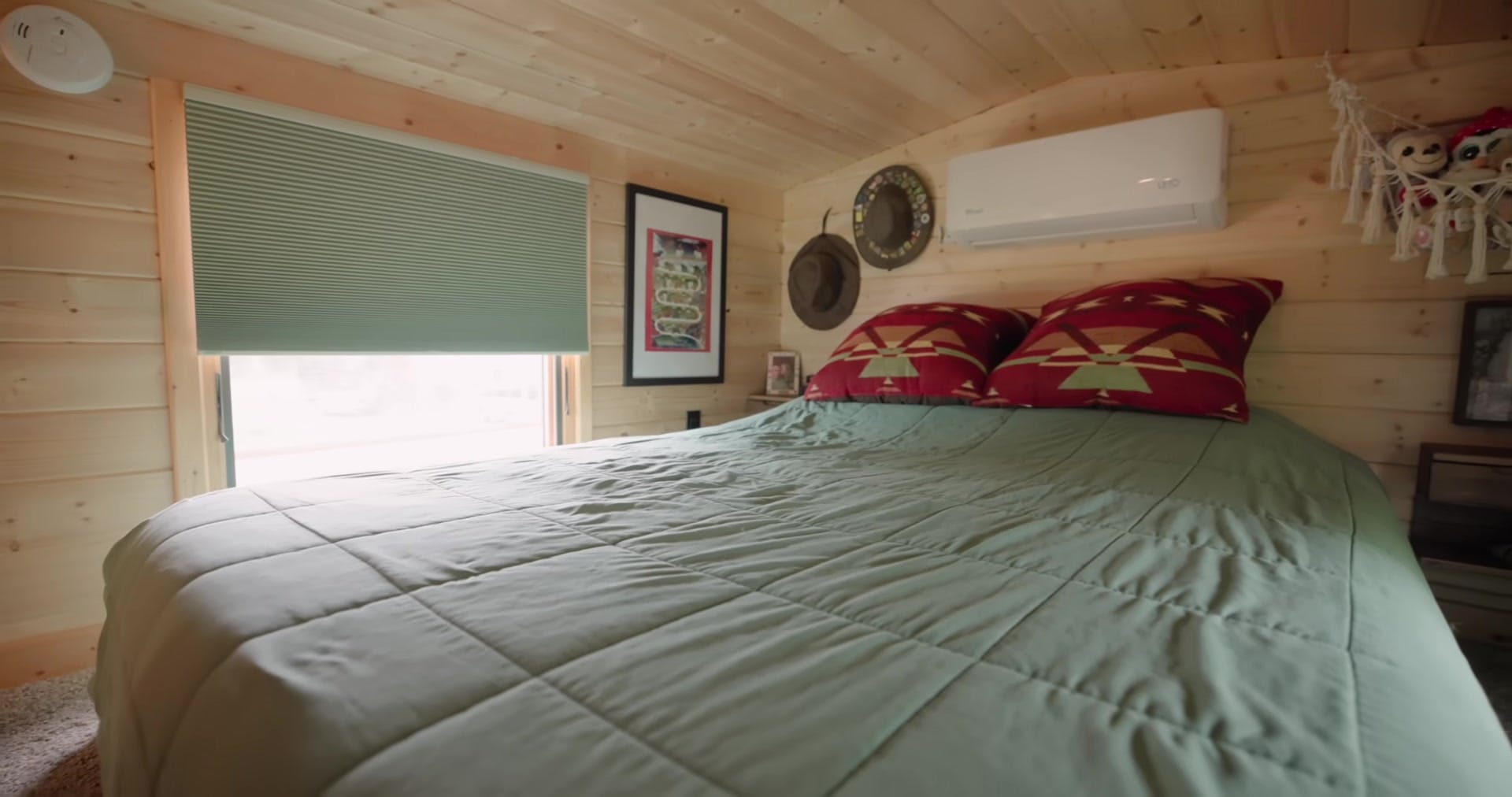
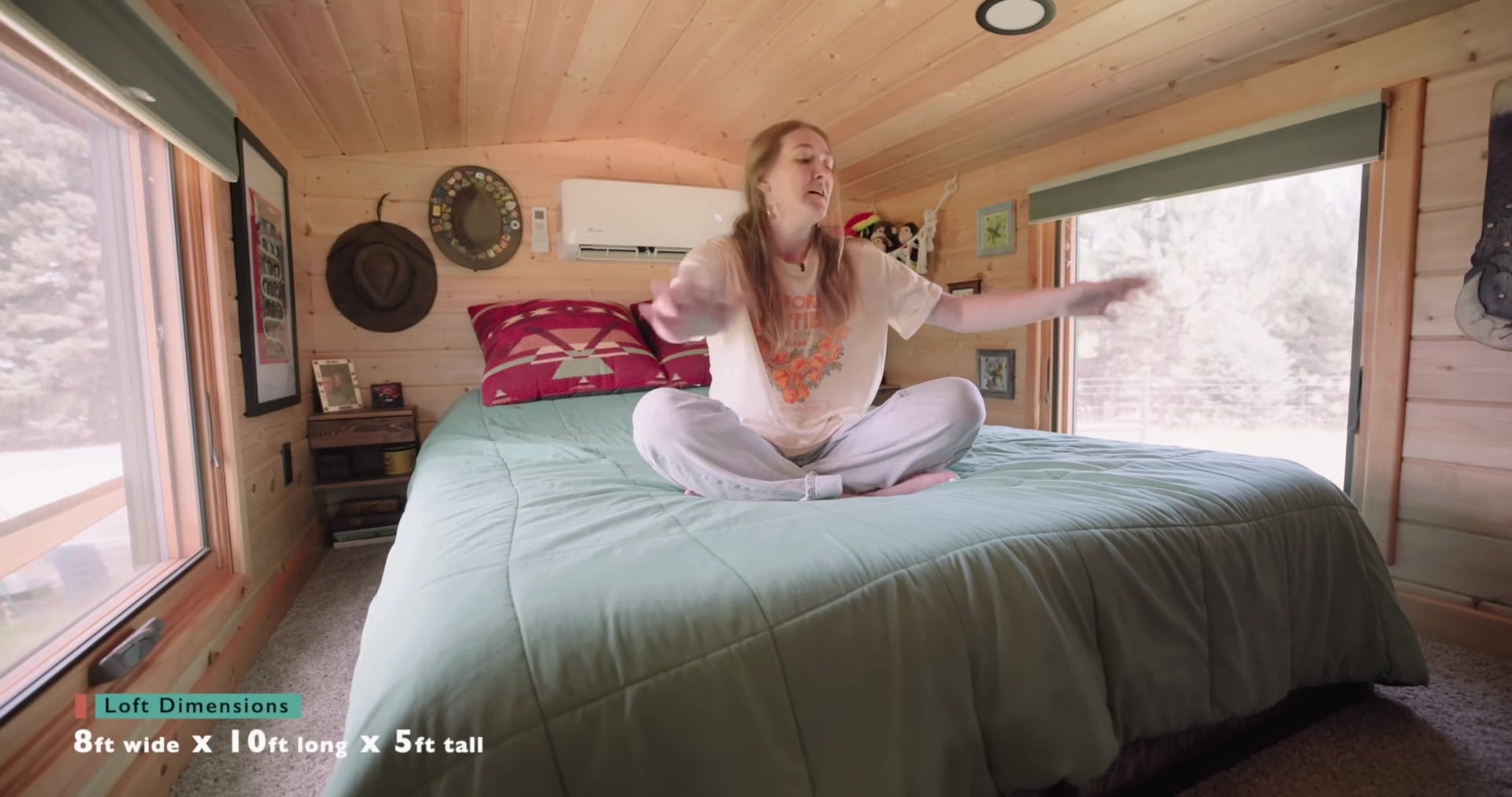
Up top, the bedroom loft is just under five feet tall and stretches ten feet—plenty for a queen-size bed with walk space on the sides.
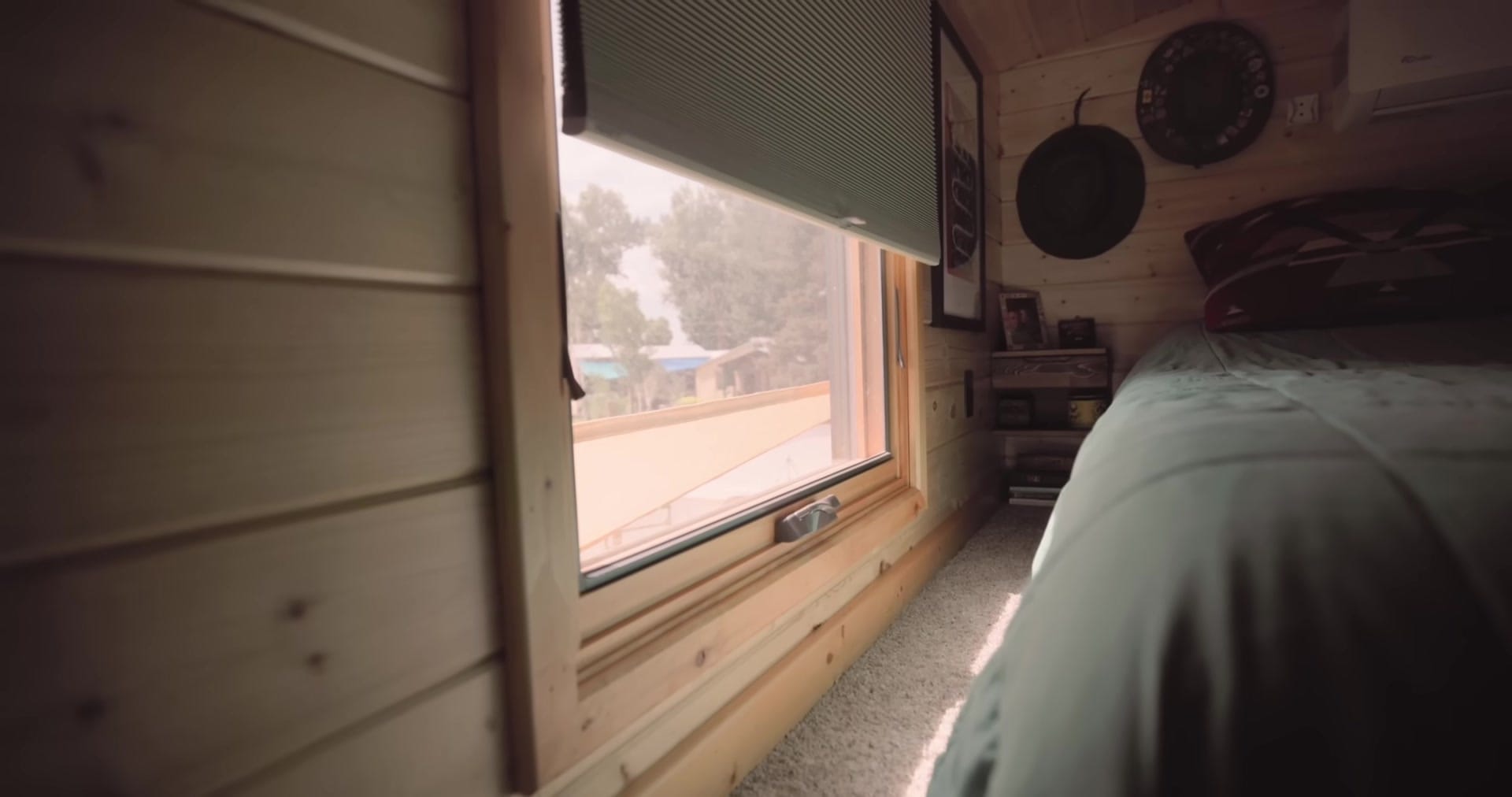
Two 3-by-3-foot windows on either side meet egress standards, so climbing out in an emergency is actually doable.
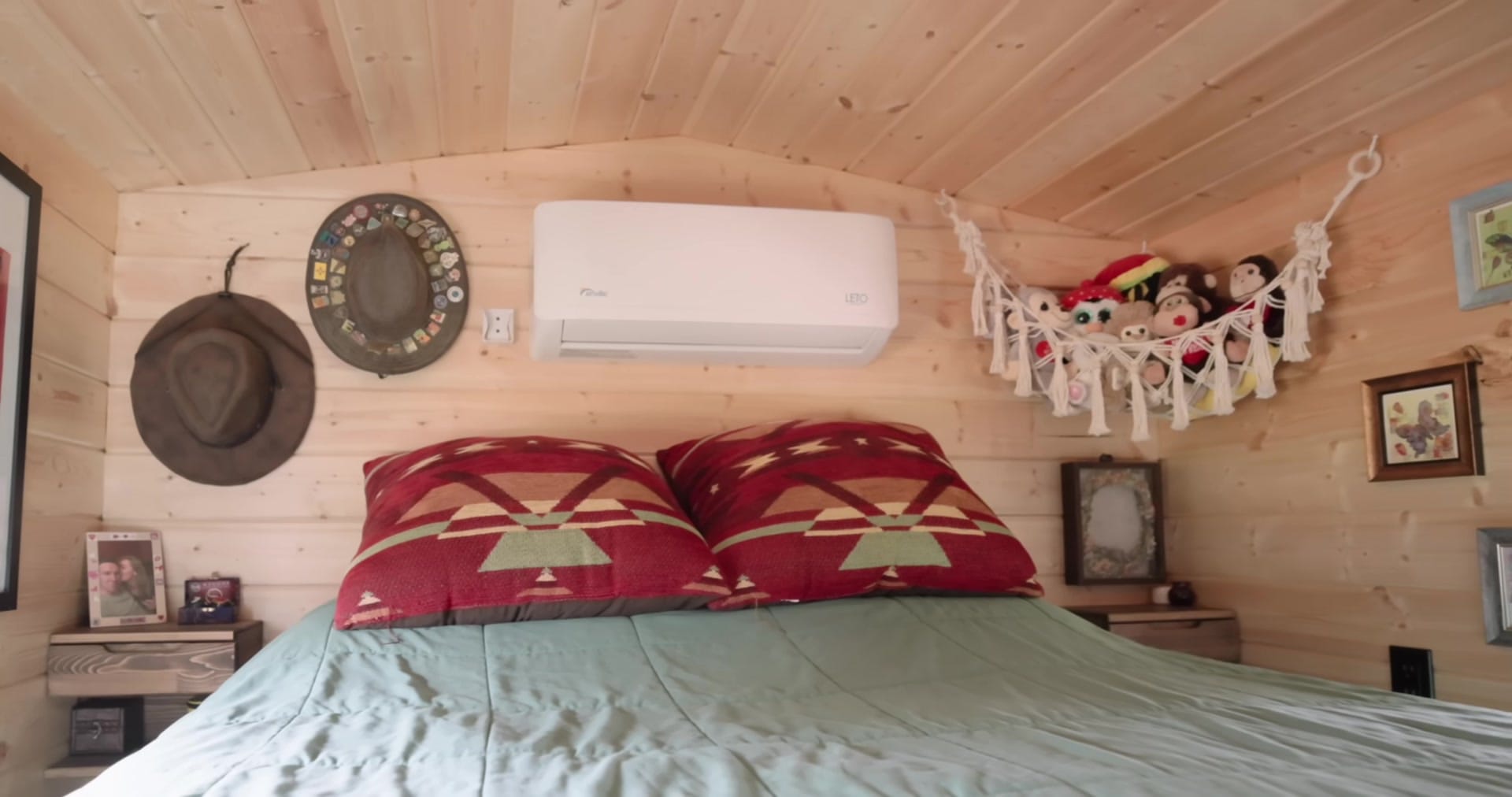
A mini split sits above the bed for heat and AC, keeping the loft warm in winter and cool in summer.
Bathroom, Laundry & Low‑Carbon Appliances
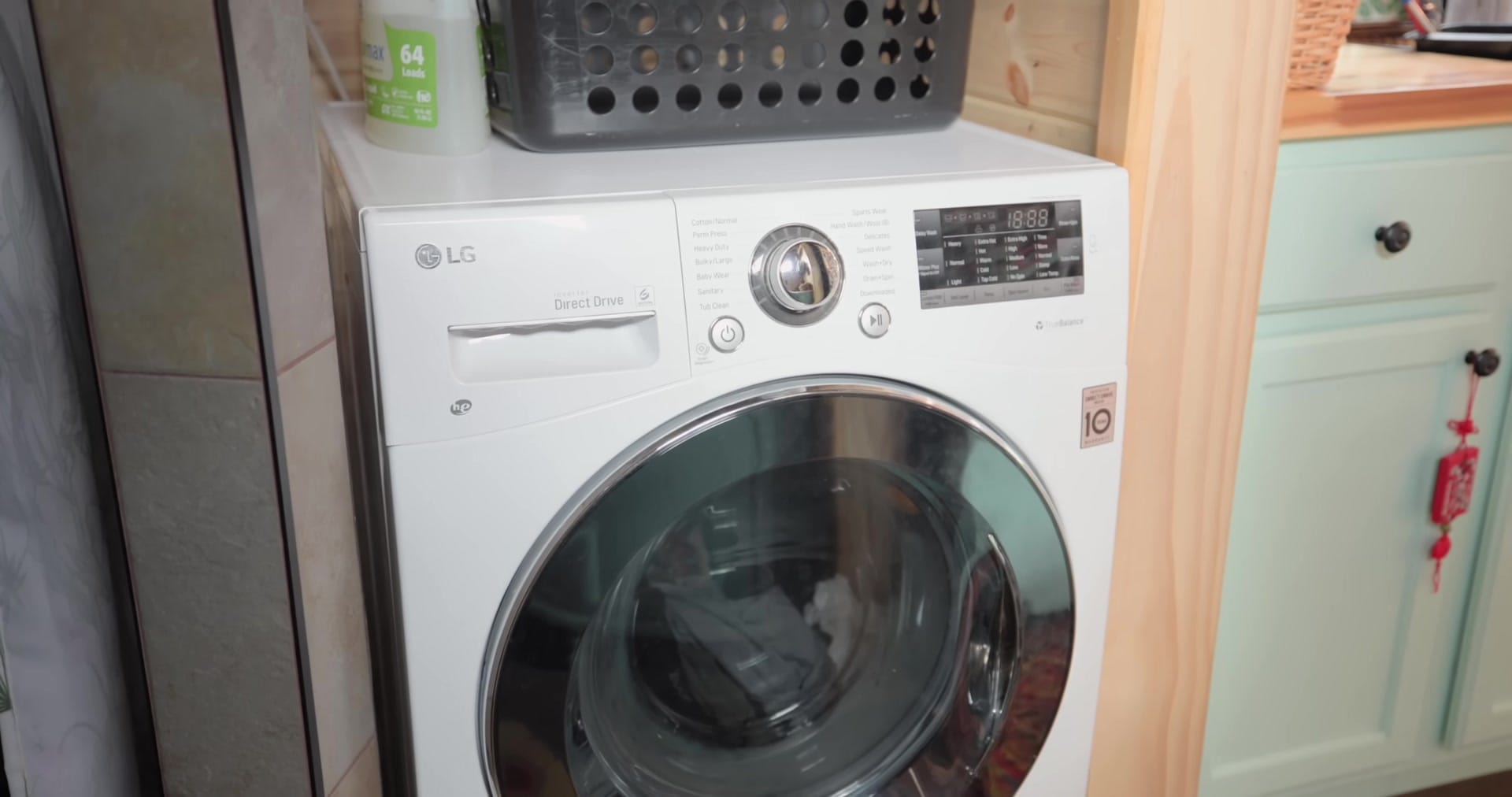
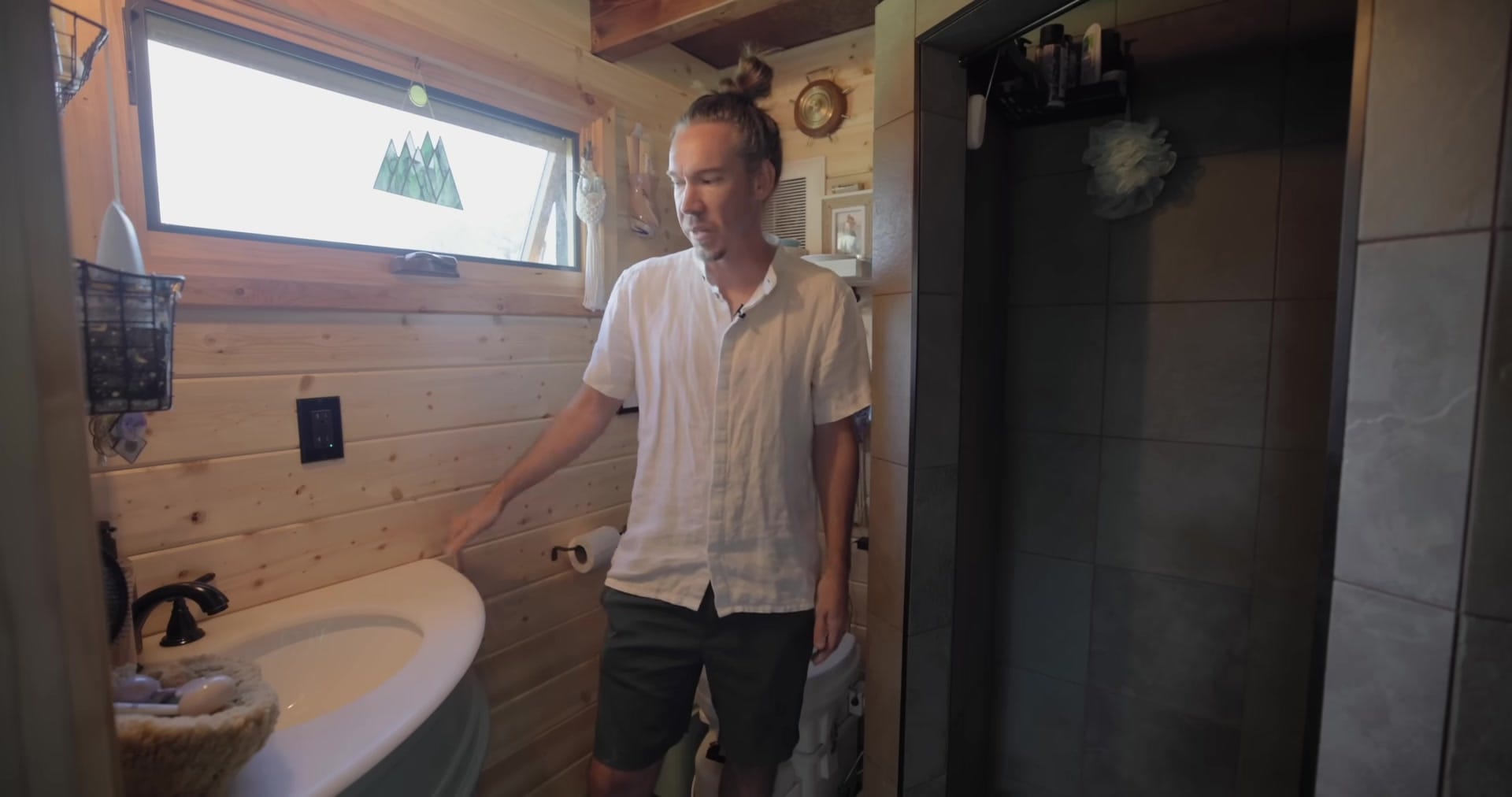
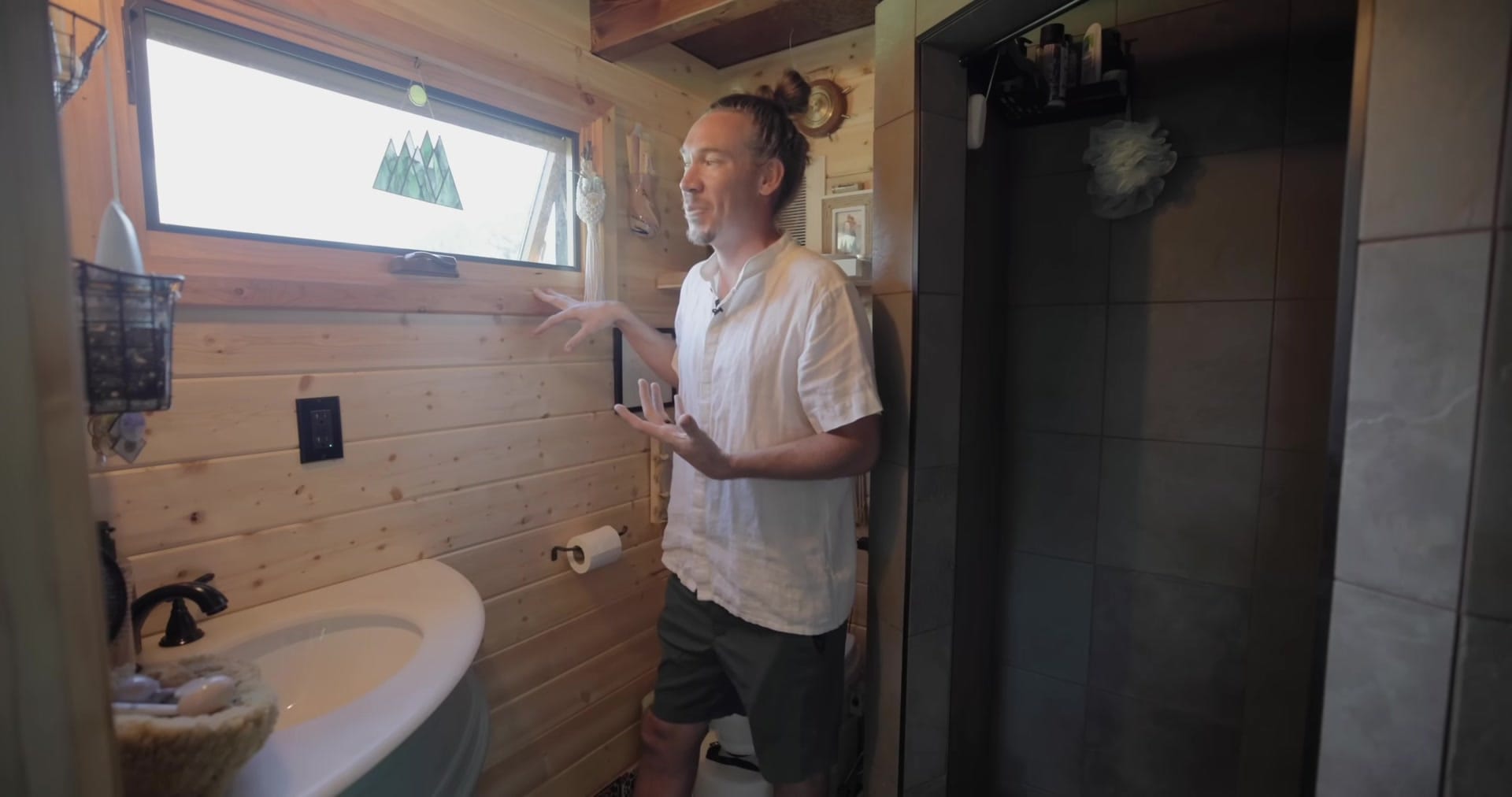
They designed this bathroom around the must-haves—washer/dryer combo, corner sink, and toilet—then worked the layout until everything fit and flowed.
There’s room for two to move around without bumping into corners.
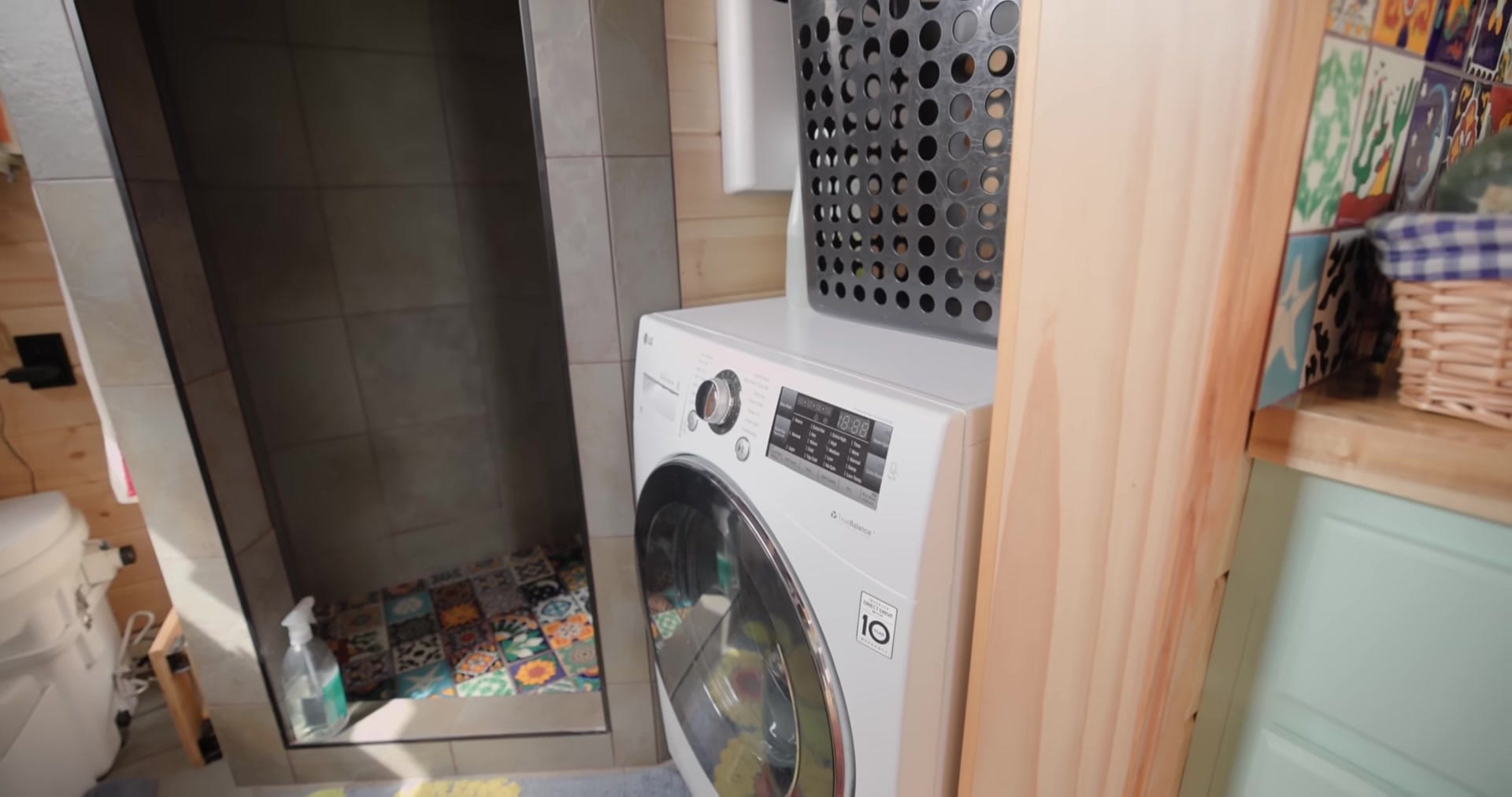
The rounded corner sink keeps knees safe, adds storage below, and stays out of the way.
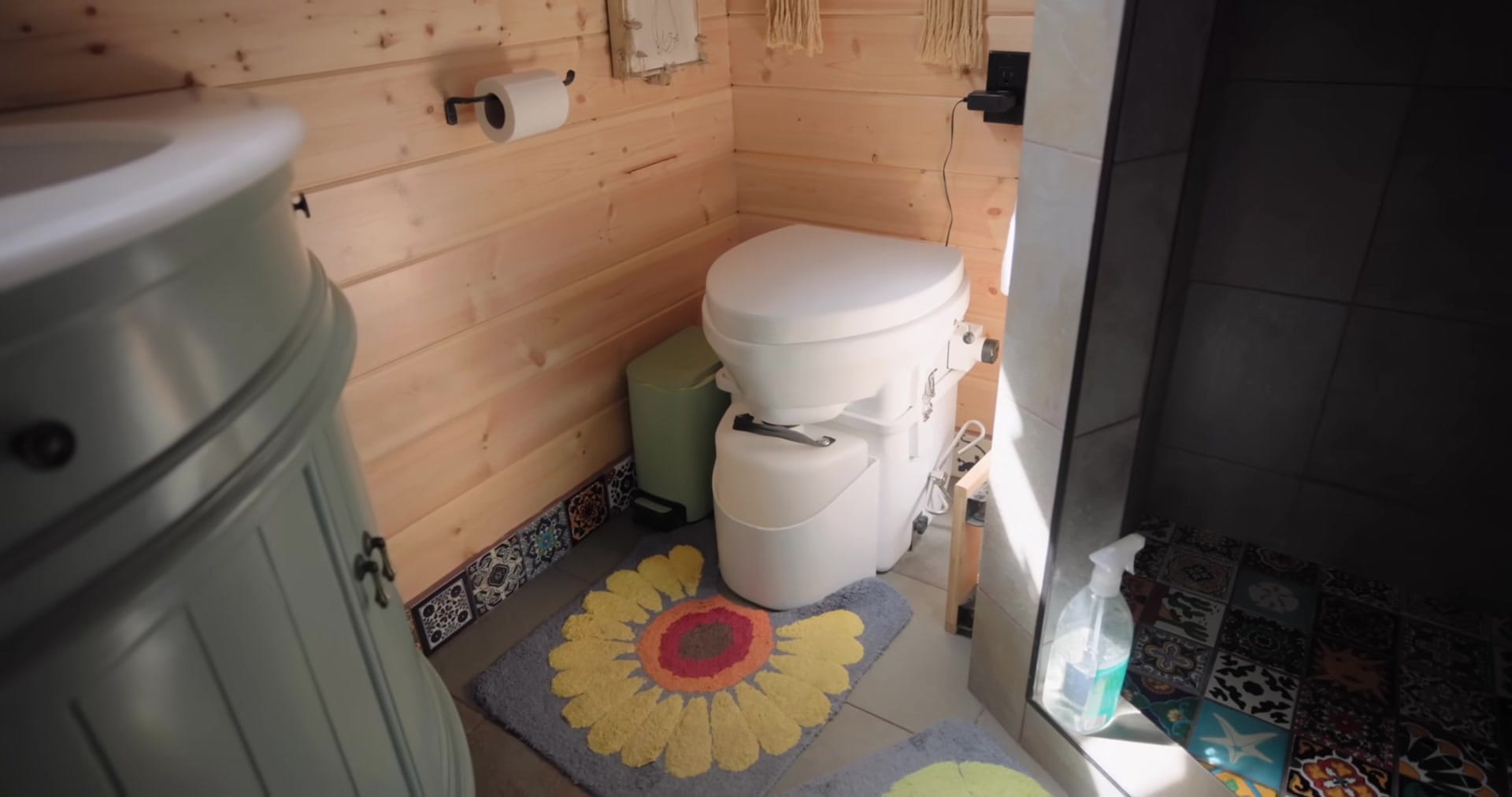
A Nature’s Head composting toilet keeps the footprint low and maintenance simple.
The shower wall holds a window set high enough for privacy while pouring in daylight, so you don’t have to flip a switch during the day.
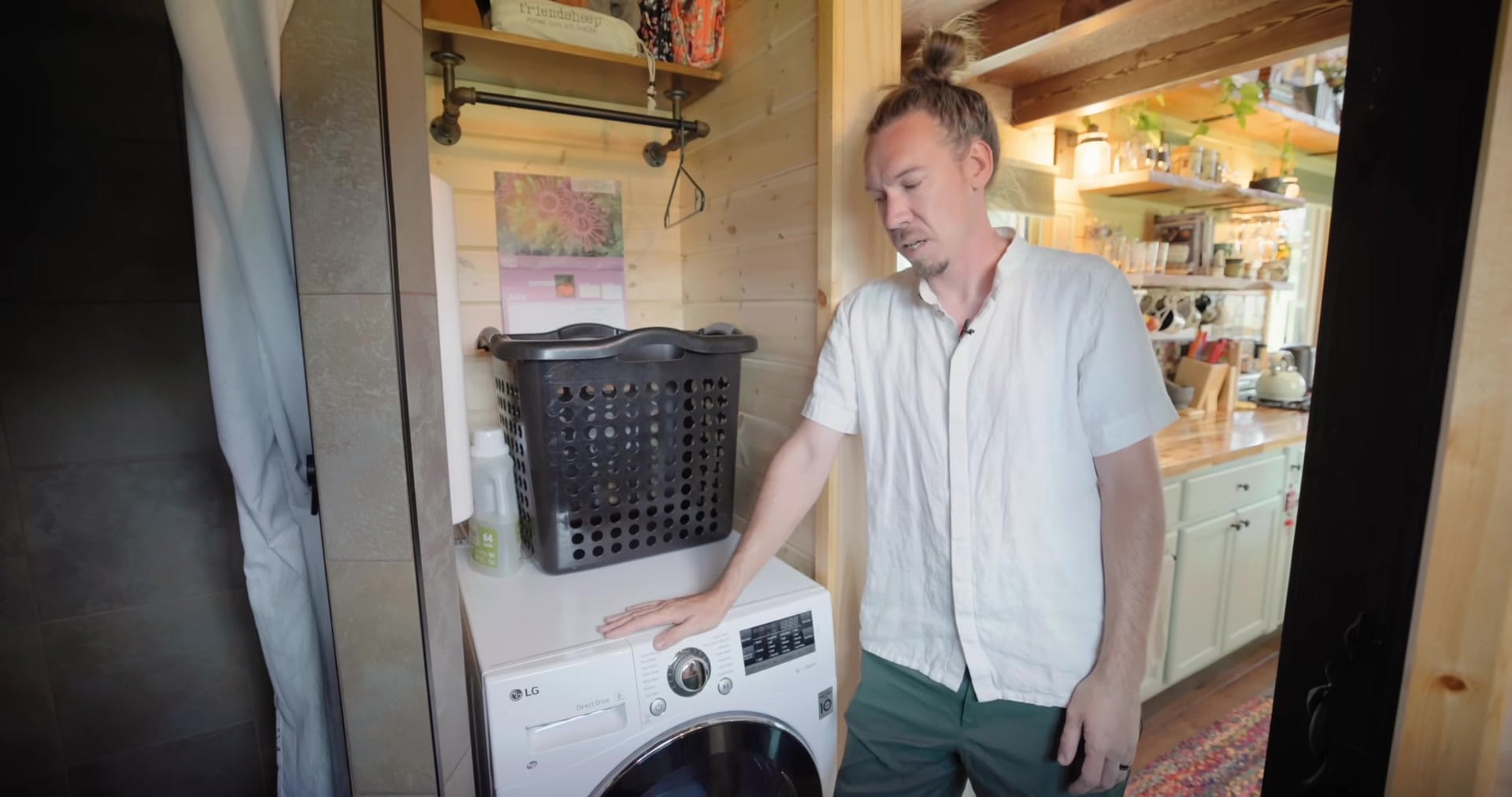
And that combo washer/dryer? It handles small-to-medium loads in about the time a standard cycle takes—perfect for a tiny house rhythm.
They also skip the microwave, big blender, toaster oven, and air fryer to reduce electricity use, leaning on the stove and oven instead.
Build, Budget, Trailer Specs & Certification
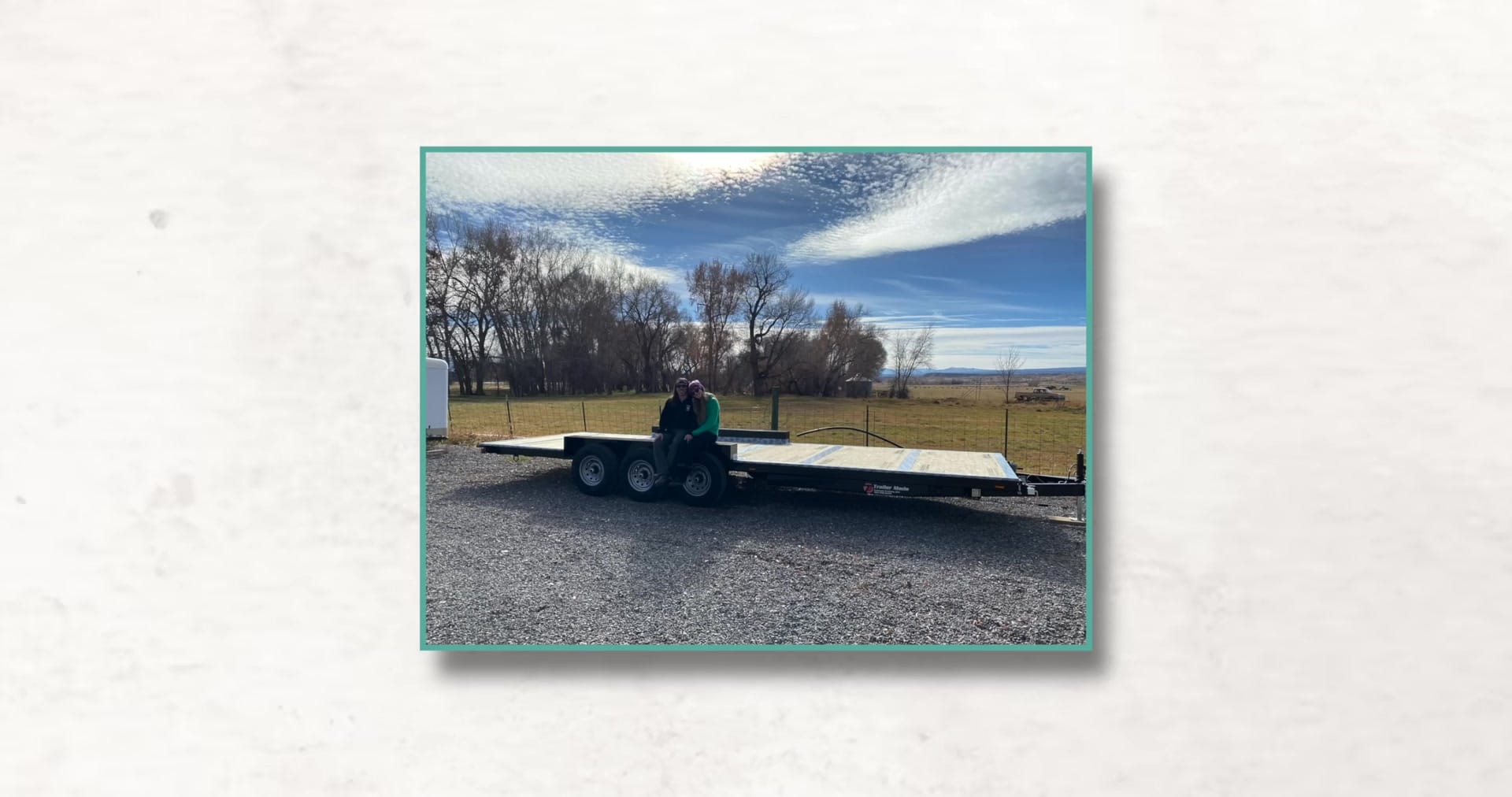
When it was time to start, they sourced a Trailer Made foundation built for tiny homes and had it delivered to their site.
The build stretched over three years, which made paying for materials manageable along the way.
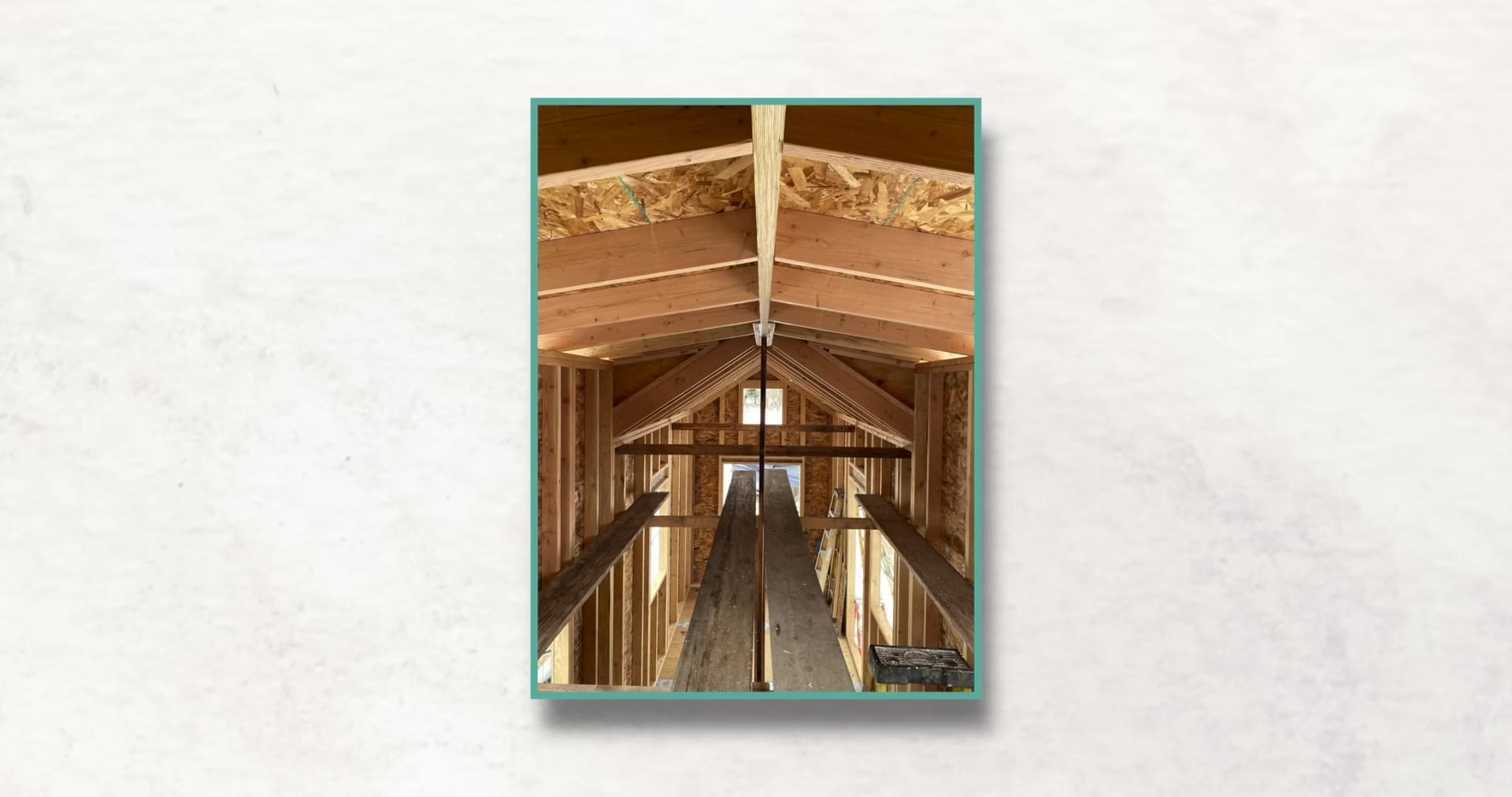
Total cost landed around $35–40k—still far less than buying a finished tiny and with every detail dialed exactly how they wanted.
Because many tiny house communities require certification to code, they ran their DIY through NOAH for inspections and peace of mind.
A consultation option before inspections helped them fix issues early and get moving again with confidence.
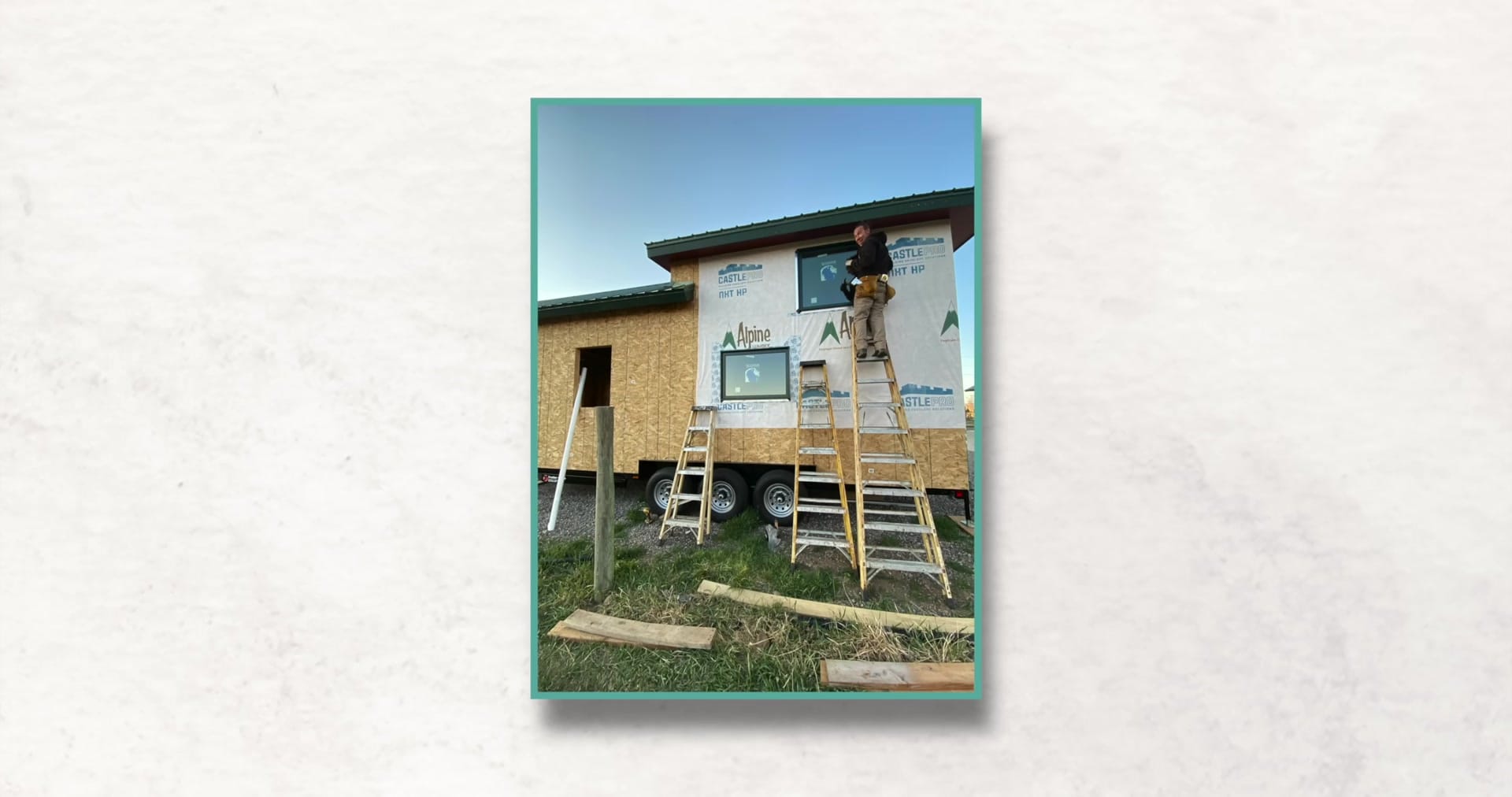
Underneath it all is a triple-axle trailer rated for 21,000 pounds, which gave them the freedom to choose heavier wood finishes without sweating the numbers.
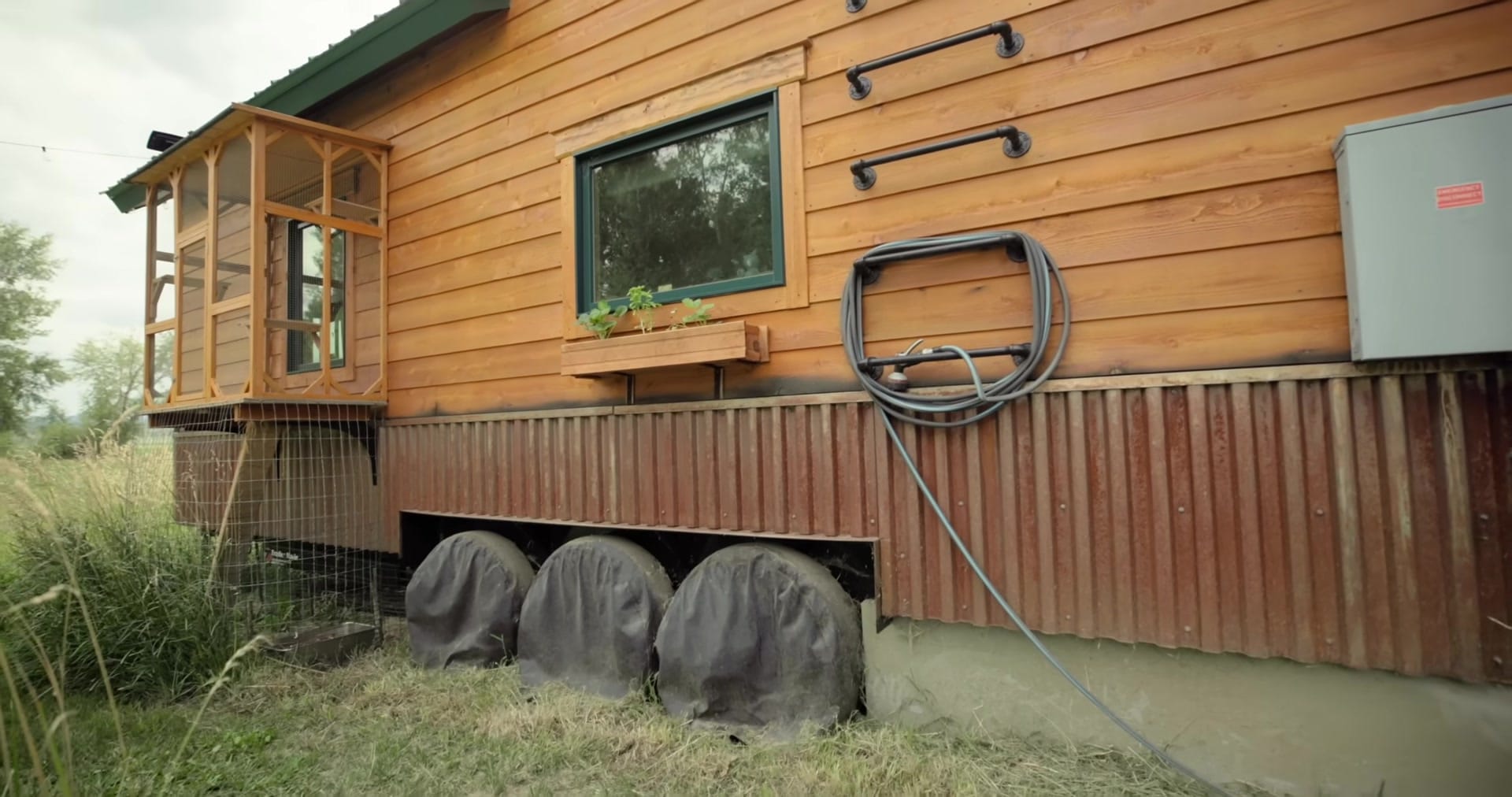
Even with tile and solid wood, the house estimates around 15,000–16,000 pounds—well within that rating.