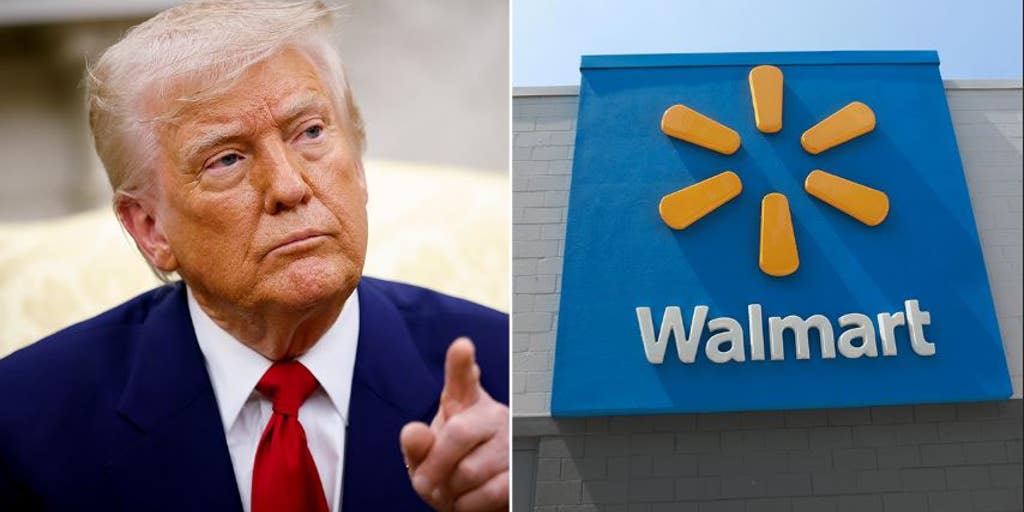
Trump tells Walmart “I’ll be watching” after CEO blames him for upcoming price hikes
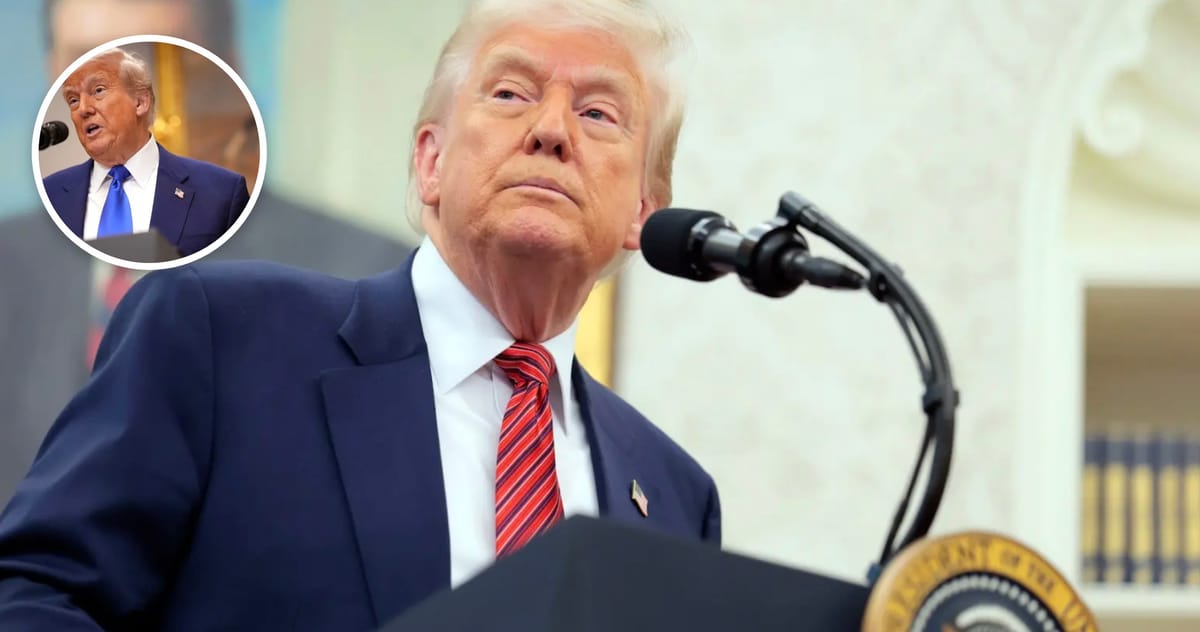
The President just fired a warning shot at America’s largest retailer.
Retail Giant Announces Price Increases
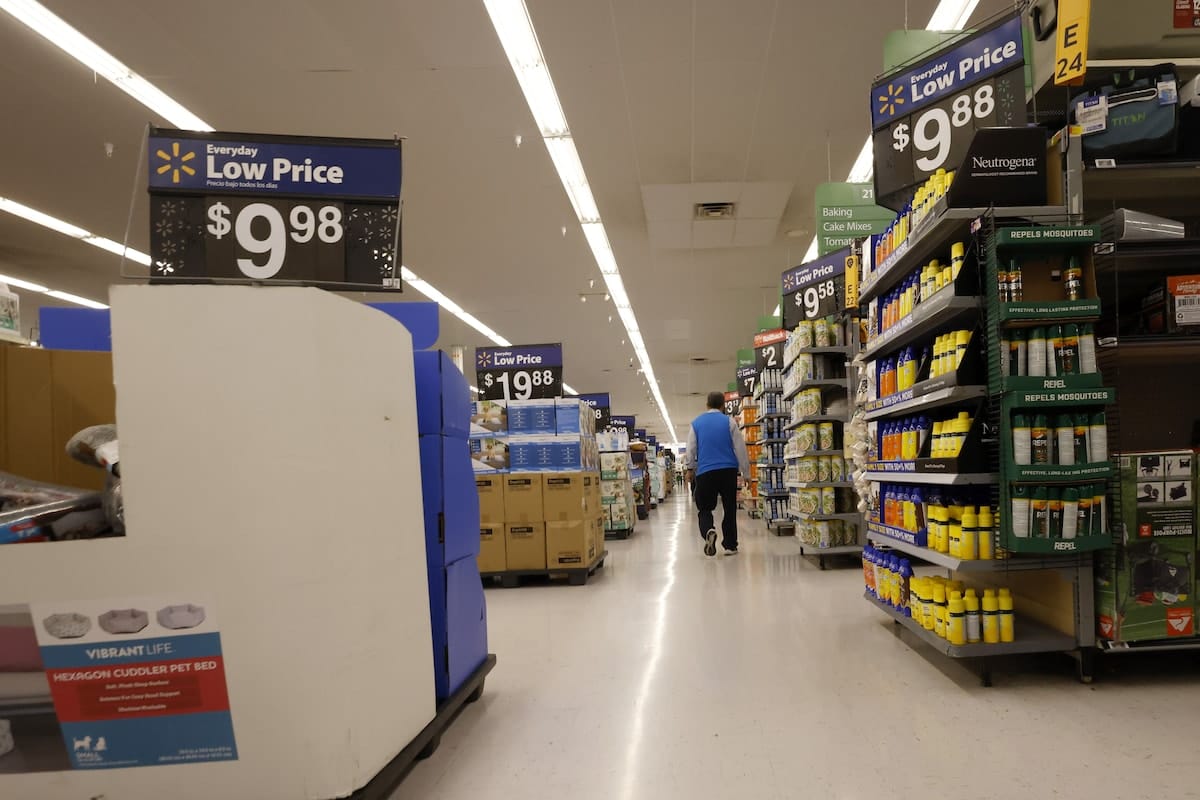
Walmart, with over 4,600 stores across the United States, has warned consumers to brace for higher prices starting as early as the end of May.
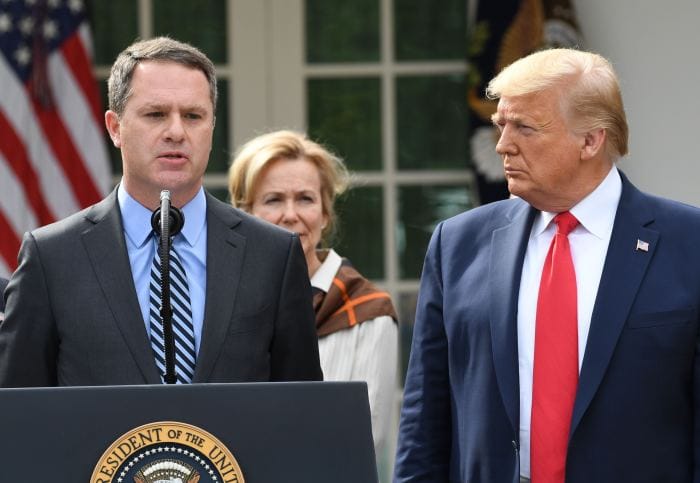
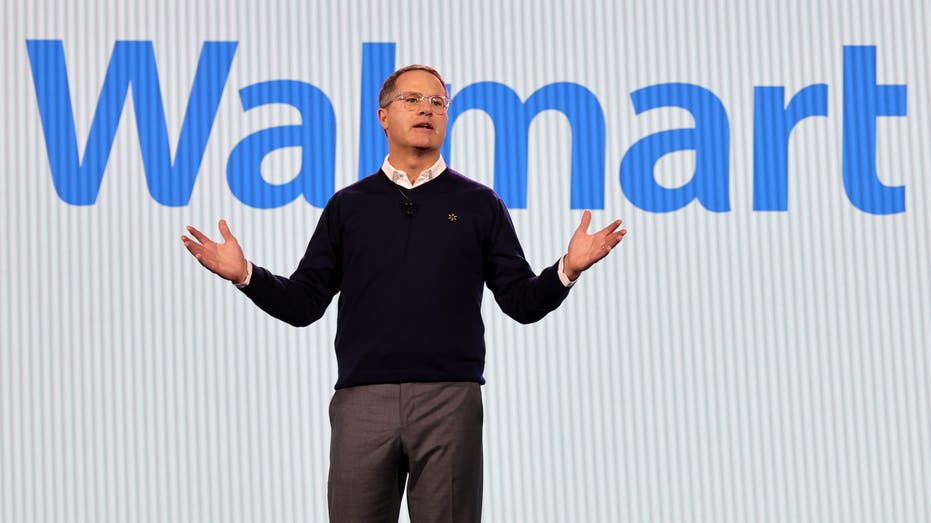
The retail giant’s CEO Douglas McMillon made the announcement during a Thursday earnings call, specifically pointing to tariffs as the culprit.
“We will do our best to keep our prices as low as possible. But given the magnitude of the tariffs, even at the reduced levels announced this week, we aren’t able to absorb all the pressure given the reality of narrow retail margins,” McMillon stated.
The company’s finance chief, John David Rainey, added that prices will increase “much more” in June.
The China Factor
Walmart sources merchandise from multiple countries including Canada, China, India, Mexico, and Vietnam – all facing at least 10% in tariffs under the current trade policy.
However, McMillon specifically highlighted China as the most significant concern.
“All of the tariffs create cost pressure for us, but the larger tariffs on China have the biggest impact,” the CEO explained.
The Trump administration recently reduced tariffs on Chinese goods from 145% to 30% as part of a 90-day negotiation period with China.
This temporary reduction was intended to give businesses some breathing room while trade talks continue.
What Products Will Cost More?
Walmart has indicated several categories will see price increases:
- Food items including imported fruits like bananas, avocados, melons, and pineapples
- Seasonal products for back-to-school, Halloween, and Christmas
- Electronics and toys (80% of toys sold in the US are made in China)
- Baby gear such as strollers, car seats, and clothing
- Home goods and appliances
McMillon specifically mentioned food inflation as “very much on our mind,” suggesting the company would try to control costs by reducing fresh food waste.
The Economic Debate
The situation highlights an ongoing economic debate about who ultimately pays for tariffs.
Commerce Secretary Howard Lutnick stated on CNN’s “State of the Union” that “businesses and the countries primarily eat the tariff,” not consumers.
This view contrasts with many economists who argue tariffs are largely passed on to consumers through higher prices, particularly affecting lower and middle-income Americans.
The University of Michigan recently reported consumer sentiment fell 2.7% between April and May, approaching a near-record low, partly due to tariff concerns.
Trump’s Direct Response
President Trump didn’t mince words when responding to Walmart’s announcement.
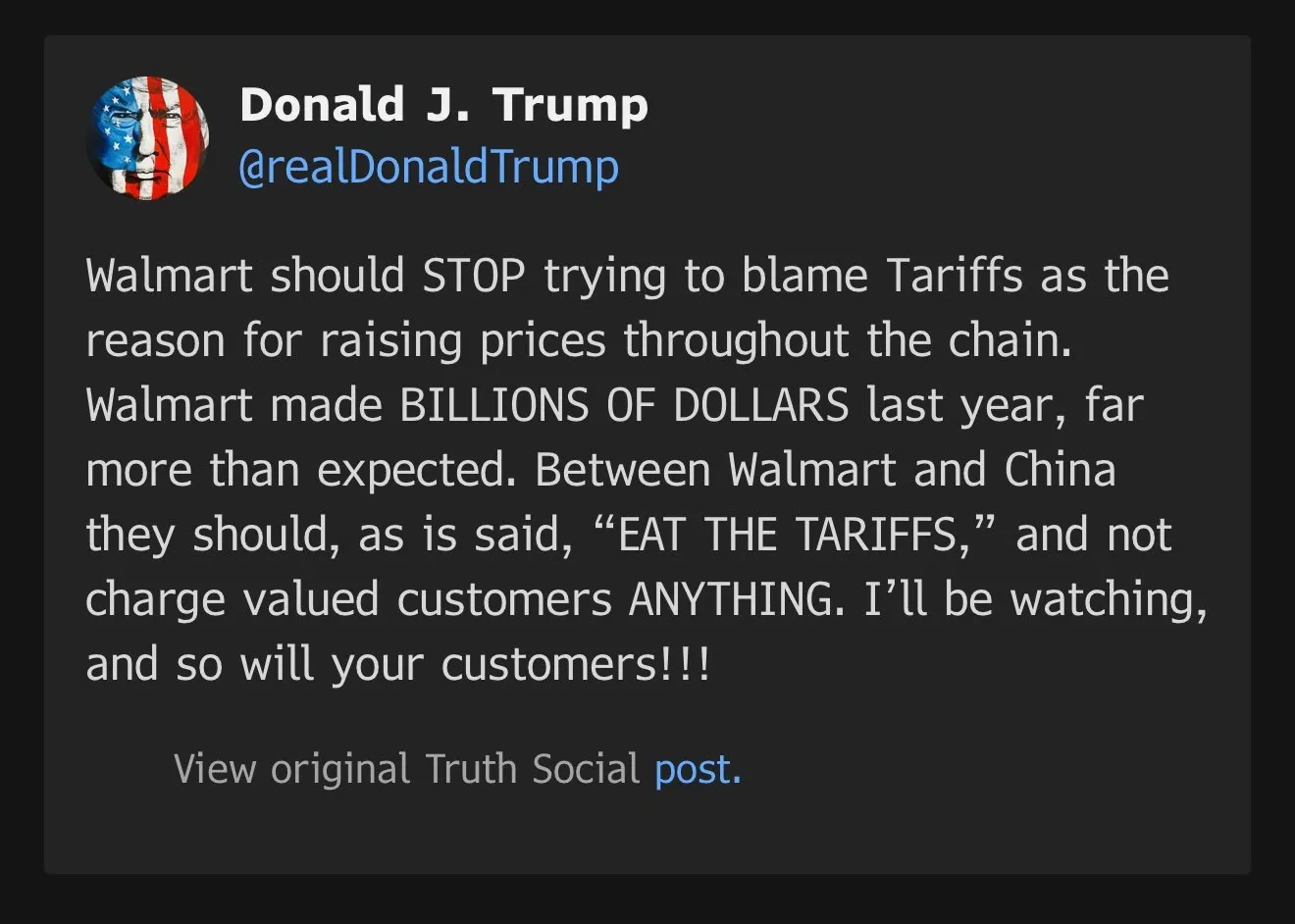
Taking to Truth Social on Saturday, the President delivered a direct message to the retail giant:
“Between Walmart and China they should, as is said ‘EAT THE TARIFFS,’ and not charge valued customers ANYTHING. I’ll be watching, and so will your customers!”
This “eat the tariffs” directive suggests Trump believes Walmart and its Chinese suppliers should absorb the costs rather than passing them on to American consumers.
The President’s position reflects his administration’s broader strategy of using tariffs to pressure both foreign manufacturers and American importers to restructure supply chains in ways that benefit domestic production.
Trump has previously acknowledged some short-term price increases might occur but maintains the long-term benefits of his trade policies will strengthen American manufacturing and reduce dependency on foreign imports.
Walmart responded with a statement reaffirming their commitment to low prices: “We have always worked to keep our prices as low as possible and we won’t stop. We’ll keep prices as low as we can for as long as we can given the reality of small retail margins.”
As this high-stakes standoff between the President and America’s largest retailer continues, American consumers are caught in the middle, waiting to see who will ultimately absorb the costs of the ongoing trade war.