Trump pushed military control on US soil against generals’ warnings
What was the one thing top military leaders in the Trump administration truly feared?
It seems the answer might be arriving now, in real-time.
A Pattern of Concern
For years, multiple high-ranking generals and former defense officials served under President Donald Trump.
During their tenures, a consistent concern emerged regarding Trump’s approach to domestic situations.
This concern focused on his repeated desire to involve the military more directly in American soil operations.

Lines Not To Be Crossed
These individuals, many of whom were decorated military leaders themselves, viewed deploying the military domestically as a critical line.
They believed this line should not be crossed, fearing the implications for civil society and the military’s role.
Several prominent figures have spoken out about these anxieties.
These include former Defense Secretaries Jim Mattis and Mark Esper, top general Mark Milley, and former Chief of Staff John Kelly.
Specific Incidents Raised Eyebrows
The fears weren’t abstract; they were reportedly fueled by specific instances where Trump pushed the boundaries.
One flashpoint was the June 2020 event in Lafayette Square.
Federal law enforcement cleared protesters, and Trump then proceeded for a photo opportunity.
Both Milley and Esper were present and later expressed regret over their participation in that scene.
Jim Mattis, in a strong public statement, warned about the dangers of militarizing responses.
“Militarizing our response, as we witnessed in Washington, DC, sets up a conflict — a false conflict — between the military and civilian society,” Mattis stated.
He added that such actions “erode the moral ground that ensures a trusted bond between men and women in uniform and the society they are sworn to protect.”
Mattis emphasized that military deployment on US soil should only occur on rare occasions, requested by state governors.
Escalating Concerns
Mark Esper recounted instances where Trump allegedly questioned why protesters couldn’t be shot in the legs.
Esper’s job, he described, often involved trying to “blunt or redirect any efforts that could politicize the military, misuse the force, or undermine the nation’s security.”
He even invoked the Kent State massacre as a historical warning, stating, “We don’t want to go back to that.”
John Kelly similarly noted Trump’s persistent interest in using the military against American citizens.
“And I think this issue of using the military on — to go after — American citizens is one of those things I think is a very, very bad thing — even to say it for political purposes to get elected — I think it’s a very, very bad thing — let alone actually doing it,” Kelly told The New York Times.
Kelly even reportedly labeled Trump as a fascist, a sentiment echoed by Mark Milley.
Fears of Misuse and Authoritarianism
The core fear among these officials was Trump’s potential to misuse military power, viewing it as a sign of authoritarian tendencies.
Reports suggested Milley was particularly concerned about Trump potentially attempting a coup after the 2020 election, a claim Trump denied.
Milley reportedly likened Trump’s actions to a “Reichstag moment,” referencing historical instances where power was consolidated through manufactured crises.
A defense official close to Milley indicated his deep concern about Trump mobilizing the military for potentially nefarious purposes.
This official stated that Milley “is not going to sit in silence while people try to use the military against Americans.”
The Present Moment
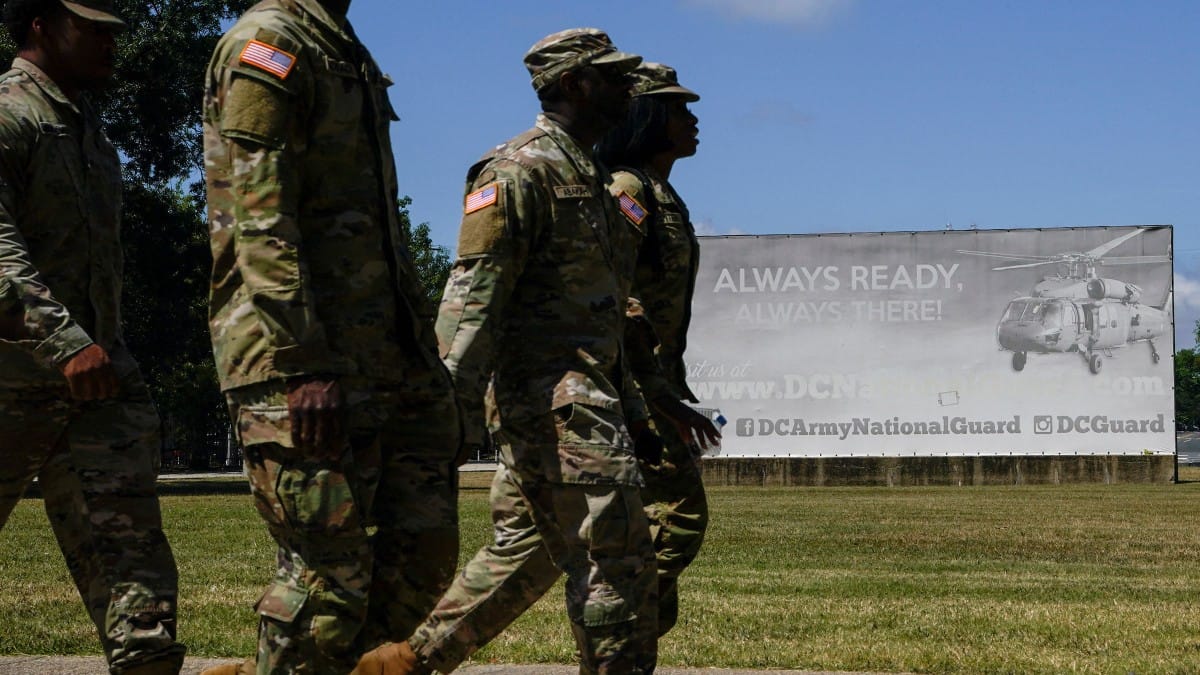
Trump’s recent actions, including the federalization of the DC Metropolitan Police Department and the deployment of the National Guard in the nation’s capital, echo these past concerns.
His previous mobilization of troops in Los Angeles also raised similar questions about whether the goal was a genuine crackdown or merely the appearance of one.
However, Trump’s repeated calls for using federal forces, even active-duty military, in cities suggest a persistent drive towards what his former top generals feared.
While legal authorities might limit such actions outside of DC, Trump’s apparent determination to push the issue makes the warnings from his former military leaders more relevant than ever.
The concerns articulated by Mattis, Esper, Milley, and Kelly are now coming into sharper focus.
The Unfolding Scenario
What these former generals feared most about Donald Trump’s approach to domestic unrest and military involvement appears to be materializing.
Their warnings, once perhaps seen as hyperbole by some, now serve as a stark commentary on the current trajectory.
The guardrails that once seemed secure may be receding, leaving a nation to watch as long-held military concerns are tested.