Trump administration permits sale of gun device critics call ‘weapons of mass destruction’
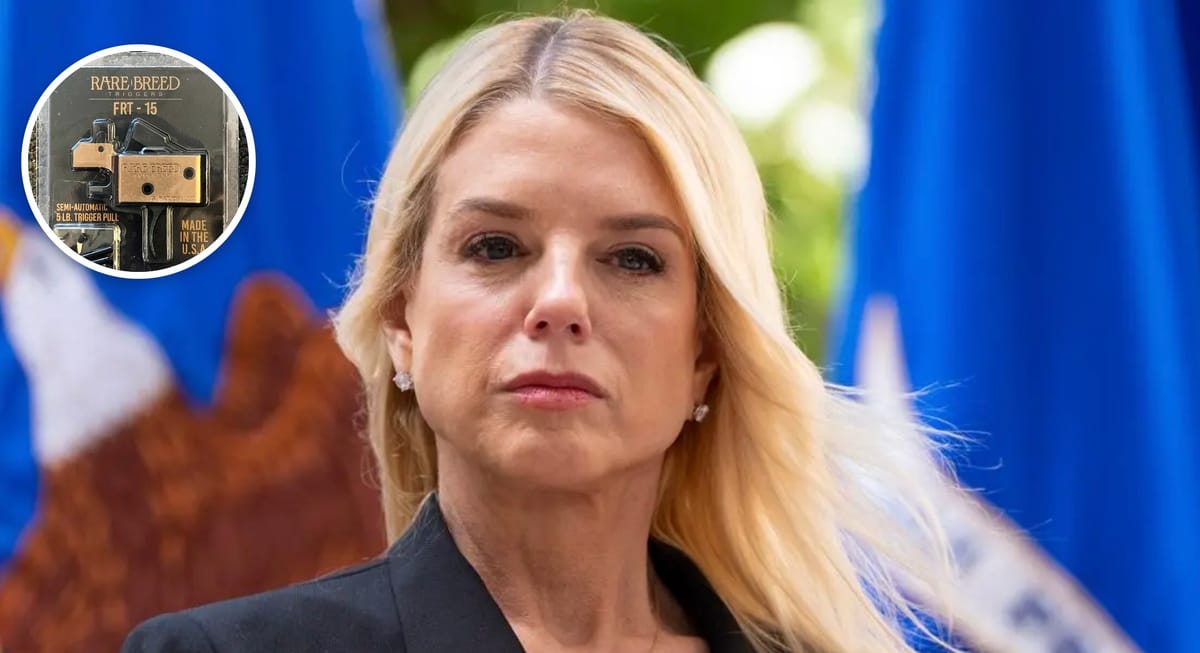
A controversial decision by the Trump administration has sent shockwaves through gun rights advocates and critics alike.
It involves a specific type of trigger mechanism.
A device that was previously targeted by federal regulators under the Biden administration.
Legal Battles and Regulatory Challenges
For years, a debate has simmered regarding certain firearm accessories.
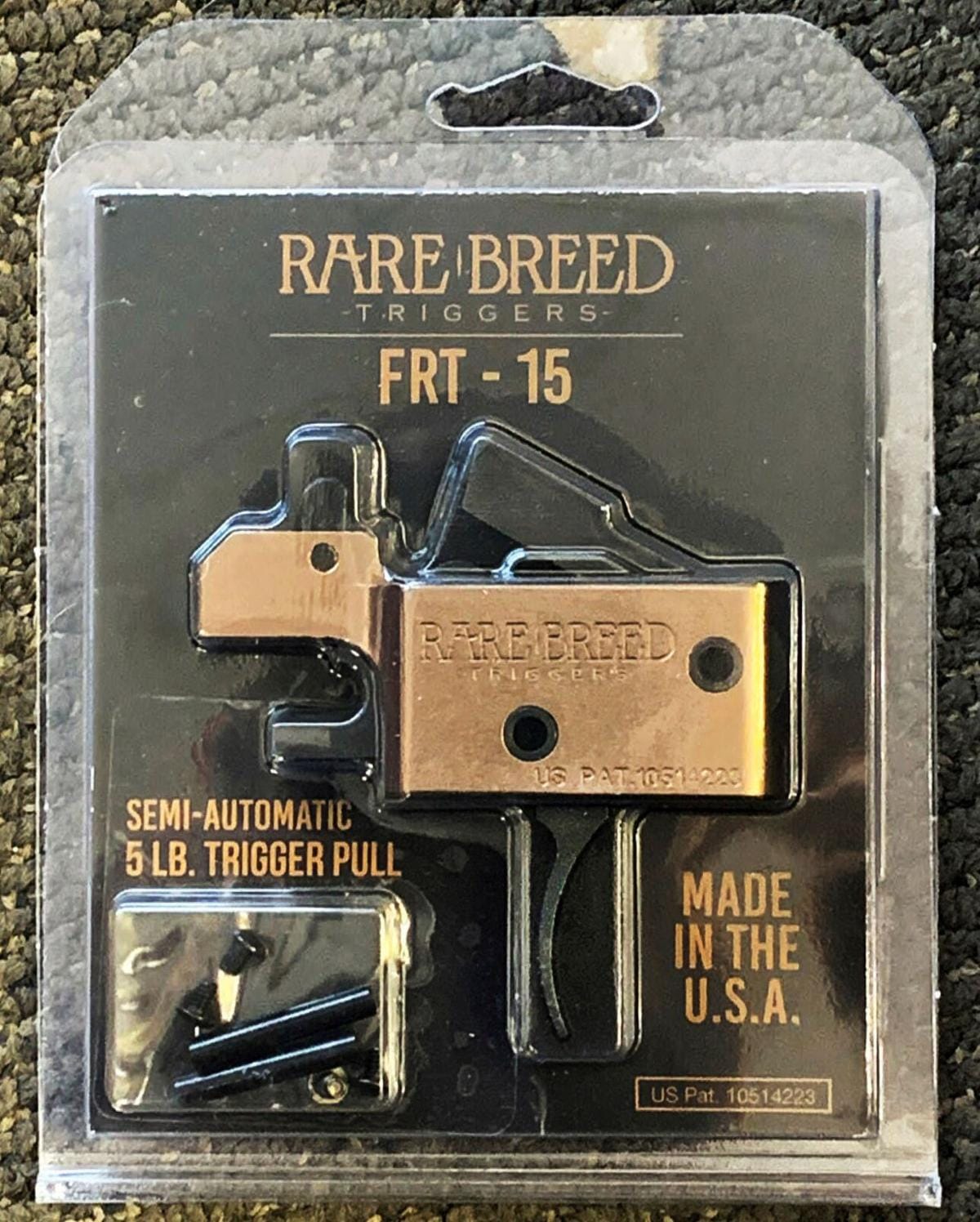
Specifically, devices known as forced-reset triggers (FRTs).
These mechanisms are designed to quickly reset a semi-automatic rifle’s trigger after each shot.
Critics argue this increases the rate of fire to dangerous levels.
However, proponents maintain they are simply a mechanical enhancement that keeps the firearm semi-automatic, firing only one round per trigger pull, albeit with a faster reset.
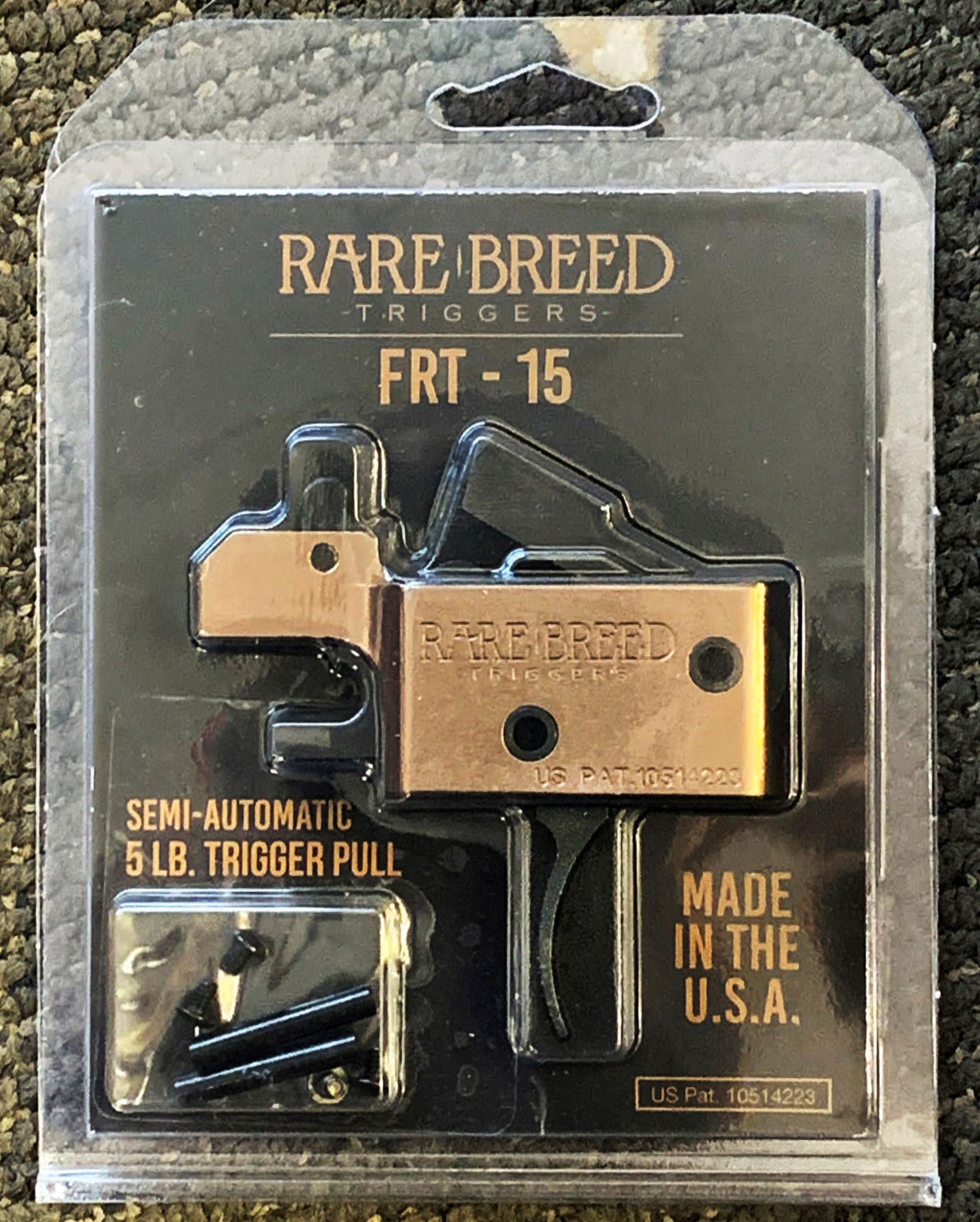
In 2022, the Bureau of Alcohol, Tobacco, Firearms and Explosives (ATF) under the Biden administration issued guidance classifying FRTs as “machine guns” under the National Firearms Act (NFA) of 1934.
This classification effectively banned their manufacture and sale for civilians, aligning them with firearms that have faced strict regulation for nearly a century.
The NFA and subsequent laws heavily restrict automatic weapons, with civilian ownership of newly manufactured machine guns being prohibited since 1986.
Pushback from Gun Rights Advocates
The ATF’s classification sparked immediate legal challenges.
Gun manufacturers and advocacy groups argued the agency had overstepped its authority.
They contended that FRTs do not convert a semi-automatic rifle into a machine gun because each shot still requires a separate action (releasing and resetting the trigger), even if that reset is forced and quick.
The Biden administration’s Department of Justice (DOJ) initiated litigation against manufacturers like Rare Breed Triggers in an effort to enforce the ATF’s ruling.
This led to court battles and injunctions preventing sales.
Simultaneously, other lawsuits were filed by gun rights organizations directly challenging the ATF’s ban, arguing it was an unlawful expansion of federal power.
One such case in Texas saw a judge rule against the ATF, finding its classification of FRTs as machine guns to be invalid.
A Shift Under New Leadership
With a change in administration came a different perspective on the issue.
President Donald Trump had previously issued an executive order emphasizing the protection of Second Amendment rights.
His administration’s Department of Justice adopted a stance prioritizing the right to bear arms, framing it as fundamental, not secondary.
This shift set the stage for a potential resolution to the ongoing legal disputes.
Rather than continuing the litigation initiated by the previous administration, the Trump DOJ sought a settlement.
This approach aimed to end the costly and lengthy court battles.
The Settlement is Reached
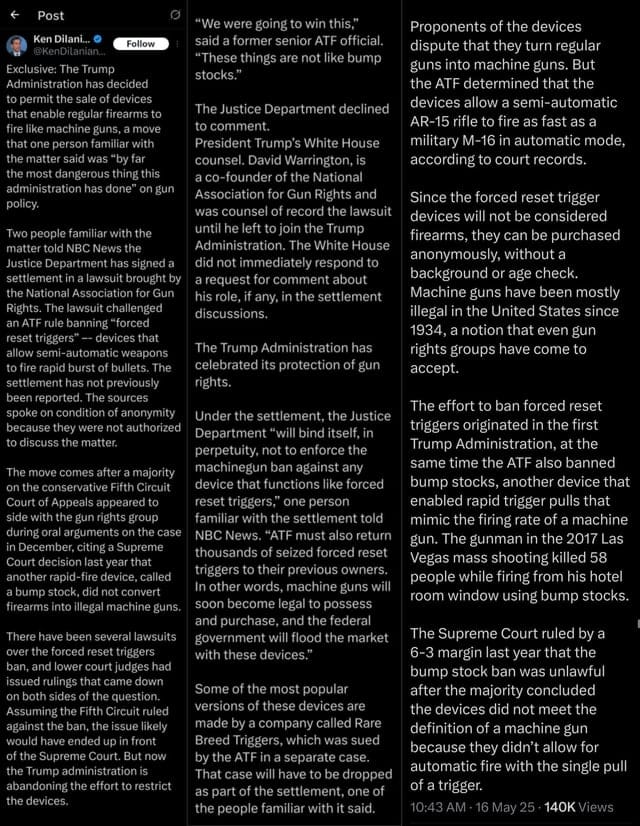
On Friday, the Department of Justice announced it had reached an agreement.
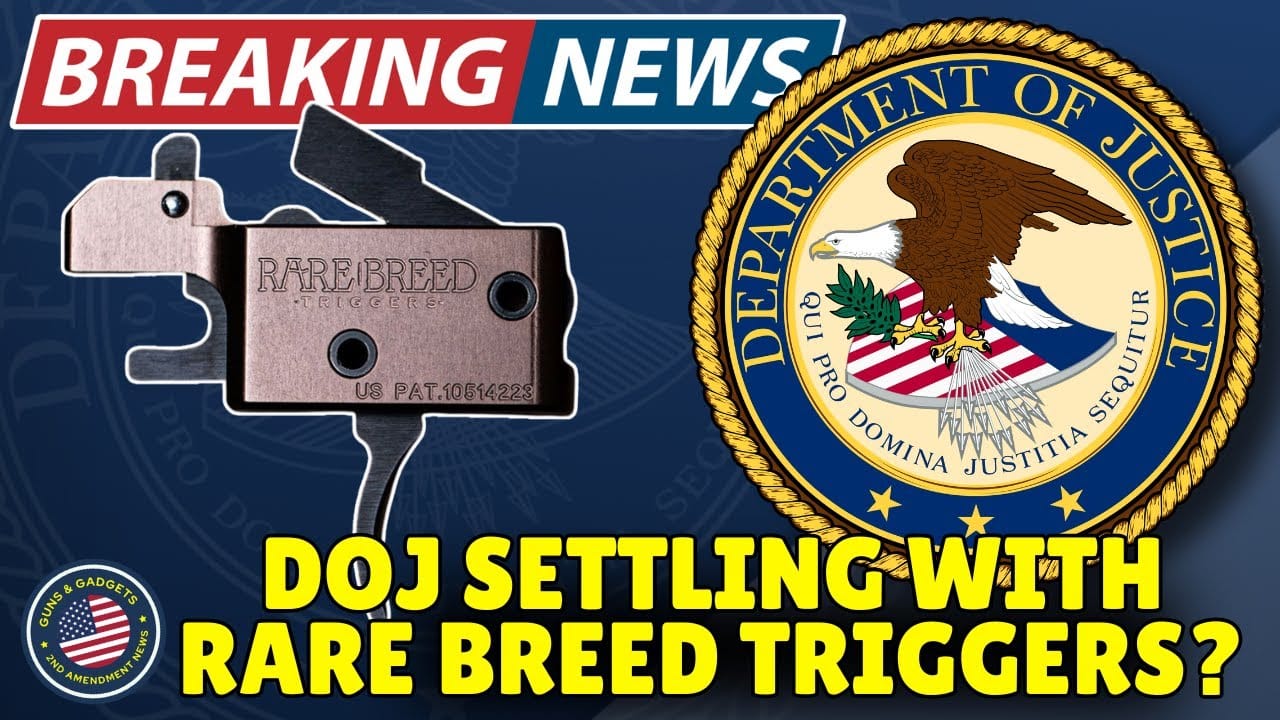
The settlement resolves the litigation between the federal government and Rare Breed Triggers.
Under the terms of the agreement, the sale of these forced-reset trigger devices will be permitted.
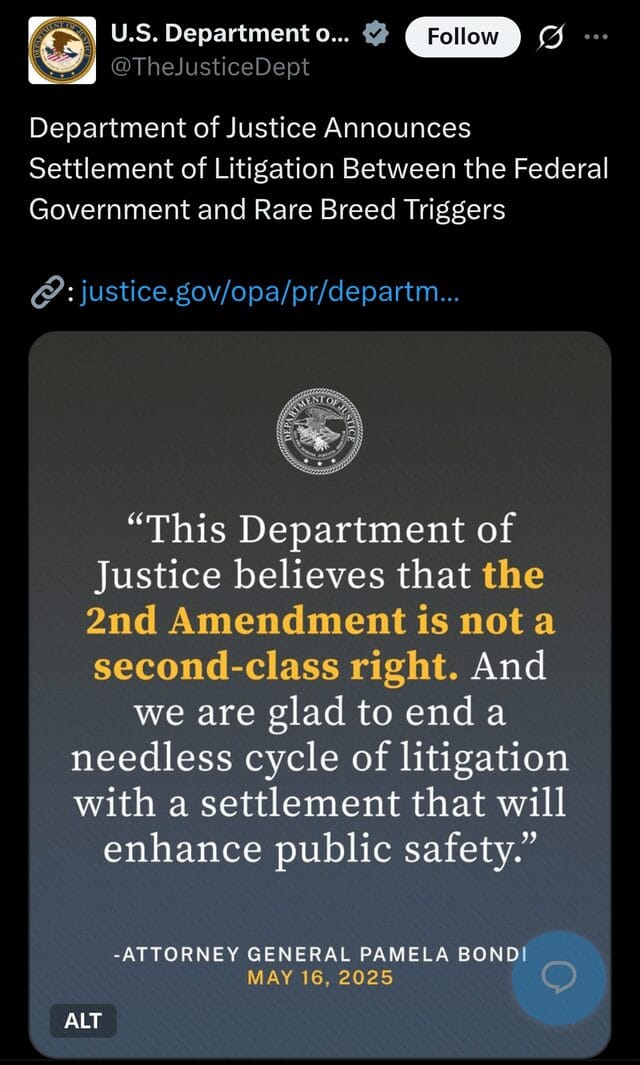
Attorney General Pamela Bondi stated:
This Department of Justice believes that the 2nd Amendment is not a second-class right. And we are glad to end a needless cycle of litigation with a settlement that will enhance public safety.
The settlement aligns with the administration’s focus on upholding Second Amendment protections.
Dudley Brown, President of the National Association of Gun Rights (NAGR), whose organization was involved in a separate lawsuit challenging the ban, hailed the decision:
This decision marks a new era of holding the DOJ and ATF accountable when they trample the rights of law-abiding gun owners. We made them give back what they took, and that’s a precedent they’ll never forget.
The DOJ also noted the settlement includes conditions aimed at public safety, such as Rare Breed agreeing not to develop FRTs for use in pistols and committing to promoting safe use of its products.
While opponents have voiced strong condemnation, labeling the triggers as “weapons of mass destruction” and claiming the decision undermines gun safety policy, the Trump administration’s action marks a significant victory for gun rights advocates and manufacturers who challenged the ATF’s previous regulatory stance.
The settlement brings an end to the legal uncertainty surrounding these devices, permitting their sale under the new agreement.