This 24‑Foot Tiny House Opens Up — Thanks to One Smart Swap
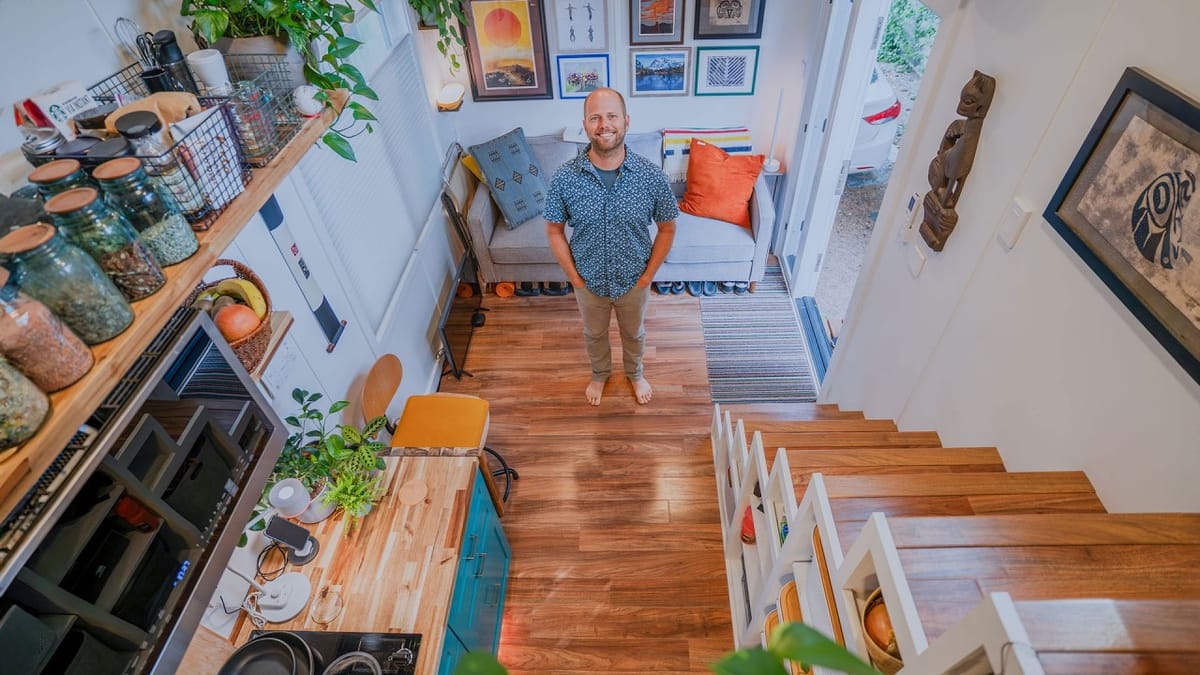
Jon waited years to go tiny, then a job move to Tacoma gave him the green light. He’d dreamed about this lifestyle for over a decade and, 14–15 months in, he still catches himself thinking, “Is this real?”
He found a rare driveway spot with full hookups through a tiny house Facebook group, then had Seattle Tiny Homes build a space that feels streamlined, light, and surprisingly social.
Layout Snapshot — the 8.5×24 plan and flow
The footprint is compact in all the right ways. The flow is simple and intentional. The dimensions lock it in at 8.5 feet wide by 24 feet long.
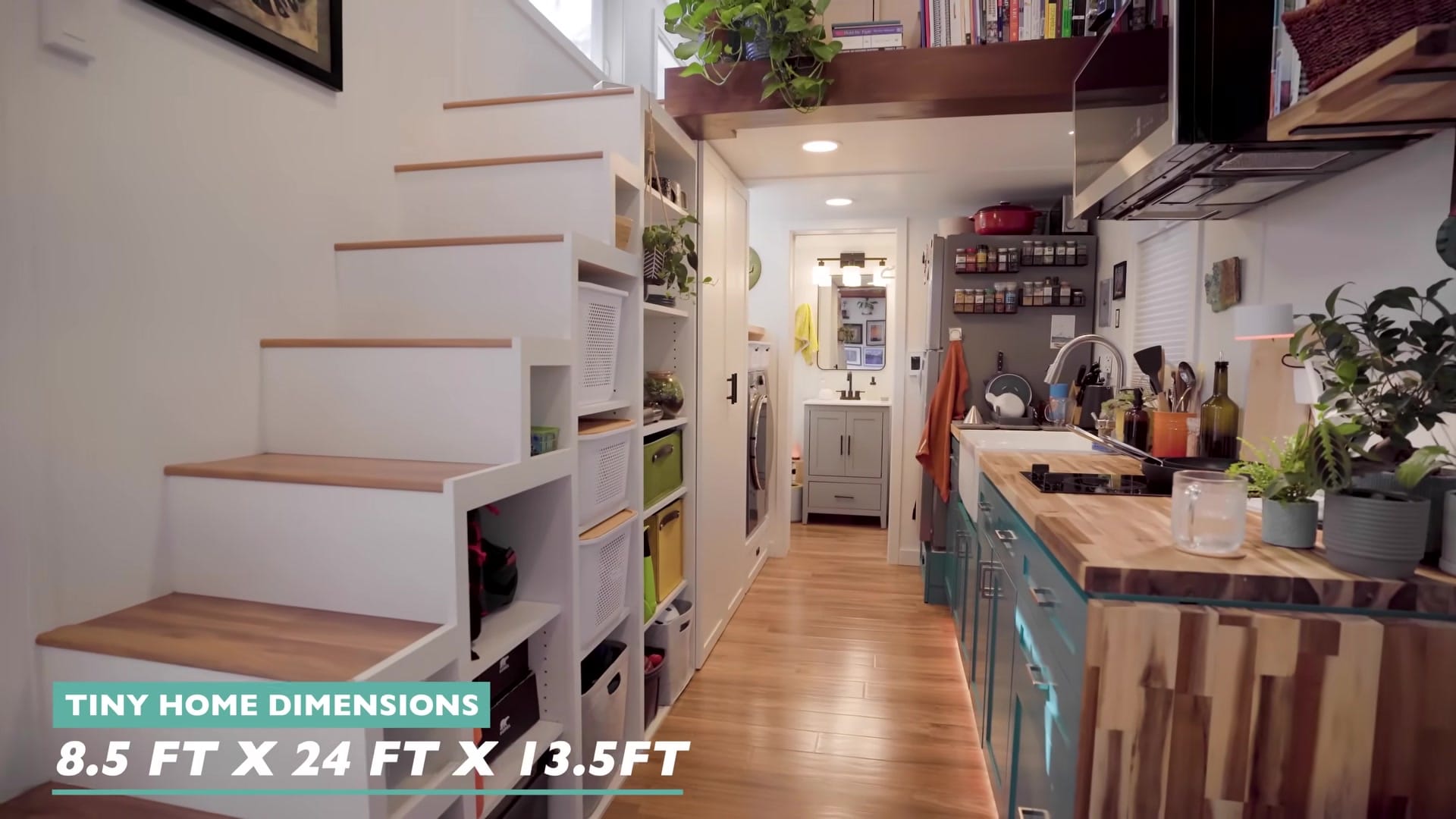
Height maxes out at 13.5 feet, which makes the interior feel airy instead of cramped.
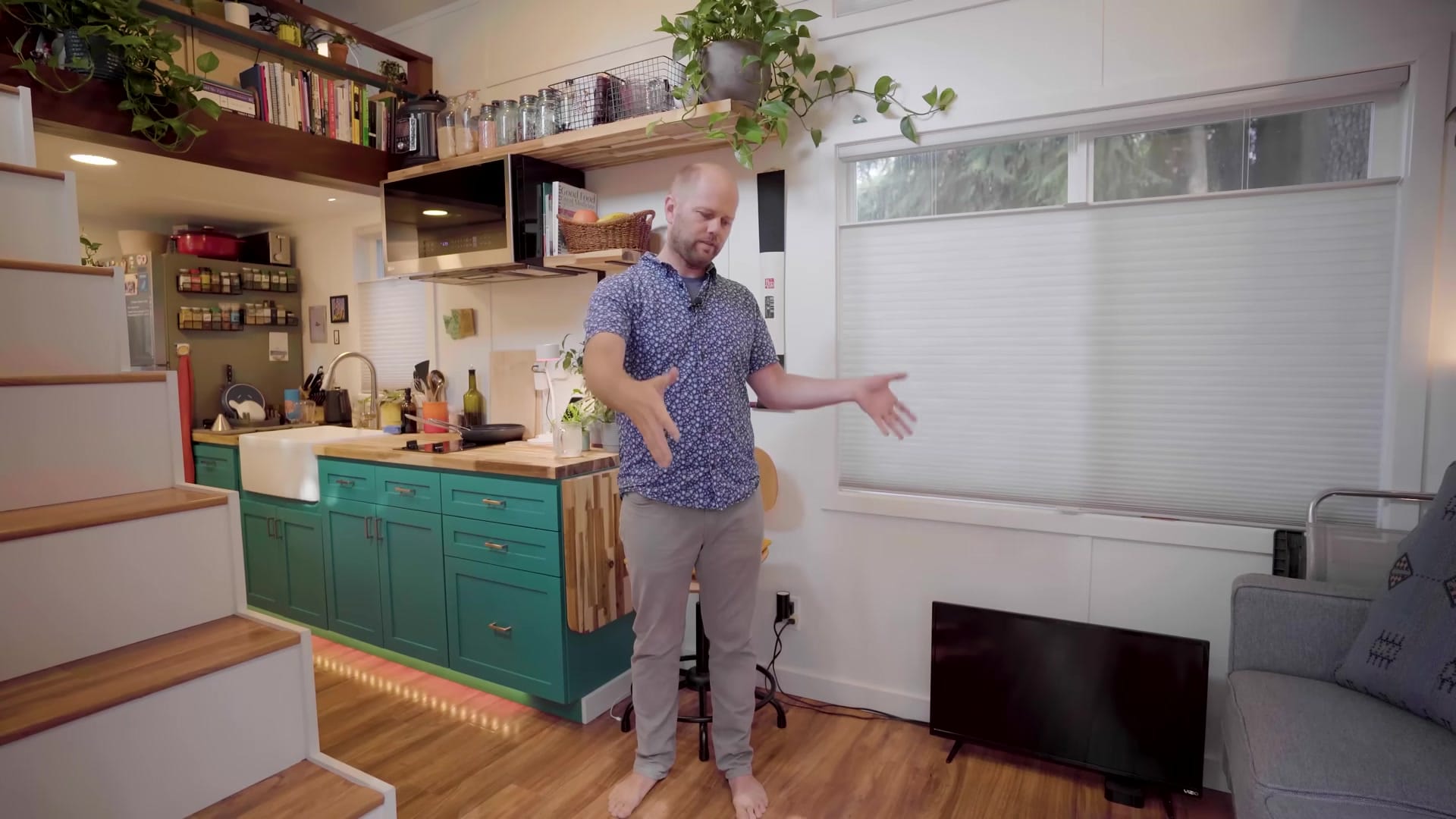
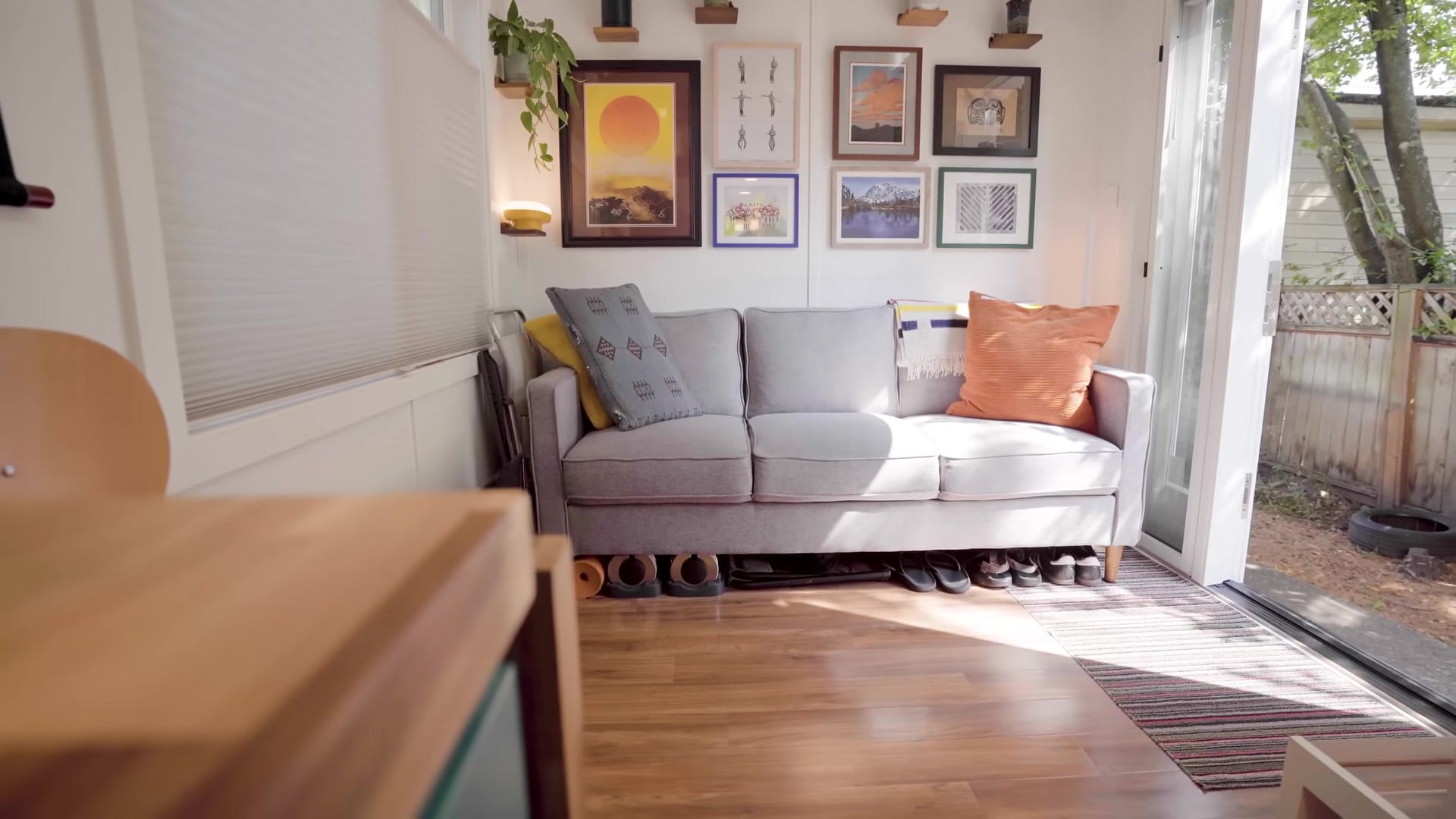
The front door opens directly into an open living room, no awkward hallway entry. You feel it the second you step in, which is exactly the point.
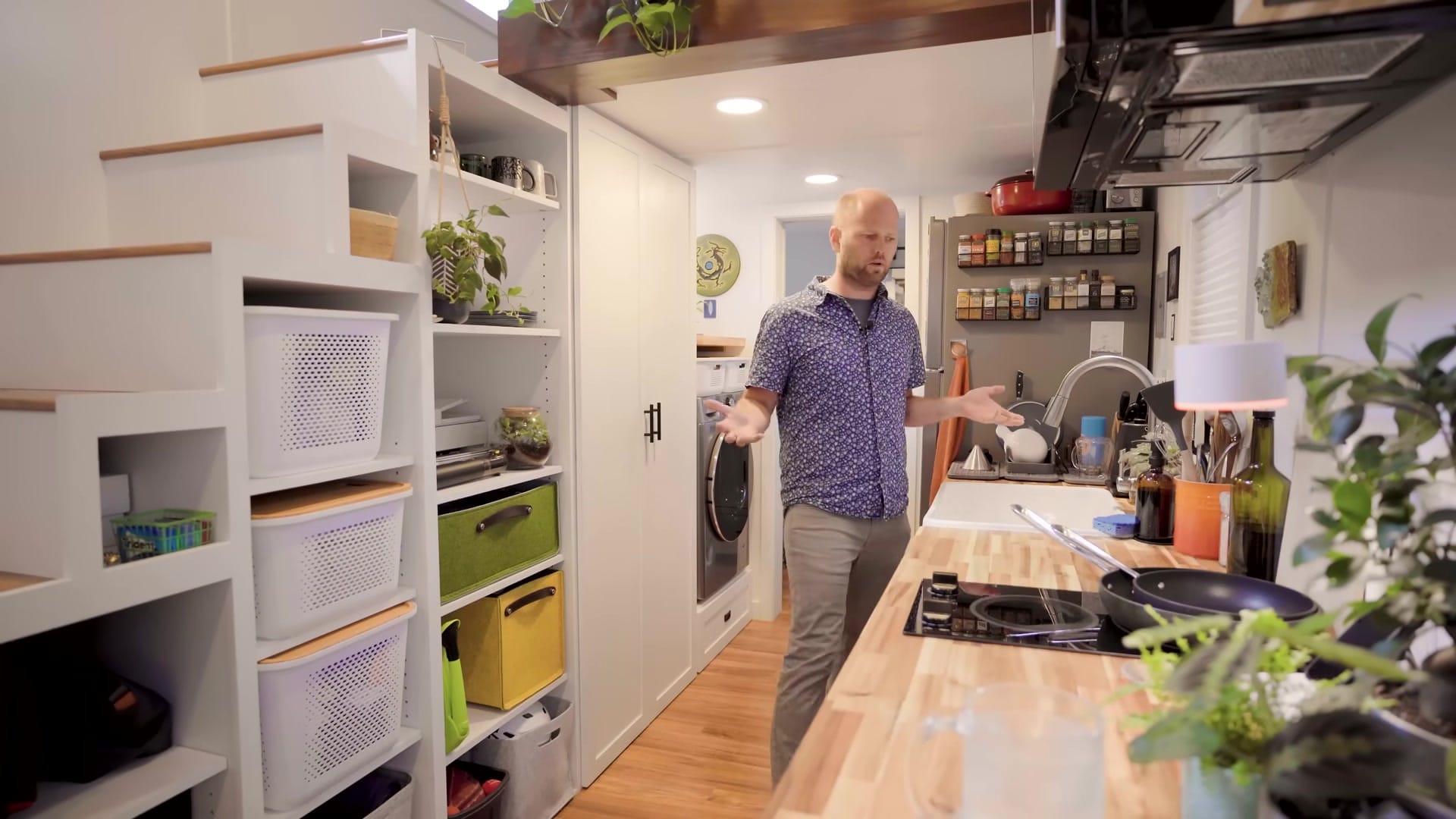
Head down the centerline and the kitchen blends into a laundry corridor that leads to the bathroom at the far end.
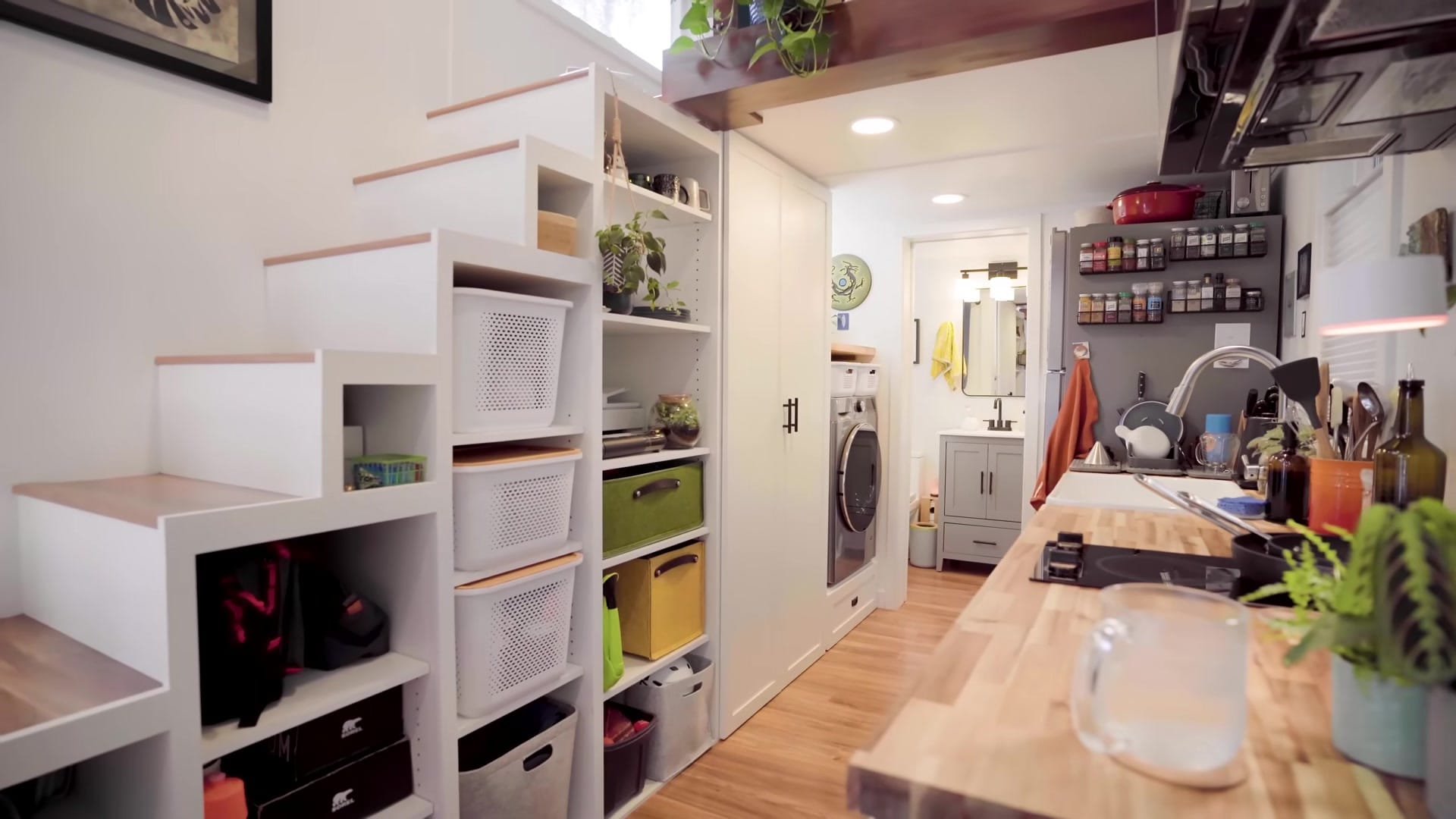
The sleeping loft runs above, maximizing vertical space without stealing floor area. Under the stairs lives a ton of storage that swallows the day-to-day. A full-size closet rounds out the plan so nothing ends up homeless in a corner.
Kitchen & Laundry Corridor — clever counters, storage and appliances
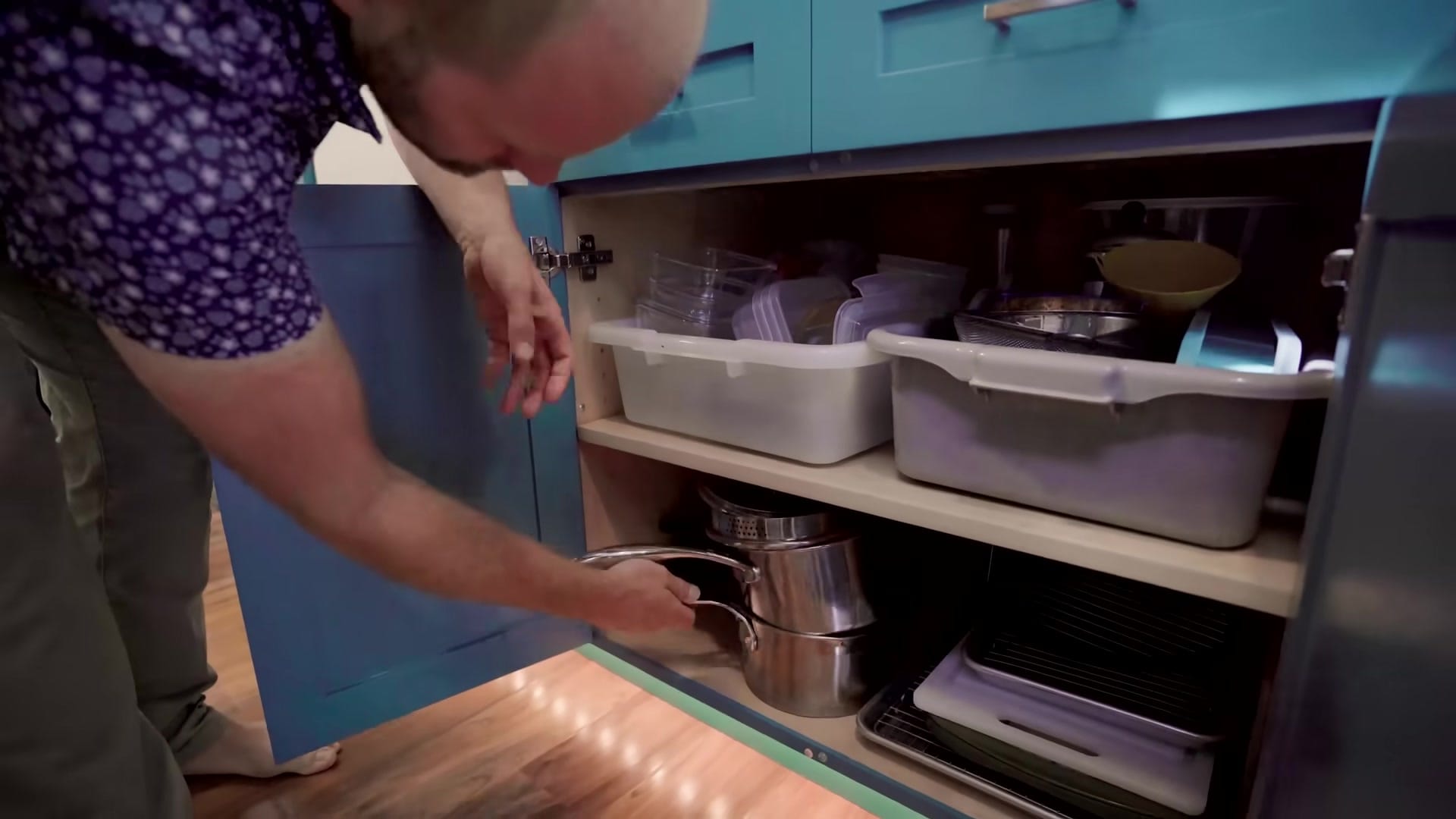
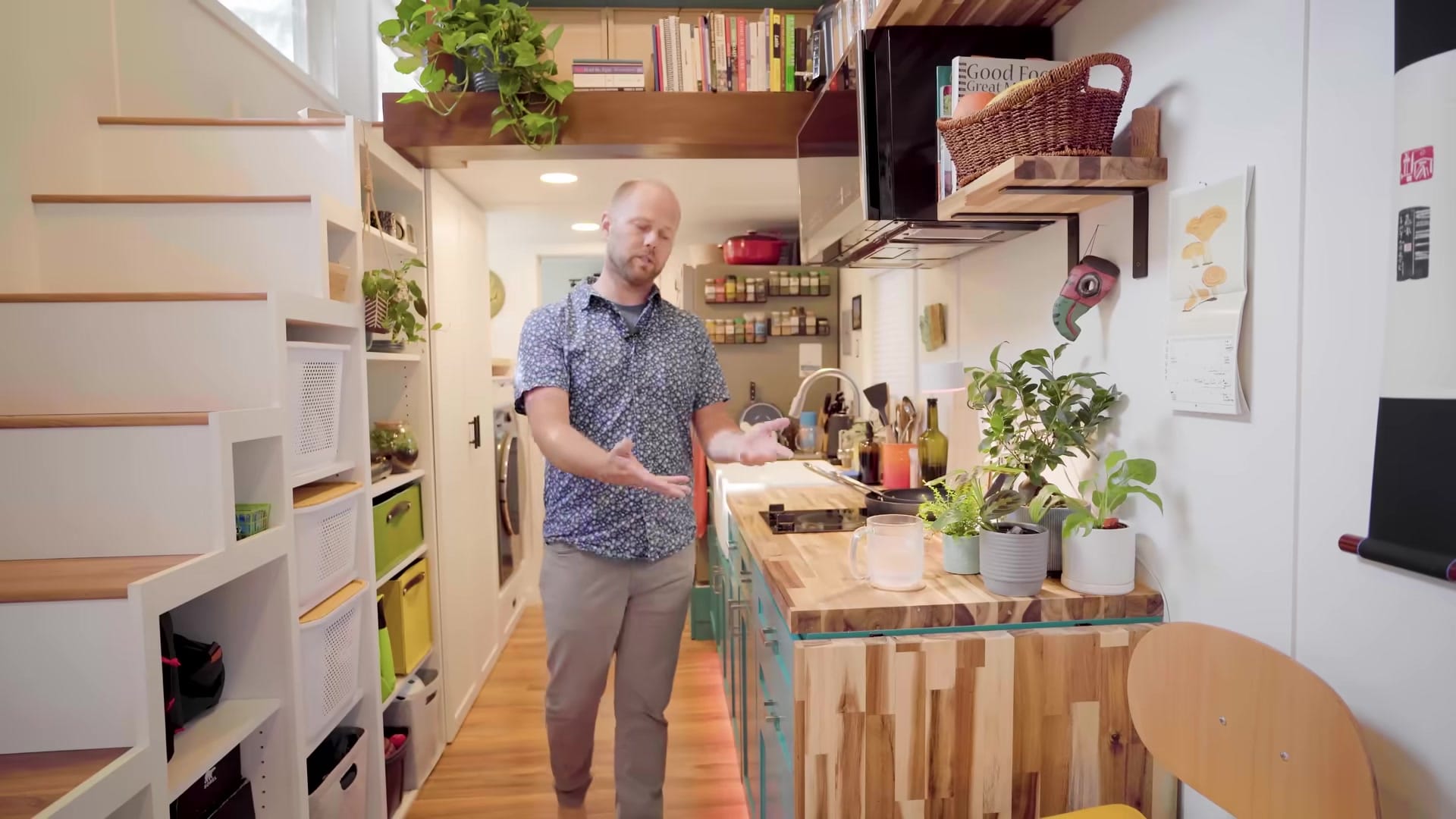
Cabinet color pops against butcher block, and it’s not just pretty — it’s the anchor for real cooking.
Jon even enlarged the living room by removing a planned cabinet and adding a pop-up counter that doubles as his work desk.
That move gives him prep space when he needs it and clean floor when he doesn’t. It’s the “small change, big payoff” choice that makes the home breathe.
Day-to-day cooking stays simple and flexible. A two-burner cooktop handles most meals, and the Instant Pot steps in as a third “burner” with its sauté mode when things get busy.
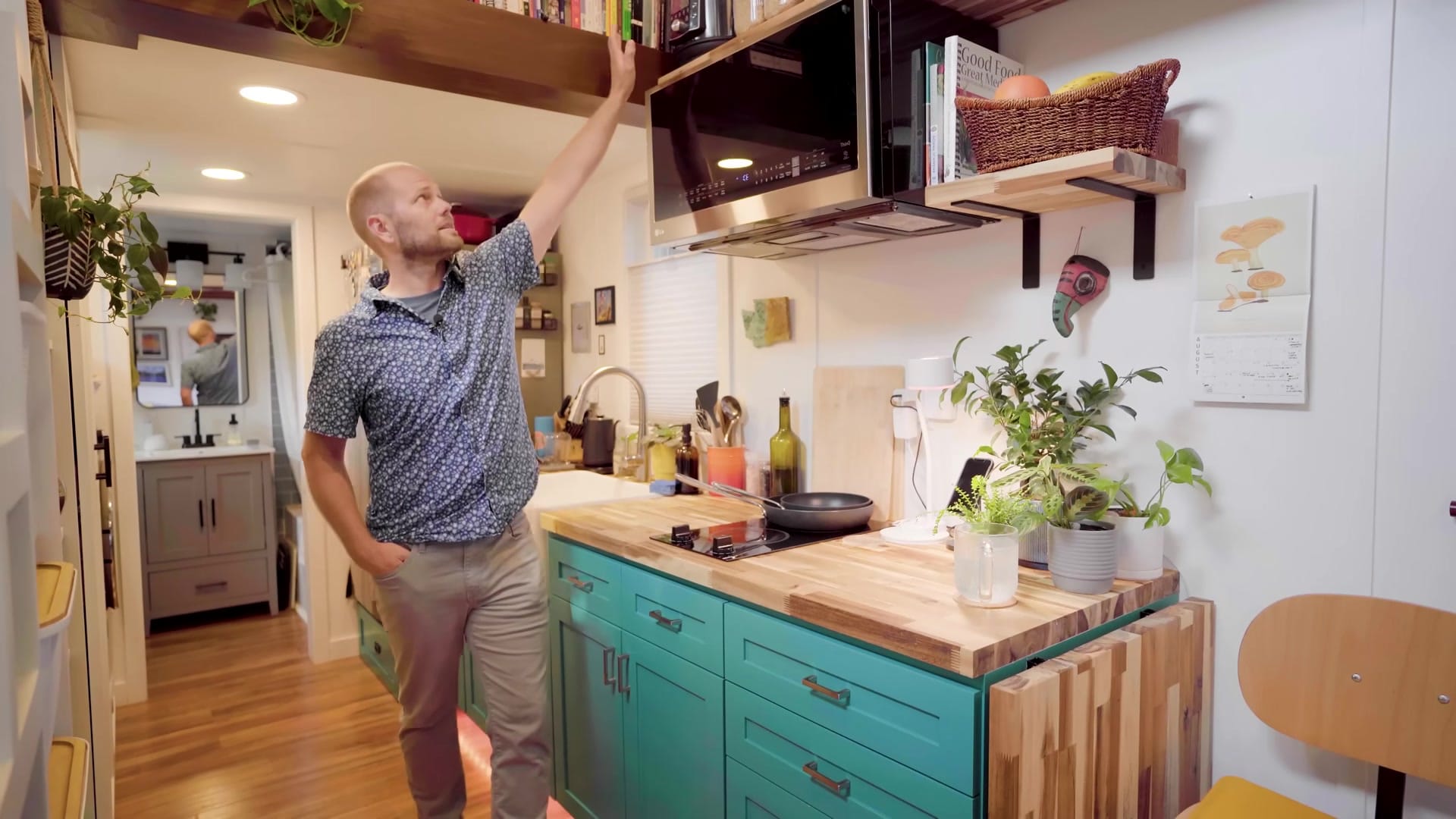
There’s a microwave and convection oven for baking and reheating, plus an apartment-size fridge that’s the right fit for one person.
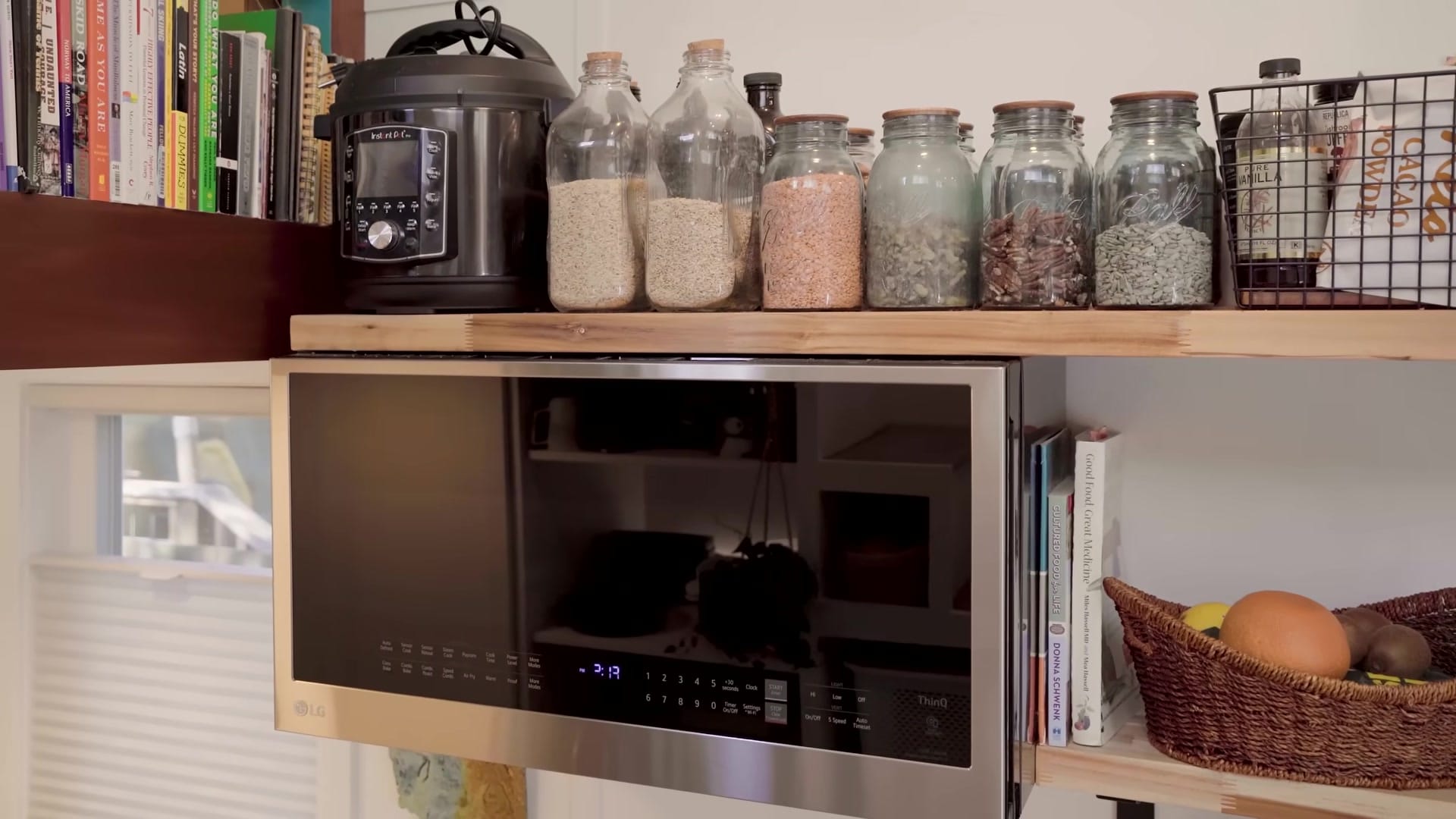
If there’s one wish list item, it’s a standard oven for things like a fresh pizza — frozen works in the convection, but that’s where the line gets drawn.
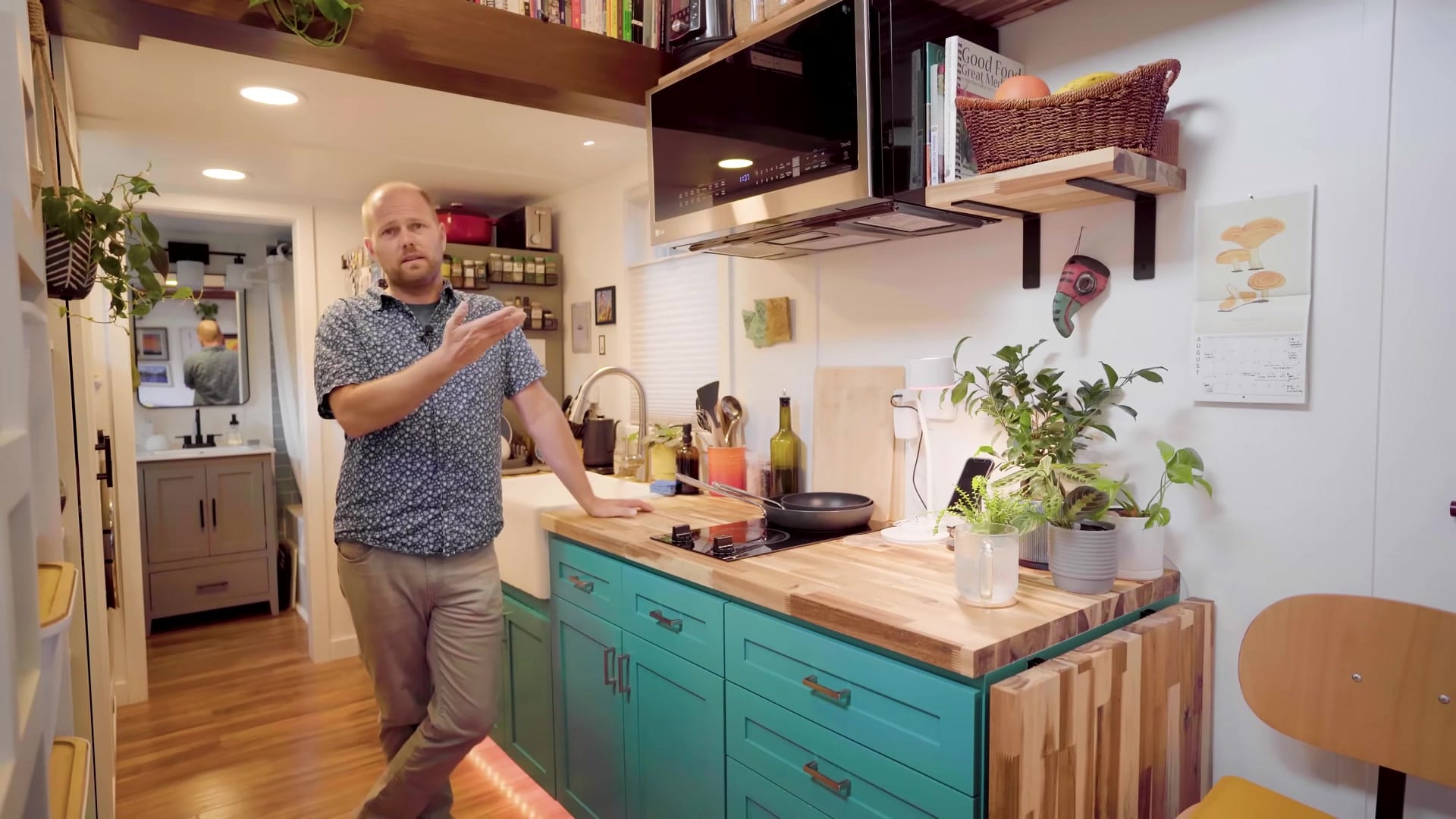
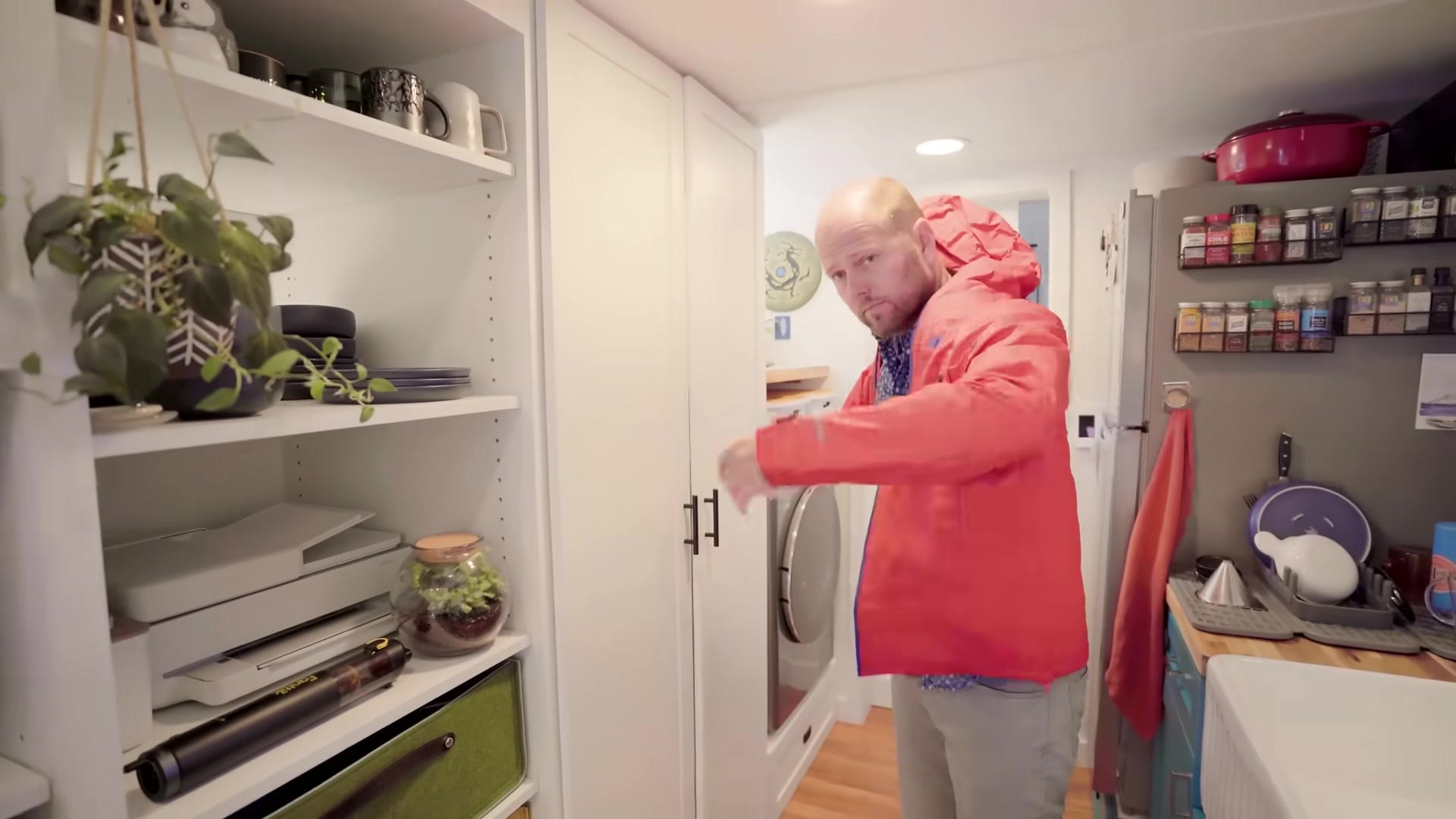
Swing a few steps and you’re in the laundry corridor — all within arm’s reach. A full-size closet lives here, and bins flex between winter ski layers and summer workout gear depending on the season.
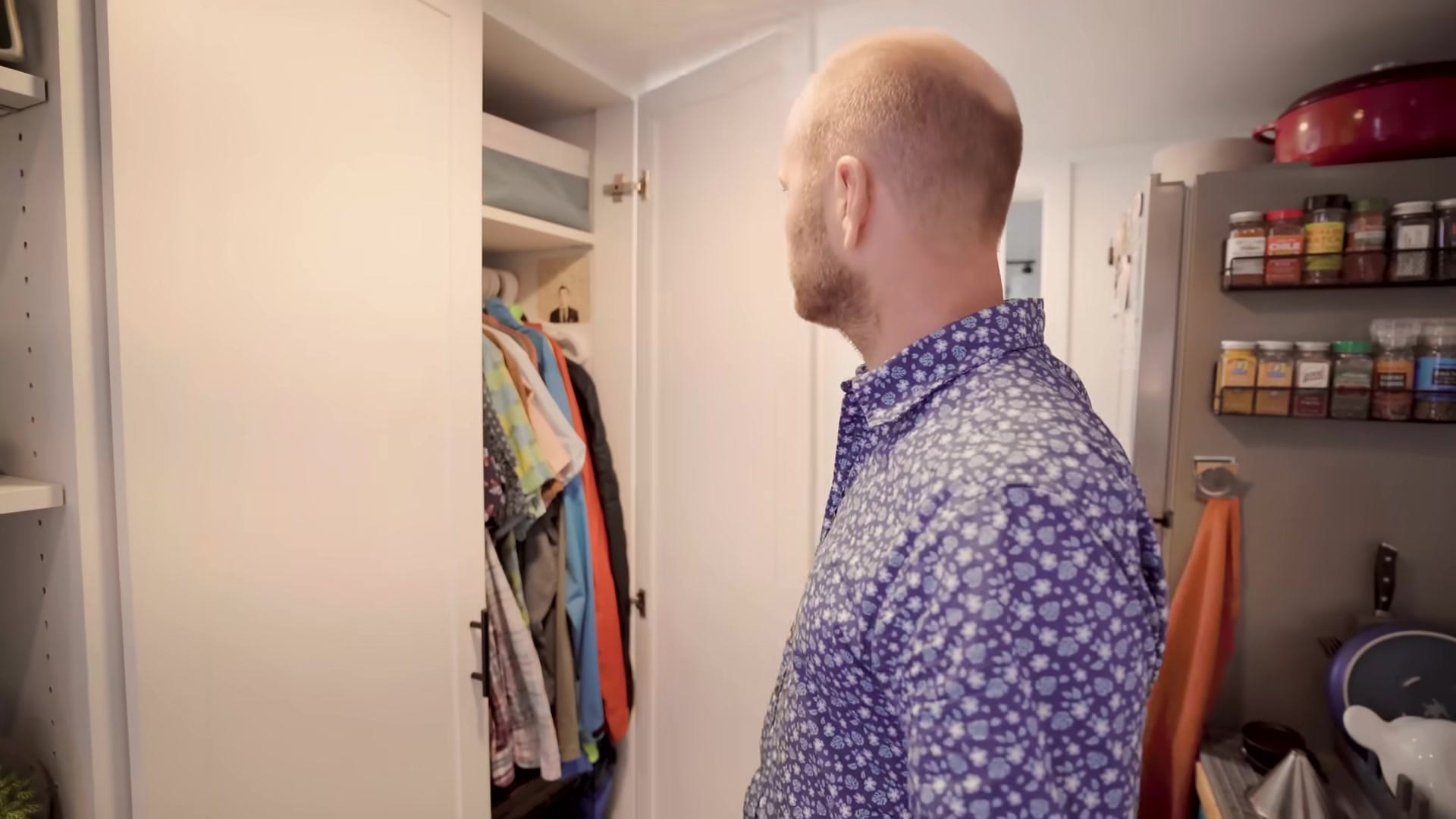
The combo washer/dryer means smaller loads more often, but that’s easy when everything is steps away.
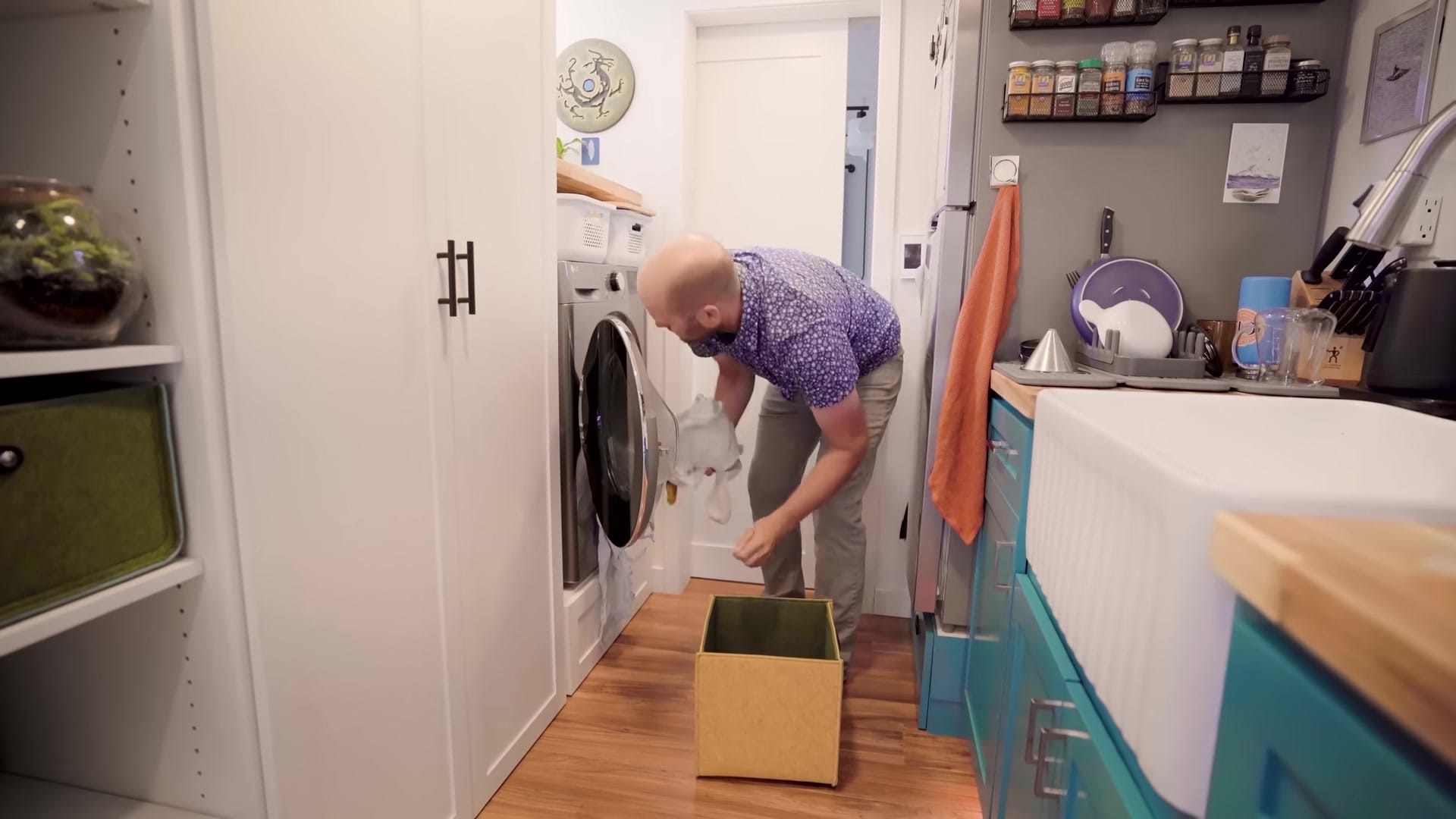
Half the time, he’s cooking, pivots, and flips on a load — the kind of chore that disappears because it’s right there.
Bathroom & Construction Details — SIPs, hidden medicine cabinet, tiles
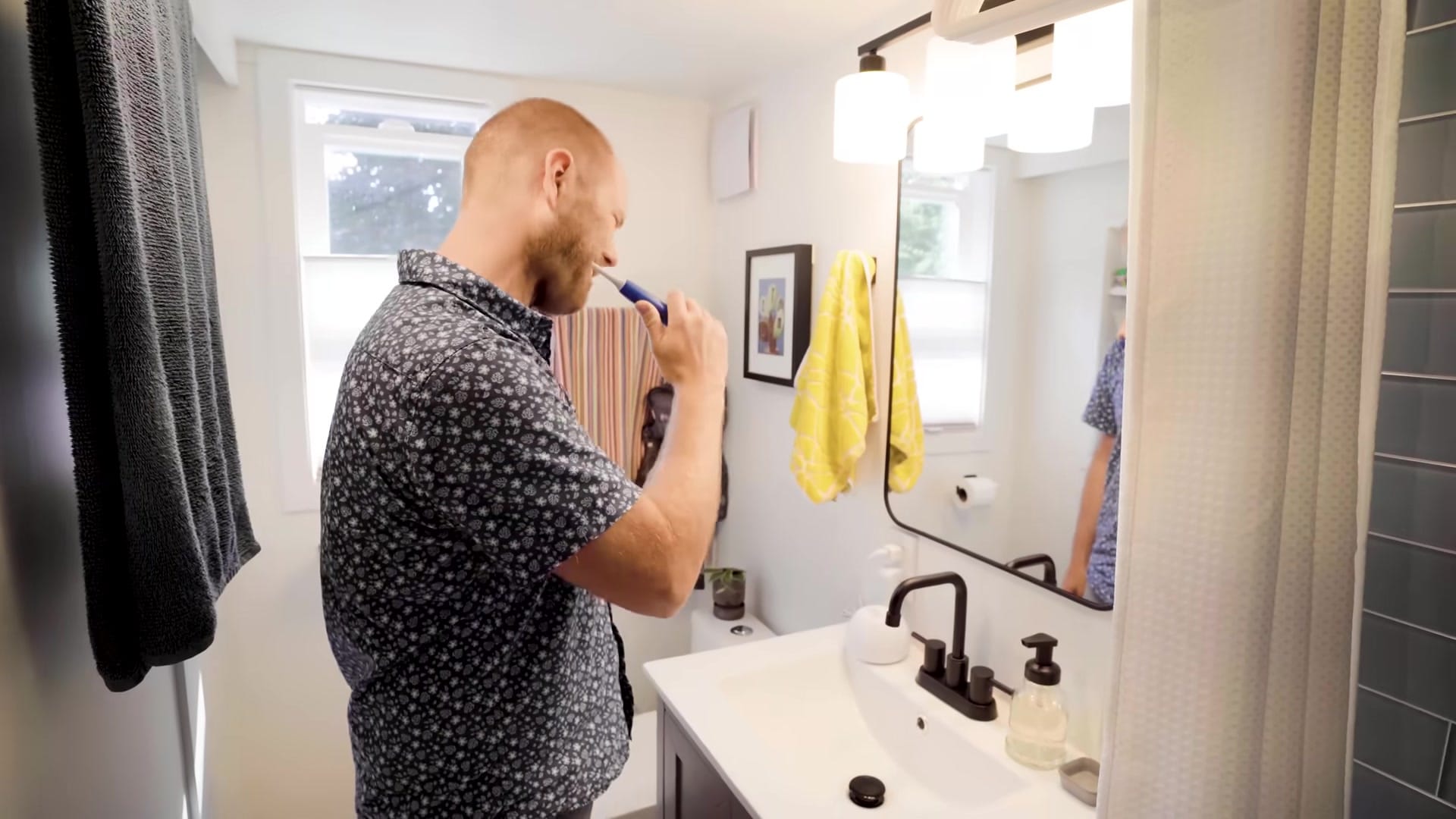
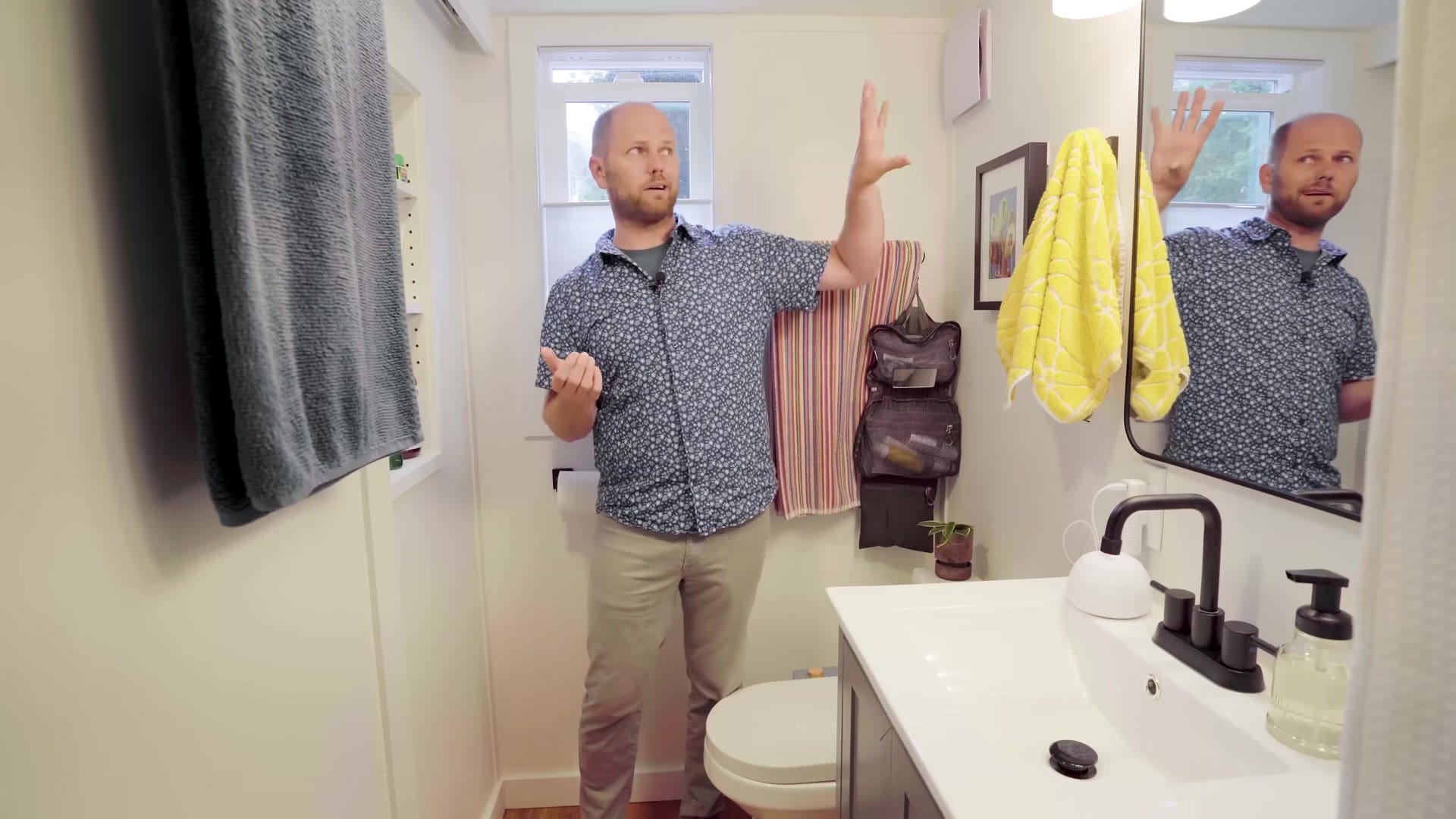
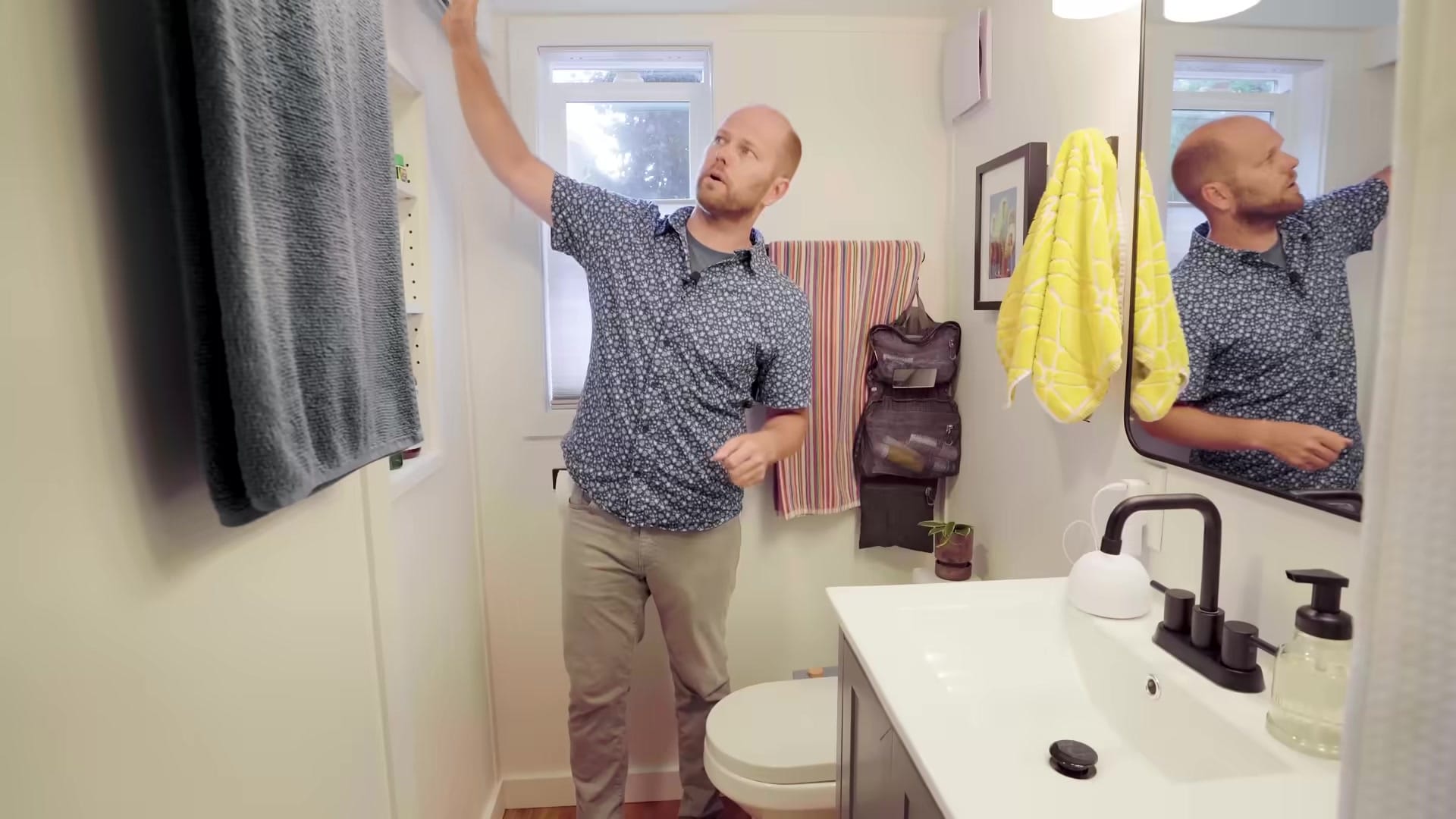
The bathroom is roughly 8 feet by about 4 feet, carefully sized so it’s comfortable without stealing from other zones.
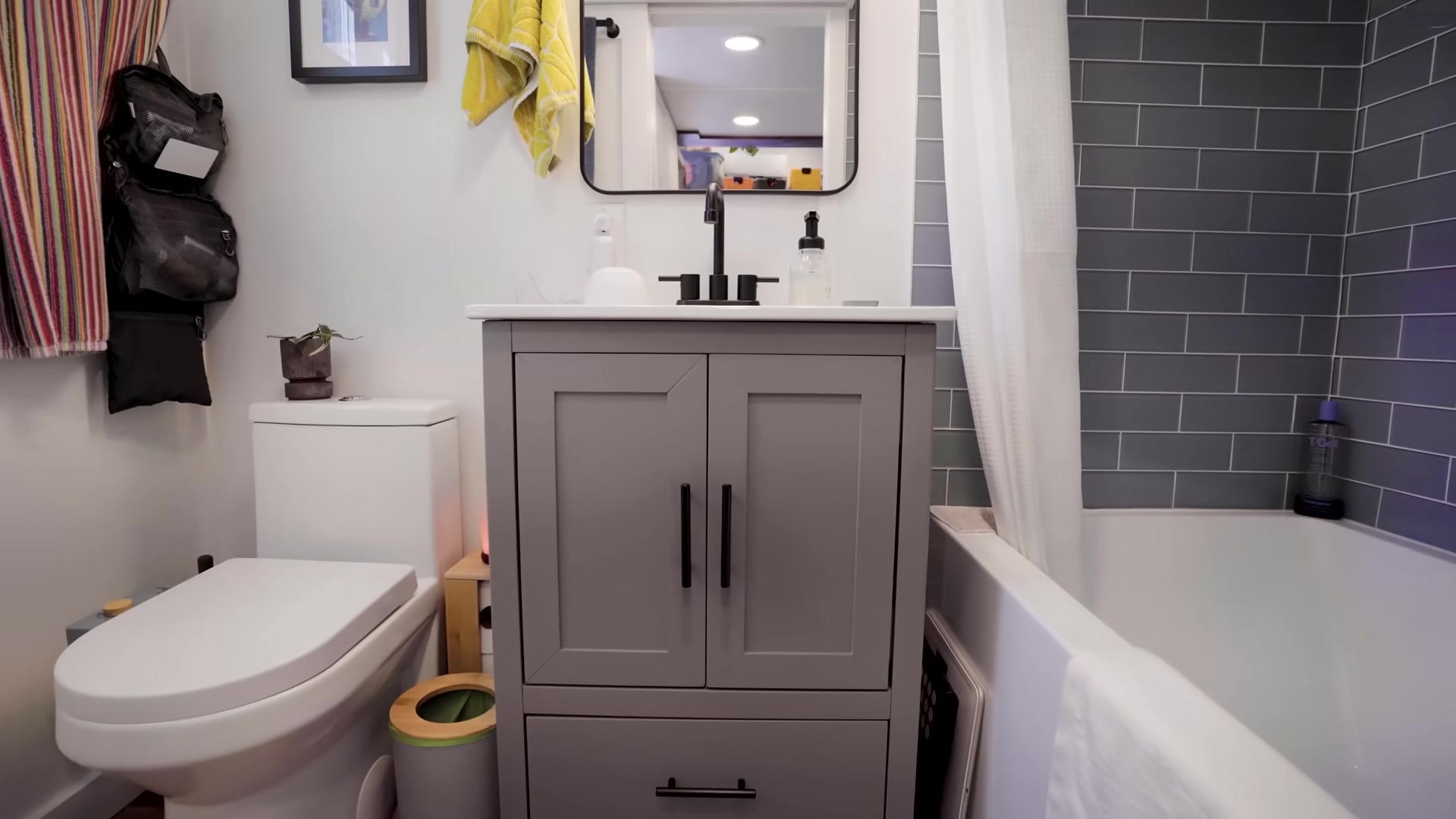
Fixtures stay practical: a conventional flushing toilet and a standard vanity with a sink that has a ledge for daily essentials.
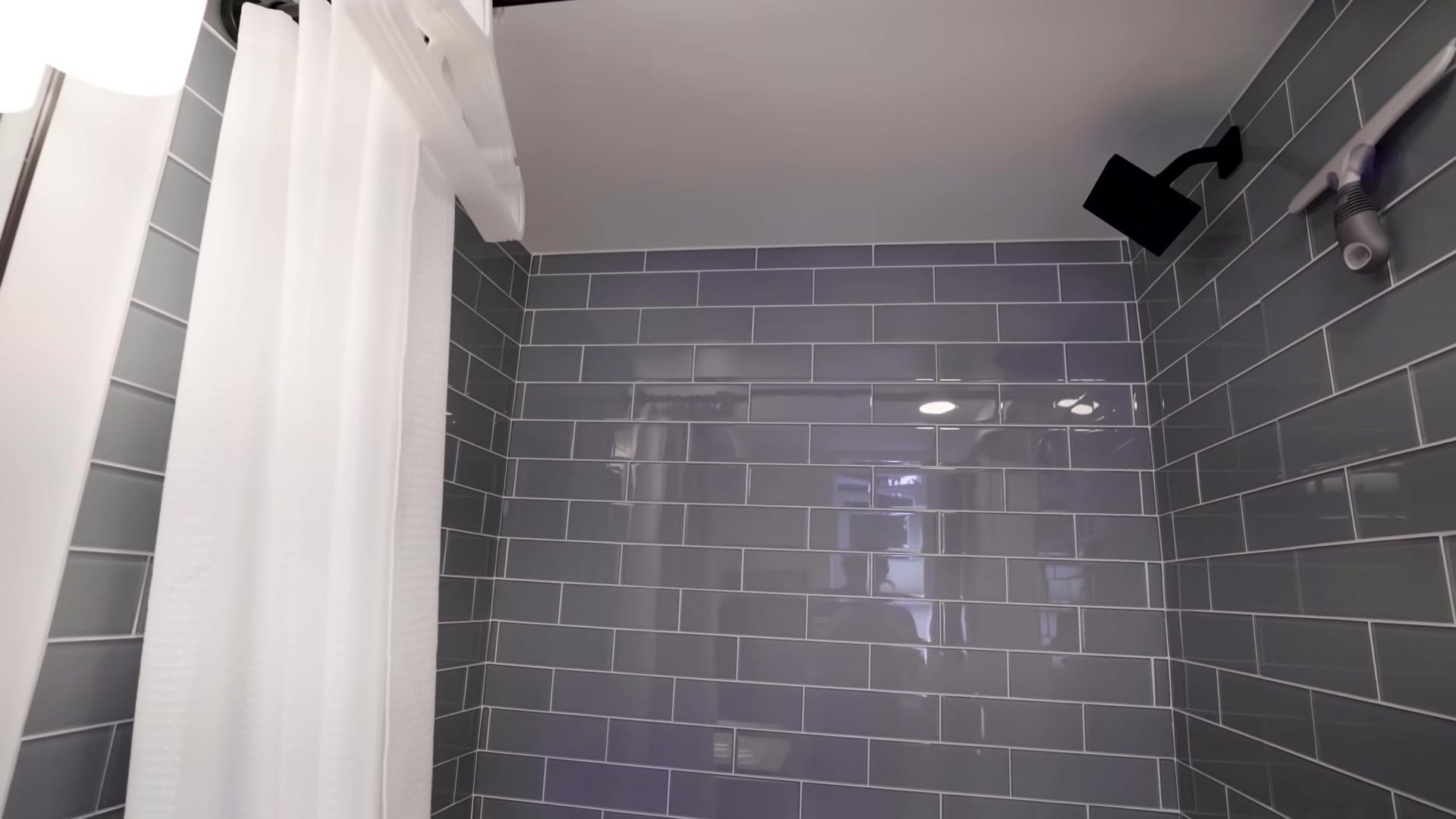
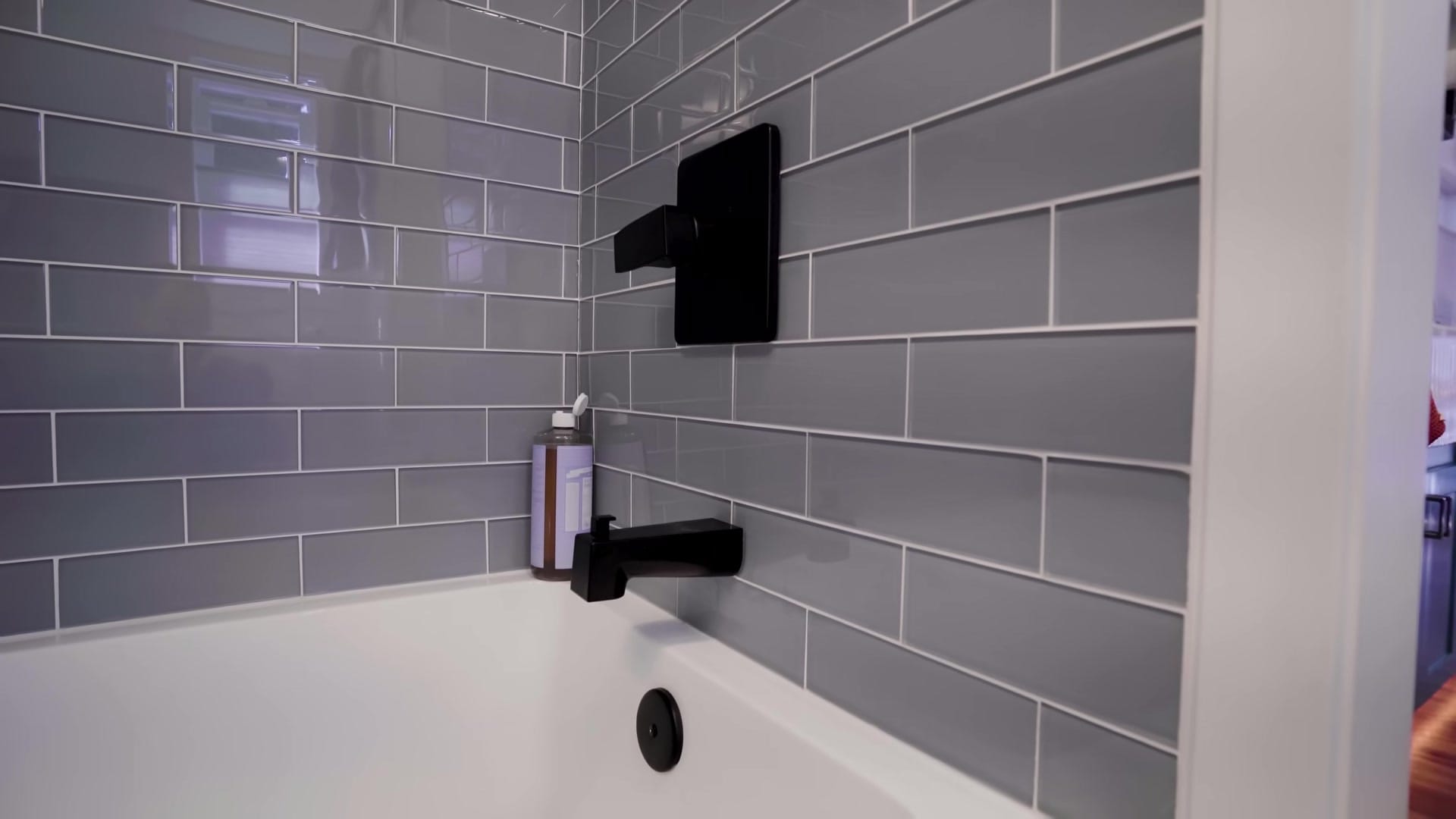
The half-tub shower adds soaking option and brings in color with glass tiles — a housewarming gift that became a favorite feature.
Behind the scenes, the home is built with SIPs — structurally insulated panels — which are fast to assemble and excellent for energy and sound efficiency.
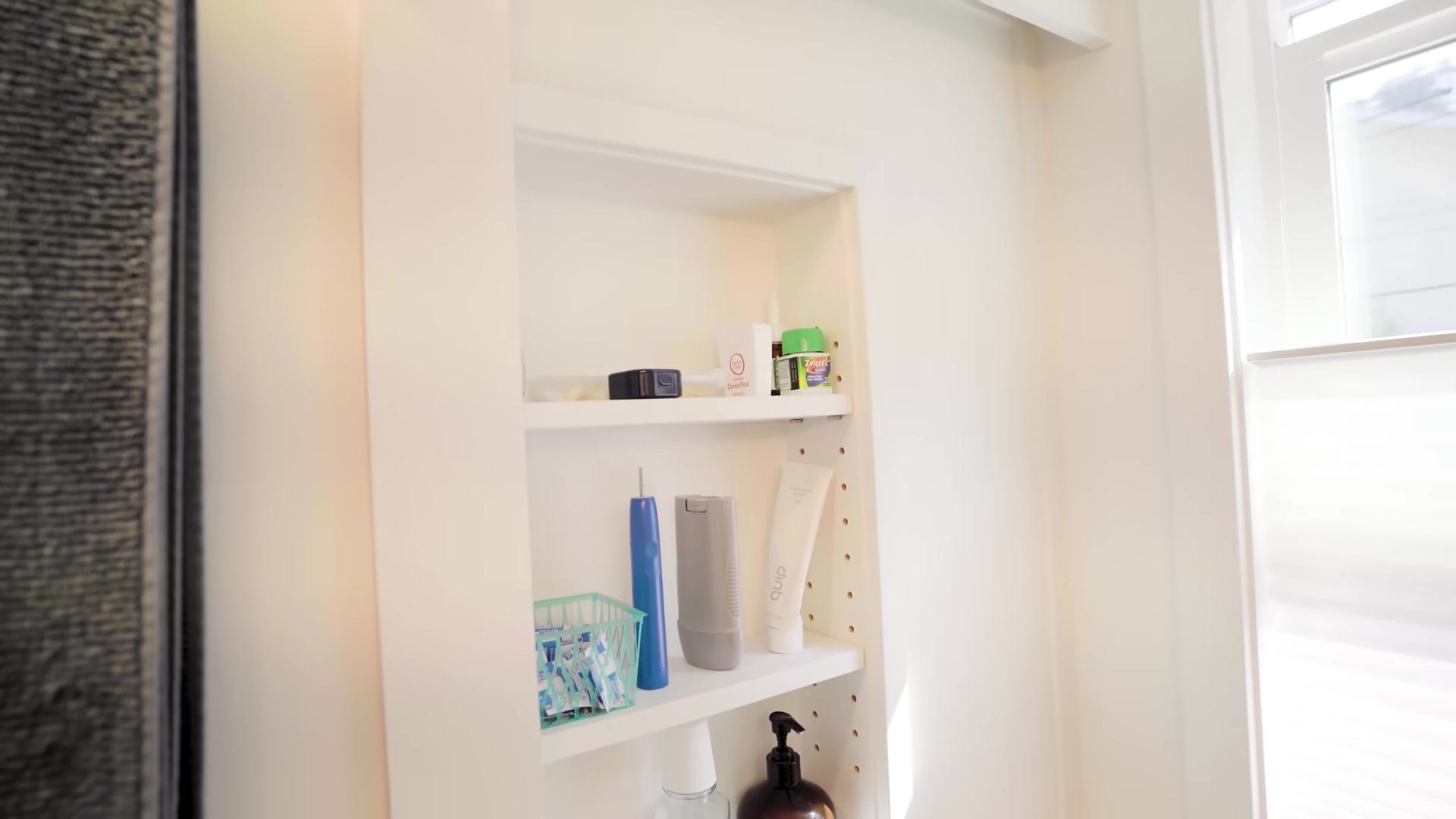
That one choice changes how you handle walls, so the medicine cabinet was placed behind the bathroom’s barn door instead of behind the mirror to keep the insulation barrier intact.
Less thermal bridging, less moisture risk, less chance of mold — all by keeping that envelope unbroken.
The barn door hardware itself hides cleanly for a modern, uncluttered look that fits the rest of the interior.
Living Room & Hosting — open floor, lighting, and neighbor dinners
Walk in and you’re in the living room — no wasted steps, no walkway stealing square footage.
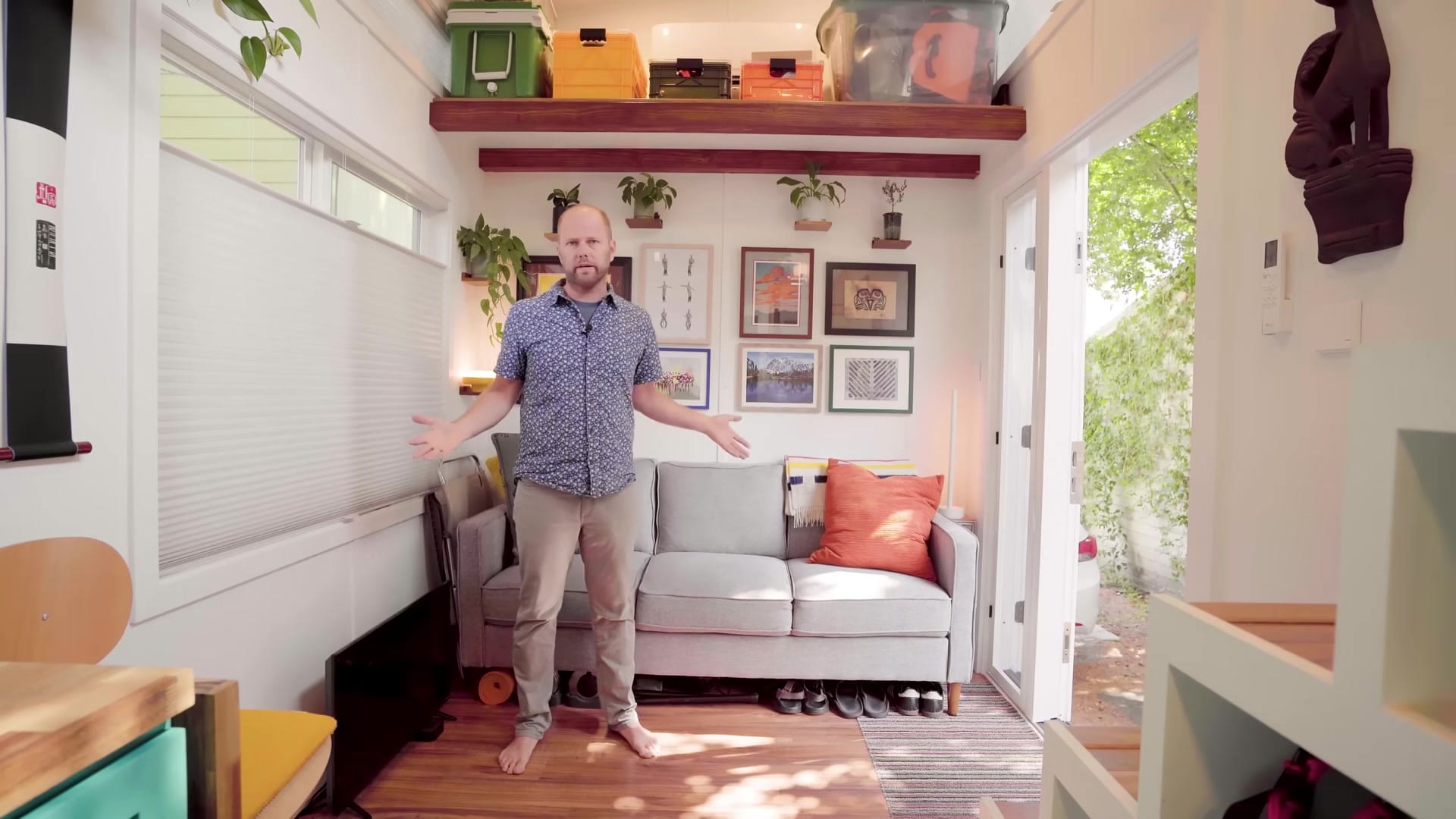
It’s his favorite space because it’s one big, open floor, not a maze around protruding countertops.
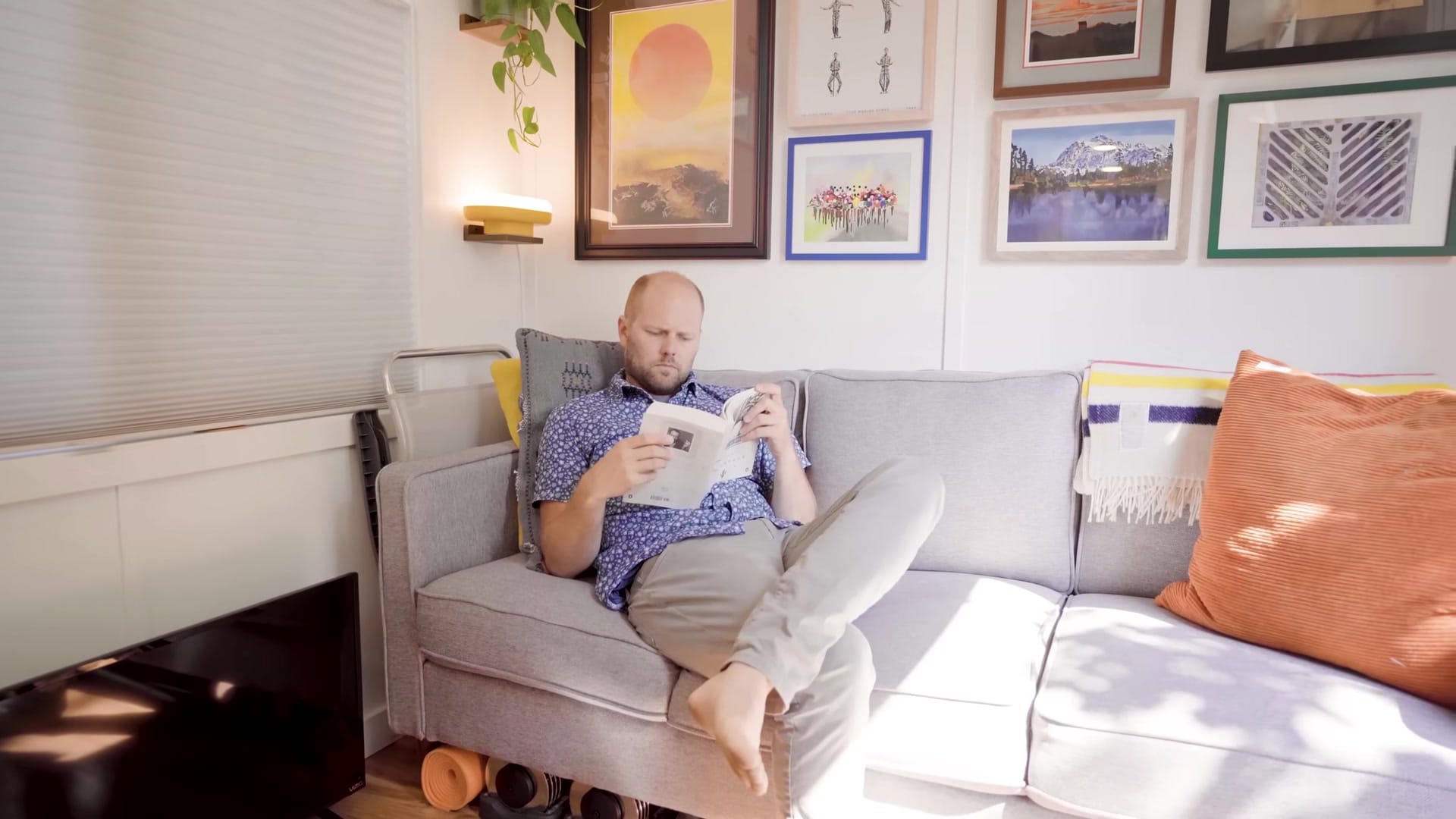
He kept the living room on one end and the bathroom on the other so social time stays social — no awkward overlap. It’s a tiny house that actually gets flow right.
Community happens here, too. There’s a neighborly dinner rotation every three weeks, and the living room can seat seven or eight in cozy comfort when it’s his turn to host.
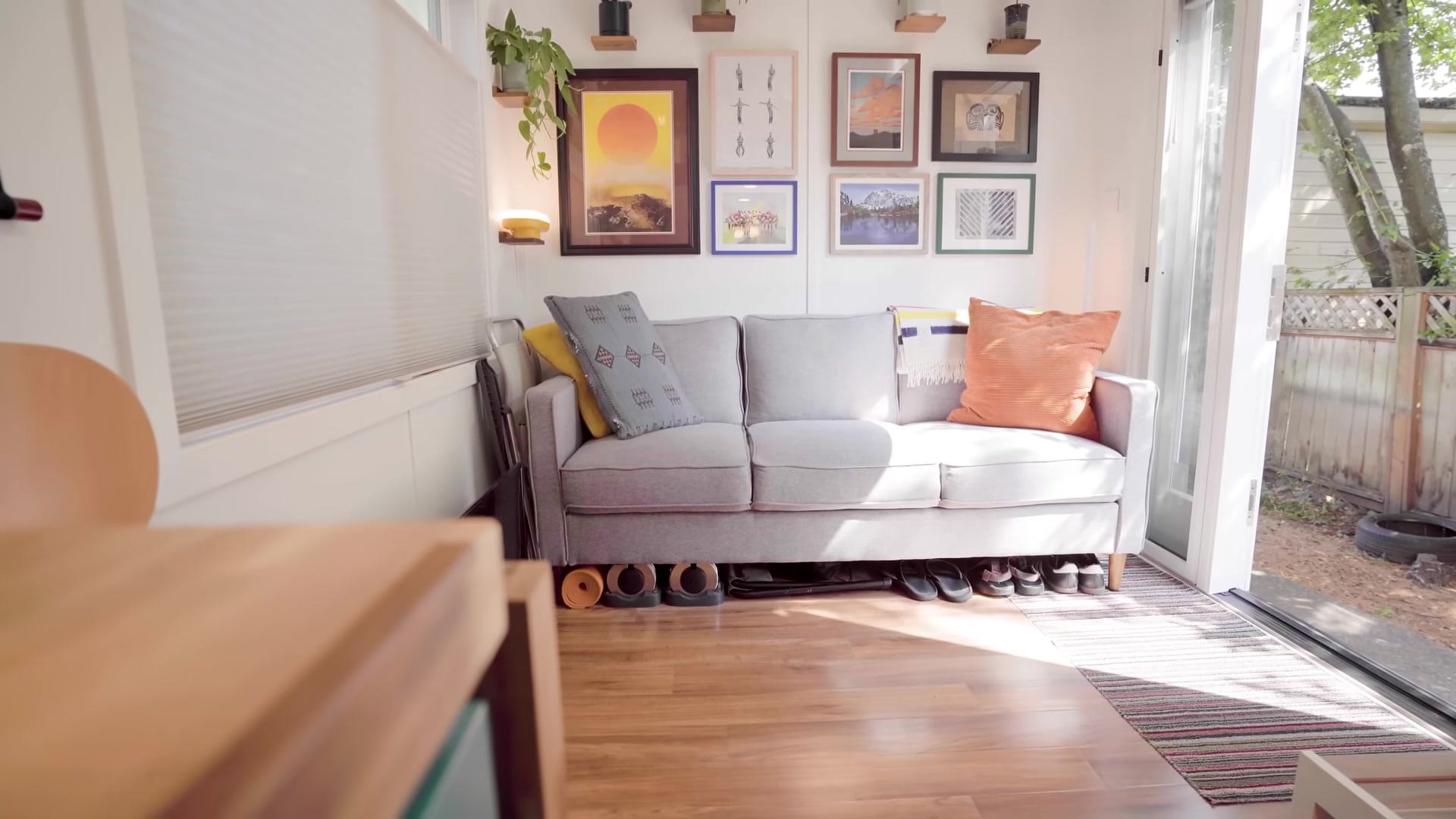
A sturdy storage shelf overhead creates a little den vibe when you’re on the couch, without squashing the ceiling height. Moving in was a puzzle, but once boxes were cleared and the couch landed, the logic of the layout clicked.
Daylight floods in through a wall of windows, softening the space from morning to evening.
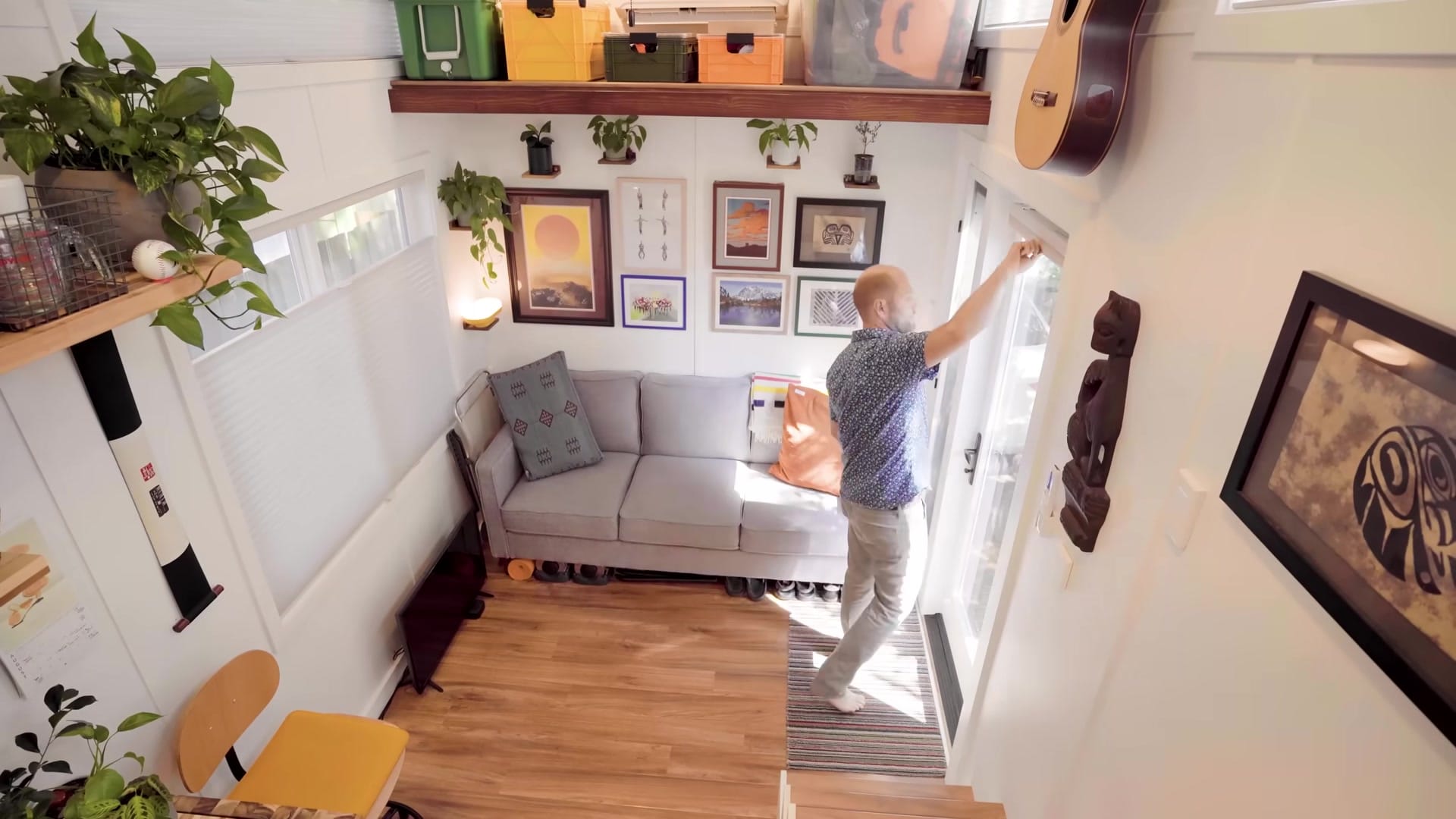
At night, he avoids harsh overheads in favor of layered lamp light that tucks into tiny footprints. A wall light sits smartly on a plant shelf to save surface area, and a small accent strip glows under the kitchen cabinets to keep the vibe warm without glare. It’s lighting that matches the scale — subtle and everywhere you need it.
Sleeping Loft & Storage — how he uses the loft and under-stair space
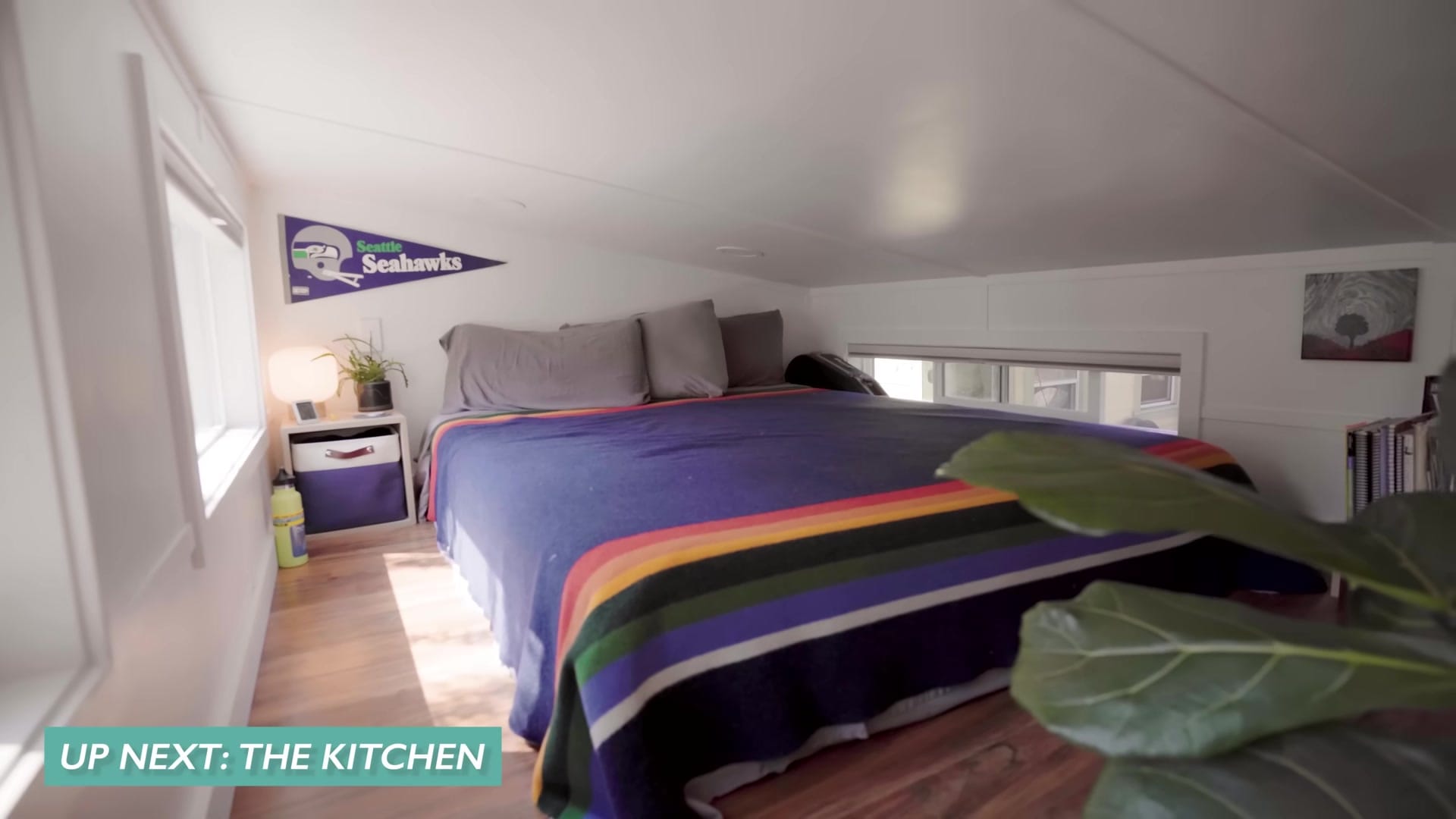
Up top, a queen mattress rests on the floor — simple, comfortable, and exactly what the loft is for.
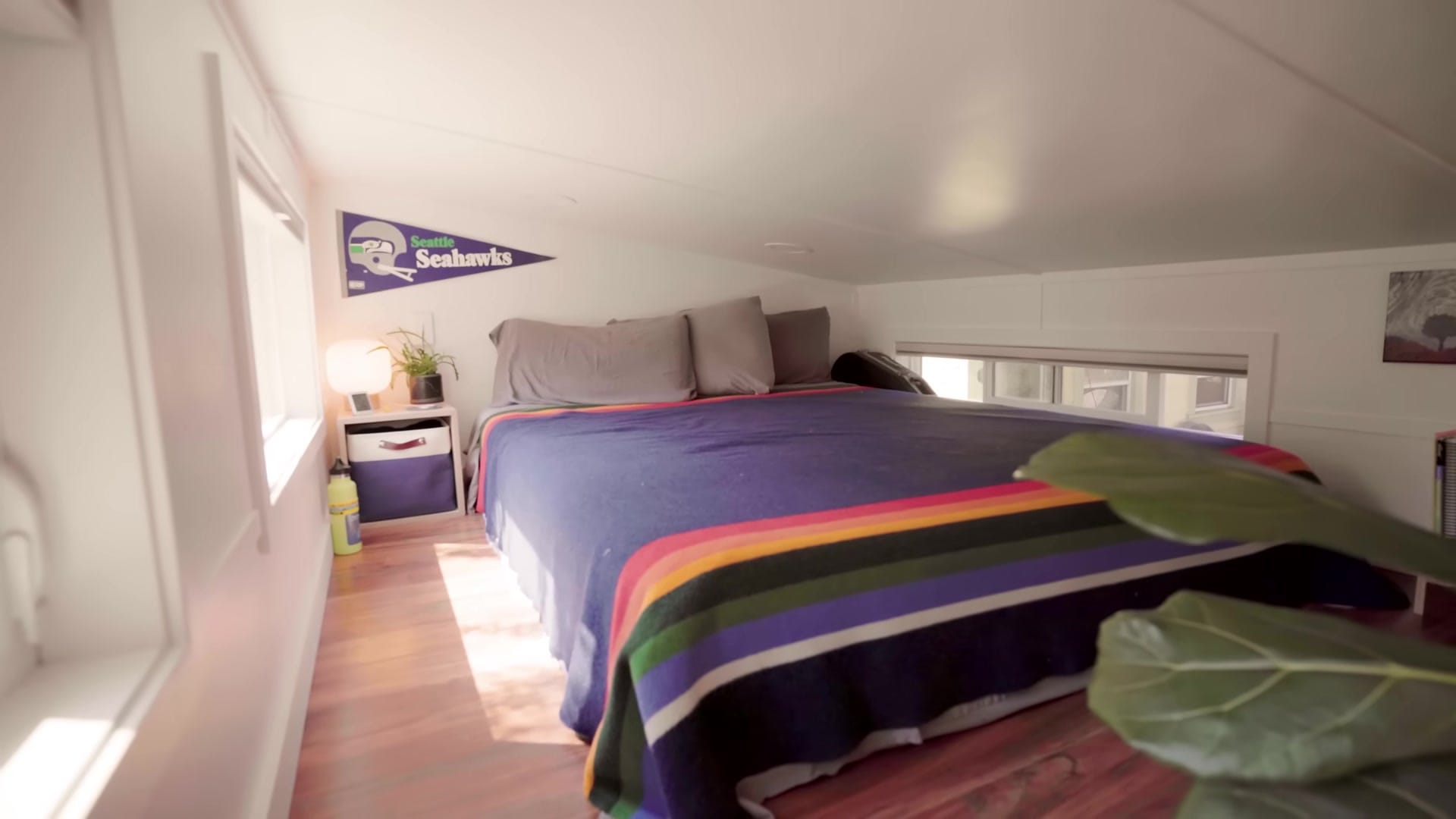
He imagined getting dressed up there, then realized the closet is downstairs and changed the routine. Now the loft stores what’s logical: extra towels, sheets, and bedding you don’t need every day.
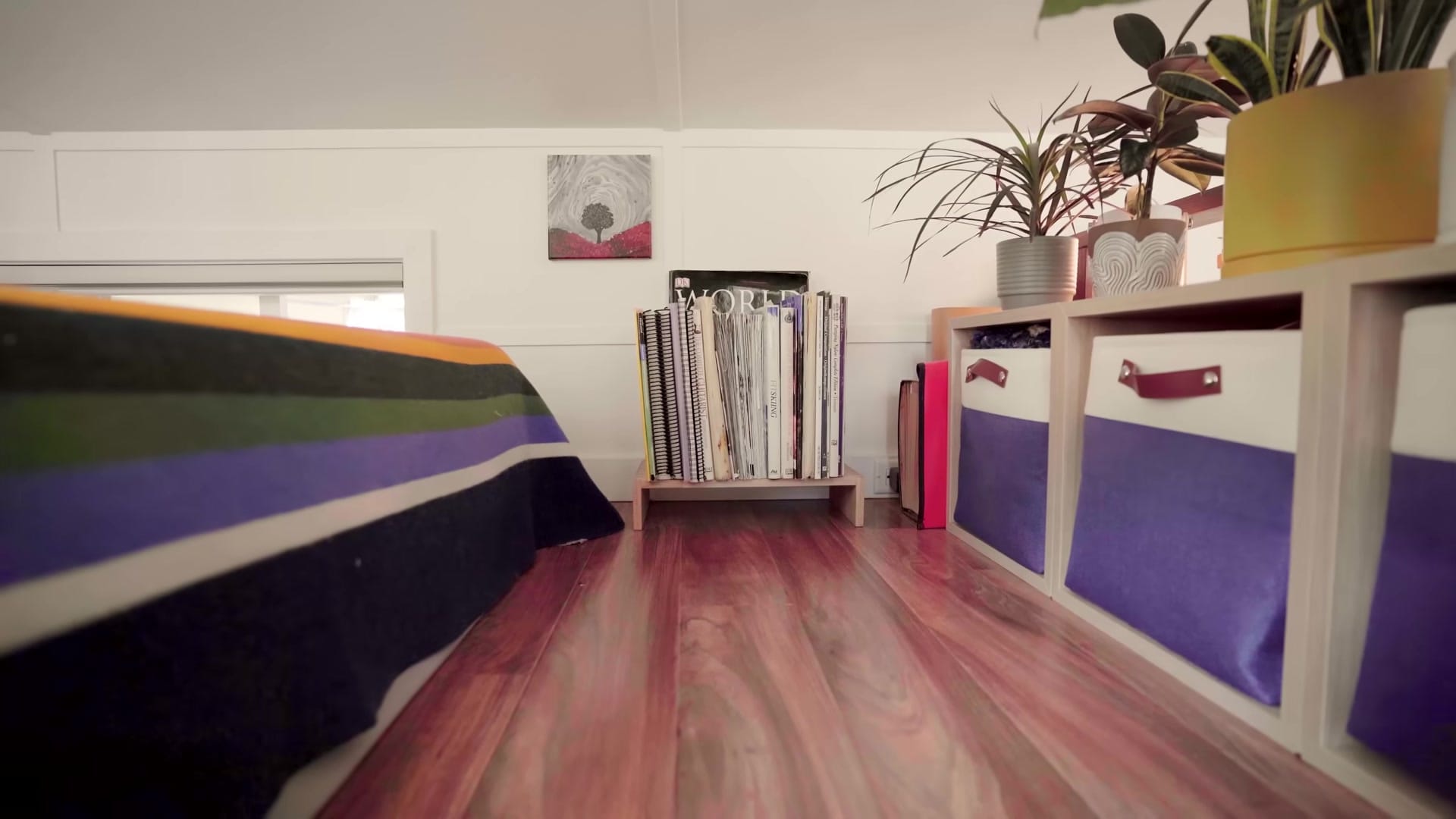
It’s also a playground for creative storage. Reference books found a home using a small monitor stand and bookends to make a micro bookshelf on demand.
The only real gripe is headroom; he bonks his head more than he’d like, but for a 24-foot build he’d still choose a sleeping loft for the function and the footprint it frees up below.
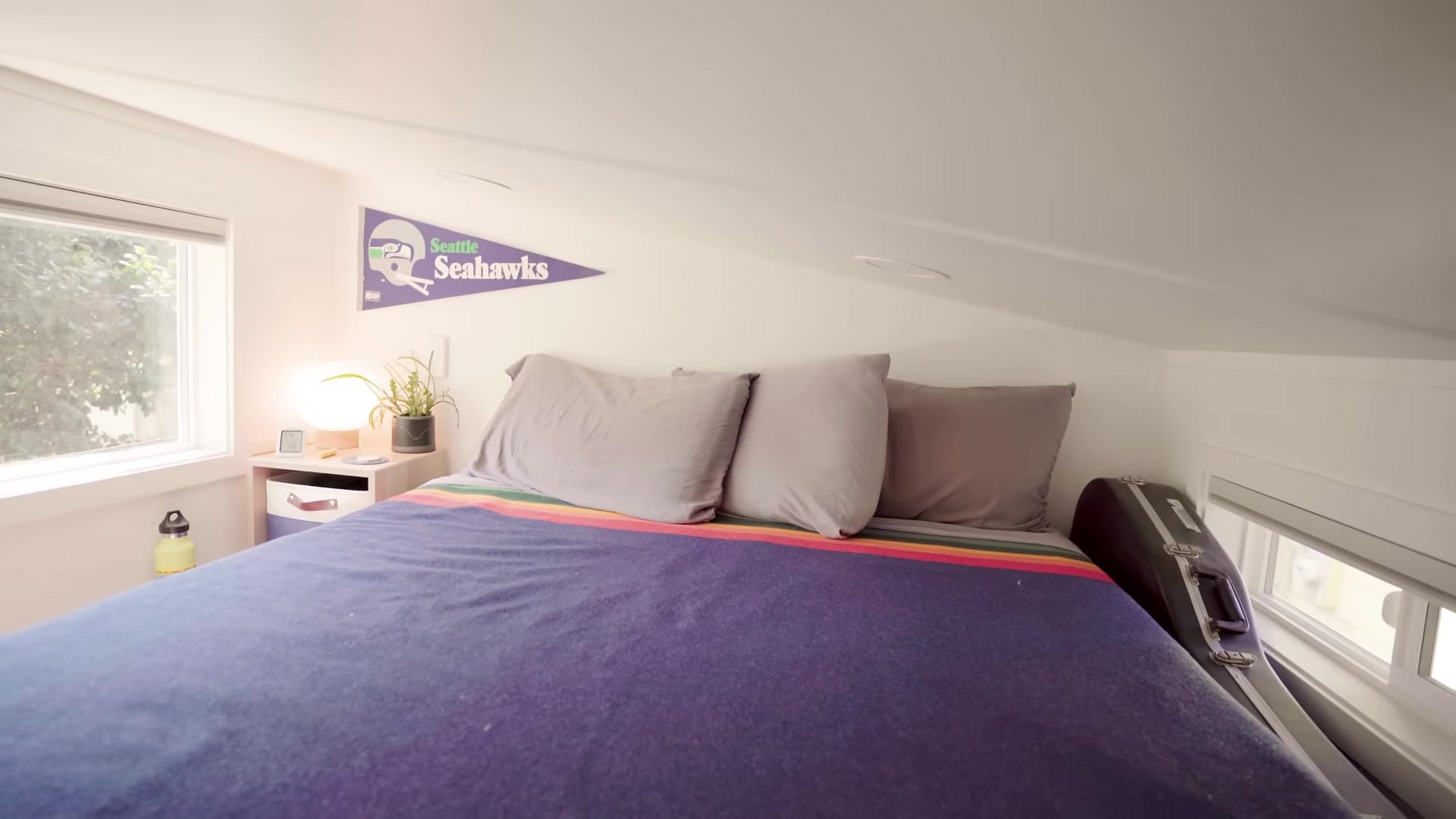
And remember that under-stair space? It’s packed with storage from the start, which keeps clutter from ever creeping into view .
Cost, Parking & What He Learned — rent, mortgage, tradeoffs and advice
The hardest part wasn’t the build — it was the where. He prioritized securing a legal spot first, found a driveway with full hookups (water, sewer, electric, 50 amp) and its own parking space, and said yes immediately.
He even paid rent on it for almost a year before his house was ready because gems like that don’t come twice.

He went with Seattle Tiny Homes, and while the build took about 10 months, patience paid off the moment he moved in.
Money-wise, there’s a conventional 25-year fixed mortgage plus rent for the driveway; together, it totals $1,600 a month and includes all utilities.

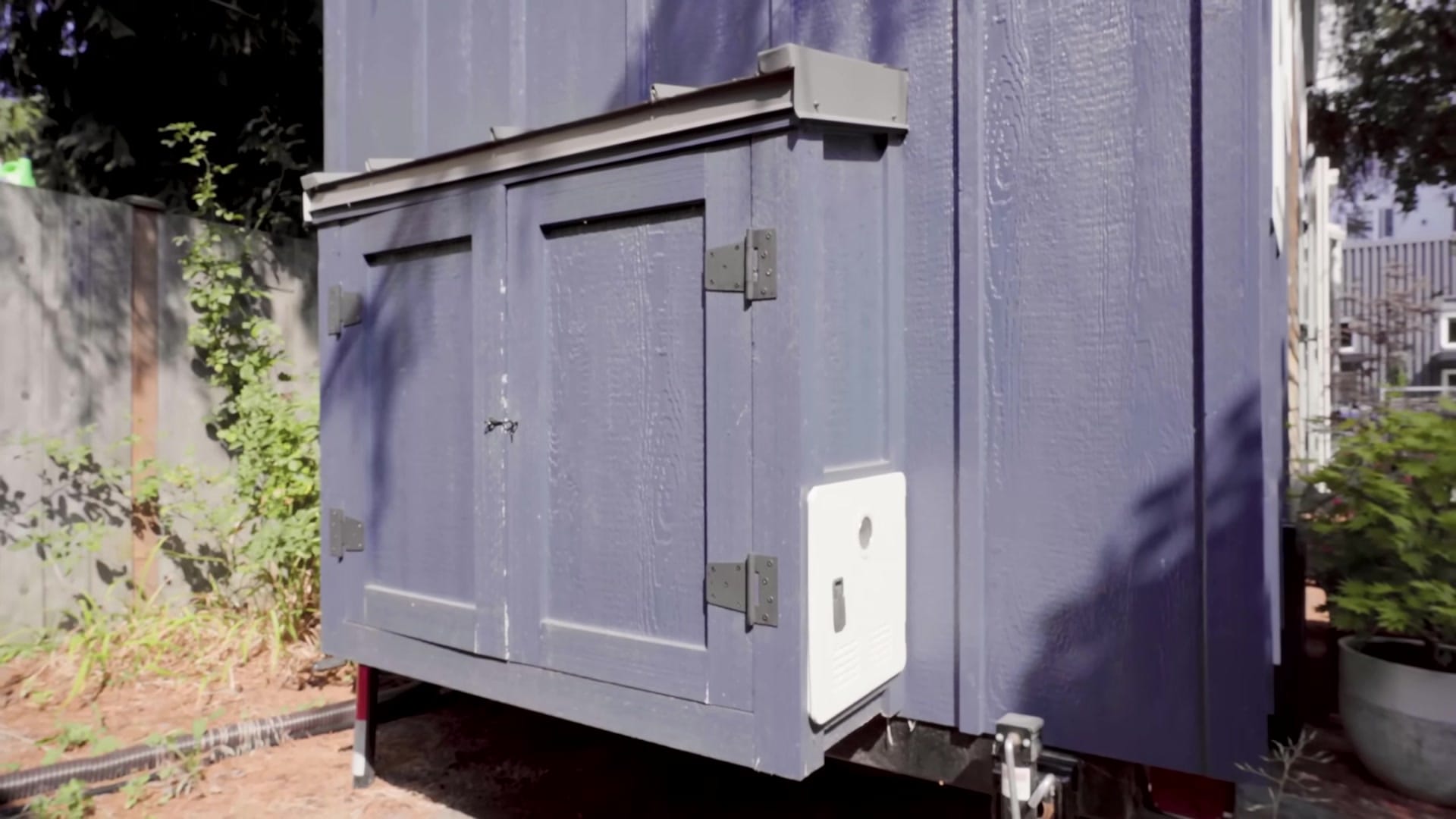
The only extra is propane for the on-demand hot water heater — about 30 dollars every few months — and he believes he’s saving compared to local rents. Outside, the mini split’s compressor sits neatly on the exterior, while a small “garage” cubby at the back houses those propane tanks. The blue siding with white trim and cedar lap panels ties it all together like a living art project in progress with planter boxes and young trees.
And the learning? Tiny living does bring cabin fever sometimes — which turned out to be a feature, not a bug.

It nudges him outside, keeps him active, and pulls him into the neighborhood dinner tradition he loves. After a little over a year, the verdict is simple: the house looks beautiful, functions well, and hits that sweet spot he was chasing all along.