The Treehouse Built on Nine Hemlocks — Reclaimed Materials, Full Comfort
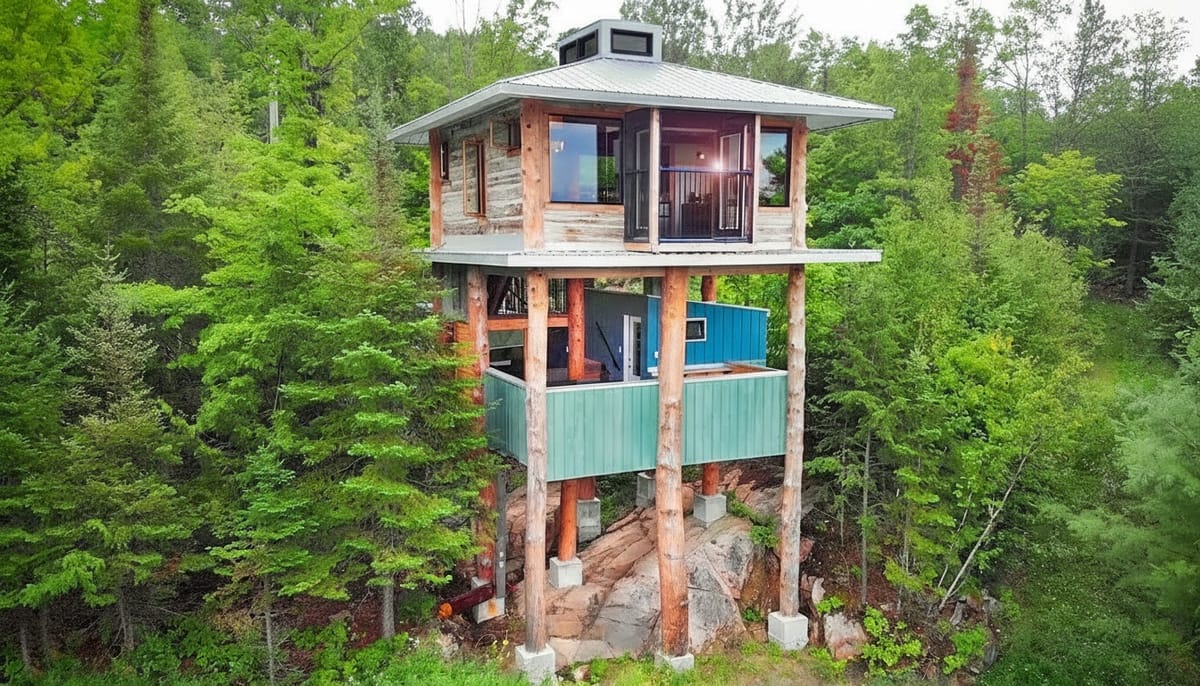
Perched up high, the house reads like a treehouse should — elevated, airy, and a little theatrical.
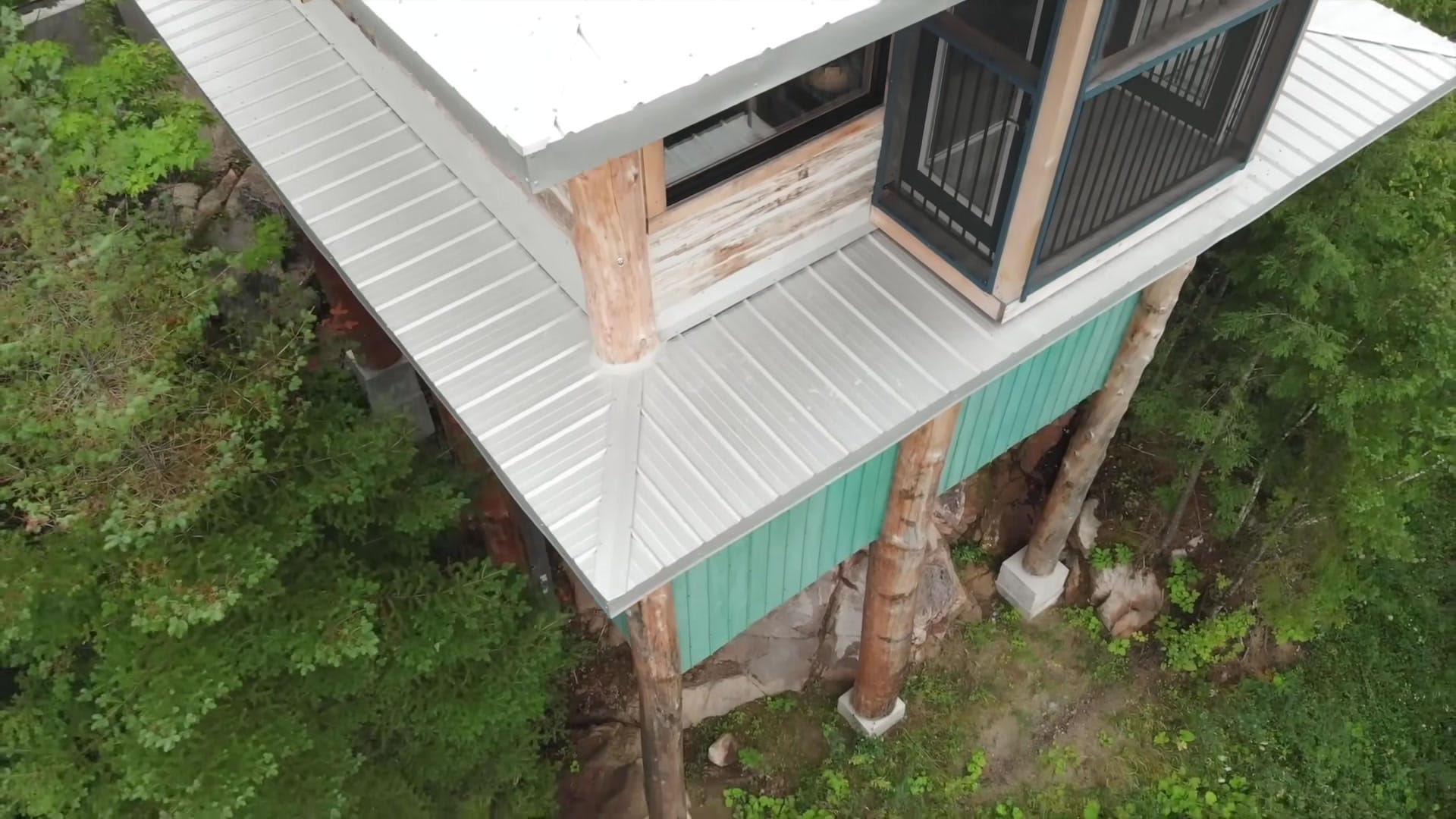
First Impression — Sited High with a Dramatic Entry
A narrow bridge drops in from a cliff to the entry, so arrival feels like a small adventure before the door.
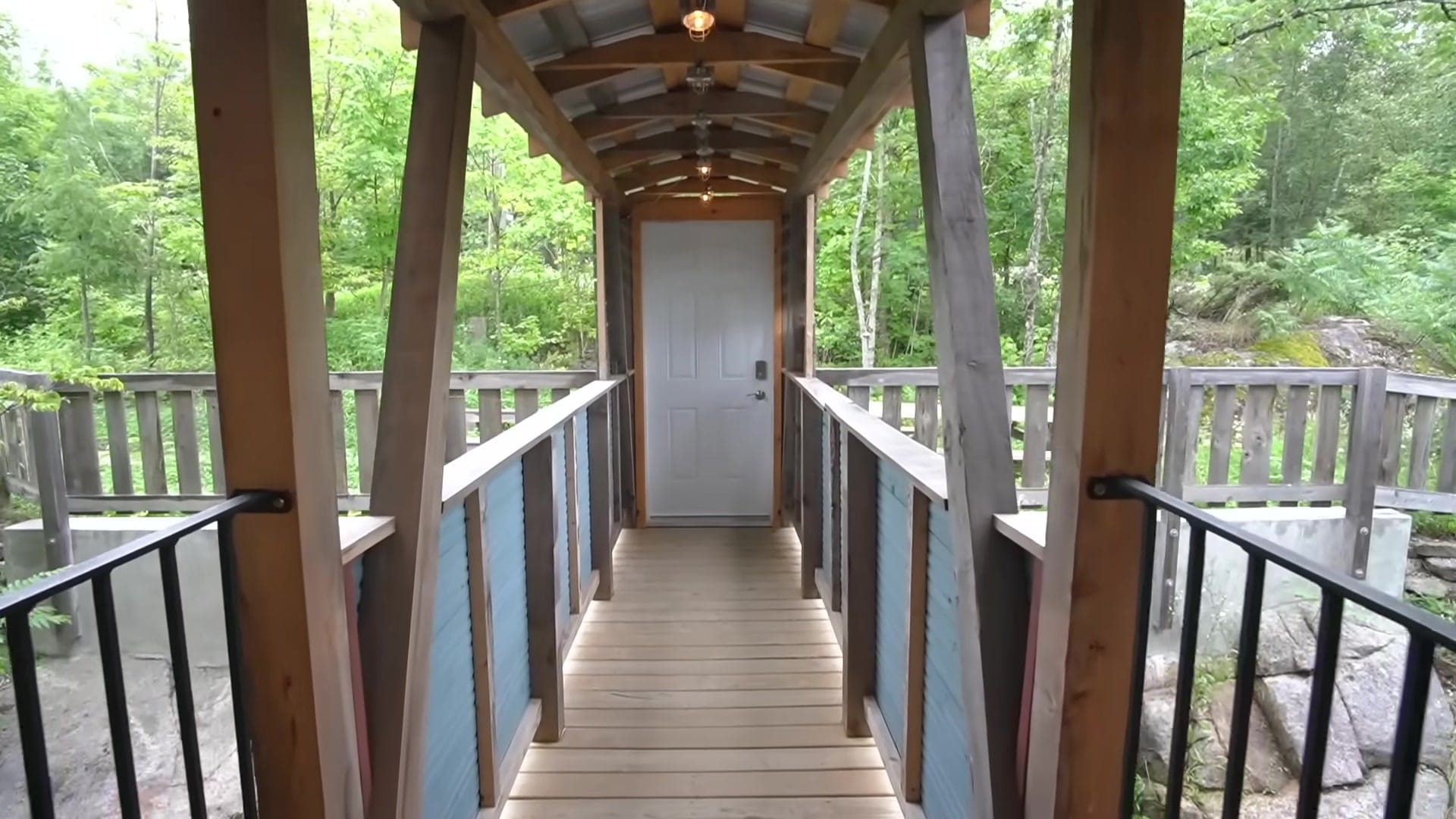
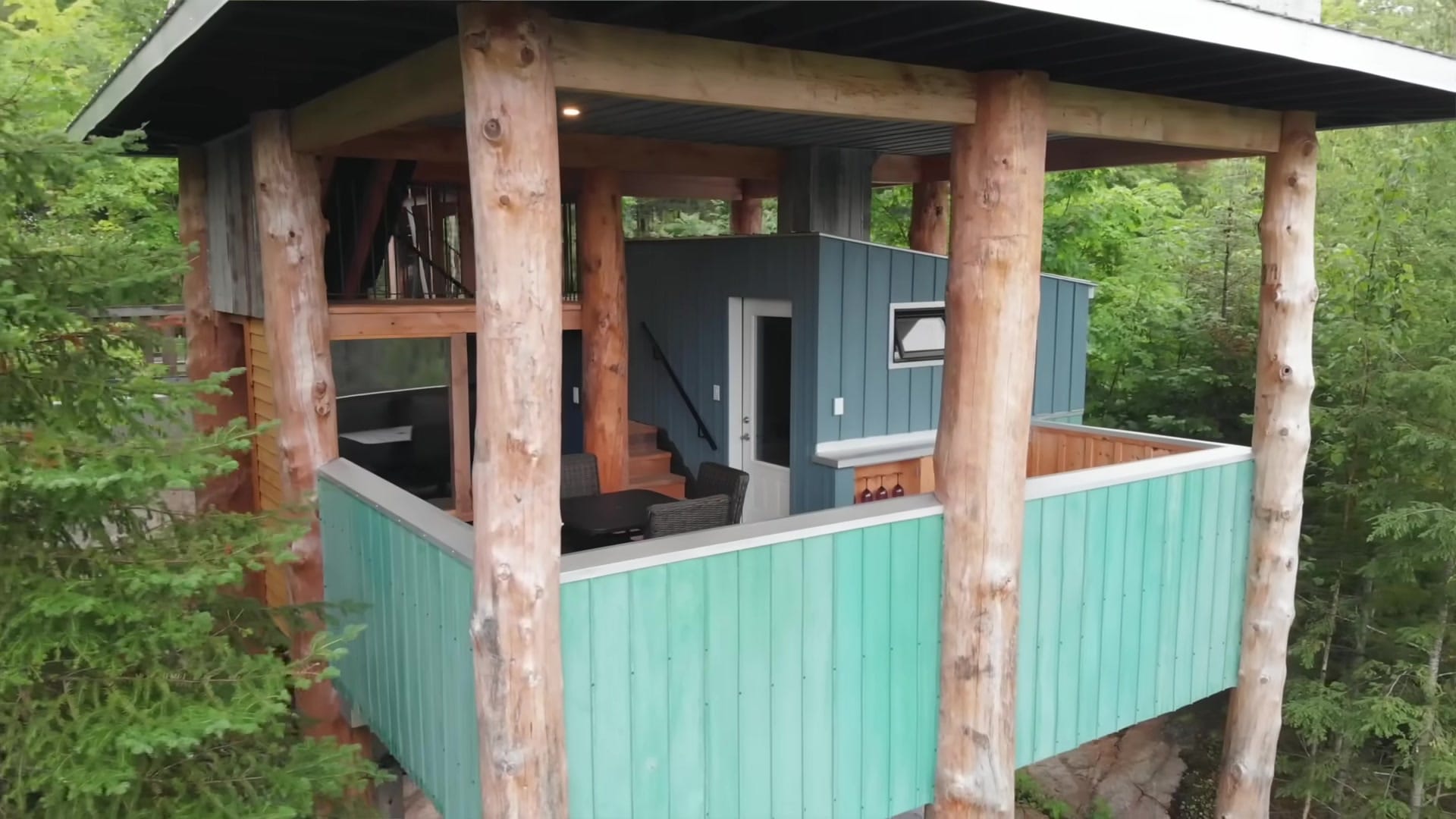
You step onto a patio that doubles as a summer living room, still very much outside even while sheltered.
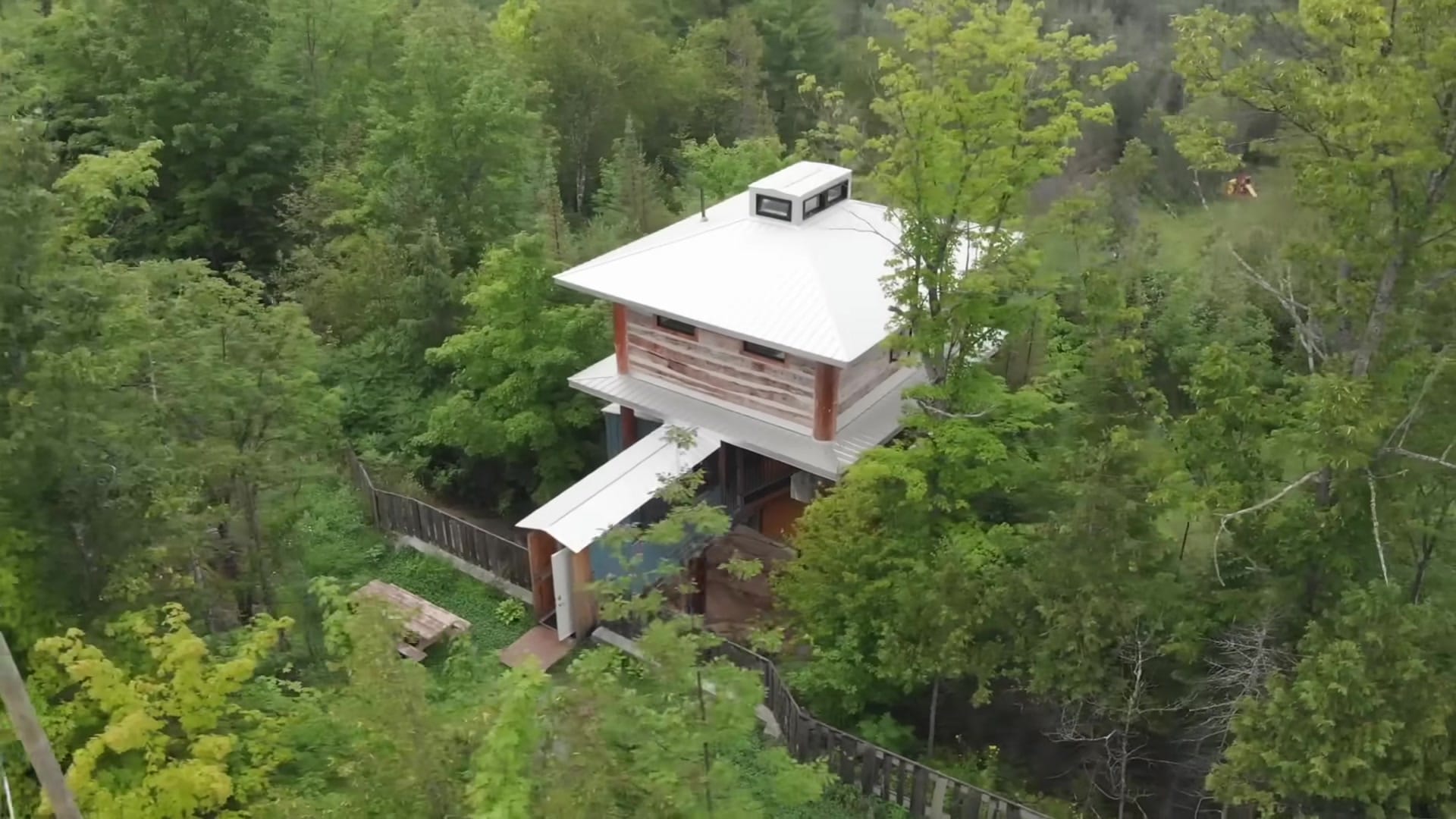
The entry patio is generous and social, a real outdoor living room that could be closed in later if needed.
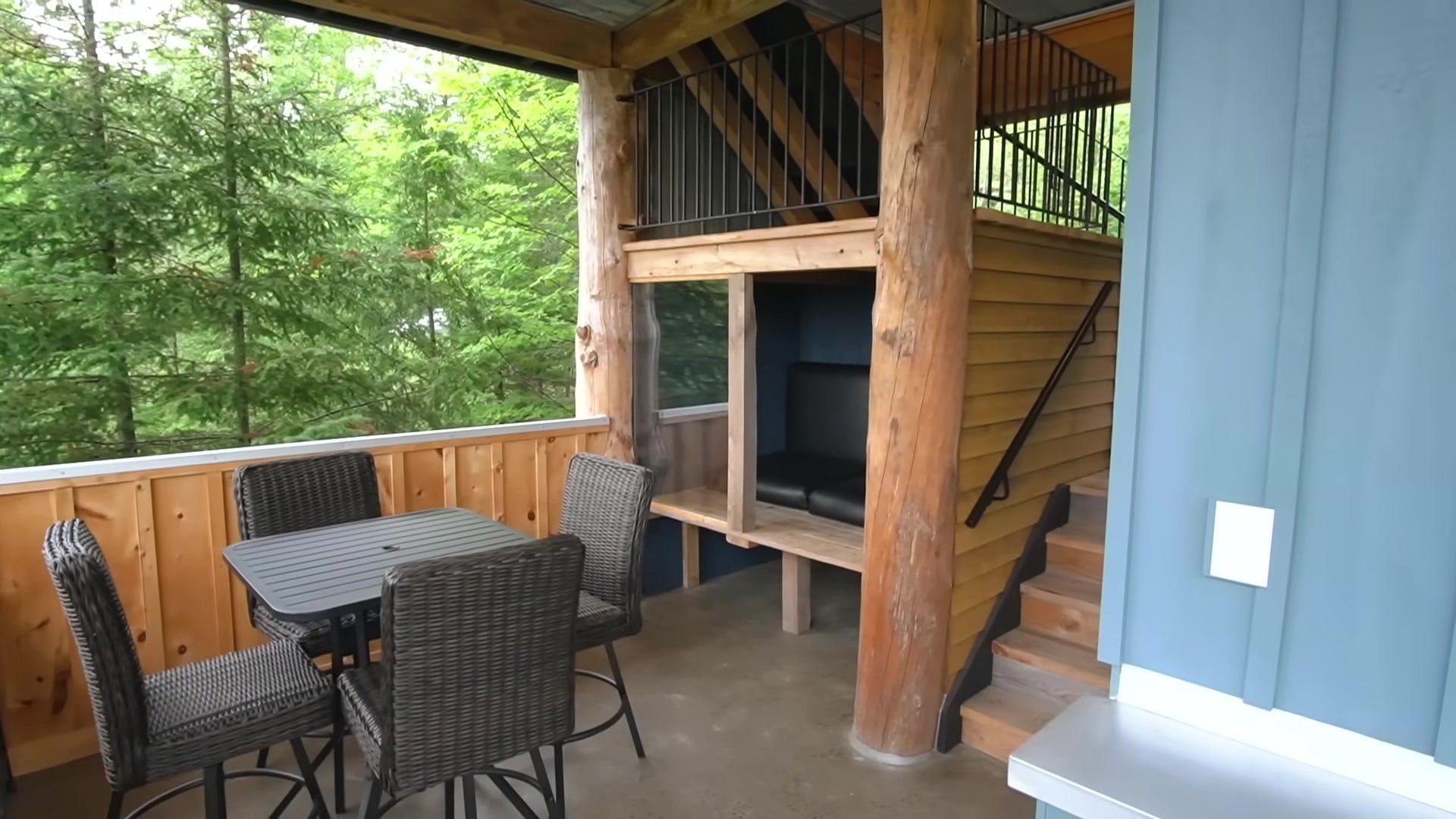
It’s the kind of arrival that sells the whole “treehouse” idea before the interior even unfolds .
The combination of height, exposure, and that cliff-to-bridge entry sets expectations: intimate, wild, and intentional .
Structure & Foundation — The 9 Hemlock Posts
The whole building literally sits on nine hemlock posts, each anchored on concrete footings for a rock-solid base.
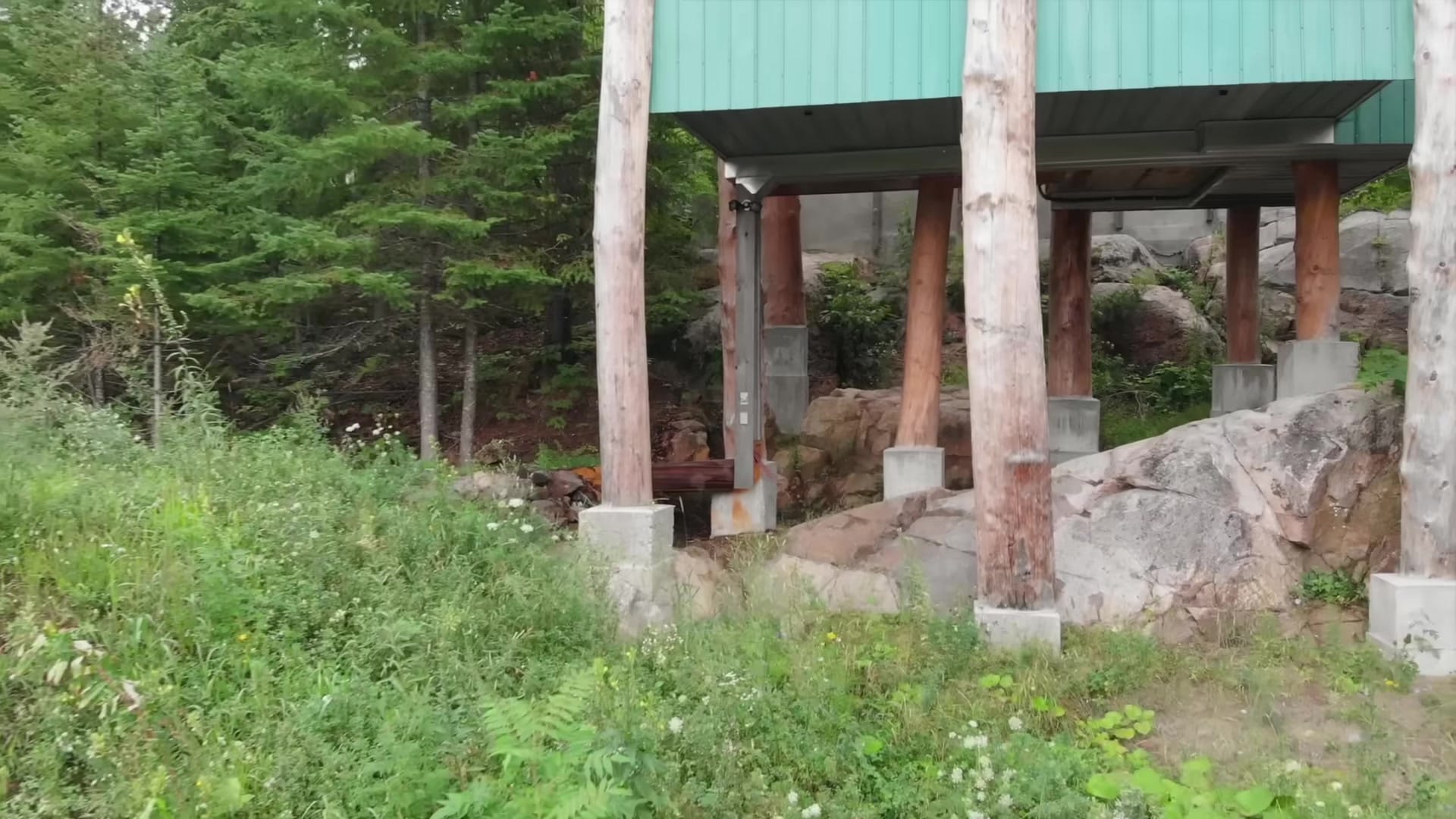
Those hemlock posts are seated on concrete and tied down to bedrock so the elevated design feels permanent, not precarious.
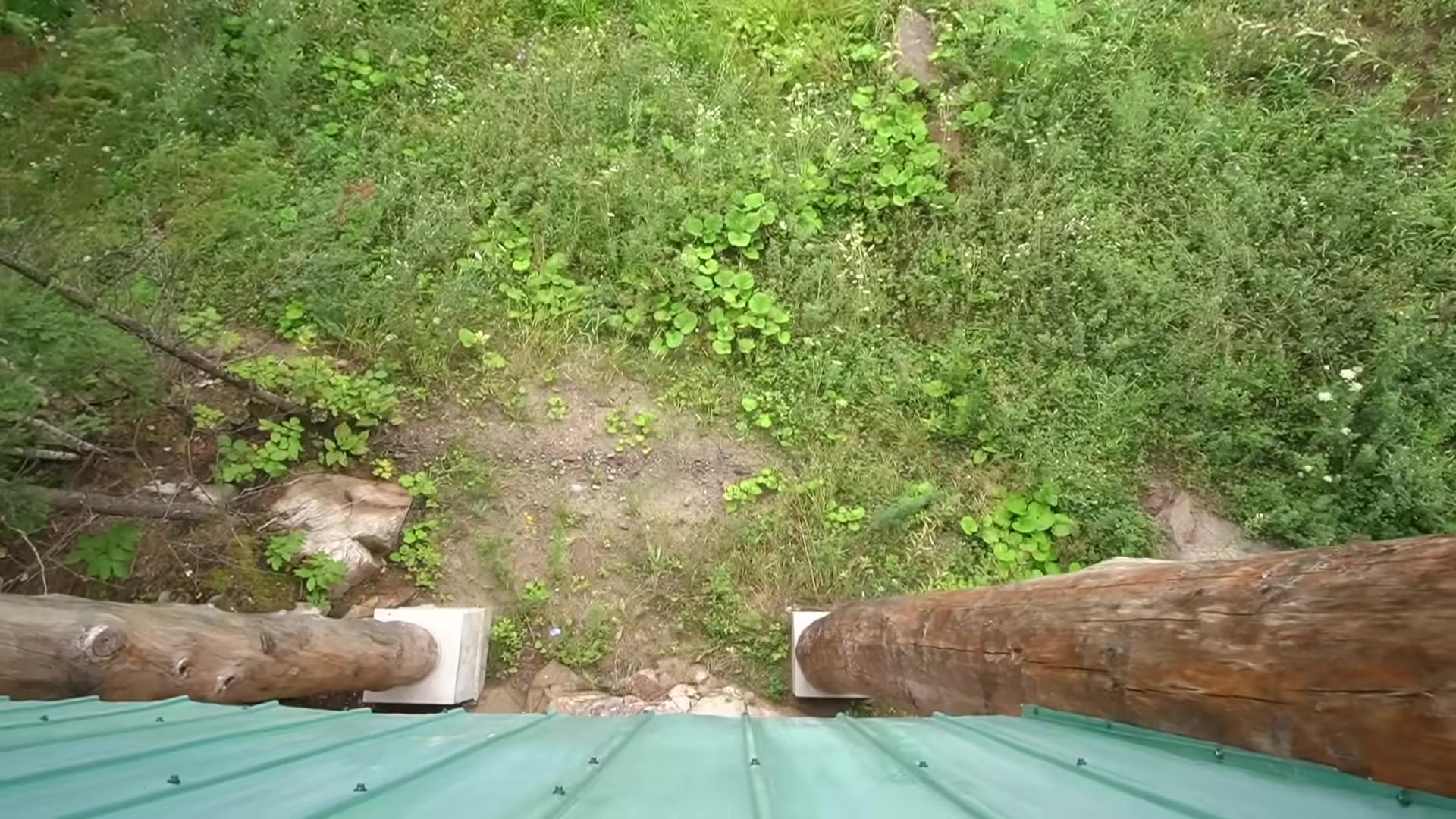
Structurally, the posts are the spine — every elevated floor and porch ties back into those nine points of support.
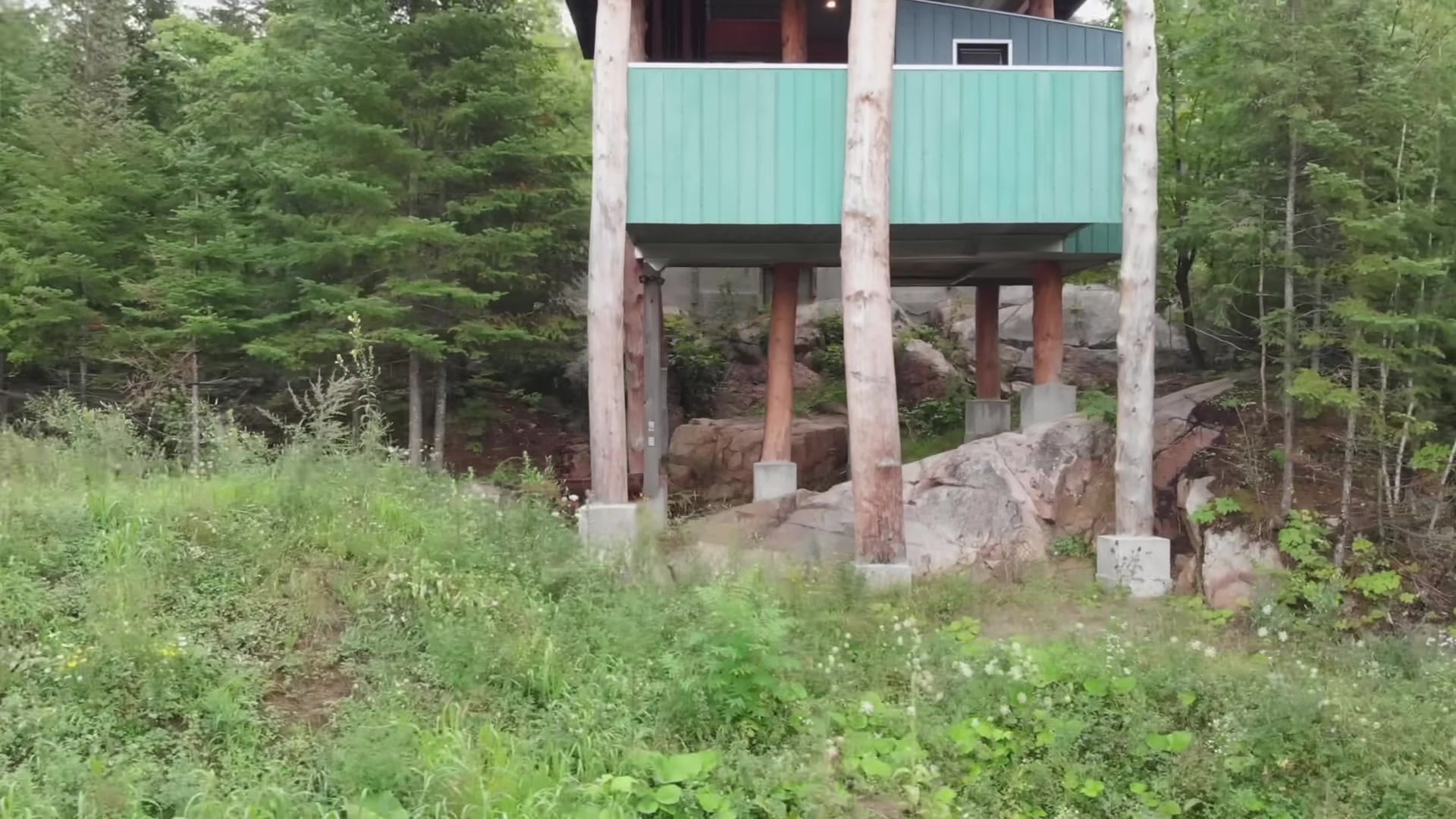
Those are nine 40‑foot hemlock posts salvaged and reused, not milled replacements, which keeps the skeleton raw and authentic.
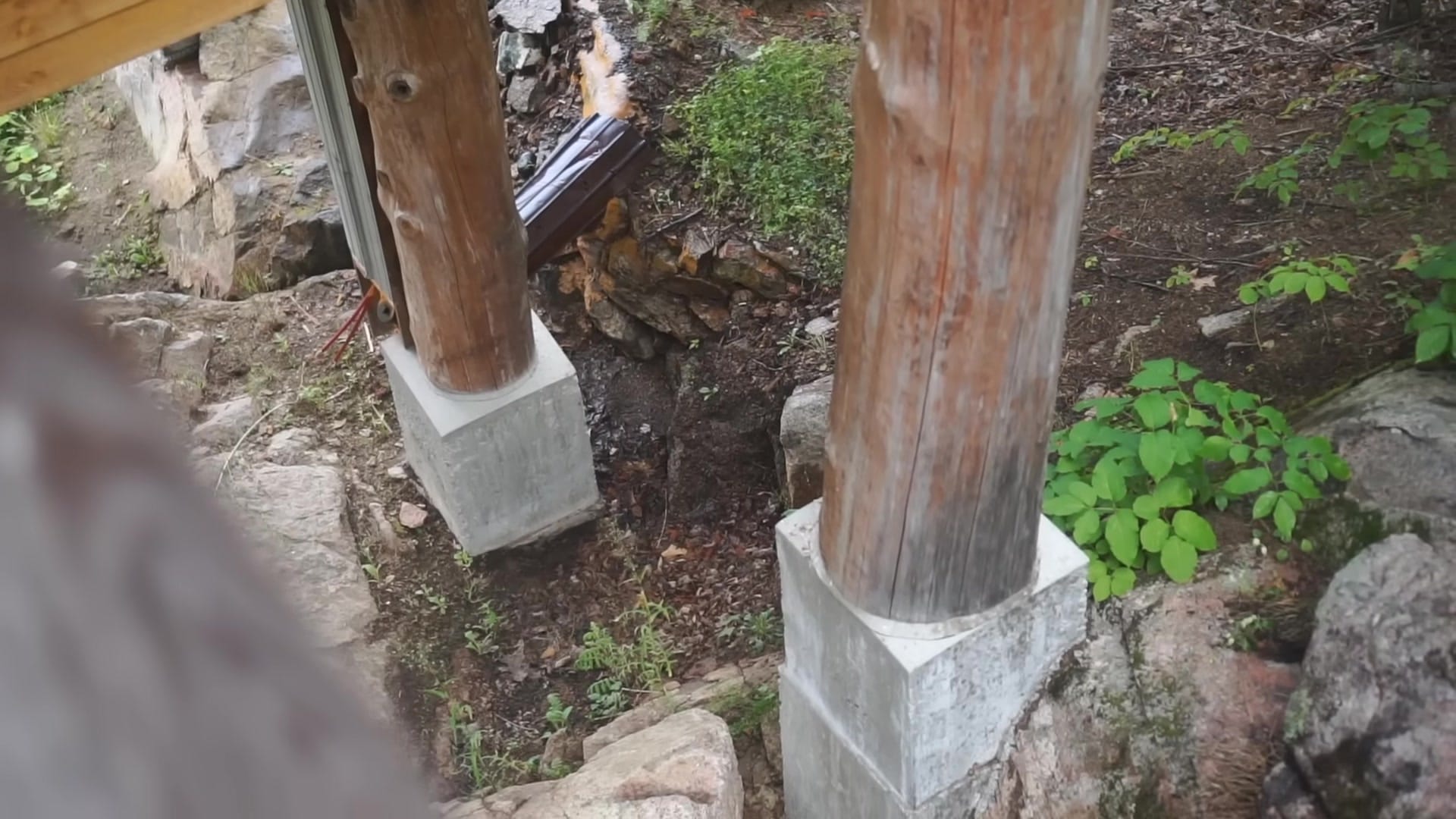
Because the posts are reused whole, they give vertical rhythm to the house while cutting down on new timber use .
The decision to anchor to bedrock and use concrete footings means a lofty aesthetic with real-season durability .
Downstairs Porch & Bathroom — Outdoor Living, Year-Round Comfort
The downstairs area is designed as a covered patio — a summer living room with bar seating and room to spread out.
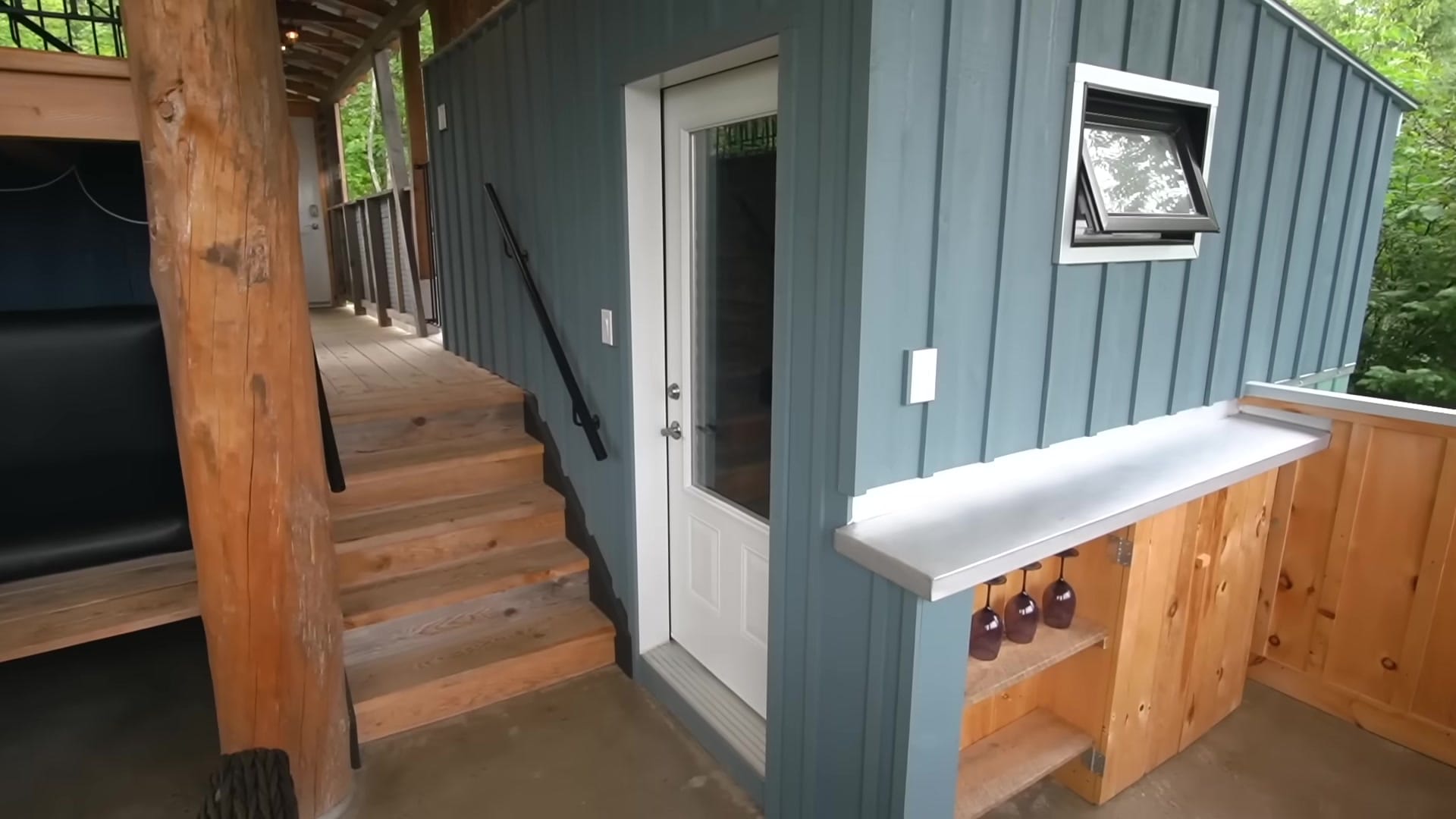
That porch was built so it could be closed in later: the shell is insulated and ready for windows if winter use becomes desirable.
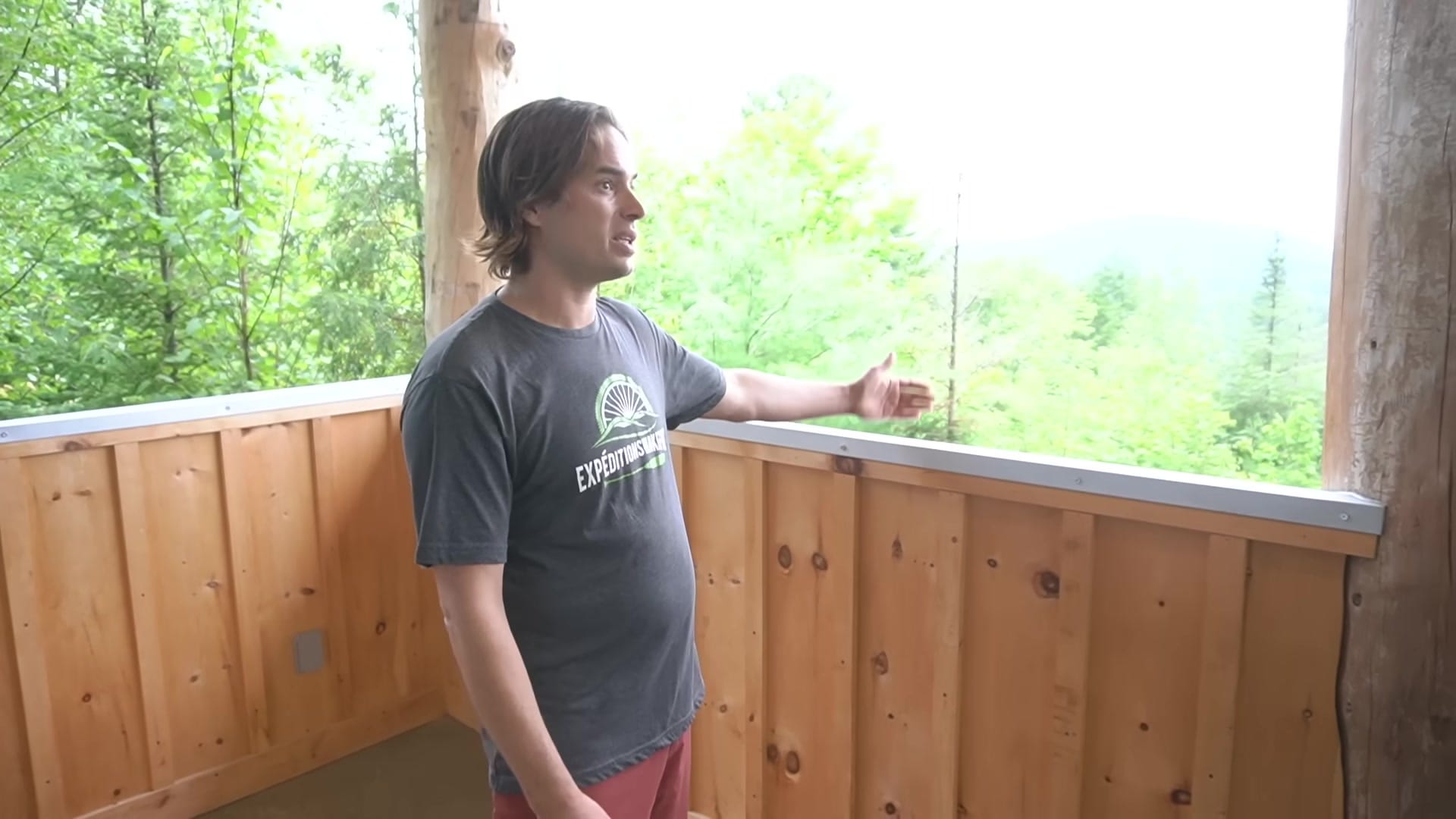
For now it’s open-air bliss, with a concrete floor that sheds water gracefully to floor drains.
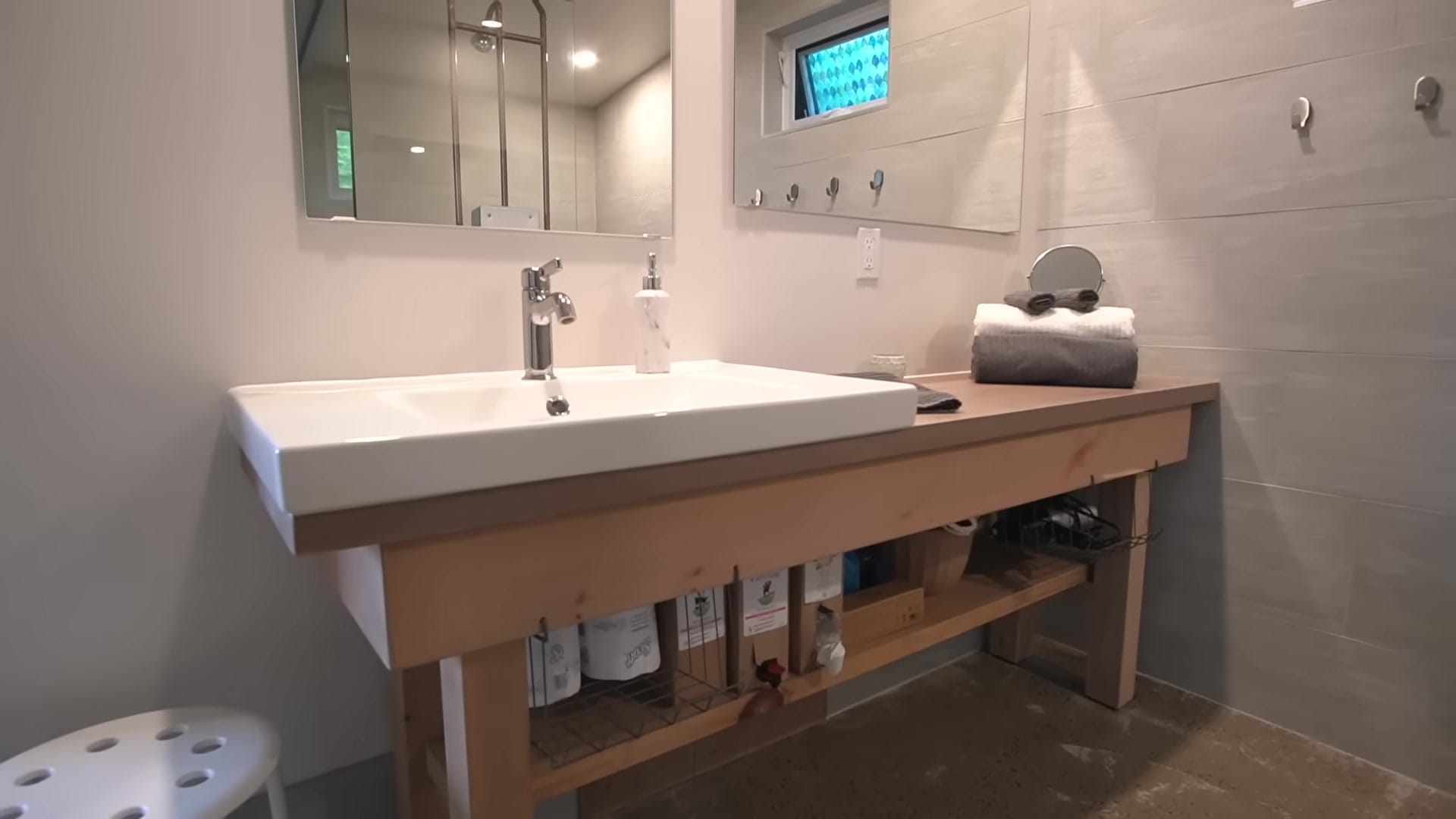
Practicality shows up in the downstairs bathroom: a walk-in shower, glass walls, and a sloped, heated concrete floor for comfort.
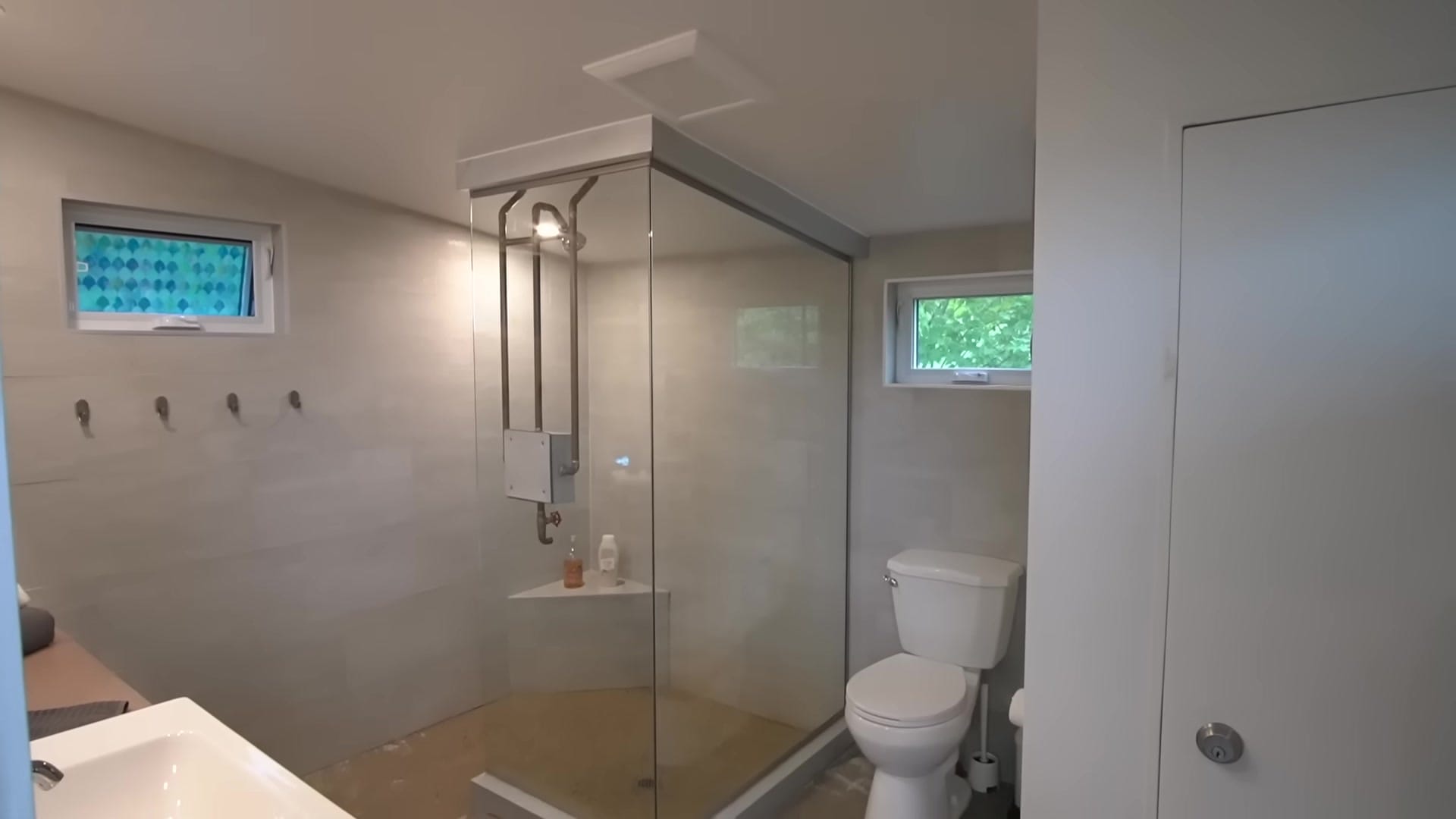
The toilet connects to a septic system, so this isn’t rustic faux-luxury — it’s real plumbing and real year-round function.
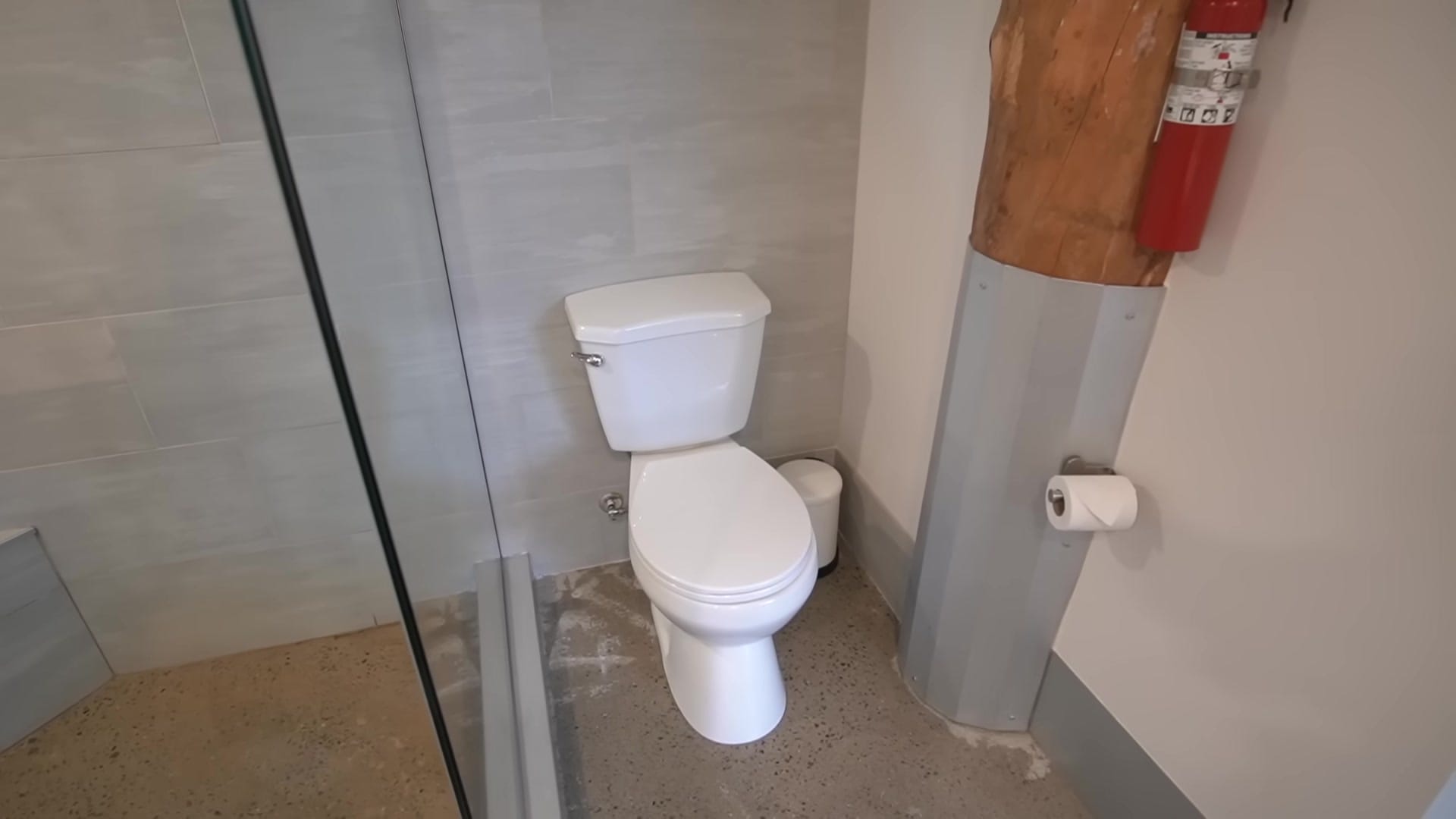
Finishes like ceramic wall tiles and glass shower doors keep the washroom feeling clean and surprisingly upscale for a reclaimed-material build.
Upstairs Living — Kitchen, Dining and the Log Lounge
Upstairs is the heated, fully livable level — kitchen, dining, and a log-walled living room all in one compact footprint.
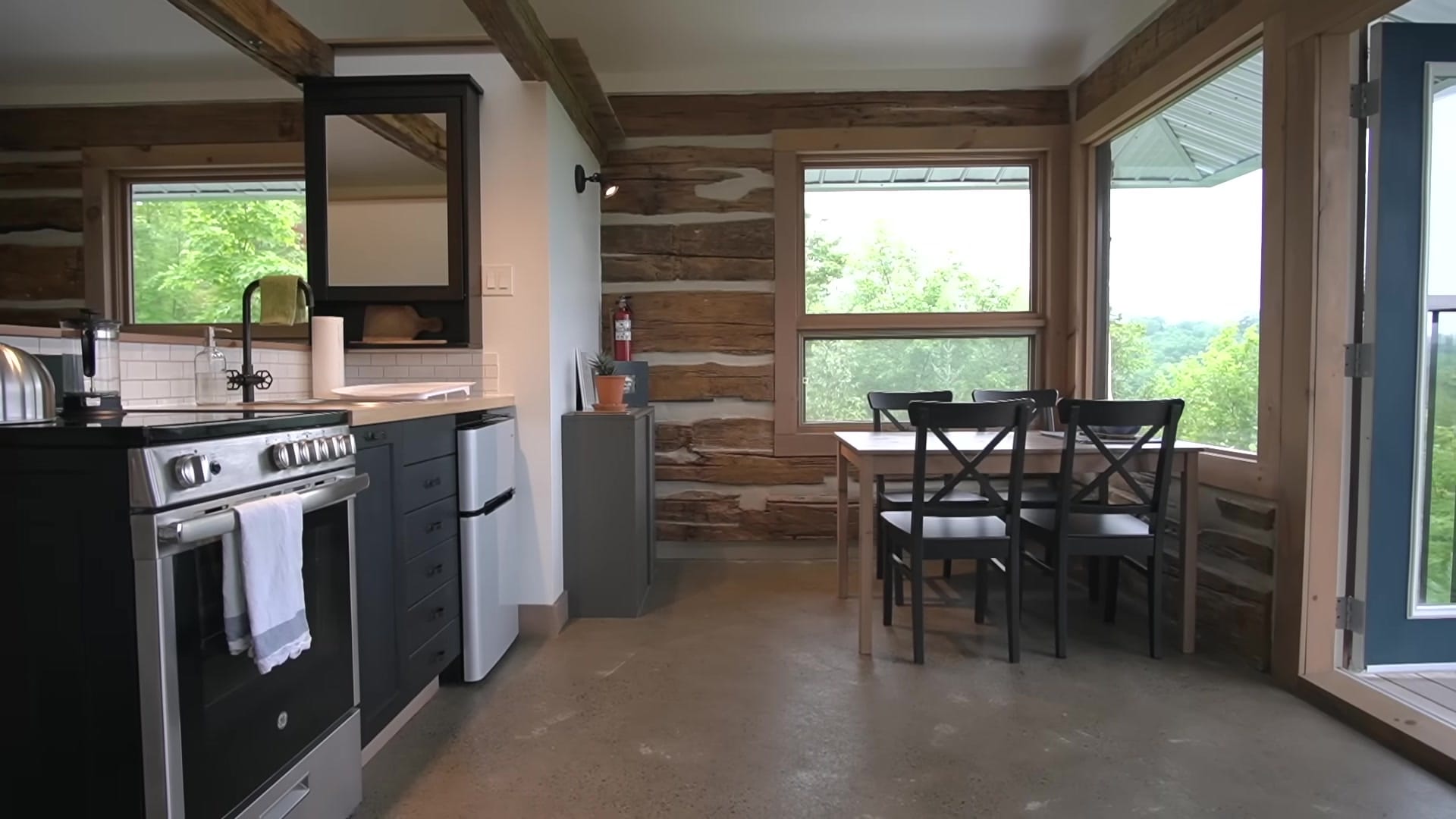
That 18x20-ish log room is the cozy center of the house and forms most of the 420 square feet of heated living space.
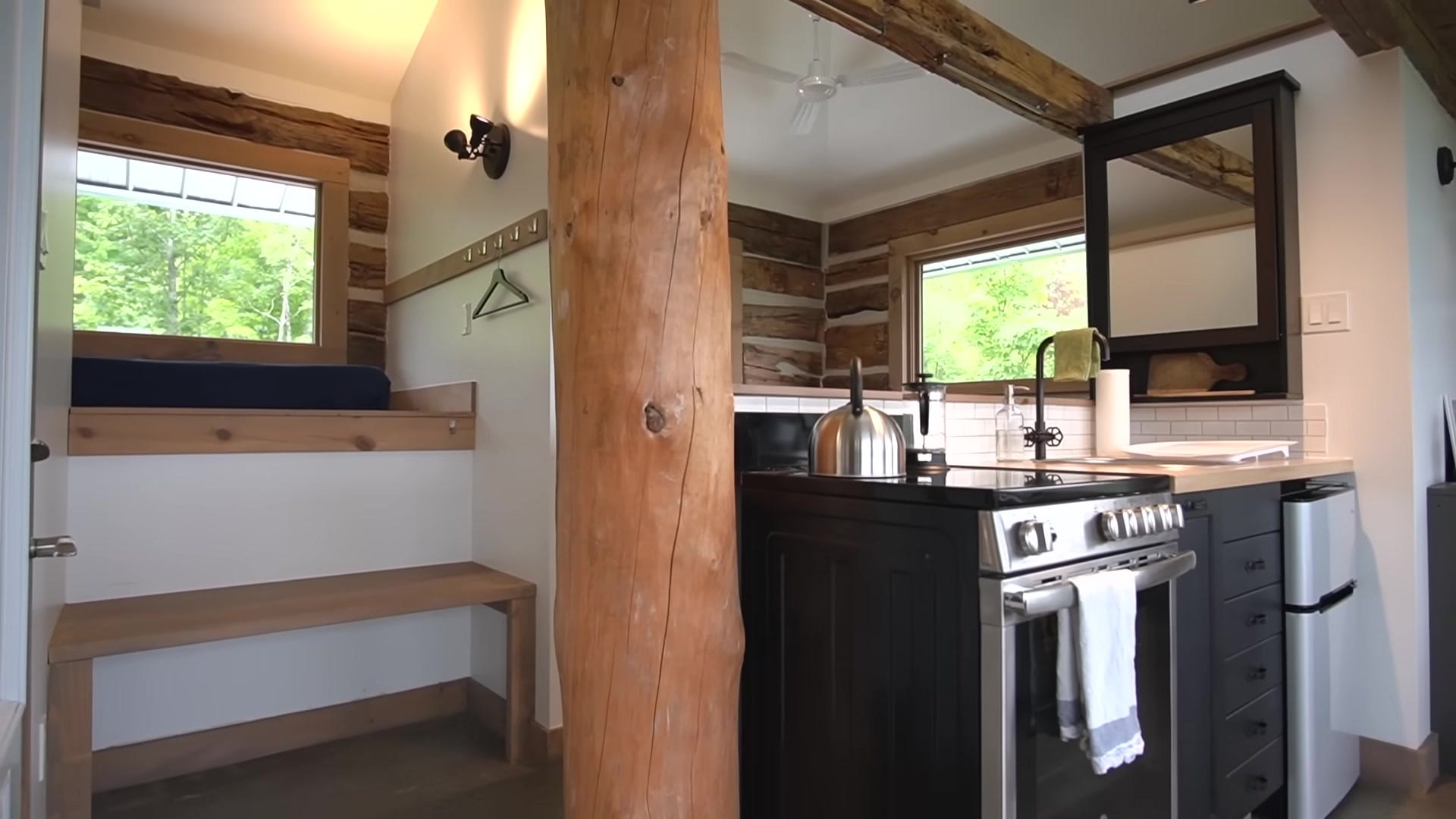
Those log walls came from local barns, hand-hewn by early settlers, which gives the interior instant character and thermal mass.
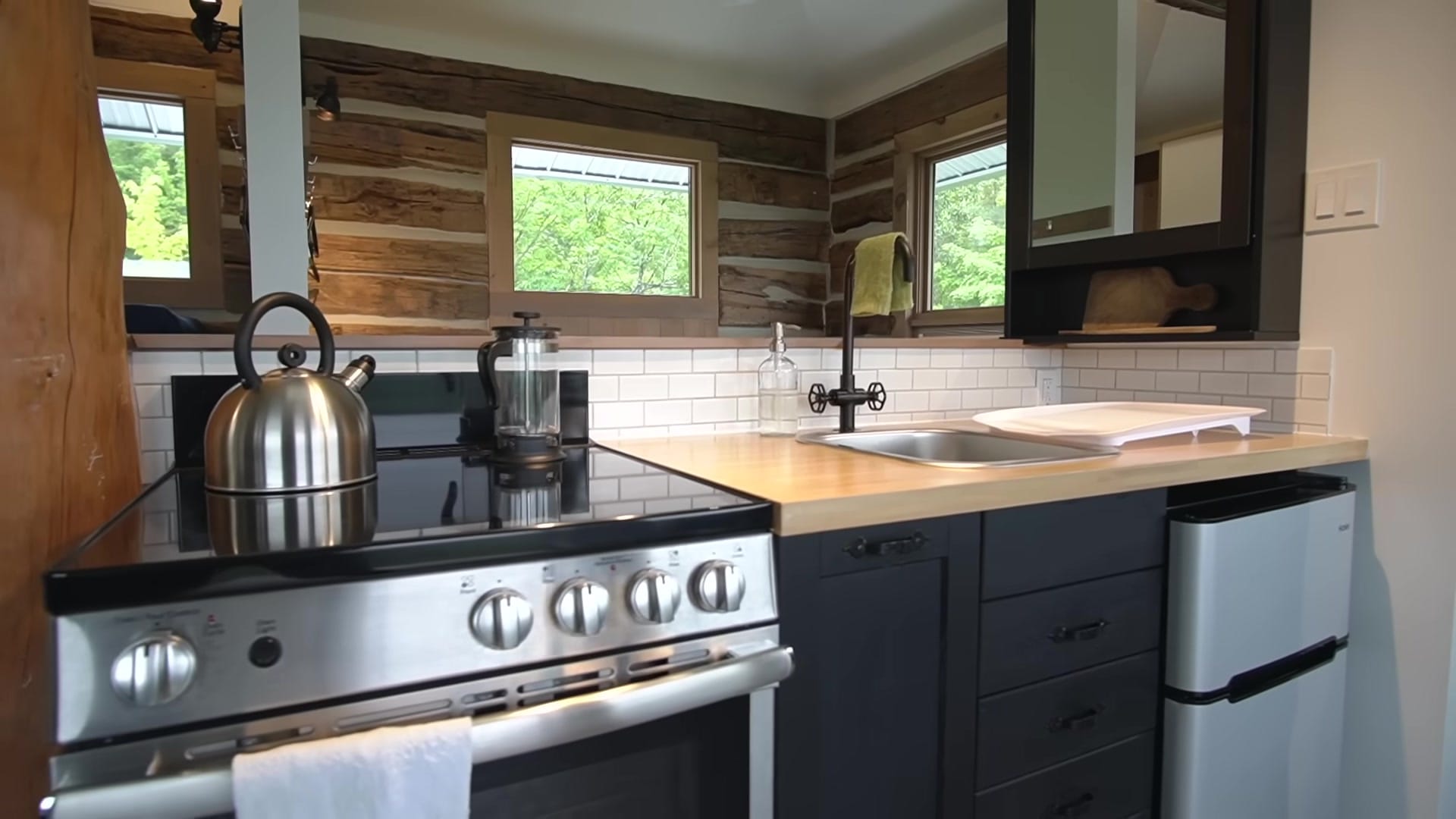
The layout squeezes a functional kitchen into a small footprint without feeling cramped: cabinets, mini stove, pantry, and a mini fridge sit comfortably.
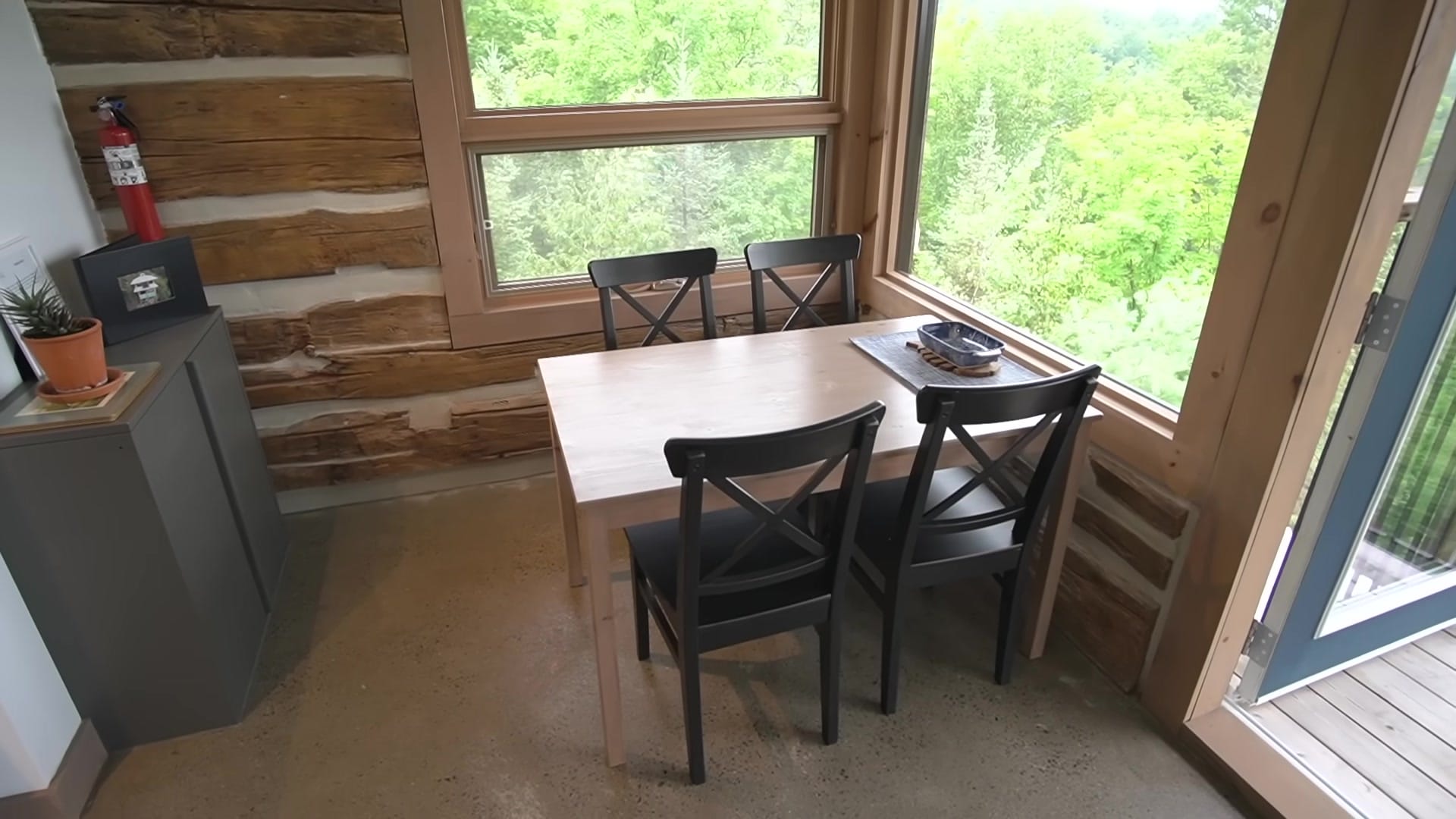
A dining table is positioned to take in the view and sunsets, so meals become a built-in moment, not an afterthought.
A screened deck sits about 35 feet off the ground, adding a bug-free but thrilling outdoor room that expands the living area vertically .
Sleeping Nooks & Clever Storage — Small-Space Comfort
There are two sleeping nooks: a single bedroom for guests and a raised master that prioritizes the view and storage.
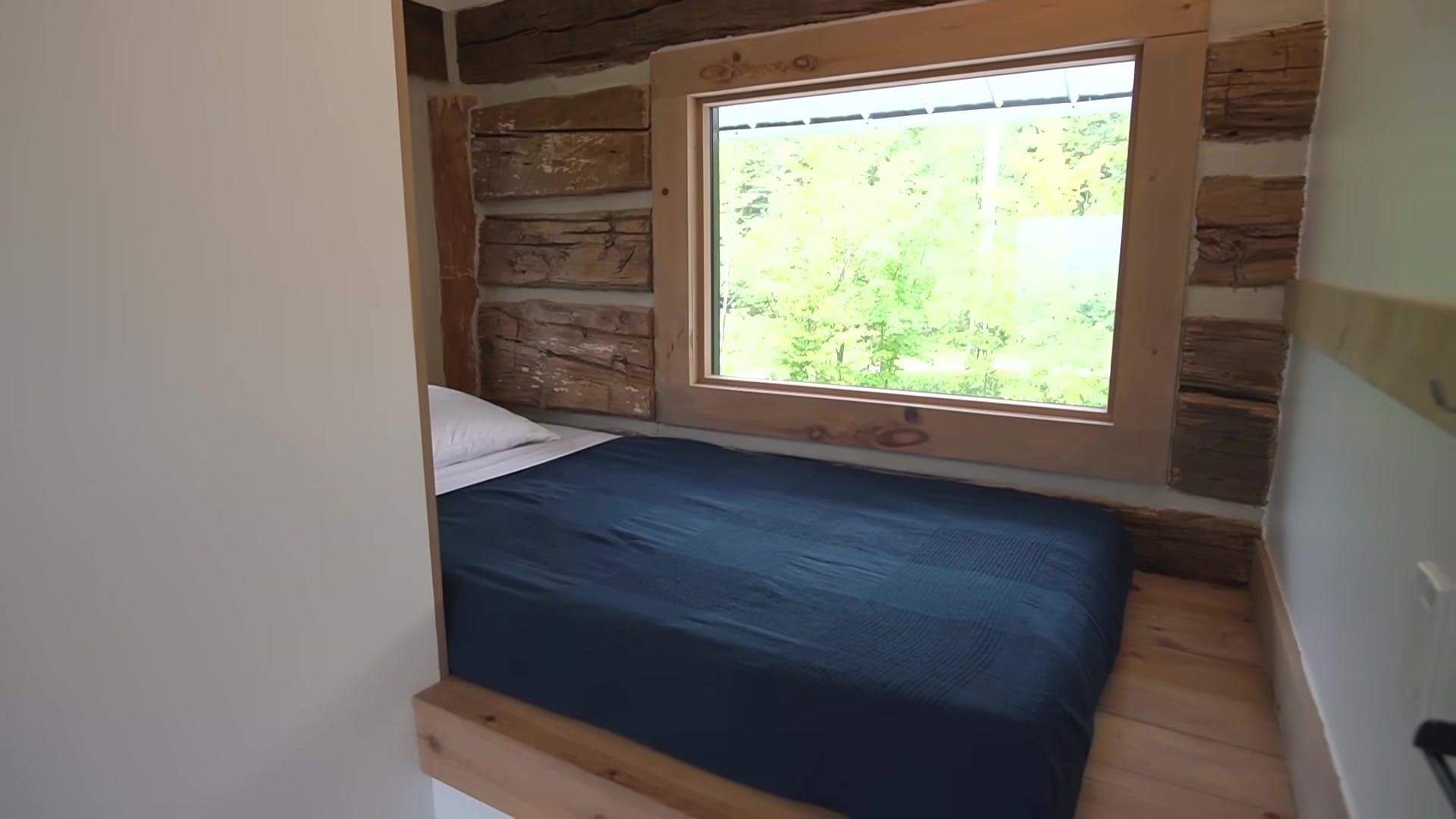
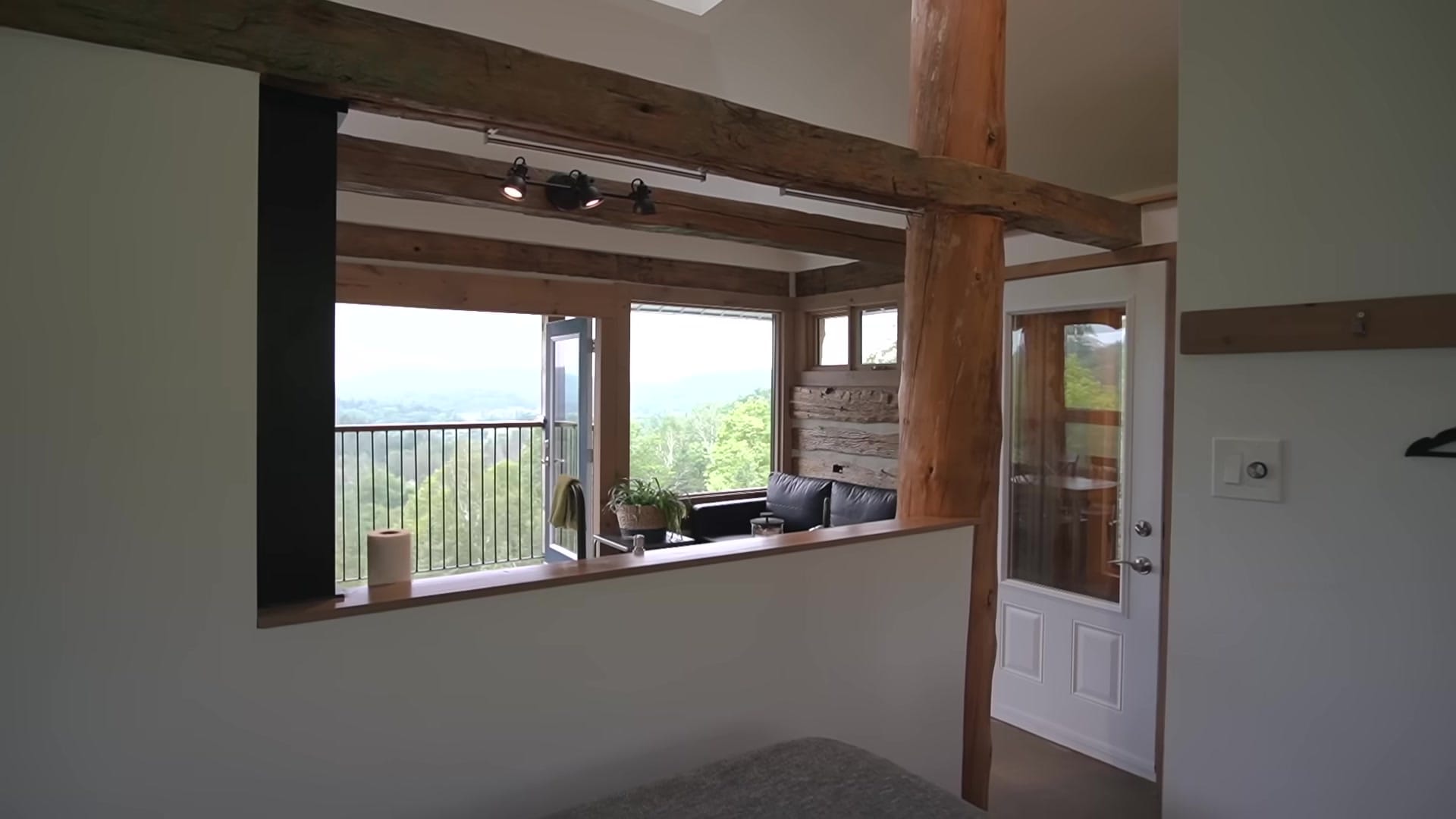
The master is elevated so the bed becomes a perch — coffee in bed is doable from the little bar next to it.
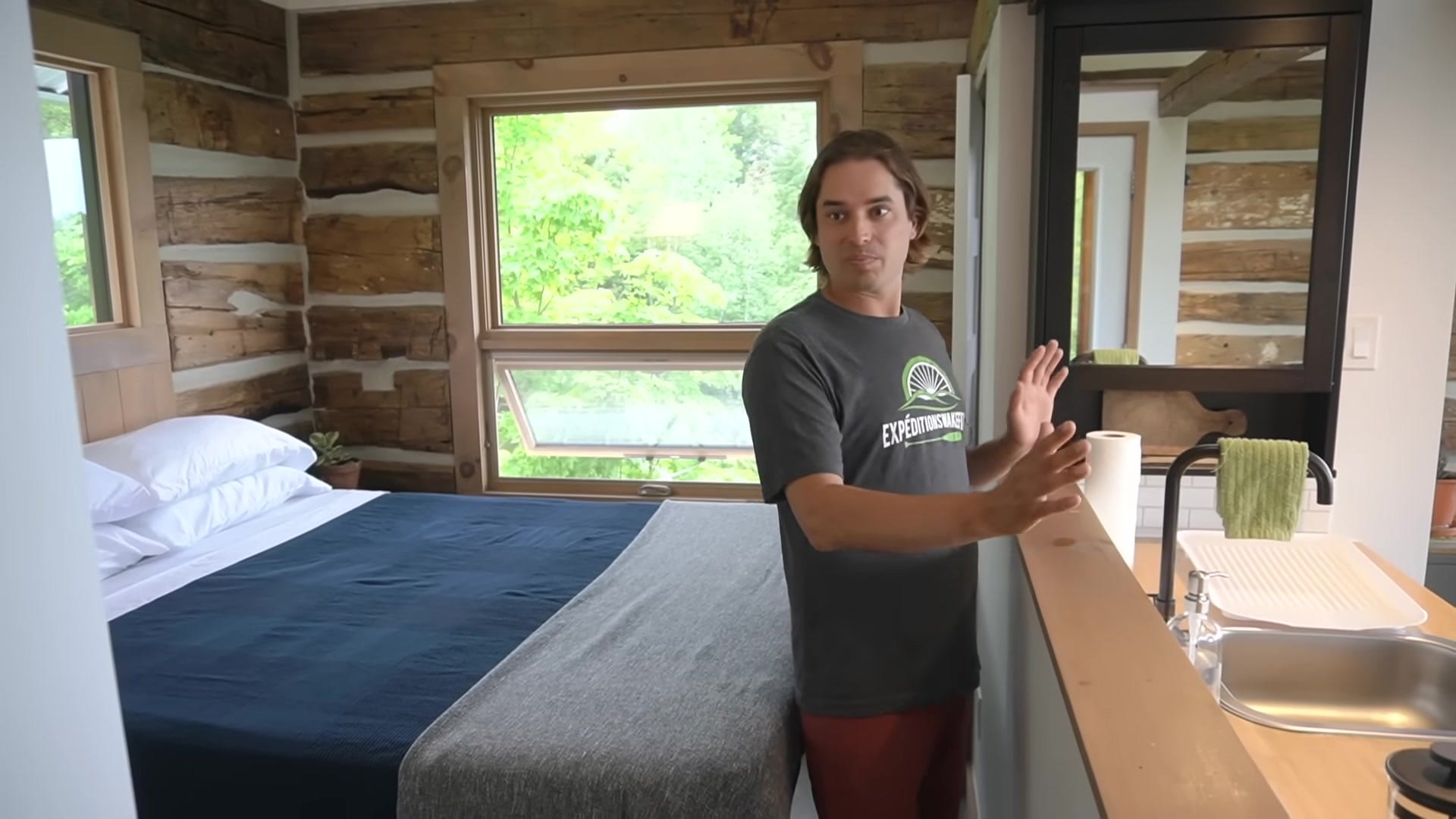
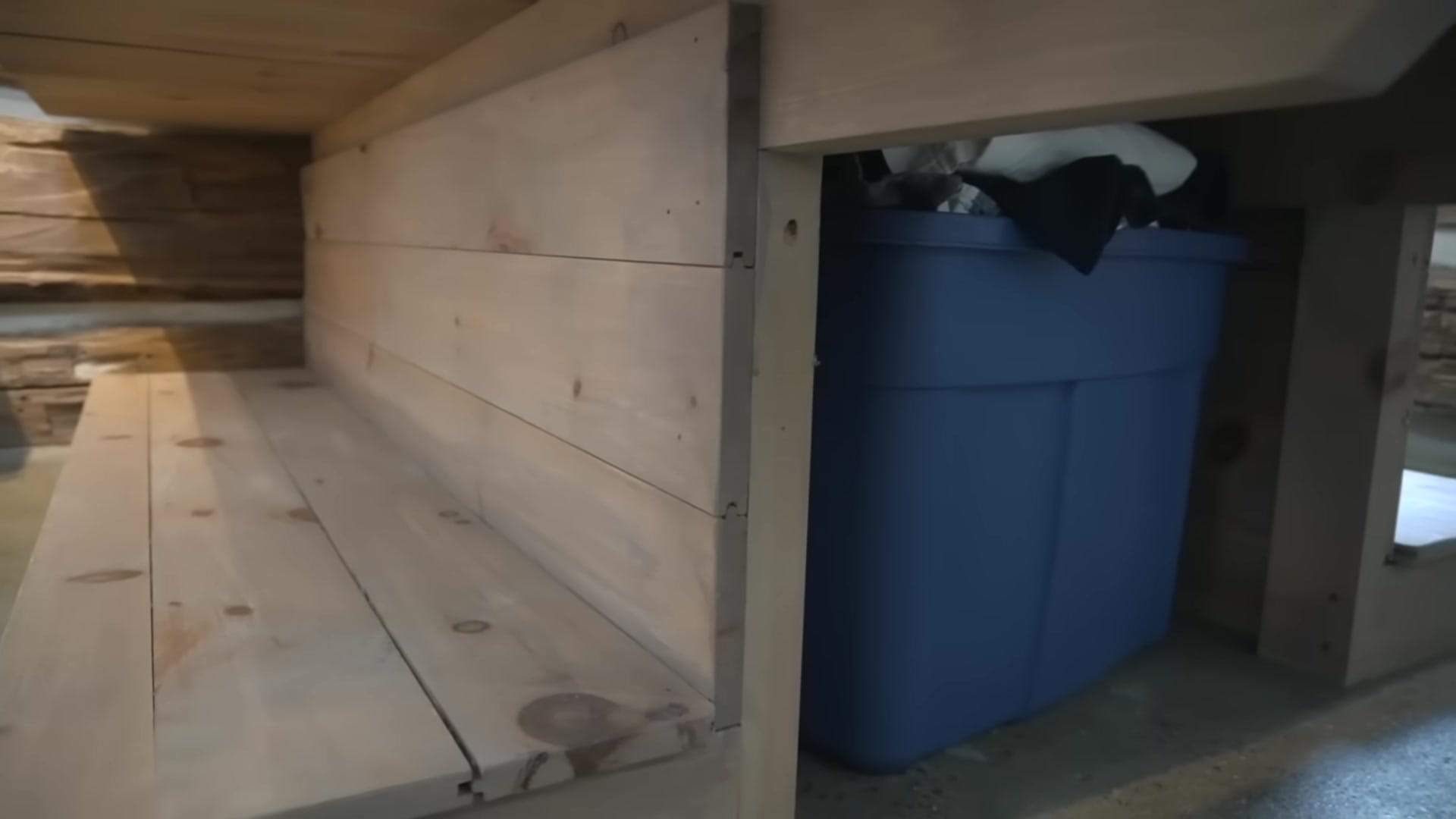
Raising the mattress was a clever move: it opens sightlines to the treetop outlook and creates deep storage under the bed.
Storage isn’t an afterthought — drawers and cubbies under the raised platform make the tiny footprint live larger.
A small upstairs washroom is tucked close by so midnight bathroom runs don’t mean braving the elements.
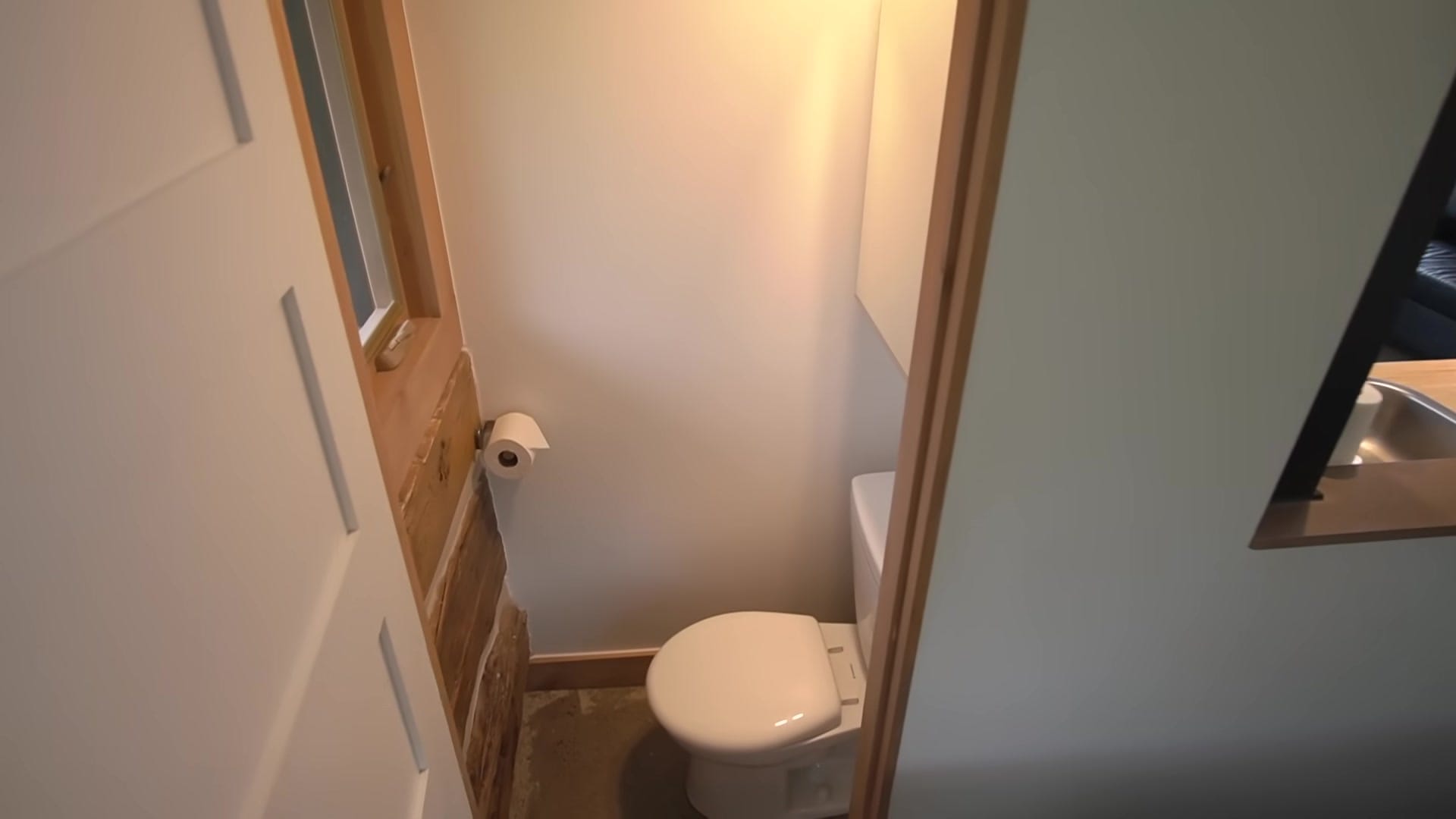
These choices keep comfort high while keeping the overall square footage intentionally low and efficient .
Materials, Utilities & The Build Story — Reclaimed, Practical, Beautiful
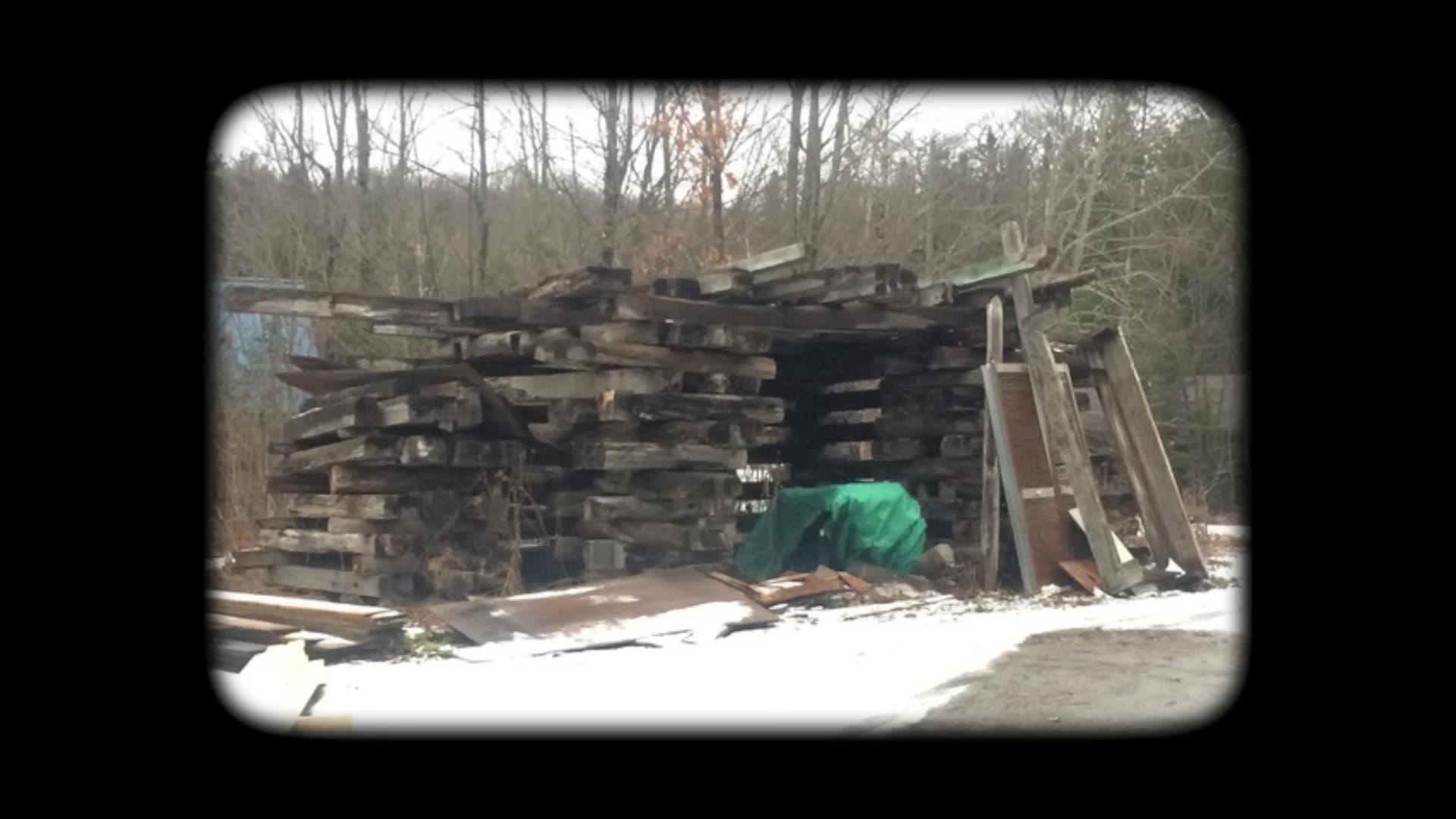
The build is essentially a collage of reclaimed materials gathered over decades — every scrap had a purpose here.
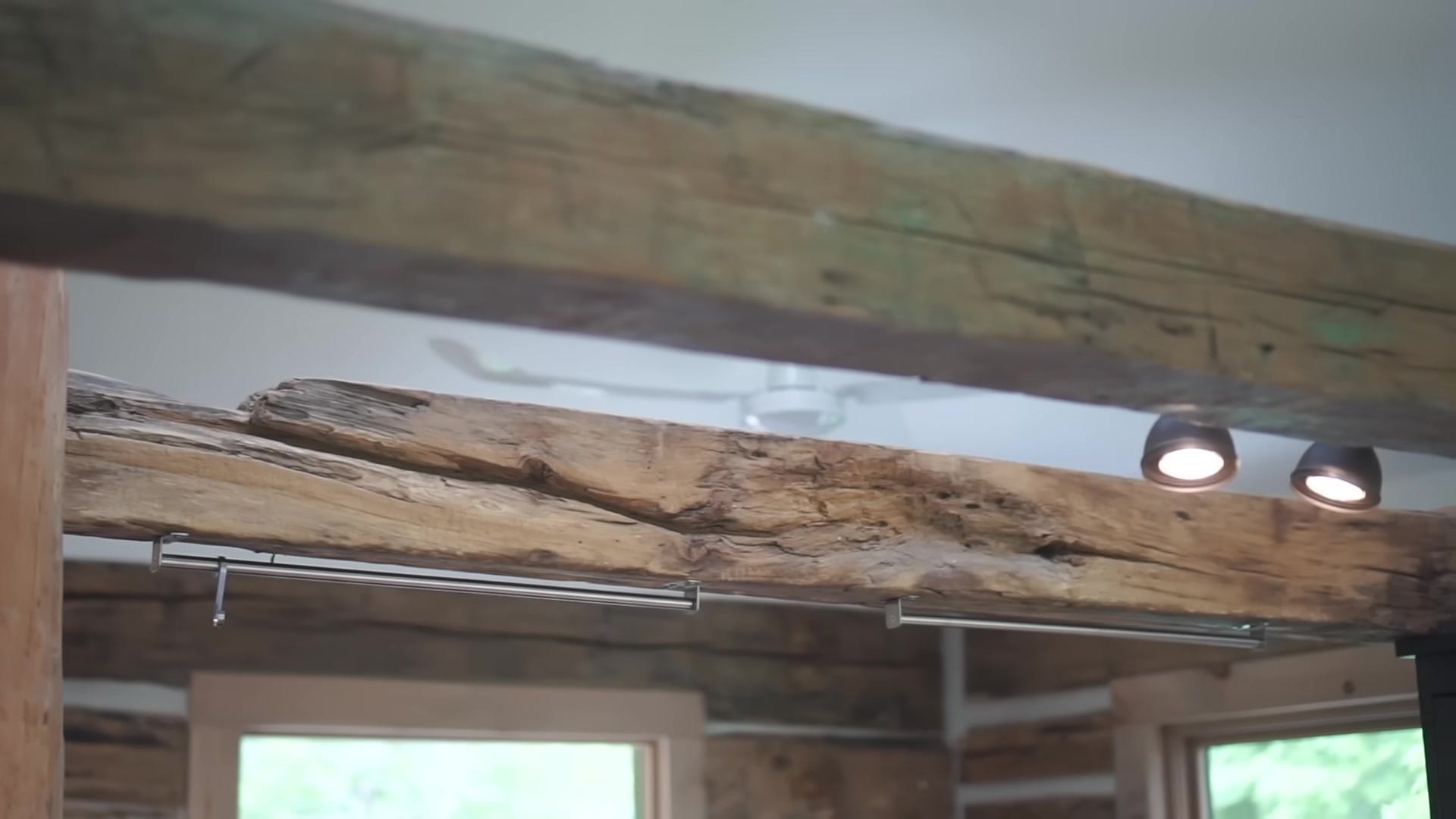
Siding from old barns, leftover roofing, and a lifetime of saved trim pieces all show up in the finish palette, with only a tiny portion of new material purchased.
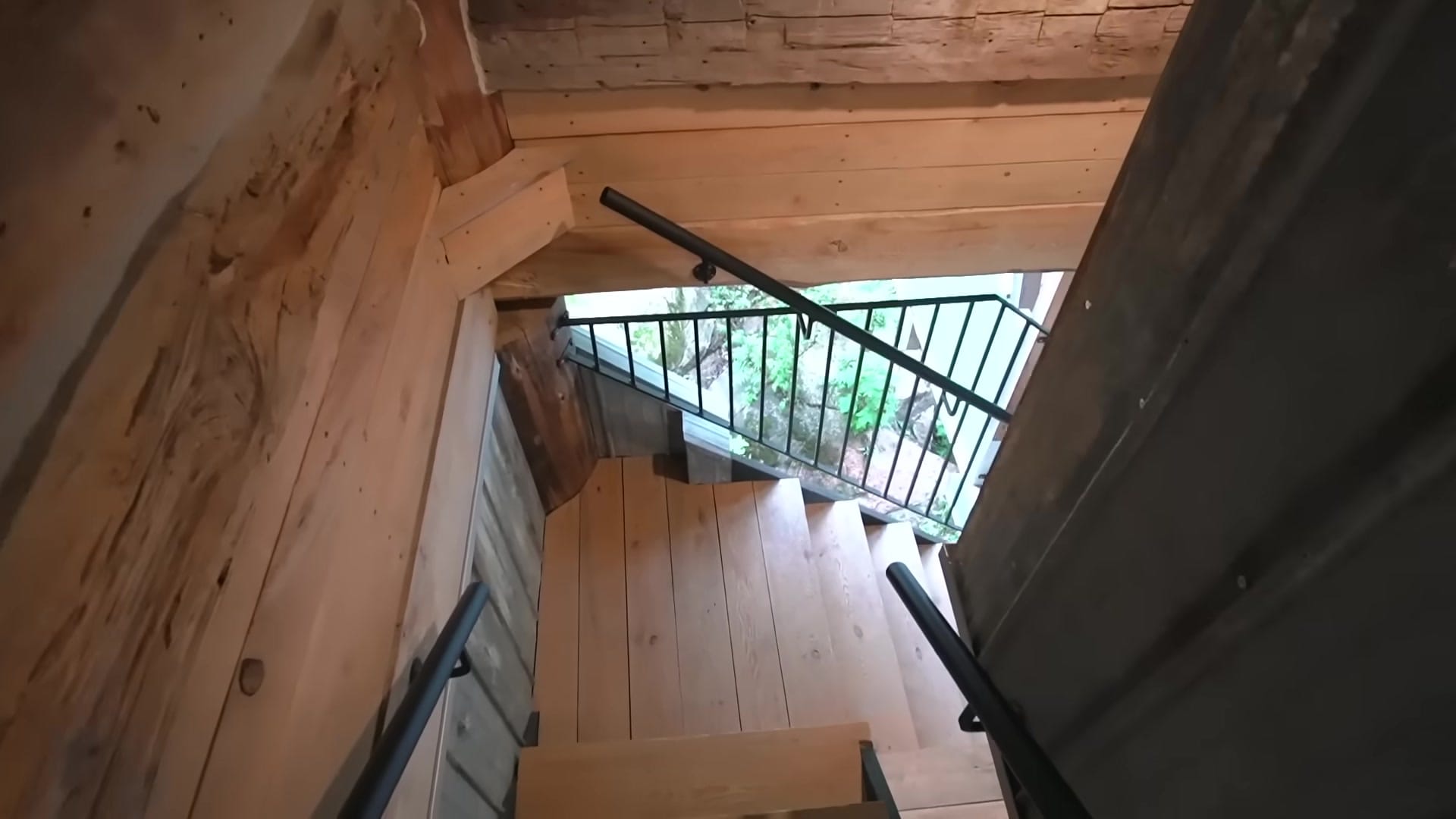
That restraint makes the house read as both sustainable and curated; the reclaimed elements feel like design choices, not compromises .
Practical systems are buried and considered: the electrical connection is underground and the well line is hidden with a heated cable to prevent freezing.
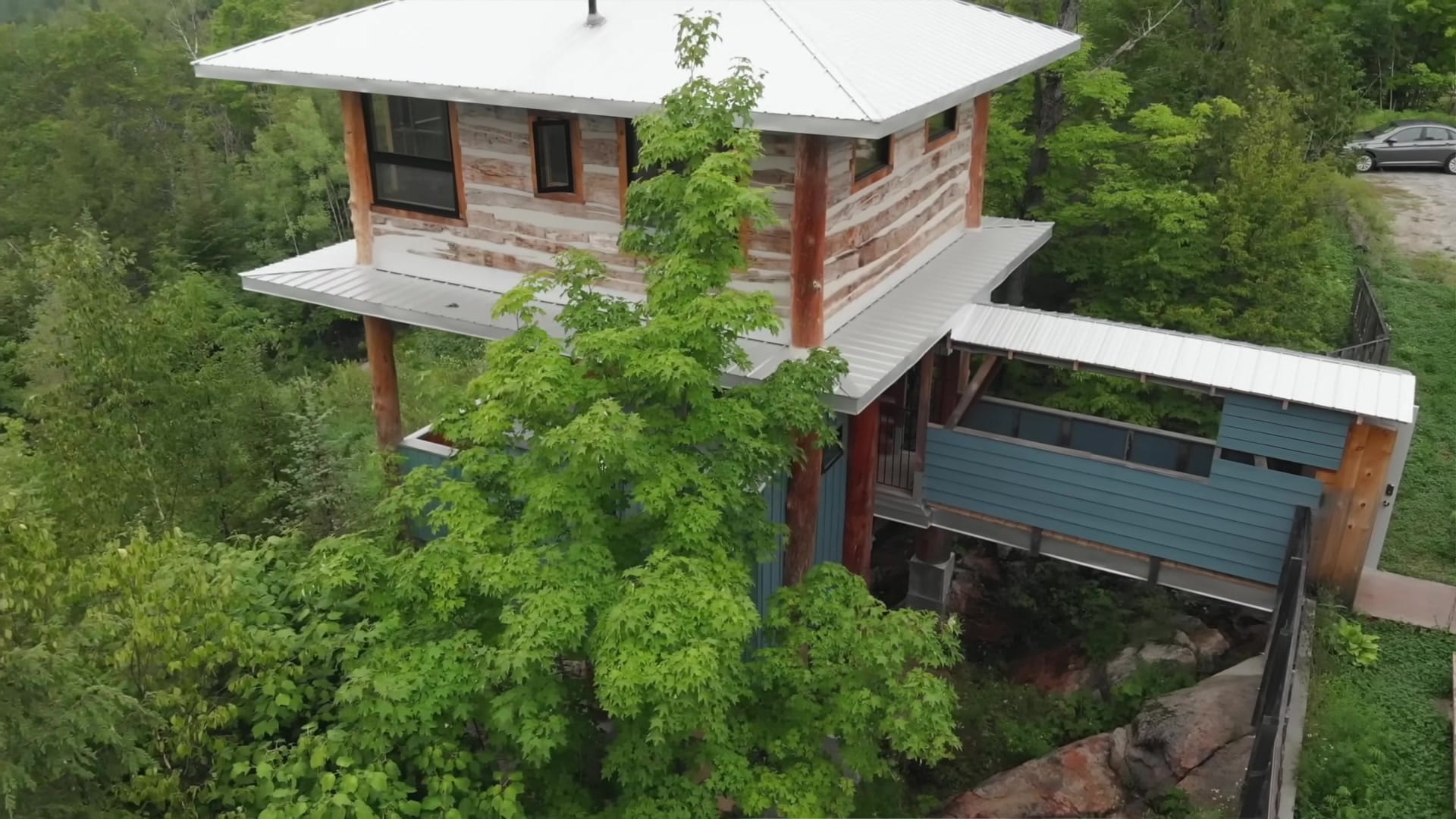
The roof design shifted mid-build to an aerodynamic profile and a cupola was added to bring in light and natural ventilation .
With big overhangs, heavy roof insulation, and a heated insulated floor, the house balances exposure with year‑round comfort — it’s a reclaimed sculpture that works as a home .