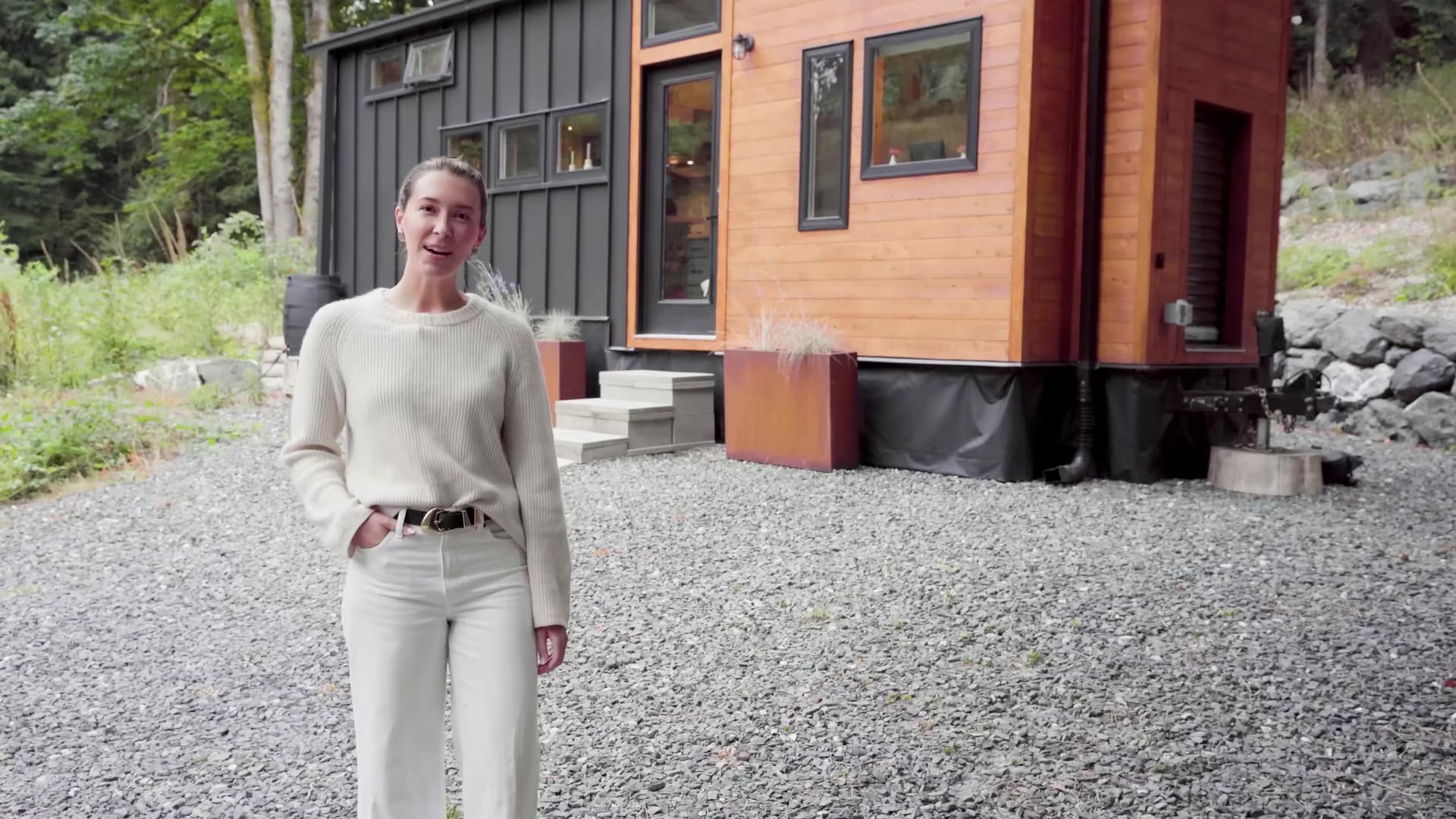
The Tiny House That Chose the Living Room — And Still Cooks Big
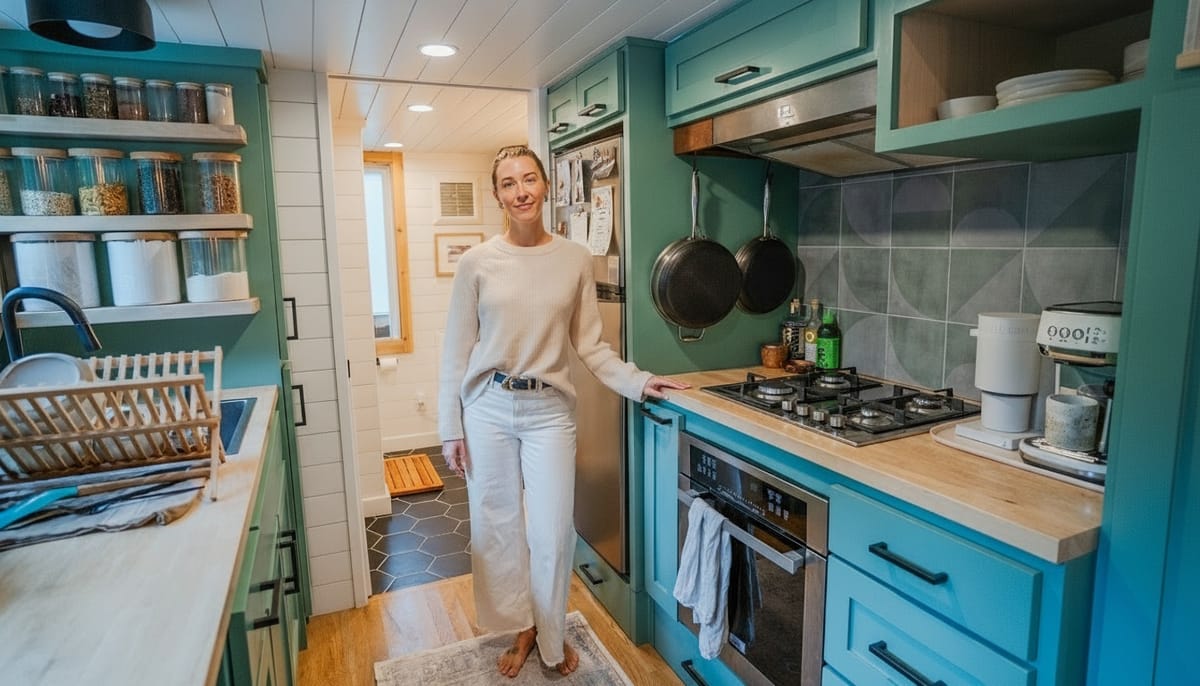
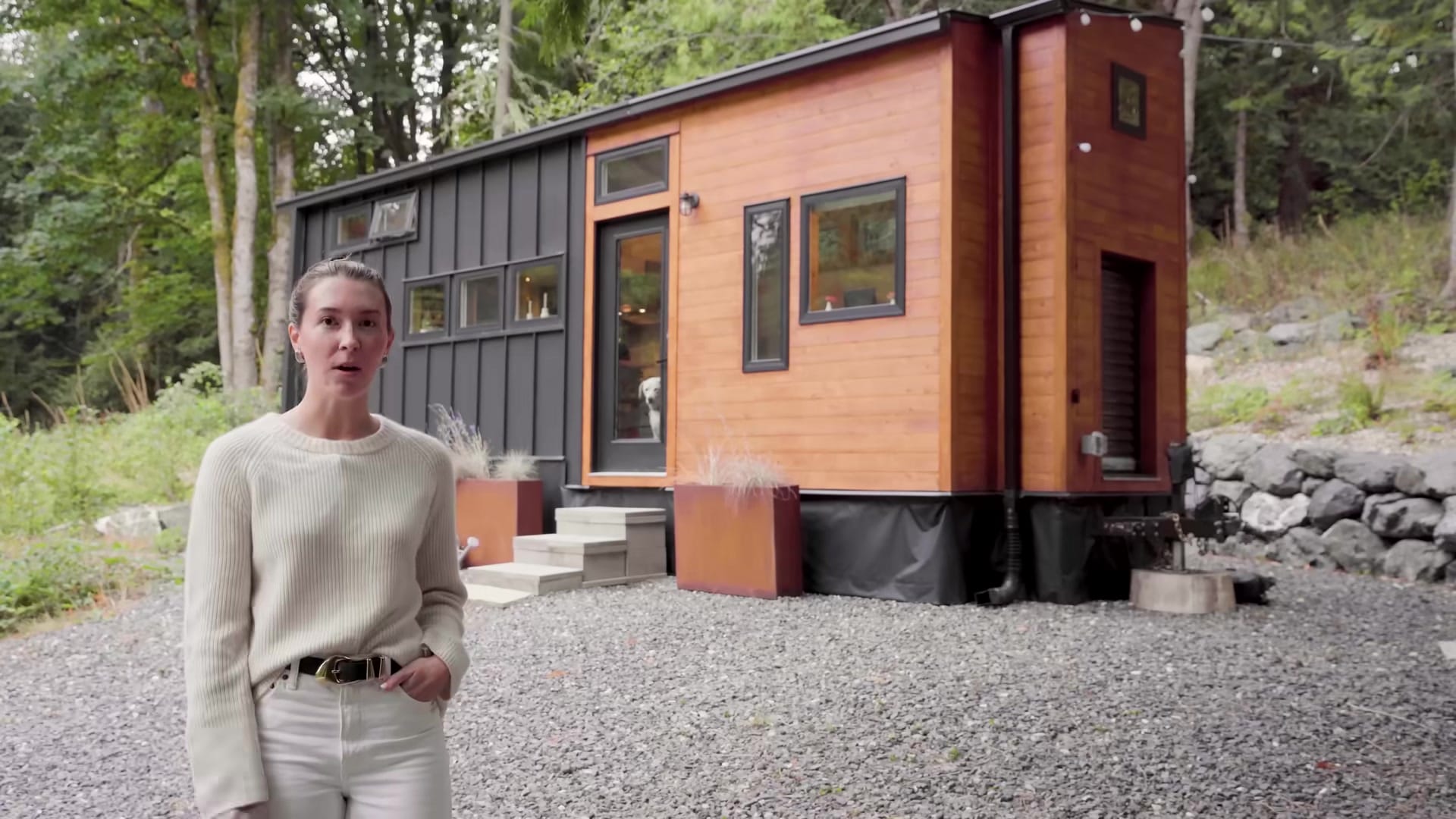
In the Pacific Northwest, this custom tiny home became a full-time haven for two humans and one very loved dog, Stow. It’s a story of smart choices: a layout that puts everyday comfort first, with the kitchen and bathroom on the main floor and a lofted bedroom tucked upstairs.
Welcome & Layout — How they designed the tiny-home flow
Built by Nate with his best friend, Luis Corilo, under Southpaw Trading Co., the home started as one person’s way to step off the renting treadmill and into something intentional.
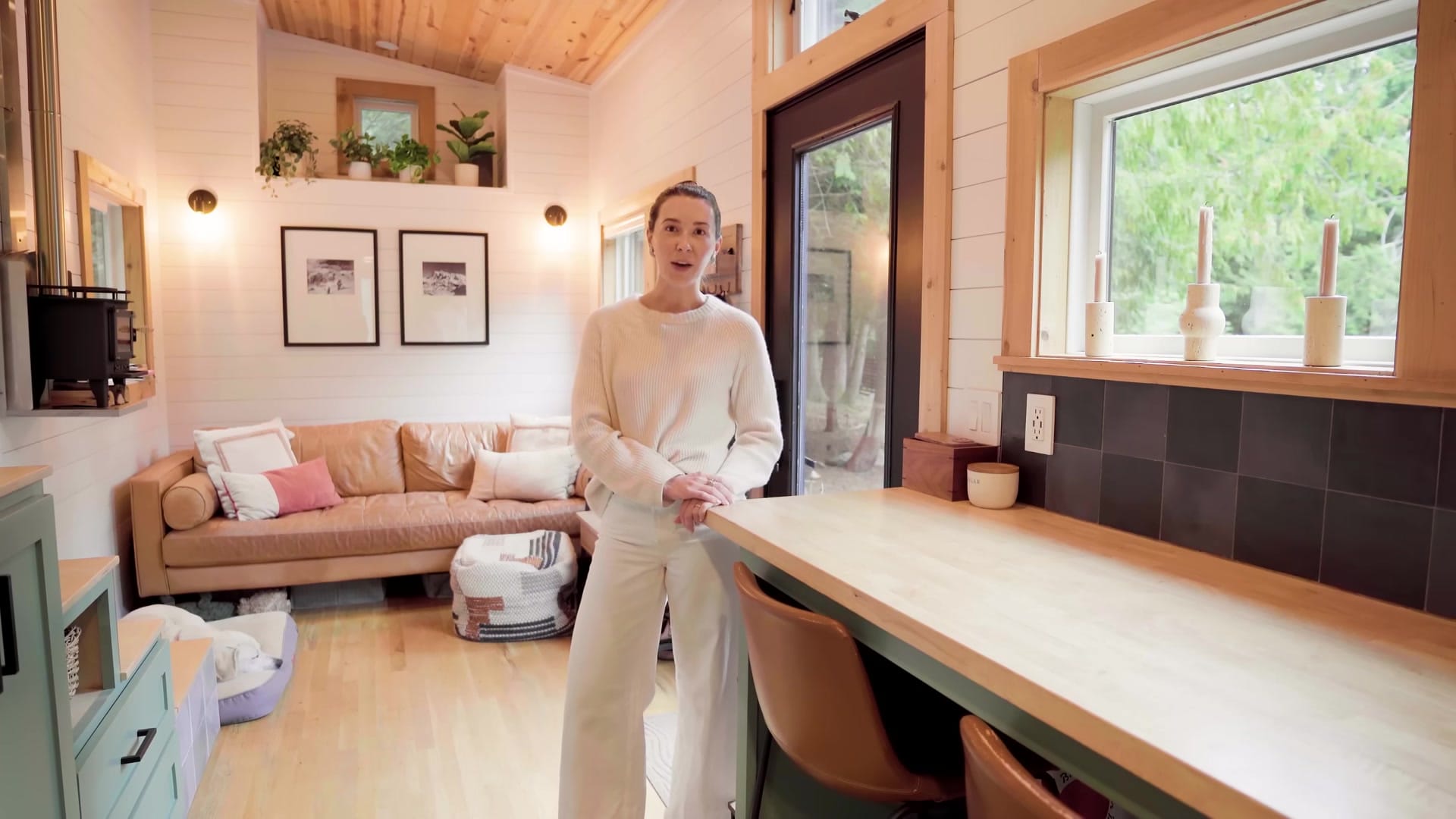
It’s tiny-house living with a clear flow: living room forward, kitchen and bath on the first floor,
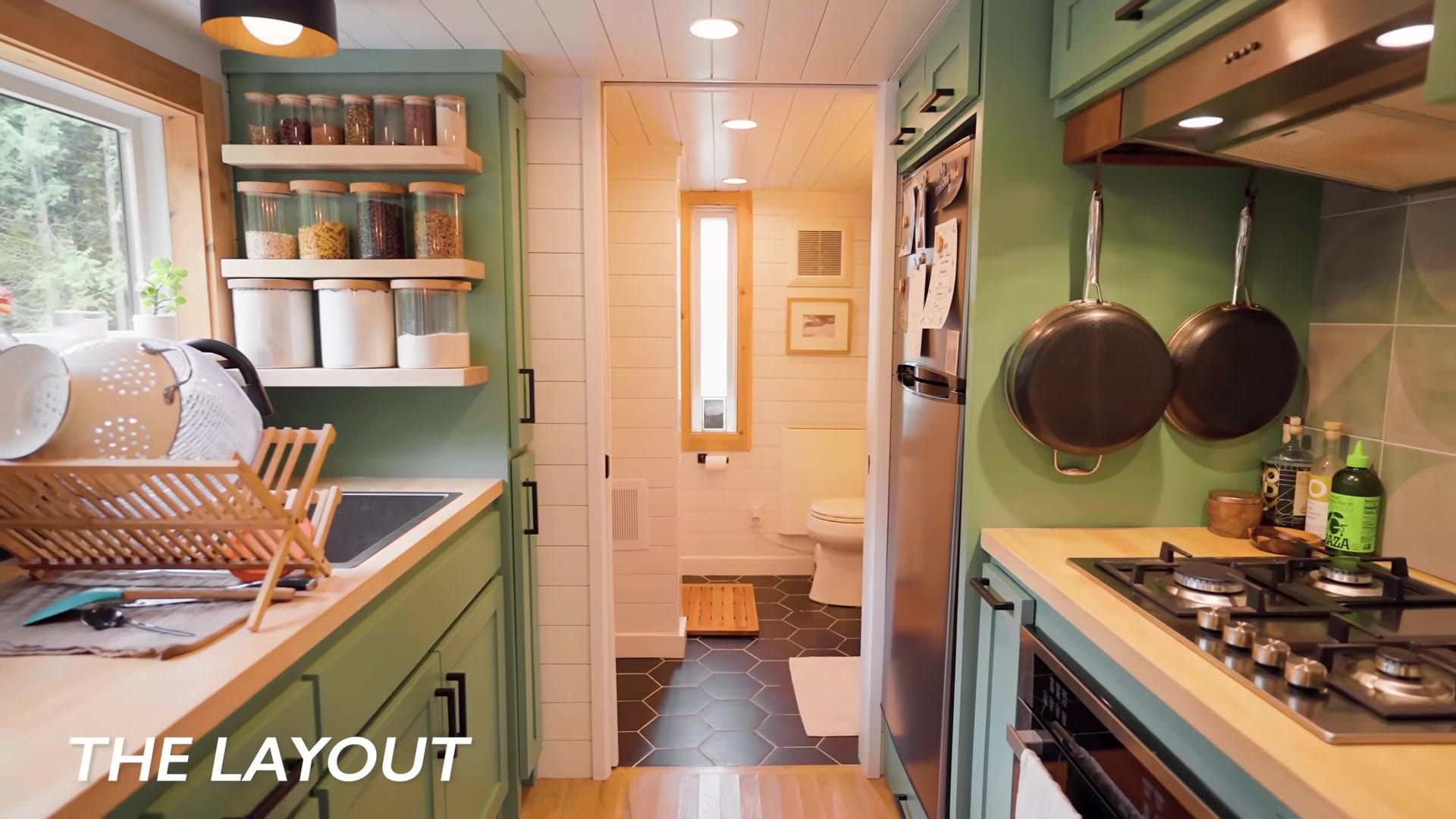
and the rest designed to make daily life actually feel good in a small footprint .
Kitchen — A full cook’s setup and intentional storage
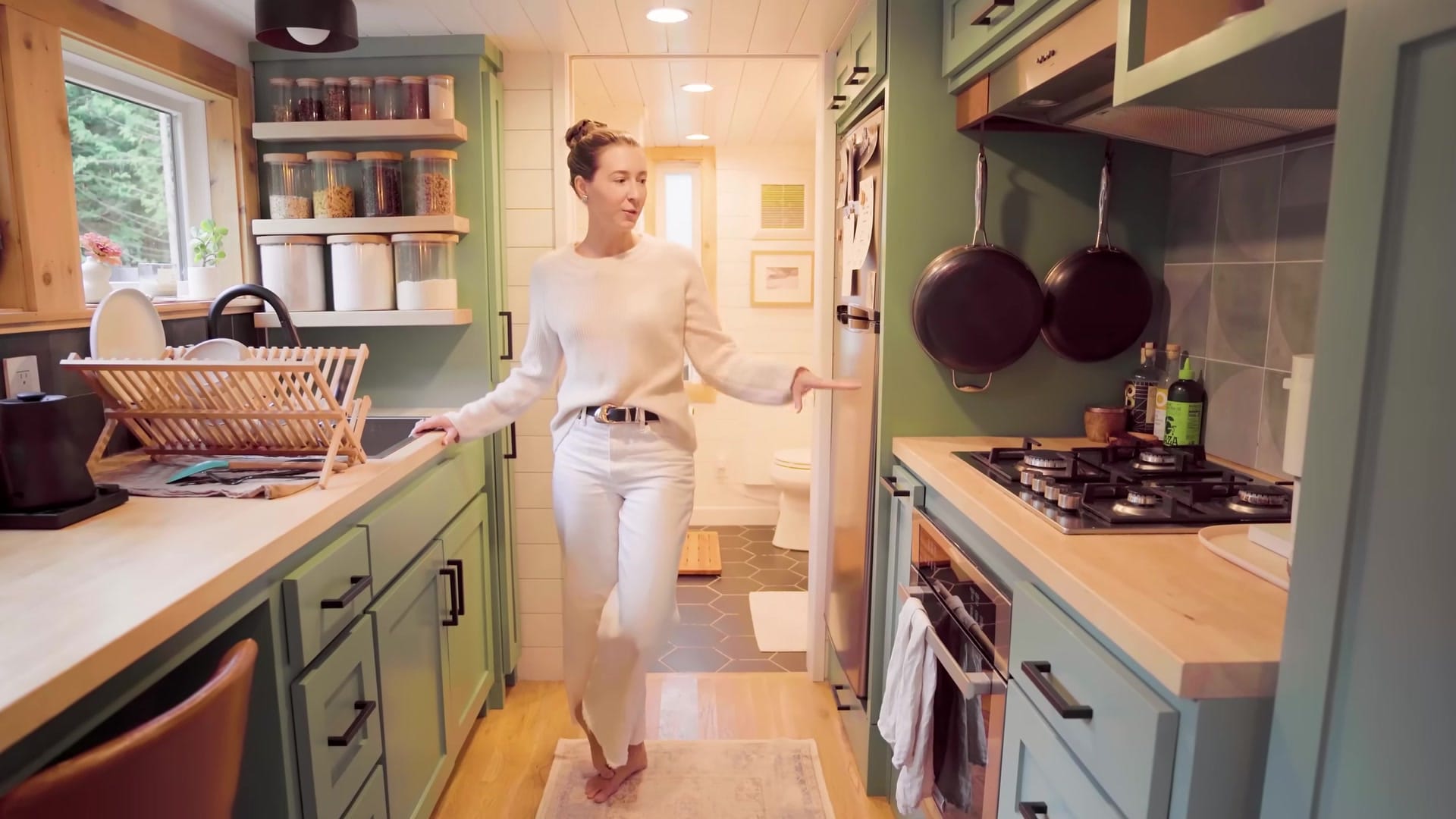
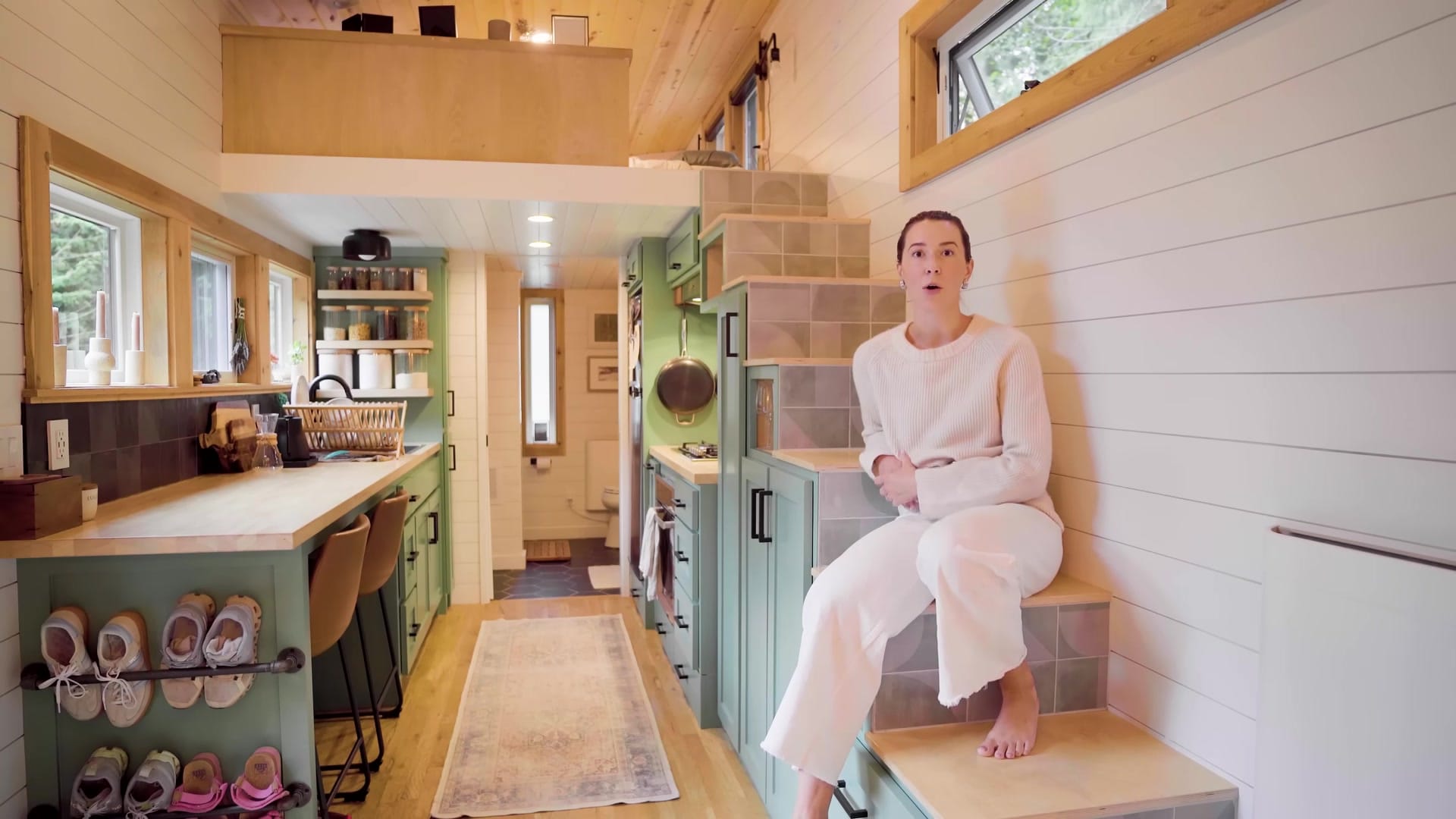
First, the cook’s dream: a full range stove, real oven, and a deep dish sink—non-negotiables for two people who love to cook and eat from their garden.
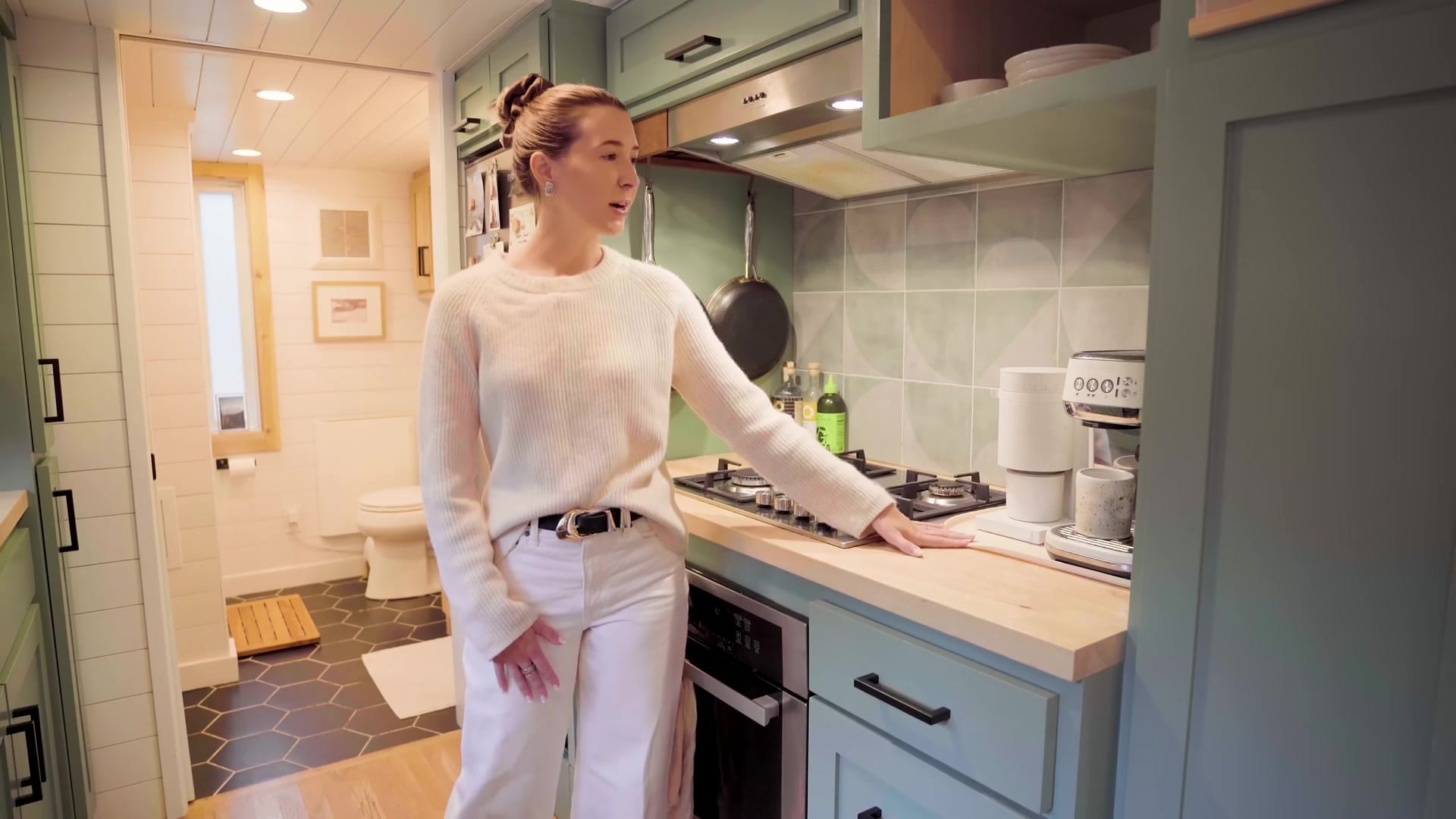
The coffee corner pulls serious weight, thanks to a Breville Bambino and grinder that keep the household fueled multiple times a day.
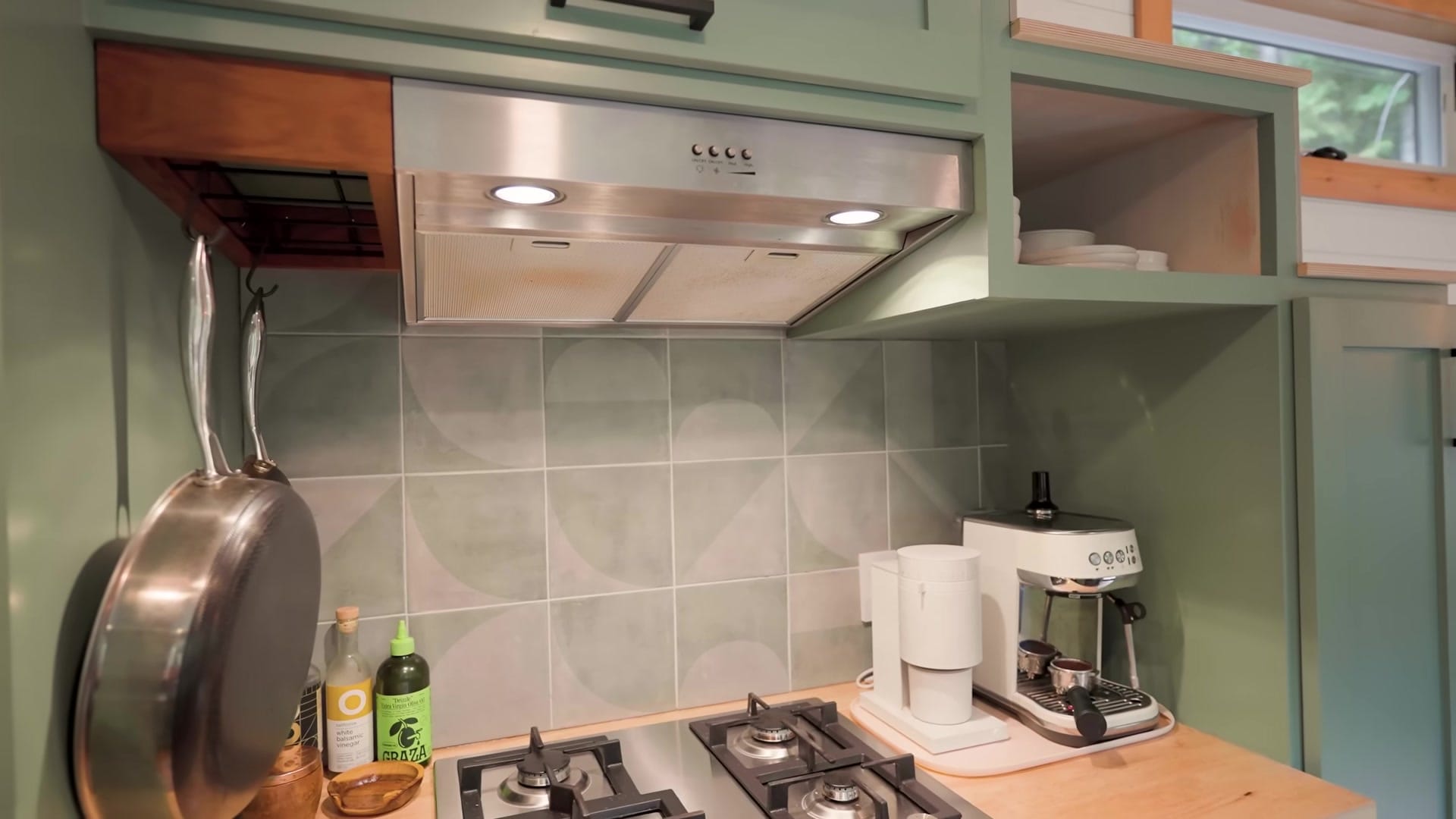
The backsplash leans into earthy greens with playful tile—small choices that make the space feel alive and pulled together.
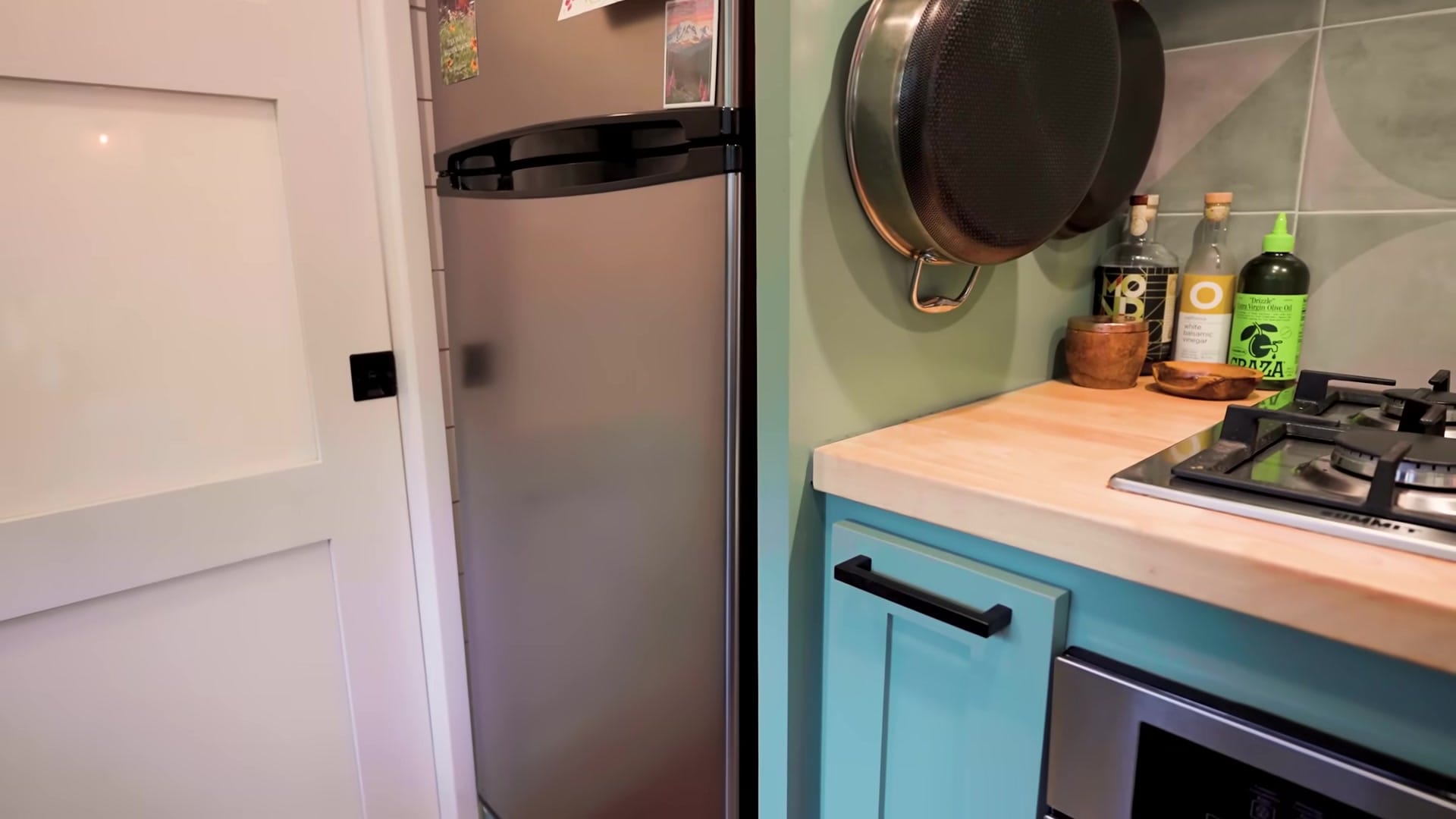
A compact fridge means more frequent harvesting and fresher meals, even if it pushes them to be strategic about storage.
Morning light makes the east-facing sink glow, and that big basin plus a drying rack makes hand-washing a quick turnover routine.
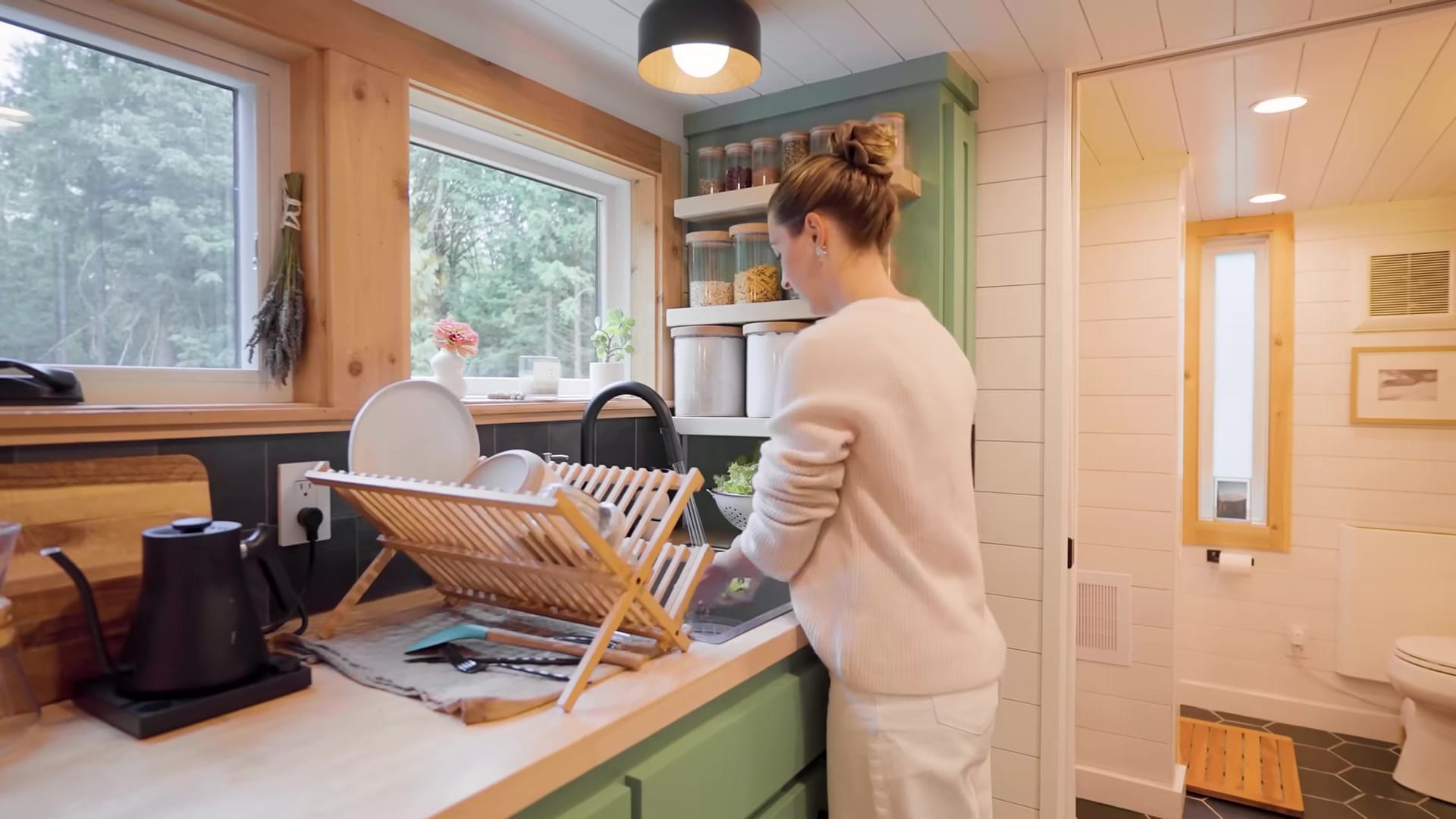
Dish duty happens by hand now—worth it for a full-size oven and cooktop—so the trade-off lands where it matters most .
Storage is everywhere. A custom pantry of live wood slabs—sanded from a friend’s felled boards—turned a blank spot into wall-worthy shelving for dry goods.
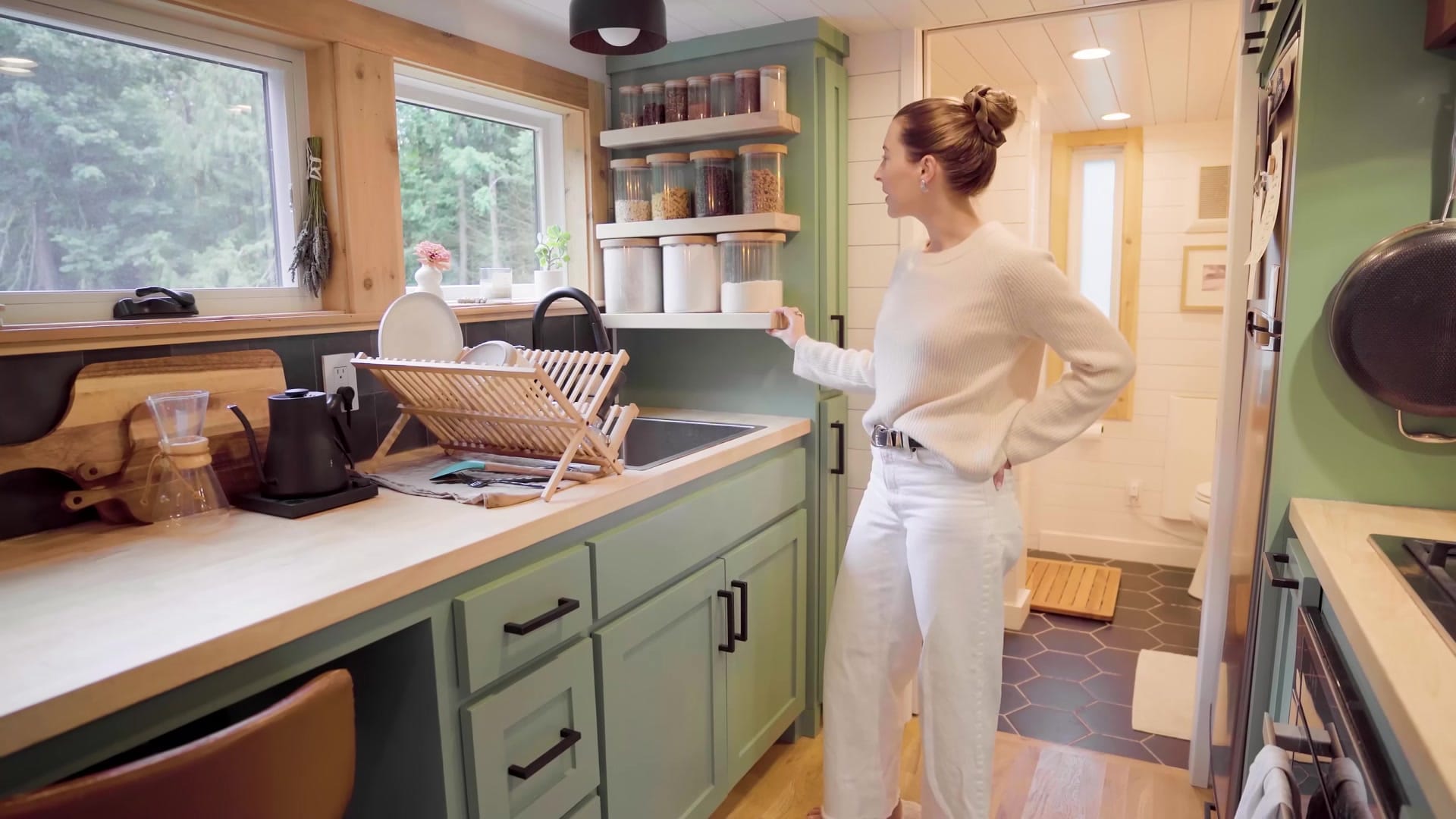
Below, trash and recycling are contained, while a three-tier compost bin Nate built keeps nutrients cycling right back into their garden beds.
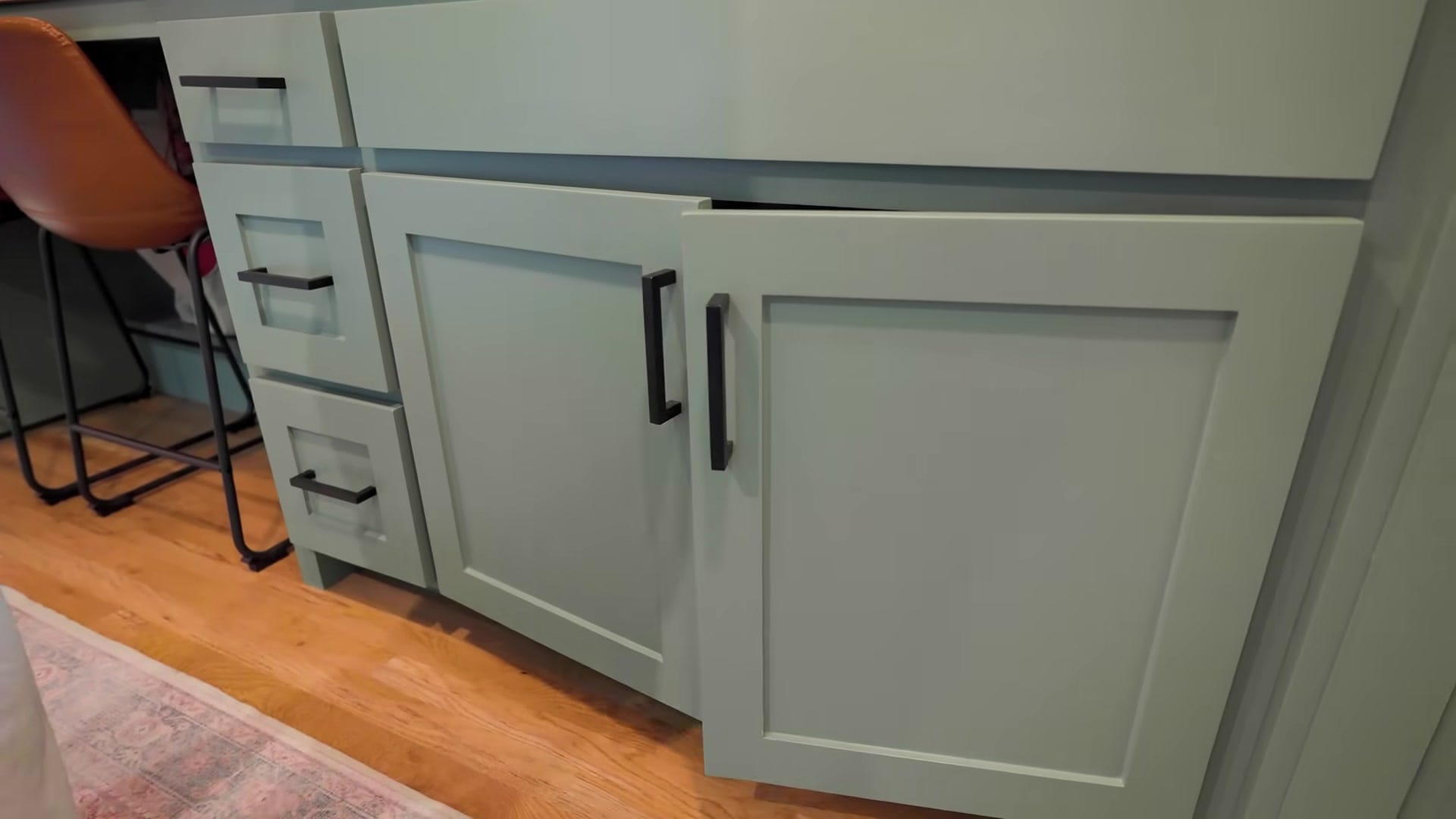
The long countertop doubles as a workspace and dinner spot, easily becoming a second-most-used zone after the stove itself . It’s where laptops land, friends gather, and chopping boards slide into place when the produce haul rolls in .
They squeezed utility from every drawer—right down to the pull-out, three-tiered pantry a retired carpenter (her best friend’s dad) helped them optimize.
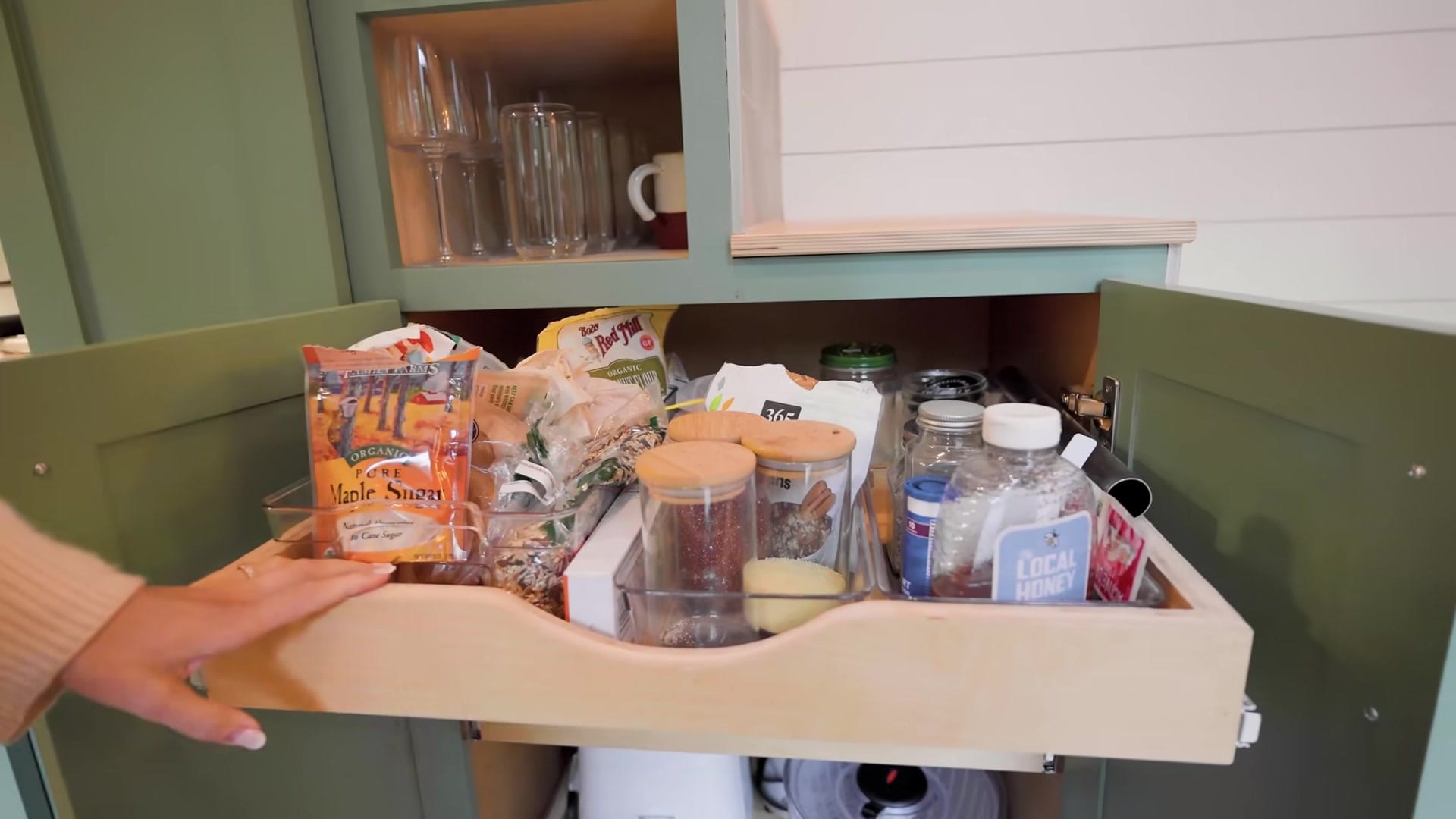
Coats, work supplies, and even Stow’s food have their own dedicated drawers, proof that no inch was wasted .
Living Room & Heat — The living-room–focused layout
The home revolves around this room by design, a choice that makes morning coffee and movie nights feel like rituals instead of compromises.
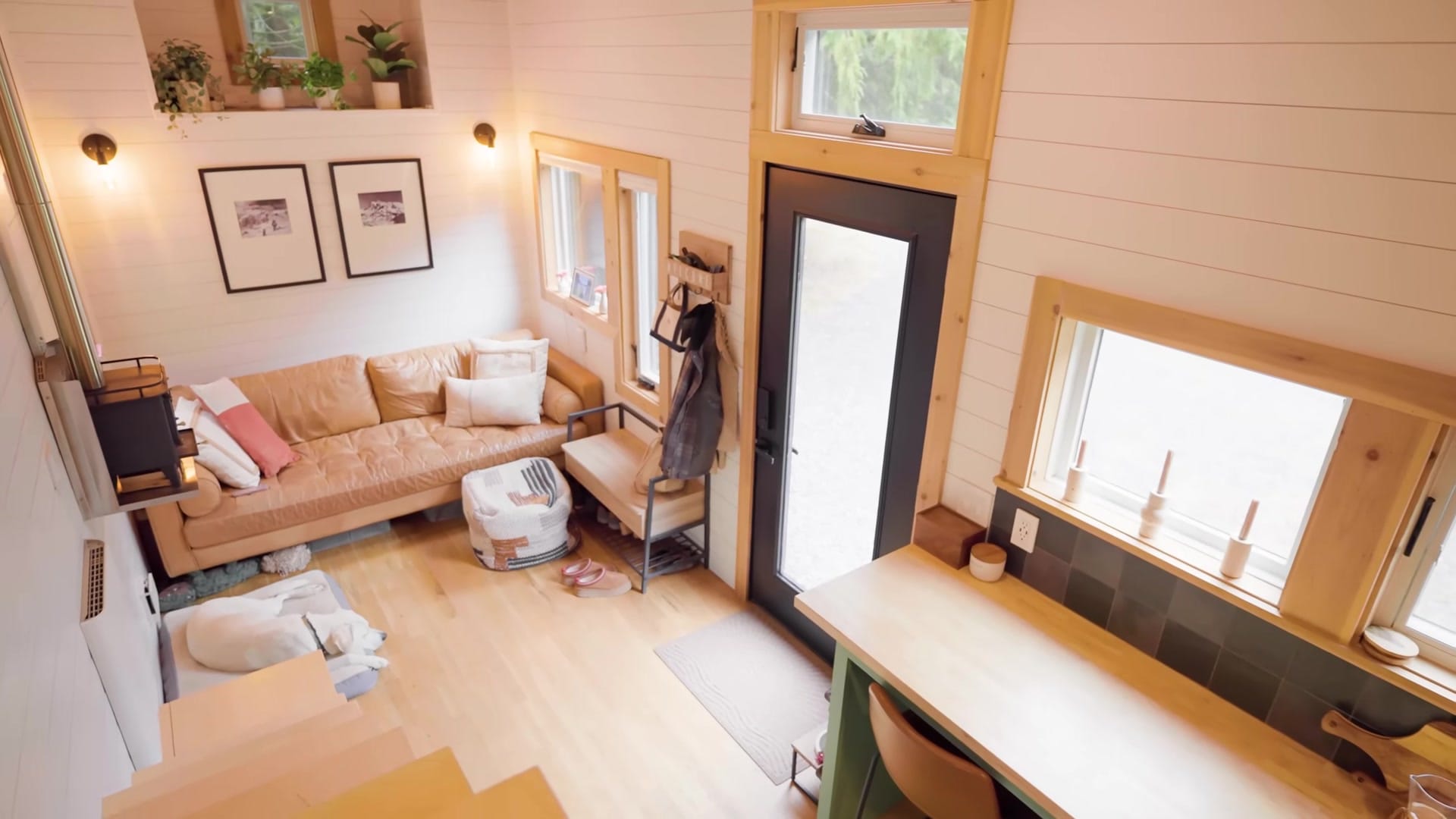
The couch is substantial—over eight feet long—stretching from wall to wall and making the trailer’s 8.5-foot width feel like an asset.
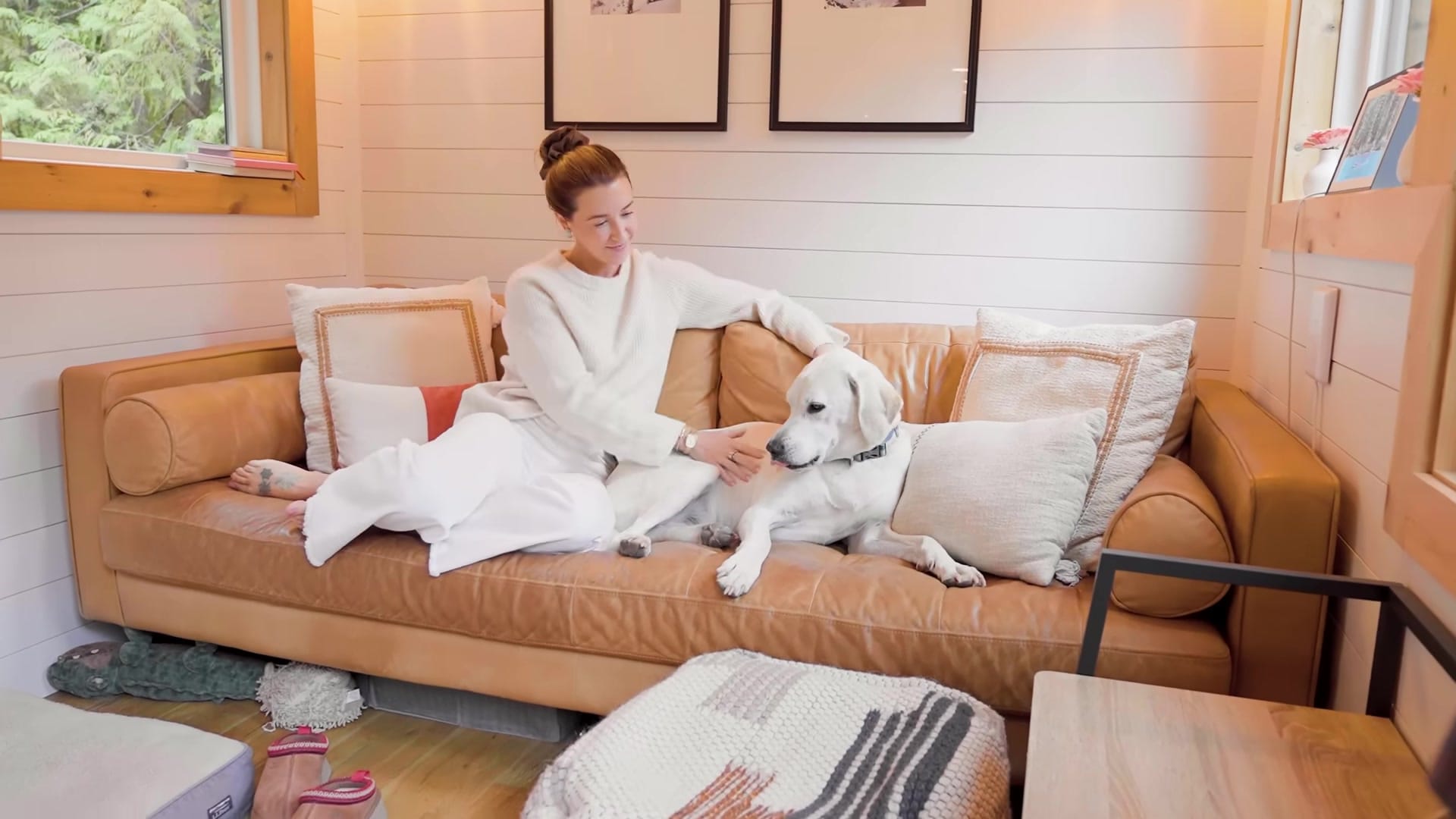
Guests? Pop the cushions off and it becomes a twin-ish bed when friends stay over . The dog’s bed fits neatly under the heater stove, staking out his spot in the heart of the action .
That tiny wood stove is the unsung hero—yes, it works—and it burns 6–8 inch wood pieces cut to fit.
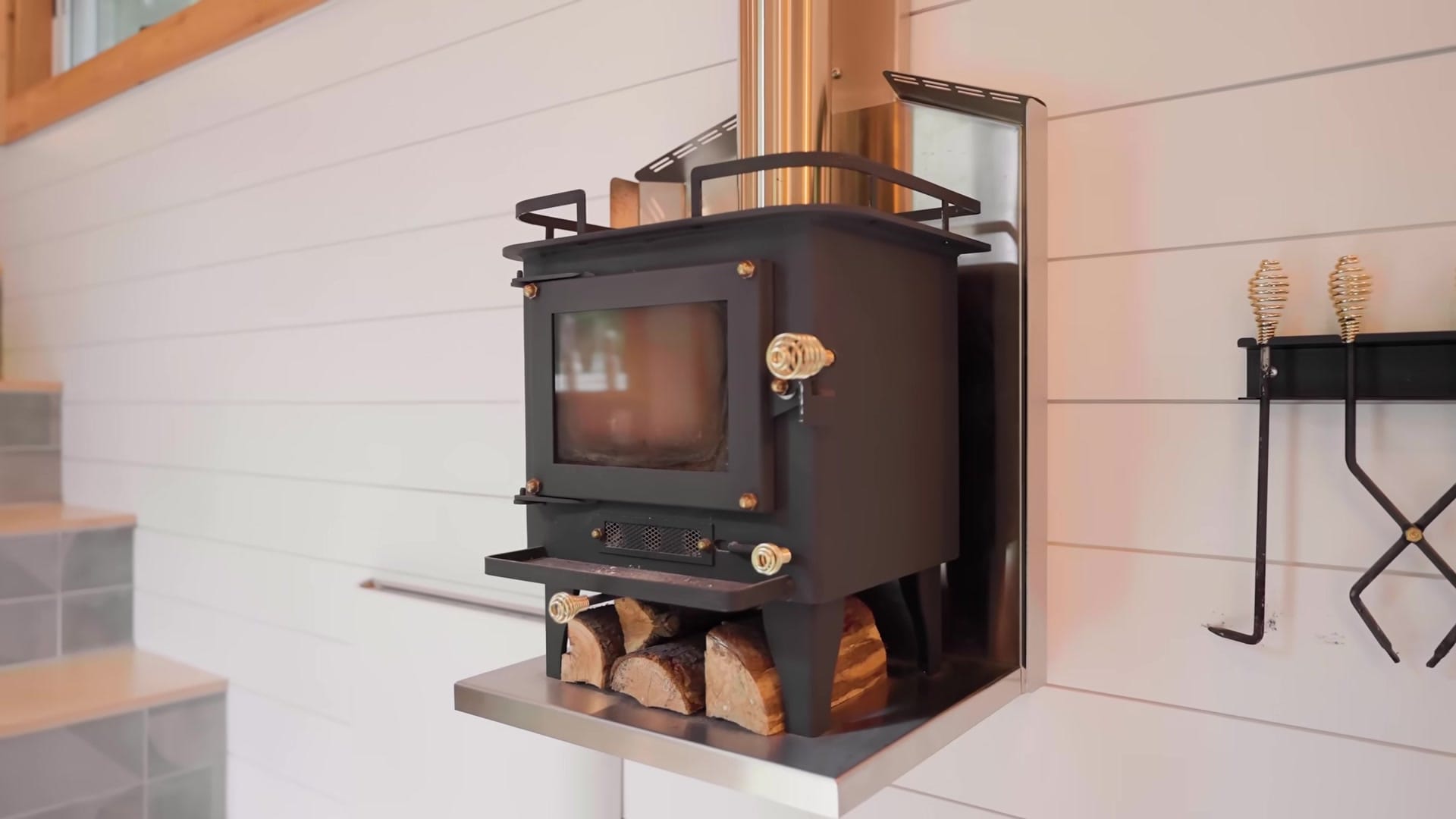
In a place where storms can knock out power, it pumps out enough heat that the electric side heaters barely get used when it’s running .
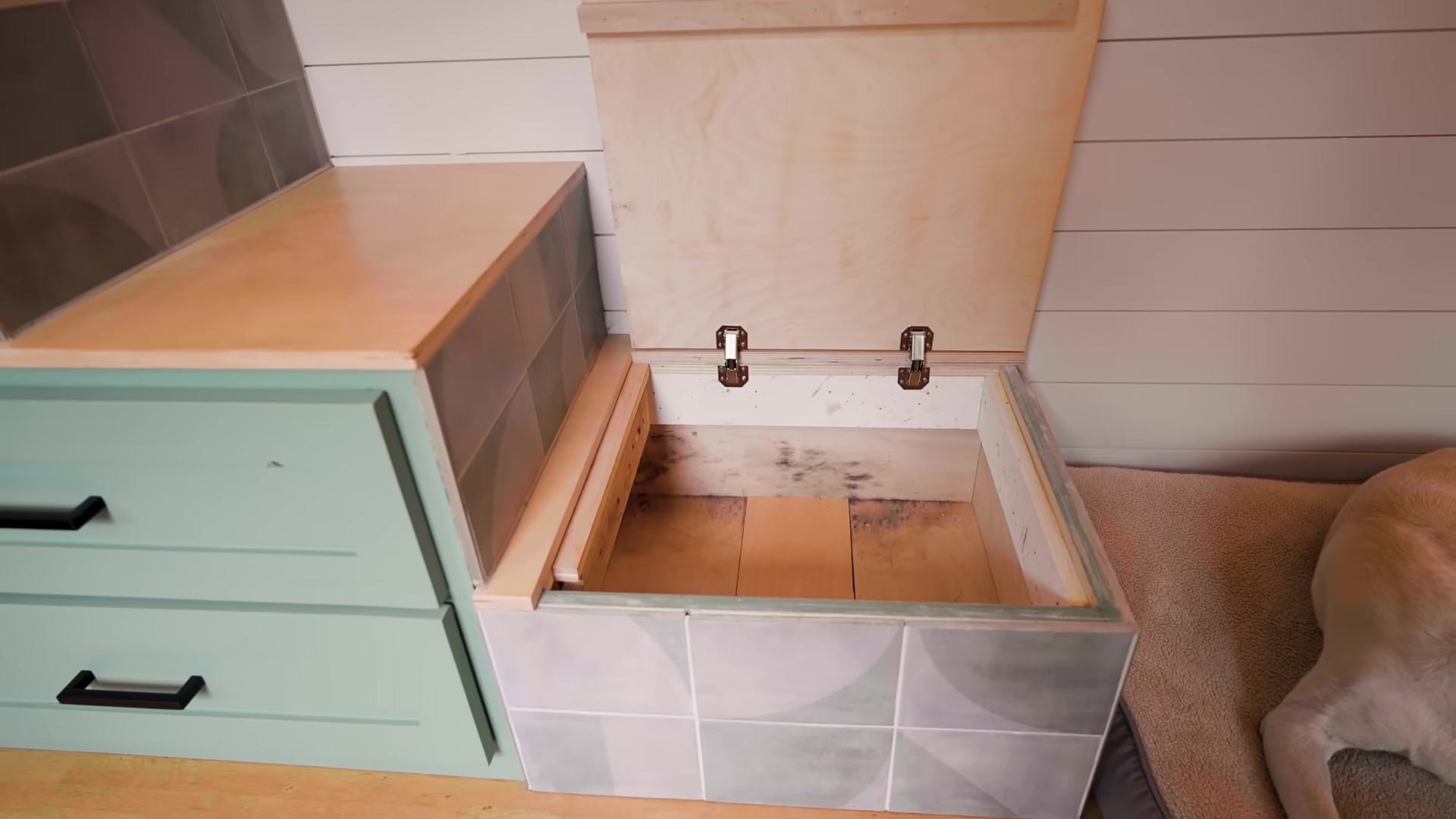
Wood storage hides in the last stair step: a clever winter move that keeps logs close without cluttering the room.
Bathroom & Laundry — Practical fixtures for daily life
Just past the kitchen sits the laundry and bath, and the two-in-one combo washer/dryer is the space-making MVP—no loading and switching needed.
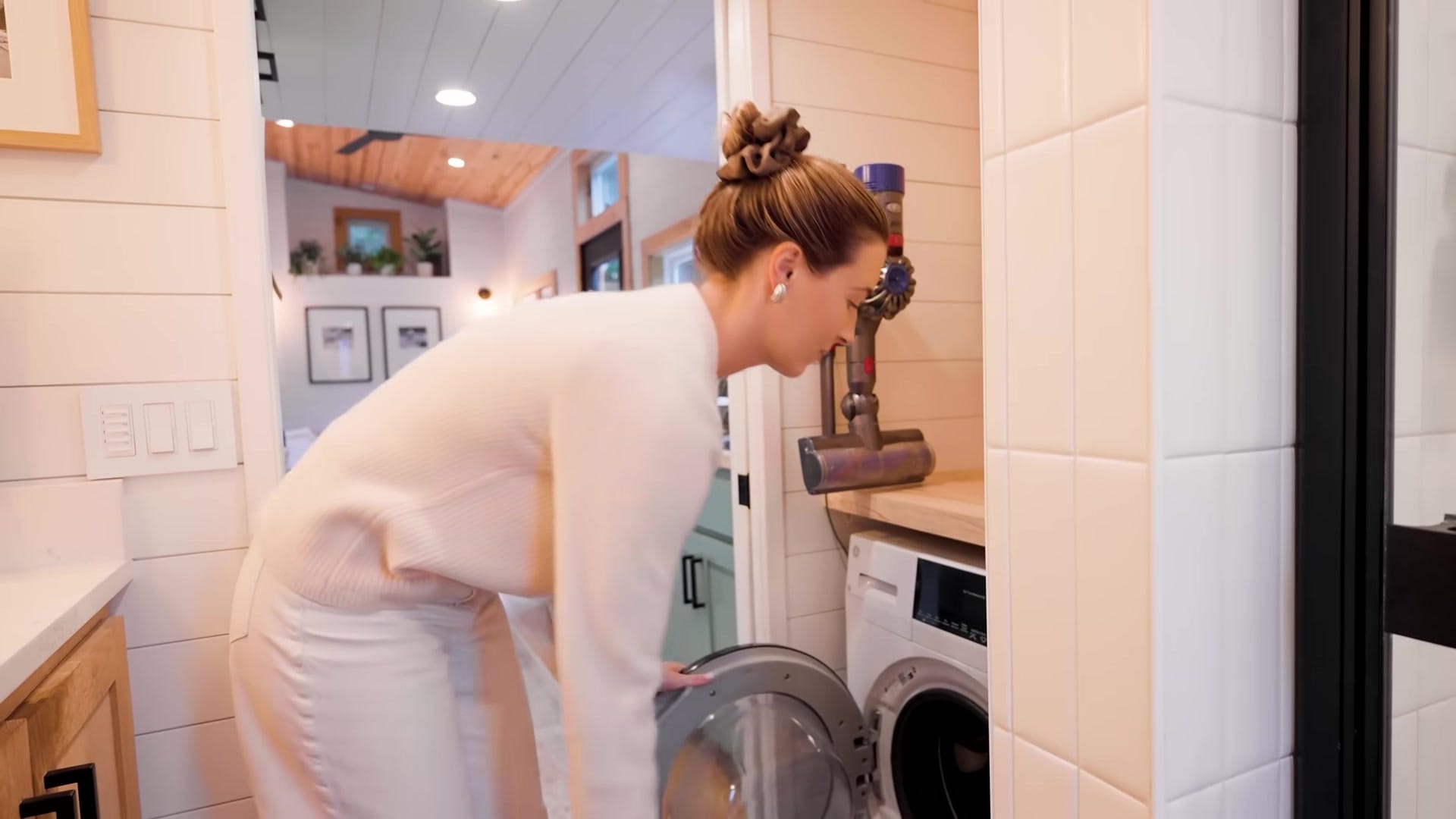
Active days, muddy dog gear—this thing hums almost every other day without dominating the room .
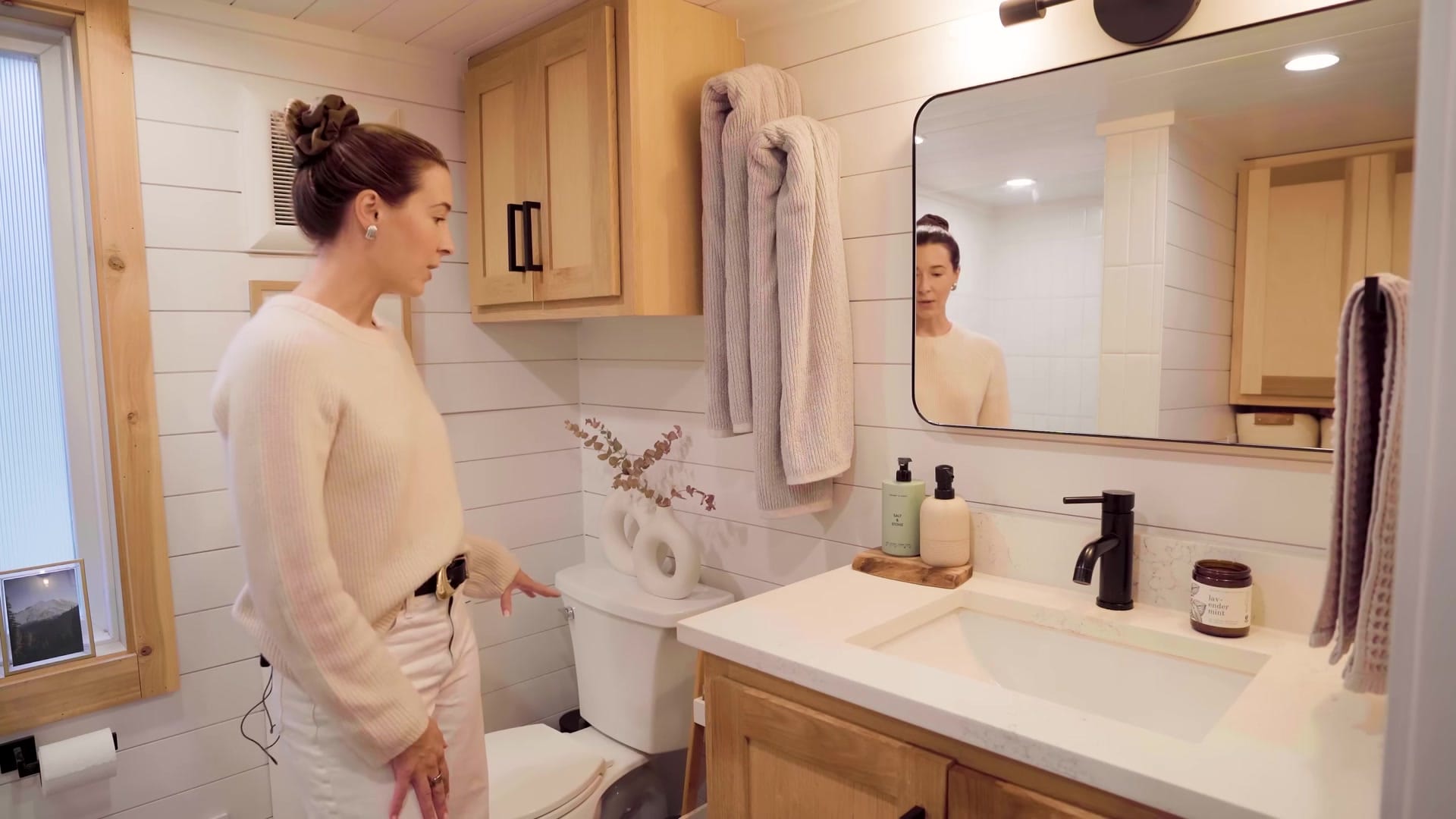
There’s storage under the sink, and a flushable toilet was always the plan—Nate knew his setups would have septic, and that choice has worked out at every stop.
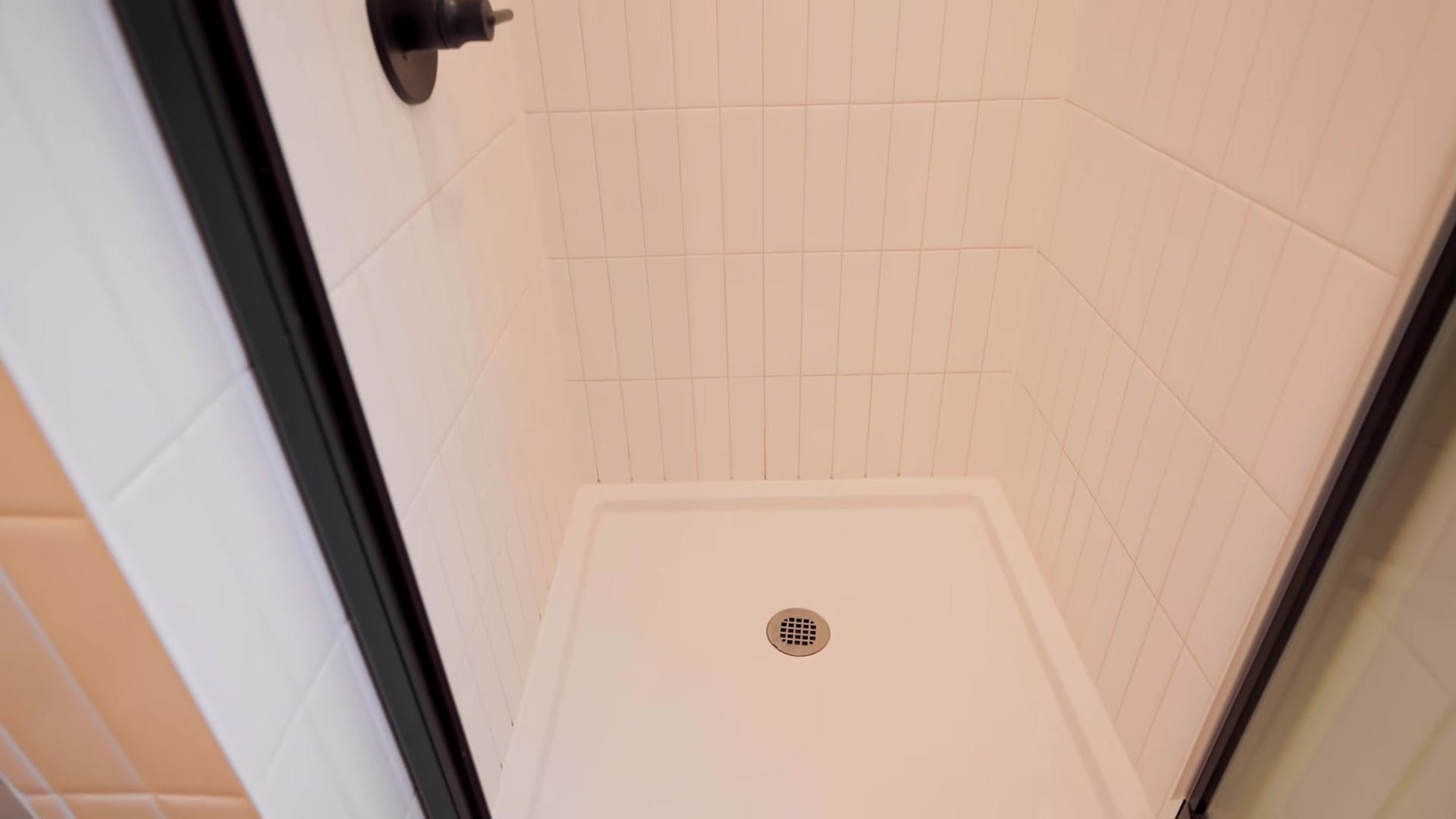
A glass-door walk-in shower finishes the space: not a tub in sight, and perfectly sized for their daily routines.
Loft Bedroom & Built-in Storage — Sleep, drawers, and lighting
Upstairs, the loft keeps it simple: a queen-size mattress and a place to recharge.
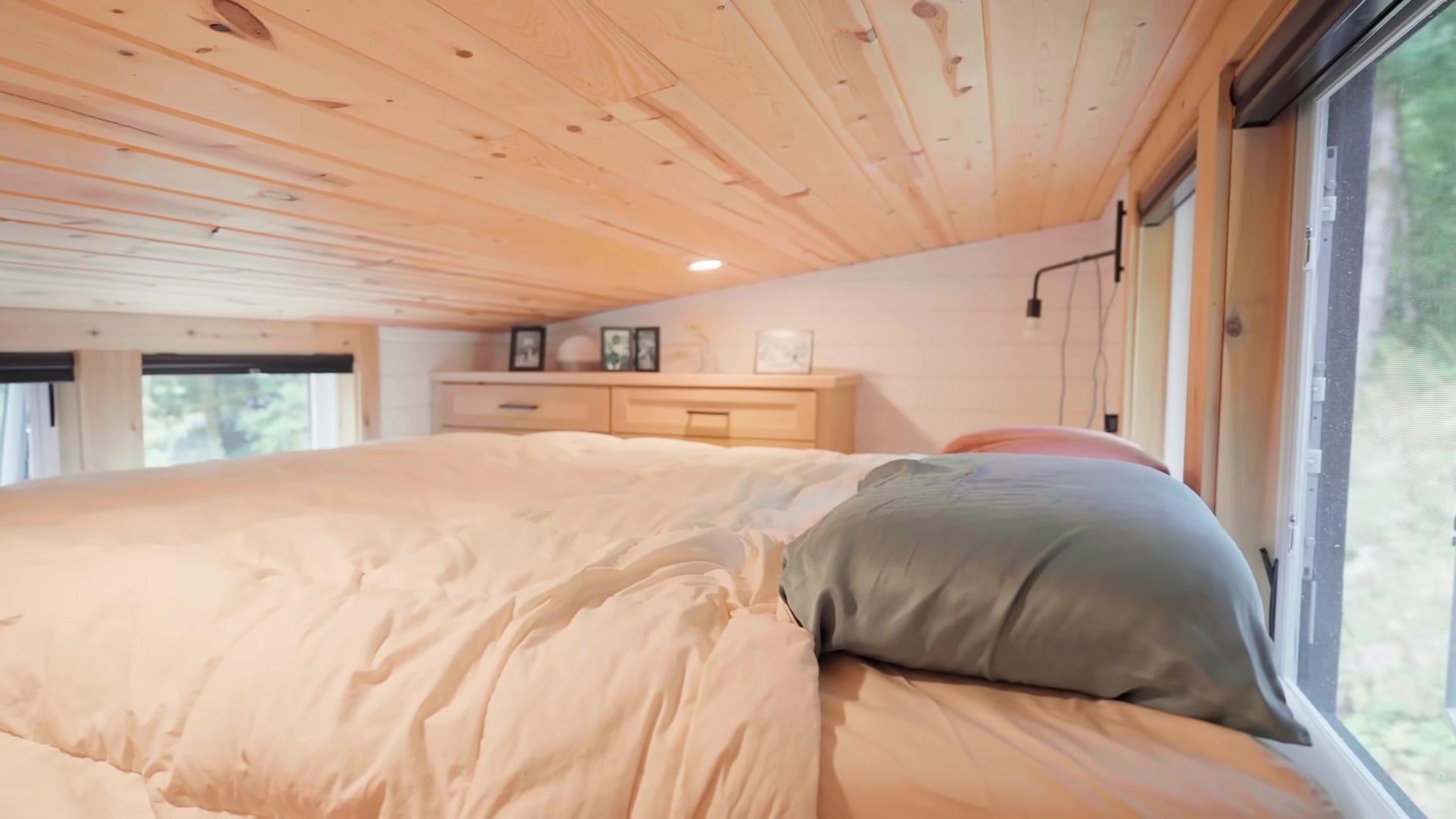
Custom drawers line both sides—four per person, eight total—so clothing doesn’t spill into the main floor life.
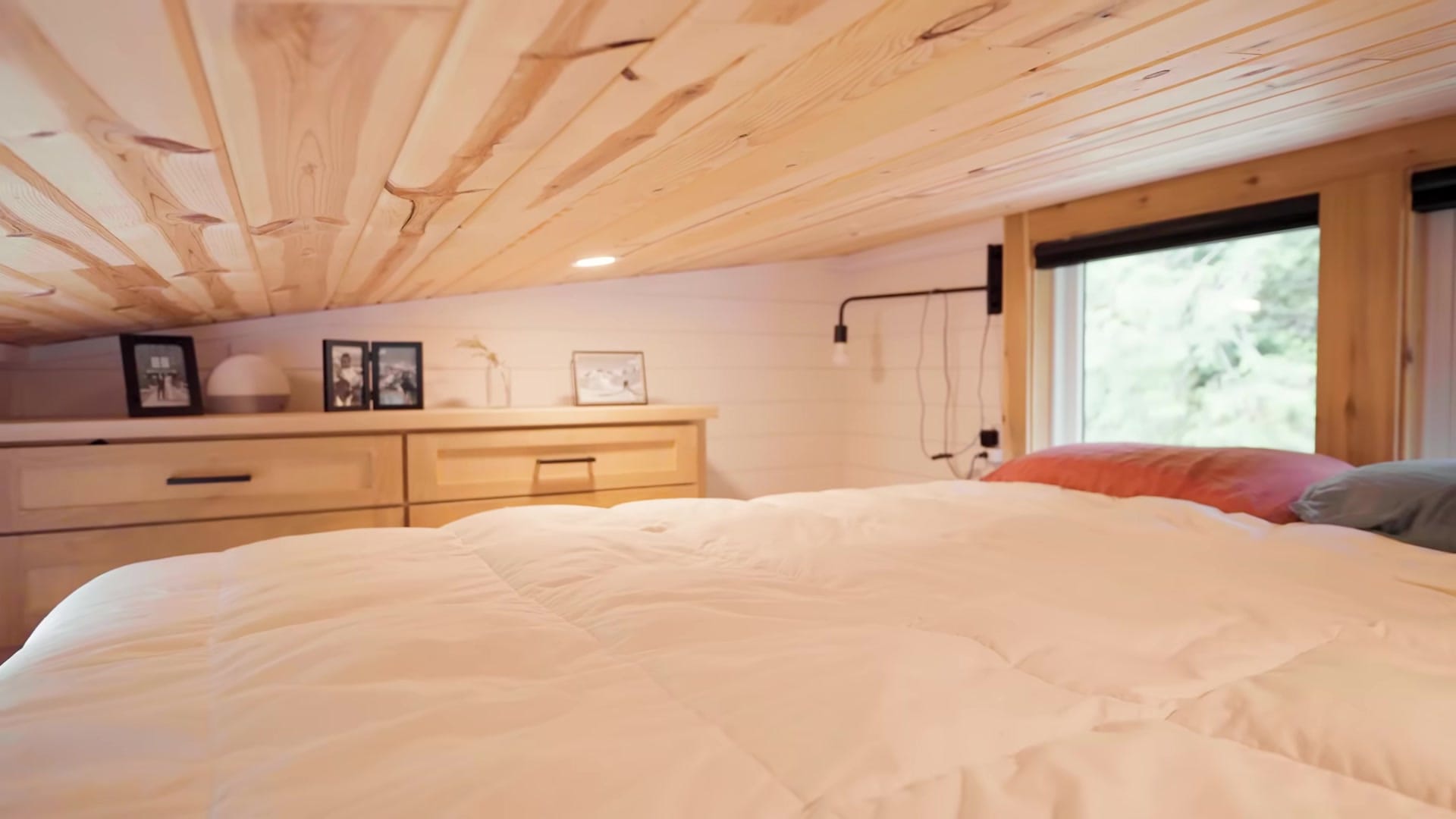
Reading lights flip on with Google Home Nest voice commands, bringing a tiny bit of tech to a compact, low-clearance space.
Headroom is the compromise; the cozy living room below is the reward.
Exterior, Mechanical & Water — Propane, catchment, and sheds
Around back sits a compact mechanical room with two propane gas tanks that handle hot water and stretch about a month per refill.
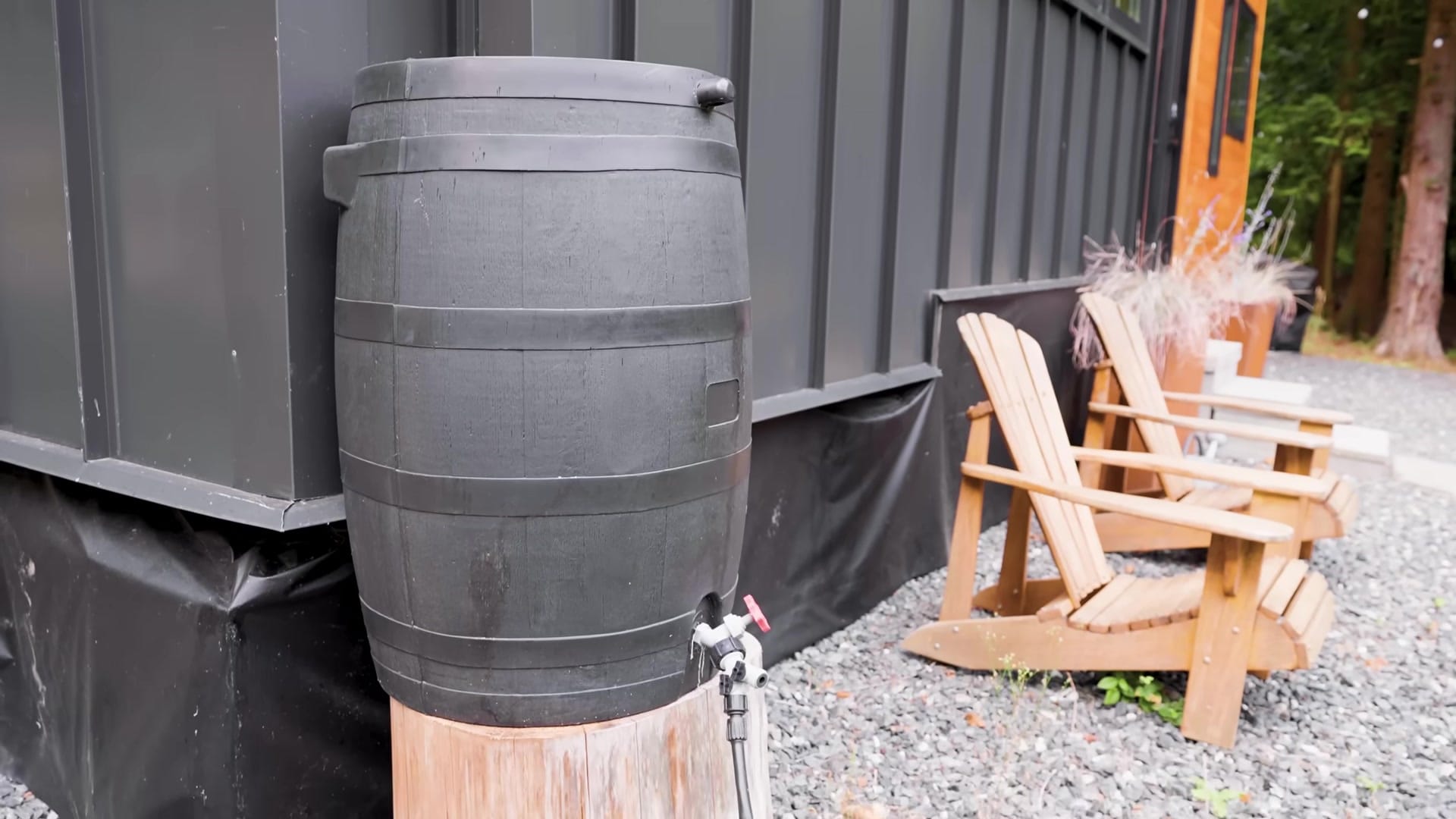
On the far end, a black-on-black rainwater catchment system routes roof runoff into a barrel, then out through a hose to wildflower beds.
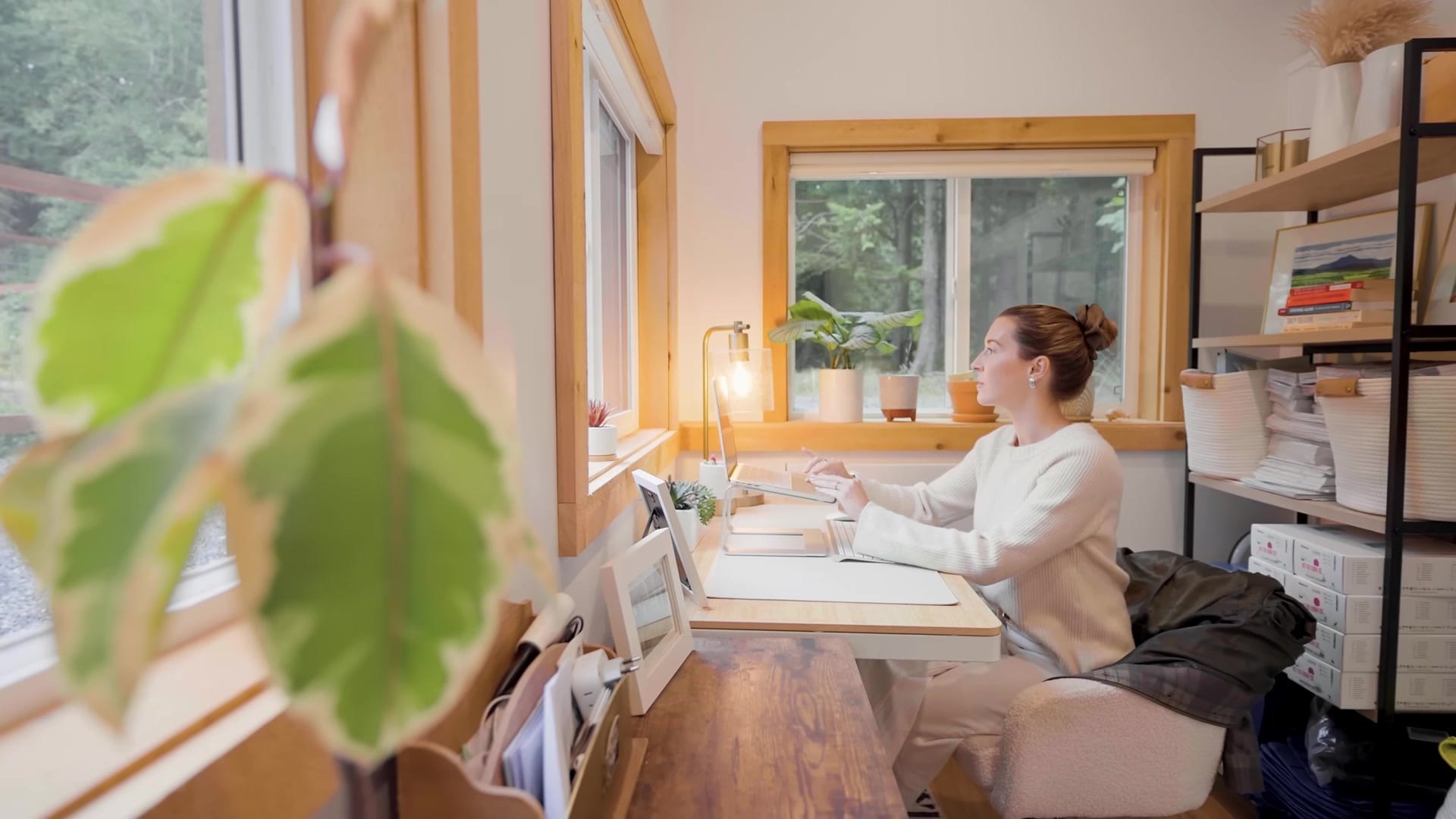
A multi-purpose shed across the way is the necessary “second room”: home office, bikes, skis, camping gear, and even the hot water heater live there so the tiny house stays clutter-free.
Garden, Chickens & Homestead Plans — Food, fences, and future goals
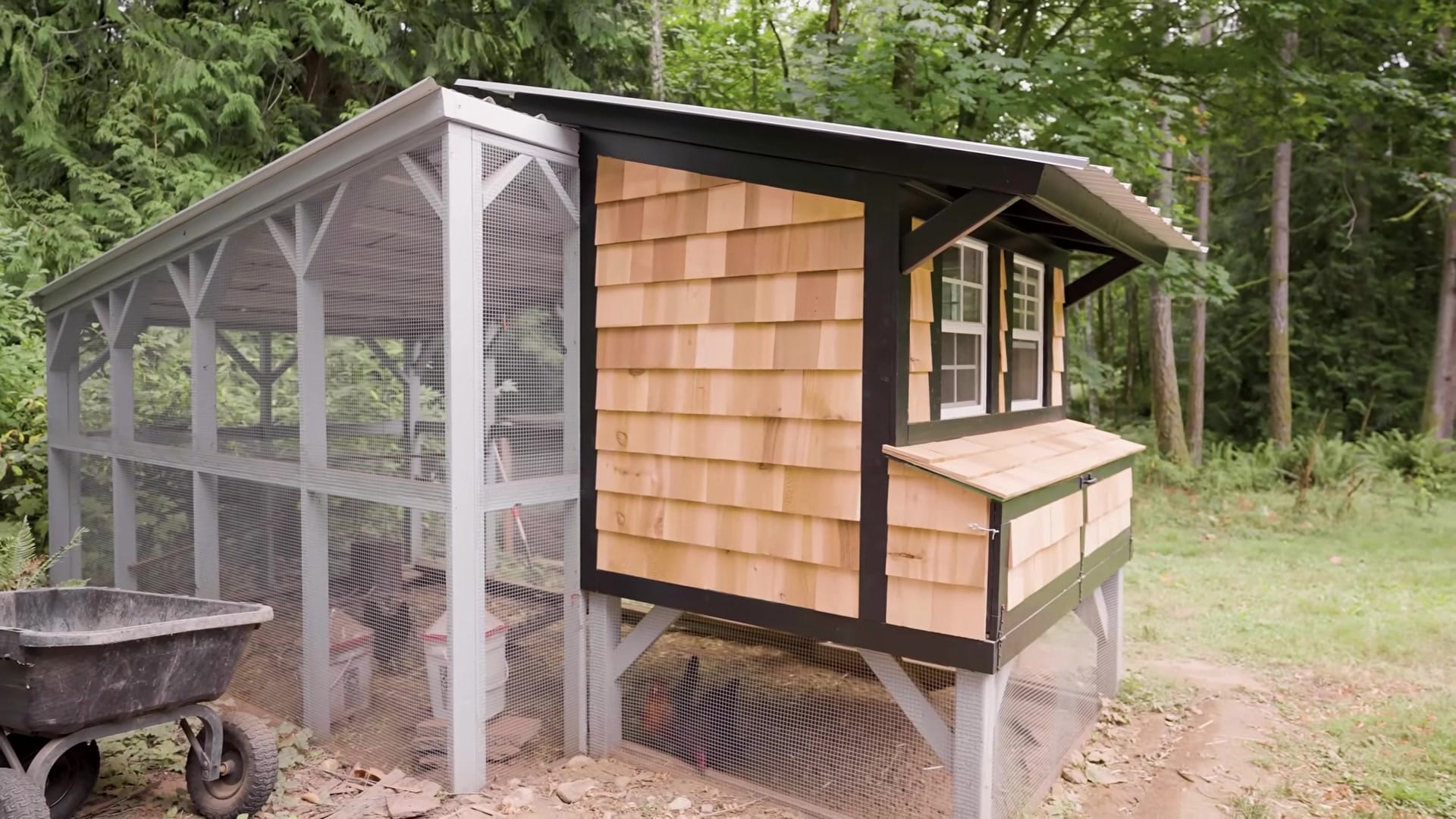
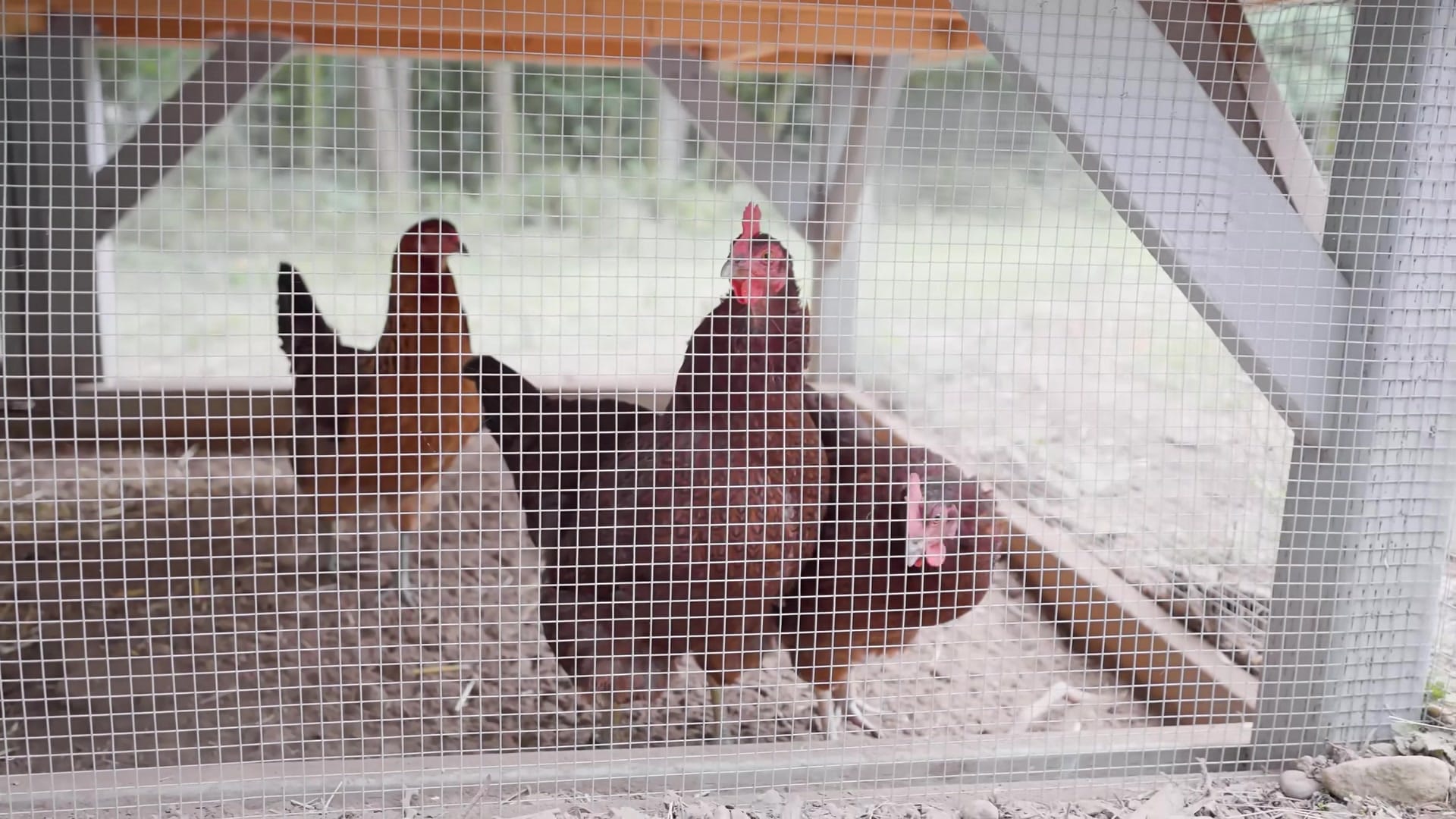
The chicken coop matches the property’s cedar-and-black aesthetic—shingles, two-tone accents, the works—and houses three hens: Red, Butter, and Thor.
Their eggs arrive in green, blue, and brown, a weekly rainbow that fits their more-self-reliant vision.
Across the path, the garden is her haven: 12 beds growing everything from tomatoes and eggplant to peppers and corn.
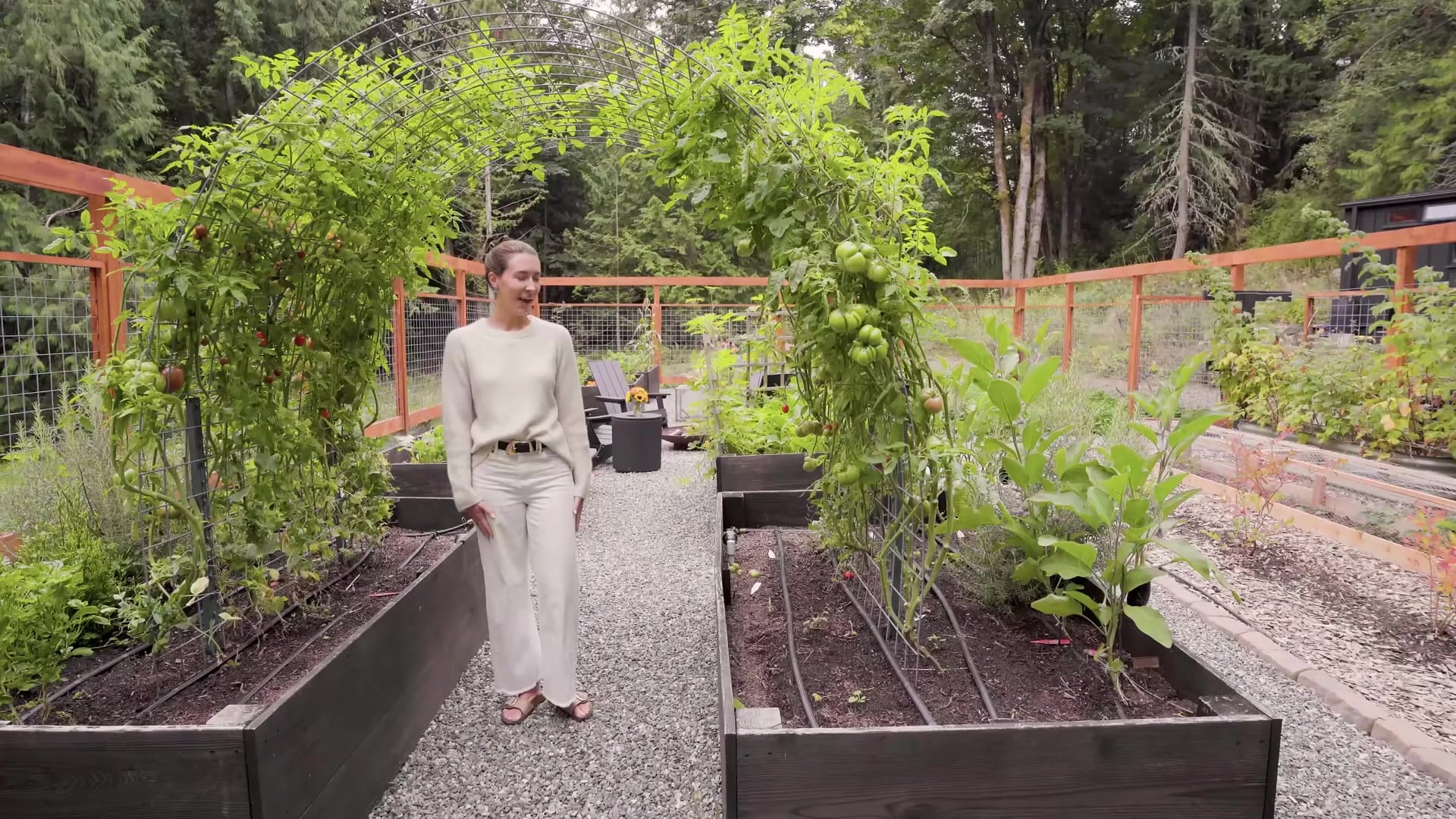
Nate built the beds, torch-preserving the black cedar boards in a traditional method they call “shashug” to keep the wood durable without harsh sealants.
A seven-foot deer fence in natural cedar frames it all, with this year’s wisteria already starting its climb—and dreams of jasmine and grapes waiting in the wings. Next spring’s goal: build a greenhouse and stop buying a “$500 garden” in seedlings, starting everything from seed instead.
Long-term? Keep living intentionally, keep it minimal, and design for function first when they build the future house on this property. No plans for kids; just them, the dogs, the chickens, and whatever animals Nate talks them into down the line. Bellingham, Washington is home now—and this tiny house will always be the chapter that made that possible. Thanks for visiting their place among the trees.hou