The One Legal Rule Shielding Trump From Deeper Court Scrutiny
It’s a legal concept few people talk about, but it plays a massive role in how courts interact with the presidency.
And understanding it reveals a lot about the tug-of-war happening in courtrooms right now.
What is this Powerful Presumption?
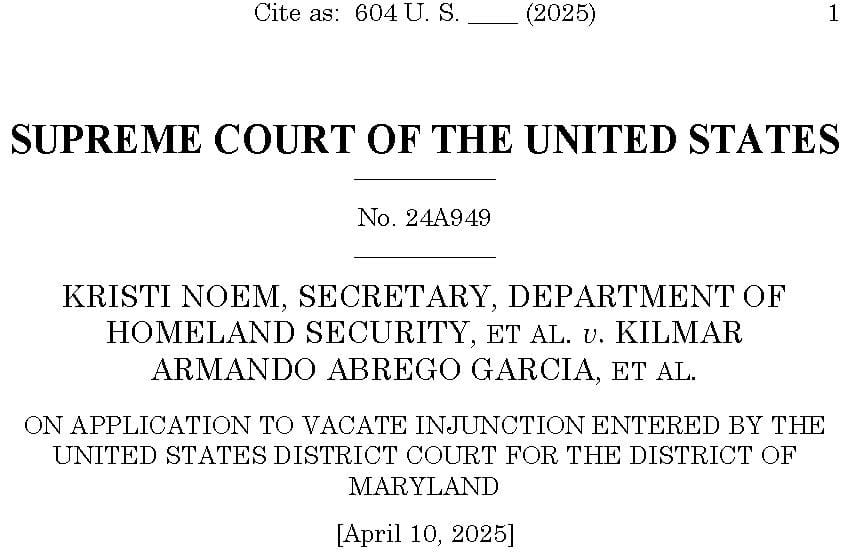
There’s a long-standing principle in the US legal system known as the “presumption of regularity.”
Essentially, courts traditionally operate under the assumption that government officials, including the president and their administration, are acting in good faith.
Jack Goldsmith, a law professor at Harvard, described how this usually works:
“Much of our law depends on a presumption of regularity in the presidency. It depends on the courts thinking that they can trust the president to comply with orders, and to be honest and truthful in court.”
This isn’t just a minor courtesy; it deeply influences legal proceedings.
How it Shapes Court Battles
Because of this presumption, courts are generally hesitant to dig deeply into the motivations behind government actions.
They tend to assume official statements are truthful and actions are lawful unless proven otherwise.
An early Supreme Court case noted that government officials “are assumed to be men of conscience and intellectual discipline, capable of judging a particular controversy fairly on the basis of its own circumstances.”
This makes it harder for those suing the government to get extensive discovery (internal documents and communications).
It also creates a high bar for claims that a prosecution might be politically motivated.
This deference extends to government lawyers, like the Solicitor General (often dubbed the “Tenth Justice”) and DOJ attorneys, who are typically seen by judges as reliable officers of the court.
A Long-Standing, But Debated, Norm
Interestingly, this presumption isn’t explicitly written into the Constitution – a document generally cautious about government power.
Its existence and application have been debated by legal scholars for decades.
Some argue it conflicts with other legal principles, like the presumption of innocence in criminal matters.
Regardless of past debates, the application of this presumption to the Trump administration has become a focal point of recent legal challenges.
Defending Executive Actions
Critics argue that the Trump administration relies heavily on this presumption to fend off lawsuits challenging its policies and actions.
The administration’s stance, typical in such litigation, is often that executive actions appearing valid on their face should be accepted by courts as lawful and undertaken with proper intent.
As the government argued in one case: “Executive actions that are facially valid — that is, within the lawful authority of the executive — are entitled to a presumption of regularity.”
This essentially asks the court to trust the government’s stated reasons unless there’s compelling evidence otherwise.
Opponents claim this shields the administration from necessary scrutiny, pointing to instances where they believe motives were political.
The Role of the Justice Department
Traditionally, the Department of Justice is seen as maintaining a degree of independence, acting as a check even within the executive branch.
The professionalism and ethical obligations of DOJ lawyers underpin the courts’ willingness to grant the presumption of regularity.
Critics have voiced concerns about the DOJ’s perceived alignment with the President’s agenda under recent Attorneys General, questioning whether this traditional independence holds.
Supporters, however, argue the AG’s primary role is to enact the President’s lawful agenda and defend the administration’s policies, seeing close alignment as necessary for effective governance.
The Core Principle: Presumption of Regularity
So, the key legal rule shaping these court battles is the **presumption of regularity**.
It’s the assumption that courts make, granting the government the benefit of the doubt that its actions are lawful, its statements truthful, and its motivations proper.
While intended to facilitate smooth government function and respect the separation of powers, its application is now fiercely contested in cases involving the Trump administration.
Those challenging the administration argue this presumption is outdated or being exploited, demanding judges probe deeper.
Defenders argue it’s a necessary principle for judicial deference and that abandoning it based on political opposition to a president would destabilize established legal norms and hamper executive function.
An Ongoing Legal Debate
The debate over whether courts should continue granting this presumption as robustly as before remains intense.
How judges navigate this principle in ongoing and future cases will significantly impact the balance of power between the judiciary and the executive branch.
It highlights the judiciary’s crucial role in interpreting not just laws, but also the long-standing norms that underpin the legal system’s interaction with the government.