The Layout Change That Added 20–30 ft Upstairs—Inside 396 sq ft
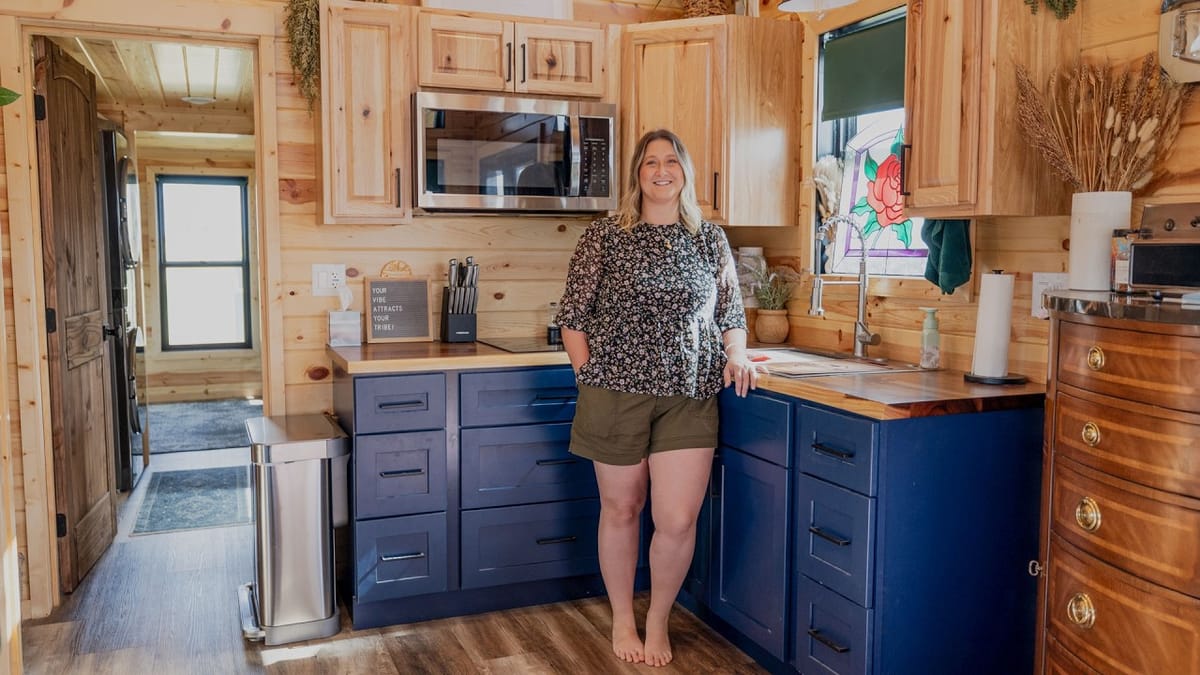
Walk in and the vibe hits first: warm wood, saturated color, and a calm openness that feels effortless. There’s personality in every corner. Nothing is wasted, and nothing is missing.
It’s a 396 sq ft tiny home built by Dakota Cabins of Texas.

The wood brings a cabin feel and keeps the whole space open and breathable.
It’s tiny living that still feels like a real home.
First Look — The Feel of the 396 sq ft Home (Intro & Living Area)
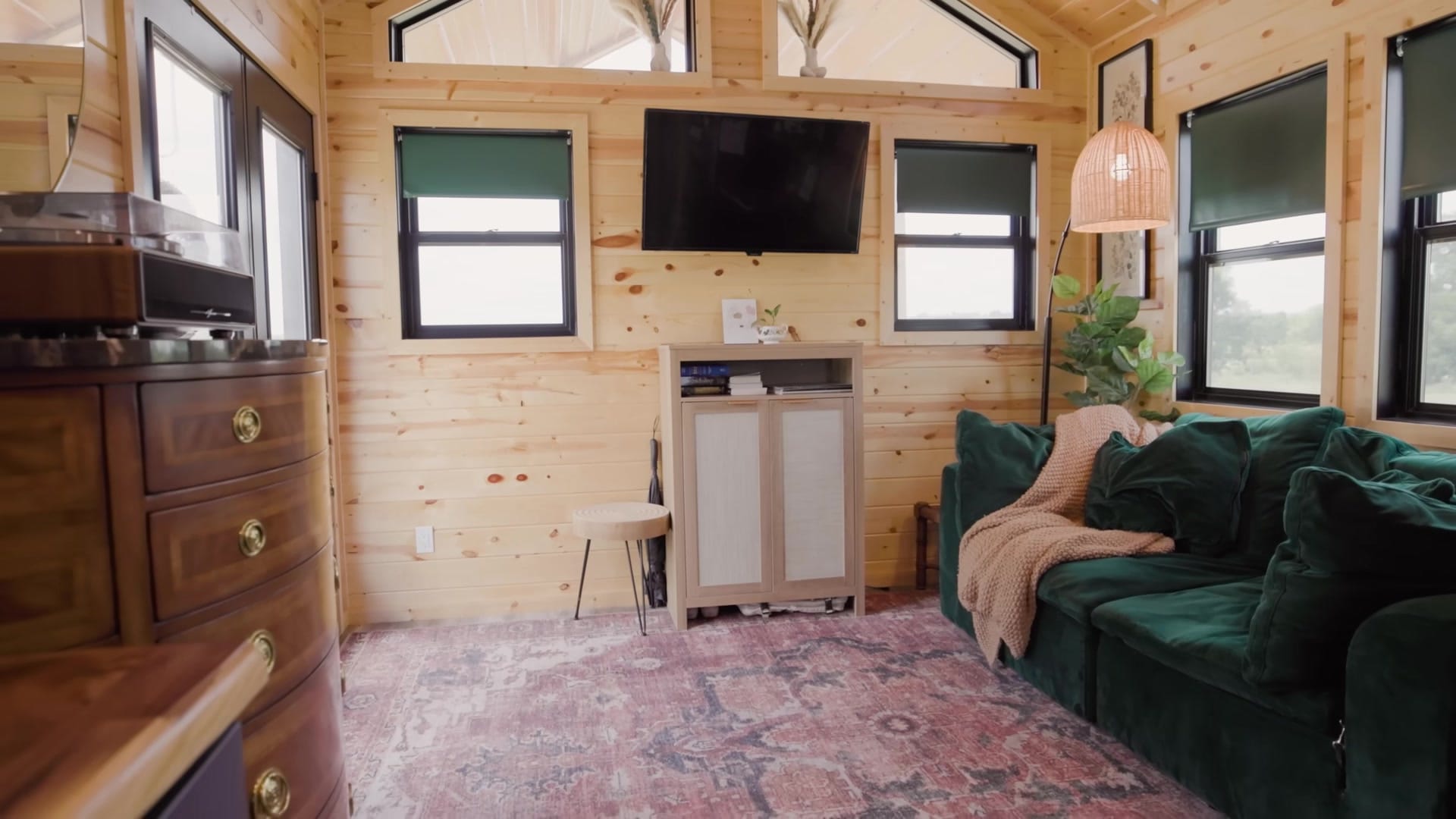
The living area was designed to make entering the home feel easy, not cramped. She wanted enough room to walk in and breathe, and it shows.
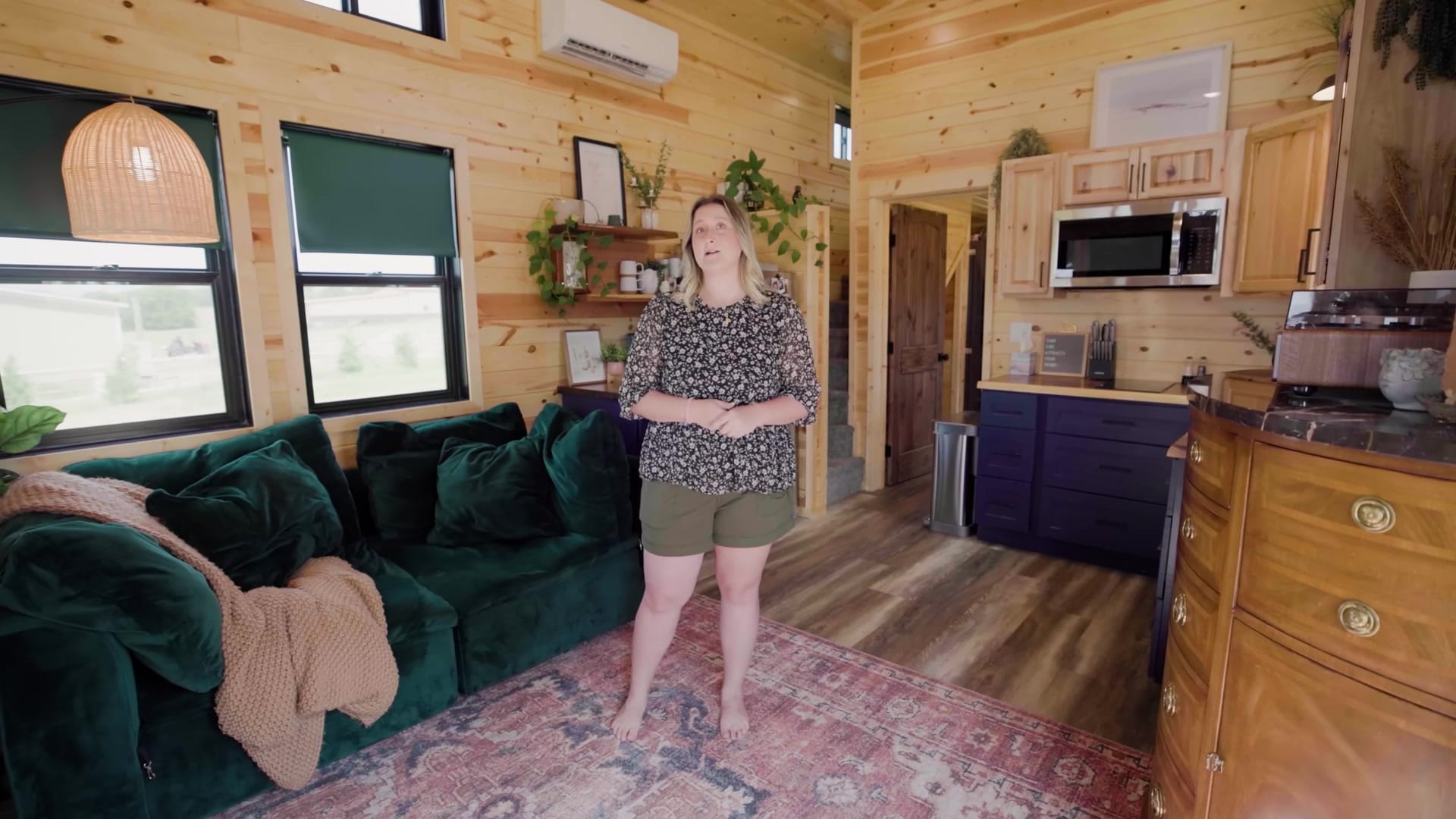
A sectional once crowded the entry, so she shifted a piece into the back room to open things up.

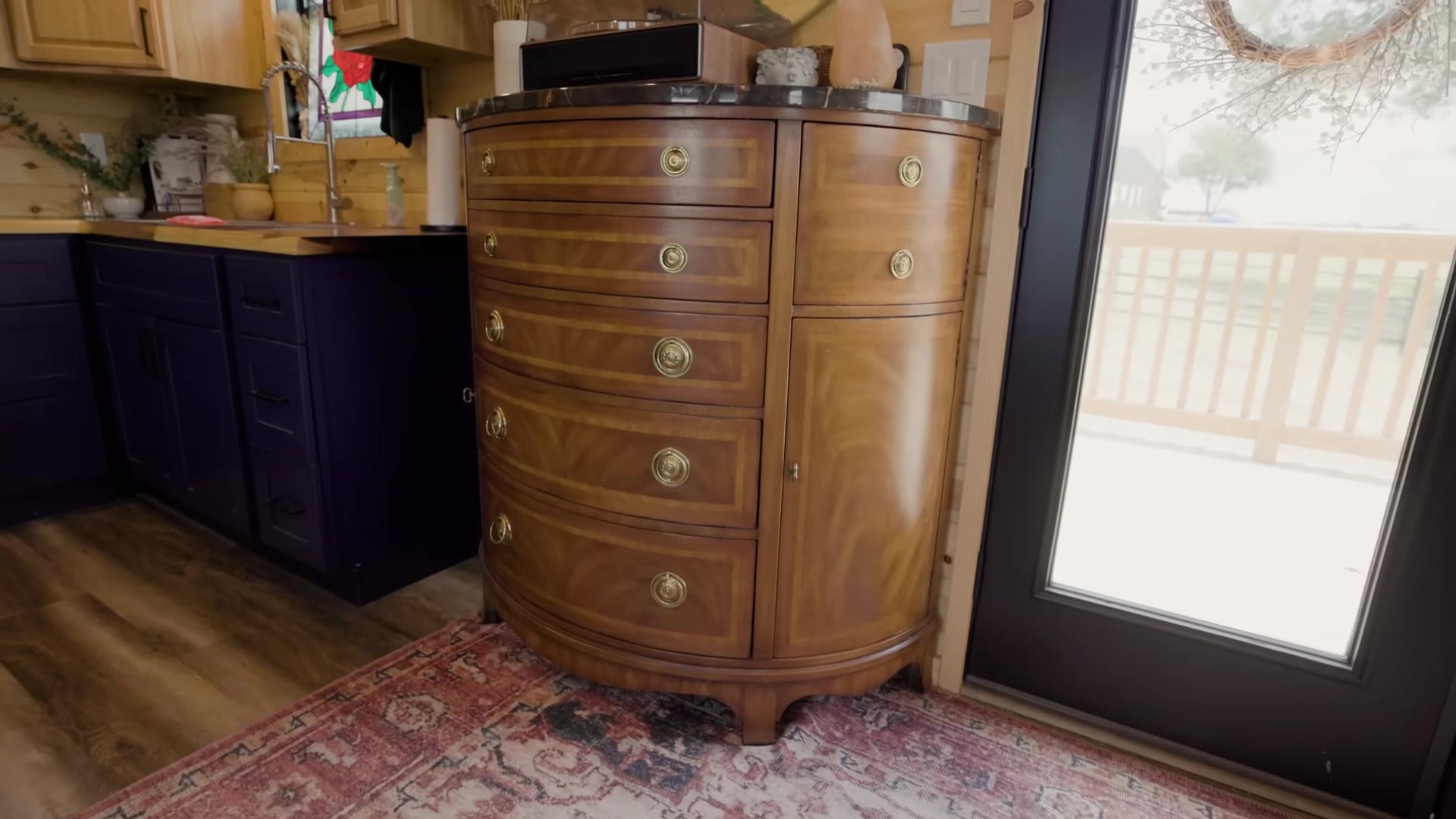
She planned for one statement heirloom—a beautiful hutch from her grandmother—and adjusted the living area and kitchen to fit it perfectly.
In a tiny home, that kind of intention matters; you decide what earns space and what doesn’t. The result is a landing zone that feels generous without giving up storage or character.
Downsizing took real choices. She lived with plenty of furniture before, but in here, only what serves or sparks joy made the cut.

Her mantra is simple: identify what you can live without, then actually let it go. That mindset cleared the way for pieces that do double duty.
Storage hides in plain sight: drawers in the hutch hold coaching and school clothes, and shoe storage tucks behind the seating zone.
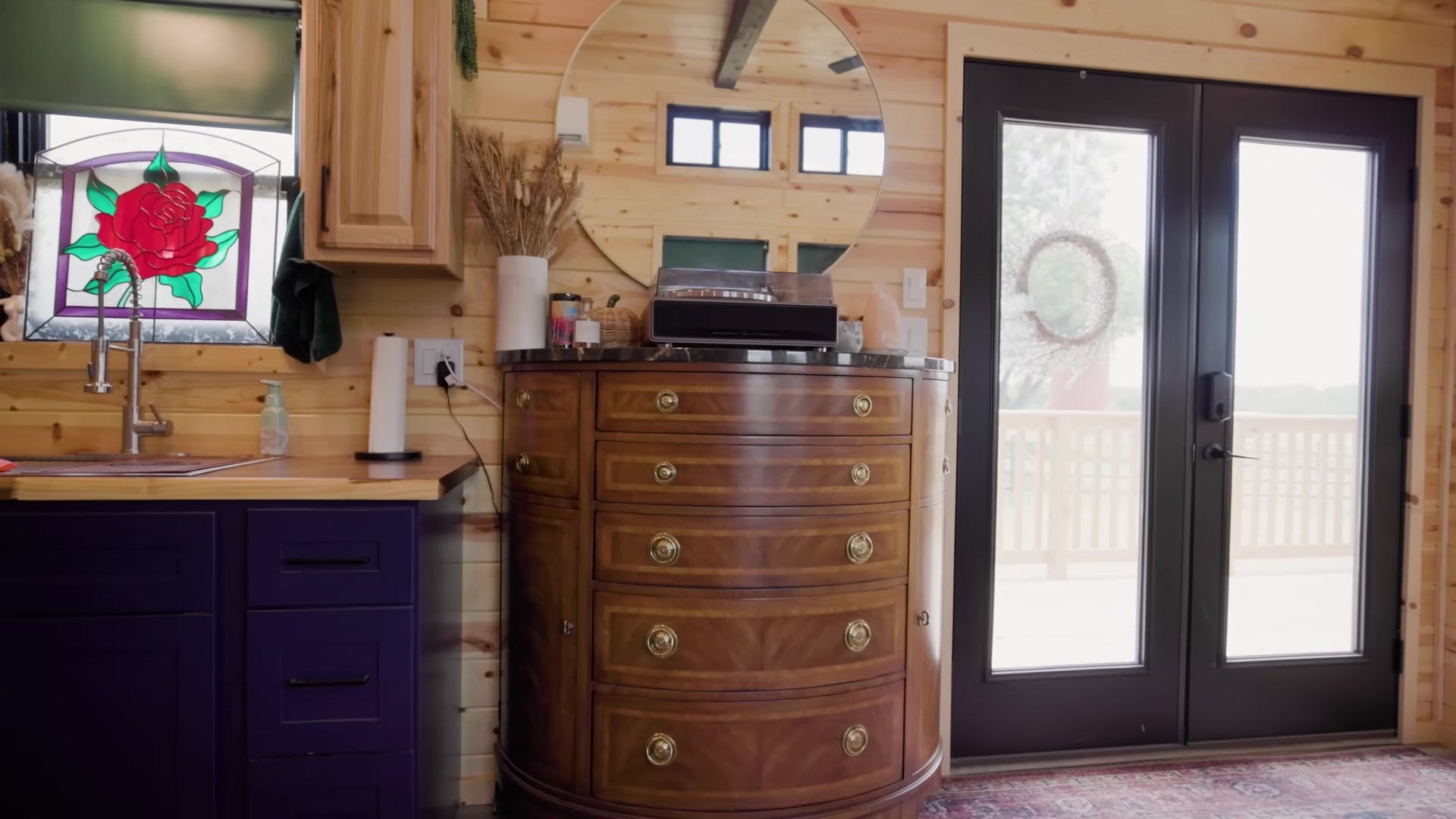
Extra cabinets and shelves stand ready for future needs. Everything has a spot, and everything reachable earns it.
Texas winters can still bite, so she’s eyeing a compact fireplace for chilly nights.

Most of the year is warm, but a little heat would make this room even cozier. It’s the one change she’s still considering.
Once she decluttered and dialed in the layout, the house clicked into place.

That’s when it started to feel like love—organized, calm, and authentically hers. Now, she’s savoring every bit of it.
Kitchen — Color, Choices, and What She Gave Up
The kitchen leans practical without losing style. A dedicated coffee bar sits beside a compact refrigerator, perfect for how she actually eats and cooks.
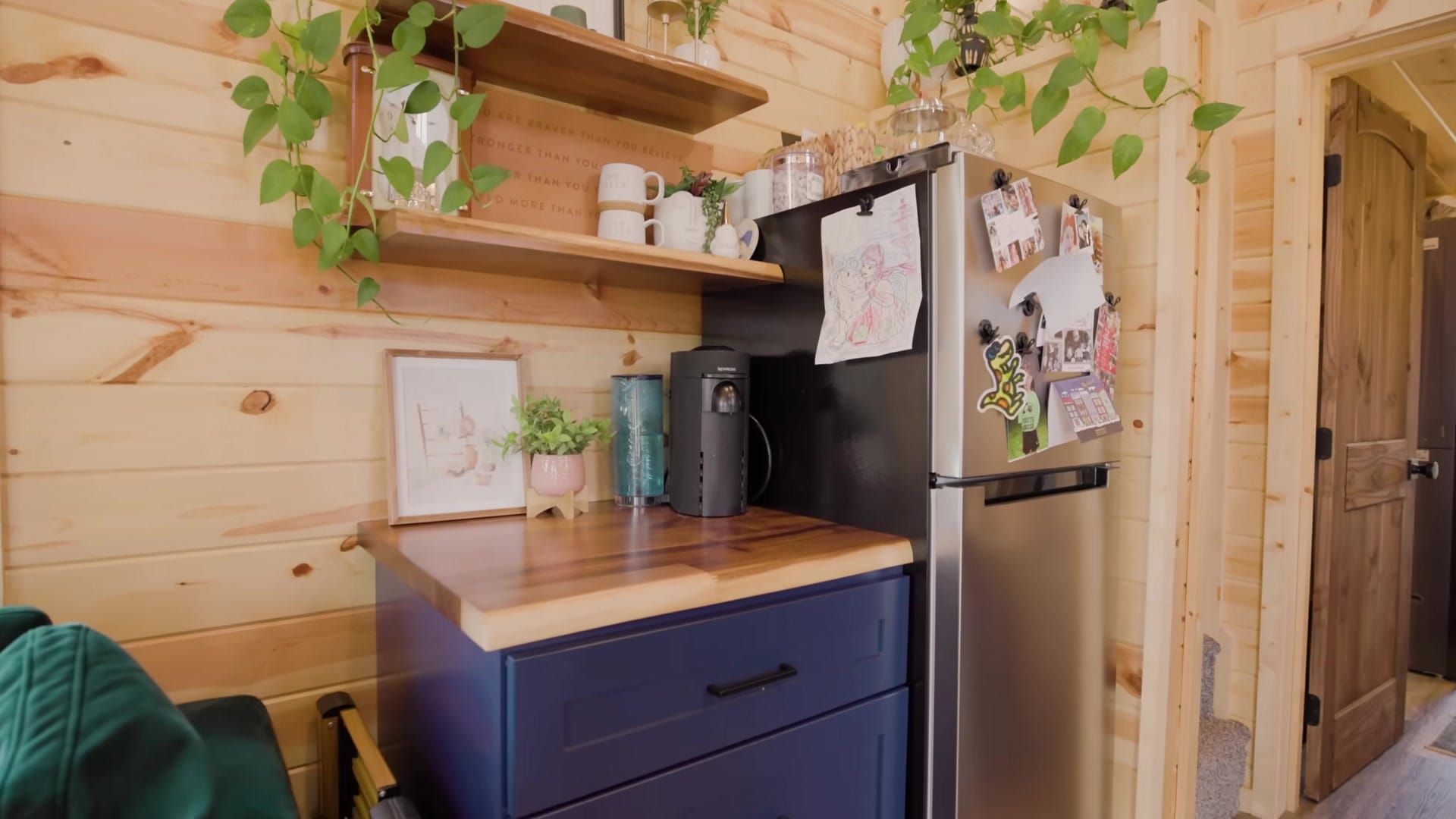
It’s enough, and that’s the point.
She chose a two-burner electric cooktop and skipped the bulk of a full range.

With fewer appliances, cabinets work harder, and counters stay clear. She doesn’t cook a ton, so she designed for that reality.
Two big sacrifices freed up space: no oven and no dishwasher.

In return, she gained storage she truly uses. When every inch matters, utility choices become storage choices.
Color locks the whole room together. The deep blue cabinetry pops against the greens in the living area and all the warm wood.

It’s bold, grounded, and clearly intentional.
Then there’s the live-edge wood—an upgrade she knew she wanted the moment she saw it.
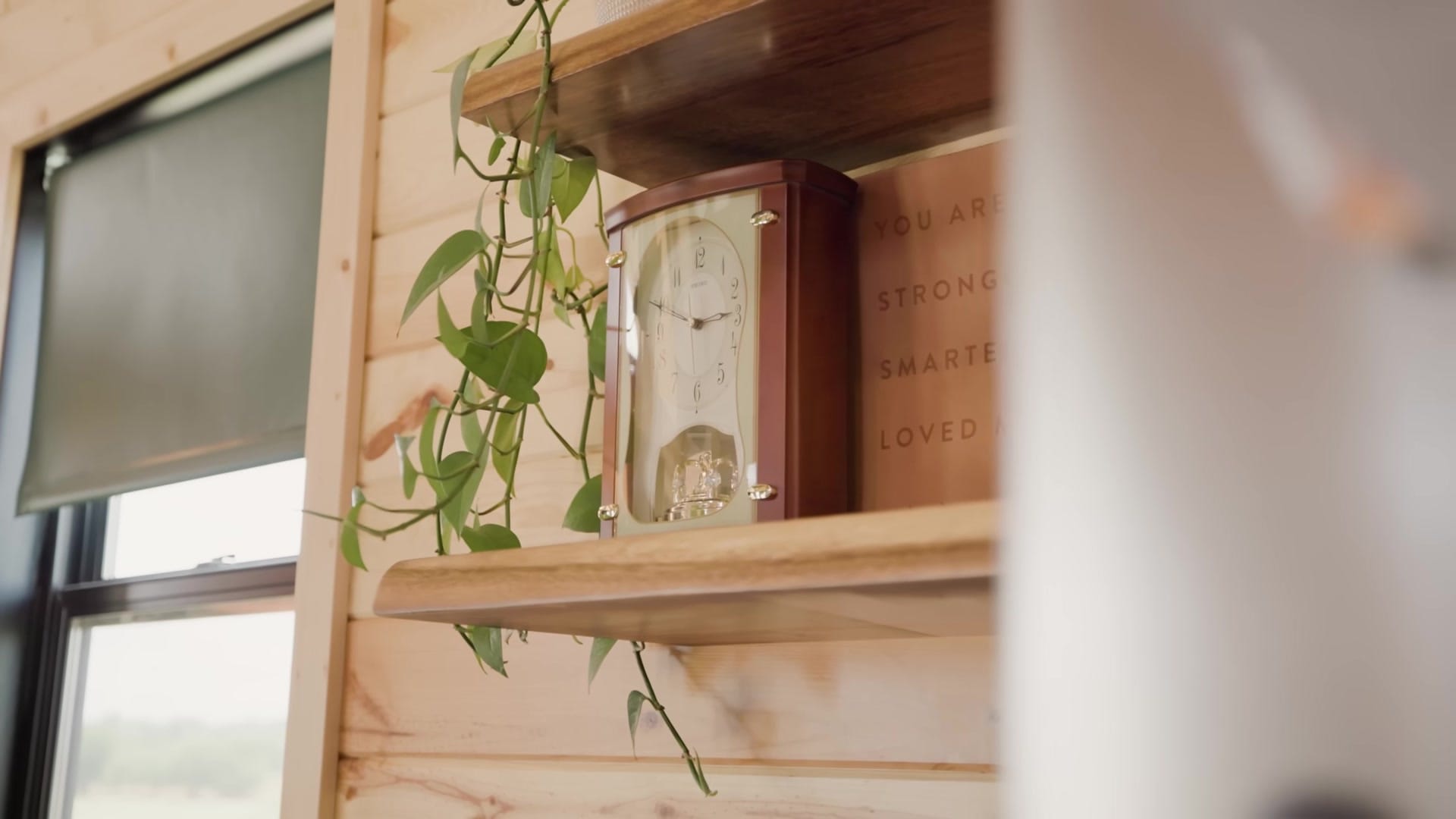
Shelves turn into sculpture, and the coffee zone doubles as display and stash. Custom touches like these made the kitchen feel like her, not a showroom.
Bathroom — Full-Size Design, Storage, and Live-Edge Details
She wanted a full-size bathroom, and she got one.

That meant rethinking the original layout to escape the “tiny bath” trap. The goal: open, functional, and easy to live in.
Originally, the door cut into the space, a half shower squeezed in, and the washer/dryer shared the shower wall.

It felt cramped and compromised. So she moved the entry and gave the whole room room to breathe.
Now it works like a mud room with storage, clear access, and a washer/dryer that doesn’t crowd the shower.

It’s everyday practical, not just pretty. The flow makes sense the second you step in.
Storage is everywhere: cabinet space below the sink, a medicine cabinet up top, and a full storage unit for linens and must-keep essentials.
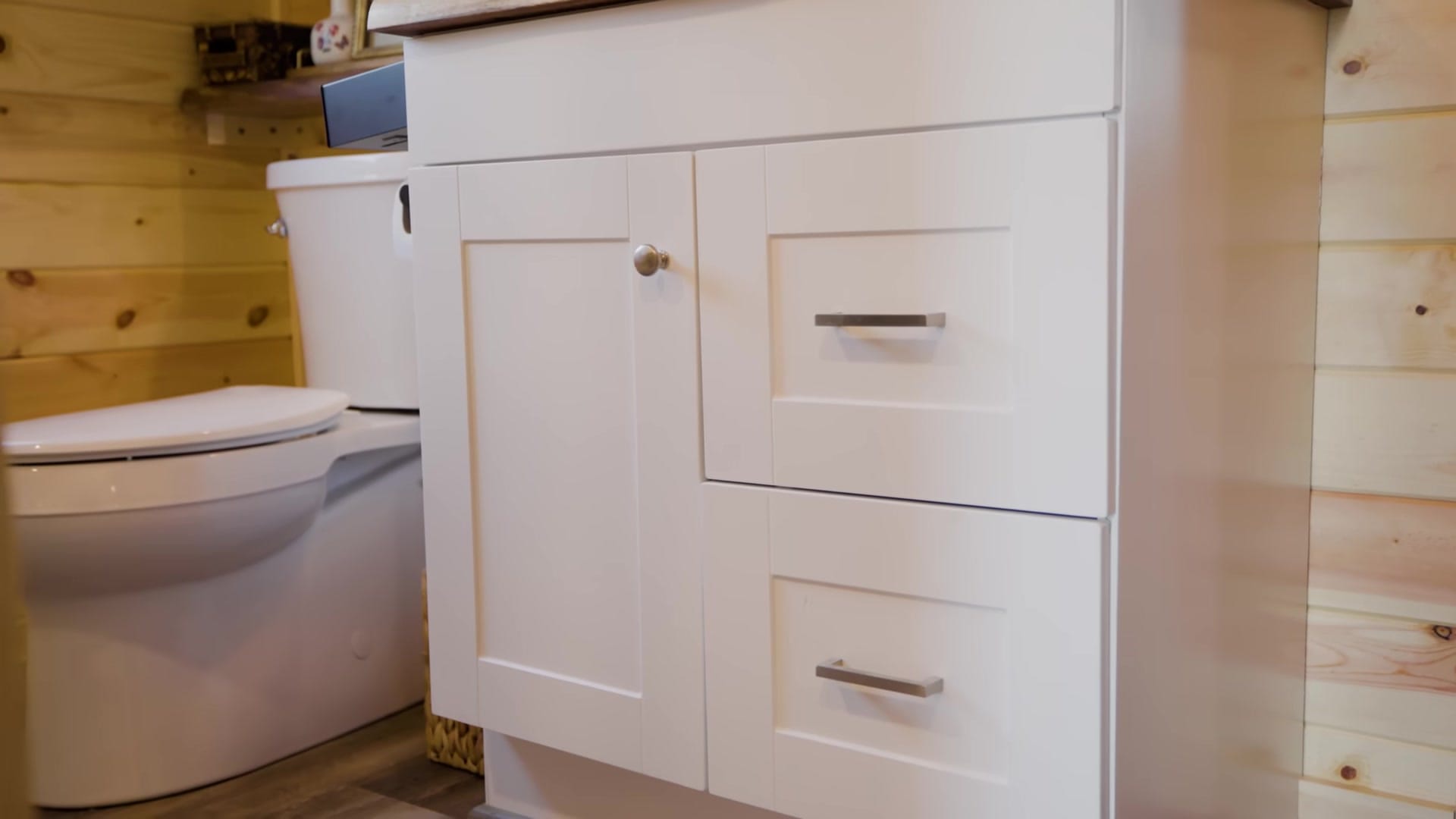
Tiny doesn’t have to mean bare. It means smart.
Over the toilet, the builders added a shelf, then hand-carved the edge to match the live-edge look throughout the house.

That detail ties rooms together without feeling heavy. Bonus: moving the door reaped about 20 to 30 extra square feet upstairs in the loft.

Back Room — Downstairs Flex, Heirlooms, and Storage
The back room started as a bedroom but now works overtime as a closet, lounge, and hangout space.
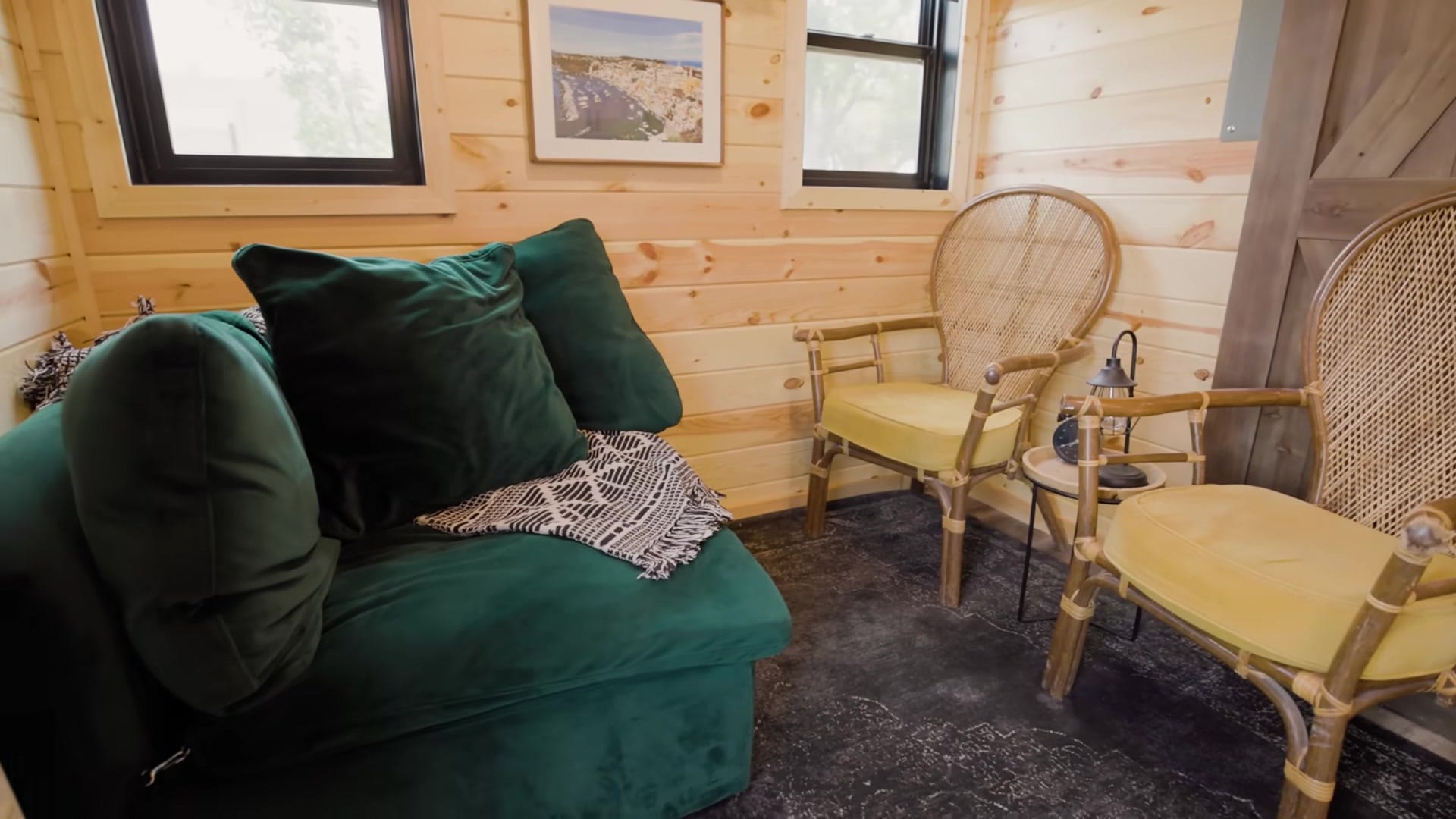
It’s where she folds laundry, gets ready, and slows down. Turning it into a flex zone made the whole house easier to use.
There used to be a closet, but she knocked it out to expose more of that gorgeous wood and add open storage.
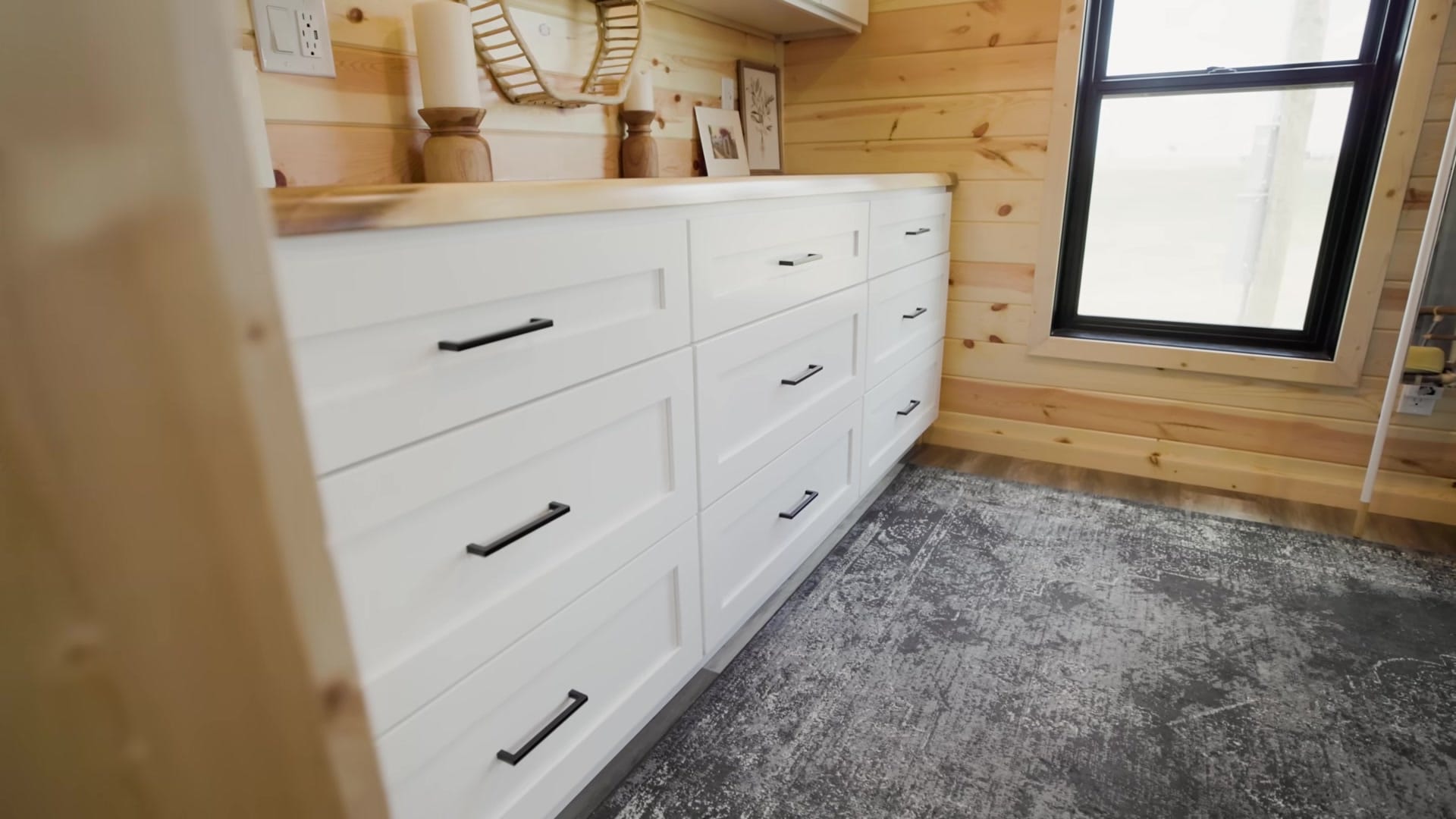
It looks larger, and it functions better. Sometimes subtraction makes more room for life.
That moved piece of the original couch found its home back here and changed the room’s energy.

Suddenly it felt like a retreat, not just storage. Cozy seating made the space inviting.
Two wicker chairs anchor the space in family history—they belonged to her great-grandmother, then her mother, and now her.

She refused to let them go, which is why the bedroom moved upstairs. Some pieces are nonnegotiable.
She loves clothes and wanted an area where getting ready is easy and social.

Friends can spread out, chat, and help choose outfits. The room could be anything—office, studio, or workspace—if your life asks for it.
Loft — Sleeping, Play Space, and Extra Square Footage
Upstairs, a queen-size bed sits with plenty of breathing room.
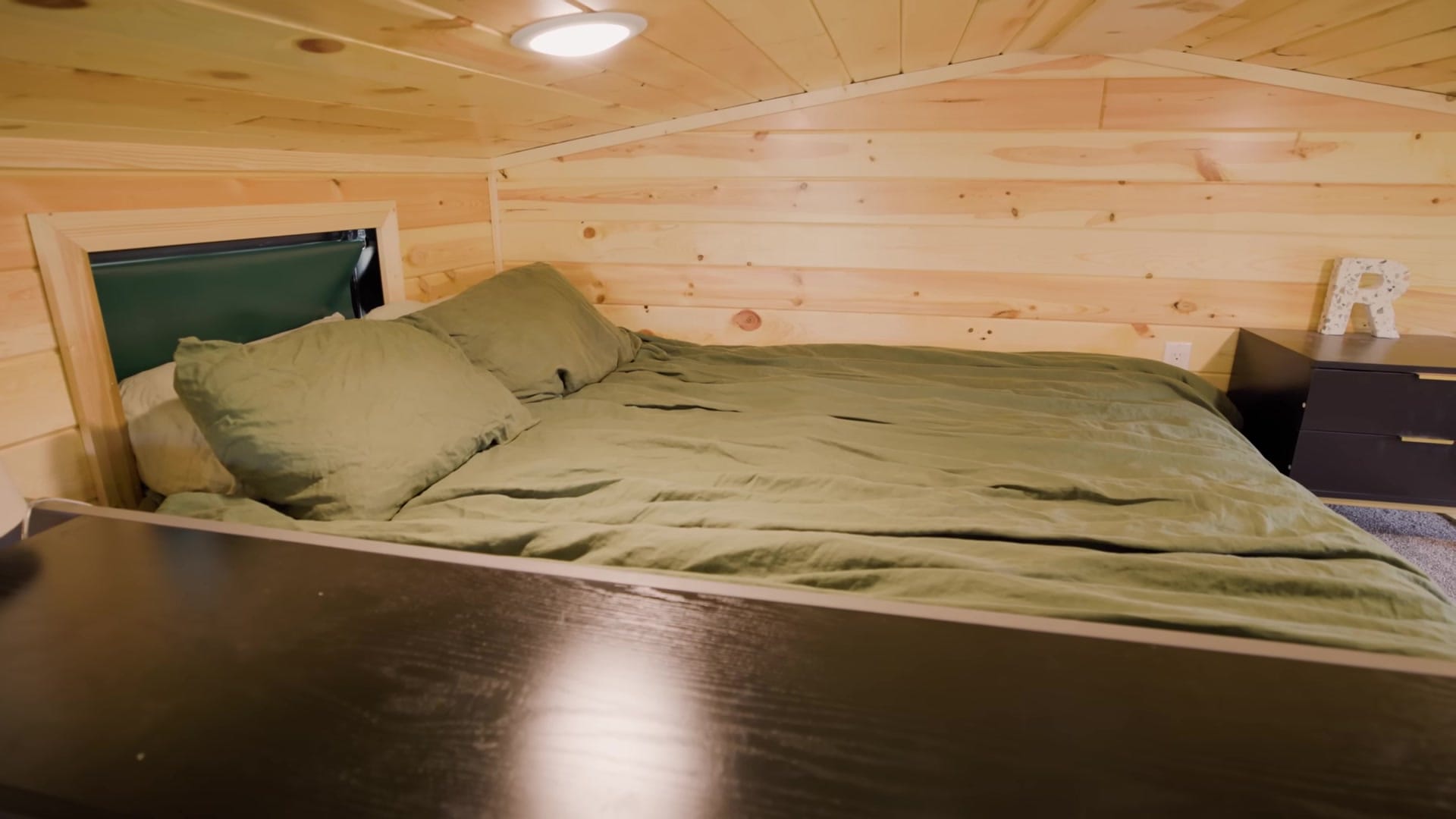
It’s restful, not cramped. The loft opens up beyond the bed and becomes bonus space.

Kids adore it. Her nieces and nephews run around, read, and play without ducking.
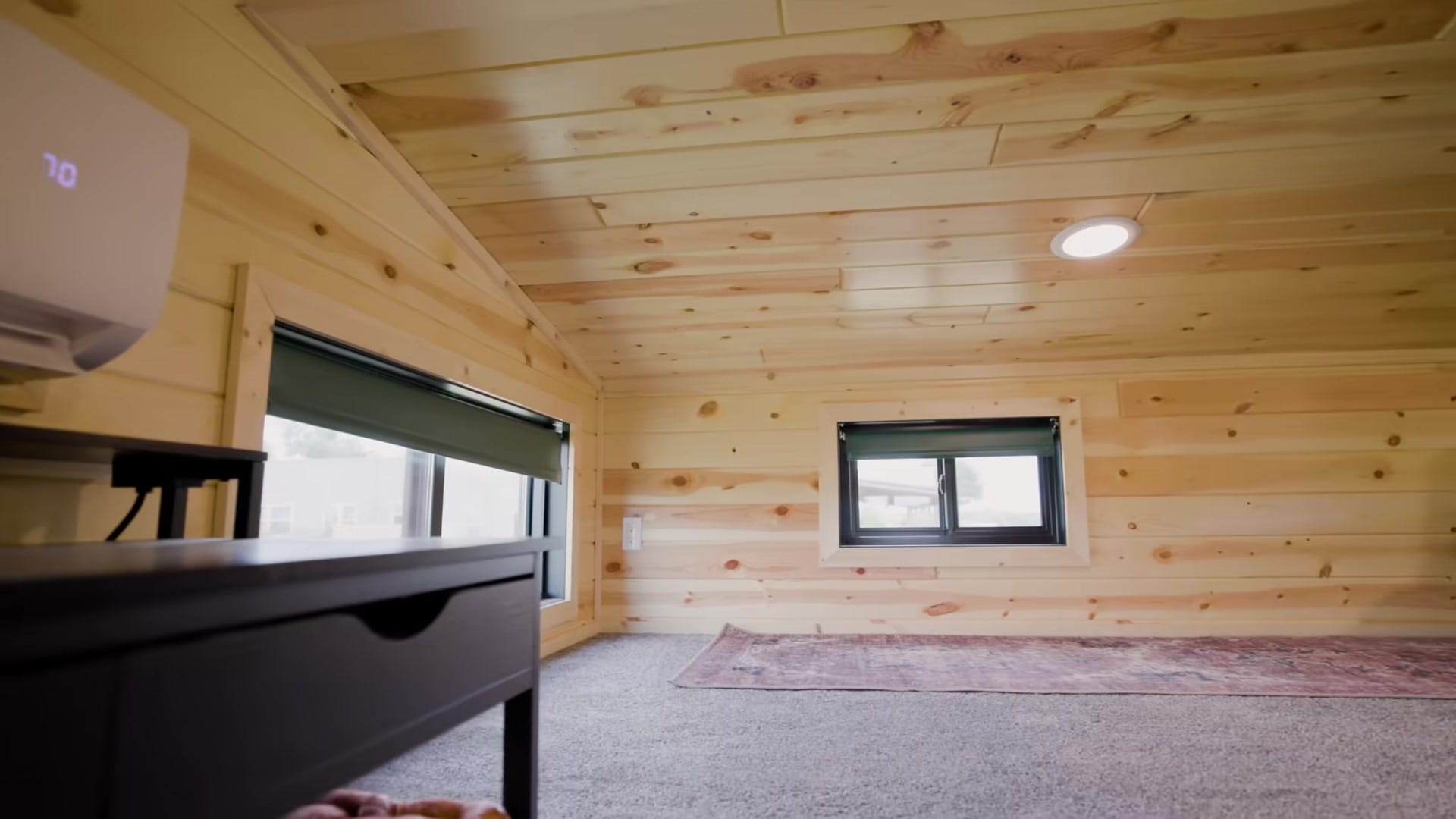
It’s a secret upstairs world you can see from the stairs but still feels separate.
She has future-flex built in, too. If the bed ever moves downstairs, the loft could become a movie lounge with a TV and theater vibe.

The footprint adapts as life changes.
Choosing a loft meant giving up high ceilings in one spot, but it paid off in square footage up top.
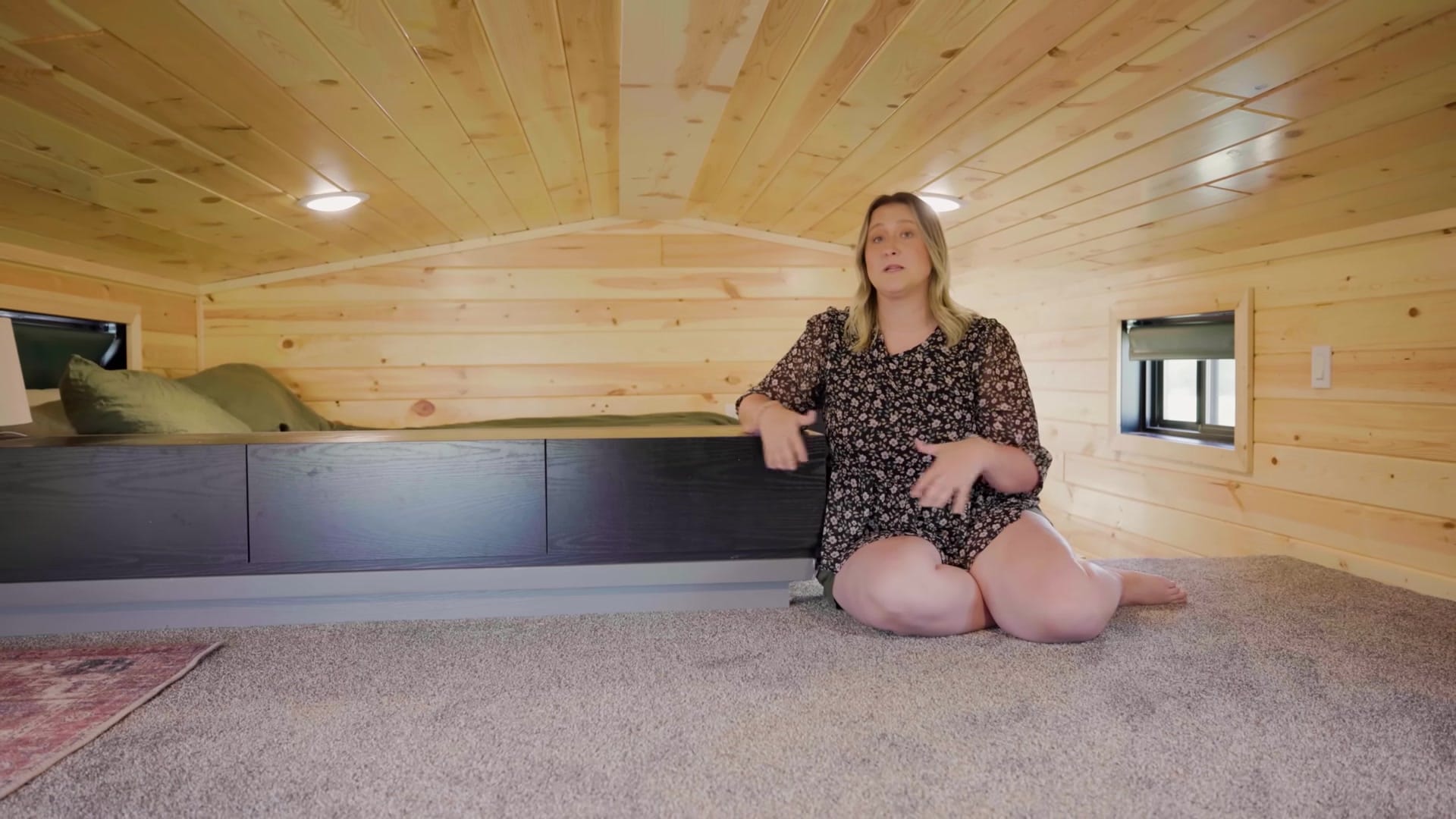
It’s room you can feel. Storage, lounging, or simply an airy retreat—use it how you want.
All of it adds up to comfort. She loves being up here and feeling at home.

It’s quiet, expansive, and completely hers.
Costs, Financing, Placement, and Why She Went Tiny
The numbers are straightforward. Total cost after customizations: $181,000.

The base model without upgrades was $121,000.
Down payment landed at $20,000.

Financing in Texas can be limited—only two or three options right now—but her builder had a connection that made it smooth.
Her mortgage is $1,500 per month on a 10-year plan.

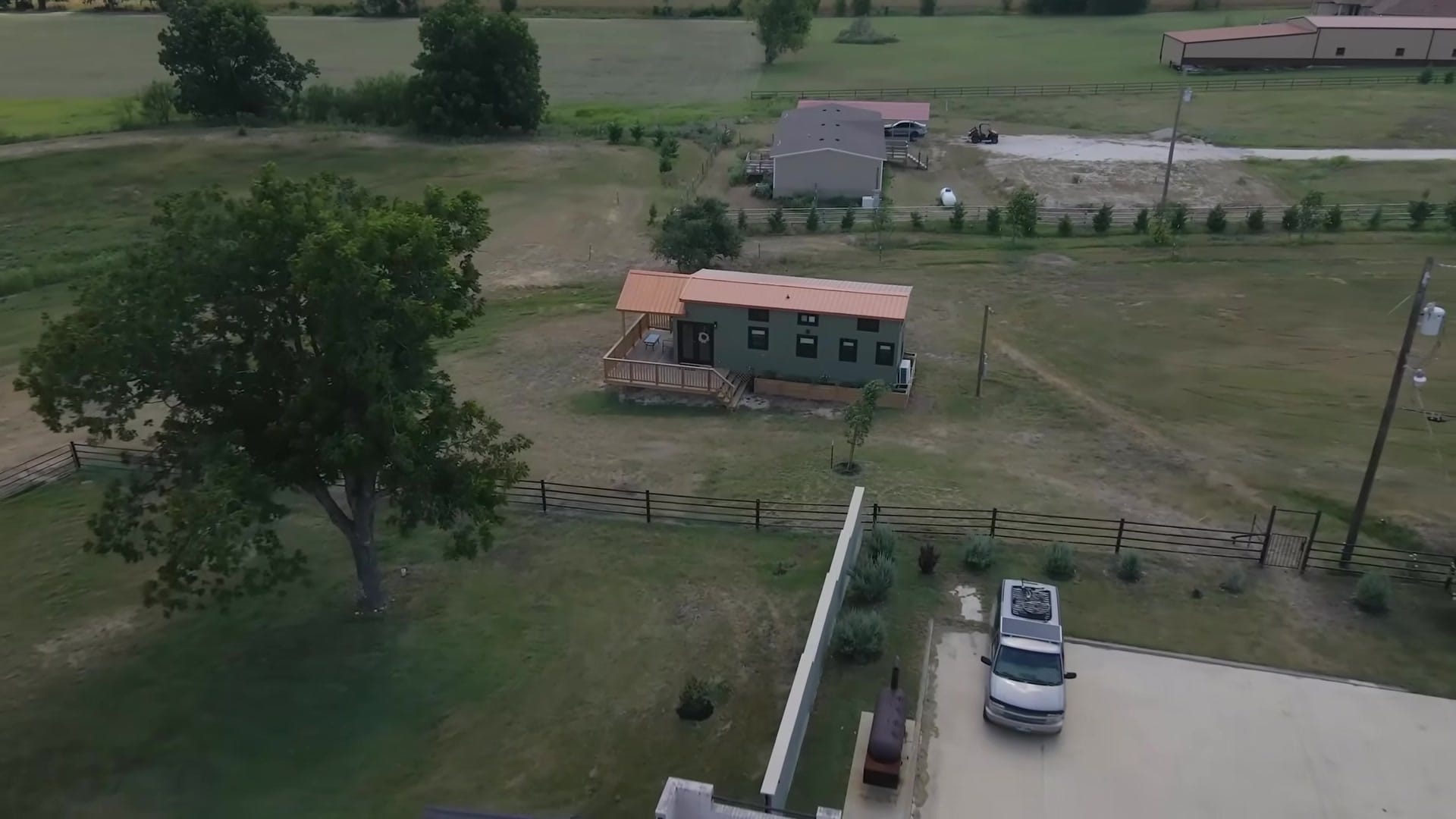
Placement made the dream work. She set the home on family land, about a 10-acre spot on her parents’ 50 acres, with water, septic, and electricity hooked up.

It made setup surprisingly easy.
Even the patio got thoughtful tweaks: she wanted it badly, moved the doorway to the side, and extended the cover to match the new layout.

It’s not attached to the house—they built it after delivery so everything stayed level and true. Instead of traditional skirting, she wrapped the home in flower beds for a softer, greener finish all the way around.
Why tiny? Her former 1,300 sq ft house was simply too much space, and apartment rent felt like throwing money at nothing . Tiny living offered a home that fits, costs that make sense, and the freedom to design something that feels like her. That’s the whole point—less square footage, more life.