The Craigslist Deal That Became a Solar Yurt Homestead
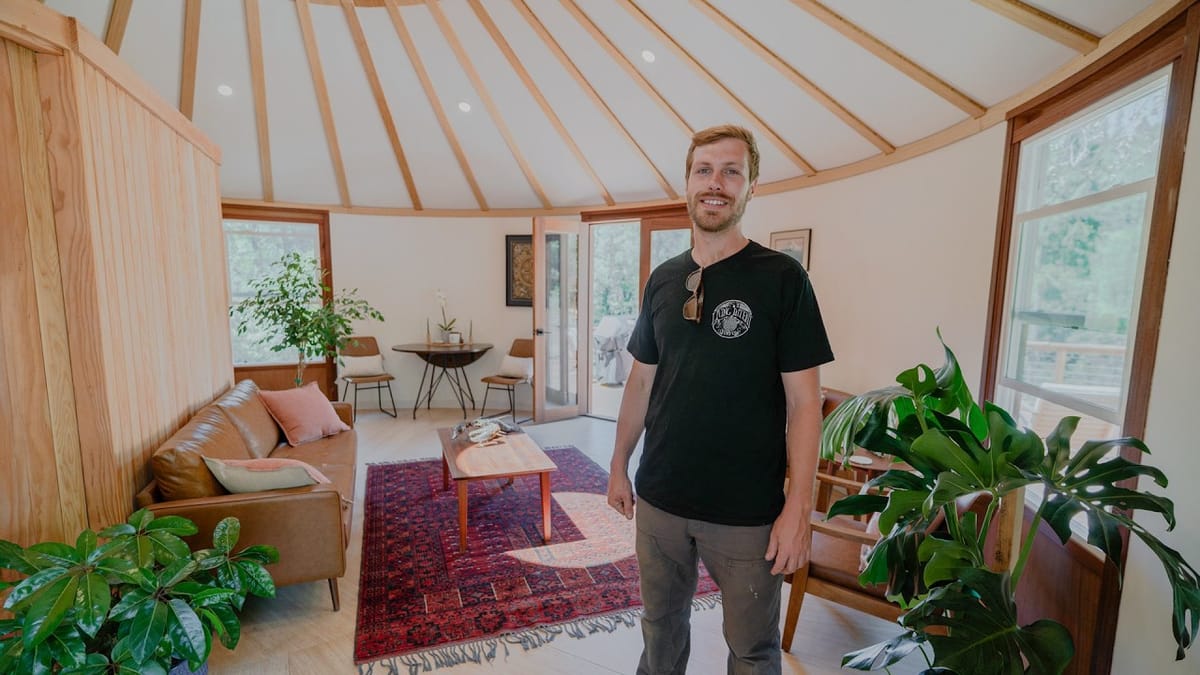
Meet Caleb, a yurt builder who turned a long‑vacant property into a calm, off‑grid setup with smart builds and simple systems. He lays out a 24‑ft roundhouse, a 16‑ft guest yurt, an outdoor kitchen and shower, a composting toilet, and a cedar hot tub—built piece by piece, and paid for as he went.
Quick Tour — The 24-ft Roundhouse First Look
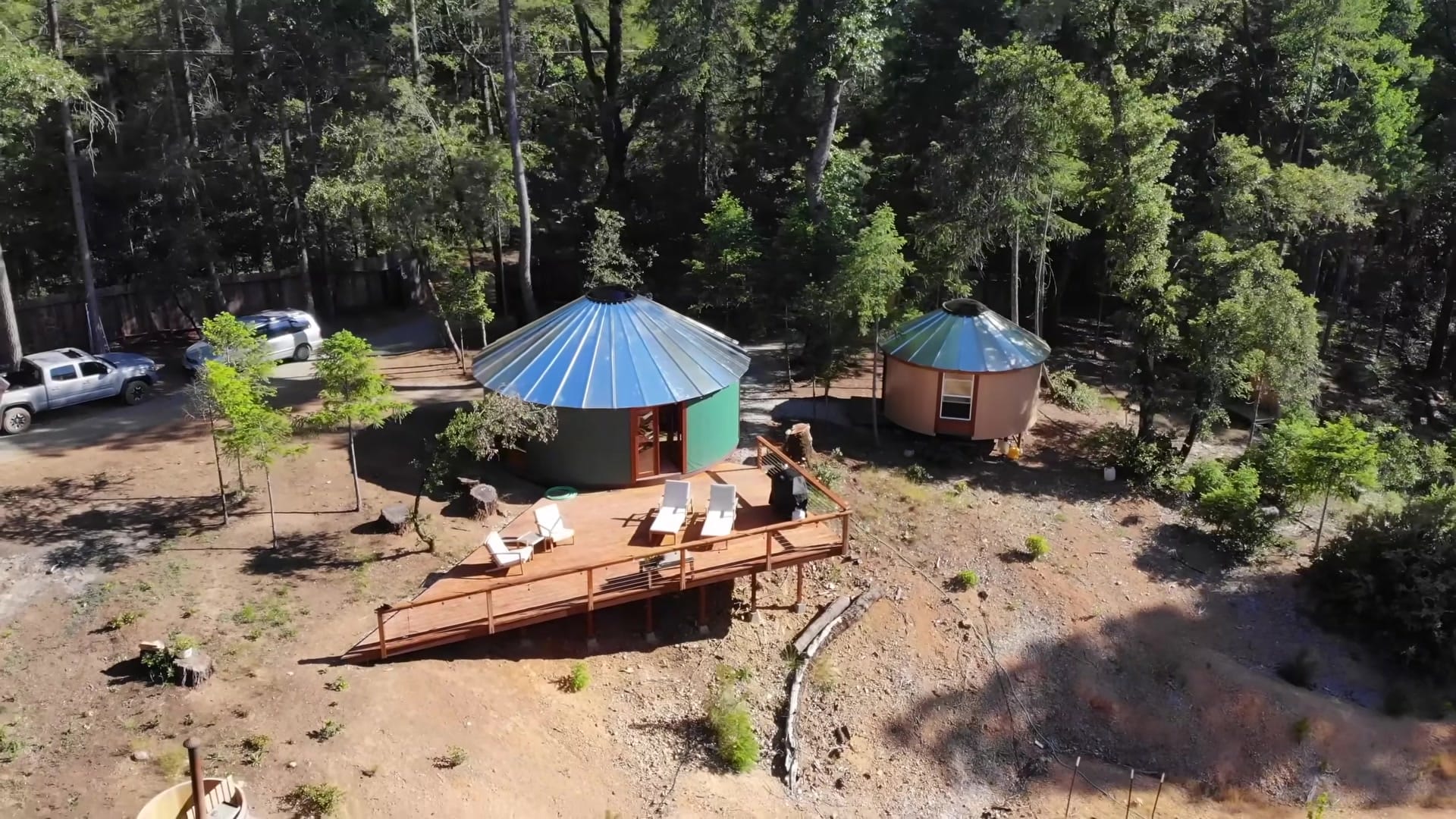
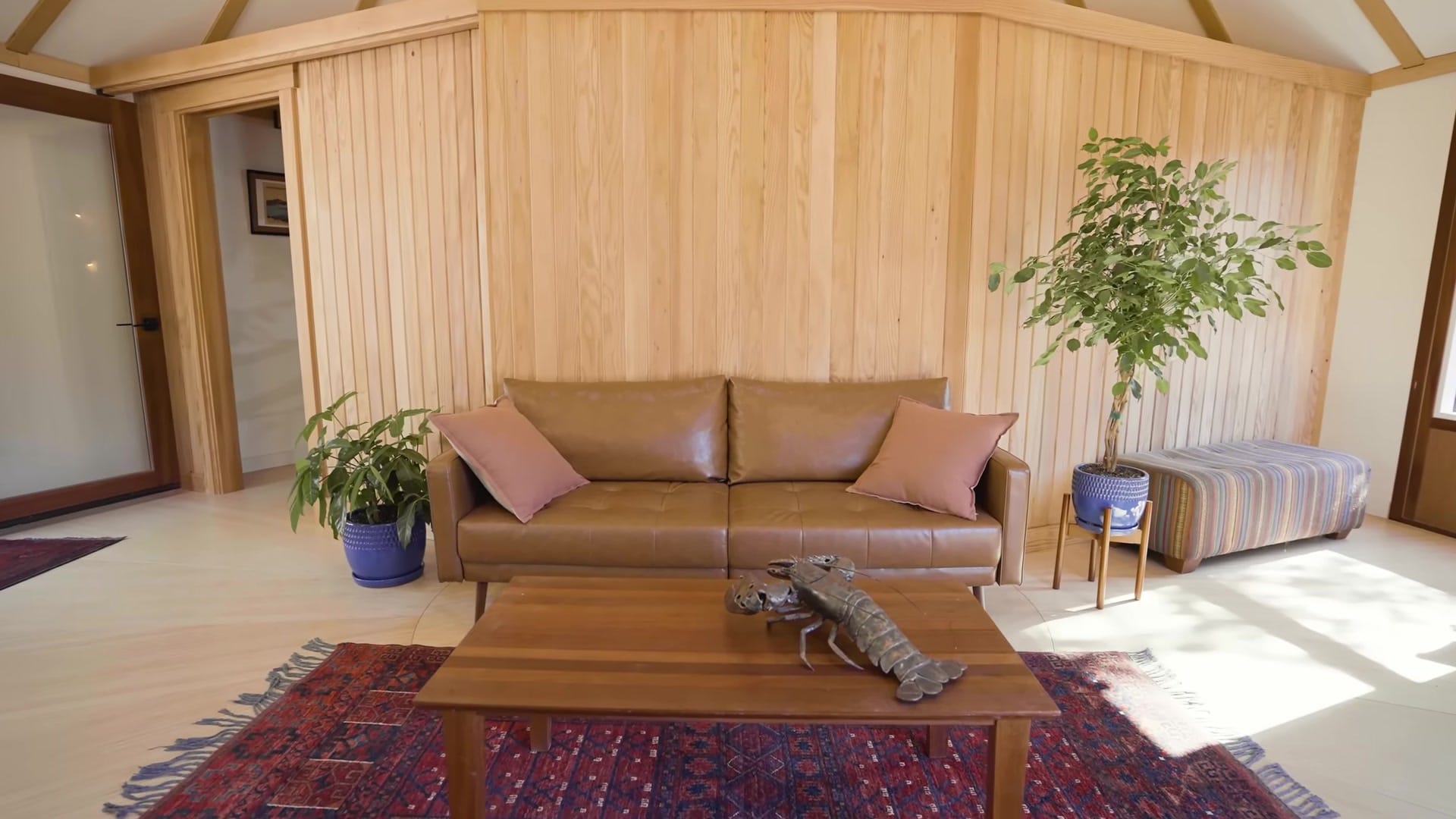
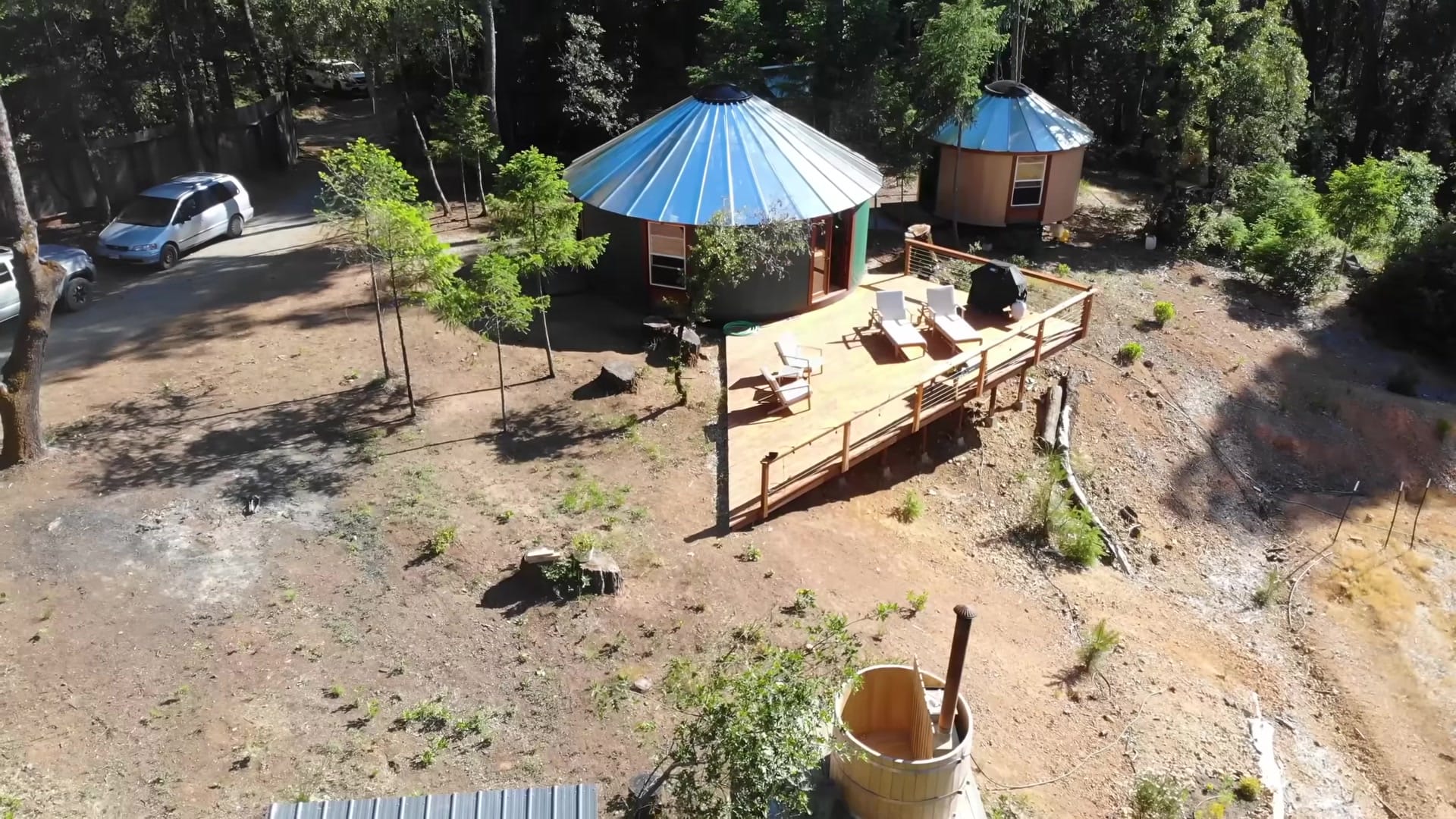
Start at the hub: a 24‑ft roundhouse with a living room, a bedroom, and a deck that looks over the garden.
Behind it sit a 16‑ft roundhouse guest bedroom plus the kitchen and shower.
There’s also a composting toilet building out back.
This larger roundhouse went up after a prototype era—he built this 24‑ft version about five months after living in a 20‑ft model to test panels and roofing.
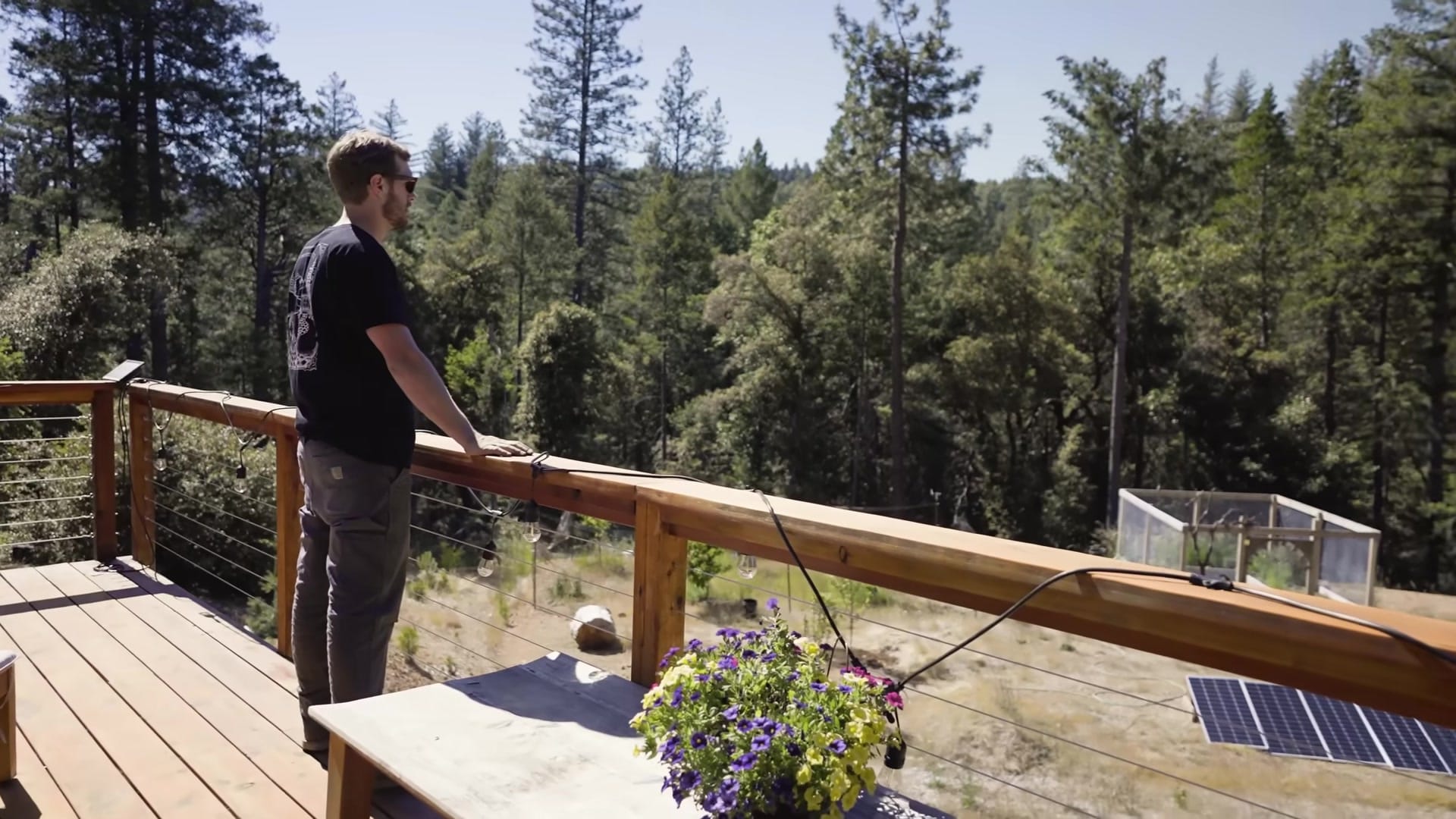
The deck faces the garden, one of his favorite views from the house.
Living Room & Loft — Bamboo Floors, High Ceilings, Pocket Door
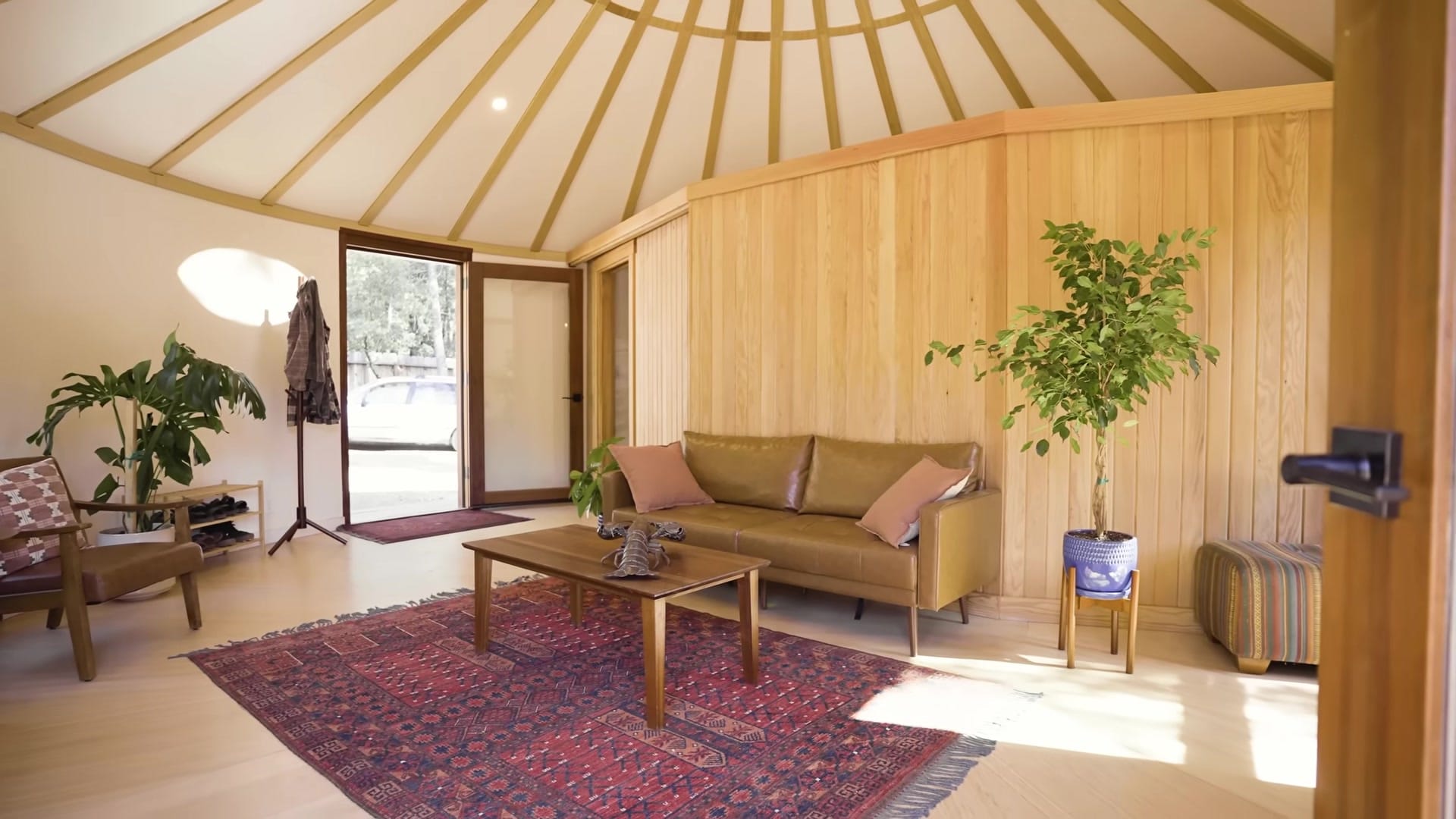
Inside, the bamboo flooring kit his shop makes sets the tone.
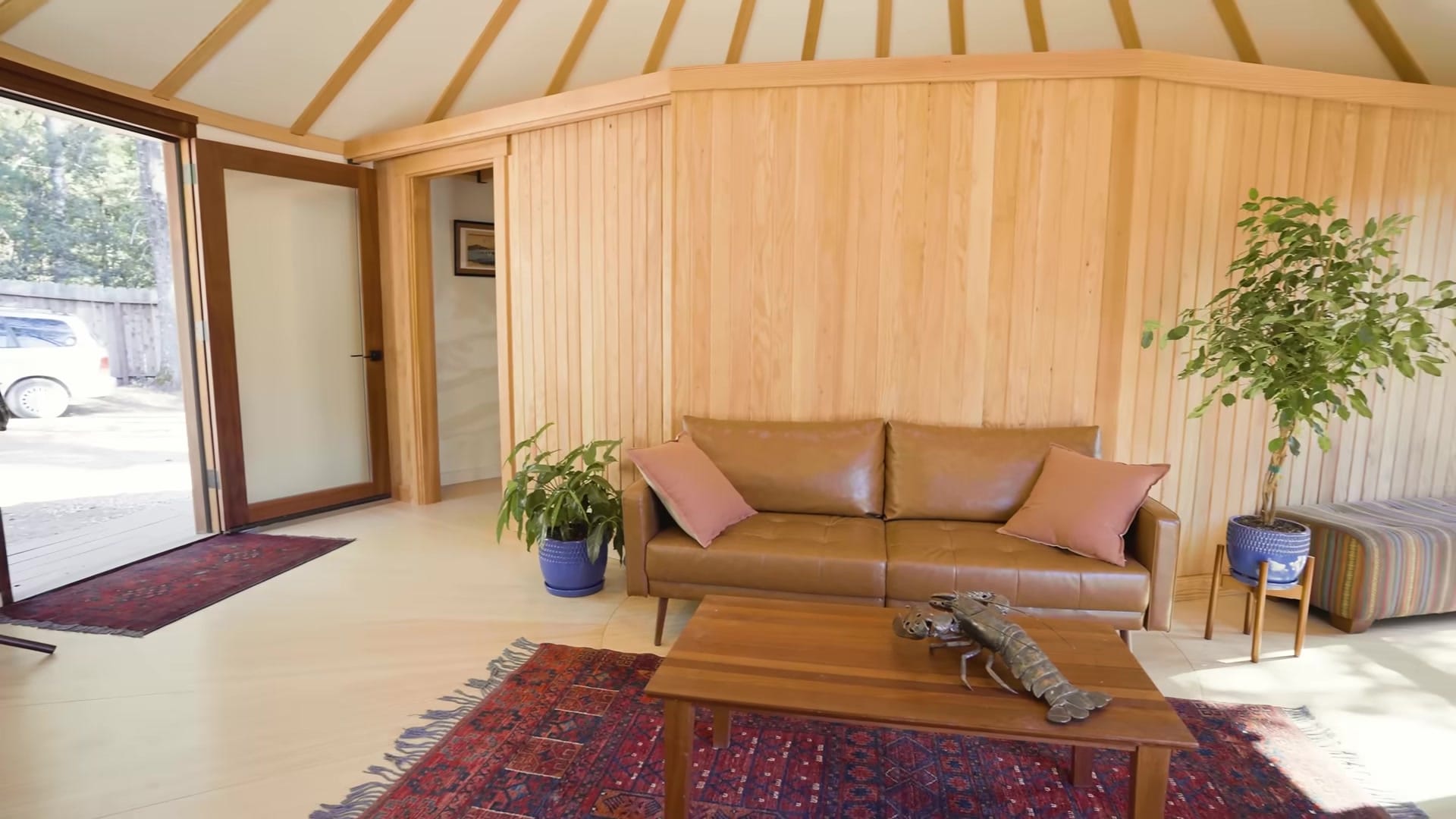
It’s a top‑nail installation,
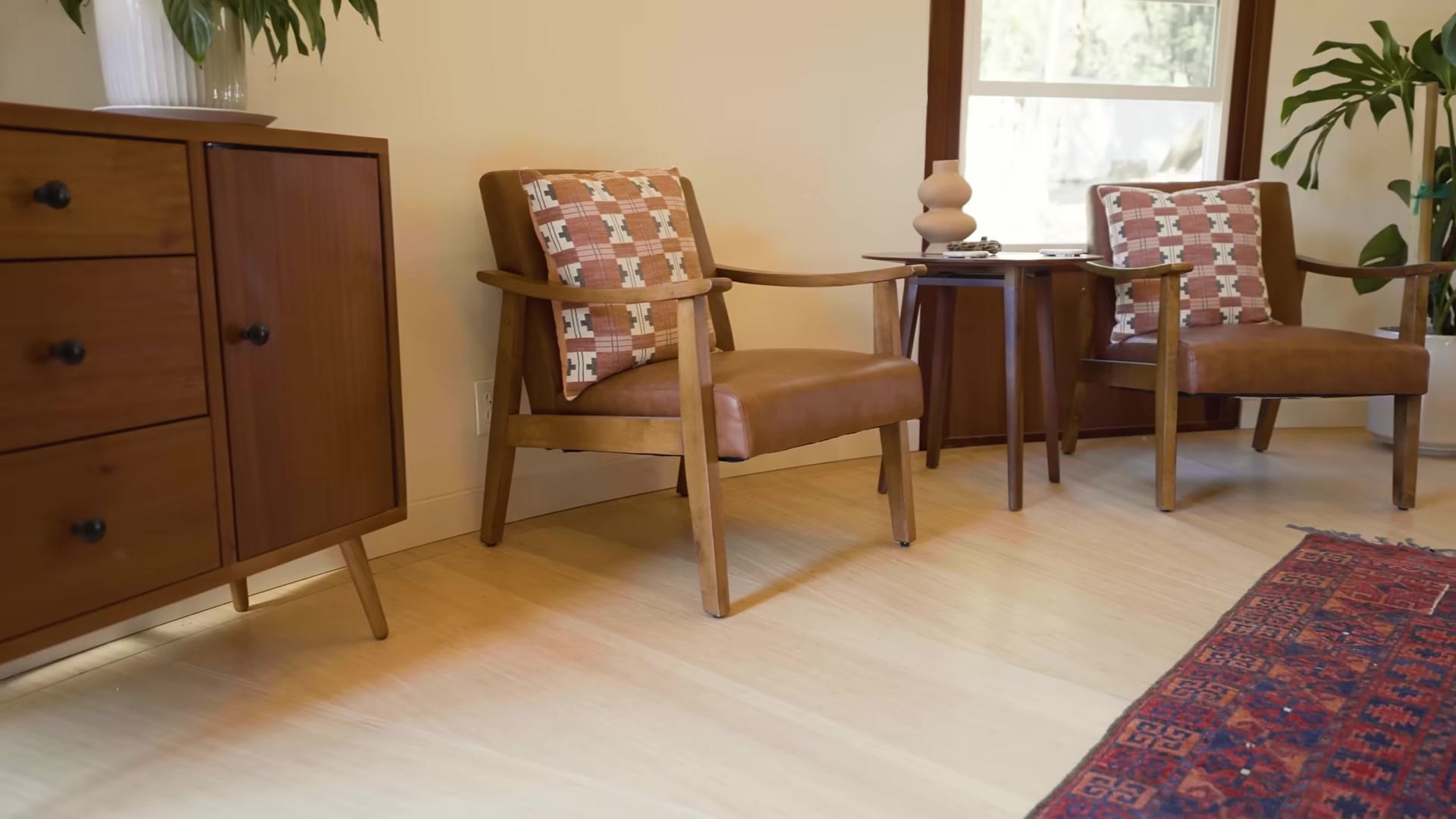
and the lines play beautifully with the round shape of the room.
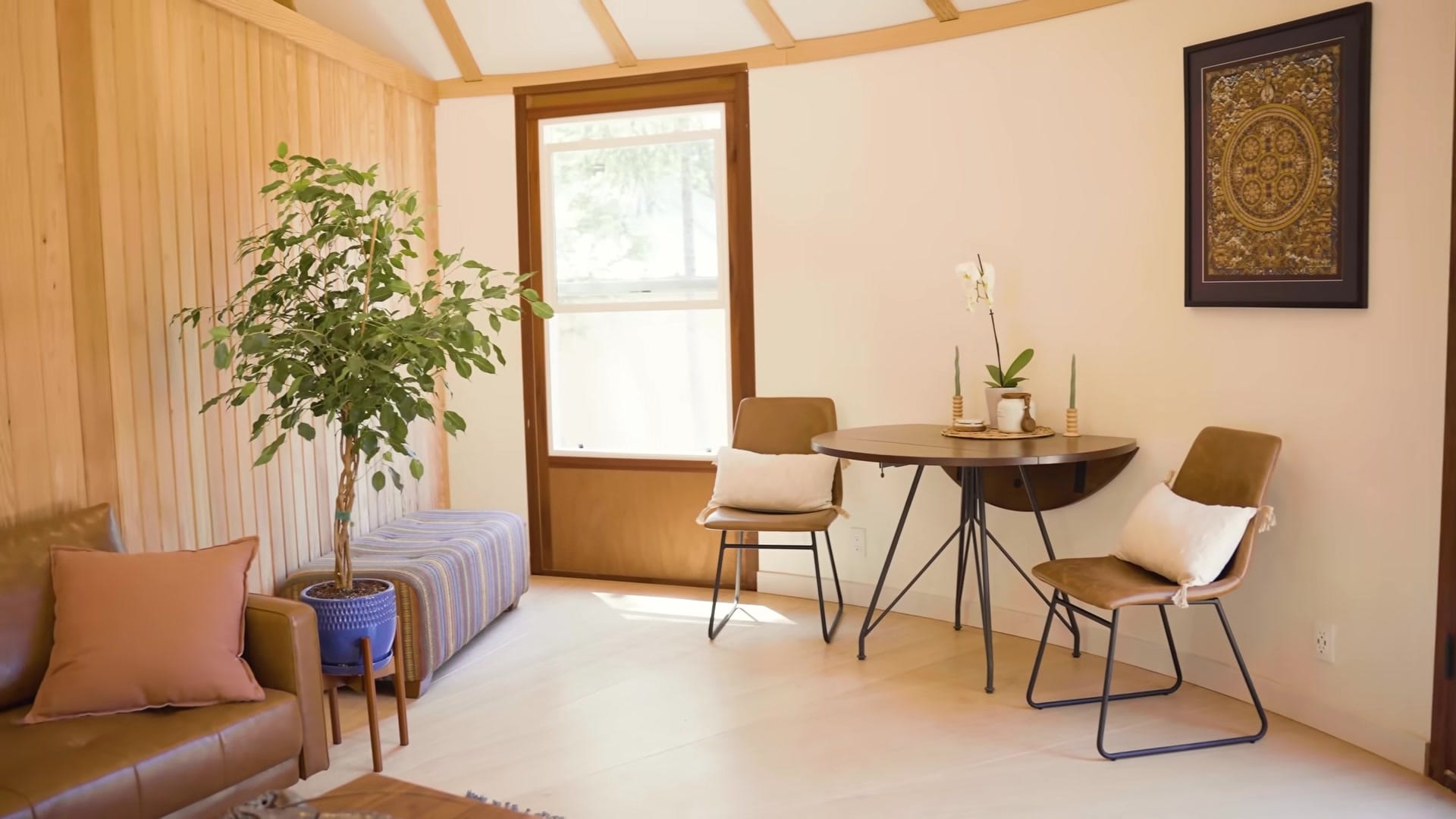
High, lofted ceilings make the space feel wide open.
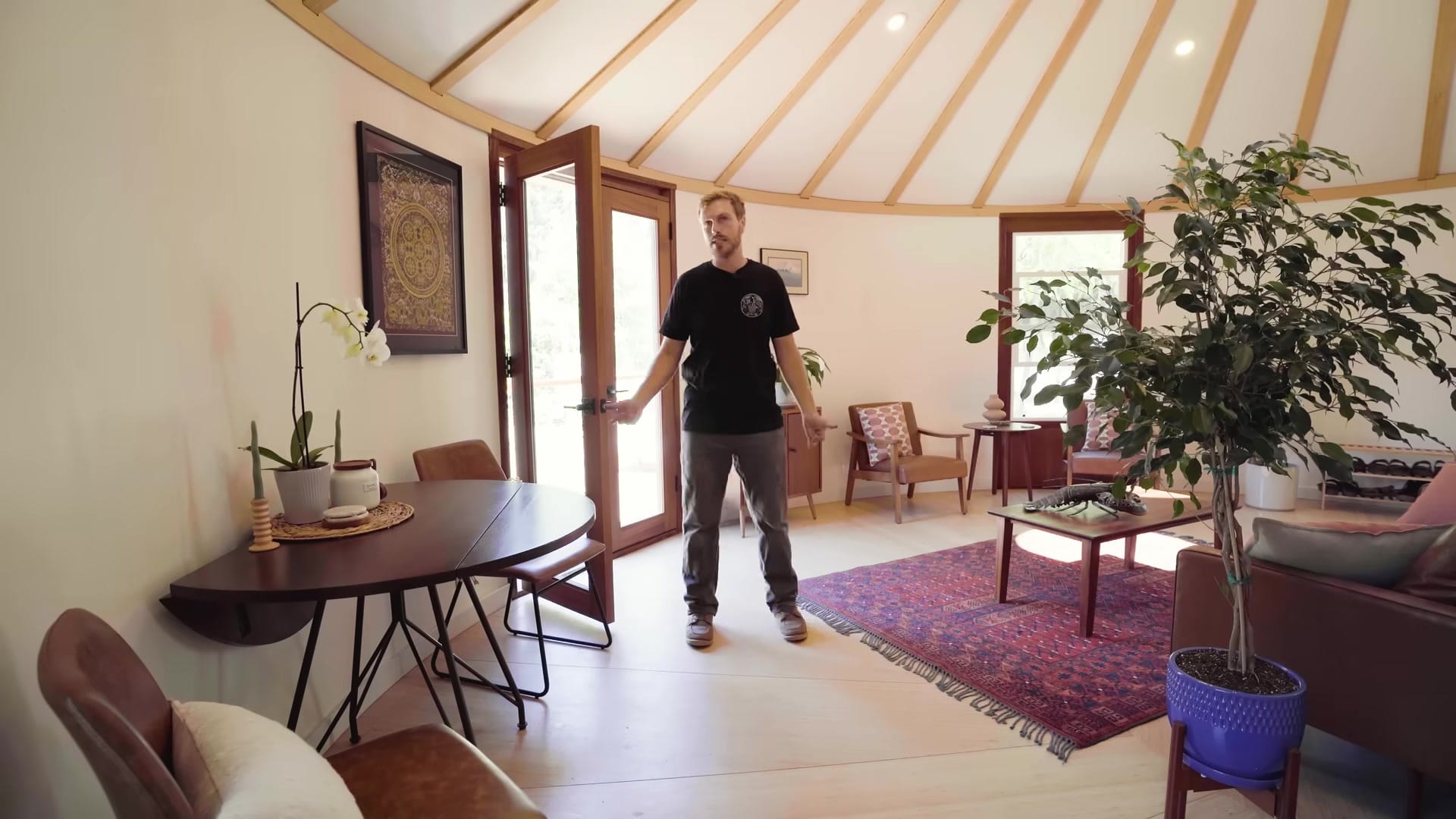
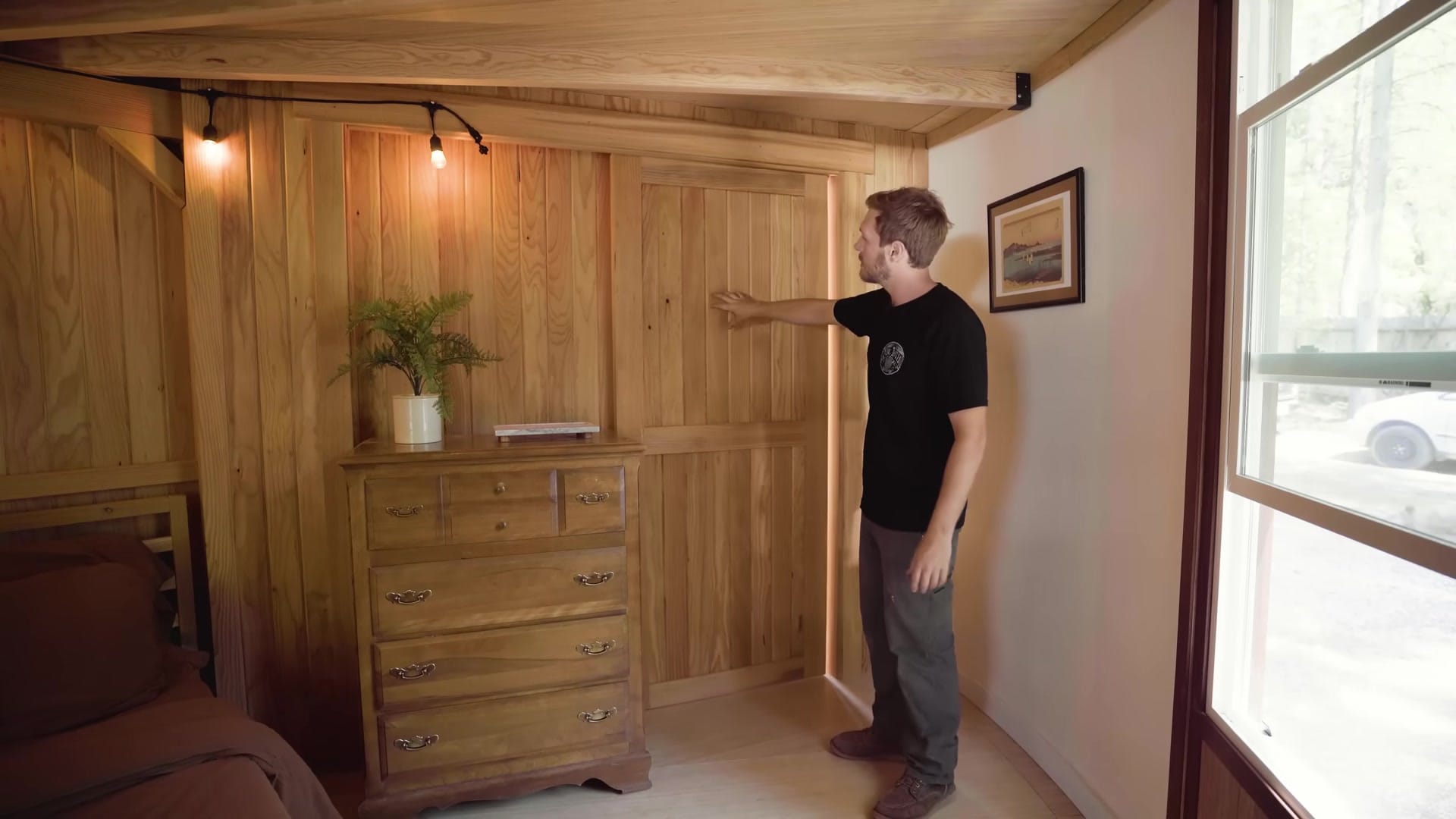
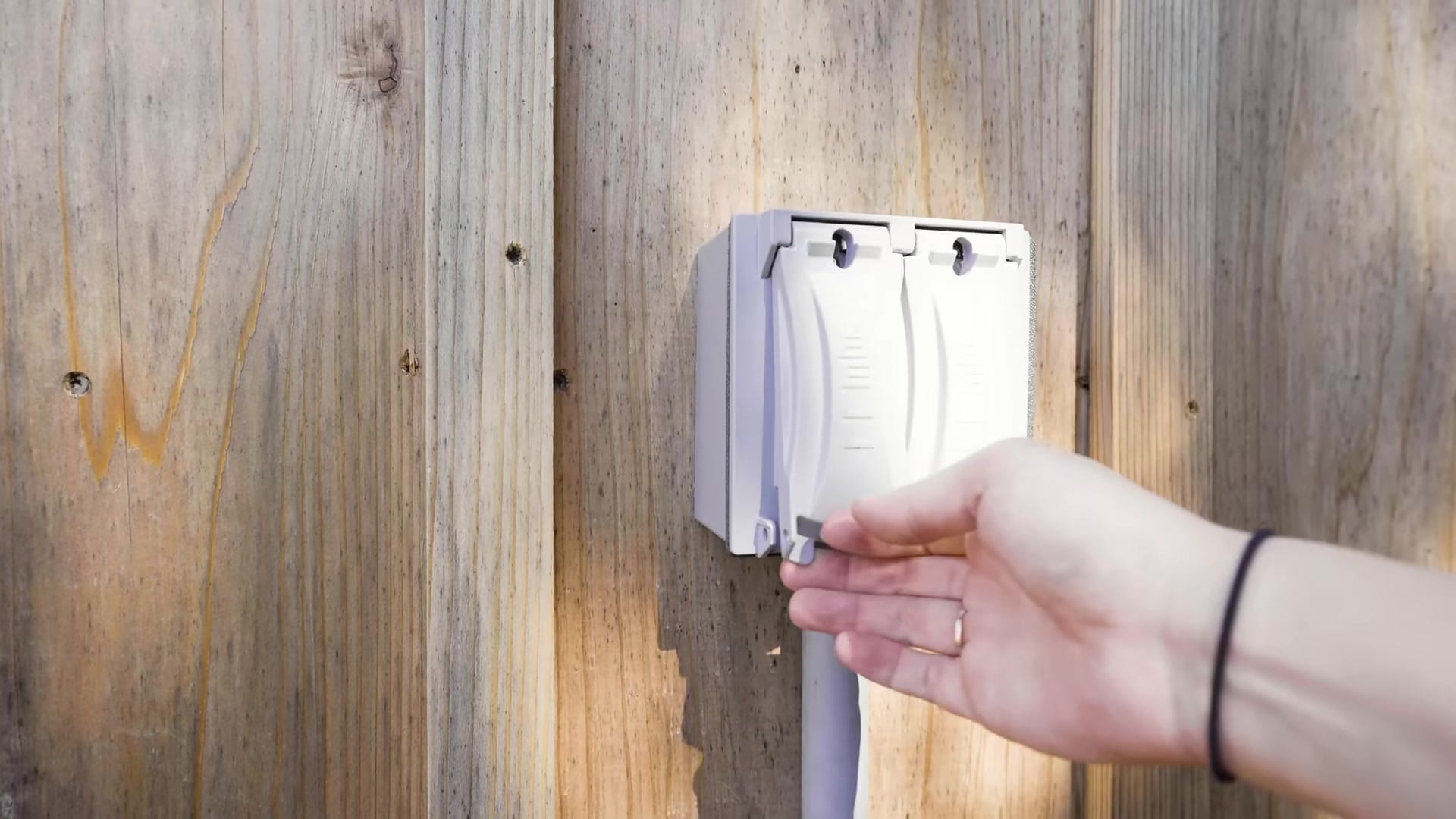
A big upgrade here was dialing in the property‑wide electrical with a 1,000‑watt solar kit, which let him add halo lights, dimmers, plugs, and switches instead of shuffling extension cords . The bedroom closes off with a pocket door he built from the same fir shiplap used throughout.
Kitchen, Deck & Outdoor Cooking — French Doors and Propane Setup
Step out the French doors onto a cedar deck that arcs into the hillside for easy walk‑on, walk‑off flow.
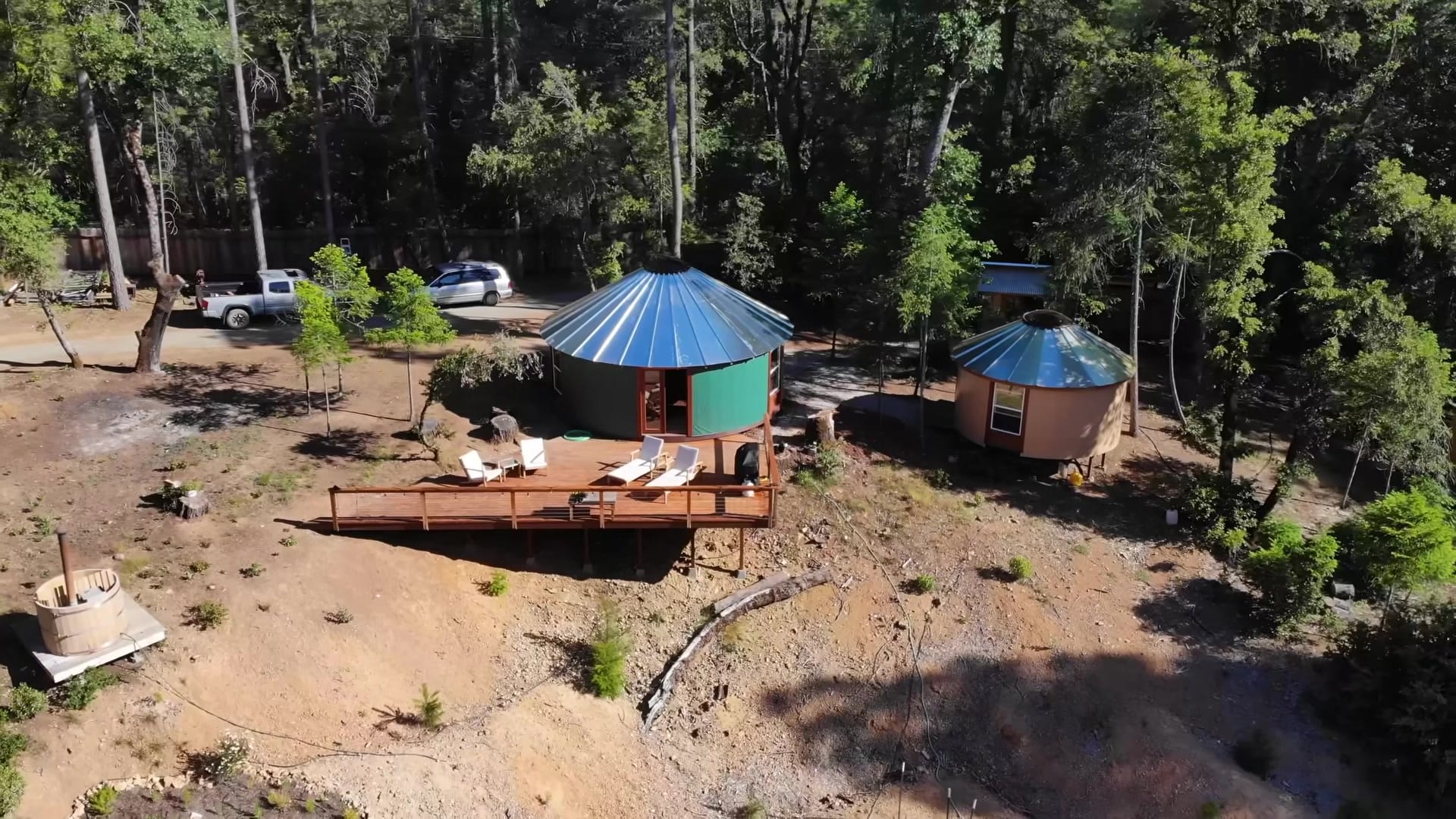
The walkway snakes around to the kitchen, tying the structures together in a loop.
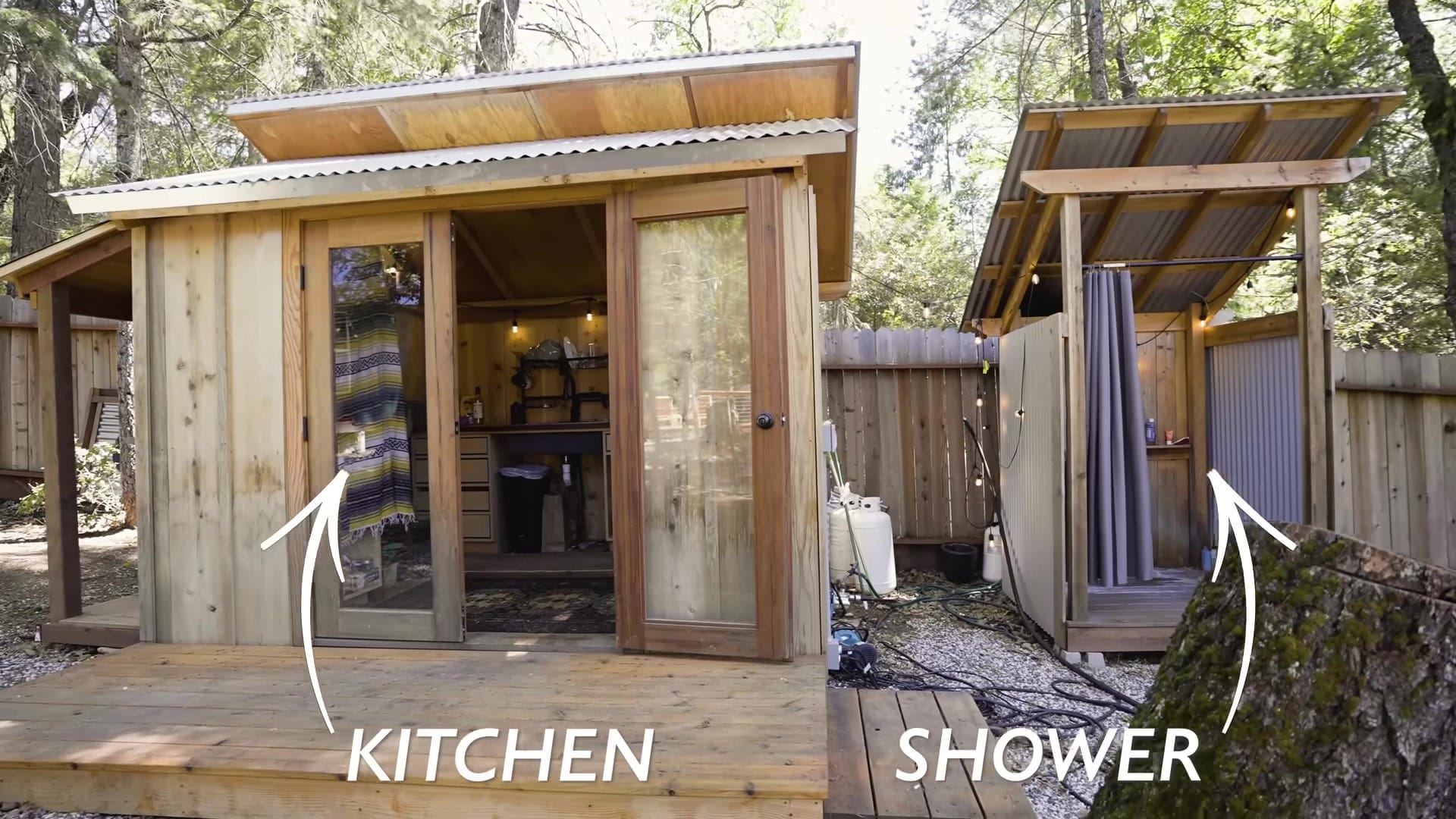
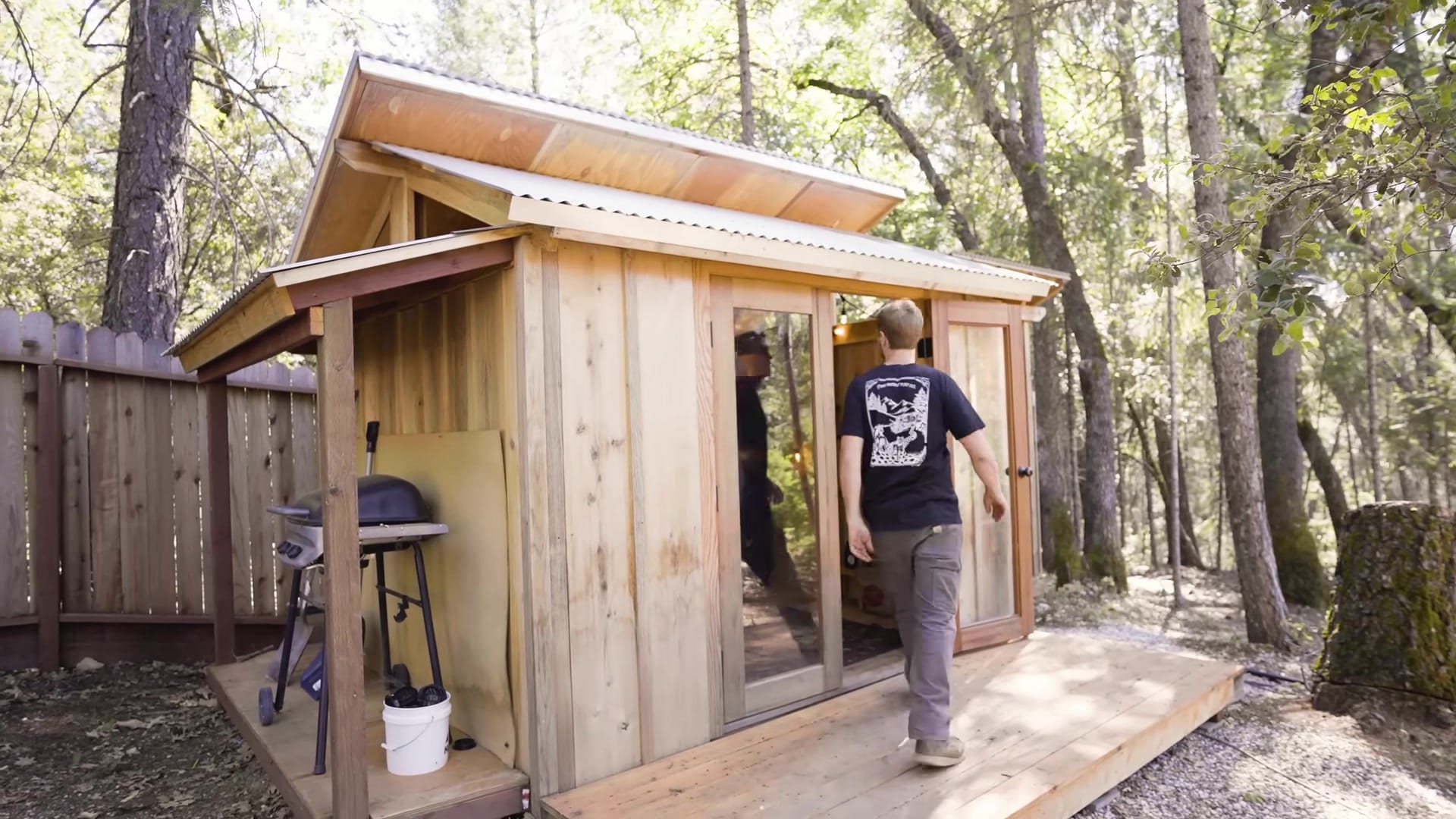
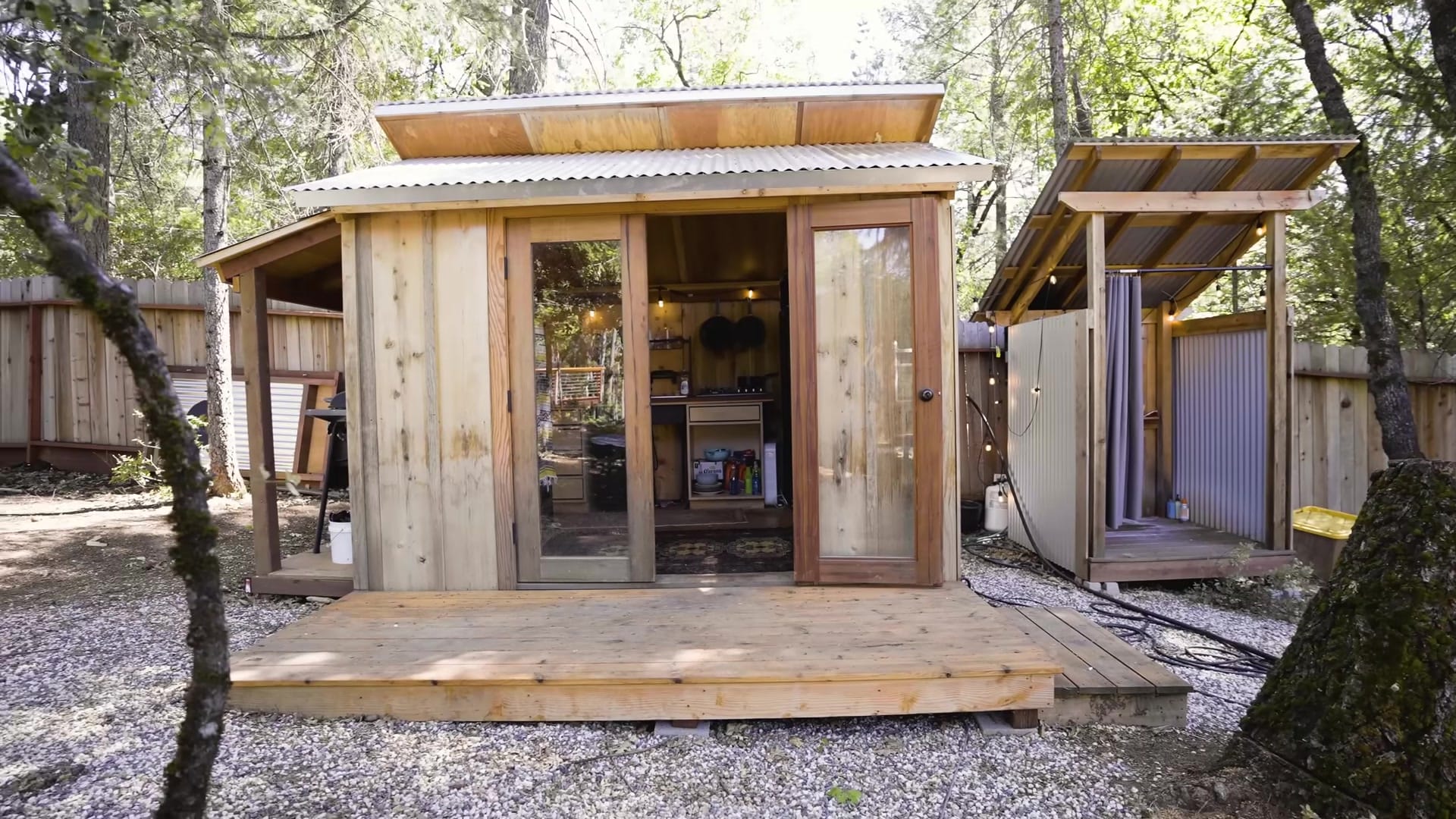
Just to the left of the roundhouses, the kitchen began as a lean‑to and grew over time.
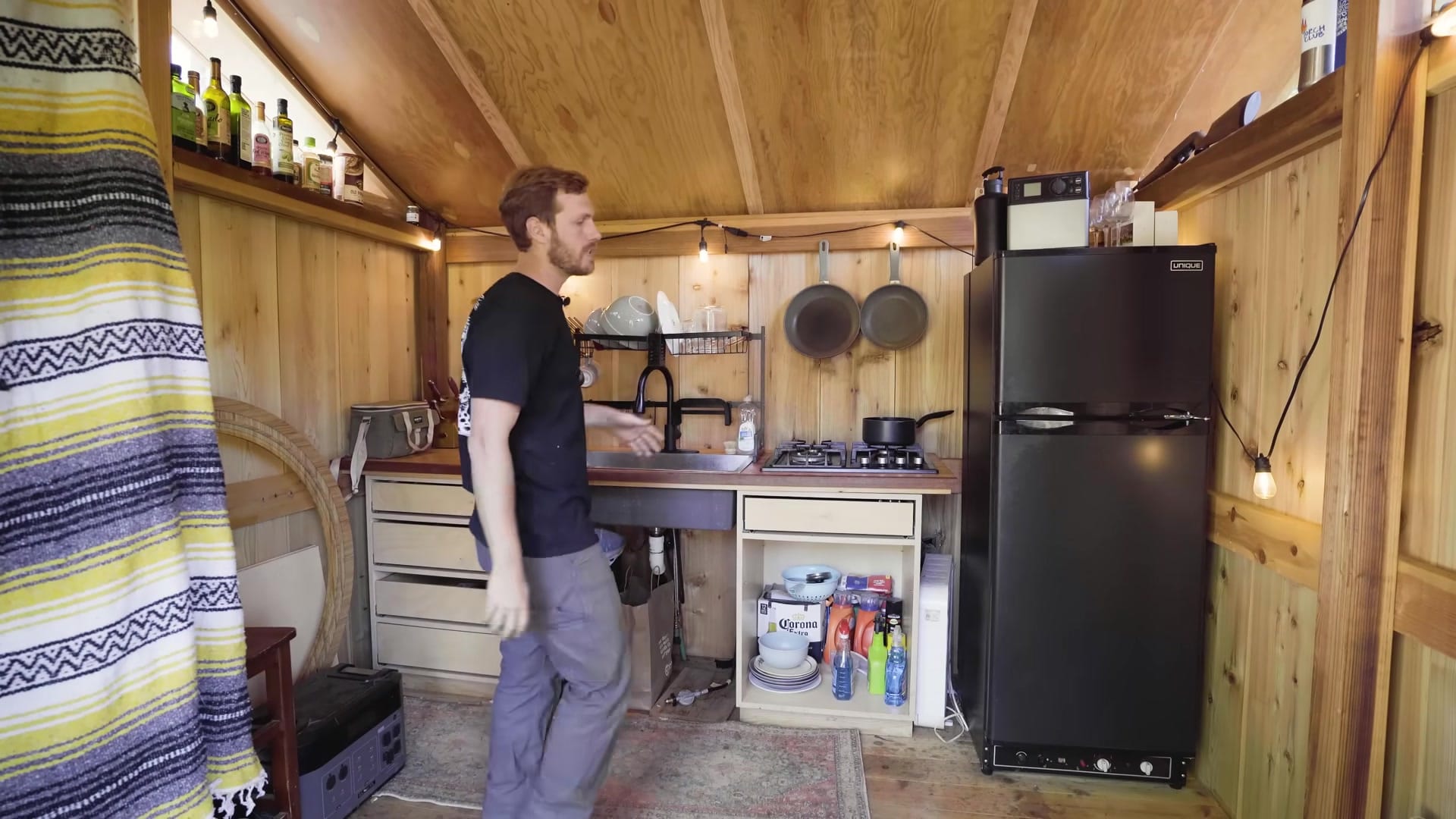
A propane fridge anchors the workspace,
while custom French doors were built from old redwood tank stock a friend had on hand.
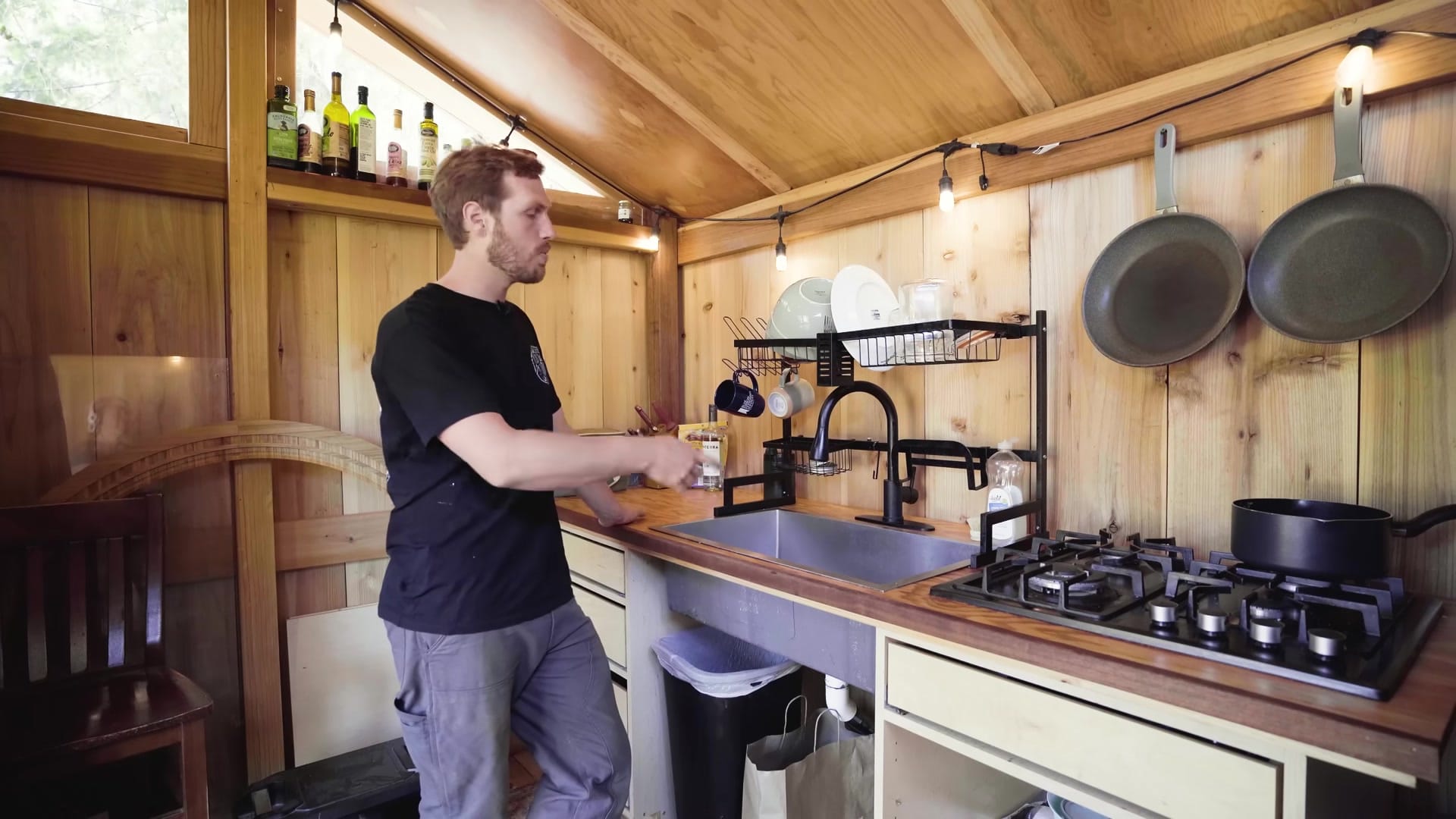
He dropped a propane cooktop into the counter for a clean, compact setup.
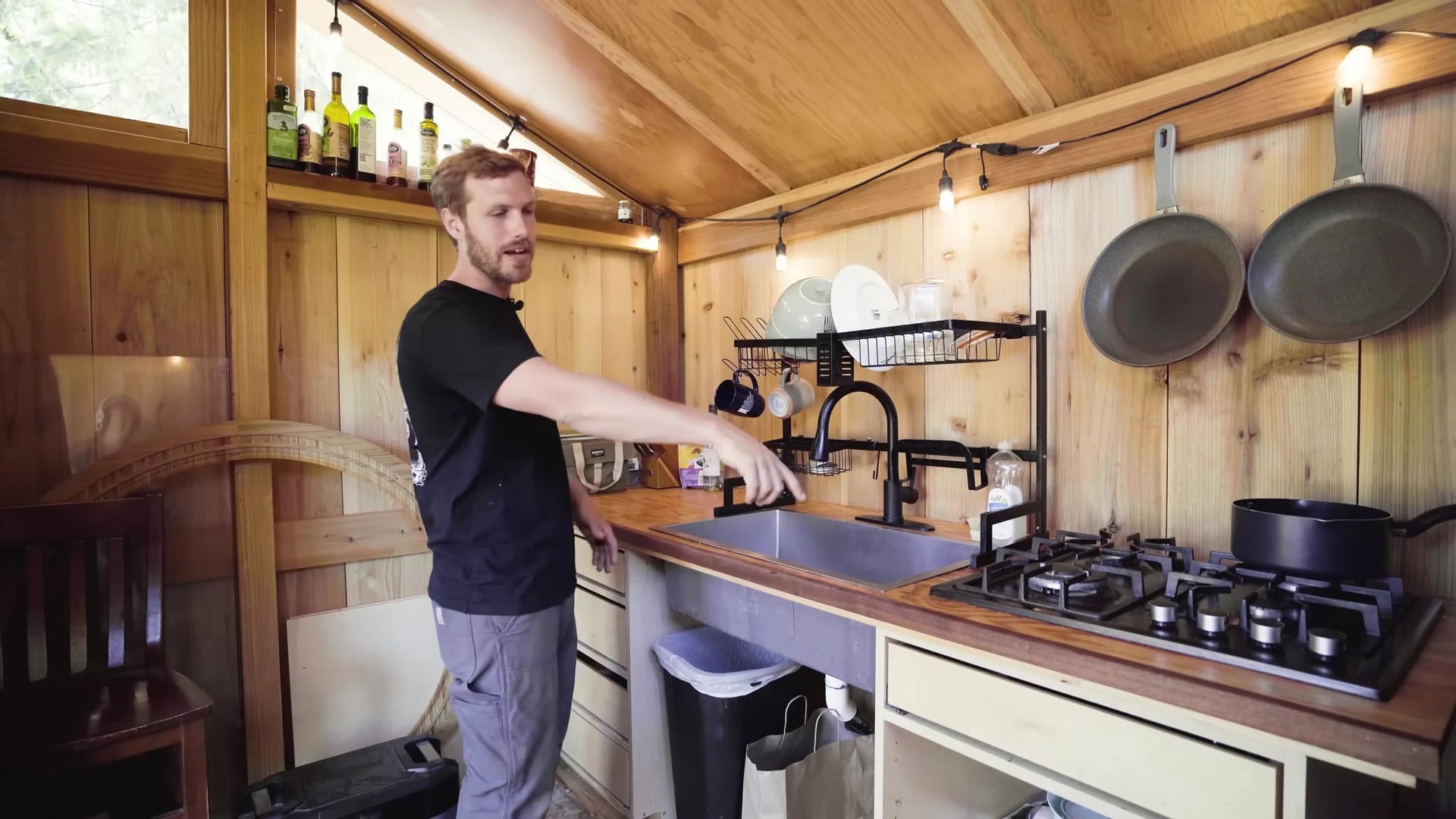
Flip a switch and water runs through an on‑demand heater, then out to a graywater area.
Baths & Amenities — Outdoor Shower, Hot Tub and Composting Toilet
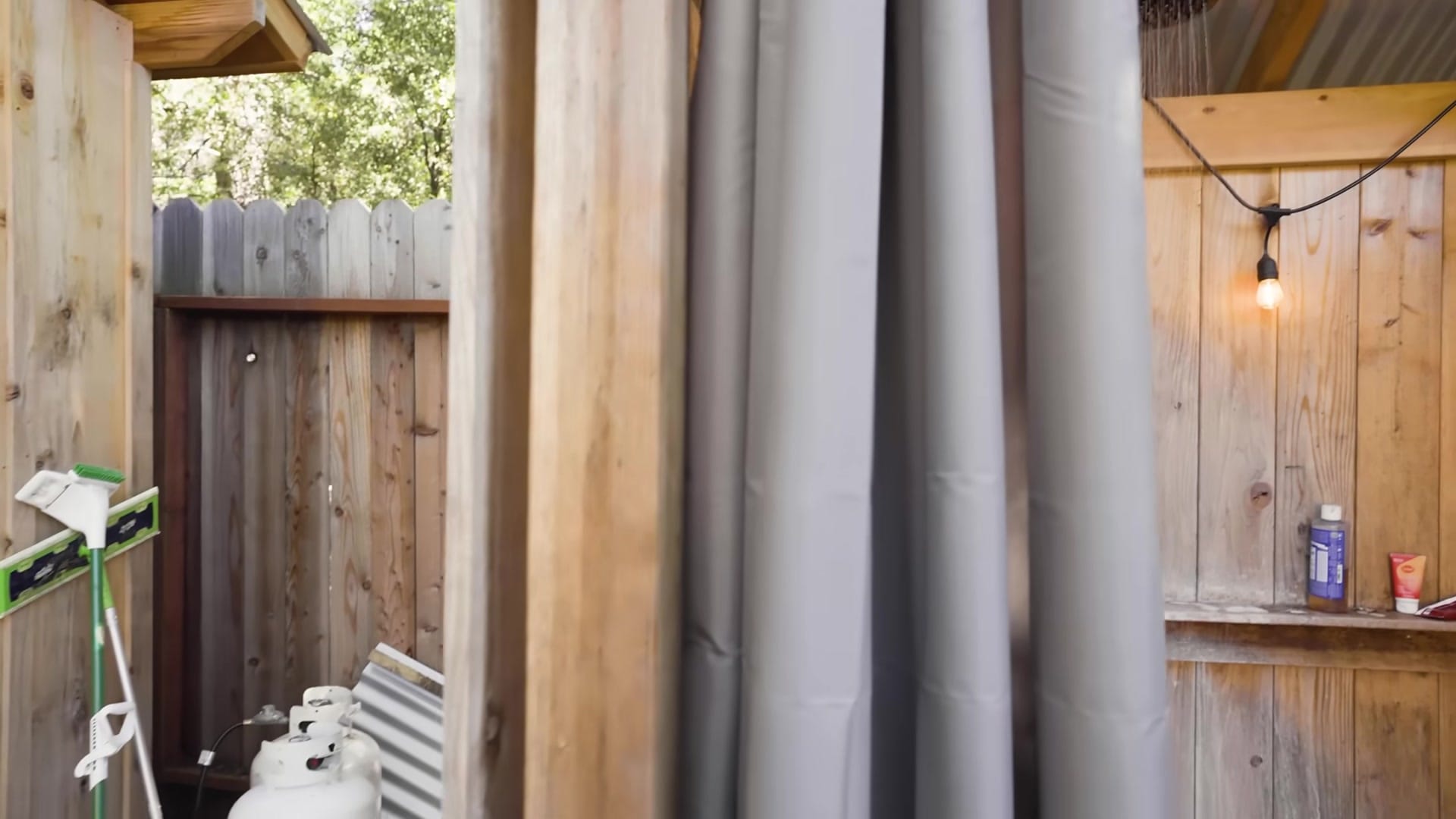
The outdoor shower sits just to the right of the kitchen and was upgraded from a very basic stall to this cedar‑framed nook over one weekend.
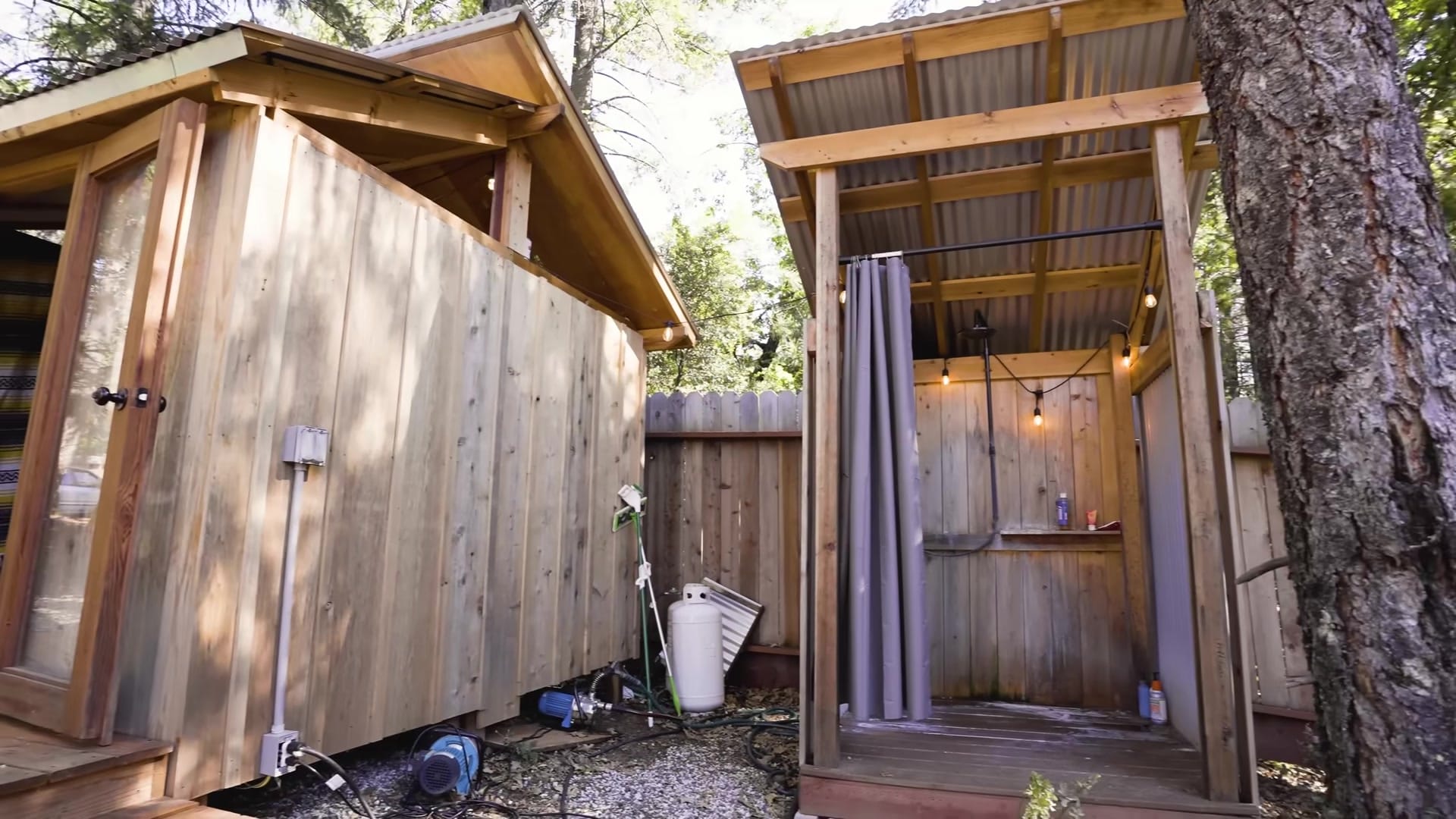
It pulls from a water tank through an on‑demand propane heater.
The pressure is great—and the water gets seriously hot.
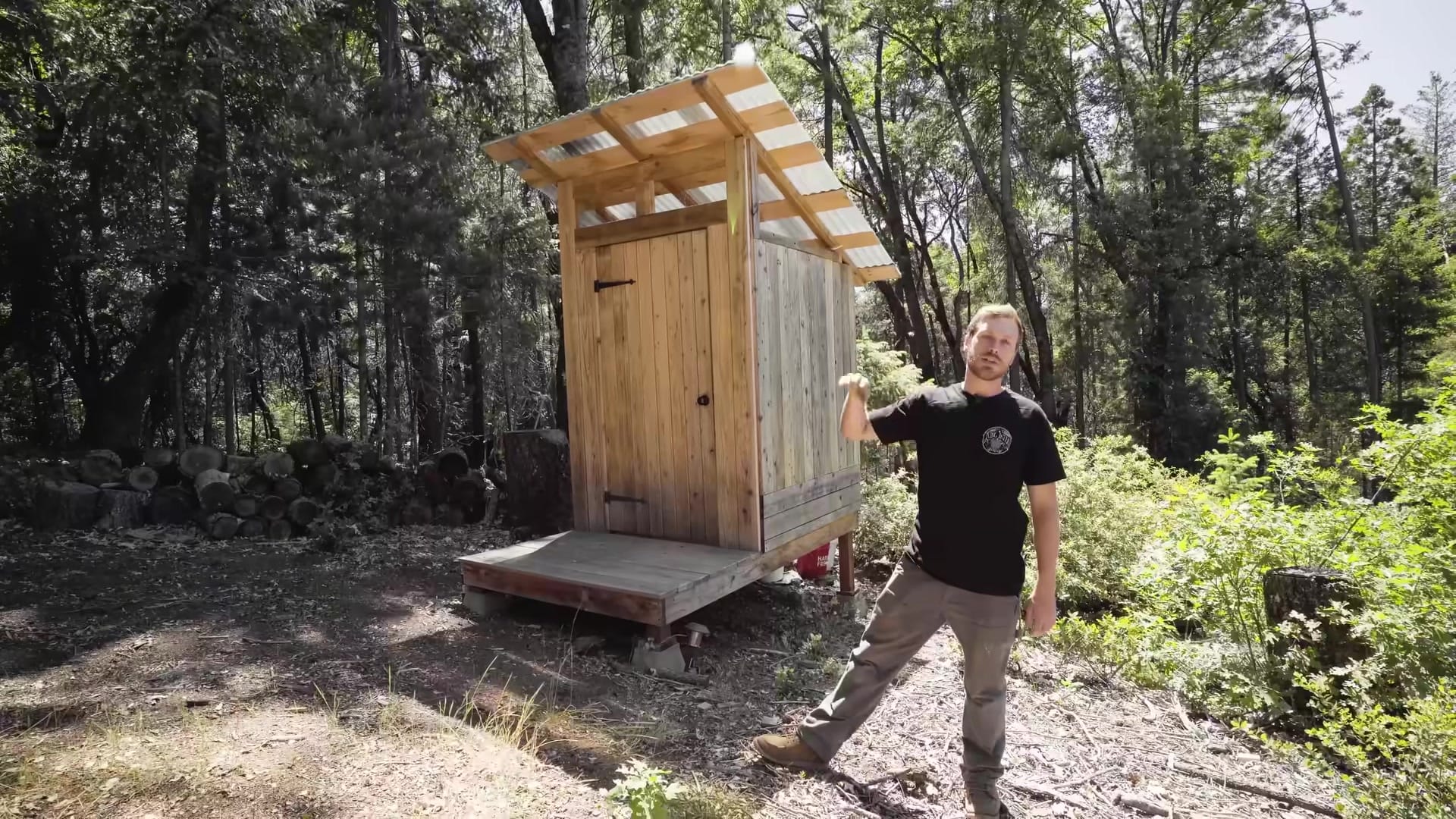
For soaking, there’s a hand‑built cedar hot tub that runs entirely off‑grid . Down the slope, the outhouse he built early on still does exactly what it’s supposed to do.
Guest Yurt, Platforms & Built Elements — Prefab Flooring and Doors
The 16‑ft guest yurt is special: it’s the first rigid‑wall yurt with an eave his company built, and the first with a metal roof.
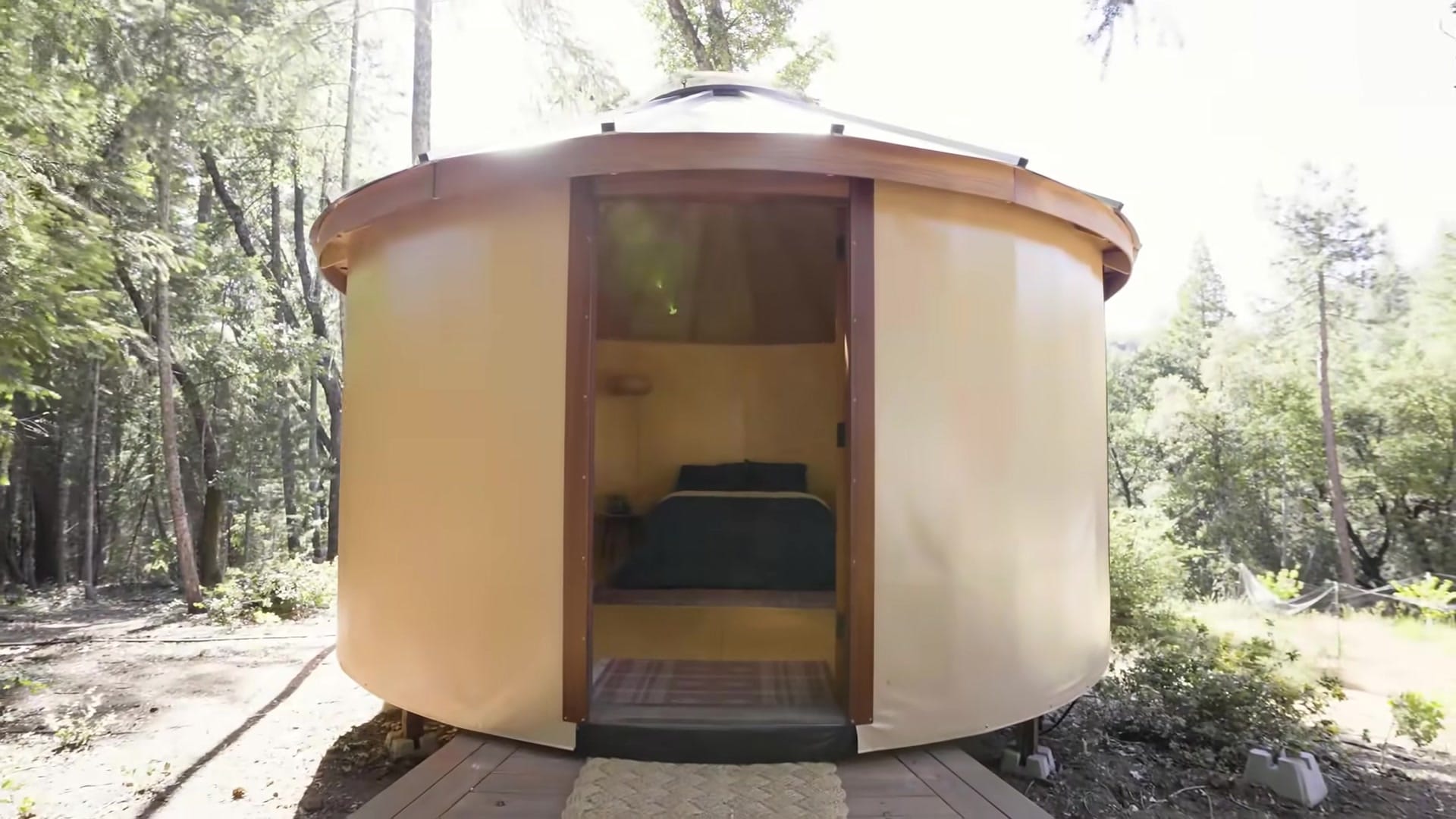
He lived here while constructing the larger roundhouse next door.
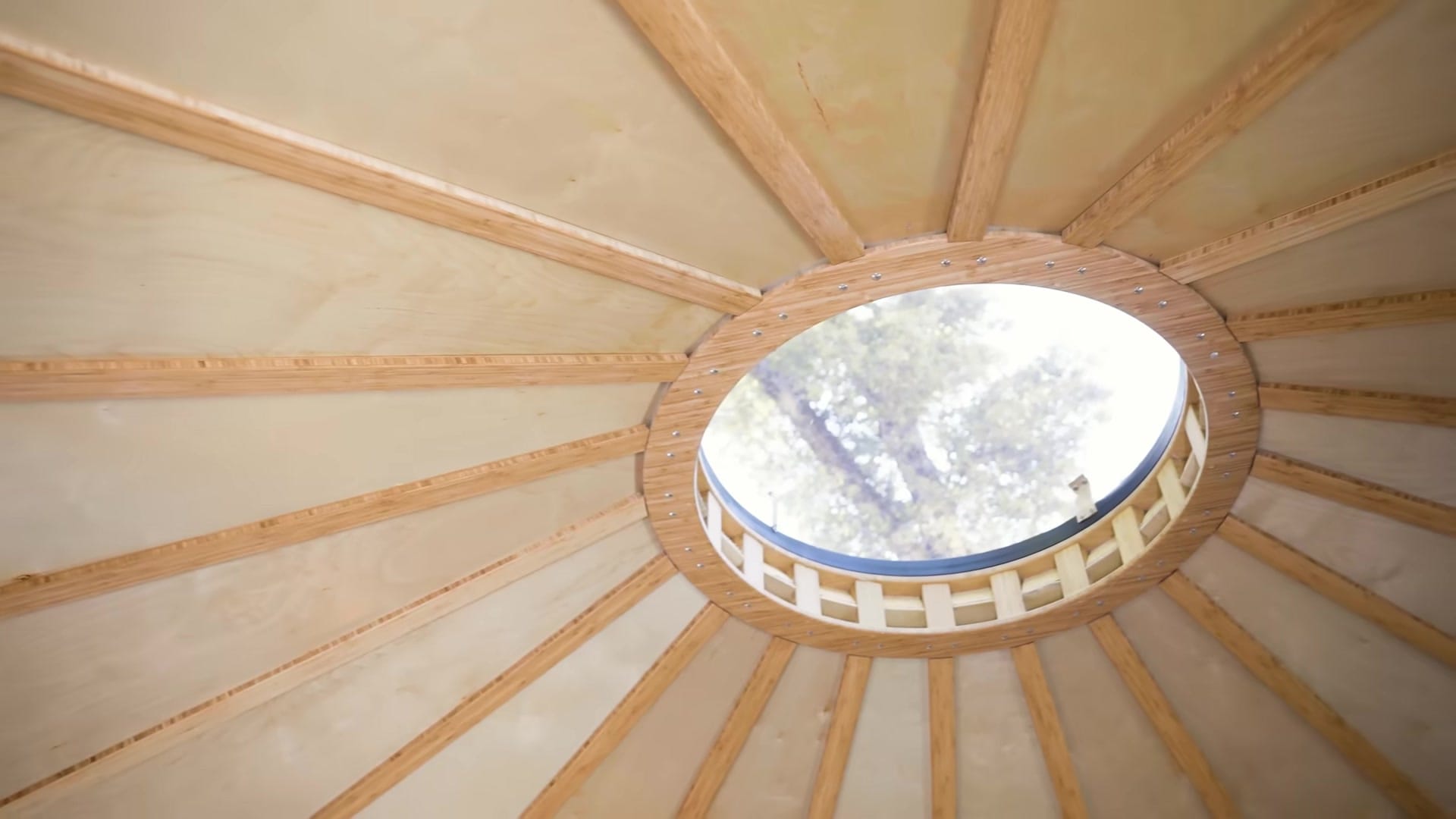
Underfoot is a prefabricated platform package that bolts together with an easy leveling system.
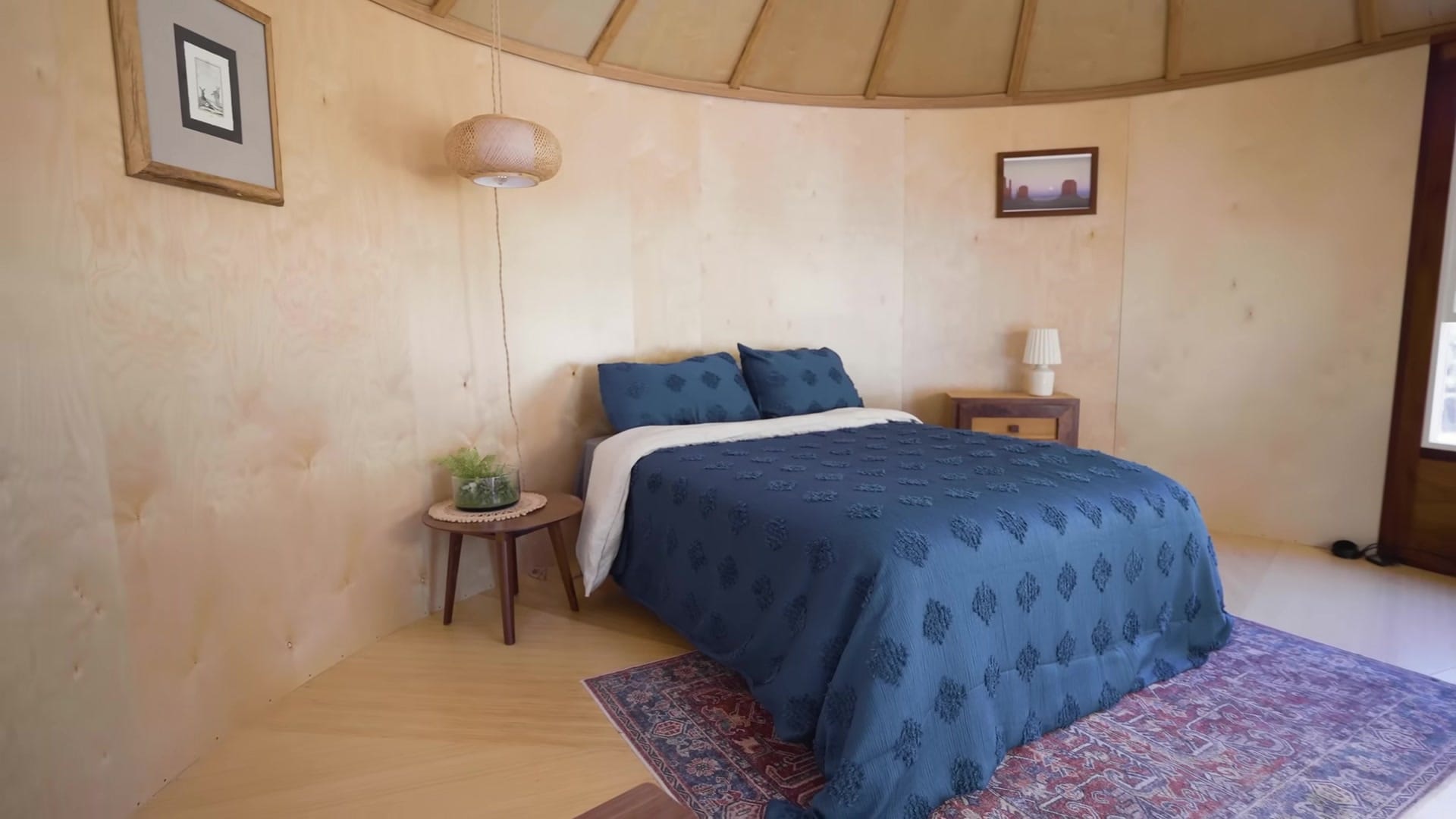
The platform comes together in a couple of hours,
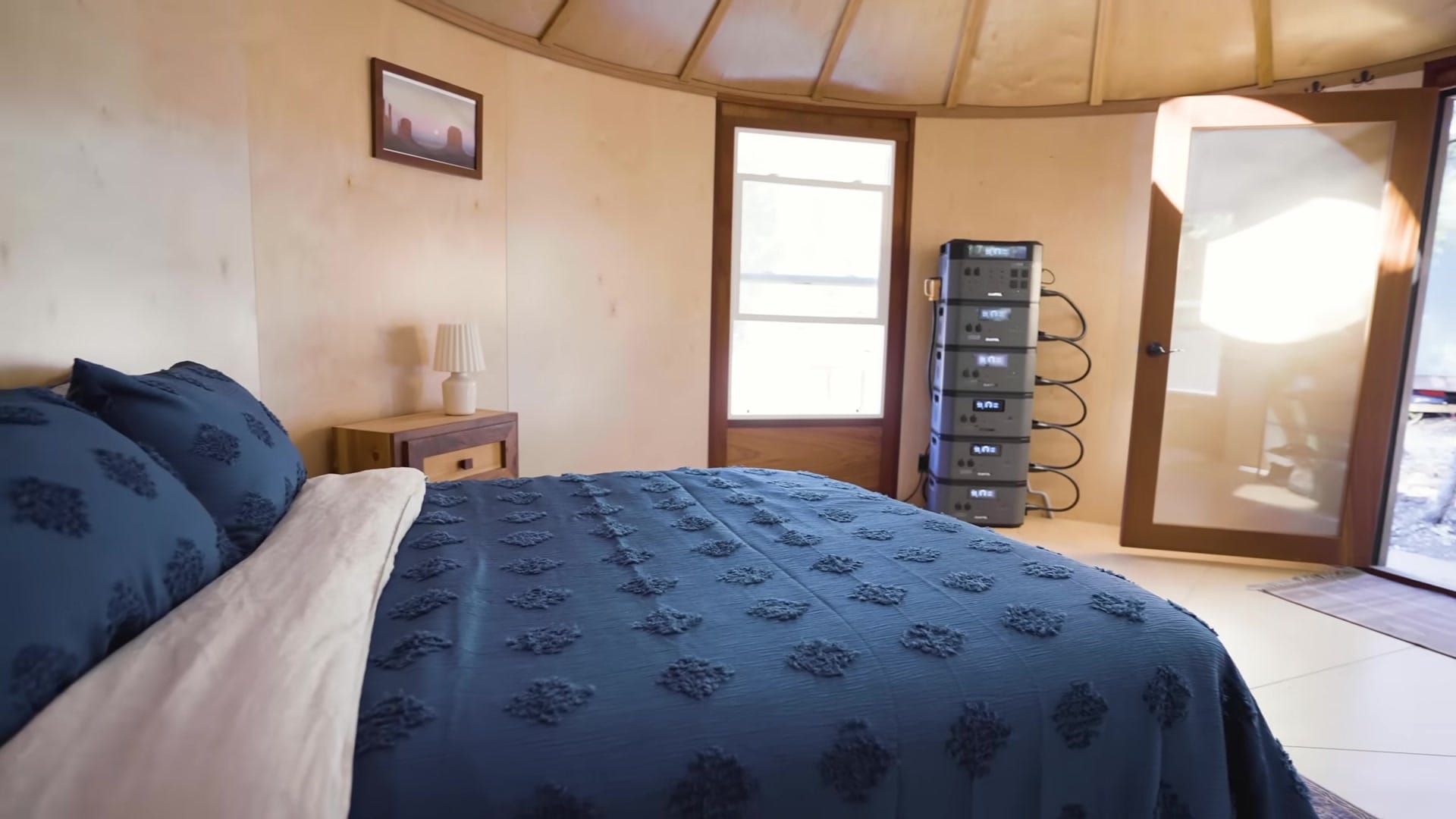
so you can build up from there quickly.
Off‑Grid Systems, Costs & How He Financed the Land
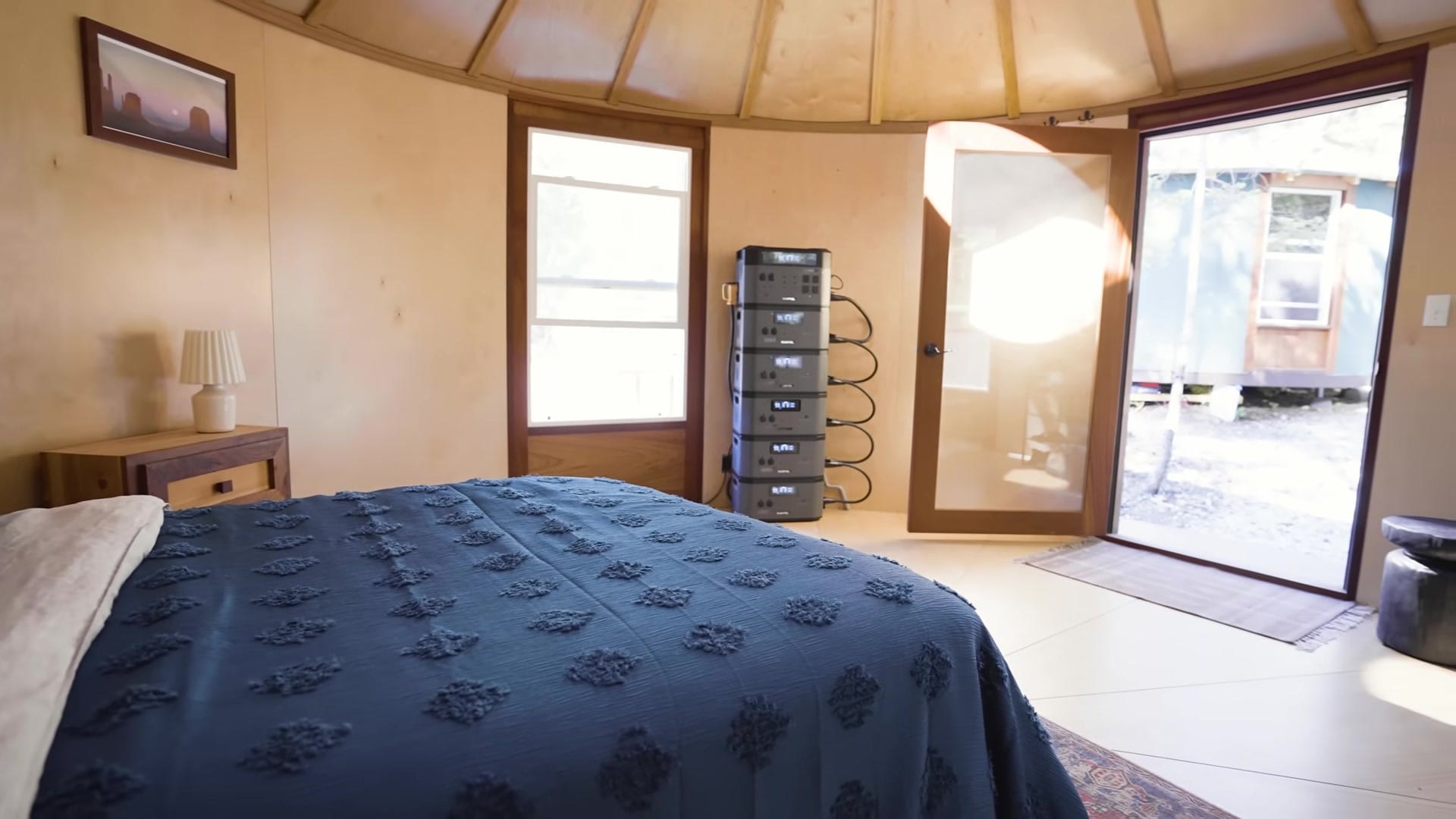
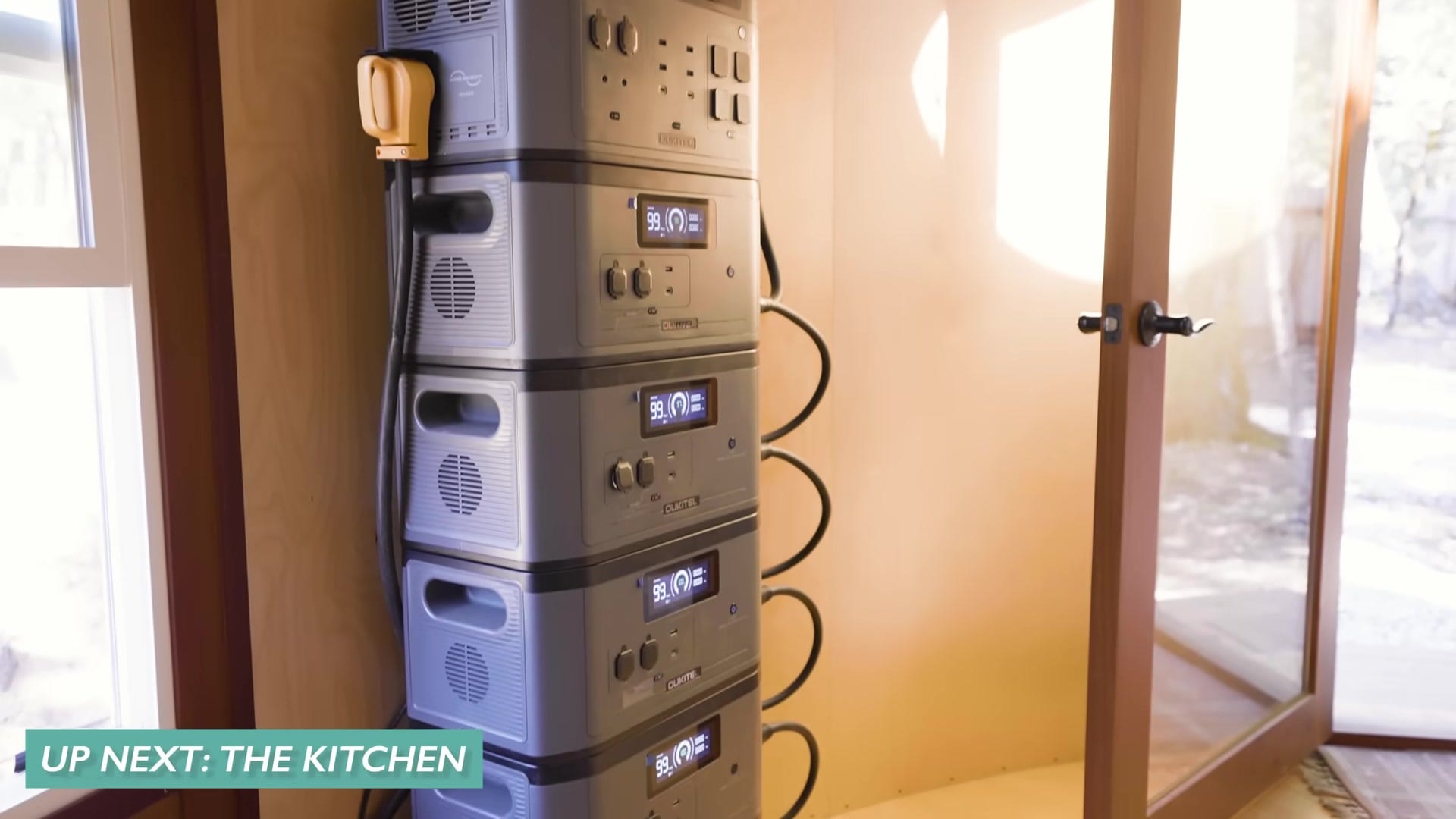
Power for the roundhouse, guest yurt, kitchen, and shower all flows from a single solar battery stack.
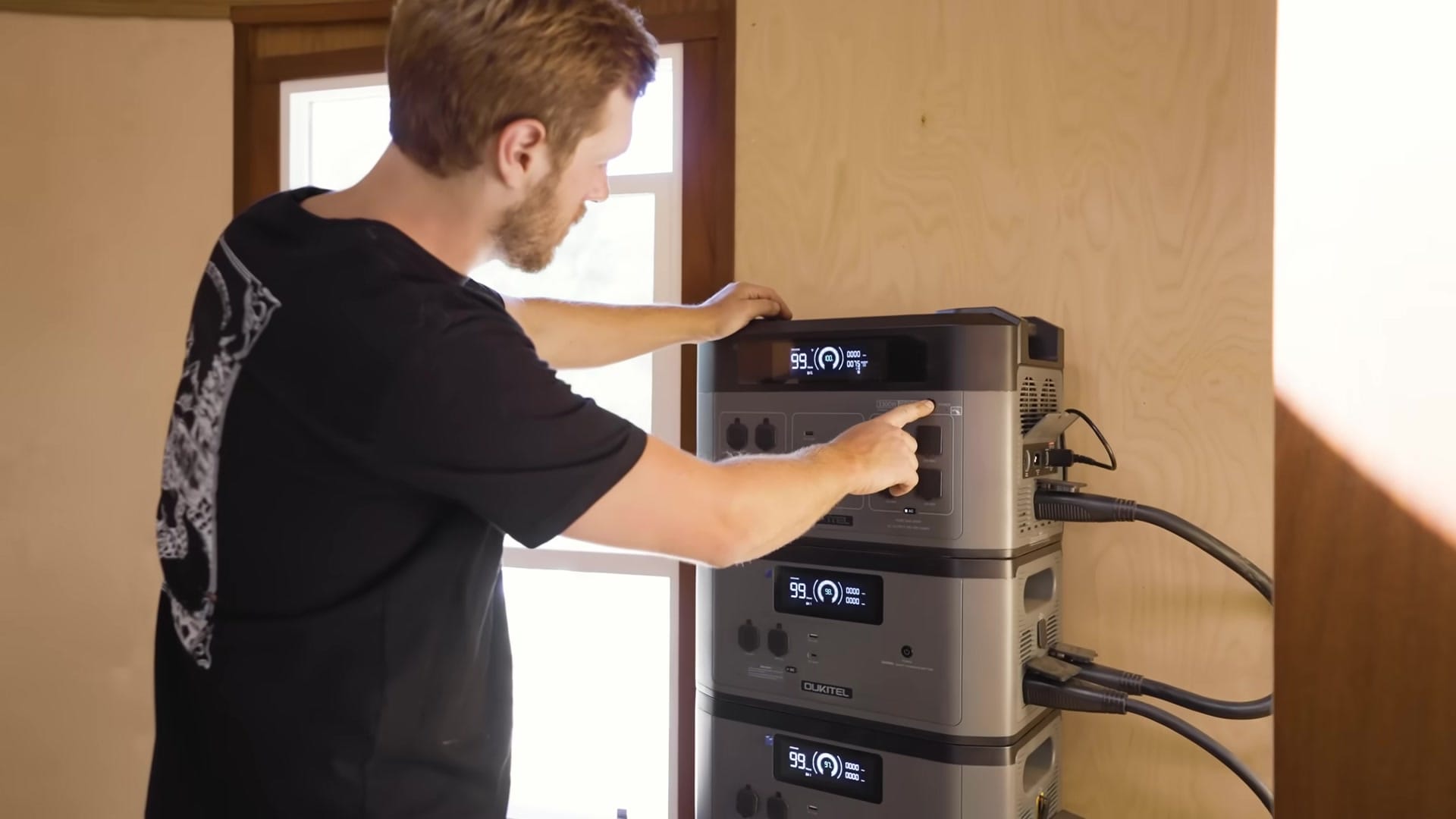
The heart of it is a 3,300‑watt main unit with expansion batteries linked in.
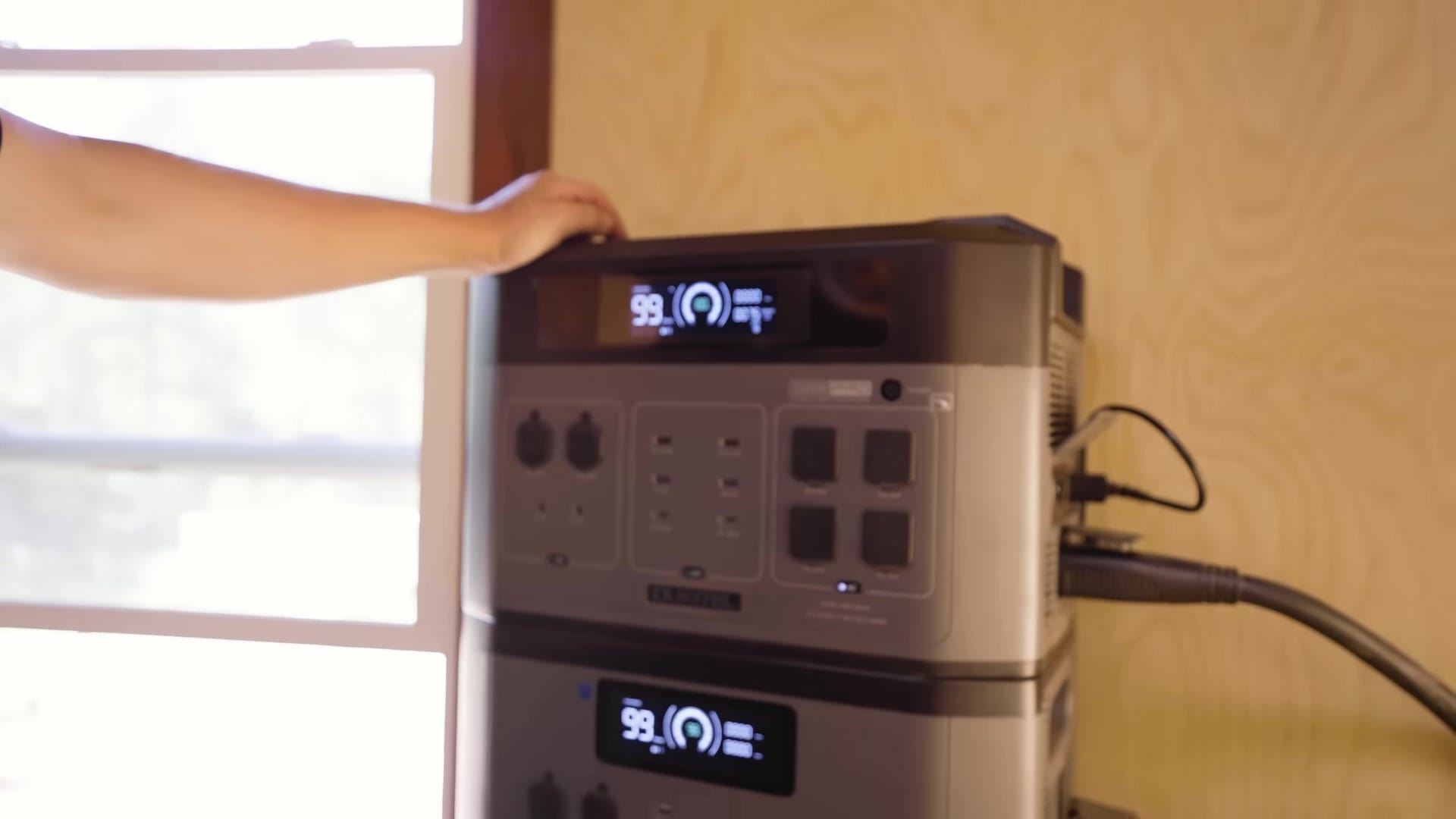
Fully charged, the system runs four to five days before needing a top‑up, even in winter when he occasionally uses a generator.
Water comes from a well, pumped with solar into holding tanks—or directly to irrigate the garden . The land itself? It popped up on Craigslist about ten minutes from his workplace after a cannabis operation left it sitting vacant . He negotiated owner financing over ten years with a small amount down, working with a title company to keep the deal buttoned up .
The numbers that keep it running:
- Solar spend to date: about $6,000 (hardware and wiring help).
- Typical monthly outlay: roughly $1,200 to $1,300 including land costs.
- Land note minimum: $500/month; he prefers to pay more.
- Annual balloon: $3,000 due each year.
- Propane: about $60/month; diesel in winter: about $120/month if running two heaters.
The solar stack powers all structures from one place , and he likes that the system runs days between charges . The wellspring water supply stays simple and steady . He found the place the old‑school way and set terms that let him build as cash came in . Owner financing and careful paperwork made the land possible without a traditional bank .