ST. LOUIS TORNADO WARNING FAILURE: OFFICIALS ADMIT SIRENS DIDN’T SOUND AS STORM HIT CITY
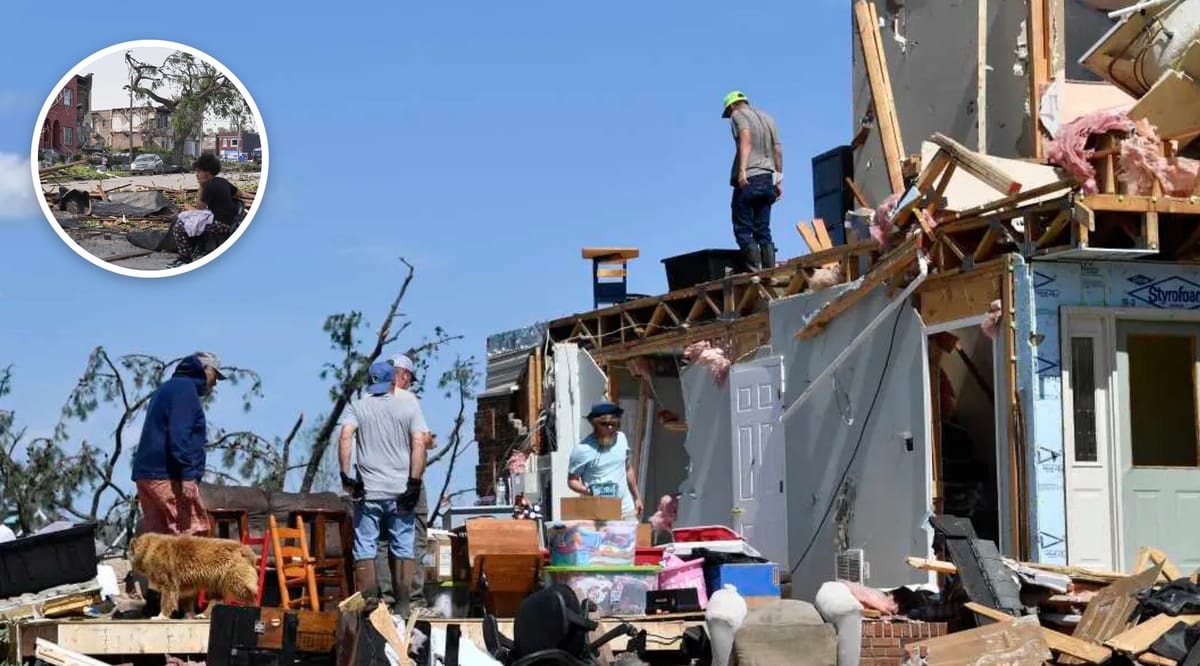
As a deadly tornado bore down on St. Louis, a terrifying silence fell where life-saving warnings should have blared. Officials are now facing questions over a catastrophic failure that left residents dangerously exposed.
But what exactly went wrong when the sirens stayed quiet?
Devastation Unleashed Across America’s Heartland
A violent, tornado-spawning storm system ripped across the central US over the weekend, leaving a horrifying trail of destruction and claiming at least 25 lives in Missouri and southeastern Kentucky.
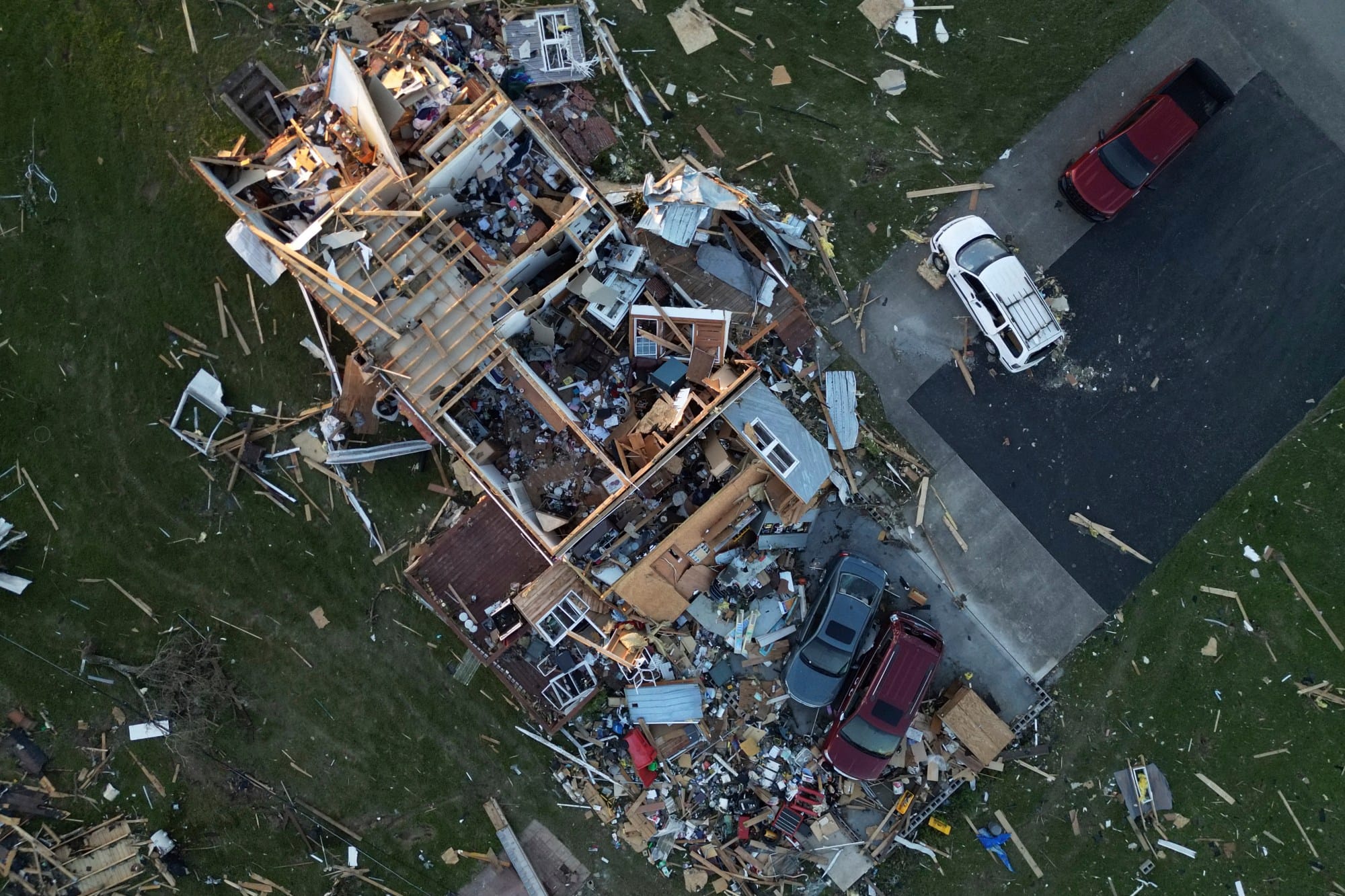
The devastating storms, which also carved paths through Illinois and Indiana, leveled homes, snapped trees like twigs, and contemptuously flipped cars as if they were toys.
The carnage began unfolding late Friday, May 16th, 2025, and continued into Saturday, May 17th, with reports of large tornadoes confirming residents’ worst fears.
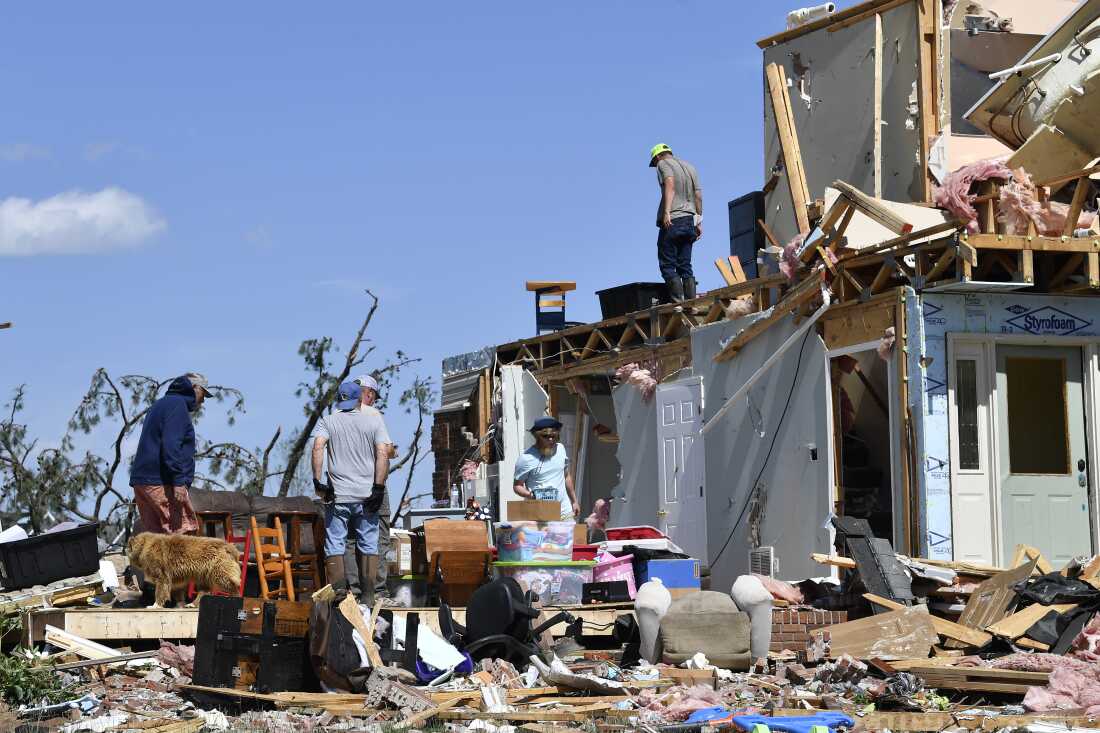
By Saturday, the scale of the disaster was becoming tragically clear, with power outages affecting around 459,000 homes and businesses across a dozen states. Missouri, Kentucky, and Michigan were among the hardest hit by the blackouts, according to Poweroutage.us.
Kentucky Reels from “One of the Worst” Disasters
Southeastern Kentucky bore a significant brunt of the storm’s fury. The National Weather Service confirmed a “large, extremely dangerous” tornado swept east across lower Kentucky shortly after midnight.
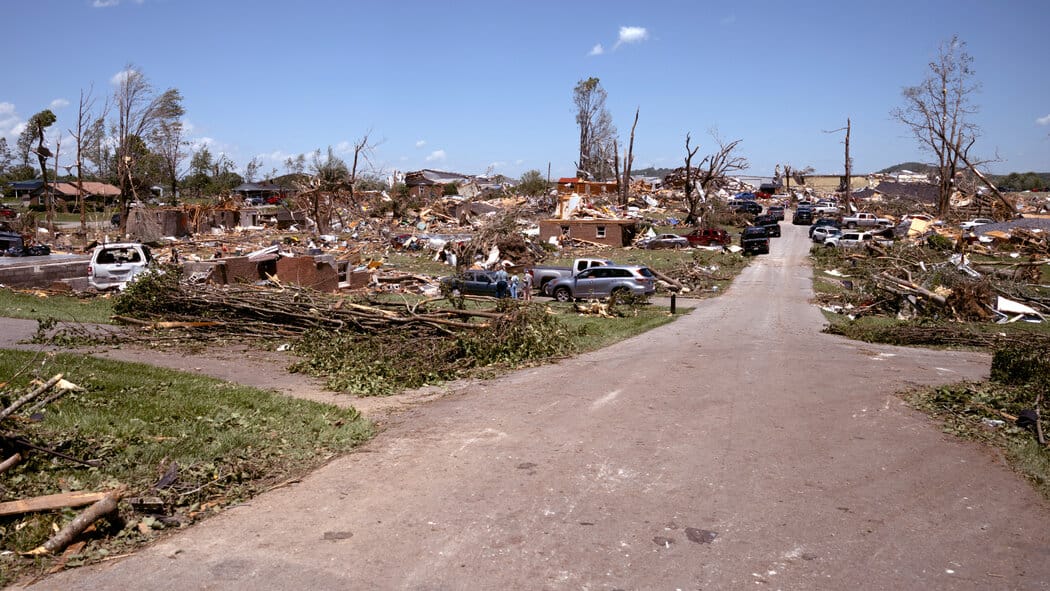
At least 18 people lost their lives in the state, with another 10 reported in critical condition. Drone footage from London, Kentucky, revealed a nightmarish landscape of flattened homes and mangled vehicles.
Kentucky Governor Andy Beshear, visibly shaken, described the scene as “one of the worst” disasters he’s witnessed during his tenure.
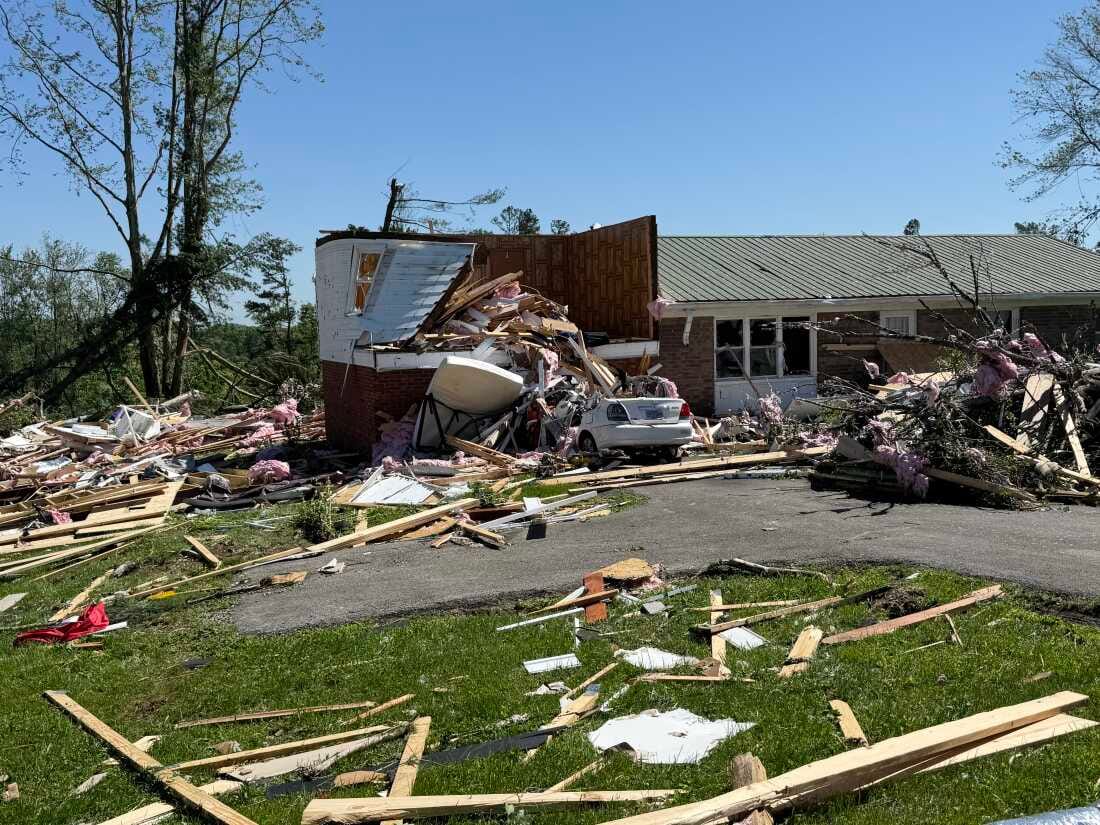
“I’ve now been governor for at least 14 federally declared disasters, 13 of them weather. And this is one of the worst,” Beshear stated at a news conference. “It’s one of the worst in terms of the loss of human life. It’s one of the worst in terms of damage.”
A state of emergency was swiftly declared, and a federal disaster declaration requested to rush aid to the stricken communities.
Mahala Watts from Laurel County shared her family’s terrifying ordeal with CNN affiliate WLKY. She recounted how tornado warnings blared from their phones, prompting them to take cover in a bathroom.
The storm roared over, and they found themselves “breathing in all the debris.” When the noise subsided, they discovered their roof was gone, and the refrigerator blocked their escape.
Harrowing Scenes and Heartbreak in Laurel County
The destruction in Laurel County was particularly severe, with 17 fatalities reported, including in the town of London. Mayor Randall Weddle told CNN affiliate WKYT, “I have never personally witnessed what I’ve witnessed here tonight. There’s a lot of devastation.”
Tragically, among those who died was Maj. Leslie Roger Leatherman of the Laurel County Fire Department, who had been responding to the storm, Governor Beshear confirmed.
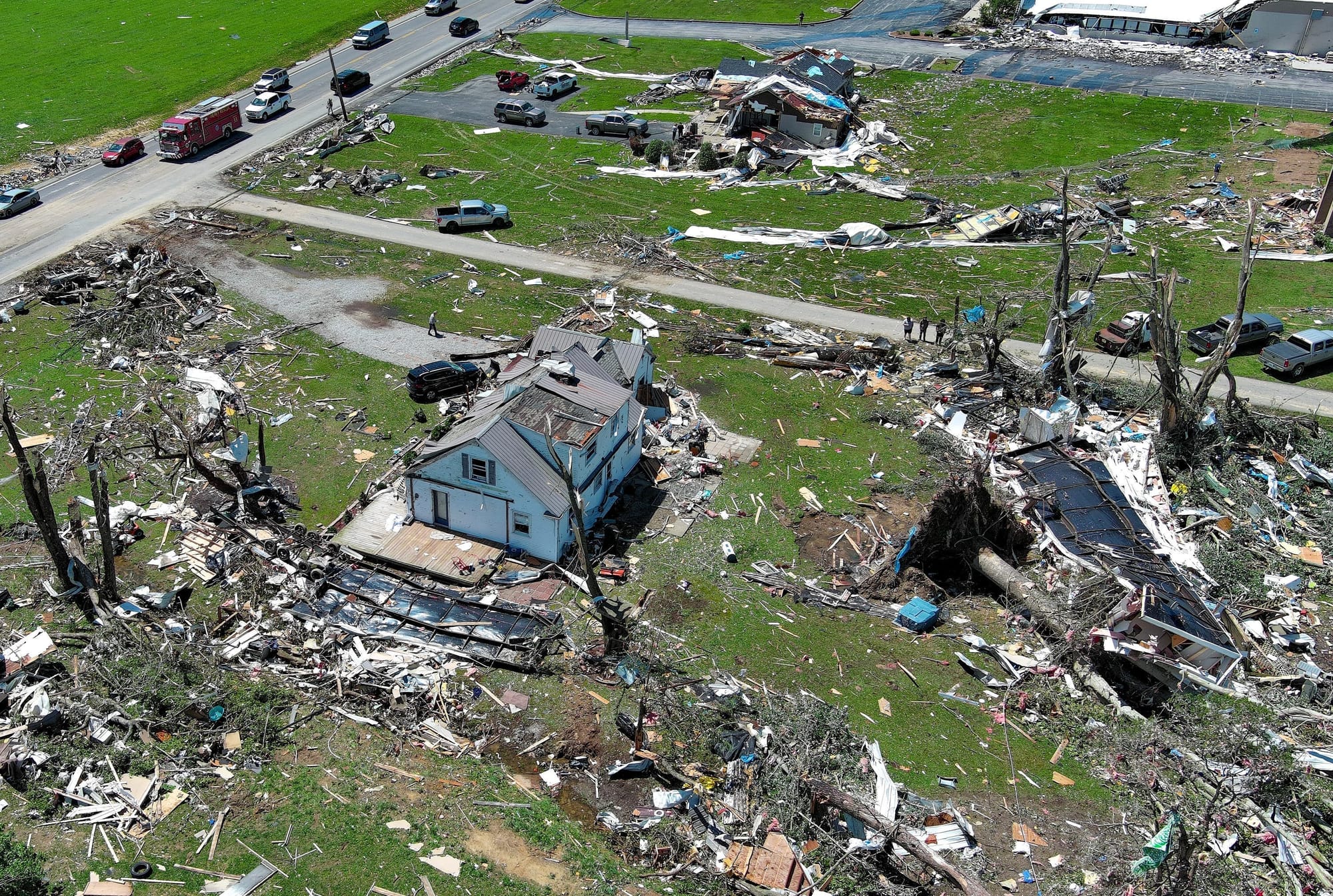
At the London-Corbin Airport, the scene was one of utter chaos. Several planes were damaged, a medical helicopter was destroyed, and hangars were leveled. Officials reported at least one airplane was horrifically pulled into a funnel cloud.
In nearby Pulaski County, one person was confirmed dead, and a state of emergency was also declared there as crews began the grim task of cleanup.
St. Louis Slammed by Powerful EF3 Tornado
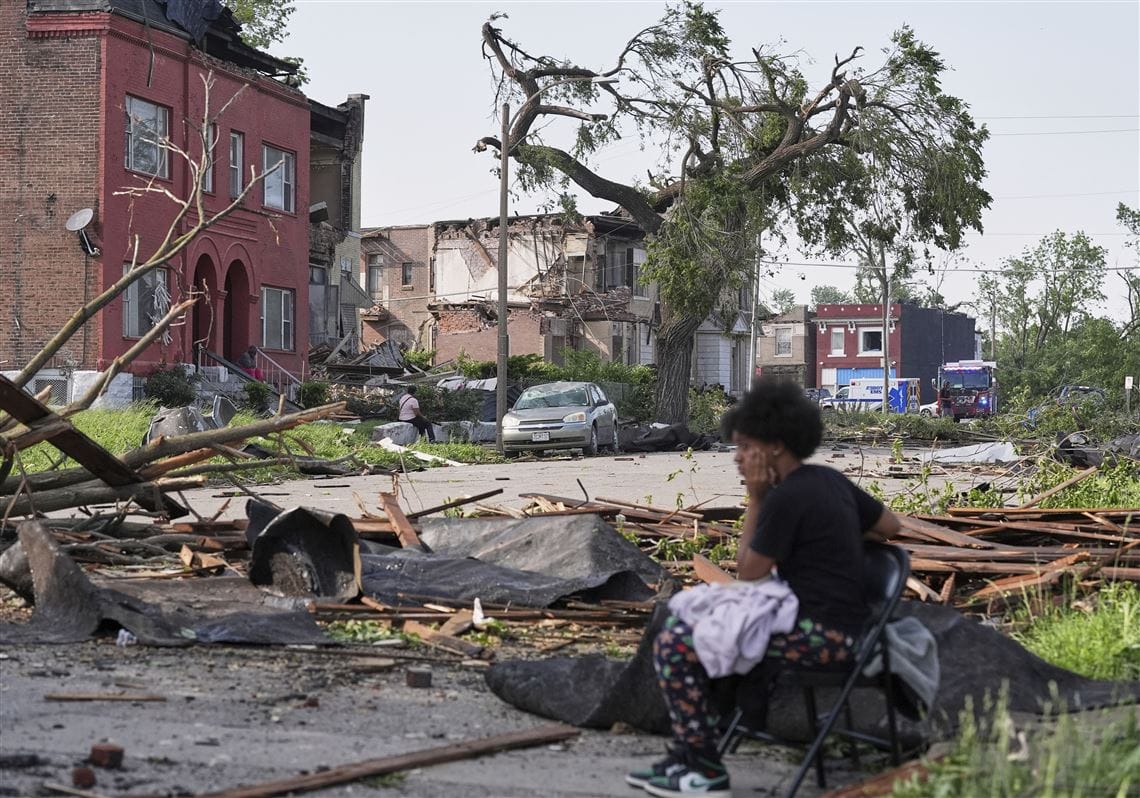
Meanwhile, in Missouri, the St. Louis area was grappling with its own nightmare after an EF3 tornado tore through the city on Friday afternoon, leaving five people dead and many injured.
The tornado carved an 8-mile path of destruction. St. Louis Mayor Cara Spencer described the city as “really grieving,” noting that about 5,000 buildings had been impacted.
“This community is coming together in a truly, truly amazing way,” Spencer said, despite calling the event “one of the worst storms” in the city’s history.
A curfew remained in place, and thousands were without power. Nearly 40 people were injured. The devastation was so severe that a state of emergency was declared, and officials were seeking a federal major disaster declaration.
Residents shared harrowing stories of survival. Cindy Spellman told CNN her niece was in her apartment basement when the storm hit. Upon returning, “she had to push her way inside because the tornado had thrown all of her furniture to the far walls.”
Joan Miller Hitt was home when the storm ripped the back of her house off. “I never had any fear of anything happening to that house,” she said, clearly still in shock.
First responders bravely searched about 4,000 residences for victims. But as the dust began to settle, a disturbing question emerged about the city’s preparedness.
The Unheard Warnings: St. Louis Siren System Under Scrutiny
Amidst the chaos and rescue efforts in St. Louis, a critical failure in the city’s emergency warning system came to light. Sarah Russell, commissioner of the City Emergency Management Agency, delivered the concerning news.
She confirmed that some of the city’s tornado sirens did not go off on Friday as the deadly twister approached.
“We’re looking into that,” Russell told reporters on Saturday, acknowledging the severe lapse. She explained that the focus was currently on life-saving measures but an investigation into the siren failure was pending.
Compounding the issue, it was revealed that the citywide system of tornado sirens was in the process of being replaced and had, ironically, undergone testing just the day before, on Thursday.
Residents had been encouraged to rely on multiple warning systems, including mobile apps and weather radio, Russell added. This advice proved tragically necessary for those in areas where the primary siren system failed.
Ben Herzog, a science and operations officer with the National Weather Service, confirmed a tornado warning was issued at 2:34 p.m. Friday, with a “likely tornado” touching down just seven to eight minutes later. For some, this crucial window may have passed without the expected audible alert from the city’s sirens.
Damaging Storm Risks Persist
While the system that battered Missouri and Kentucky is weakening, the threat of severe weather is far from over. Another round of dangerous storms is expected near the border with Mexico, placing over 20 million Americans across the Southwest in the risk zone.
The level 3 of 5 threat of severe storms was forecast to affect the Dallas-Fort Worth metroplex Saturday evening, bringing risks of large hail, damaging winds, and more tornadoes.
The possibility of more severe weather stretches through Tuesday, primarily focusing on the Great Plains, including much of Oklahoma and Kansas, before shifting back towards parts of the Mississippi Valley.
As communities begin the long road to recovery, the investigation into St. Louis’s silent sirens will be crucial in understanding what went wrong and ensuring such a failure doesn’t happen again.