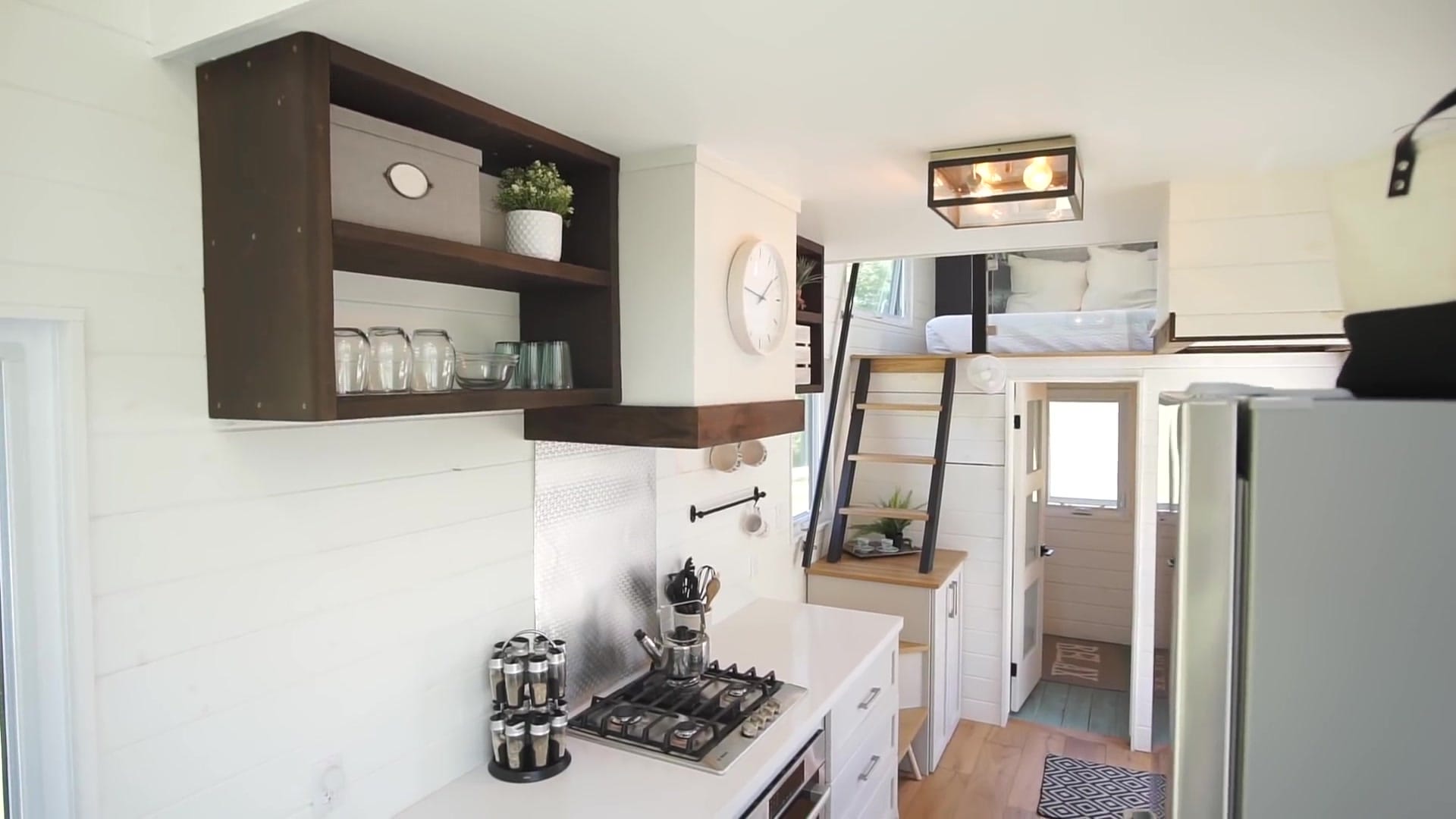
Smart tiny house design makes 24 feet feel full-sized
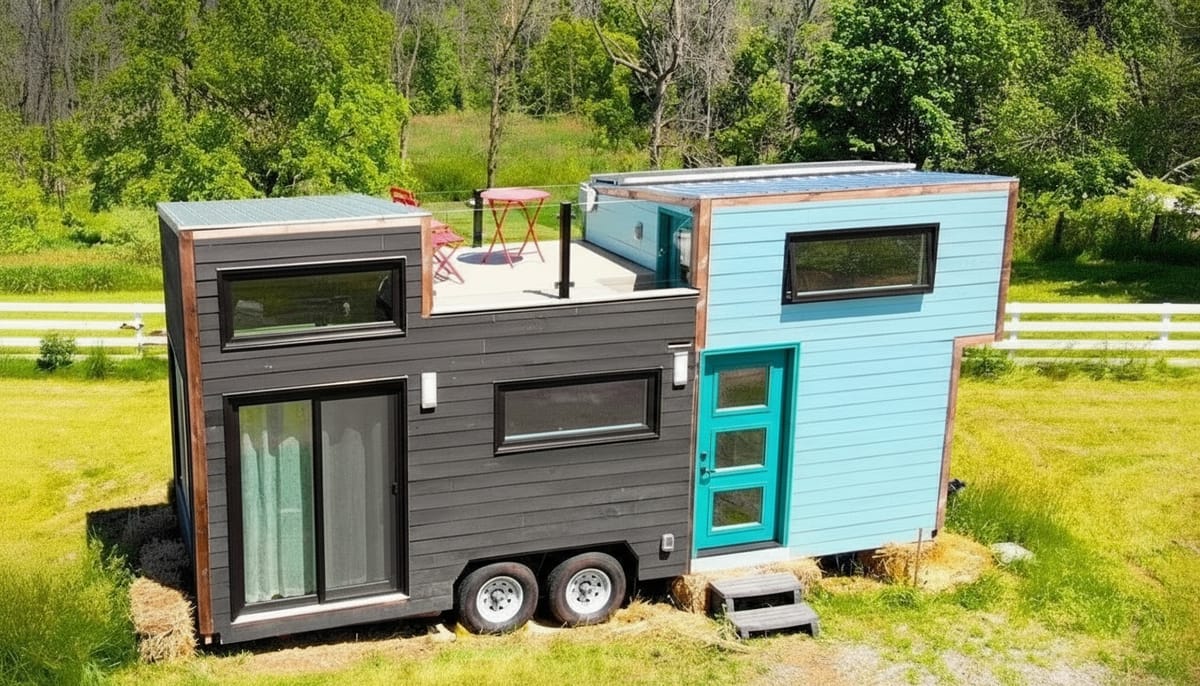
A modern tiny on wheels that feels roomy where it counts. Clean lines. Big glass. Smart placement of everything.
Living Space & Big Windows — why it feels larger
The living area stretches visually. Light and sightlines make the room read bigger than the square footage.
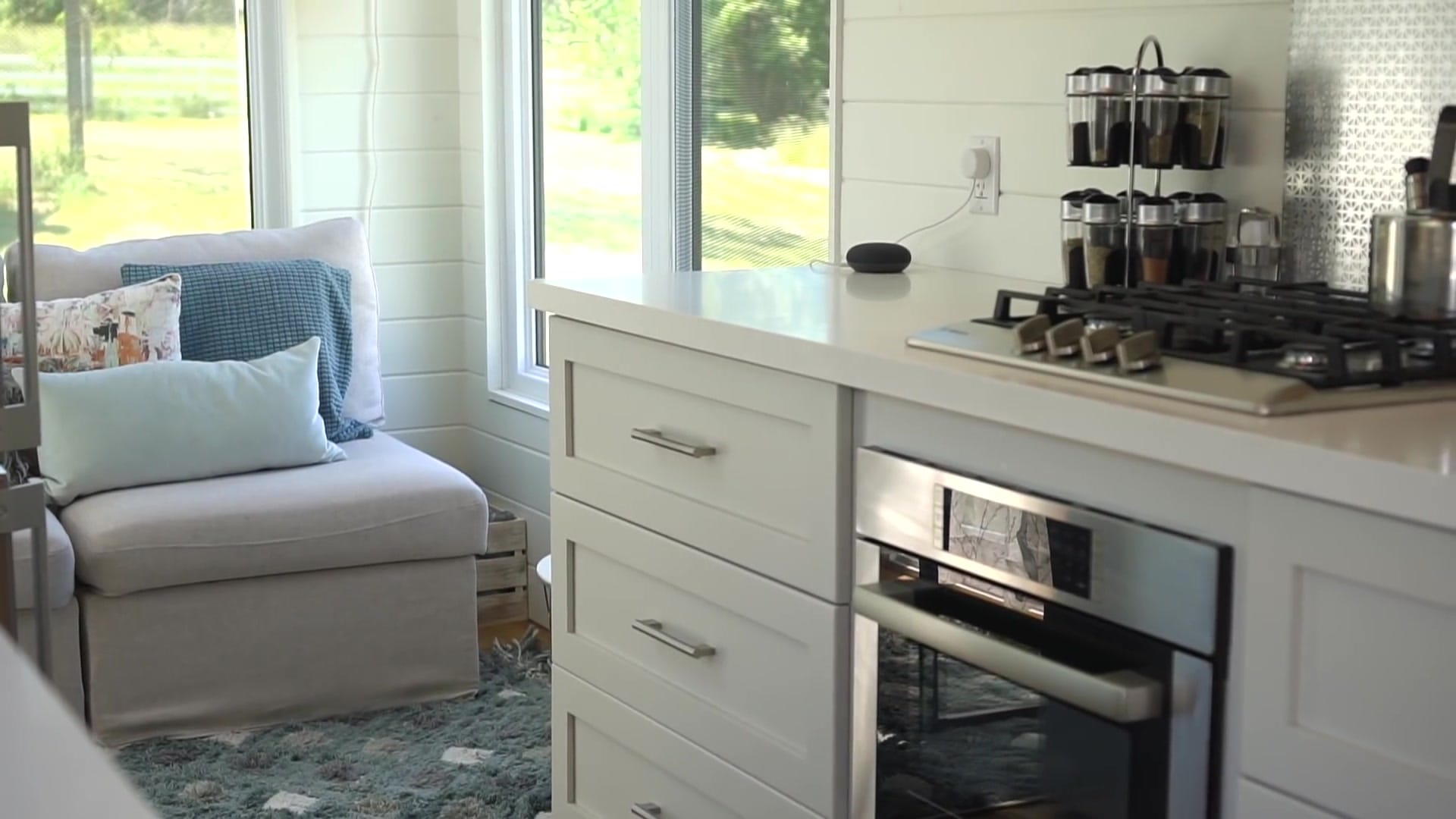
Big windows are the main trick and they were prioritized from day one. The design pushes as much glass as possible to pull the outdoors in.
Big glazing fills the living room to make spaces feel larger.
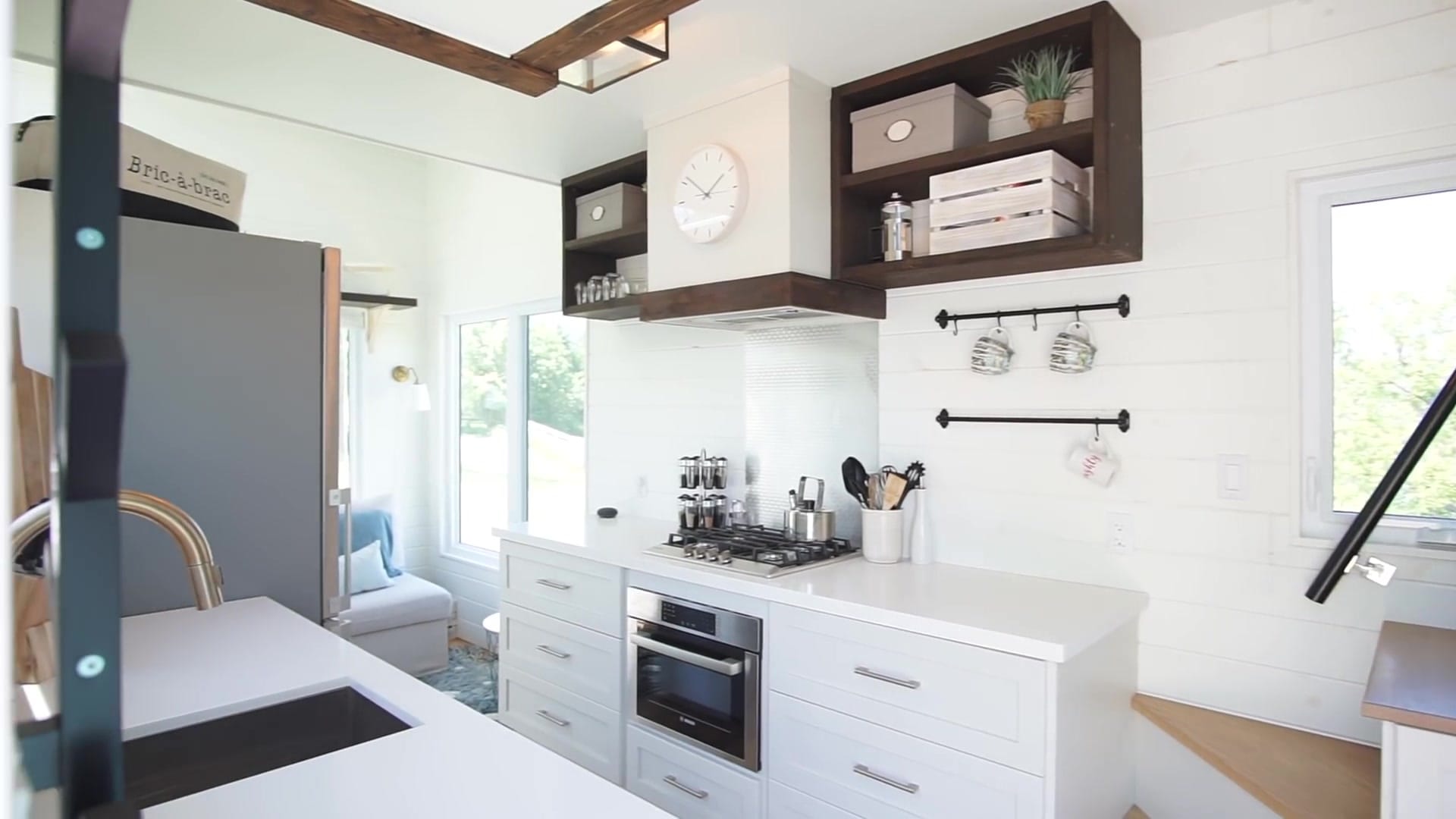
Upper and celestial-style windows add sky and daylight to the room.
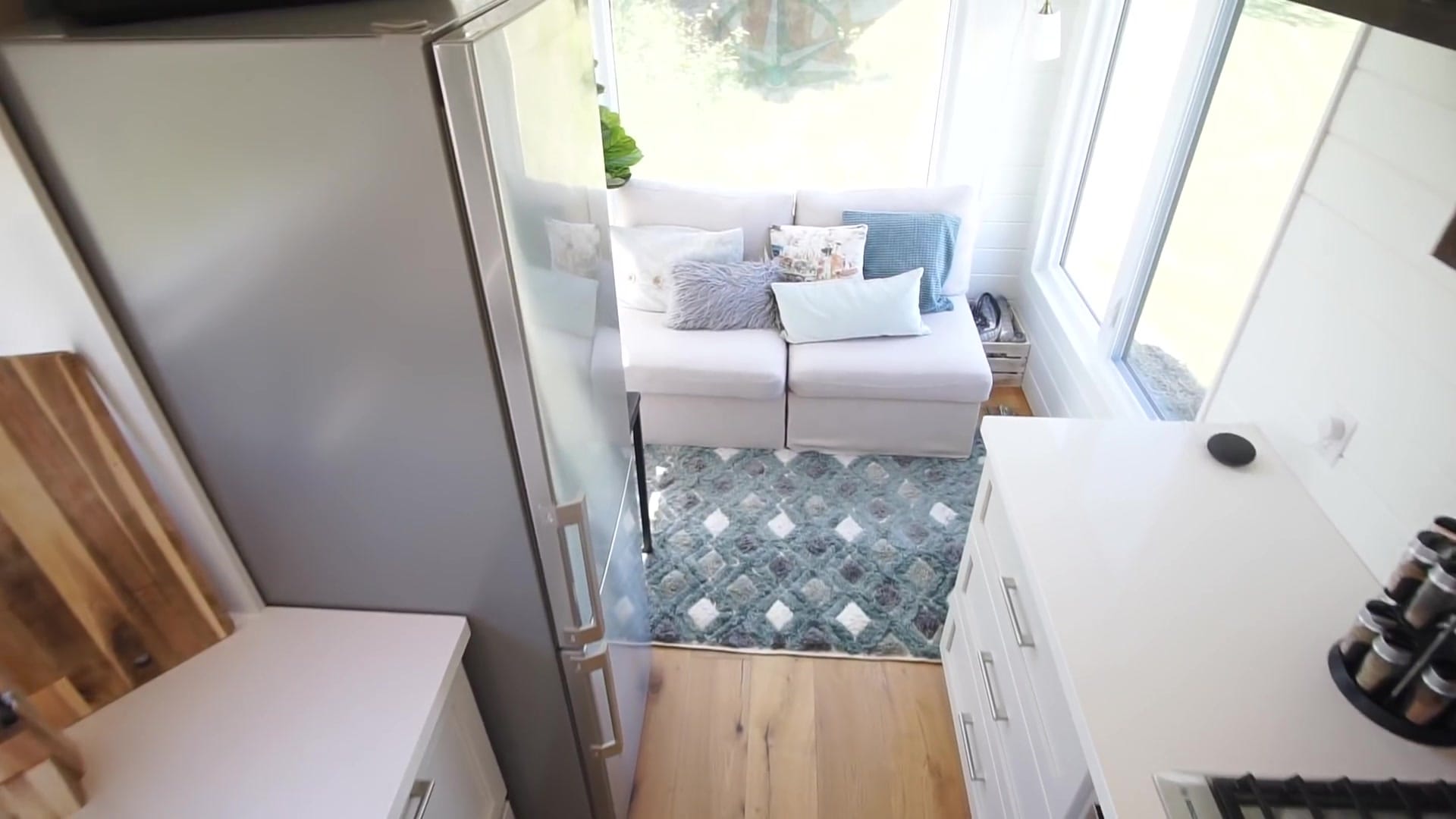
Seating is intentionally flexible so you can rearrange for guests and different setups.
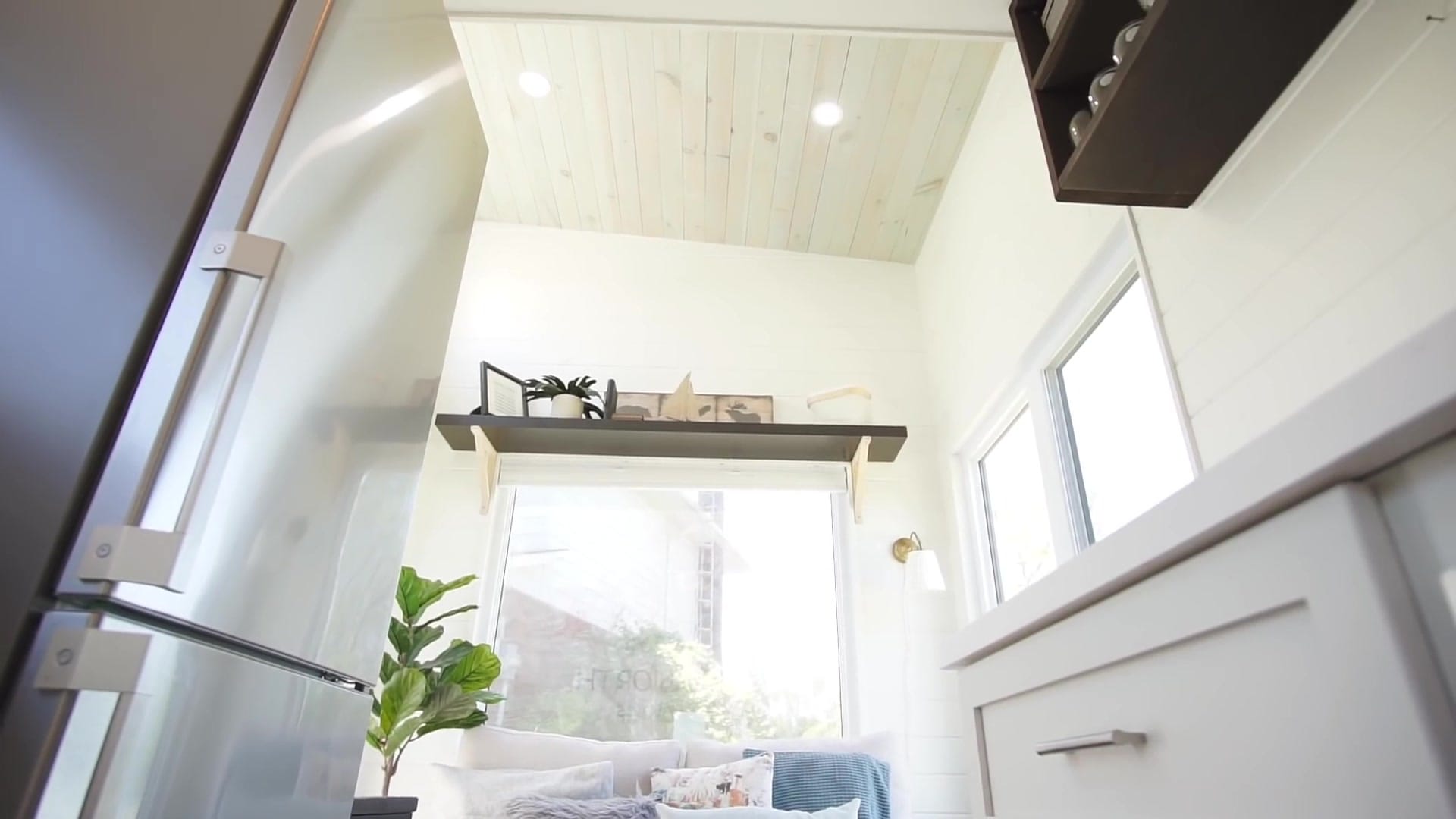
High ceilings amplify the openness—11-foot peaks create serious headroom where it matters.
Kitchen & Hidden Appliances — XL counters and clever storage
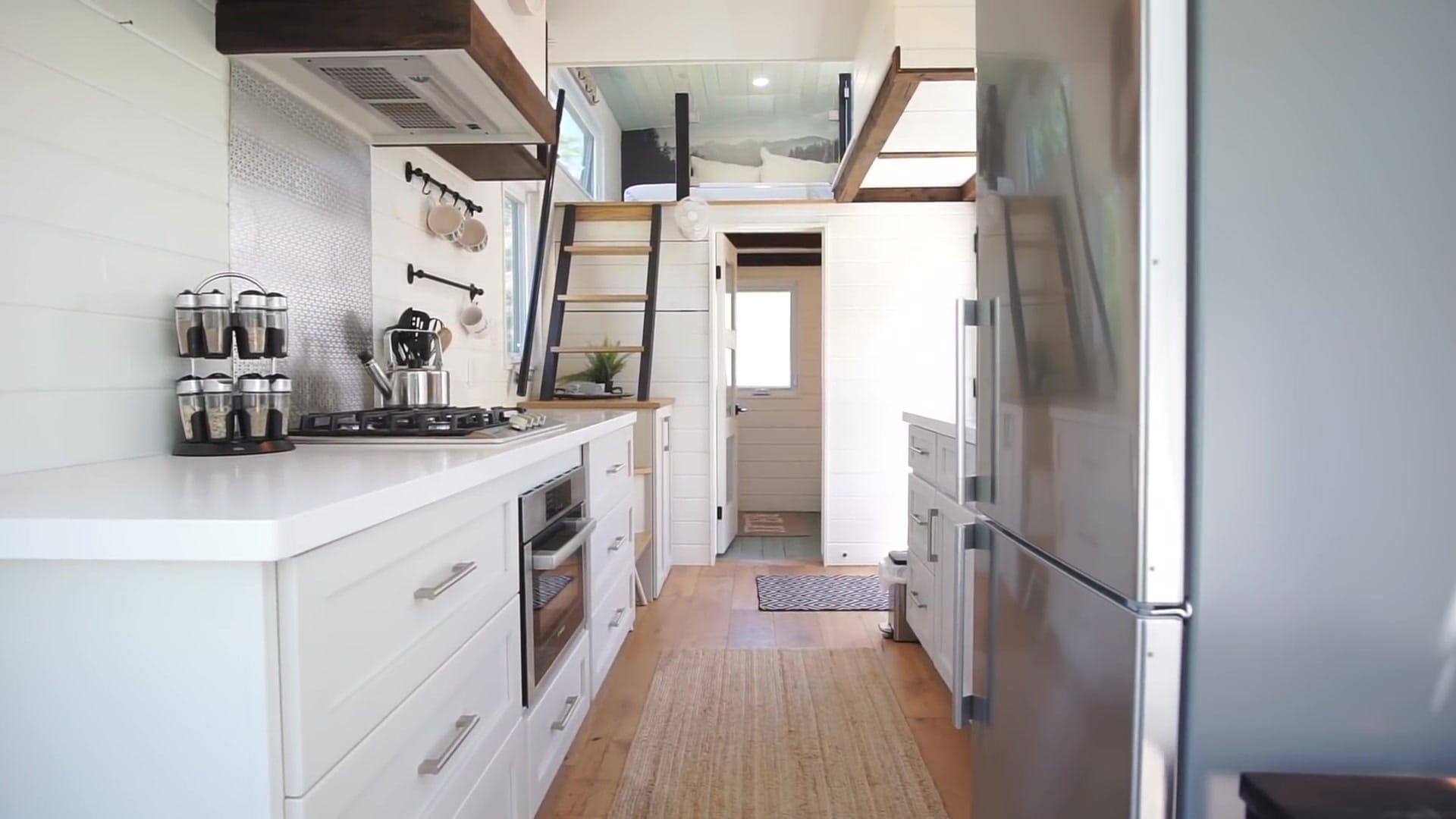
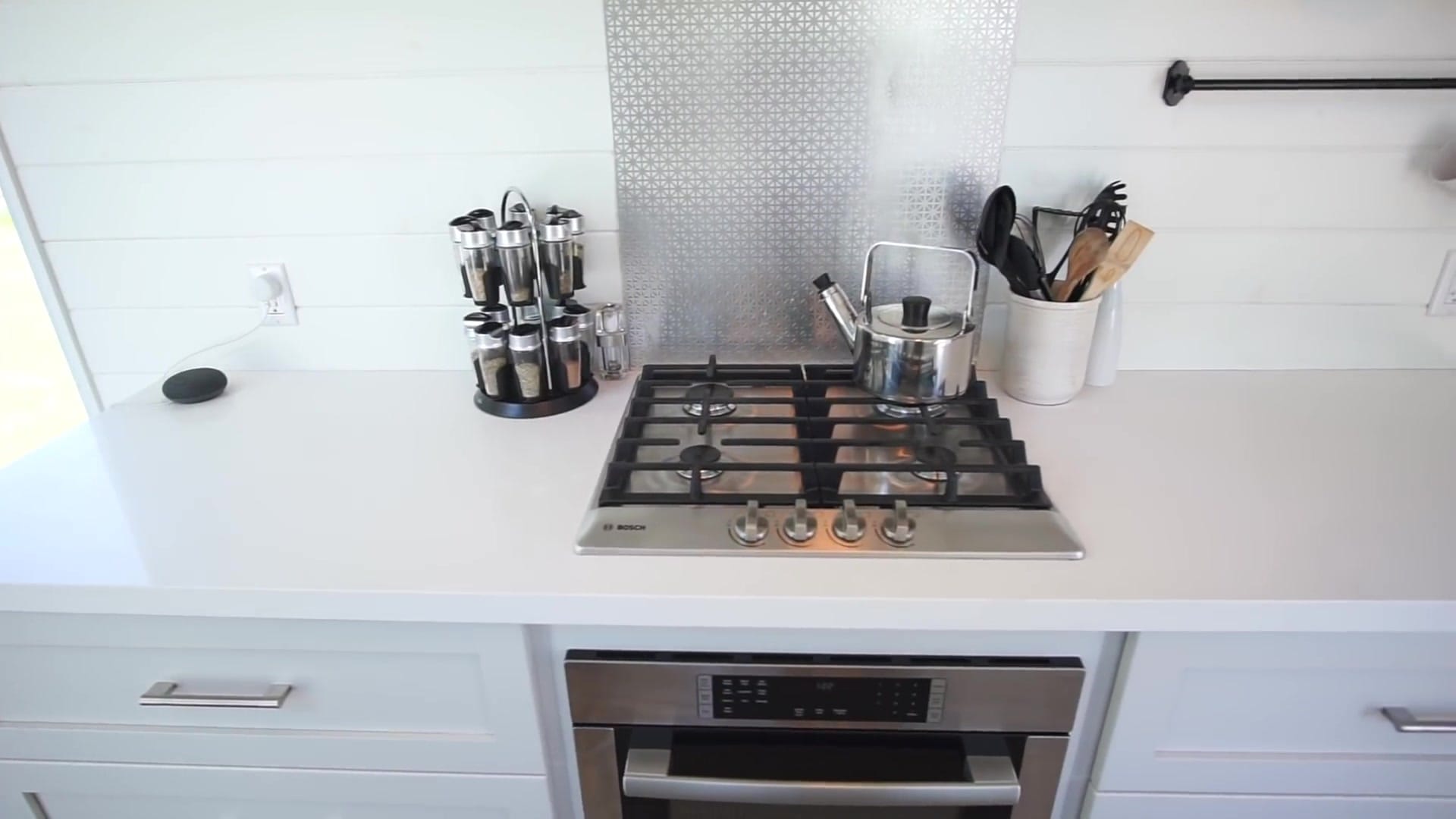
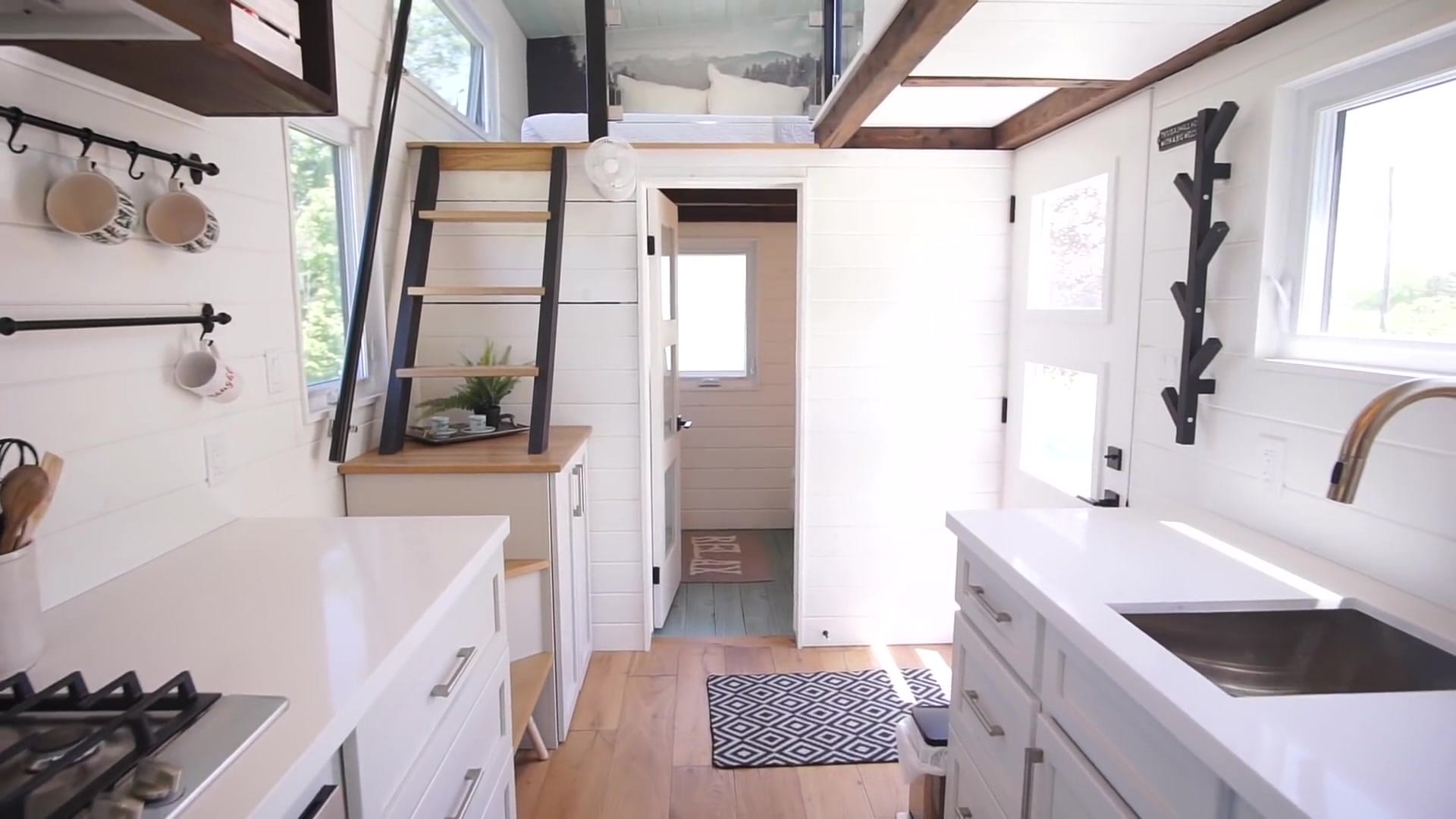
The kitchen keeps prep smooth with counter on both sides of work areas. It reads high-end without wasting space.
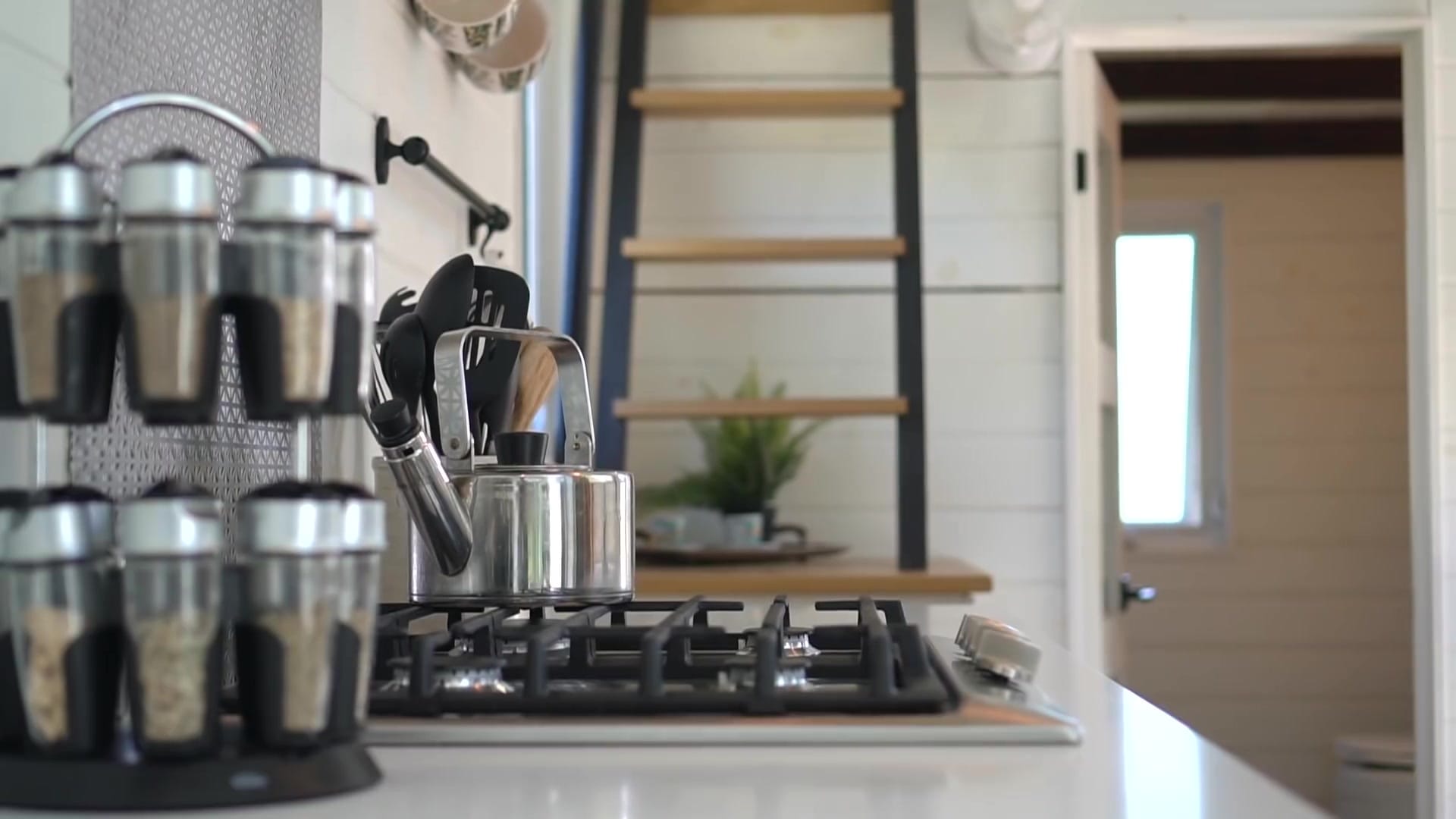
Appliances hide in plain sight. The layout keeps the fridge, dishwasher, and oven functional while working around wheel wells.
Countertop space runs both sides of the sink and stove to simplify prep and cleanup.
Quartz tops give a pristine, easy-to-clean surface, even if they add weight to the build.
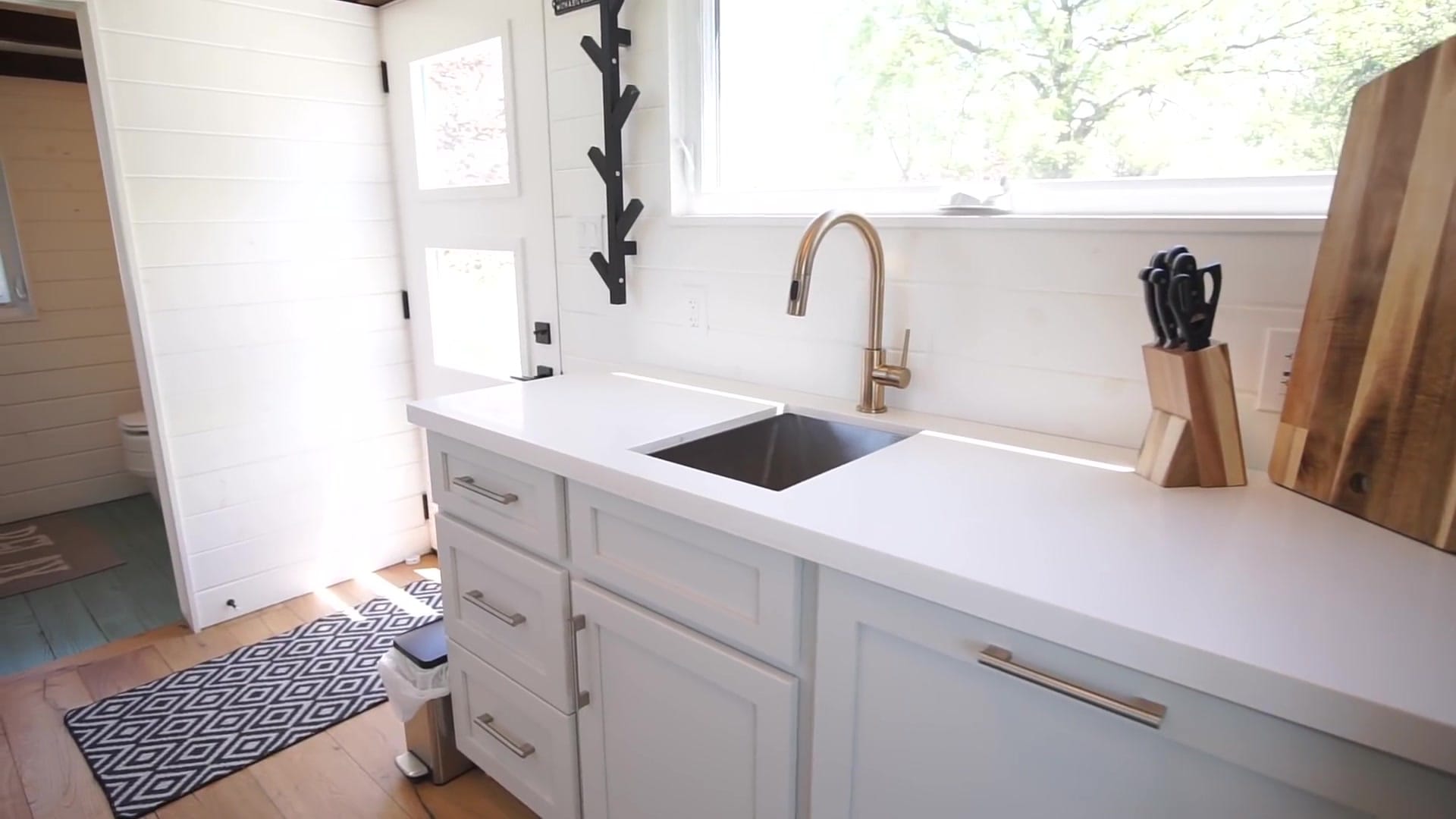
That weight was a trade-off the builder accepted for a high-end look and durability.
A single-bowl sink and an integrated dishwasher tuck into the run, keeping function compact and accessible.
Loft, Stairs & Sleeping — extra headroom and comfortable access
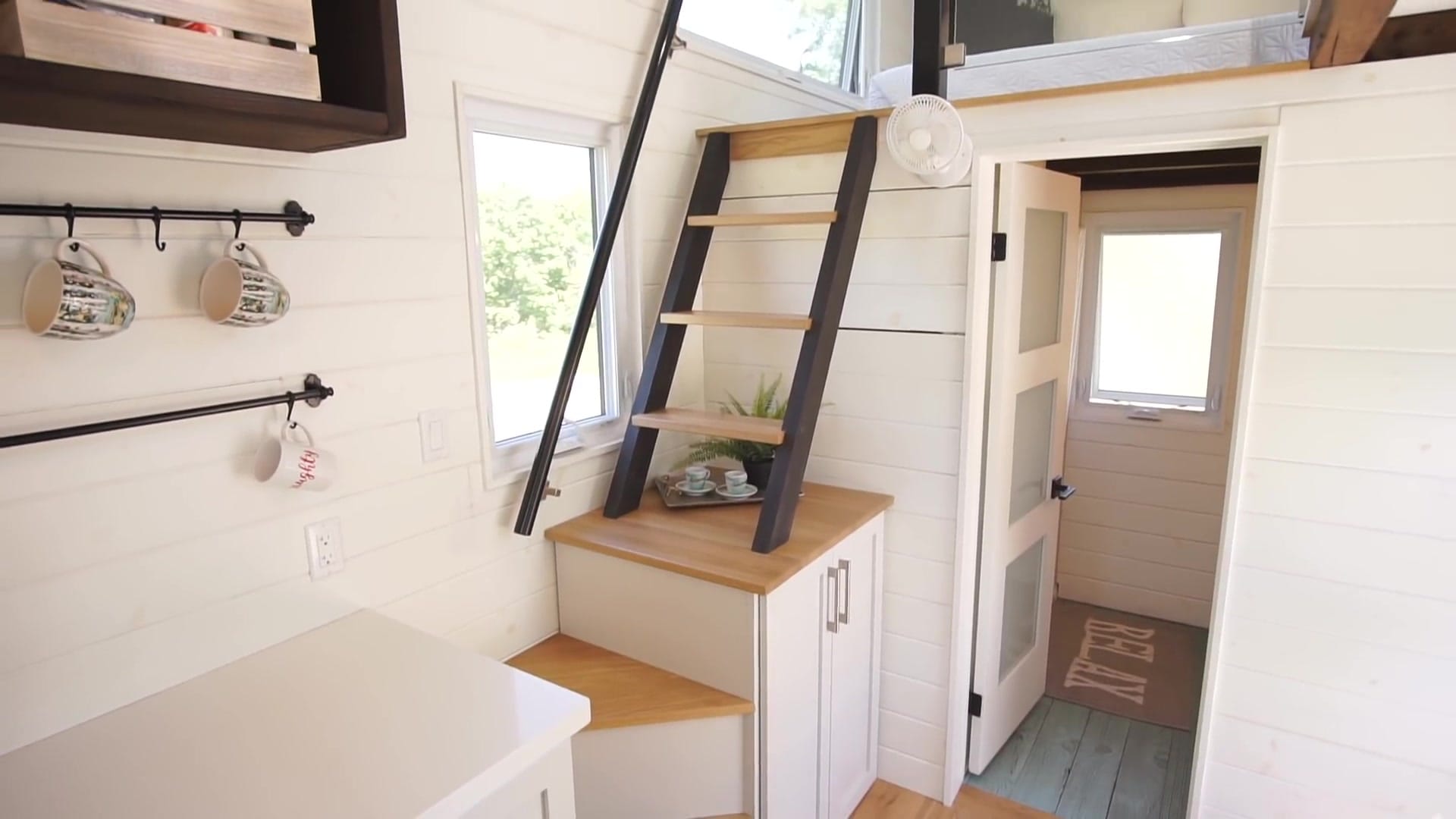
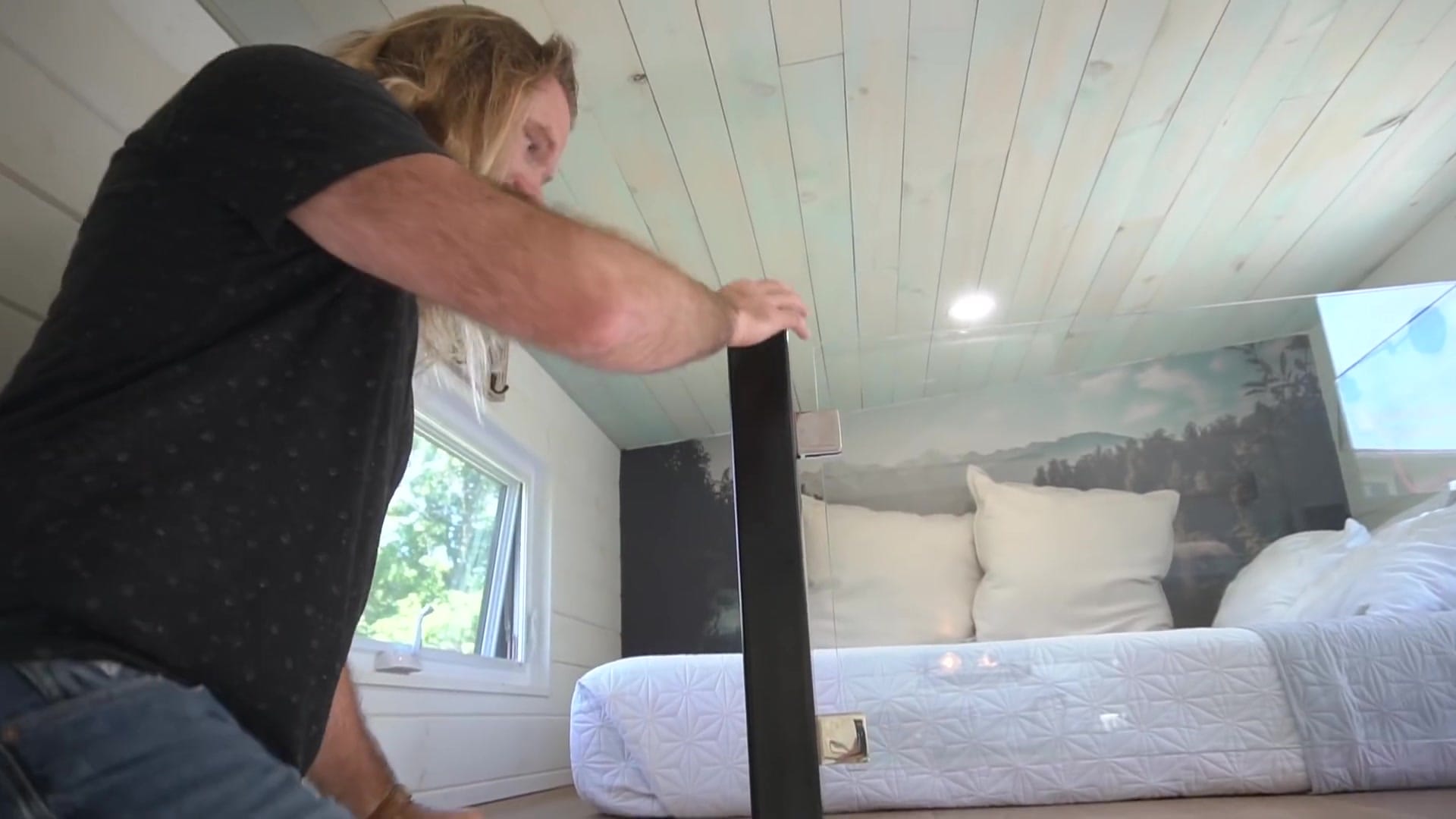
This loft is designed so you don't have to crawl. Walk-in headroom and the ability to sit up in bed were clear goals.
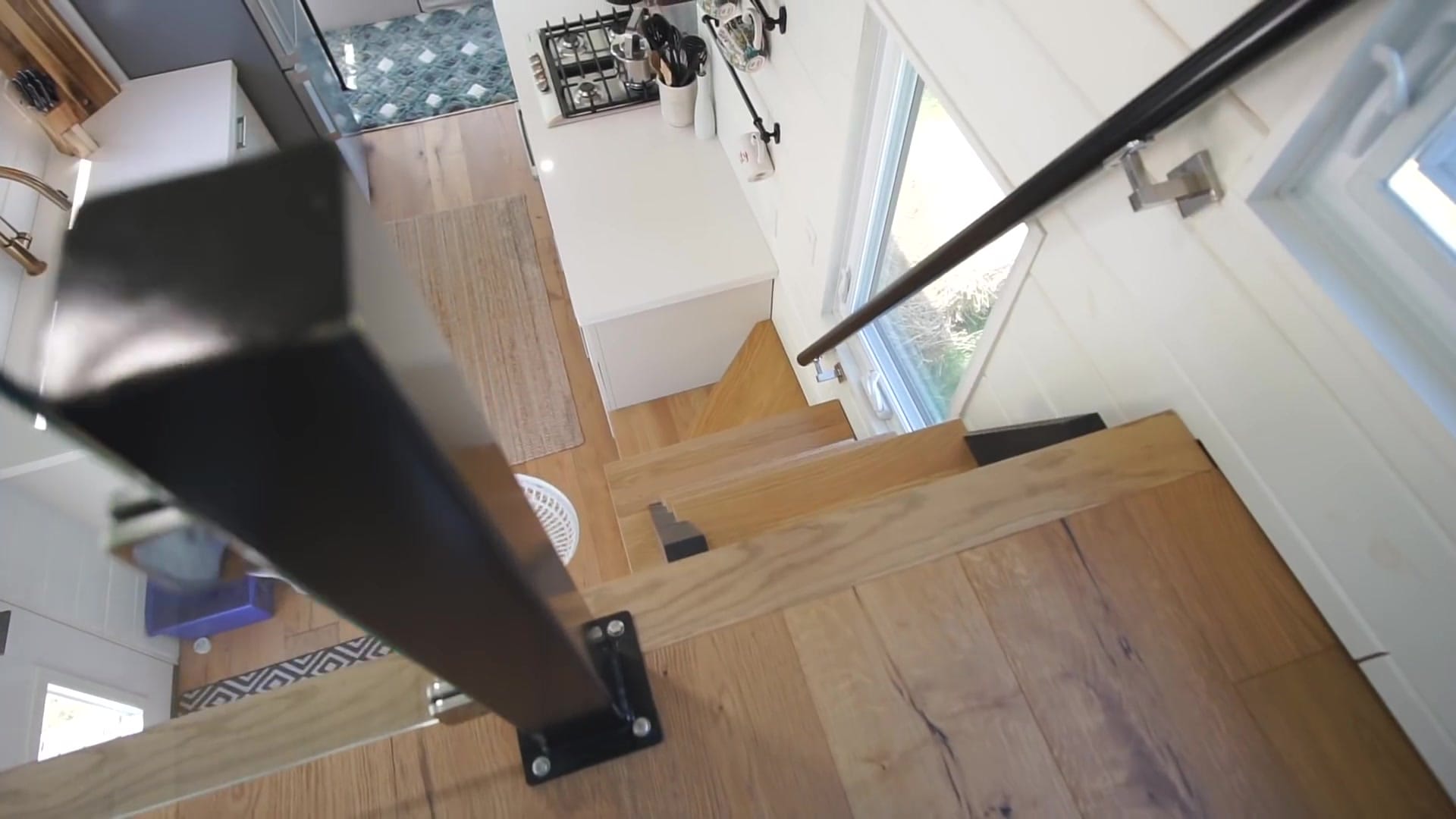
Storage is placed where it makes sense, and the stair-ladder hybrid prioritizes comfort on the climb.
A hidden washer/dryer sits near the stairs where a dresser was originally planned, maximizing utility at the entry to the loft area.
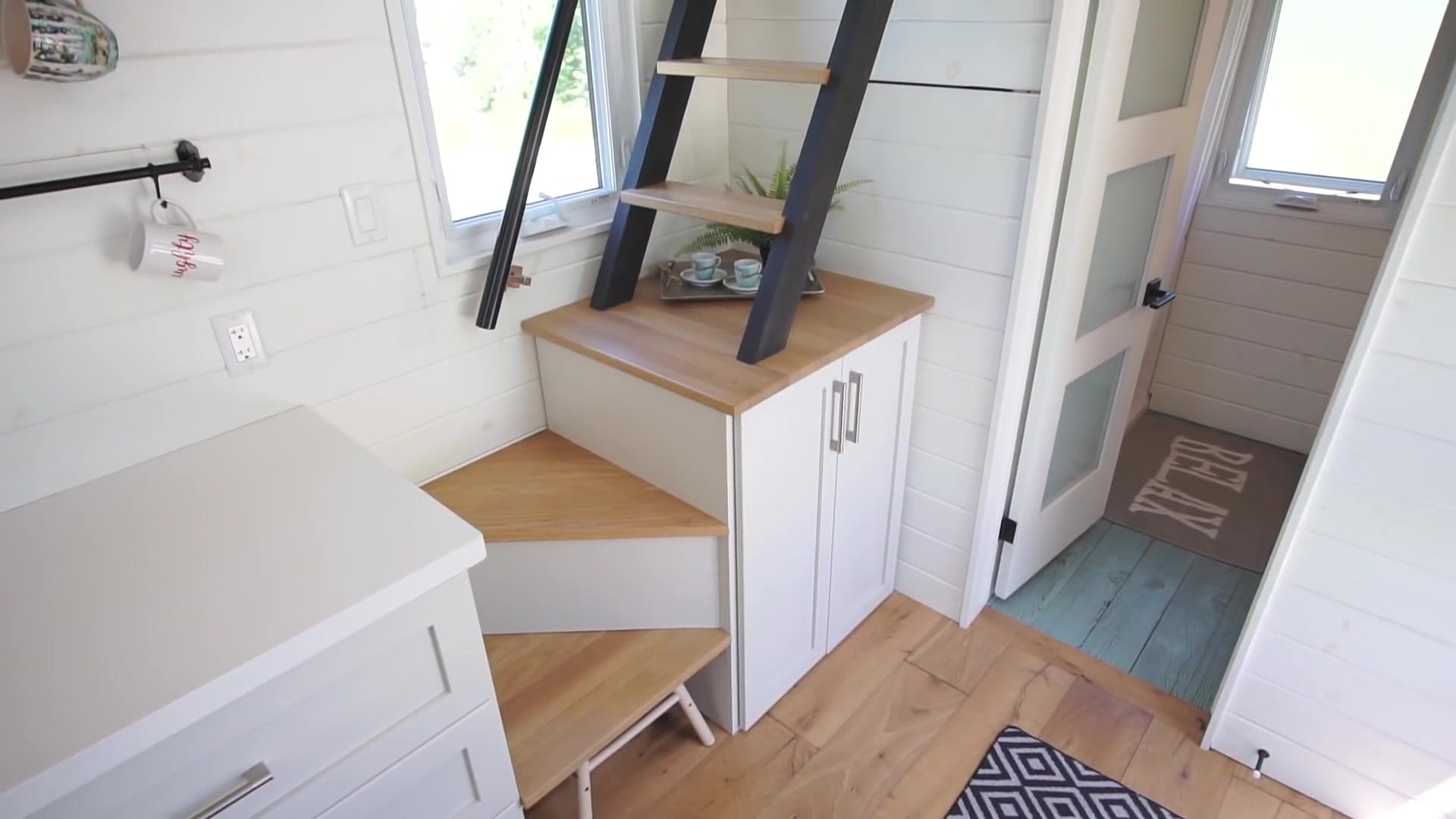
Stairs use a ladder-stair combo with a generous lean and large treads to make ascent easier than typical loft ladders.
Trailer choices and structure aim to avoid crawling—intentional trailer and floor design buys extra loft height.
The loft is walk-in friendly so you can sit up in bed to read or watch a device without crouching.
Bathroom & Mechanical Room — composting toilet, shower, tanks
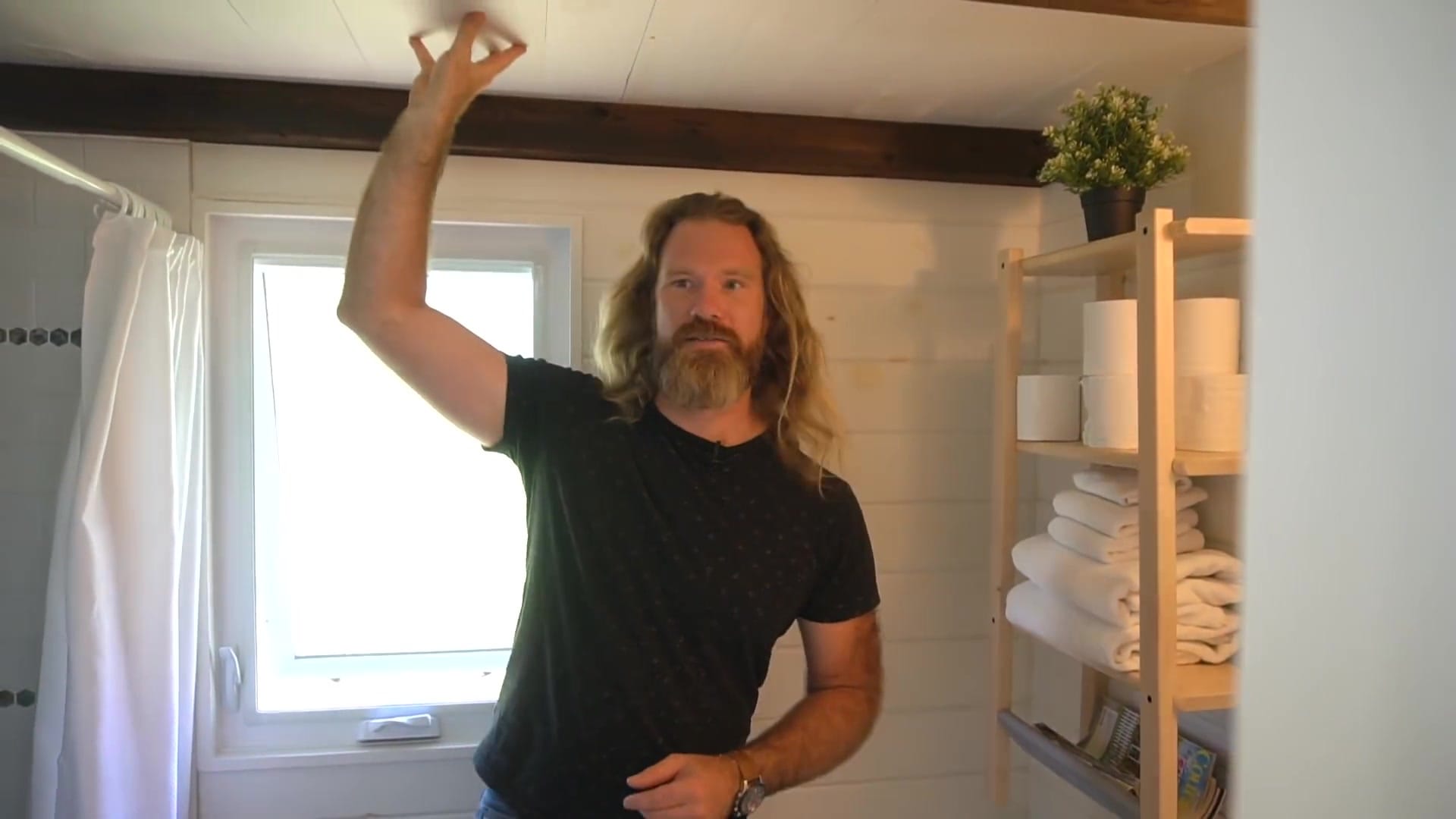
The bathroom keeps things airy and functional. A composting toilet and a roomy shower were both included by design.
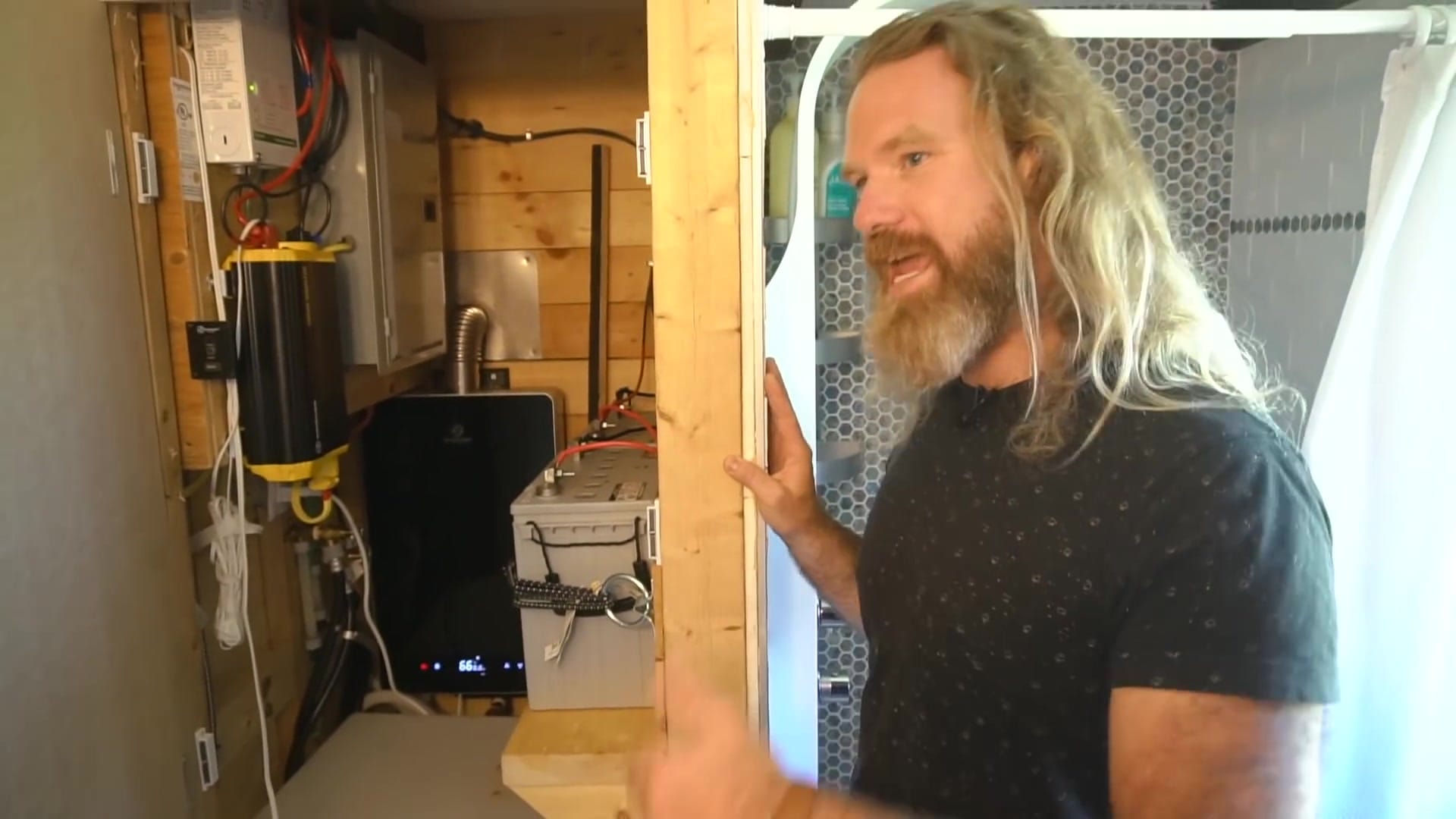
Mechanical systems live behind the shower to centralize utilities. That space also shows the limits of a 24-foot model and what an off-grid setup would need.
A Separett composting toilet sits to one side and a sizeable shower occupies the wash area to keep the bathroom feeling spacious.
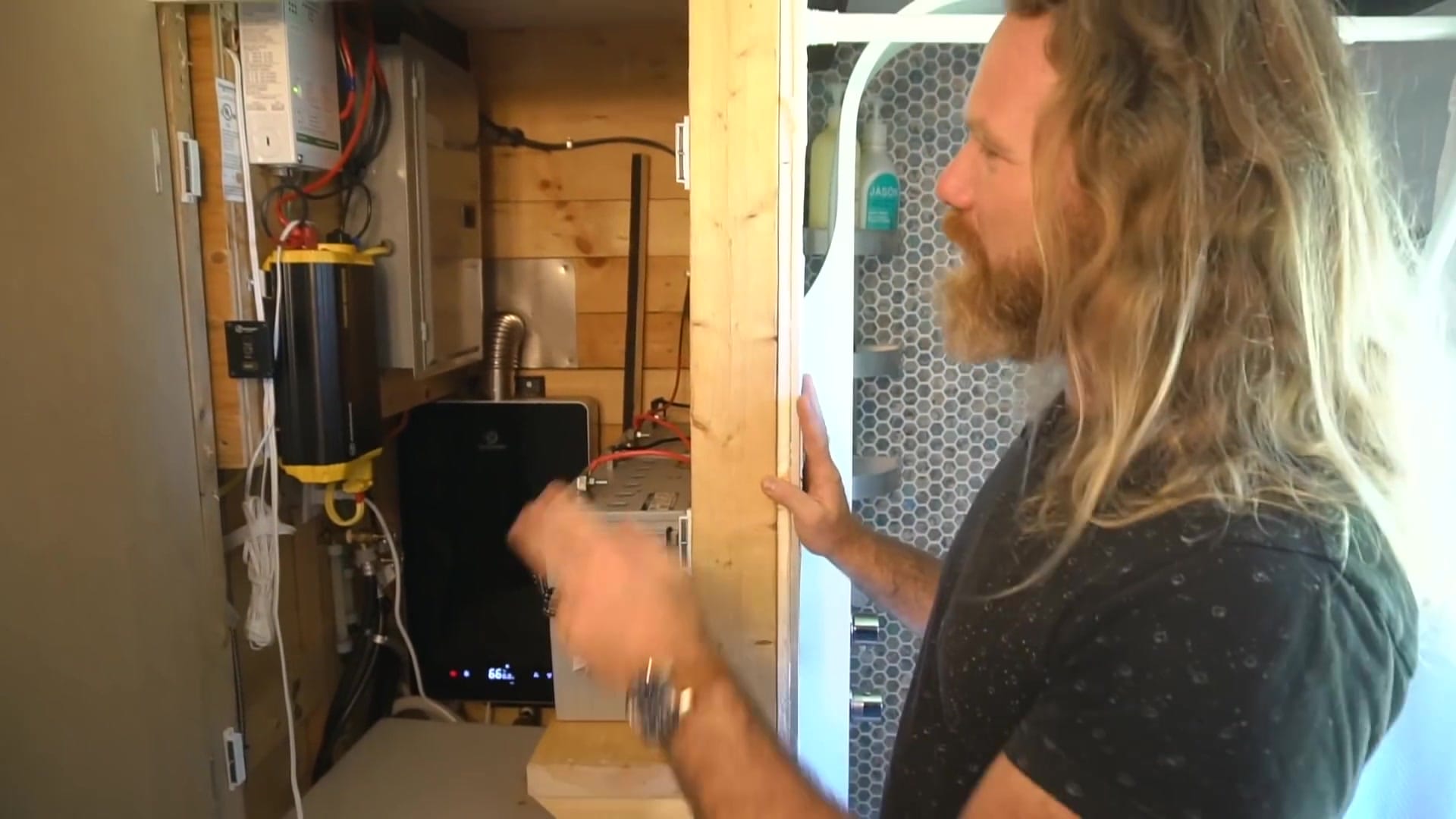
Behind the shower is the utility bay that houses batteries, the inverter, and the electrical switching gear.
The electrical layout includes an inverter and a panel to switch between solar and regular power, showing how off-grid can function in short stints.
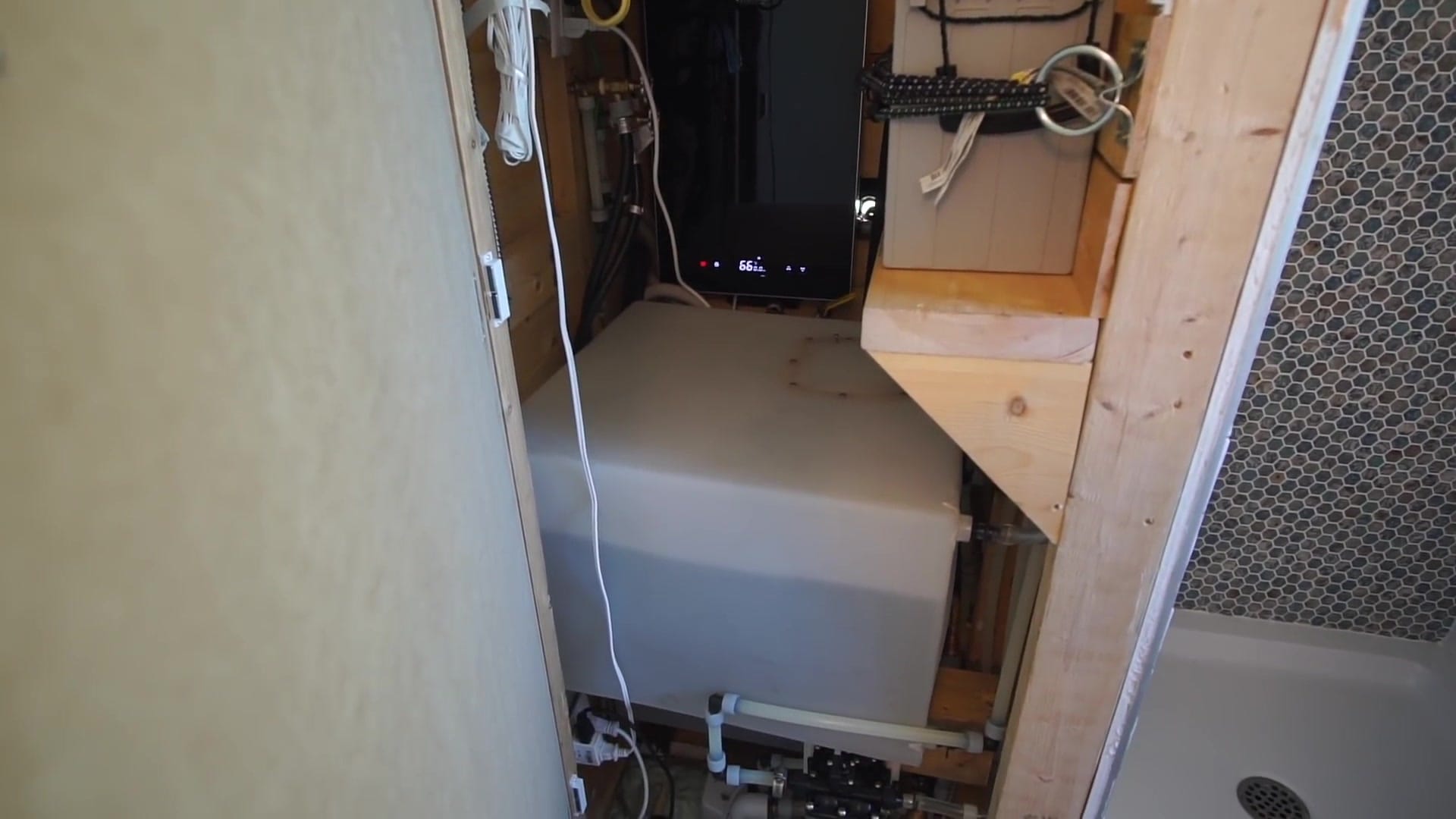
Water storage is two stacked 30-gallon tanks (fresh and greywater) in this build, illustrating a compact but limited onboard system.
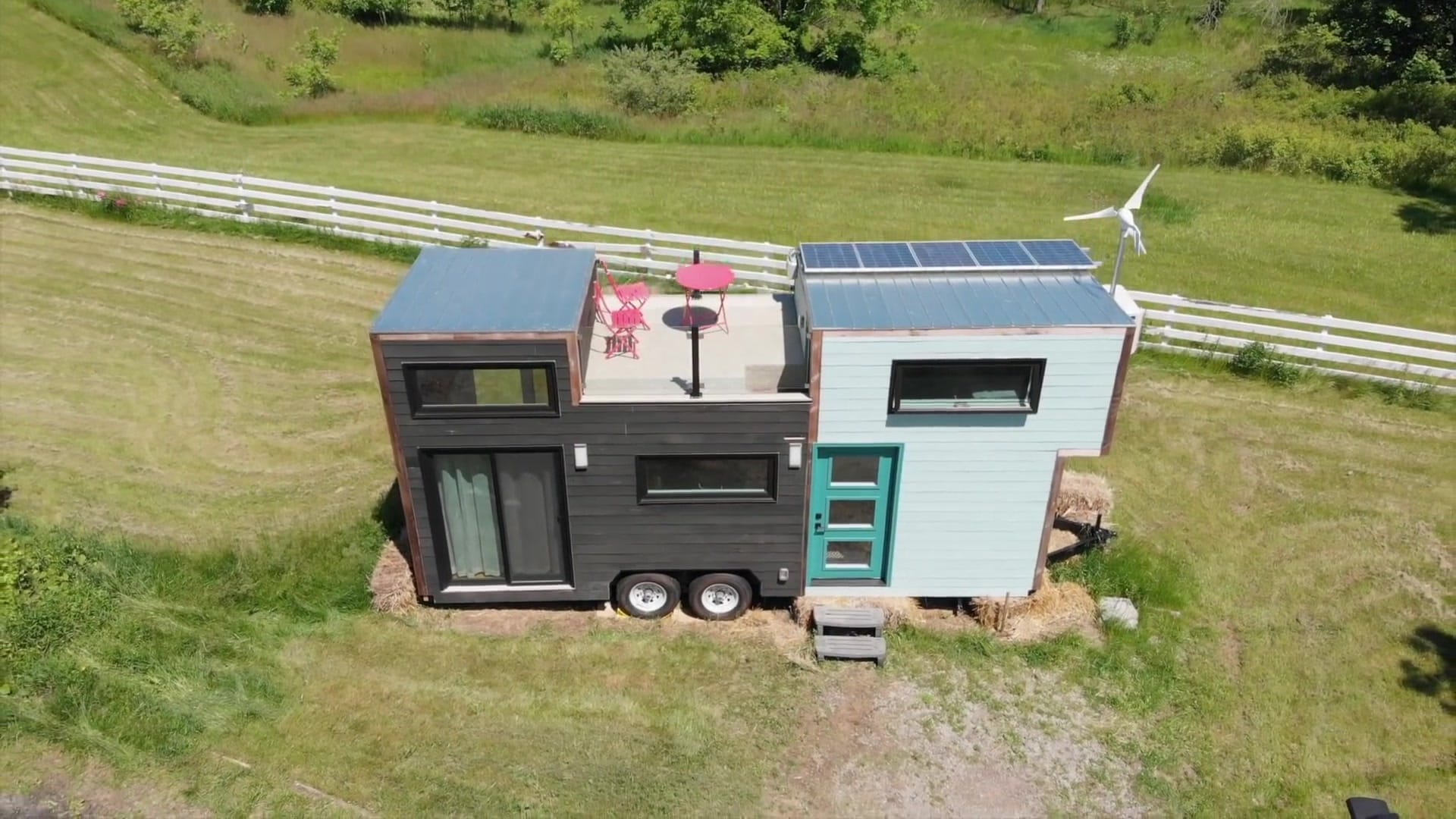
Rooftop Deck & Exterior — waterproofing, Duradek and solar
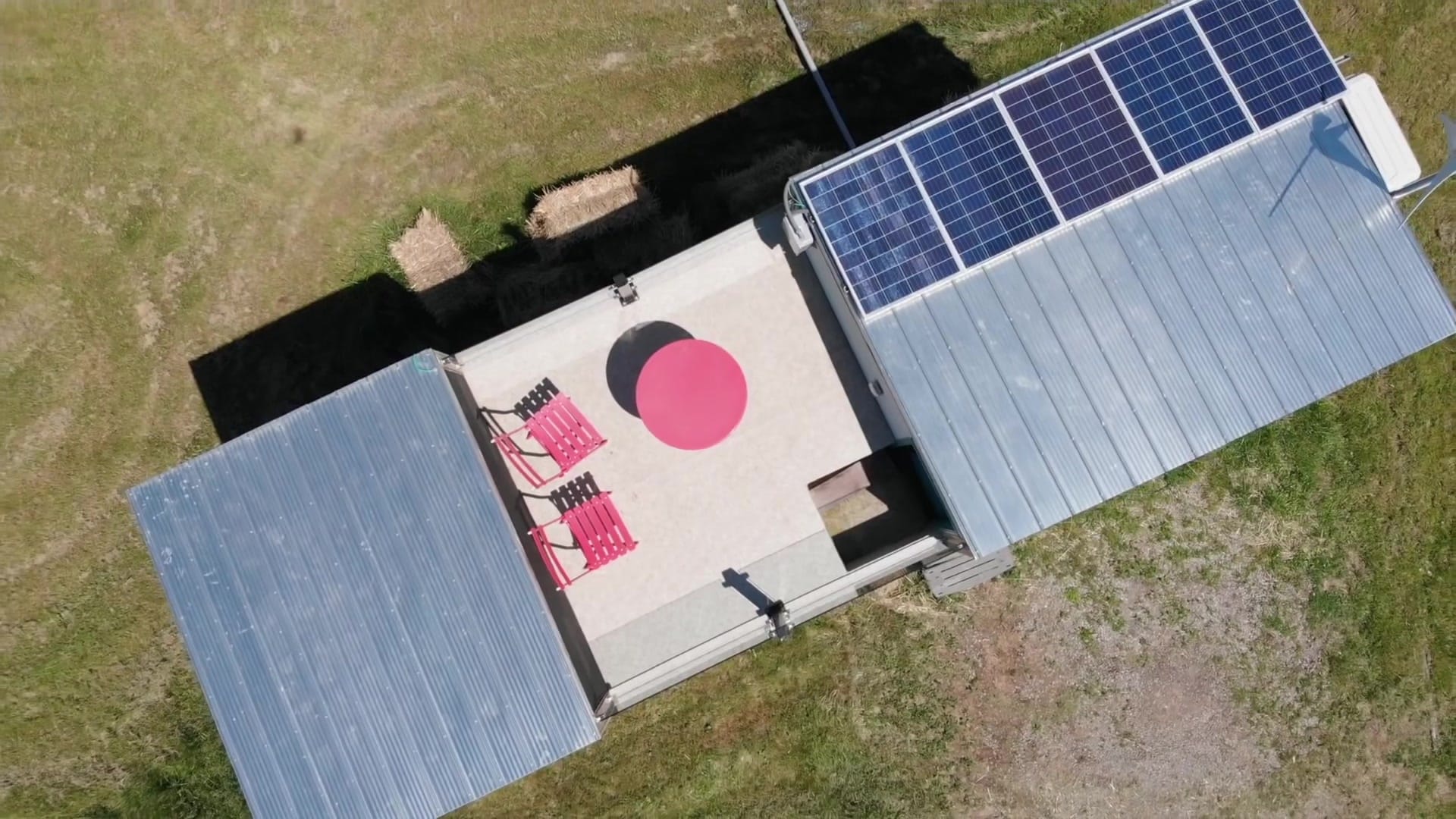
The rooftop deck is built into the roofline to give real outdoor space that moves with the house. Glass rails keep sightlines open.
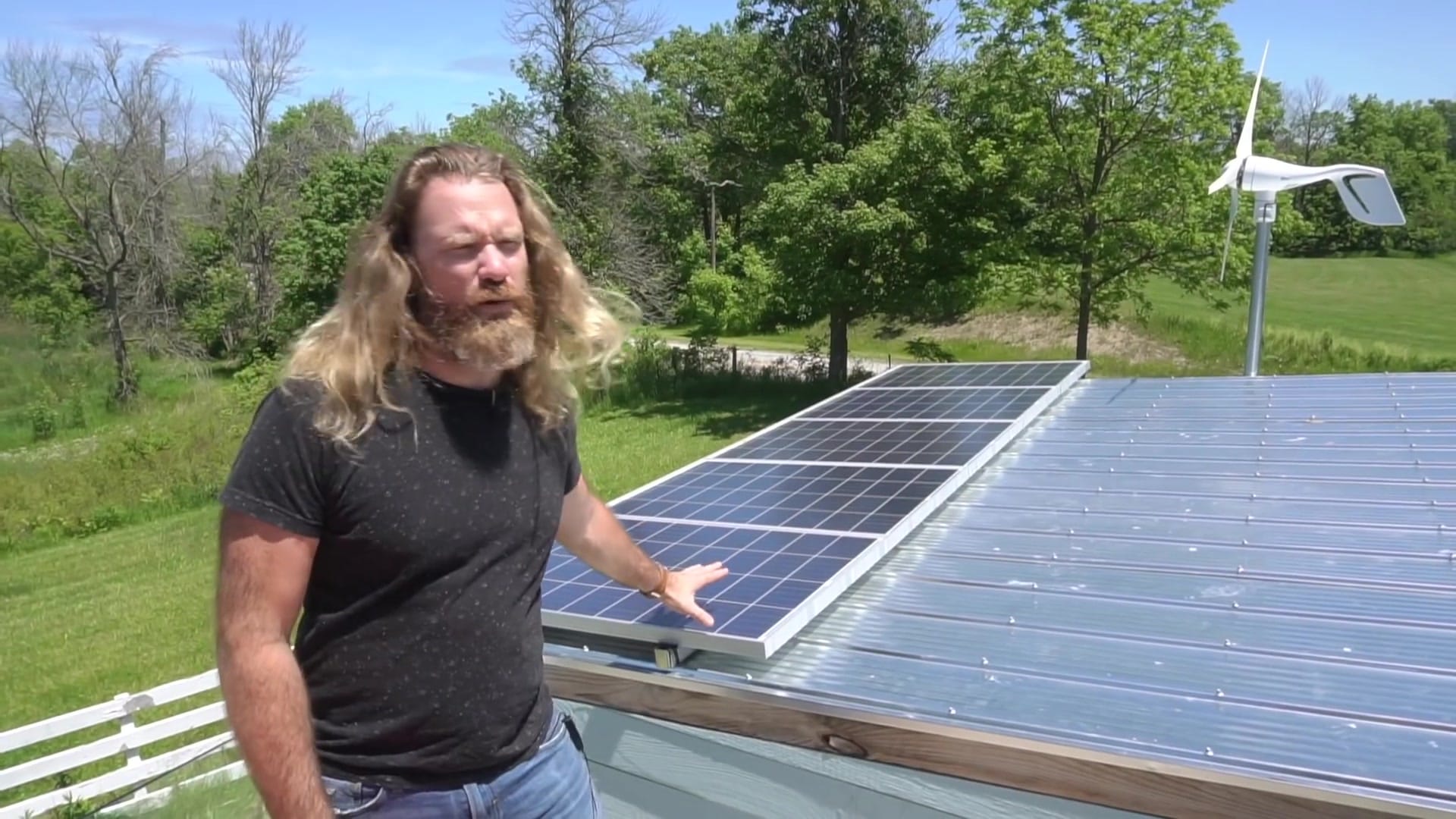
Solar and a small wind turbine are part of the energy mix. Waterproofing the deck was a structural challenge that shaped material choices.
The rooftop patio functions as a bistro-style hangout built into the roof footprint.
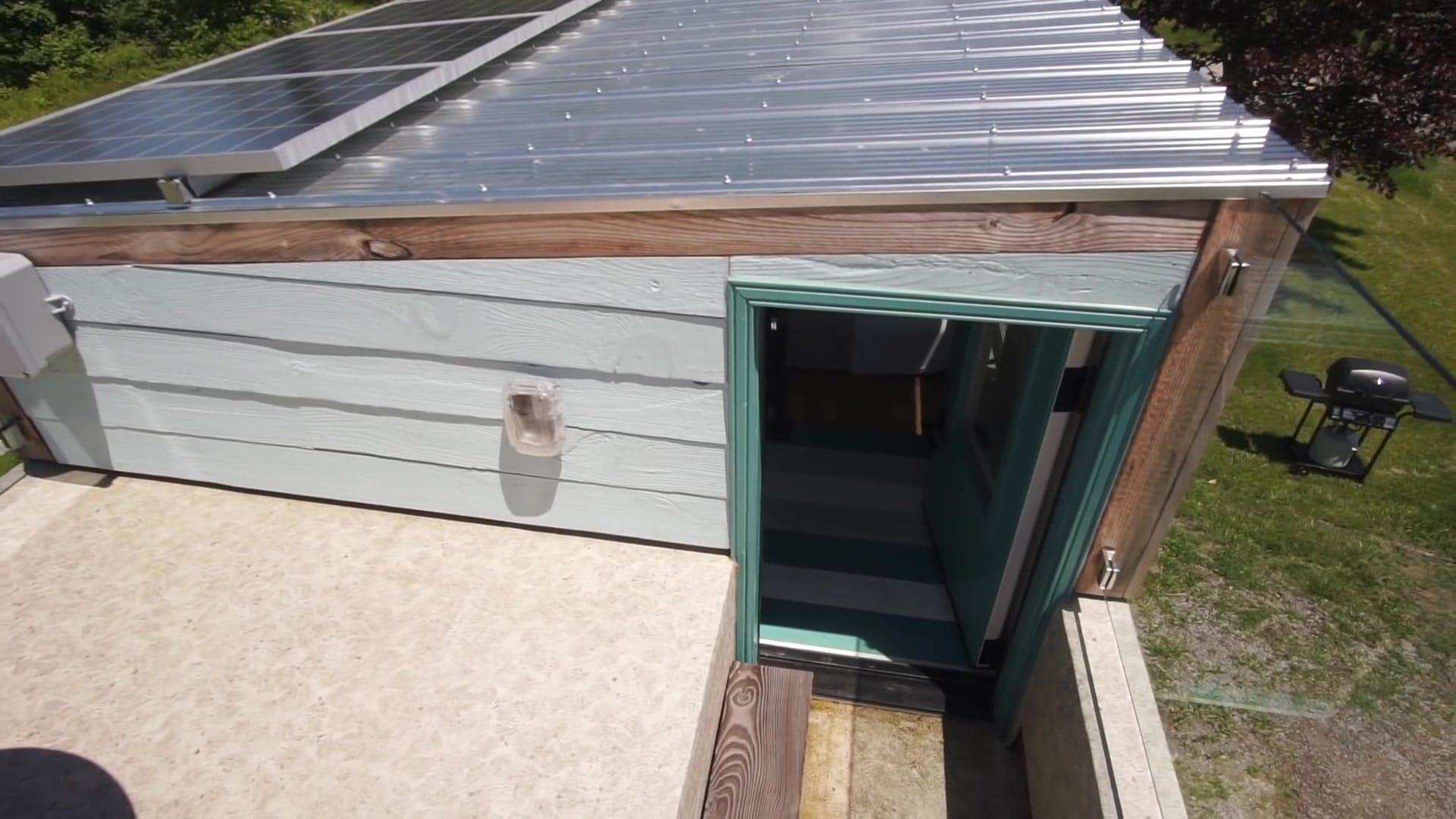
Solar panels and an added wind turbine provide on-site energy capture to supplement power.
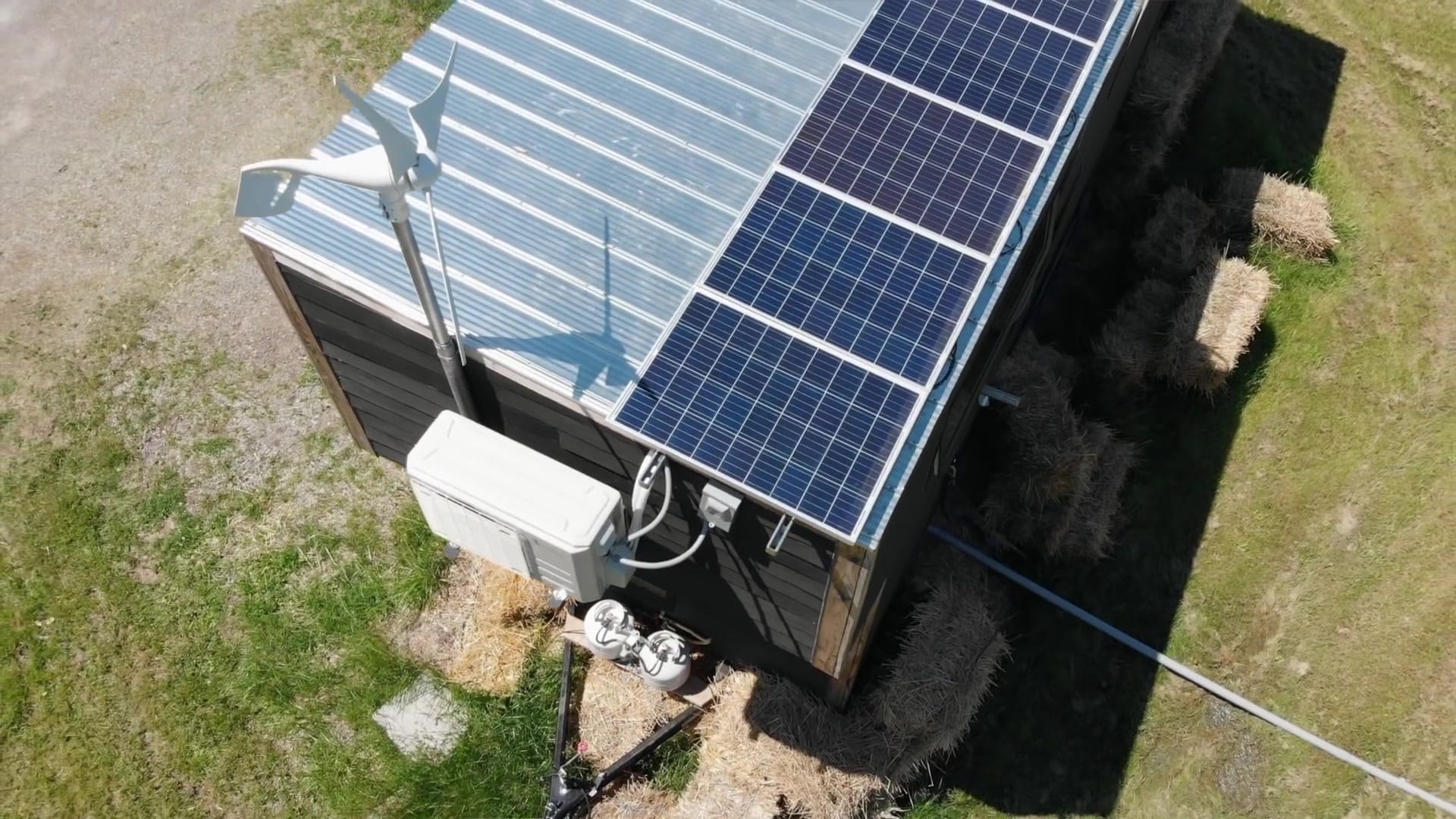
The current electrical array on the roof produces 500 watts, which demonstrates potential but not full off-grid capability yet.
Duradek was chosen to waterproof the rooftop deck and was selected after seeing its long-term durability on high-end projects.
Off‑grid Ready, Airbnb Model & Who It’s For
This tiny was built as a model to prove concepts, not as a finished production unit. It demonstrates how compact systems can be arranged.
Short-term off-grid capability is shown, and the unit exists so people can stay in it and test tiny-house living before committing.
It was designed to showcase how off-grid setups can use propane and alternative power strategies in a compact footprint.
The electrical setup includes an inverter and a separate panel to switch from solar to regular power as needed.
The builder kept this unit as a model so people can stand in and stay in it before deciding to order a custom build.
To let people live in it temporarily and test the lifestyle, the house is listed on Airbnb so visitors can experience tiny living firsthand.