SHOCK MAP: Is this secret plan guiding Trump’s moves to BLOCK China?
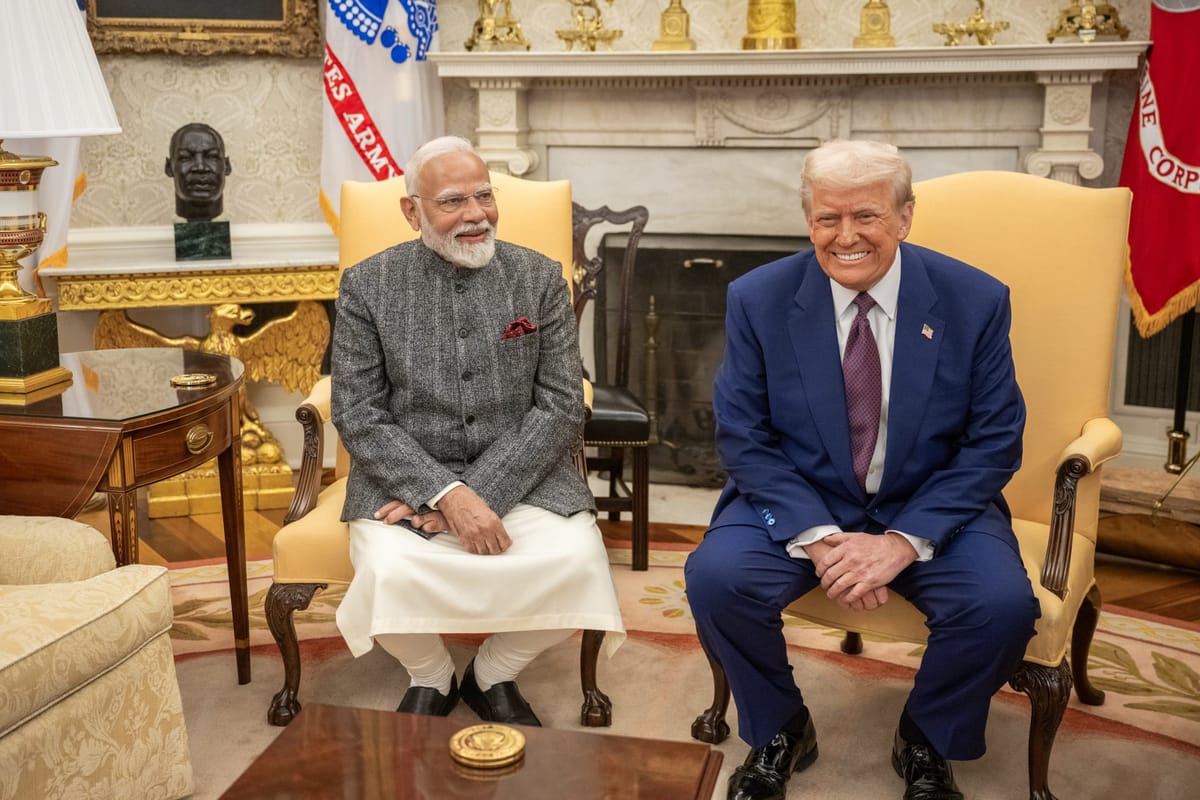
President Trump is back in the White House, and his Middle East strategy looks… different.
It’s left allies and experts scratching their heads.
Confusion Reigns in the Middle East
In just a few months, we’ve seen a whirlwind of activity.
Trump seemed to reopen talks with Iran, then suddenly threatened the regime with collapse.
He kept Israel at arm’s length initially, skipping it on a regional tour, before signaling renewed support.
Then came the controversial move to lift U.S. sanctions on Syria’s transitional leader, a figure with a past many found troubling.
Adding to the puzzle, he hosted Pakistan’s top general at the White House, even drawing public objections from India.
On the surface, it looks like improvisation, maybe even contradiction.
Critics have been quick to point this out.
But what if there’s a different logic at play?
Beyond Traditional Alliances?
Forget the old ways of thinking about foreign policy in the region.
It might not be about spreading democracy or sticking to rigid alliances this time.
Instead, look at the map.
Look at access. Geography. Trade routes.
There’s a massive infrastructure project that could reshape global trade.
And crucially, it’s designed to bypass China’s growing influence.
The Project You’ve Likely Never Heard Of
Enter the India–Middle East–Europe Corridor, or IMEC.
Launched back in 2023, it was a joint idea from the U.S., India, Saudi Arabia, the UAE, and the European Union.
The goal? Build a modern link for trade, energy, and digital connections from India all the way to Europe.
Without going through Chinese territory or relying on Chinese money.
It was meant to be a major counterpoint to China’s sprawling Belt and Road Initiative.
Imagine goods from India traveling via rail and ports through the Gulf, across Israel, and into Europe.
A bold vision, right?
But then, disaster struck.
Roadblocks Appear
Just as construction was set to begin, conflict erupted in Gaza in late 2023.
The violence sent shockwaves across the region.
Crucial normalization talks between Saudi Arabia and Israel stalled.
Shipping in the Red Sea became a dangerous gamble.
Investment flows from the Gulf countries paused.
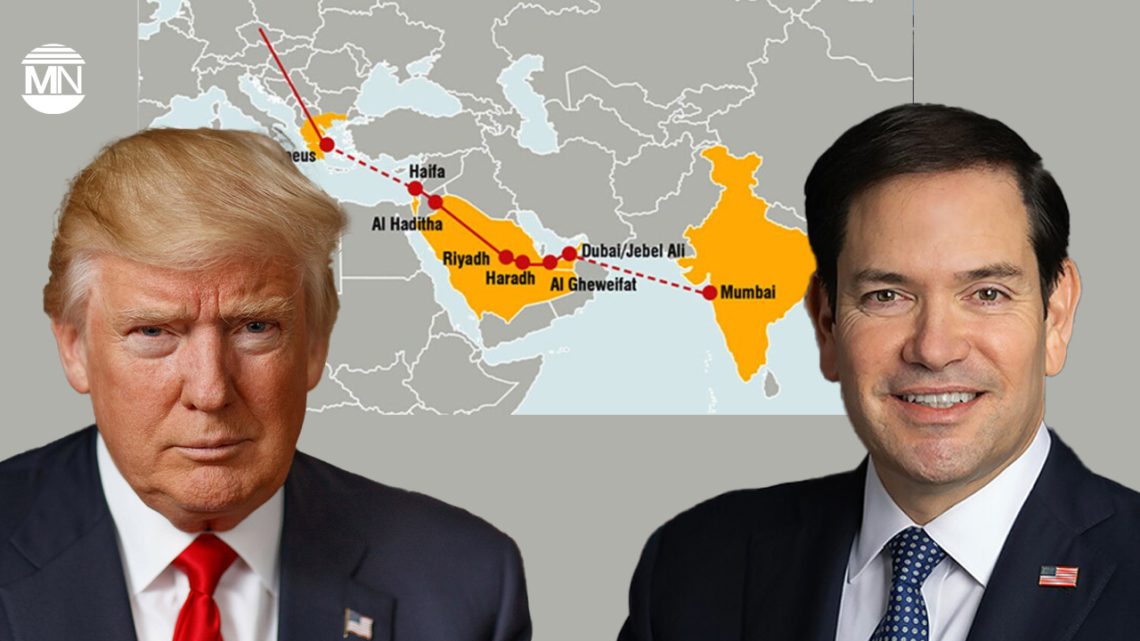
The IMEC project, and the hope of using infrastructure to connect the region, was quietly put on hold.
It seemed destined to remain just a concept on paper.
Connecting the Dots?
Now, look back at Trump’s recent moves.
That unexpected outreach to Iran? It included brokering a truce in Yemen, helping calm the very Red Sea attacks that threatened shipping and scared off investors.
The distancing from Israel? By not fully aligning with Prime Minister Netanyahu’s hard-line stance on Gaza, Trump may be signaling that regional stabilization and cooperation are conditions for major projects like IMEC.
Praises for Qatar and support for Gulf-led reconstruction plans also fit this.
And lifting sanctions on Syria’s leader?
As controversial as it was, it reportedly opened up transit corridors previously blocked by U.S. policy, potentially linking pieces of the regional puzzle needed for infrastructure.
Even hosting Pakistan’s military chief, which upset India, makes sense through this lens.
Pakistan sits near Iran, influences Afghanistan (bordering key regions), and has ties with Gulf partners.
In corridor politics, geography often matters more than historical alliances.
Seen through this lens, the seemingly chaotic actions start to form a pattern.
They look less like random decisions and more like calculated steps.
“Taken together, they align with the logic of clearing obstacles to infrastructure.”
Trump might not be using a literal map in the Situation Room.
But his instincts for leverage, dealmaking, and unpredictability could be clearing the very roadblocks that stopped IMEC.
The Infrastructure-First Approach
This isn’t about spreading democracy.
It’s not about traditional diplomacy.
It’s an ‘infrastructure-first’ geopolitics.
Where trade routes, ports, and pipelines are the real currency.
The unpredictable moves on Iran, the pressure on Israel, the surprising Syria decision, the Pakistan outreach – they could all be aimed at creating just enough stability.
Enough stability to make the region safe for investment again.
Enough to make the IMEC corridor investable.
The goal: de-escalate conflict just enough to get capital flowing.
This strategy mirrors how other global powers, like China with its BRI, operate.
But IMEC offers the U.S. and its partners a unique chance to compete without resorting to massive military presence or endless aid programs.
Trump has always had a knack for seeing economic leverage.
This might be what we’re witnessing now.
Less a grand doctrine, more a practical direction.
Less about abstract visions, more about unlocking crucial chokepoints on the map.
There’s no guarantee it will work, of course. The Middle East remains volatile. But Trump’s actions strongly suggest he’s trying to build the *conditions* for this ambitious project to restart.
Not by talking about peace in the abstract, but by making peace a literal condition for unlocking massive investment and countering a global rival.