She Ditched Van Life for a 4x4 Pop-Up
Comfort can be a quiet trap. For three years, Molly thrived in a van, then realized she’d stopped pushing herself. She wanted harder roads, higher trails, bigger weather. So she built for it and aimed the nose toward the wild.
Why She Swapped a Van for a 4x4
She says the shift started with a simple truth: van life had become routine.
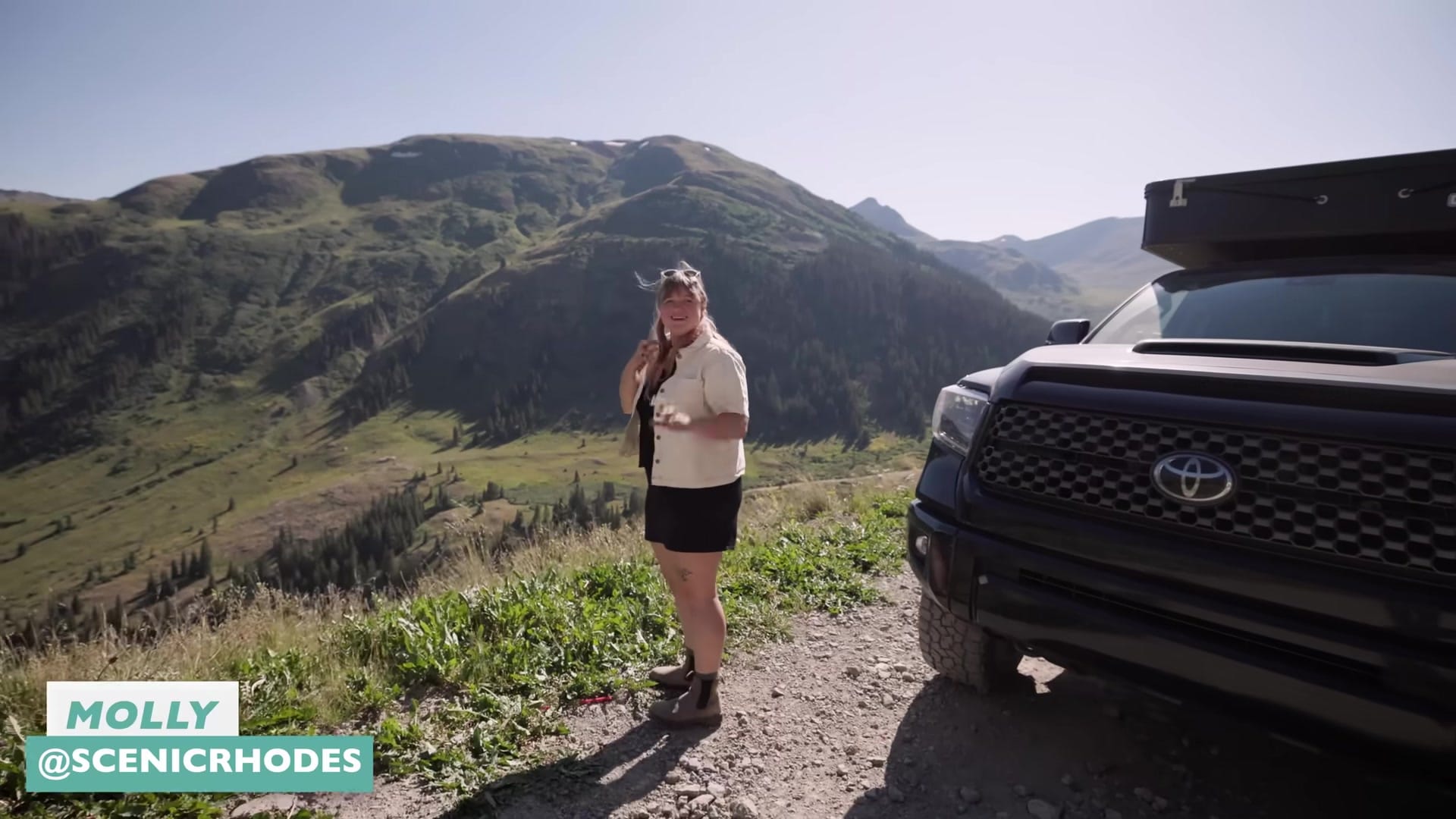
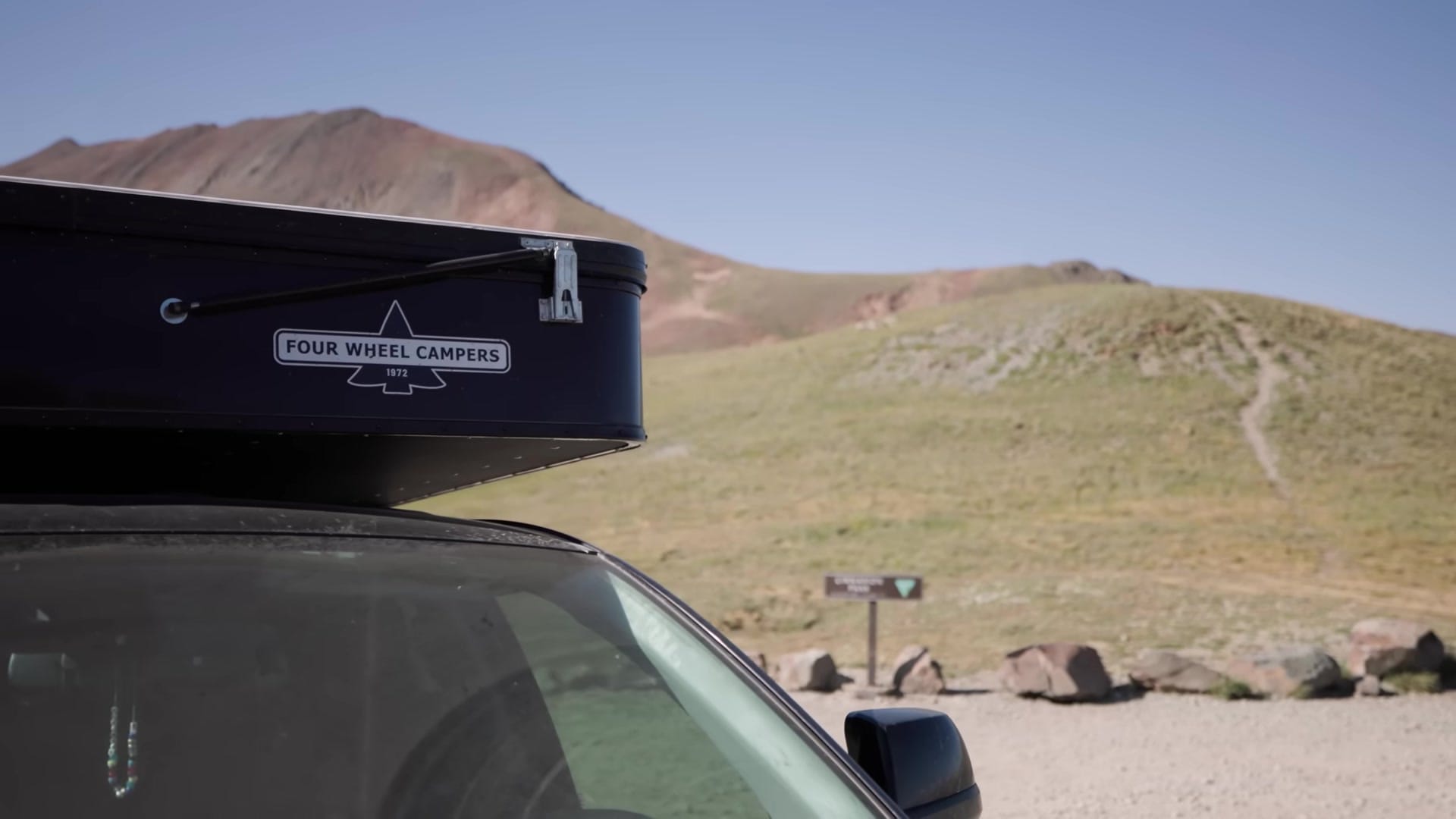
The new plan was specific — a Four Wheel Campers Fleet Flatbed on a 2019 Toyota Tundra to “go farther, harder,” even “over mountains”.
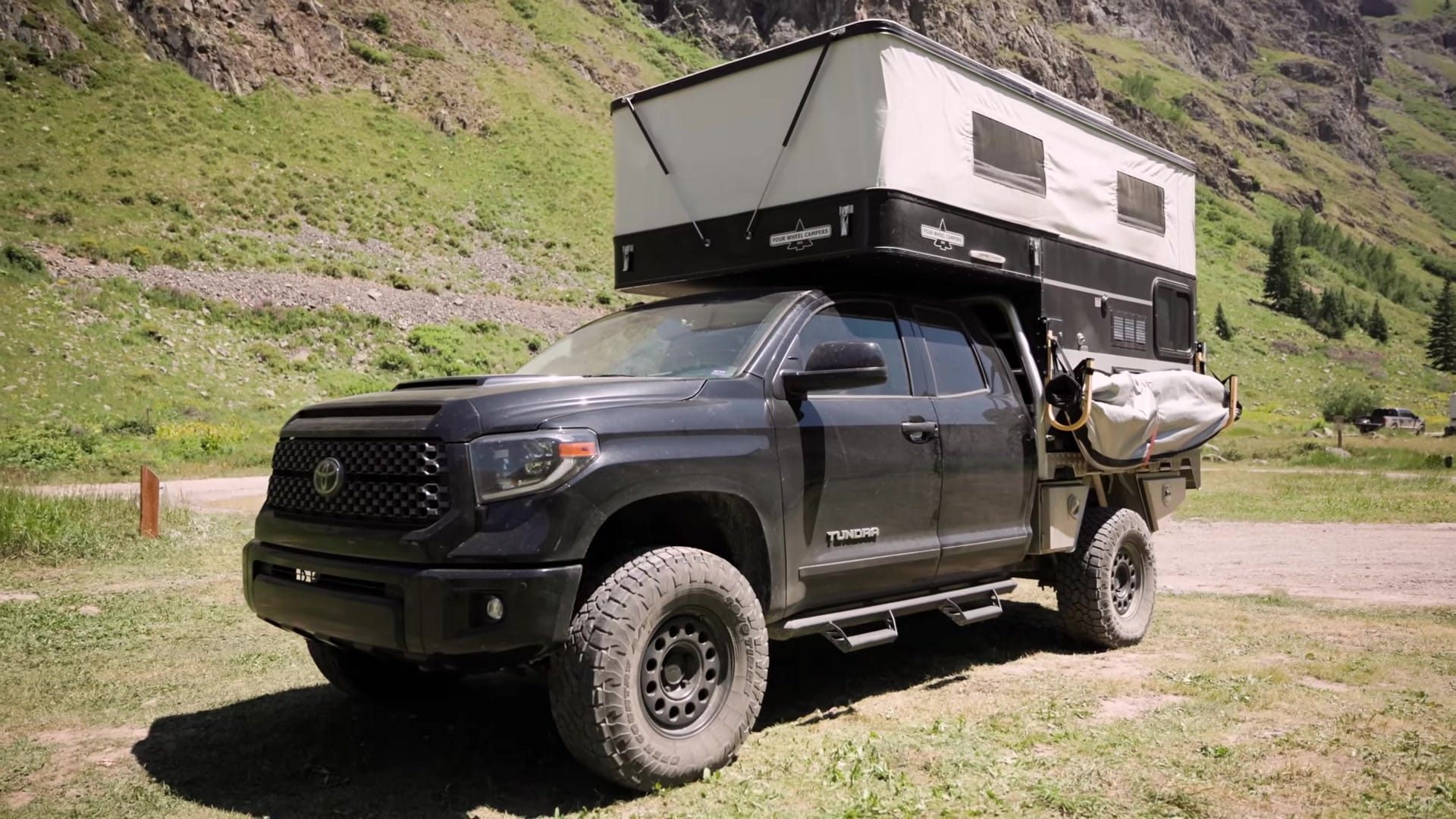
The camper pops up with six exterior latches, the kind of ritual that signals you’ve arrived.
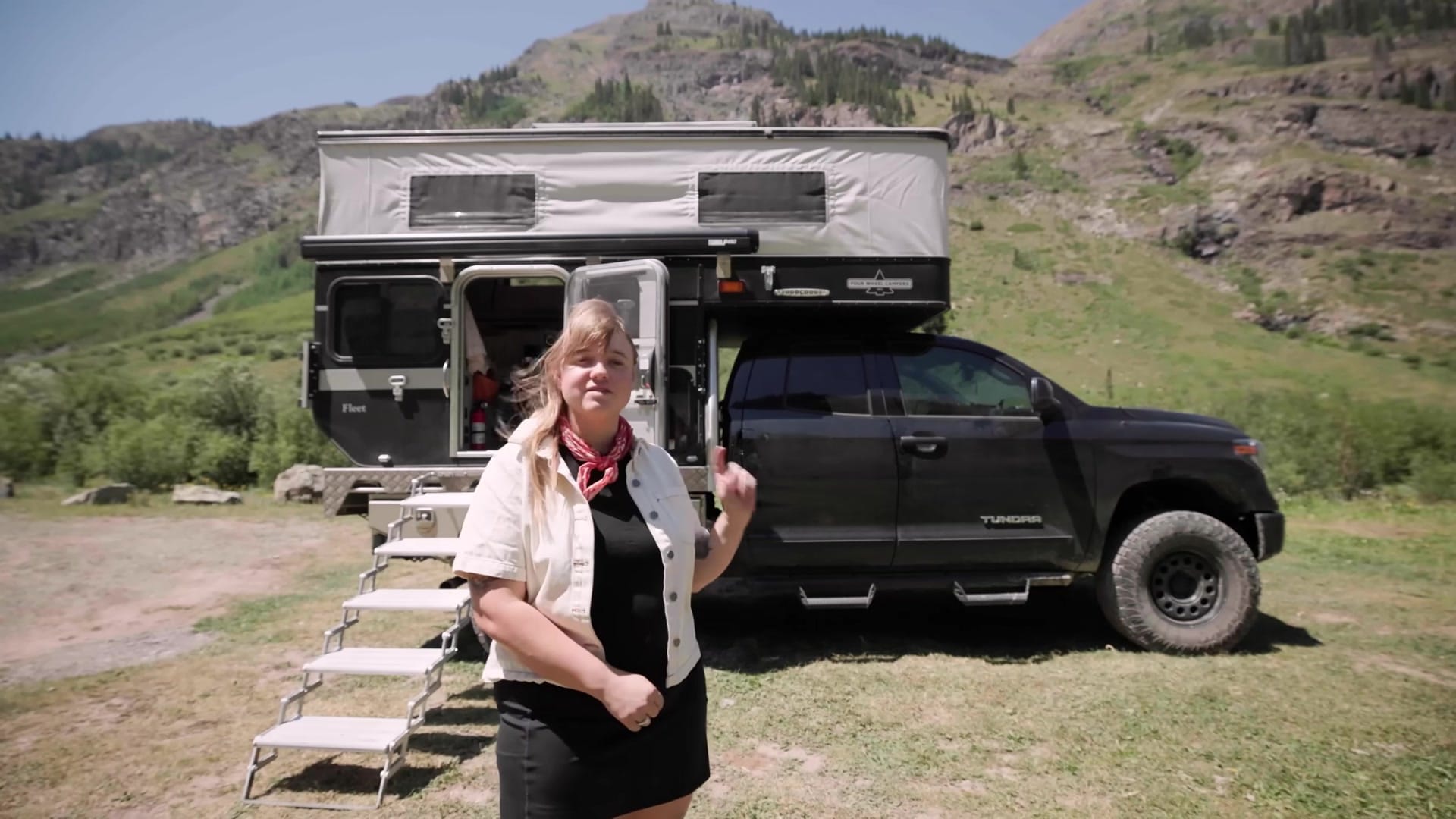
Popped, headroom jumps to about 6'4", which instantly changes how the space feels.
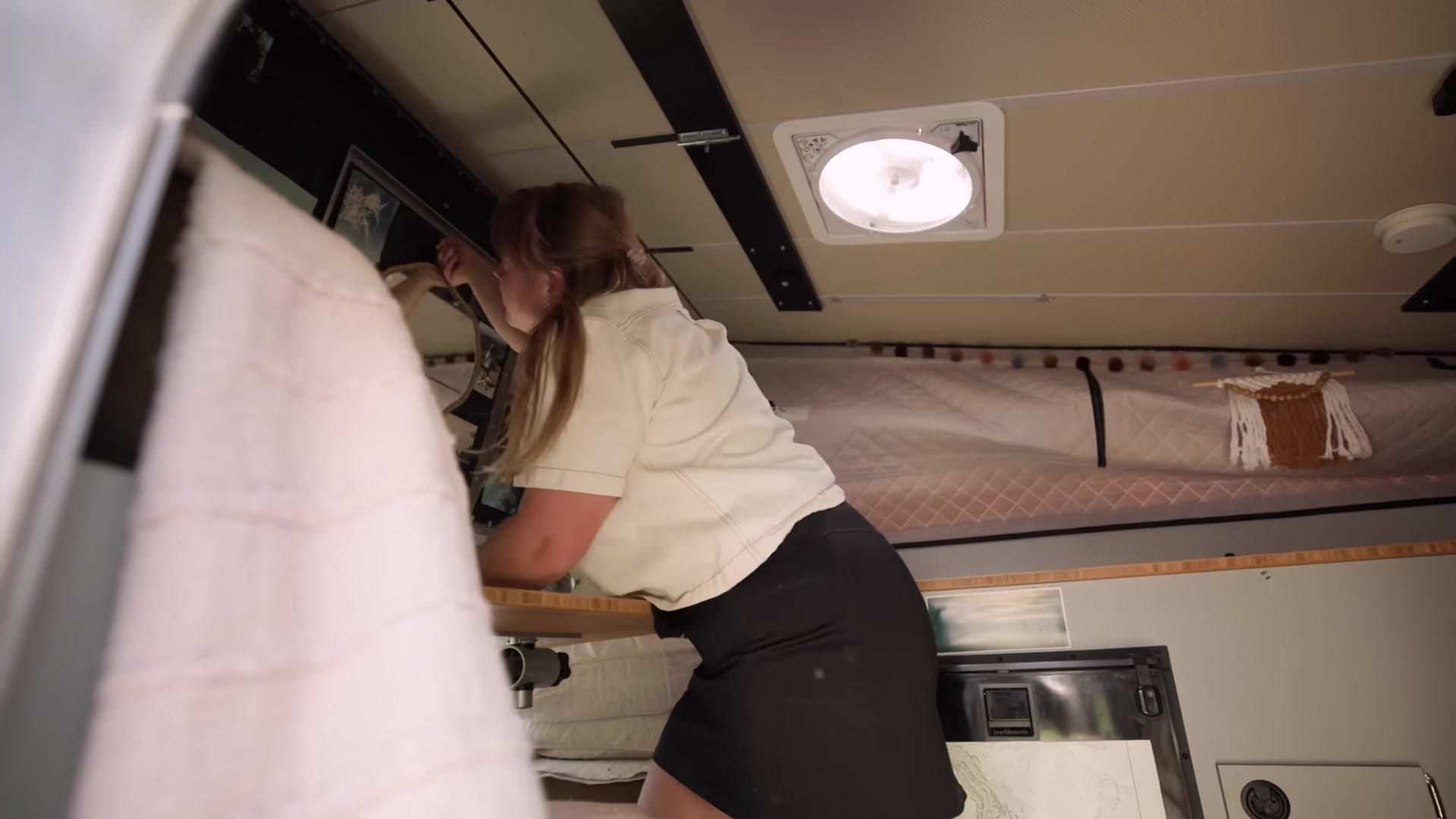
Camper Layout at a Glance — the 40 sq. ft. footprint (00:51)
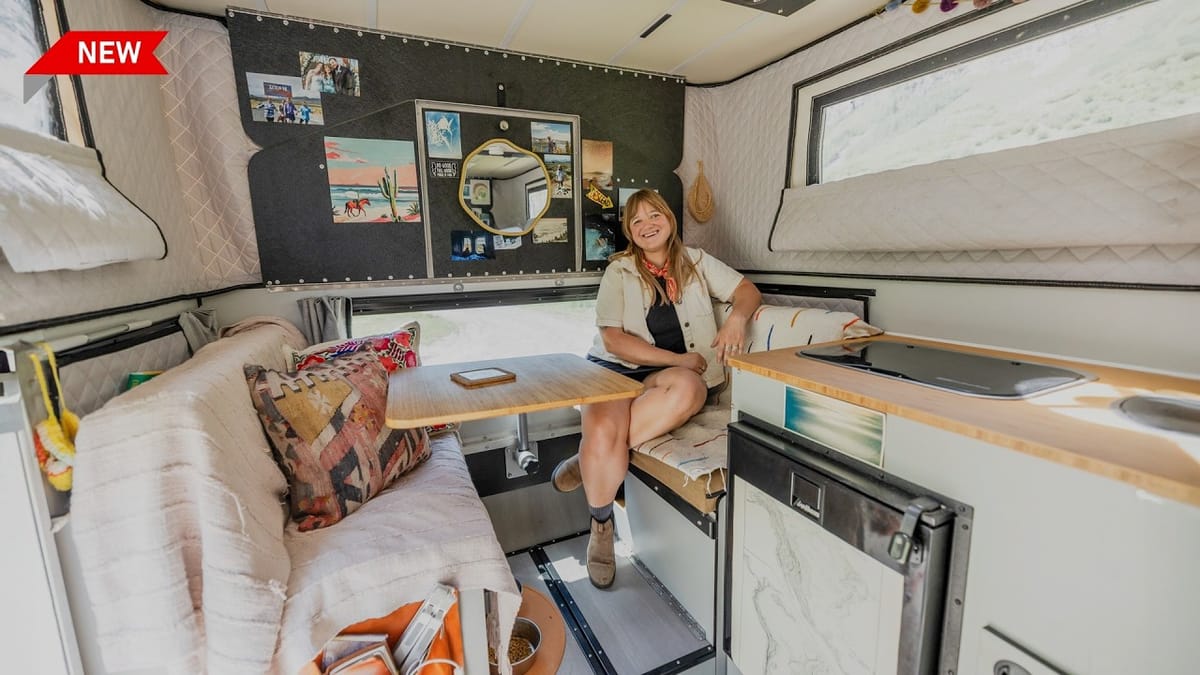
Step inside and it’s a study in smart smallness. The interior footprint is 40 square feet, but it hits the essentials without feeling thin.
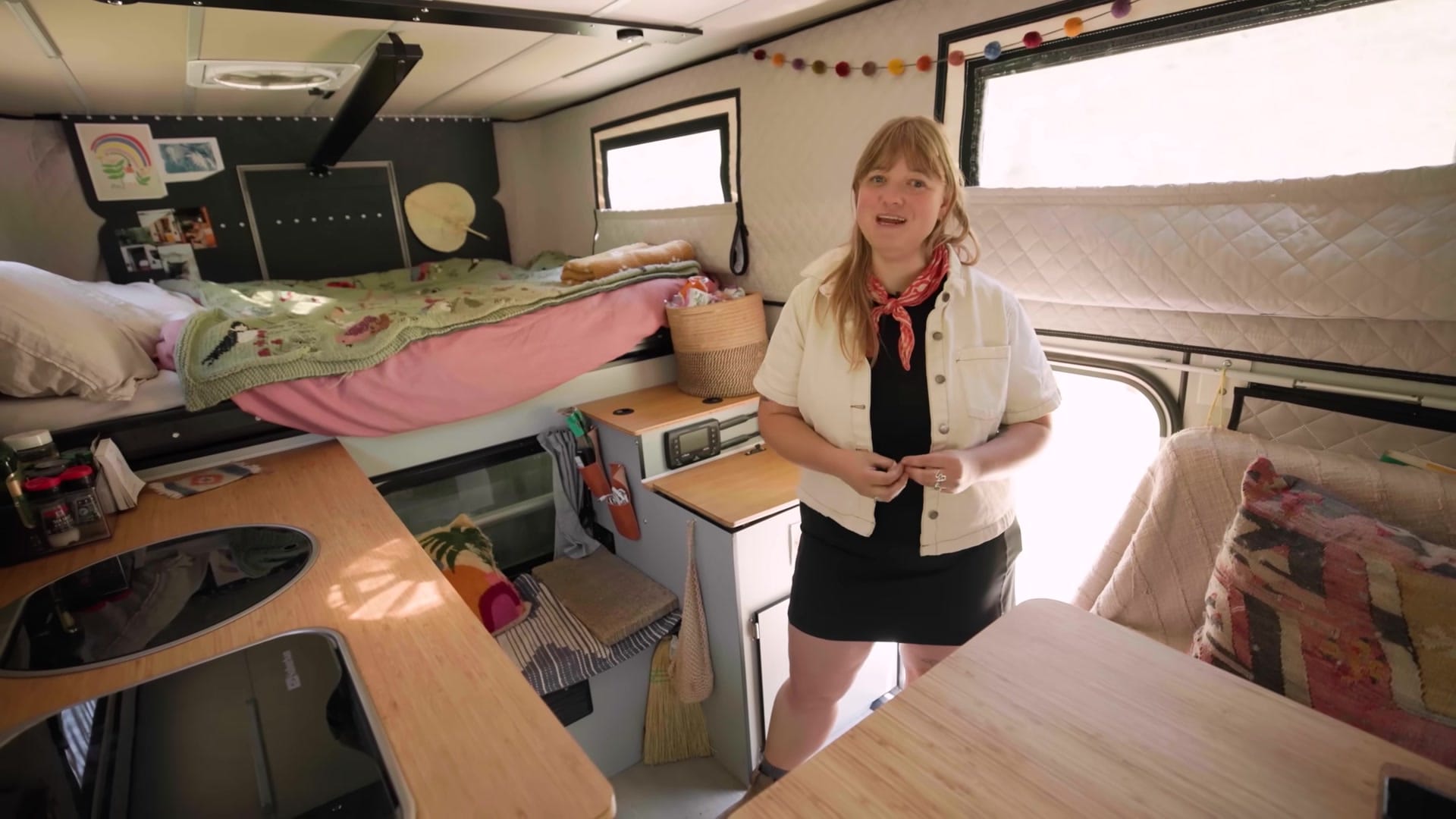
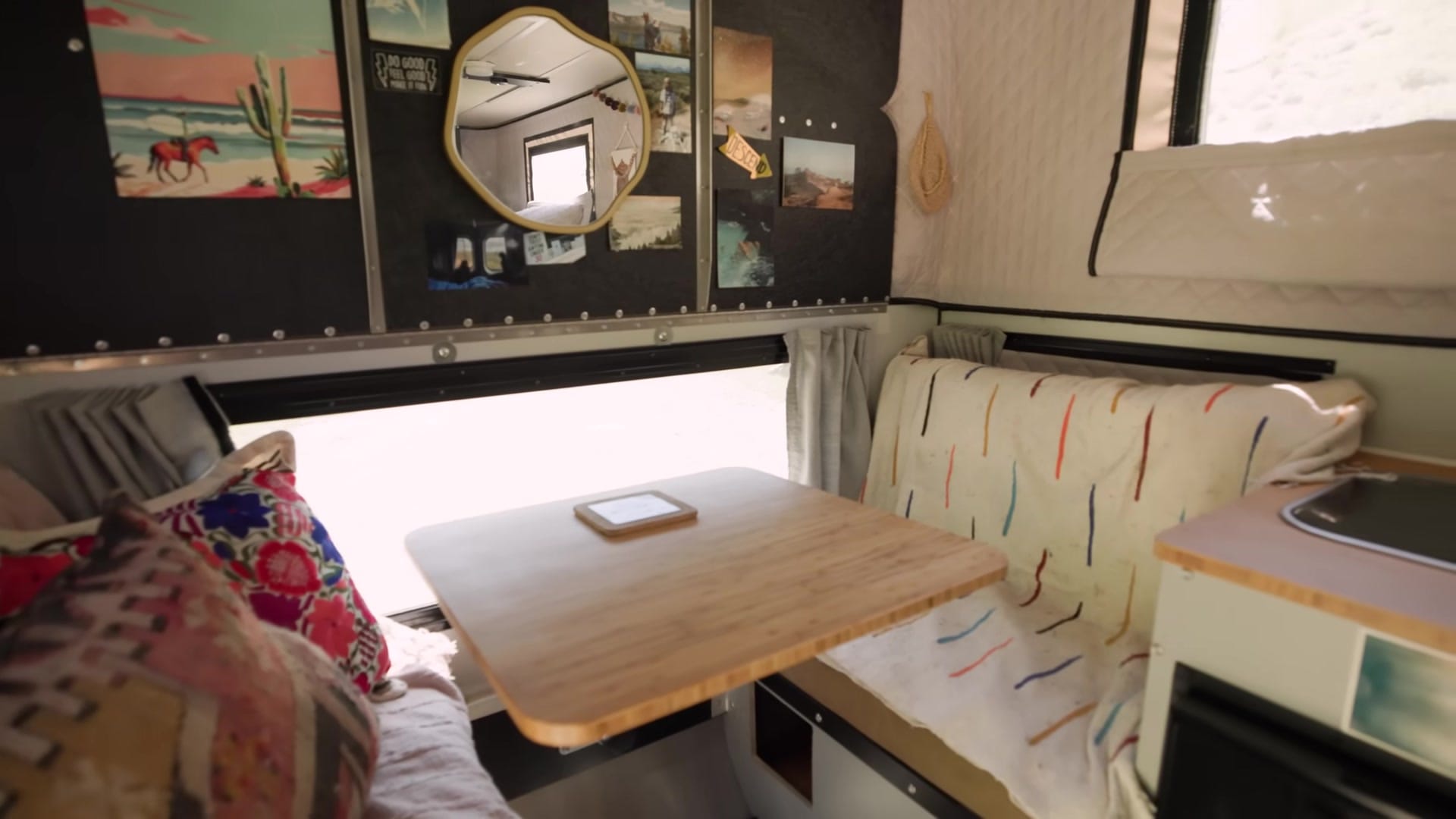
A rear dinette anchors the back so meals, work, and downtime have a place.
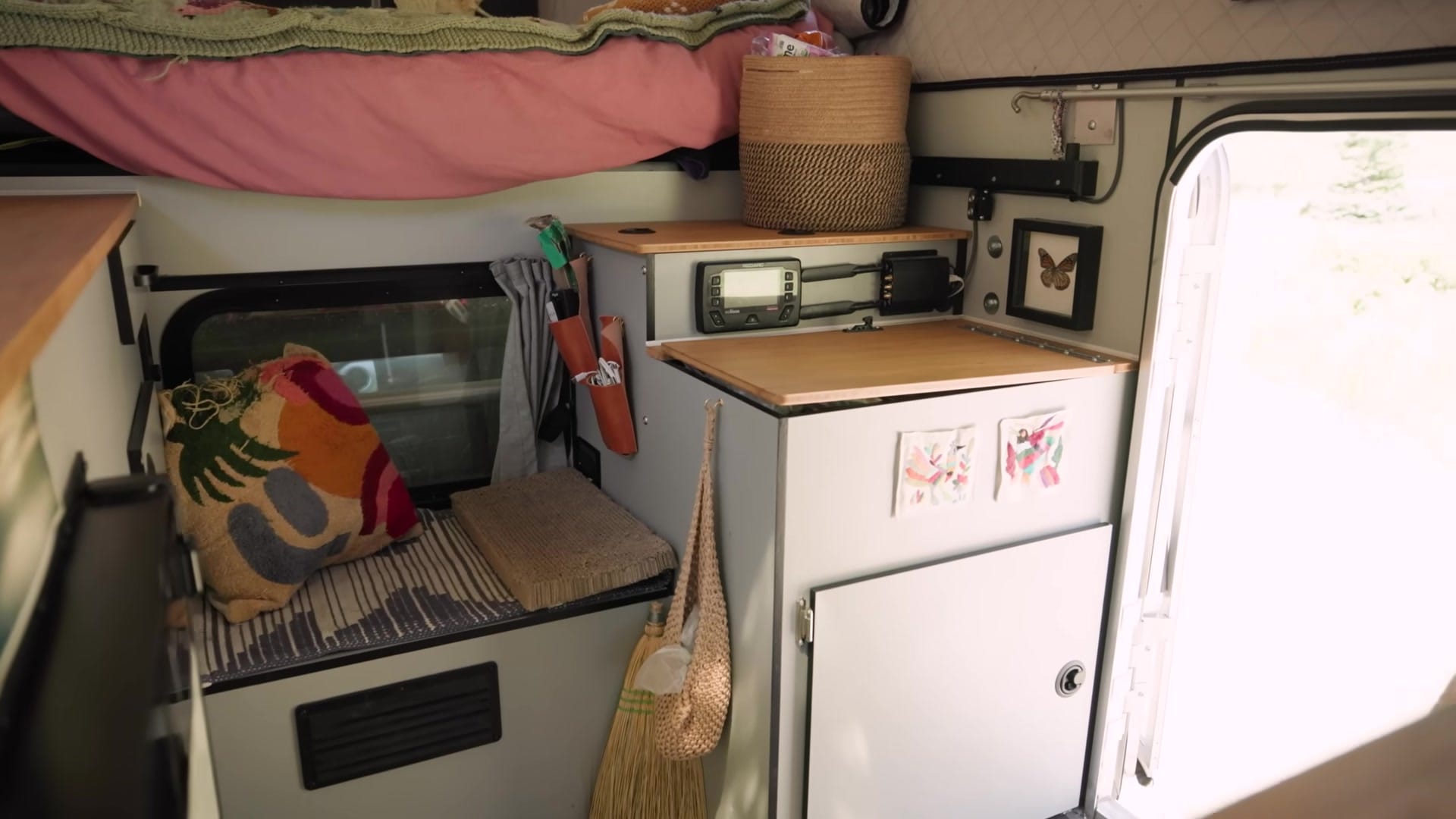
Opposite the dinette, the passenger-side run holds the toilet, storage, and the electrical brain — compact and contained.
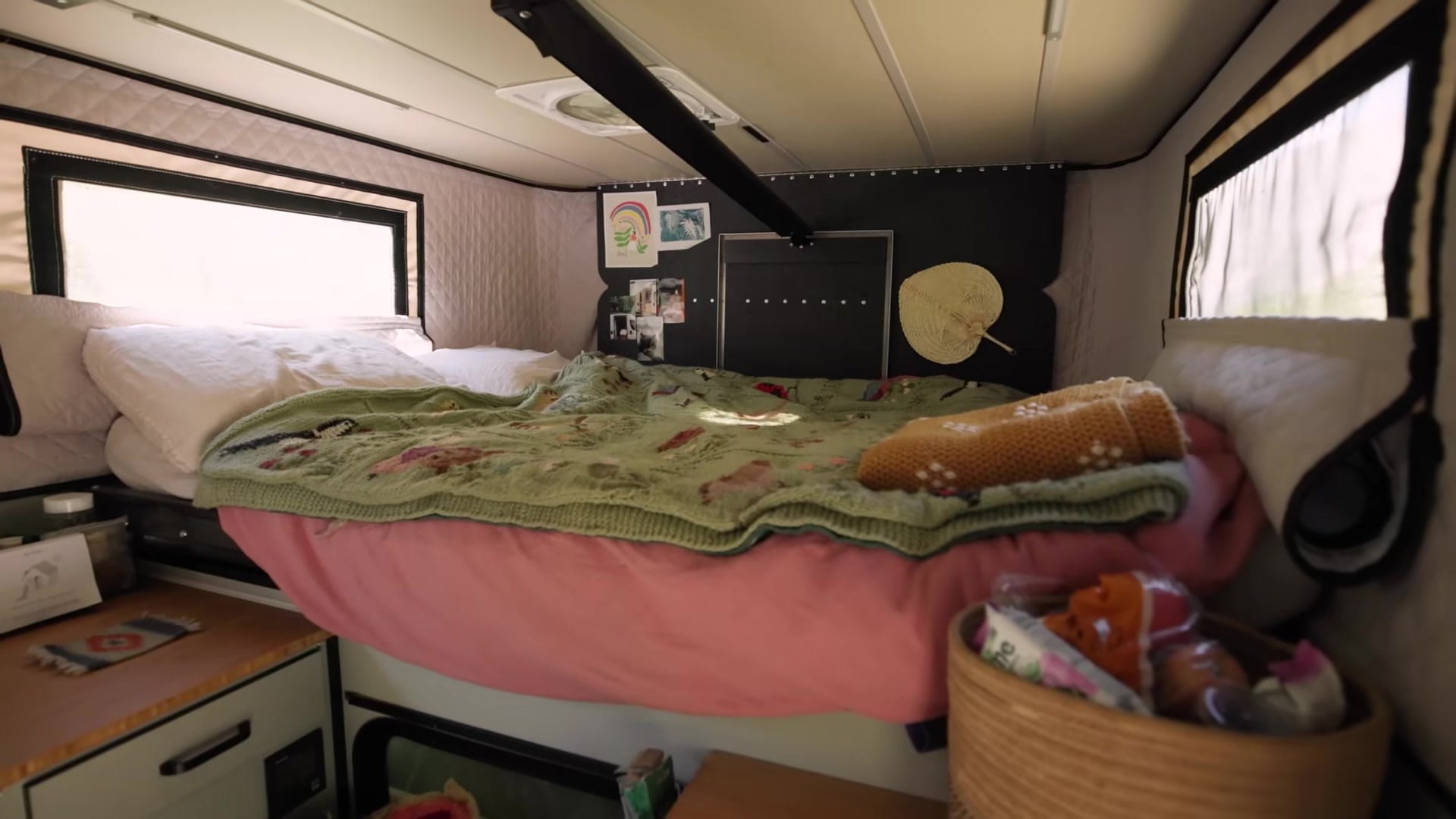
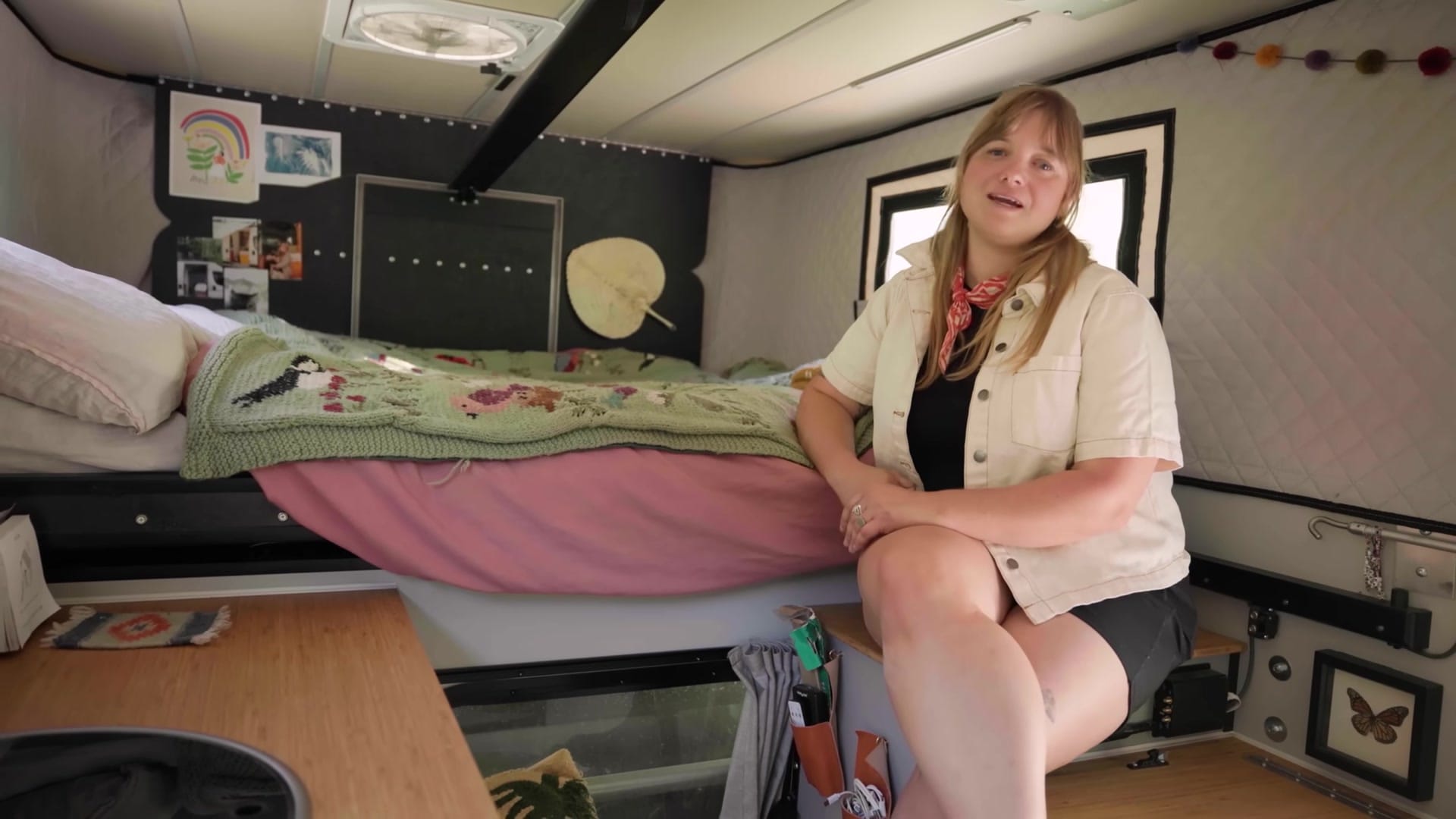
Up front, the bed rides over the cab as a queen, with more storage tucked below to keep clutter off the floor.
Kitchen — small counters, big reach (01:15–02:35)
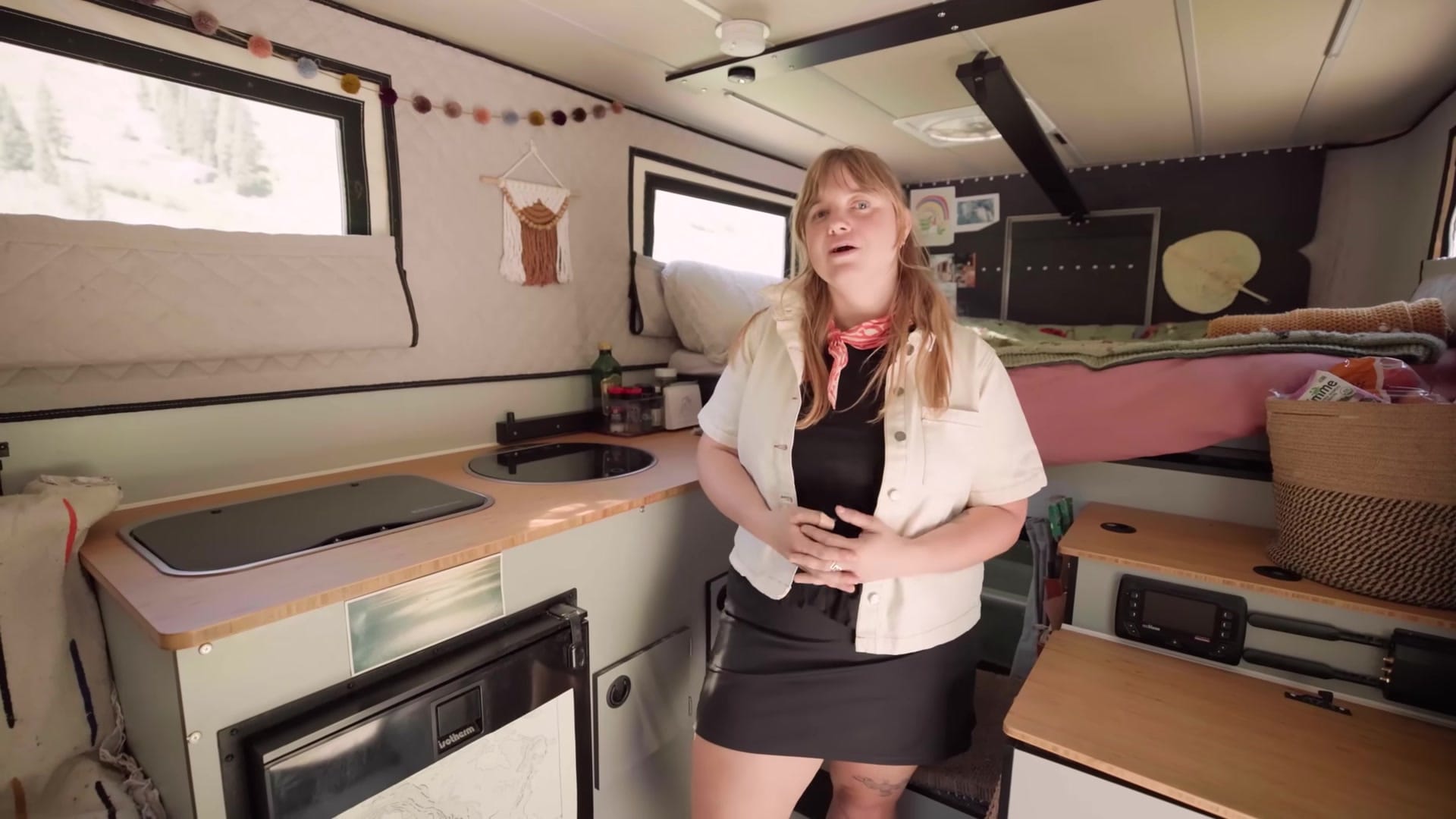
The kitchen is tiny but busy, built to earn its keep every day. It packs a dual propane cooktop and a decent-sized sink beside an 85-liter fridge that keeps food for well over a week.
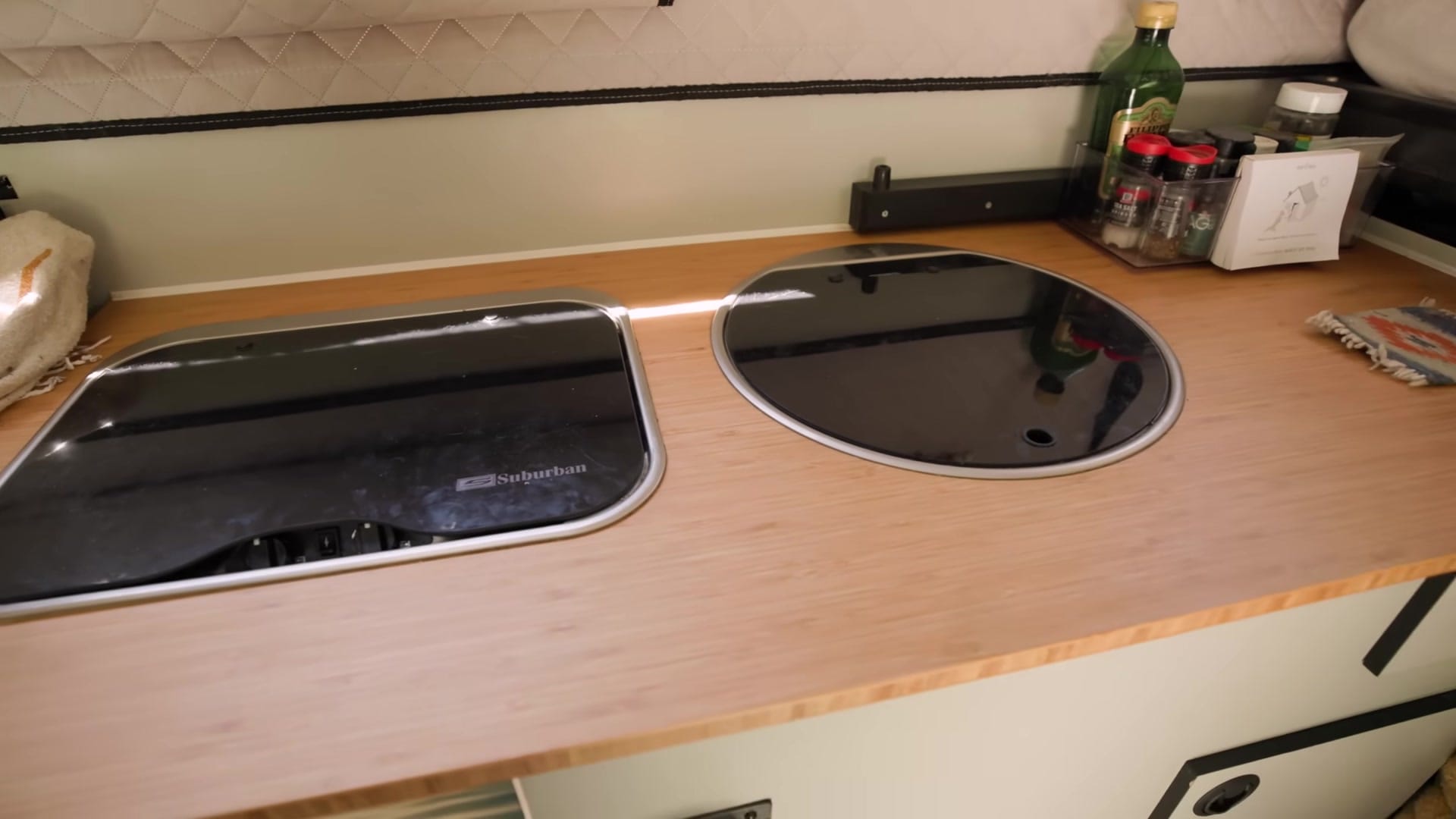
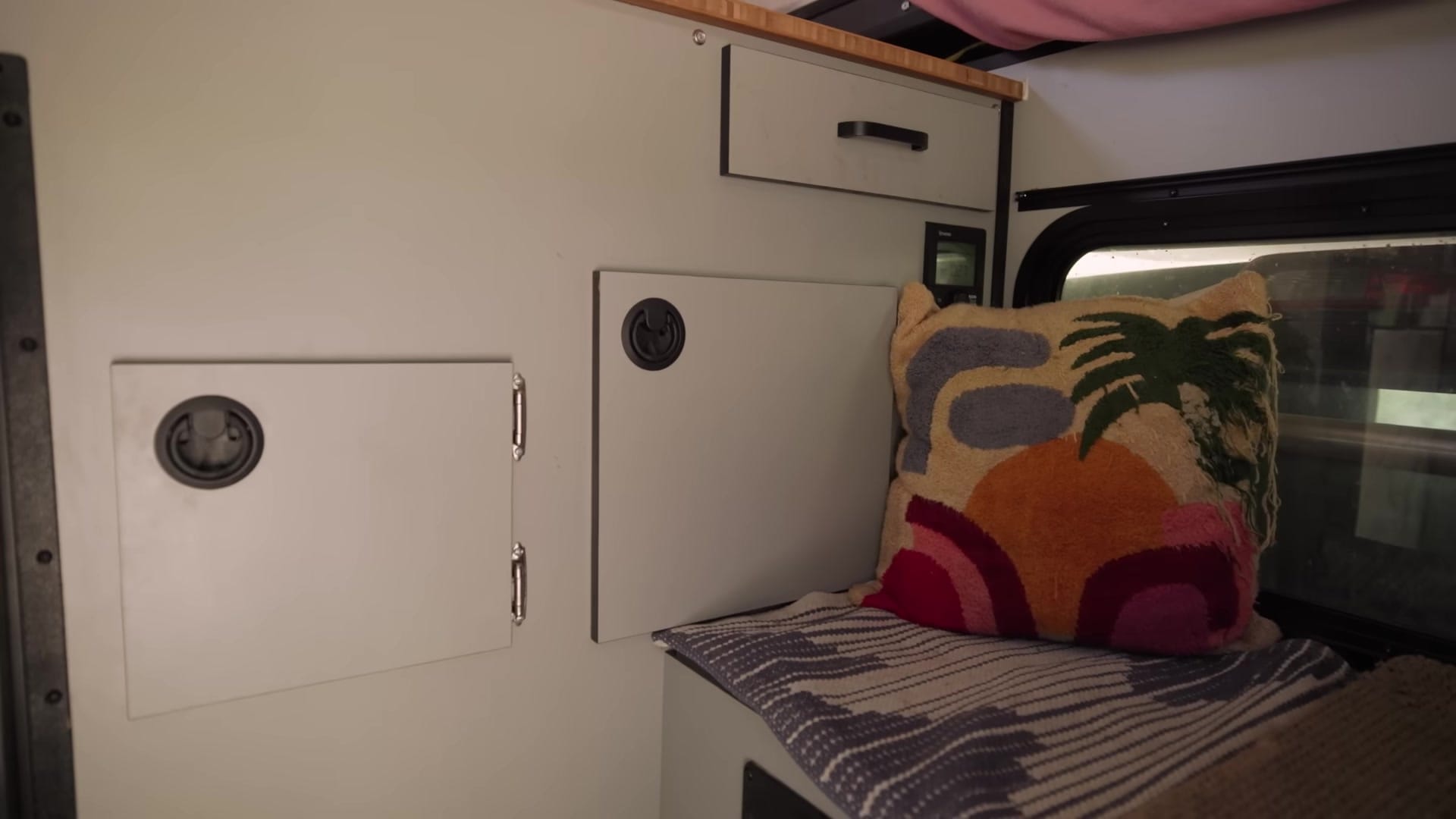
Deep drawers and bins run all the way to the back of the counter, so nothing gets wasted — as long as everything stays in containers.
Water stores quietly in two places, with 20 gallons inside the camper and another 15 in the flatbed tray — about 35 gallons total for a couple of weeks of clean dishes and coffee.
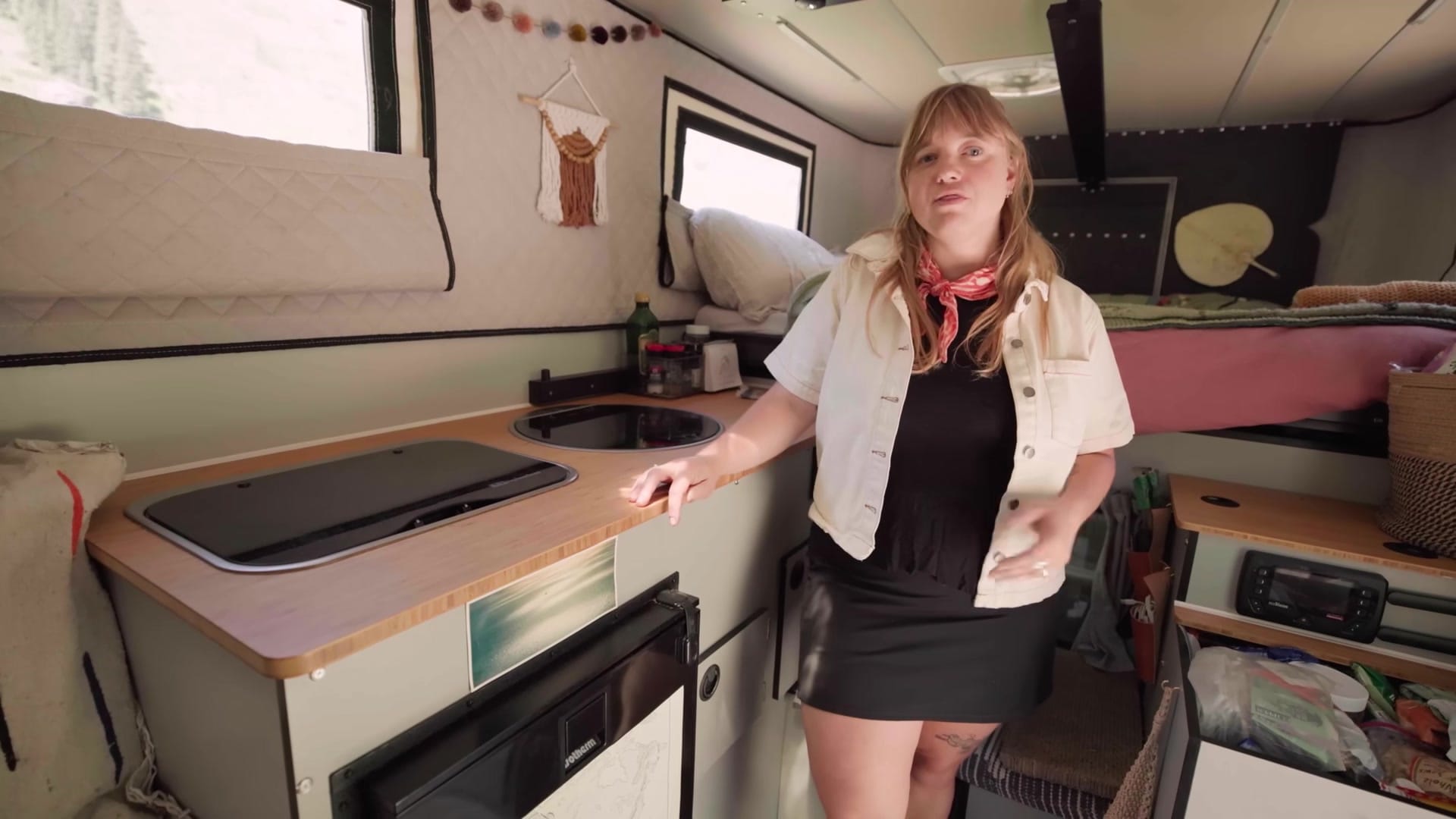
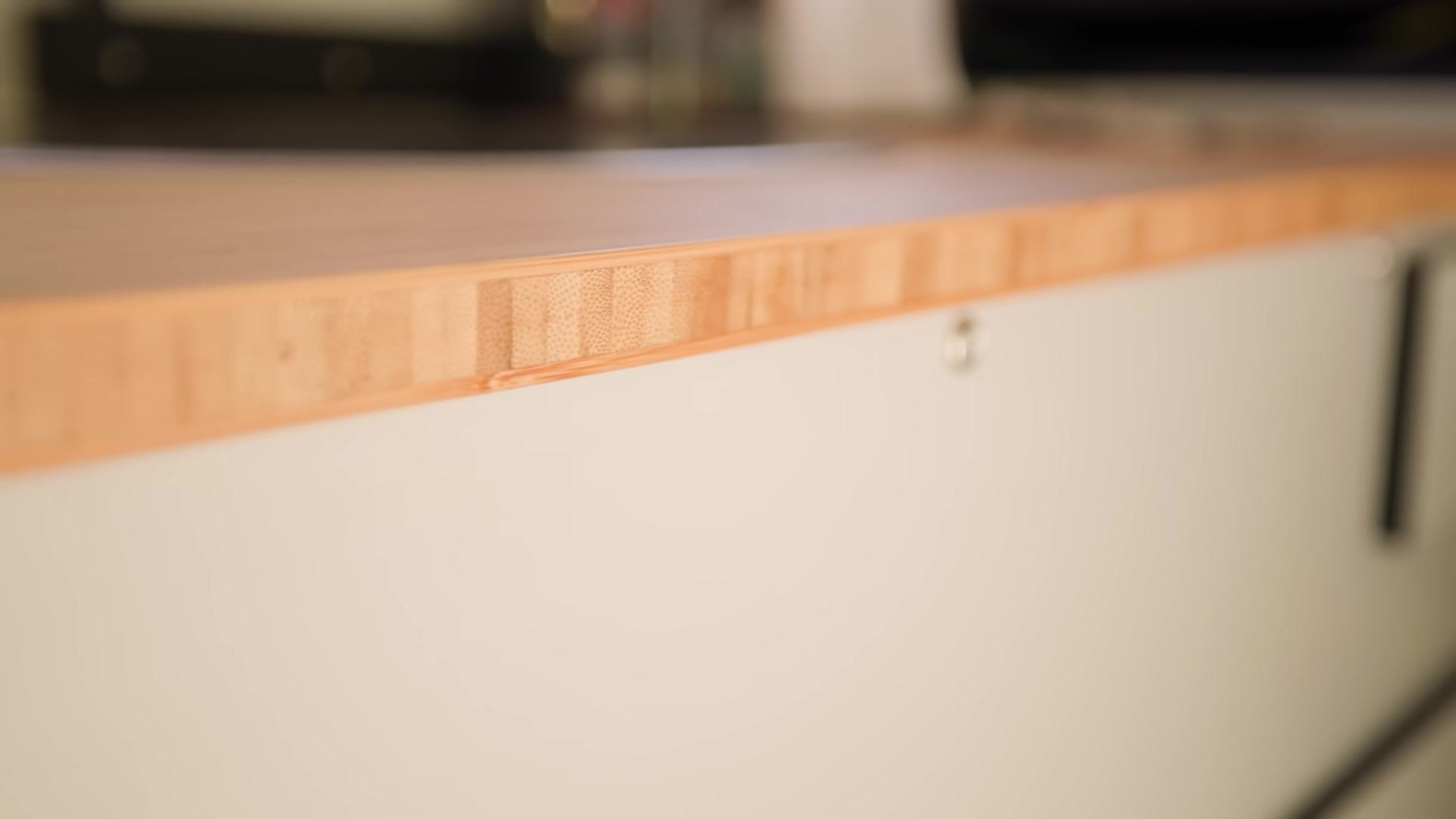
There’s an optional bamboo countertop to watch the weight without losing the warmth of wood grain.
And when she stops, the surprise is how “home” it feels — more apartment than camp, even when the nearest neighbor is a ridge line.
Dinette & Living Space — panoramic views and hidden storage (03:30–04:14)
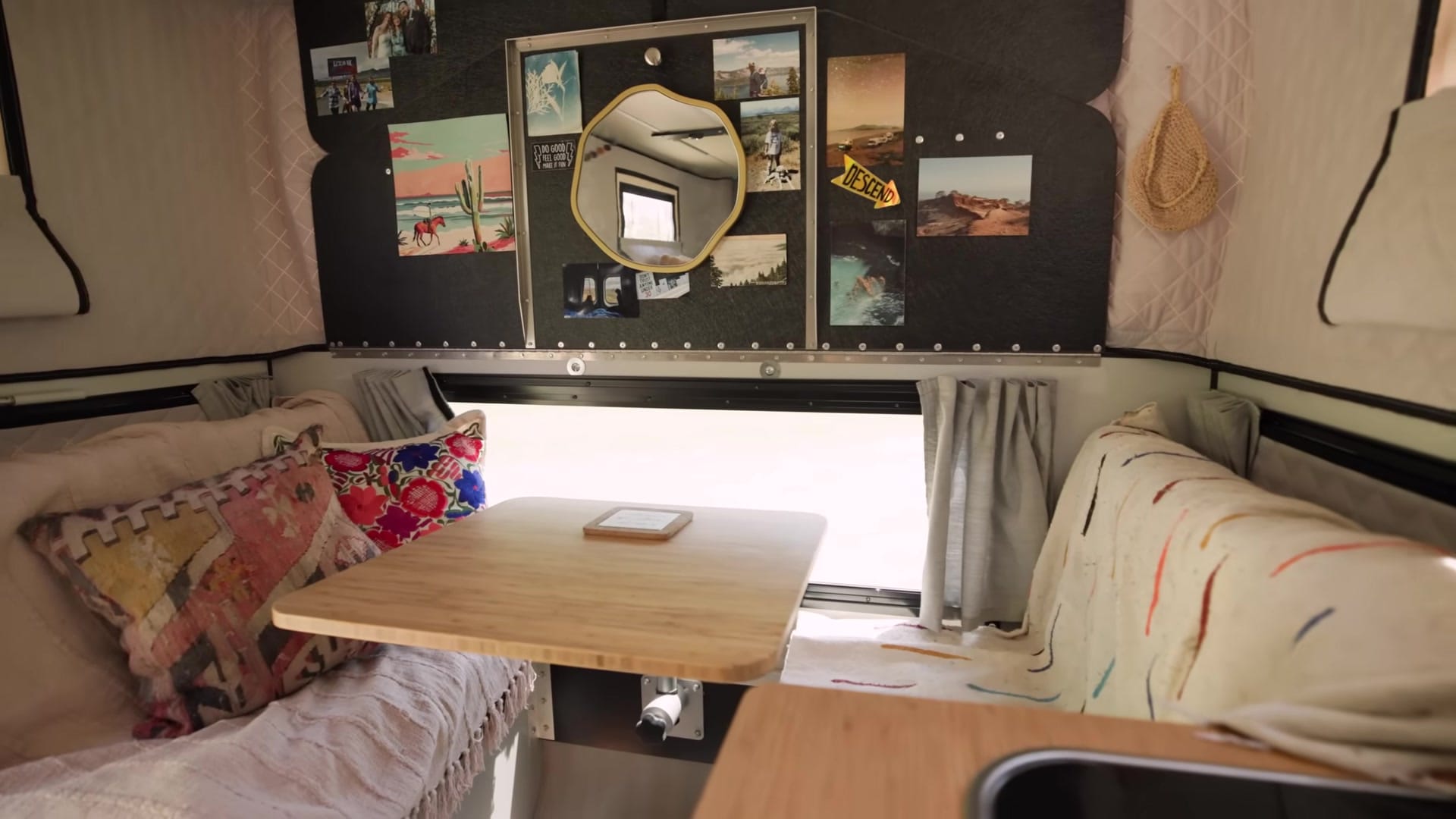
The dinette sits against a panoramic rear window, so a workday or a long lunch still comes with a view.
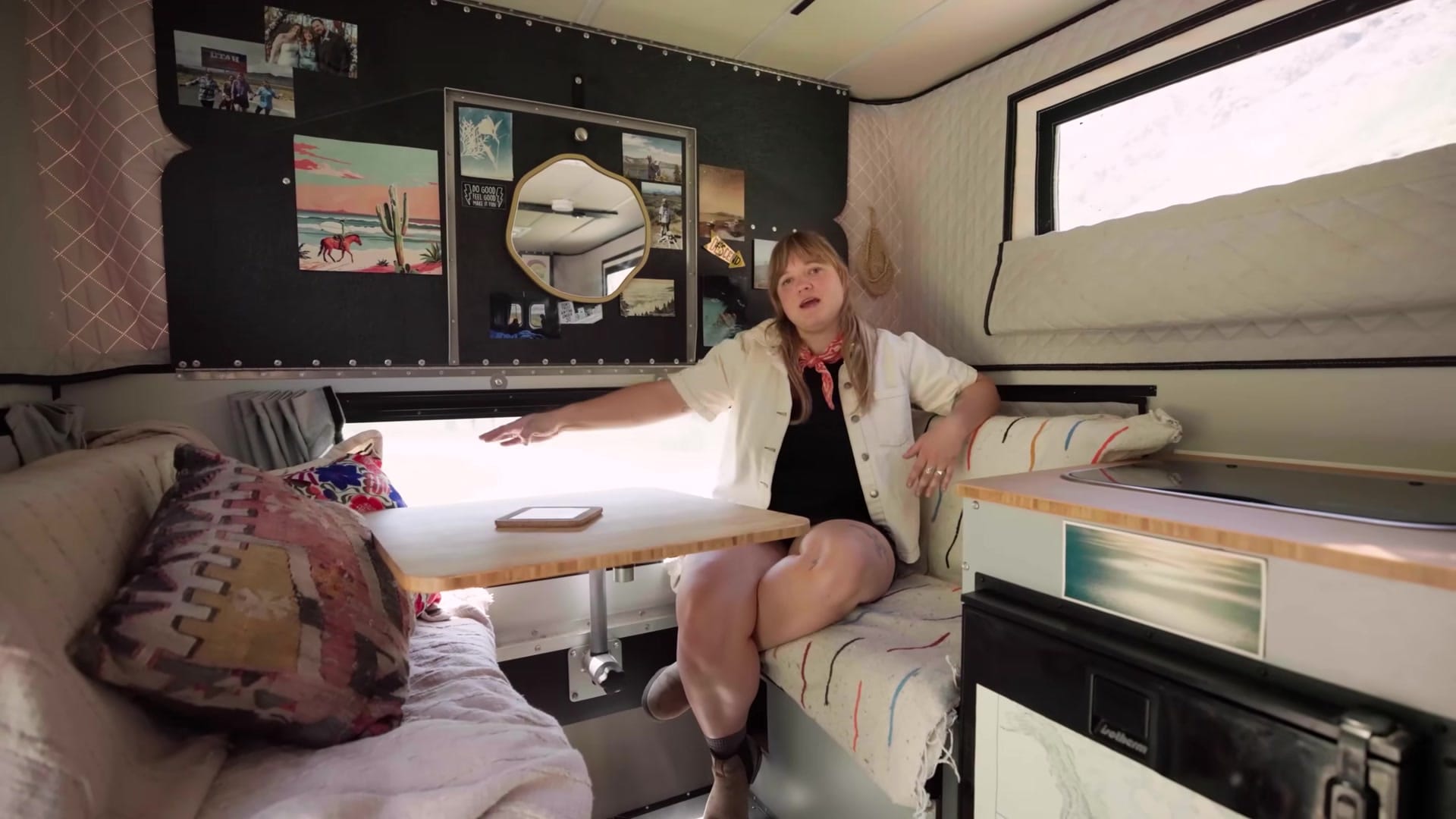
The table lifts, lowers, and even stows into floor slots to transform the benches into a guest bed.
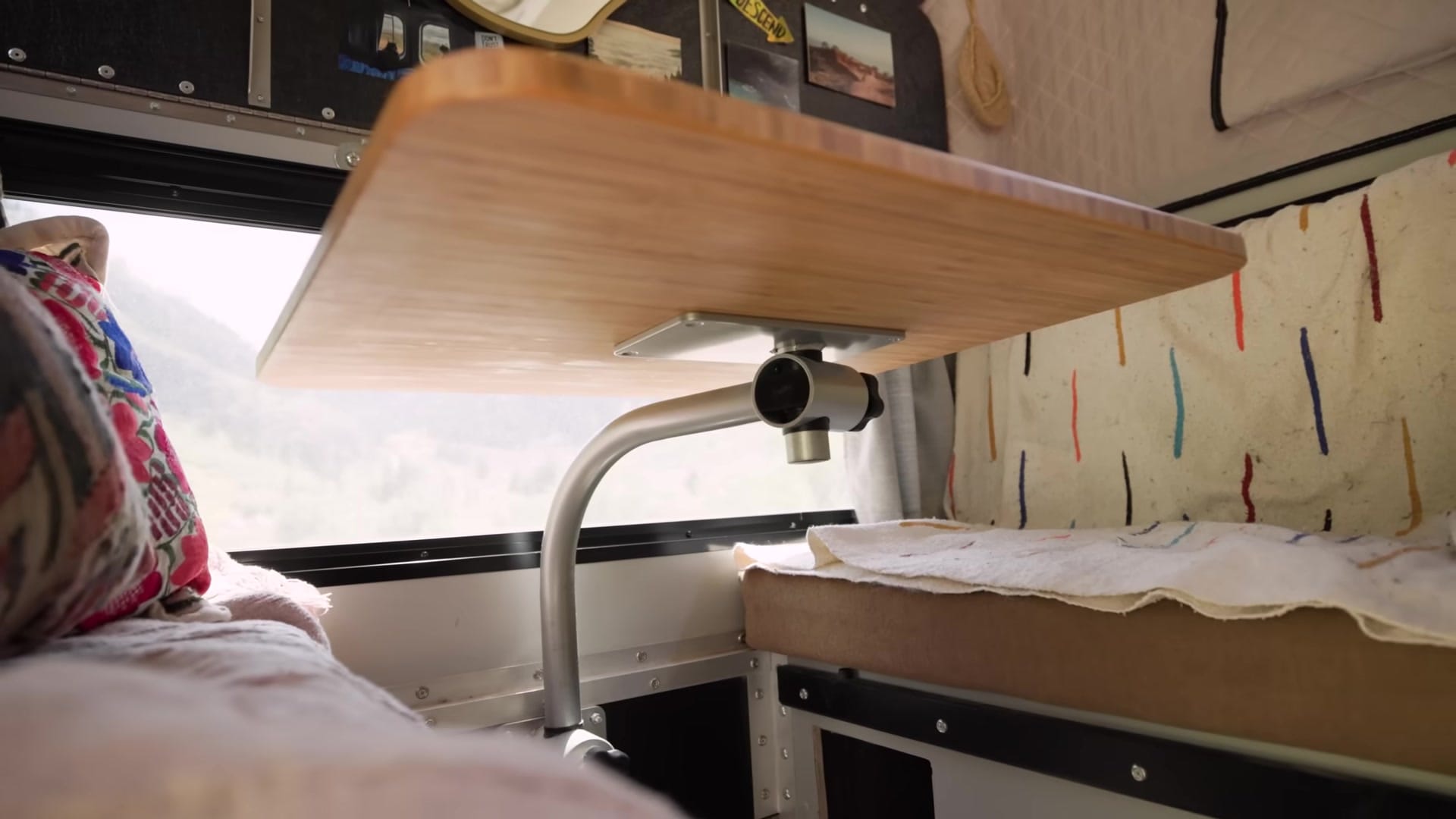
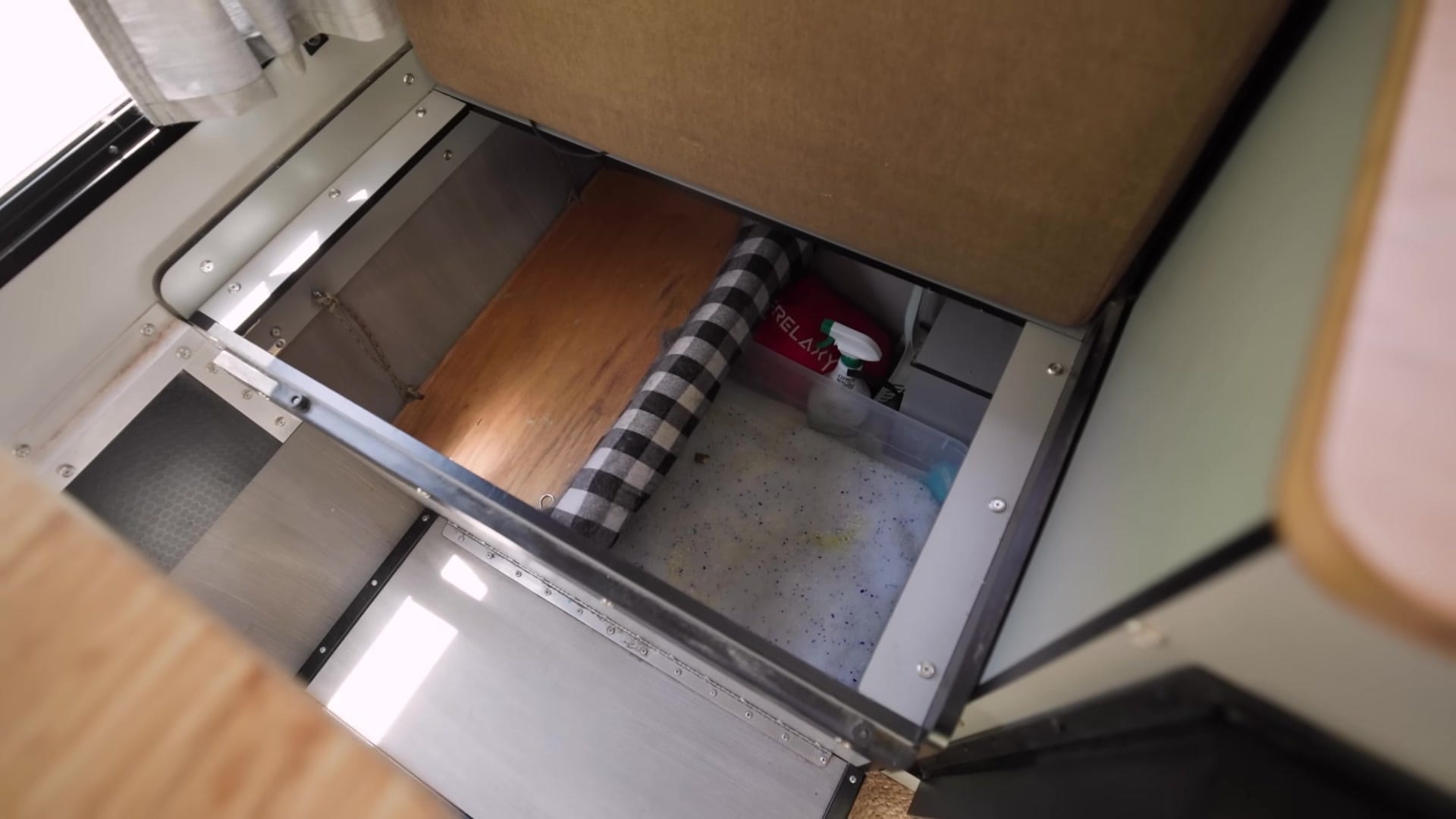
Below those bench cushions: cavernous storage made possible by the flatbed foundation.
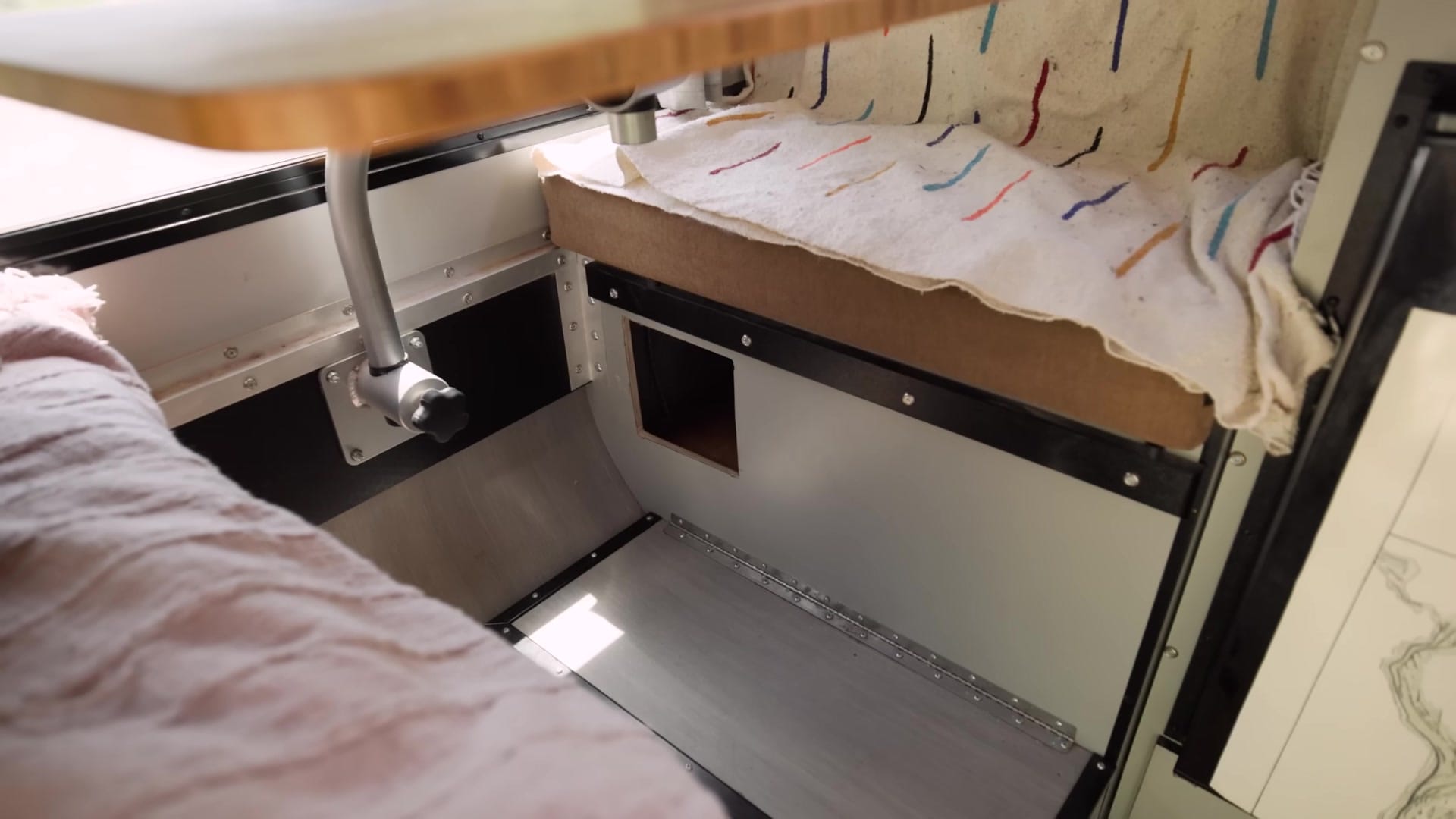
There’s a full cat zone underfoot — a rope-hung platform that moves with the camper, with the litter box below so the animals get their own territory too.
Overhead, one of two hard walls strengthens the pop-up structure, and a pull strap collapses the roof when it’s time to move.
Why This Life — motivation, eyesight story, and van years (05:07–06:29)
The spark for the road was a shock: Molly lost her eyesight, then fought to reclaim much of it with the help of doctors and modern medicine.
That recovery lit a fire to see as much as possible, to chase light and wonder while they’re here to be chased.
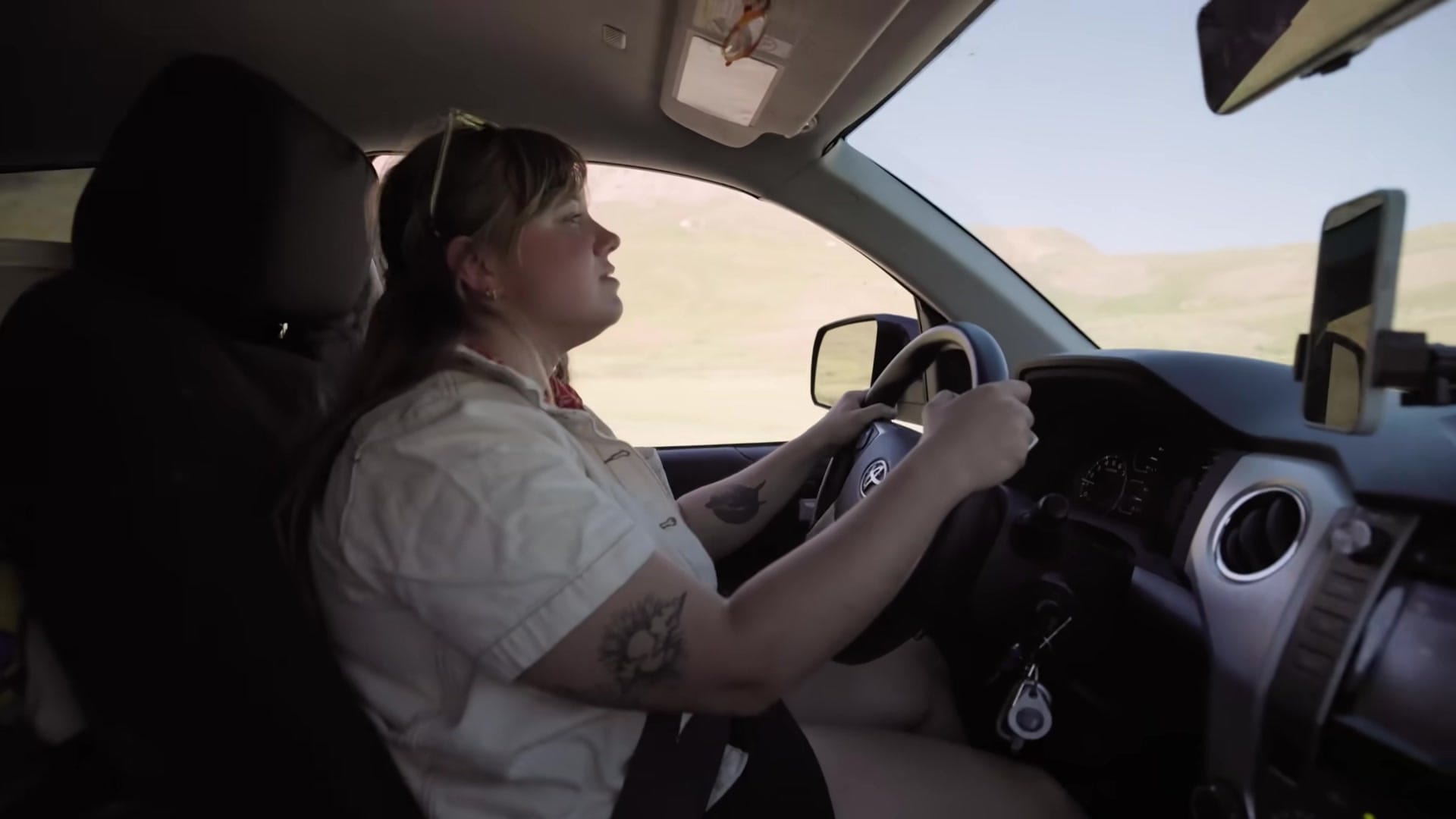
Life on wheels holds her attention because it makes her active in her own days — finding sites, tracking power, topping water, staying present.
It’s daily management in the best sense: power and water aren’t just needs; they’re part of the rhythm.
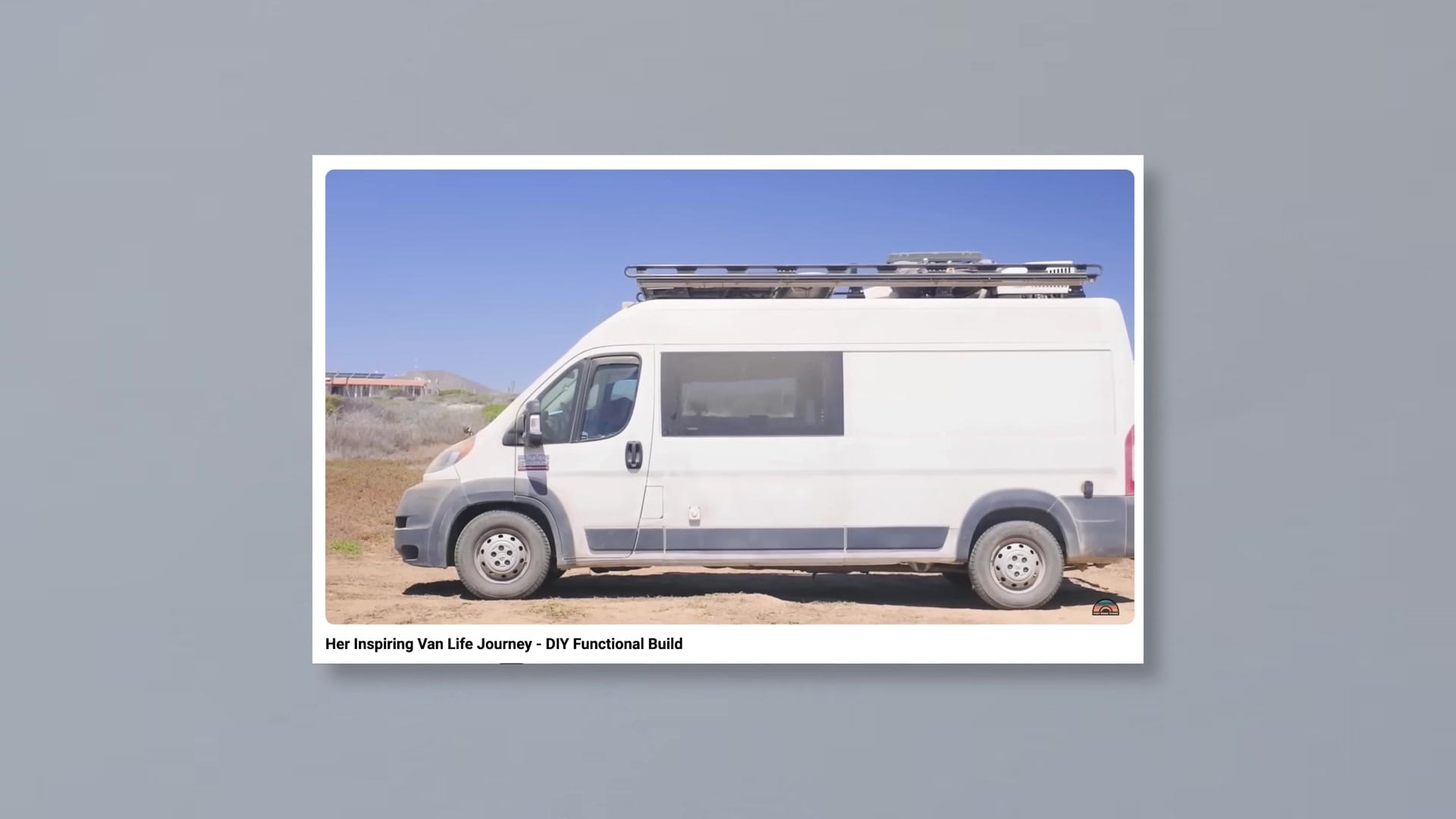
She ran van life in a Ram ProMaster for three years and loved it until a question kept tapping her shoulder: am I uncomfortable enough to keep growing?
Bedroom Loft — queen that pulls to king and treehouse views (07:56–09:55)
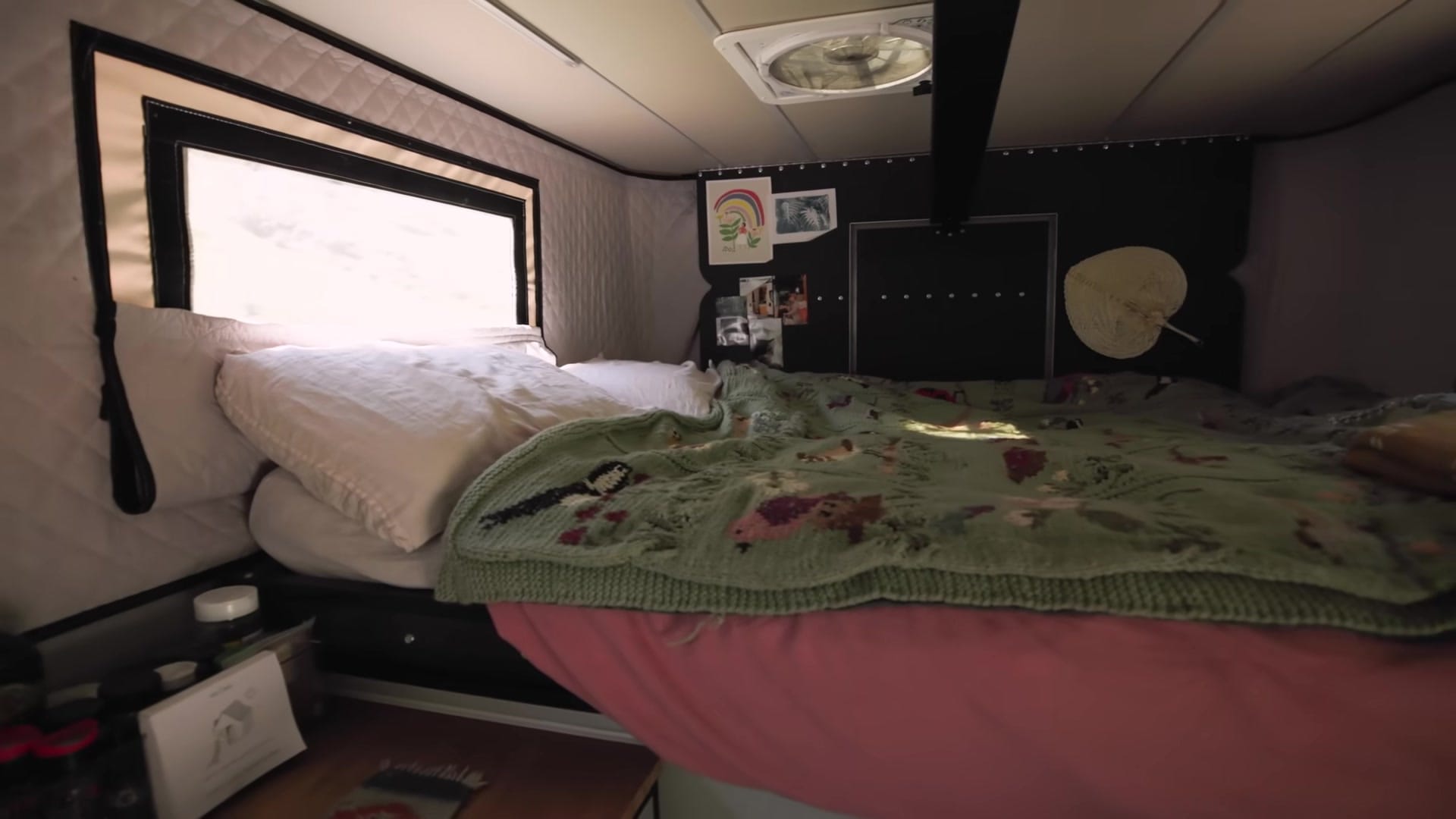
Up front, the loft bed rides on a Hest mattress — queen as standard, with storage underneath for clothing and whatever odds and ends demand space.
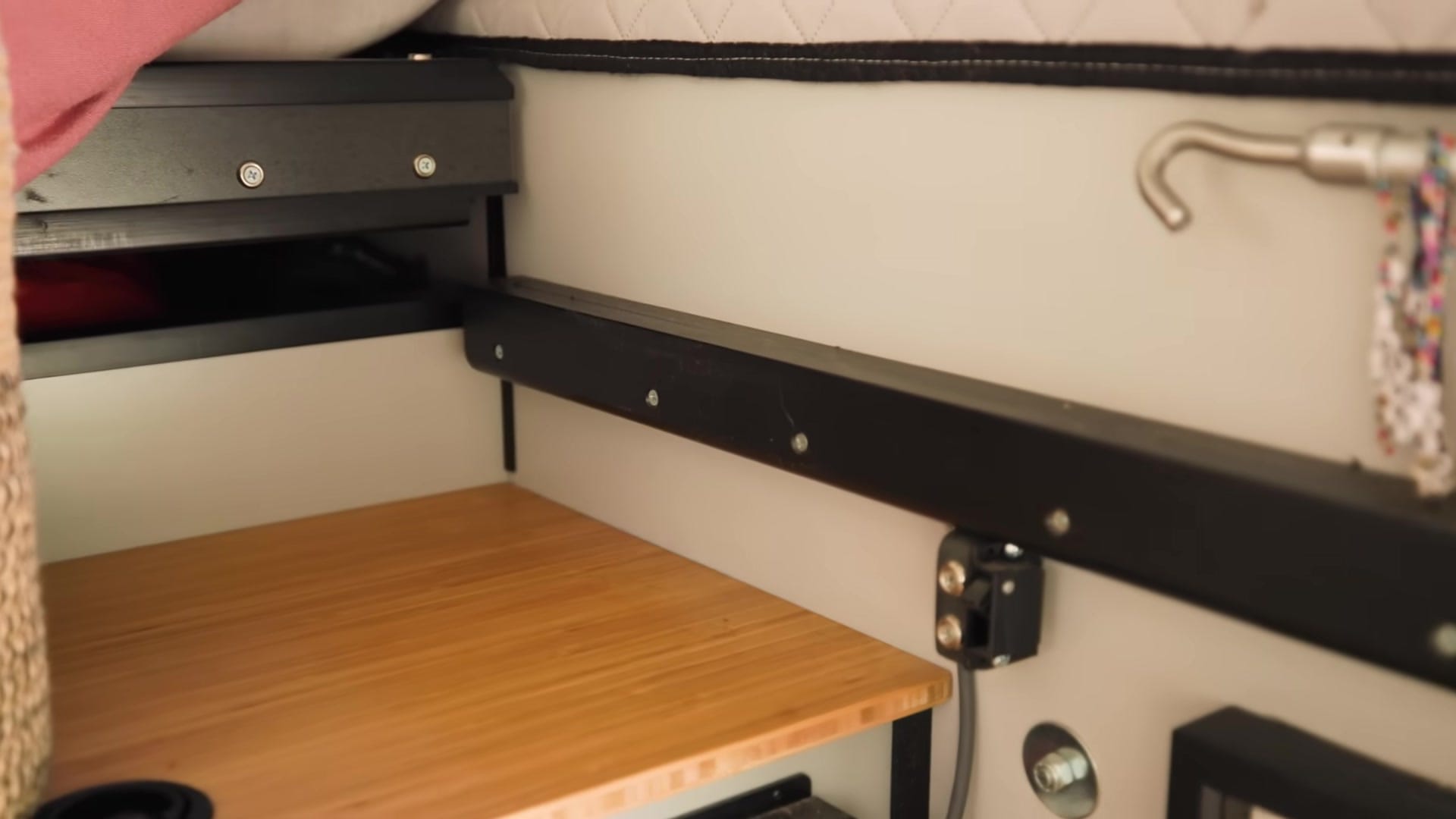
The frame slides forward on posts to become a king, because sometimes you need more star-gazing real estate.
That first week out brought 30-degree temps, 40 mph winds, cold, and rain — then later nearly 60 mph winds with the top popped, and still no issues.
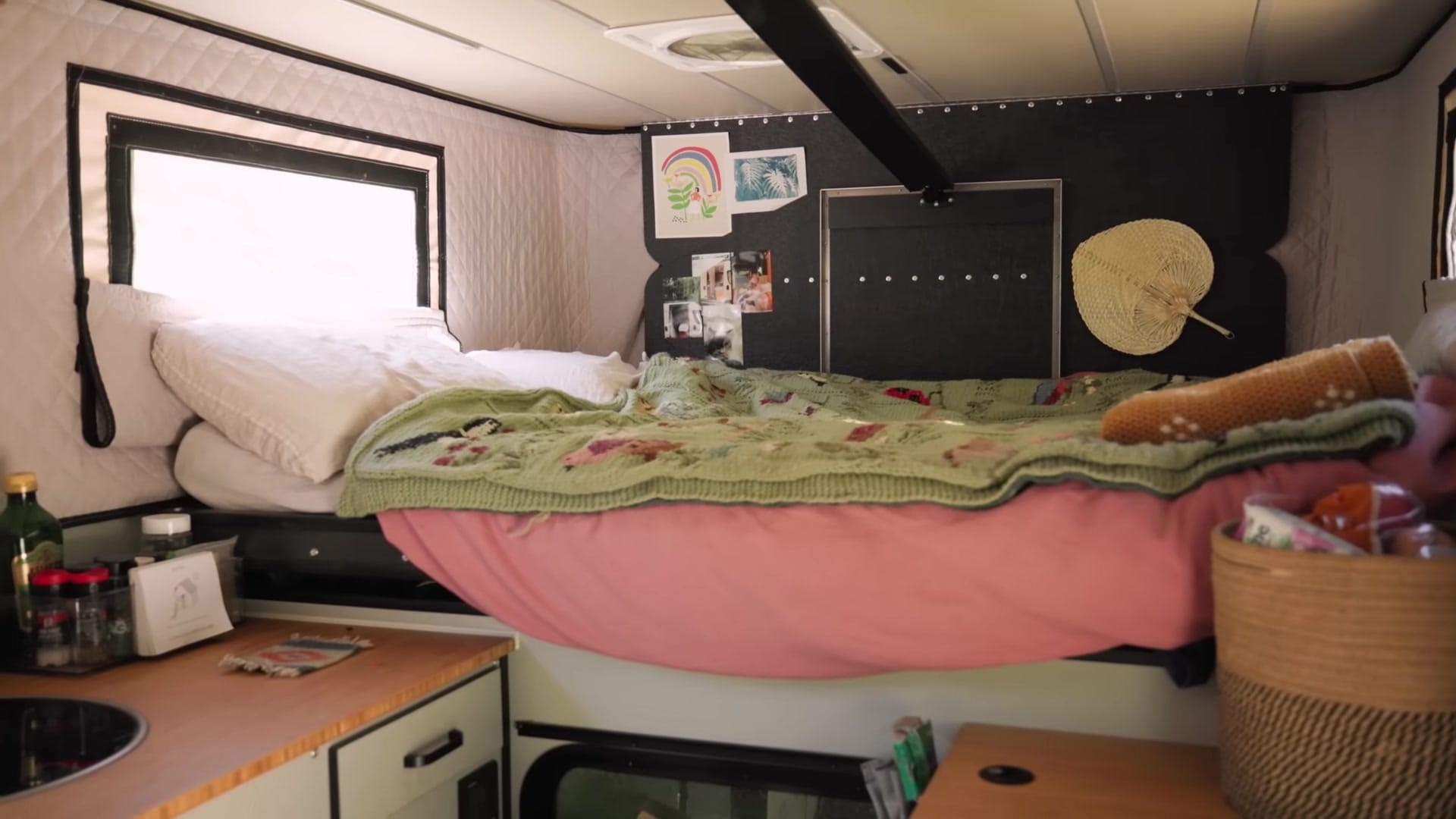
Heat and weather find obstacles in the layered pop-top: mesh, clear plastic, canvas, and a thermal pack working together to stay comfortable.
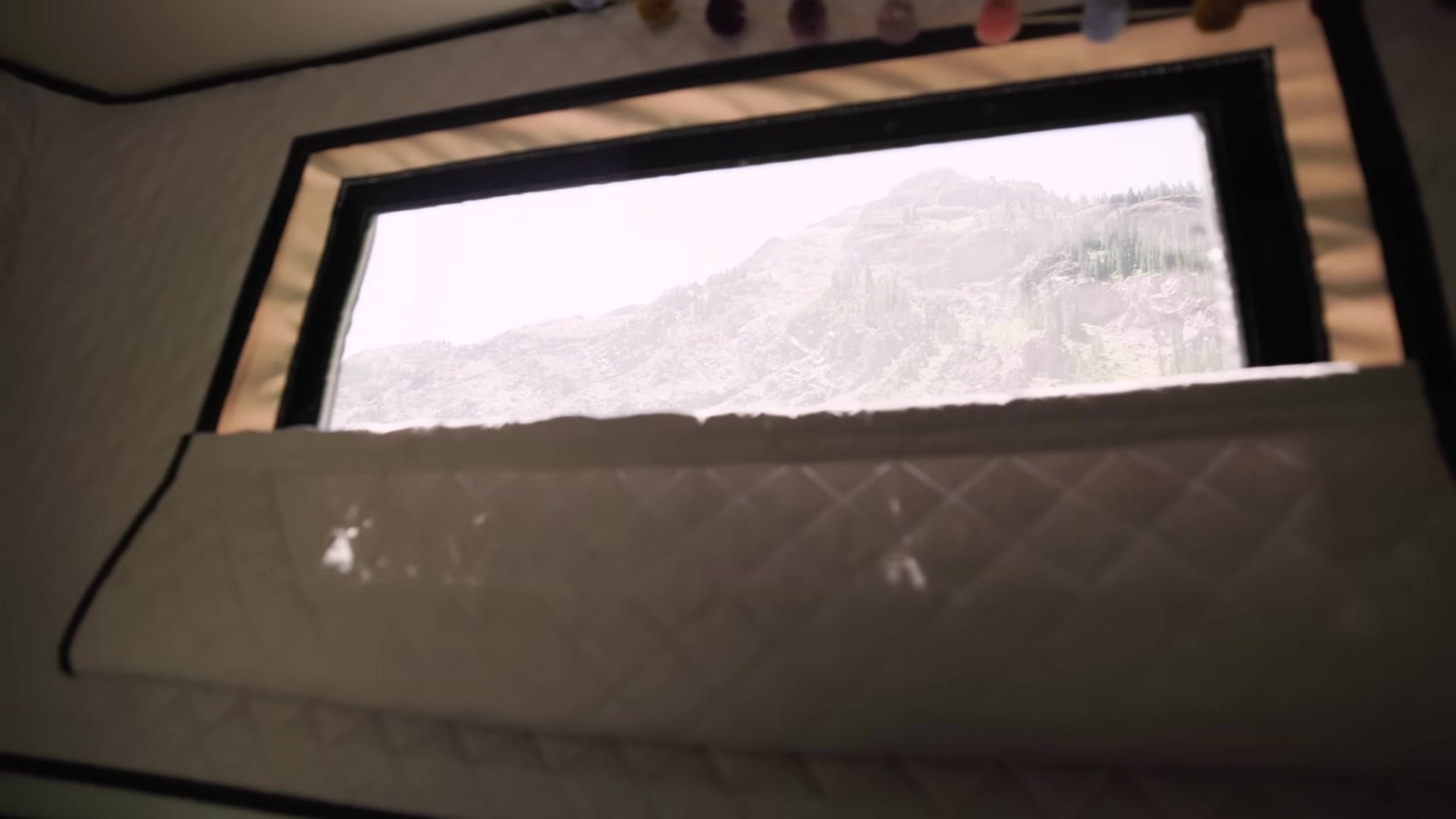
Nights feel like a treehouse, high enough for sky drama — sunrise and sunset from bed, nothing in the way.
Power, Heat & Truck Build — batteries, solar, heater, and Norweld tray (10:23–13:22)
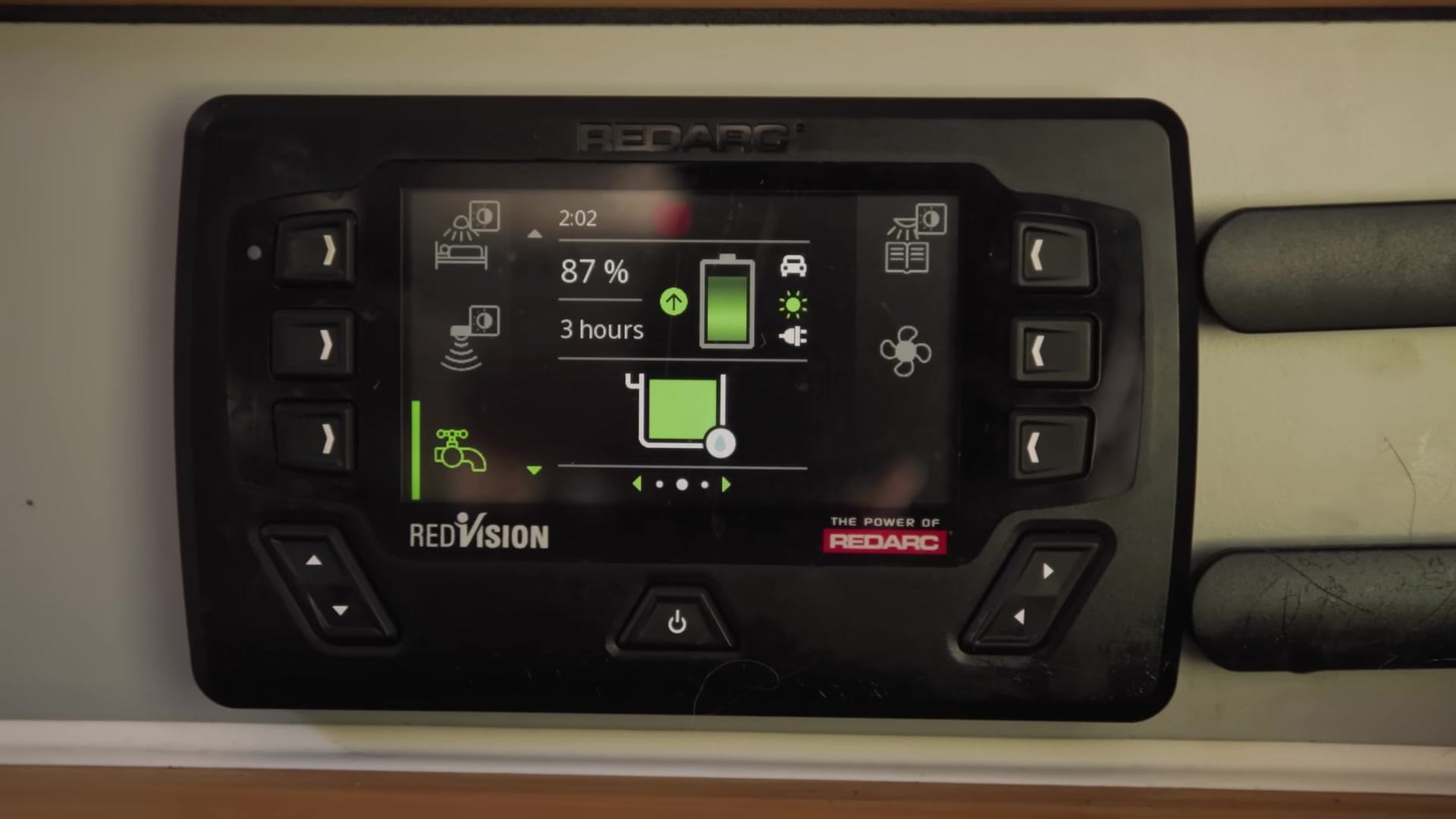
System status runs through the Red Arc Red Vision monitor for batteries, water, solar — plus Bluetooth control on a phone for ease.
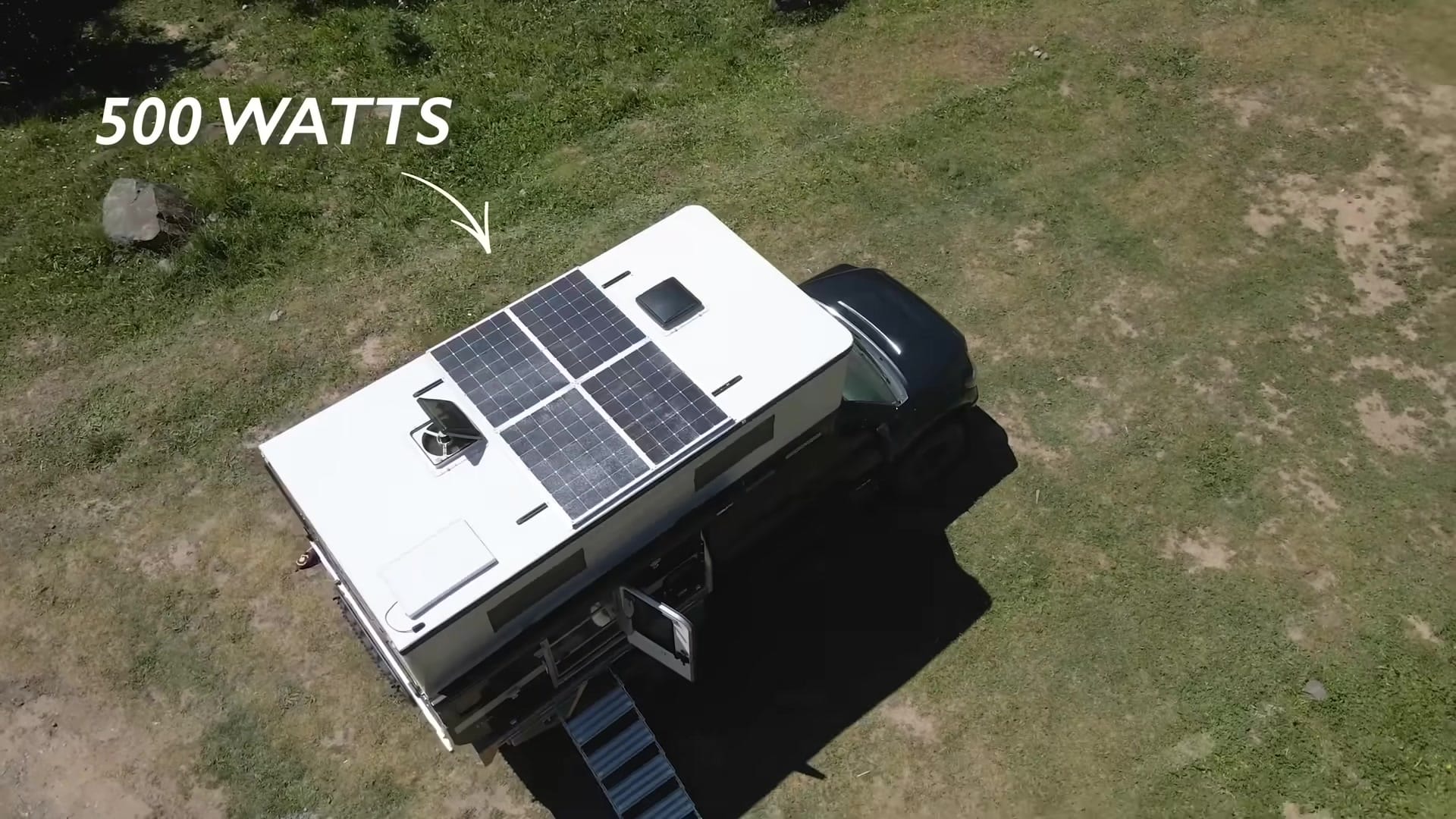
Power comes from 500 watts of roof solar feeding about 400 amp hours of lithium batteries, with a DC-to-DC charger and shore input for low-sun stretches.
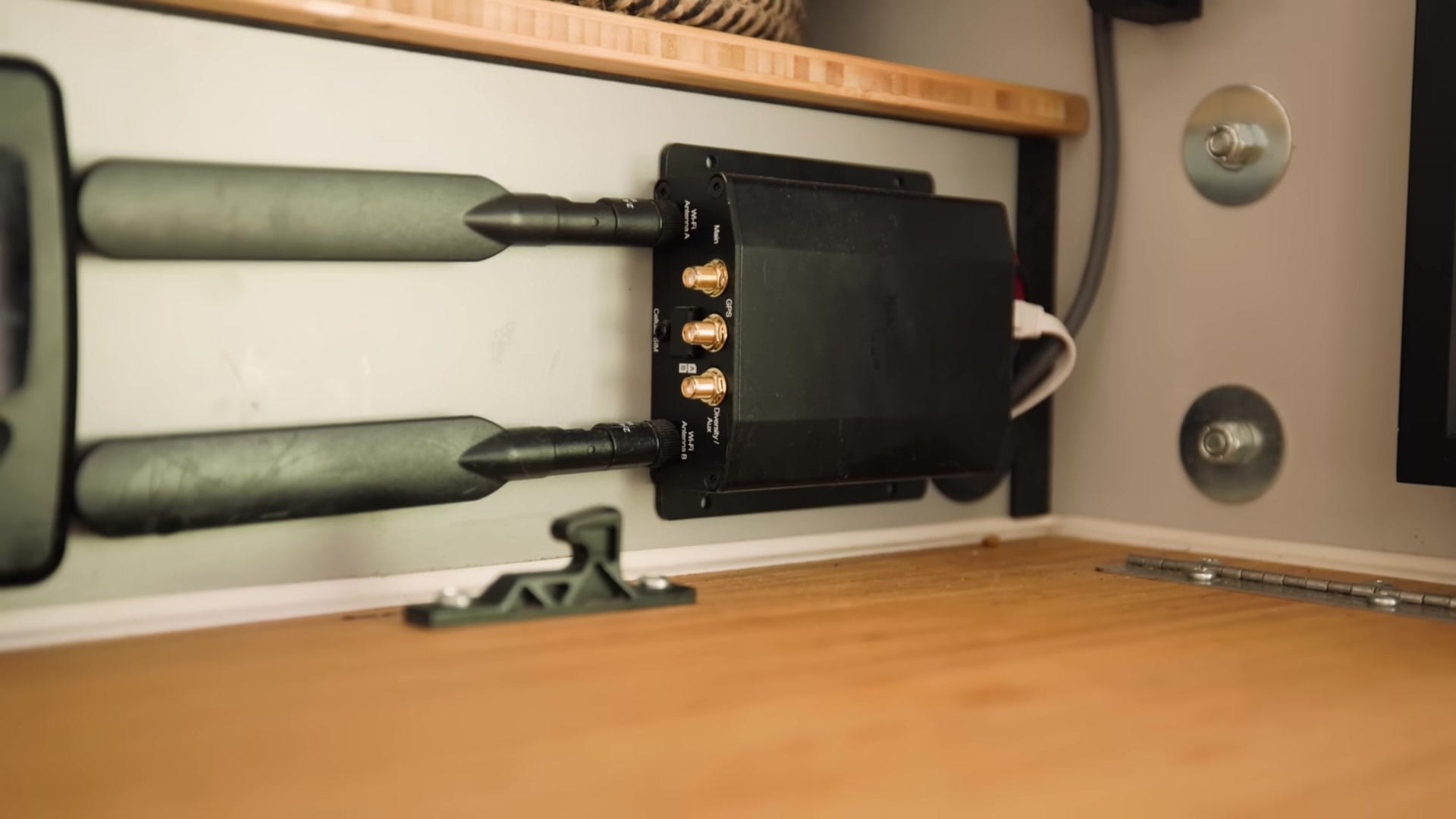
Internet is 12-volt wired to sip power: a Pep Link router with multiple SIM ports and Starlink feeding it directly, because full-time work demands a steady signal.
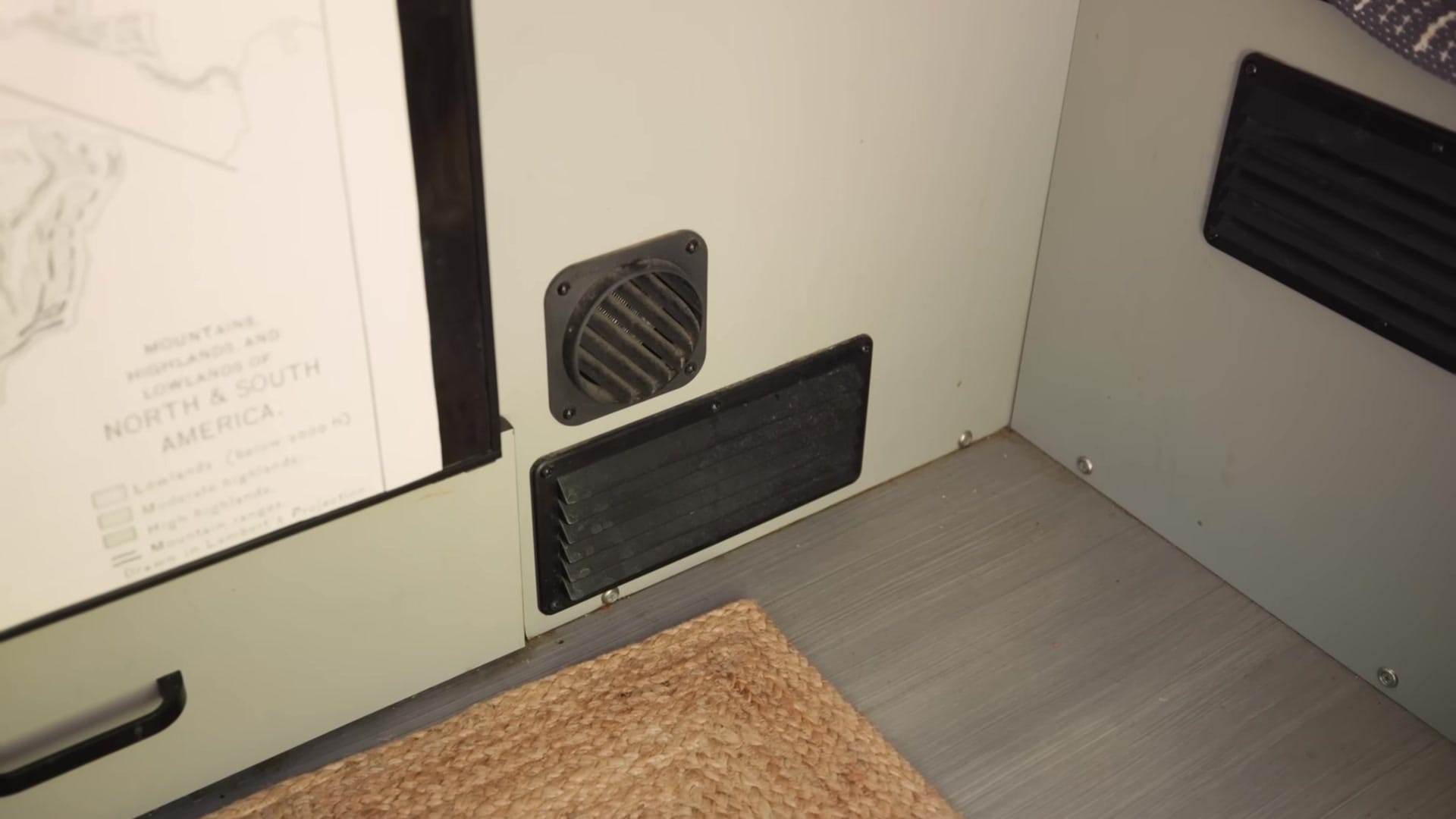
Heat and hot water run on propane, and the CO alarm is hardwired to a reserve battery so safety never dies with the lights.
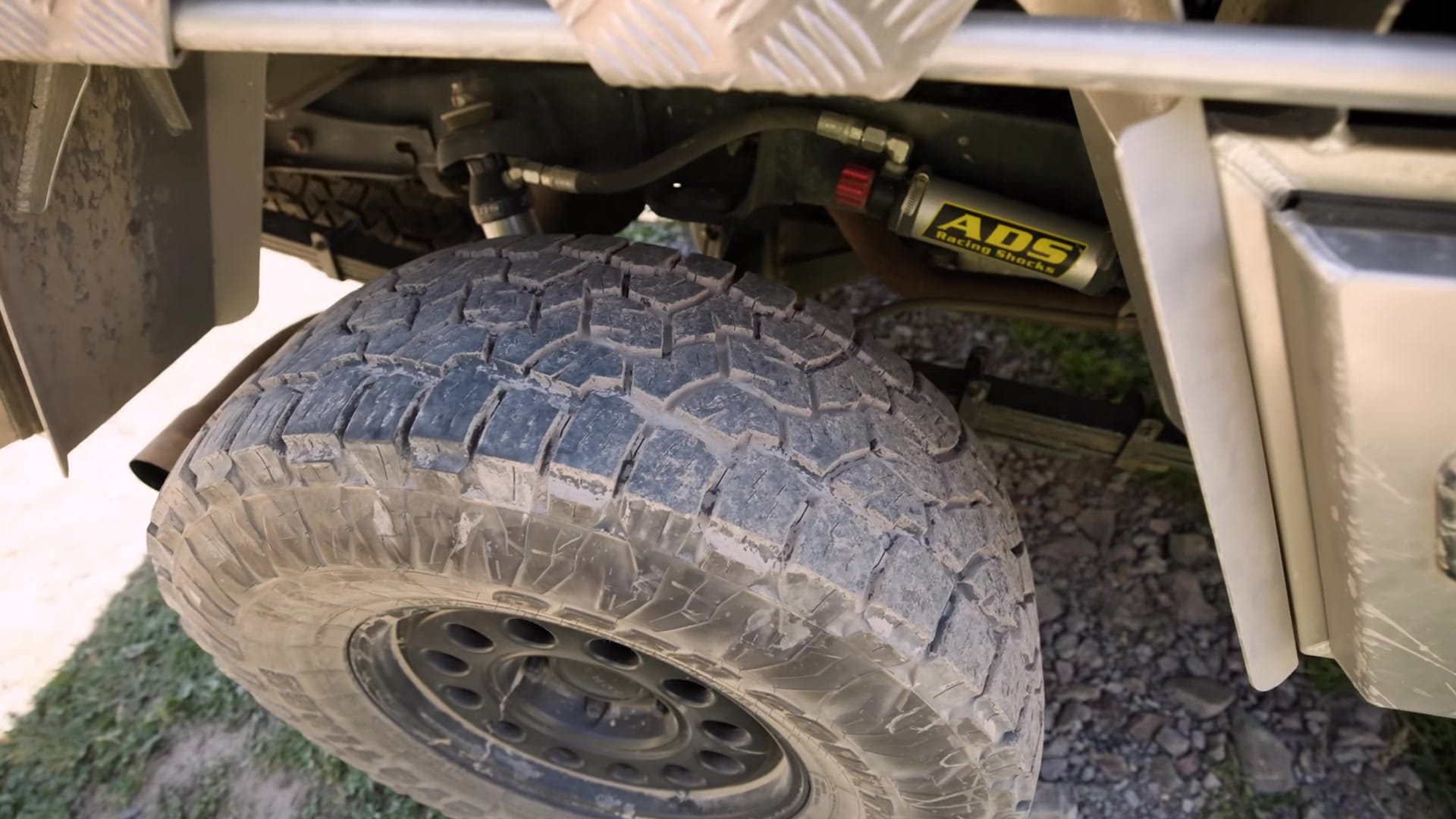
Underneath it all, the truck is a 2019 Toyota Tundra with beefed-up suspension, custom springs, and bigger wheels and tires to shoulder the camper’s weight.
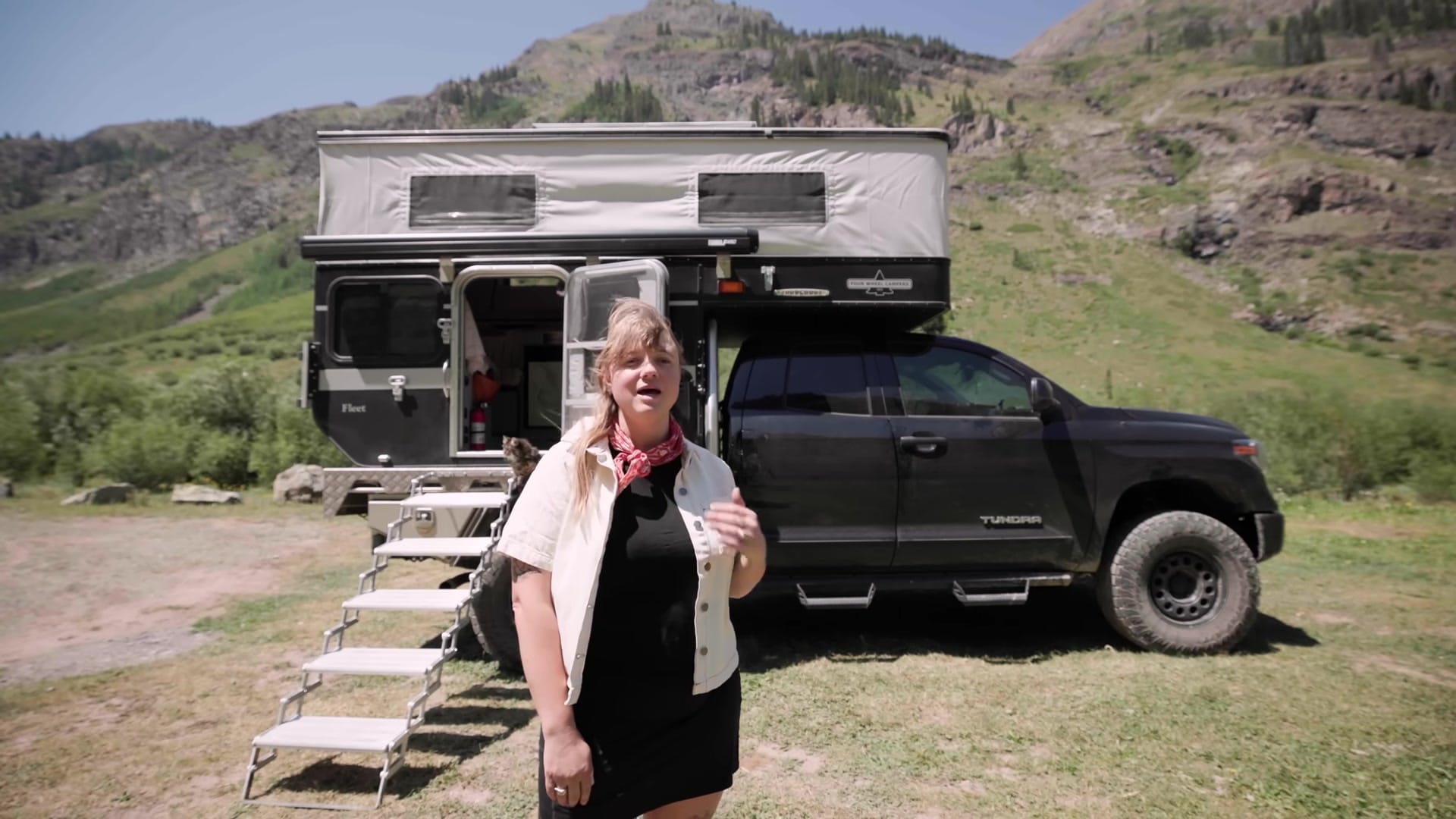
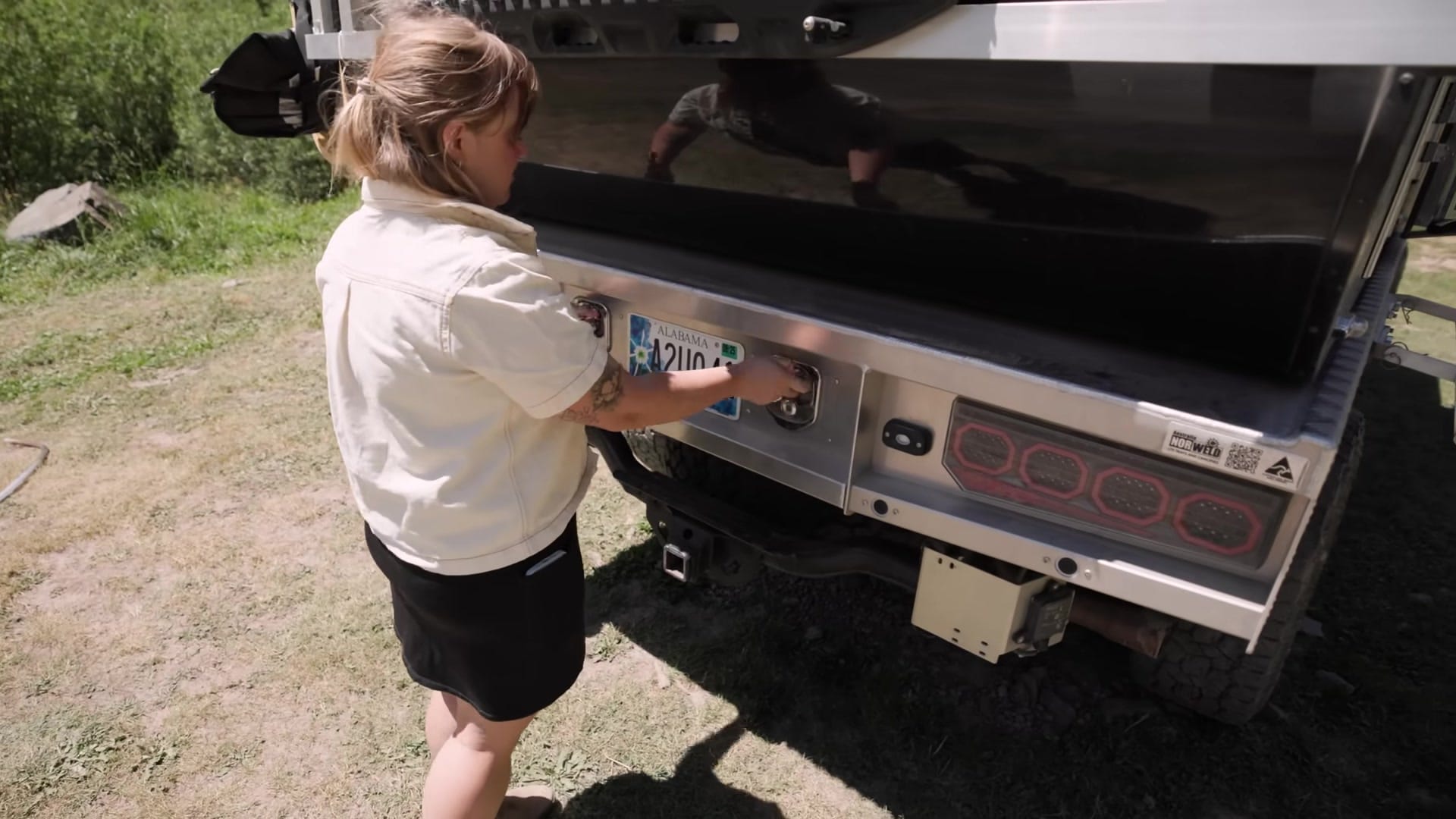
The bed is gone; in its place sits a Norweld flatbed carrying the Fleet Flatbed model tight to the cab for clean proportions and more exterior box storage than a slide-in could offer.