Renting This 420 Square Foot Home Costs Just 1300 a Month in Downtown

Most people picture tiny homes on rural land. Ray chose downtown instead. Her ADU hides behind a boutique apartment complex right in the middle of it all.
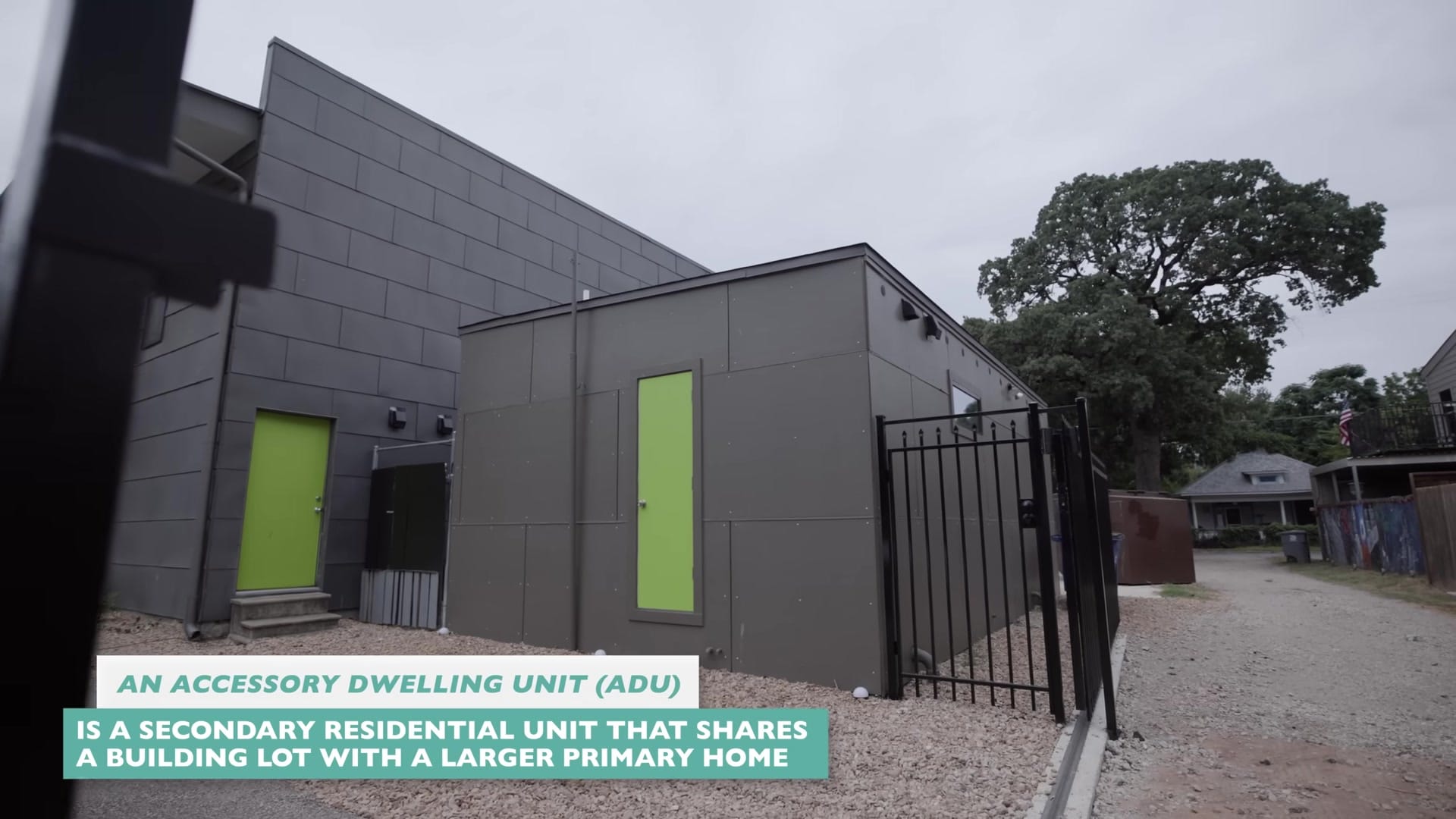
Downtown ADU Snapshot — layout, rent, and why it’s different
City perks are built in: entertainment and transit are a short walk. Home is a tiny, cozy retreat at the end of the day. She’s a renter, proud of it, and pays $1,300 a month.
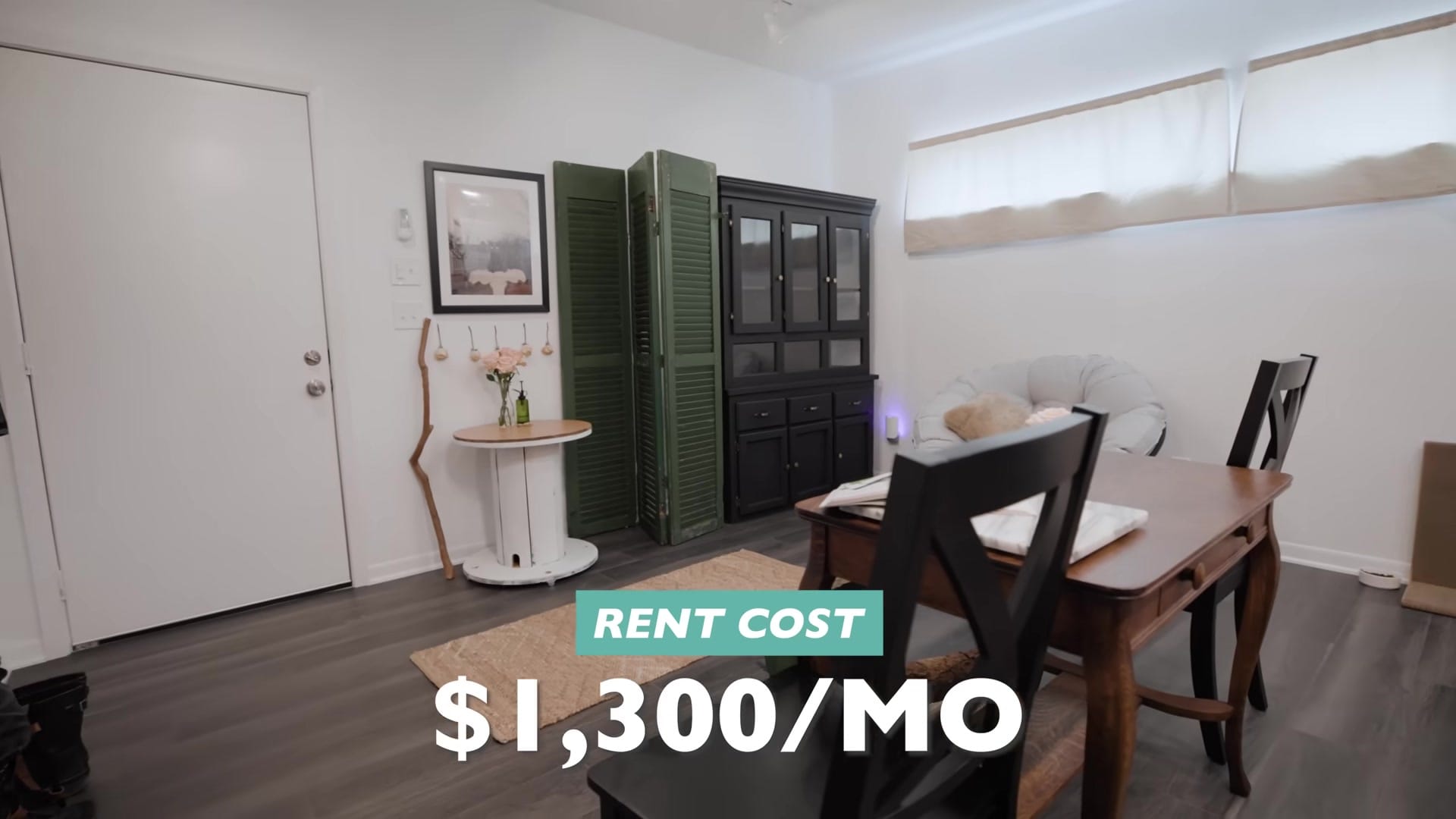
This ADU takes the shape of a perfect rectangle. Living and dining share an open floor right up front. A true wall encloses the bedroom and office for more outlets, more storage, and two mini‑splits.
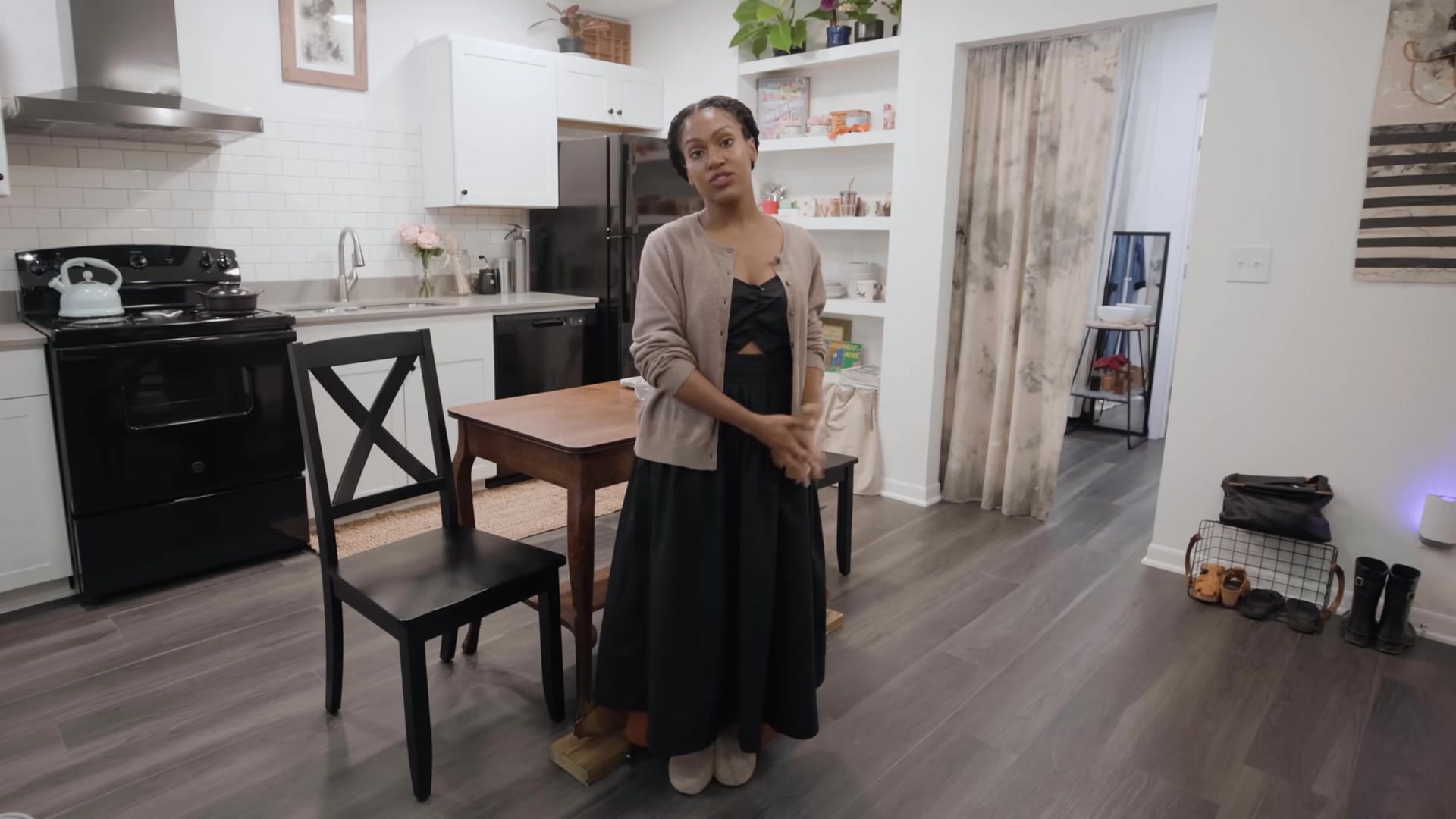
That wall means airflow and function without stealing square footage. And the place doesn’t feel small to her at all. She stretches, exercises, and still has space to lay out quilting and drawings.
It reads like the right size, not a compromise. And yes, it’s still tiny: the footprint is 420 square feet. But the downtown location keeps the walking life intact .
The combination flips the typical tiny‑house picture of rural land. She can walk where she needs to go. It’s a tiny home in the middle of downtown, and that’s exactly why it works for her .
One‑Wall Kitchen & Built‑Ins — full appliances in a tiny footprint
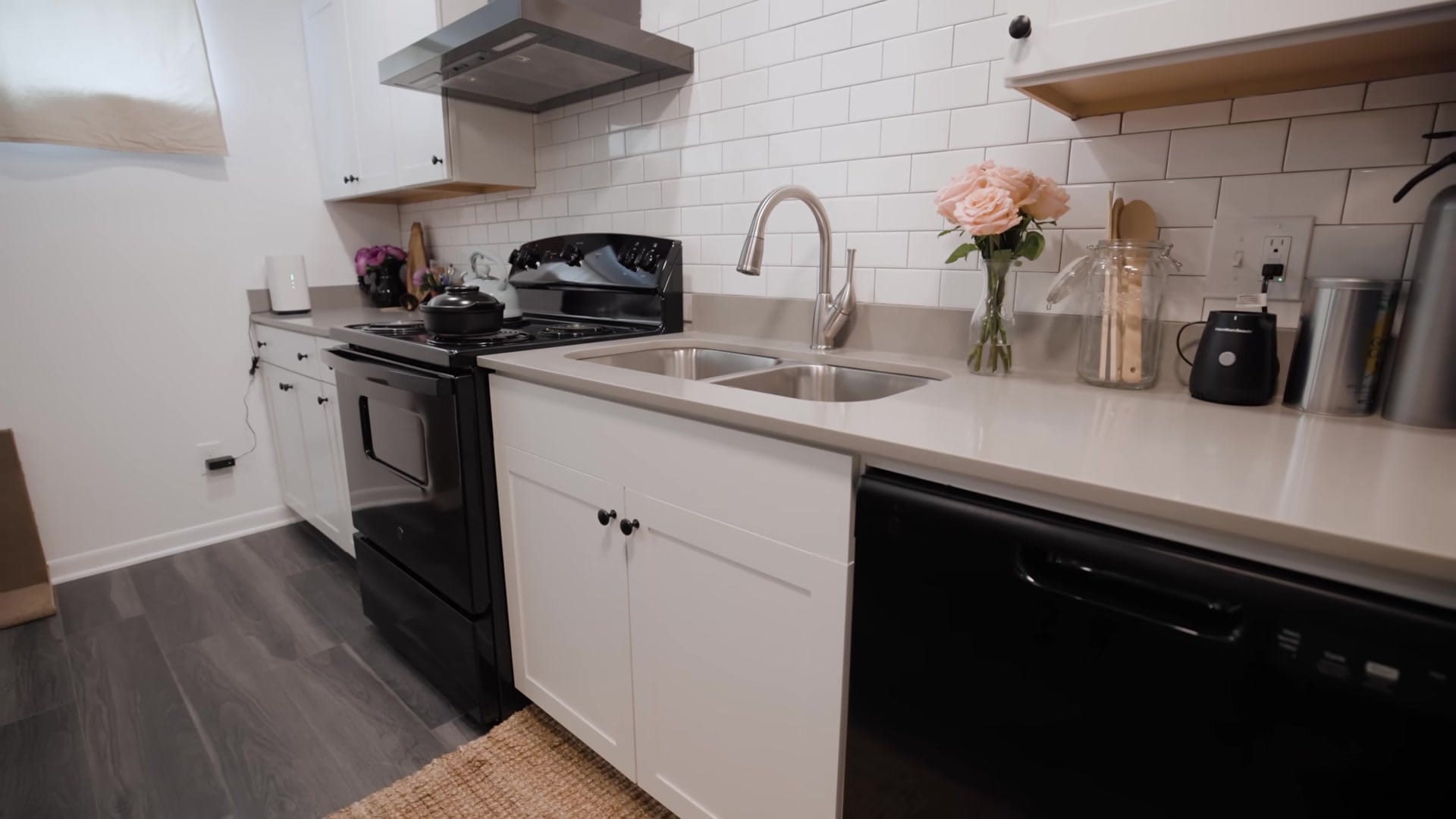
A one‑wall kitchen runs the length of the room. All that line equals serious prep surface. It’s a one‑wall kitchen that runs the length of the room.
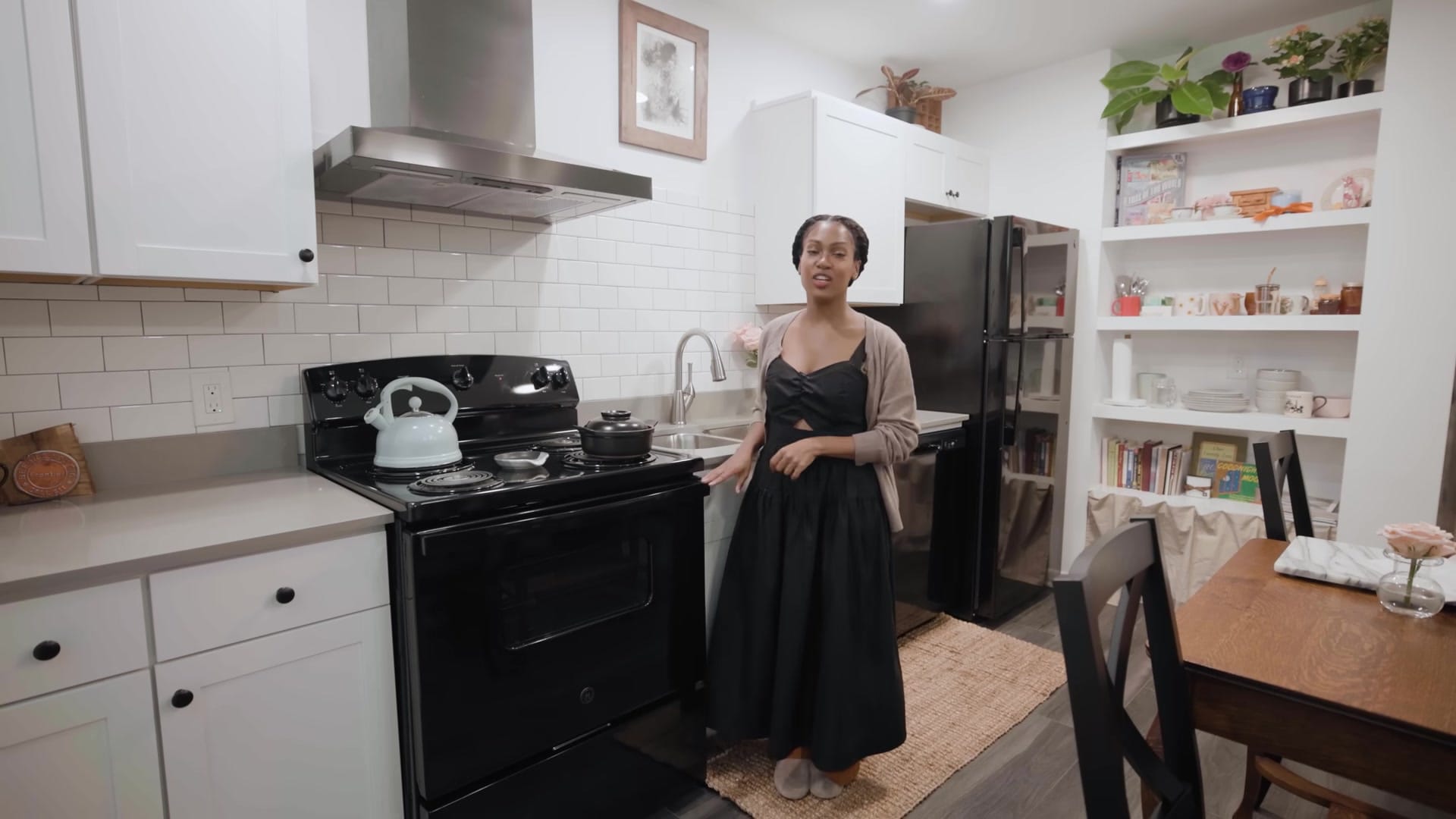
Full‑size appliances live here without crowding. There’s a double sink and a dishwasher, plus a full‑size fridge. The clear stretch at the far end stays free of sink and range so she can use it as a workstation.
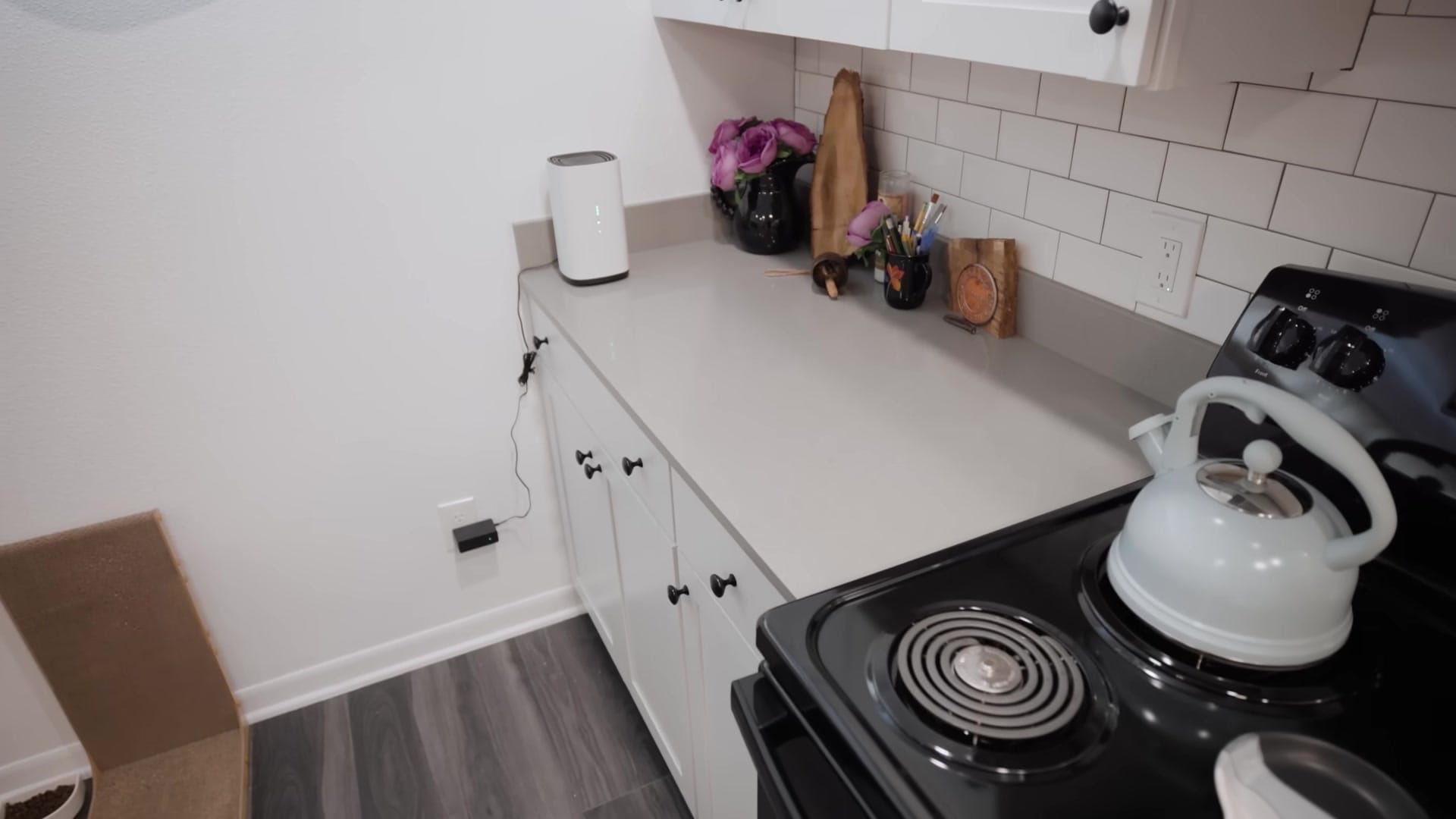
Storage runs overhead and underfoot. When she puts things away as she goes, the tiny‑kitchen storage works smoothly. A built‑in shelf was a major selling point, and it even hides cords with an outlet inside for an appliance garage.
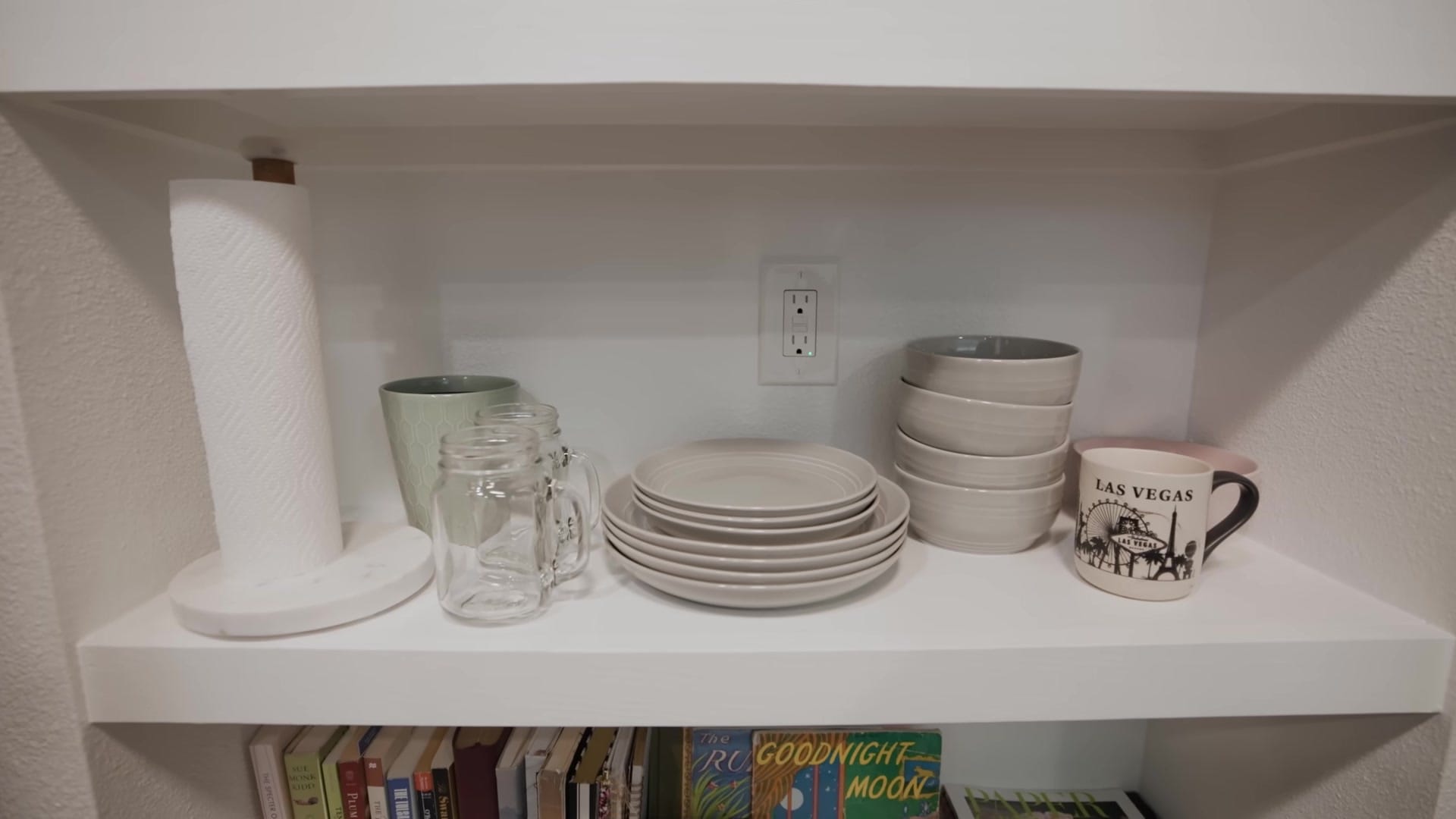
Right now it holds heirlooms and gifts. Plants have the top shelf—close to the window and out of the cat’s reach. And with a one‑wall layout and full‑size gear, the kitchen still reads spacious and capable .
For her home cooking, she centers on what she does well—soups and tea. If she wants to explore beyond that, restaurants are steps away. It’s literally the biggest kitchen she’s had, even after years of living small.
Living Room, Entry & Furnishings — how pieces expand the space
The living room is a nook on purpose—cozy for reading, relaxing, and grading papers. Decor evolves here; pieces can shift as needs change. She wanted solid wood and sturdy pieces of furniture.
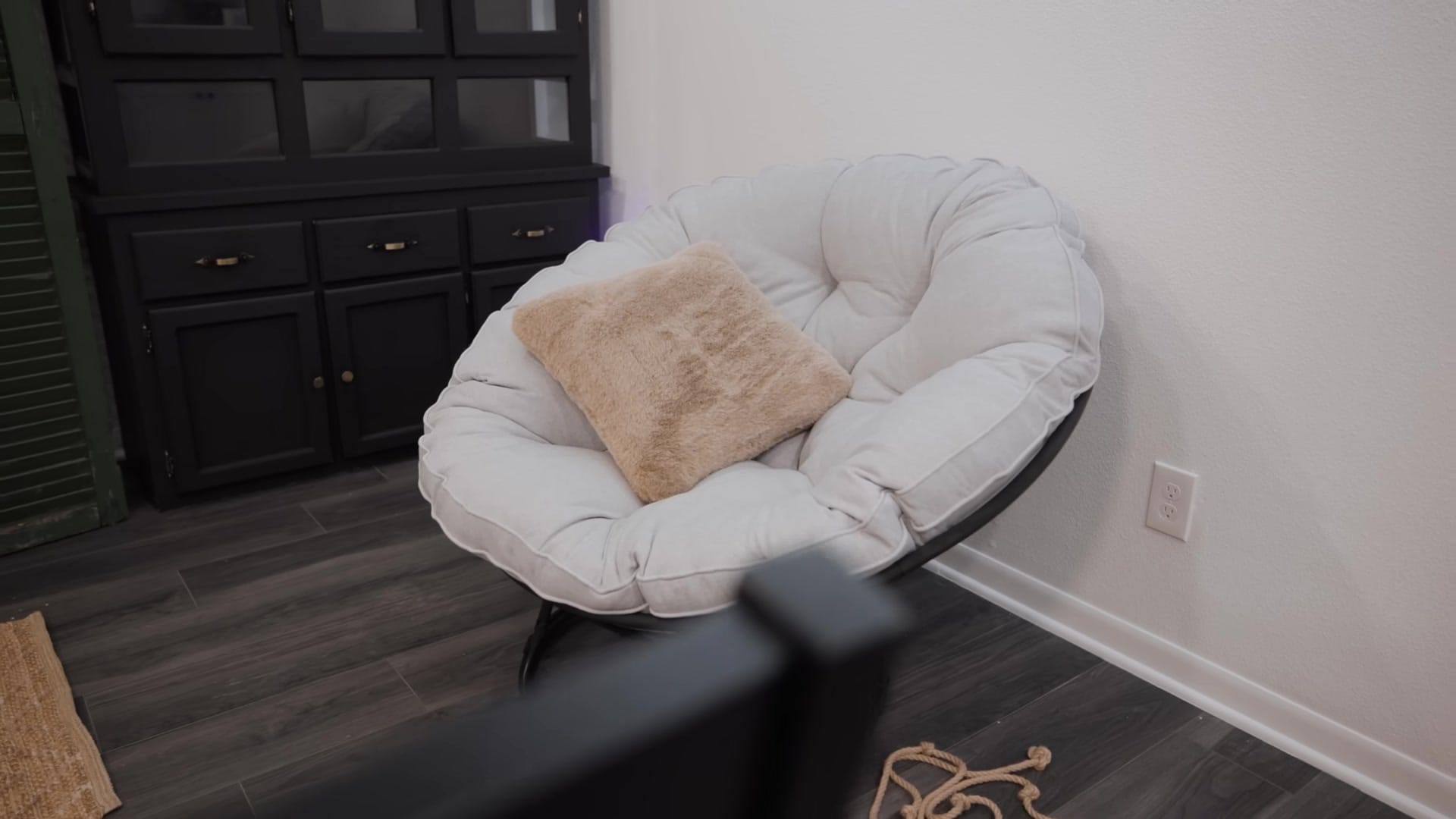
An indoor‑outdoor chair anchors the seating. It can handle the elements when she sets it outside. No couch by choice—the open floor stays wide for stretching and movement.
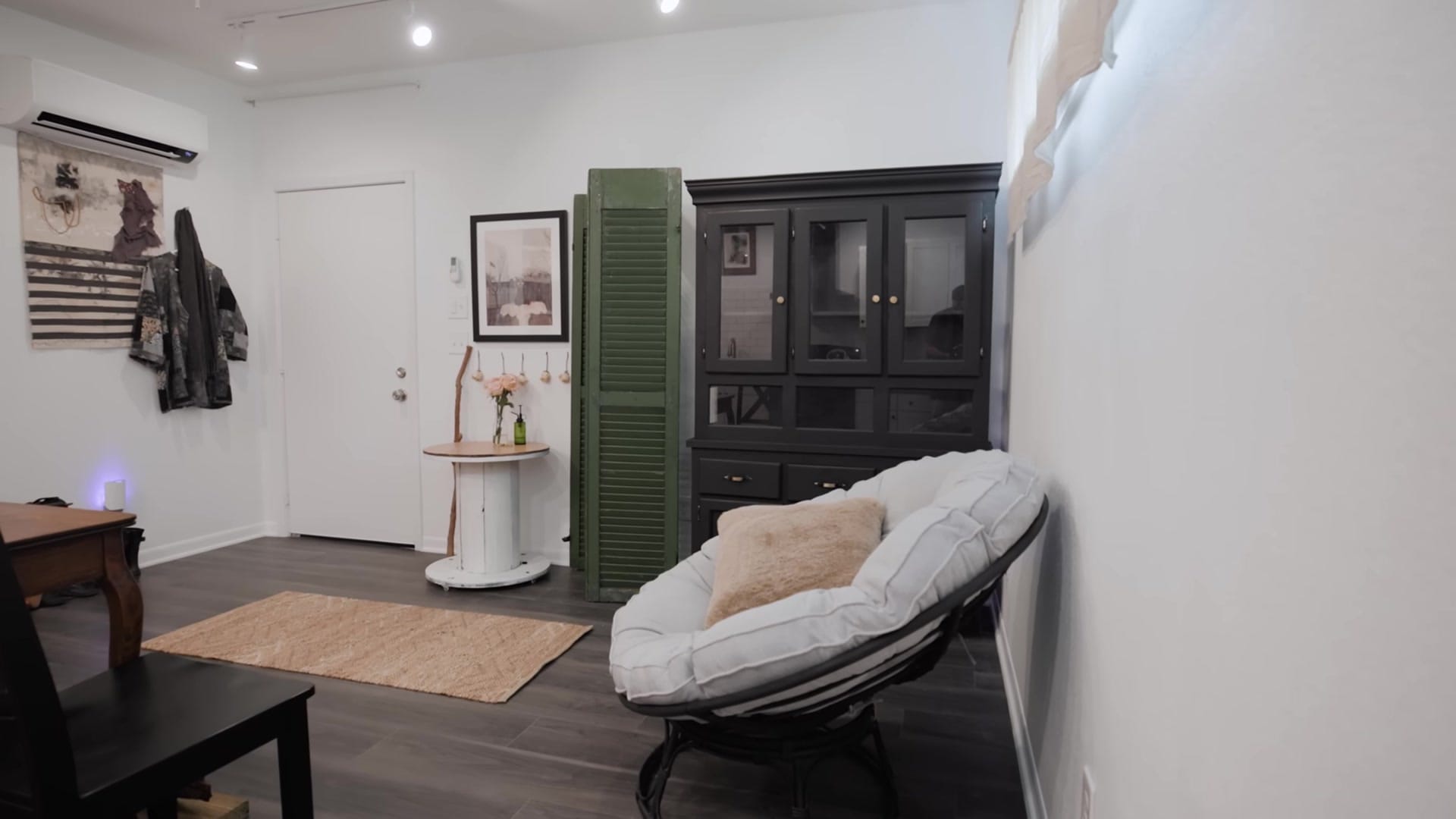
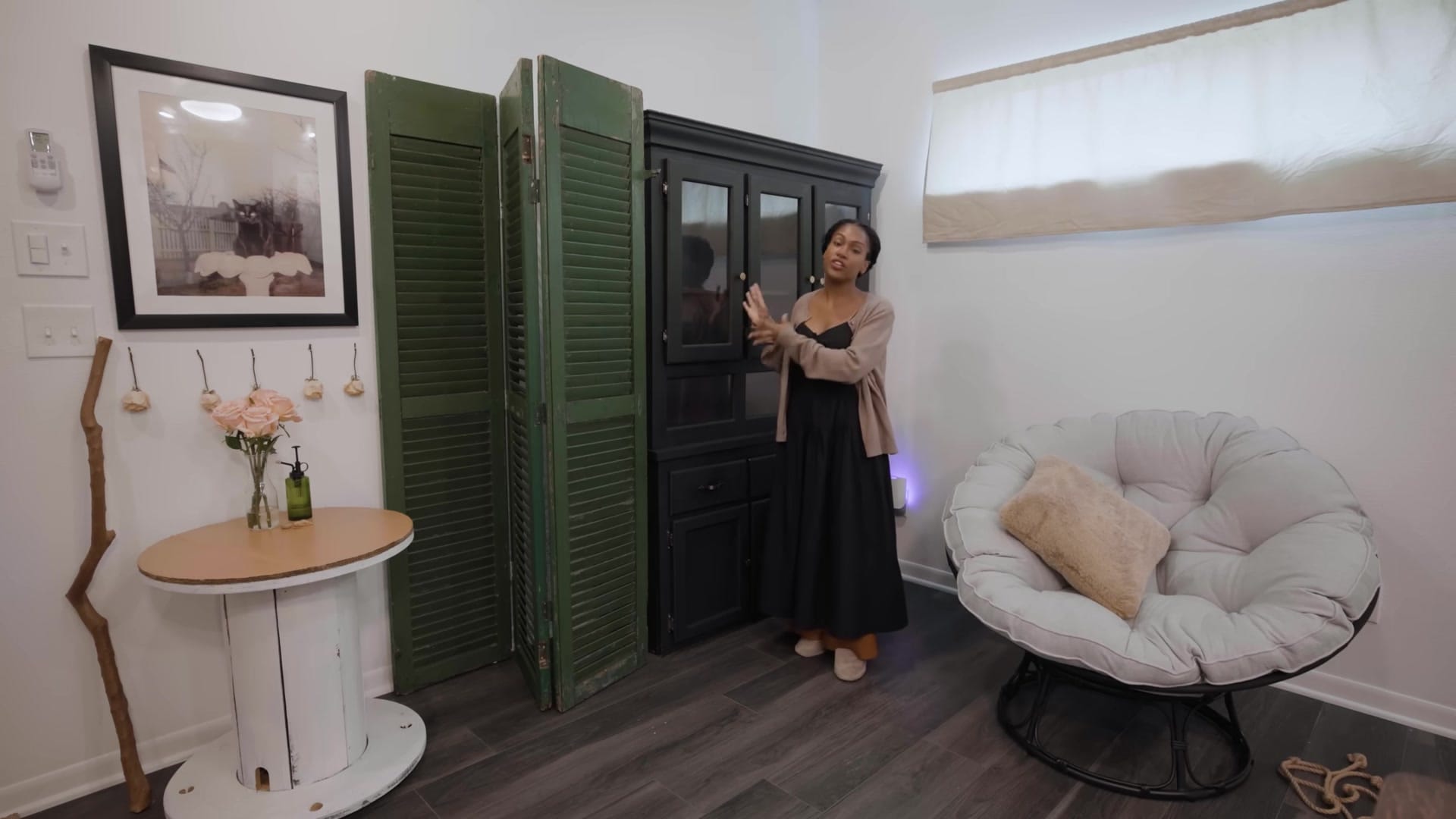
An antique shutter from the same seller as her desk once served as a bedroom door. Now it leans as decor, ready to hinge back on with a few screws. A free Home Depot spool became the entry side table and landing spot.
An antique hutch will corral books and collectibles in one curiosity cabinet. That keeps dusting down and the rest of the room efficient. She likes containing treasures in one place instead of scattering them around.
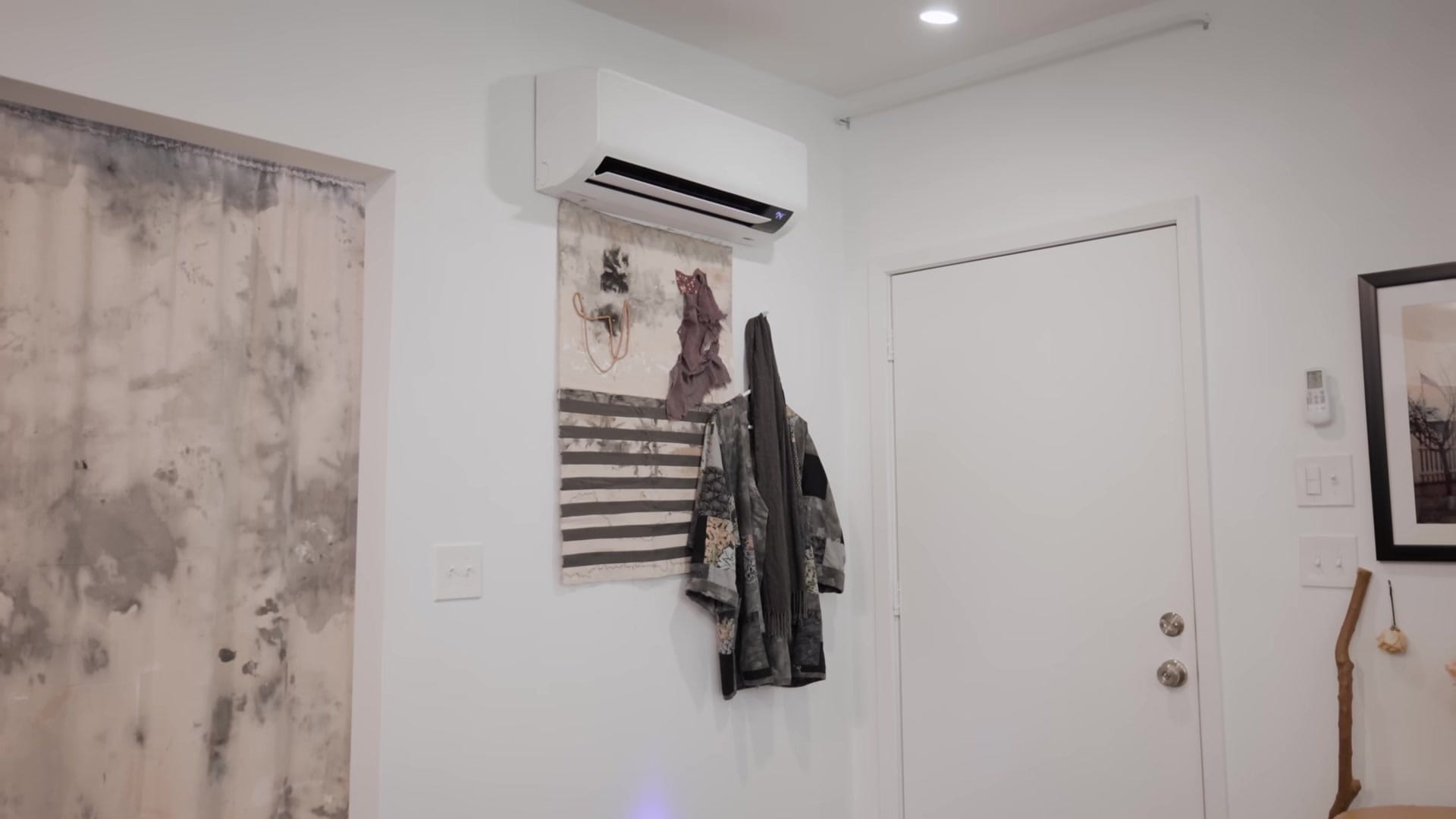
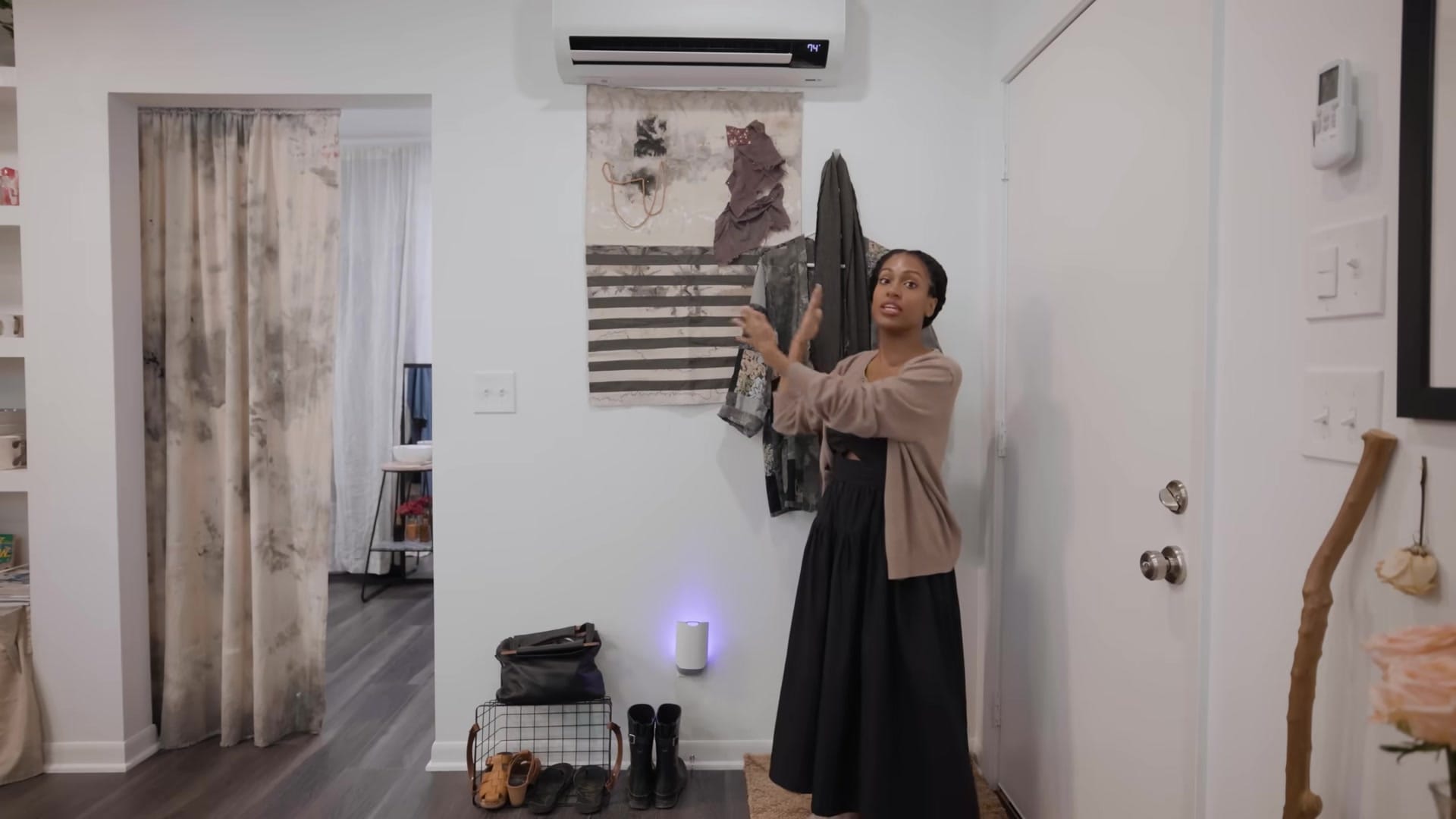
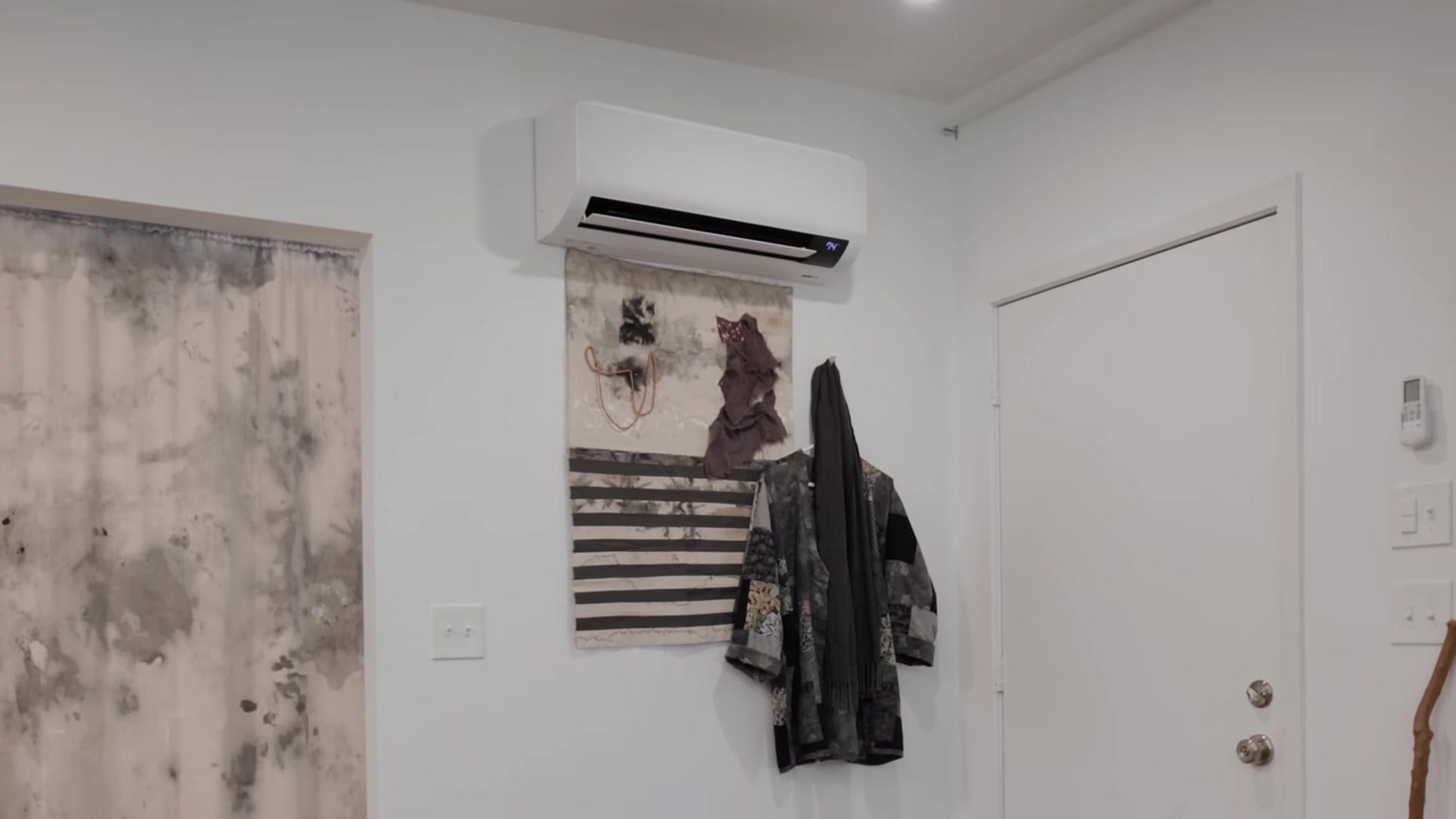
For the first time, there’s a dedicated entryway—just a hook and a shoe bin—but it makes arrivals feel calm. The little wall creates a civilized transition in and out. Up front, a mini‑split heats and cools and can match the bedroom unit’s temperature.
And because she’s renting, she emails for maintenance when needed. Someone comes out, and the essentials stay handled. No dangling alone with important equipment.
Sewing Nook & Studio Zones — built‑in desk, tools, and art workflow
Across from the living area, a quartz built‑in desk becomes her sewing station. It’s a true office setup, not a fold‑out afterthought. She appreciates how this built‑in office gives her a real workspace.
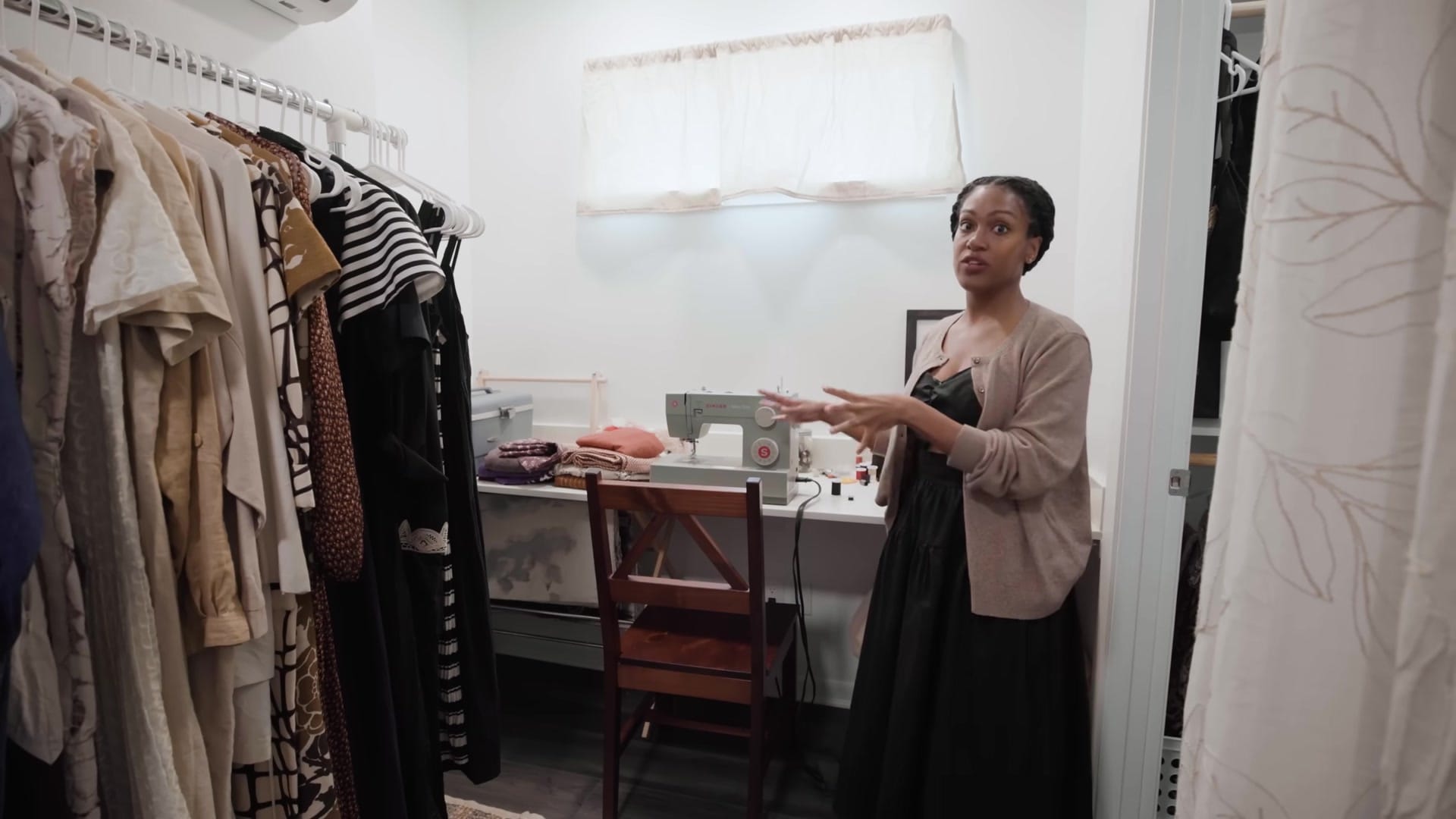
Her machine is a heavy‑duty Singer. She feeds it old clothes and scrap fabric to turn the everyday into something new. A drying rack slides under the desk—taken apart to fit—and doubles as a quilt rack when needed.
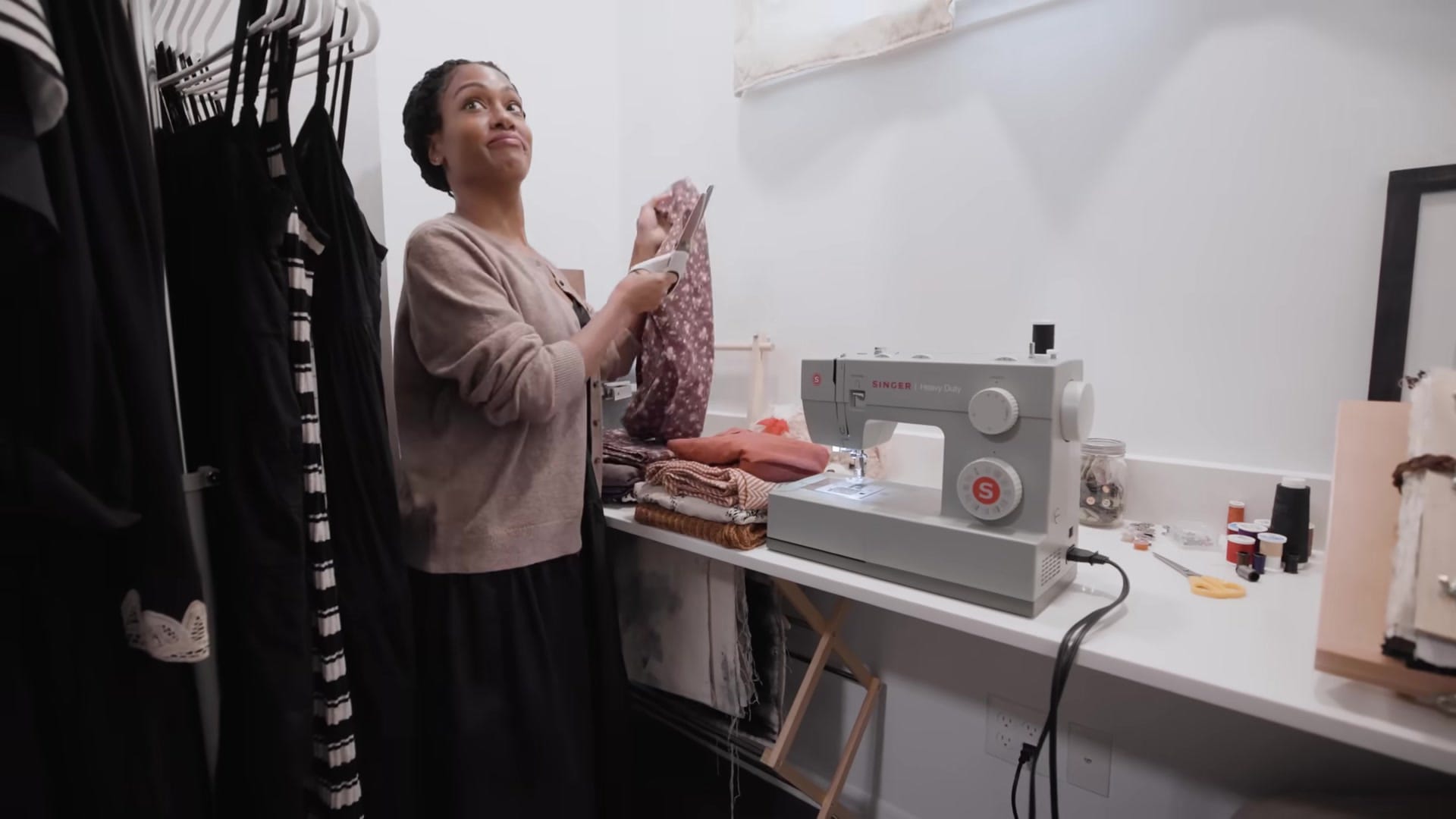
That kind of adapt‑as‑you‑go suits the house. Tools stay out yet contained. The work happens for the joy of it, not for sales .
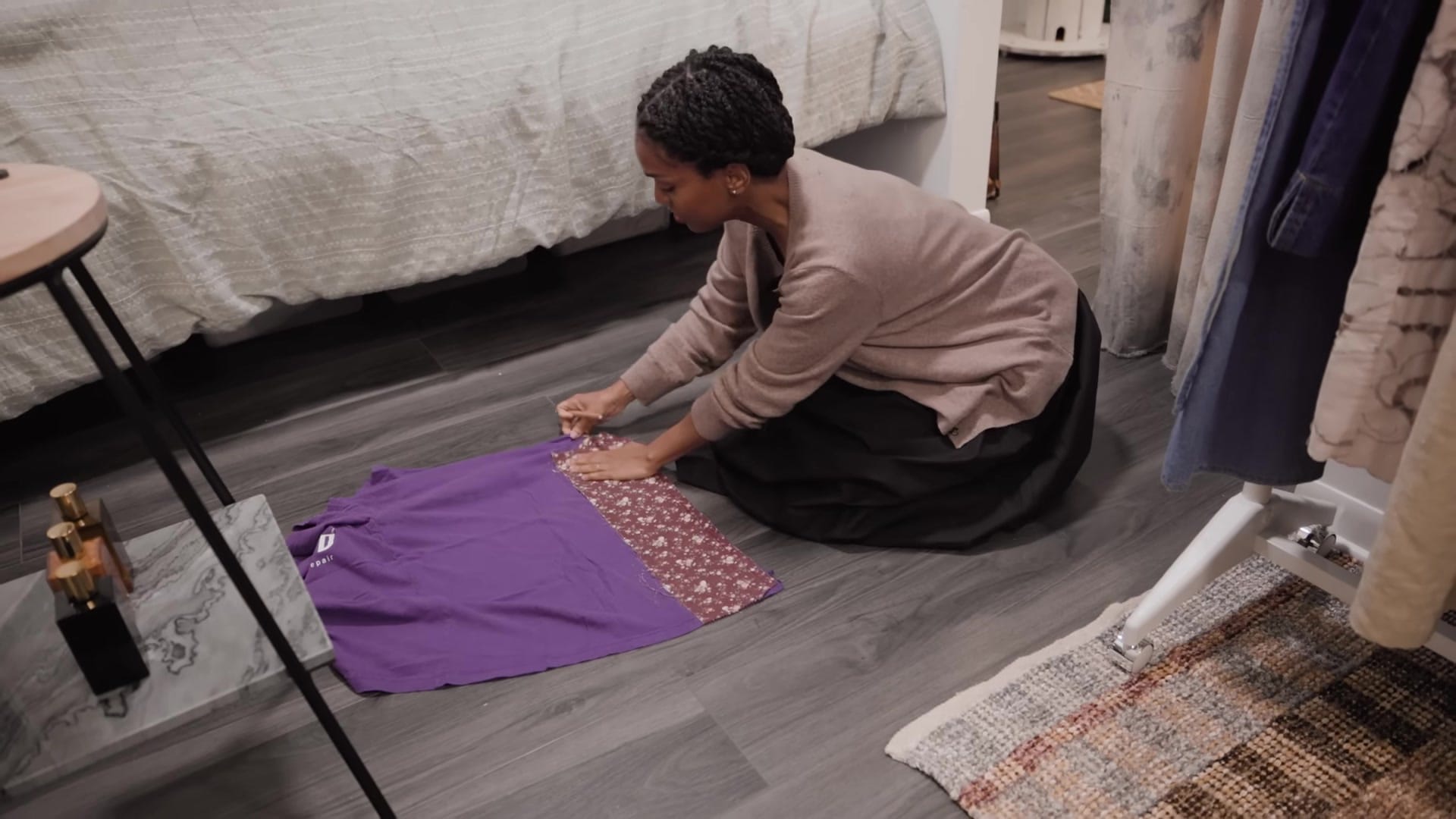
She’s been making since childhood and simply kept going. The process is meditative. Often she works with recycled or economic materials—collaging scraps into something she treasures .
With blank wall space nearby, pieces can hang and evolve. Supplies sit within arm’s reach across the room. And adapting the nook is easy when the built‑ins do the heavy lifting.
Bedroom & Walk‑in Closet — platform bed storage and clever shelving
Opposite the sewing nook, a built‑in platform bed sits about 16 inches off the floor. Bins slide underneath, and the frame can fit a full or a queen. She didn’t expect this much bedroom space in a tiny home.
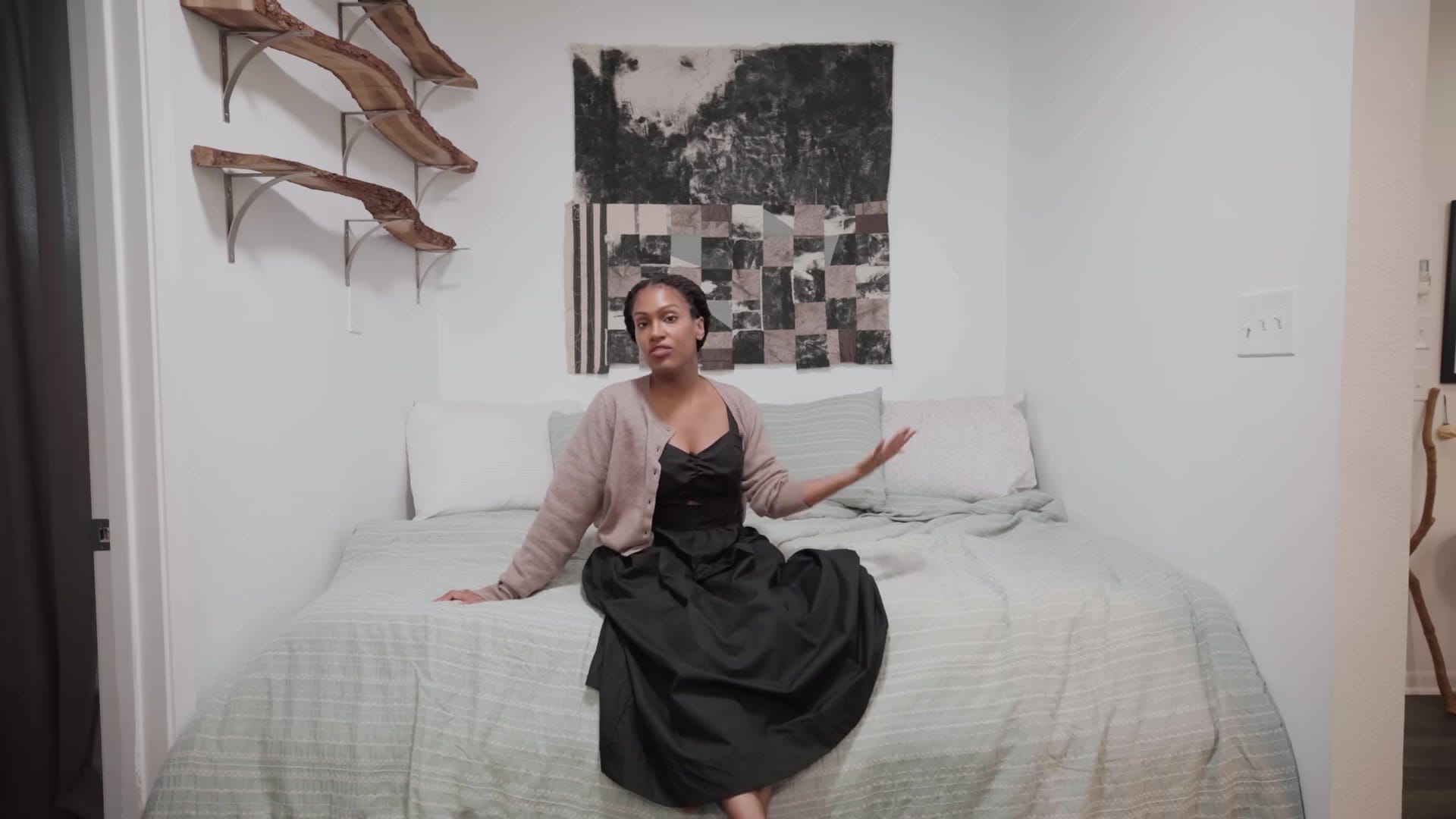
The bed wall doubles as gallery space to step back and study. A branch from a historic burr oak that fell in a storm hangs here—one of the pieces given to artists around the Metroplex. She hung it on this wall and keeps adjusting a textile piece nearby.
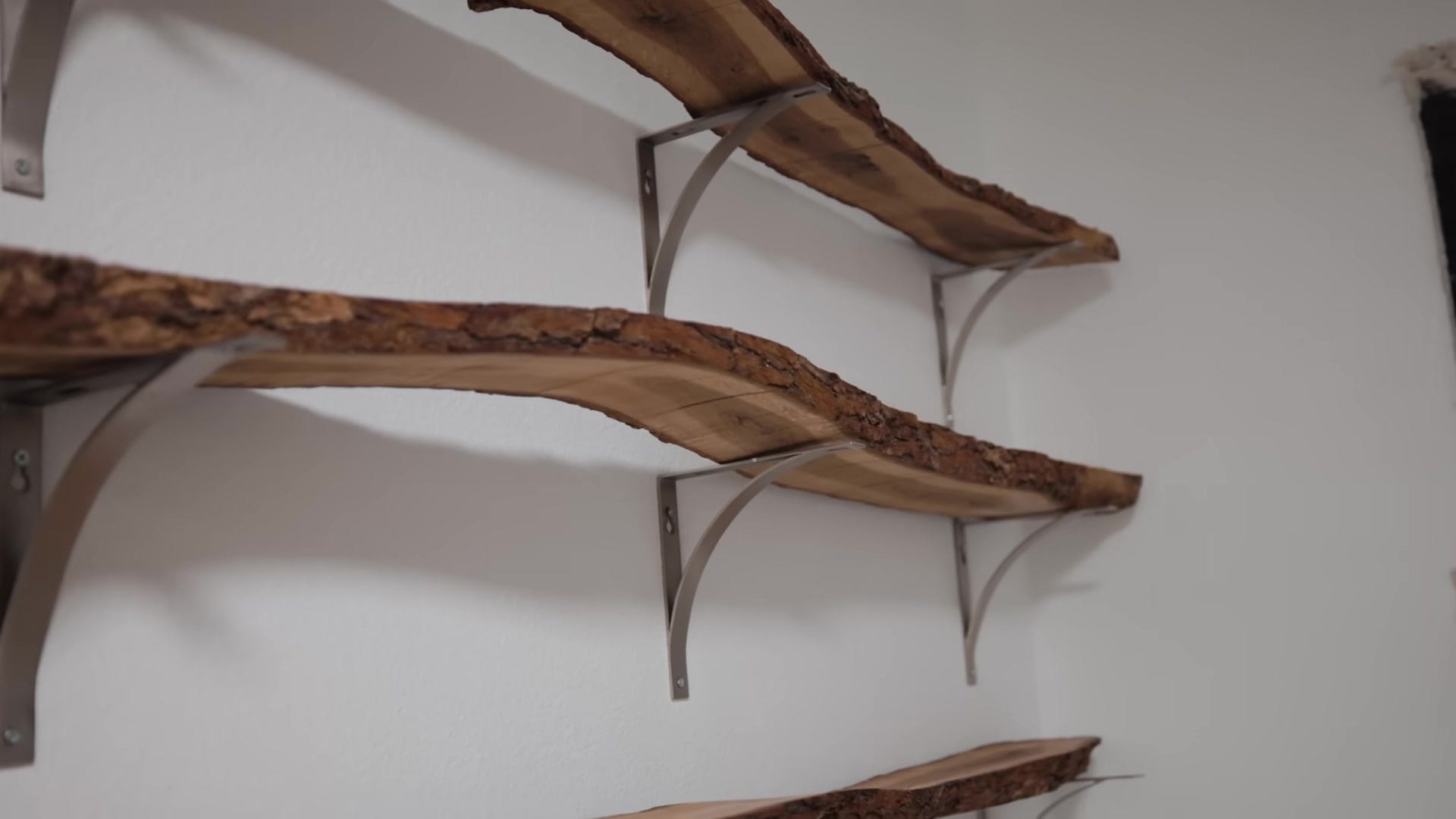
Nothing is ever “finished.” She’s always tinkering, adding, subtracting as ideas unfold. With supplies just across the room, she can do that anytime she wants.
And then there’s the walk‑in closet—unexpected in a tiny home. Built‑in shelves run straight across without a cross beam, which saves space. The builder avoided that dead zone by going straight across .
Two hanging bars take work clothes, winter layers, and pieces she plans to alter. Shoes fit, too, with room to grow or pare down. All of that fits comfortably inside .
It was likely designed for men—two bars, no dress rack—but her rolling dress rack tucks fully inside without overhang. The size and shape blew her away. She didn’t expect a closet like this in a tiny home .
Big Bath, Maintenance & Why Renting Works — tub, ventilation, and peace of mind
The bathroom is big. High ceilings add volume, and she keeps floor space clear on purpose. There’s a full tub—rare in a tiny—and she hung the curtain as high as possible for an expansive feel.
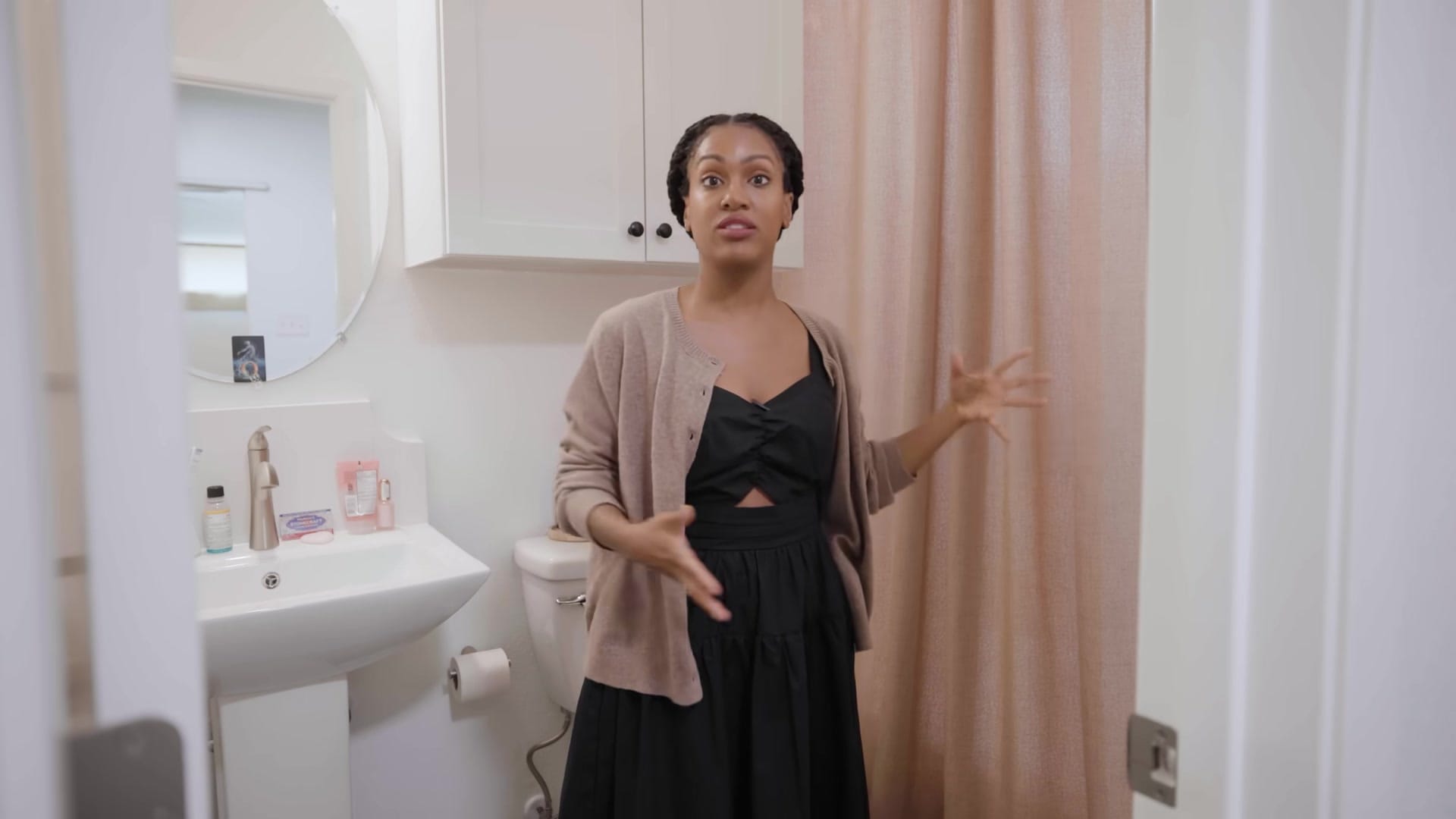
A window opens in the shower to vent steam naturally. She used mold‑ and mildew‑resistant paint to protect the room long‑term. A huge storage cabinet fits everything and keeps the space streamlined.
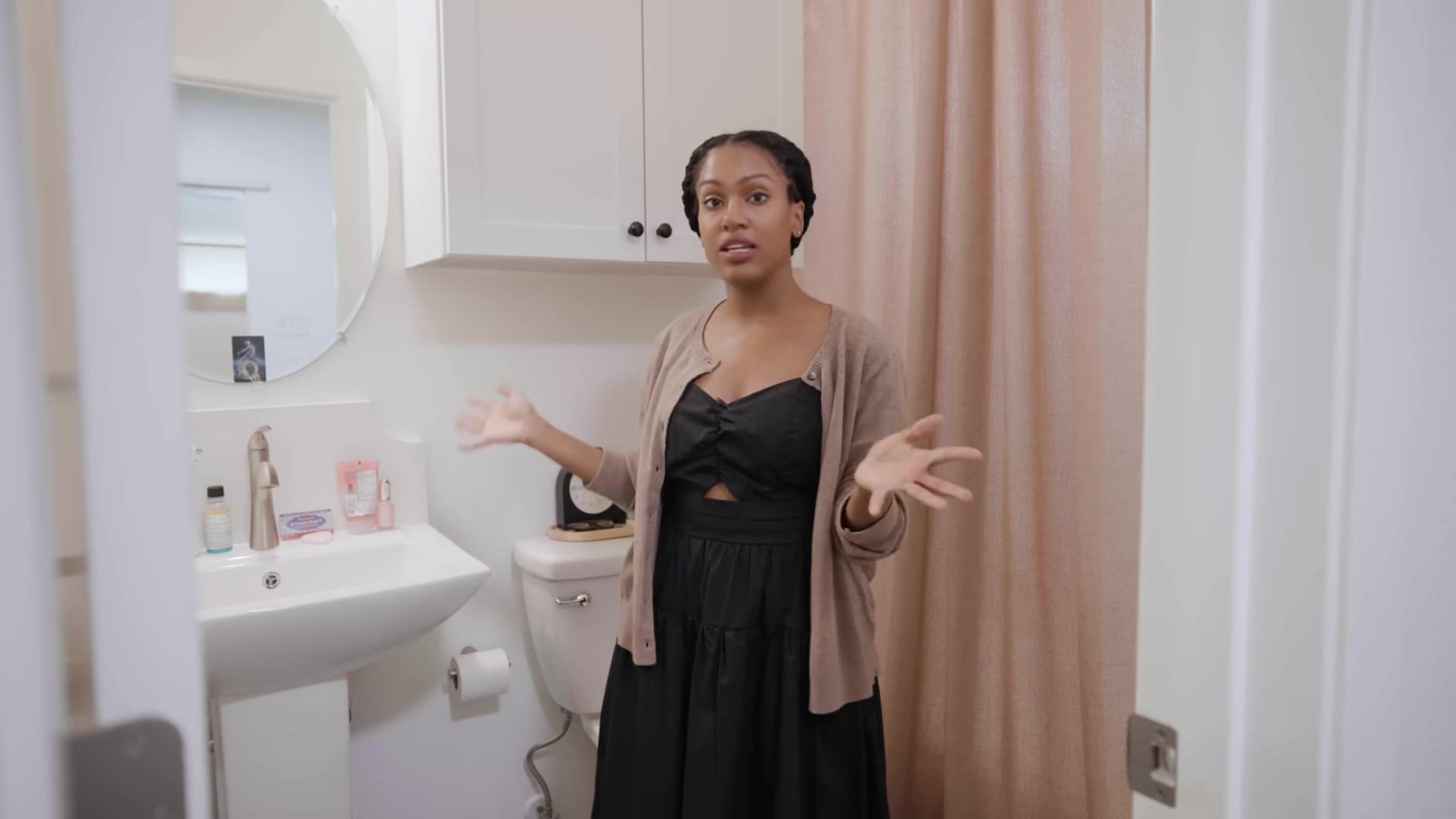
The vanity sits just outside, which helps the room feel open. Door closed, it’s inviting and calm. The layout simply works.
Two mini‑splits keep the place comfortable, and the front unit can match the bedroom’s setting. When maintenance pops up—as it does—she’s glad she can call or email for help. No troubleshooting critical equipment alone .
She also likes what ADUs can do for cities—garages and small structures converted into more places to live. It’s a strong way forward and a smart workaround for zoning roadblocks in major cities . Being in a city was essential for her—jobs and public transportation needed to be close.