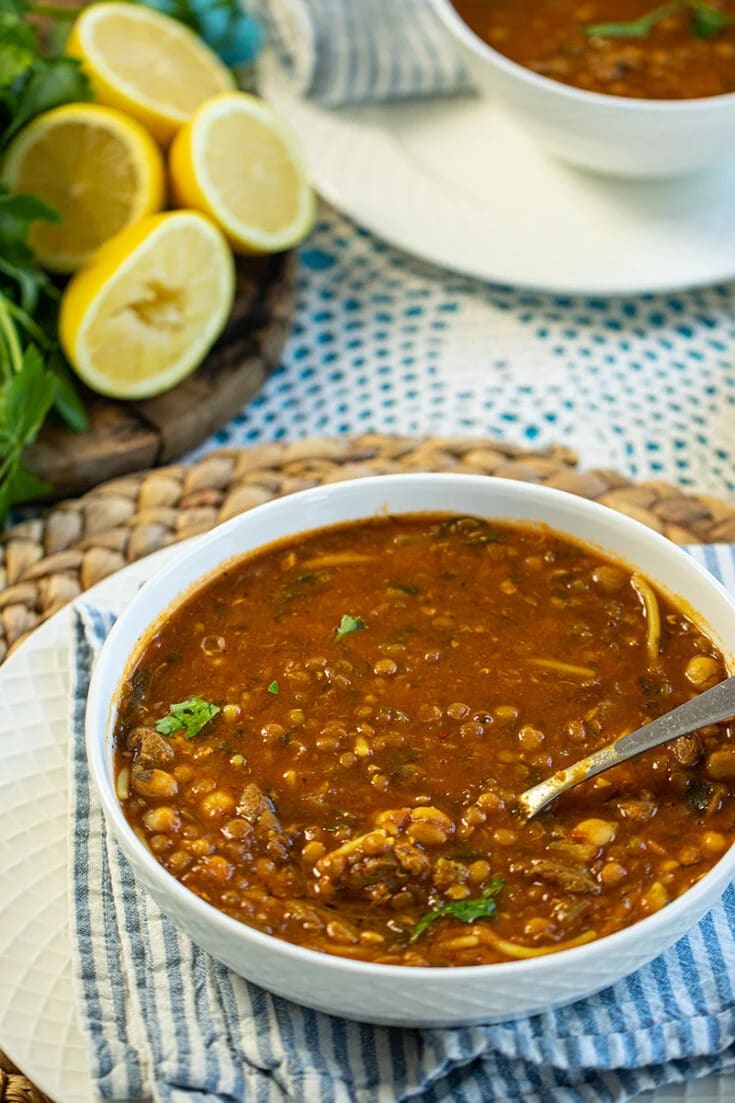
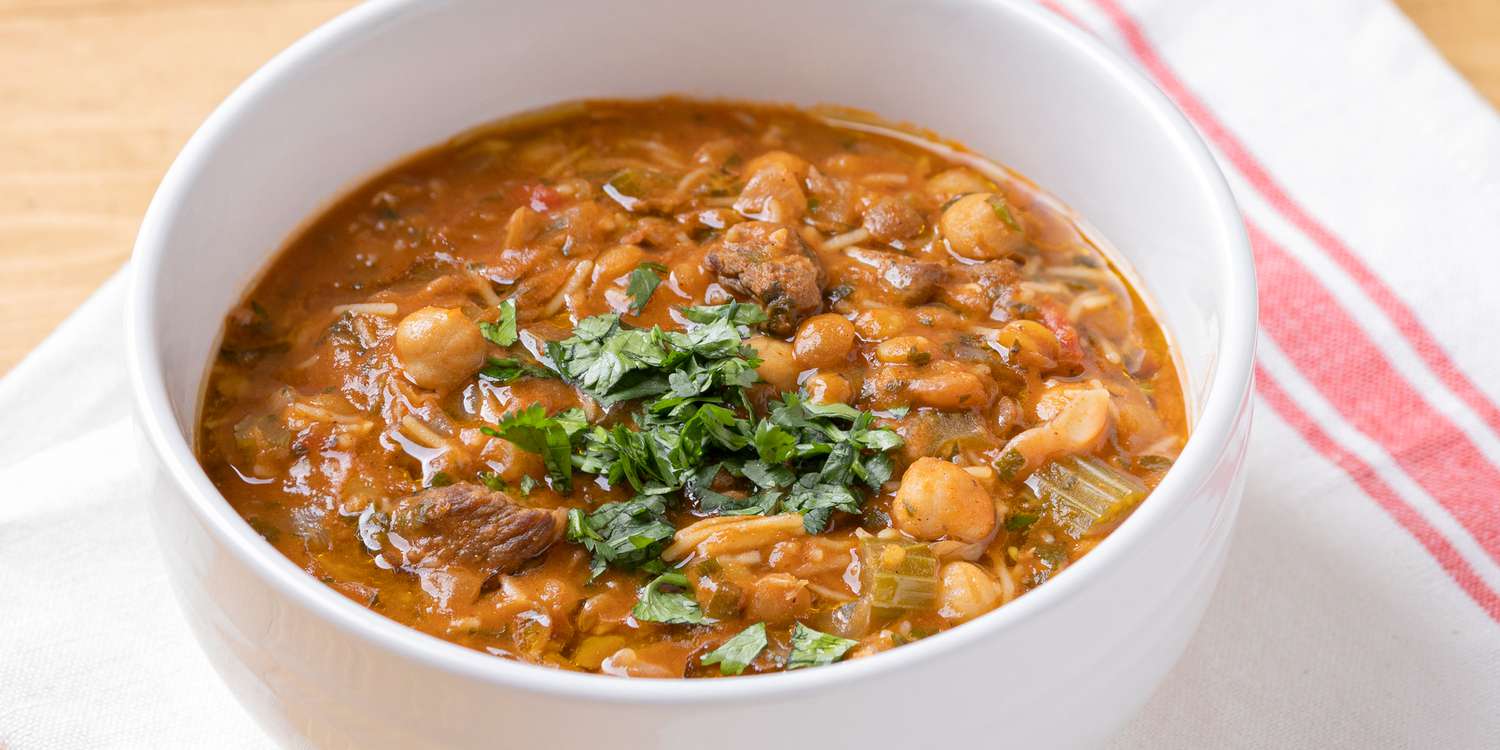
Moroccan Harira Soup
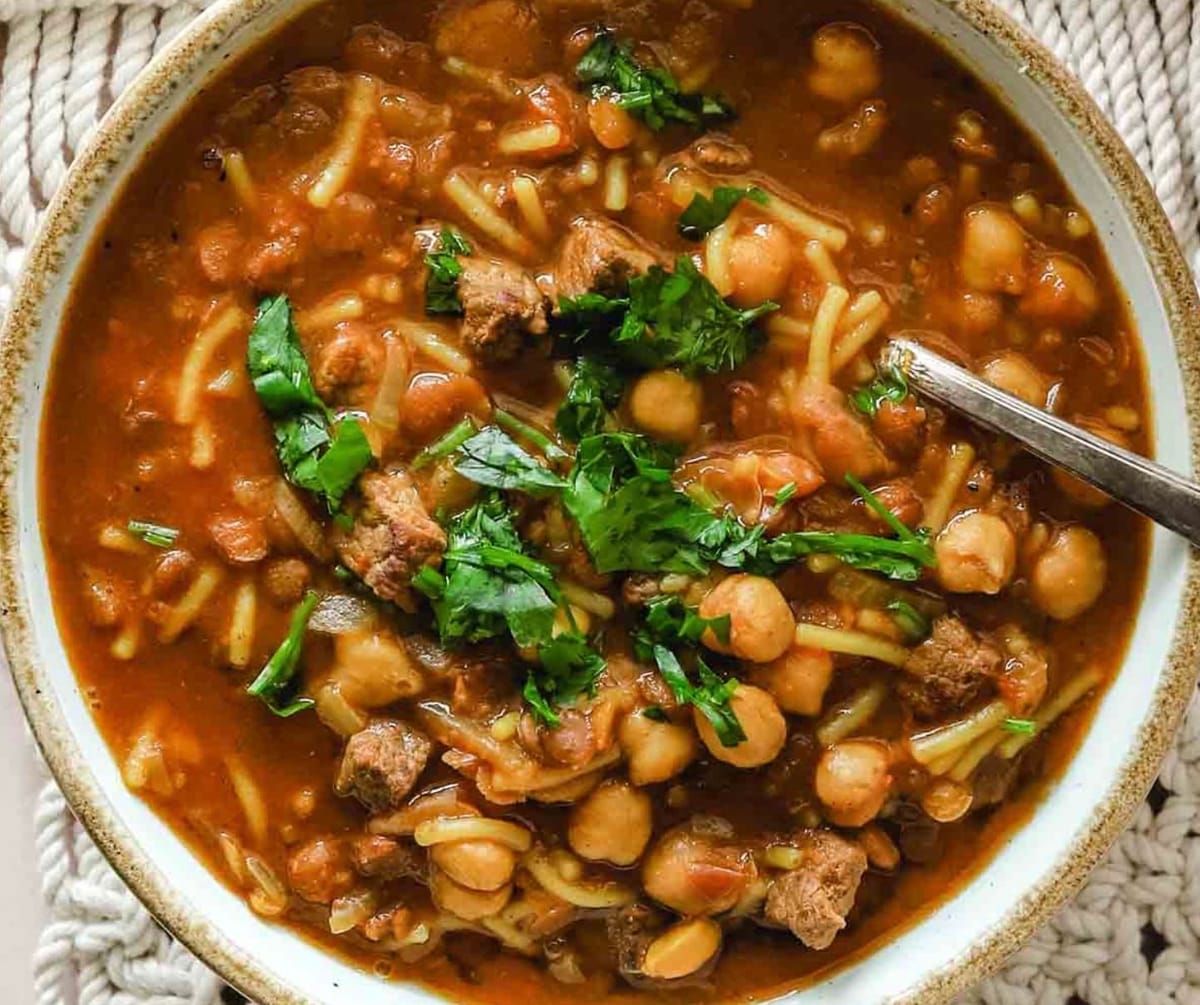
Get ready to fill your kitchen with the most incredible aromas!
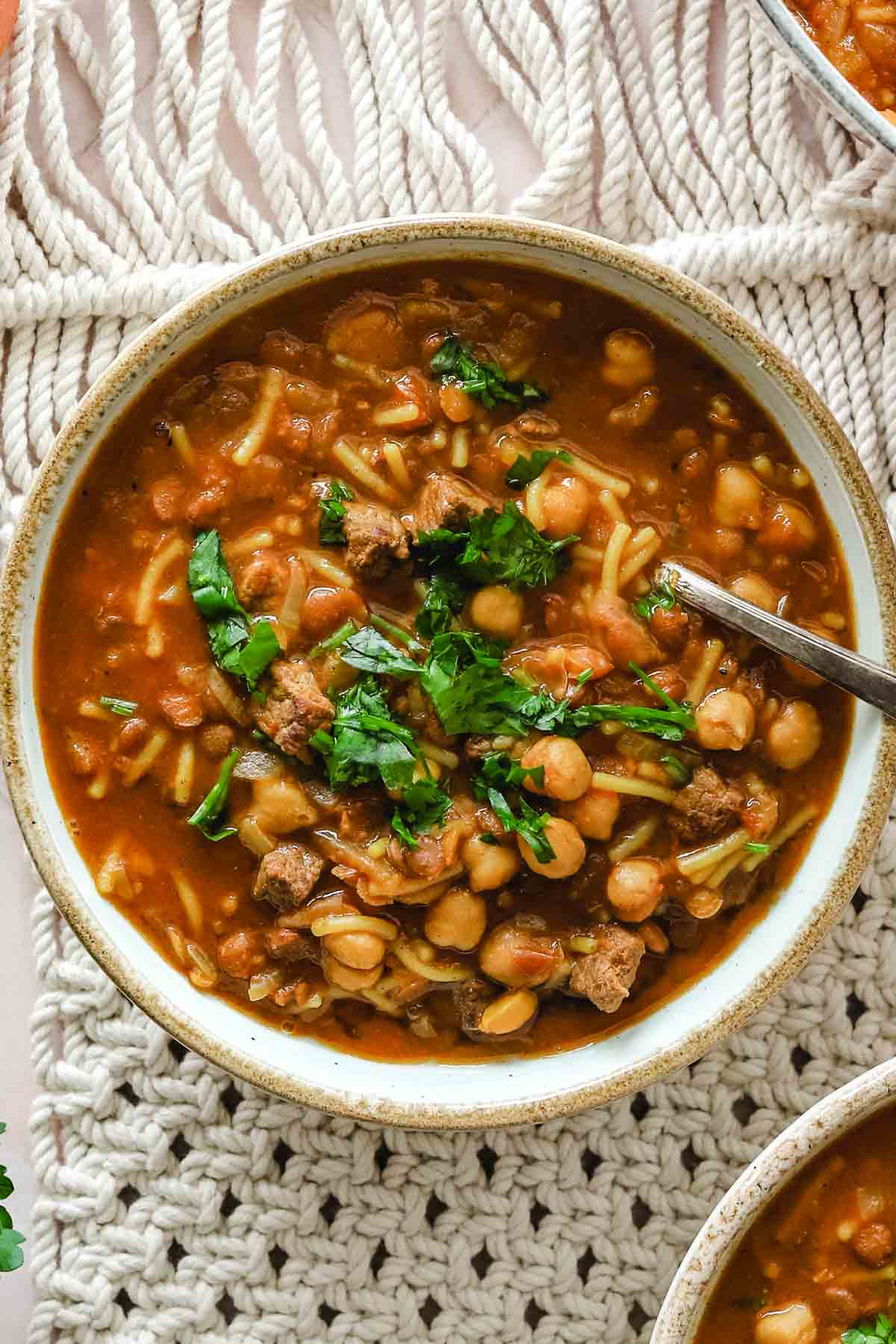
This traditional Moroccan harira soup is like a warm hug in a bowl, packed with tender meat, hearty lentils, and chickpeas swimming in a rich, spiced tomato broth that’ll have your neighbors asking what smells so amazing.
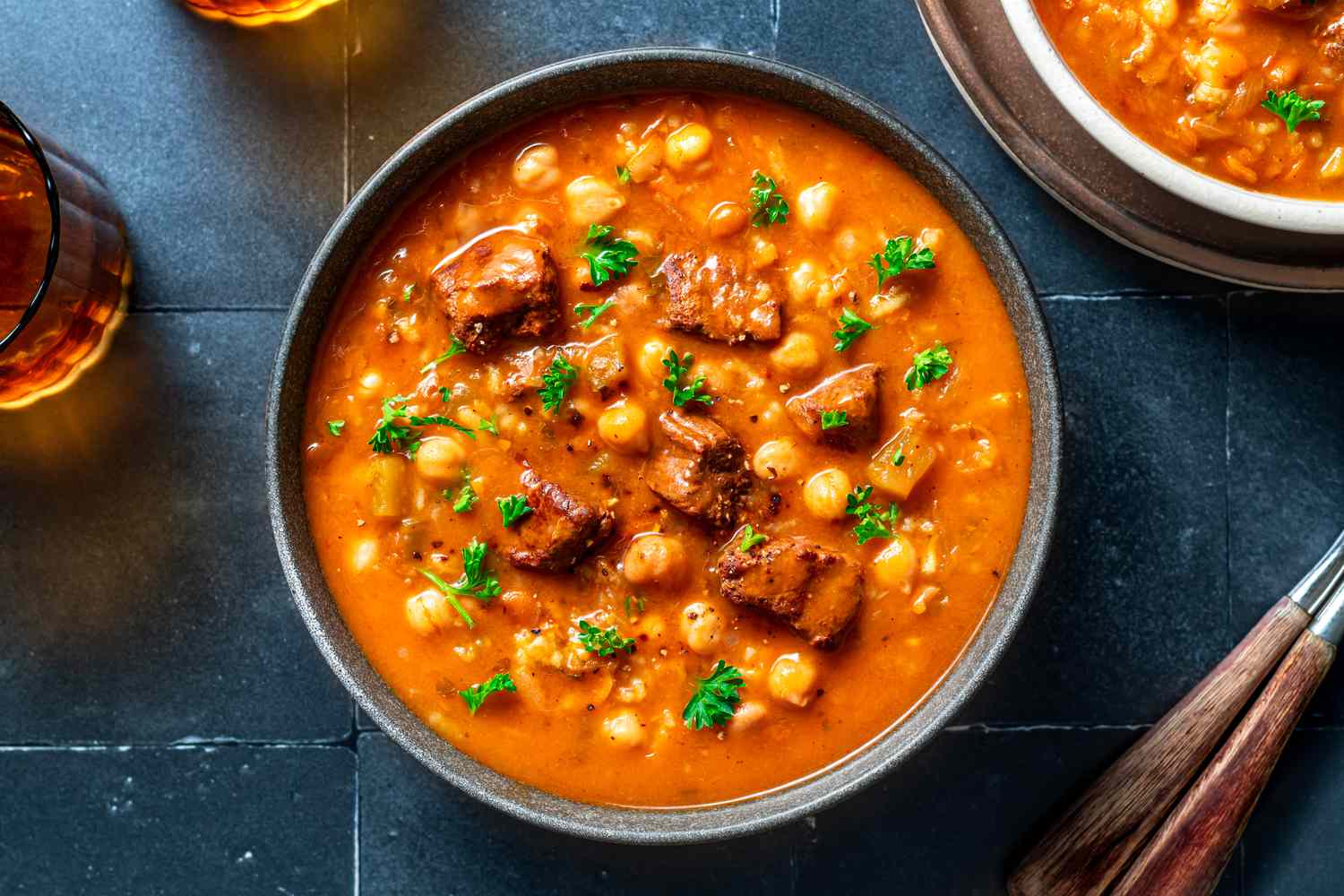
This isn’t just any soup – it’s the soul-warming masterpiece that Moroccans traditionally break their Ramadan fast with.
The combination of warming spices like cinnamon, ginger, and turmeric creates layers of flavor that build with every spoonful.
Plus, that signature silky thickness from the flour mixture? Pure comfort food magic.

Prep: 20 mins
Cook: 110 mins
Total: 2 hrs 10 mins
Servings: 6 to 8 servings
Ingredients
For the Base:
- 3 tablespoons vegetable oil
- 1/2 pound lamb, beef, or chicken, cut into 1/2-inch pieces
- 6 large tomatoes, peeled, seeded, and pureed
- 1 large onion, grated
- 1 stalk celery with leaves, finely chopped
- 3/4 cup dried chickpeas, soaked overnight and peeled
- 1/4 cup finely chopped fresh parsley leaves
- 1/4 cup finely chopped fresh cilantro leaves
For the Spices:
- 1 tablespoon salt
- 1 tablespoon ground ginger
- 1 tablespoon smen (optional)
- 1 1/2 teaspoons freshly ground black pepper
- 1 teaspoon ground cinnamon
- 1/2 teaspoon ground turmeric, or 1/4 teaspoon yellow food coloring
For the Soup:
- 11 cups water, divided
- 3 tablespoons dried lentils, soaked overnight
- 3 tablespoons tomato paste, mixed into 1 cup water
- 2 tablespoons raw rice, or 2 tablespoons broken vermicelli
For Thickening:
- 1 cup flour
- 2 cups water
- Coarsely chopped fresh parsley, for garnish
Steps
Brown the Meat
- Gather all your ingredients and have them ready – this recipe moves quickly once you start. Heat 3 tablespoons vegetable oil in a 6-quart or larger pressure cooker over medium-high heat. The oil should shimmer but not smoke.
- Add the 1/2 pound of meat (cut into uniform 1/2-inch pieces for even cooking). Cook for 3-4 minutes, stirring frequently to brown all sides. You want a nice golden-brown color, which adds depth to the soup’s flavor base.
Make the Stock
- Add the 6 pureed tomatoes, grated onion, finely chopped celery with leaves, 3/4 cup chickpeas, 1/4 cup parsley, 1/4 cup cilantro, 1 tablespoon salt, 1 tablespoon ginger, 1 tablespoon smen (if using), 1 1/2 teaspoons black pepper, 1 teaspoon cinnamon, and 1/2 teaspoon turmeric. Stir everything together until well combined.
- Add 3 cups of water and stir to combine. Cover the pressure cooker tightly and heat over high heat until pressure is achieved (you’ll hear the hissing sound and see steam escaping from the valve). This typically takes 5-8 minutes.
- Once pressure is reached, reduce heat to medium and cook for 20-30 minutes. The longer cooking time ensures the chickpeas become tender and the flavors meld beautifully. Remove from heat and release pressure according to your pressure cooker’s instructions.
Make the Soup
- Add 3 tablespoons dried lentils, the tomato paste mixture (3 tablespoons paste mixed with 1 cup water), and the remaining 8 cups of water. If you notice an oily film forming on the surface, skim it off with a ladle – this prevents the soup from becoming greasy.
- Have your 2 tablespoons rice or broken vermicelli measured and ready, but don’t add it yet. The timing of this addition is crucial for proper texture.
- Cover the pot and heat over high heat until pressure is achieved again. Reduce heat to medium and continue with the appropriate timing: • If using rice: Cook on pressure for 30 minutes. Release pressure, add the rice, cover, and cook with pressure for an additional 15 minutes. The rice should be tender but not mushy. • If using vermicelli: Cook on pressure for 45 minutes. Release pressure, add the vermicelli, and simmer uncovered for 5-10 minutes until the pasta is plump and cooked through.
- Taste for seasoning and adjust with additional salt and pepper as needed. The soup should have a rich, well-balanced flavor at this point.
Make the Thickener
- While the soup cooks, prepare the thickening mixture by whisking together 1 cup flour and 2 cups water until completely smooth. If you notice any lumps, pass the mixture through a fine-mesh sieve to ensure silky smoothness – lumpy thickener will create an unpleasant texture.
Finish the Soup
- Bring the soup to a full simmer over medium heat. You should see steady bubbling across the surface. Slowly pour in 1/4 of the flour mixture in a thin, steady stream while stirring constantly with a wooden spoon. This prevents the flour from clumping.
- Add another 1/4 of the flour thickener, continuing to stir constantly. You’ll notice the soup beginning to thicken when you’ve used approximately half the mixture. The final thickness is your preference – traditional harira has a consistency similar to a light cream soup.
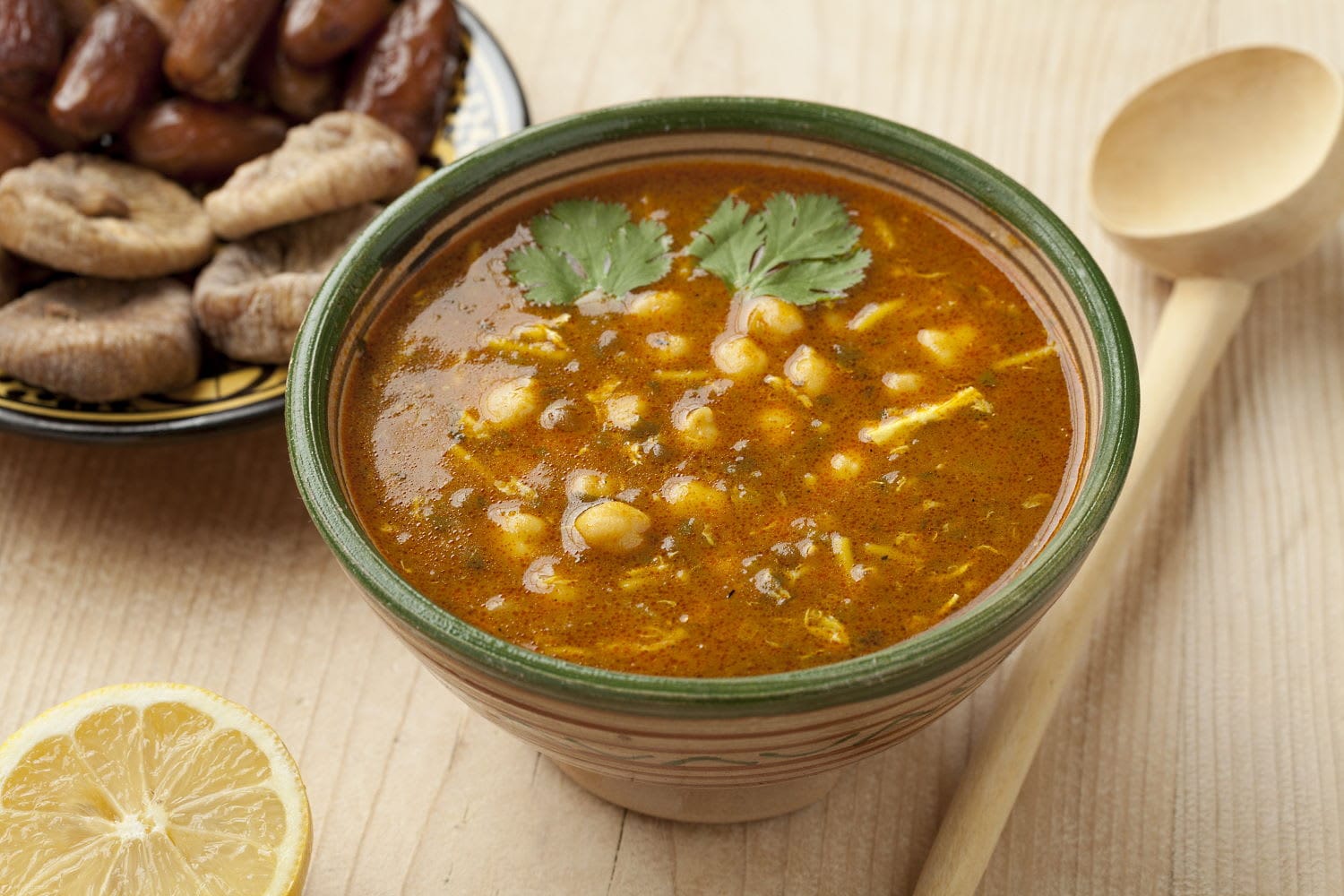
- Simmer the thickened soup for 5-10 minutes, stirring occasionally, to cook off the raw flour taste. The soup should coat the back of a spoon lightly when properly thickened. Remove from heat and serve immediately, garnished with coarsely chopped fresh parsley.
Smart Swaps
- Vegetable broth instead of water (1:1 ratio) – adds deeper flavor without extra calories
- Turkey instead of lamb or beef – reduces fat content while maintaining protein
- Coconut oil instead of vegetable oil – adds subtle richness with potential health benefits
Make It Diabetes-Friendly
Replace the 2 tablespoons rice with 1 tablespoon quinoa to reduce carbs by approximately 8g per serving. Quinoa has a lower glycemic index (53 vs 73 for white rice) and provides complete protein. You can also reduce the flour thickener by half and use 2 tablespoons ground flaxseed mixed with 1/4 cup water instead – this cuts carbs by 12g per serving while adding fiber that helps slow glucose absorption. Serve 1 cup portions instead of larger bowls and pair with a small side salad to increase fiber and reduce the meal’s overall glycemic impact.
Pro Tips
- Soak chickpeas and lentils overnight for faster cooking and better digestibility
- Freeze leftover soup in ice cube trays for quick single-serving portions
- The soup tastes even better the next day as flavors continue to develop