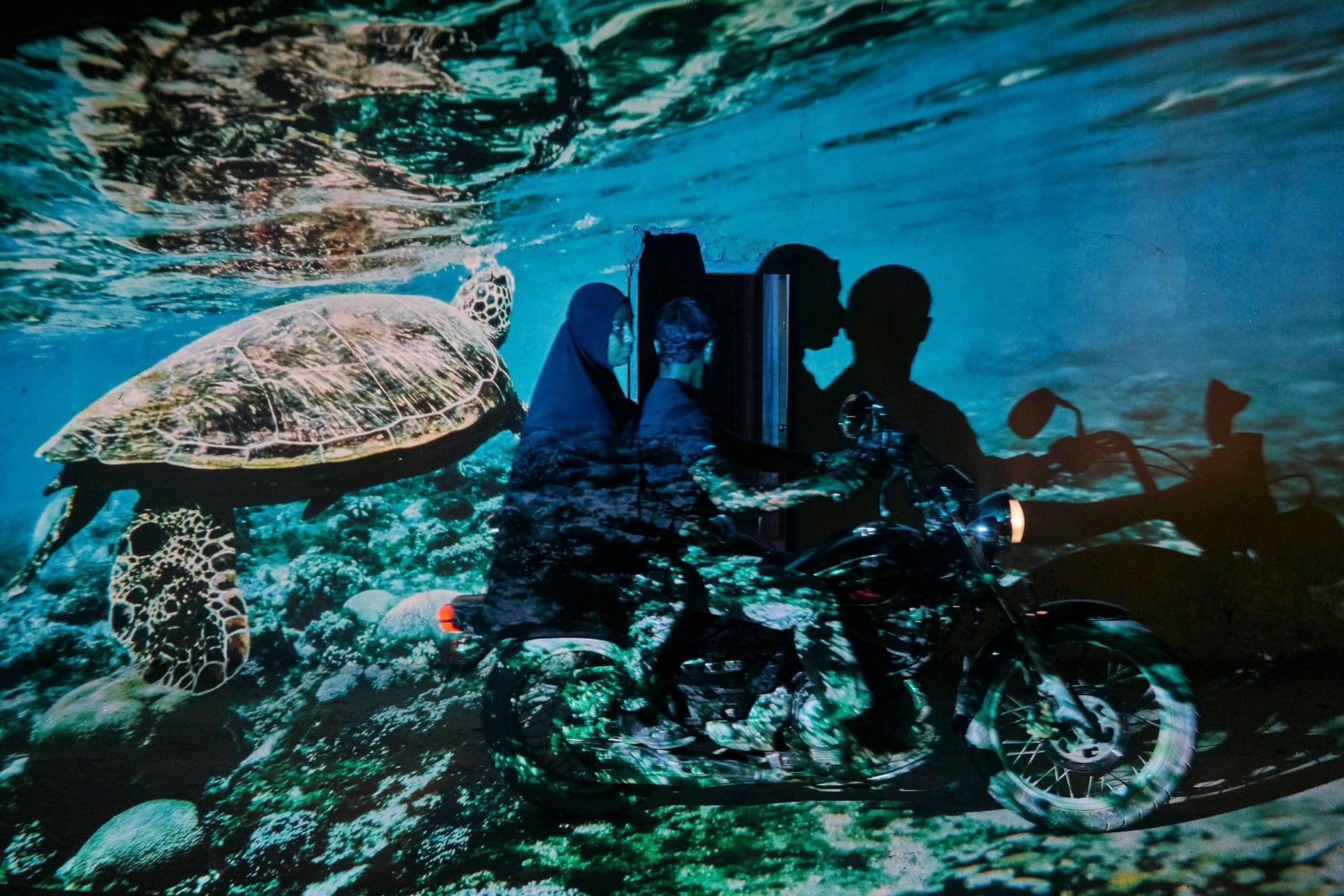
Maldives family posed with a diver in their home showing future sea rise
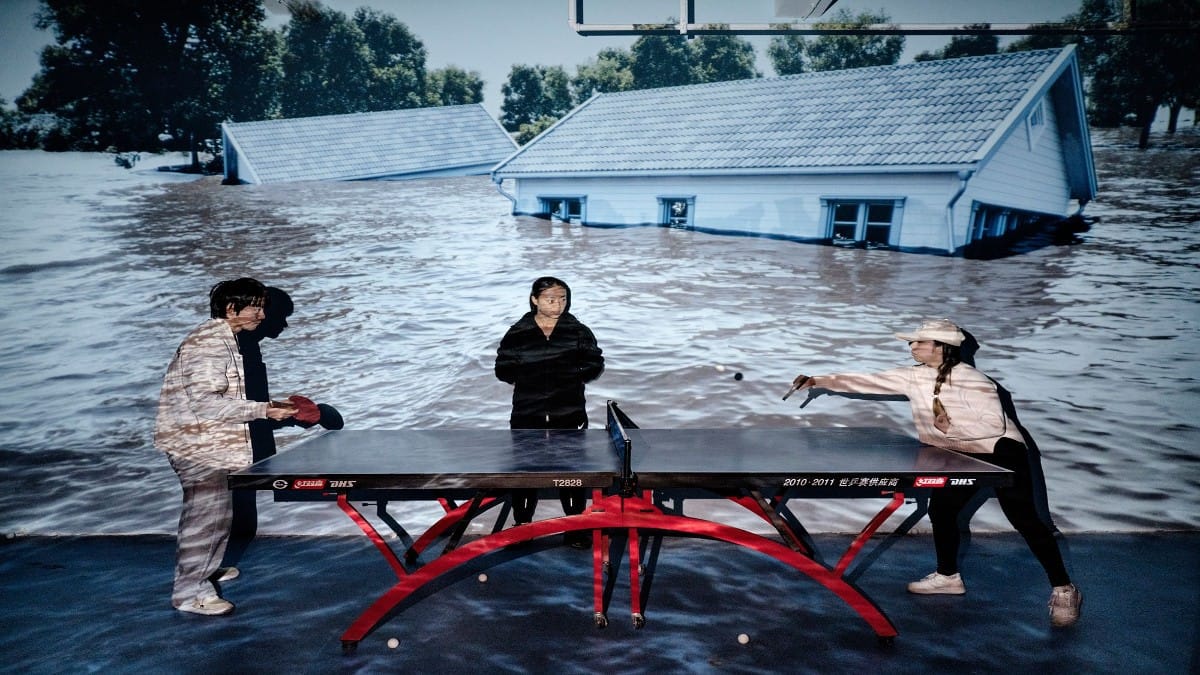
This picture looks normal at first glance.
But as you look closer, something utterly disturbing starts to emerge.
A Glimpse into a Troubling Future
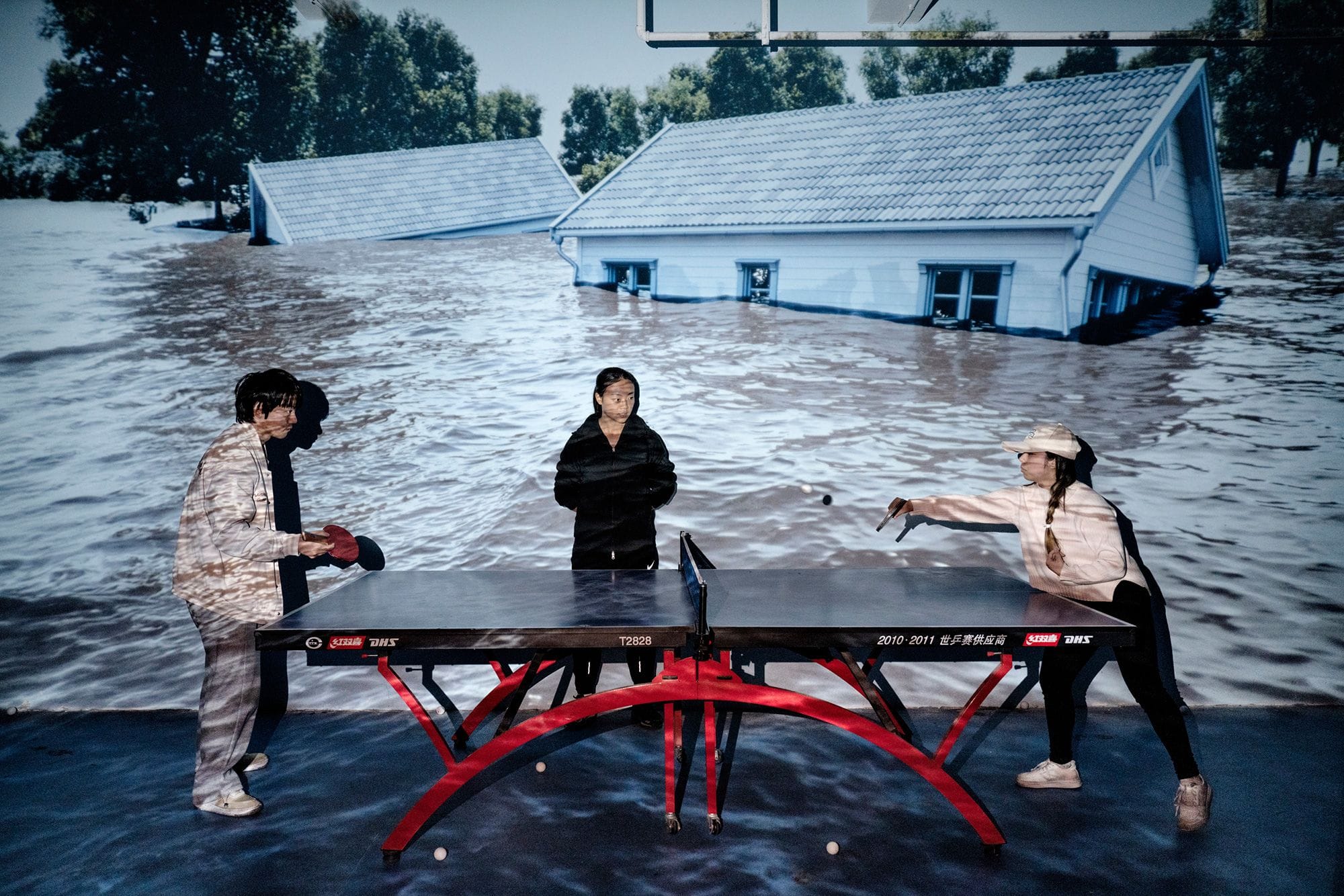
Photographers Edoardo Delille and Giulia Piermartiri have unveiled a series of striking images that force us to confront the stark realities of climate change.
Their project, titled “Atlas of the New World,” doesn’t just report on climate change; it vividly illustrates its potential impact on our everyday lives.
They travelled to six locations around the globe that are particularly vulnerable to the escalating climate crisis.
Their aim was to make the abstract concept of future environmental scenarios feel tangible and immediate.
The Maldives Awaiting the Tide
One of the most arresting images from the series captures a family in the Maldives.
At first glance, it appears to be a candid snapshot of domestic life.
However, the photographers have artfully superimposed an image of a diver, seemingly floating within their home.
This unsettling visual directly addresses the perilous situation faced by the Maldives.
With an average elevation of just one meter above sea level, the island nation is exceptionally susceptible to rising sea levels.
Projecting Potential Catastrophe
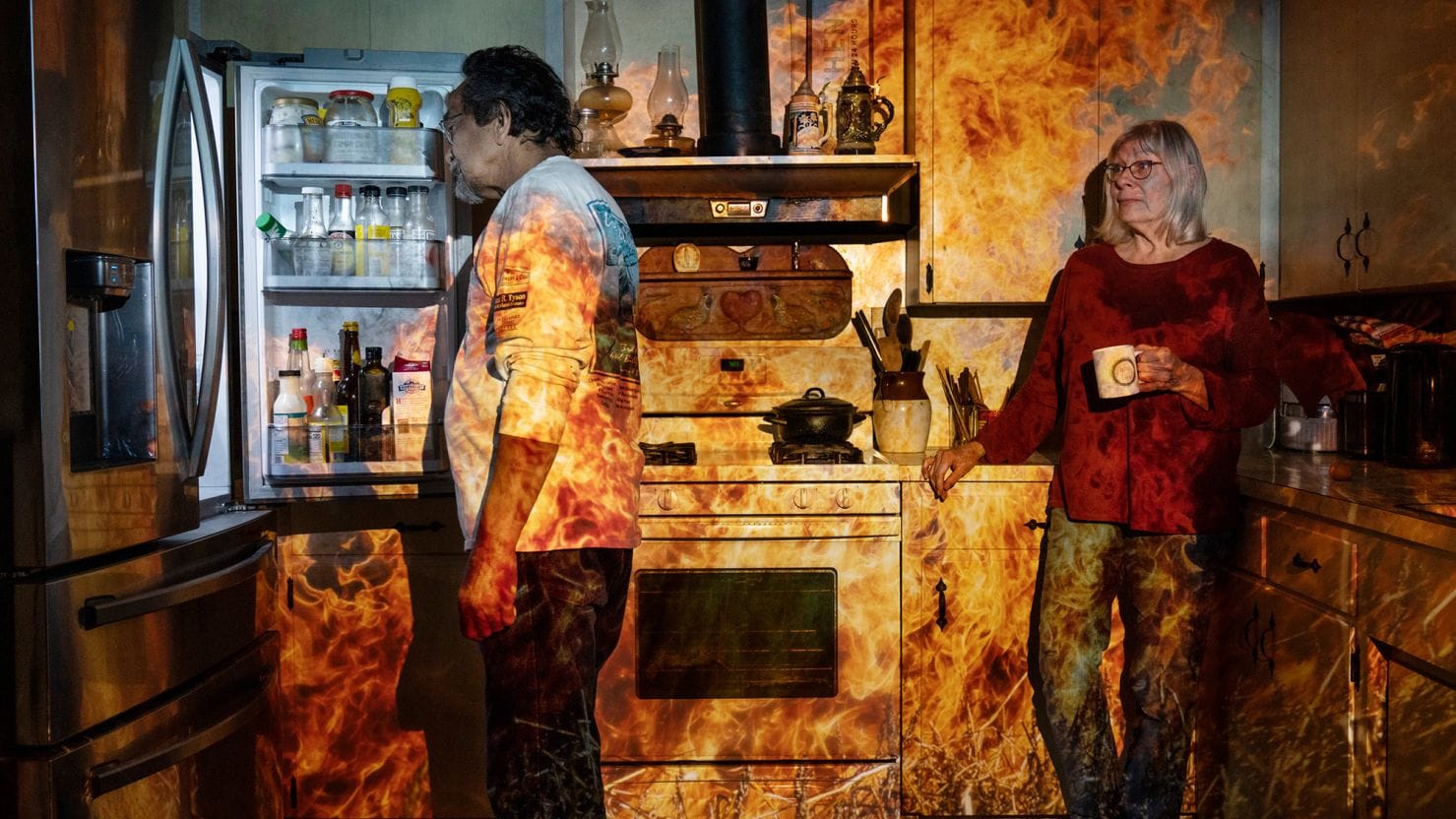
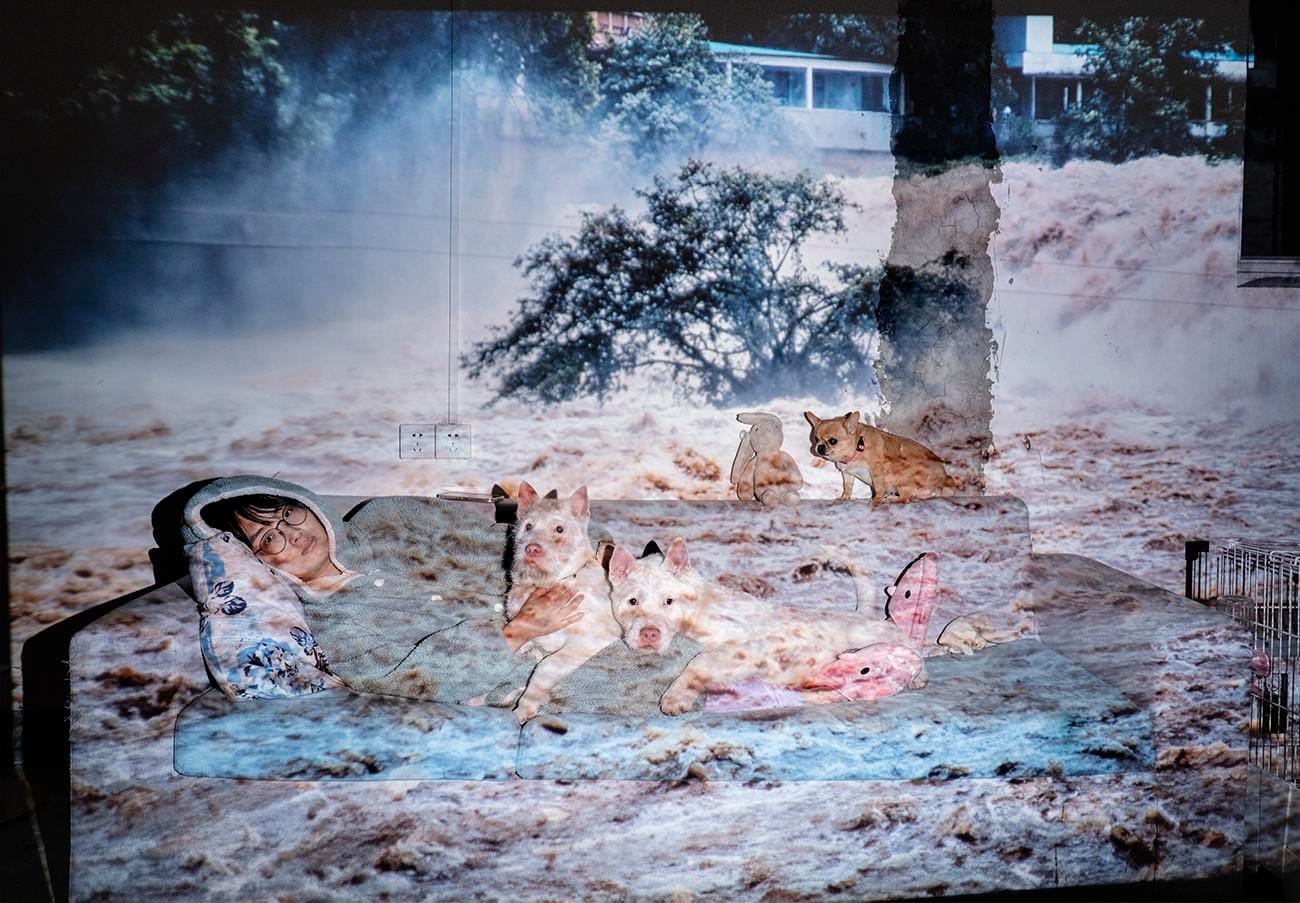
Delille and Piermartiri utilized a unique analog projection technique to create these powerful images.
They married scientific data with dreamlike visuals to convey a message of urgency.
The photographs draw from existing imagery, often repurposed from tourist snaps.
These are then projected onto present-day environments, highlighting projected future conditions.
As Delille explained, simply showing the present was insufficient to convey the gravity of the climate crisis.
“We found that to show the present was not enough. So we looked at how global warming will change the morphological shape of the landscape, directly at the end of the century, which better shows the gravity of the problem.”
Wider Applications of the Project
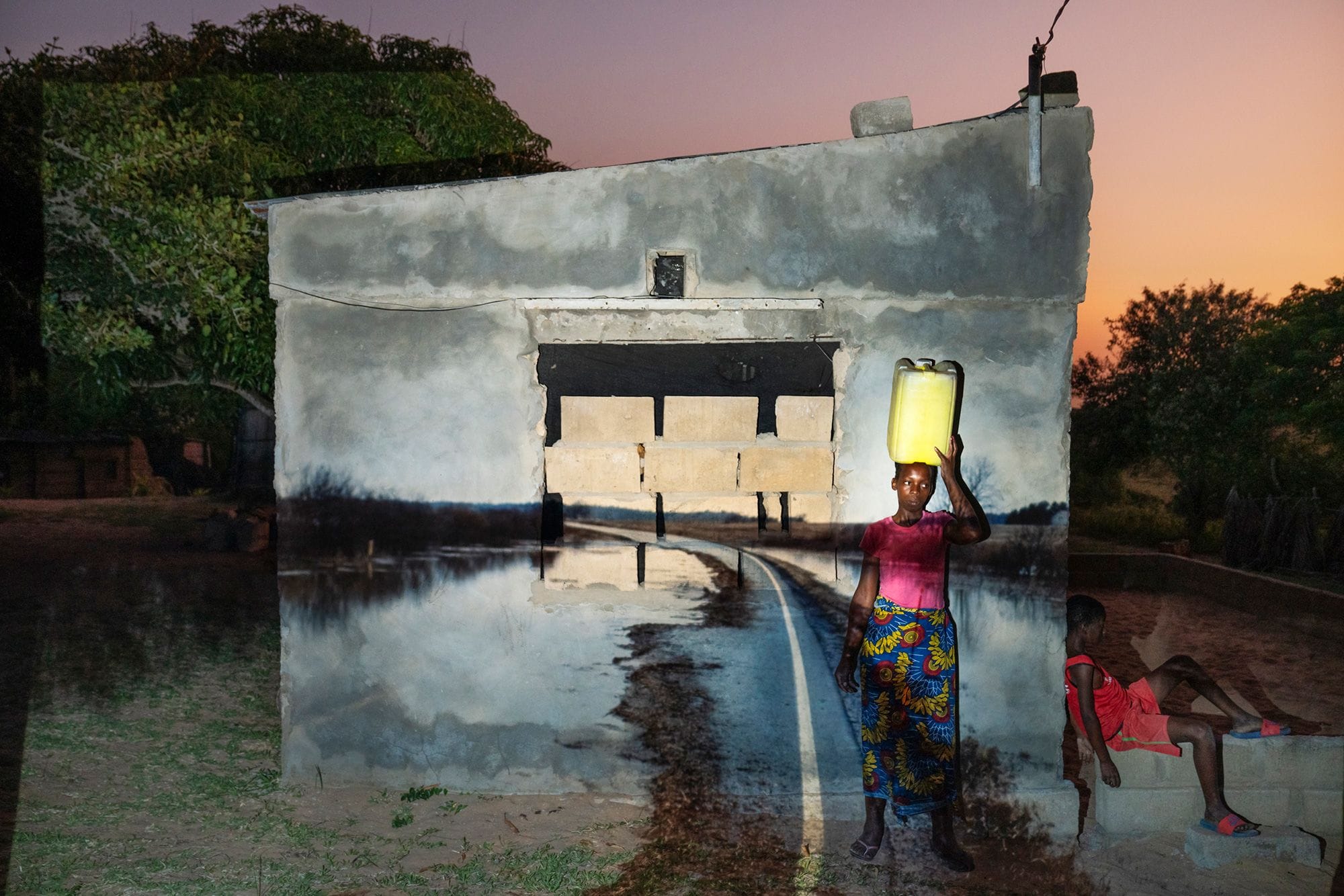
The “Atlas of the New World” extends beyond the Maldives, encompassing other regions facing significant climate challenges.
California, for instance, is depicted with its homes infiltrated by projected wildfires.
The series also explores the melting glaciers of Mont Blanc, where lush meadows are superimposed onto snow-covered landscapes.
Each chapter uses the same evocative technique to underscore a different facet of the climate crisis.
These include desertification, climate migration, and the devastating impact of forest fires.
The Human Element and Inequality
The photographers emphasized the importance of speaking with the people featured in their work.
They spent considerable time in each location, conducting interviews to understand local perspectives.
This human element is crucial to the project’s impact.
Delille noted the stark contrast in attitudes, particularly in the Maldives.
He observed that while locals lived ethically and in harmony with nature, the primary pollution stemmed from tourism.
“The main pollution came from tourists. These visitors had everything imported: Champagne, beer, Italian wine, American things… It was really strange to see. The local people will be submerged because of us… but they live very ethically.”
The project also highlights the deeply unequal impact of climate change.
Delille stated that those least responsible often suffer the most severe consequences.
“Poor people are suffering. They cannot simply move to a cooler place.”

A Manual for Future Generations
The “Atlas of the New World” was conceived not merely as an art book, but as an educational tool.
The photographers hope their work will be utilized in schools.
They believe the striking visuals can immediately make younger generations conscious of the climate crisis.
The accompanying data and essays provide a robust academic foundation.
This combination of art and science aims to foster reflection and encourage proactive measures to protect the planet.
The powerful imagery serves as a stark reminder of what could be, urging us to act before these projections become our reality.