Living Tiny Off-Grid — The 238 sq ft Home That Holds a Soaker Tub
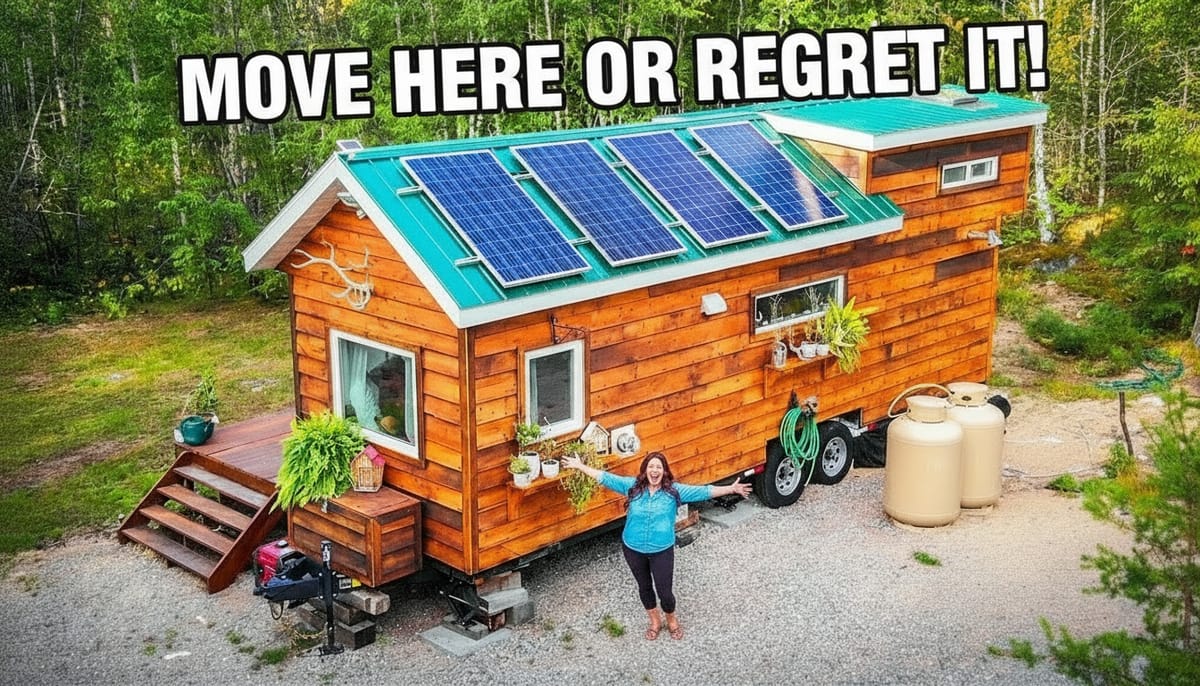
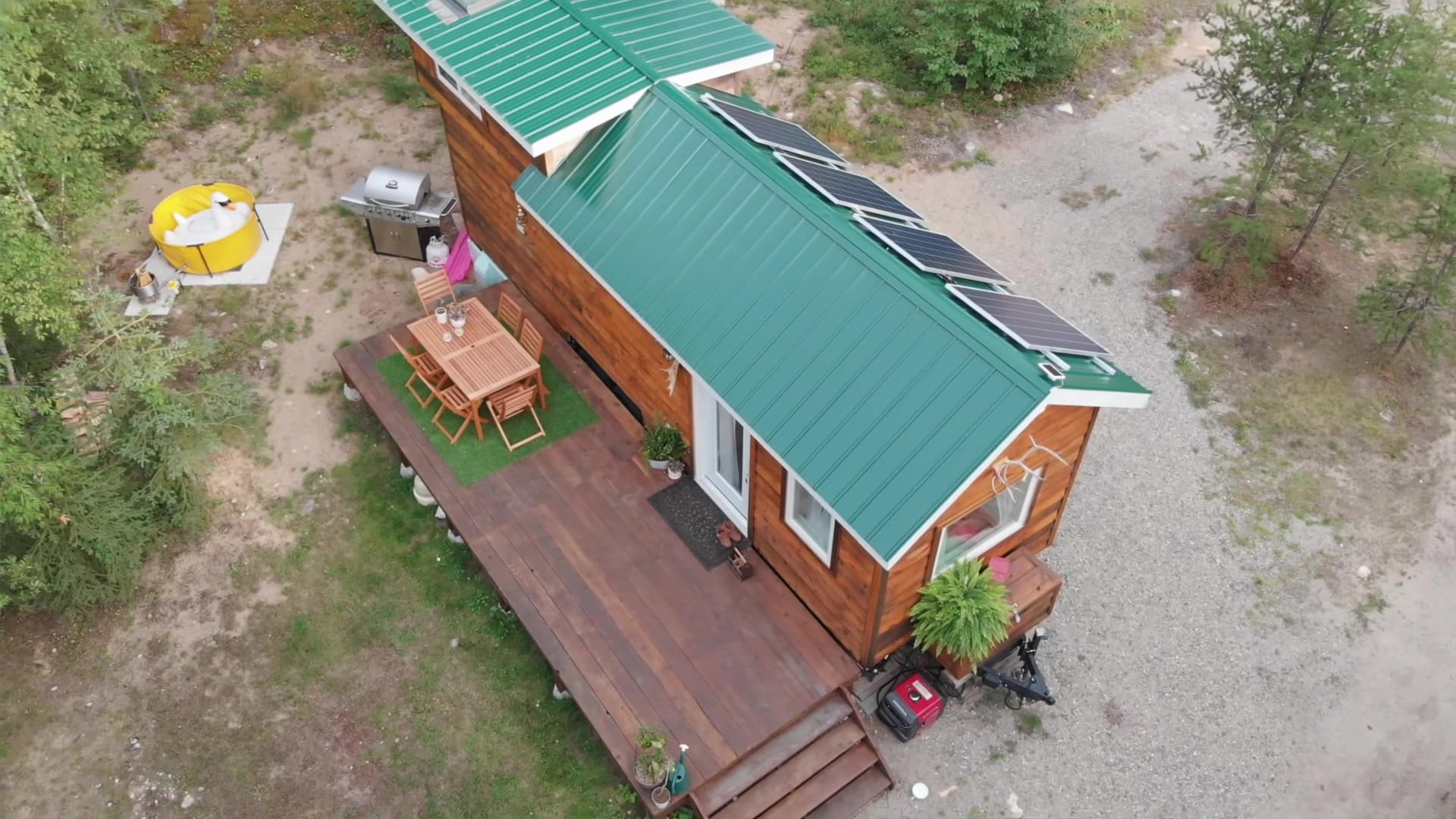
Carole built a life around the things she loves and a very specific footprint: a tiny, off-grid home in northern Ontario that’s designed to be lived in, not just looked at. The space is compact, practical, and full of intentional choices that let her spend time on photography, community work, and outdoors life.
Where She Lives — setting, size, and how it’s built
She’s been living in the home for nearly two years
and plans to stay as long as possible on the leased acre she calls home.
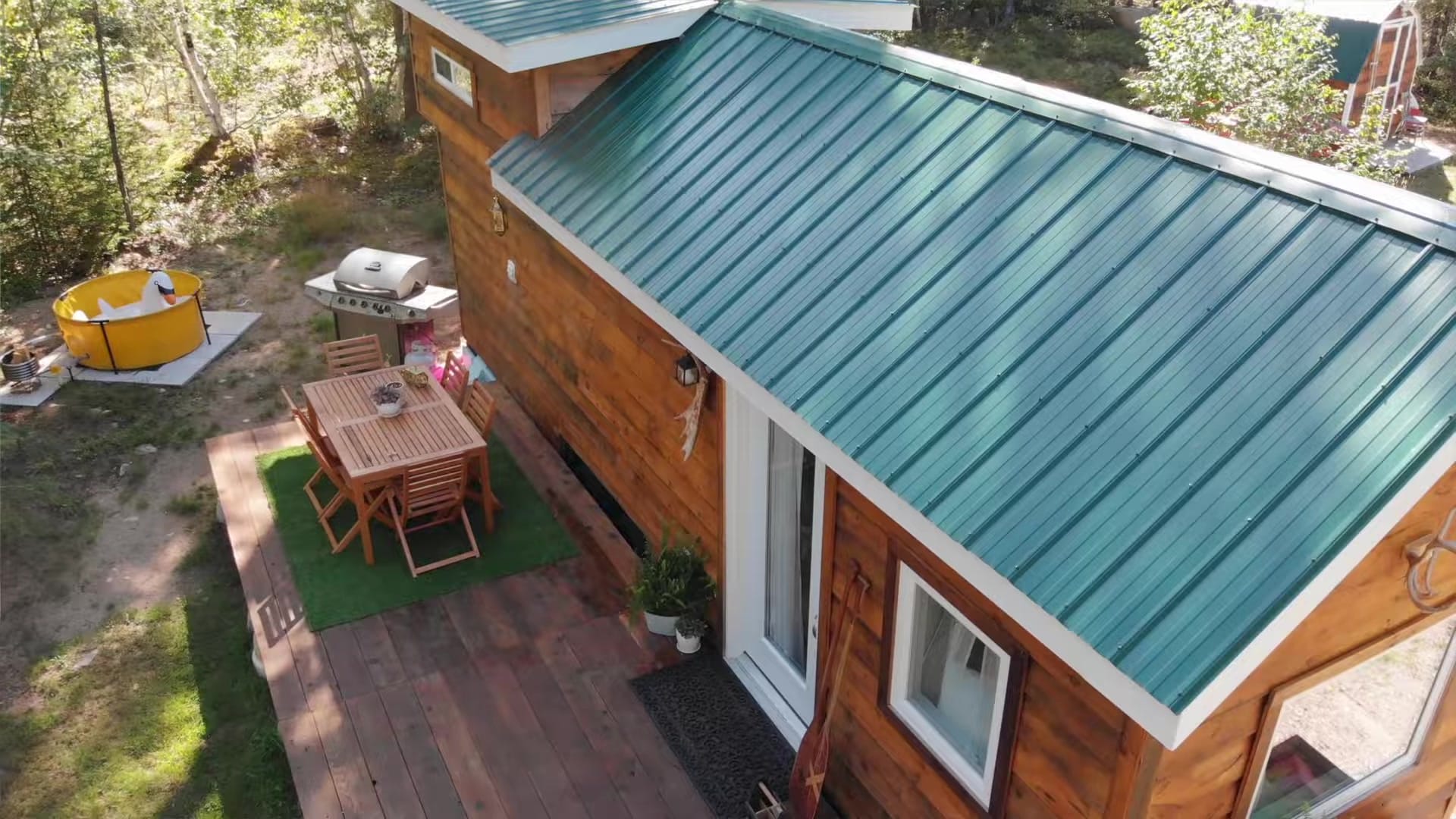
A small, private lake sits a minute’s walk through the forest behind the property
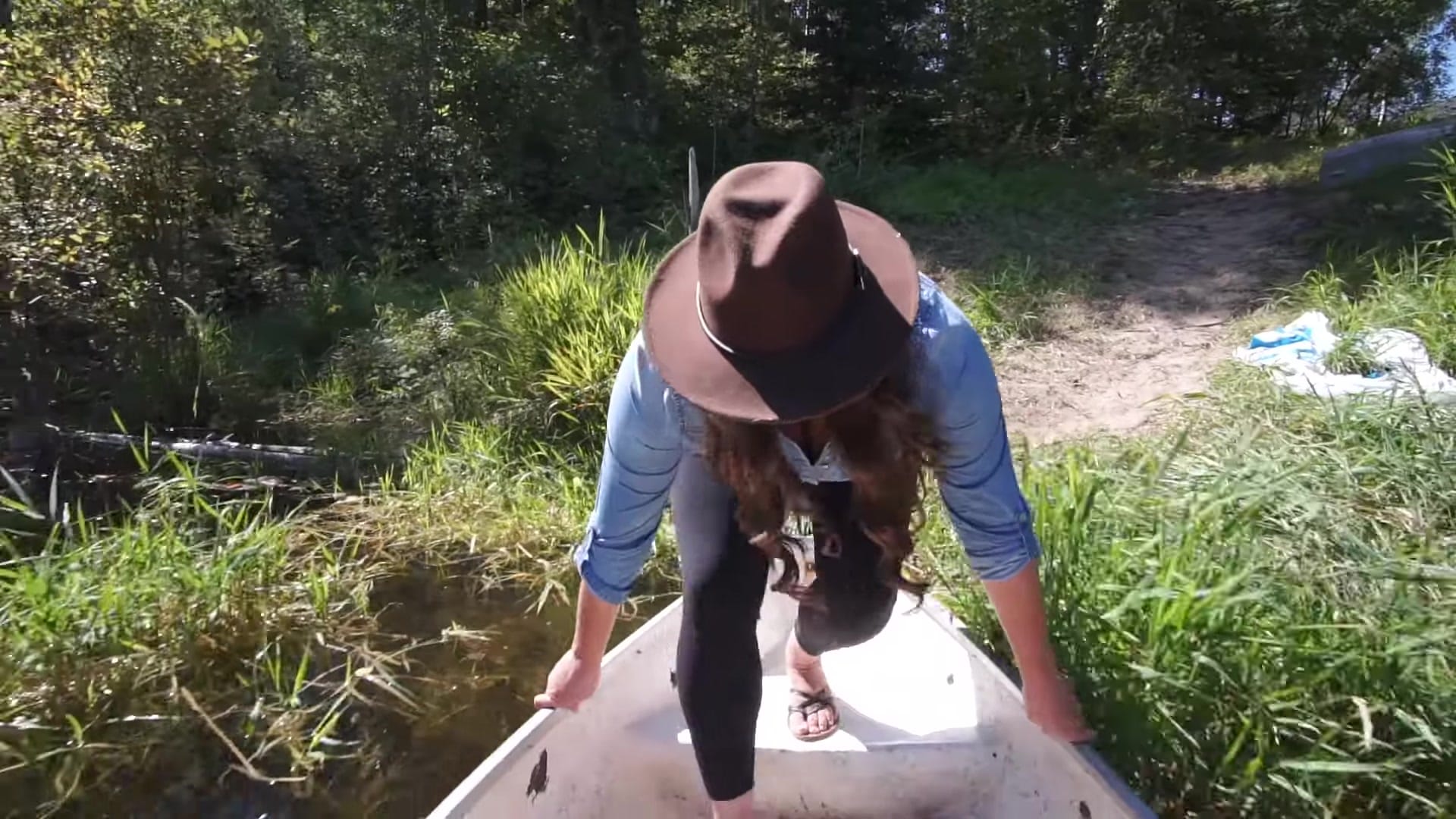
and the house itself measures eight and a half by twenty-eight feet — 238 square feet, not counting the lofts.
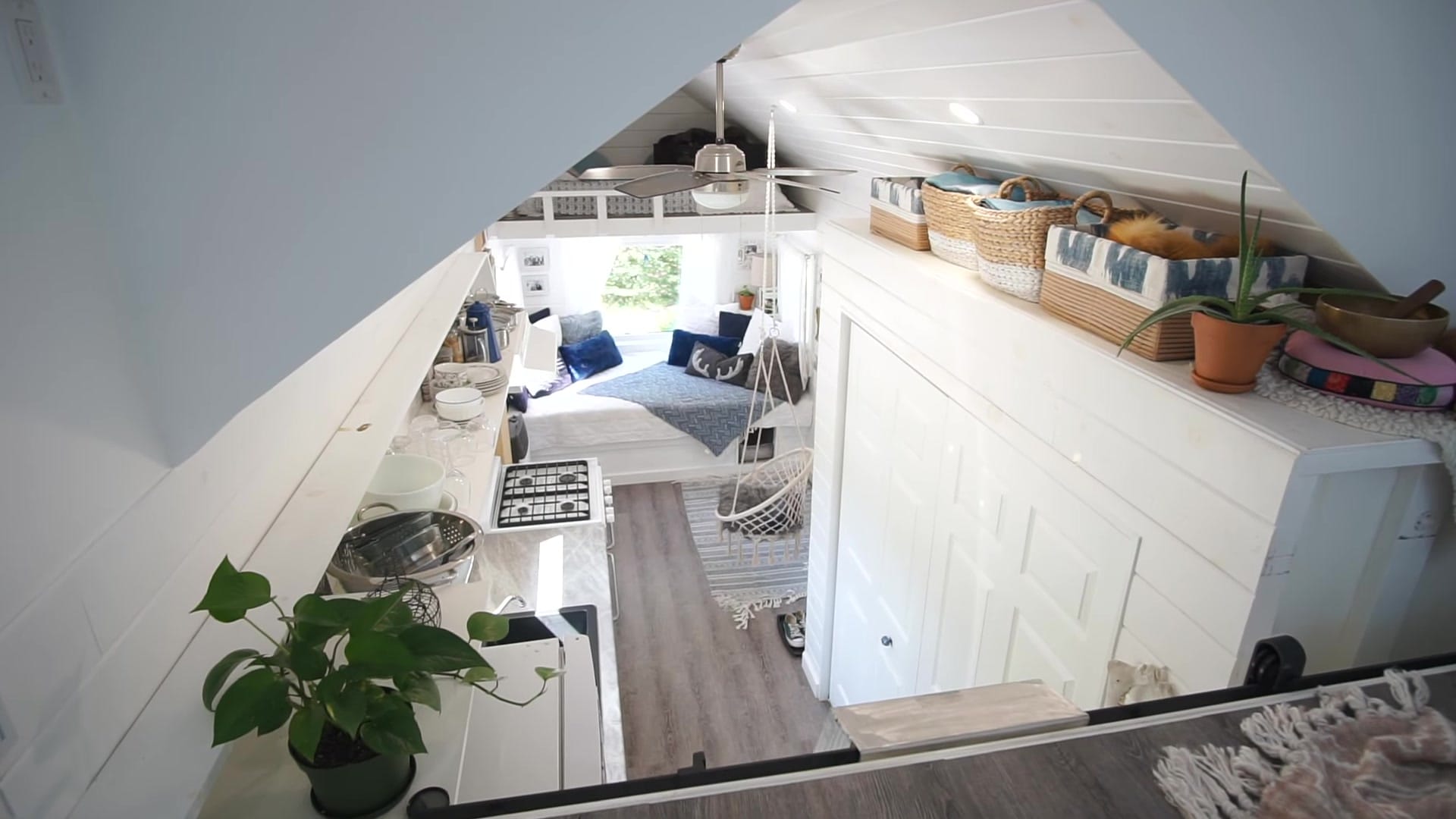
The shell was framed by a contractor, and then she and her dad finished much of the build with friends helping along the way.
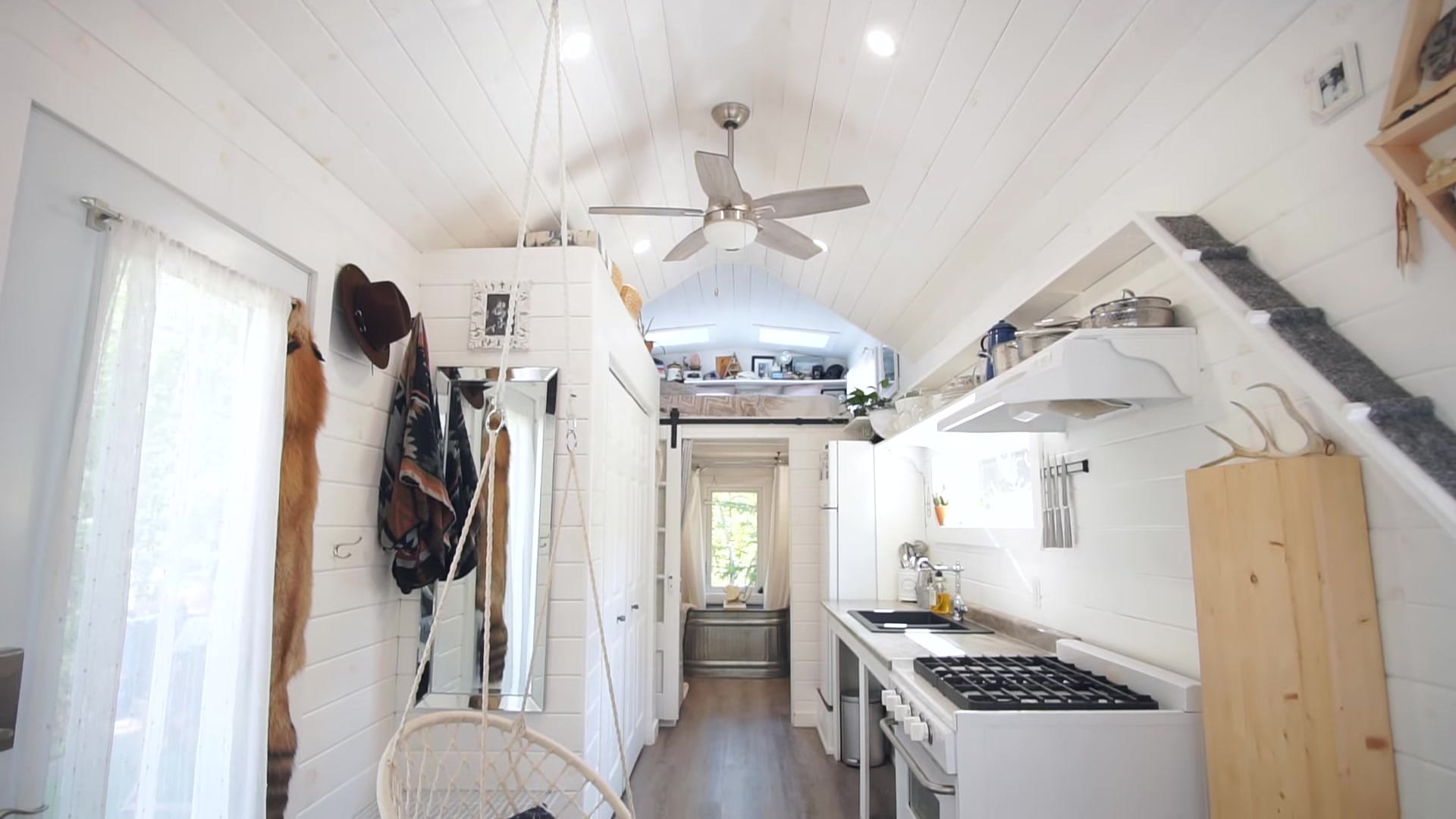
That setup keeps the footprint tiny while giving room for things that matter.
Kitchen & Daily Living — open shelving, stove, fridge, pantry
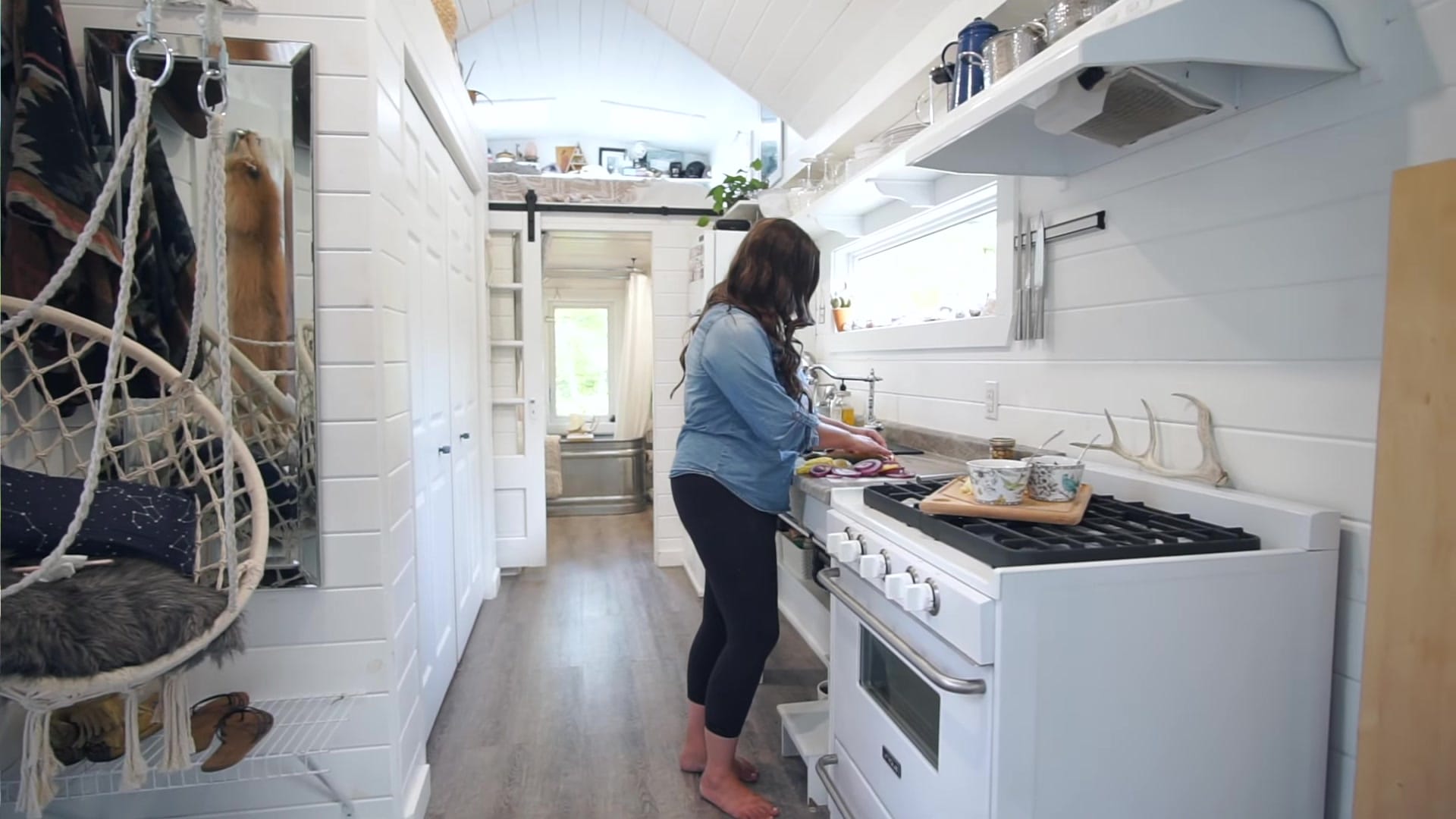
The kitchen is deliberately open-concept with just a top shelf so everything is visible and the room feels less enclosed.
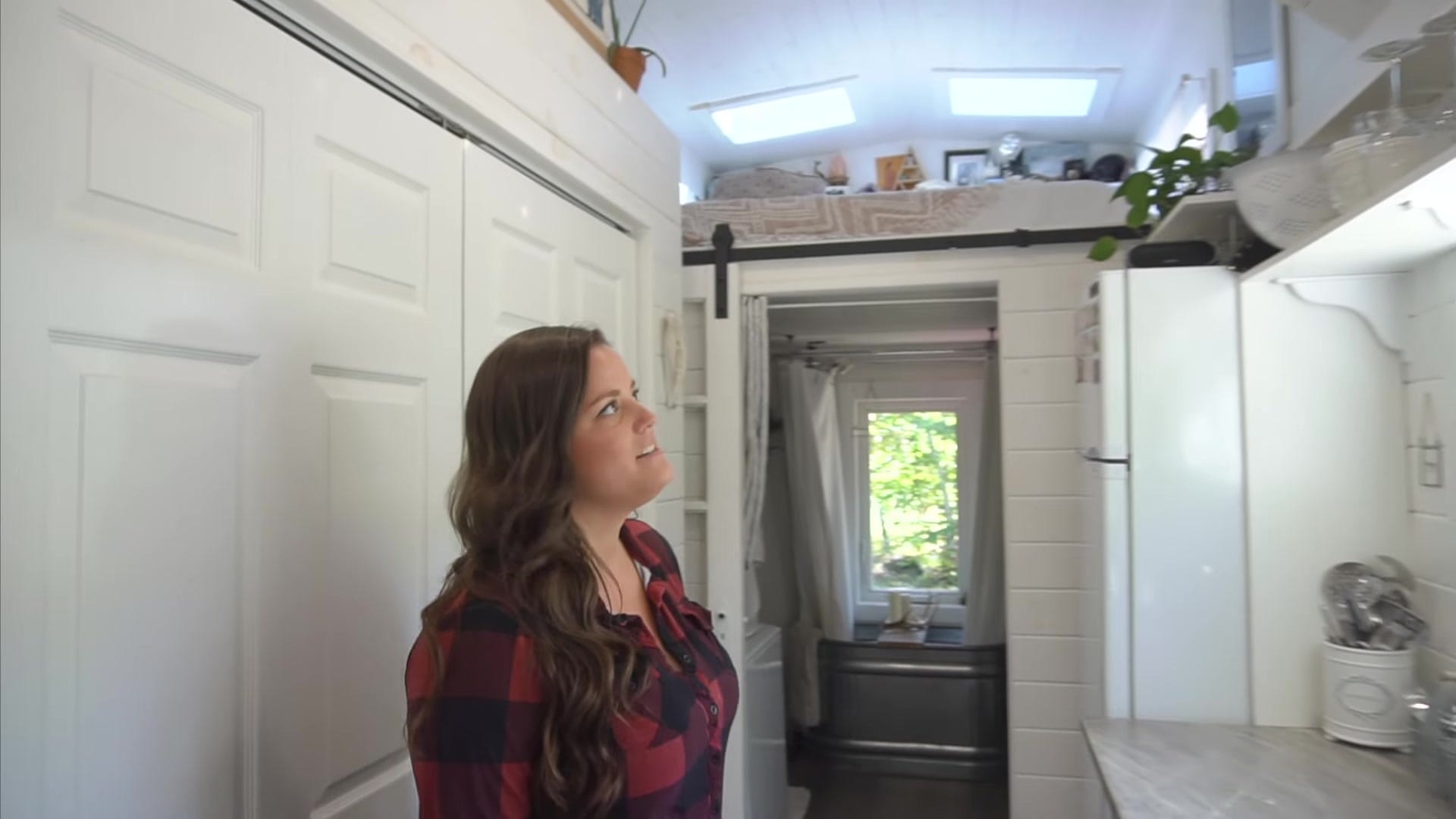
Underneath, the same open approach continues into a pull-out pantry with little containers for easy access.
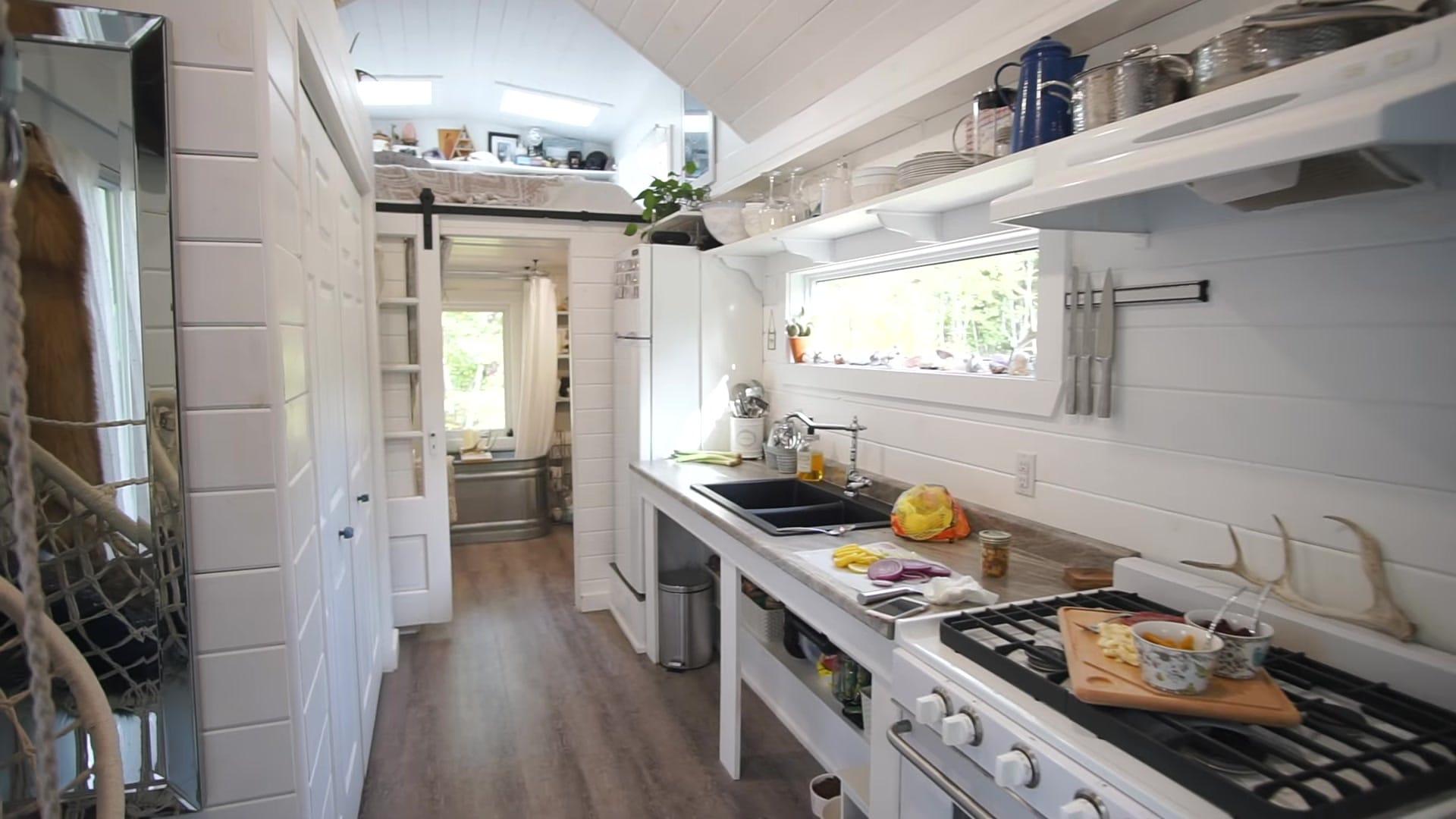
She chose a full-size propane stove so cooking doesn’t pull from solar power and the range still feels generous for the small space.
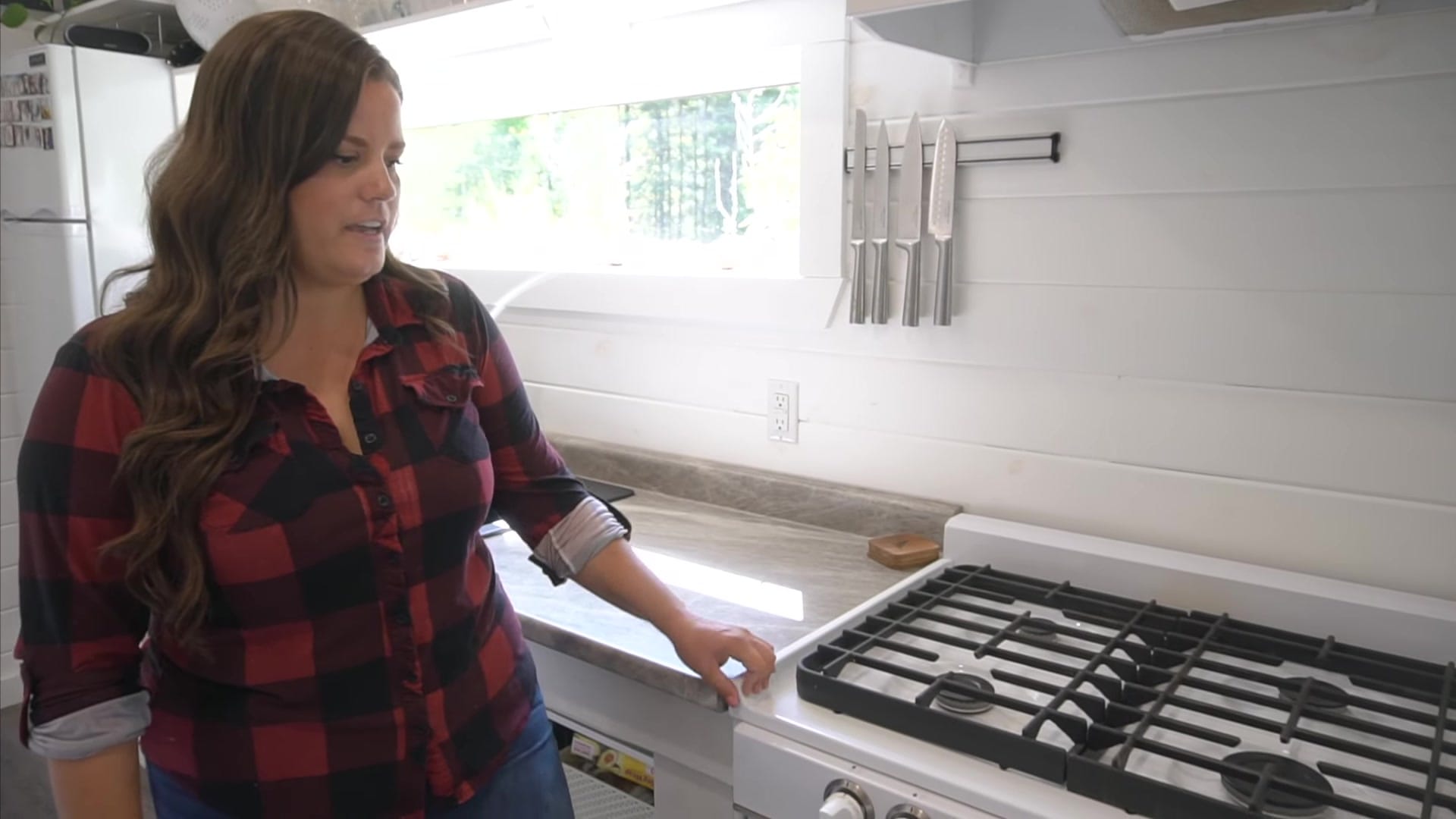
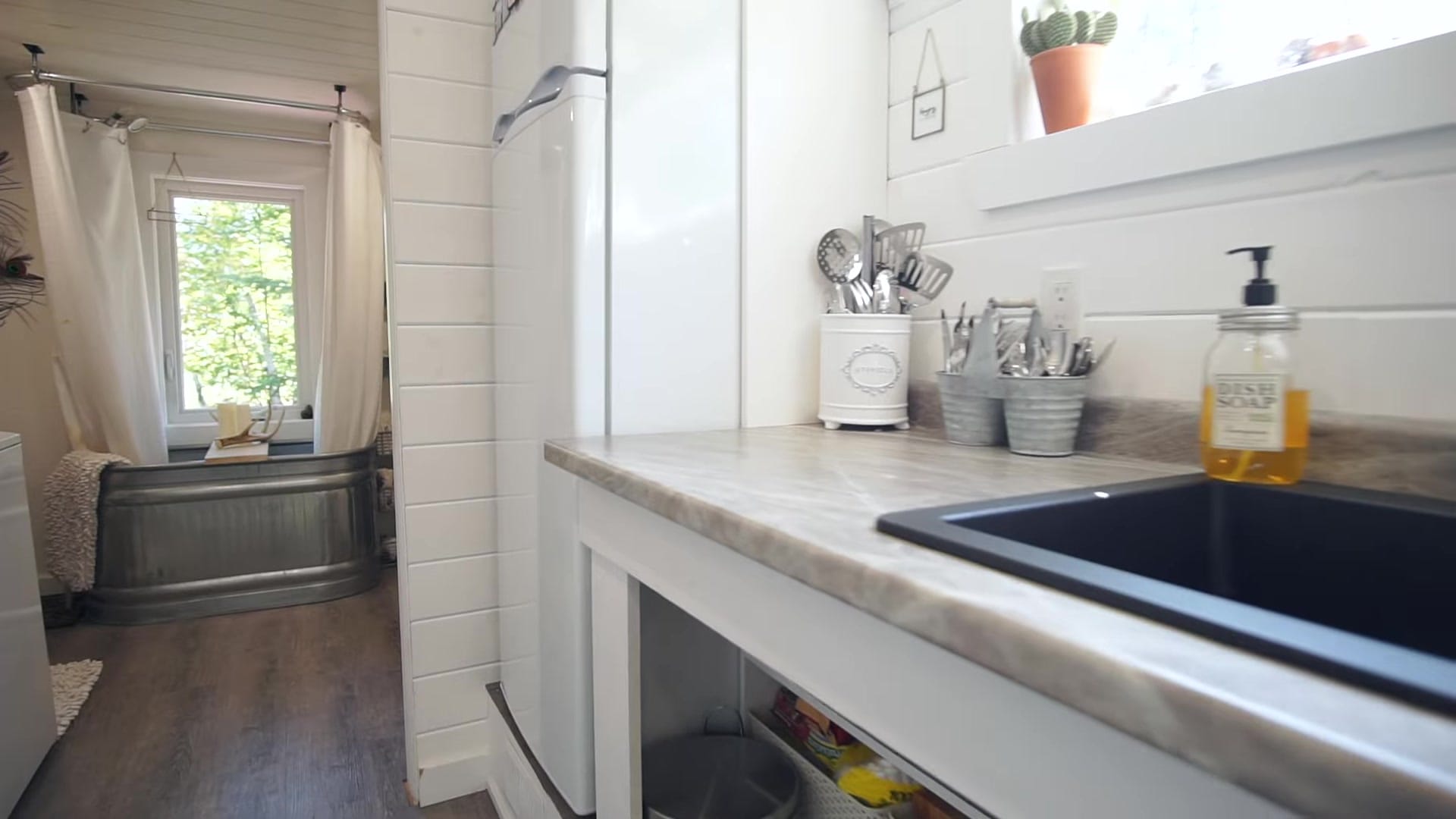
The apartment-size fridge is elevated on a box to clear the wheel well and make the bottom easier to reach.
Living Room & Storage — sofa, hidden storage, guest nook
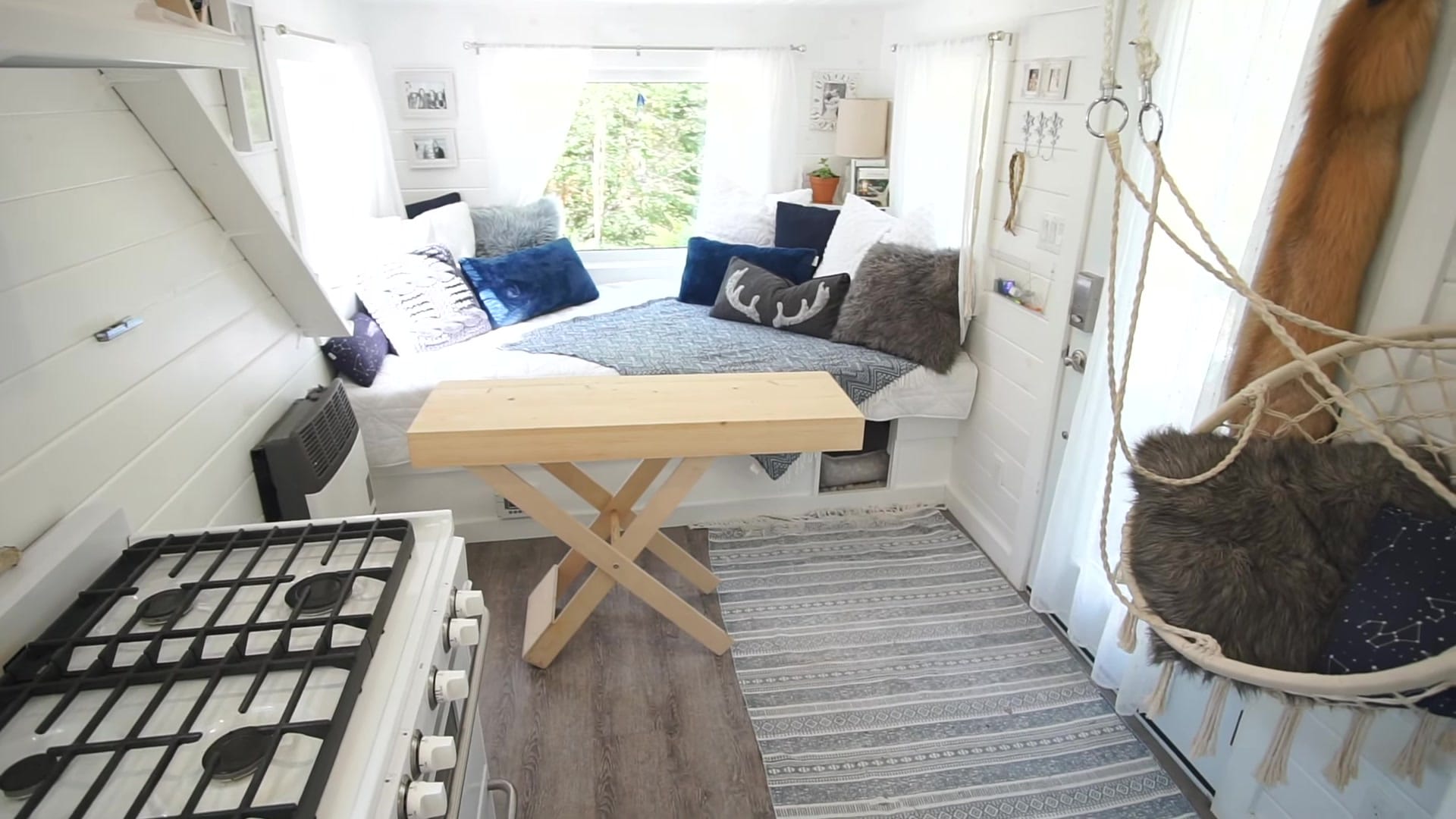
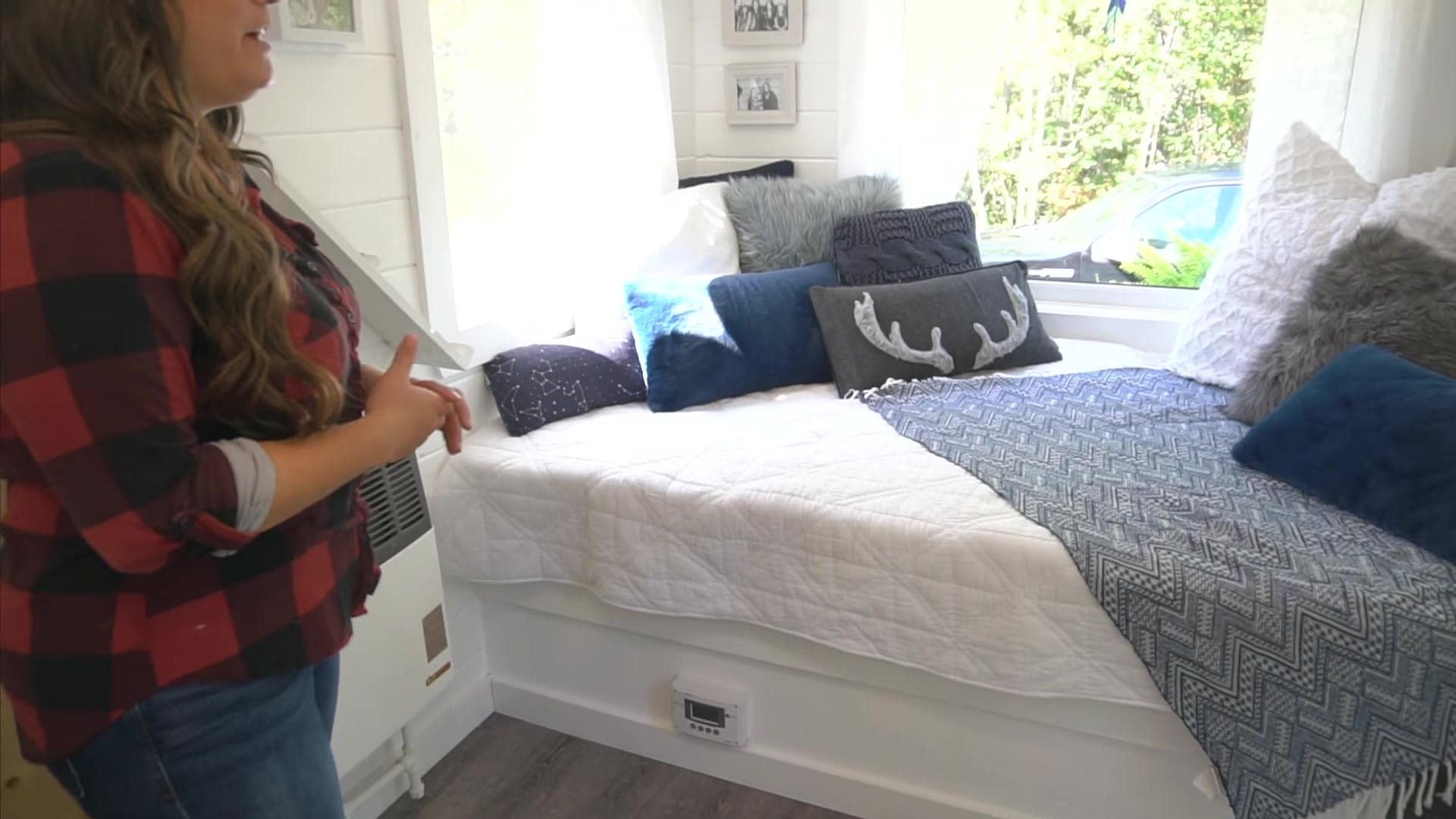
The living area doubles as dining and a spare bedroom when guests come, with loft space used for sleepovers.
The loft sleep space is roughly the size of a twin and can fit about two people when needed.
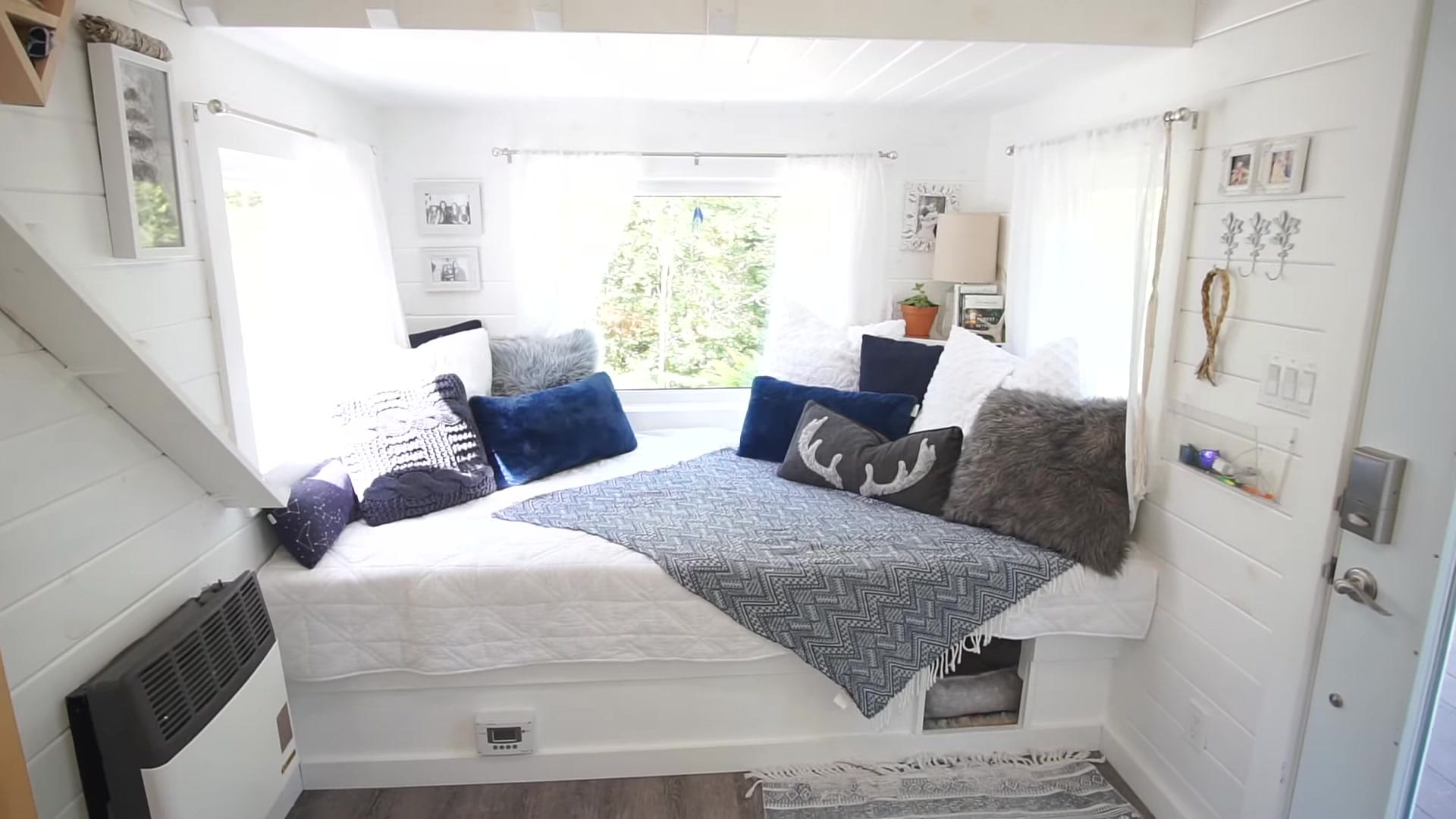
Under the couch there’s hidden storage that holds the electrical panel, the solar inverter, and several totes of seasonal gear.
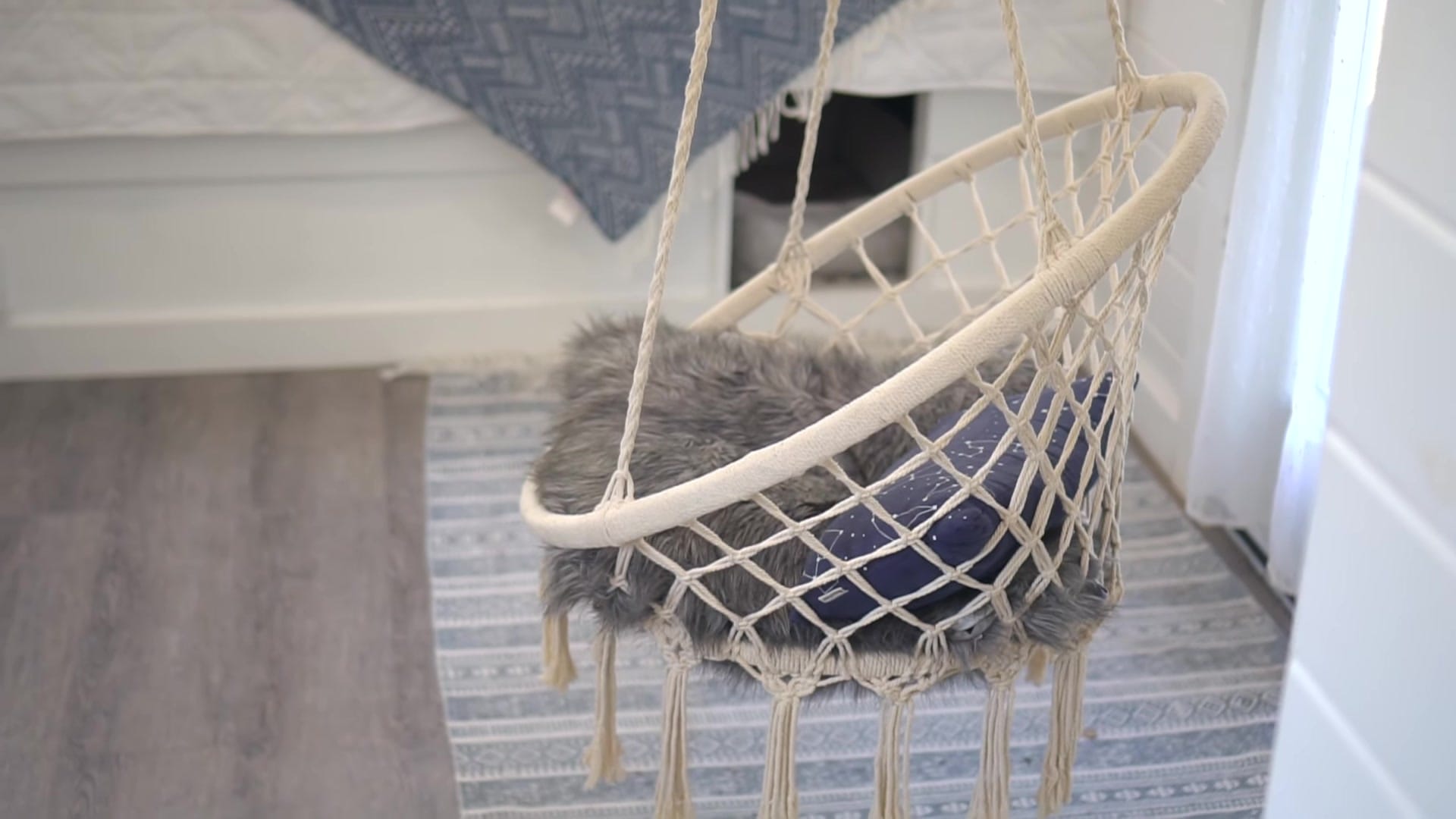
A flea-market hammock swing tucks away into the closet for extra seating when she wants it.
Lofts, Catwalk & Sleeping — ramps, skylights, personal keepsakes
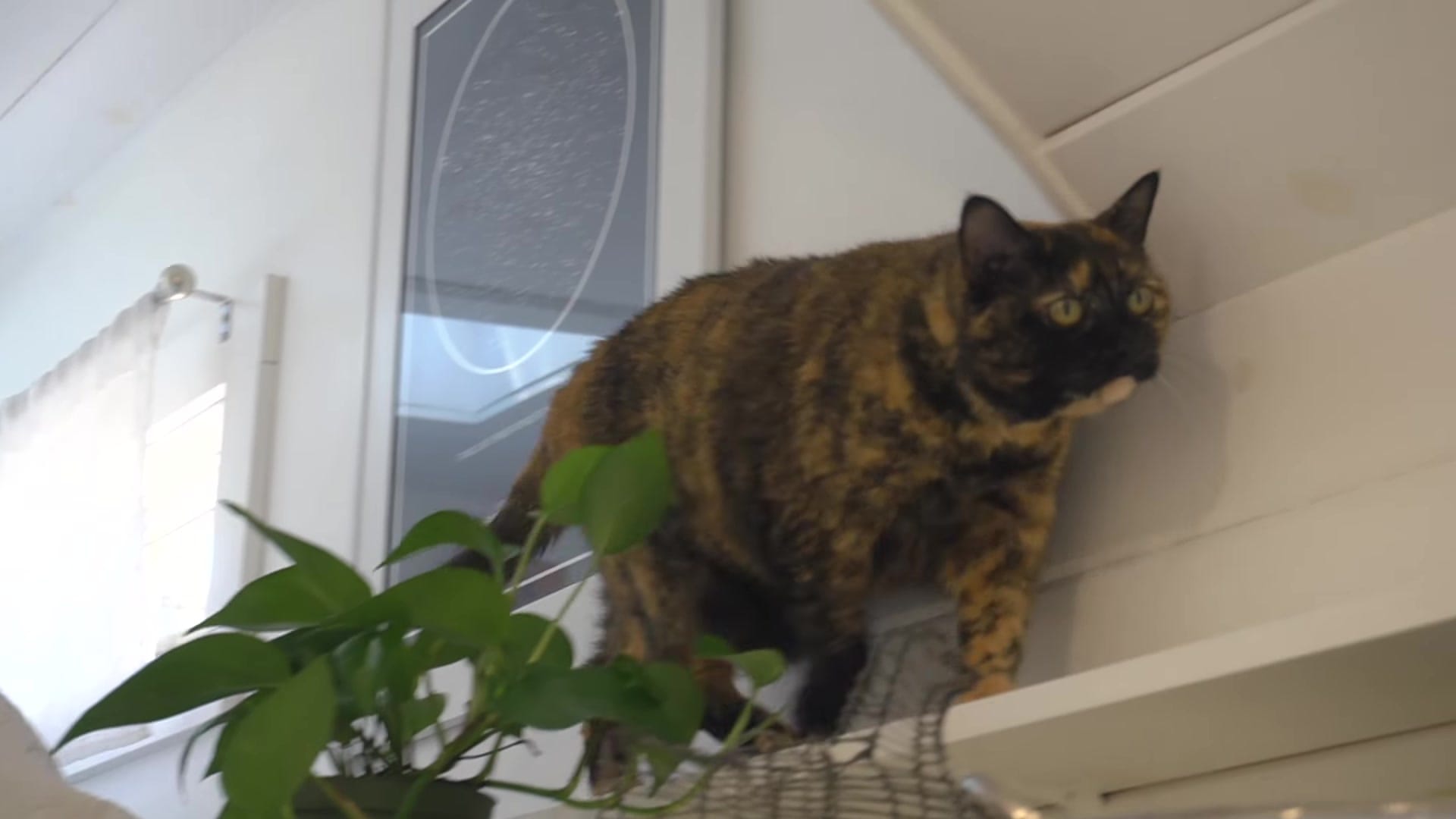
A catwalk and ramp were built so her cat could access the loft easily, complete with a bit of carpet to help the climb.
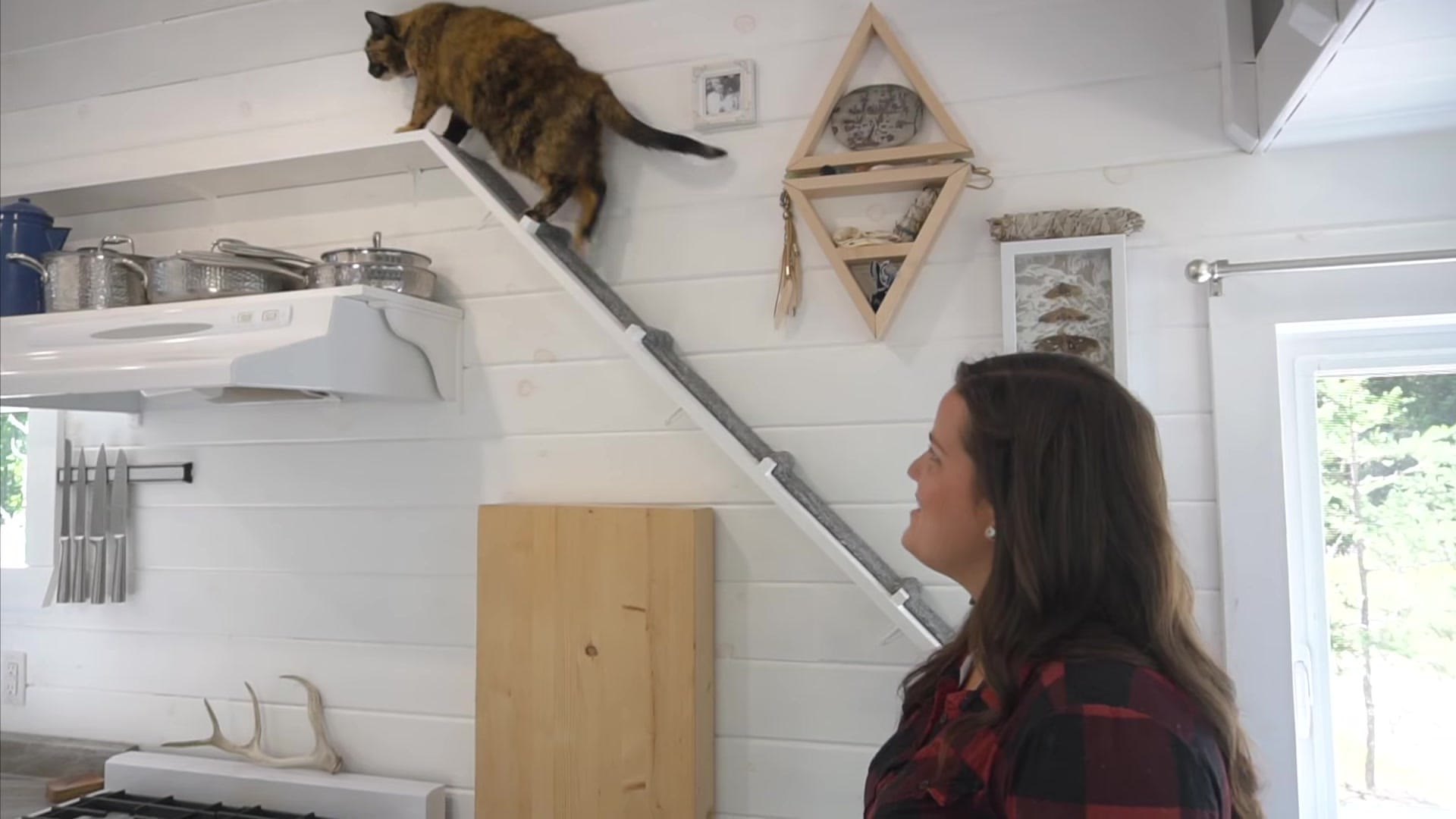
The ramp was added after she found the cat loudly protesting the lack of access, and now the cat goes up and down all day.
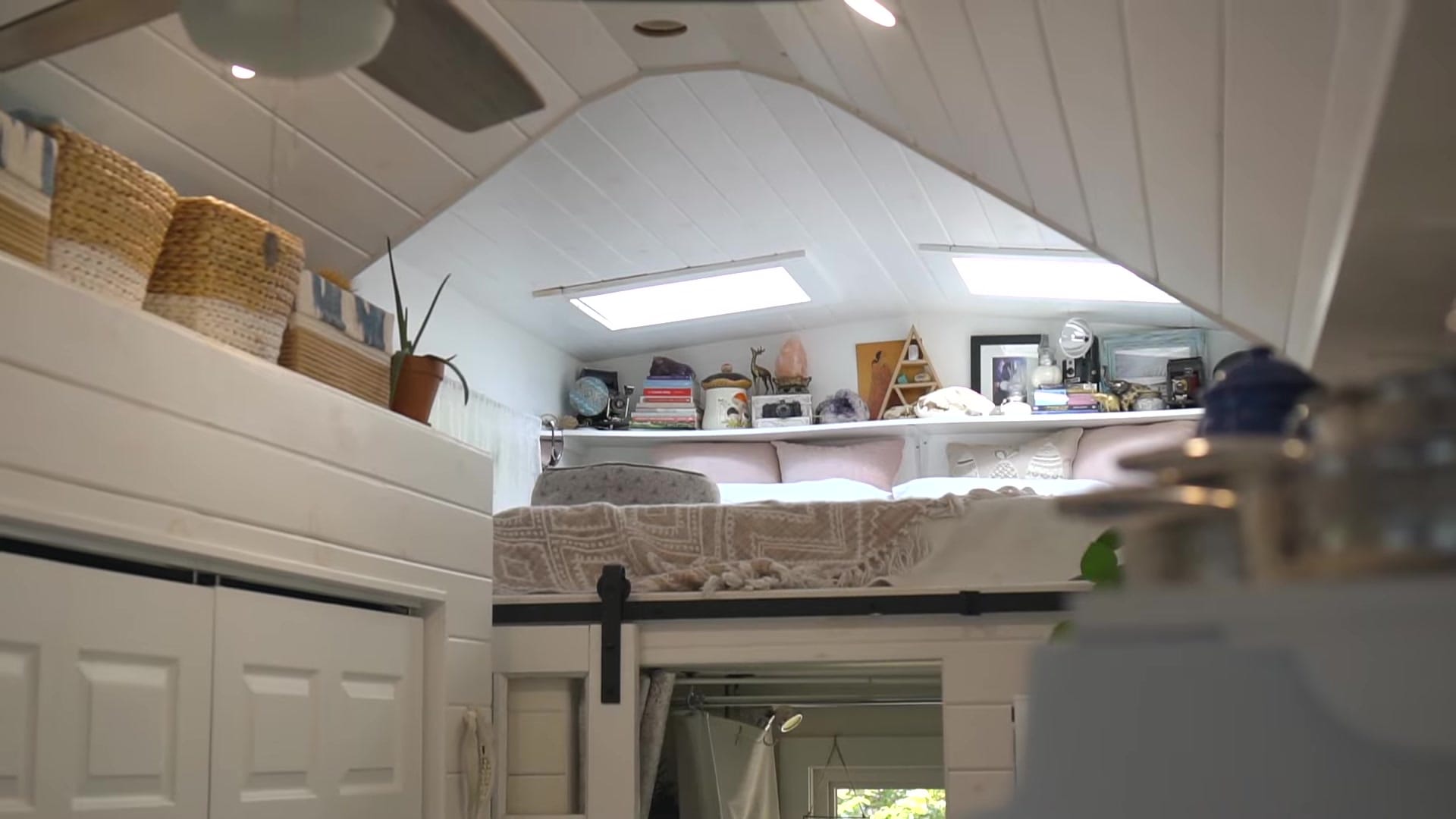
The main sleeping loft uses a thinner foam mattress so she can sit up comfortably and still have headroom.
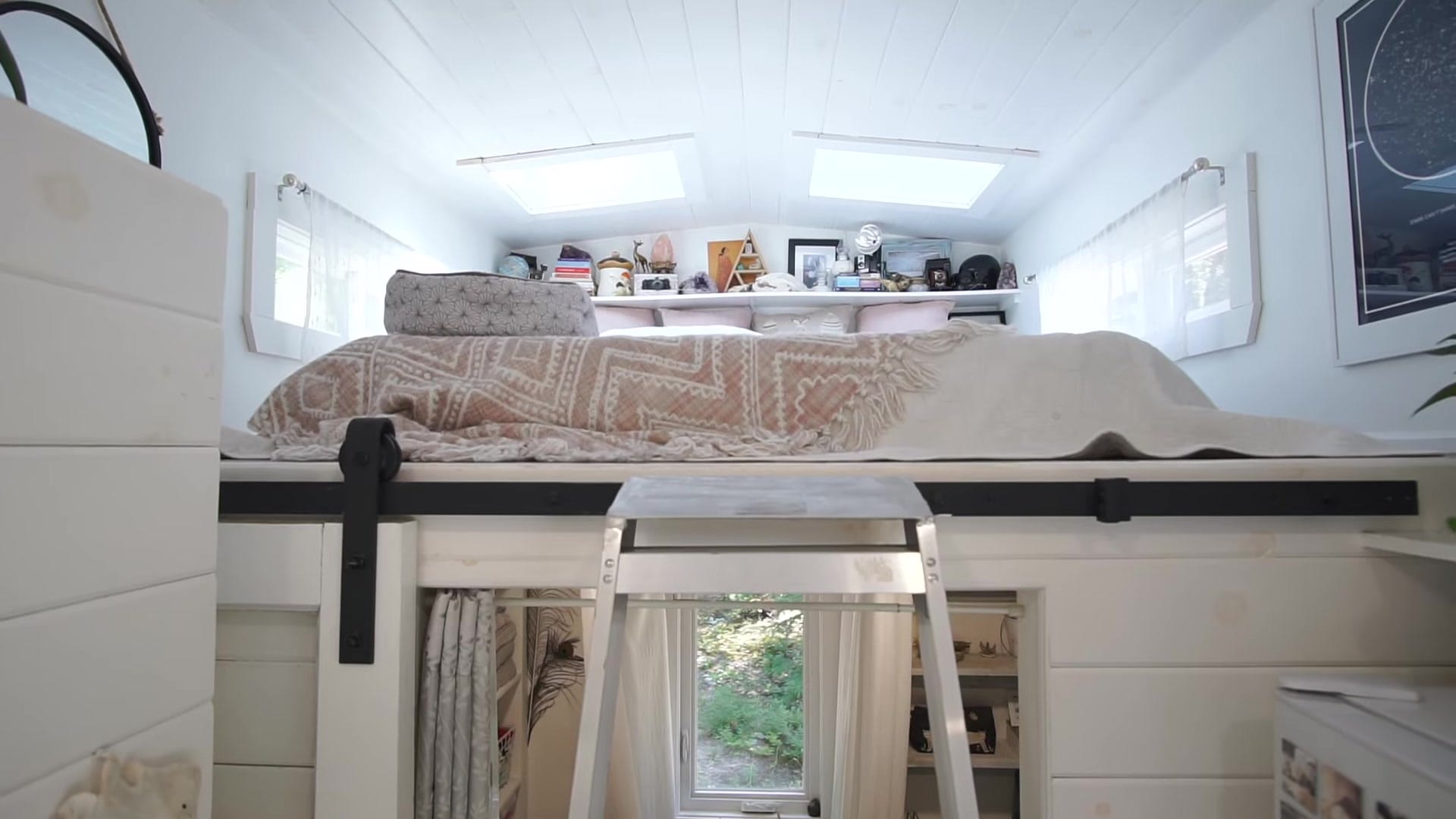
Skylights give star views at night and came with shades to block morning sun when she prefers it.
Bathroom & Laundry — soaker tub, propane washer/dryer, fixtures
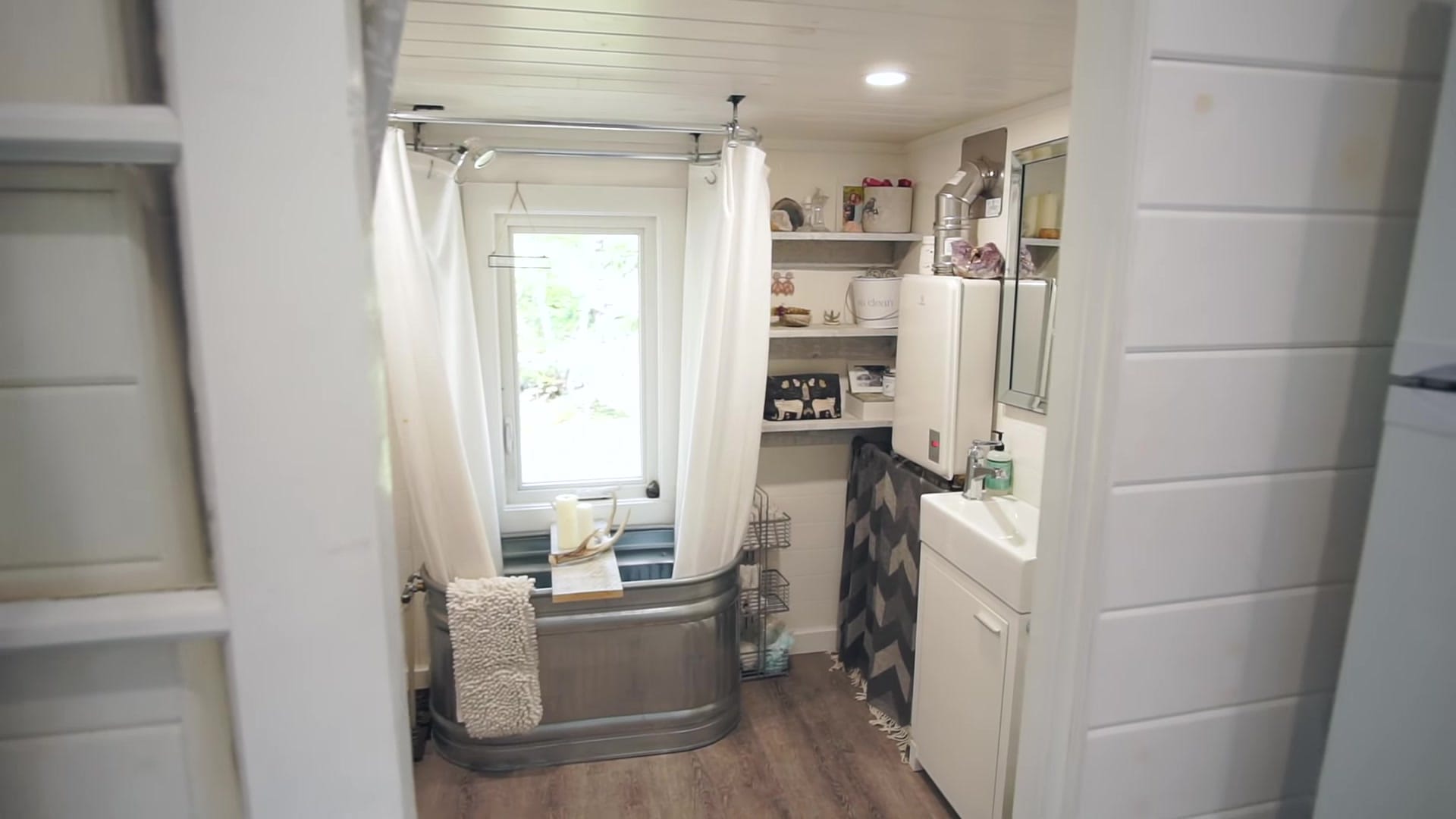
The bathroom is described as a “big tiny house bathroom” with plenty of storage for linens and essentials.
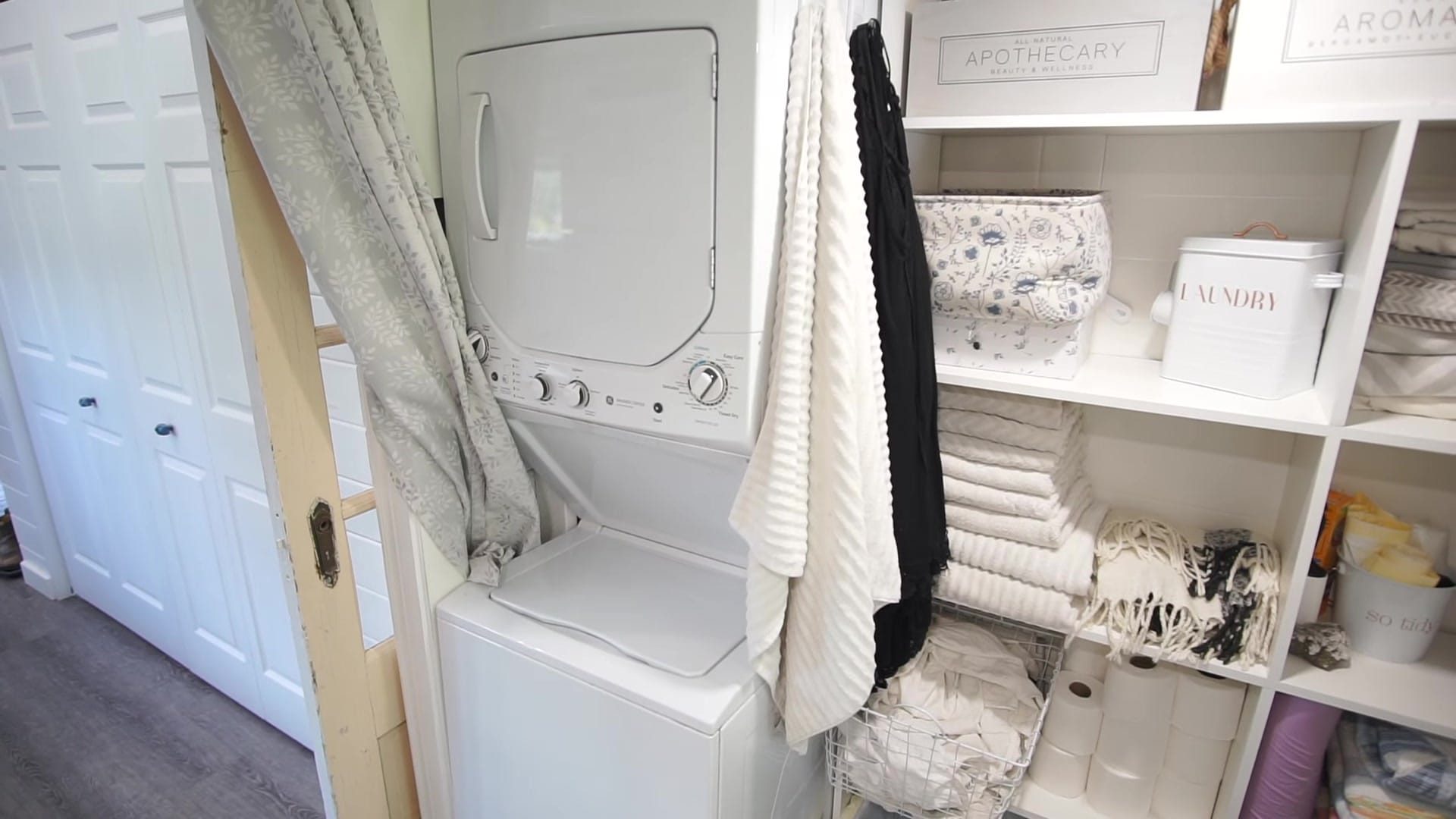
She has a propane washer/dryer that’s full-size enough to do a whole bed set in one load.
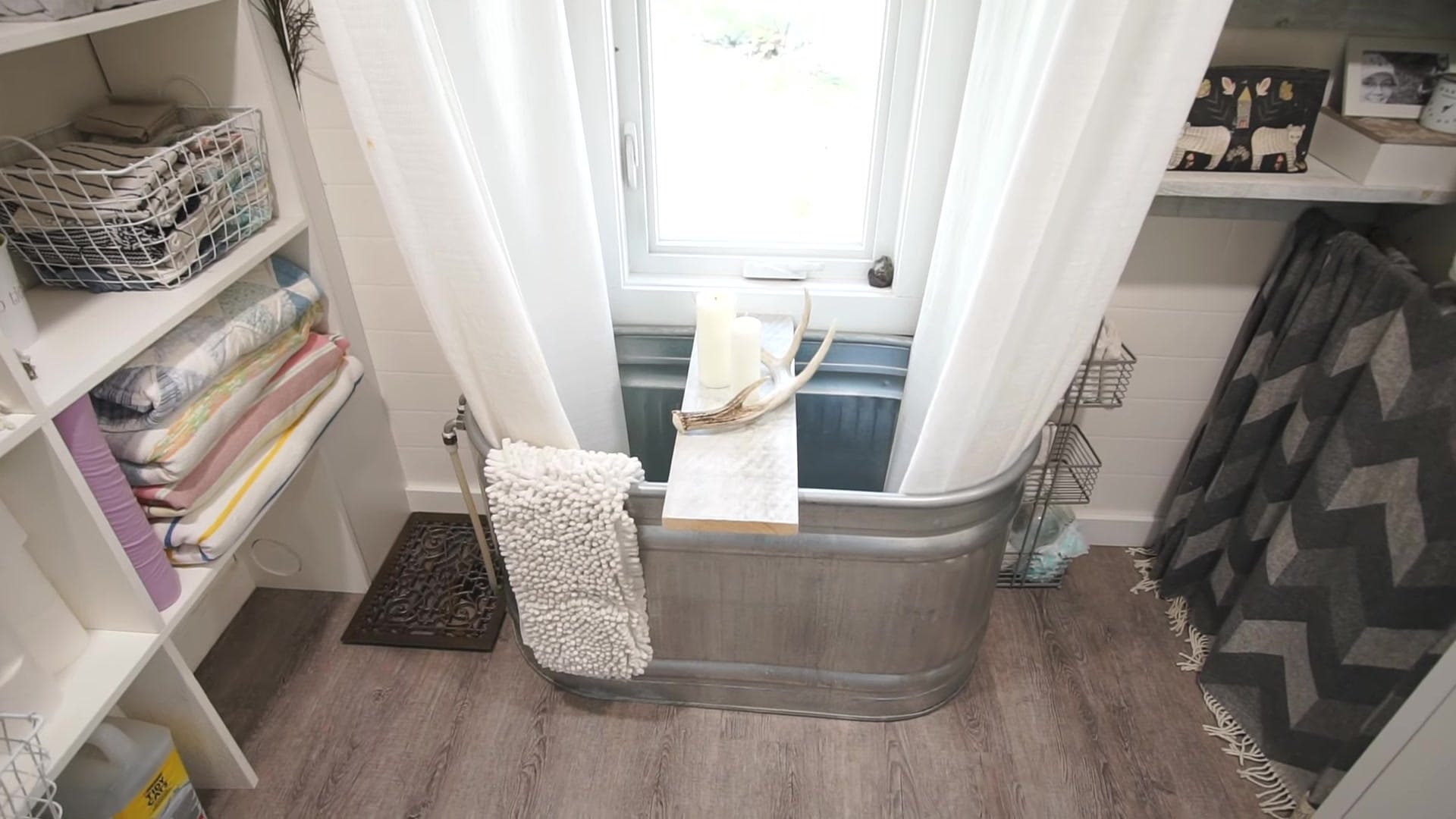
Her compact soaker tub came from a local hardware store — the model used for livestock watering — and she tested it in the store before taking it home.
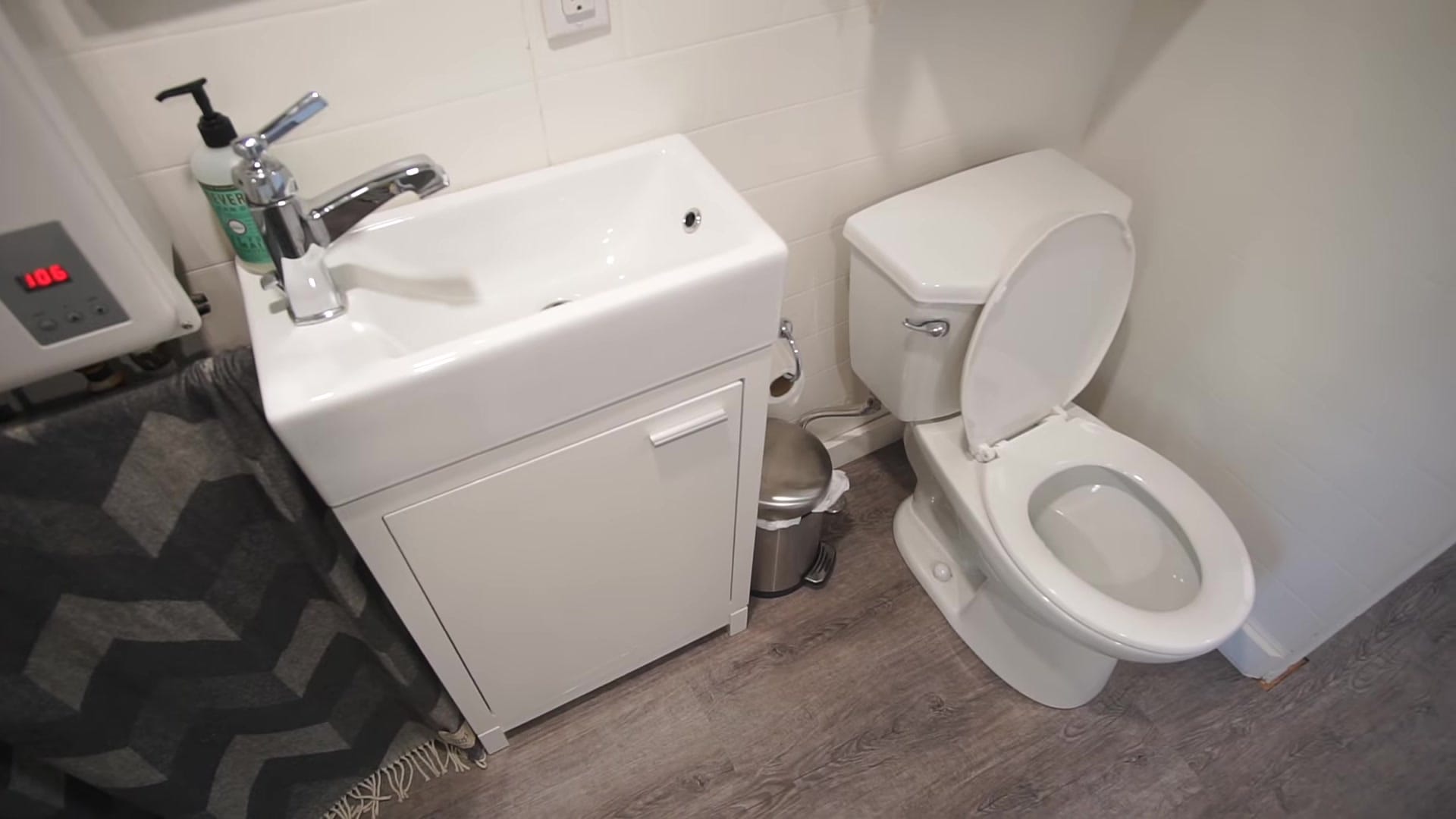
The bathroom includes a flushing toilet and a small sink, so she didn’t need an outhouse setup.
Power, Winter Prep & Why Tiny — solar, generator, propane, lifestyle choice
The solar system is four panels totaling nine hundred and sixty watts, used primarily from April to November.
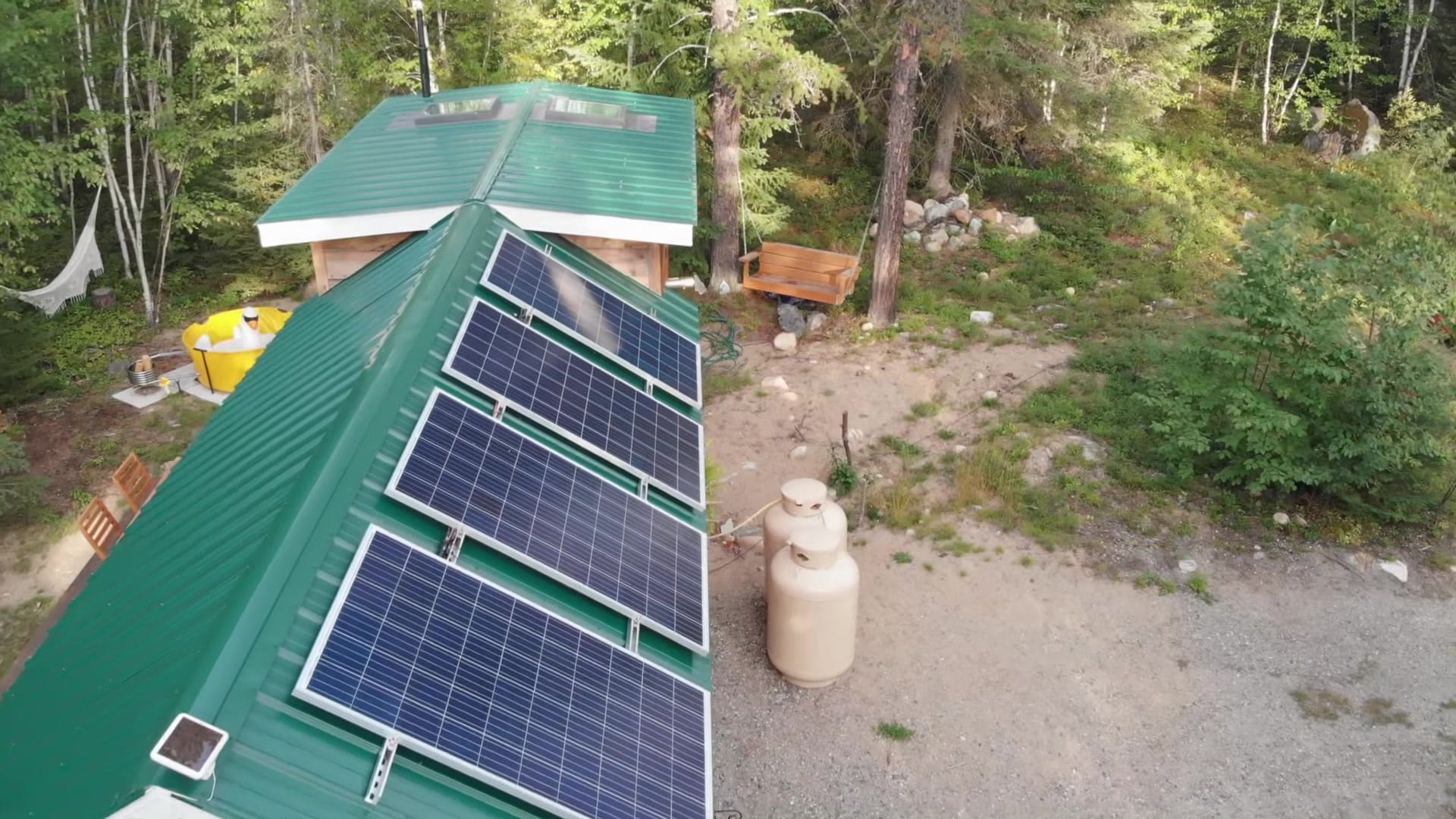
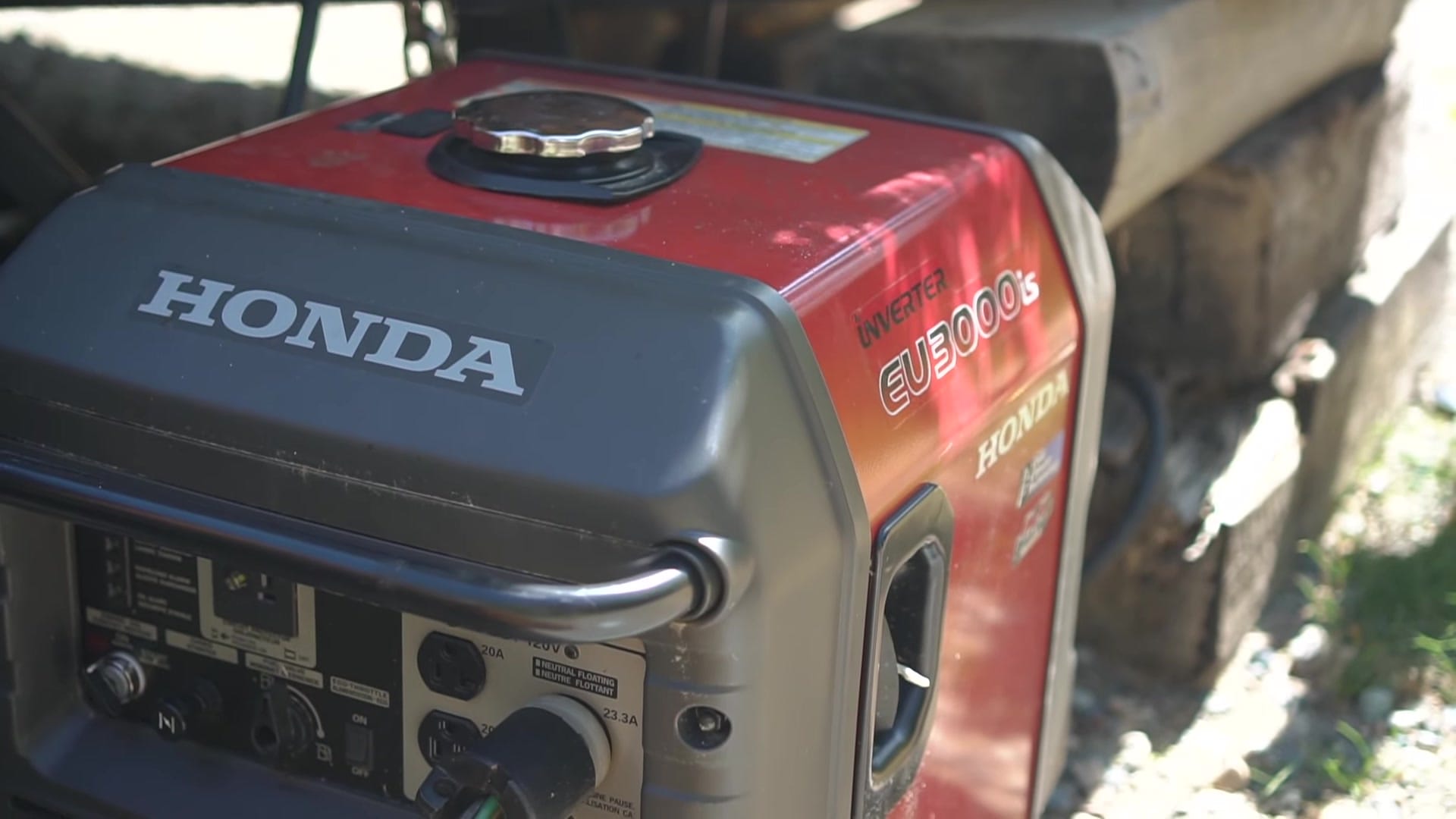
She keeps a 3,000-watt Honda generator as backup and runs it four to six hours a day on winter mornings when needed.
For winter water protection she installed an interior heat-trace line, wrapped it with insulation, boxed it with two-inch foam, and banks snow around the house when needed.
Choosing tiny was a financial and lifestyle decision after a much larger house left her paying big bills and not using the space, so the smaller, mobile home fits her work as a photographer and lowers stress about month-to-month costs.