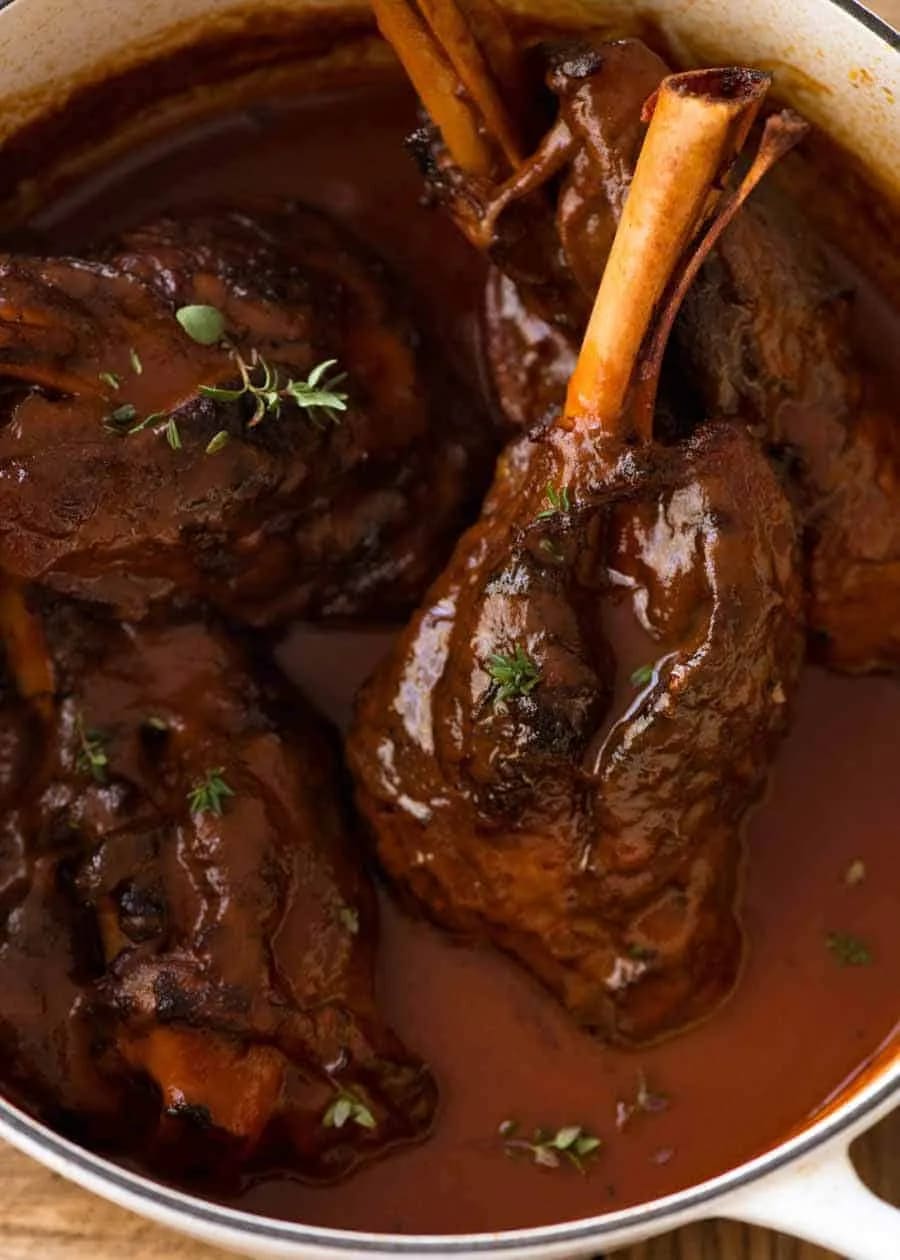
Lamb Shanks in Red Wine Sauce
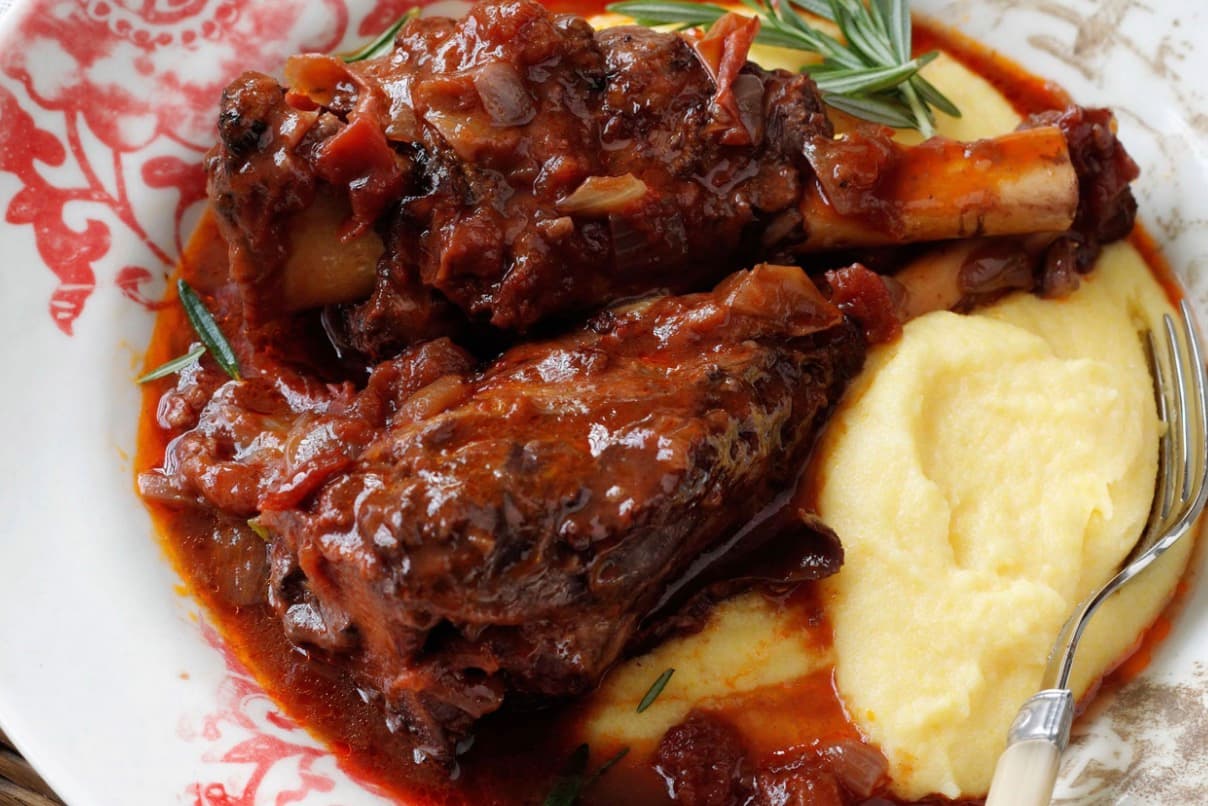
Get ready to fill your house with the most incredible aromas while you create something that’ll make everyone think you’re a culinary genius.
These lamb shanks slowly transform into fall-apart tender perfection while that red wine works its magic, turning into a rich, velvety sauce that’s pure liquid gold.
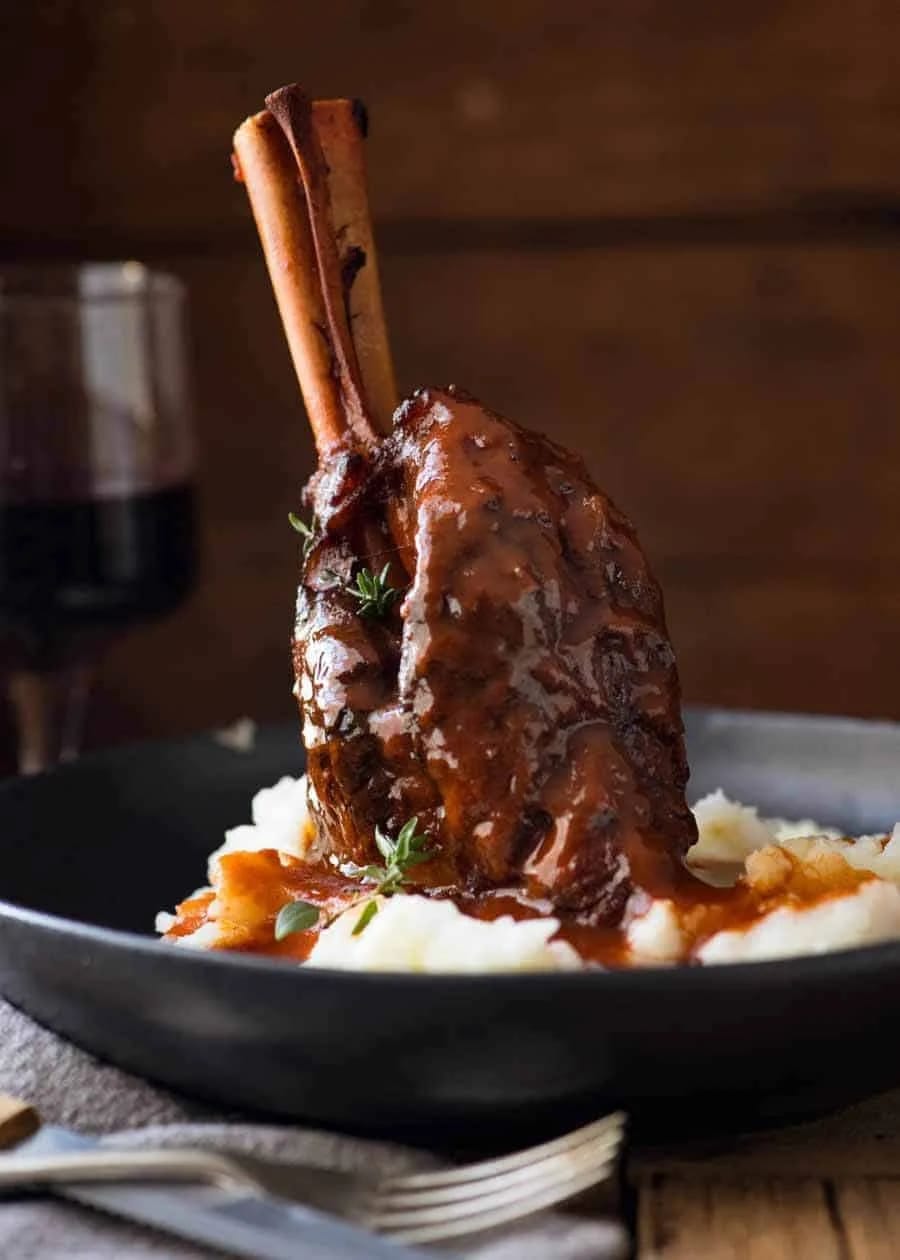
This isn’t just dinner – it’s an experience.
The wine completely disappears into this deeply savory sauce that clings to every bite, while the meat becomes so tender you can cut it with a fork.
Plus, most of the work happens in the oven, so you can relax while it does its thing.

Ingredients
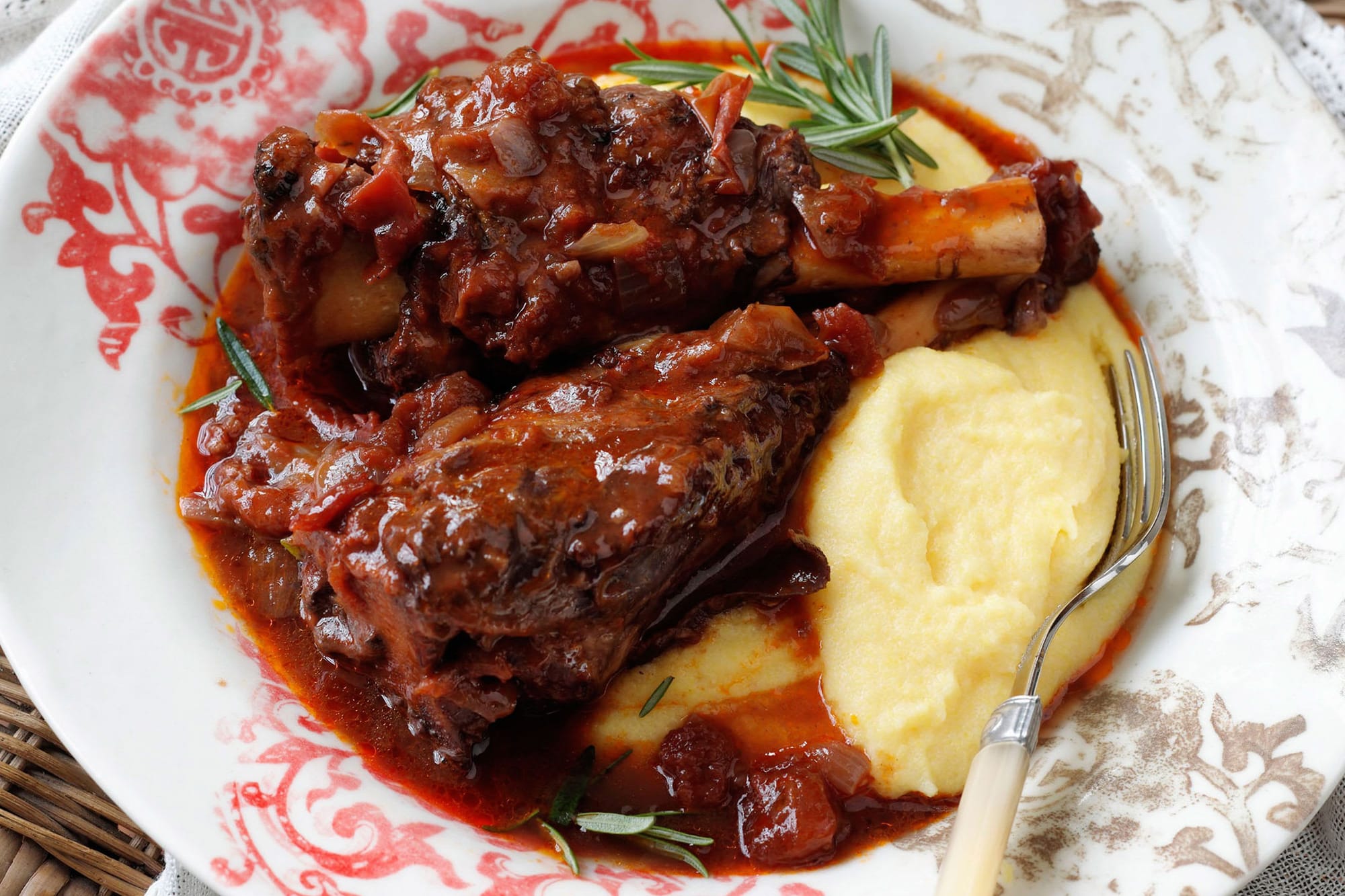
For the lamb:
- 4 lamb shanks, around 13 oz (400g) each
- 1 tsp each cooking salt and black pepper
- 2-3 tbsp olive oil, separated
For the braising base:
- 1 onion, finely diced (brown, yellow or white)
- 3 garlic cloves, minced
- 1 cup carrot, peeled and finely diced
- 1 cup celery, finely diced
For the braising liquid:
- 2½ cups red wine (full-bodied, good value wine)
- 800g (28oz) can crushed tomatoes
- 2 tbsp tomato paste
- 2 cups low-sodium chicken stock (or water)
- 5 sprigs fresh thyme (tied together) or 2 tsp dried thyme
- 2 dried bay leaves (or 4 fresh)
To serve:
- Mashed potato, polenta, or pureed cauliflower
- Fresh thyme leaves for garnish (optional)

Steps
- Preheat your oven to 350°F (180°C) – this works for both fan and standard ovens. Use a large, heavy-based pot that can go from stovetop to oven (like a Dutch oven).
- Pat the lamb shanks completely dry with paper towels, then season generously with 1 tsp each of salt and pepper. This dry surface is crucial for getting that beautiful golden-brown sear that adds tons of flavor.
- Heat 2 tablespoons of olive oil in your heavy pot over high heat until it’s shimmering but not smoking. Sear the lamb shanks in 2 batches to avoid overcrowding, turning them to brown all sides evenly – this takes about 5 minutes total per batch. You want deep golden-brown color, not just light browning. Remove to a plate and drain any excess fat from the pot.
- Turn heat down to medium-low and add the remaining 1 tablespoon of olive oil to the same pot. Add the diced onion and minced garlic, cooking for 2 minutes until fragrant. The residual heat and fond (those brown bits) will prevent burning while building flavor.
- Add the diced carrots and celery to the pot. Cook for 5 minutes, stirring occasionally, until the onion becomes translucent and starts smelling sweet. This vegetable base (called mirepoix) is the flavor foundation of your sauce.
- Pour in the 2½ cups of red wine, 2 cups of chicken stock, crushed tomatoes, and 2 tablespoons of tomato paste. Add the thyme sprigs and bay leaves, then stir everything together until the tomato paste is fully dissolved. The mixture should look rich and deep red.
- Nestle the browned lamb shanks back into the pot, squeezing them in so they fit snugly and are mostly submerged in the liquid. It’s okay if the tops peek out slightly – they’ll cook perfectly.
- Bring the liquid to a simmer on the stovetop (you’ll see gentle bubbling), then cover tightly with a lid and transfer to the preheated oven for 2 hours. The low, steady heat will slowly break down the tough connective tissue.
- After 2 hours, remove the lid and return to the oven uncovered for another 30 minutes (that’s 2½ hours total). Test for doneness by gently pressing the meat with a fork – it should be incredibly tender but still just holding onto the bone, not falling apart completely.
- Carefully remove the lamb shanks to a plate and keep them warm (tent with foil). Pick out and discard the bay leaves and thyme sprigs from the cooking liquid.
- Strain the rich cooking liquid through a fine-mesh sieve into a bowl, pressing the cooked vegetables with the back of a spoon to extract every drop of flavorful sauce. Pour this strained sauce back into your pot.
- If needed, bring the sauce to a gentle simmer over medium heat and reduce it slightly until it coats the back of a spoon with a syrupy consistency – though this is rarely necessary. Taste and adjust seasoning with salt and pepper. The sauce should be rich, balanced, and deeply savory with no harsh wine taste remaining.
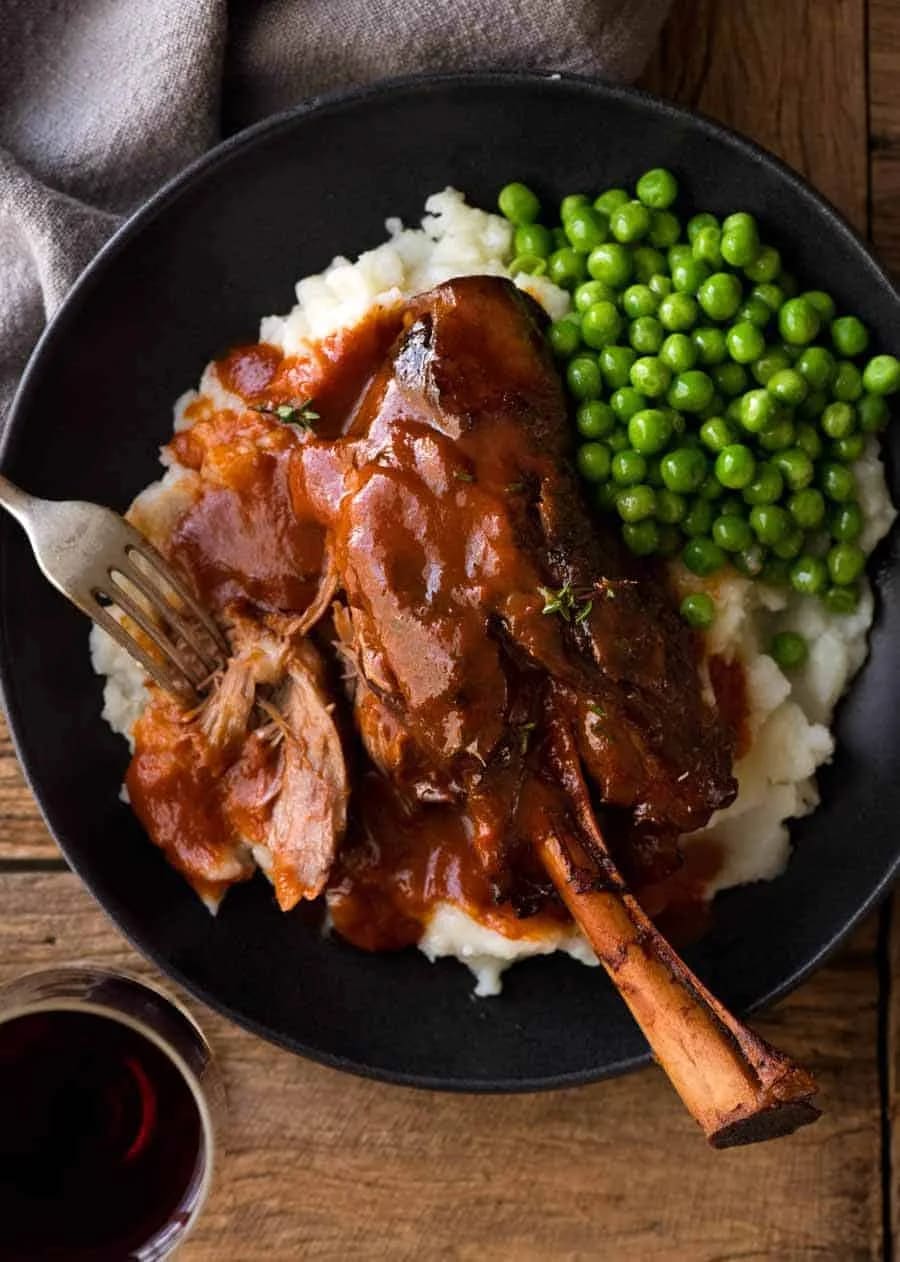
- Serve each lamb shank over a generous mound of mashed potatoes, polenta, or cauliflower puree, then ladle plenty of that gorgeous sauce over everything. Garnish with fresh thyme leaves if you’re feeling fancy.
Smart Swaps
- Beef short ribs instead of lamb shanks (same cooking method and time)
- White wine plus extra stock if you prefer lighter flavors
- Root vegetables like parsnips or turnips instead of carrots for earthier notes
Make It Diabetes-Friendly
Replace traditional mashed potatoes with cauliflower puree to reduce carbs from about 30g to 8g per serving. Use 2 lbs cauliflower florets steamed and pureed with 2 tbsp butter and ¼ cup low-sodium broth. The lamb and sauce are naturally low-carb at only 6g carbs per serving. Pair with a small green salad to add fiber and further slow glucose absorption. Consider serving smaller portions (3oz meat instead of full shank) if managing portions strictly.
Pro Tips
- Don’t skip the browning step – those caramelized bits create the sauce’s deep flavor foundation
- Save the strained vegetables to puree into soups later – they’re packed with flavor