Filipino Pork Adobo
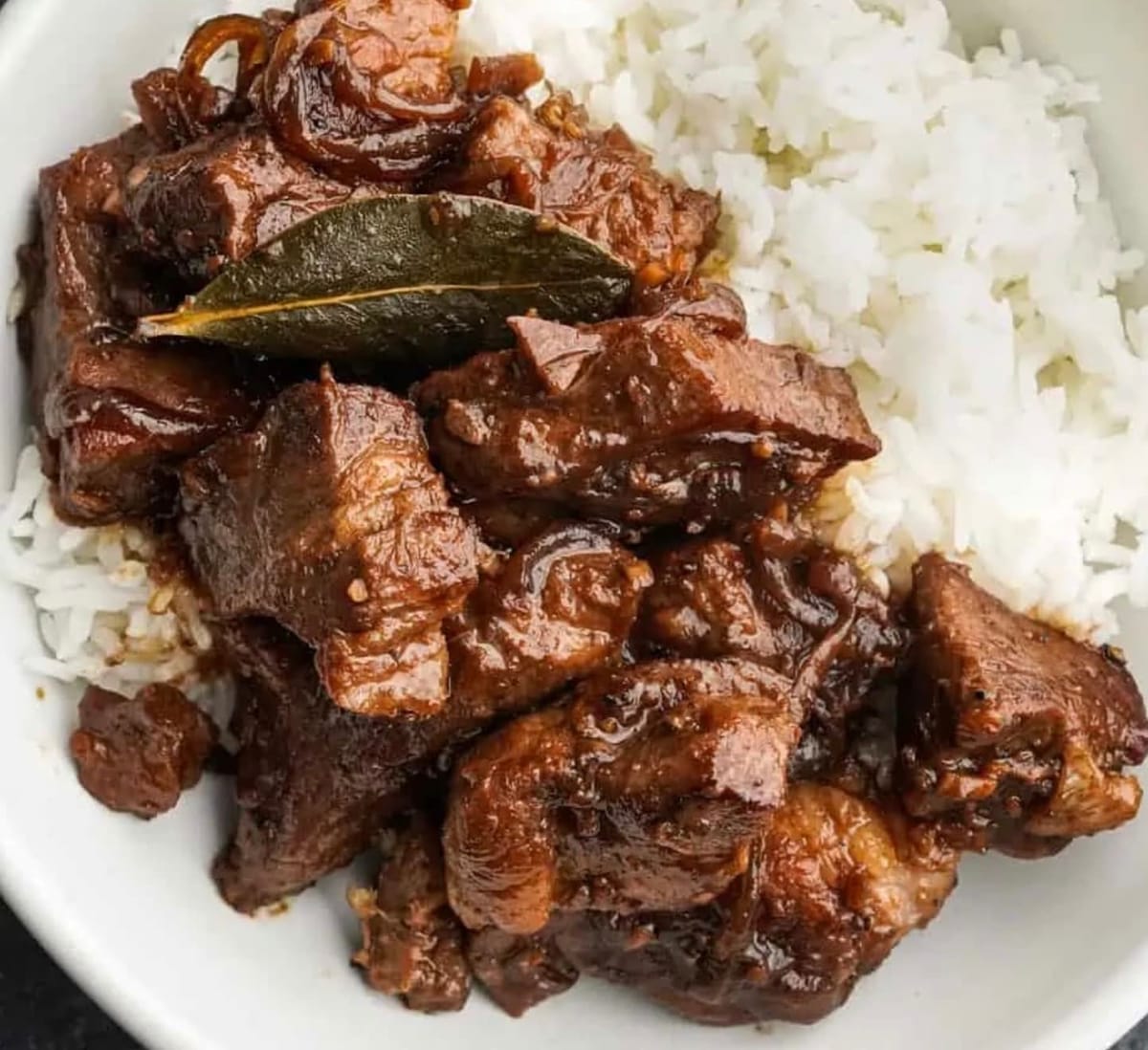
Get ready to fall head-over-heels for the most addictive dish in Filipino cuisine!
This pork adobo isn’t just dinner – it’s a masterclass in how vinegar, soy sauce, and garlic can transform humble pork shoulder into something absolutely magical.
Fair warning: your kitchen is about to smell so incredible that neighbors might start showing up at your door.
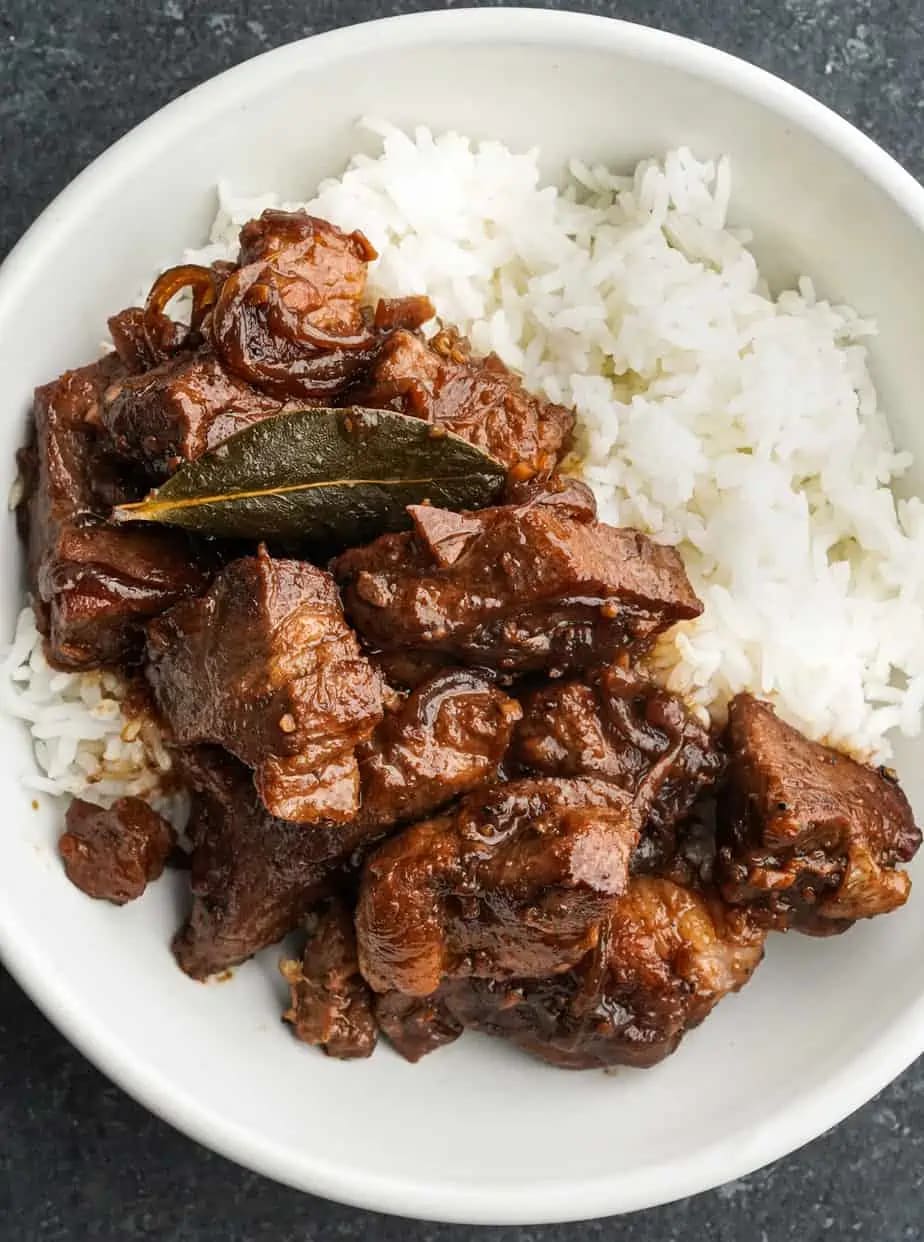
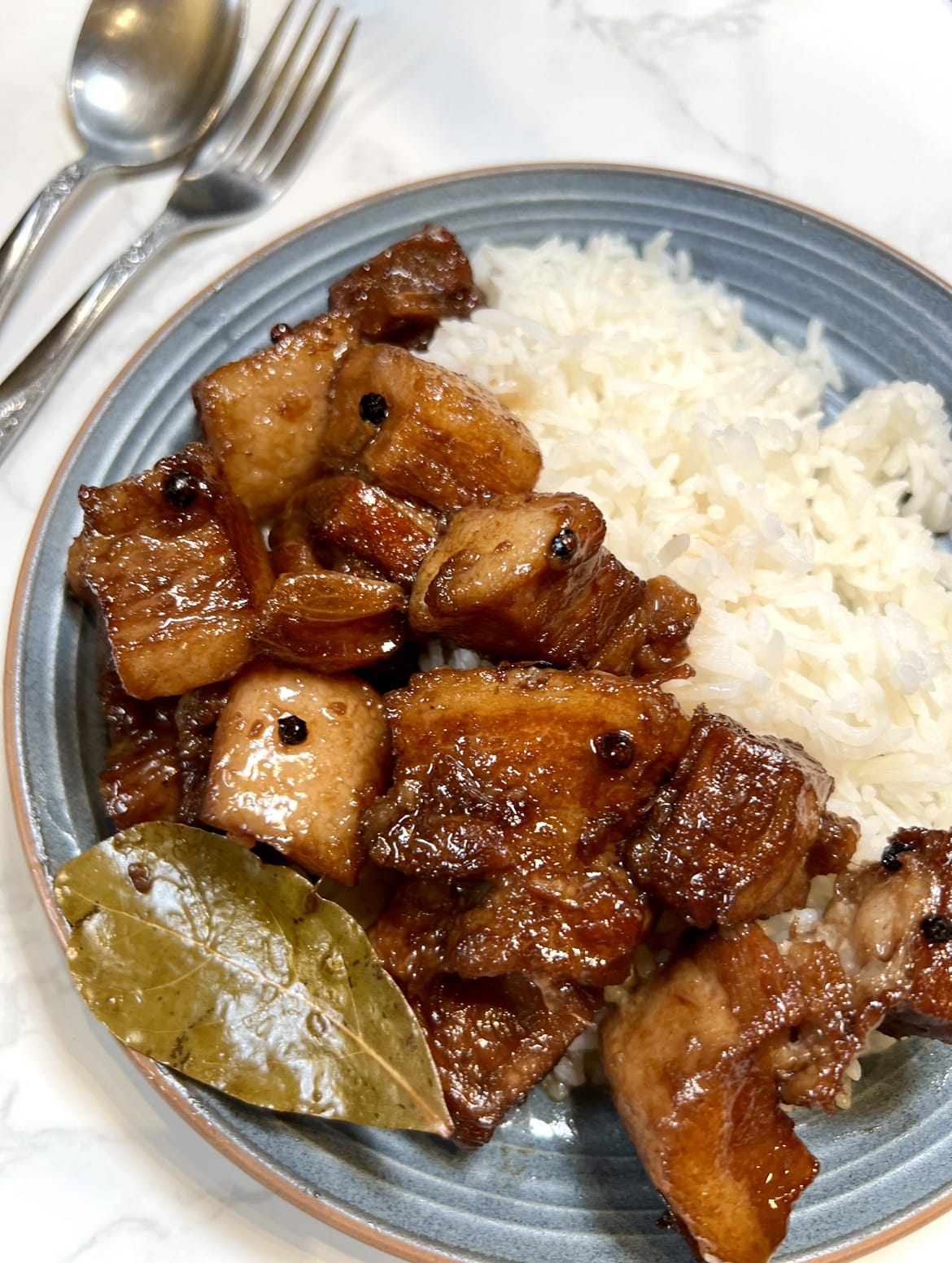
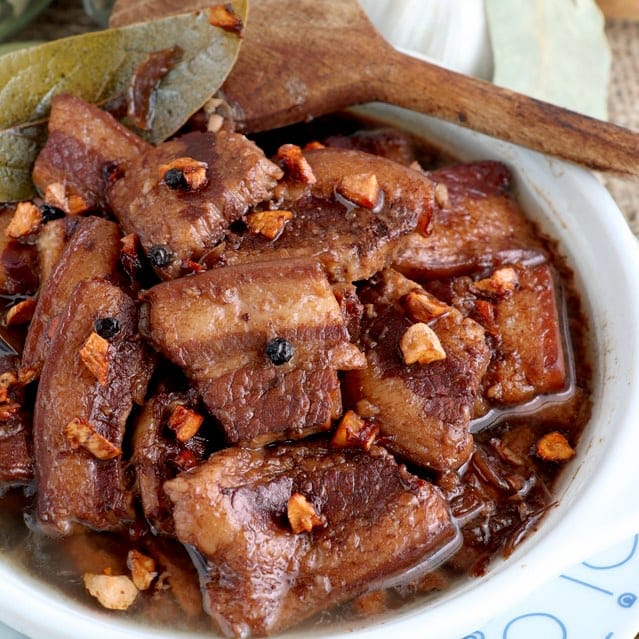
That glossy, dark brown sauce clinging to tender chunks of pork?
Pure perfection.
The tangy-salty-slightly sweet flavor profile hits every single taste bud in the best possible way.
This is comfort food that actually comforts, the kind of dish that makes you close your eyes on the first bite and just savor the moment.

Ingredients
2 pounds pork shoulder, cut into 2-inch chunks
2 tablespoons avocado oil
8 cloves garlic, minced
1 medium onion, halved and sliced
¼ cup + 1½ teaspoons soy sauce, Silver Swan Lauriat brand
1 teaspoon ground pepper
¼ teaspoon black peppercorns
2 teaspoons brown sugar
3 bay leaves
½ cup cane vinegar, Datu Puti brand
1¼ cups water
Steps
- Remove pork from the refrigerator 45 minutes before cooking. This brings the meat to room temperature, ensuring even cooking throughout and preventing the exterior from overcooking while the center stays cold. Pat the pork chunks completely dry with paper towels – moisture is the enemy of good browning.
- Add oil to a hot skillet over medium-high flame. Add pork and cook until browned on all sides, 15-20 minutes. Don’t overcrowd the pan – work in batches if needed. You’re looking for a deep golden-brown crust that develops the foundational flavor for your adobo. The pork should sizzle immediately when it hits the oil; if it doesn’t, your pan isn’t hot enough.
- Lower heat to medium and add onion, cooking for 4 minutes until softened and translucent. Then add garlic and cook for an additional 2 minutes until fragrant but not browned. The garlic should smell aromatic and nutty – if it starts turning brown, reduce the heat immediately to prevent bitterness.
- Add soy sauce, pepper, peppercorns, sugar, and bay leaves, stirring until well-mixed and the pork is evenly coated. Add vinegar but DO NOT MIX – this is crucial for proper adobo technique. Cover the skillet with a lid and wait until contents reach a rolling boil before stirring. This allows the vinegar’s harsh acidity to cook off properly.
- Once the liquid reaches a boil (you’ll hear vigorous bubbling), gently stir and add water. Cover with lid again and reduce heat to maintain a gentle simmer. Cook for 1 hour 15 minutes or until the pork is fork-tender and easily shreds. Stir every 10-15 minutes to prevent sticking and ensure even cooking. The liquid should be gently bubbling, not rapidly boiling.
- Remove the lid and cook for 15 minutes to reduce the sauce, stirring occasionally. If the sauce has already reduced to a glossy consistency and the meat is fork-tender, you can skip this step. The finished adobo should have a deep, dark brown color and taste perfectly balanced – tangy from the vinegar, salty from the soy sauce, with just a hint of sweetness.
- Serve immediately over steamed jasmine rice, spooning the rich sauce generously over both the pork and rice. The sauce is liquid gold – don’t waste a drop!
Smart Swaps
- Coconut aminos instead of soy sauce (1:1 ratio) – reduces sodium while adding subtle sweetness
- Apple cider vinegar instead of cane vinegar – slightly milder tang with fruity notes
- Pork belly instead of pork shoulder – richer, more indulgent with extra fat for flavor
Make It Diabetes-Friendly
Replace the 2 teaspoons brown sugar with 1 teaspoon monk fruit sweetener to eliminate 8g carbs per batch (approximately 2.5g carbs per serving). Use low-sodium soy sauce to reduce sodium by 40%. Serve over cauliflower rice instead of jasmine rice to cut carbs from 45g to 5g per serving. The vinegar actually helps lower the glycemic impact of any remaining carbs. Consider eating smaller portions (4-5 oz pork instead of 6-8 oz) paired with extra non-starchy vegetables to maintain stable blood sugar levels.
Pro Tips
- Use pork shoulder over pork loin – the extra fat content keeps the meat incredibly tender during the long braising process
- Don’t skip the room temperature step – cold meat creates uneven cooking and tough texture
- Datu Puti vinegar and Silver Swan soy sauce are worth seeking out at Asian markets for authentic flavor