Family of Seven Said Goodbye To Their Jobs And Built This Tiny Home For 125K
Most people saw a family of seven shrinking from 2,400 square feet to under 1,000 and thought, “Why?” They traded walls for wild land and found out they weren’t downsizing at all. On 35 acres, they got closer, lighter, and freer—on purpose.
Entry, Mudroom & Laundry — The Drop Zone That Makes Country Life Work
The door opens into function, not fuss. Dirt drops where it belongs, in a mudroom built to catch country life. The layout stacks mudroom, laundry, then the kids’ bunk room in a straight shot.
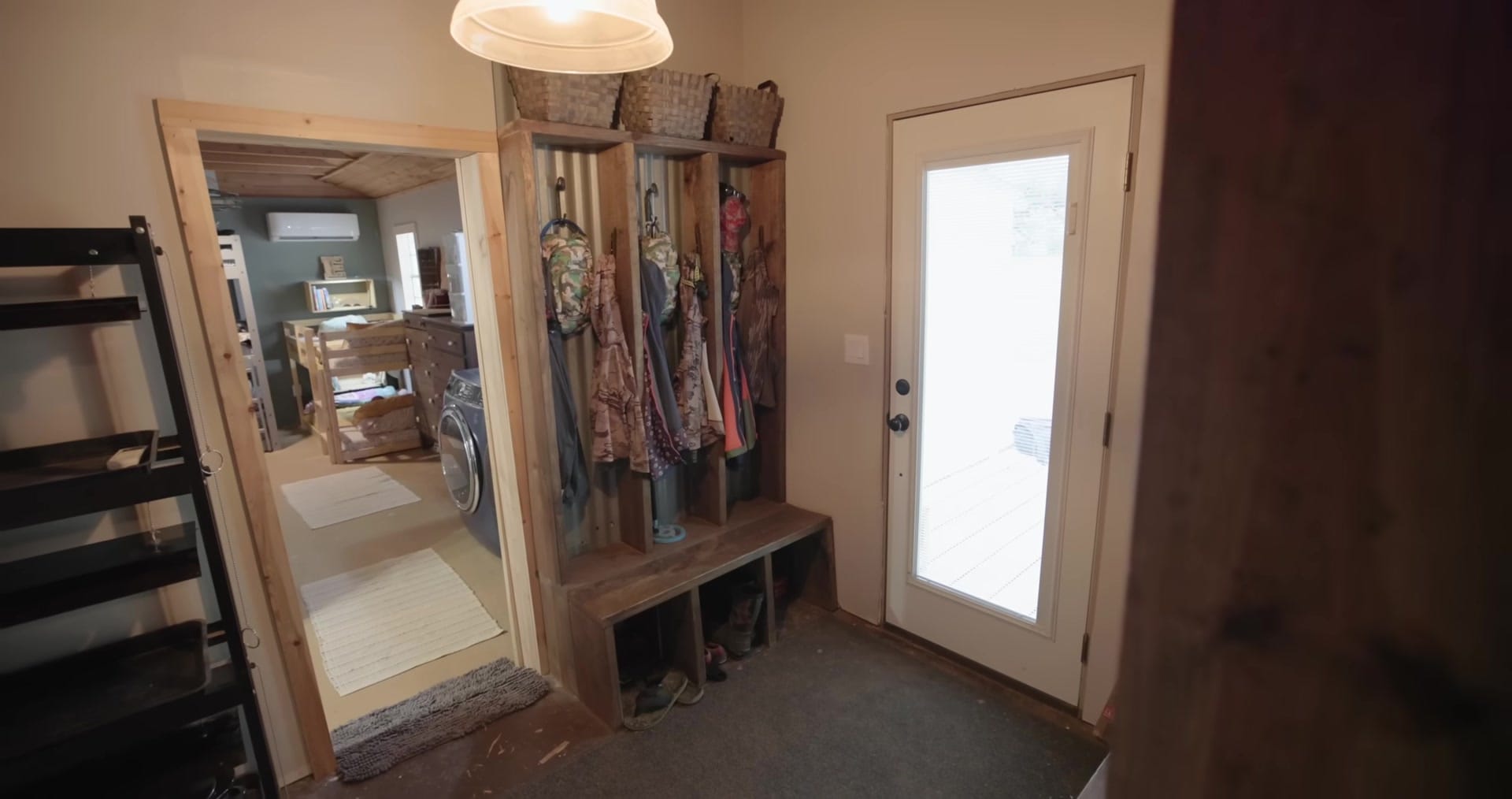
Coats, backpacks, and boots each have a home, so exits happen fast. Every person gets a spot and a shoe cubby so grab-and-go actually works.
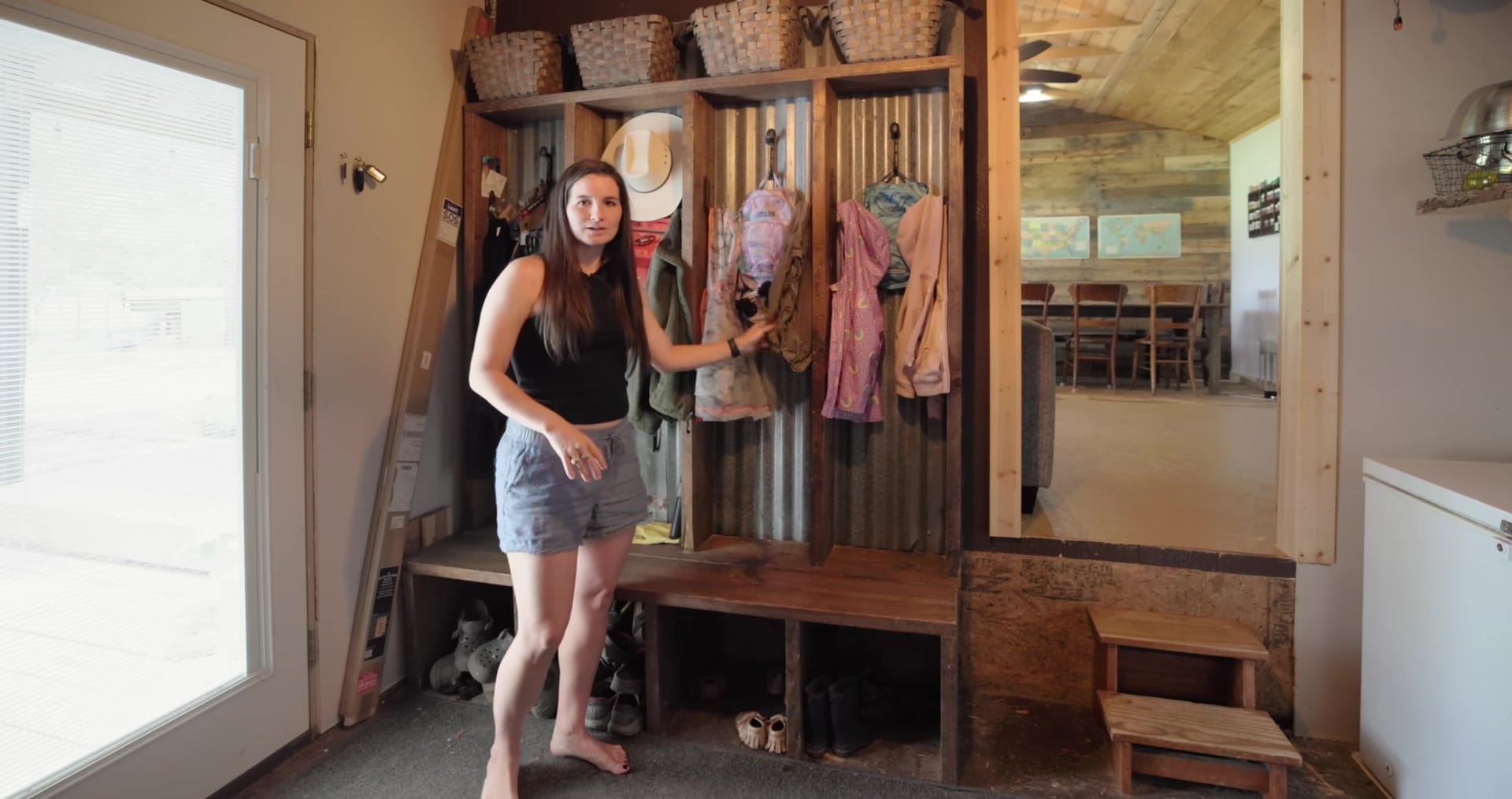
Tin salvaged from an old barn lines the walls, tough, rustic, and easy to wipe down.
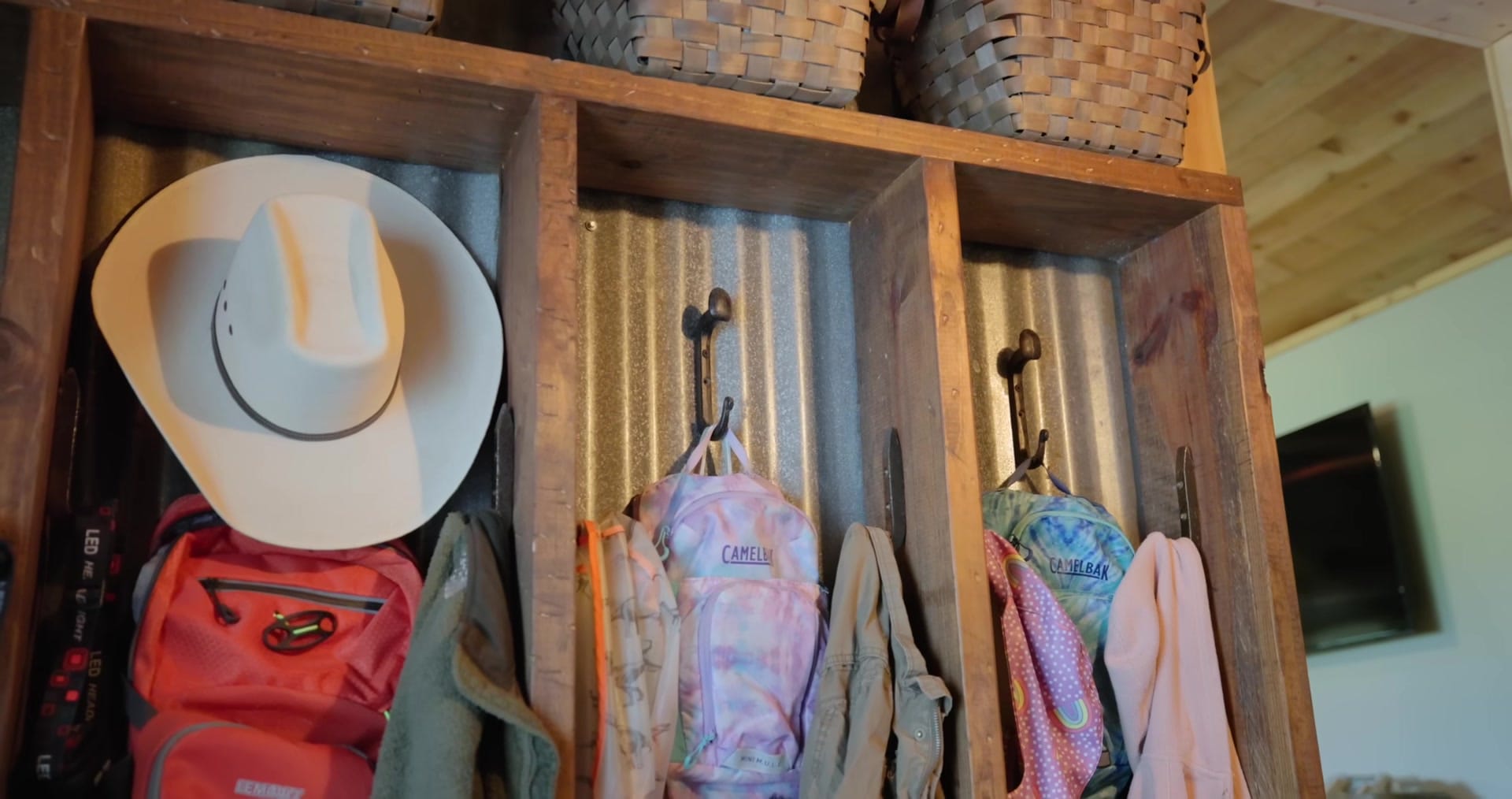
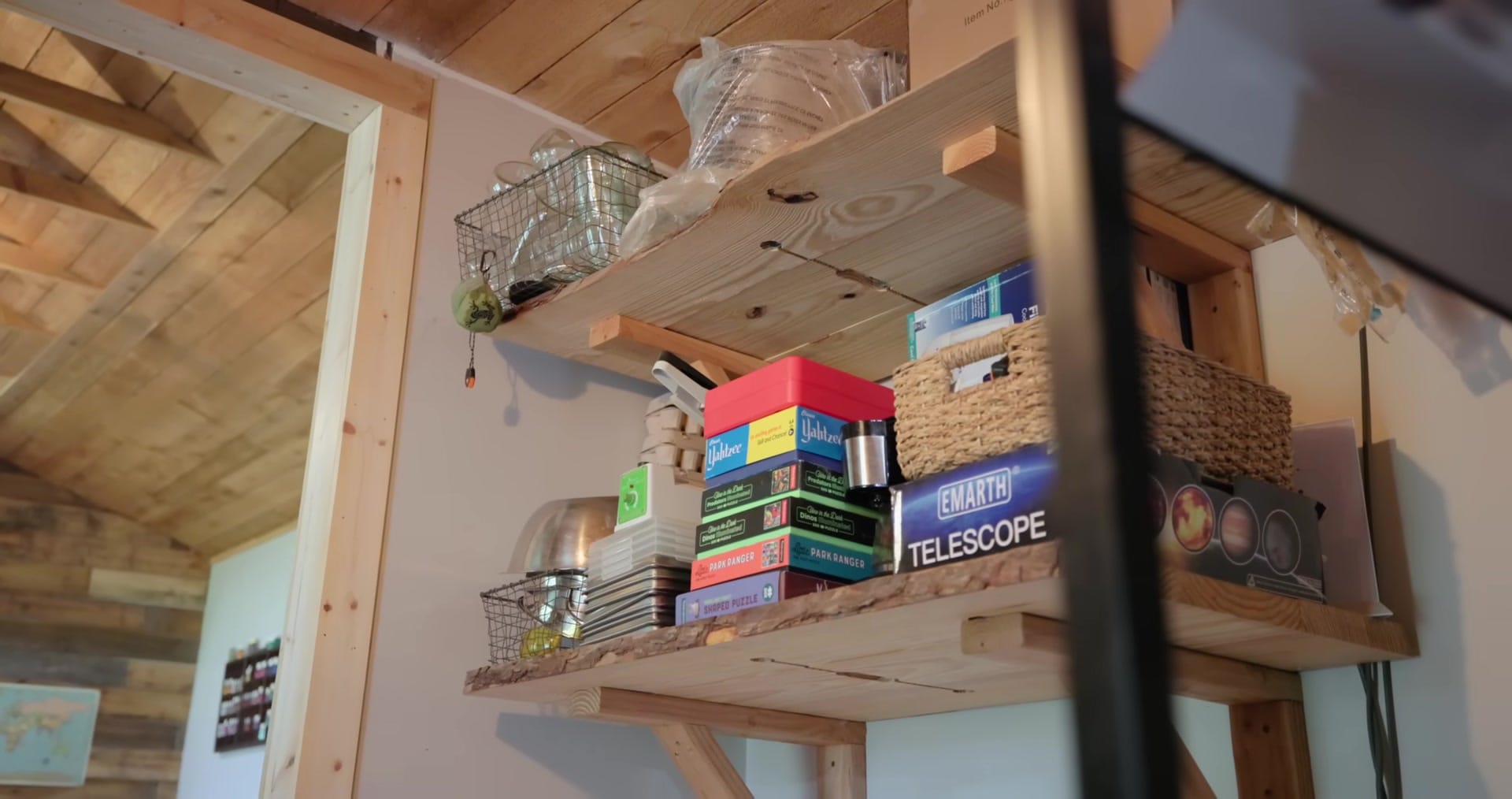
Storage rides high above the chest freezer for pots, dry goods, and board games. This zone stitches both wings of the house together, a true crossroads.
Laundry lives right next door to that entry so messy clothes go straight to the wash . Even the walk from porch to bunks runs through it, so the traffic pattern does the cleaning for them . It’s a smart first impression—and the reason the rest of the house stays calm.
Kitchen — The Heart of the Home (Batch Cooking, Storage, Design)
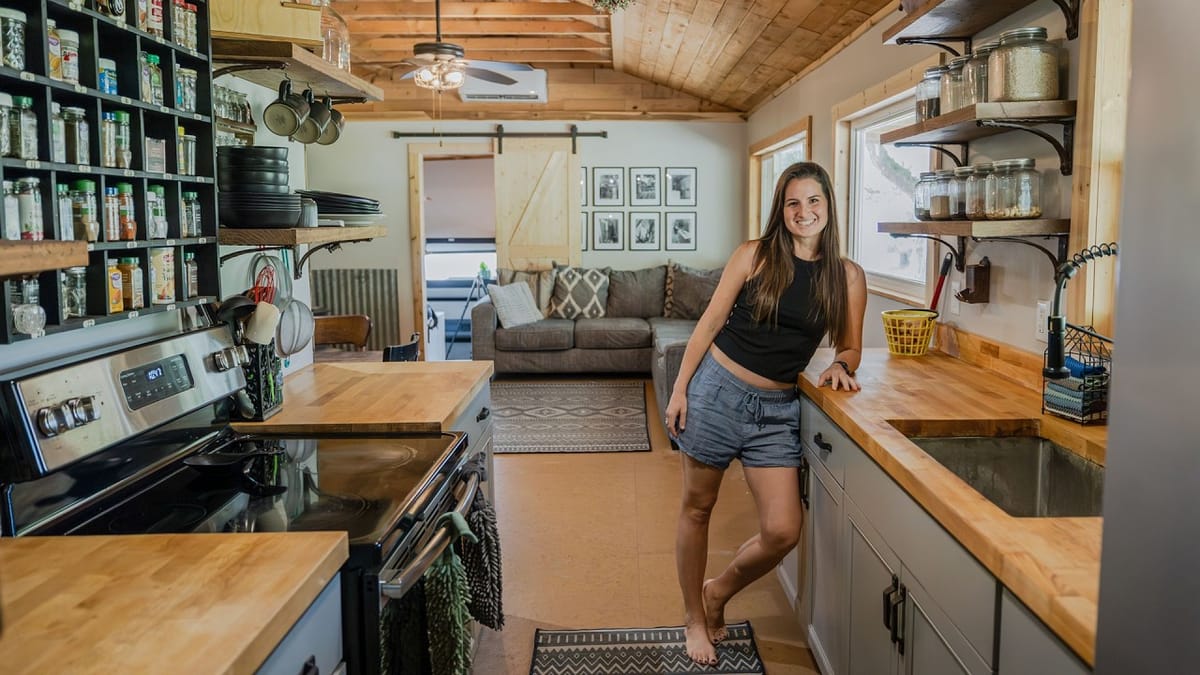
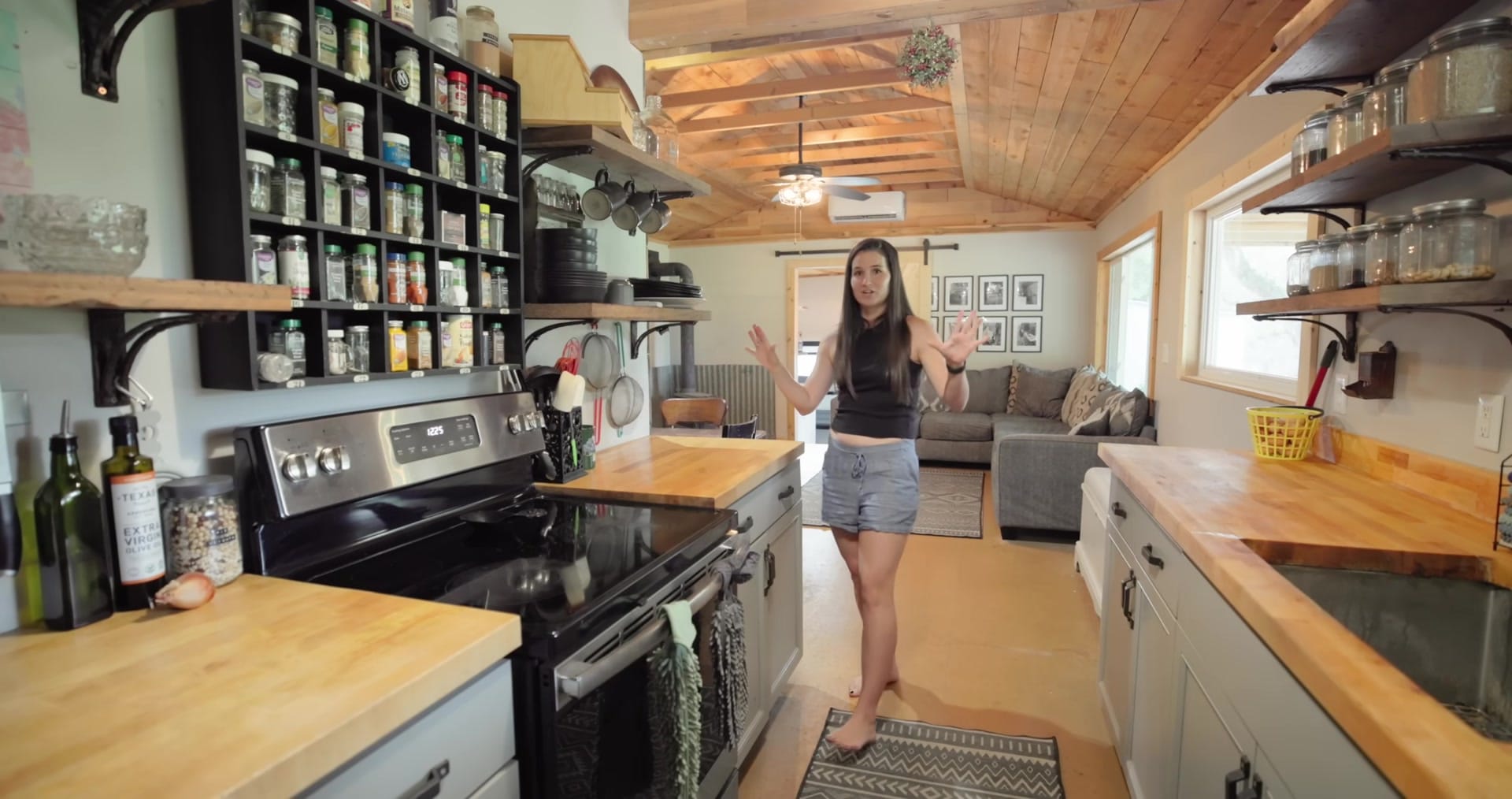
The galley kitchen is where days begin and end for this crew. Counters run long, tools stay visible, and everything has a job. It’s the heart of the home, by design and by habit.
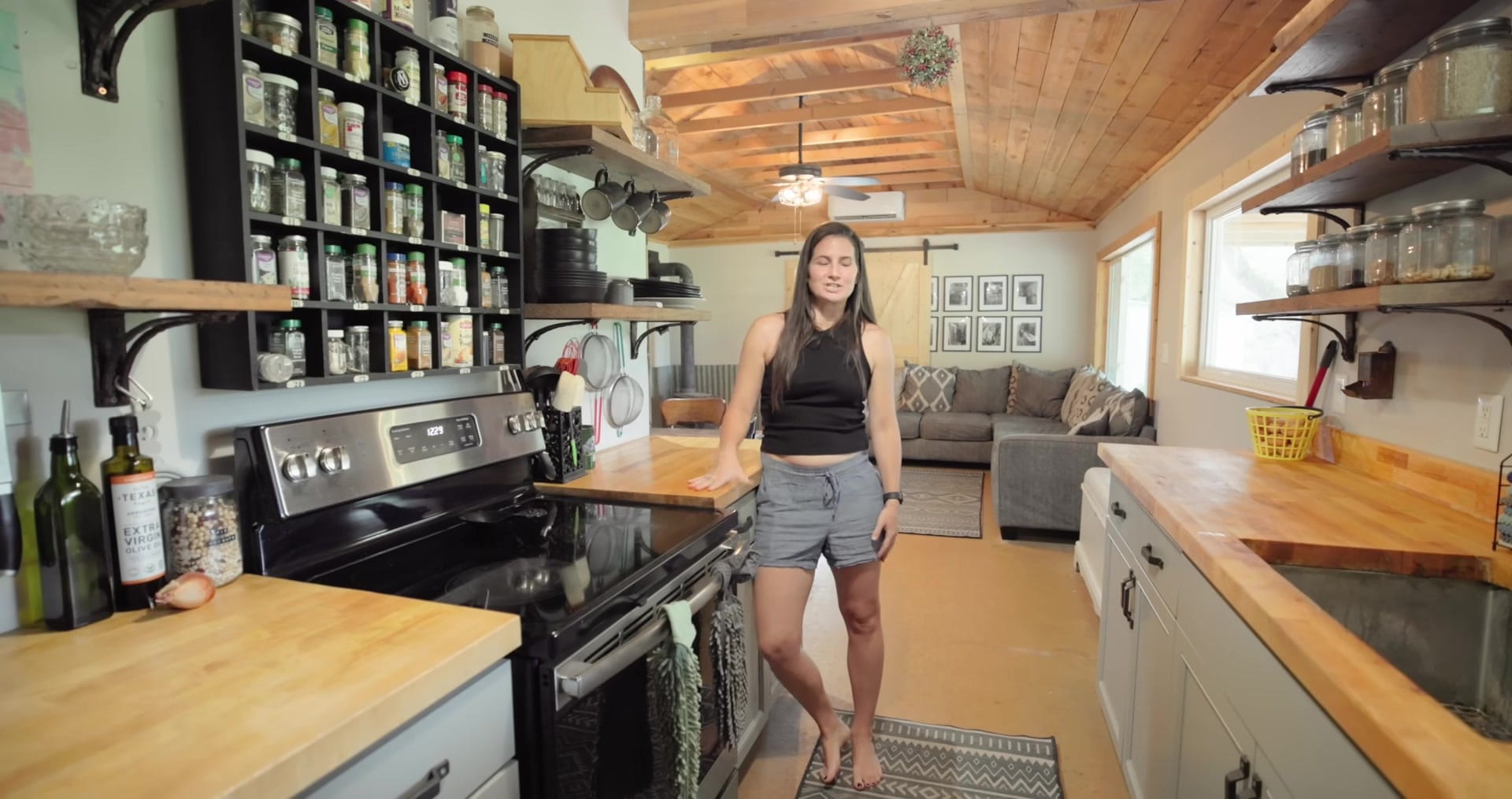
She cooks from scratch—bread, tortillas, soups—so storage had to earn its keep. The rule was simple: whatever fits in the cabinets stays; the rest goes. Six months of washing dishes with a hose and a one-burner outside made this room the first priority.
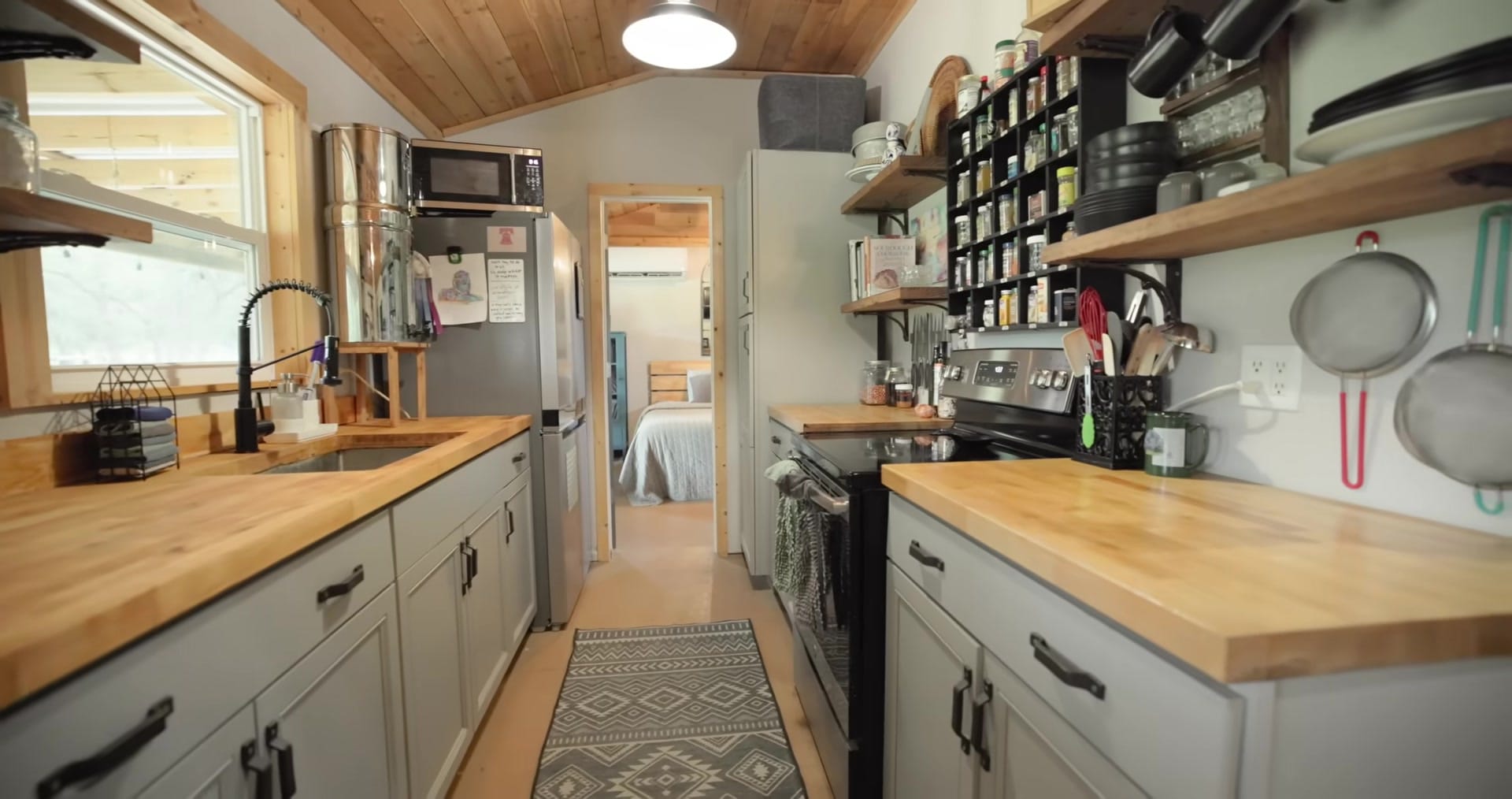
Now, the workflow is clean, centered, and calm. Lights line up with faucet and window, so she can watch the kids while dishes get done. A deep single-basin sink swallows stock pots and makes batch cooking realistic.
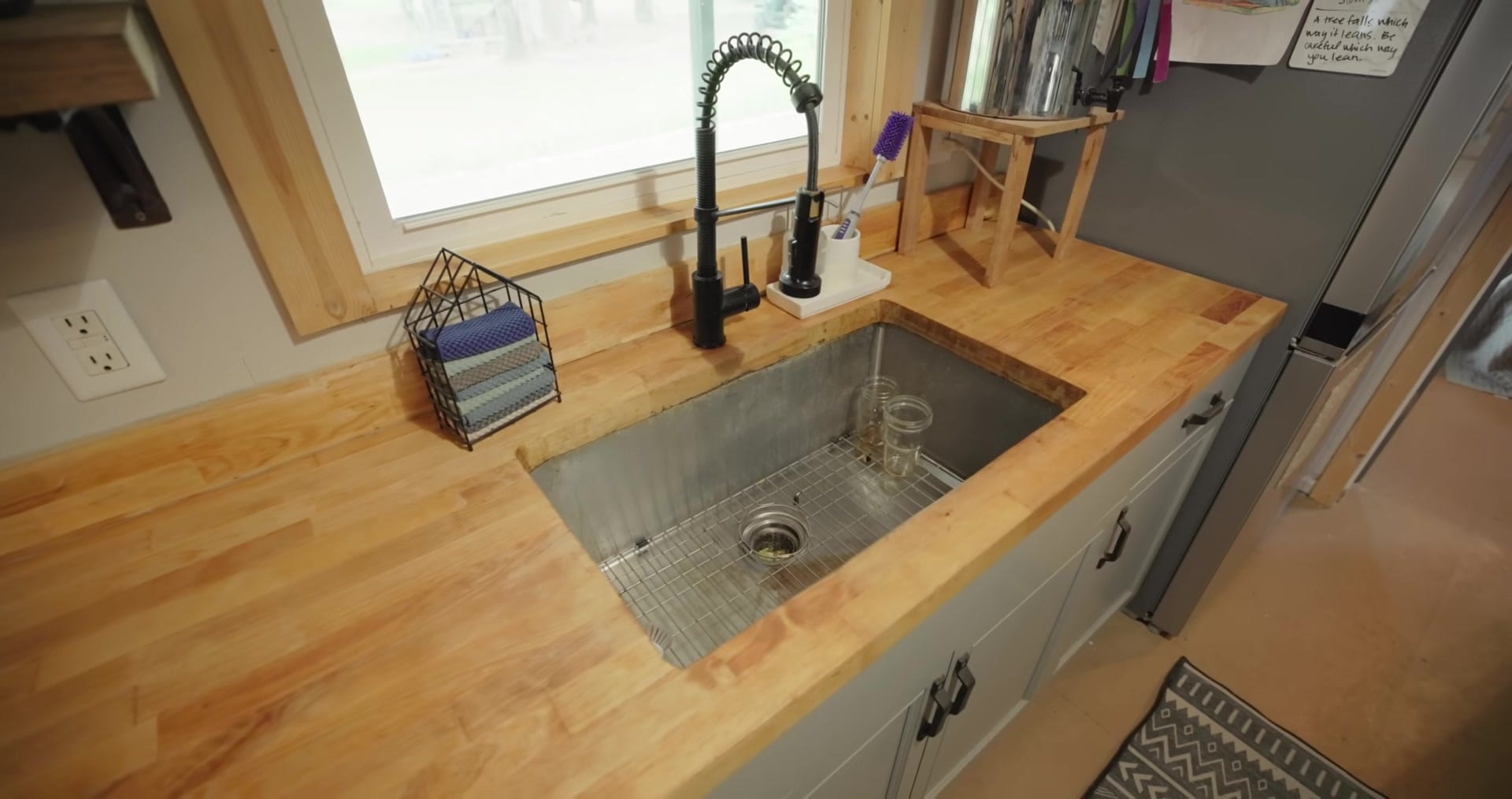
No dishwasher means fewer things, faster rotations, and less clutter. Once-a-month grocery runs demand a fridge that’s narrow but mighty. The butcher-block counters tie every wood tone together and double as a pastry board.
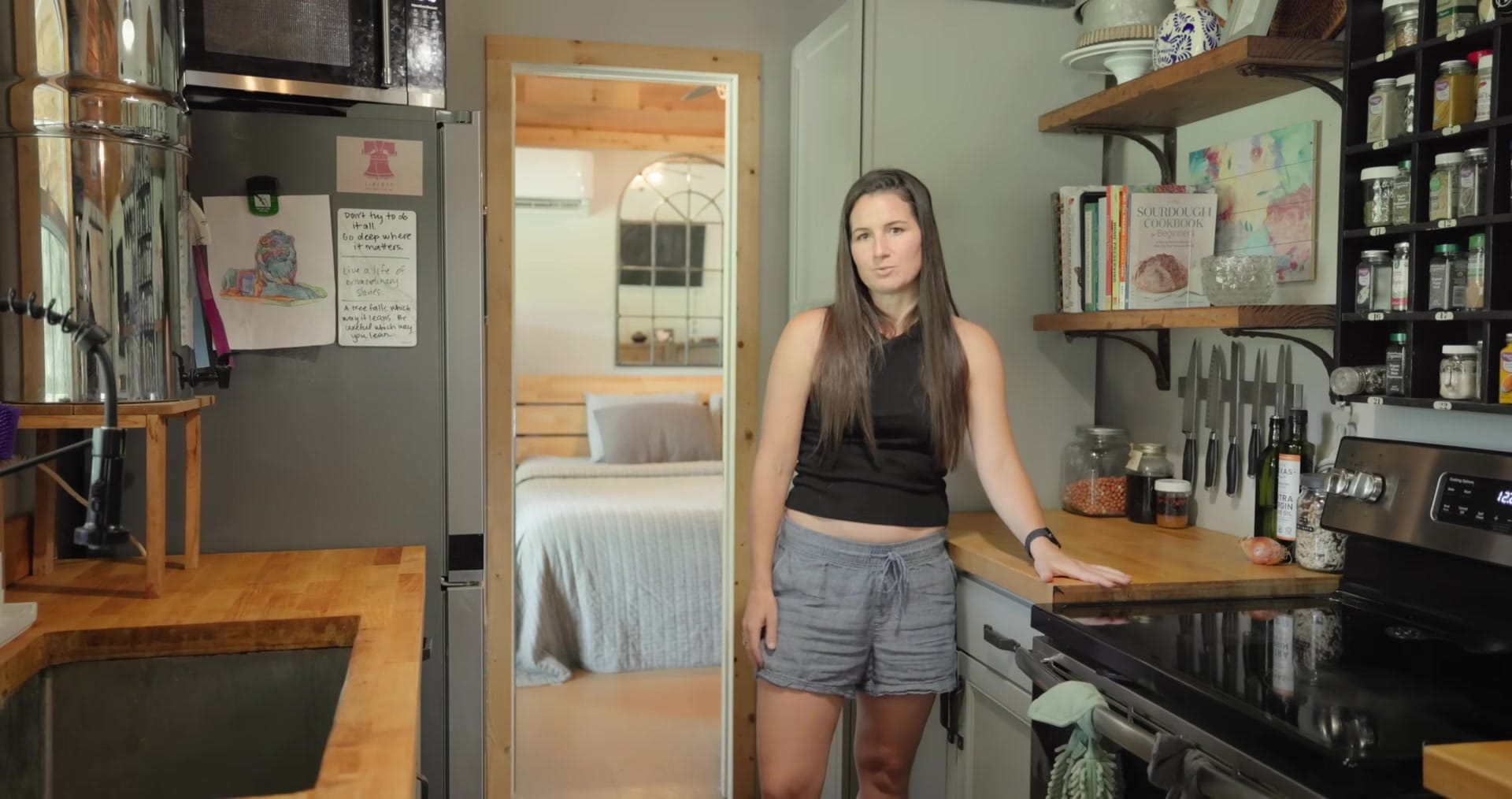
When it needs a refresh, a quick sand and oil brings it back. Open shelves keep ingredients in sight and in mind so meals actually happen. Dust is the tradeoff—and totally worth it when you can grab what you need in seconds.
Living & Dining — Light, Seating and Sentimental Pieces
This joint living-dining space is where rainy days and heat waves are handled. It wasn’t always here, but now it’s the daily hangout when the weather says “inside.” The room opens with a simple welcome—and a promise of space to breathe.
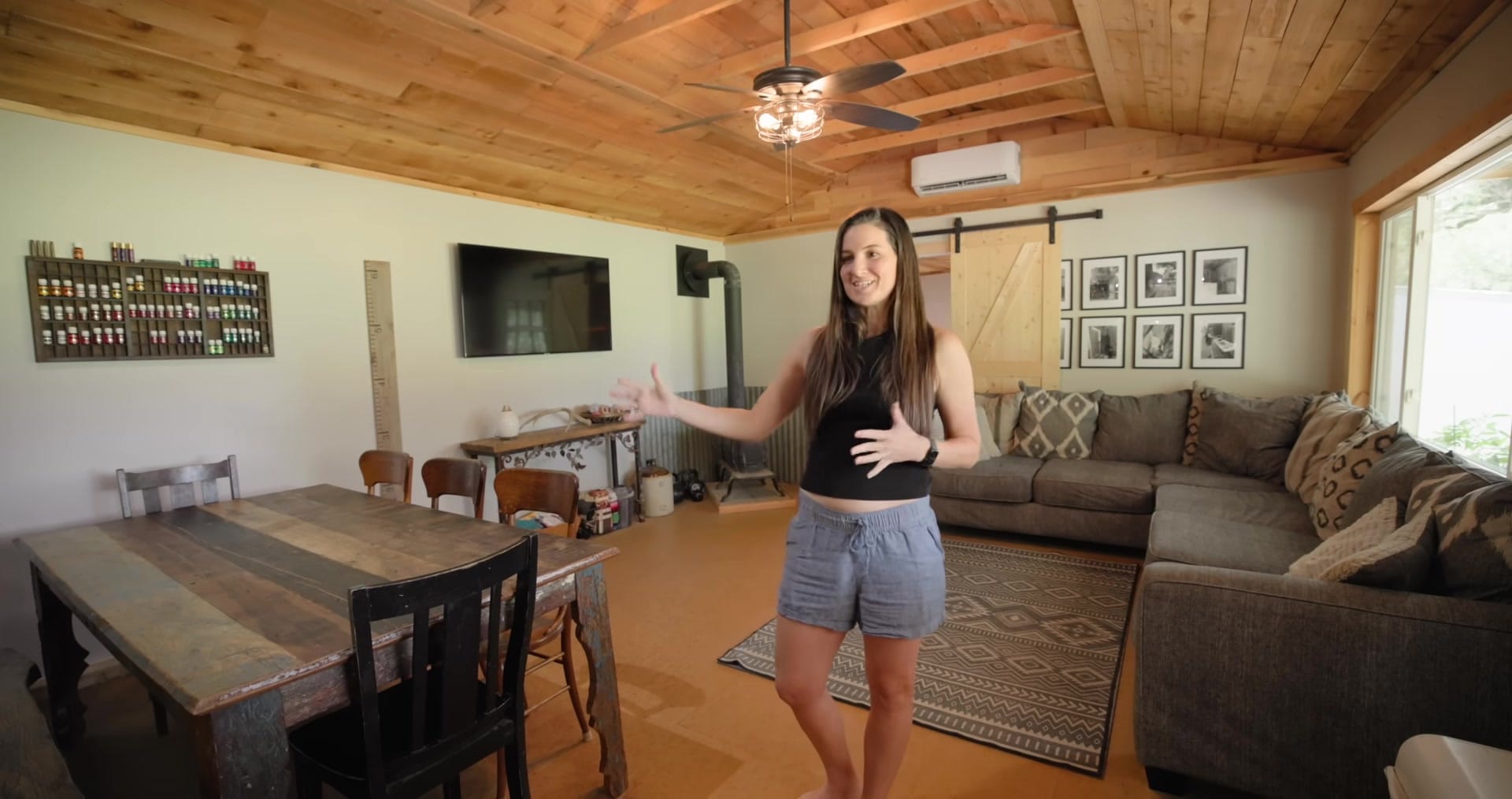
Finding furniture that fits without blocking flow was the puzzle to solve. The solution was a huge sectional with a queen fold-out to host family without tripping over doorways. That sleeper sofa checked every box, including color, comfort, and no weird legs in the walkway.
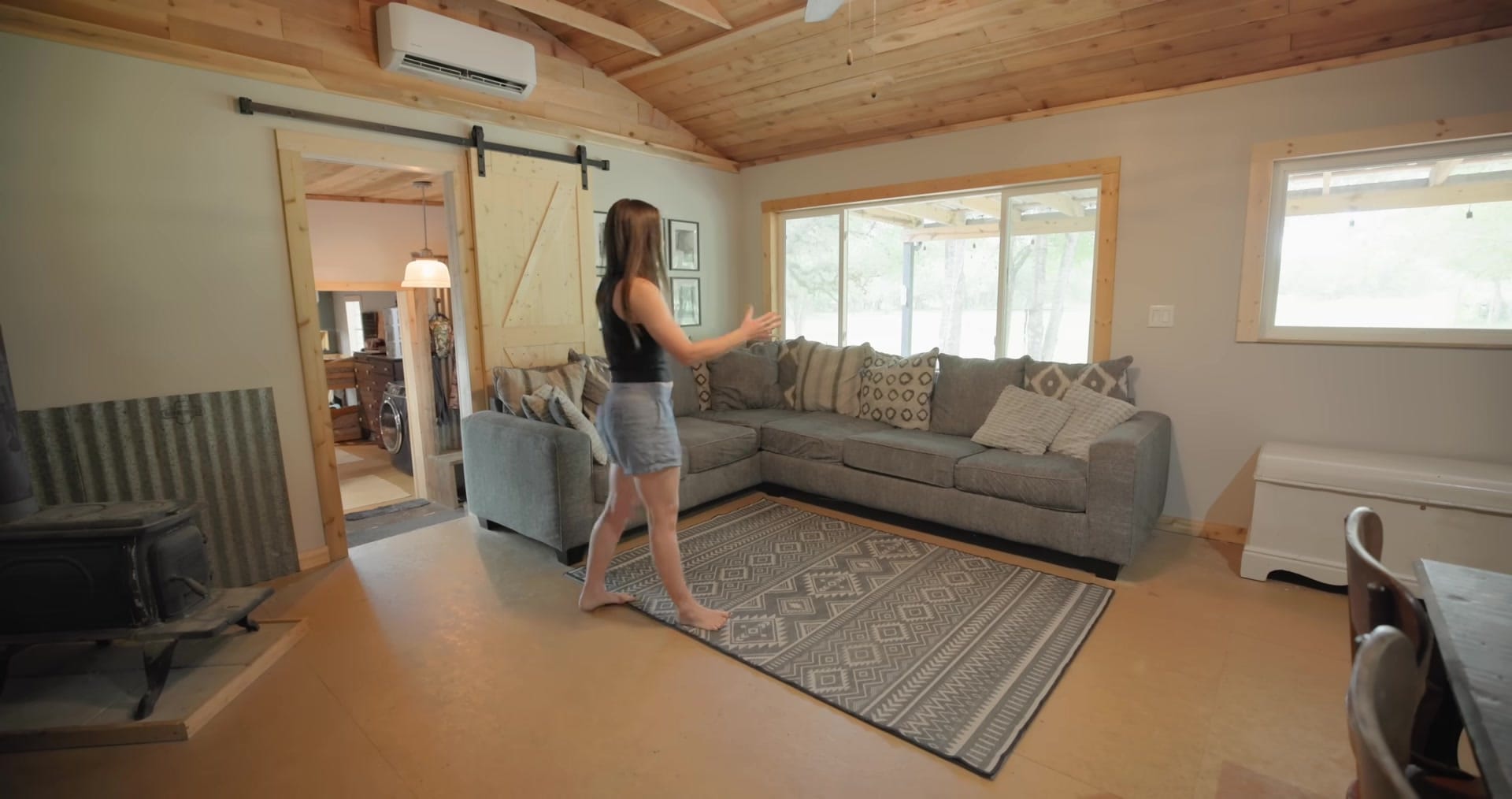
Behind it, a wall of glass turns the view into art. Light pours in, making the small feel expansive and the horizon impossible to ignore. The oversized window was non-negotiable—when you’ve got a view, you frame it big.
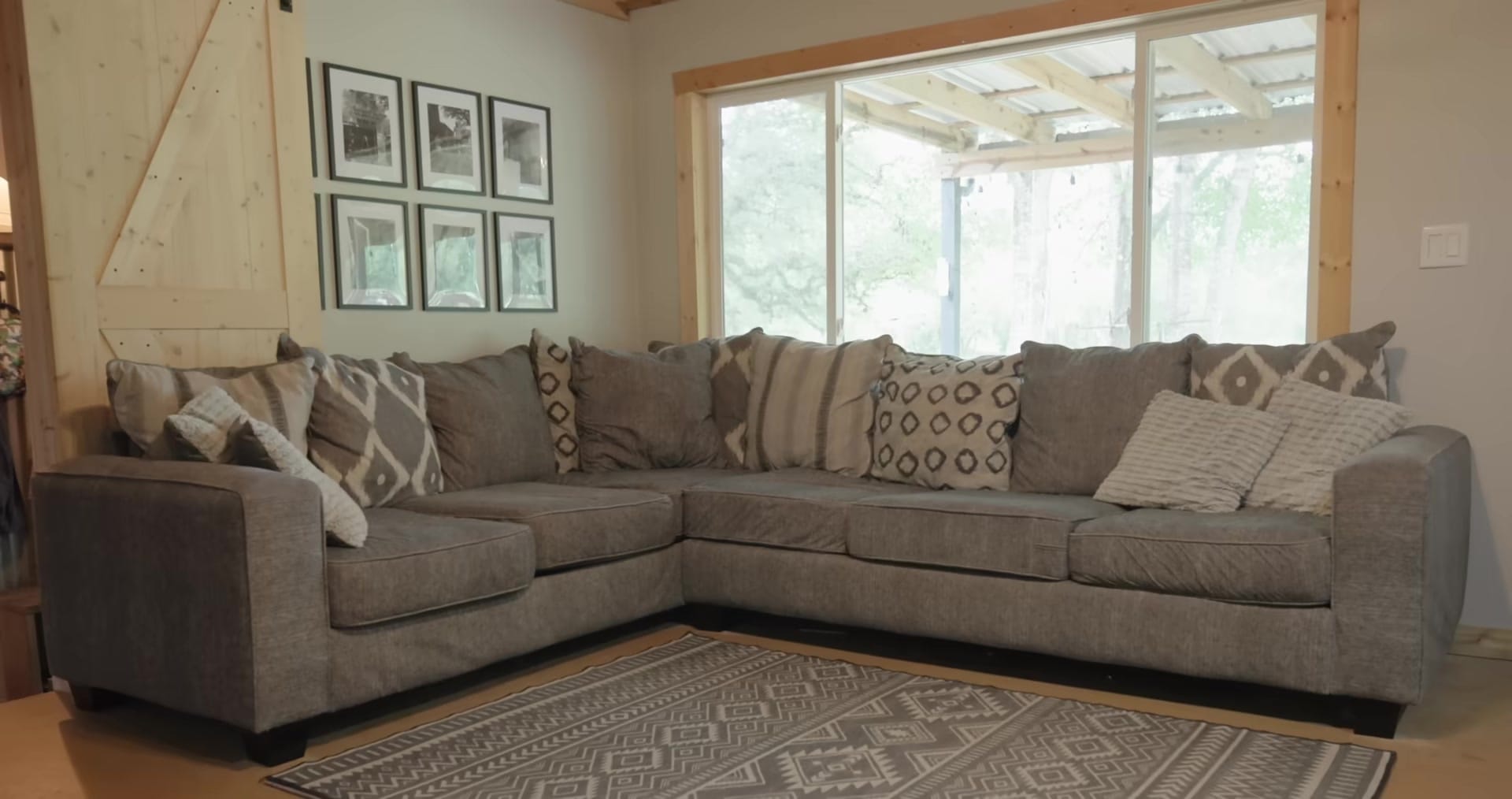
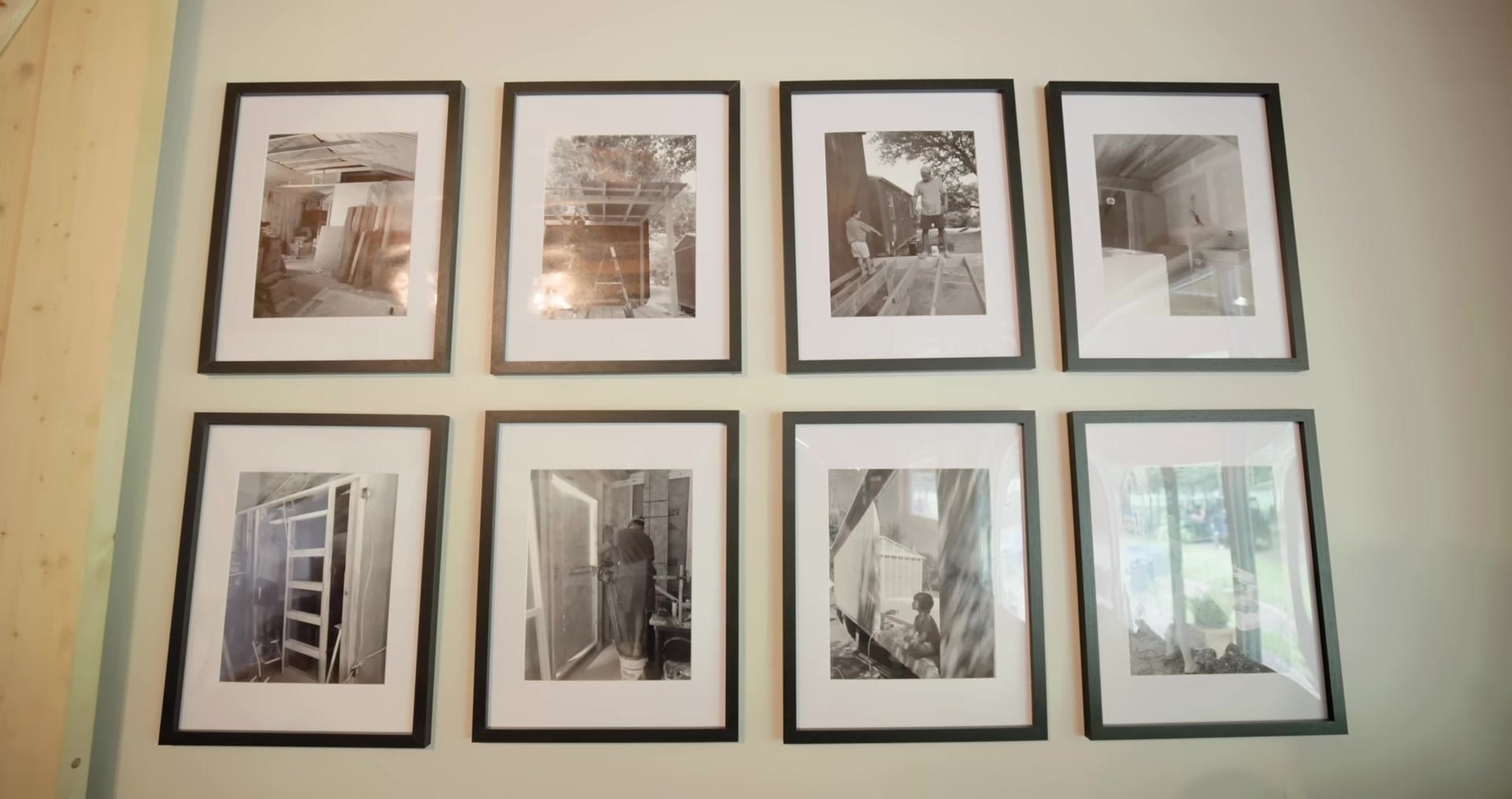
Windows run the length of the front, so parents can watch kids playing outside while coffee stays hot. A blank wall became a memory wall, on purpose. Black-and-white photos trace where they started and what they’re building now.
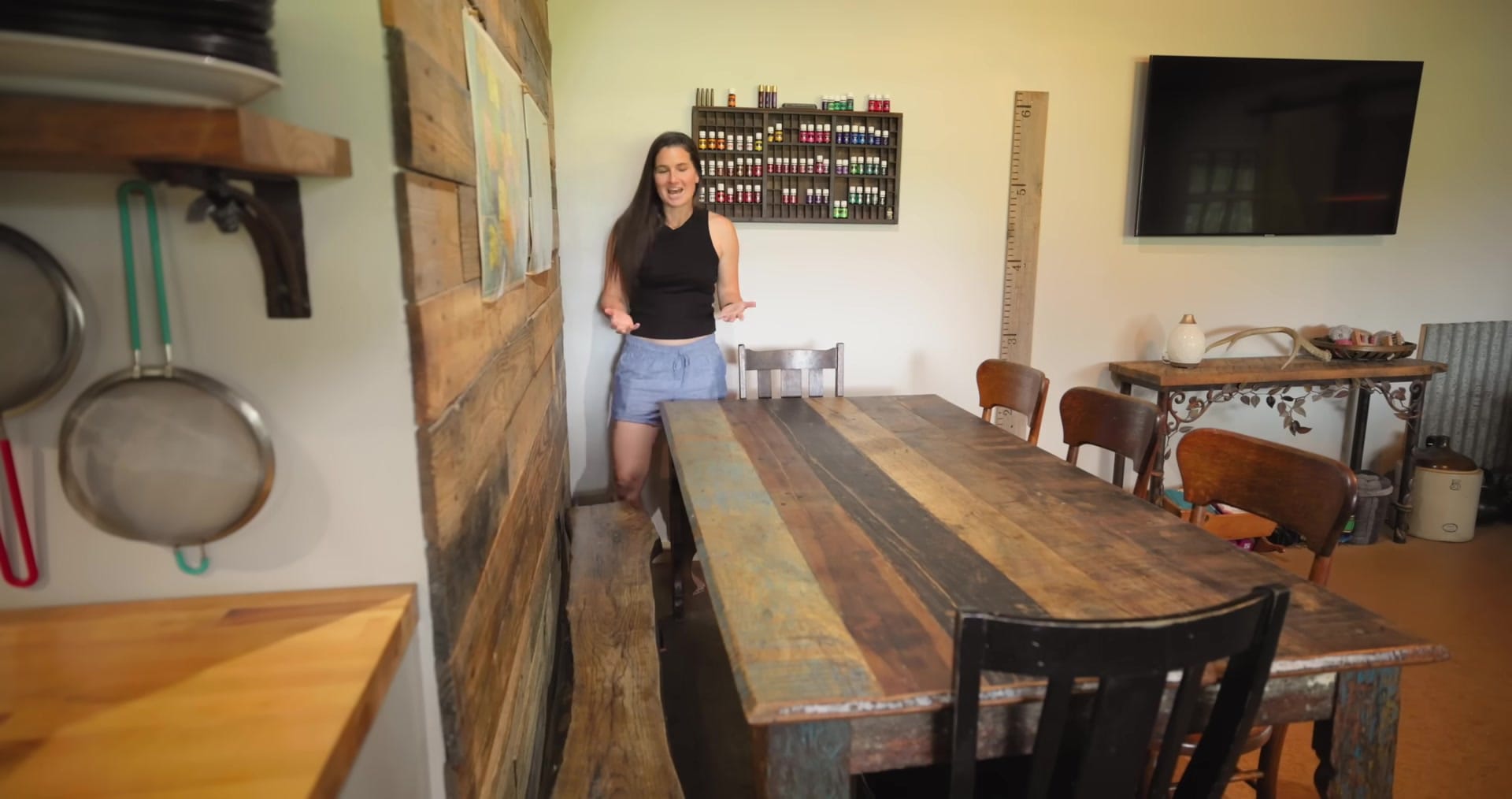
Sentiment lives at the table, too. The first dining set they bought together made the cut and kept the story going. There’s even a bench her dad built from a fallen tree, welded and sealed by hand.
Kids' Bunk Room & Bathroom — Shared Space, Big Childhood Moments
The kids share a bunk room that feels like a clubhouse. Toys and beds live together, but the magic is in the togetherness. The space is theirs from the second they duck the doorway.
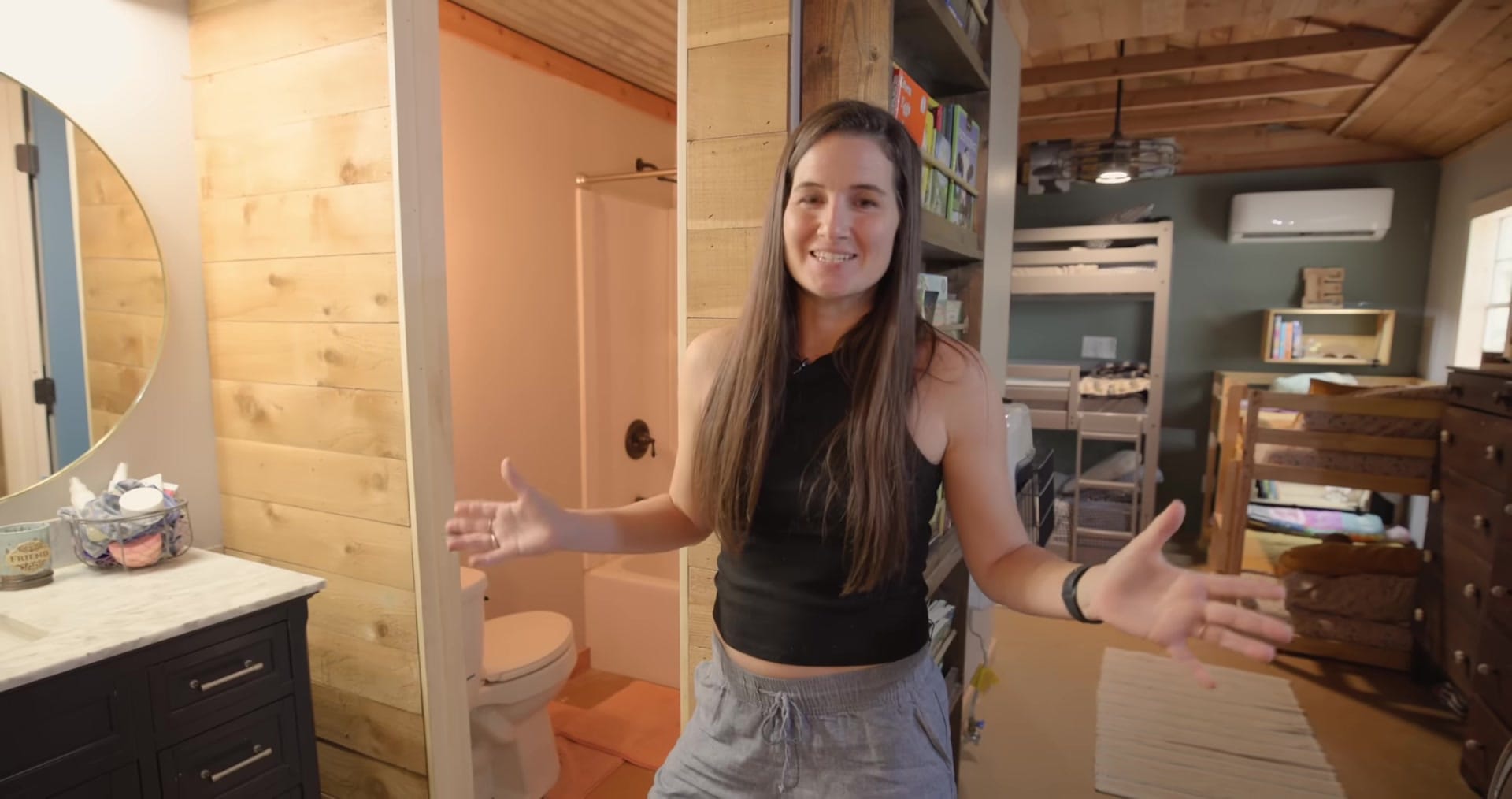
They personalize their bunks, swap books, and make up stories inside blanket forts. Close quarters become creativity when the build invites play. Through the wall, you hear reading, giggles, and whispered plans—proof that sharing builds a different kind of bond.
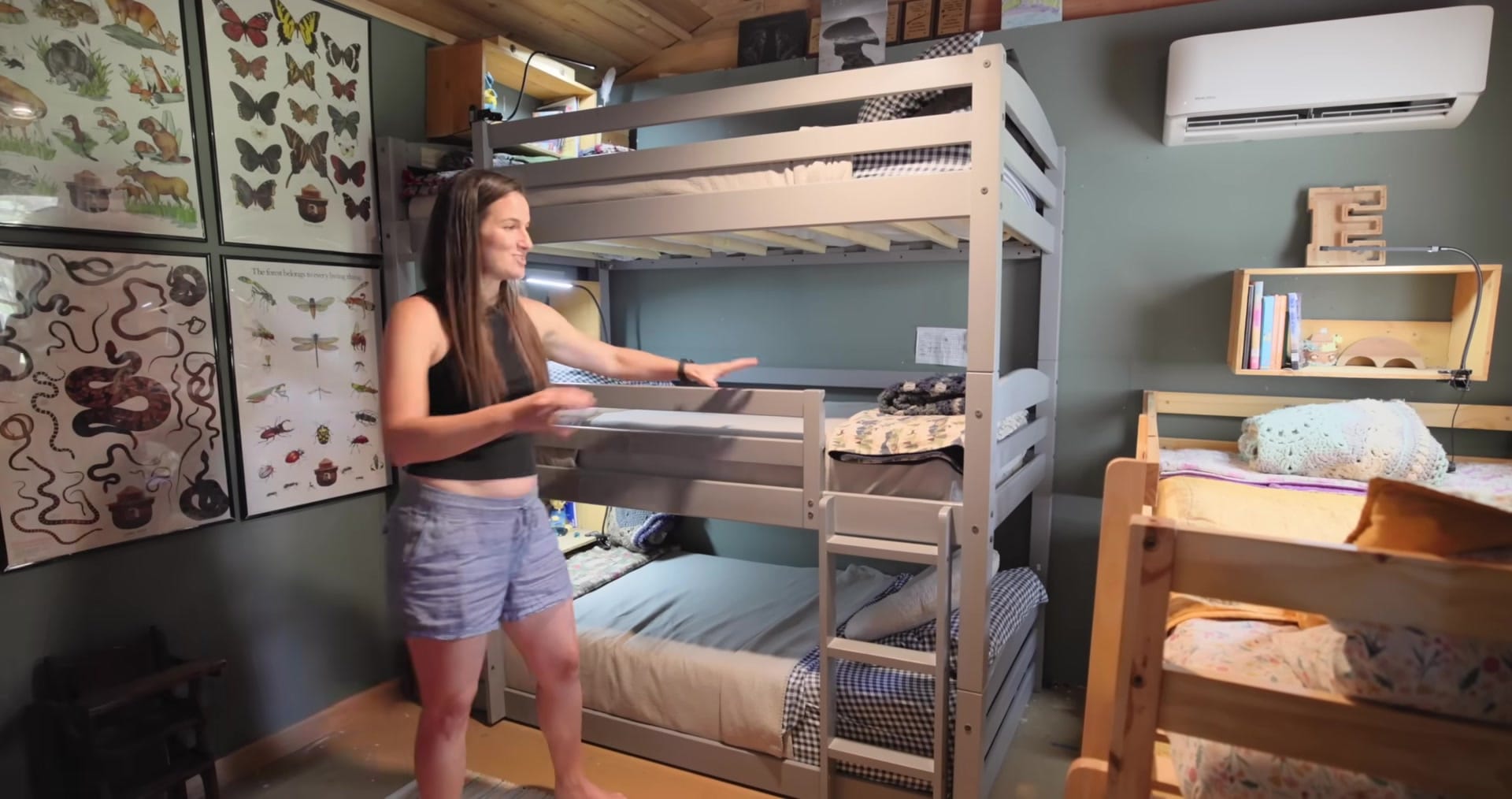
Summer heat is real here, so comfort matters. The room stays cool thanks to a Mr. Cool DIY mini-split that they installed themselves.
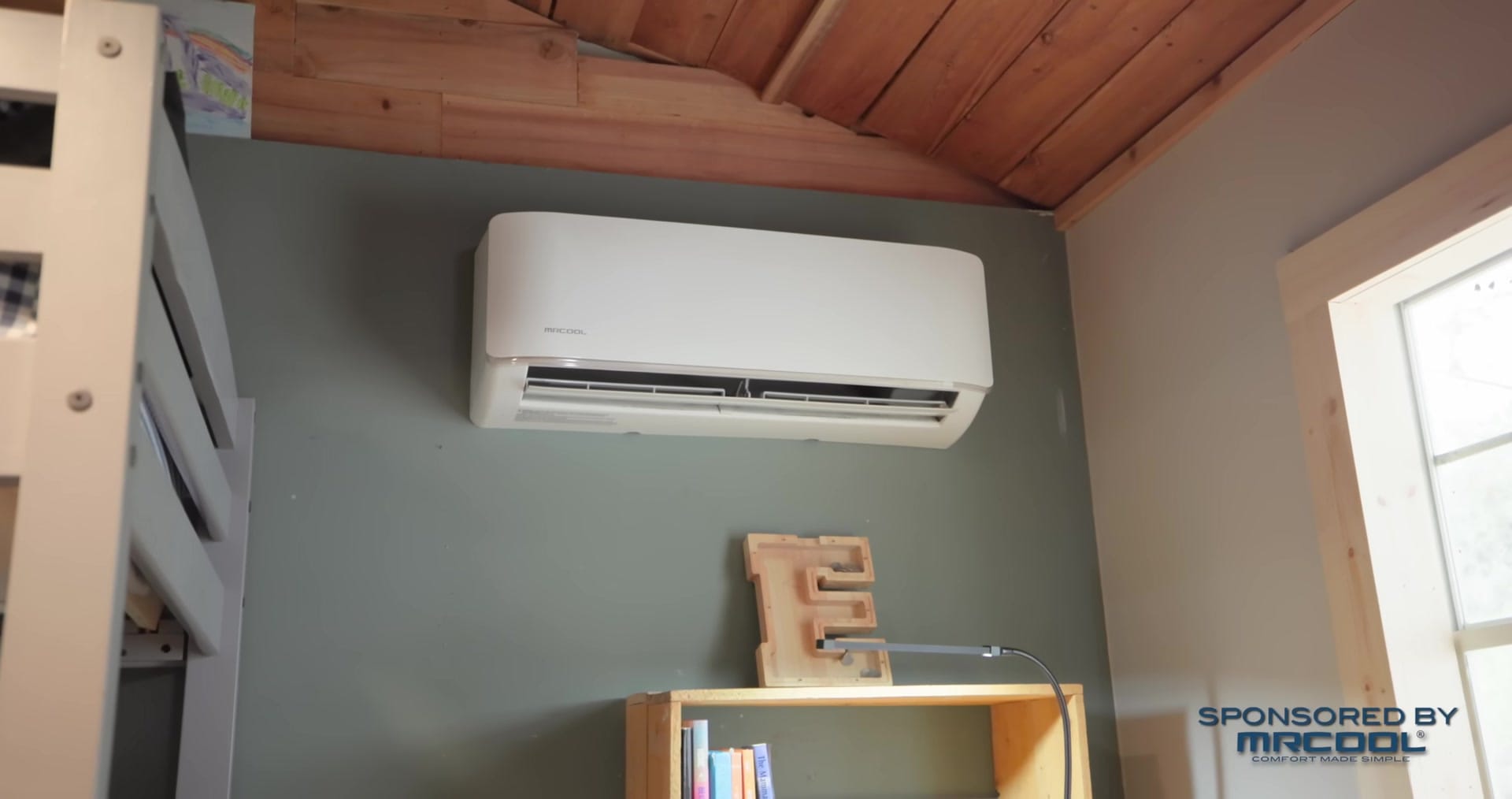
Set it where you want it, cool the spaces you’re using, and shut the rest off when you’re out.
With five kids, the bathroom had to multitask. The sink lives outside the bathroom so tooth-brushing can happen while someone else showers.
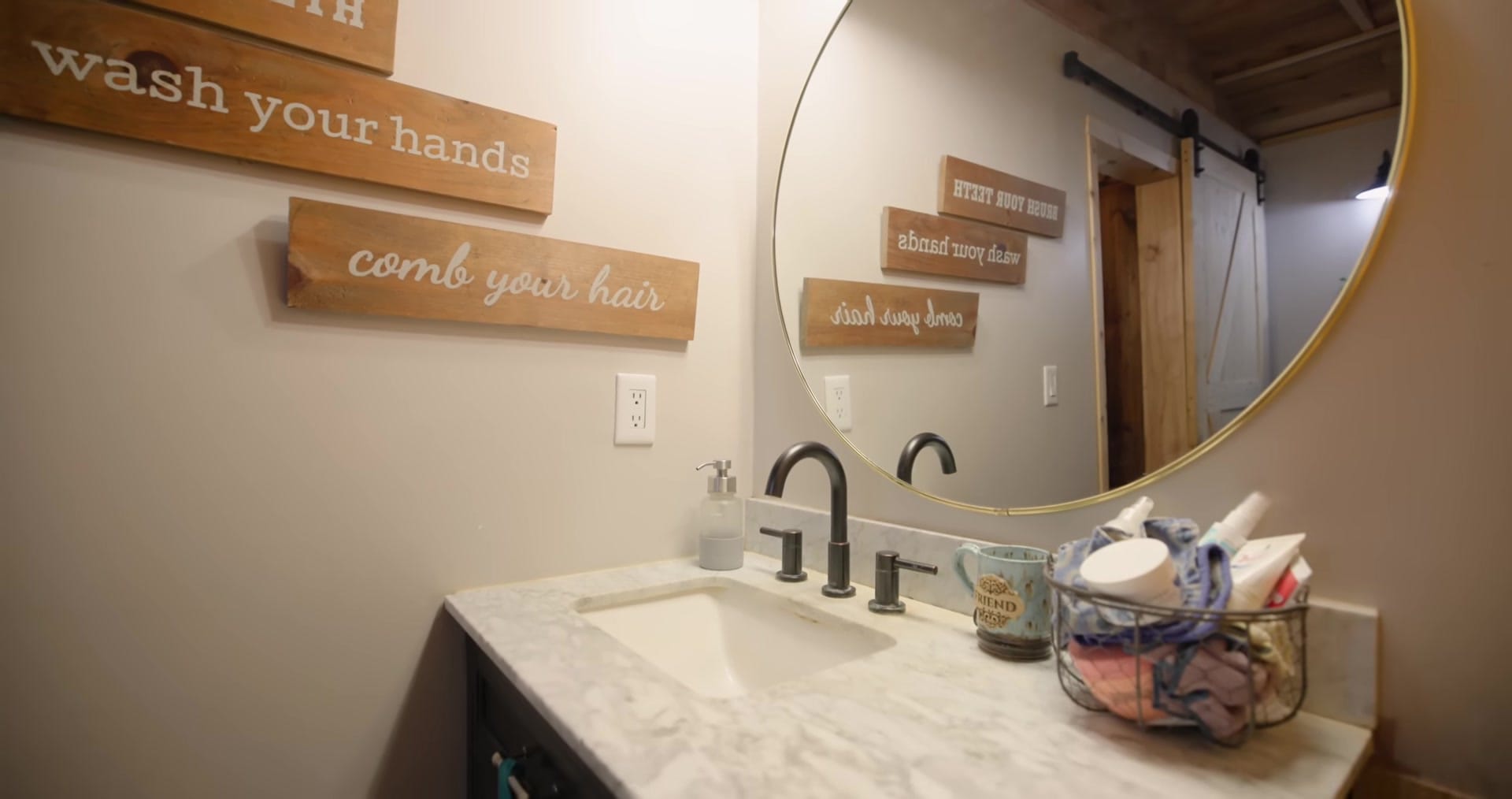
Muddy hands get cleaned without tracking dirt through the house. There’s a tub-shower combo to cover every age and stage.
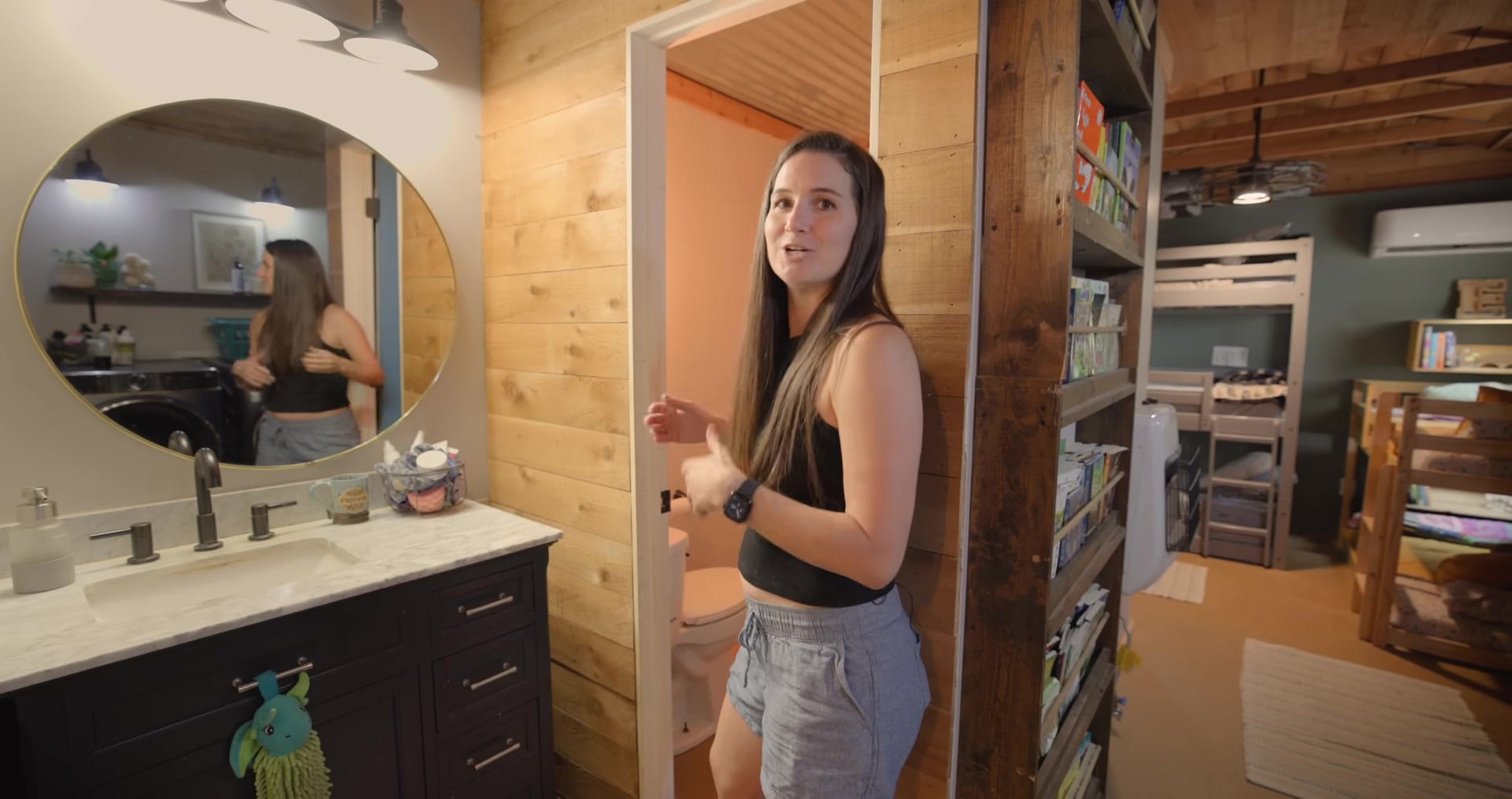
Right off the kids’ room is the laundry—perfect for the piles that never stop.
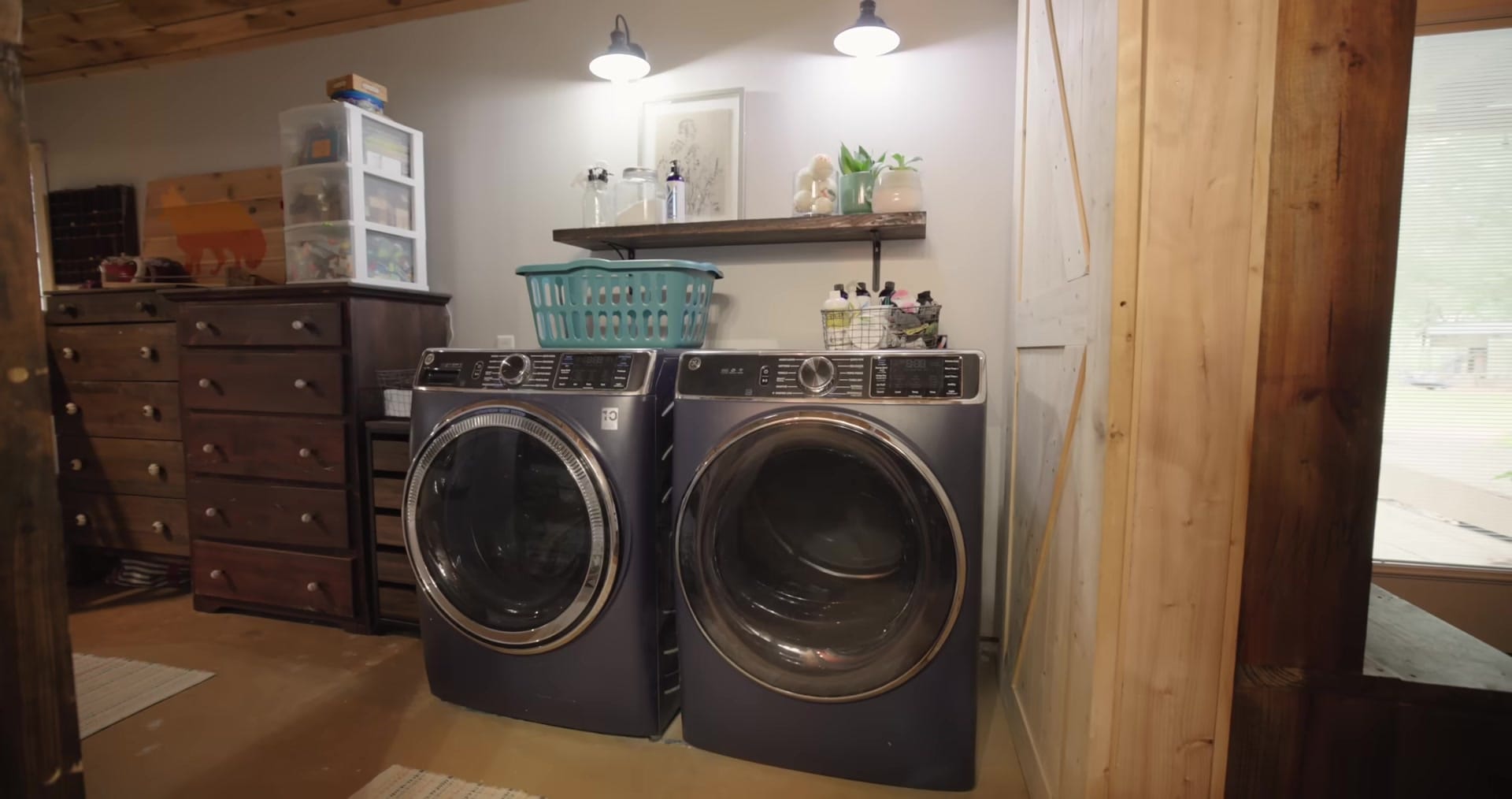
Dirty in, clean out, and back to play.
Primary Suite & Small Office — Sleep, Work and Chainsawed Windows
A king bed fits in a room that’s half the size of the old one, and that was non-negotiable. It’s the spot for snuggles with kids, pets, and the day’s last conversation. Priorities show up in what you keep, not what you store.
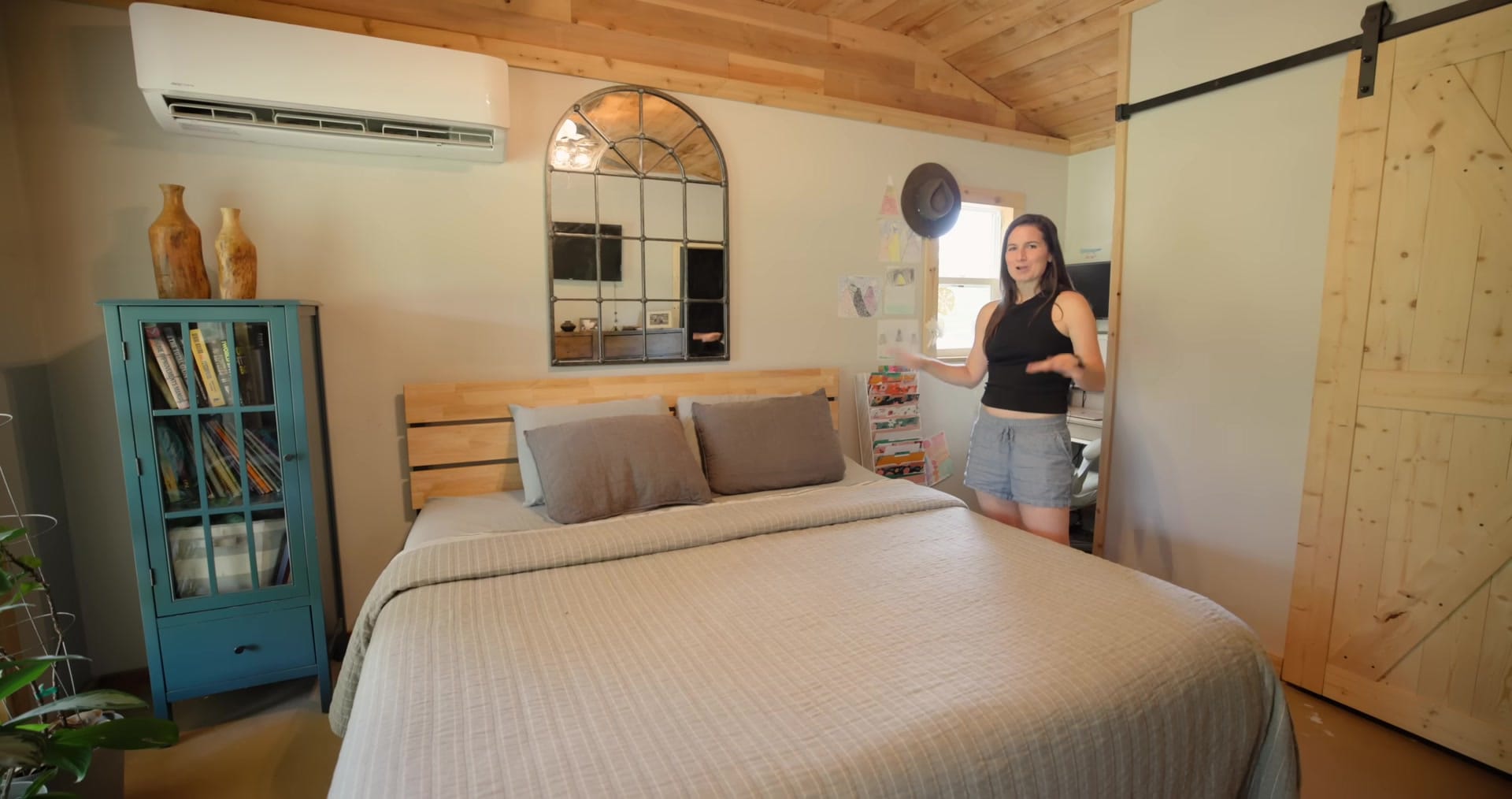
The office nook tucks behind the bed—quiet, compact, productive. It landed there because it was the only spot that caught an internet signal, and it works. For fun (and light), they chainsawed the window openings, and yes, it looks as wild as it sounds.
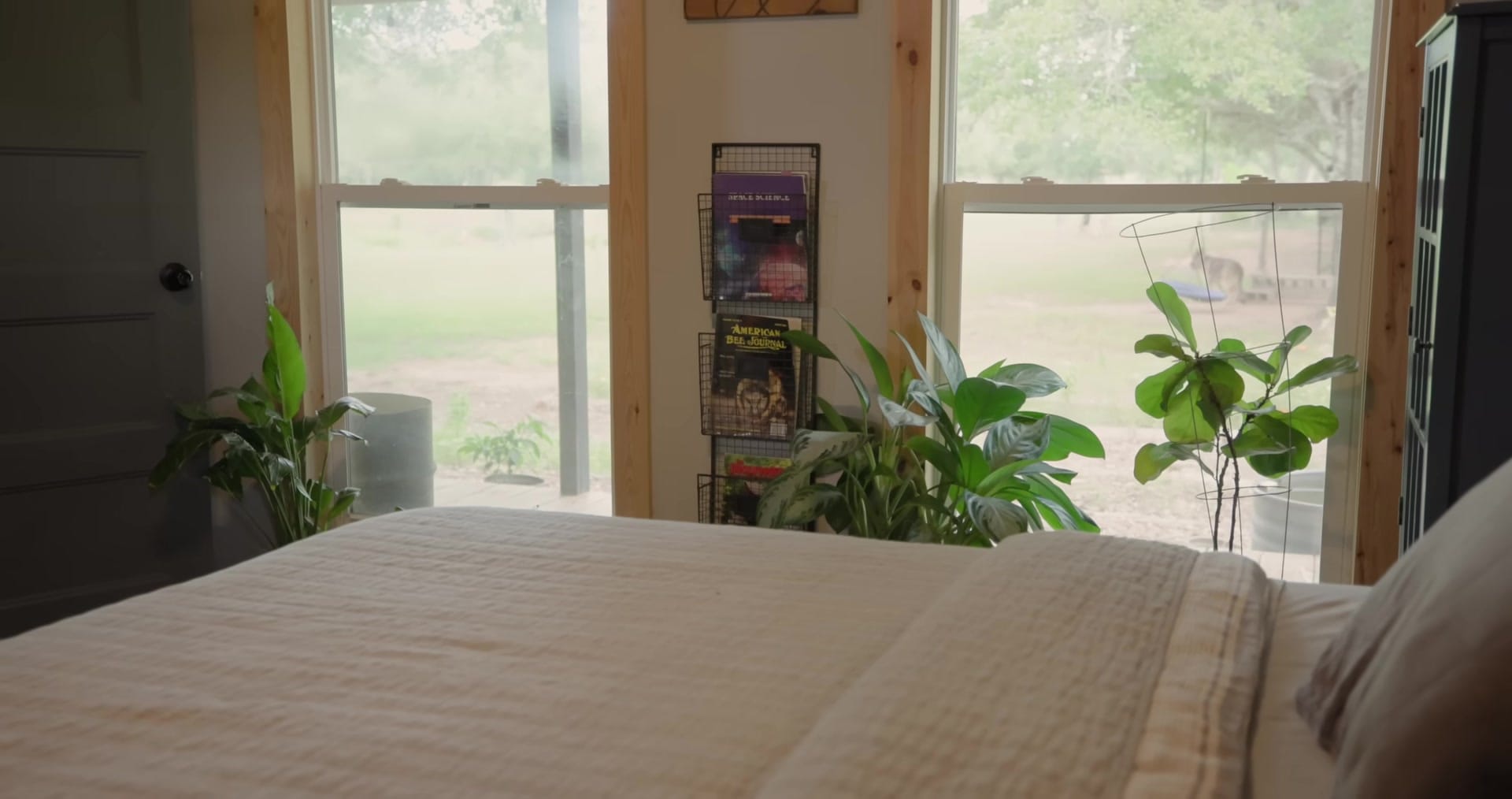
Morning means birds and animals framed like a painting. Cooling started here, too, with their first Mr. Cool DIY set humming through the suite and beyond. Organization stays simple: drawers over hanging, just the pieces they love and wear .
The bathroom keeps the rustic-vintage thread going with double sinks and warm wood tones.
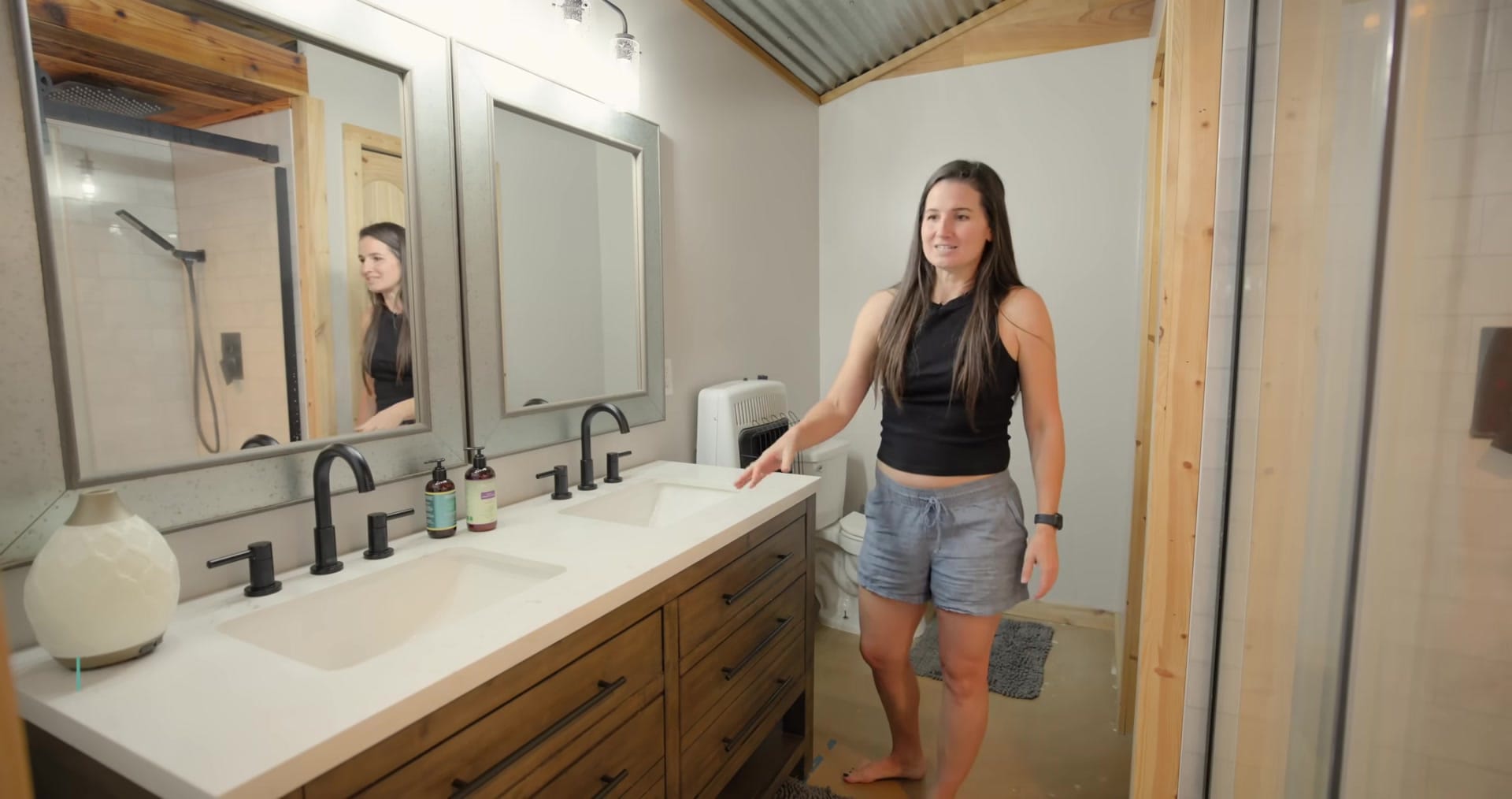
A heater makes winter showers cozy instead of rushed. To dodge mold and moisture, they went with a tin ceiling and water-sealed wood where it counts. In the shower, a waterfall head delivers the one detail she’d always wanted.
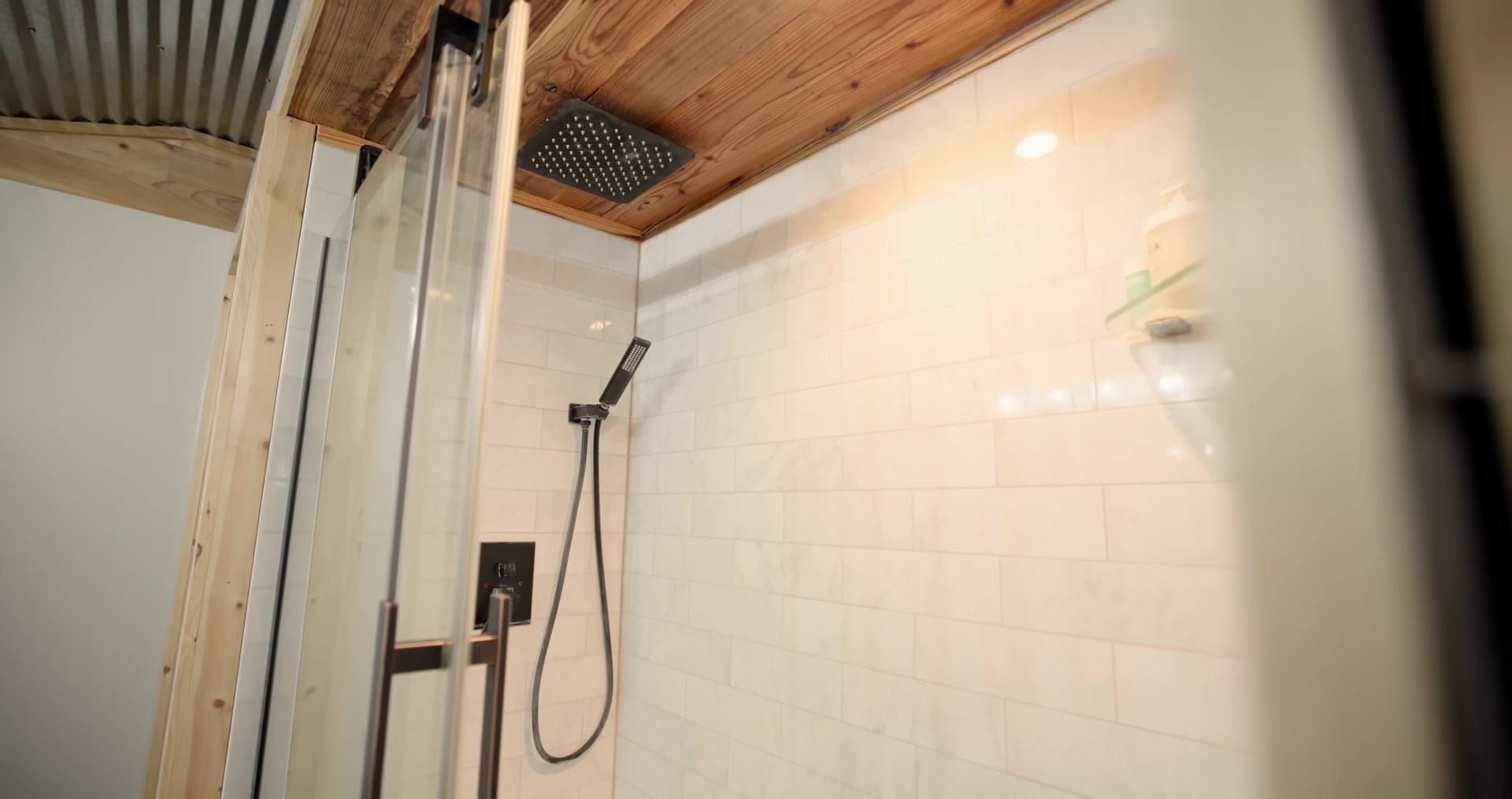
Prefab shower panels spared them grout, cracks, and weekend-warrior headaches. The whole room rests easy, designed to be quiet and calm after loud days.
Land, Costs & Homestead Hustle — Buying Raw Land and Growing Income
They set filters, set a budget, and went looking for raw land outside the city. Only two places fit, but the remoteness, wildlife, and quiet made the choice obvious. They bought 10.5 acres for just under $60,000 and closed within a month.
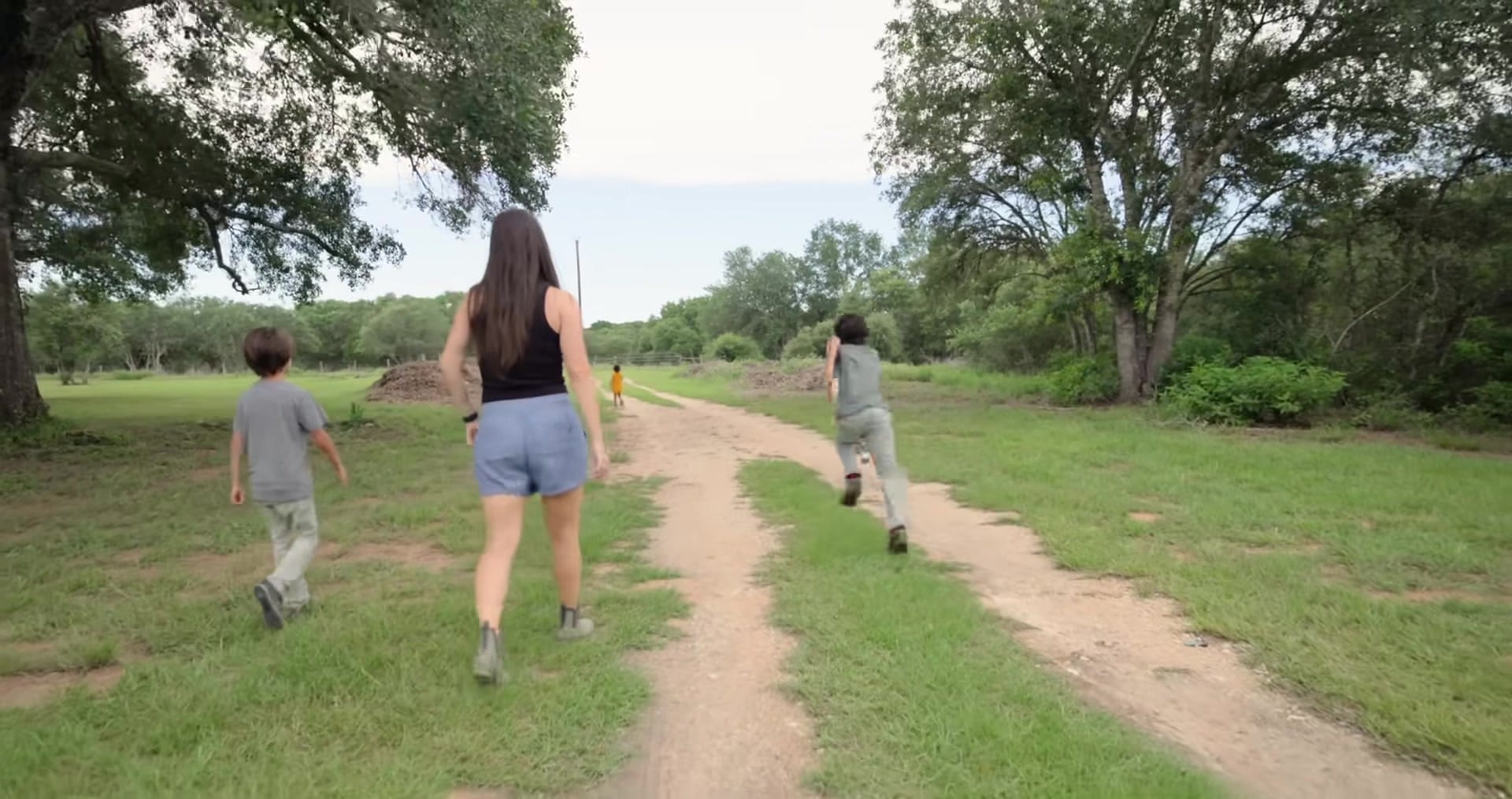
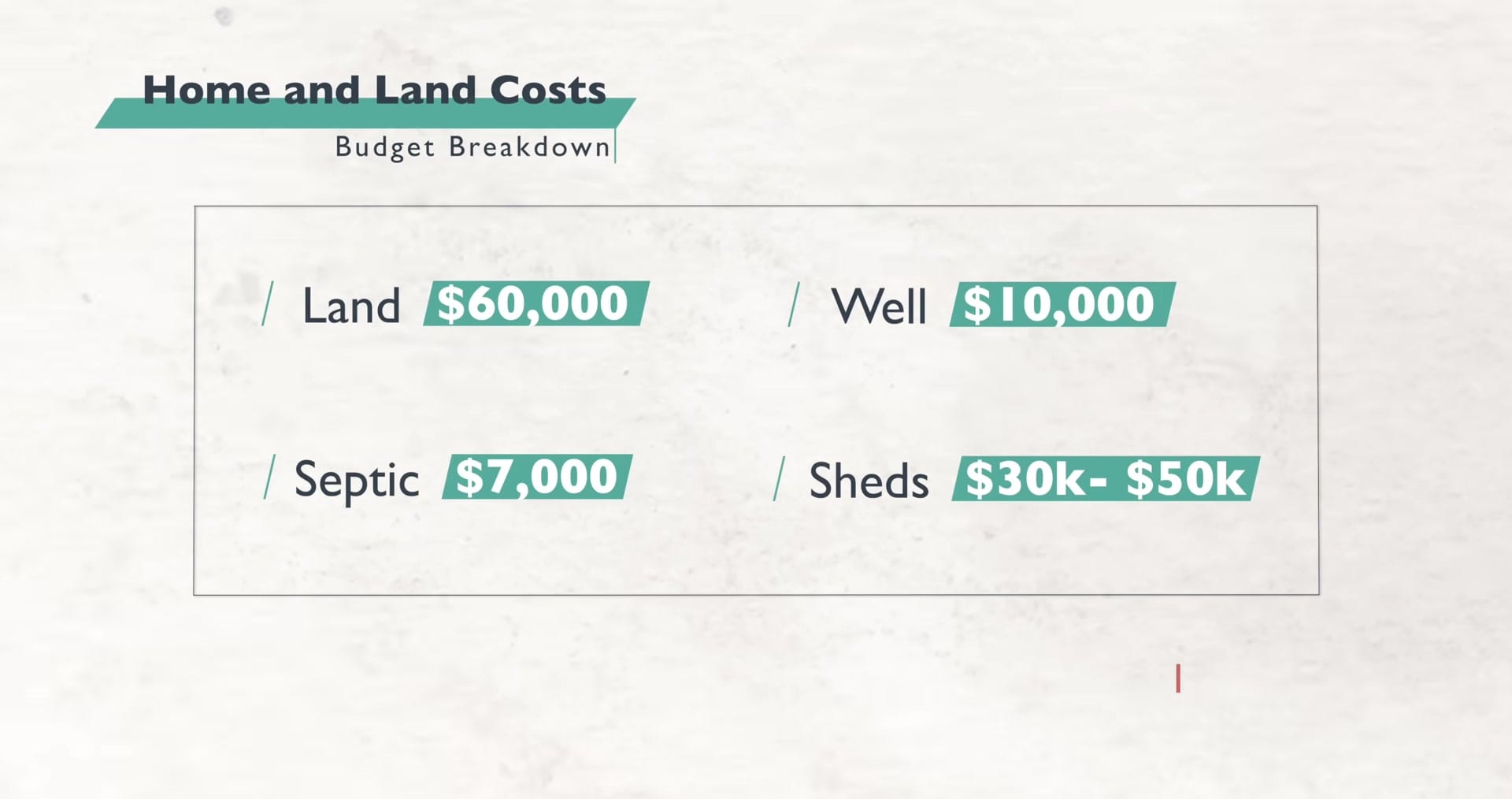
Years later, neighbors who’d become family left them the 24 acres across the road—an unexpected gift that turned ten and a half into thirty-five. A deeper-than-usual well and a straightforward septic would anchor the basics. All in, from utilities to building out and furnishing the sheds, they estimate $100,000 to $125,000.
The move wasn’t polished—some weeks meant hoses for showers and outdoor cooking. But sweat equity stretched dollars and made the land feel earned.
Income comes from everywhere: chickens, vegetables, farm builds, and now a full-time Tiny Shed Life channel.
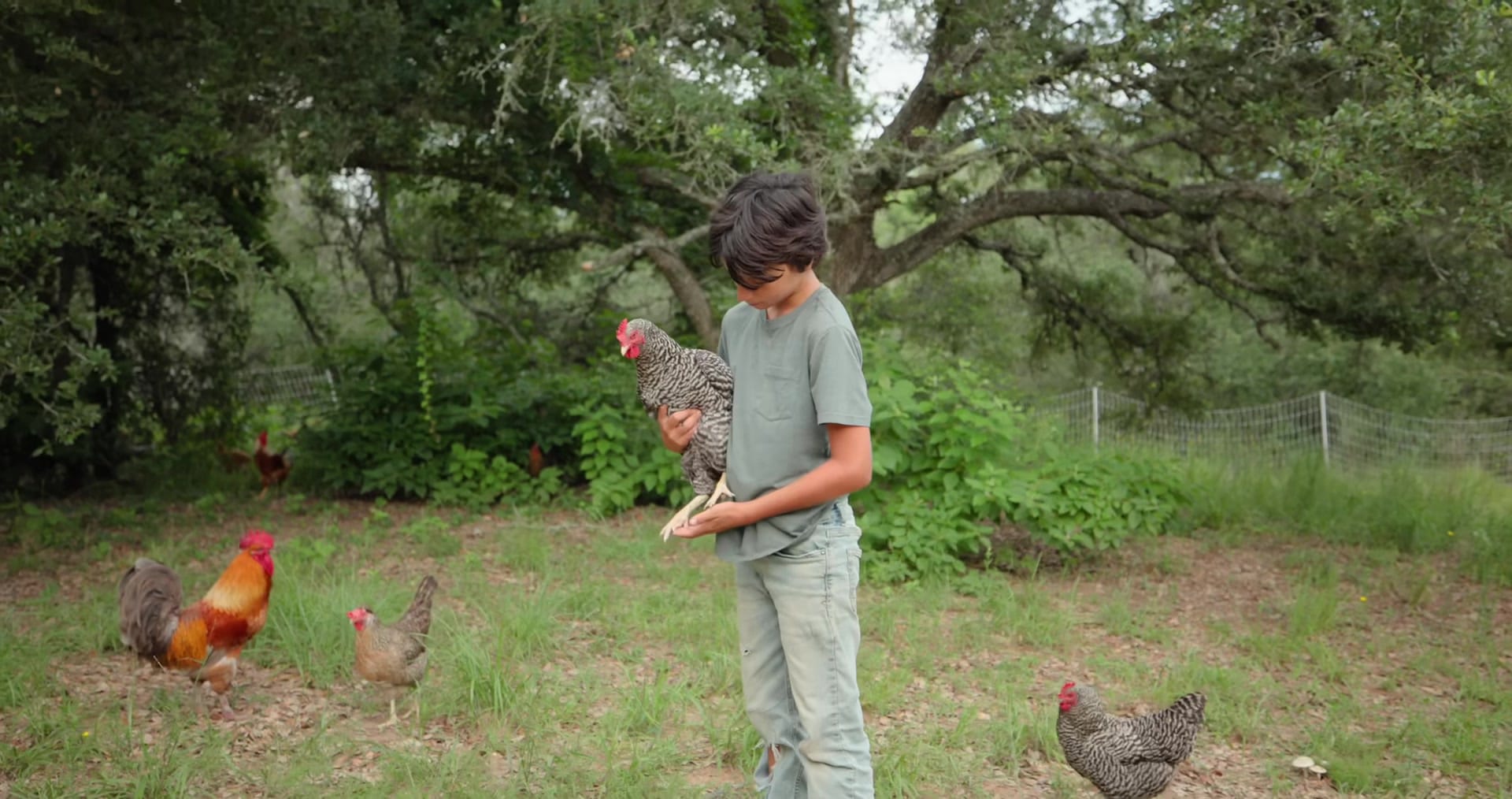
Downsizing freed them to quit the nine-to-five and go all in on the homestead. The lifestyle spills outside, where the front porch becomes living room number two. In Texas, a porch is mandatory—this one holds books, schoolwork, and sunrise coffee on the steps.
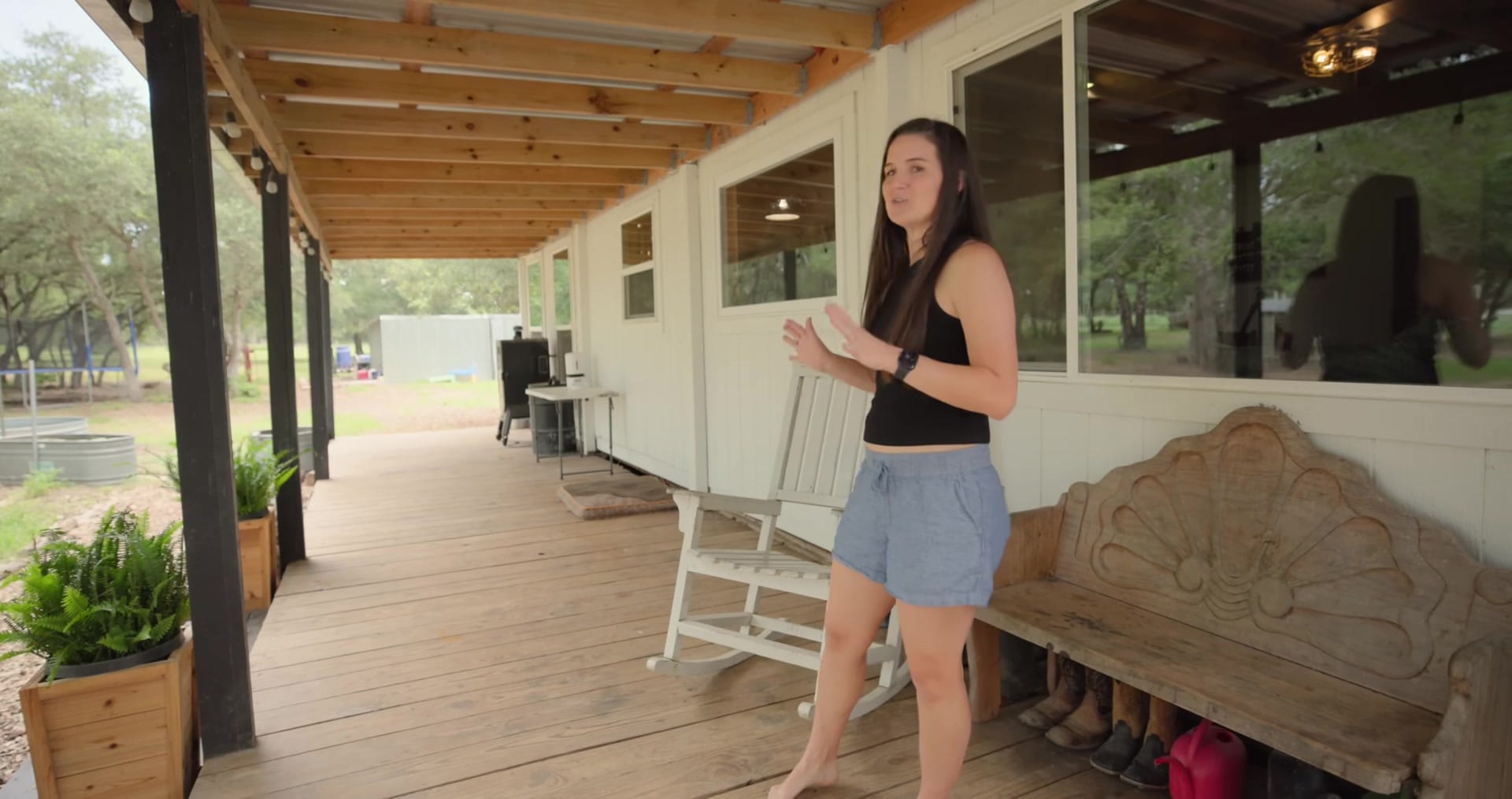
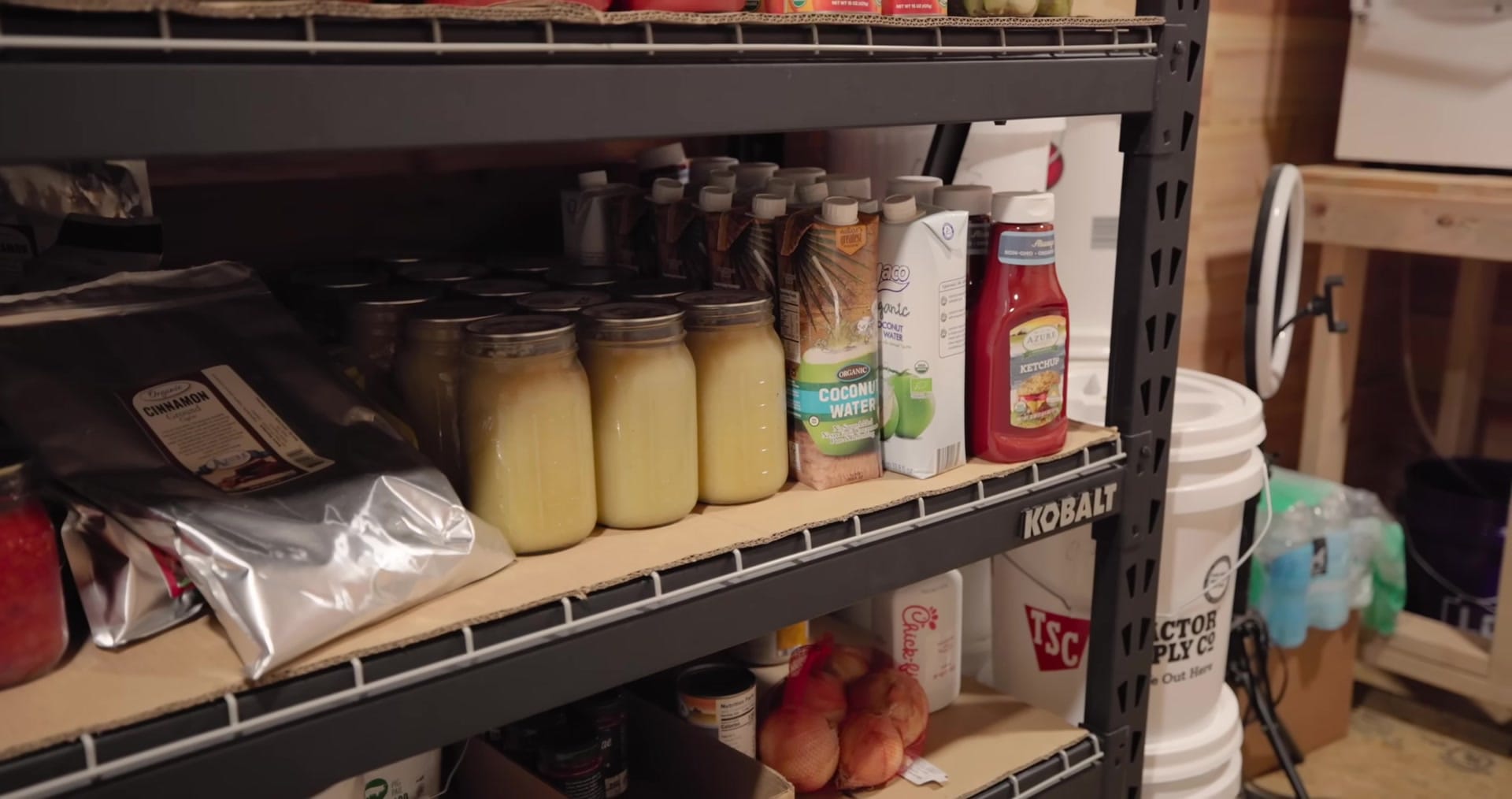
A butterfly garden pulls in pollinators, lily pads bloom in a trough, and an oversized stock tank doubles as a safe summer pool. For storage, an eight-by-fifteen cold pantry keeps produce and home-canned food happy longer. Insulated with closed-cell spray foam and lined in cedar, it’s the cool, bug-resistant workhorse that lets them shop once a month and stay home if they want.