Chicken Chow Mein Casserole
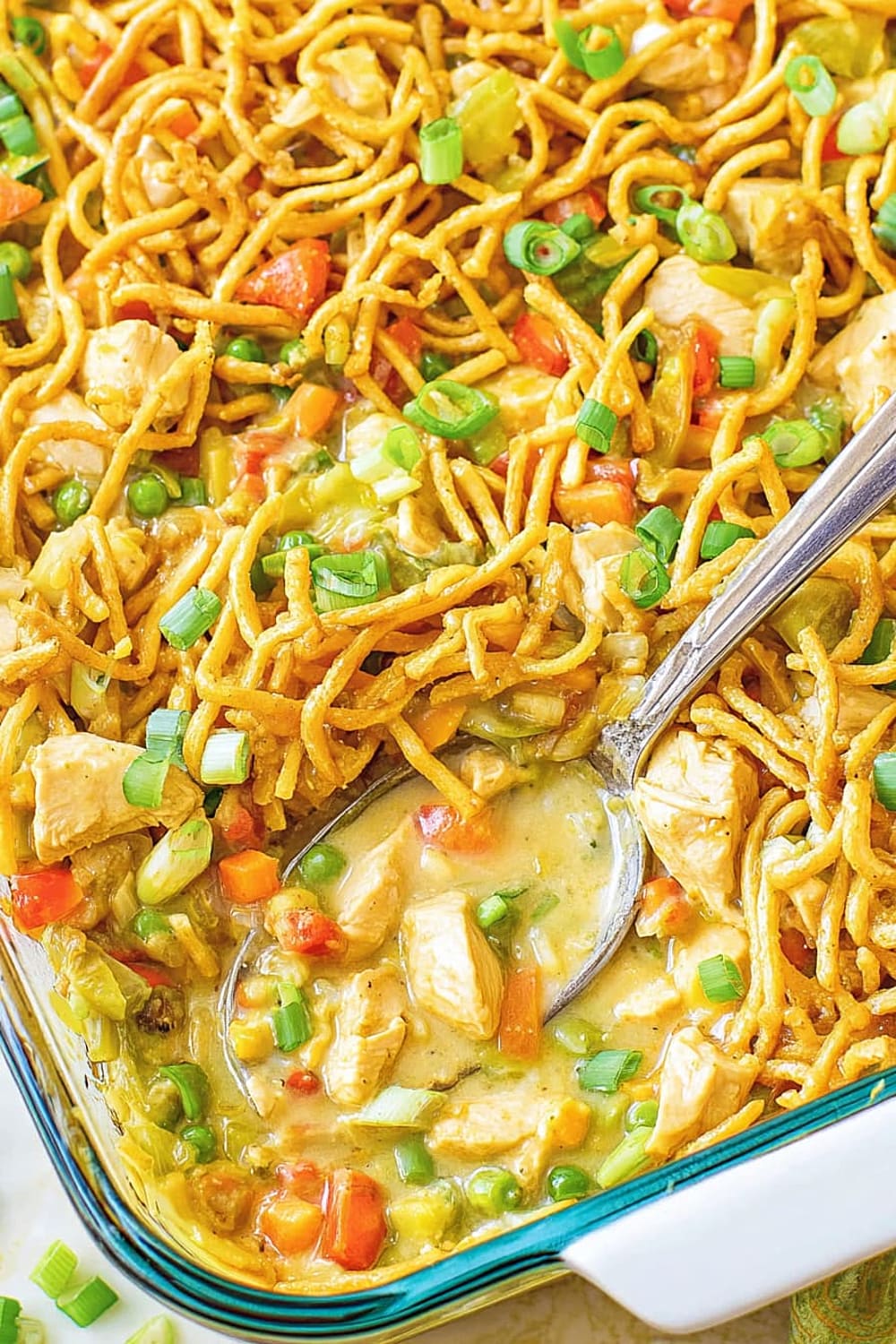
This casserole is basically the comfort food equivalent of a warm hug from your favorite takeout joint, except you don’t have to put on pants to get it.
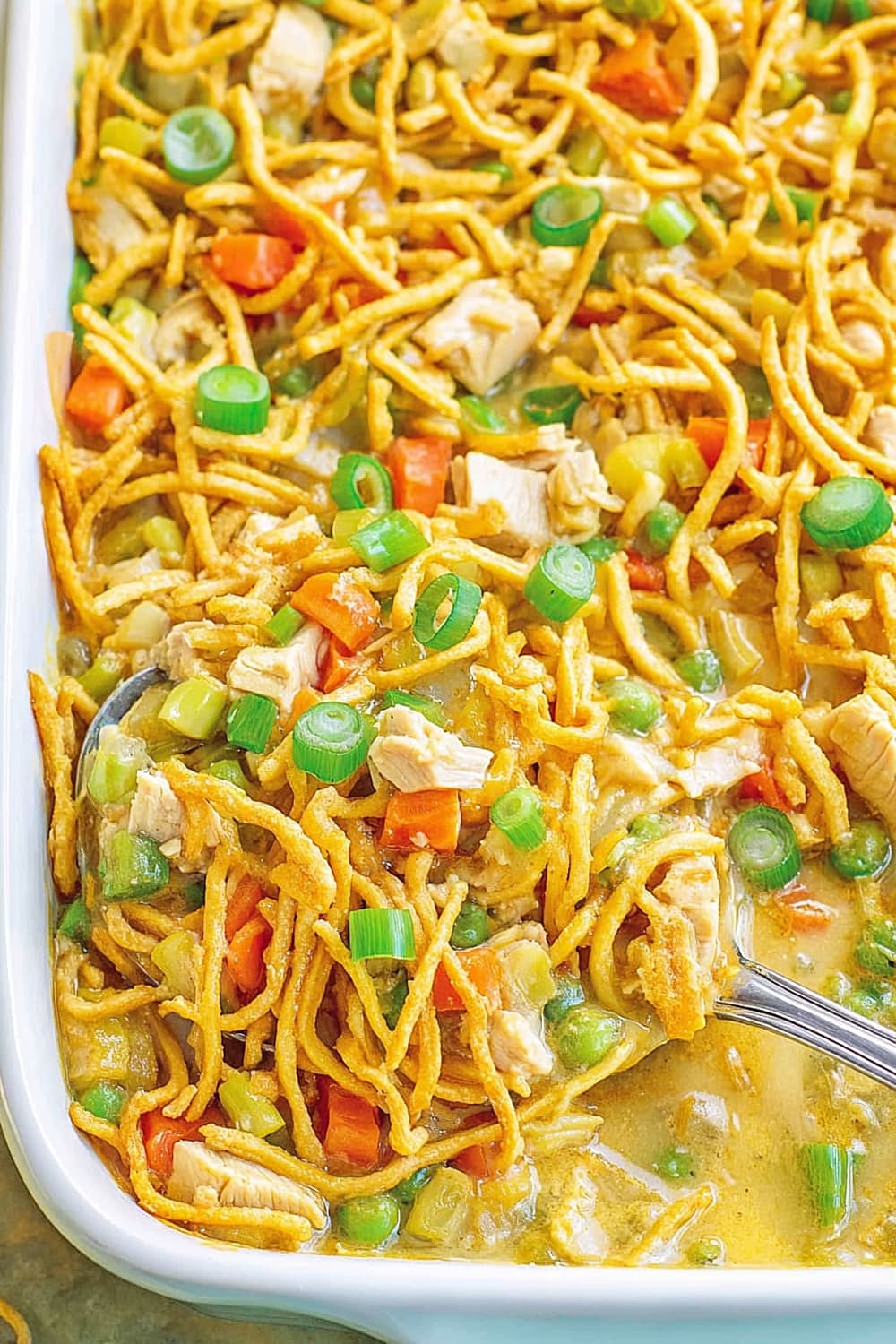
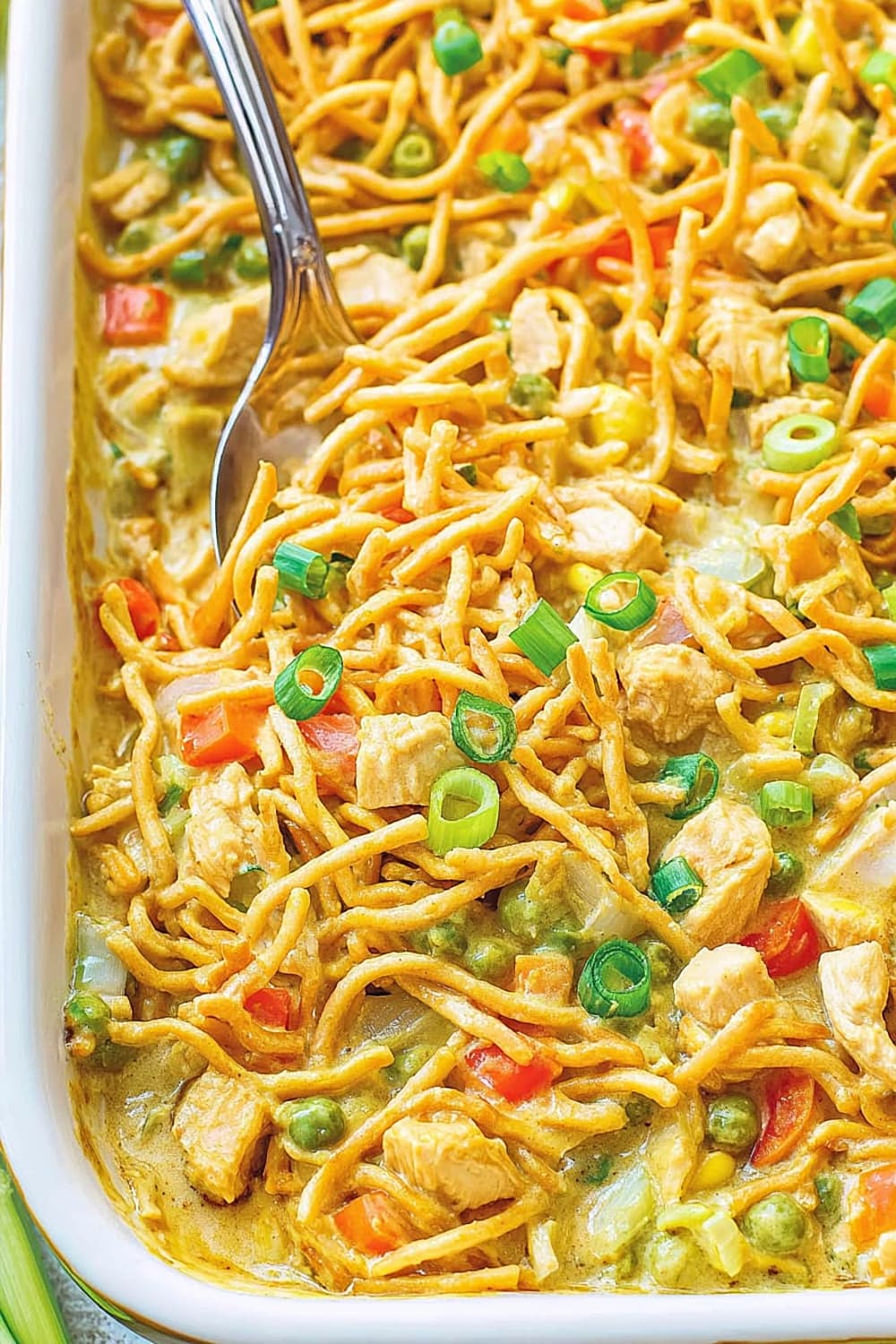
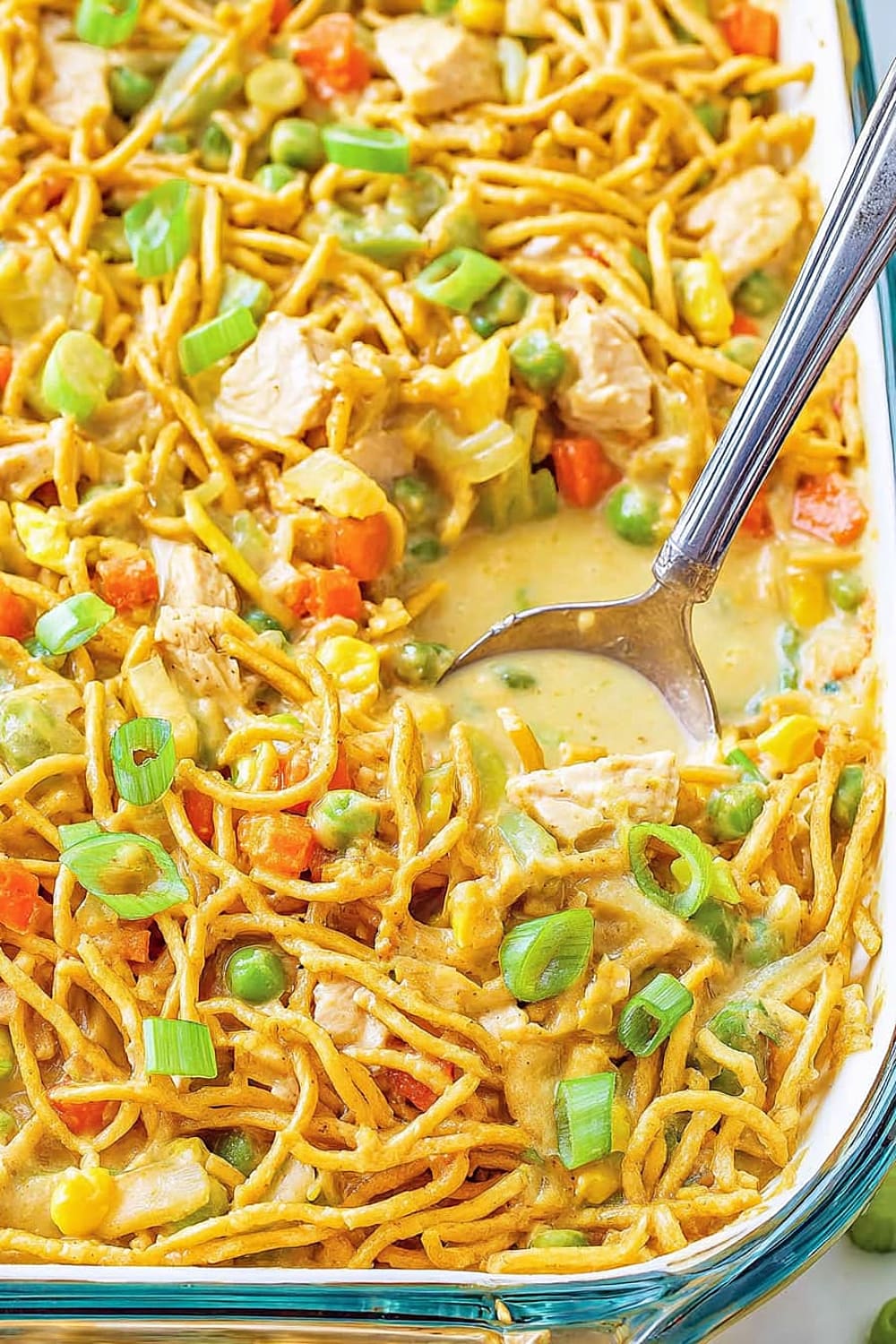
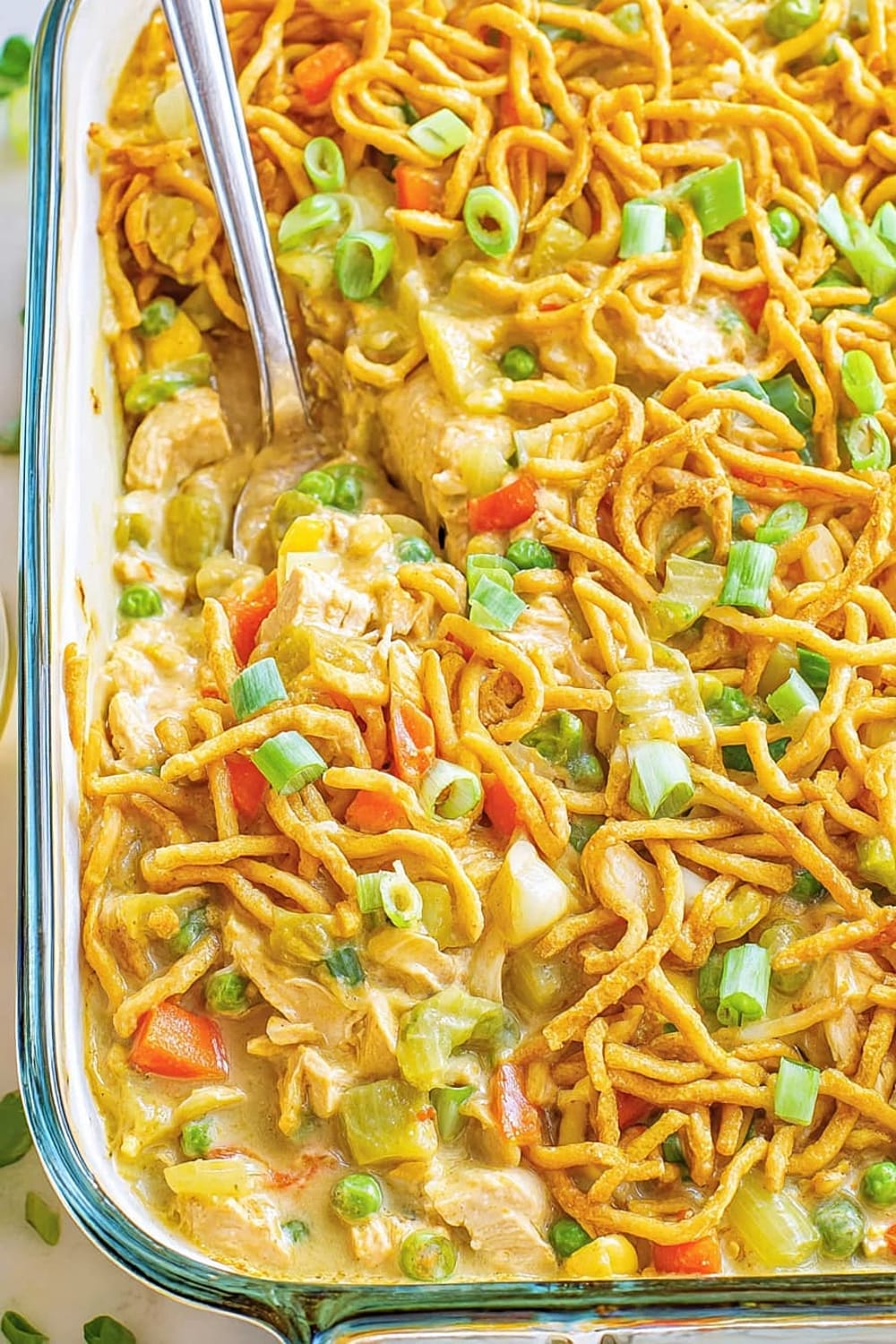
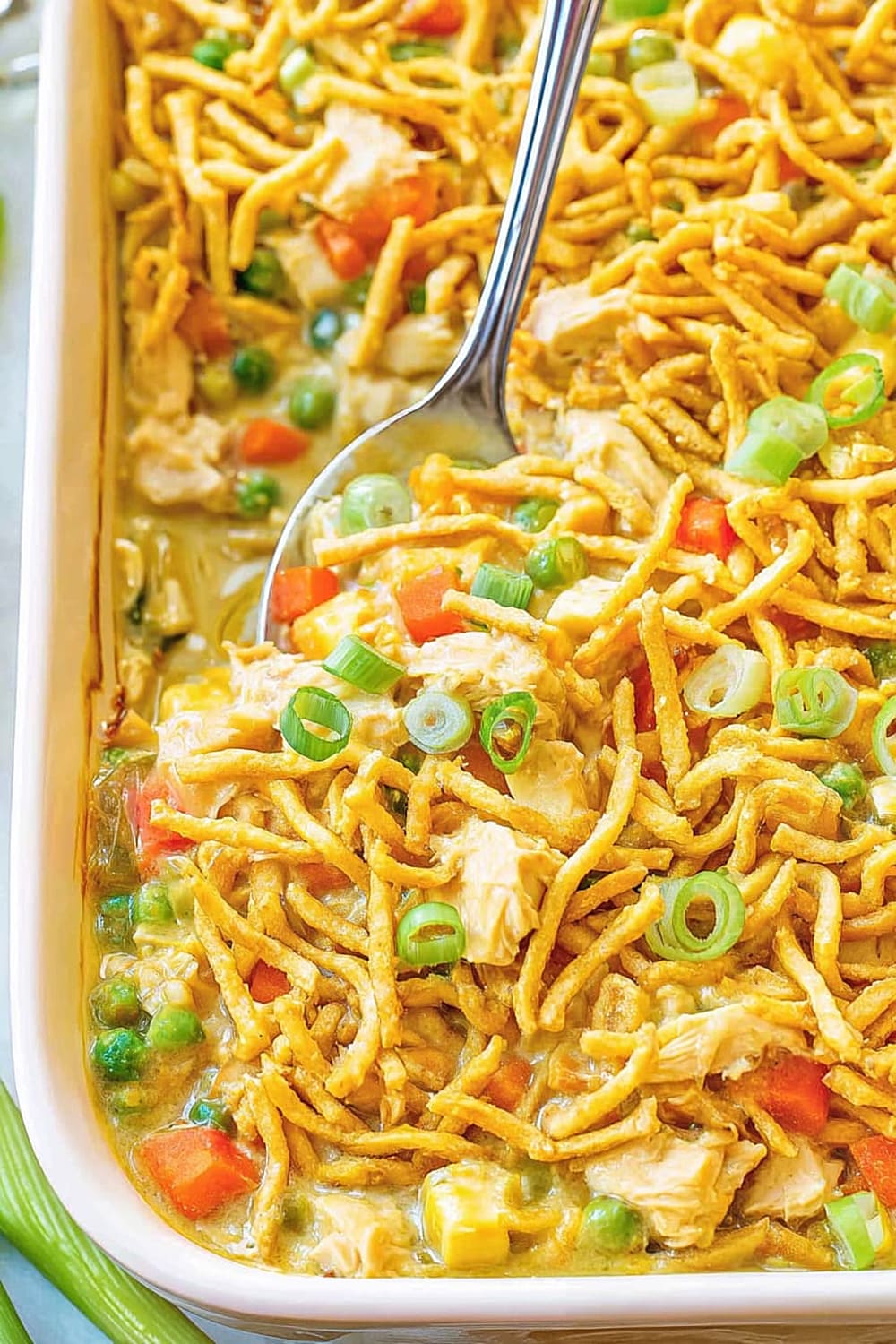
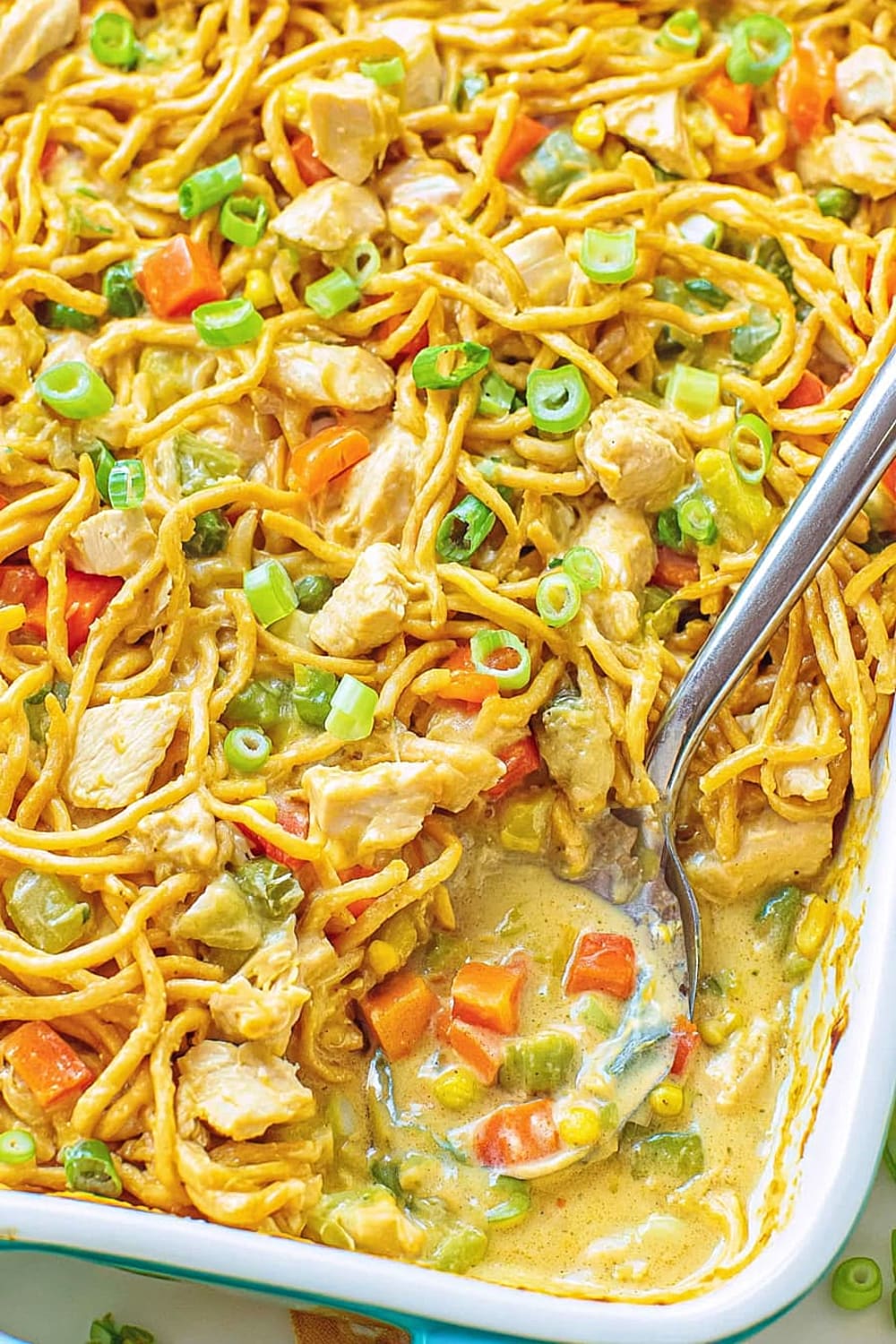
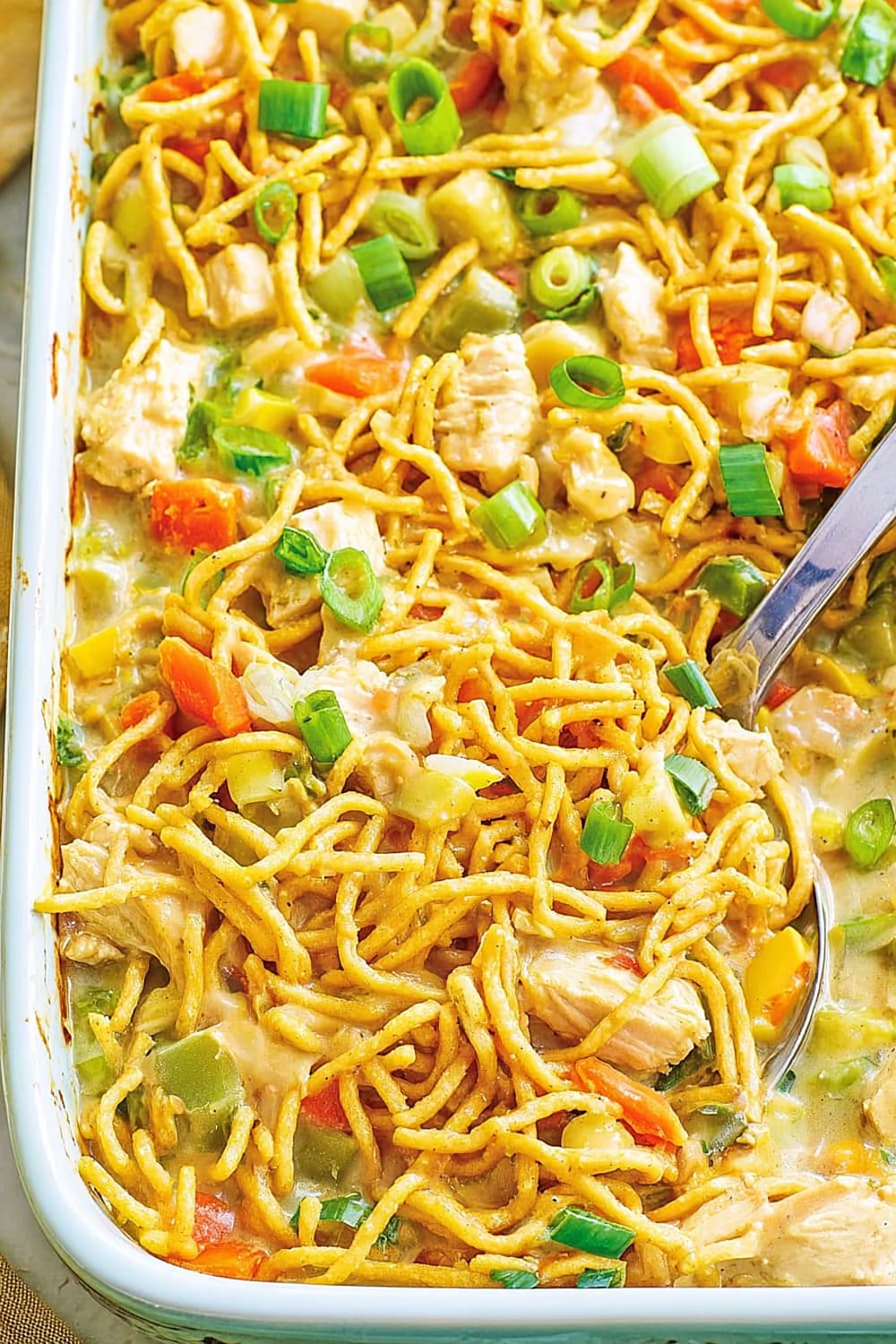
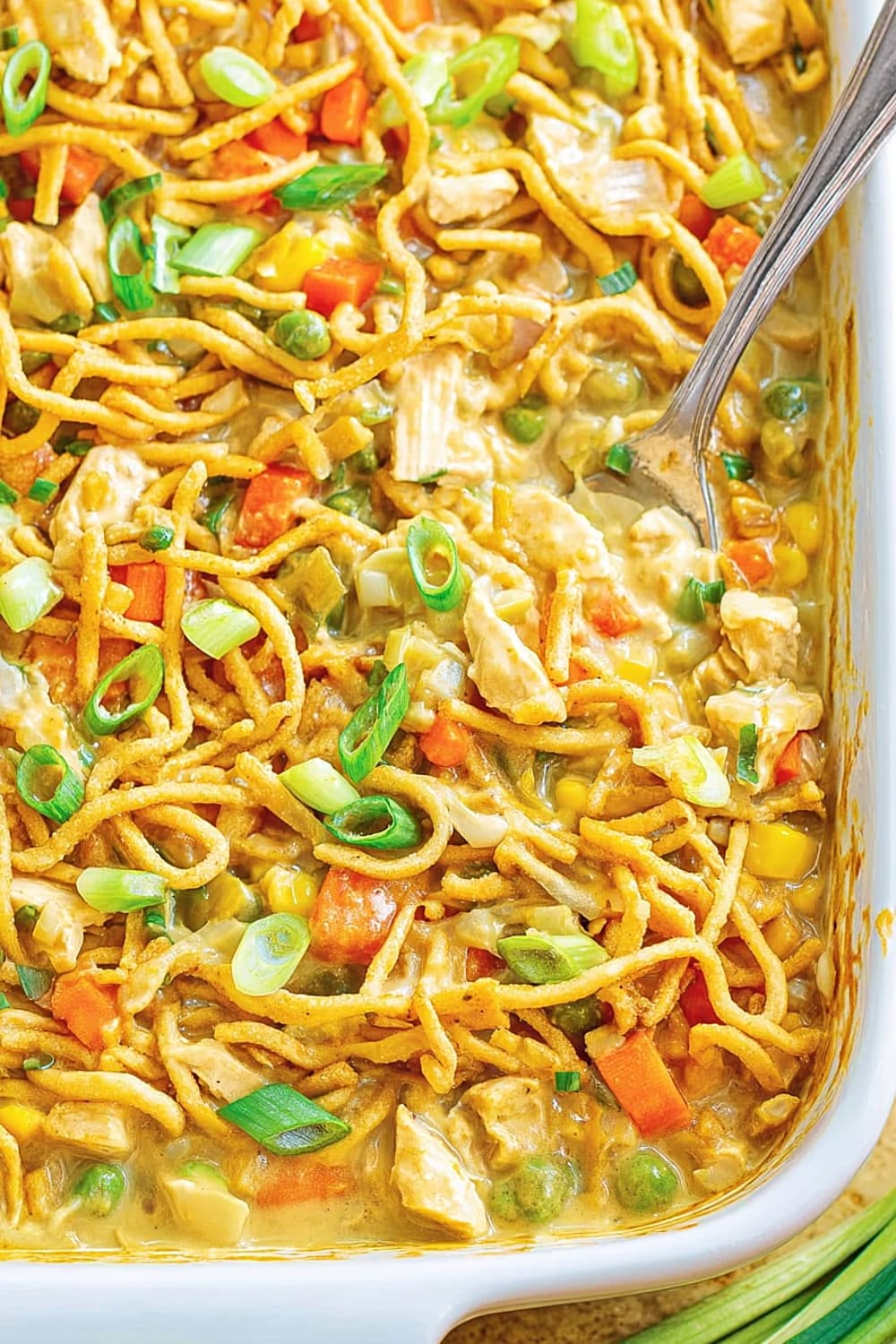
Picture all those classic chow mein flavors – savory chicken, crispy water chestnuts, and those addictive crunchy noodles – but transformed into a bubbling, golden casserole that’ll make your kitchen smell like pure happiness.
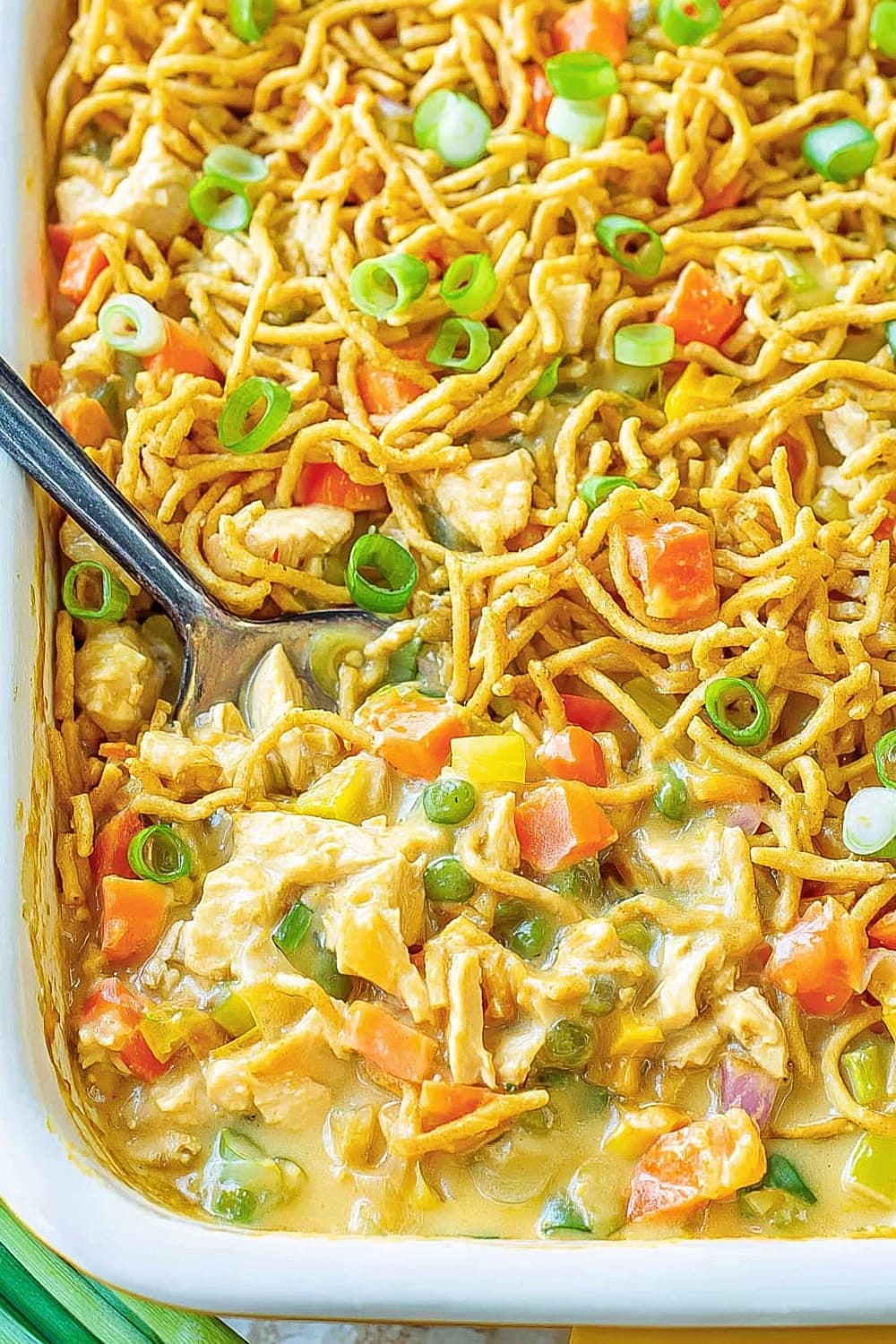
The genius here is how those chow mein noodles work double duty: some get mixed right into the creamy base for texture, while others go on top to create that irresistible crunchy layer that everyone fights over.
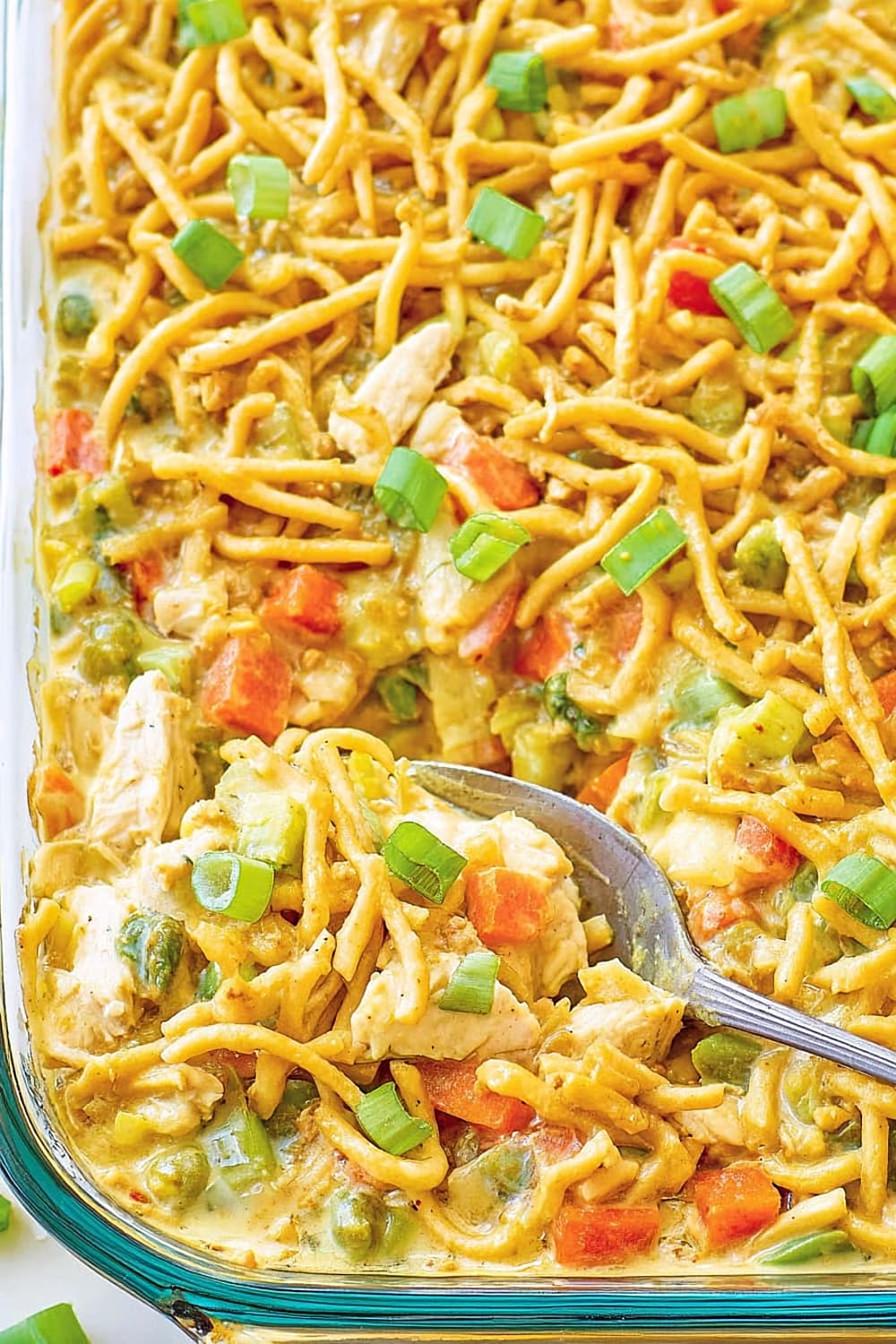
This is the kind of recipe that makes you look like a culinary mastermind while secretly being easier than explaining why you ordered takeout three times this week.
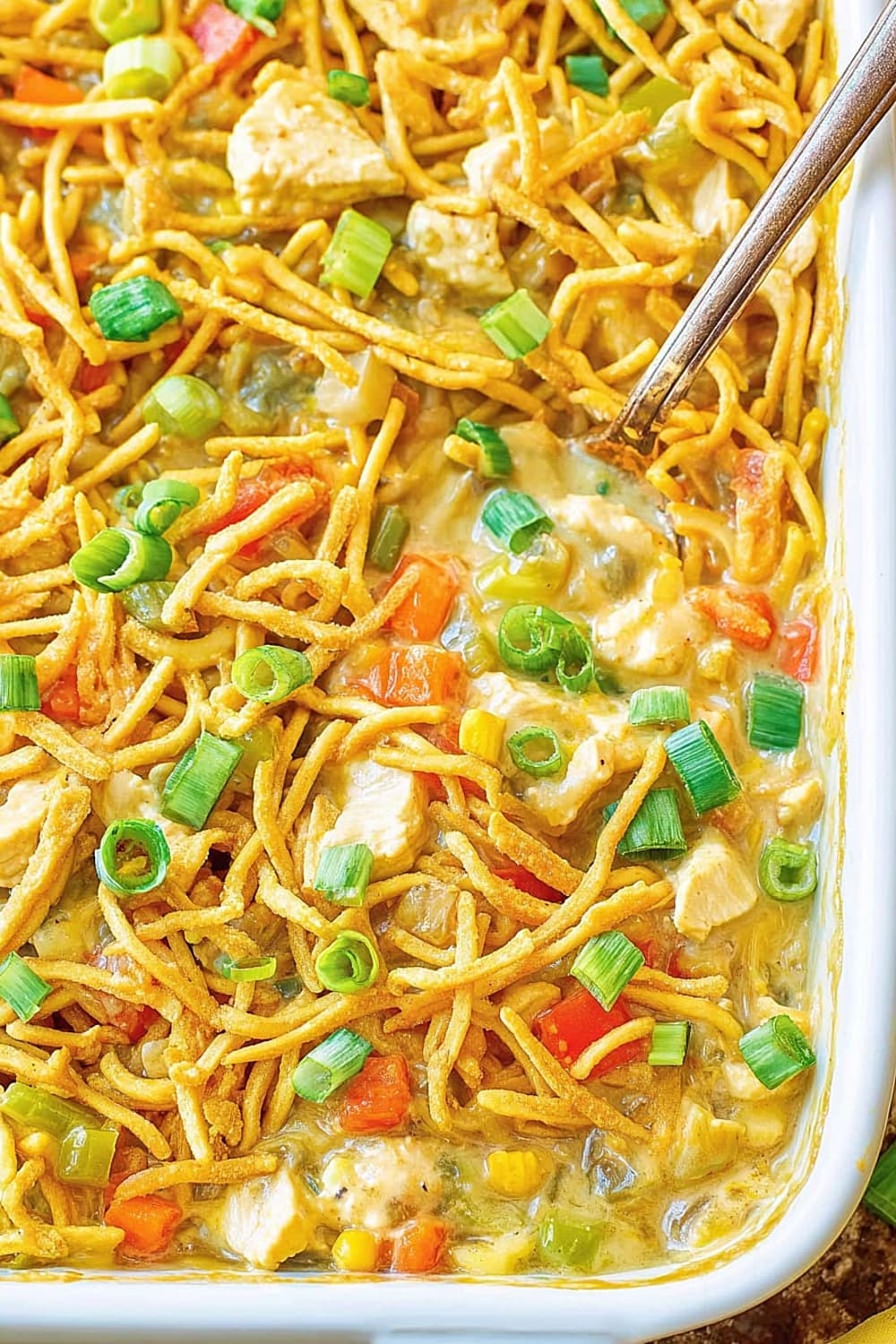
Every forkful delivers that perfect balance of creamy, crunchy, and savory that’ll have people asking for the recipe before they’ve even finished their first serving.
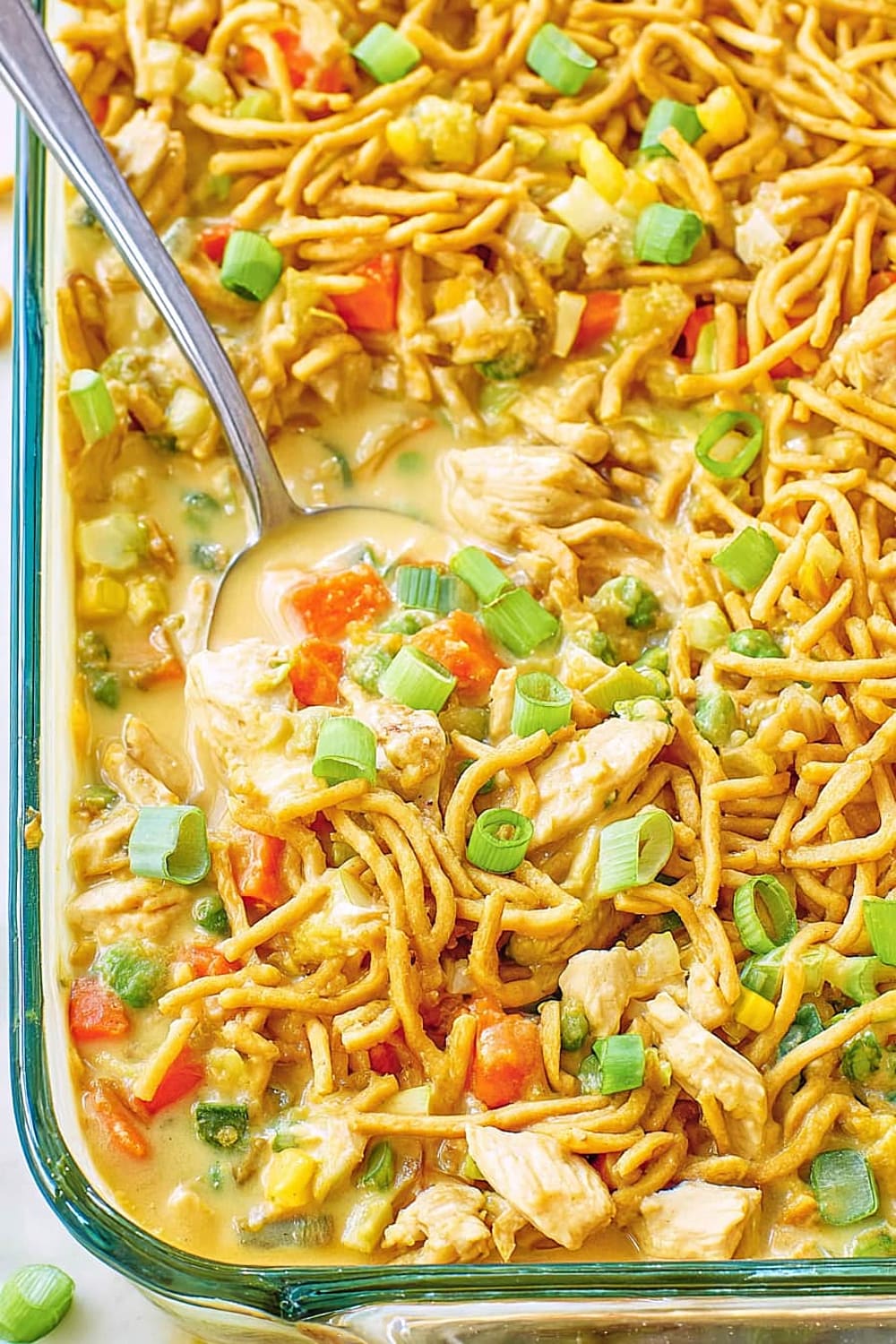
Fair warning: this casserole has been known to disappear faster than your motivation to meal prep on Sunday nights.
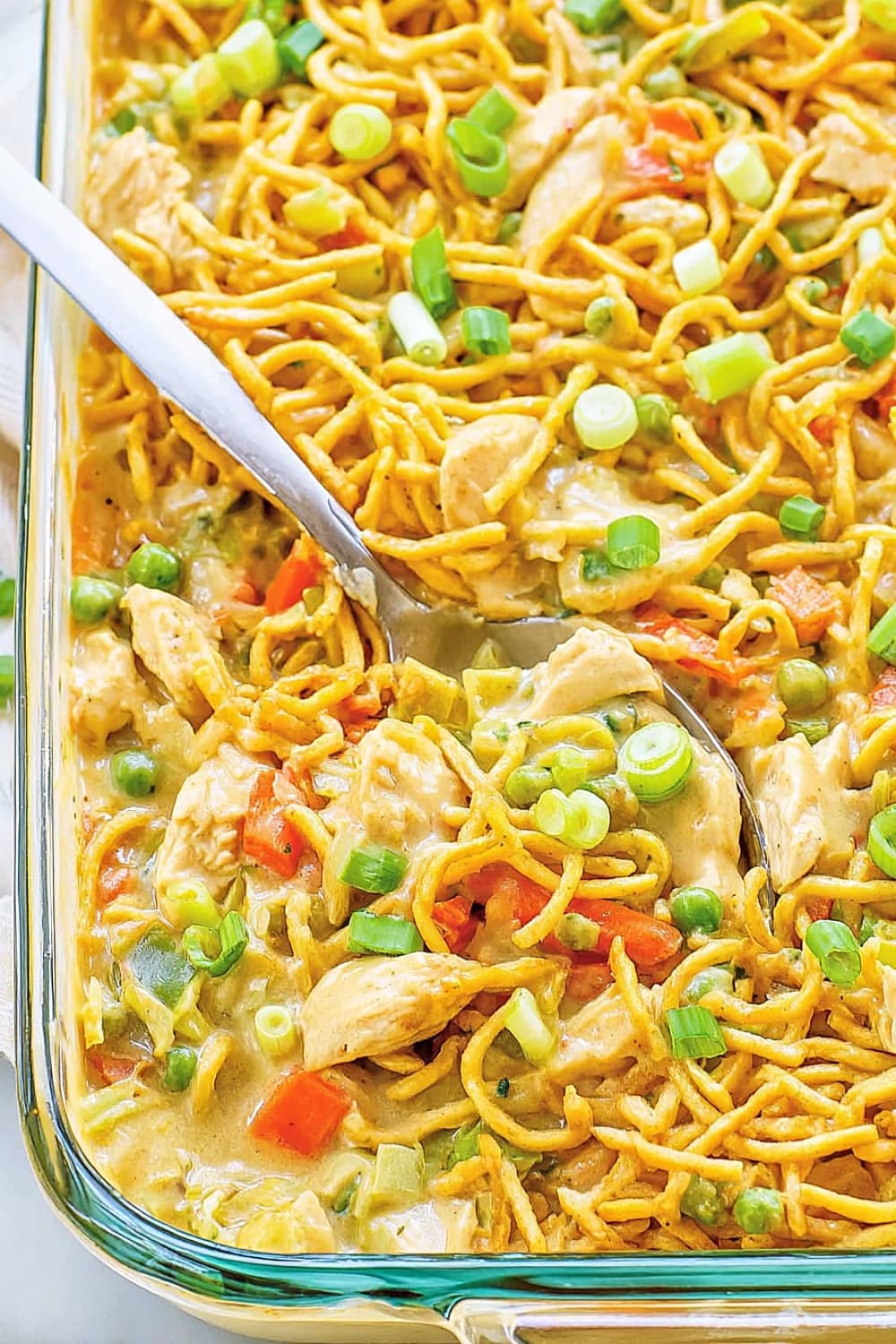
Ingredients
For the base
- 3 tablespoons salted butter
- 2 stalks celery, finely diced
- ½ onion, finely diced
- 2 carrots, finely diced
- 2 cloves garlic, minced
- 2 tablespoons diced pimentos
- 8 ounce can water chestnuts, drained and roughly chopped
For the sauce
- 10 .5 ounce can cream of chicken soup
- 10 .5 ounce can chicken and rice soup
- ½ can milk (use one of the soup cans for measurement)
- 2 teaspoons pepper
- 2 teaspoons low sodium soy sauce
For the filling
- 2½ cups cooked, diced chicken (about one whole rotisserie chicken)
- 1 cup chow mein noodles
For the topping
- 1 cup chow mein noodles
- Sliced green onions for garnish
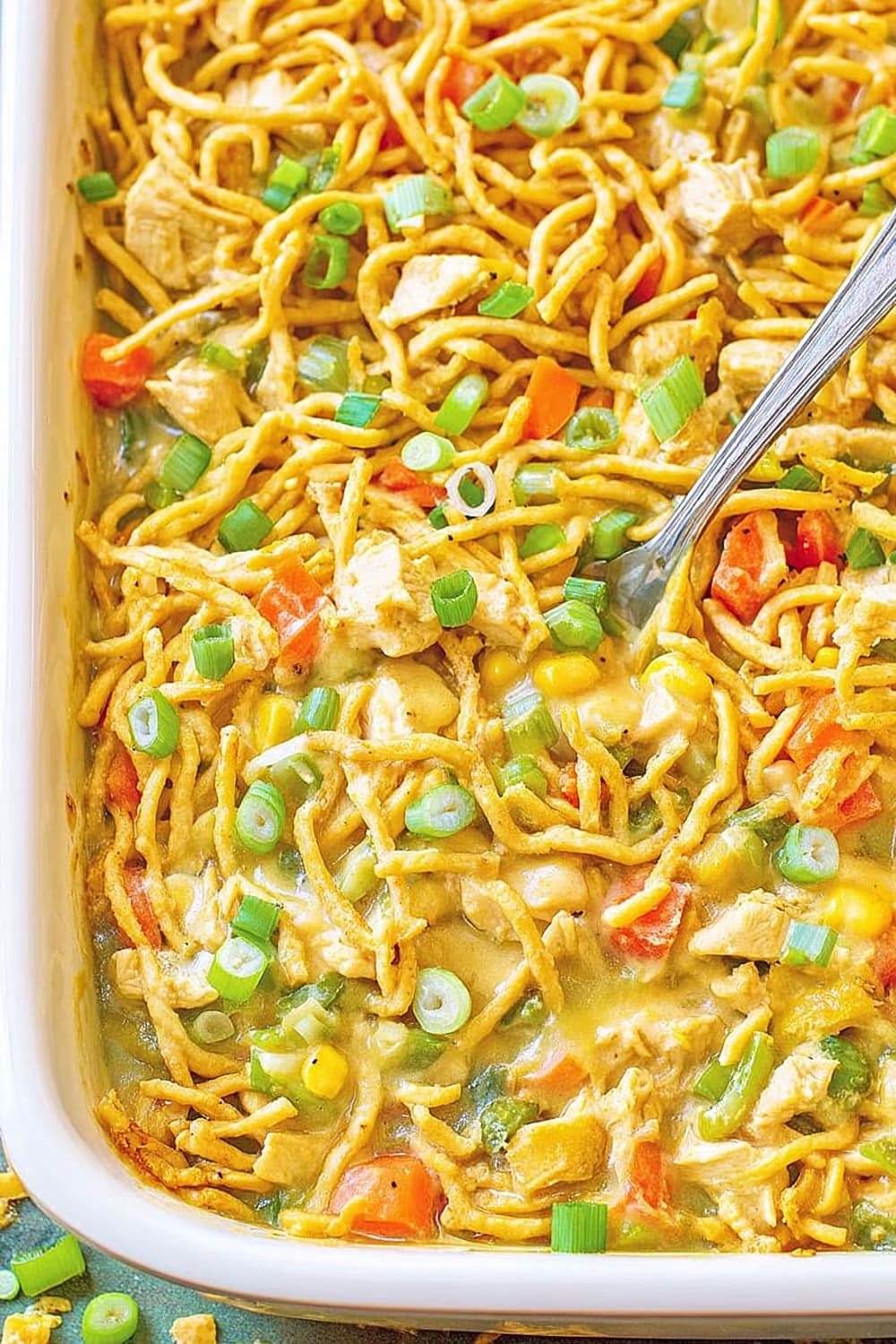
Instructions
Preparation
- 1 Preheat your oven to 375°F (190°C) and spray a 9×13-inch casserole dish with nonstick cooking spray. Using a quality casserole dish ensures even heat distribution and prevents sticking during the longer baking time.
- 2 In a large, deep skillet (preferably a cast iron skillet for superior heat retention), add 3 tablespoons salted butter over medium heat until completely melted and beginning to foam slightly. The foaming indicates the butter is at the perfect temperature for sautéing vegetables.
Building the vegetable base
- 3 Once the butter is melted, add the 2 stalks finely diced celery, ½ onion finely diced, and 2 carrots finely diced. Turn the heat up to medium-high and cook, stirring constantly with a wooden spoon or silicone spatula, until the vegetables are starting to soften, about 3-5 minutes. You’ll know they’re ready when the onions become translucent and the carrots begin to lose their raw crunch.
- 4 Turn the heat back down to medium to prevent the garlic from burning. Add 2 cloves minced garlic, 2 tablespoons diced pimentos, and the 8 ounce can of water chestnuts (drained and roughly chopped). Cook for about 30 seconds, stirring constantly until the garlic becomes fragrant but not browned. This brief cooking time preserves the garlic’s flavor while eliminating its harsh raw bite.
Creating the creamy sauce
- 5 Add the 10.5 ounce can cream of chicken soup, 10.5 ounce can chicken and rice soup, ½ can milk (measured using one of the empty soup cans), 2 teaspoons pepper, and 2 teaspoons low sodium soy sauce. Stir thoroughly to combine all ingredients into a smooth, creamy mixture. At this point, taste the mixture and adjust seasoning as needed – this is your chance to perfect the flavor before baking.
Final assembly
- 6 Stir in the 2½ cups cooked, diced chicken and 1 cup chow mein noodles until evenly distributed throughout the mixture. The noodles will soften slightly from the heat but maintain some texture, which adds interest to the final dish.
- 7 Transfer the entire mixture to your prepared casserole dish, spreading it evenly with a spatula. Top evenly with the remaining 1 cup chow mein noodles, ensuring good coverage for maximum crunch in every bite.
Baking and finishing
- 8 Cover the dish tightly with aluminum foil to prevent the top from browning too quickly and to ensure even cooking throughout. The foil traps steam, which helps the casserole heat evenly and prevents the noodles from burning.
- 9 Bake for 30 minutes or until the casserole is bubbling around the edges and heated through to the center. You can test doneness by inserting a knife into the center – it should come out hot to the touch, indicating the casserole has reached the proper internal temperature.
- 10 Allow the casserole to cool for 5-10 minutes before serving. This resting time allows the mixture to thicken slightly as it cools, making it easier to serve neat portions. Garnish with sliced green onions just before serving for a fresh color contrast and mild onion flavor.
Recommended Equipment and Kitchen Tools
Recommended Tools (for best results):
- Large deep skillet or cast iron skillet – Essential for properly sautéing the vegetables and building the sauce base. The deep sides prevent splashing, while cast iron provides superior heat retention and even cooking temperatures throughout the process.
- 9×13-inch casserole dish – The standard size ensures proper cooking time and even heat distribution. Glass or ceramic dishes work best for even browning and easy cleanup.
- Sharp chef’s knife and cutting board – Critical for efficiently dicing vegetables to uniform sizes, which ensures even cooking and professional presentation.
Helpful Upgrades:
- Kitchen scale for measuring ingredients by weight rather than volume, especially helpful if you’re scaling the recipe up or down for different crowd sizes.
- Silicone spatula set for stirring and scraping – won’t scratch your cookware and handles high temperatures better than plastic alternatives.
- Instant-read thermometer to ensure the casserole reaches 165°F (74°C) throughout for food safety, particularly important when reheating leftovers.
Nice-to-Have Options:
- Food processor for quickly and uniformly dicing vegetables, saving significant prep time when making this recipe for larger groups.
- Quality storage containers for meal prep portions – this casserole reheats beautifully and makes excellent leftovers for busy weeknight dinners.
Recipe Variations and Dietary Modifications
Gluten-Free Adaptation:
- Replace chow mein noodles with gluten-free crispy rice noodles or crushed gluten-free crackers for the crunchy element
- Verify that your cream of chicken soup is gluten-free certified, as some brands contain wheat-based thickeners
- Consider adding 1 tablespoon cornstarch mixed with 2 tablespoons cold water if the mixture seems too thin without wheat-based soup thickeners
Dairy-Free Modifications:
- Substitute butter with 3 tablespoons olive oil or vegan butter substitute
- Replace milk with unsweetened coconut milk or oat milk for similar creaminess
- Use dairy-free cream of mushroom soup instead of cream of chicken for rich flavor
Low-Carb Version:
- Replace chow mein noodles with crushed pork rinds or toasted almonds for crunch
- Substitute cauliflower rice for the noodles mixed into the base
- Use cream of mushroom soup instead of chicken and rice soup to reduce carb content
- Add extra vegetables like diced bell peppers or mushrooms for bulk without carbs
Flavor Variations:
- Asian-inspired: Add 1 teaspoon sesame oil and 1 tablespoon rice vinegar for authentic flavor depth
- Spicy version: Include 1-2 diced jalapeños with the vegetables or 1 teaspoon sriracha in the sauce
- Vegetable-loaded: Add 1 cup frozen peas, sliced mushrooms, or diced bell peppers for extra nutrition and color
Nutritional Information and Health Benefits
Key Nutritional Highlights:
This hearty casserole provides approximately 320-350 calories per serving, with a balanced macronutrient profile featuring 25-28 grams protein from the chicken and soups, 18-22 grams carbohydrates primarily from vegetables and noodles, and 15-18 grams fat from the butter and cream-based soups. Each serving delivers significant vitamin A from carrots, vitamin C from celery and pimentos, and potassium from the water chestnuts and vegetables.
Health Benefits of Main Ingredients:
The rotisserie chicken provides complete protein containing all essential amino acids necessary for muscle maintenance and satiety. Water chestnuts contribute unique potassium and manganese while adding satisfying crunch with minimal calories. Carrots deliver beta-carotene, which converts to vitamin A for eye health and immune function. The celery provides antioxidants and fiber while contributing minimal calories, and the garlic offers allicin compounds known for their anti-inflammatory and immune-supporting properties.
Dietary Considerations:
This recipe contains gluten (from potential soup thickeners and chow mein noodles), dairy (butter and milk), and soy (soy sauce and potentially in noodles). The moderate sodium content makes it suitable for most diets when consumed as part of balanced meals. The combination of protein, vegetables, and moderate carbohydrates makes this an excellent comfort food option that provides sustained energy without excessive calories.
Smart Swaps and Ingredient Substitutions
Common Substitutions:
- Rotisserie chicken → 2½ cups diced cooked turkey, canned chicken (drained), or leftover grilled chicken for convenient protein options
- Cream of chicken soup → Cream of mushroom or cream of celery soup for different flavor profiles while maintaining creamy texture
- Water chestnuts → Diced jicama, sliced almonds, or diced apples for similar crunch with slightly different flavor notes
- Chow mein noodles → Crushed potato chips, French fried onions, or panko breadcrumbs for alternative crunchy toppings
Budget-Friendly Swaps:
- Fresh vegetables → Frozen mixed vegetables (thawed and drained) saves prep time and money while providing similar nutrition
- Rotisserie chicken → Canned chicken breast or chicken thighs cooked and diced at home for significant cost savings
- Individual soup cans → Family-size cans divided between multiple recipes for better value
Pantry Emergency Substitutions:
- Fresh garlic → 1 teaspoon garlic powder or 2 teaspoons minced garlic from jar
- Fresh celery → 1 teaspoon celery seed plus extra diced onion for similar flavor base
- Soy sauce → Worcestershire sauce or tamari for umami depth without soy if needed
Pro Tips for Substitutions:
- When using frozen vegetables, thaw completely and pat dry to prevent excess moisture in the casserole
- Adjust cooking times by 5-10 minutes when substituting different proteins, checking internal temperature reaches 165°F (74°C)
Make It Diabetes-Friendly
Carb Reduction Strategies:
- Replace 1 cup chow mein noodles in the base with 1 cup cauliflower rice or diced zucchini to reduce carbs by approximately 15-20 grams
- Use sugar-free cream soups when available, or make homemade versions with low-sodium chicken broth thickened with xanthan gum
- Substitute unsweetened almond milk for regular milk to save 6-8 grams carbs per serving
Portion & Blood Sugar Management:
- Recommended serving size: 1 cup (instead of larger portions) paired with 2 cups leafy green salad to increase fiber and slow glucose absorption
- Estimated carbs per modified serving: 12-15 grams (compared to 18-22 grams in original recipe)
- Best timing: Serve as lunch or early dinner when insulin sensitivity is typically higher
Protein & Fiber Boosters:
- Add 1 cup steamed broccoli or green beans to increase fiber content and slow carbohydrate absorption
- Include ¼ cup chopped nuts in the topping for healthy fats that help stabilize blood sugar
- Pair with grilled chicken breast or baked salmon to increase protein ratio
Total Carb Reduction: Modified version contains approximately 30-35% fewer carbohydrates than original recipe while maintaining satisfying flavors and textures.
Perfect Pairing Suggestions
Beverage Pairings:
A crisp Pinot Grigio or Sauvignon Blanc cuts through the creamy richness while complementing the Asian-inspired flavors, while light lagers or wheat beers provide refreshing contrast without overwhelming the dish. For non-alcoholic options, iced green tea with lemon enhances the Asian flavor profile, or sparkling water with lime cleanses the palate between bites. Hot jasmine tea makes an excellent after-dinner choice that aids digestion.
Side Dish Recommendations:
Steamed edamame with sea salt provides protein and fiber while staying within the Asian theme. A crisp cucumber salad with rice vinegar dressing offers cooling contrast to the warm, creamy casserole. Stir-fried bok choy or garlicky green beans add vibrant color and fresh vegetable flavors that complement without competing. Brown rice or quinoa pilaf can extend the meal for heartier appetites while adding whole grain nutrition.
Complete Meal Ideas:
Start with wonton soup or hot and sour soup for an authentic Asian-inspired dinner party. Follow the casserole with fresh fruit salad featuring pineapple, mandarin oranges, and kiwi for a light, refreshing finish. For casual family dinners, serve alongside egg rolls or pot stickers for a complete takeout-style experience at home.
Occasion Suggestions:
Perfect for potluck dinners, casual entertaining, and meal prep Sundays. The make-ahead friendly nature makes it ideal for busy weeknight dinners or holiday gatherings where you want comfort food without last-minute stress. Excellent choice for new parent meal trains since it reheats beautifully and provides satisfying, nourishing comfort food.
Pro Tips and Troubleshooting
Professional Techniques:
Salt your vegetables lightly while sautéing to draw out moisture and concentrate flavors – this prevents a watery casserole and intensifies the vegetable taste. Taste and adjust seasoning before baking since flavors meld but don’t intensify significantly during the oven time. Let the casserole rest for 10 minutes after baking; this allows the sauce to thicken naturally and makes serving much neater.
Common Mistake Prevention:
Don’t skip the vegetable sautéing step – raw vegetables release too much moisture during baking, creating a soggy casserole. Avoid overcooking the garlic during the sauté phase; burned garlic creates bitter flavors that permeate the entire dish. Don’t add the crunchy noodle topping until just before baking to maintain maximum crispiness.
Storage and Reheating:
Refrigerate leftovers within 2 hours and consume within 3-4 days. Reheat individual portions in the microwave at 70% power for 2-3 minutes, stirring halfway through. For oven reheating, cover with foil and warm at 325°F (165°C) for 15-20 minutes. Freezer storage: Up to 3 months in airtight containers, though the noodle texture may soften slightly upon thawing.
Make-Ahead Strategies:
Assemble completely up to 24 hours ahead, cover tightly, and refrigerate. Add 10-15 minutes to baking time if cooking from cold. Prep vegetables up to 2 days ahead and store in the refrigerator for quicker assembly.
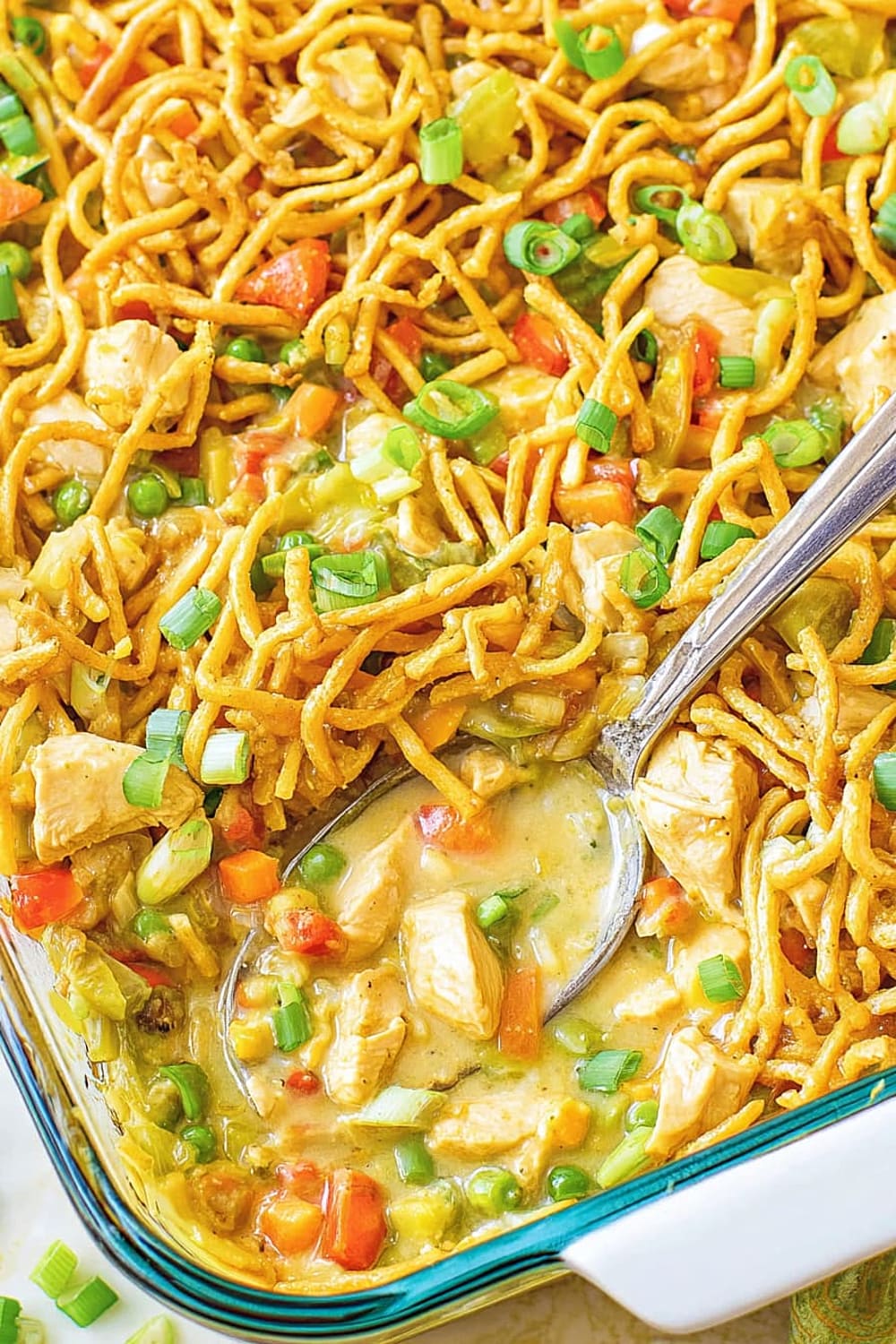
This Chicken Chow Mein Casserole proves that the best comfort food doesn’t require complicated techniques or exotic ingredients – just smart flavor combinations and a little bit of love stirred into every layer.