Biological male sweeps 5 women’s gold medals prompting fury and official investigation
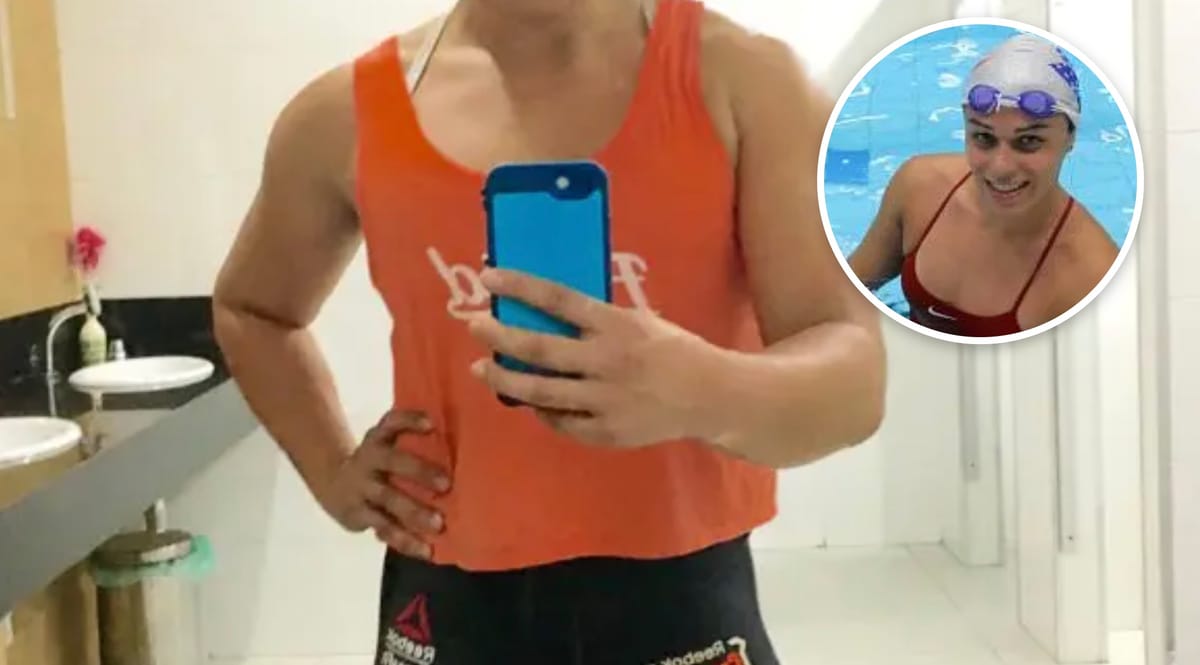
A championship swim meet ended not just with medals, but with a firestorm of controversy and an official investigation.
The reason? One swimmer didn’t just win; they dominated five separate women’s events, sparking outrage across social media.
What Just Happened at the Championships?
The venue was the U.S. Masters Swimming (USMS) Spring National Championship in Texas last weekend.
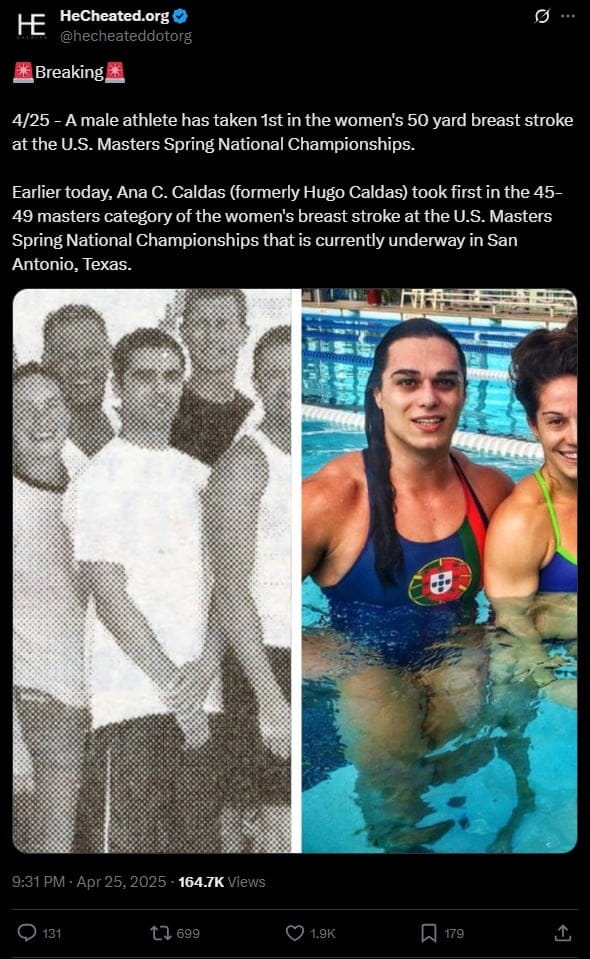
Competitor Ana Caldas, 47, entered five races in the women’s 45-49 age group.

Remarkably, Caldas secured gold in every single one: the 50-yard breaststroke, 100-yard breaststroke, 50-yard freestyle, 100-yard freestyle, and the 100-yard individual medley.
This clean sweep immediately raised eyebrows and triggered heated debate.
The Backlash Erupts Online
News of Caldas’s victories quickly spread online, prompting what Fox News described as significant “backlash on social media.”
Many comments centered on fairness, questioning how a biological male could compete, and dominate, in women’s categories.
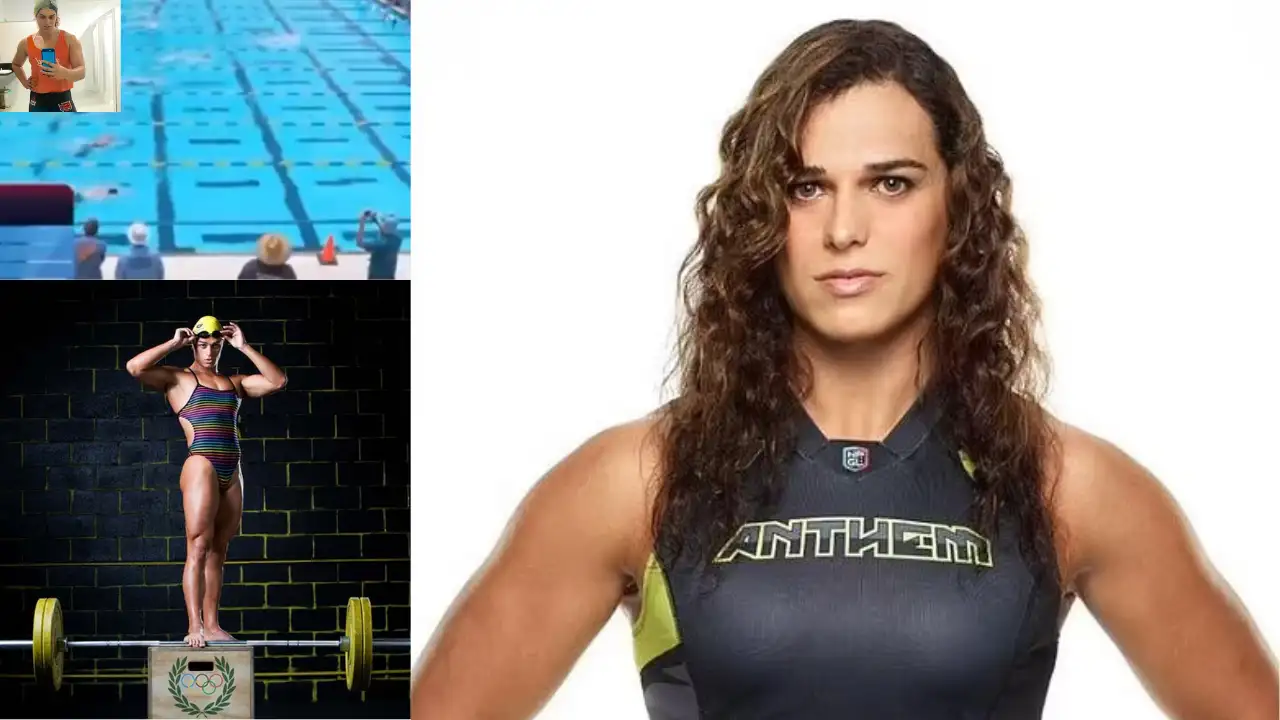
Concerns were voiced about the physical advantages biological males may retain even after hormone therapy, potentially disadvantaging female competitors.
The discussion reignited passionate arguments about the integrity of women’s sports.
Official Response Underway
Faced with the growing controversy, U.S. Masters Swimming issued a statement acknowledging the situation.
They confirmed awareness of the concerns surrounding Caldas’s eligibility.
The organization stated to Fox News Digital:
“USMS is aware of allegations regarding the eligibility of a swimmer who competed at our Spring National Championship. We have received an eligibility review request and will follow our formal process to make a determination.”
The statement also emphasized their dual mission:
“USMS exists to empower adults to improve their lives through swimming… but we also strive to create a community that values fairness, competition, and inclusion.”
Rules Under the Microscope
The current USMS policy on gender eligibility allows transgender swimmers to compete in the category matching their gender identity, provided certain conditions are met.
These rules, developed with expert input, require athletes transitioning to female to undergo hormone therapy.

Specifically, the policy mandates “hormonal therapy appropriate for the female gender has been administered continuously and uninterrupted in a verifiable manner for a sufficient length of time, no less than one year, to minimize gender-related advantages in sport competitions.”
Proof of sufficiently low testosterone levels is also required.
However, this approach contrasts sharply with recent legislative action in the host state, Texas.
In June 2023, Texas enacted the Save Women’s Sports Act, banning biological males from competing in girls’ and women’s school sports, mandating competition based on the gender listed on the original birth certificate.
Just last week, the Texas Senate also passed the Texas Women’s Privacy Act, aiming to secure female-only spaces like bathrooms and locker rooms.
A National Debate Reignited
This incident thrust the issue of transgender athletes in women’s sports back into the national spotlight, echoing the controversy surrounding swimmer Lia Thomas in 2022.
Thomas, who previously competed on the University of Pennsylvania men’s team, sparked lawsuits against UPenn and the NCAA after winning in the women’s category at the NCAA championships.
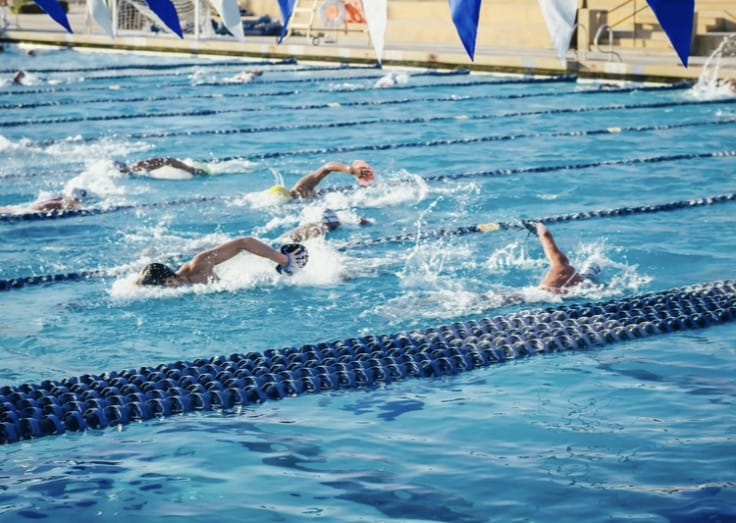
Concerns over fairness in women’s sports have become a significant political and cultural issue.
Education Secretary Linda McMahon has emphasized that Title IX was originally established “to provide a level playing field for women in sports.”
Furthermore, President Donald Trump implemented an executive order requiring publicly funded institutions to ensure only biological females compete in women’s and girls’ sports.
The Trump administration also took action against UPenn, freezing funding and declaring a Title IX violation related to the Thomas situation, underscoring a commitment to protecting female athletic opportunities.
Advocates argue the fight is crucial for current and future generations of female athletes.
The Core Issue and Investigation
The heart of the fury surrounding Ana Caldas’s sweep lies in the fundamental question of fairness when a biological male competes against females.
Despite USMS policies requiring hormone therapy, the decisive victories have led many to question if these measures adequately mitigate inherent biological advantages.

The “eligibility review request” confirmed by USMS means Caldas’s participation and adherence to the rules are now under formal investigation, putting the organization’s policies squarely under scrutiny.
The outcome could have significant implications for masters swimming and the broader debate.
As the investigation proceeds, the clash between inclusion policies and the principle of fair play in women’s athletics continues to intensify.