Bibimbap Recipe
I discovered bibimbap during a rainy Sunday when all I had was leftover rice and random vegetables. Turns out, that’s exactly how this Korean dish was born – making something amazing from whatever’s on hand.

The beauty of bibimbap lies in its adaptability. Each component brings its own texture and flavor, creating this perfect harmony in a bowl. And that gochujang sauce? It ties everything together like a conductor leading an orchestra.

Don’t stress about making it look Instagram-perfect. The whole point is to mix it all up anyway – that’s literally what “bibimbap” means in Korean.

What You’ll Need
For the Base:
- 2 cups cooked short-grain white rice
- ½ English cucumber, thinly sliced
- 1 cup fresh mung bean sprouts
- 1 cup shredded carrots
- 4 cups baby spinach
- 4 ounces shiitake mushrooms (optional)
For the Seasoning:
- ½ teaspoon rice vinegar
- 1¼ teaspoons toasted sesame oil
- ½ teaspoon tamari
- Sea salt to taste
For Topping:
- 2 fried eggs (or 1 cup cubed baked tofu)
- 1 recipe Gochujang Sauce
- Sesame seeds for garnish
- Kimchi for serving (optional)
- Chopped scallions for serving (optional)

Steps
- Start with the cucumbers: Combine sliced cucumbers with rice vinegar, ¼ teaspoon sesame oil, and a pinch of salt in a small bowl. Set aside to quick-pickle while you prep everything else.
- Blanch the bean sprouts: Bring a pot of water to boil, drop in sprouts for exactly 1 minute. Drain immediately and set aside.
- Cook the carrots: Heat ½ teaspoon sesame oil over medium heat. Add carrots and a pinch of salt, cooking for 1-2 minutes until slightly softened but still crisp.
- Prepare the spinach: In the same pan, add remaining sesame oil and spinach with tamari. Toss for 30 seconds until just wilted. Remove and gently squeeze out excess water.
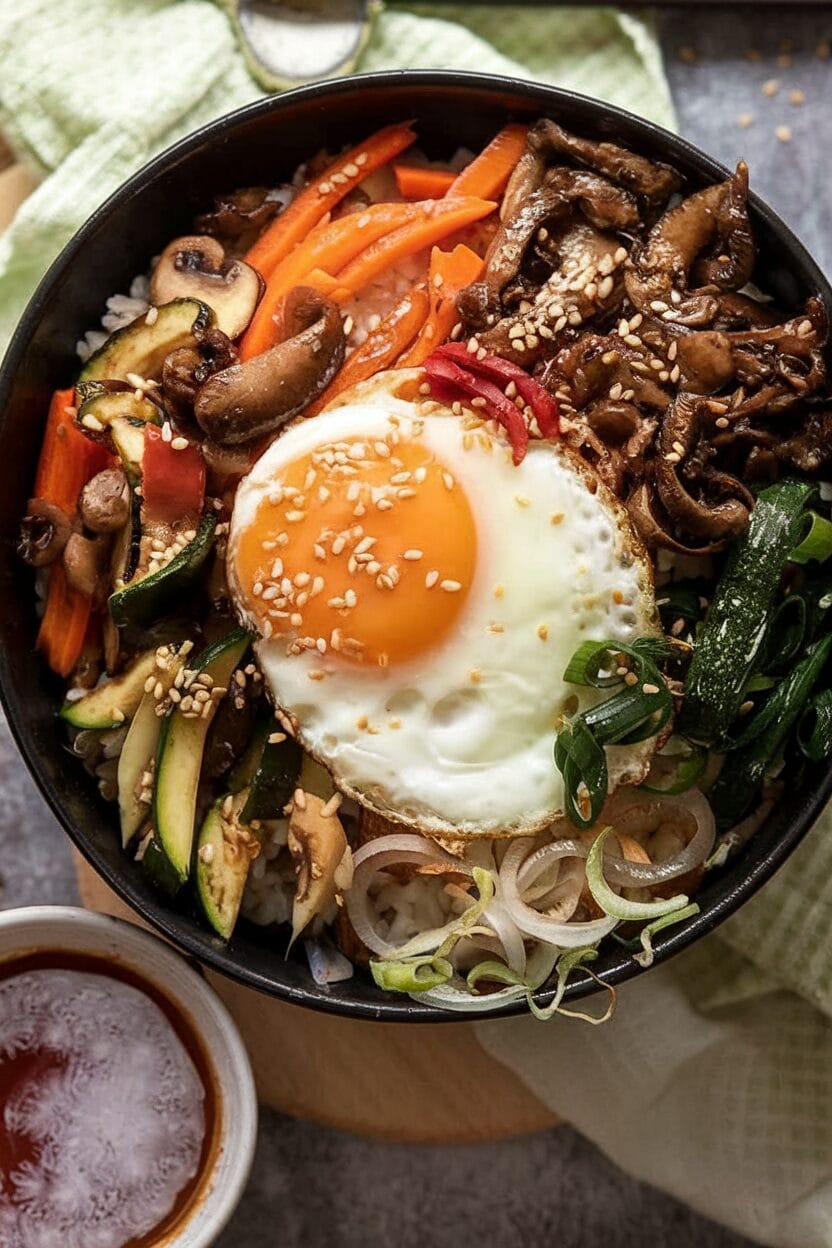
- Assemble your bowls: Start with warm rice as the base. Arrange cucumber, bean sprouts, carrots, and spinach in separate sections around the bowl.
- Top each bowl with either a fried egg or tofu, add mushrooms if using, sprinkle with sesame seeds, and drizzle generously with gochujang sauce.
Substitutions That Actually Work
- Replace mung bean sprouts with thinly sliced blanched snow peas
- Swap spinach for any tender greens like watercress or baby bok choy
- Use brown rice instead of white (just cook it a bit longer until it’s properly tender)
Making It Diabetes-Friendly
- Replace white rice with cauliflower rice (reduces carbs by 30g per serving)
- Use half the amount of gochujang sauce and thin it with unseasoned rice vinegar
- Add extra vegetables like zucchini or mushrooms to increase fiber content
Tips & Storage
- Prep all vegetables in advance and store separately in airtight containers for up to 2 days
- Cooked rice stays good in the fridge for 3-4 days – just sprinkle with water when reheating
- Keep gochujang sauce separate until serving to prevent vegetables from getting soggy
- For meal prep, store components separately and assemble just before eating