5 Most-Loved Pasta Makers That Italian Grandmothers Actually Use
As an Amazon Associate I earn from qualifying purchases.
Fresh pasta is a culinary delight that can elevate any meal. Making it at home lets you control the ingredients and create unique flavors. That’s where pasta makers come in handy. These tools make the process easier and more fun, turning flour and eggs into delicious noodles.
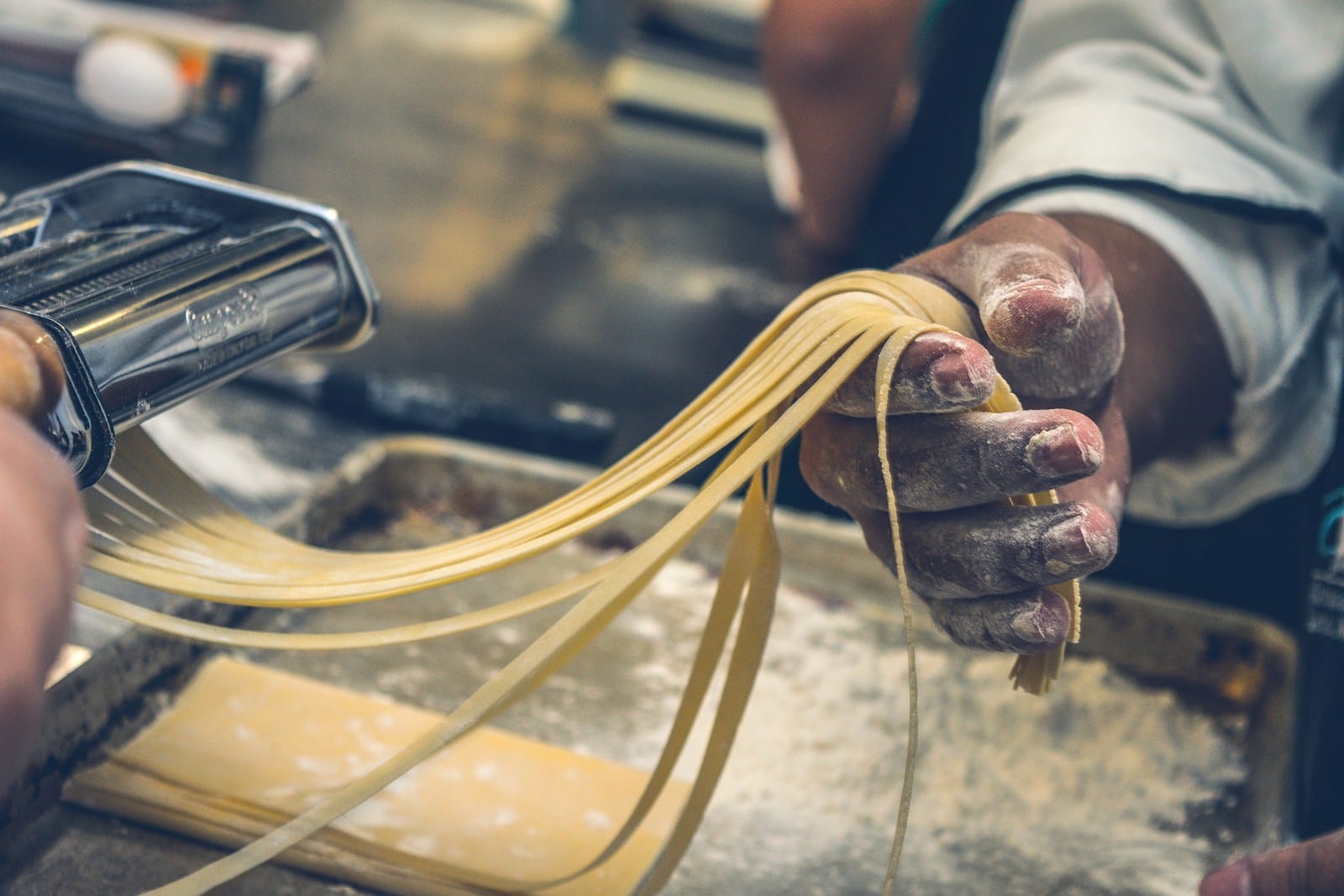
I’ve found that pasta makers come in two main types: manual and electric. Manual ones require some elbow grease but give you more control over the dough. Electric models do most of the work for you, saving time and effort. Both can produce great results, so it really depends on your preferences and how often you plan to make pasta.
When shopping for a pasta maker, I think it’s important to consider durability, ease of use, and versatility. Look for machines made with sturdy materials like stainless steel. Check if they can make different pasta shapes and thicknesses. Also, think about how easy they are to clean, as pasta dough can be sticky. I spent weeks testing various pasta makers to find the best options for home cooks of all skill levels.
5 Best Pasta Makers
I’ve put together a list of the top pasta makers you can buy. These machines will help you create delicious homemade pasta with ease. Whether you’re a beginner or an experienced cook, you’ll find a great option here.
Sailnovo Manual Pasta Maker
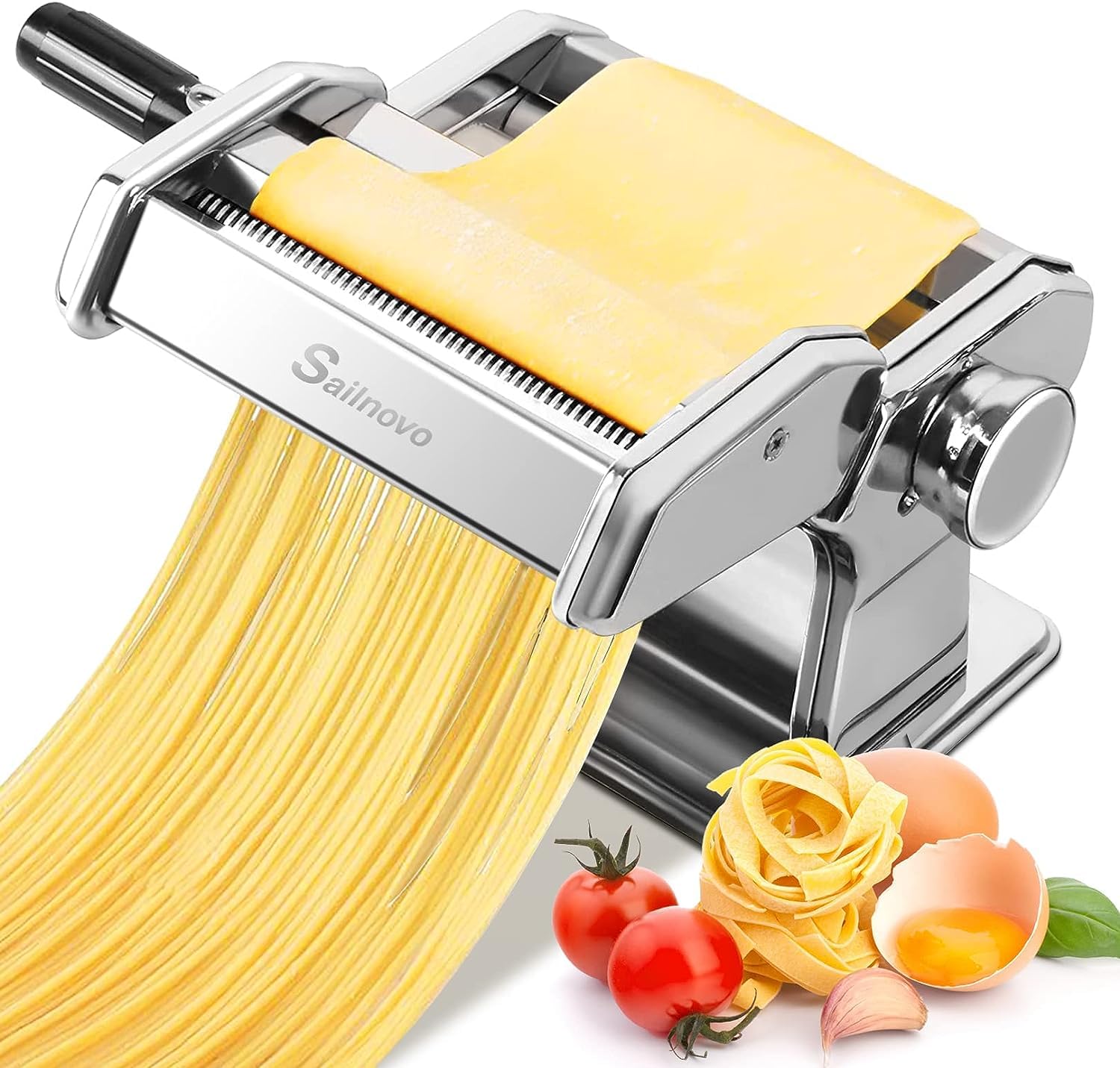
I highly recommend this pasta maker for its versatility and ease of use.
Pros
- 9 thickness settings
- Makes various pasta types
- Easy to use for all ages
Cons
- Light construction
- Tricky to clean
- Limited to manual operation
I recently tried out the Sailnovo Manual Pasta Maker, and I’m impressed! The machine feels sturdy in my hands, even though it’s surprisingly lightweight. I love how I can adjust the thickness of my pasta dough with just a twist of the knob.
When I made spaghetti and fettuccine, the cutting attachments worked like a charm. The pasta came out evenly cut and looked just like store-bought, but tasted so much better! I even used it to make paper-thin dumpling wrappers, which was a game-changer for my homemade dumplings.
Cleaning can be a bit tricky since you can’t submerge it in water. I found using a dry brush works best to remove leftover dough. While I wish it was dishwasher safe, I guess that’s the trade-off for keeping the blades sharp. All in all, this pasta maker has made my kitchen adventures more fun and tasty!
Marcato Atlas 150 Pasta Maker
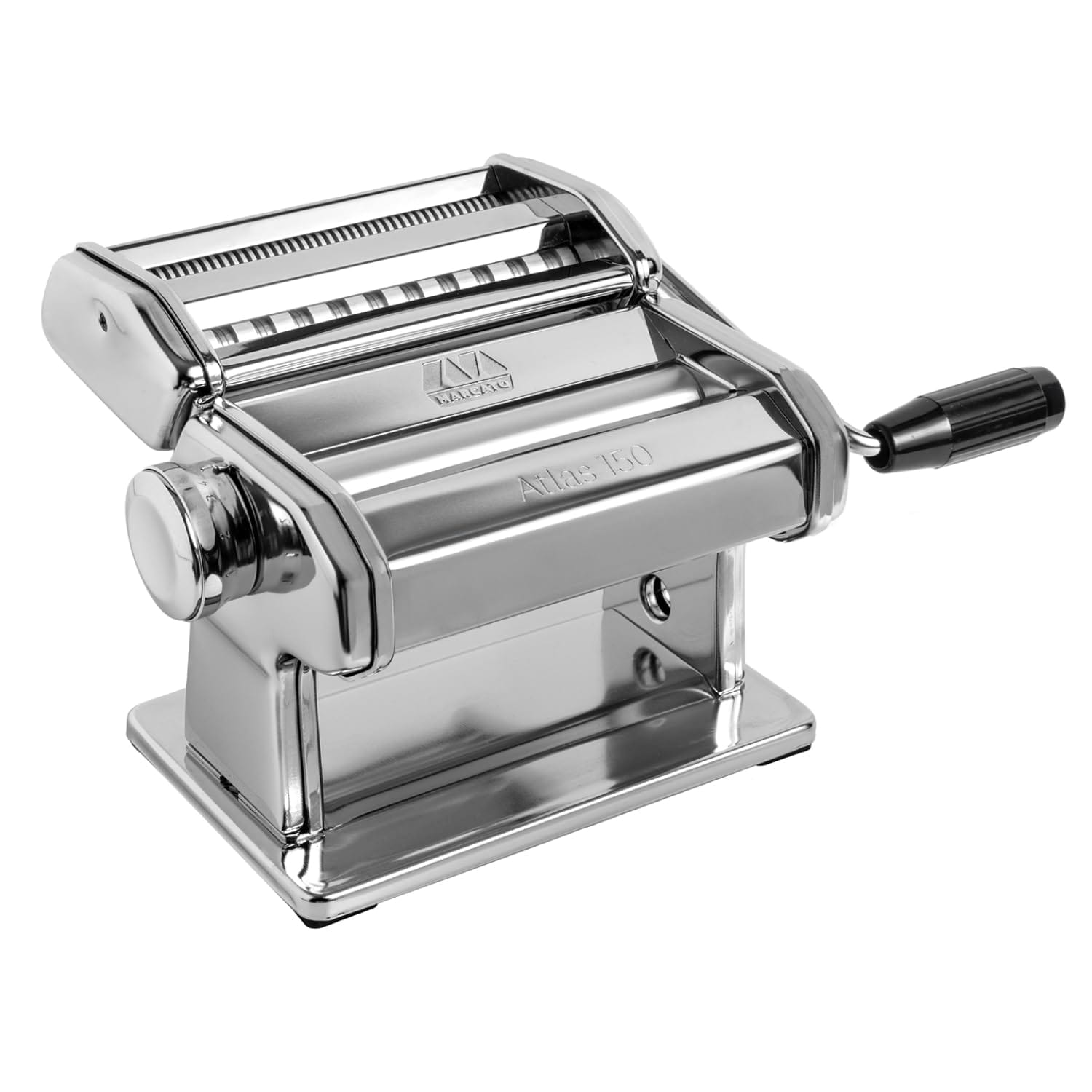
I highly recommend this classic manual pasta maker for its quality, versatility, and ease of use.
Pros
- Durable chrome-plated steel construction
- Makes three pasta types
- Adjustable thickness settings
Cons
- Not dishwasher safe
- Learning curve for beginners
- Motor sold separately
I recently got my hands on the Marcato Atlas 150, and I’m impressed! This Italian-made pasta machine is a game-changer for home cooks. It’s sturdy and well-built, which gives me confidence it’ll last for years.
Using it is pretty simple once you get the hang of it. I can make lasagna, fettuccine, and tagliolini with ease. The machine lets me adjust the dough thickness, so I can make pasta just the way I like it. It’s great for experimenting with different recipes.
One thing to note is that it’s not dishwasher safe, so you’ll need to clean it by hand. But don’t worry, it’s not too hard to do. Just remember to never use water – a brush or dry cloth works best.
I love how versatile this pasta maker is. You can buy extra attachments to make even more pasta shapes. While the hand crank works fine, there’s an option to add a motor if you want to make the process easier.
All in all, I’m really happy with my Marcato Atlas 150. It’s a bit pricey, but the quality makes it worth it. If you love fresh pasta, this machine is a great investment for your kitchen.
Nuvantee Manual Pasta Maker
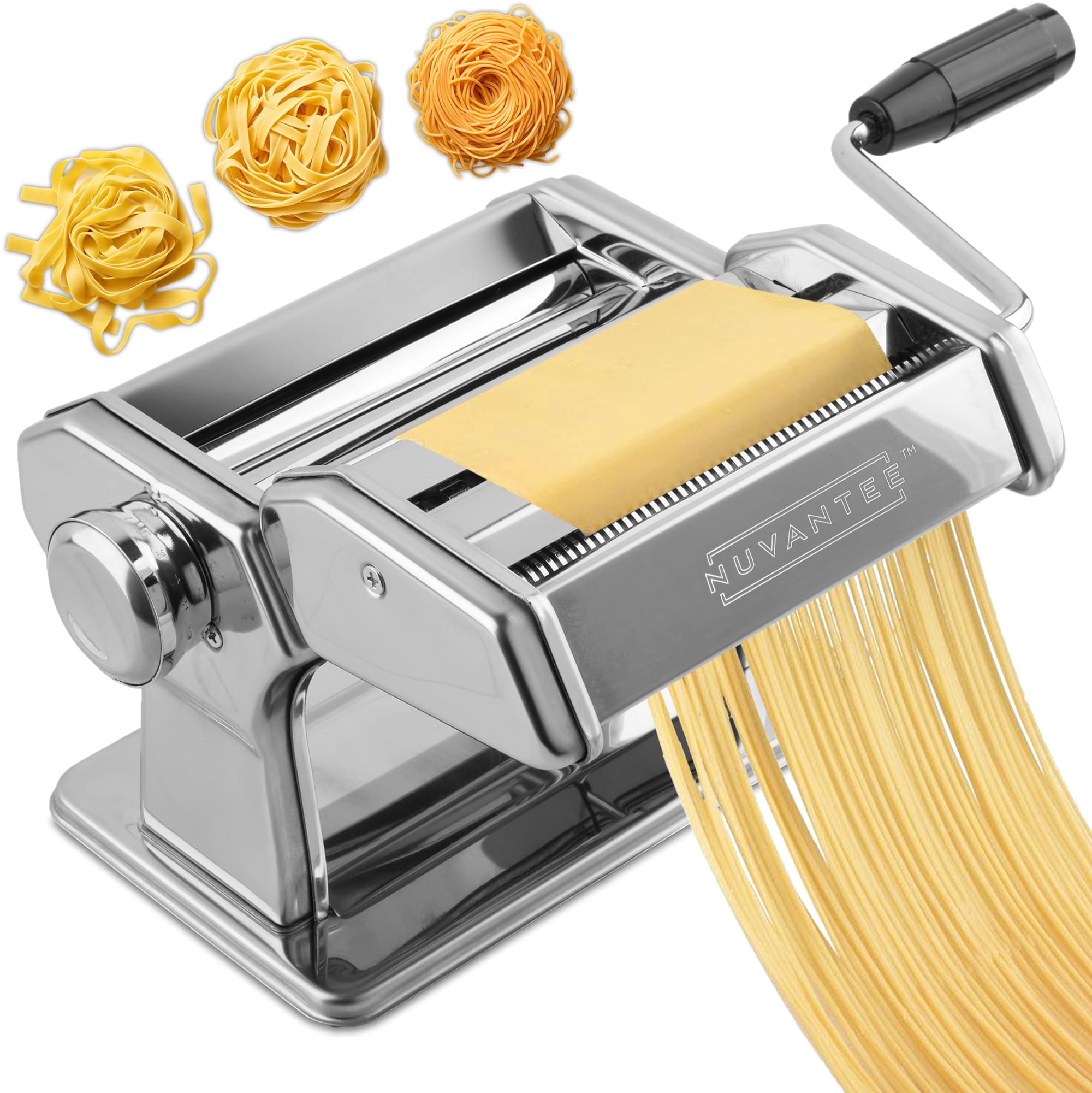
I think this pasta maker is a great choice for home cooks who want to make fresh pasta easily.
Pros
- Versatile with 7 thickness settings
- Sturdy stainless steel construction
- Includes cutters for spaghetti and fettuccine
Cons
- Can be a bit heavy to move around
- Takes practice to get dough consistency right
- Clamp doesn’t fit all countertops
I love using this Nuvantee pasta maker in my kitchen. The shiny stainless steel looks sleek on my counter. It feels solid and well-made when I’m cranking the handle to roll out dough.
At first, I had trouble getting my dough the right consistency. It took a few tries before I got pasta that wasn’t too sticky or dry. Now I can make spaghetti, fettuccine, and even lasagna sheets with ease. The different thickness settings let me customize the pasta to my liking.
Cleaning is pretty simple since the cutters come off. I just wipe everything down after use. While it’s a bit heavy, that means it stays put when clamped to my counter. The only issue is the clamp doesn’t fit my dining table. All in all, I’m happy with this pasta maker for creating fresh, homemade noodles.
ISILER Manual Pasta Maker
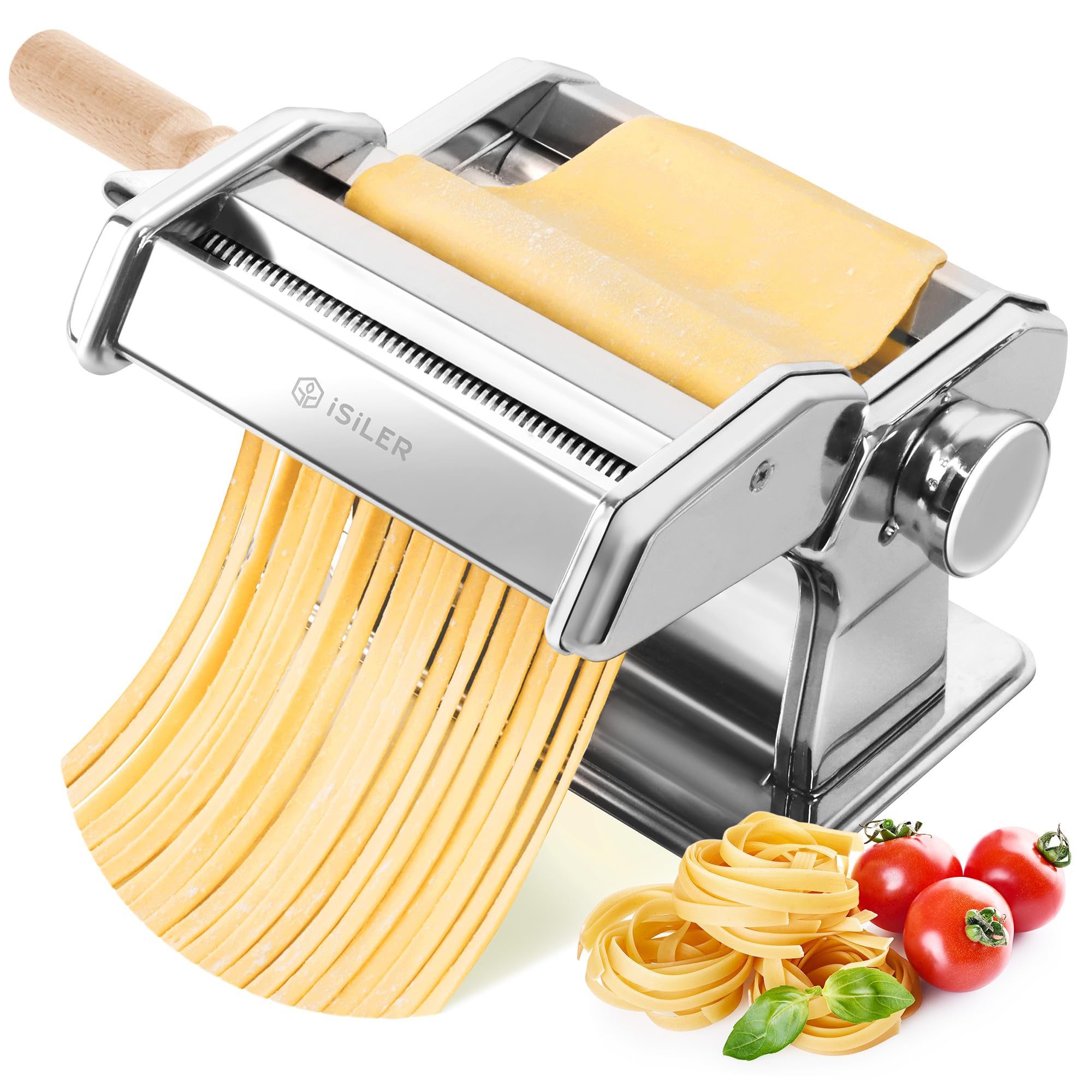
I think this pasta maker is a great choice for home cooks who want to make fresh pasta without breaking the bank.
Pros
- Easy to use with adjustable settings
- Makes different pasta shapes
- Sturdy construction
Cons
- Can be tricky to clean
- Takes practice to get perfect results
- Manual operation requires effort
I recently got my hands on this ISILER pasta maker, and I’ve been loving it. It’s really simple to use, even for a beginner like me. The machine has 9 thickness settings, so I can make my pasta as thin or thick as I want. I started with thicker noodles and worked my way down as I got better.
One thing I really like is that I can make different types of pasta with it. The cutter lets me make spaghetti or wider noodles like fettuccine. I even tried making lasagna sheets, which turned out great. The machine feels solid and stays put on my counter thanks to the clamp.
Cleaning it can be a bit of a pain, I’ll admit. It’s not too bad, but you need to be careful not to get water inside the rollers. Also, it took me a few tries to get the hang of feeding the dough through just right. But once I got the knack of it, I was making fresh pasta like a pro. It’s a workout, but the results are so worth it!
MZTOGR Pasta Maker Set
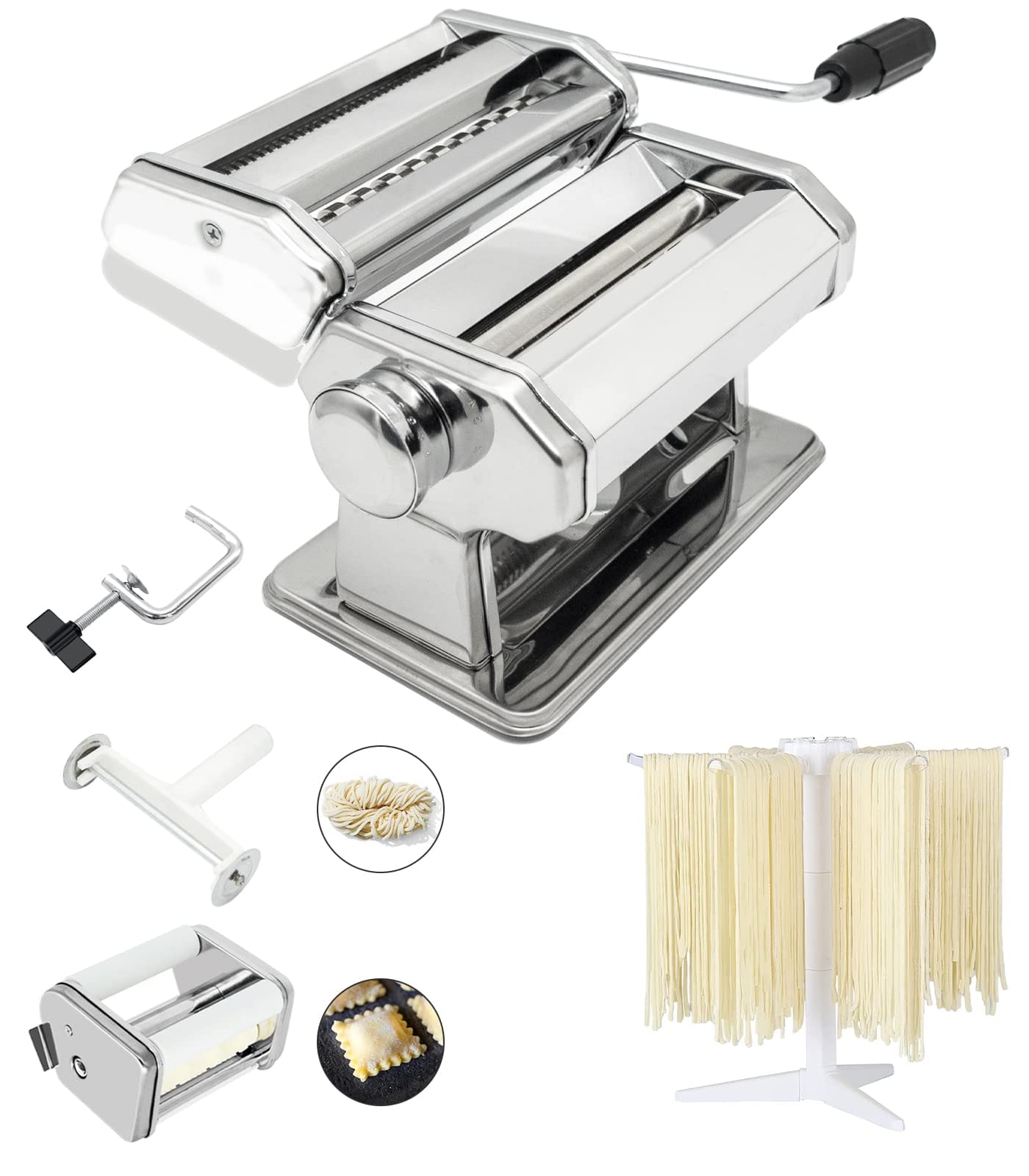
I think this pasta maker is a good choice for beginners who want to try making fresh pasta at home without breaking the bank.
Pros
- Comes with dual blades and ravioli cutter
- Includes a pasta drying rack
- 9 thickness settings for versatility
Cons
- Clamp can be tricky to secure
- Drying rack feels a bit flimsy
- May require some practice to use well
I recently tried out this MZTOGR pasta maker, and I was pretty happy with how it worked. The machine feels solid and sturdy, weighing about 7 pounds. I like that it’s made mostly of stainless steel, which should help it last a while.
One of my favorite things about this set is all the extras it comes with. The dual blades let me make both thin spaghetti and wider fettuccine. I had fun trying out the ravioli cutter too. It makes cute little square ravioli with wavy edges.
The 9 thickness settings are great for experimenting with different pasta shapes. I started with thicker settings as I was learning and worked my way down to thinner sheets. It took some practice, but I got better at cranking out even sheets of pasta dough.
I did have a bit of trouble with the clamp at first. It took some adjusting to get it to grip my counter securely. The drying rack is handy, but it feels a little wobbly. I’m extra careful when hanging pasta on it.
Cleaning the machine isn’t too bad. I use a brush to get flour out of the nooks and crannies. Overall, I think this pasta maker is a good value for the price. It’s been fun learning to make fresh pasta at home!
Buying Guide
When shopping for a pasta maker, I recommend looking at a few key features. Here’s what I consider important:
Material
The machine’s material affects its durability and performance. I prefer stainless steel for its strength and easy cleaning.
Attachment Options
More attachments mean more pasta shapes. I like having options for spaghetti, fettuccine, and lasagna sheets.
Ease of Use
A pasta maker should be simple to operate. I look for clear instructions and user-friendly designs.
Adjustable Settings
Different thicknesses let me make various pasta types. I aim for at least 3 thickness settings.
Stability
A wobbly machine can be frustrating. I always check for sturdy clamps or non-slip feet.
Cleaning
Pasta dough can be sticky. I prefer models with removable parts for easy cleaning.
Manual vs Electric
This choice depends on personal preference. I enjoy the control of manual makers, but electric ones save time.
Price
Quality pasta makers come in different price ranges. I set a budget based on how often I’ll use it.
| Feature | What to Look For |
|---|---|
| Material | Stainless steel |
| Attachments | At least 3 options |
| Settings | Multiple thickness choices |
| Stability | Clamps or non-slip base |
| Cleaning | Removable parts |
Remember, the best pasta maker is one you’ll use often. I always think about my cooking habits when choosing.
Frequently Asked Questions
Choosing and using a pasta maker can bring up some common questions. I’ve gathered answers to help you pick the right one for your kitchen.
What features should I look for in a high-quality pasta maker for home use?
I recommend looking for a pasta maker with sturdy construction, like stainless steel. Adjustable thickness settings are key for different pasta types. A clamp to secure the machine to your counter is helpful. Some models come with attachments for various pasta shapes.
How do I choose between a manual and an electric pasta maker?
Manual pasta makers are cheaper and give you more control. Electric ones are faster and easier to use. I think manual is great for occasional use, while electric is better if you make pasta often. Your budget and how much pasta you plan to make are important factors.
What are the top-rated pasta makers recommended by culinary experts?
Experts often praise the Marcato Atlas 150 for manual pasta making. For electric models, the Philips Pasta Maker is highly rated. The KitchenAid pasta attachment for stand mixers is also popular among chefs.
Can you suggest a pasta maker that is easy for beginners to use?
I’d suggest the Imperia Pasta Maker for beginners. It’s manual but simple to use. The CucinaPro Pasta Fresh is a good electric option for new users. Both have clear instructions and are forgiving for first-timers.
What maintenance is required to keep a pasta maker in good condition?
Clean your pasta maker after each use. Don’t use water on manual makers – just brush off flour and dough bits. For electric ones, follow the cleaning guide. Oil the gears of manual makers occasionally. Store in a dry place to prevent rust.
Are there any multifunctional pasta makers that can also mix and knead dough?
Yes, some electric pasta makers can mix and knead dough. The Philips Pasta Maker does this well. The Lello Pasta Master mixes, kneads, and extrudes pasta. These save time but cost more than basic models.