9 Everyday Things Your Grandparents Did That You Never Have To Do
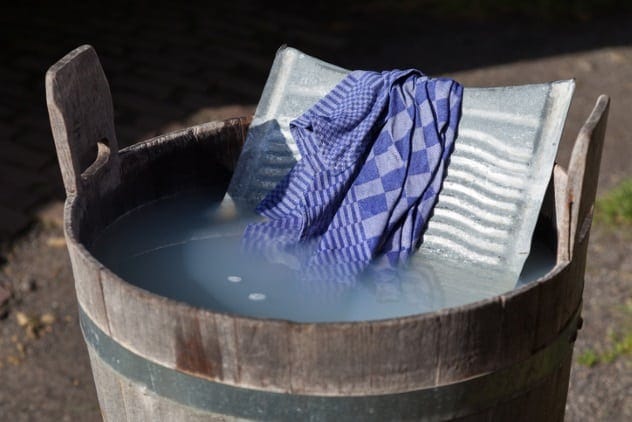
If your phone died tonight, would you even be able to “call” anyone—without a human in the middle connecting the wires? Your grandparents lived in a world where basic fun, work, and waking up often required other people’s hands, time, and risk. Here are 10 everyday things they did that modern life quietly erased.
#1 Pin boys resetting bowling pins by hand
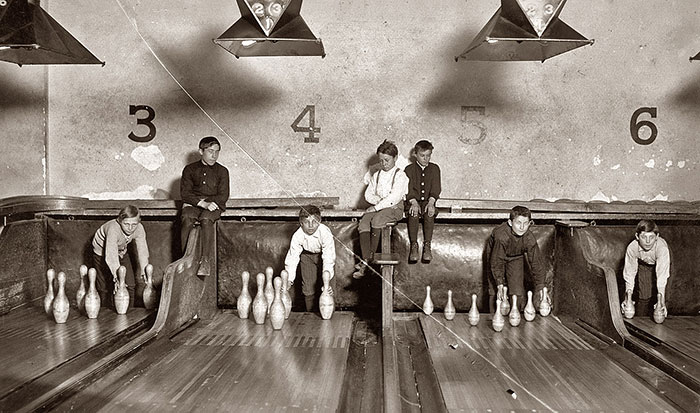

In early bowling alleys, a strike didn’t trigger a sleek machine behind the scenes—it summoned a kid perched at the end of the lane, ready to sprint into action. The black-and-white scene of pin-setters lined up in matching shoes is charming right up until you remember where they were standing.
Those jobs were fast, repetitive, and genuinely dangerous. A heavy ball flying down a lane doesn’t care that someone is crouched nearby, and the pace of play depended on how quickly a human could reset the whole formation.
Today the “magic” happens behind closed panels, and the only person hustling is the one grabbing nachos between frames.
#2 Telephone switchboard operators connecting every call


Making a call used to mean talking to a person first. Operators sat at switchboards stacked with numbered panels, plugging and unplugging cords to physically route voices from one place to another.
It wasn’t just “hello, who are you calling?”—it was memory, speed, and coordination under pressure, with a maze of cables below like the roots of the entire city’s conversations. Privacy was also… flexible, because a third party was literally in the line.
Now calls get stitched together in milliseconds, and the closest thing to an operator is a spam filter trying to guess whether “Potential Scam” is your aunt.
#3 Rat catchers working barehanded in city streets
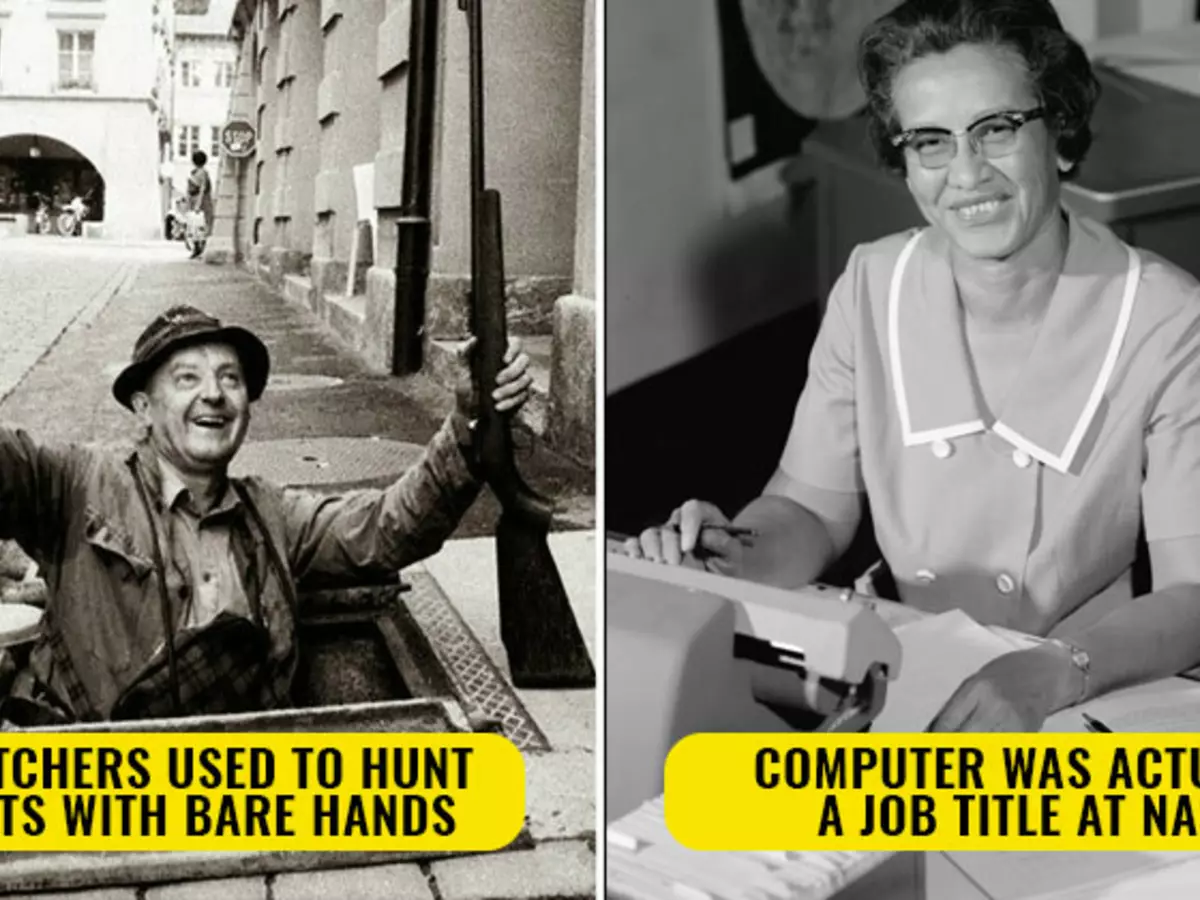

This is one of those jobs that sounds like a cartoon until you see the photo: real people handling live rats, often in cramped alleys, with little protection and a lot of bravado. It was public, messy work—part sanitation, part spectacle.
Rats meant disease, ruined food stores, and panic, so communities relied on individuals who knew how to trap, grab, and haul them out. The risks weren’t abstract: bites, infection, and constant exposure came with the paycheck.
Modern pest control still exists, but the “barehanded street rat catcher” is largely a relic of denser, dirtier cities and fewer safeguards.
#4 “Computers” as a job title at NASA
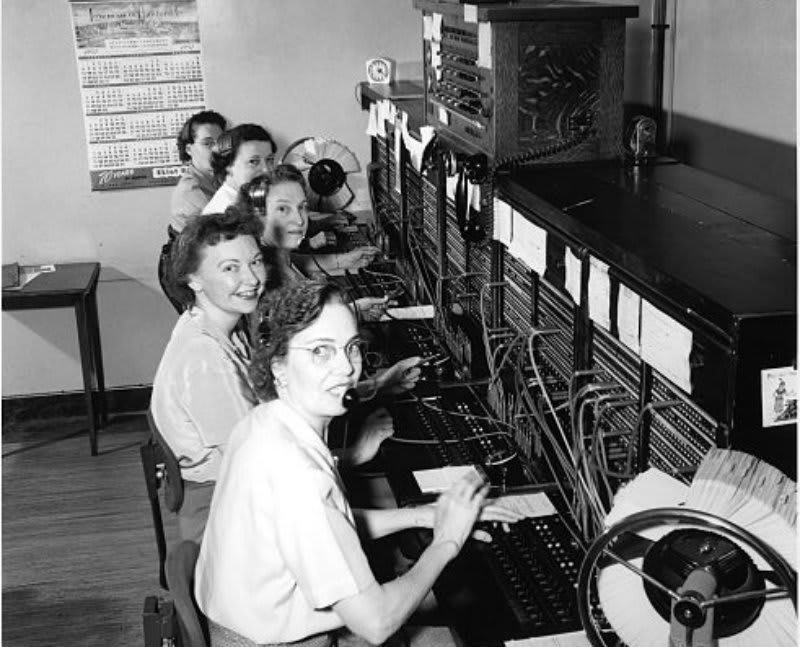

Before computers were machines, “computer” was a person—often a woman—paid to do complex calculations all day. The photo’s quiet, workmanlike vibe hides the truth: this was high-stakes math, not busywork.
These human computers calculated trajectories, processed data, and checked results with discipline and precision. A small error could ripple into big consequences, especially in aviation and space work.
Now the word “computer” means a device in your pocket. Your grandparents lived through the era when it meant someone’s career.
#5 Manual call-routing rooms filled with cables and control panels
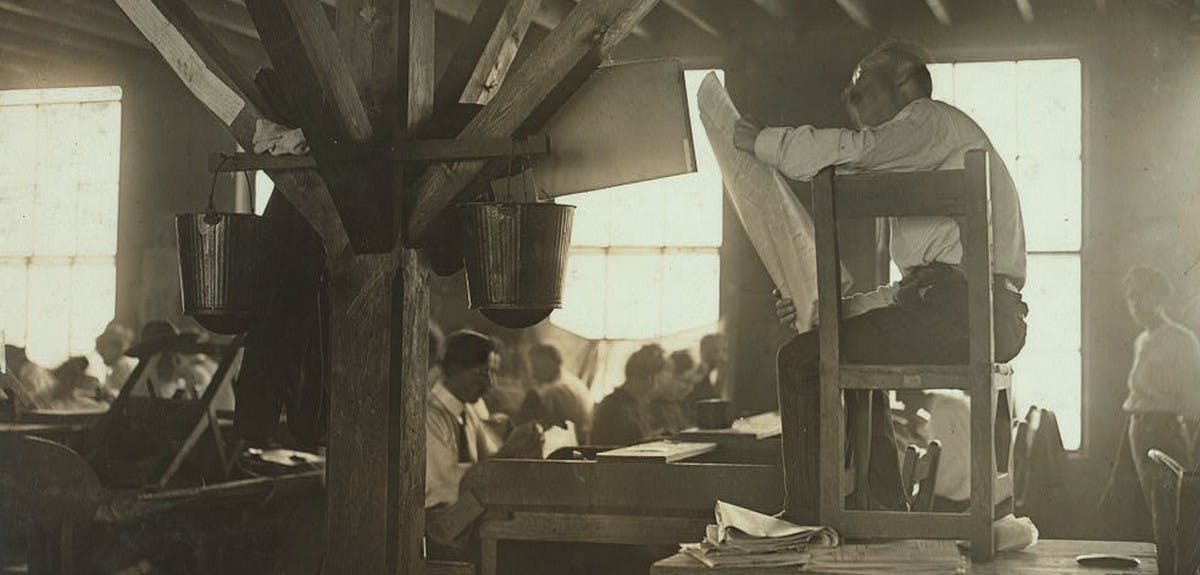

Some switchboards looked less like desks and more like command centers—rows of glowing panels, thick bundled wiring, and operators who had to be both calm and lightning-fast. The geometry of cords and sockets wasn’t decoration; it was the physical internet of its day.
Every connection was a tiny act of coordination, and the room itself was a living map of who needed to reach whom. It required training, stamina, and an ability to stay sharp through constant repetition.
Today those rooms are mostly history, replaced by digital systems that don’t take lunch breaks or misplace a plug.
#6 A working mill powered by wood, water, and human skill
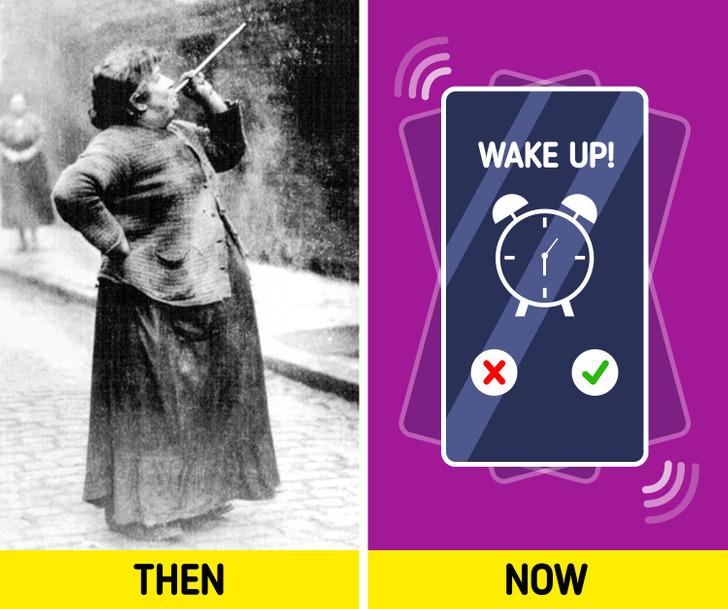

That sepia-toned mill scene is basically an entire supply chain inside one building. Exposed beams, massive wooden gears, and workers using daylight like it’s another tool—this is production before push-button convenience.
A mill wasn’t just machinery; it was know-how. Keeping those systems running meant listening for odd sounds, feeling vibrations, spotting wear, and solving problems with hands and experience instead of diagnostics.
Modern manufacturing still needs skilled people, but very few of us will ever stand in a working mill and watch raw materials become something usable in real time.
#7 Alarm contraptions that literally dumped water on sleepers


Some alarms didn’t “ring.” They punished. The vintage photo of someone getting drenched is funny until it clicks: waking up used to be serious enough that people engineered a device to physically force consciousness.
It’s a glimpse into a world with fewer reliable, gentle options—no customized ringtones, no sunrise simulation, no vibration-only mode. If you had to be up, you made it impossible to stay down.
Now alarms are polite to the point of sabotage. The snooze button is basically a negotiation.
#8 Rat-baiting pits as a normal night out

The illustration is chilling because of the contrast: top hats, formal coats, a refined crowd—then a pit where a dog faces a swarm of rats. It wasn’t hidden on the fringes; it was presented as entertainment.
Your grandparents may not have attended this themselves, but they grew up closer to a time when public cruelty could be packaged as sport. The social permission structure was different, and so was what people considered “a show.”
Modern audiences have their own questionable pastimes, but rat-baiting as polite recreation is largely gone—pushed out by changing laws, norms, and empathy.
#9 Public “justice” that looked like a dark joke


That medieval-style illustration lands like a meme, but it points to something real: punishment used to be communal theater. A crowd, a weapon, a scripted moment—sometimes even humor layered on top of fear.
The casual dialogue (“This may sting a bit…”) makes it more unsettling, not less. It shows how societies can normalize brutality by wrapping it in ritual, satire, or tradition.
Most people today will never witness justice as performance. For many of your grandparents’ ancestors, it was part of the cultural landscape.