$50K Tiny House That Feels Huge
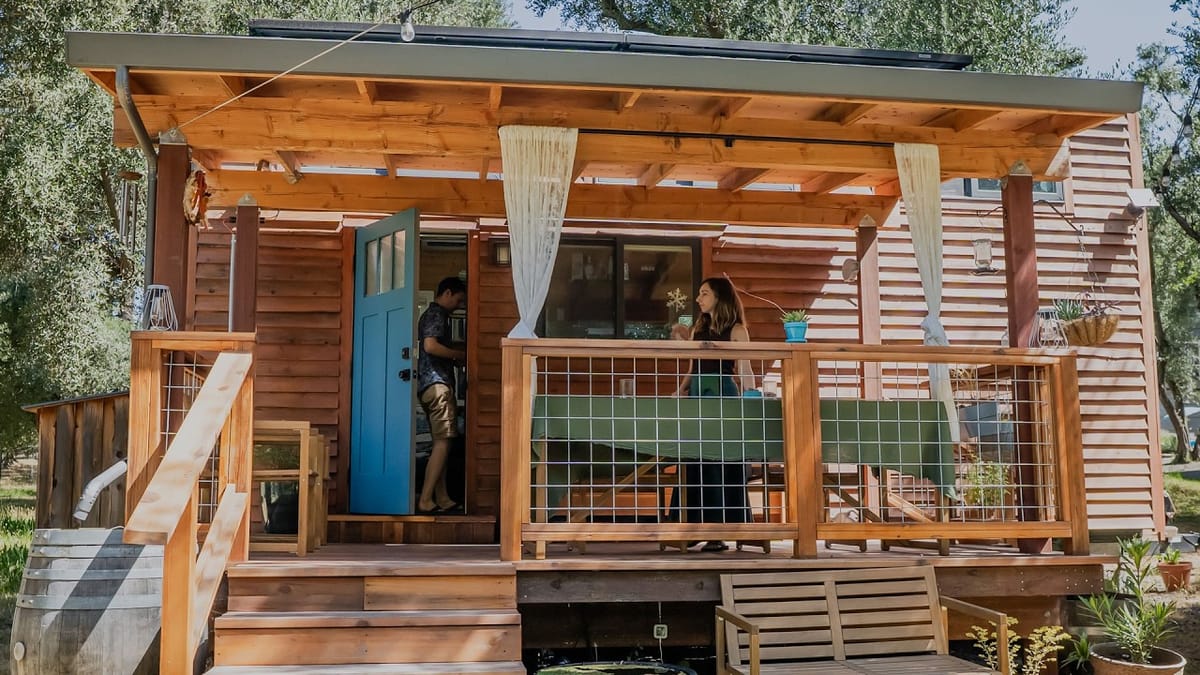
Tiny house living here means freedom—freedom of time, freedom to learn skills, and freedom to build the life they actually want.
Kitchen — small-space cooking with big appliances
First impression: it feels open on purpose thanks to tall ceilings that stretch the space visually.
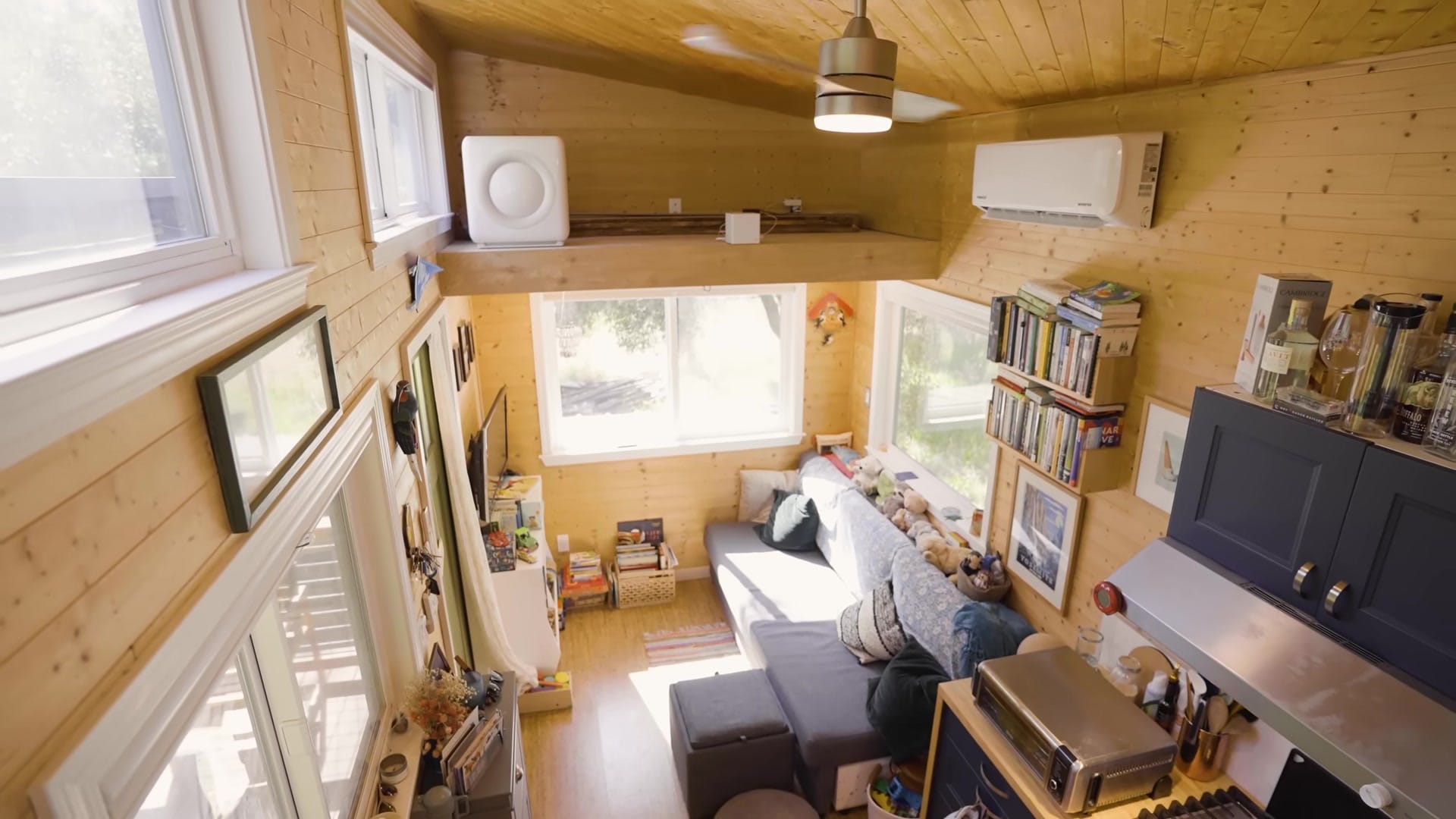
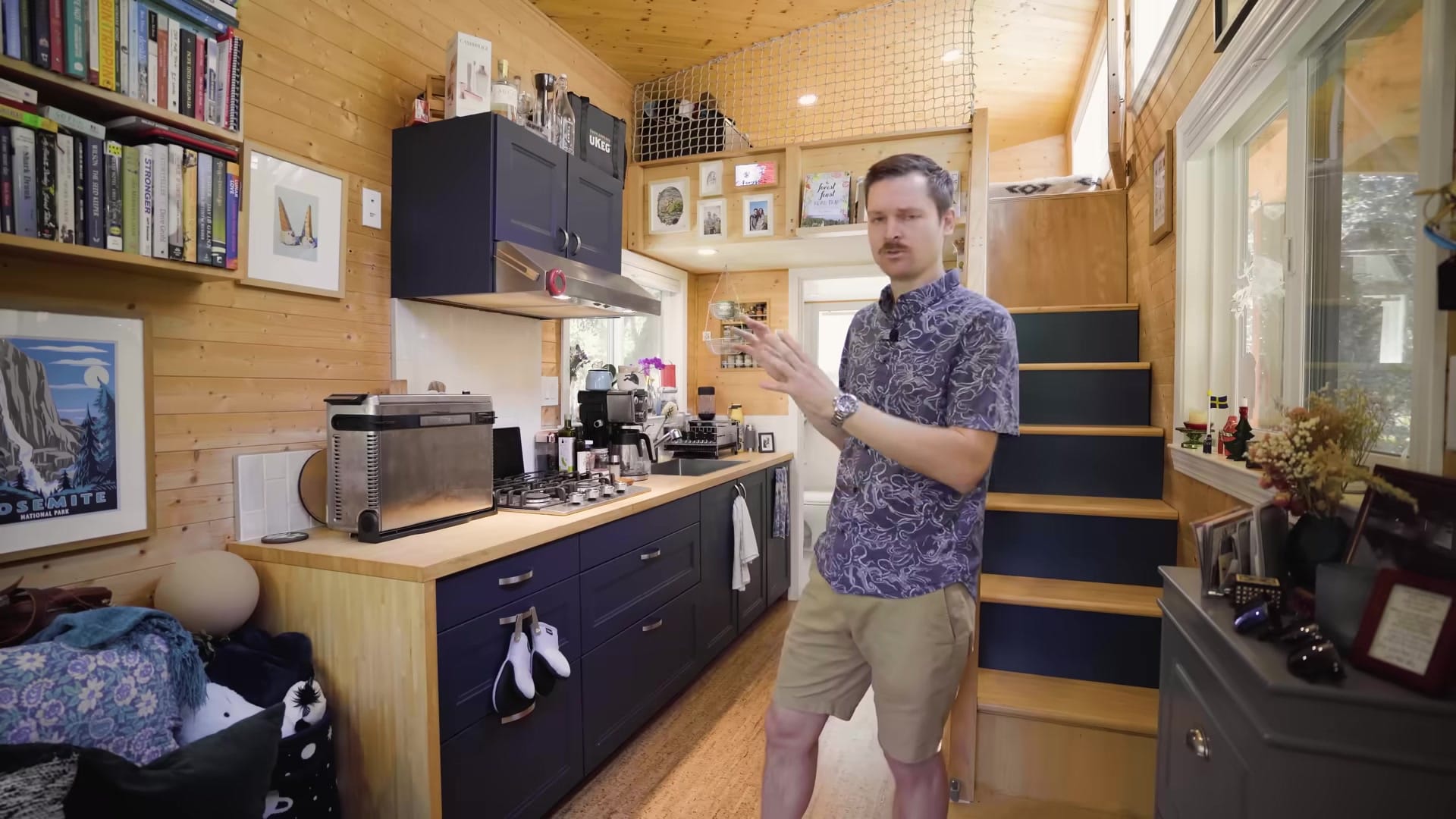
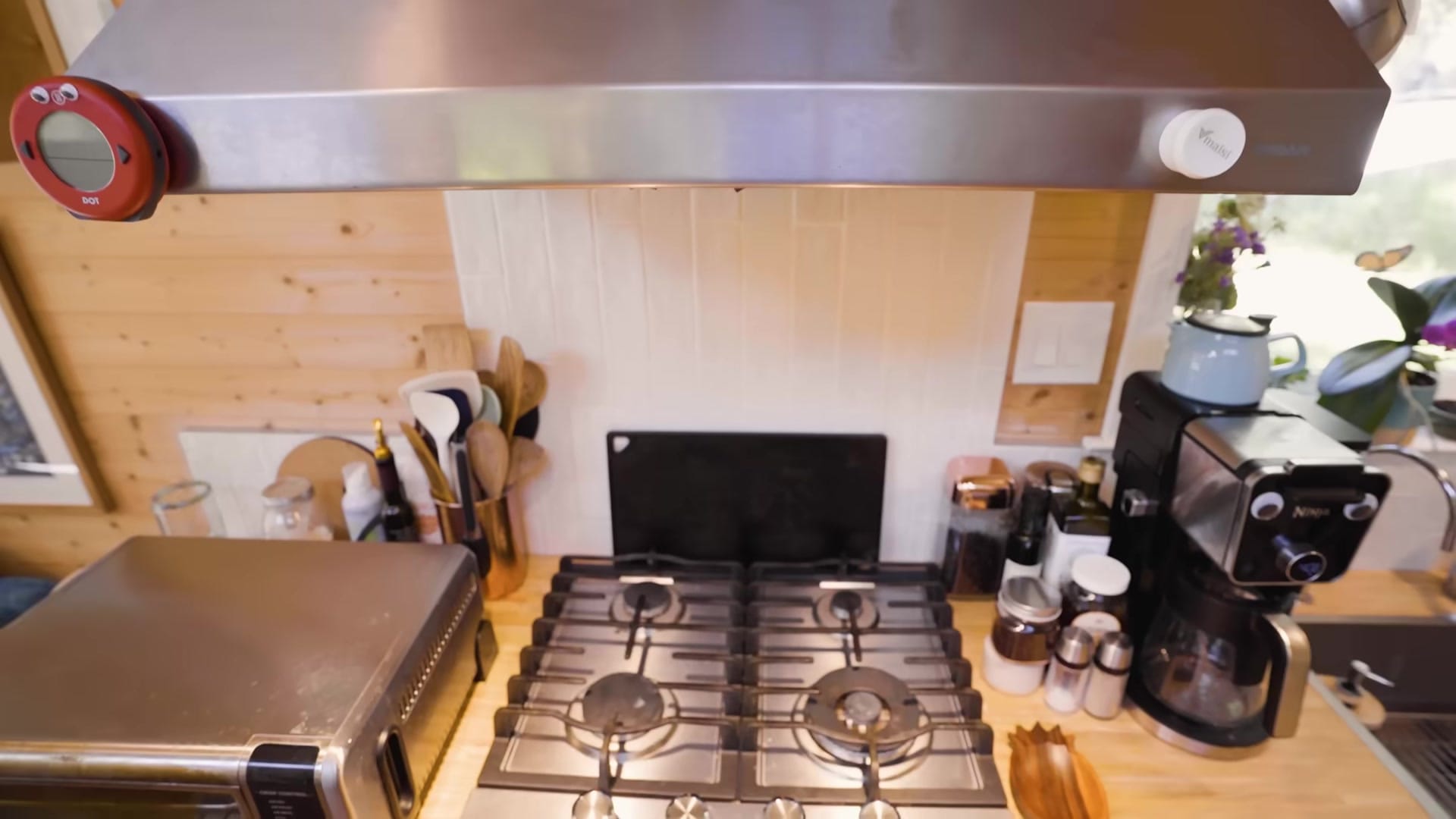
They designed the entire kitchen layout with IKEA’s online tool so the sink, stove, and fold-down oven landed exactly where they wanted them.
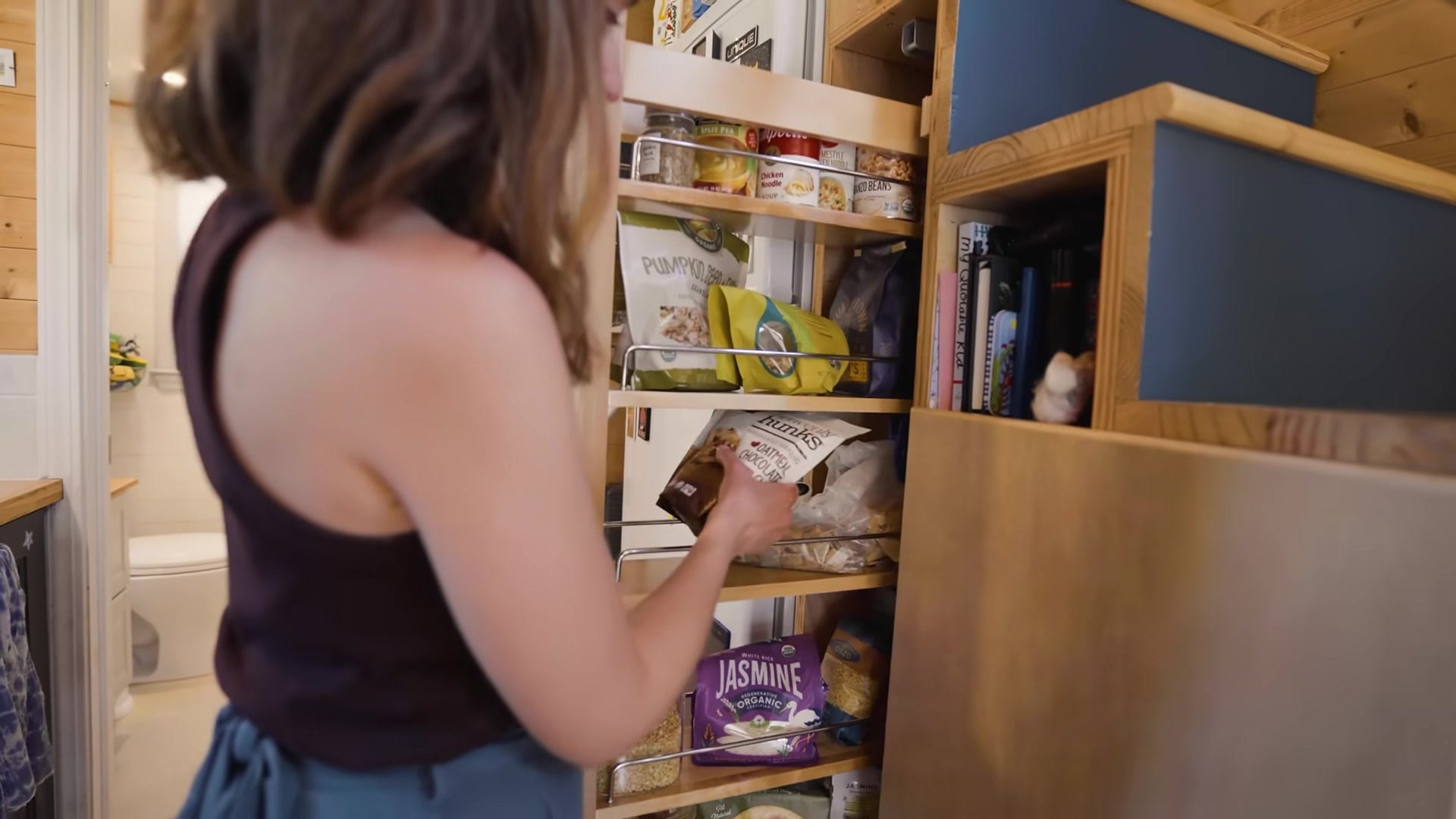
Storage stairs got a glow-up with a skinny, tall pullout pantry that finally uses the full height and depth instead of becoming a catchall.
The power setup handles regular appliances, so running the AC, oven, and more at the same time isn’t a problem.
A big win: an off-grid-friendly fridge that’s actually large for tiny living at 16 cubic feet.
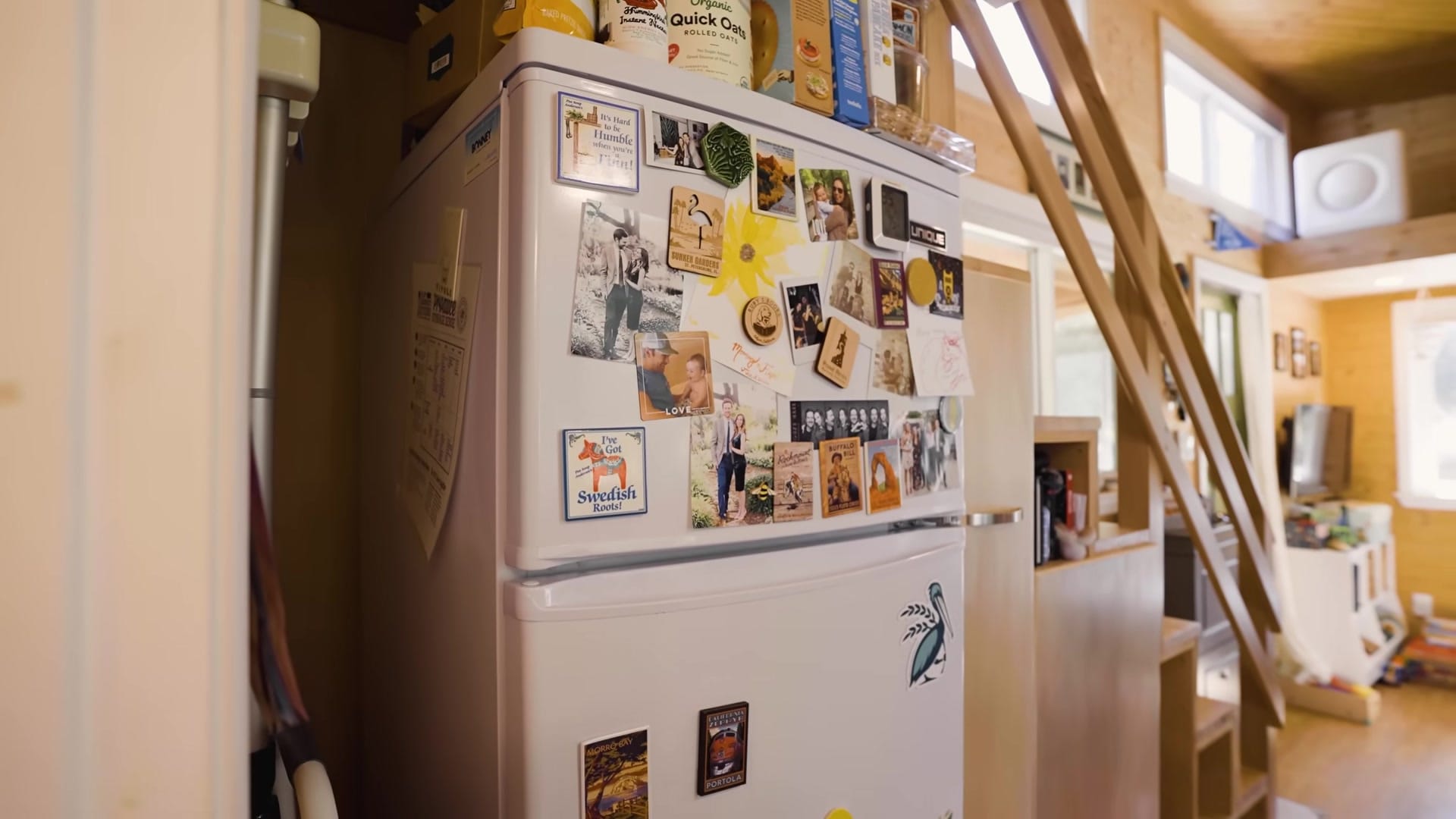
One quirk—they power it via 120V through an adapter because the unit wanted 27V DC and the buck converter couldn’t deliver that exactly.
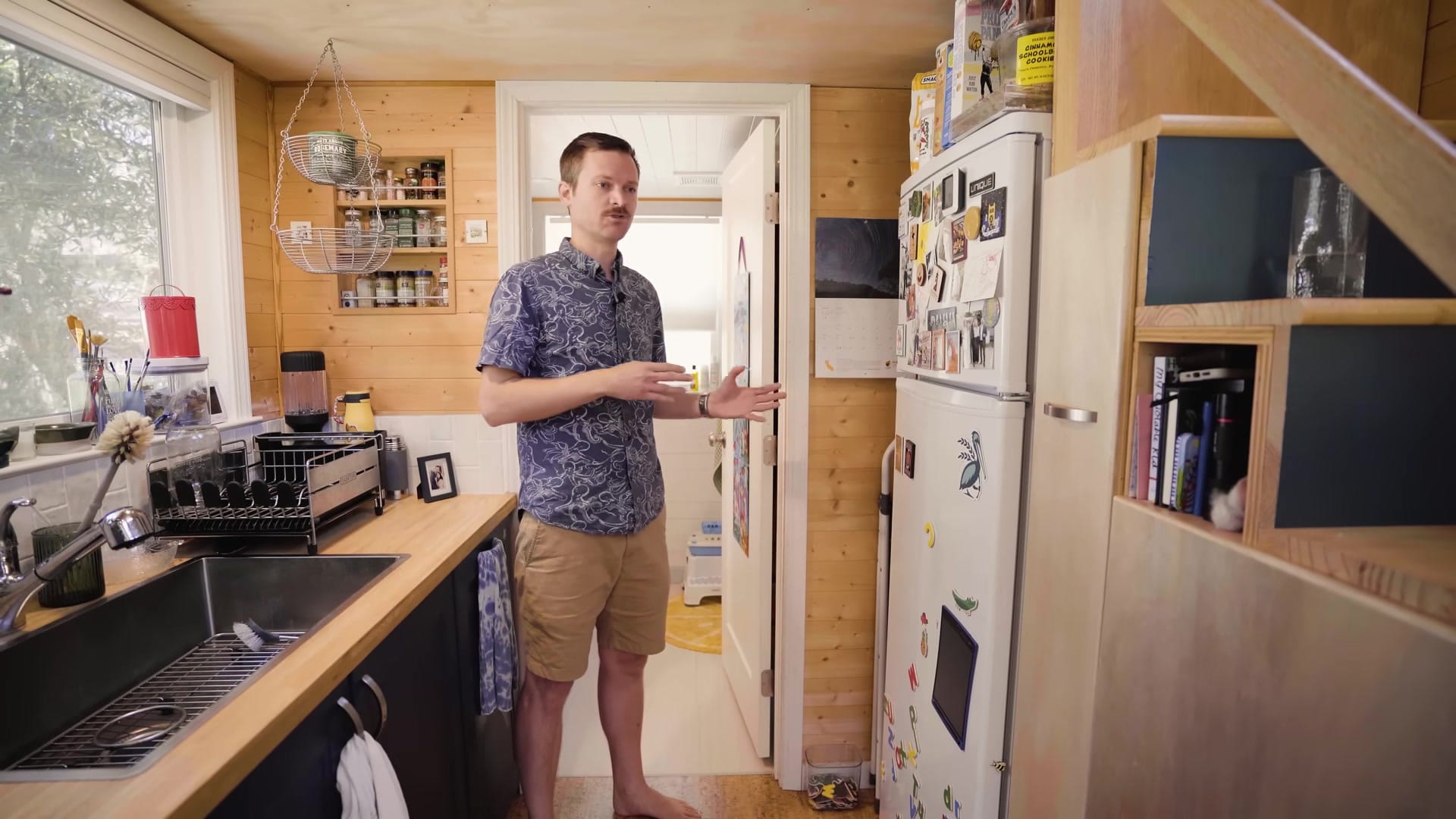
Workflow-wise, the kitchen cooks like a compact line—everything within reach, with cutting board real estate being the only squeeze. They traded a dishwasher for an oversized pull-out trash and recycling setup and haven’t looked back .
Living Room — layout, storage, and family space
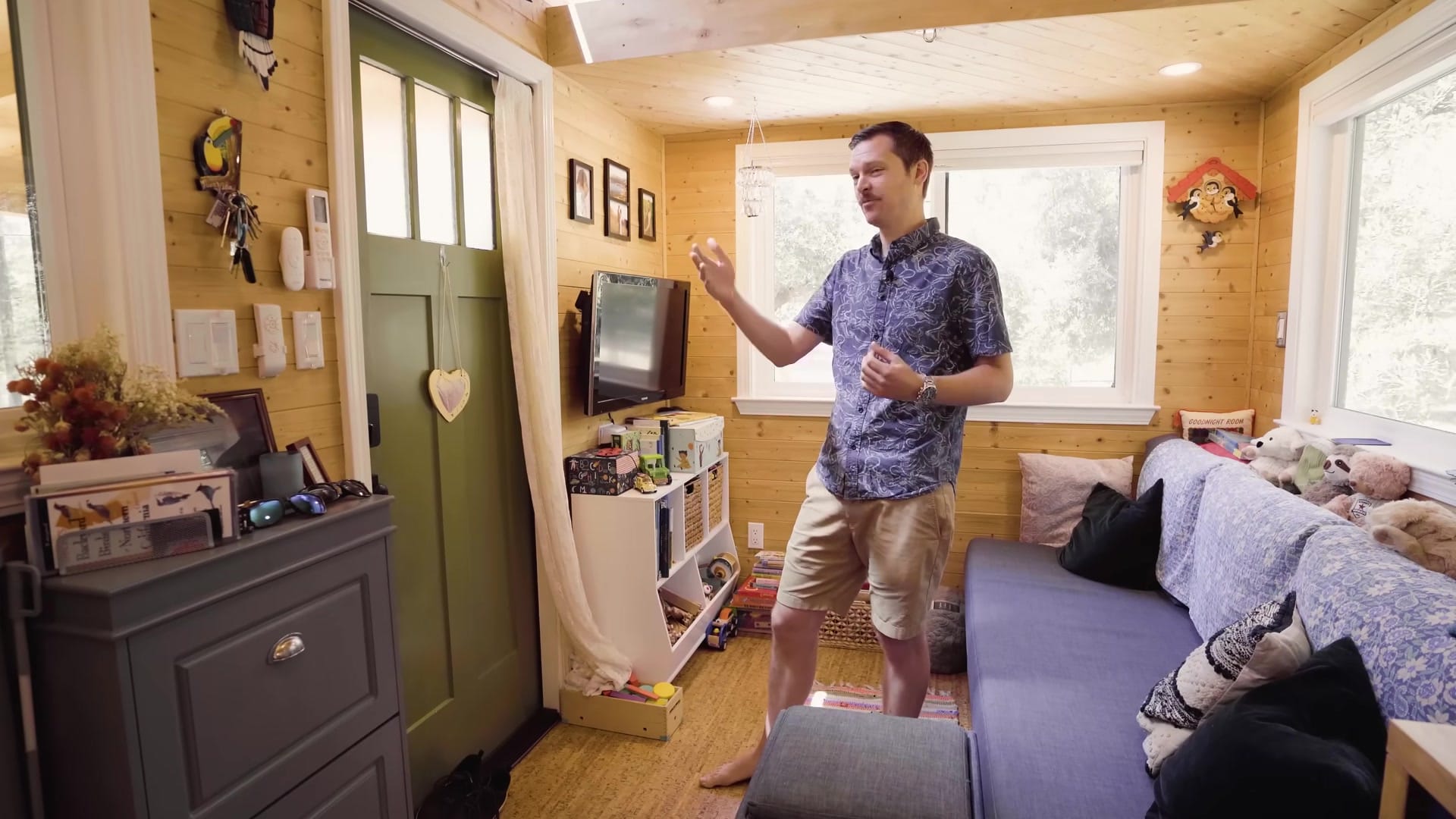
This is the relax-and-play zone, with toy storage tucked under the TV and an ottoman hiding craft supplies for their three-year-old.
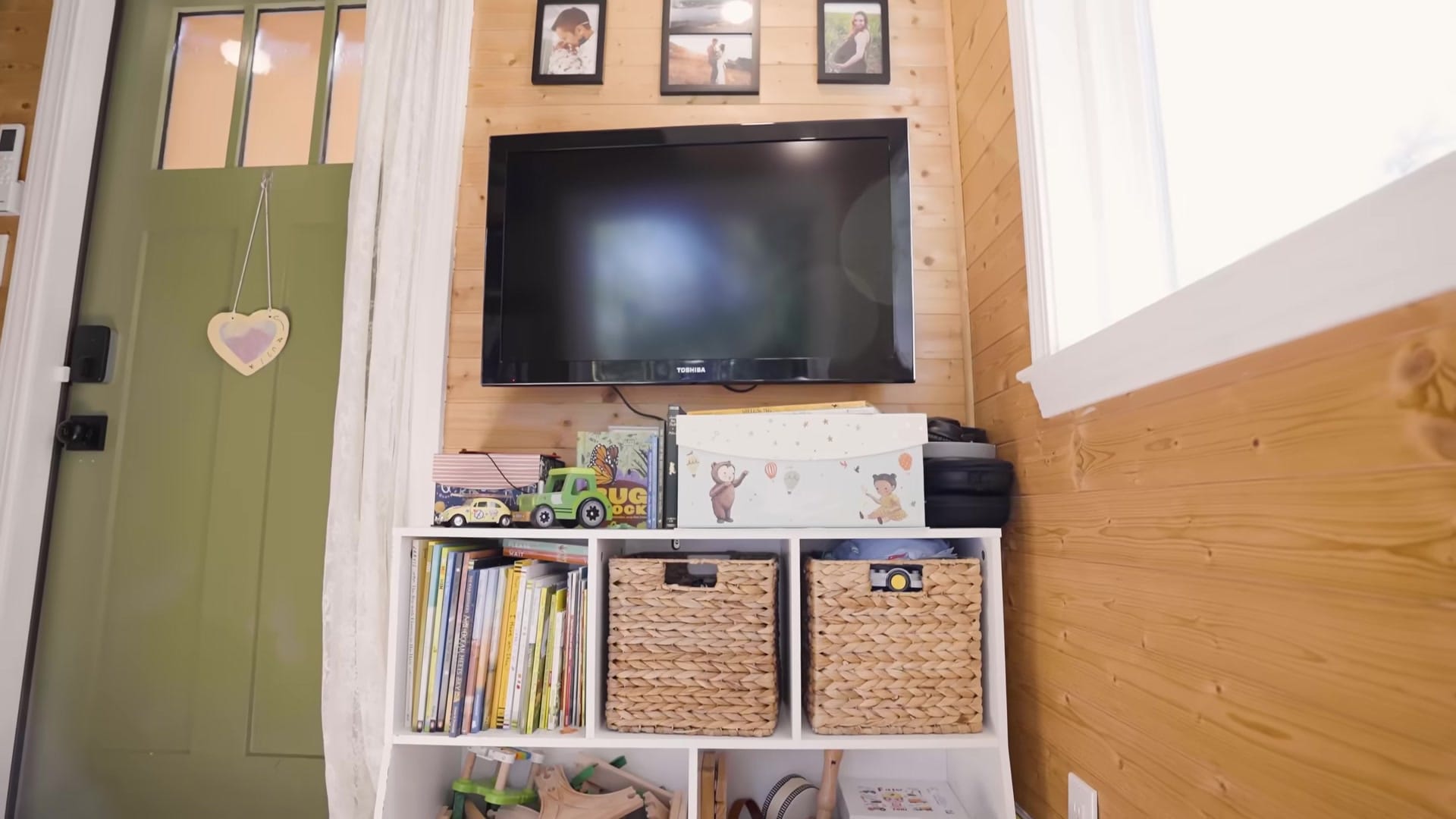
The couch folds into a queen-size bed when guests stay over.
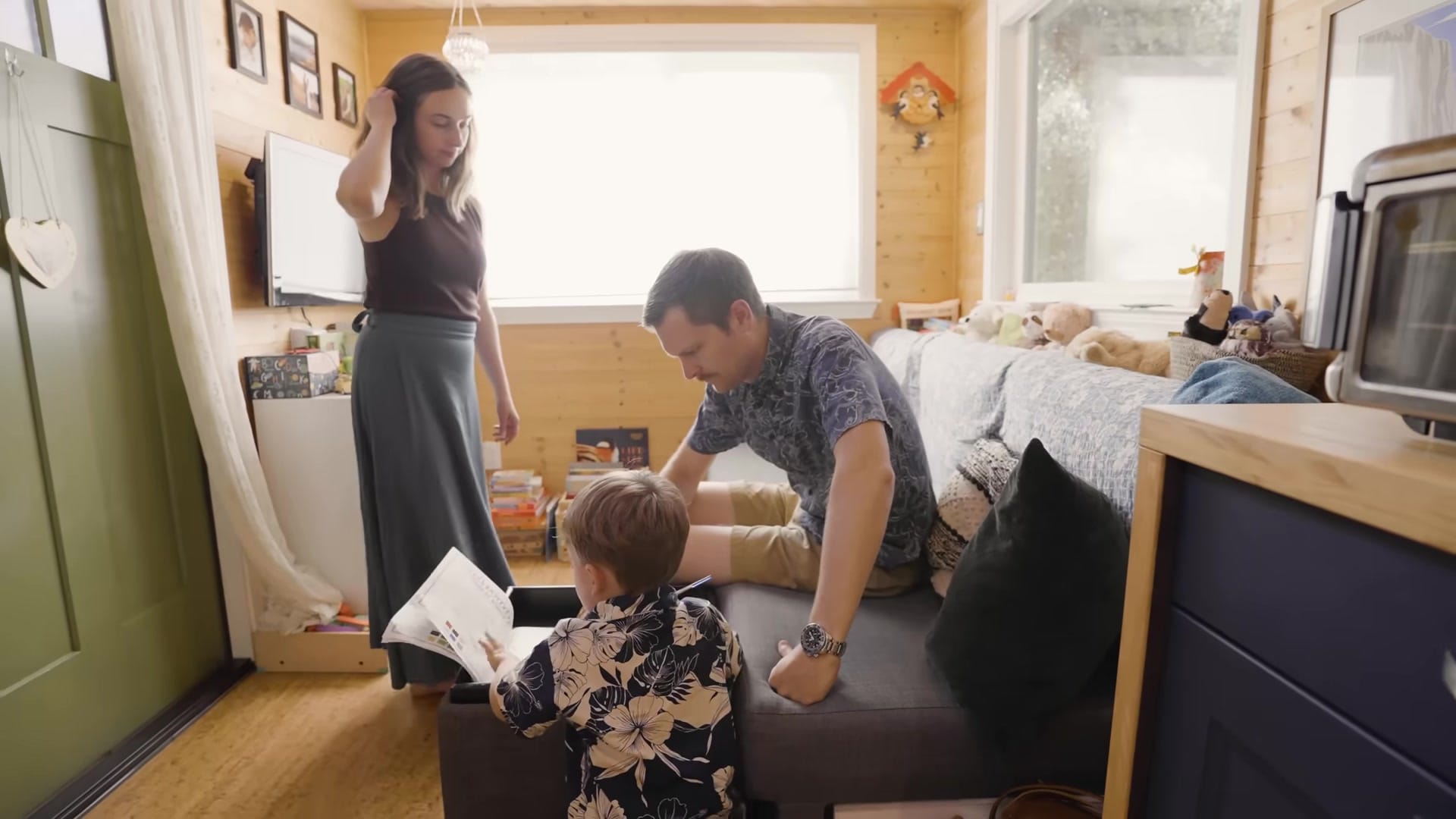
A huge picture window frames the orchard and floods the room with light, joined by another window for cross-breeze and brightness.
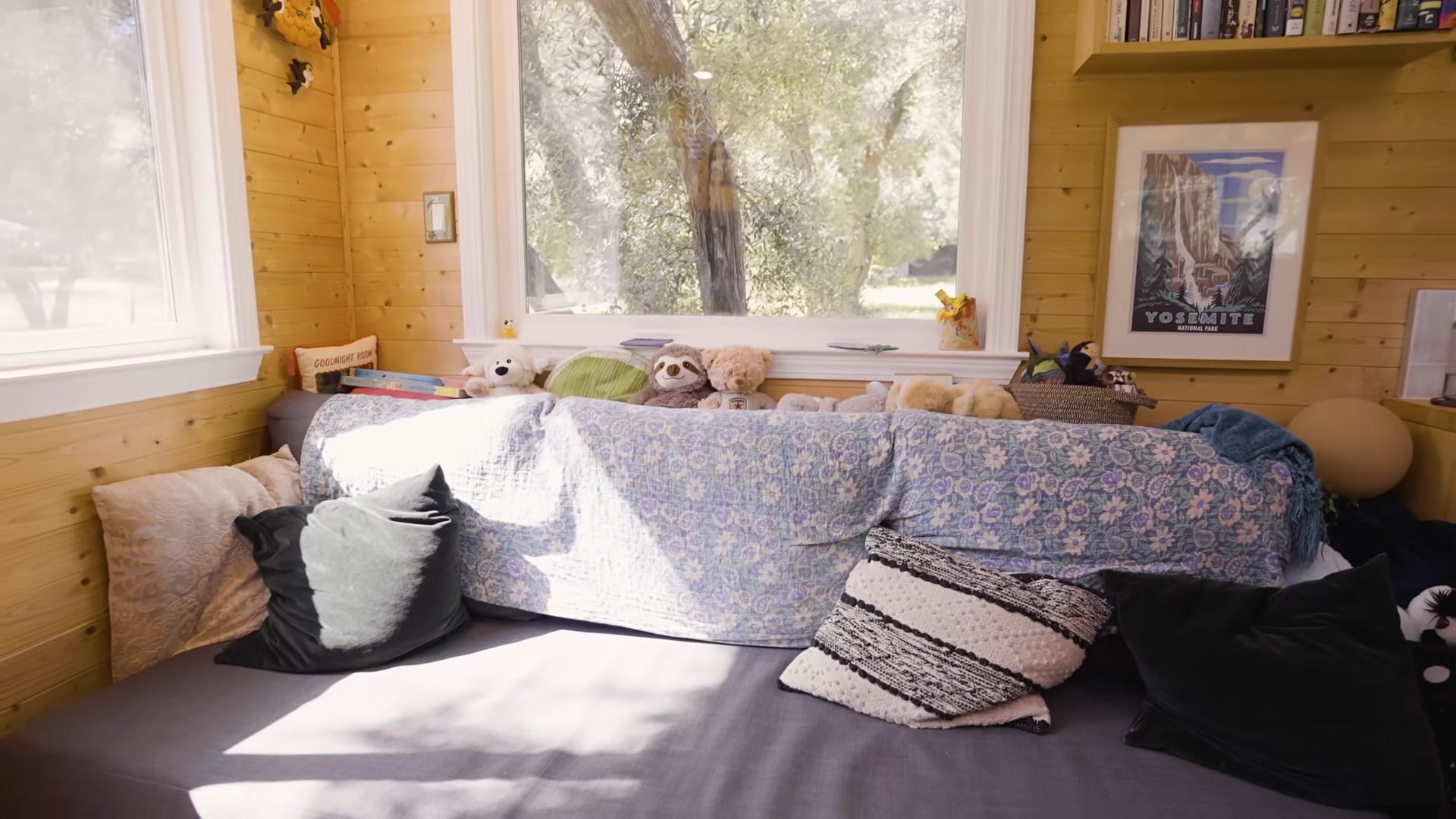
The original layout changed after living in the space—moving the couch made the whole room flow better.
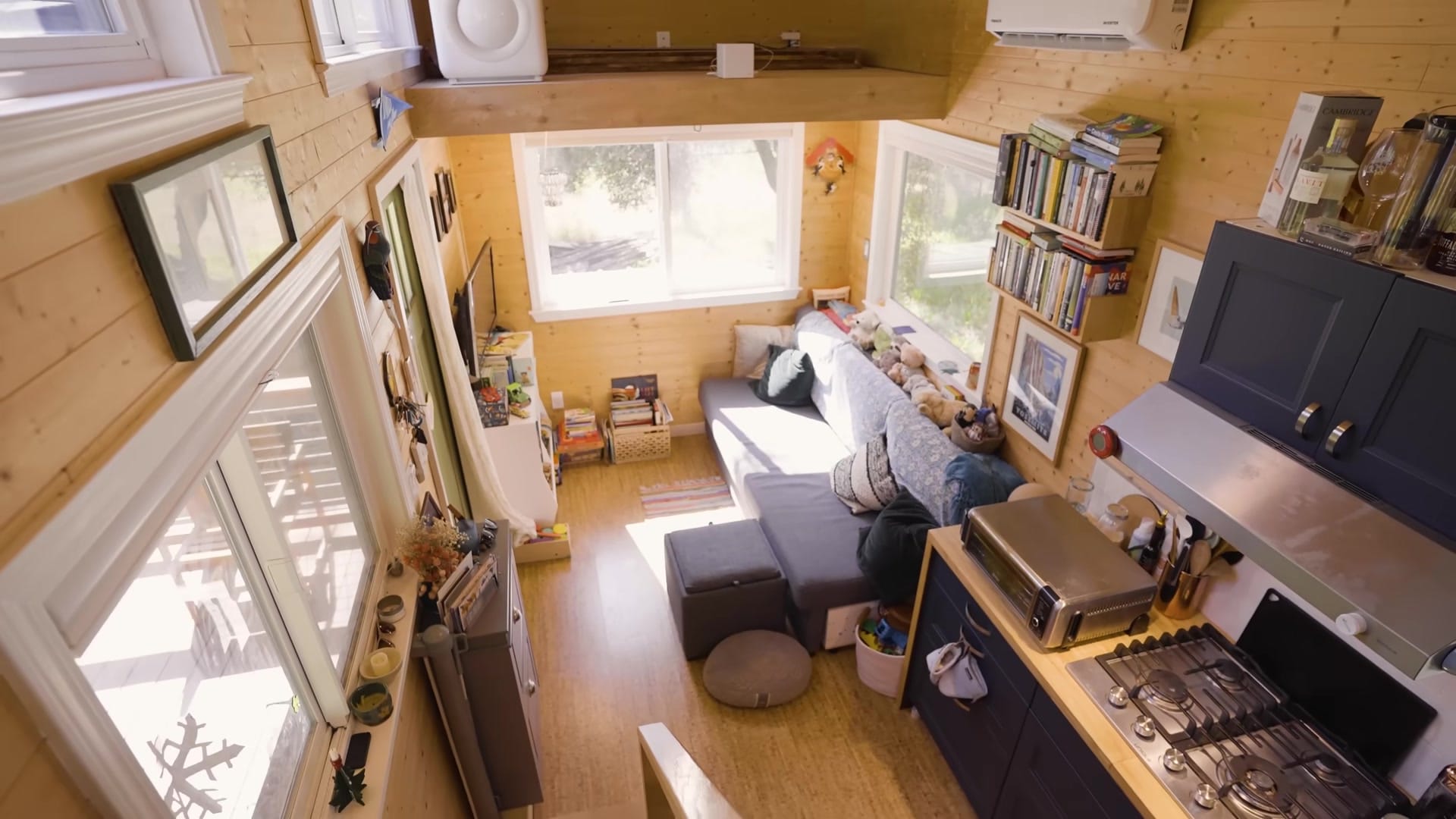
Entertaining works here because it’s cozy and social by design, and the porch adds room to spread out. It’s easy to have people mingling inside and out—especially with kids running around.
Why They Went Tiny & How They Learned to Build
Los Angeles life (Glendale) meant long hours and barely seeing each other, so something had to change.
Spending about $32,000 in two years on rent sealed the deal—they wanted a different path.

They quit their jobs, moved to Northern California to be near family, and started building life on their own terms.
In between, they became pro house sitters, hopping from one long stay to another while they studied what worked in different homes.

Their construction experience? Basically none—but willingness to learn was everything.

Manufacturers’ how-to videos and lots of YouTube became their teachers for roofing, solar mounts, insulation, and more.

They also asked wedding guests to contribute to the tiny house instead of gifts, which covered the trailer and kept them motivated to finish. And yes—the whole build came in around $50,000 because they did almost all the labor themselves.
Bathroom — clever plumbing without roof penetrations
They carved out a relatively large bathroom at the tongue end of the trailer, opposite the living room.
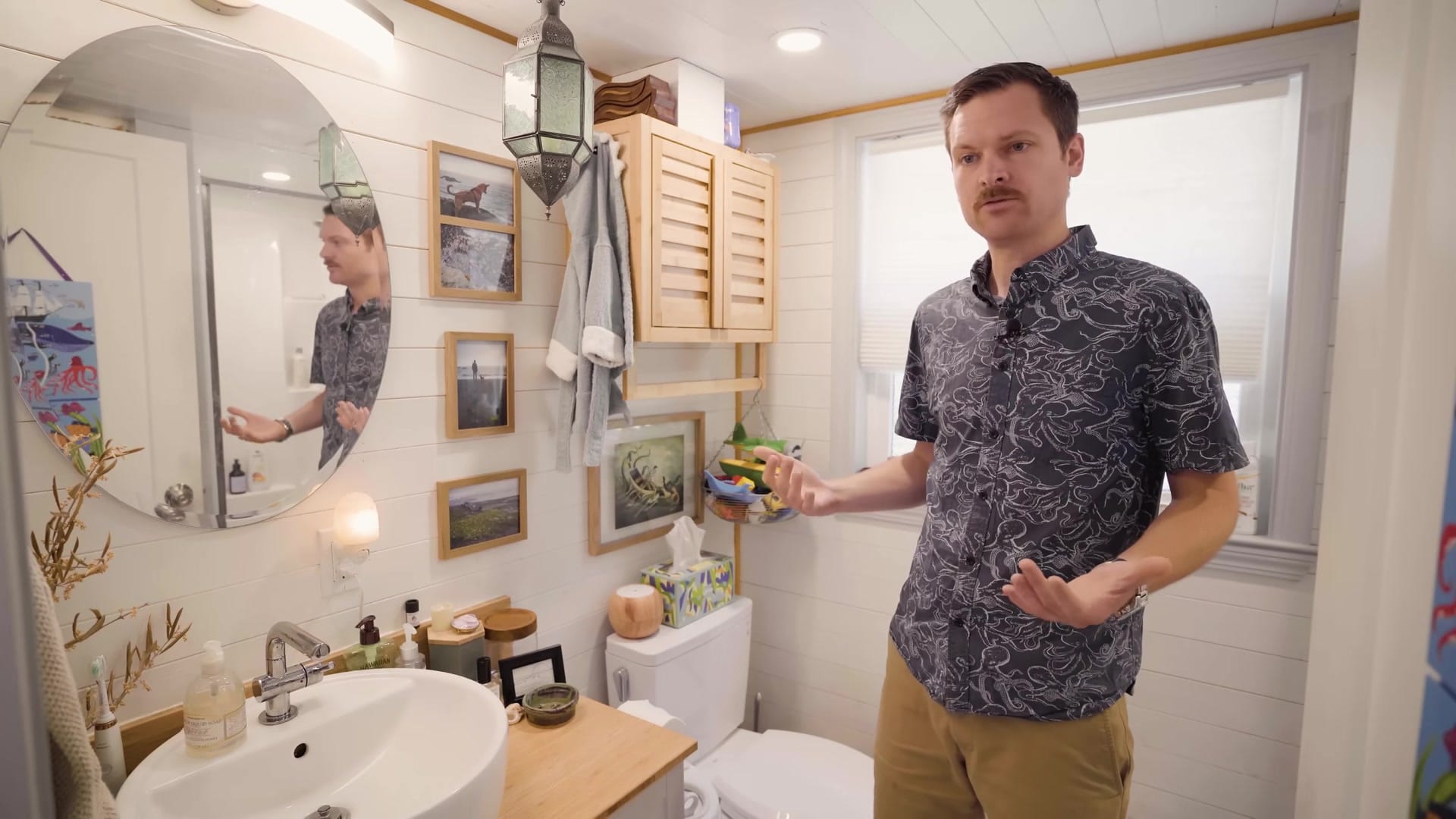
It’s a conventional setup with a standard toilet—no composting system here.
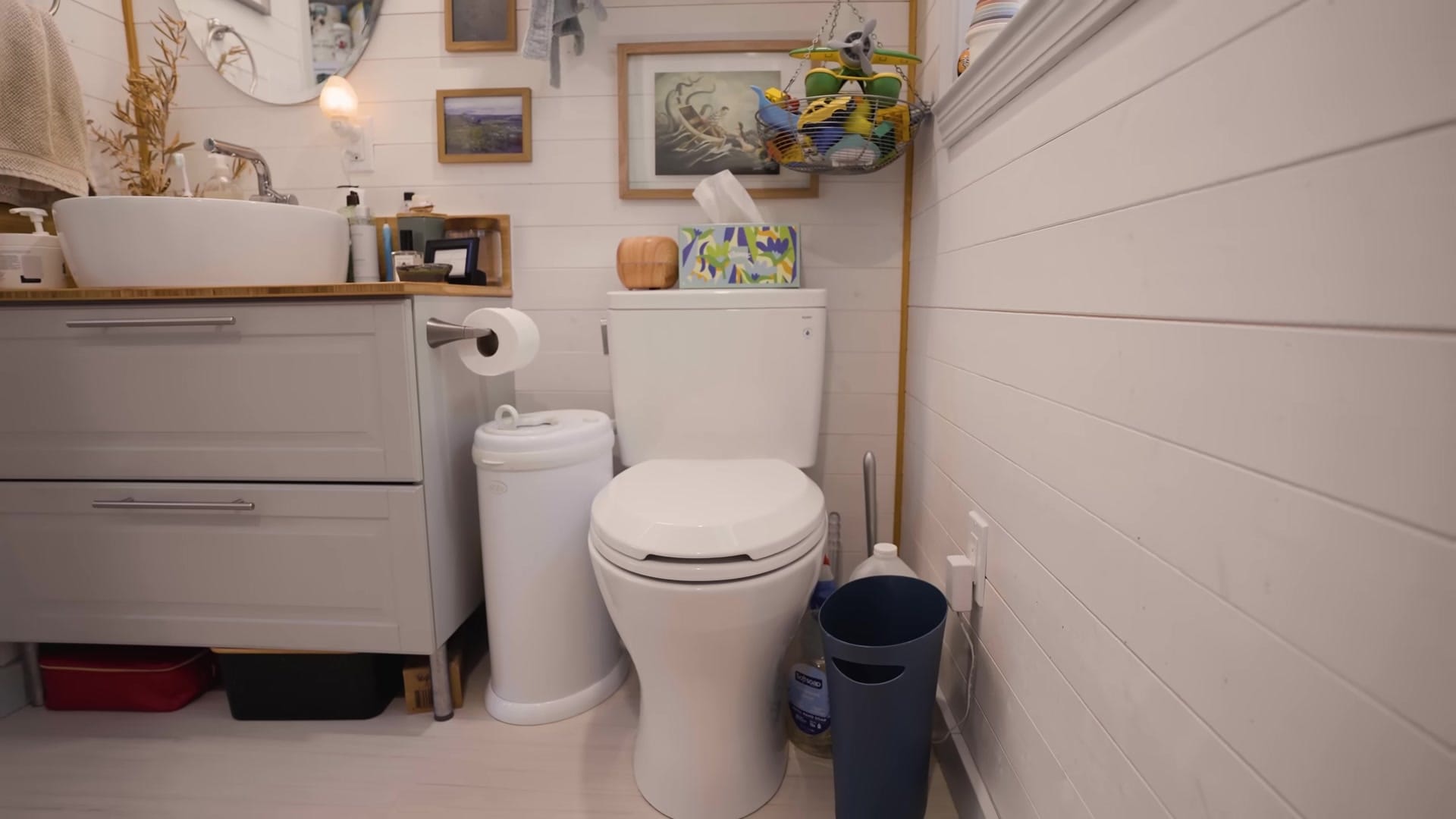
A 36x36 shower stall leaves just enough room for an all-in-one washer-dryer and clothes storage without feeling cramped.

The clever bit: air inlets let them vent the sewer lines without punching any holes in the roof.
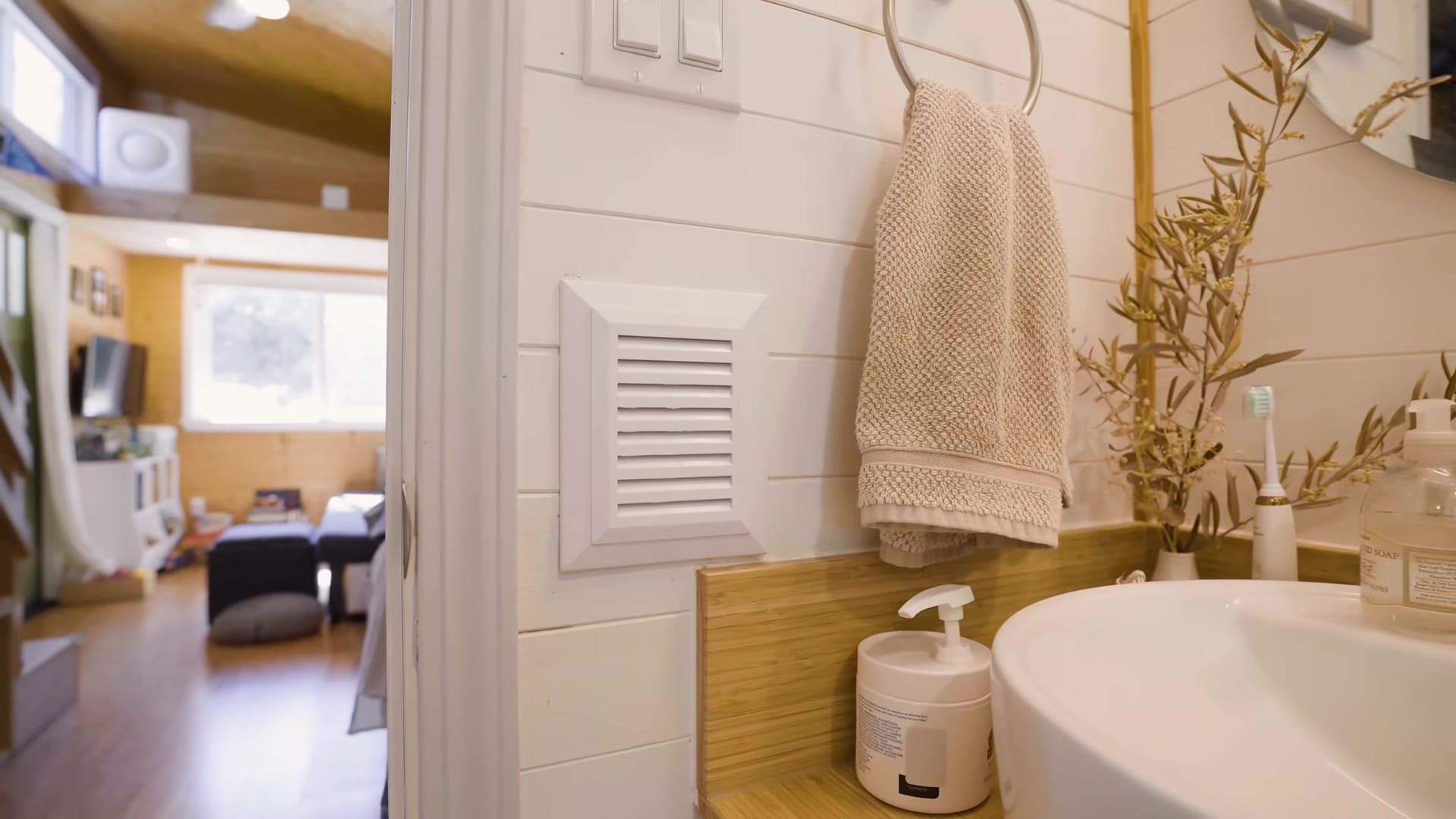
Result: a fully sealed, waterproof roof—exactly what you want in a small, mobile home. For bath time, their son uses a foldable tub that sits inside the shower pan until he graduates to full showers.

Bedroom Loft — sleeping, storage, and kid setup
Upstairs is the family nest where everyone sleeps together in the loft.
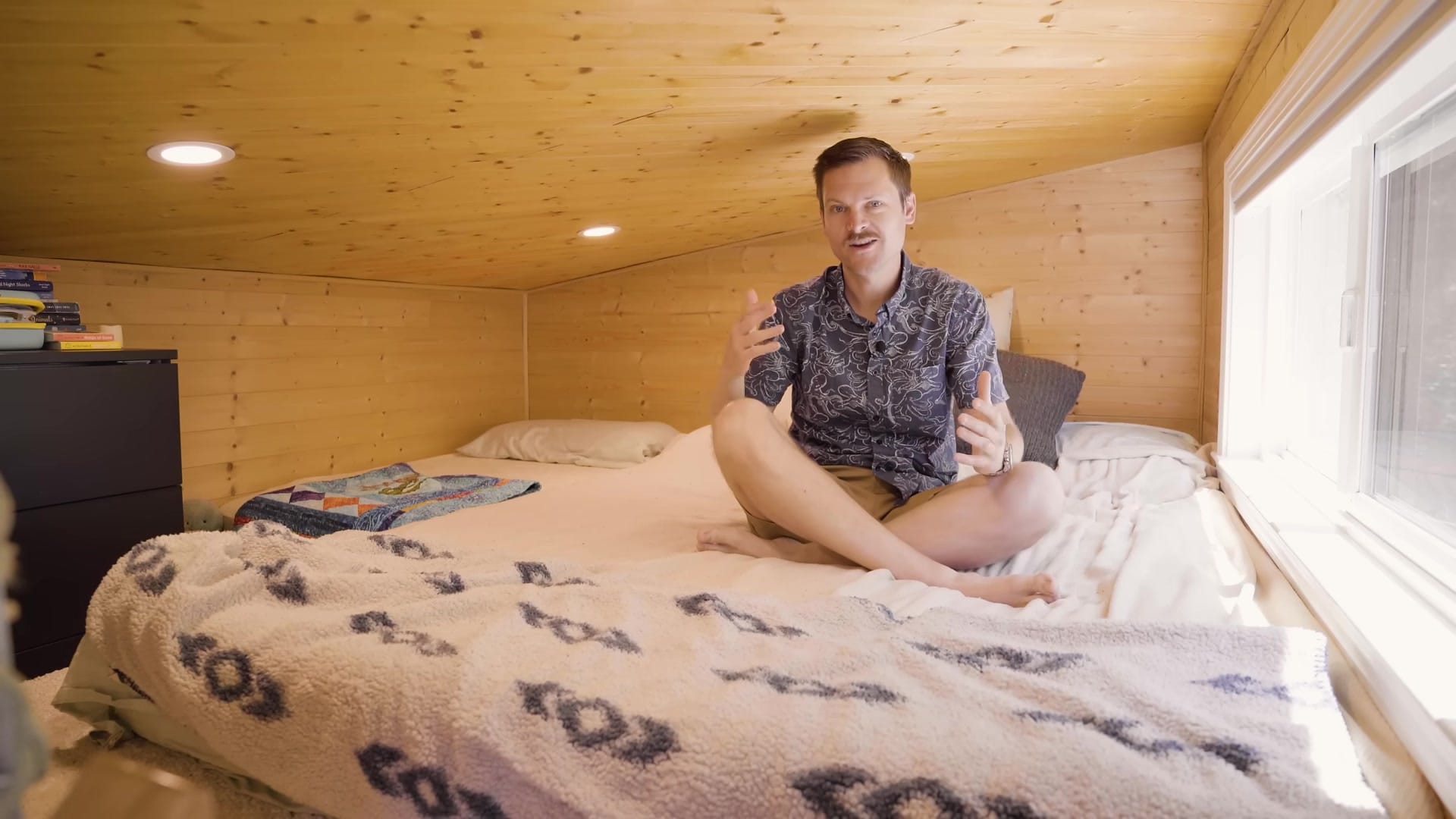
There’s a queen mattress for the adults and a toddler mattress right next to it, which works perfectly at this age.
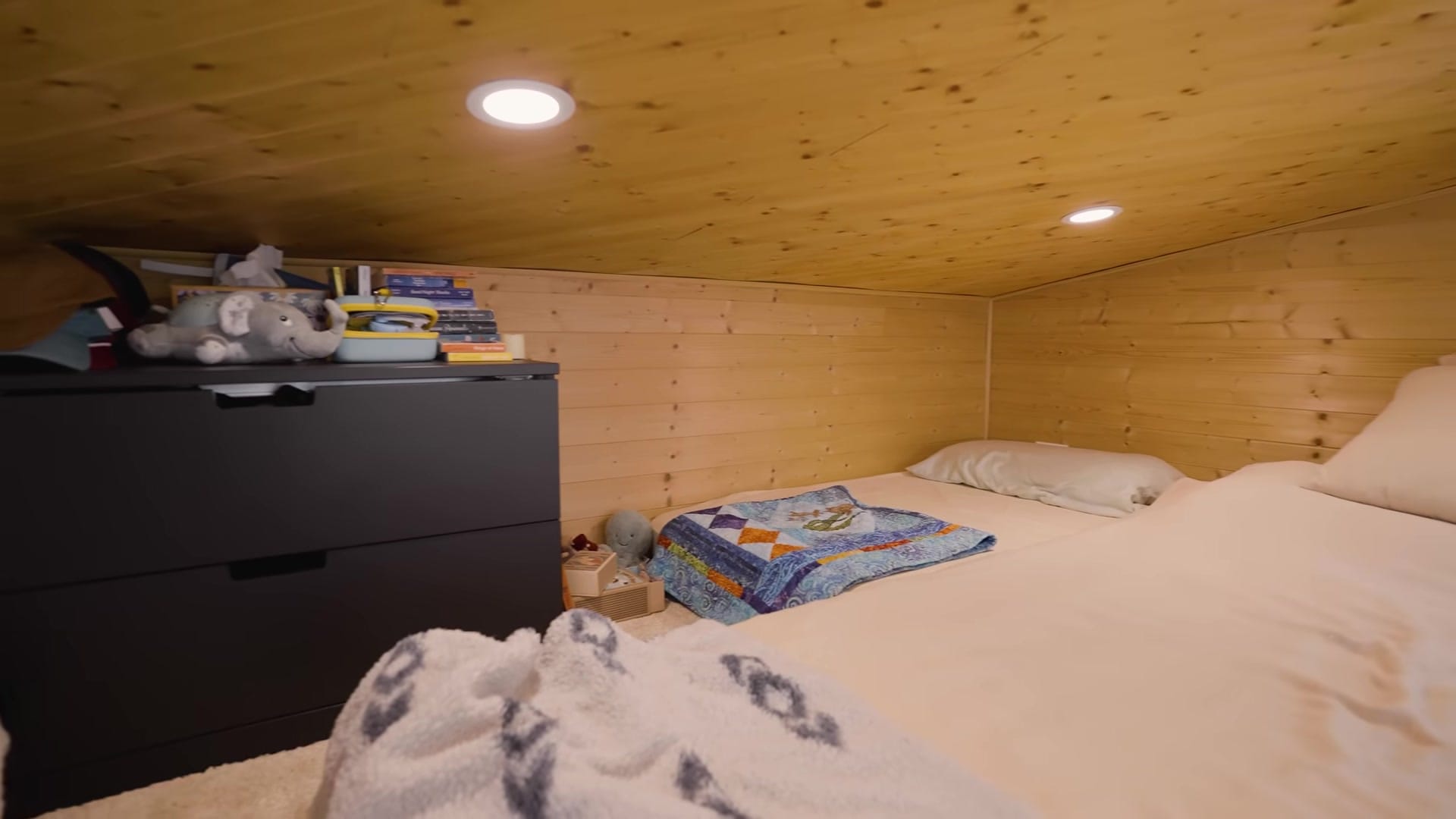
A dresser holds clothes, while stuffed animals and nighttime books live close at hand for bedtime routines.
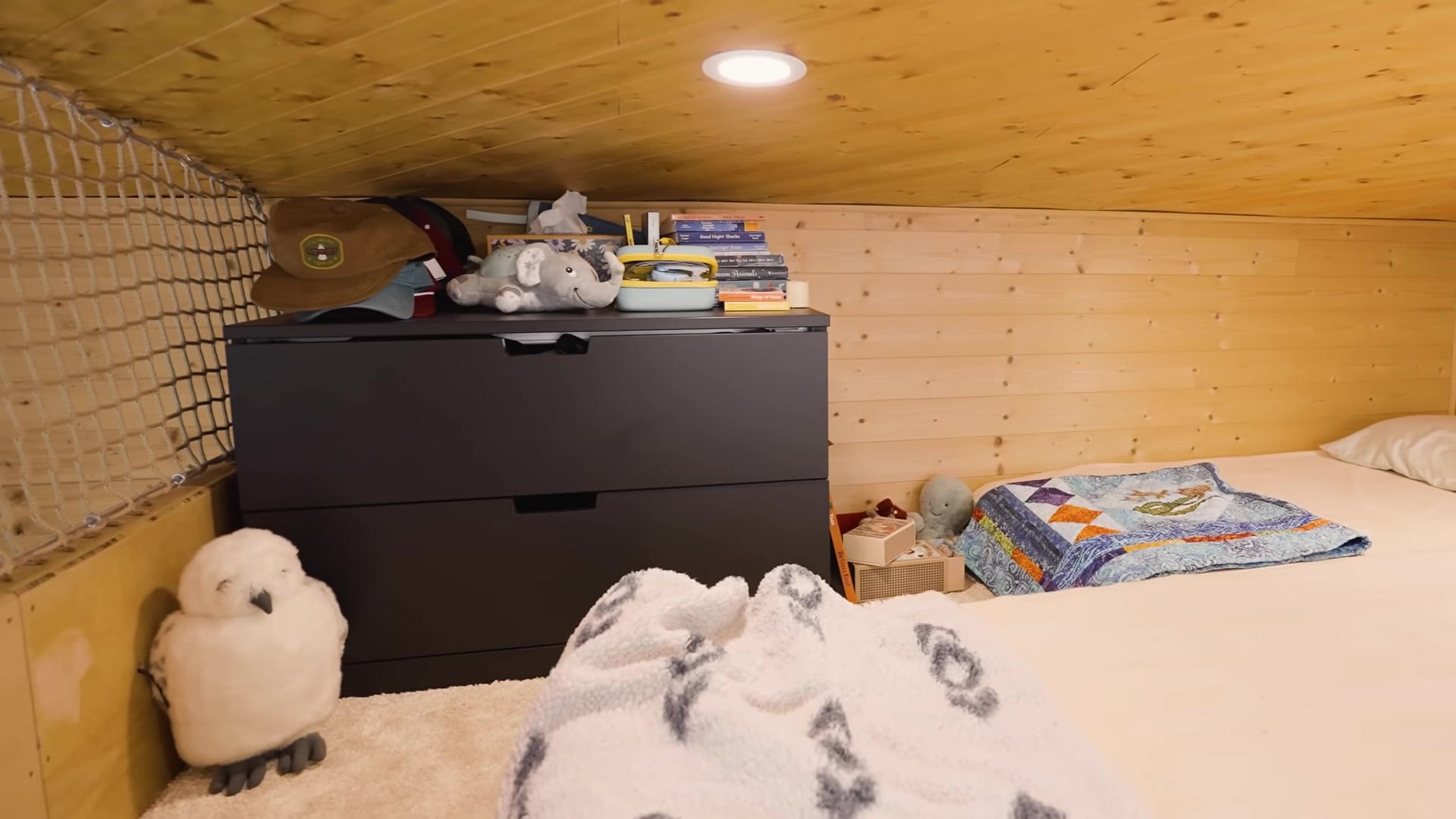
A large window looks out over the orchard and doubles as an egress point—peace of mind included.
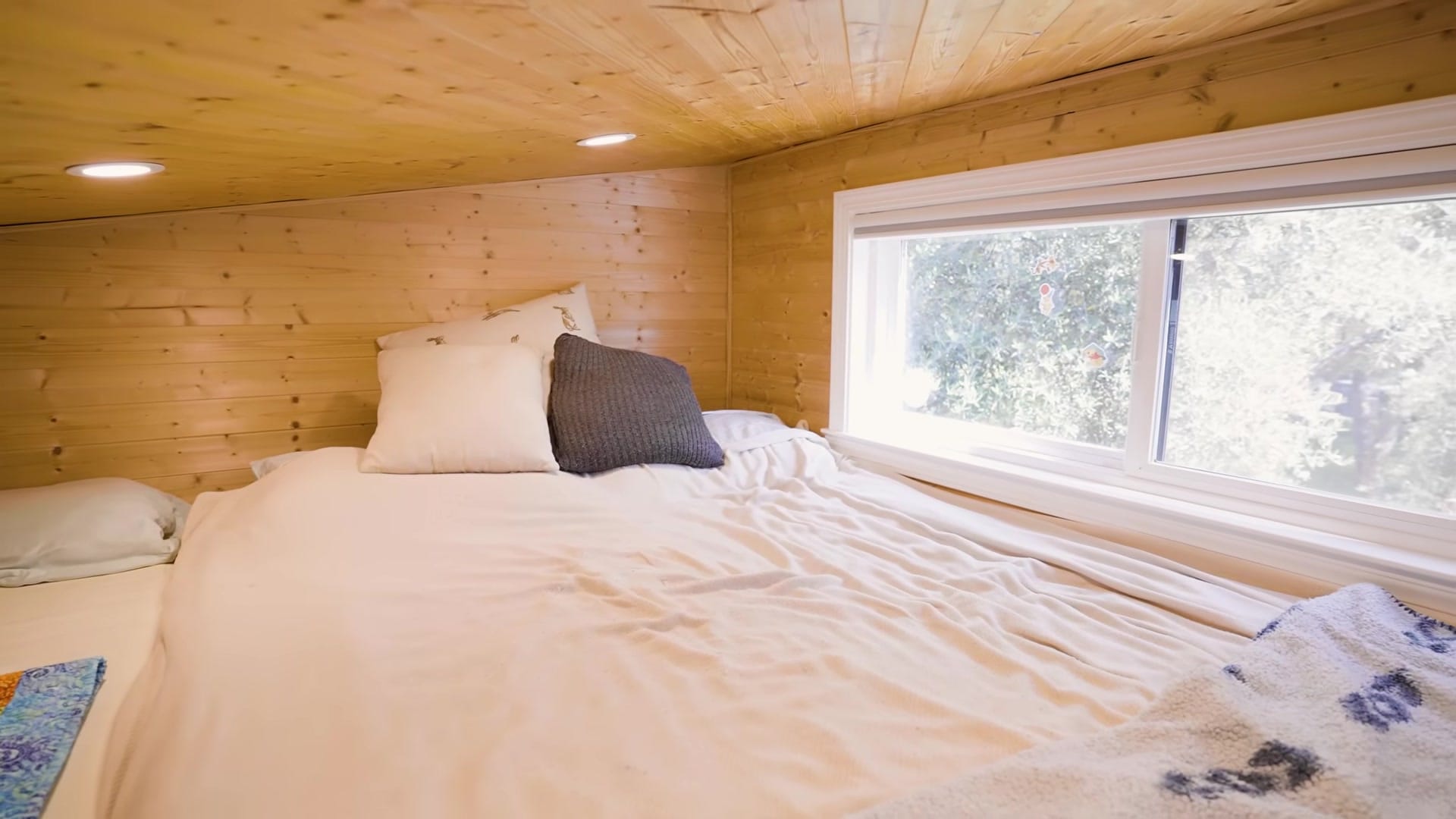
Motorized cellular shades go full blackout and block heat, and a mini split easily handles heating and cooling in the compact space.
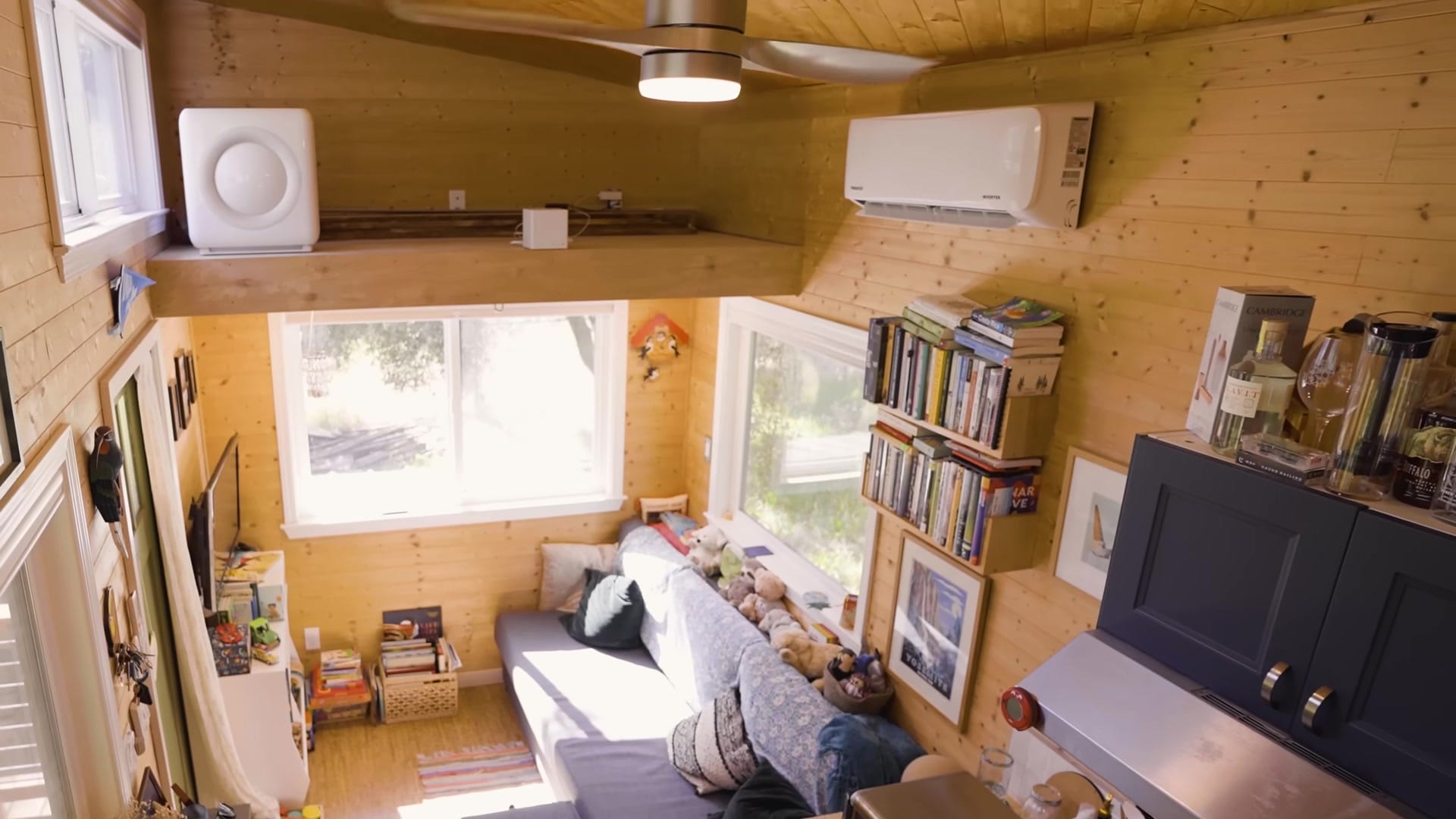
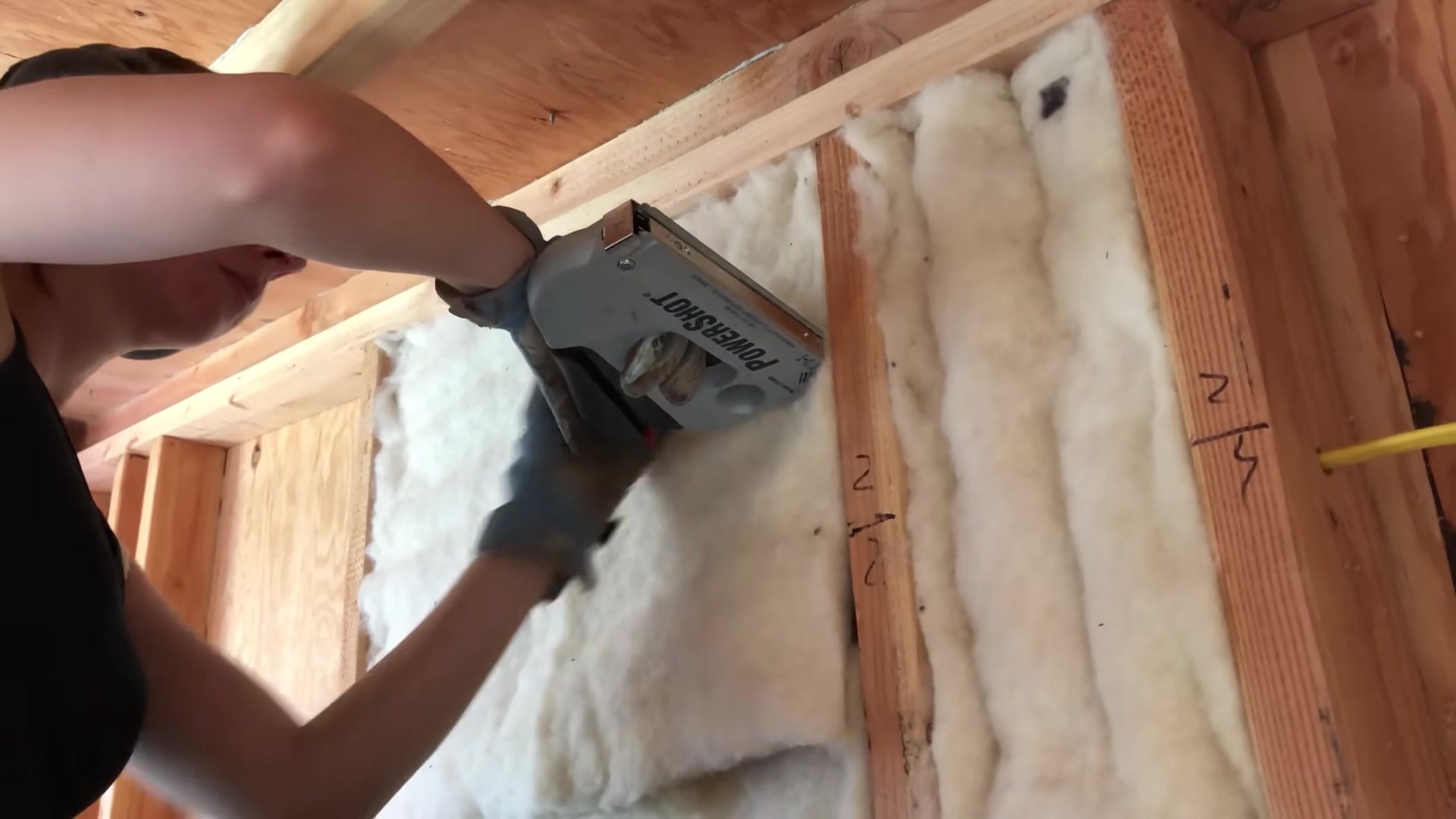
The whole home is insulated with sheep’s wool—sustainable, no off-gassing, and great acoustics in a tiny footprint.
Exterior & Budget: Solar, siding, and the $50K build
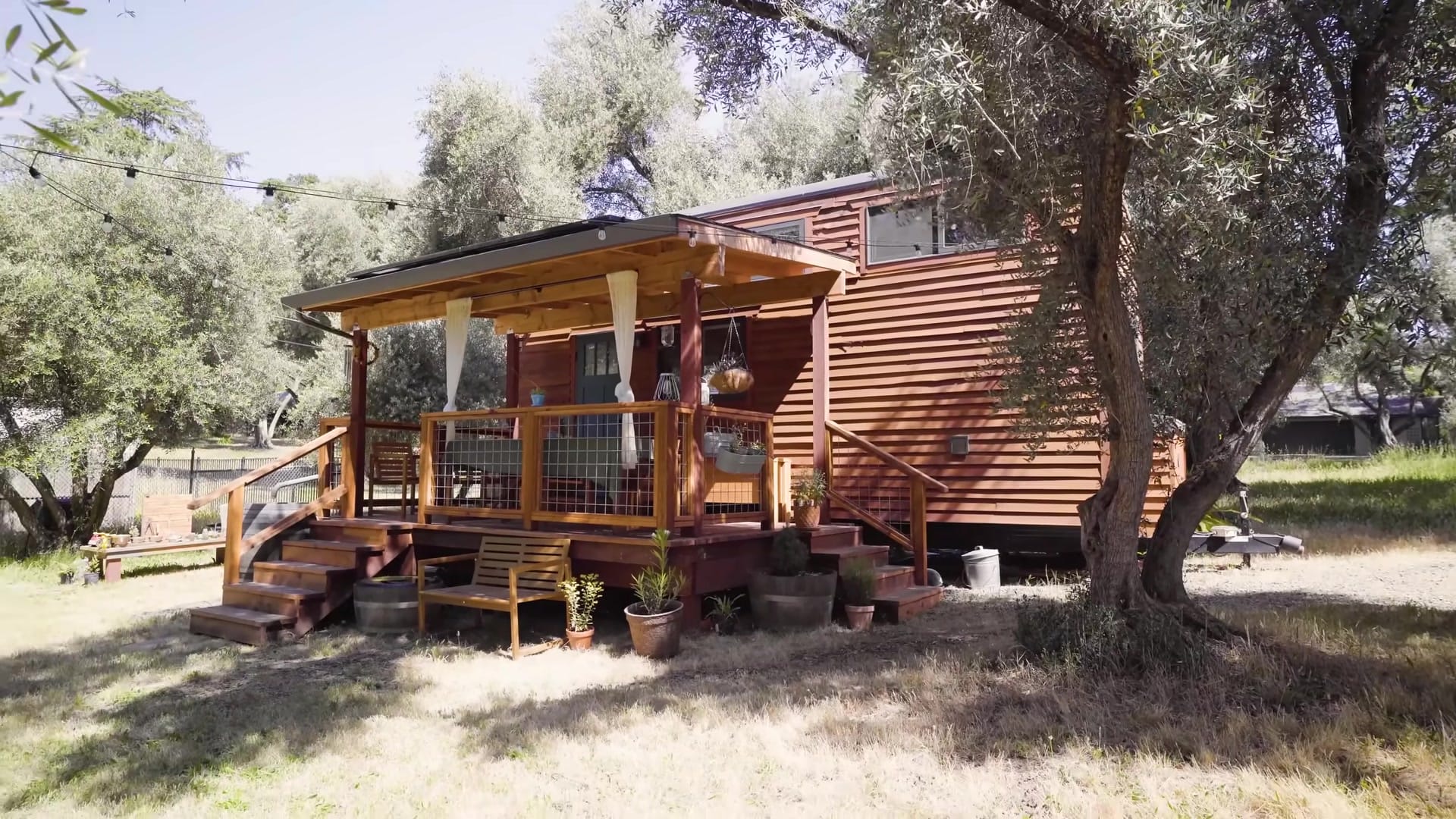
The house sits on a 24-foot trailer, is about 8 feet wide, and goes right up to just under 13.5 feet tall.
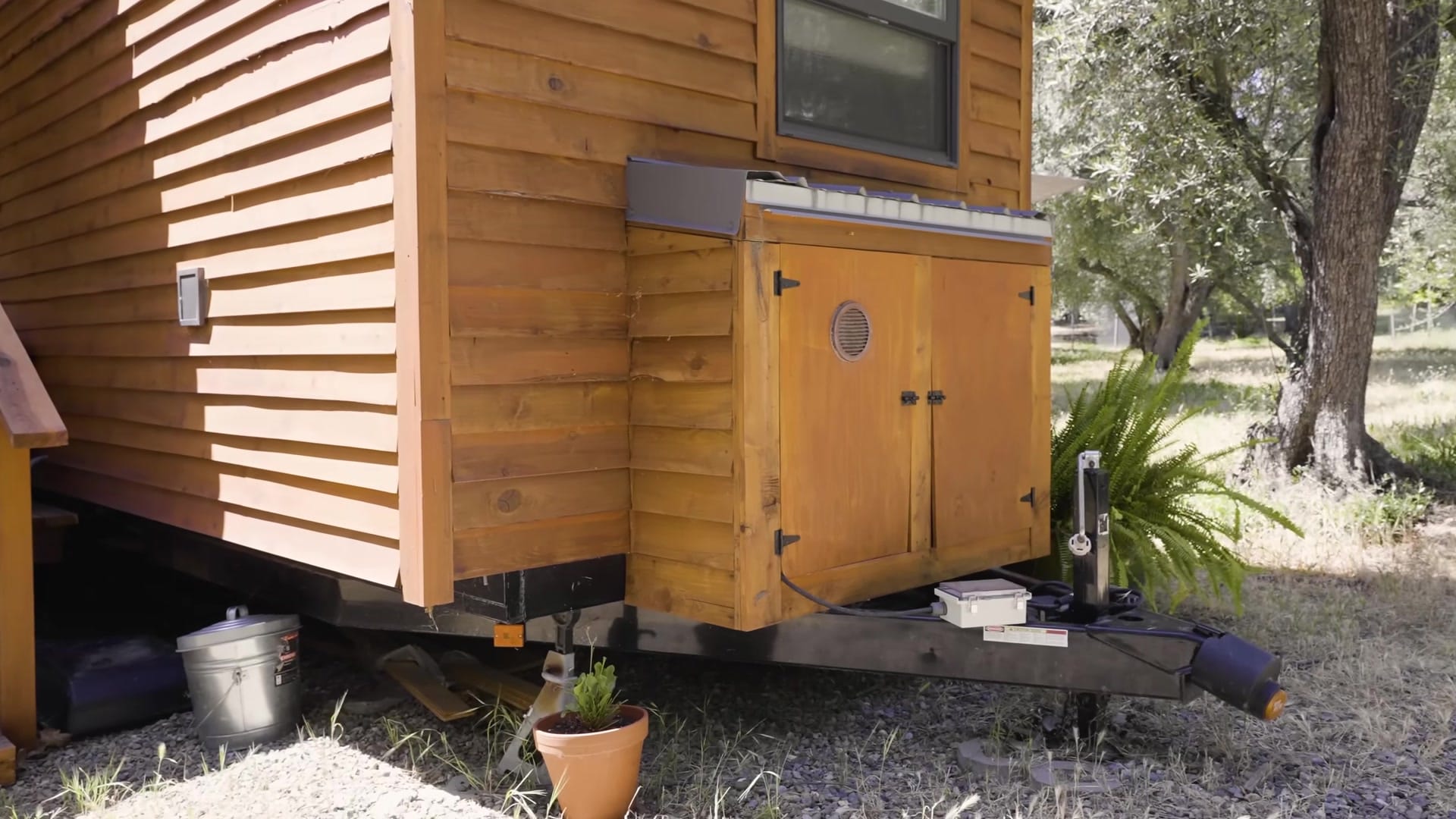
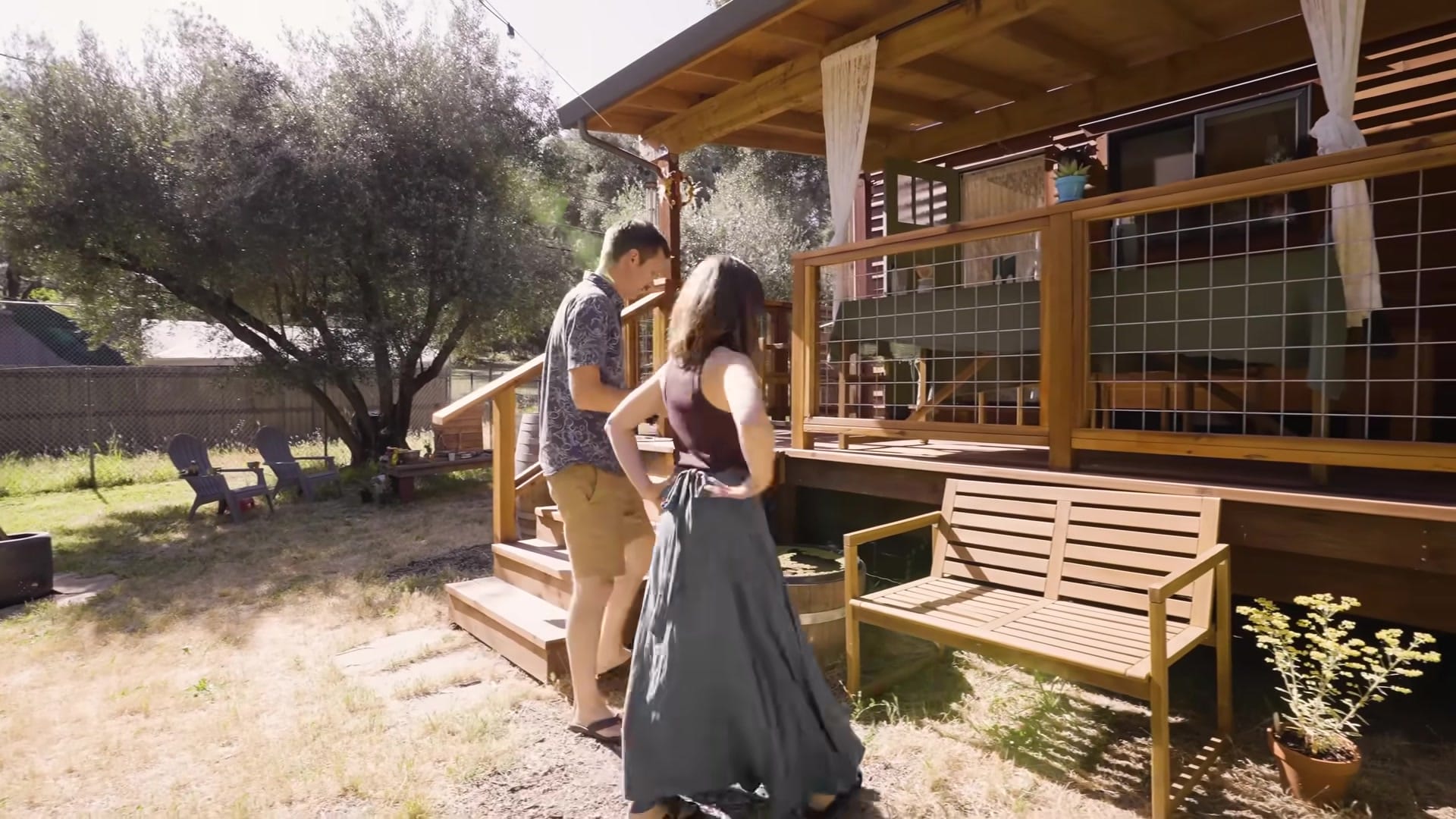
Outside, live edge redwood siding wraps the home in warmth and character.
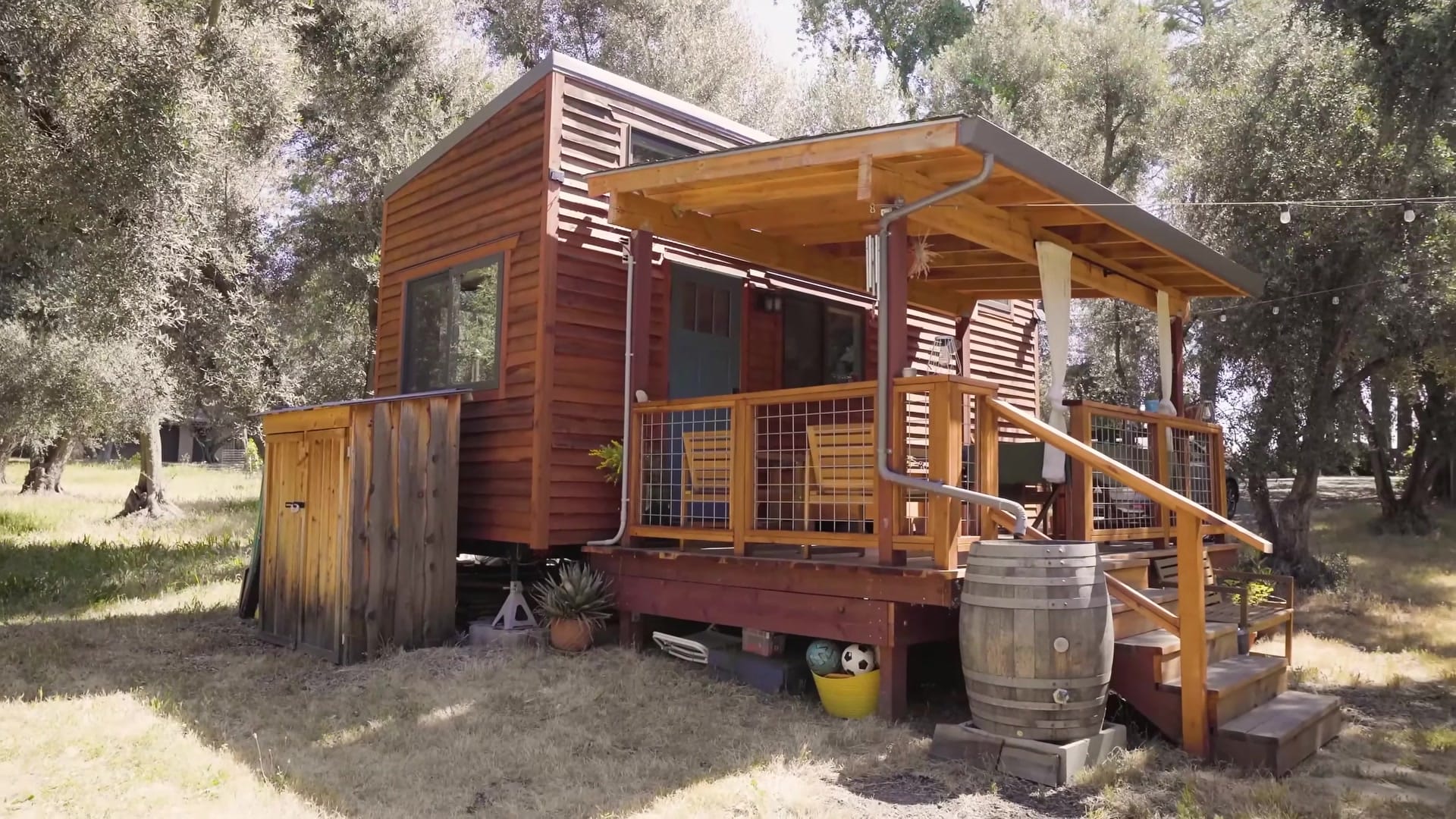
They milled, resawed, planed, stained, and installed roughly 2,000 board feet of that redwood—work that took six months of weekends. Above the porch lives the power plant: six 365W solar panels.
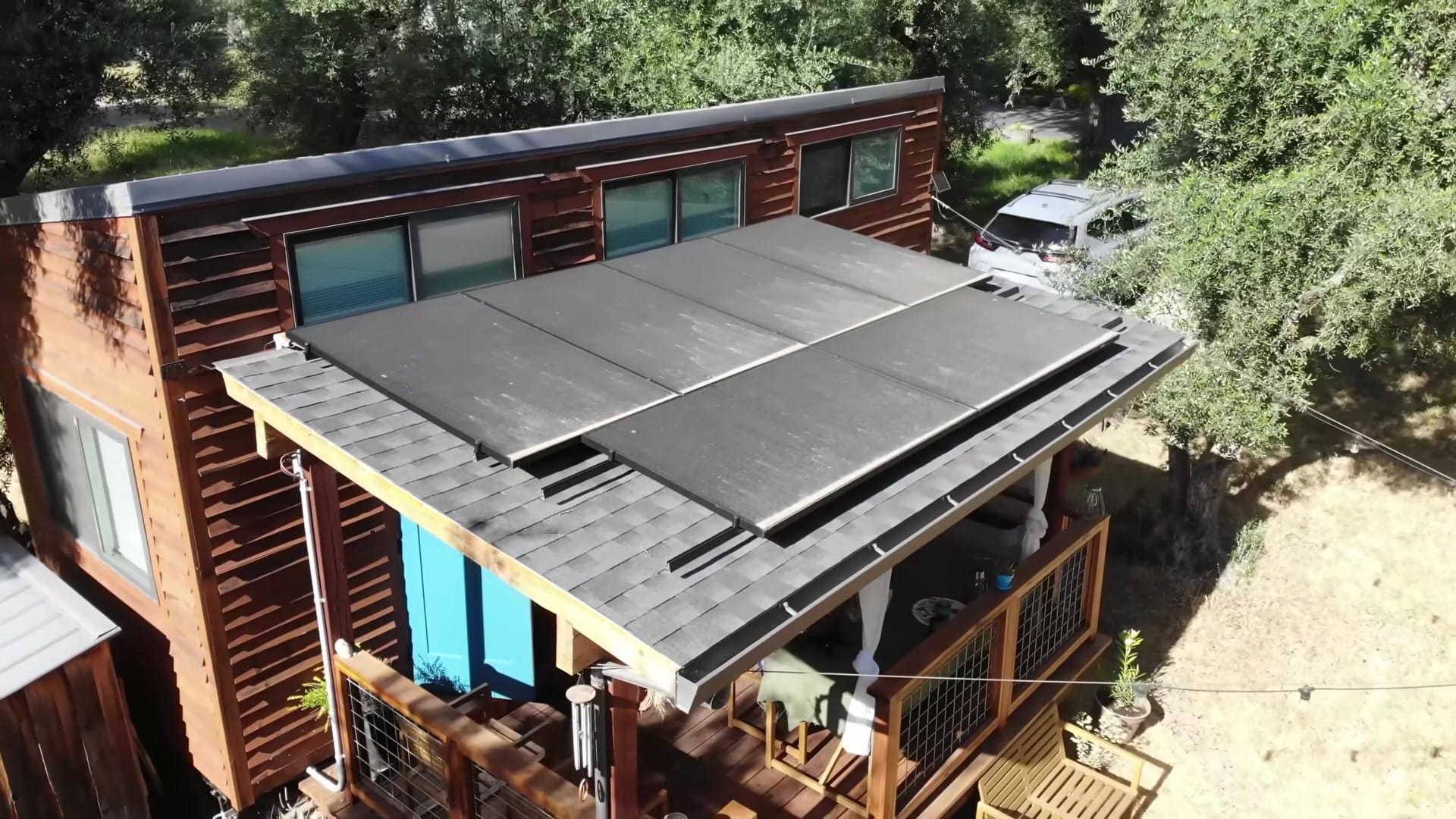
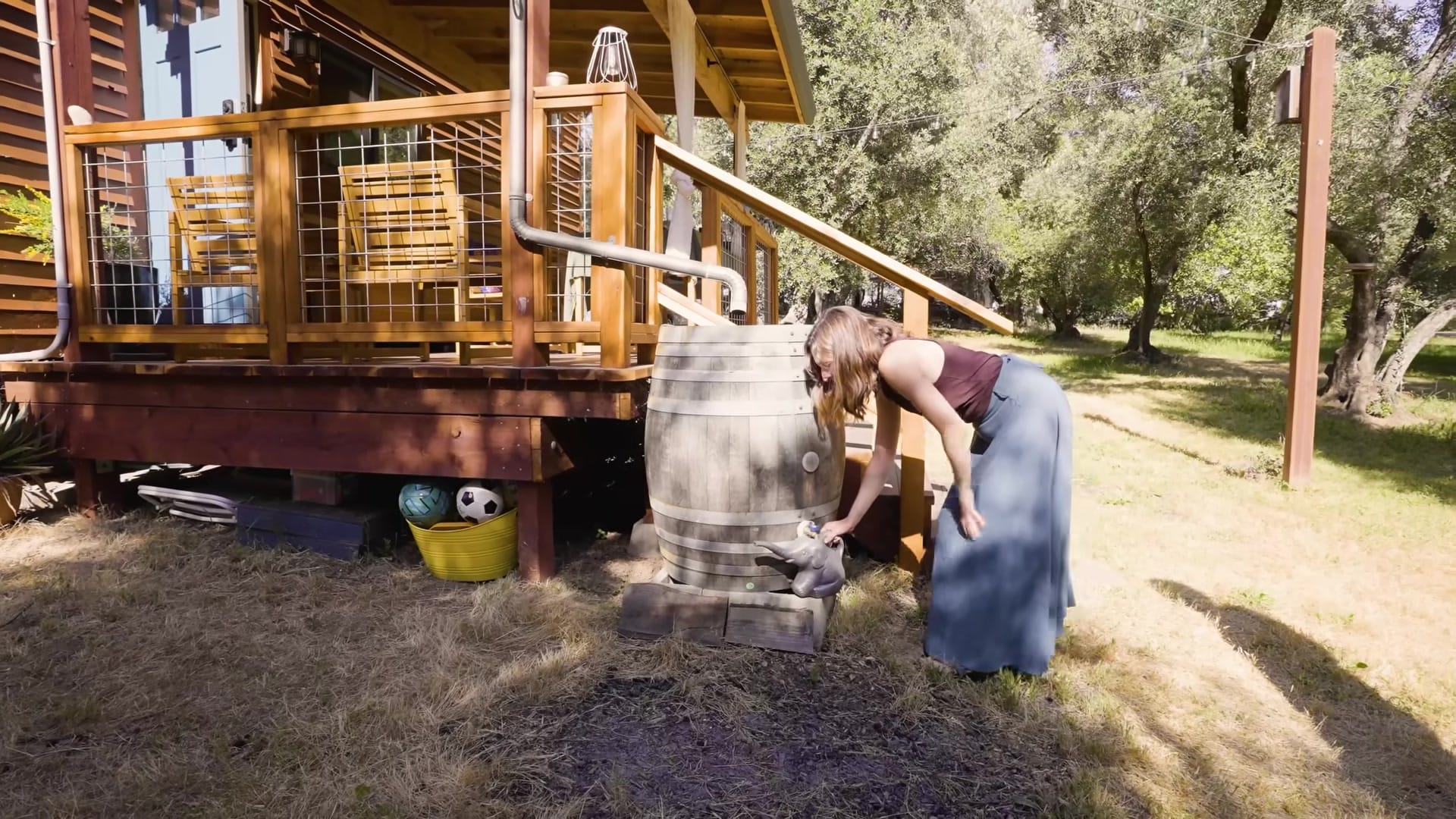
Two lithium iron phosphate batteries store energy, and rain from the porch roof feeds a wine barrel for the garden.
With careful planning and a slow, cash-funded approach, the entire build (appliances and all) came in around $50,000.
Outside extras are handmade too—a mud kitchen for their son, a tool shed, and even a birdhouse now hosting a family of western bluebirds. It’s all part of a life that trades square footage for freedom, function, and time well spent.