12 Photos of History That Show How Hard Life Used To Be
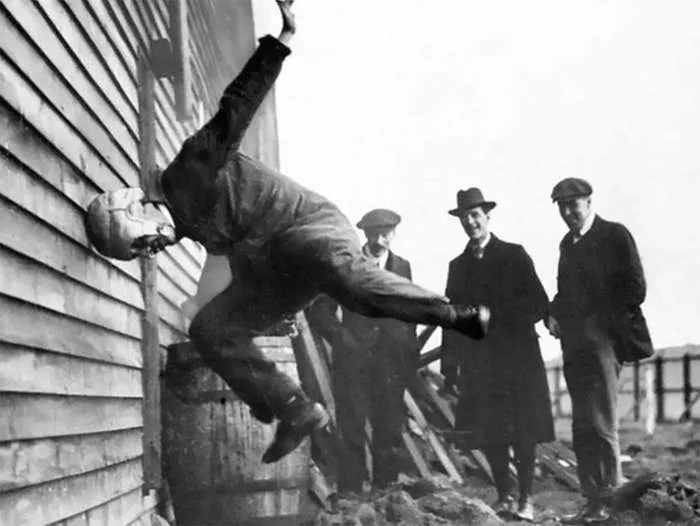
Imagine your walls were literally made of yesterday’s news—and that was considered a smart upgrade. These 12 photos don’t just show “the past.” They show what survival looked like when comfort was a luxury and endurance was the default.
#1 A Depression-era kitchen wallpapered with newspapers
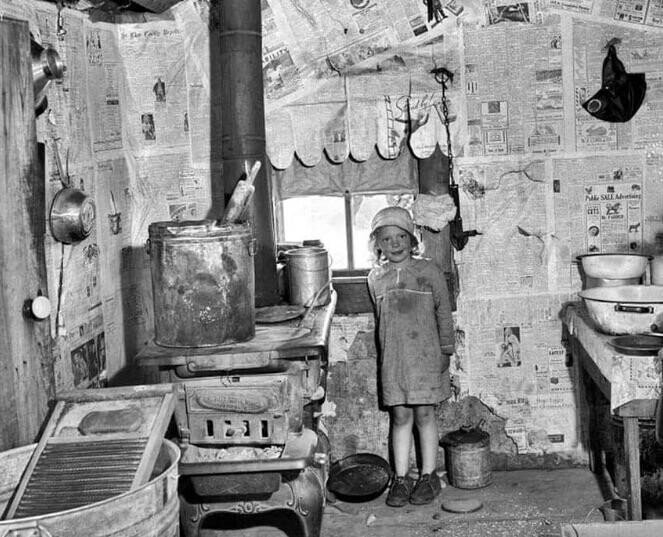

The first thing that hits is the walls: layer upon layer of newspaper, turned into insulation, decoration, and a quiet refusal to let a home fall apart. It’s not quirky—it’s a solution built from whatever could be found and saved.
In the middle of it all, a young girl stands near battered pots and a plain wood stove, surrounded by essentials that look worked to the bone. Every object feels like it had to earn its place, because nothing was easily replaced.
The photo makes hardship feel physical—cold rooms, thin meals, long winters—yet it also shows a kind of stubborn creativity that kept families going.
#2 A one-room schoolhouse centered around a pot-bellied stove
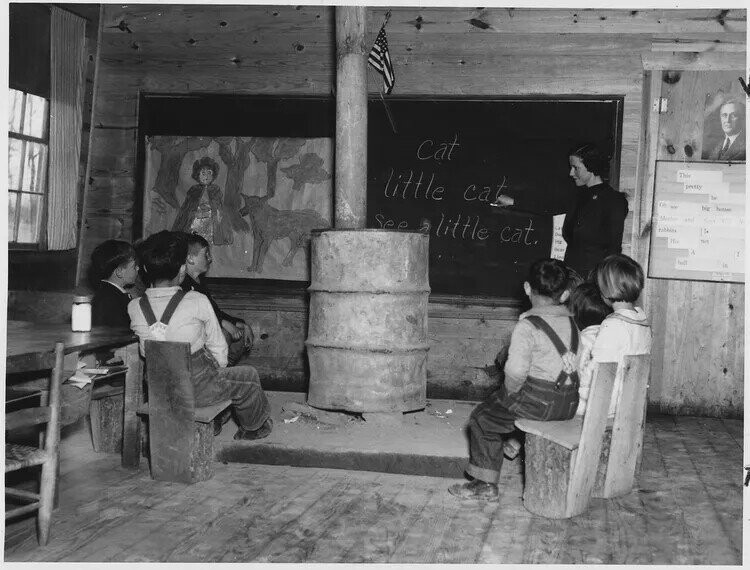

This classroom is small enough that the stove isn’t just for warmth—it’s the heart of the room. Students cluster in close quarters, and the rough wooden walls make the space feel more like a cabin than a school.
The teacher’s blackboard is simple, the seating looks improvised, and the American flag in the corner reads like a promise pinned to bare necessity. Education here isn’t polished; it’s persistent.
It’s a reminder that learning used to happen in conditions that would now be considered unfit for a storage shed—yet it still mattered enough to show up for.
#3 Two barefoot children on worn wooden steps
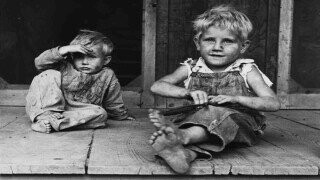

Bare feet on splintered steps shouldn’t feel like a punch to the gut, but it does here. The children’s clothes are thin and tattered, and their expressions carry a seriousness that looks borrowed from adults.
The frame is stark and direct—no distractions, no softening. Just two kids in a world where childhood seems shorter, rougher, and far less protected.
What makes it linger is how quiet it is. No drama, no spectacle—just the normal face of going without.
#4 A neighborhood delicatessen storefront run on grit and pride
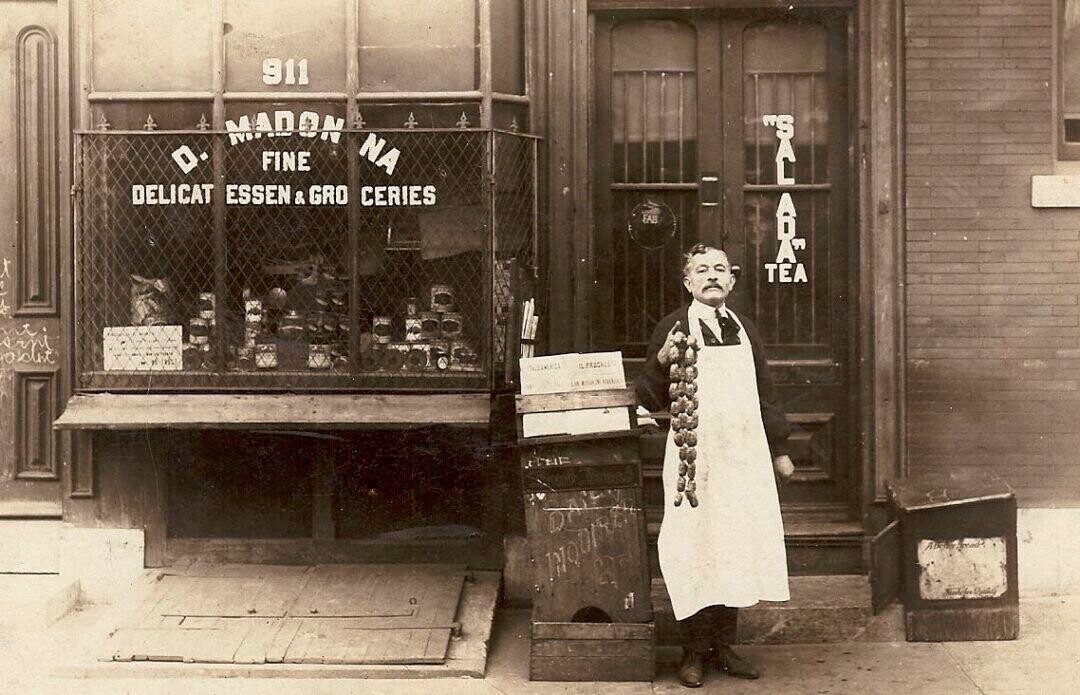

The shop front is a full biography in one image: weathered signage, protective grating, and a lineup of goods that had to sell to keep the lights on. The owner stands out front in an apron, posed with the calm confidence of someone who couldn’t afford to fail.
It’s an immigrant work story captured in a single frame—long days, narrow margins, and a business built one customer at a time. The street-facing display isn’t just marketing; it’s survival.
There’s pride here, but it’s the kind that comes from exhaustion and repetition, not ease.
#5 A work crew gathered beside a truck on a dusty job site
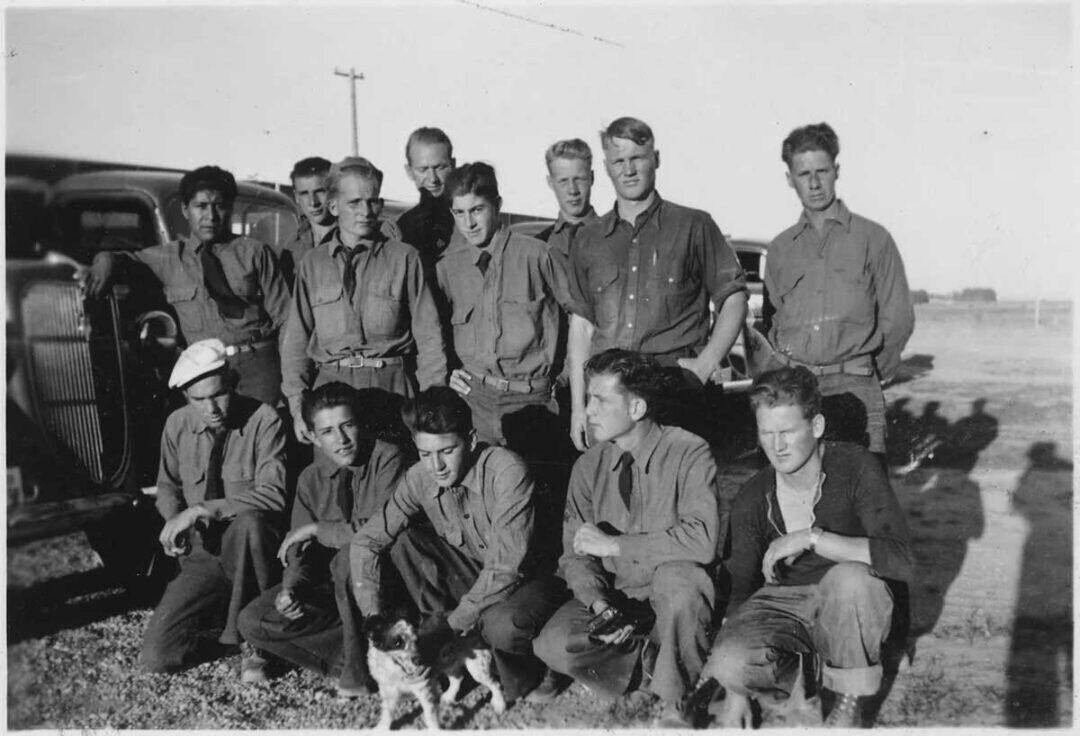

They lean and stand around the truck like it’s both transportation and break room. Worn clothes, weathered faces, and that particular posture of men who’ve spent years doing tasks that hurt the body slowly.
The landscape looks unforgiving—open, dry, and exposed—like shade was something you had to invent. Even the small dog near their feet feels like a worksite regular, part morale booster, part silent witness.
This is the backbone of an era, but the photo doesn’t romanticize it. It shows camaraderie as a coping mechanism as much as a bond.
#6 A car turned into a tarp-covered home during the Depression
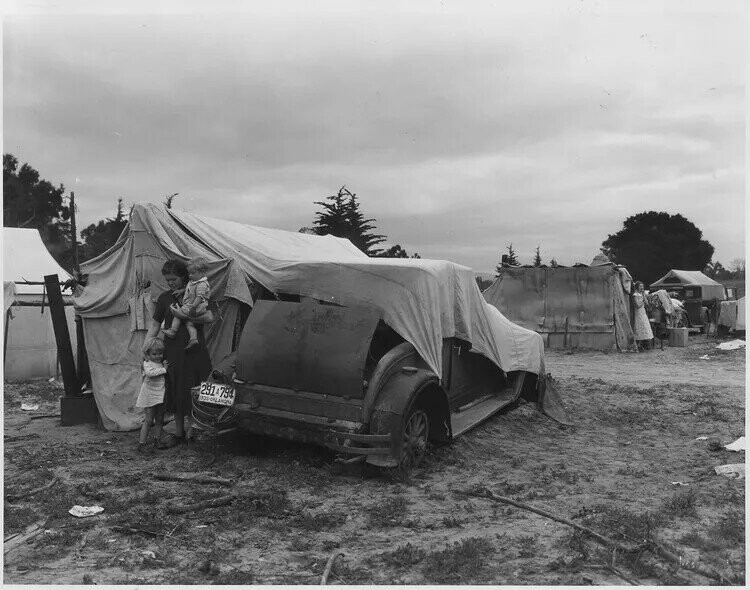

A vehicle is supposed to take you somewhere better. Here, it becomes the somewhere—canvas tarps stretched over metal like a second skin, creating a shelter that’s one storm away from failing.
The scene hints at a whole community of the displaced: dust, open ground, and other makeshift setups scattered nearby. The geometry of survival is everywhere—angles of tarp lines, stacked belongings, the careful placement of what little remains.
It’s hard to look at without realizing how thin the line was between “traveling” and “homeless,” and how quickly a car could stop being freedom and start being a last resort.
#7 A bundled child holding a lamb like it’s treasure
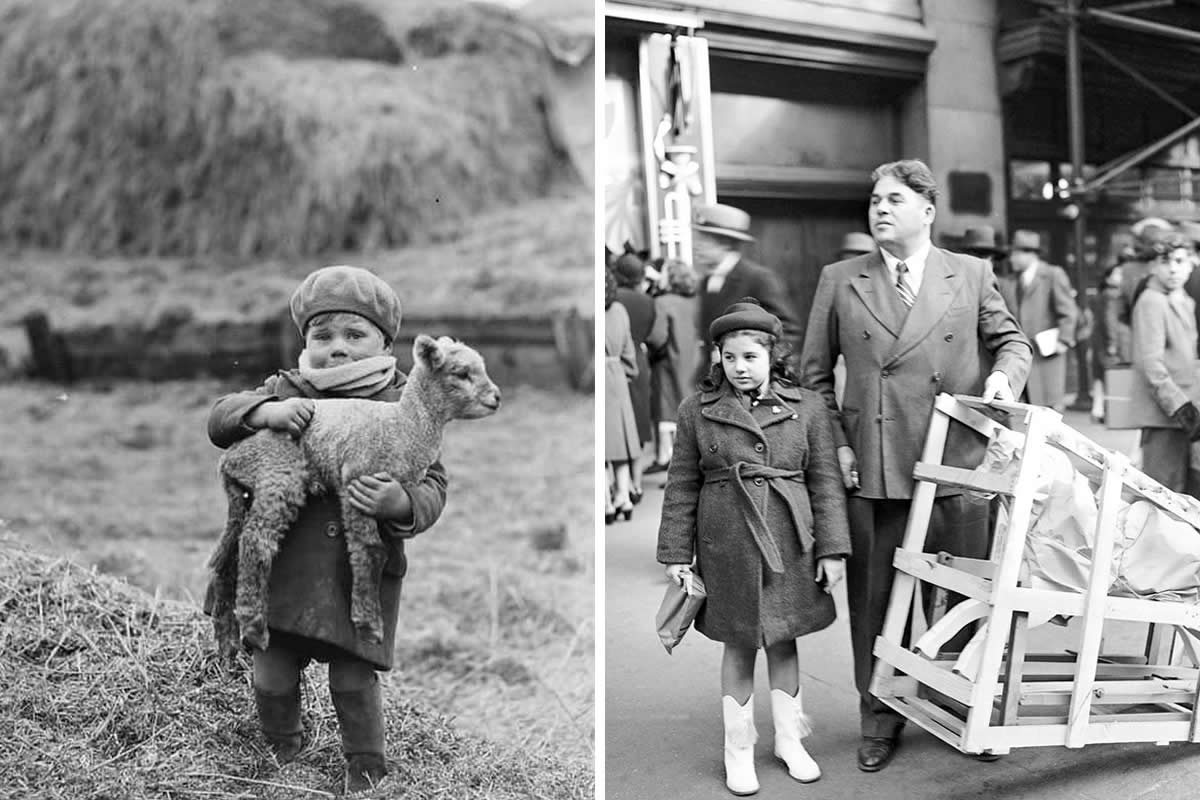

The child’s arms wrap around the lamb with the seriousness of someone protecting a valuable object. The animal isn’t a cute prop—it’s warmth, food, income, and hope rolled into one living bundle.
The rustic setting does a lot of work: it feels spare, practical, and close to the ground. Nothing suggests excess. Everything suggests routines shaped by chores and seasons.
It’s tender, but it’s also heavy. When a child clutches livestock like precious cargo, it says a lot about what was at stake.
#8 A young girl posed with a doll in a medical corset and leg braces
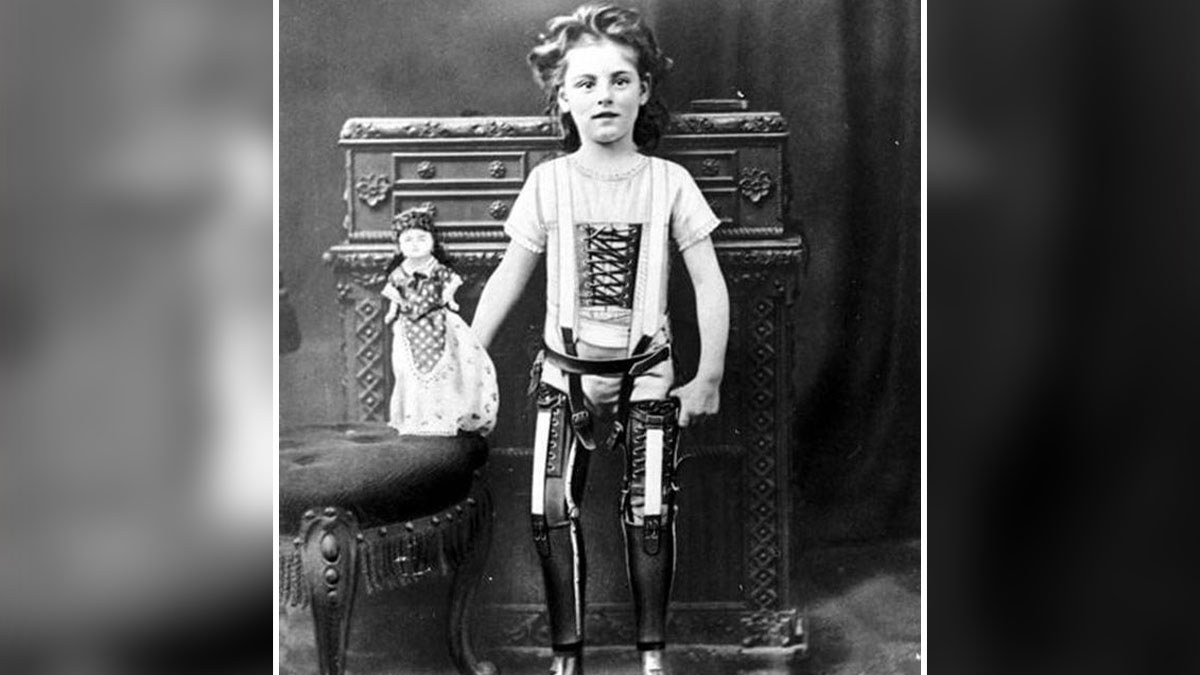

The studio setting is formal—ornate furniture, careful lighting, a composed posture—yet the braces and corset pull the viewer into a different reality. Medical support here looks rigid and unavoidable, something worn daily and carried quietly.
She holds a doll, a small symbol of childhood, while her body is framed by devices that speak to pain, limitation, and endurance. The contrast is brutal: softness in her hands, hardness around her torso and legs.
The photo doesn’t ask for pity; it demands respect. It captures a time when kids endured treatments that were visible, heavy, and impossible to ignore.
#9 A group portrait of working men in worn hats and boots


Every detail reads like labor: scuffed boots, creased hats, tough hands, and clothing chosen for durability rather than style. Their relaxed poses suggest familiarity—men who have shared long shifts and longer weeks.
What stands out is how much personality still comes through despite the uniformity of workwear. Faces differ, attitudes differ, but the shared grit is unmistakable.
It’s a snapshot of blue-collar brotherhood that also hints at the cost: the kind of work that builds a country while wearing down the people building it.
#10 The Statue of Liberty’s head displayed in a Paris park


It’s surreal: Liberty’s massive head sitting on land like a monument mid-thought, too big to feel real. The crown dominates the frame, and suddenly the symbol becomes an object—heavy, unfinished, and strangely human.
Behind it, the Parisian backdrop reinforces the truth people forget: this icon had an origin story, a manufacturing phase, a before. Progress wasn’t instant; it was engineered in pieces.
There’s an eerie lesson in it. Even the grandest symbols were once just parts in transit, surrounded by ordinary life and damp air.
#11 A multigenerational family on the steps of a modest clapboard home
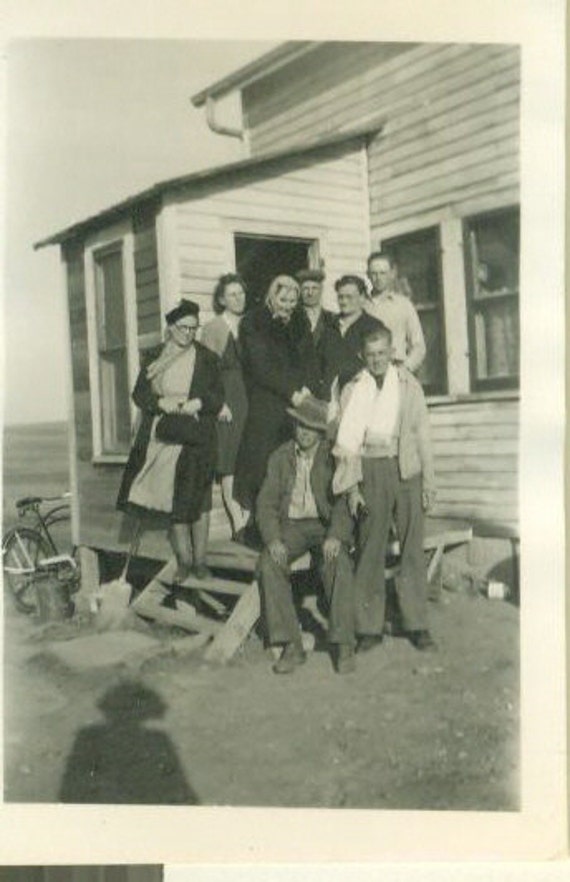

The home is simple, the steps are worn, and the clothing is everyday—yet the faces are bright with the kind of joy that doesn’t require wealth. This is closeness earned through shared rooms, shared meals, shared problems.
The photographer’s shadow in the corner makes it feel intimate, like a real moment rather than a staged fantasy. It’s not a mansion portrait; it’s proof-of-life documentation.
Hard times don’t erase happiness, but they change its shape. This photo shows happiness packed tightly together, because space and certainty were never guaranteed.
#12 Three women hanging laundry under an industrial skyline


The greenish vintage tones make the scene feel almost calm—until the details register. Sheets stretch across clotheslines like sails, while chimney smoke curls in the distance, reminding you how close domestic life sat to industry’s grit.
This isn’t a quick chore; it’s physical work repeated endlessly. The fabric looks heavy, the lines look taut, and the teamwork feels practiced—like everyone knows the rhythm because it has to get done.
It’s a quiet photo with a loud message: comfort used to be something built from labor, day after day, in backyards that never truly rested. 🏠