10 Places People Built Houses That Look Impossible
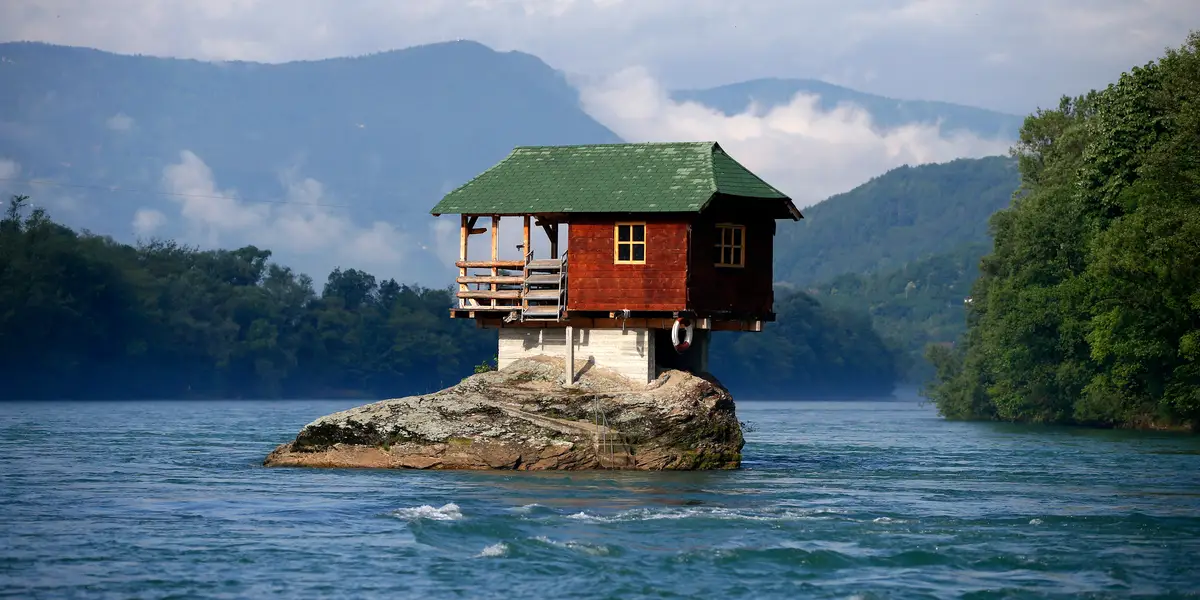
Some people don’t buy land for a house—they pick a cliff, a boulder, or a floating reed island and build anyway. These 10 homes look like they’re breaking the rules of gravity, weather, and common sense, and somehow they’re still standing.
#1 Drina River House in Bajina Bašta, Serbia
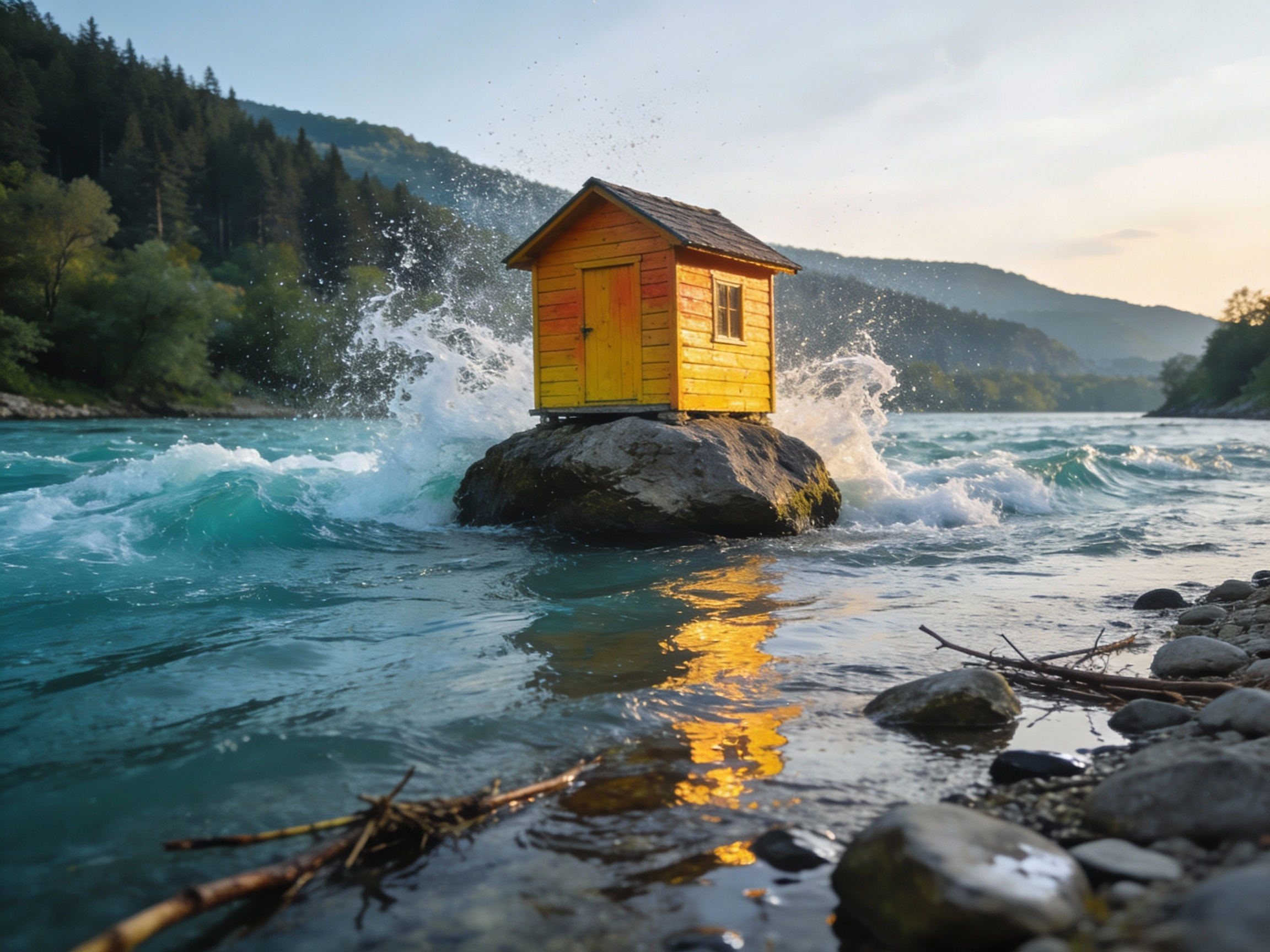

The Drina River House near Bajina Bašta, Serbia, sits on a single rock in the middle of a fast-moving river—like someone dropped a cabin there from the sky. The wooden structure is tiny, bright, and stubbornly upright, surrounded by water on all sides.
What makes it feel impossible is the setting: floods and debris slam into that boulder regularly. Locals keep rebuilding and repairing it anyway, turning the house into a kind of dare against the river.
From shore, it reads as pure visual comedy: a “normal” house in a place where nothing else could ever be normal.
#2 Casa do Penedo in Fafe, Portugal
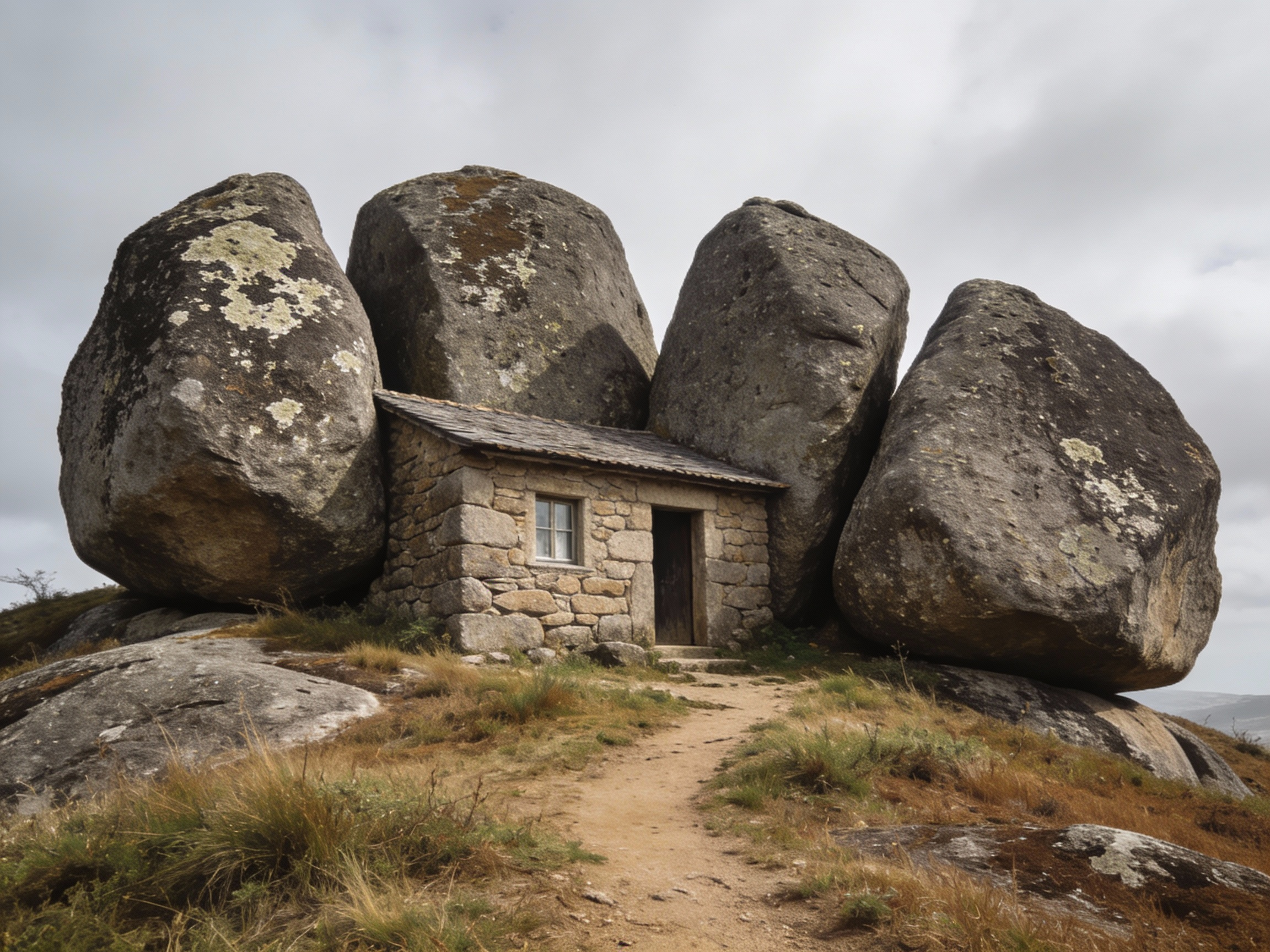

Casa do Penedo in Fafe, Portugal, is literally wedged between four massive granite boulders, so the walls look like they’re made of raw mountain. The roofline and windows are simple, which makes the stone feel even more outrageous—like a cartoon cabin hiding in a rock pile.
The impossible part is the illusion that nature built most of it and humans just added a door. From certain angles, it’s hard to see where “house” ends and “boulder” begins.
It’s cozy and primitive-looking on purpose, the kind of place that makes modern architecture feel overdressed.
#3 The Keret House in Warsaw, Poland
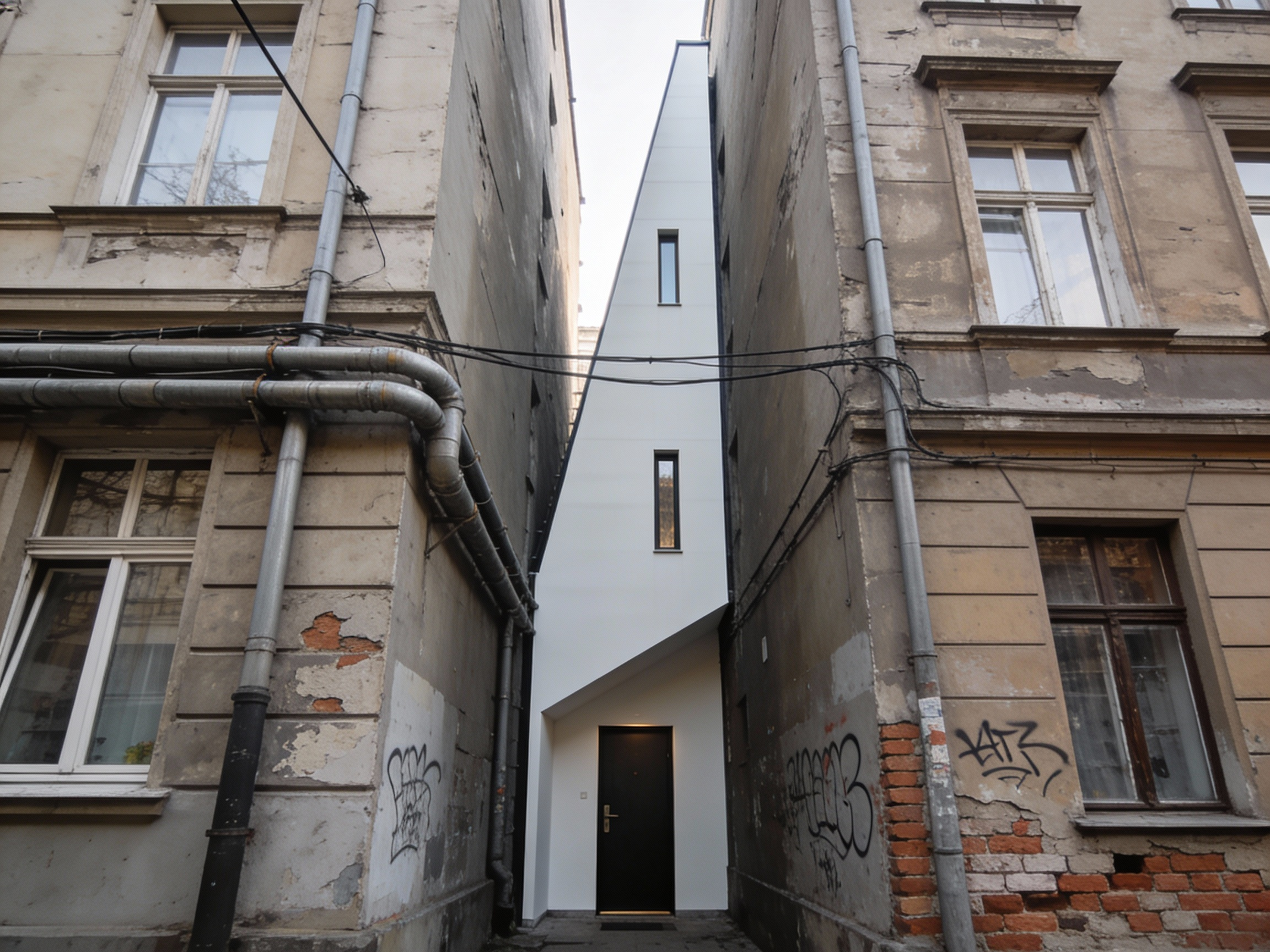

The Keret House in Warsaw, Poland, designed by architect Jakub Szczęsny, squeezes into a gap so narrow it looks like a mistake in the city’s geometry. At its tightest point, it’s about as wide as a person’s shoulders, yet it’s still a functioning home.
This one feels impossible because it turns leftover urban space into livable space—stairs, bed, desk, light—stacked like a survival puzzle. The exterior reads like a blade slipped between two older buildings.
It’s the opposite of a mansion flex: a tiny, razor-thin house that wins purely by audacity.
#4 The Flintstones House in Hillsborough, California
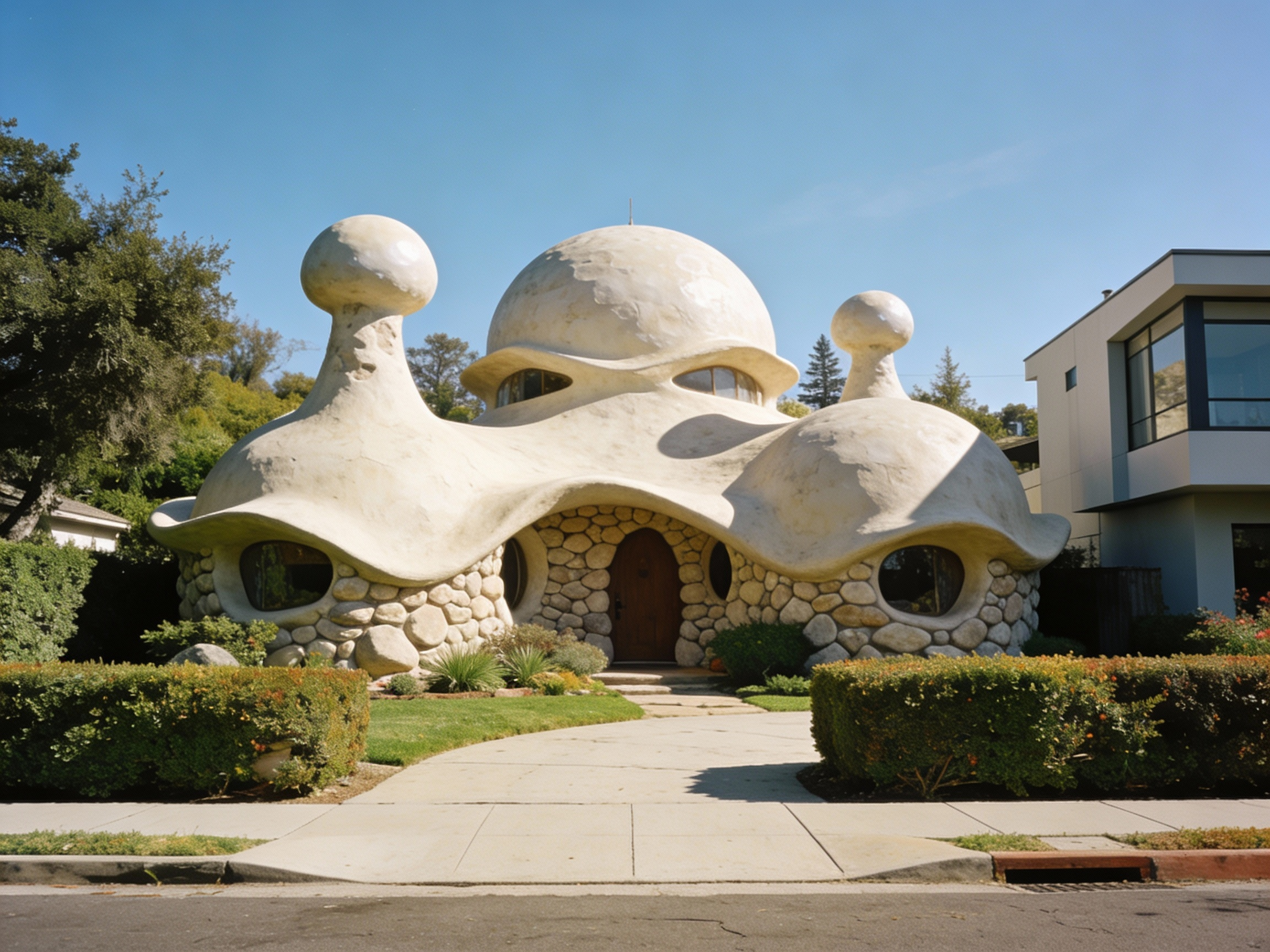

The Flintstones House in Hillsborough, California, is a bubbly, bone-colored dome home that looks grown rather than built. Designed in the 1970s by architect William Nicholson, it’s all curves—no crisp corners, no straight lines, no “normal” roof.
It feels impossible because it doesn’t match any mental template for a house. The silhouette reads like a cluster of giant stones fused together, as if gravity melted the architecture into place.
From the street, it’s a full-on visual glitch: prehistoric vibes sitting in one of the most polished suburbs in America.
#5 The Church of Saint George at Lalibela, Ethiopia
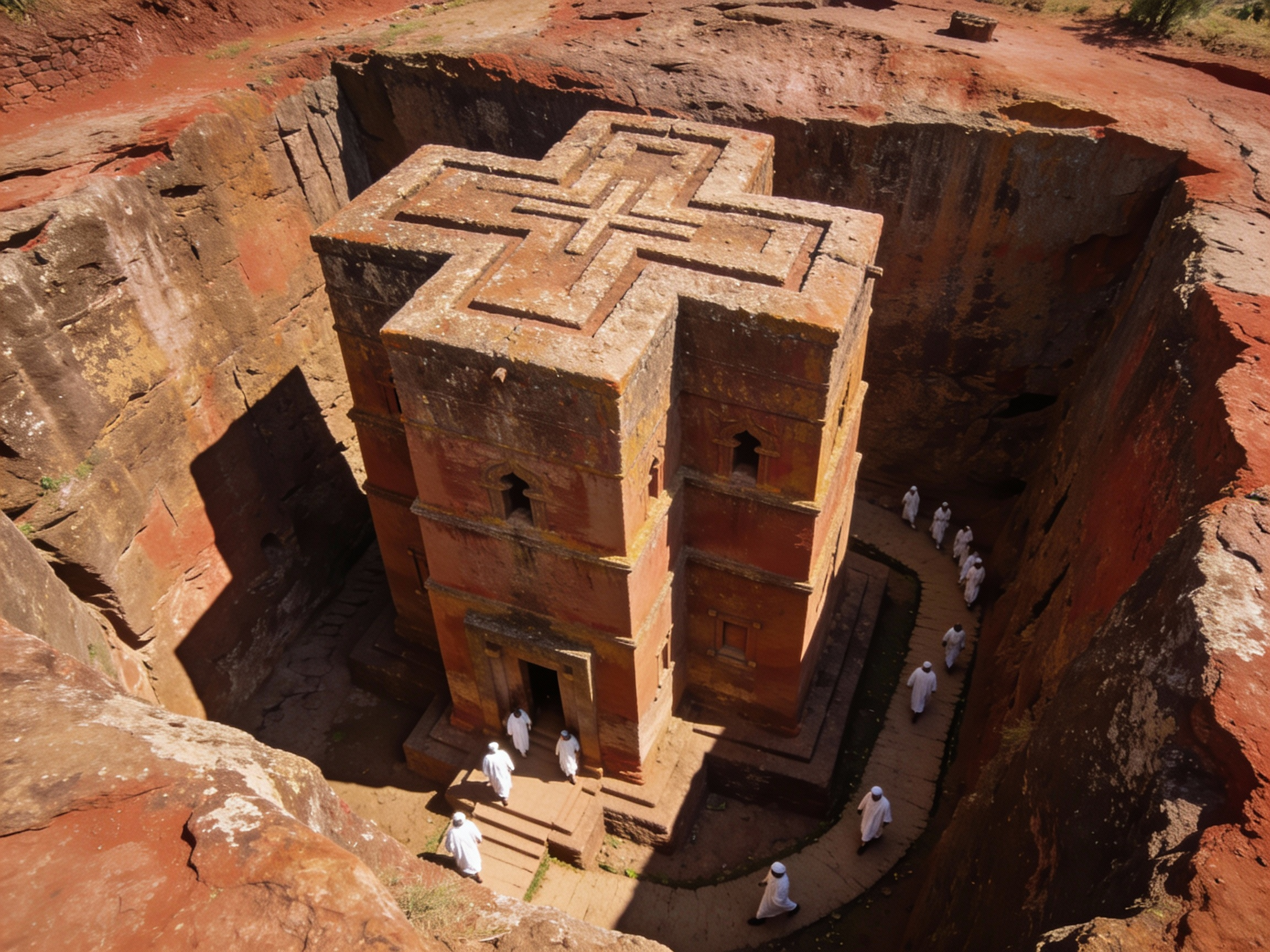

The Church of Saint George in Lalibela, Ethiopia, is a home-like sacred structure carved straight down into living rock, not assembled upward. Known as Bete Giyorgis, it’s a cross-shaped building sunken into the ground with sheer stone walls rising around it.
The impossible feeling comes from the subtraction: an entire “house-sized” space created by removing stone, leaving crisp edges and clean verticals where you’d expect rough natural breaks. From above, it looks like a symbol cut into the earth.
Standing at the rim, the drop and the precision mess with your brain—like someone lowered a building into a pit and forgot the crane.
#6 The Monastery of Meteora in Thessaly, Greece
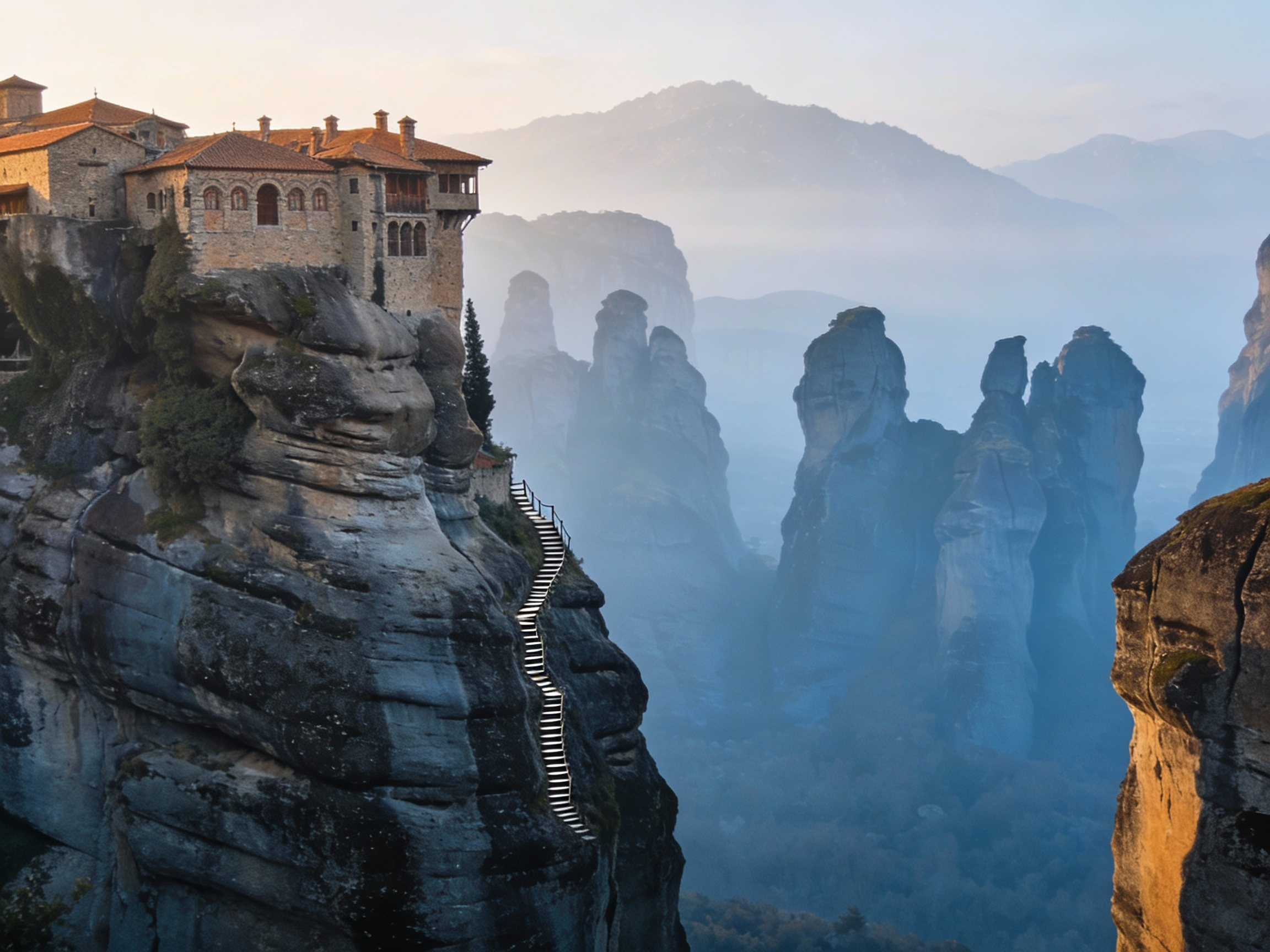

The Meteora monasteries in Thessaly, Greece—especially Great Meteoron and Varlaam—sit on top of towering rock pillars that look almost unclimbable. These are essentially houses in the sky, perched where even goats would hesitate.
What makes them seem impossible is the vertical emptiness around them. The buildings aren’t just on a mountain; they’re on isolated stone columns, with cliffs dropping away on every side.
The old access methods (ropes, ladders, baskets) add to the feeling that the location was chosen specifically to reject visitors.
#7 The Cliff Palace at Mesa Verde, Colorado
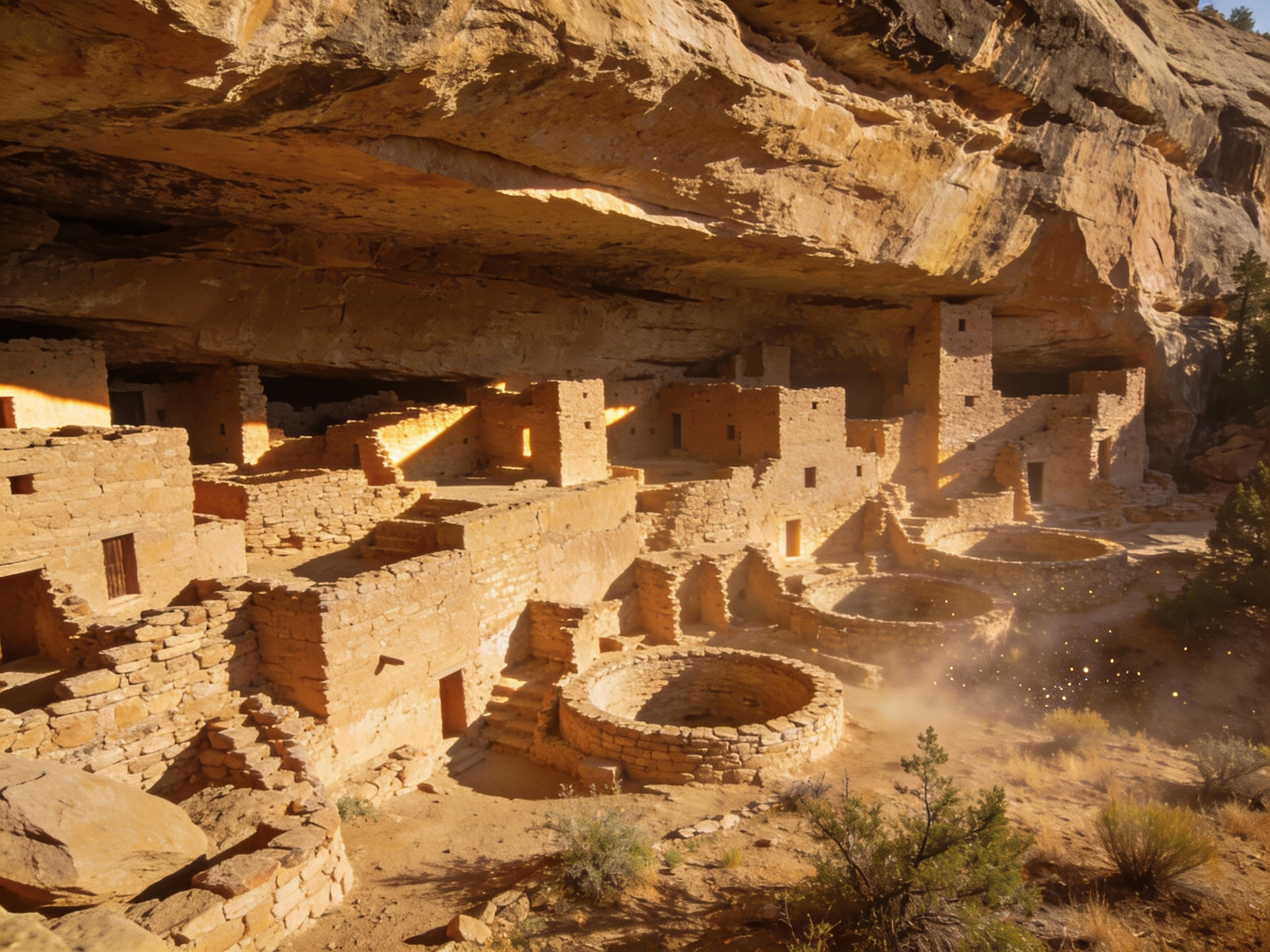

Cliff Palace in Mesa Verde National Park, Colorado, was built by Ancestral Pueblo people directly into a rock alcove, creating an entire village tucked under a stone ceiling. The tan masonry blends so well with the cliff that it feels camouflaged.
The impossible part is the scale: dozens of rooms, towers, and plazas suspended halfway up a cliff face. It’s protected by the overhang, but the placement still looks like a risky bet against time.
Even now, it reads like a place that shouldn’t exist—until you realize someone planned every inch of it to fit the geology perfectly.
#8 The Hanging Houses of Cuenca, Spain
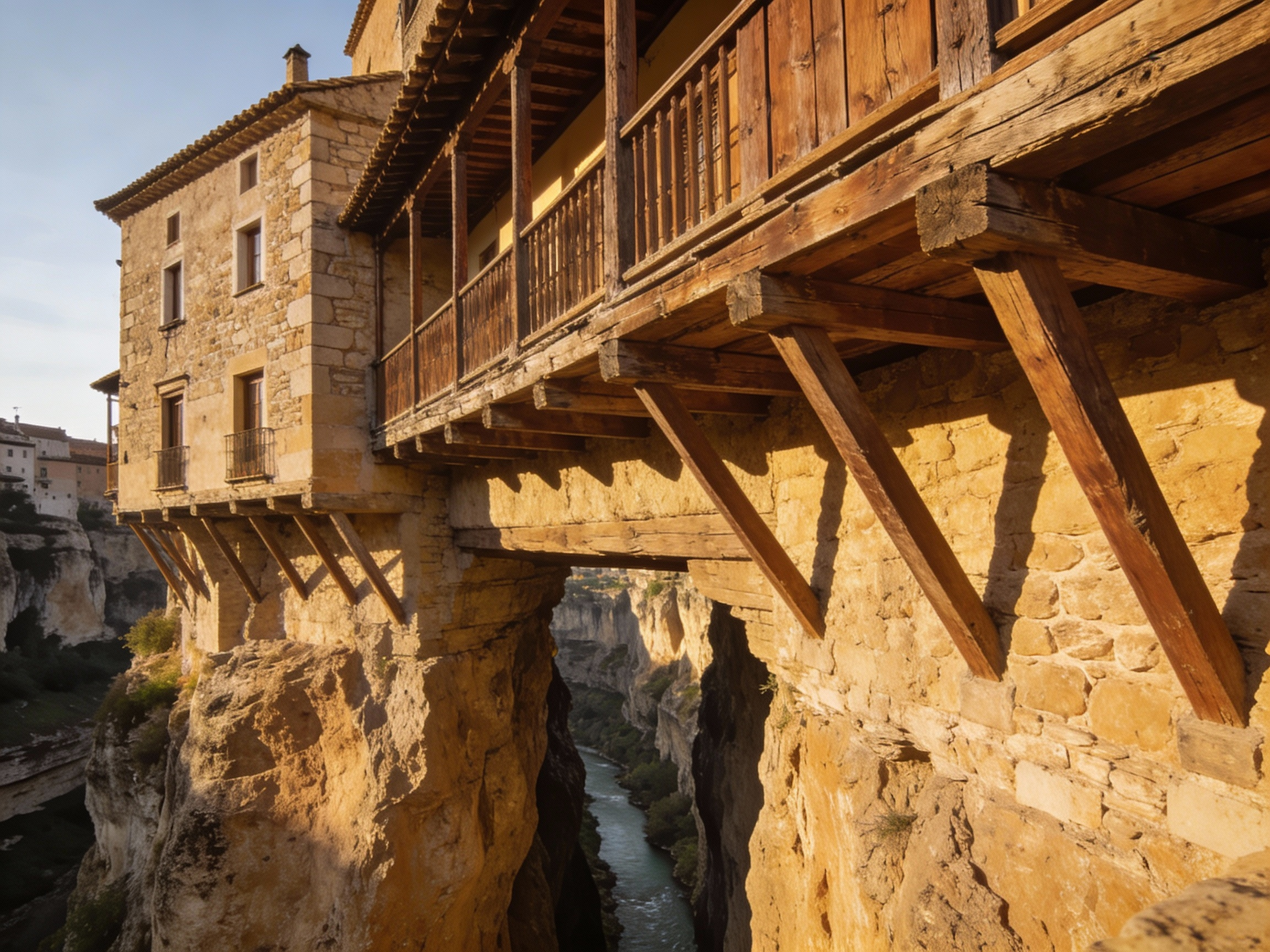

The Hanging Houses of Cuenca, Spain—Casas Colgadas—jut out over the Huécar River gorge like balconies that never got the memo to stop. The wooden overhangs cling to the cliff edge, with nothing but air beneath them.
They look impossible because the city street feels normal, and then the buildings simply… continue past the rock. The contrast between ordinary façades and sheer drop is what makes your stomach flip.
At golden hour, the cliff turns warm and the houses look even more precarious, like they’re pinned there by sunlight.
#9 The Reed Islands of the Uros People on Lake Titicaca, Peru
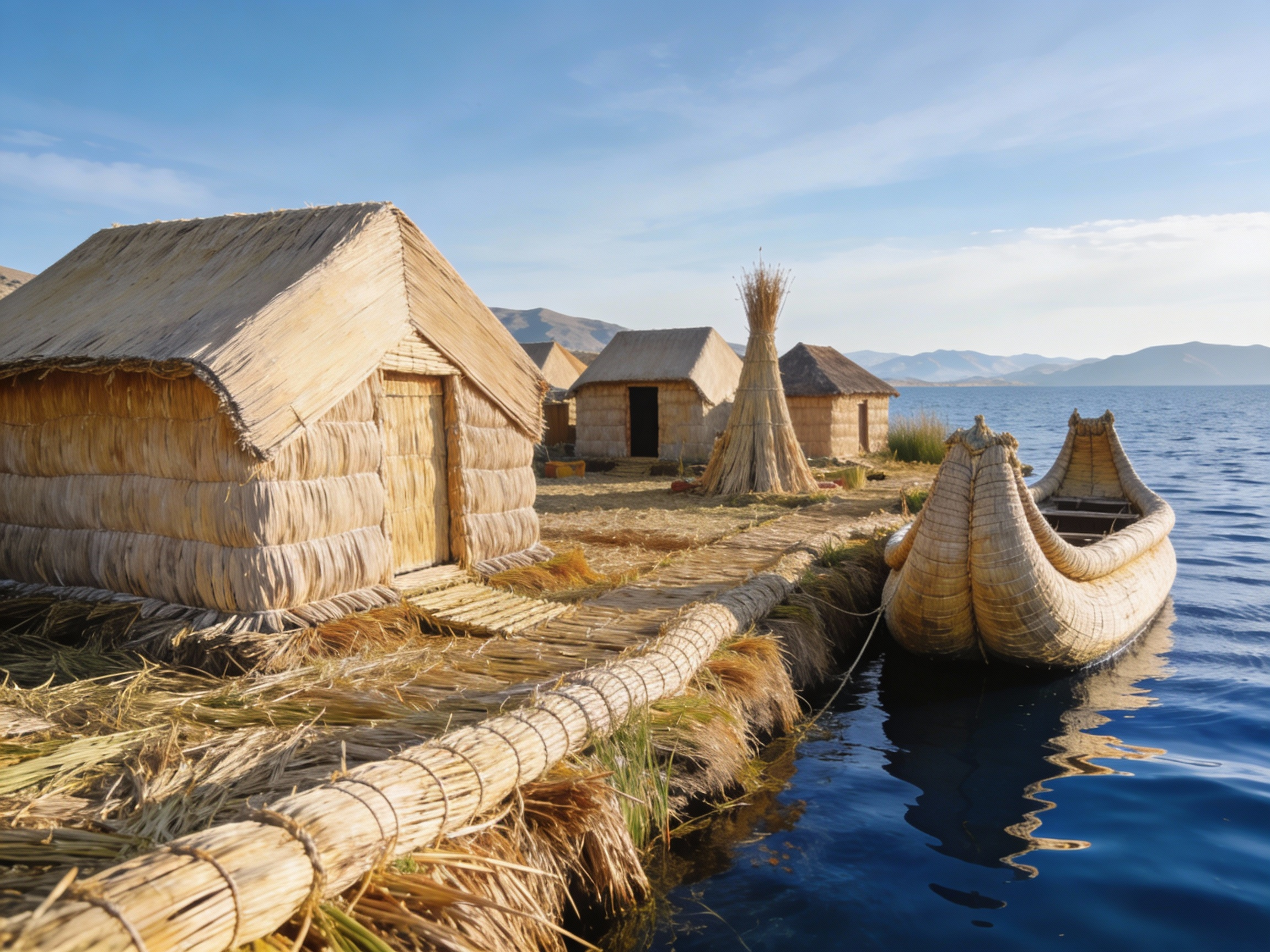

The floating homes of the Uros people on Lake Titicaca, Peru, are built on man-made islands woven from totora reeds. Houses, walkways, and even boats share the same pale, straw-like texture, so the whole settlement looks like it’s made from dried sunlight.
The impossible part is that it’s not one house—it’s a floating neighborhood. Everything is soft-edged and buoyant, yet it supports daily life in a place where “ground” is optional.
These islands constantly need new layers of reeds, which makes the architecture feel alive, like it’s always being rebuilt in real time.
#10 The “House on the Rock” at Katskhi Pillar, Georgia
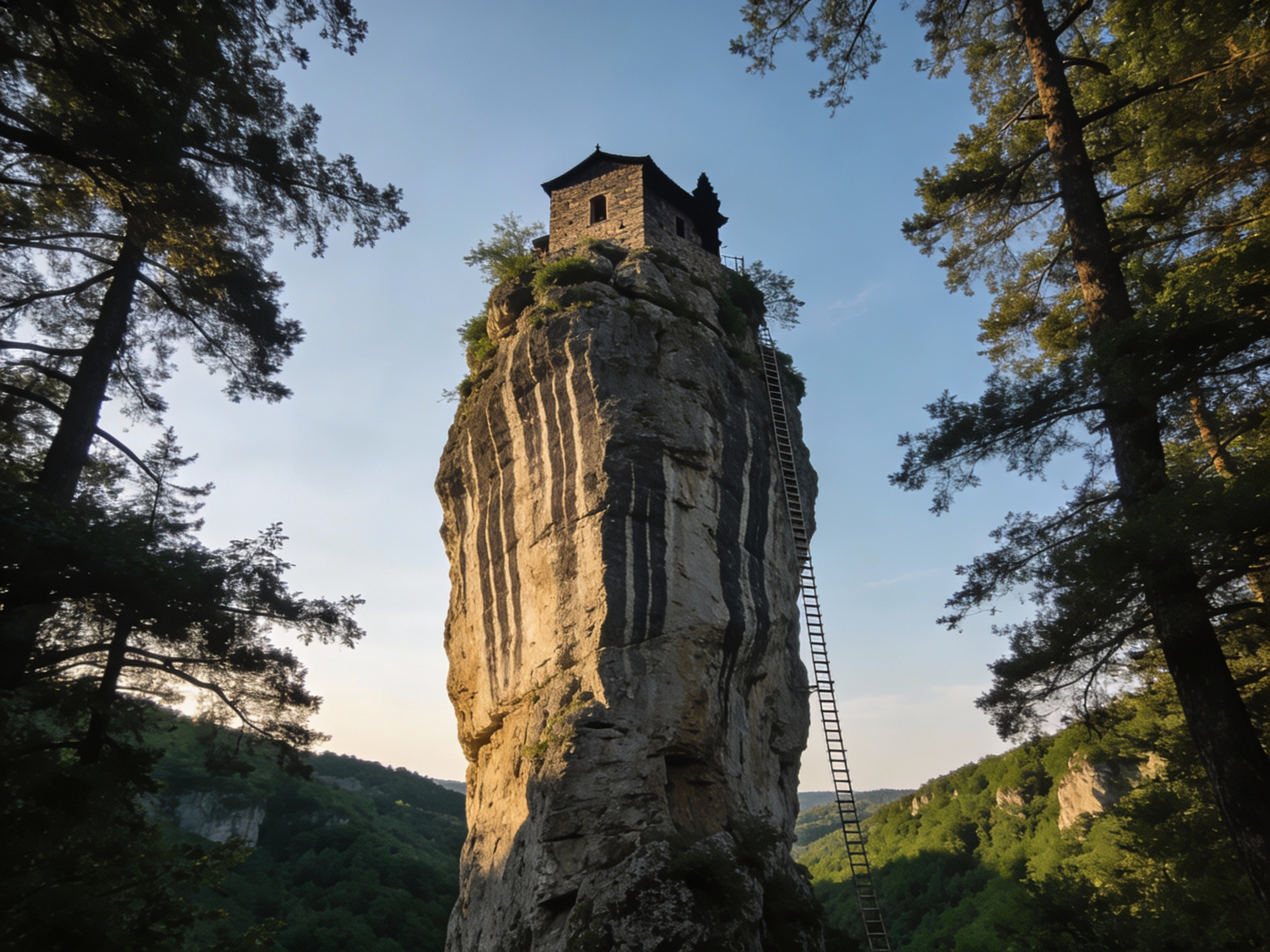

The Katskhi Pillar in Georgia holds a tiny monastery-like house on top of a narrow limestone monolith, an extreme version of “build on a hill.” It’s a small stone structure sitting on a rock column that rises roughly 40 meters (130 feet) above the valley.
It looks impossible because the summit is so cramped it barely seems to have room for walls, let alone a livable space. The pillar is slender, isolated, and brutally vertical, like a natural skyscraper.
Even knowing there’s a ladder route, the image sticks: a home-sized building balanced on a stone needle.